

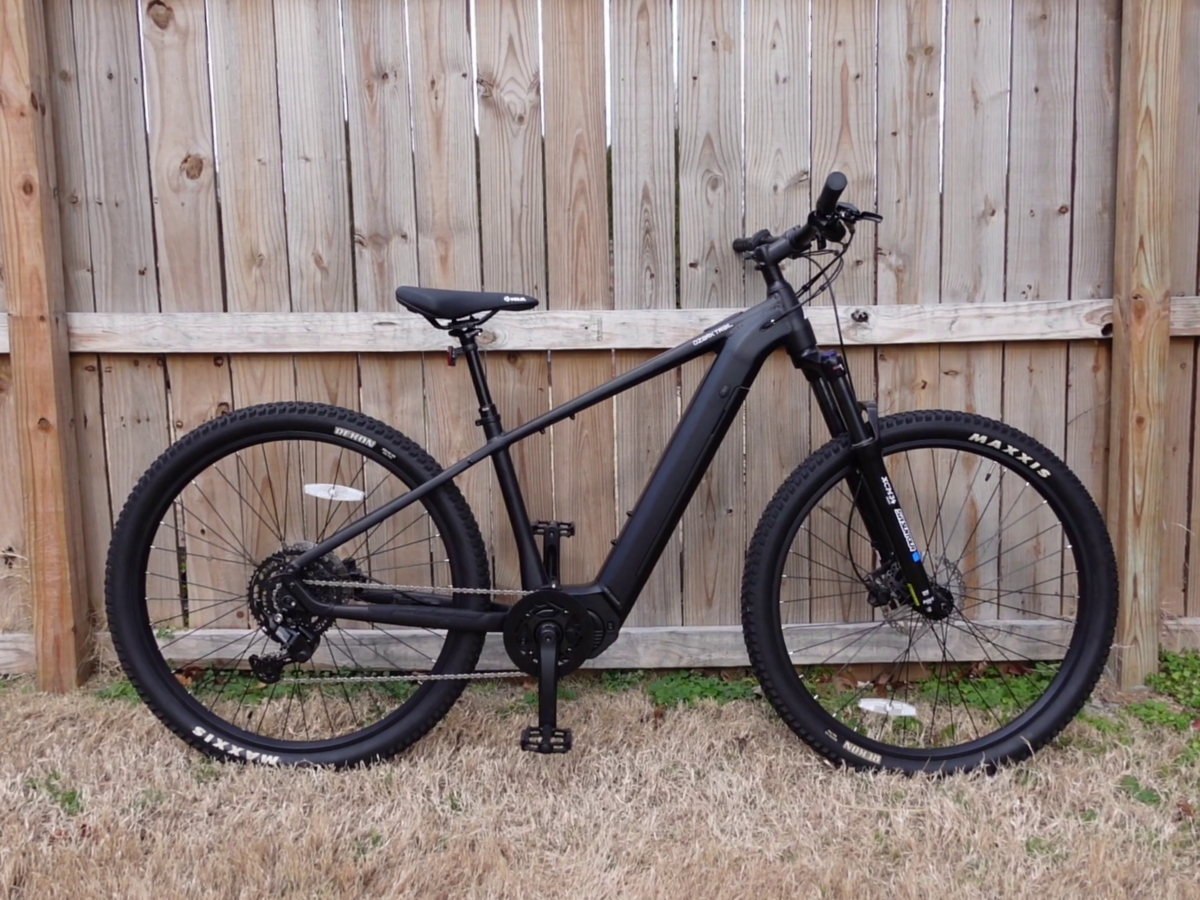
Walmart probably isn’t the first place you would think to look for a high-performance entry-level electric mountain bike. They’ve built a solid reputation with quality regular beginner mountain bikes, but seeing a true hardtail, mid-drive eMTB that’s upgradeable down the road was a surprise, especially at this price. Bike shop brands offering entry-level models should pay close attention to the Ozark Trail M.2 Ridge+.
It is a direct-to-consumer option that you won’t find stocked on store shelves but for $1,298, it is an incredible foundation for beginners and the most affordable mid-drive hardtail eMTB we have seen. In this review, we’ll walk you through the specs, share our experience on the trails in Bentonville, and explain why this bike is such a massive deal for the industry.
If you are considering purchasing an Ozark Trail M.2 Ridge+, please consider using our affiliate link. Your support makes reviews like this one possible. Thank you!
Ozark Trail M.2 Ridge+ Video Review
We took the Ozark Trail M.2 Ridge+ straight to the Bentonville, AR trails to see if this $1,298 mid-drive hardtail could truly handle real singletrack. After a walkaround to check out its surprisingly solid components, we put them to the test, climbing the aptly named “Pedal Assist” trail to gauge the 350W Ananda motor’s torque sensor, then to “Dirt Therapy,” a downhill-only run that pushed the SR Suntour fork to its limits on rocky descents. Stay tuned for our honest take on the pros and cons, and why Ridge+ is such a strong starting point for new riders.
Components That Punch Above Their Weight
Walmart has managed to include features typically reserved for ebikes costing hundreds, if not thousands, of dollars more. The following features are central to the bike’s surprising performance:
Ananda Mid-Drive Motor
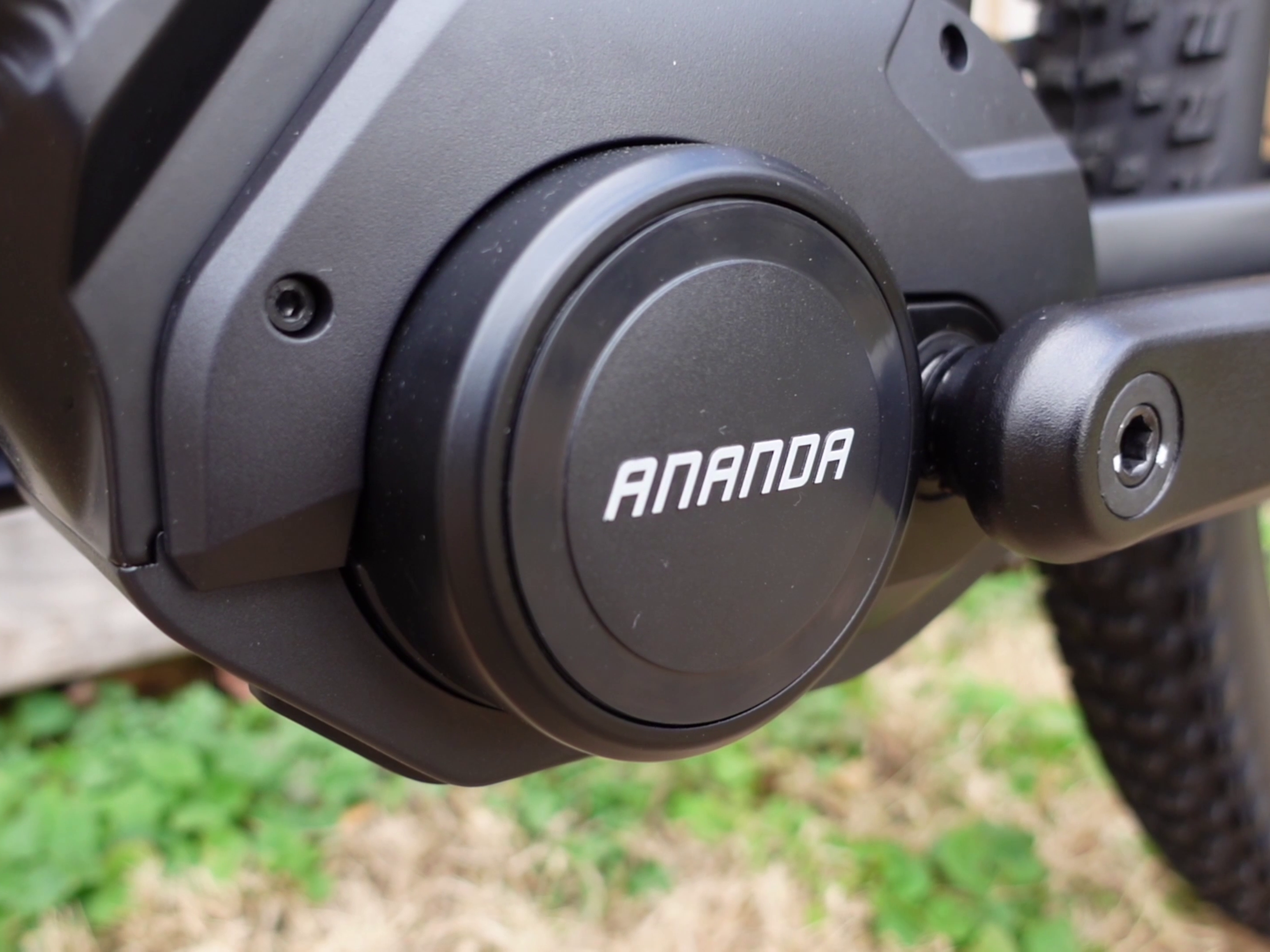
The biggest headline is the motor. While almost every ebike in this price range uses a hub motor, the Ridge+ boasts a 350W Ananda mid-drive unit. Don’t let the “350W” label fool you, especially if you come from a hub-drive background; it peaks at 520 watts and we found it plenty of power for trail riding. Crucially, it uses a torque sensor, meaning the more power you put into the pedals, the more the motor gives back. This results in an instantly responsive, natural cycling feel that hub motors just can’t match.
Battery and Safety
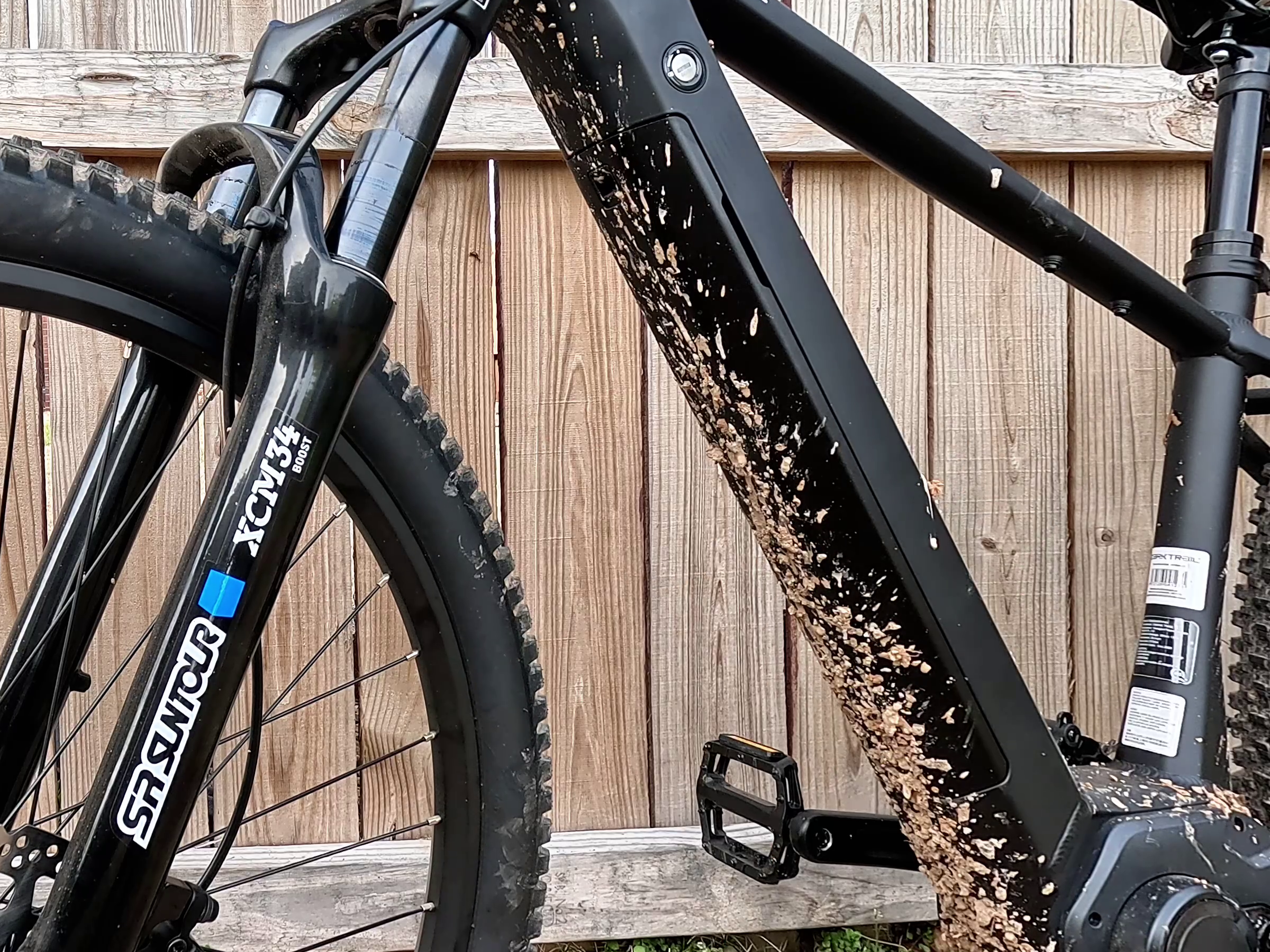
Powering the system is a 36V 13Ah (468Wh) battery located on the downtube. While just shy of the 500Wh standard, we found it sufficient for the solid few-hour rides most recreational riders enjoy. Walmart didn’t skimp on safety: the battery is certified to UL 2271, and the entire electrical system is certified to UL 2849 standards.
Suspension Platform
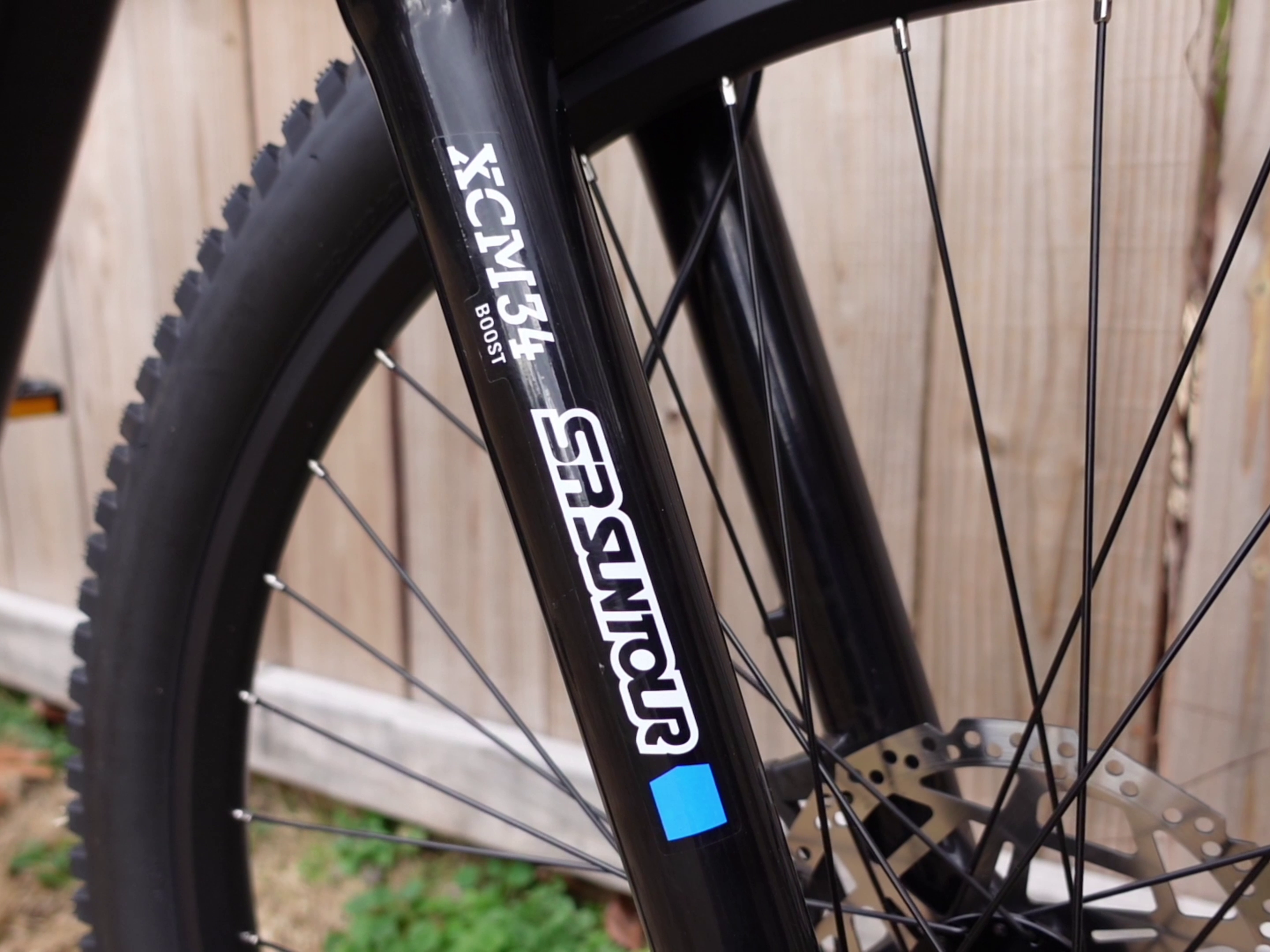
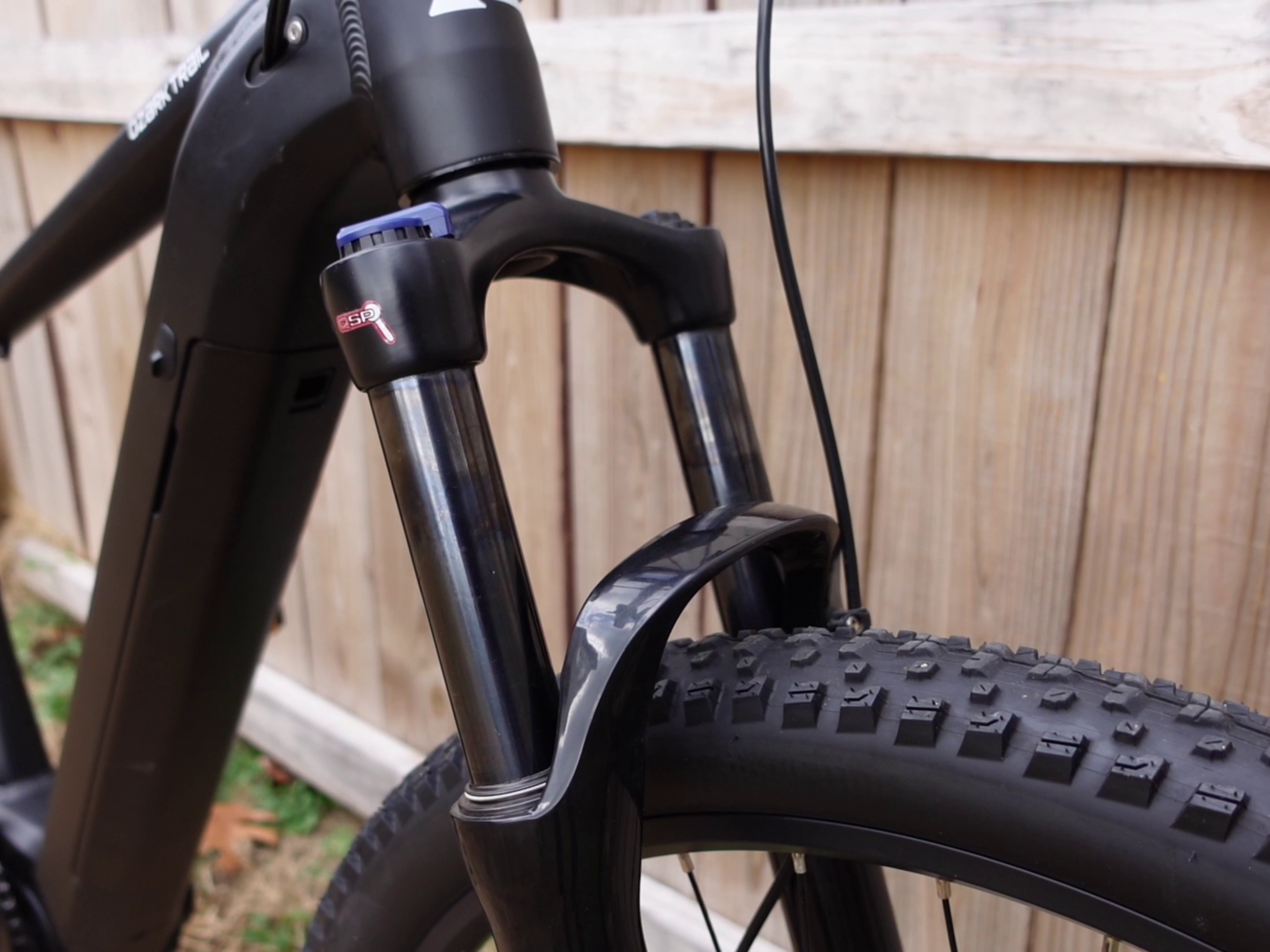
Up front, you get an SR Suntour XCM 34 fork with 120mm of travel. It covers the basics well, with preload adjustment and a lockout. A nice touch, you can swap the forks coil spring. Walmart includes the “standard” spring, but lighter or heavier riders can opt for soft or firm springs to fine-tune the feel. If you plan to swap the spring, note that Walmart doesn’t stock them, but you can order directly from SR Suntour.
Modern Standards (Boost Spacing)
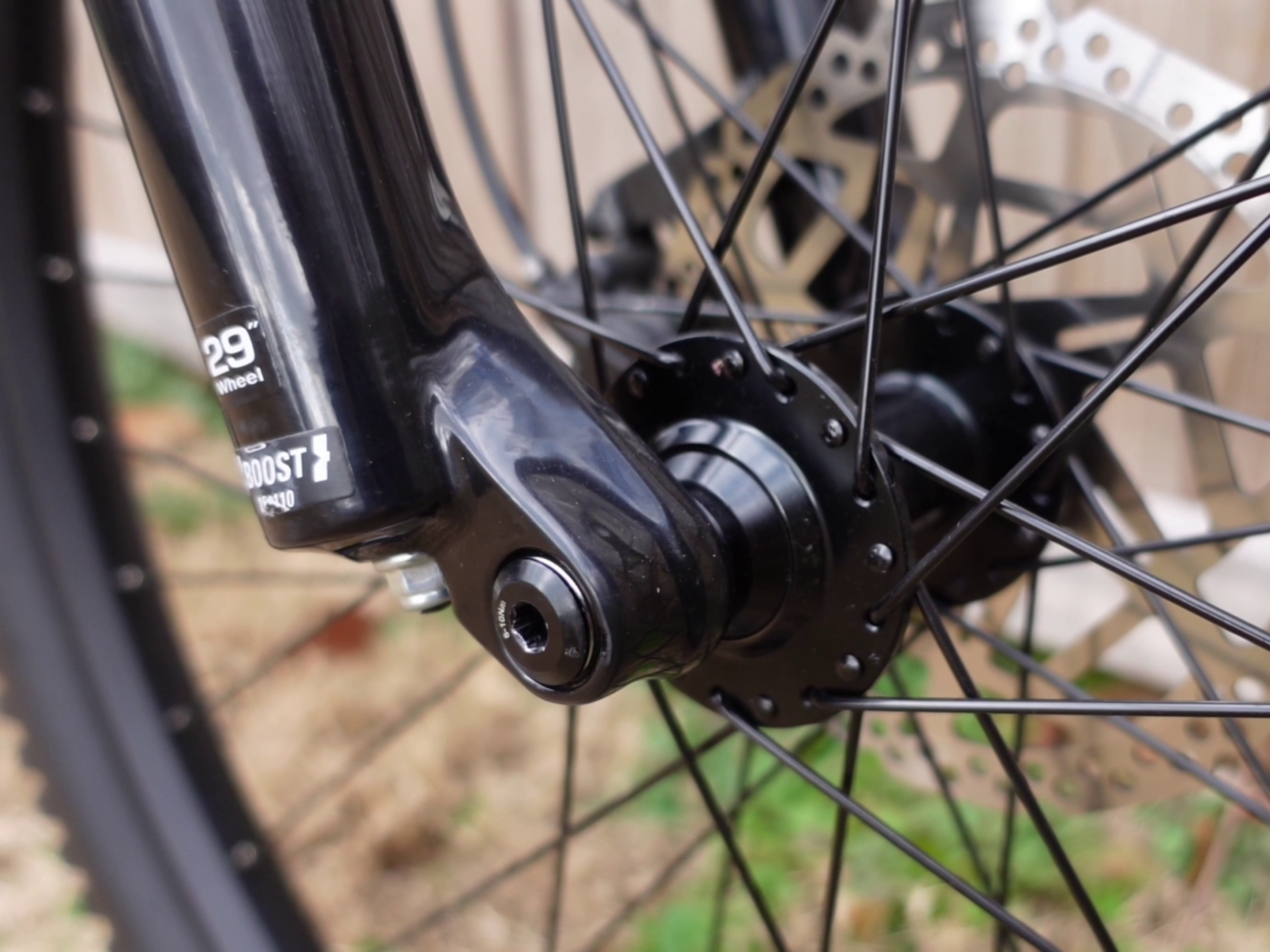
This bike features Boost thru-axles on both the front and rear. This is a huge deal for a budget bike. It makes the frame significantly stiffer and safer, but more importantly, it means the frame is worthy of upgrades. You can actually buy a high-end wheelset down the road and fit it to this bike—something impossible on most cheap ebikes.
Drivetrain
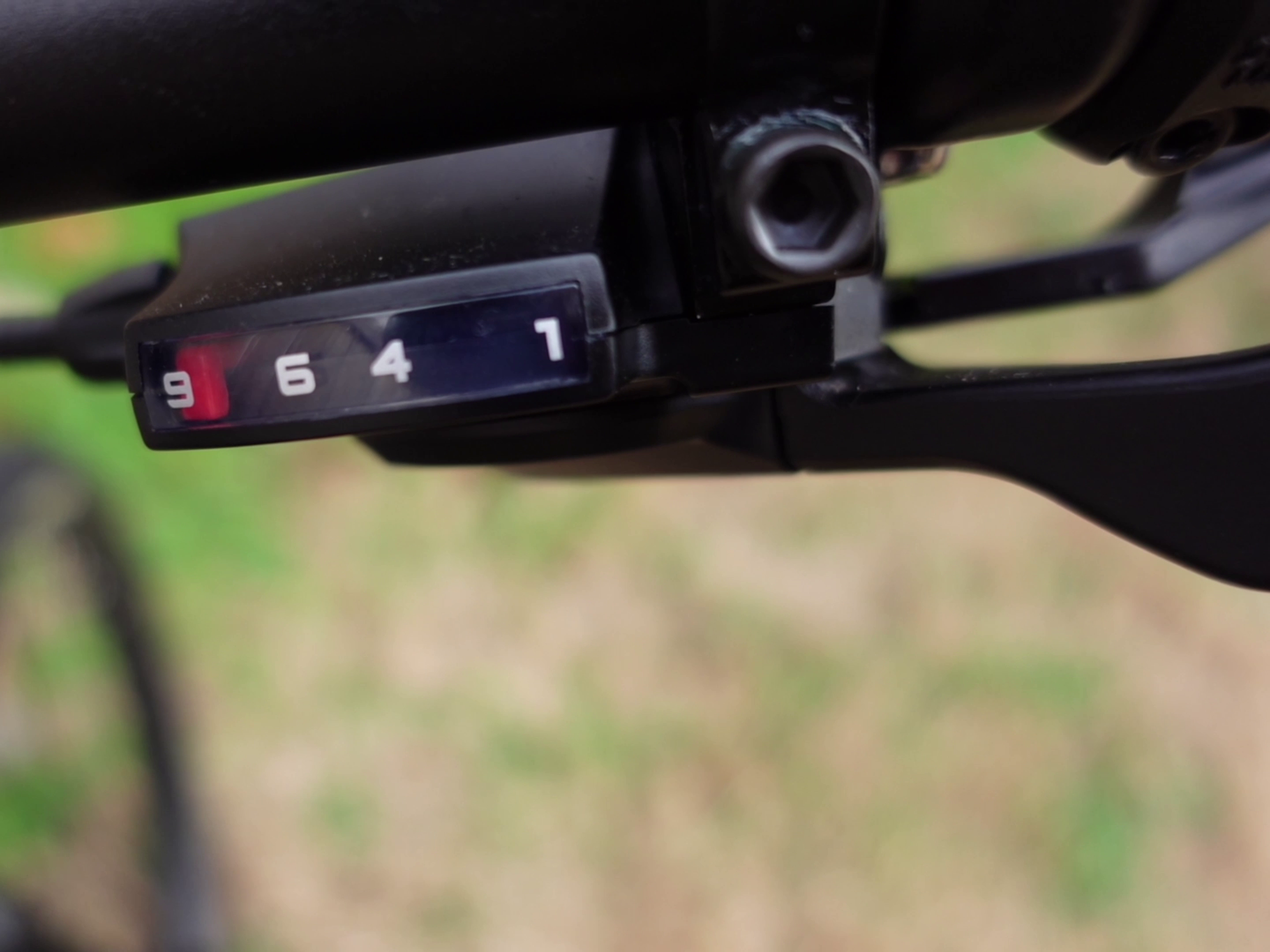
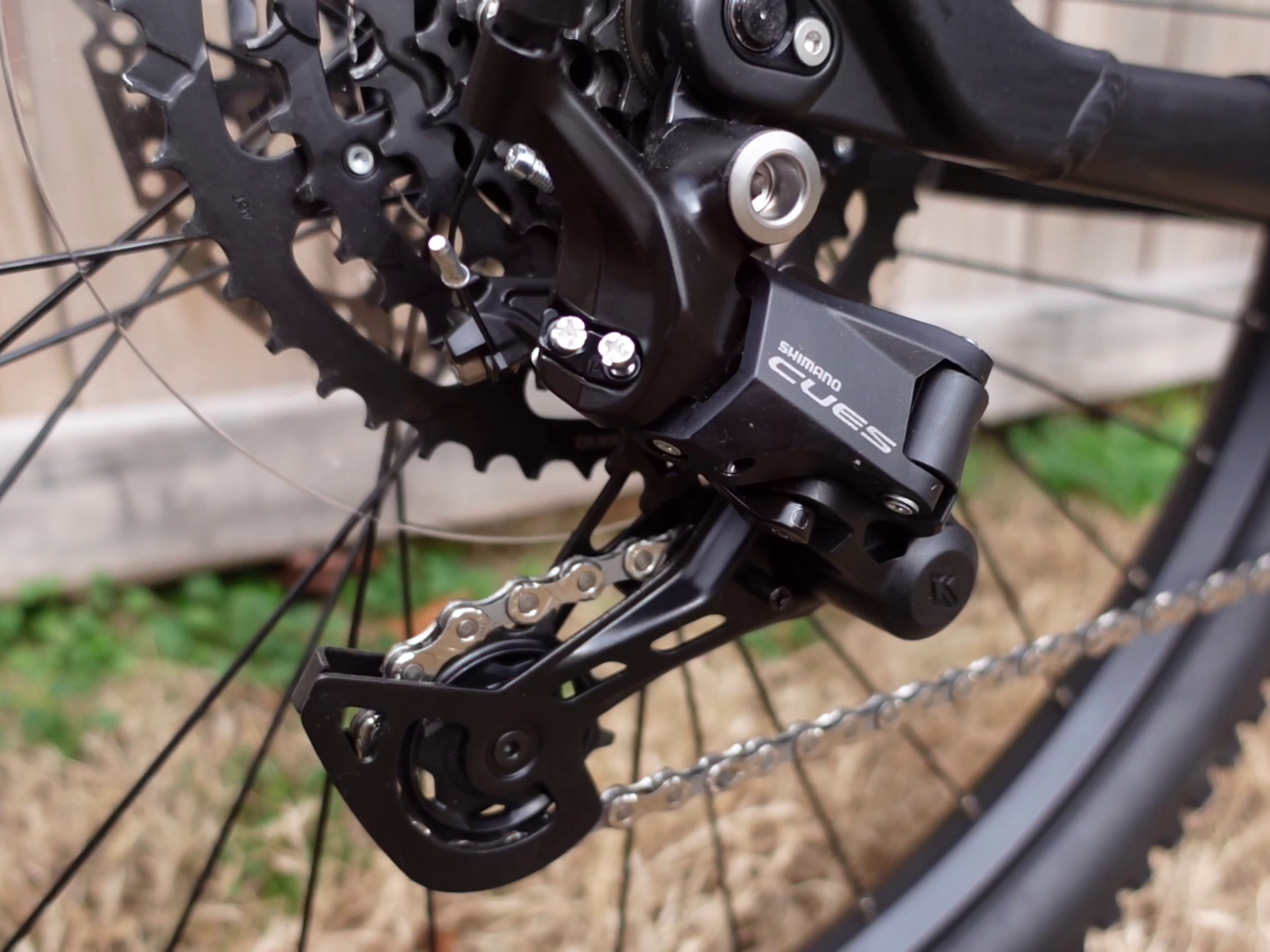
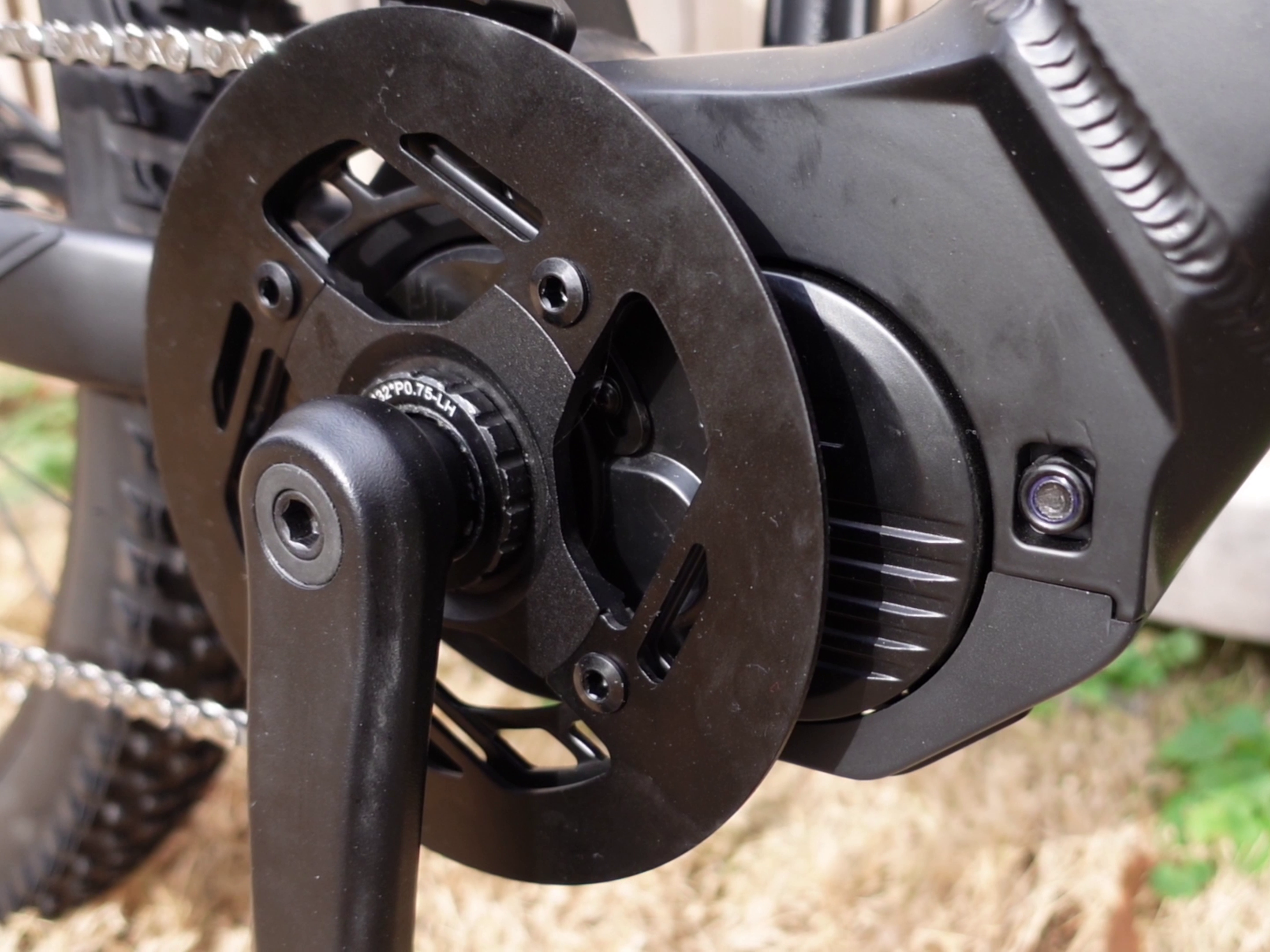
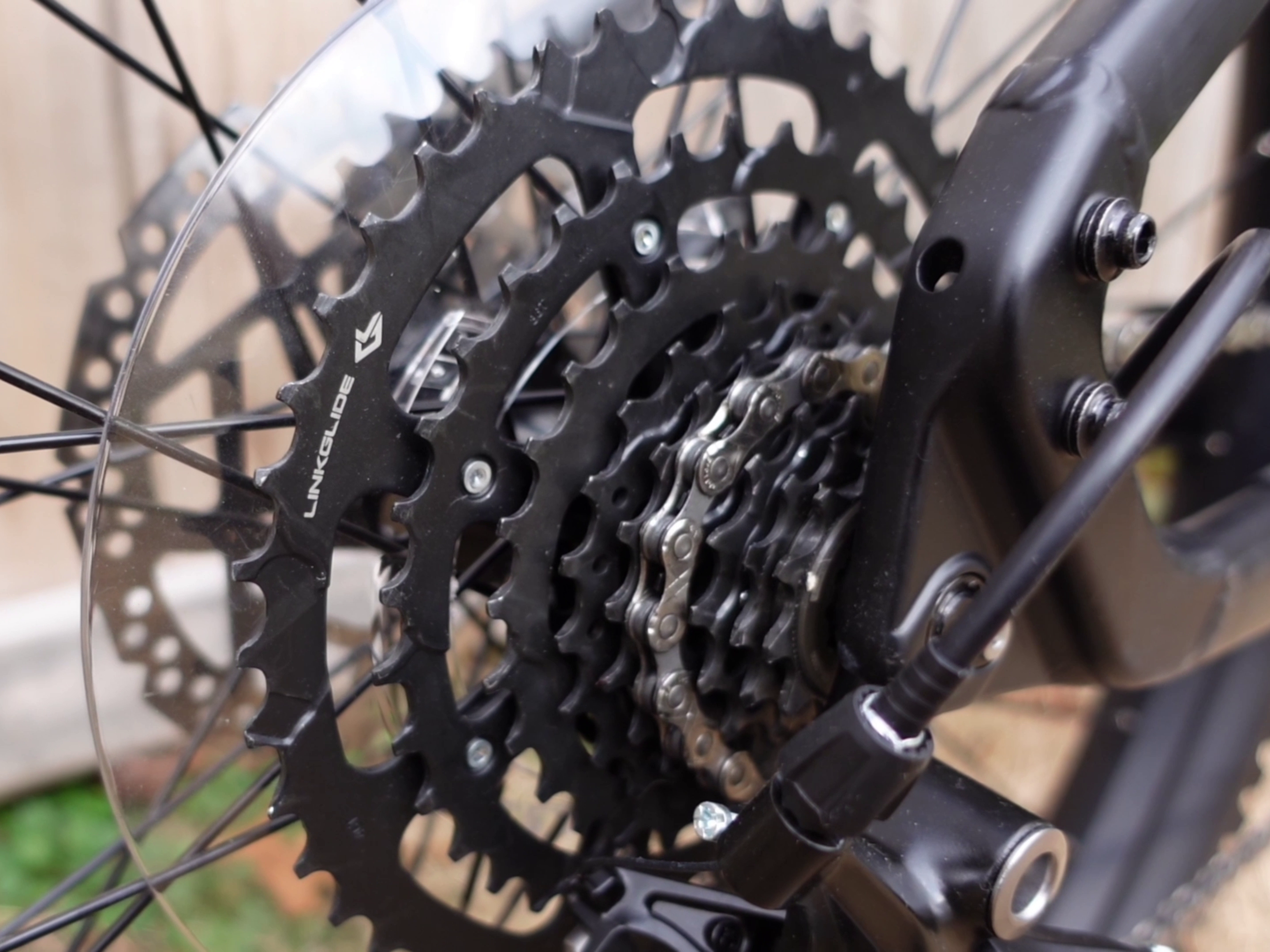
Shifting duties are handled by the new Shimano CUES 9-speed system. We’ve been impressed with CUES as a replacement for Shimano’s older entry-level sets. It’s paired with an 11-46 tooth cassette in the rear and a 38-tooth chainring up front. The only minor downside is that this specific derailleur lacks a clutch to prevent chain slap, though we didn’t notice excessive noise during our testing.
Braking System
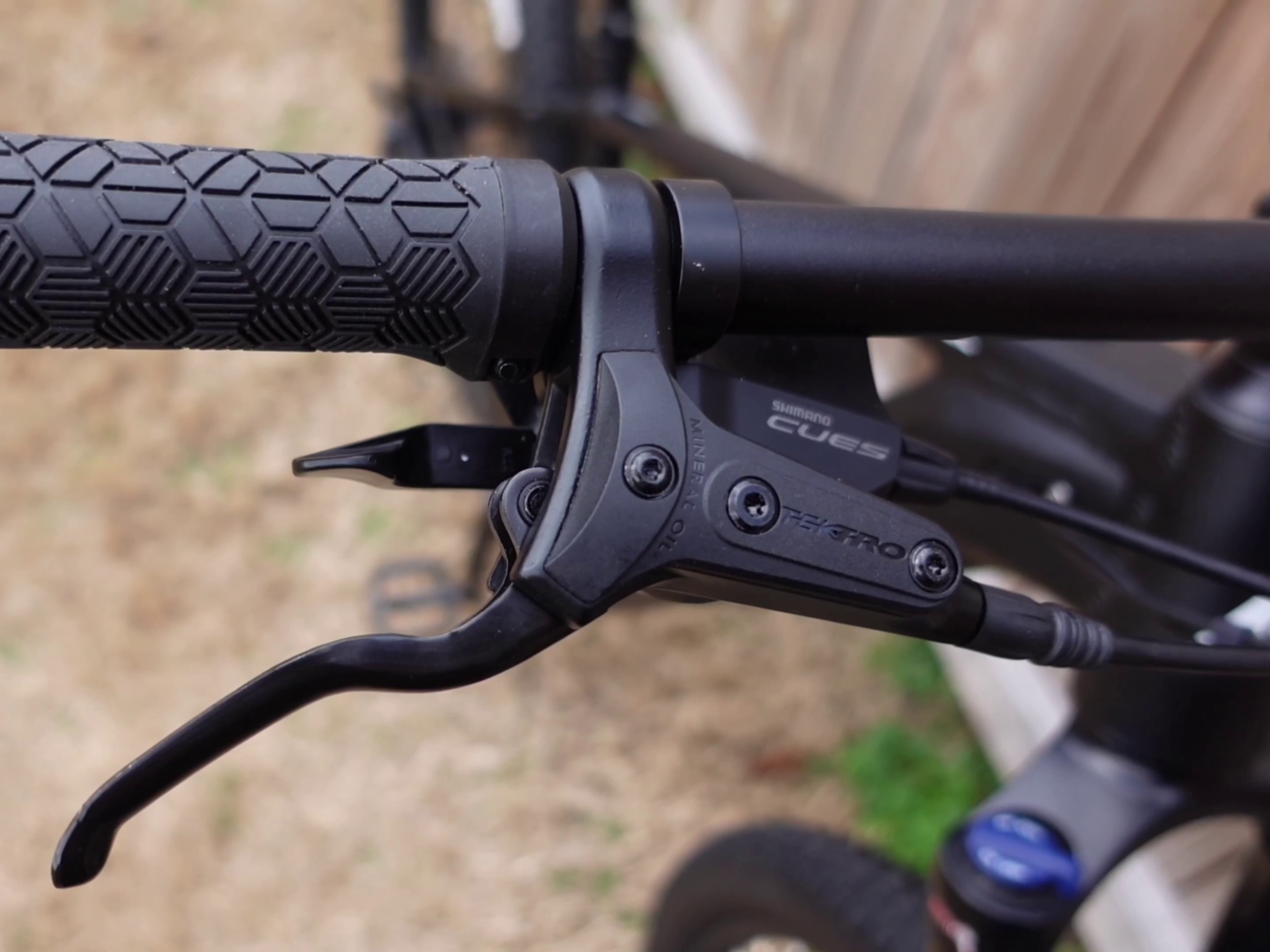
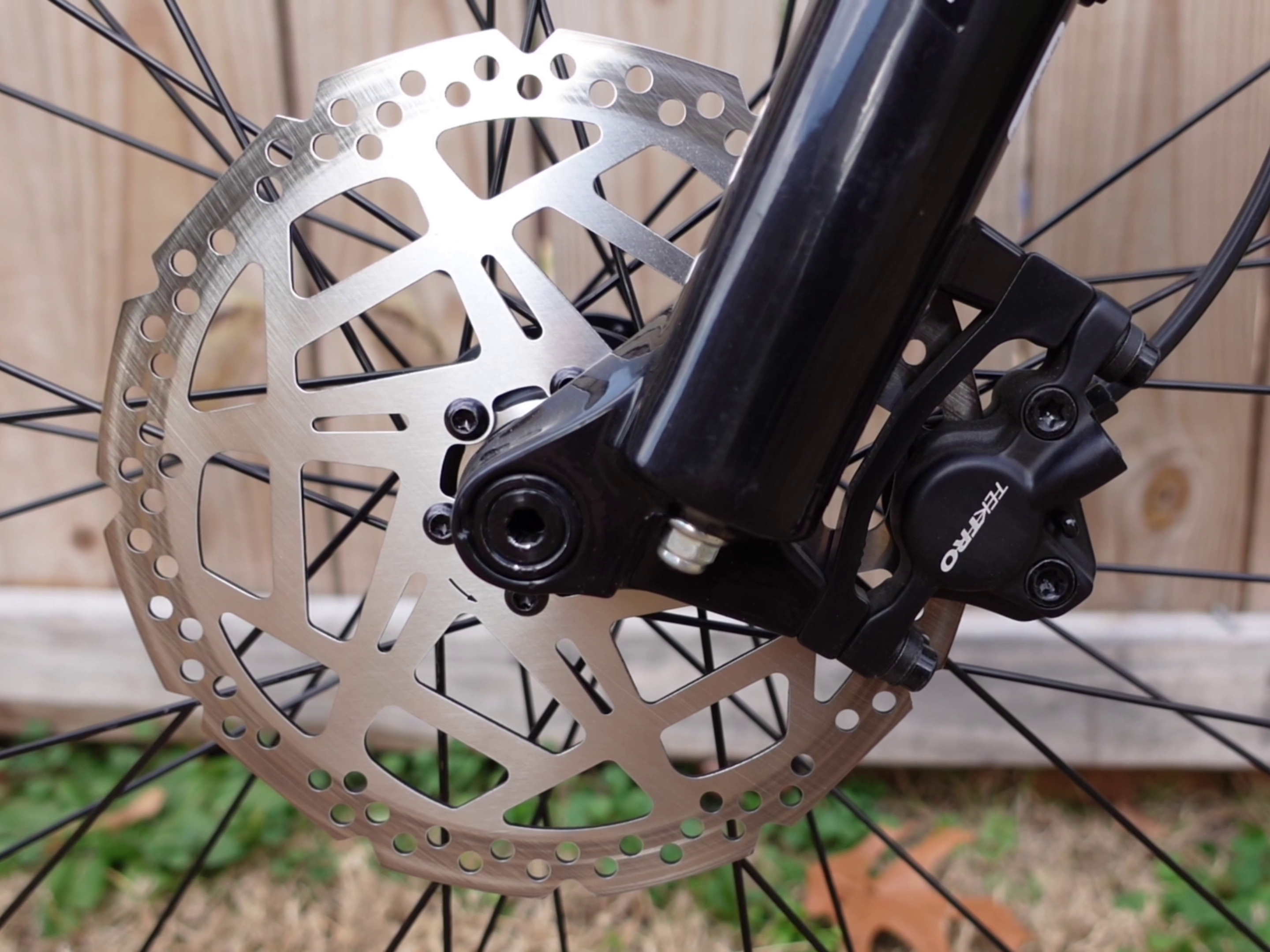
Braking is managed by Tektro hydraulic disc brakes equipped with 180mm rotors. Though not four-piston calipers, this setup is common among the majority of ebikes we review. Dependable hydraulic braking is essential for trail riding; this setup has no problem getting the job done.
Frame, Sizing, and Style
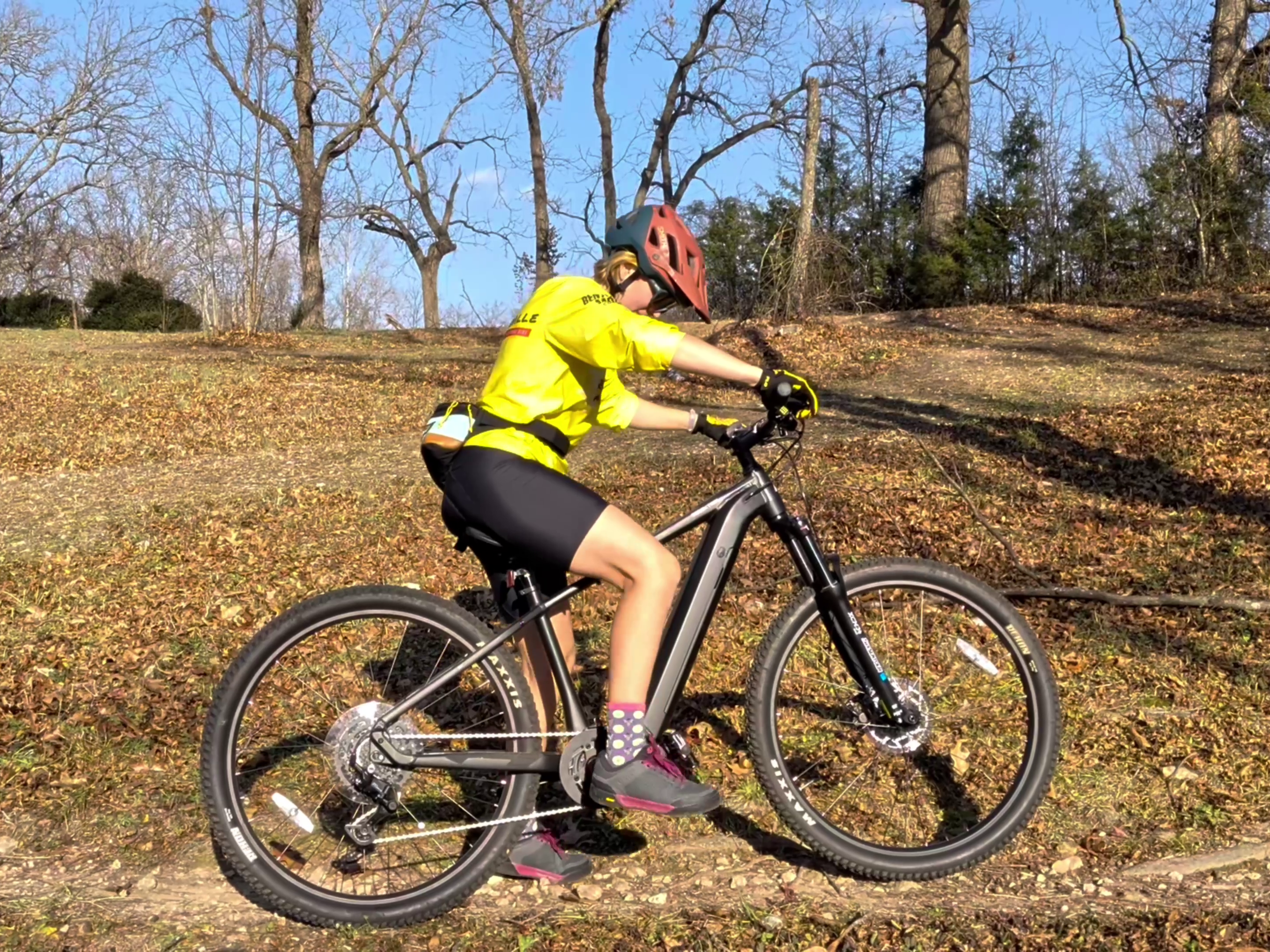
The Ozark Trail M.2 Ridge+ is available in three sizes: Small, Medium, and Large. The Small frame comes with 27.5-inch wheels, while the Medium and Large roll on 29-inch wheels. We tested the Medium, which weighed in just under 56 lbs.
Walmart went the extra mile with sizing by speccing specific handlebar widths for each frame size, ensuring the fit feels right straight out of the box. The frame also features a tapered head tube, opening the door for fork upgrades in the future.
Ozark Trail M.2 Ridge+: The Full Spec Sheet
A bike’s personality is only revealed on the trail, but the spec sheet provides the blueprint for its performance. Below is a detailed breakdown of the components that make up the Ozark Trail M.2 Ridge+.
Ozark Trail M.2 Ridge+ Performance: How It Rides on the Trail
If someone put us on this bike without telling us it was from Walmart, we wouldn’t have questioned its legitimacy. It delivers the experience you would expect from a solid entry-level hardtail mountain bike, with the added benefit of electric assist.
Climbing and Assist
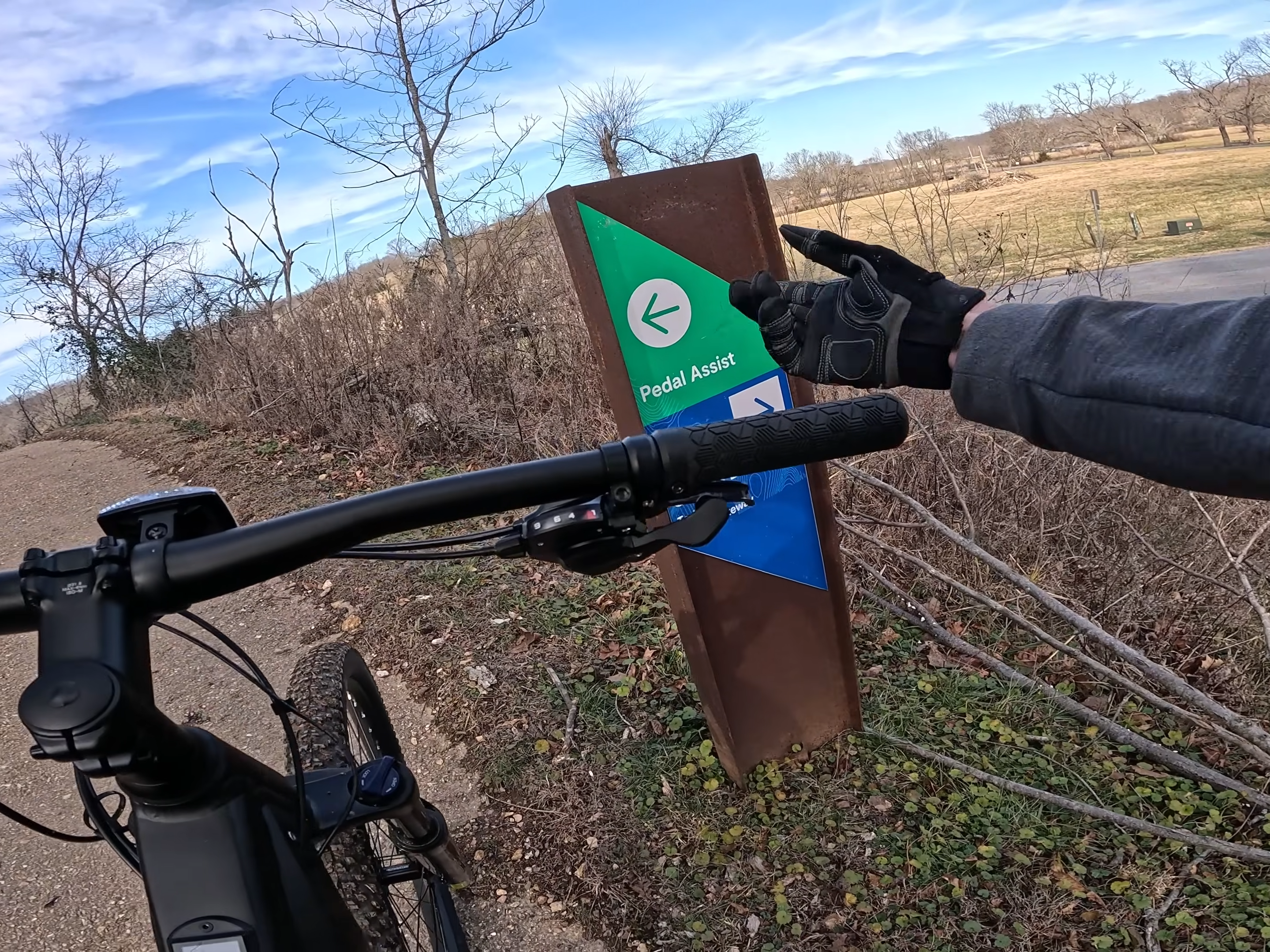
This is where the mid-drive shines. On the aptly named “Pedal Assist” trail, we found that the motor engagement was instant. In lower assist levels (1 or 2), the bike simply takes the edge off the climb, making you feel like you have superhero legs without doing all the work for you.
When we cranked it up to Level 5, the bike surged with power, making short work of steep sections. The motor does have a distinct “whine” to it that is a bit different than other motors we’ve tested, but the performance is undeniable. It makes climbing fun, which is exactly what an eMTB should do.
Downhill and Handling
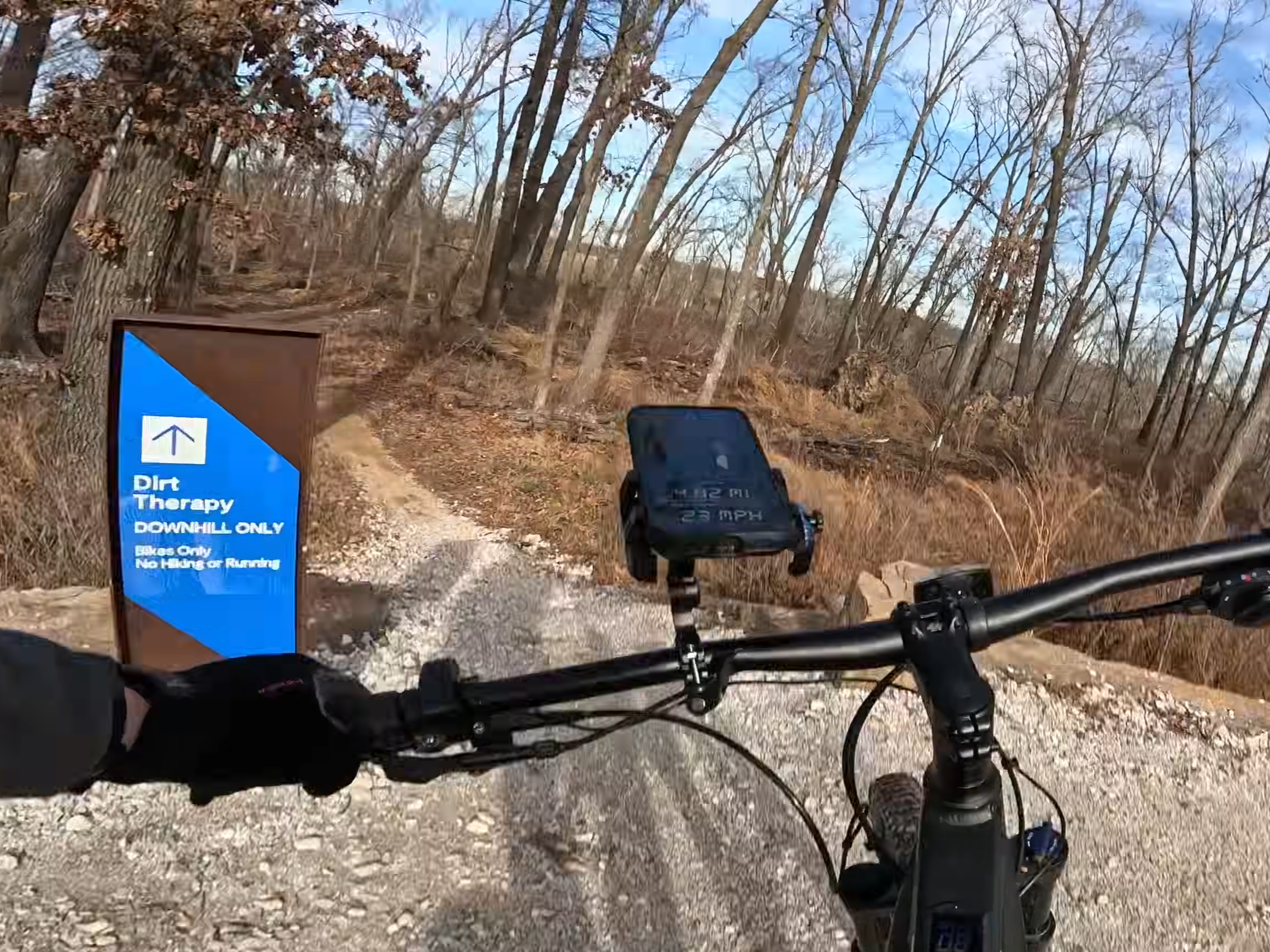
Since this is a hardtail (no rear suspension), it’s naturally going to be bumpier on chunky terrain compared to a full-suspension rig. However, the 29-inch Maxxis Rekon tires provided excellent grip, and the geometry felt stable.
We aren’t doing big jumps—that’s scary and not what we do—but for recreational flow trails and technical descents, the bike felt solid. The dropper seat post is a game-changer here, allowing us to get the saddle out of the way for better maneuverability on the descents.
Pavement Performance: Commuting Potential
While built for the dirt, some riders may plan on using this eMTB for more than trail riding. We took the Ridge+ on flat ground to see how it handles pavement and if it can truly hit that Class 1 top speed.
- Assist Levels 1 & 2: In the lower settings, the bike feels like a gentle helper. In Level 1, we found it easy to cruise between 9 and 13 mph depending on the gear. Bumping it up to Level 2 saw us cruising comfortably between 11 and 16 mph.
- Assist Levels 3 & 4: This is where the speed picks up for commuters. In Level 3, maintaining 13-15 mph was effortless. Level 4 pushed that cruising speed up to 15-17 mph.
- Top Speed Test (Level 5): In the highest assist level, we pushed the bike to see if it could hit the advertised 20 mph. We were able to reach 18 and 19 mph on the display, but the motor support seemed to taper off just shy of the full 20 mph mark.
Comparison: Ozark Trail M.2 Ridge+ vs. Ride1Up TrailRush
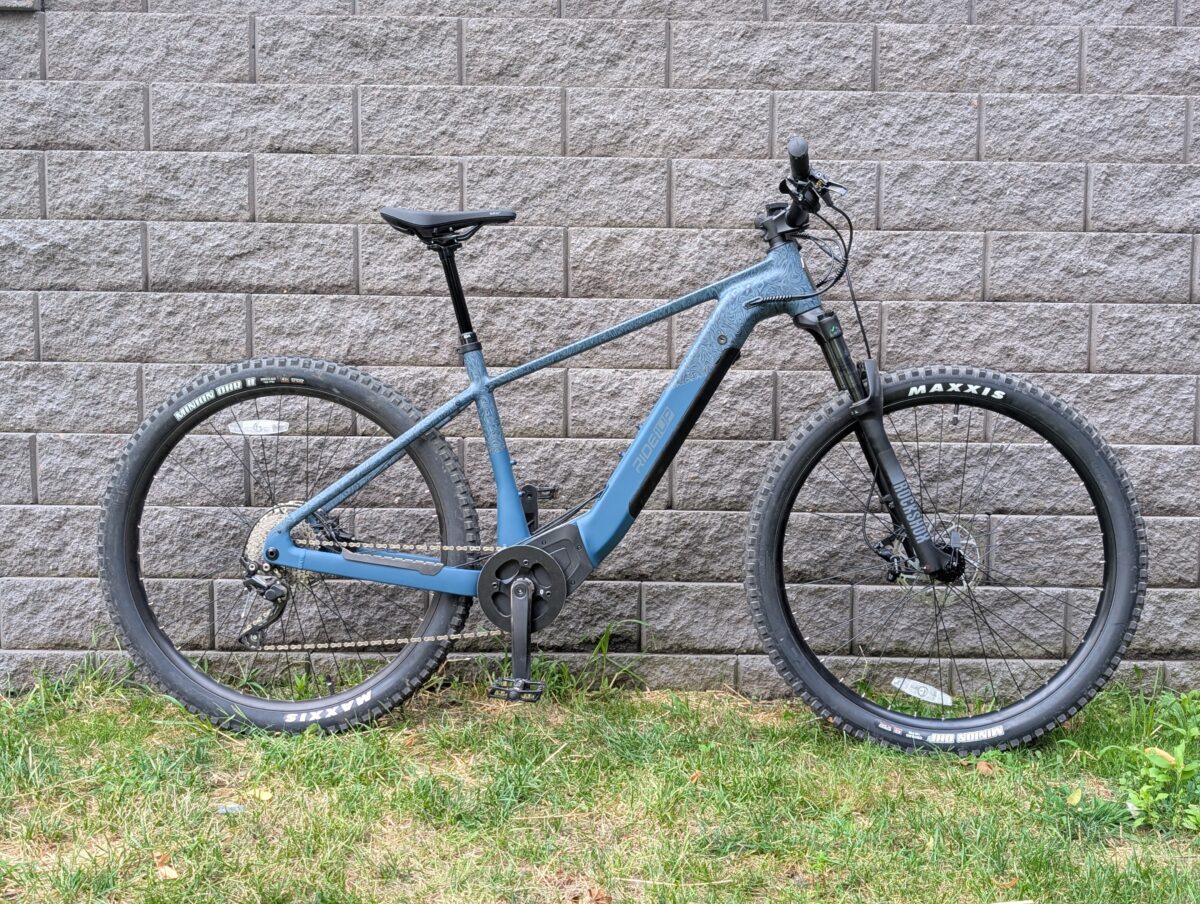
For riders willing to stretch their budget to around $2,095 for some key upgrades out of the box, the Ride1Up TrailRush is one of the most compelling options we’ve seen in the “more” affordable mid-drive eMTB space. It uses the German-engineered Brose TF Sprinter mid-drive motor with 90Nm of torque and steps up to a 10-speed Shimano Deore drivetrain. Control is improved with 4-piston Tektro Orion hydraulic brakes and a RockShox Judy Silver TK air fork, which saves weight and allows for precise air pressure tuning. The package is finished off with a 504Wh battery and a convenient handlebar-mounted display.
However, if your goal is to enter the sport without overspending, the $1,298 Ozark Trail M.2 Ridge+ remains a compelling choice. It provides a solid, upgradeable foundation for nearly $800 less. For beginners or recreational riders who don’t strictly need the specific features of the TrailRush immediately, the Ridge+ offers an accessible entry point into mid-drive performance.
Ozark Trail M.2 Ridge+: Pros and Cons
After putting significant miles on the M.2 Ridge+, here is our take on where it shines and where there are some tradeoffs.
Outstanding!
The Final Verdict: Who is the Ozark Trail M.2 Ridge+ For?
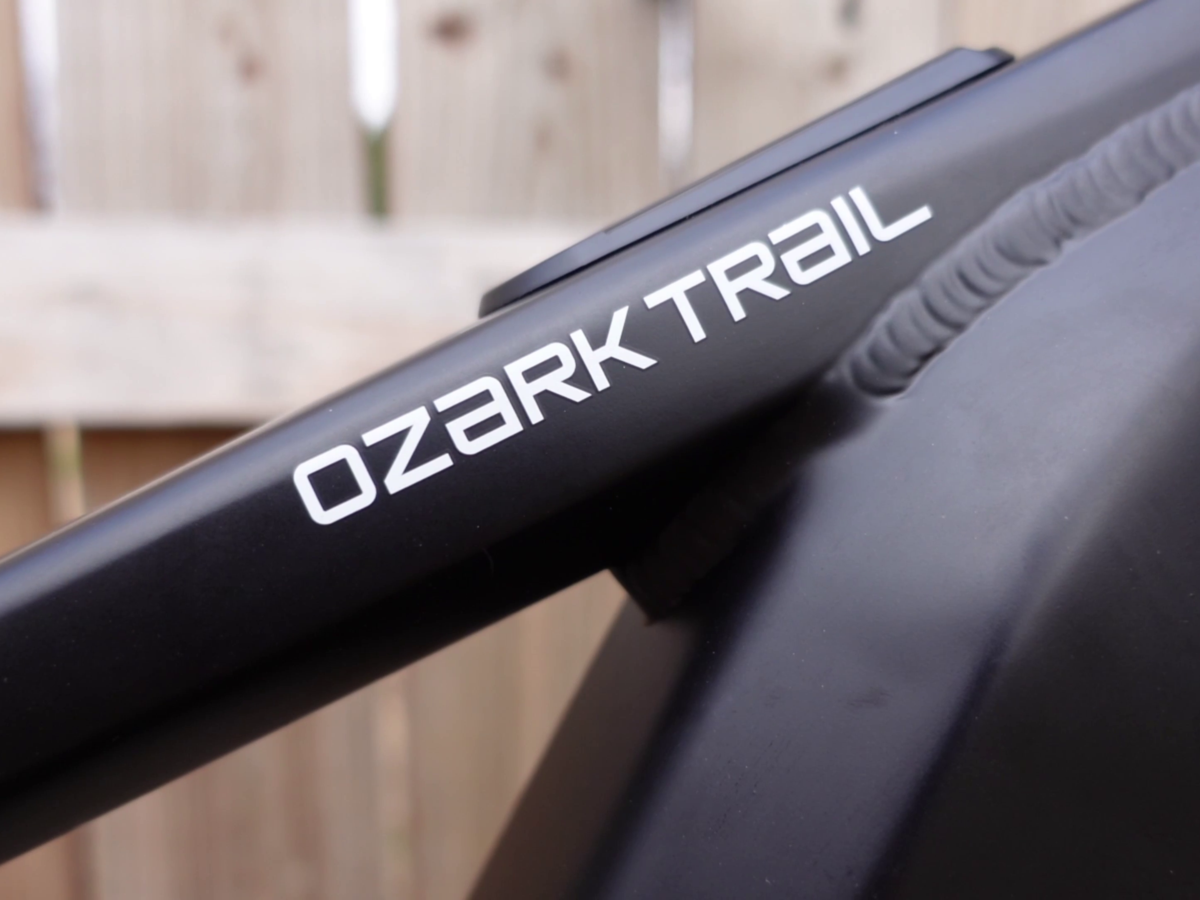
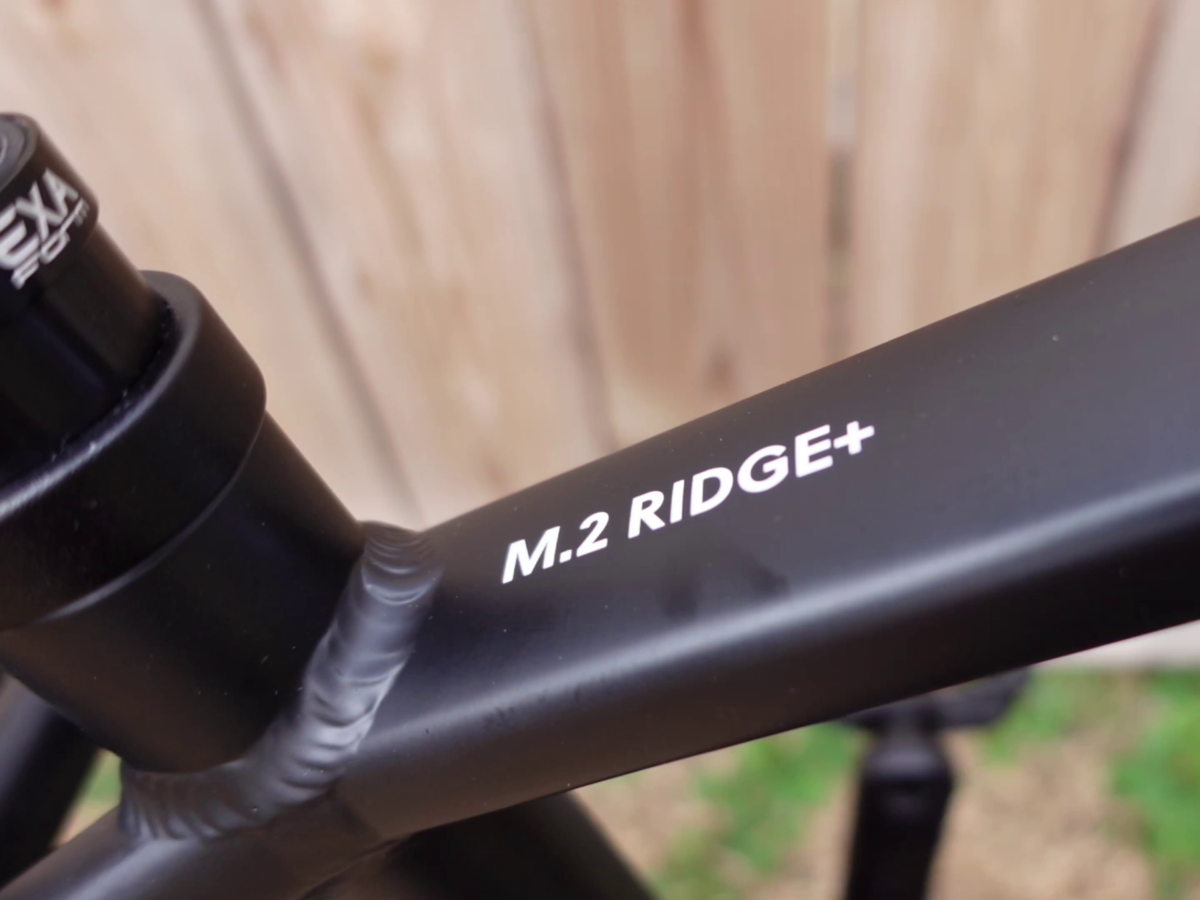
You can easily spend thousands and thousands of dollars on an eMTB. The Ozark Trail M.2 Ridge+ is a fantastic option for beginners or mountain bike curious riders that are looking for an actually affordable gateway into the sport. Mid-drive performance like this just isn’t found at this price and the tapered headtube and boost spacing leave the door open to meaningful upgrades down the line.
For budget-conscious enthusiasts who demand the natural feel of a torque sensor and a mid-drive motor without overspending, it’s hard to argue with the Ridge+. Walmart stepping into the direct-to-consumer game with a truly trail-ready eMTB wasn’t something we expected, but we’re here for it.
Did our review help you? If you decide to purchase the Ozark Trail M.2 Ridge+, you can support our work by using our affiliate link before you buy. It helps us make more reviews like this one at no extra cost to you. Thank you for your support!
