

After more than six years of hands-on testing, these are the best commuter ebikes we would recommend in 2026. By commuter ebike we mean a full-size bike that still looks and rides largely like a traditional one: built for daily rides to work, errands on pavement, and the occasional light trail. There is no single best commuter ebike, because the right one depends entirely on how you plan to ride and what you can spend.
This is not a ranked countdown. Every bike here wins at something specific, and the list runs from $548 up to $3,999, with a lot of the picks landing in the $1,000 to $2,000 range where most people end up shopping. We have tested every model on this list ourselves, and every one of them is certified to UL standards. A couple come from newer brands, but these are all bikes we would be comfortable recommending to our own family and friends.
Prices move constantly in this category, so treat the figures below as a snapshot from when we published this article. Our links go to current pricing, and using them costs you nothing while helping support the testing we do here. Thank you.
Best Commuter Ebikes of 2026: Watch Our Full Breakdown
Every pick below is covered in the video, with ride footage and key feature breakdowns. If you would rather read, keep scrolling, the written breakdown covers much of the same ground plus links to each full review.
Best Commuter Ebikes Compared
Here is how all twelve picks stack up on price, power, and battery capacity. Specifications come from our own testing and from each manufacturer; full details are in our individual reviews.
How We Test Commuter Ebikes
Every bike on this list has been ridden by us, not spec-sheeted from a product page. We weigh each bike on our own scale rather than trusting the claimed figure, which is frequently optimistic. We run each one up the same test hill near where we live, on throttle alone where the bike has a throttle, and we record how far the speed drops. We track real rides with GPS to get a range figure that reflects actual riding rather than a best-case lab number.
We also live with these bikes. That is where the things a spec sheet will never tell you show up: how loud a motor gets under load, whether a display is legible in sunlight, how involved assembly is when the box arrives, and what happens when you need to call customer service. Where a bike has a real weakness, we say so, and every pick below includes the trade-offs alongside the strengths.
The 12 Best Commuter Ebikes of 2026
1. Walmart Concord 27.5″ Commuter: Cheapest Commuter Ebike We’d Actually Recommend
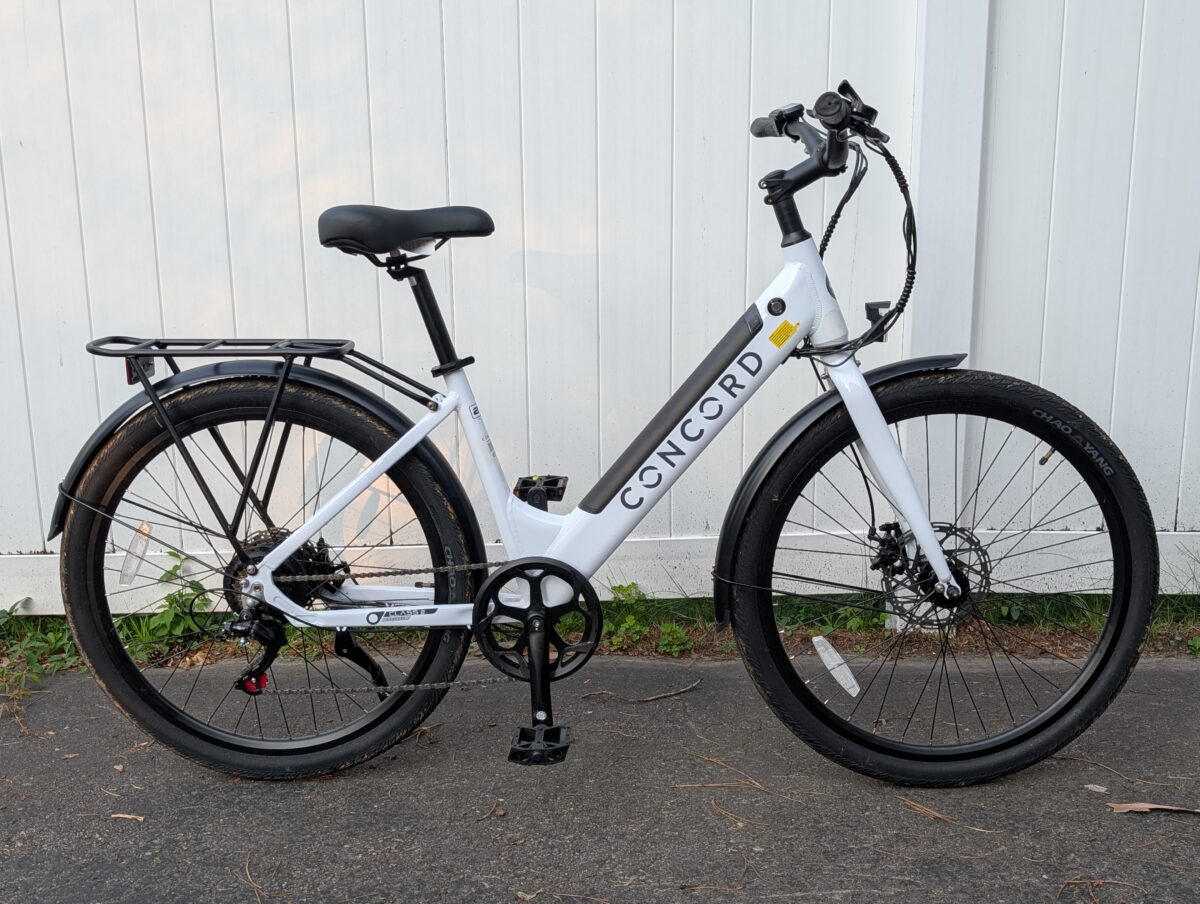
Priced at $548, this is the cheapest commuter on our list, and that qualifier, one we would actually recommend, is doing a lot of work. There are plenty of ebikes floating around this price that we would tell you to skip. What earns the Concord its spot is that it is a safety certified option from a well-established retailer, and it performs far better than the price tag suggests.
Power comes from a 350W motor that had no trouble holding us at the 20 mph top speed on flat ground, and it does a respectable job on slight to moderate hills. Steeper grades mean splitting the load and adding your own leg effort, but the seven-speed drivetrain gives you a low bailout gear for climbing and a high gear for keeping pace at the top end. On our scale it came in at 50 lb, which makes it one of the lighter bikes here and a lot easier to lift onto a rack or carry upstairs. Fenders and a 30 lb rated rear rack come in the box, so the essentials are covered. It is offered in a dark gray step-over frame and a white step-thru with a low standover height that suits shorter riders.
The compromises are where you would expect them. The drivetrain is an entry-level Shimano Tourney setup, and the brakes are mechanical rather than hydraulic. This is a mostly direct to consumer purchase, so you are assembling it yourself and you cannot walk into any Walmart for support. We have called their customer service a couple of times and they seemed ready to help, but we do not have a lot of data on that experience yet, and Walmart does not currently sell spare batteries on their website. If you are on a tight budget or buying your first ebike, though, this covers the basics without breaking the bank.
2. Retrospec Beaumont Rev 3: Best $1,000 Commuter Ebike
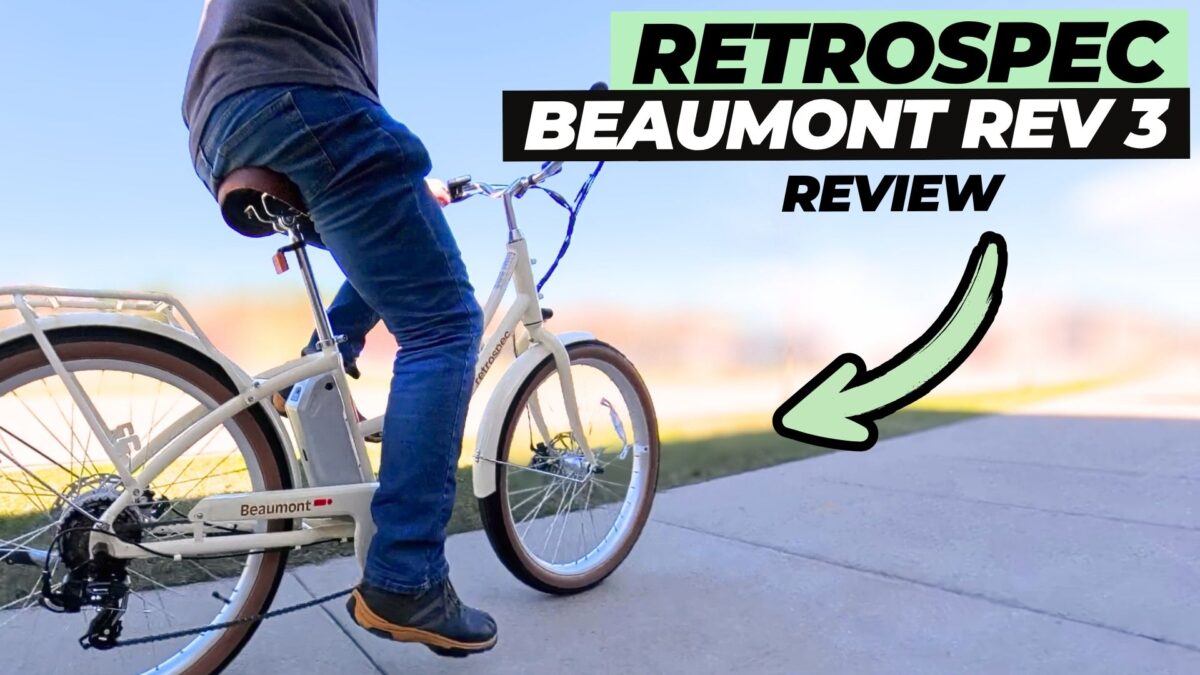
A city cruiser that captures a classic look and puts comfort and electronics quality ahead of chasing the flashiest specs. Dutch style handlebars, an adjustable quill stem, and a pedal forward design make this one for relaxed upright cruising rather than head-down commuting. A 22 lb rated rear rack and paint matched fenders come standard, and even the hardware is color coordinated to the colorway you pick.
On paper the specs look a lot like the Walmart Concord, which is a good demonstration of why numbers don’t tell the whole story. Rather than slapping on a generic motor and battery, Retrospec sourced custom electronics from Ananda, and they performed well beyond what the numbers suggest. The 350W motor carried our 200 lb rider up our test hill on throttle alone, which is genuinely surprising at these specs. The 36V 10.4Ah battery is advertised up to 42 miles, which is plausible in the lowest assist level on flat ground; expect closer to 25 miles with heavier power use. It is a Class 2 bike with a throttle and a 20 mph cap, and the system held that top speed even after two hard hill climbs.
To hit this price, mechanical simplicity is the sensible place to cut. You get the entry-level Shimano Tourney drivetrain, but paired with a mega range cassette that gives you a true bailout gear for climbs. Tektro mechanical disc brakes replace hydraulics and provide plenty of stopping power, though you will squeeze the levers harder than you would on hydraulics. The display is basic, using LED indicators for assist level and battery charge with no detailed ride data or settings to dig through. If you value simplicity, that is arguably a feature. Retrospec also says they have partnered with over 1,000 bike shops carrying their bikes, so a test ride or assembled purchase may be within reach, so call ahead to confirm stock.
3. Lectric XPress 2: Best Value Commuter Ebike
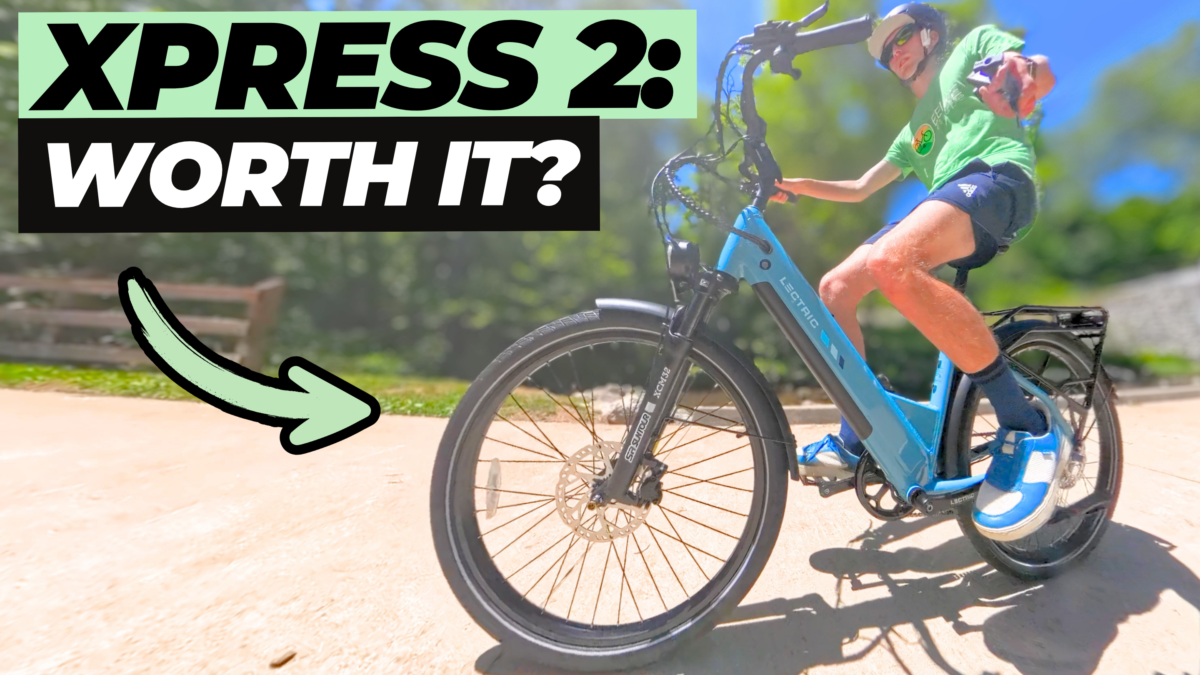
At $1,399 this is where performance and component quality take a real step up. Lectric is the best selling ebike company in the US, and when they iterate they tend to do it across the board rather than in one or two places. This generation brings a Shimano Altus drivetrain, custom Star Union brakes, and an SR Suntour suspension fork that is best-in-class at this price.
The display received one of the biggest upgrades. It is now a TFT panel that is easy to read, shows a lot more ride data, and replaces the old P settings with menus where you actually know what you are changing. Fenders and a 30 lb capable rear rack now ship in the box, where the original came bare. It is offered as a step-over with a traditional diamond frame, straighter bars, and a fixed stem for a more active posture, or a step-thru that leans into cruiser geometry with swept back bars and a quick release adjustable stem. Those two frames ride differently enough that they are almost separate models.
The 500W version is gone, so the XPress 2 comes only as a 750W build with a 14Ah battery advertised up to 60 miles, but expect nearer 30 with heavy throttle or high assist use. That motor peaks at 1,310 watts with up to 85 Nm of torque and ripped up our test hill on throttle alone, and Lectric made it noticeably quieter than the original, which was one of our few complaints. This is also the first bike on our list with a torque sensor, and it can switch between torque and cadence sensing. Most riders appreciate the natural feel of the torque sensor, and the PWR+ system is designed to make accessing full motor power easier than usual, thanks to its torque multiplier setting. Switching requires going into the settings, so no swapping on the fly. The XPress 2 is sold directly, and Lectric’s bikes are among the easiest to assemble of any direct-to-consumer brand. Their packaging is almost entirely recyclable, and your purchase comes with support from one of the most highly regarded customer service teams in the industry.
4. Ride1Up Vorsa: Most Adaptable Commuter Ebike
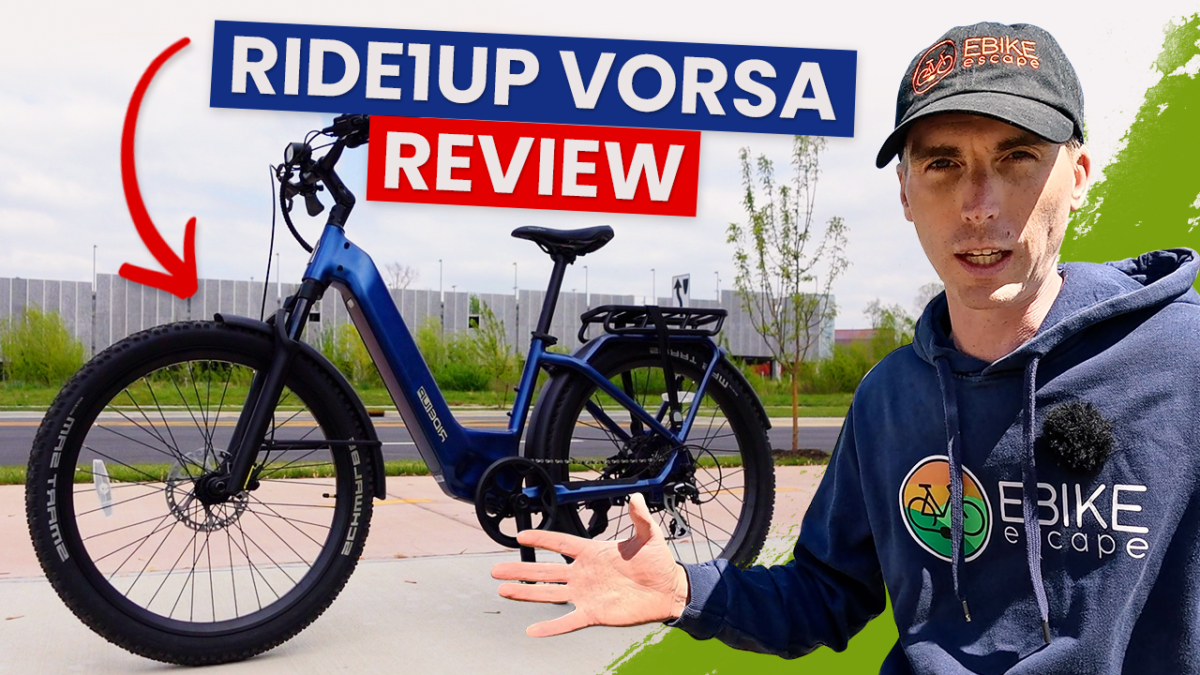
Currently around $1,495, this is the pick if you need one bike that can handle a commute, haul cargo, and get off pavement. The centerpiece of that versatility is a modular rear rack rated up to 150 lb, the highest payload capacity on our list. It uses Ride1Up’s Connect Plus system, making it easy to swap compatible accessories without tools, and offers a rack extension if you need extra space in the back. The accessory lineup includes a captain’s chair, passenger kit, cooler, baskets, and more.
It is also one of the more powerful bikes here. A 750W AKM rear hub motor peaks at 1,400 watts with 95 Nm of torque, which erased our test hill. Battery capacity steps up to 15Ah for an advertised 30 to 60 miles, which we would call a fair estimate. You can ride with either a cadence or torque sensor, though like the XPress 2 this is a menu setting rather than an on-the-fly swap, and every assist level is individually customizable. The component list is strong for the money: a higher-end Shimano Acera drivetrain, Schwalbe Smart Sam 27.5 x 2.6-inch tires that genuinely help off road, and Star Union hydraulic disc brakes with a larger 203 mm rotor at the rear for when you are hauling weight.
A few things to weigh. The 100 mm coil suspension fork is on the basic side and will not let you tackle anything extreme, though it offers real support on bumps and has hydraulic lockout. The extra power comes with a motor that is noisier than most here, which you do get used to. Assembly is also a bit more involved than some other direct to consumer options. If the power appeals but you do not need the hauling capability, Ride1Up sells the Vorsa Lite, which drops the fenders and rack and runs skinnier 2.2-inch tires.
5. Aventon Level 4 REC: Smartest Commuter Ebike
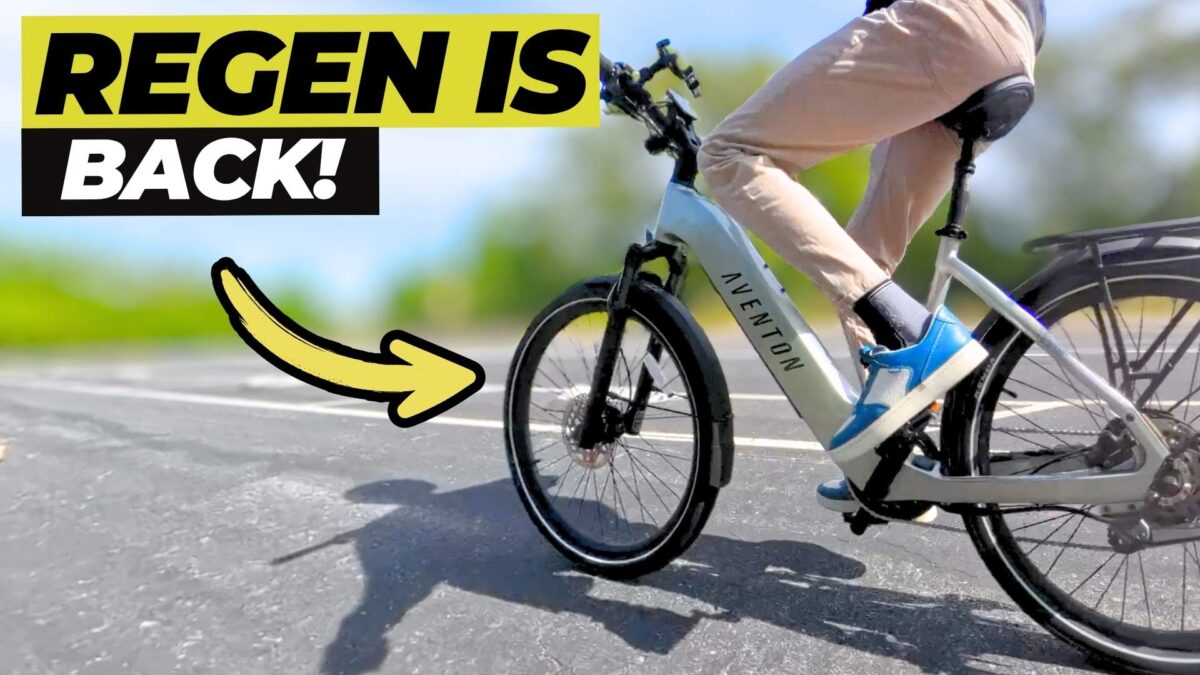
At $1,999 the price climbs, and so does the feature count. Ride tuning gives you fine control over every assist level, and the connected security suite is the most complete we have tested: a keyless battery, an electronic rear hub lock, 4G tracking, remote locking, and unusual activity notifications pushed to your phone. Geofencing lets you draw boundaries on a map, and if the bike crosses one it immobilizes itself. All of it runs through Aventon’s Control Unit, and over-the-air firmware updates mean the bike tends to get better after you buy it.
New this generation is a 750W motor that makes a real difference on hills and is much peppier off the line. Aventon also brought back regenerative braking and coasting, technology most brands abandoned years ago. The range benefit is modest, up to about 10 miles by Aventon’s own figures, but the regen coasting may also save your brake pads some wear by slowing you on descents. Boost mode taps 120% power, or 96 Nm of torque, in 30 second bursts, with a five minute cooldown so it cannot be spammed. Hold mode keeps the bike from rolling backward when you release walk mode on a hill. You can also hot swap between torque and cadence sensing while riding, which makes that feature far more useful than a menu toggle.
It comes as a step-over or step-thru and in two sizes, so fit can actually be dialed in. Aventon’s dealer network of over 1,800 bike shops is the biggest advantage here for anyone who wants a test ride, an assembled bike, or in-person support, and the build quality with smooth welds and premium paint outclasses most bikes at this price. Considerations: their cadence sensor responds to how fast you pedal rather than simply on or off, which takes adjusting to; some performance settings require the companion app, though it is one of the better apps out there; and the connected security features run on a $20 per year subscription after a one year trial. Worth knowing that the Pace 5 REC has the same power and tech in cruiser geometry for $100 less, minus the fenders and rack.
6. Monarc Tracer: Best Commuter Ebike From a New Brand
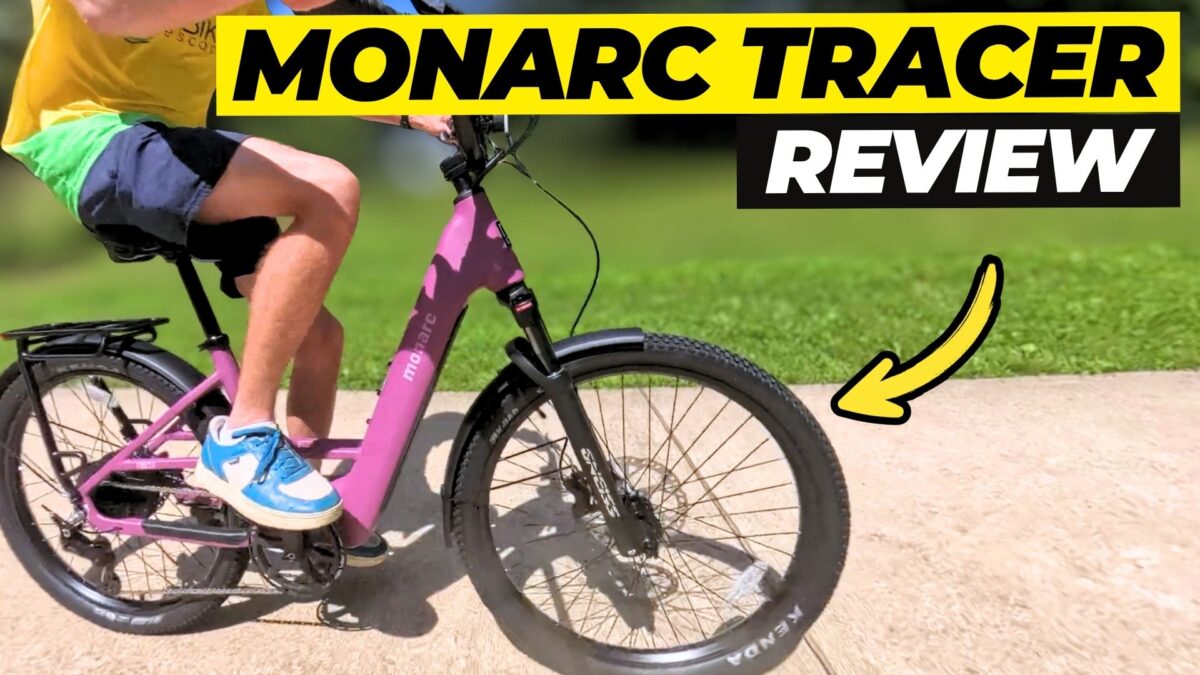
If you are willing to take a chance on a newer name, the Monarc Tracer at $1,899 is hard to beat. Open the box and you get not one but two 15Ah LG-cell batteries, plus a 5 amp fast charger that fills them from empty in about three hours instead of the five to seven we are used to. This is not a dual battery bike, it runs one at a time, but each pack is advertised up to 65 miles of range, and our range test drained one battery down on a very demanding ride and it yielded just under 36 miles. Strapping the second battery on the included 59 lb capacity MIK HD rack boosts your range to about 70 miles on the low side, and up to an optimistic 130 miles with very efficient riding, effectively eliminating any range anxiety.
The Bafang 750W motor is paired with a 30-amp controller for 1,638 watts of peak power and up to 85 Nm of torque, making it one of the better hill climbers here. It runs a nine-speed Shimano Cues drivetrain with tight shifts, four-piston Talon P4 hydraulic brakes from Star Union with a 203 mm front and 180 mm rear rotor, and an in-house 80 mm travel Gneiss reverse arch fork. That is a seriously good component list at this price. The large touchscreen display is unique to Monarc, with a customizable layout, deep performance settings, and detailed ride data, and it doubles as the hub for Bluetooth add-ons like their smart helmet, rear radar, and tire pressure monitoring.
The main consideration is simply that Monarc is new. The signs are encouraging: they are backed by Lectric, they offer a five-year warranty on the bikes where most brands give one or two, and they are leaning hard into customer service. Note the batteries carry a separate one-year warranty, and that a new brand’s support reputation can only be proven over time. Water resistance is among the best here, with IPX7 rated batteries and IPX6 electronics.
7. Euphree City Robin 3: Most Comfortable Commuter Ebike
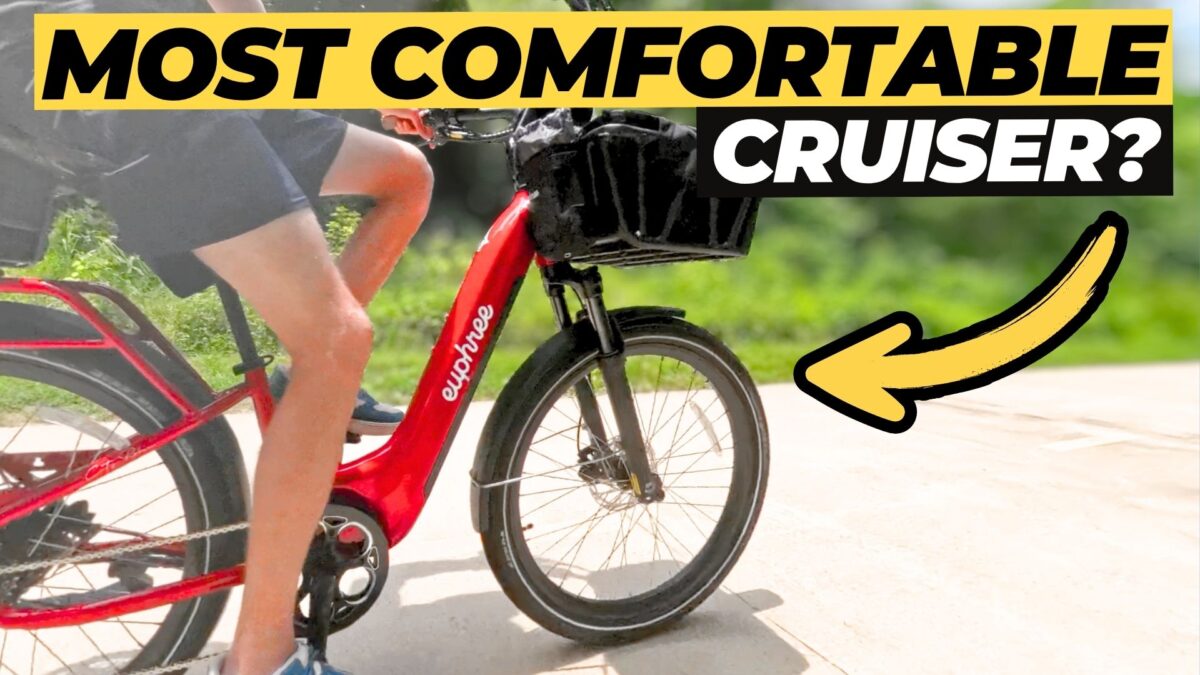
Comfort has always been Euphree’s emphasis, and at $2,199 the City Robin 3 is their most fully featured commuter and their plushest ride. That is because they include an SR Suntour NCX suspension seatpost out of the box, something they pair with every single model in their lineup. This generation, they cut the seat tube as low as possible so shorter riders can now get the benefit of that suspension post too.
The benefits go beyond comfort, thanks to Euphree’s choice of quality brand-name components. It features a 750W Bafang rear hub motor, a 15Ah battery with LG cells, two-piston Tektro hydraulic disc brakes, and a 120mm travel suspension fork from SR Suntour. The welded MIK HD rack is rated to 100 lb, giving it real hauling capability. The Shimano Altus 8-speed drivetrain is fairly ordinary, but the 10 tooth cog on the rear freewheel produces the slowest pedal cadence of any bike we have tested at Class 3 speeds (up to 28 mph). Sensor swapping between torque and cadence is there, though it requires the menu, and each assist level has three power settings plus control over how quickly power engages. The throttle response is adjustable too, which is an accessibility feature we wish every ebike had.
Things to consider: this 750W motor is not the most powerful we have tested, so if you want more guts, look at the Euphree Stellar Falcon 2 with its more active posture and all-terrain capability. The display could be easier to navigate. And at 72 lb this is not a light bike. If you ride mostly pavement and want something more manageable, the Solar Sparrow is the lighter option. Euphree has partnered with over 180 bike shops, so test rides are out there.
8. Aventon Soltera 3 ADV: Best Low-Maintenance Commuter Ebike
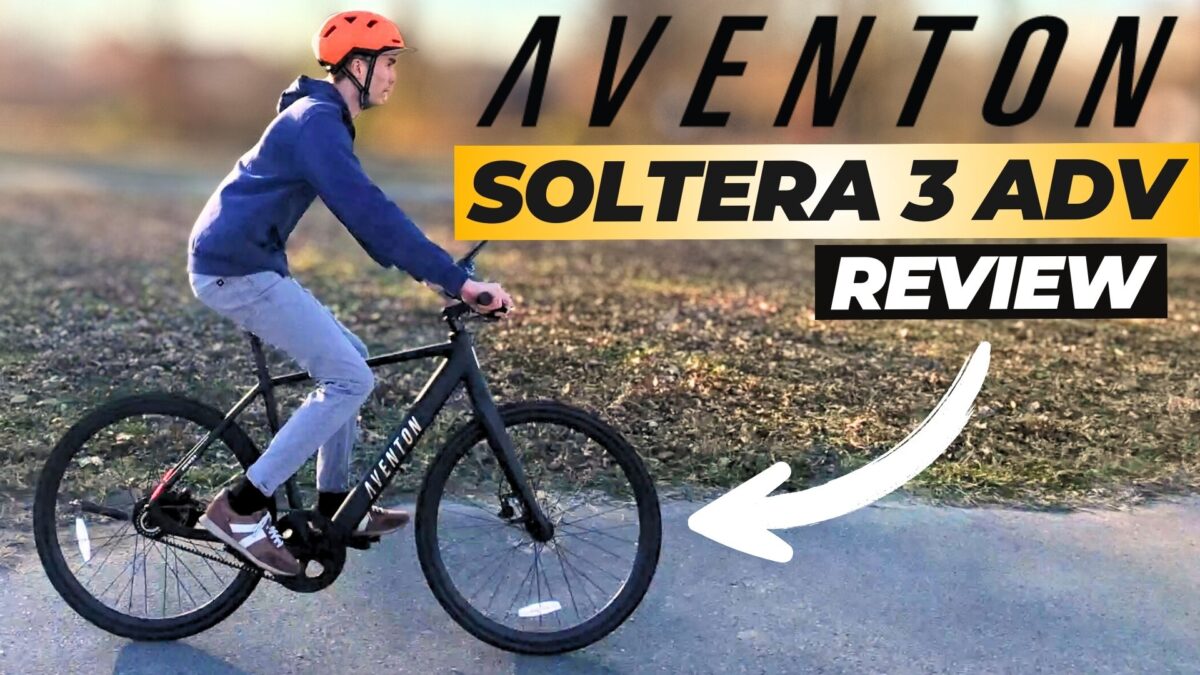
At $1,499, the star of this one is a Gates carbon belt drive paired with a single speed drivetrain, a combination that all but removes drivetrain maintenance from your life. No derailleur to knock out of alignment, no chain to grease, and Gates rates the belt past 10,000 miles. It is Aventon’s first belt drive ebike and their lightest, advertised at 37 lb, though our scale put the large frame at 39 lb.
It also does a good job of not looking like an ebike. The battery is hidden entirely inside the down tube, the cables run internally, and the light covers are blacked out. A fourth size, extra large, joins the lineup this generation, so taller riders who felt cramped on older Solteras finally have a proper fit. On the road it runs silent, and the 250W motor peaks at 500 watts with 40 Nm of torque, and because the bike is so light, getting to its 20 mph top speed happens quicker than the numbers suggest.
The main limitation is steep hills, since you are locked into one gear with no throttle to fall back on. If you like the look but live somewhere hilly, the chain-driven Soltera 2.5 is the better call. A few other trade-offs: the battery is sealed into the frame and not removable, so the whole bike has to come to an outlet, which matters if you live somewhere cold without heated storage. The 10Ah battery is small but typical for a lightweight build, advertised up to 70 miles. This one also skips Aventon’s ACU security, so no GPS tracking or electronic wheel lock, and it ships without fenders or a rack. With no throttle and a 20 mph cap, it is a true Class 1 ebike.
9. Velotric Tempo: Best Lightweight Commuter Ebike
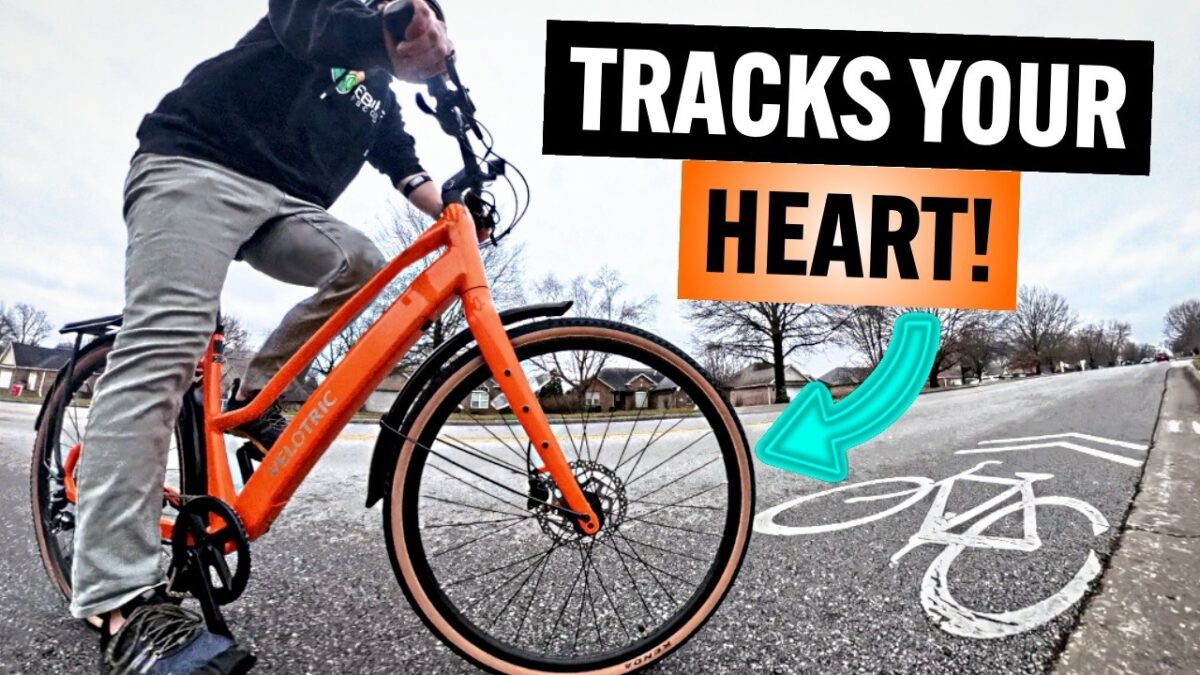
This is another option that does not look like an ebike and offers enough power to go fast without robbing the pedaling experience. This one gets a lot right that other lightweight options miss. It comes in around 40 lb, in mid-step or high-step frames with two sizes each, and it has a throttle. The battery cover is paint matched and blends into the frame, but the battery itself is removable, which matters a great deal if you live somewhere with real winters or don’t have a power source where you store your bike.
The components hold up: an eight-speed Shimano Acera drivetrain with a wide gear range and Shimano hydraulic disc brakes. On top of that you get ride tuning for every assist level, sensor swapping between torque and cadence on the fly, and an adjustable max speed anywhere from 12 to 28 mph. NFC card unlock means tapping to turn on rather than remembering a passcode, and both Apple Find My and Android Find Hub are built in, so you can track the bike without paying a subscription. Velotric is one of the only brands we know of that supports Android Find Hub. Unique here is the heart rate monitor in the box, which pairs over Bluetooth to enable pulse mode and turns the Tempo into a fitness bike that adjusts motor power for heart zone training.
The considerations are the same as for any true lightweight, because weight and specs have to be balanced. The 350W motor helps on hills but you will contribute leg effort on steeper grades, and the 10Ah battery advertised up to 60 miles is more realistically 20 to 30 on the low end depending on how power-heavy you ride. If you need a lightweight with more performance, Velotric’s Breeze 1 steps up to a 750W motor and 13Ah battery in a step-thru cruiser build. Velotric’s water resistance ratings are best-in-class, with IPX7 batteries we have literally dunked in water and kept riding, and they have partnered with over 1,600 bike shops.
Save on any Velotric ebike: our code eBikeEscape60 takes $60 off and stacks with sale pricing.
10. Aventon Level 4 ADV: Best Mid-Drive Commuter Ebike
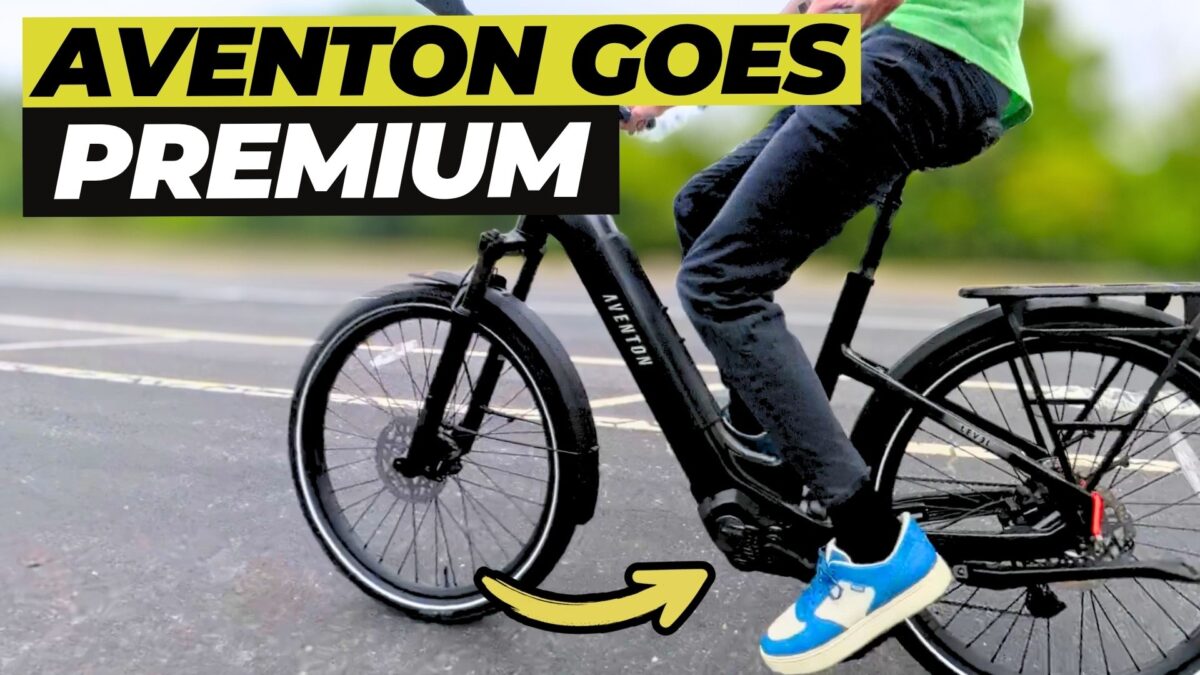
At $2,799, this is $800 more than the Level 4 REC, and that premium buys Aventon’s first mid-drive commuter, powered by their new Ultro S motor. If you want the bionic leg feel, a motor that behaves like an extension of your own effort, that is what a mid drive gives you, leveraging the gears rather than pushing from the rear hub. Putting the motor down by the cranks also moves weight toward the center of the bike for a more balanced feel.
Aventon tuned this one for city and pavement riding, so cruising into the mid 20s is effortless, and up to 100 Nm of torque handles steeper climbs. The headline feature is the 10-speed Shimano Cues drivetrain with electronic shifting, so you tap a button on the right bar instead of pulling a cable. Auto shift picks the gear for you based on speed and target cadence and is one of the smoothest automatic systems we have tested, and you can always override it with the paddle shifters, or turn it off altogether. An auto pedal assist mode adapts power so you are not constantly changing levels, and uphill start assist gives you an extra burst from a dead stop on a grade. The ACU security suite carries over, which includes GPS tracking, geofencing, movement alerts, and remote locking, on the same $20 per year subscription after the free first year.
For the considerations, at this price we would have liked a better front suspension fork, and the saddle is firm enough that you may end up replacing it. The rear rack is rated to 59 lb but is not MIK compatible. The turn signals can be hard to see in direct daylight, and while the auto shifting is excellent going up through the gears, it can be sluggish coming down. Note also that the throttle is an optional add-on rather than included, which is common for mid drives. Regenerative braking and coasting are unique to the Level 4 REC and are not on this model. The closest competitor is the Velotric Discover M at $2,499, which has a hot swappable sensor and includes a throttle.
11. Velotric Discover 3: Best Overall Commuter Ebike
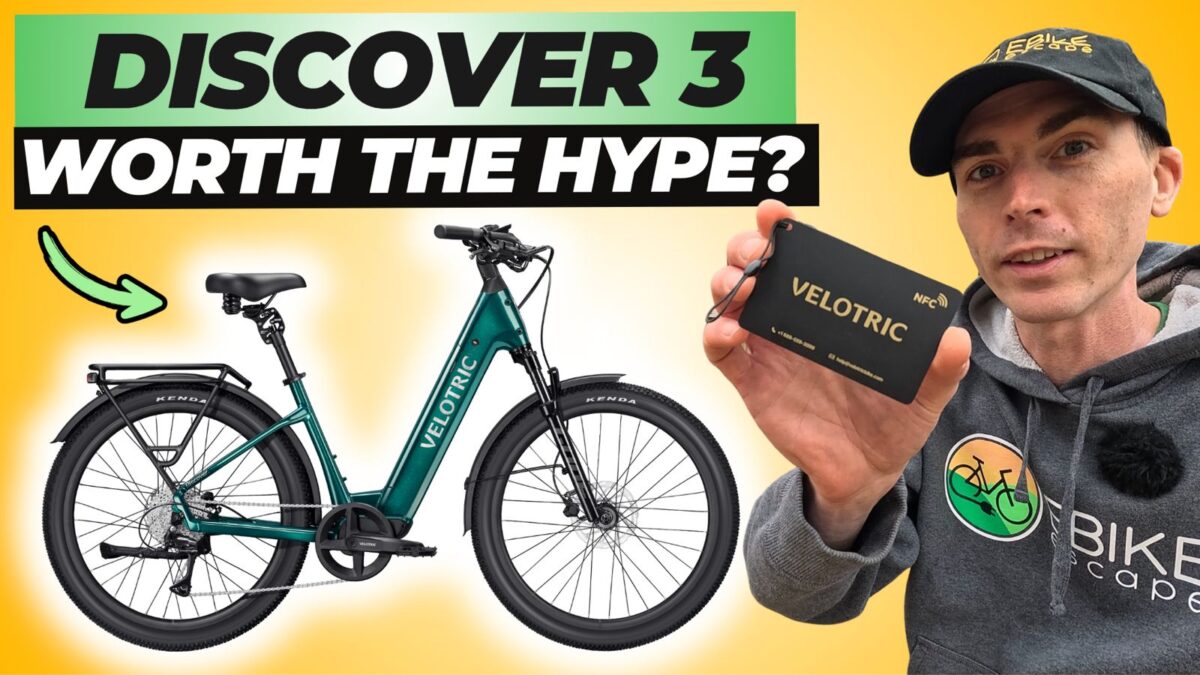
At $1,999, this is the bike we would hand to anyone who wants a really nice commuter and does not want to overthink it. It wins this category not by doing any one thing better than everything else, but by doing everything well. The Discover 2 was one of our favorite commuters ever, and the Discover 3 builds on it with meaningful upgrades without changing the price.
The upgrades are mostly about ride quality. An adjustable air suspension fork up front can be tuned to your weight with a shock pump, but the real MVP is the suspension seat post, which does a huge amount of the work soaking up bumps. Combine that with the upright, accessible step-thru geometry and adjustable stem and you get a bike that is supremely comfortable and easy to get on. Sensor swap lets you change between torque and cadence on the fly, ride tuning covers every assist level, and the 750W motor made it up our test hill on throttle alone, dipping to 7 or 8 mph, which is respectable on that grade.
You also get NFC card unlock, Apple Find My and Android Find Hub for subscription-free tracking, and settings you can control from either the display or the app. Two sizes accommodate riders from 5’2″ up to 6’7″, and the IPX7 battery and IPX6 electronics ratings lead the category. The 3.5-inch color LCD is one of our favorite displays on any ebike we have tested, and the lighting package steps up to a 500 lumen headlight. It comes fully outfitted with a 66 lb capable MIK HD rack and metal fenders. For considerations: the suspension seat post adds about four inches to minimum seat height, so shorter riders should check the fit carefully, and it is only offered as a step-thru.
Save on any Velotric ebike: our code eBikeEscape60 takes $60 off and stacks with sale pricing.
12. Priority Skyline: Best Premium Commuter Ebike
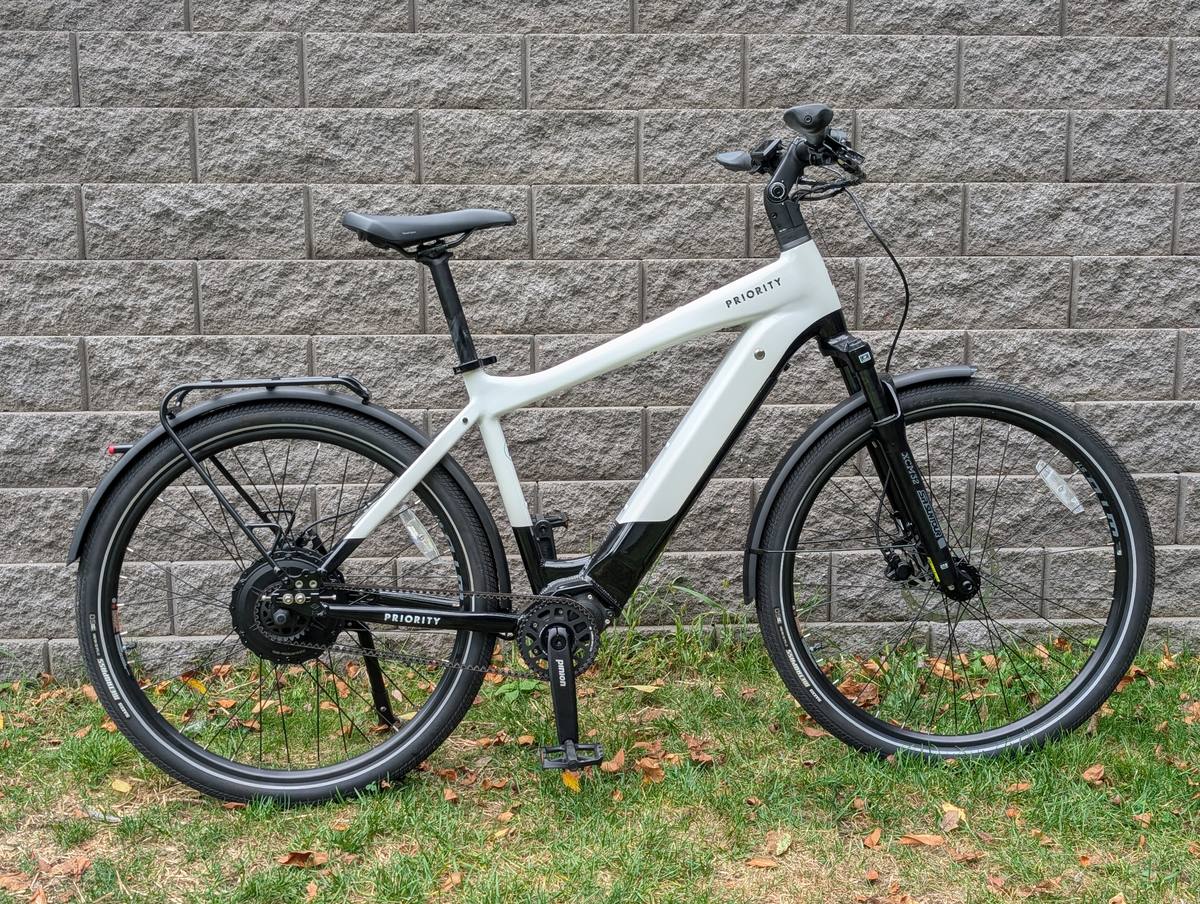
At $3,999 this is the ceiling of everything we are covering, and it is for the rider who wants the most refined, lowest maintenance drivetrain available and never wants to think about shifting or upkeep again. Priority markets it as the most advanced ride you never have to think about, and in our experience that mostly holds up. Some context on the price: before the Skyline launched, an ebike with a Pinion 12-speed gearbox ran somewhere between $5,600 and $6,500. Undercutting that by well over a thousand dollars is the story here.
The heart of it is a Pinion Smart.Shift 12-speed gearbox with a 600% gear range, paired with a Gates Carbon Drive CDX belt. Most people who see it, including people who know ebikes, assume that housing at the cranks is a mid drive motor. It is not. The motor is a 750W rear hub peaking at 1,056 watts with 90 Nm of torque and a torque sensor, and pairing a gearbox with a hub motor is exactly what lets the Skyline keep a throttle, Pinion’s all-in-one gearbox and motor systems do not have one. Shifting happens at the press of a paddle with no cable to stretch and no derailleur to knock out of alignment. Download the Pinion Smart.Shift app and you also get Start Select, which drops to a chosen gear when you stop, and Pre-Select, which holds a target cadence and shifts for you whenever you briefly stop pedaling.
On our test hill, throttle only, it never dropped below 14 mph, which is among the better results we have recorded. Pedaling, the gear range is the story: first gear is so easy to spin that we kept shifting up, and in assist level five we held 10 to 11 mph up the climb without much strain. It ships as a Class 2 ebike at 20 mph and unlocks to 28 mph in the advanced settings, though hitting 28 takes genuine leg effort. The 48V 15Ah battery is good for roughly 20 to 60 miles depending on how you ride, and the 2.8 amp charger fills it in a bit over five hours. It weighs 68 lb with a 300 lb total capacity, and comes in three sizes fitting riders from 5’4″ to 6’3″. Tektro hydraulic brakes on 180 mm rotors, Maxxis Metropass 27.5 x 2.0-inch tires, an 80 mm SR Suntour XCM32 fork, metal fenders, a rear rack, an adjustable stem, and mounting points all over the frame round it out.
The considerations are real but narrow. The throttle has a deliberate delay from a standstill, which is a sensible safety choice but frustrating if you want power immediately. There is no step-thru frame in any size, which rules the bike out for a lot of riders who would otherwise love a simple belt drive commuter. The five assist levels feel too similar to one another, and we would like the top level to deliver more without so much leg input. And the gearbox needs an oil change every 6,200 miles, which is minimal maintenance but not zero. What gives us confidence recommending a $4,000 ebike is that Priority is not a startup: they have built low-maintenance belt drive bikes since 2014, and they answer online, by email, and by text 365 days a year. If the gearbox is more than you need, their Current model at $2,799 offers the same belt drive simplicity without the gearbox or suspension fork.
How to Choose a Commuter Ebike
Motor: hub drive or mid drive?
Most commuter ebikes use a rear hub motor, which pushes you from behind and is simpler and cheaper. A mid drive sits at the cranks, leverages your gears, and feels more like an extension of your own pedaling, with weight centered for better balance. Mid drives cost more, and on this list the Level 4 ADV is the example. For flat and rolling terrain, a good hub motor is plenty.
Wattage is only half the story
Nominal wattage gets advertised, but peak wattage and torque tell you more about how a bike actually climbs. A 350W motor carried a 200 lb rider up our test hill on the Retrospec Beaumont Rev 3, while plenty of 500W motors can feel sluggish. Look at peak output and Nm of torque, and look for real-world hill testing rather than the number on the box.
Torque sensor or cadence sensor
A cadence sensor delivers power whenever your legs are turning, which feels more like an on/off switch and provides consistent motor support. A torque sensor feels far more natural because the motor responds to how hard you push into the pedals. Most people prefer a torque sensor, and a growing number of bikes here let you switch between the two.
Battery capacity and honest range
Advertised range figures are best-case numbers from the lowest assist level on flat ground. As a rough rule, expect to see roughly half the advertised figure if you ride power-heavy with a lot of throttle. Watt hours (volts multiplied by amp hours) is the number to compare across bikes rather than amp hours alone.
Class 1, 2, and 3
Class 1 is pedal assist only up to 20 mph. Class 2 adds a throttle, still capped at 20 mph. Class 3 goes to 28 mph on pedal assist with no throttle. Many Class 3 ebikes will keep 20 mph throttle speeds active, making it more a hybrid Class 2/3. Local rules vary on where each class can ride, especially on paths and trails, so check what applies where you live before buying.
Support, assembly, and dealer networks
Direct to consumer brands deliver more bike for the money, but the box arrives at your door and some assembly is on you. Brands with dealer networks, Aventon with over 1,800 partner shops, Velotric with over 1,600, Retrospec with over 1,000, give you the option of a test ride, buying a fully assembled bike, and somewhere local to go when something needs fixing. That is worth real money to a lot of riders.
Safety certification
Every bike on this list, along with its battery, is certified to UL standards. We would not recommend an ebike that is not, and we would encourage you to treat that as a hard requirement no matter where you end up shopping.
Final Thoughts
There is no single best commuter ebike. The right one comes down to how you plan to ride and what your budget allows. If you want the most well-rounded package and do not want to overthink it, the Velotric Discover 3 is the easiest recommendation on this list. If you are shopping on the tightest possible budget, the Walmart Concord covers the basics. And if you want the most refined, lowest maintenance bike here and you genuinely love to pedal, the Priority Skyline is in a class of its own.
We have full reviews on every model above if you want to go deeper, written reviews on eleven of them, and a full video review of the Priority Skyline.
