
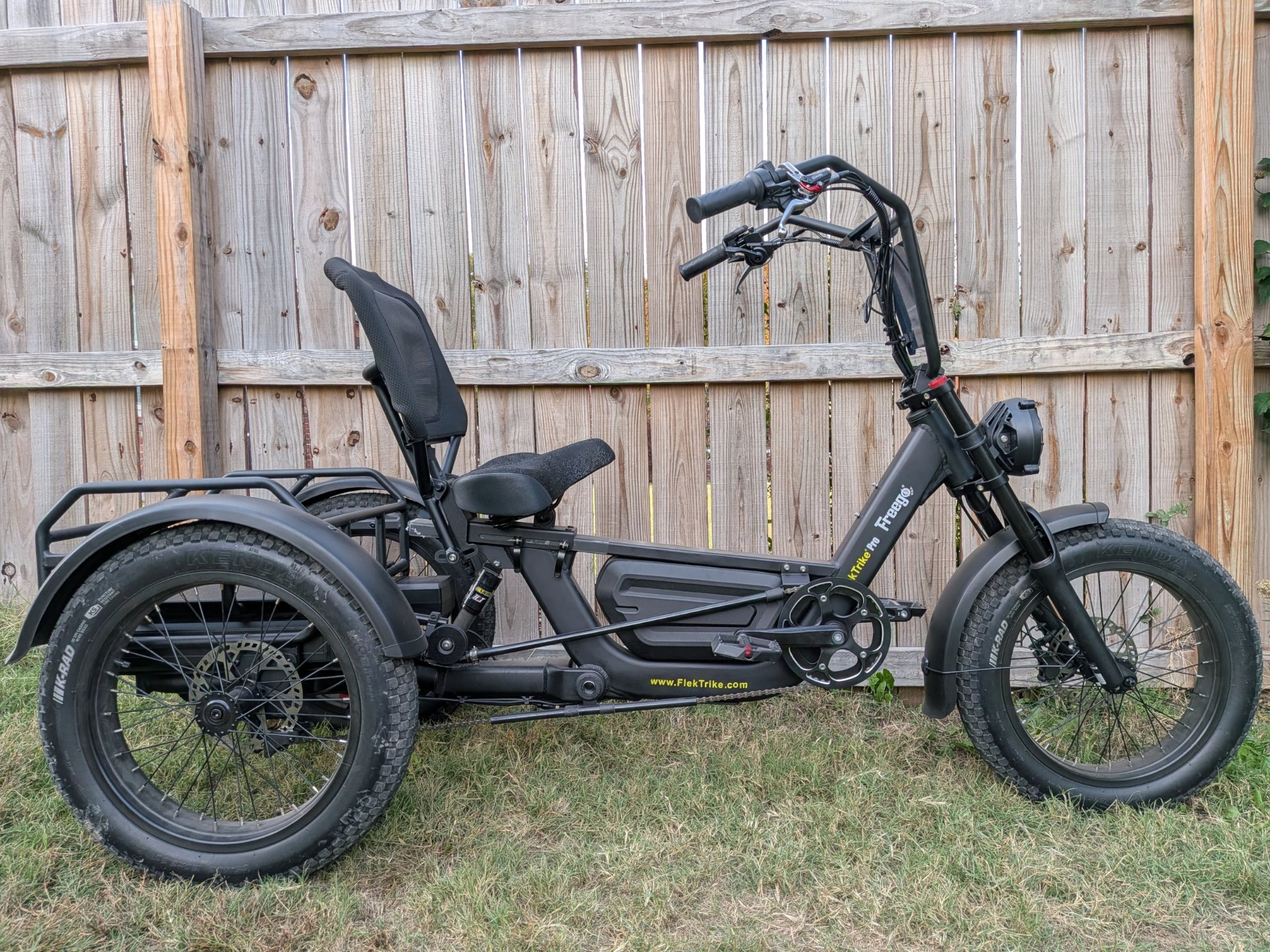
Electric trikes are built for stability, which is exactly why one that can give up that stability on purpose caught our attention. The FlekTrike Pro from Freego is a semi-recumbent electric trike with a lockable tilt system: flip a lever and the front of the trike leans into turns like a bike, flip it back and it rides like any other three-wheeler. It’s also unusually well equipped for a trike, with full suspension, a 750W rear motor with a differential, a torque sensor, and two 48V 30Ah batteries for 60Ah of total capacity, several times what most etrikes carry. At $3,099 at the time of writing, it’s priced well above the typical etrike, so it has to justify itself with more than novelty.
Below, we cover how the tilt system works, the semi-recumbent seat and suspension, the motor and dual batteries, fit for short and tall riders, and what assembly involves. Then we get into how it rode on pavement, sidewalks, grass, and rough trails in both tilt and locked mode, how the 750W motor handled our hill climb, and how it compares with two more conventional etrikes, the budget Lectric XP Trike 2 and the midrange Velotric Triker.
Ebike Escape is reader-supported. If you buy through our FlekTrike Pro link, we may earn a commission at no extra cost to you.
FlekTrike Pro Video Review
Our video review starts with the tilt system, then walks through the components, the display and controls, the seat and fit for a 5’5″ and 6′ rider, assembly, and the dual batteries. From there, we ride it in first person on flat pavement, sidewalks, grass, and a rocky trail, switching between tilt and locked mode, put the 750W motor on our hill climb, and finish with the pros and cons.
Standout Features
Lockable Tilt System
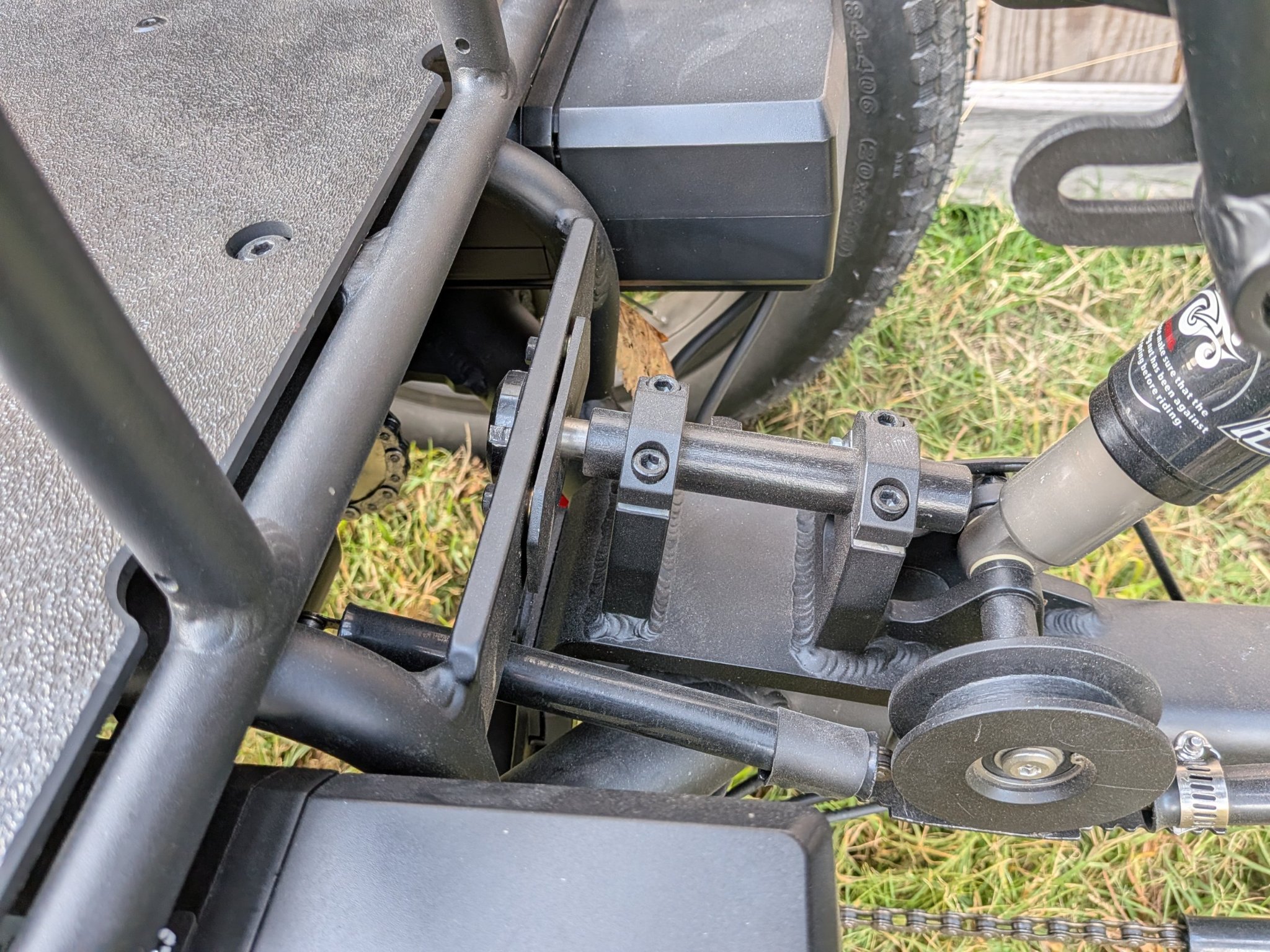
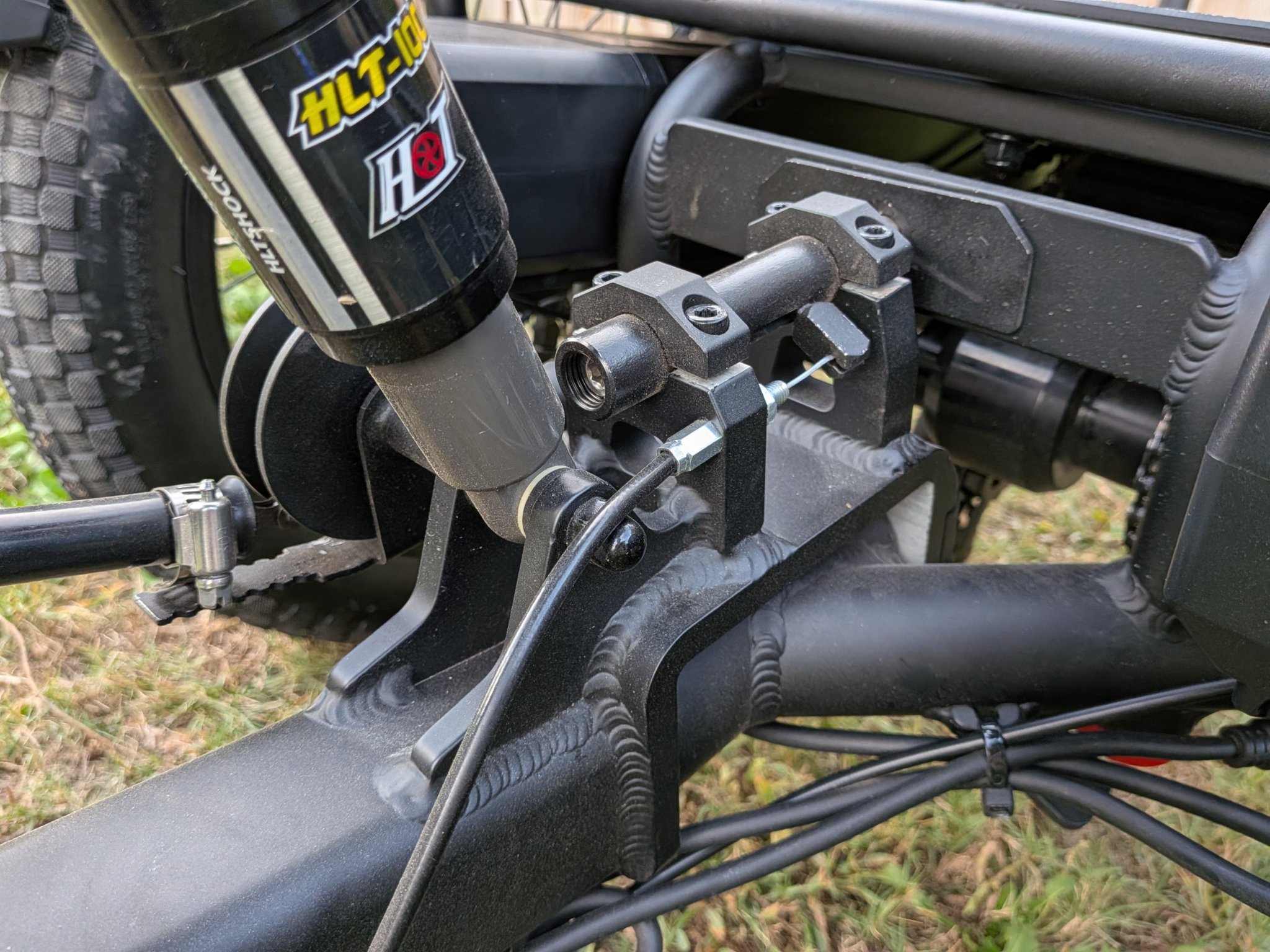
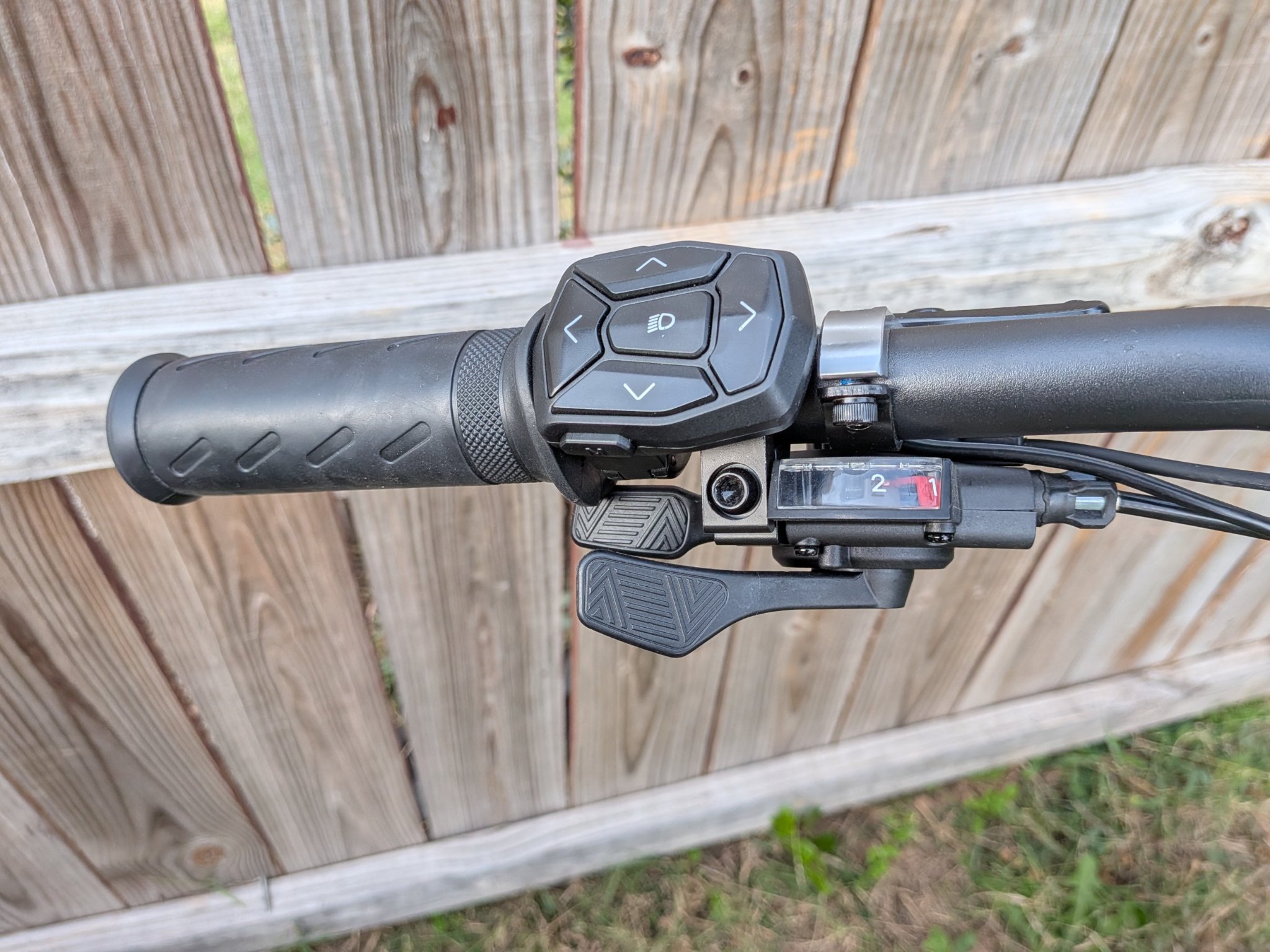
A lever on the left side of the handlebars locks and unlocks the rear tilt mechanism. Locked, the FlekTrike behaves like a regular trike. Unlocked, the front section leans independently of the rear wheels, up to a set limit, so you balance and corner much like you would on a two-wheeled bike. That’s the core of FlekTrike’s pitch: a traditional trike pushes all of its cornering force into the outside rear wheel and jostles you side to side on uneven ground, while a tilting front lets your body weight move with the turn. The catch is that it no longer stays upright on its own. Come to a stop in tilt mode and it simply falls to the side until your foot goes down, so there’s a learning curve we cover in the riding section.
Semi-Recumbent Seat and Full Suspension
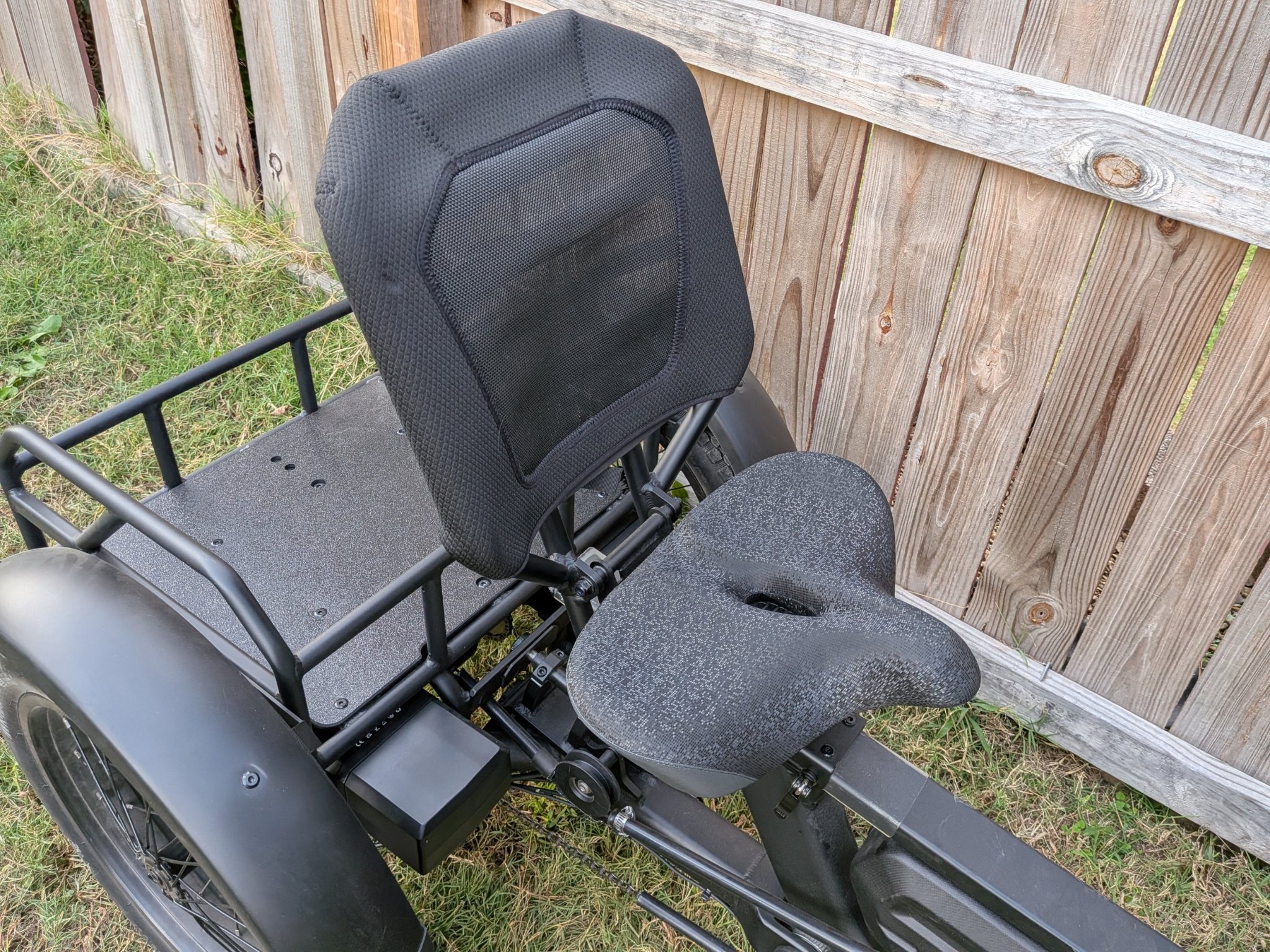
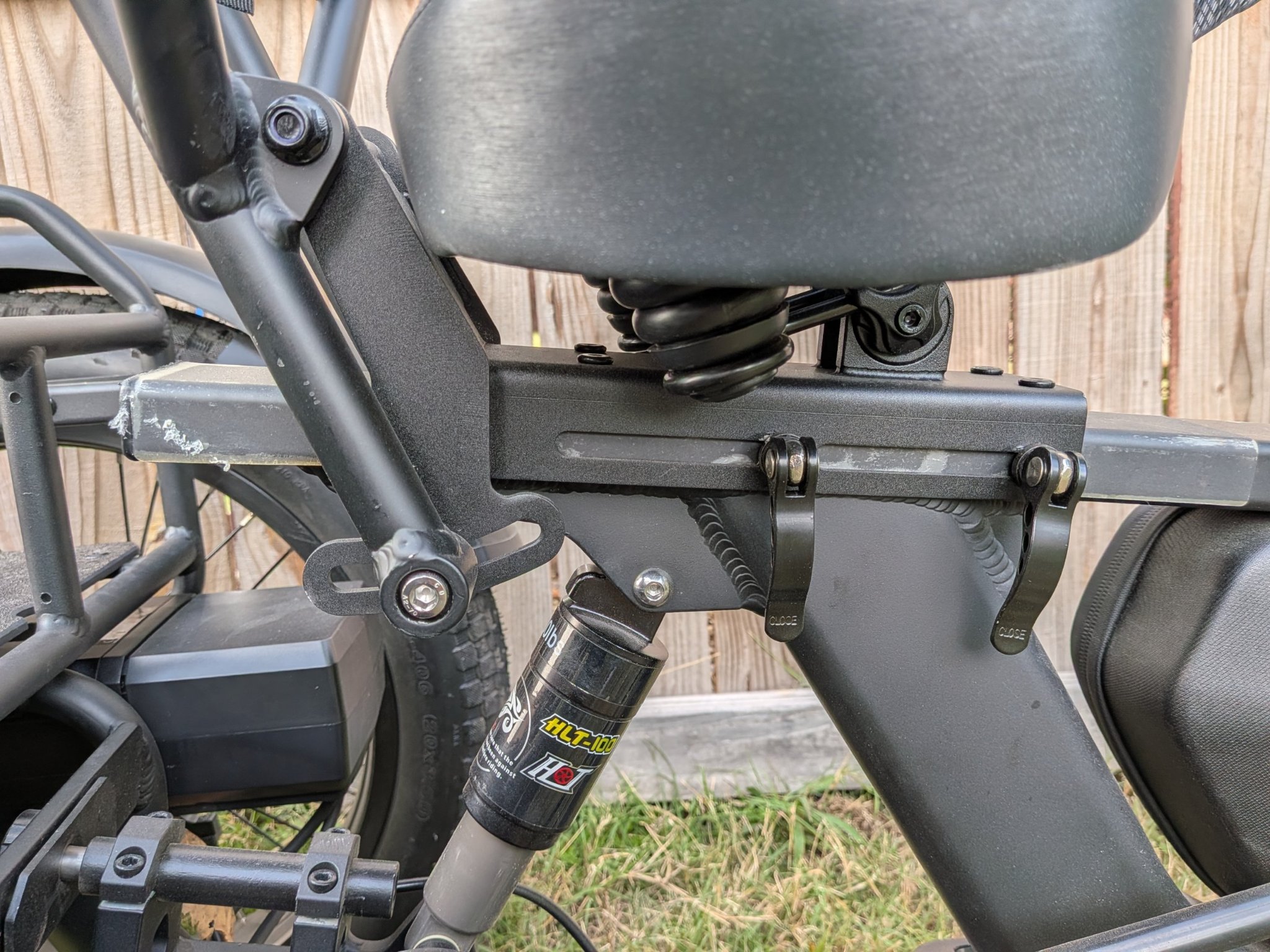
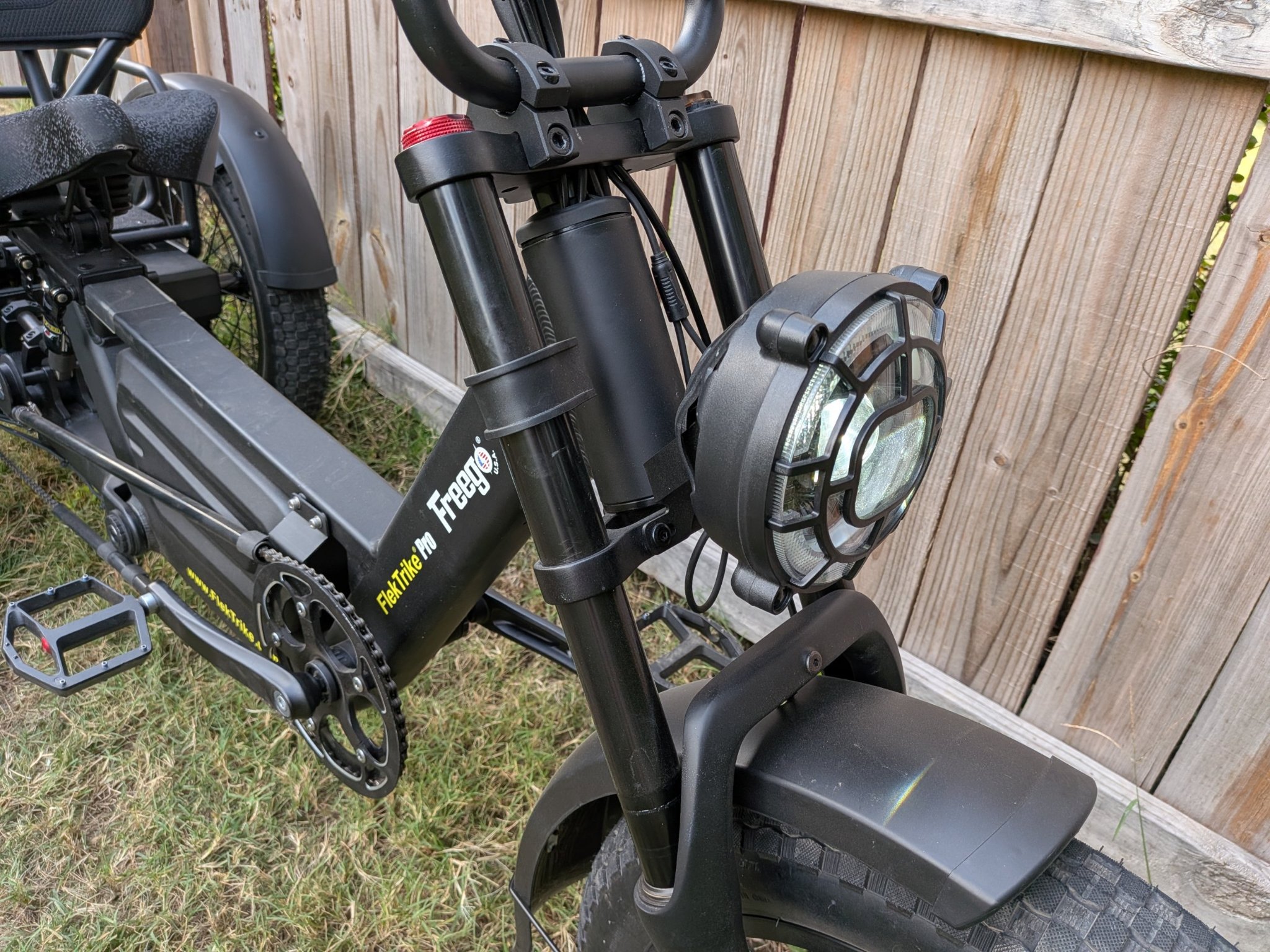
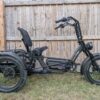
Most etrikes that call themselves semi-recumbent are only a little more laid back than a standard trike. The FlekTrike genuinely is one: the pedals sit far out in front of you, your weight is low, and the oversized seat with its mesh backrest feels more like a couch than a saddle. It looks ridiculous and is genuinely comfortable, in part because your legs are raised in front of you instead of rubbing against the seat edges. The seat slides forward and back on a rail with two quick-release clamps rather than moving up and down, and the backrest angle adjusts as well.
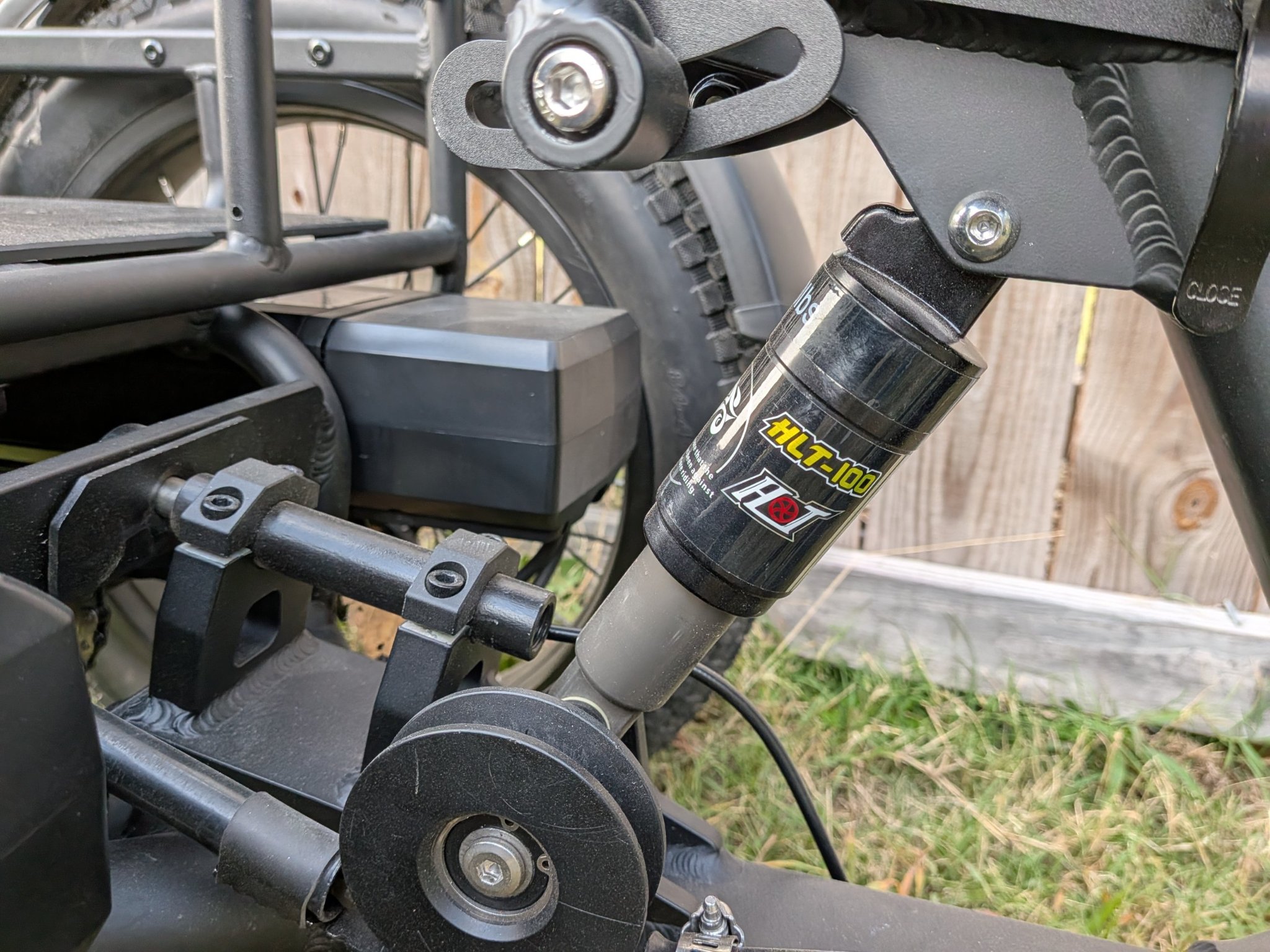
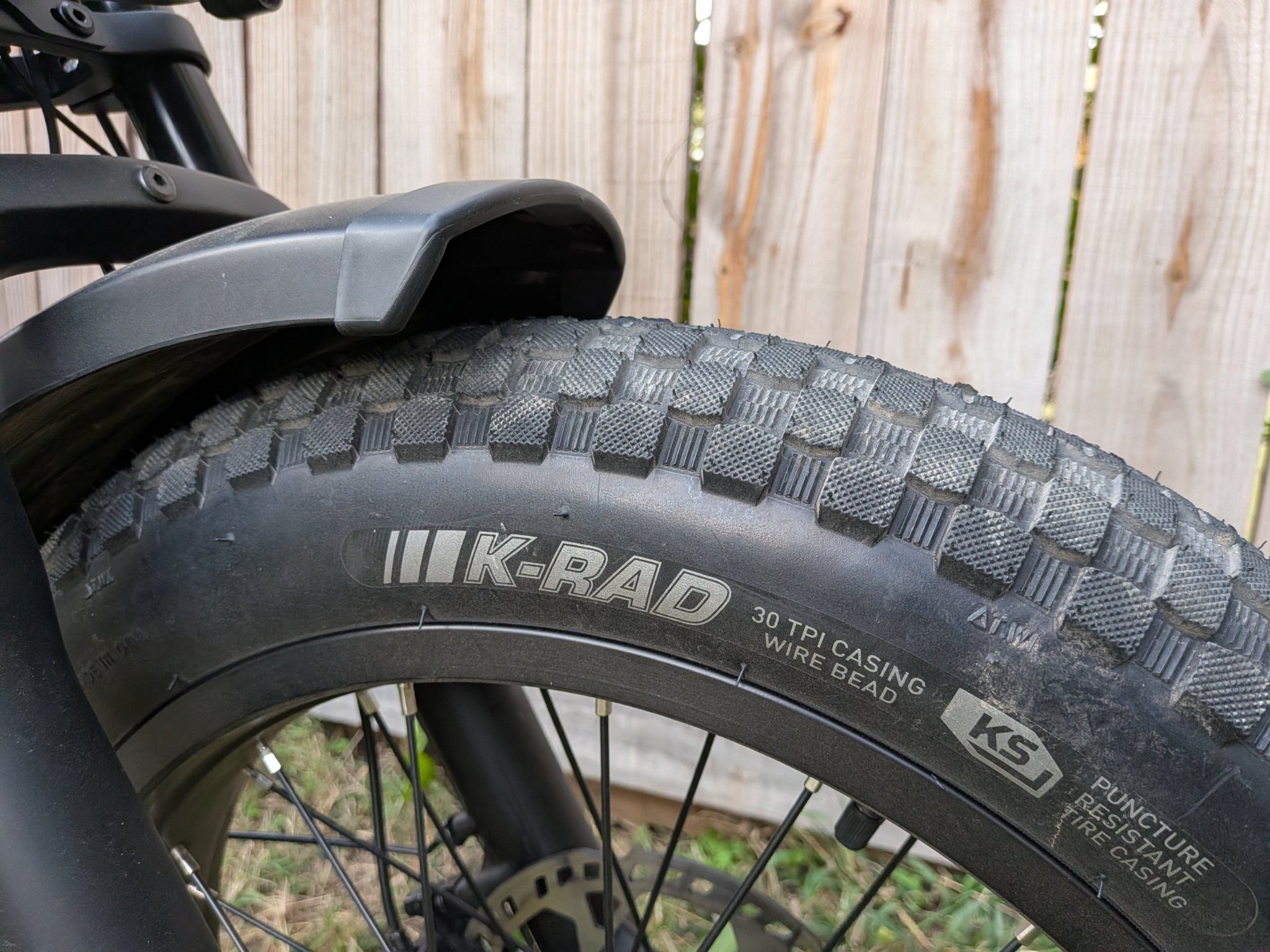
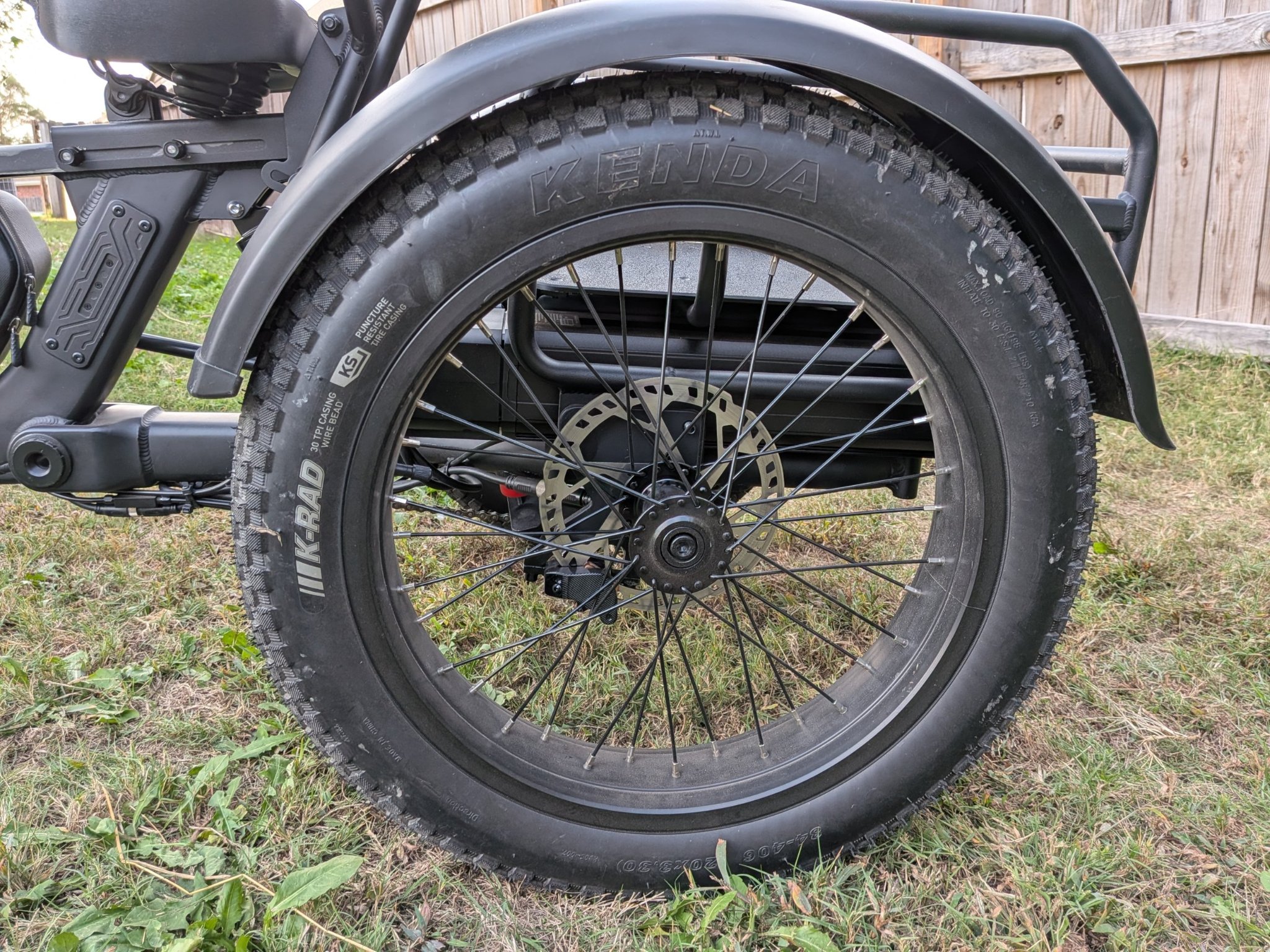
Full suspension is rare on an etrike. Up front there’s a dual-crown suspension fork with compression adjustment on the right leg and preload on the left, and the rear section rides on an HLT-100 coil shock. Neither is a premium component, but together with the seat and 20 x 3.3-inch Kenda K-Rad tires, they take a lot of the sting out of cracked sidewalks and grass.
Motor, Differential, and Dual Batteries
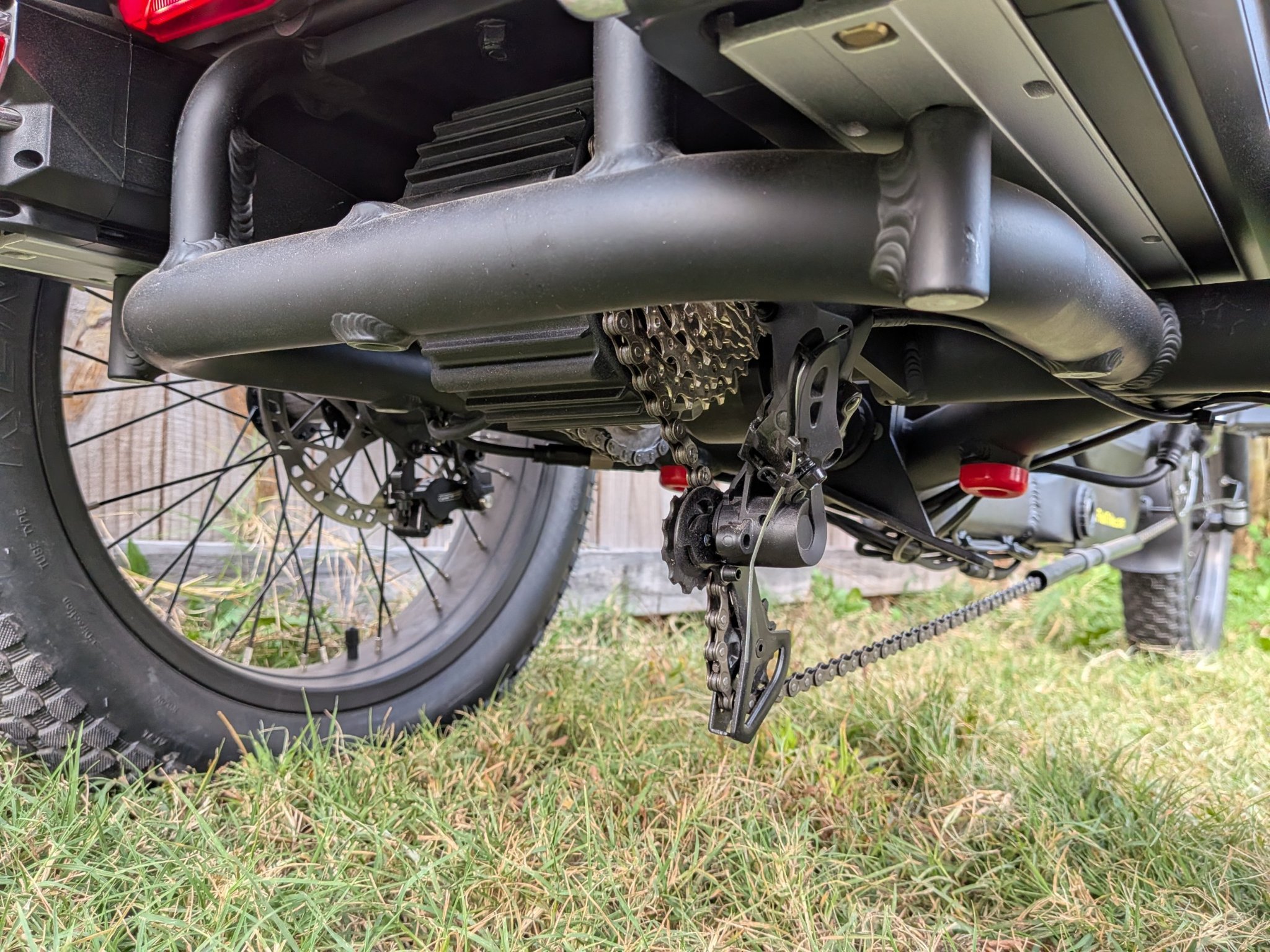
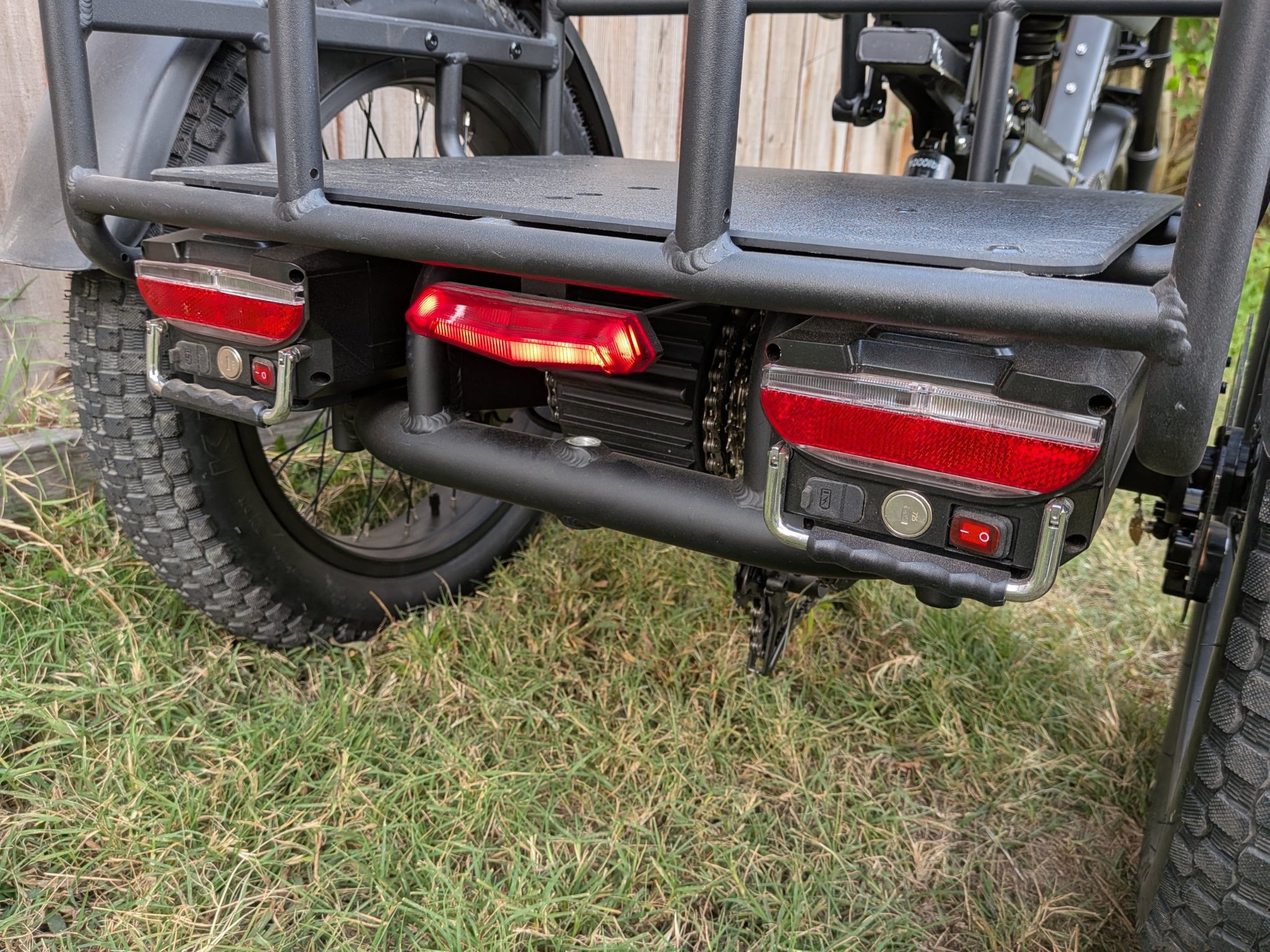
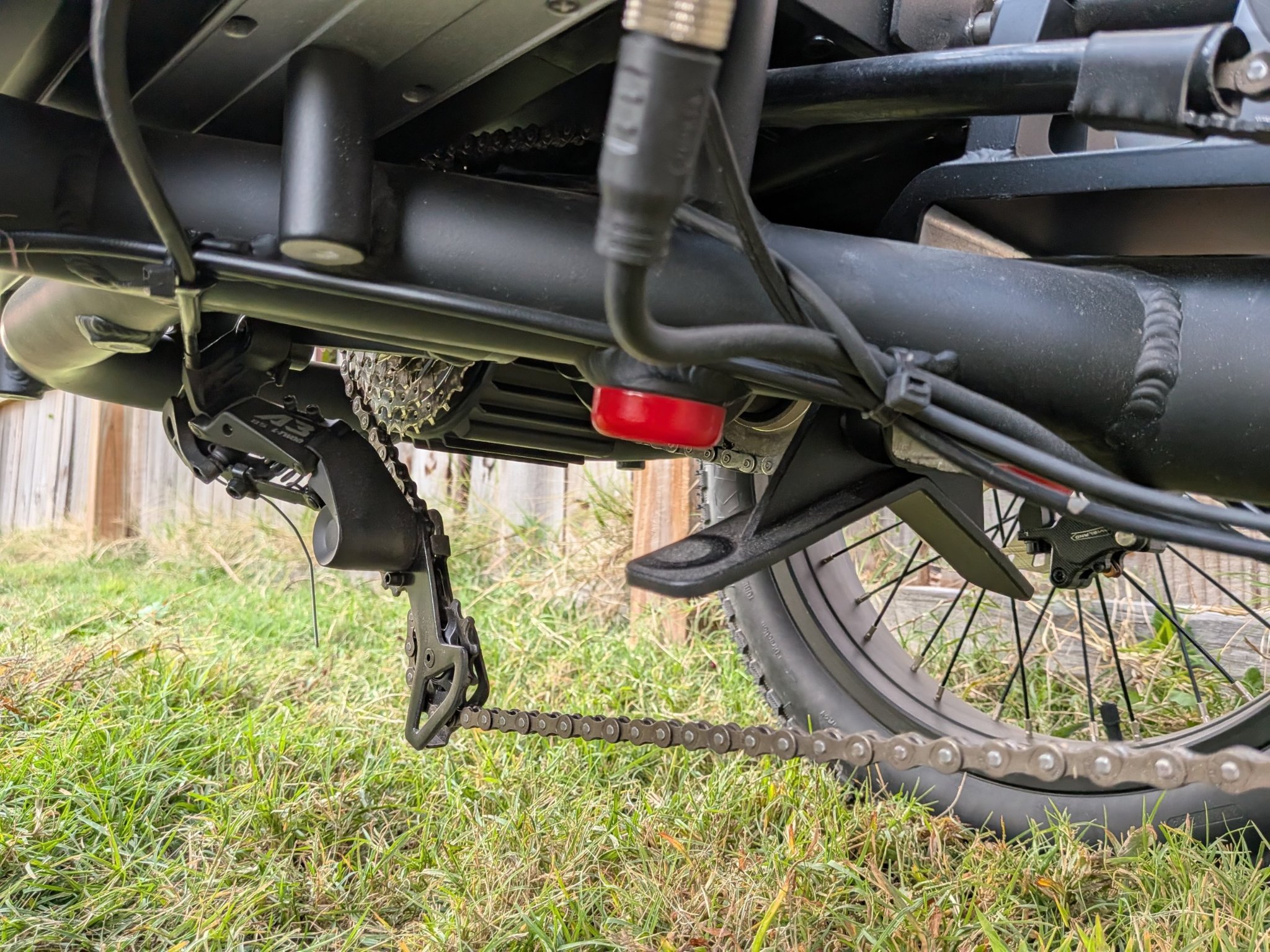
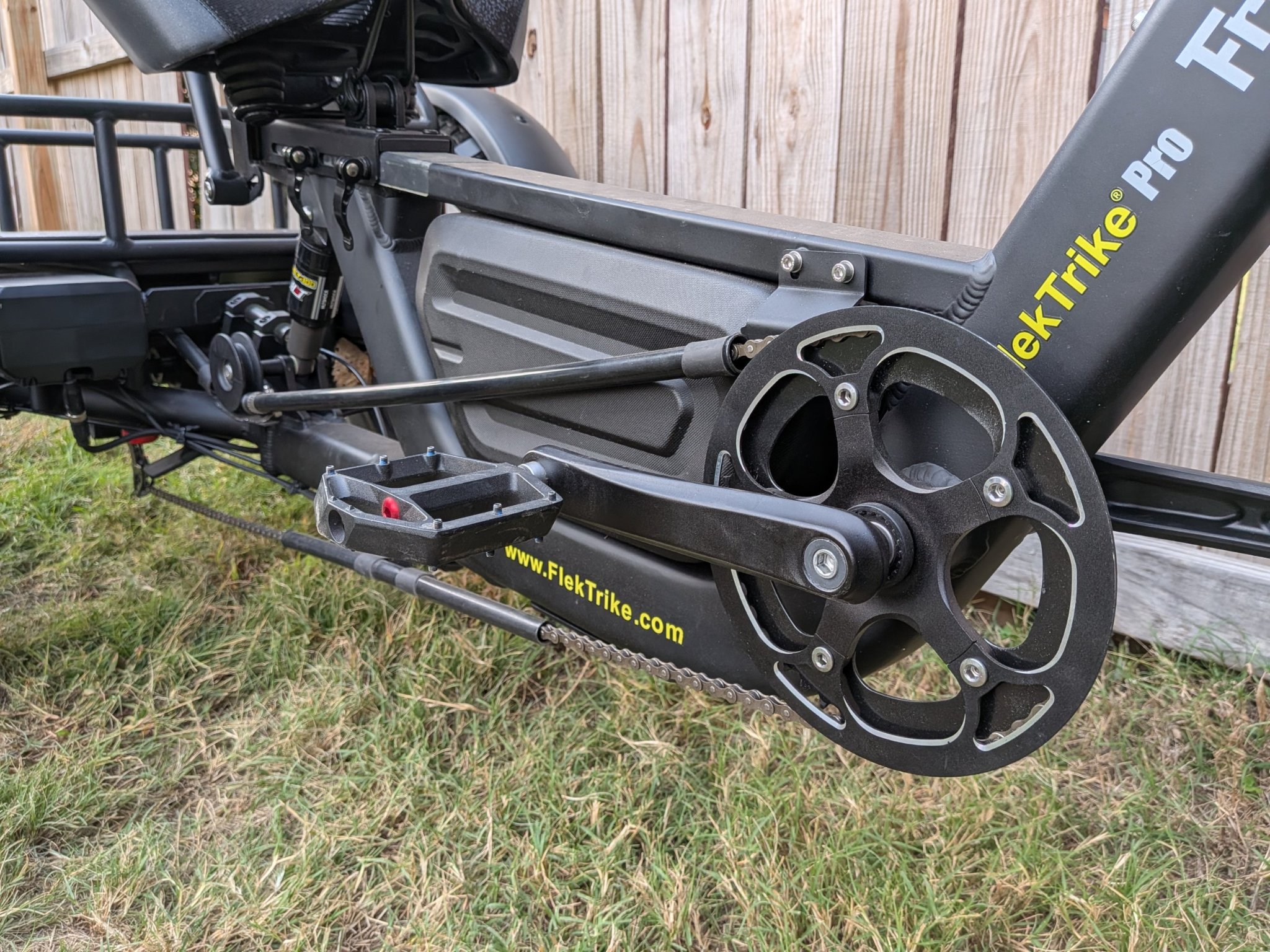
Power comes from a 750W rear-mounted motor that peaks at 1,400W, driving both rear wheels through a differential, which FlekTrike rates at up to 120Nm of torque. A differential lets the inside and outside wheels turn at different speeds through a corner, so the trike doesn’t scrub or fight you in turns. You get a full twist grip throttle, which we rarely see on ebikes, and a torque sensor that adds power based on how hard you push the pedals. An 8-speed drivetrain with an LTWOO derailleur handles the gearing, with chain guides and a tensioner to manage the long chain run back to the motor.
The batteries are the other headline. Two 48V 30Ah packs sit at the rear, 60Ah in total, and FlekTrike says they drain together when both are on, or you can run on one and keep the other as a backup. Each has its own key, power switch, charge port, capacity indicator, and grab handle, and they slide out on rails. Two 3A chargers are included at the time of writing, which matters, since each pack takes about 10 hours to charge from empty. FlekTrike claims up to 85 miles, and in the lowest assist level we think that’s realistic. One important note: to our knowledge, these batteries aren’t certified to UL 2271. Packs over 1,000Wh are more difficult and expensive to certify, but it’s still worth weighing, especially if you’ll be charging indoors.
Controls, Brakes, and Lights
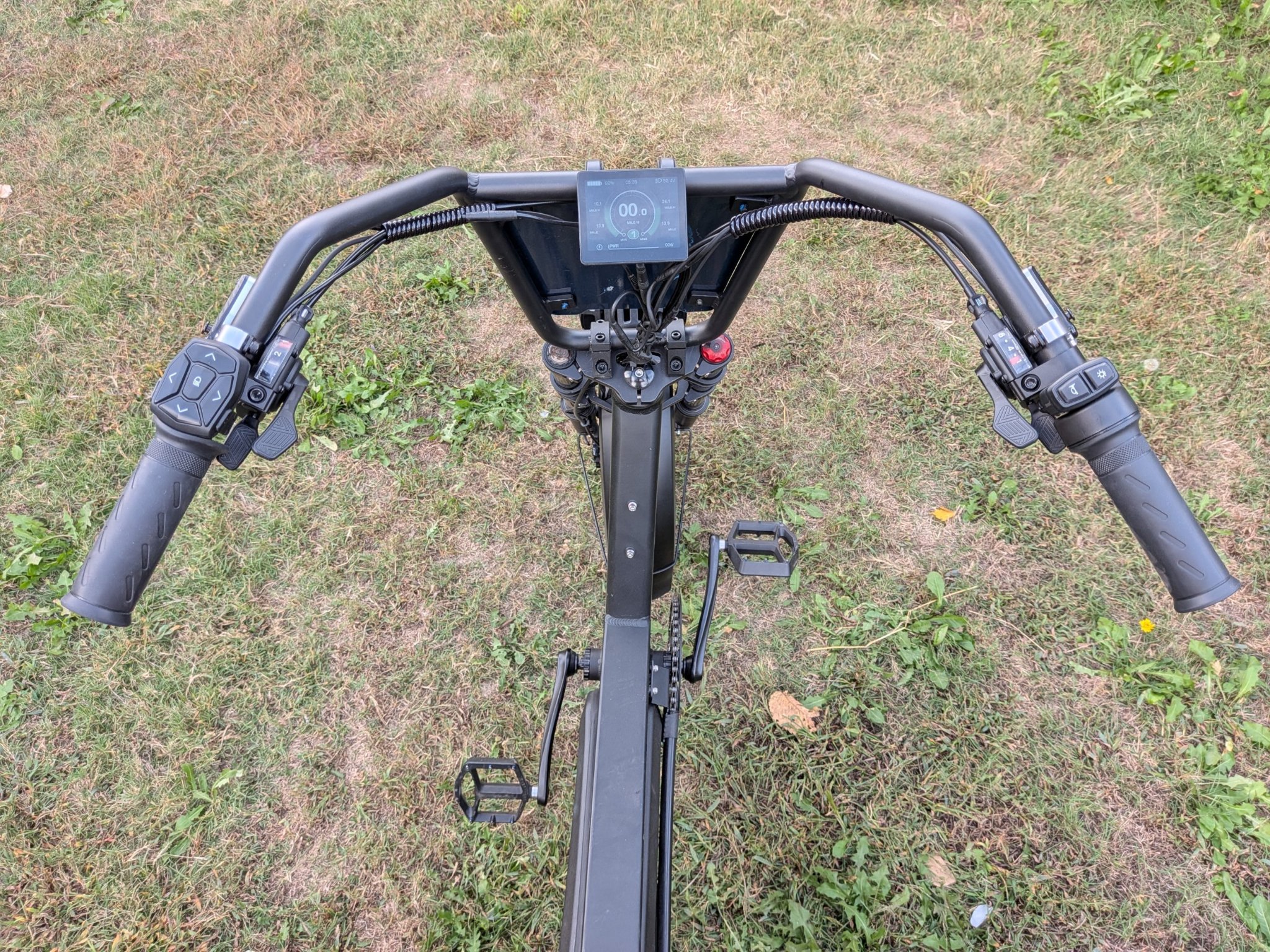
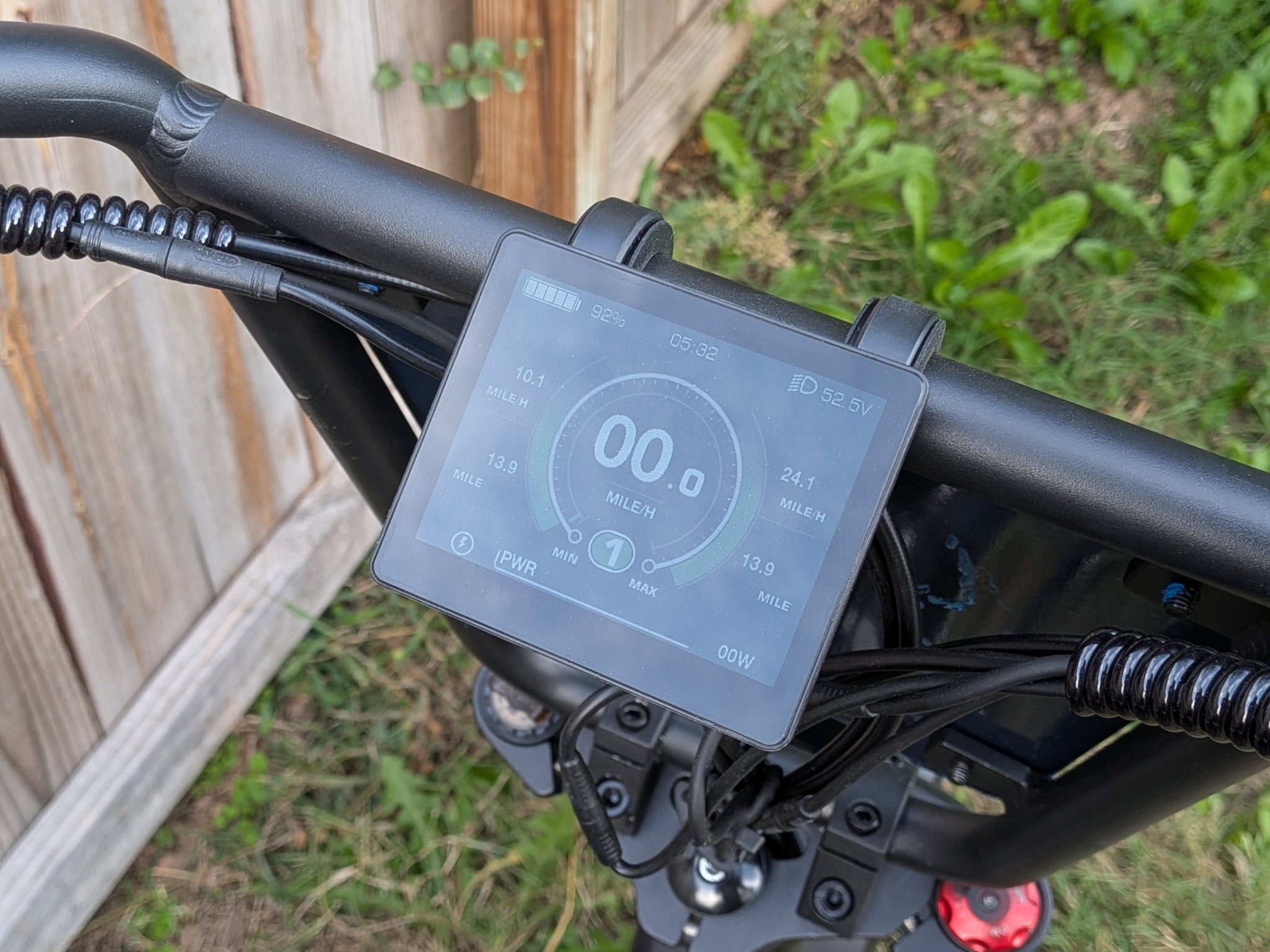
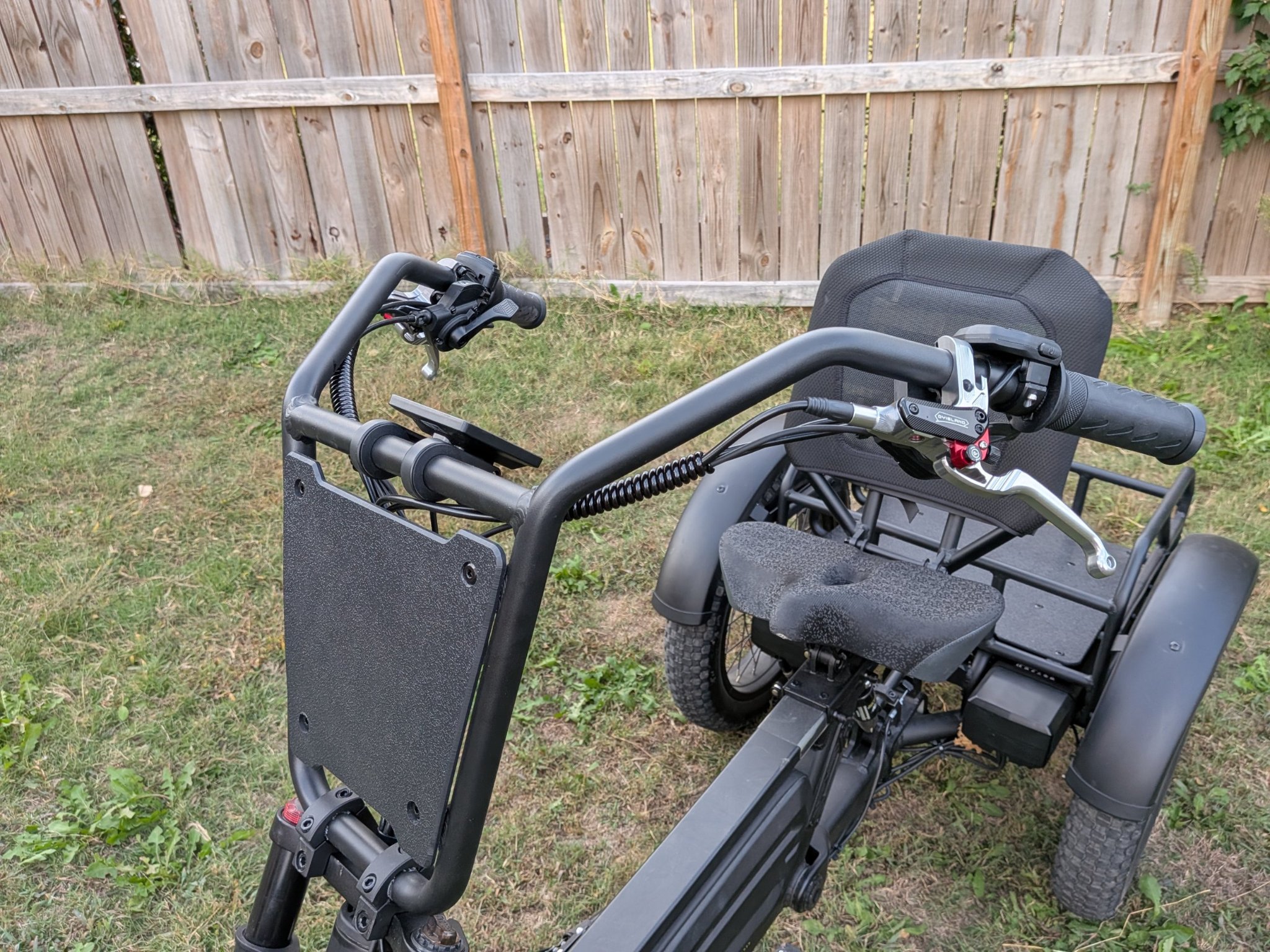
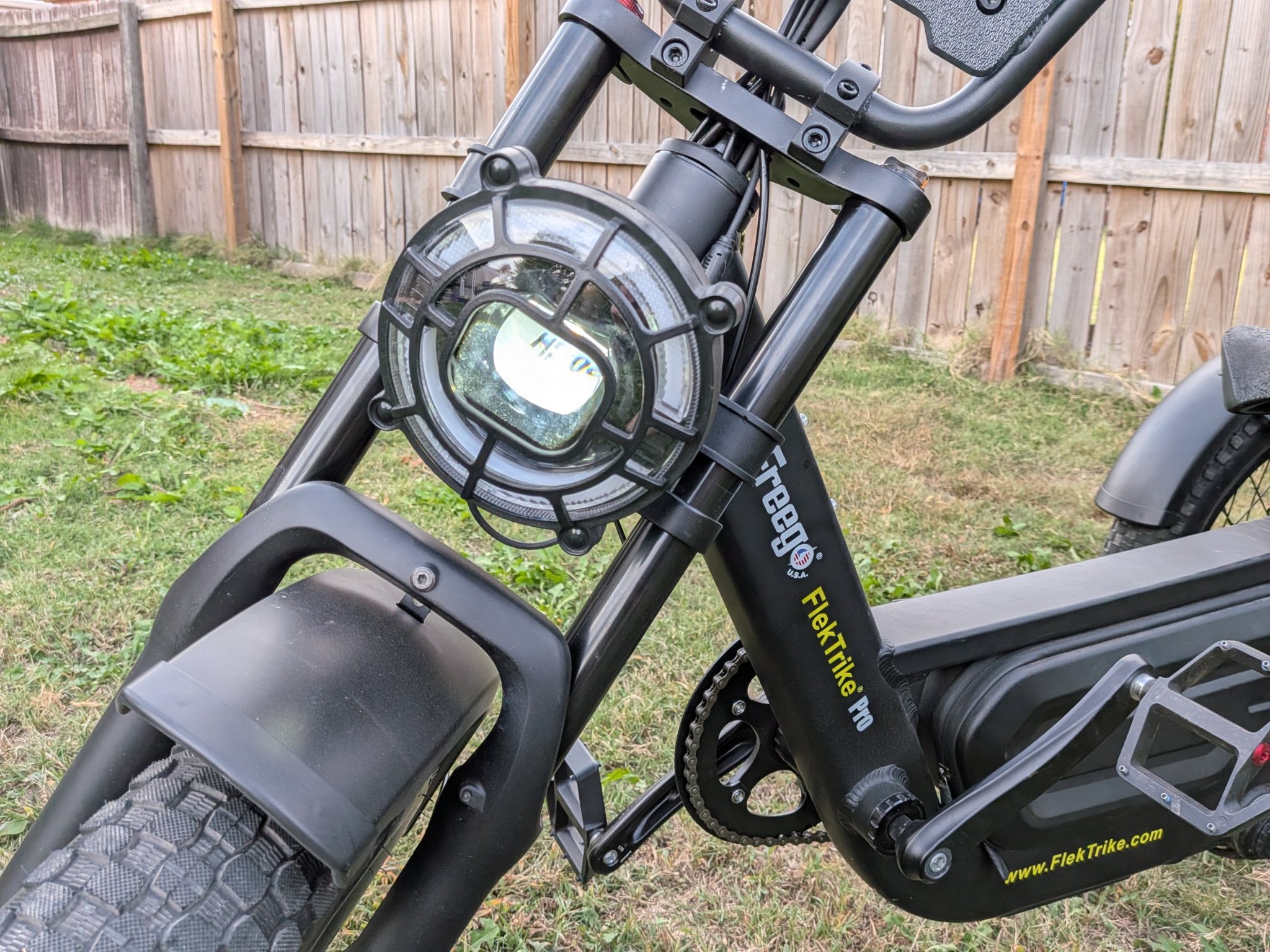
The display shows speed front and center, along with battery percentage, voltage, the time, average and max speed, trip and total distance, and a power bar. A five-button pad switches between five assist levels and runs the lights, turn signals, and walk mode, and there’s a separate button for the horn. The settings menu is basic: time, backlight, auto sleep, a password, and trip reset. The tall handlebars carry a large mounting plate up front, and they’re fiddly to adjust, so plan on sitting on the trike to get them right.
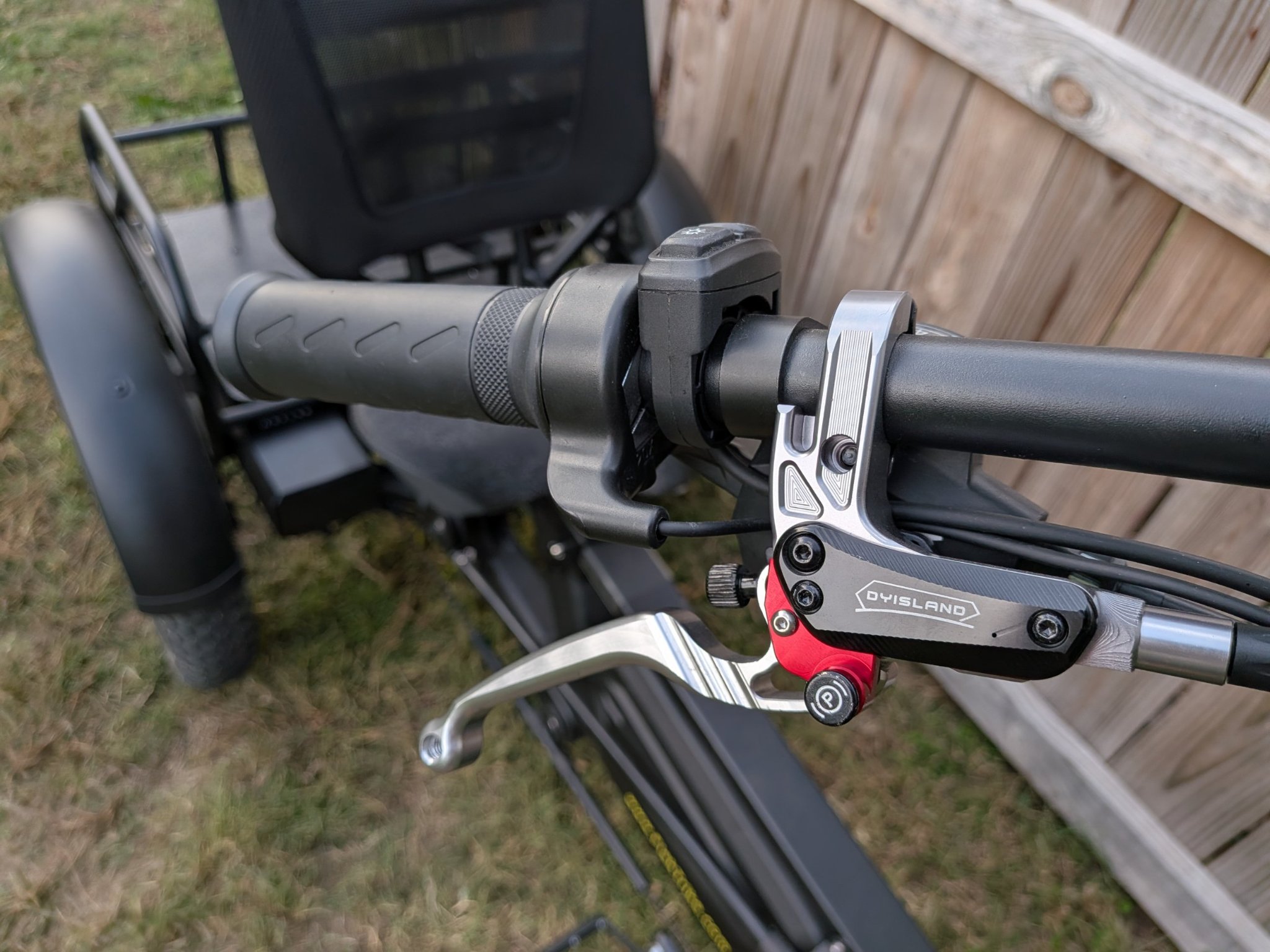
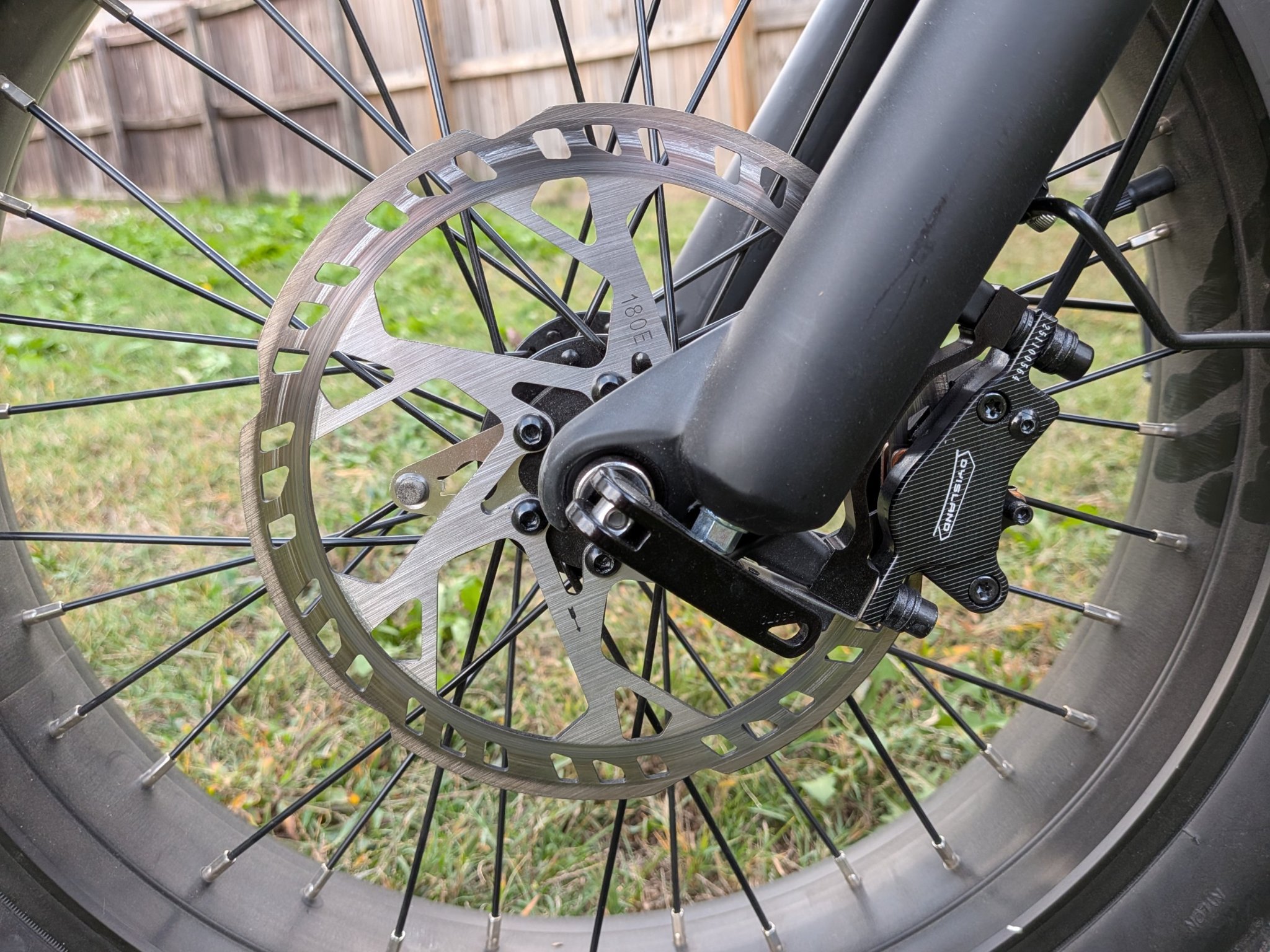
Three hydraulic disc brakes with 180mm rotors, one up front and one on each rear wheel, handle stopping, and both levers include a parking brake: squeeze, press the button, and squeeze again to release. That’s an important feature on a trike that weighs 154 lb. Be aware that the right lever runs the front brake and the left runs the rear, the opposite of most bikes sold in the U.S. Our brakes stopped the trike without trouble but squealed, especially up front. The moto-style headlight runs off the main batteries, and the rear has a center running light that brightens under braking plus turn signals, though the signals aren’t very visible.
Frame, Options, and Fit
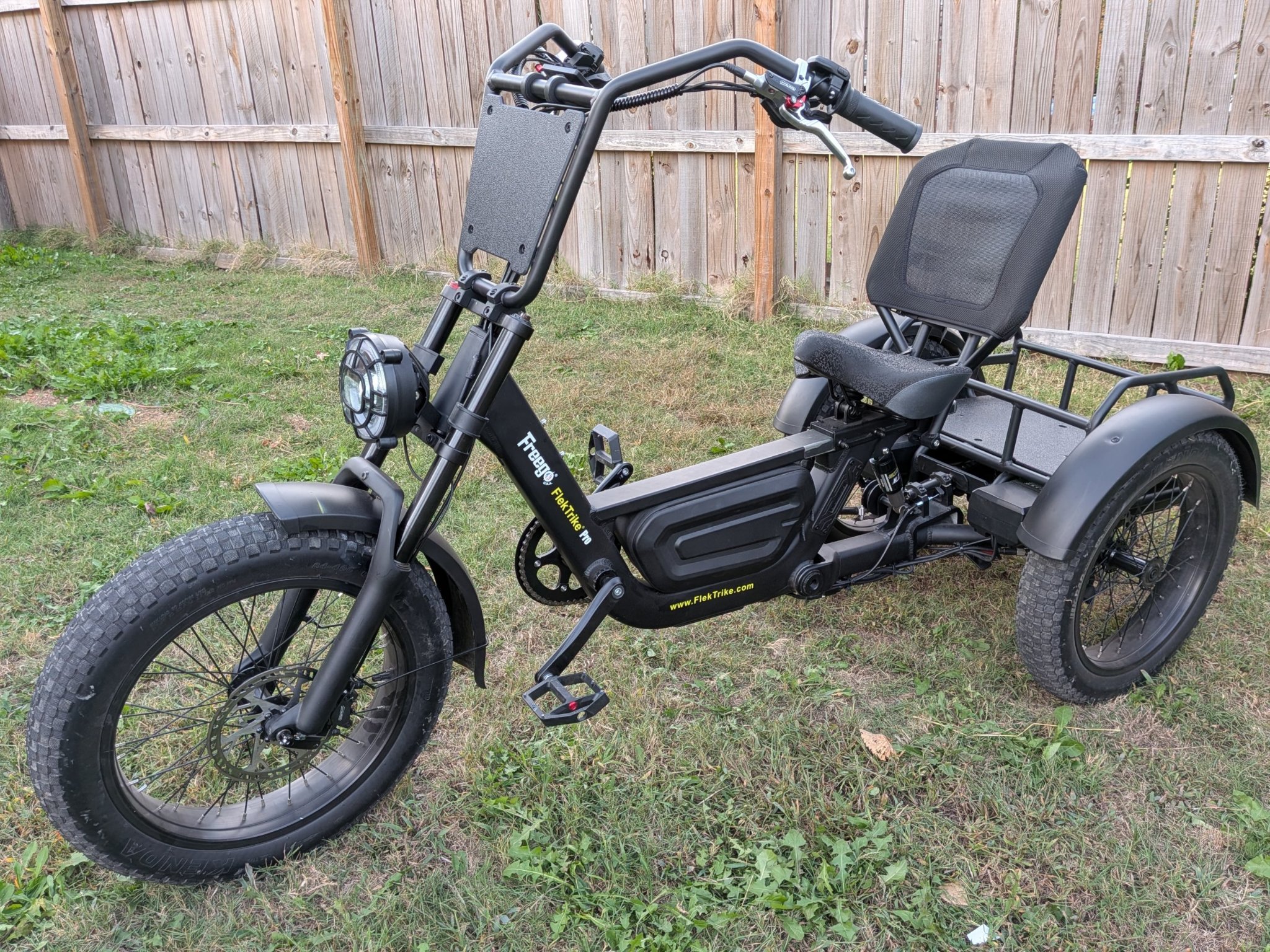
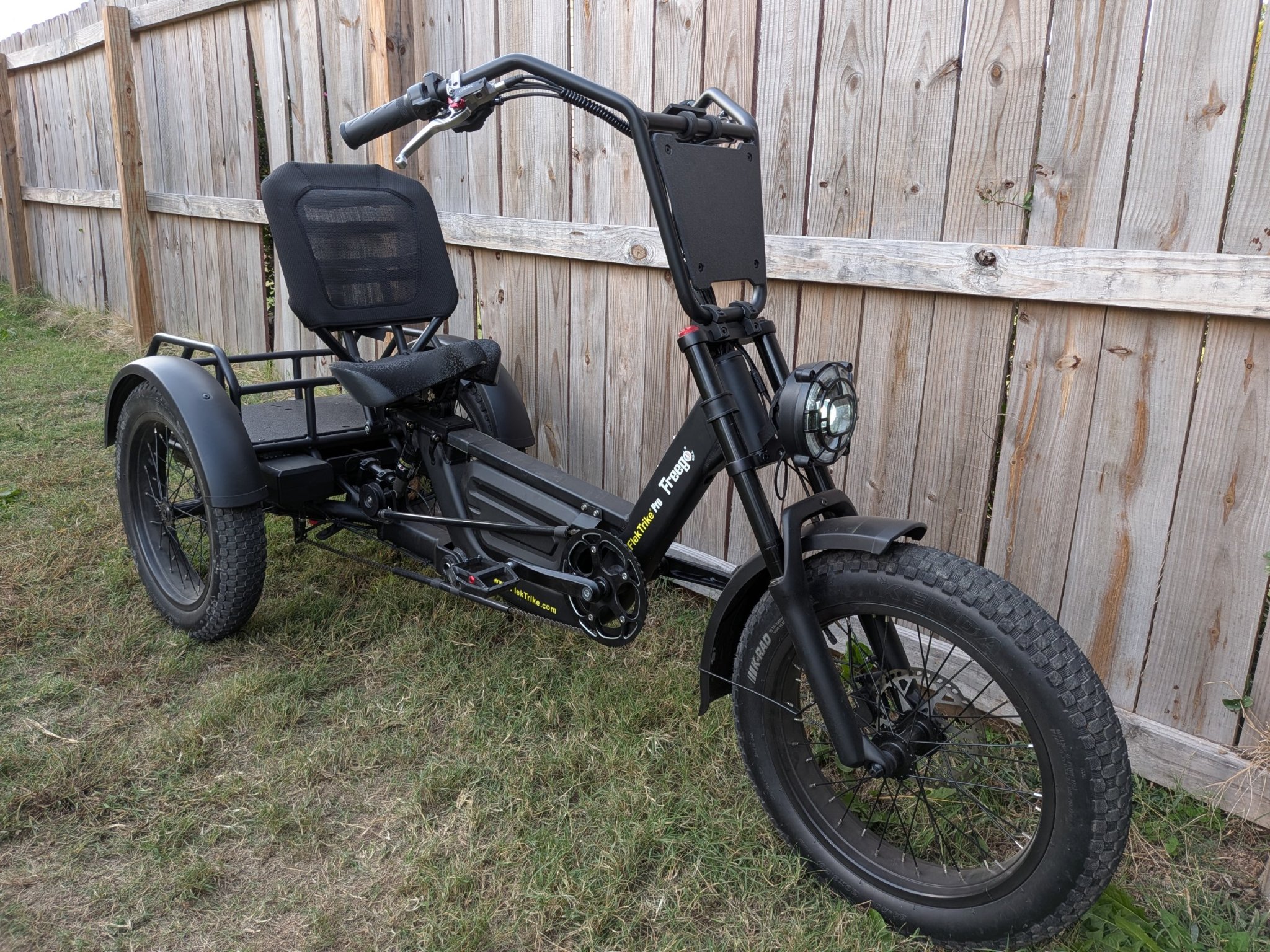
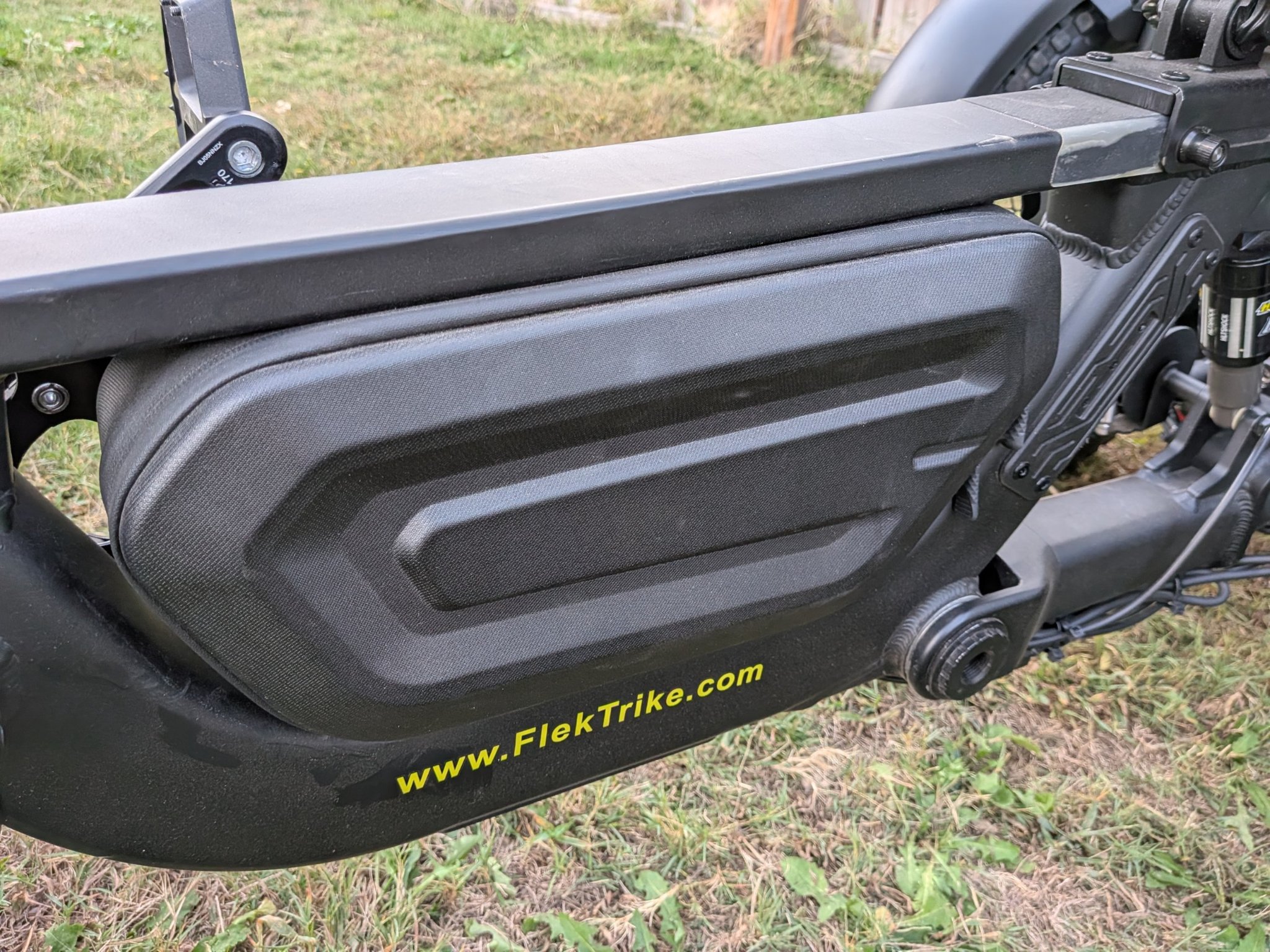
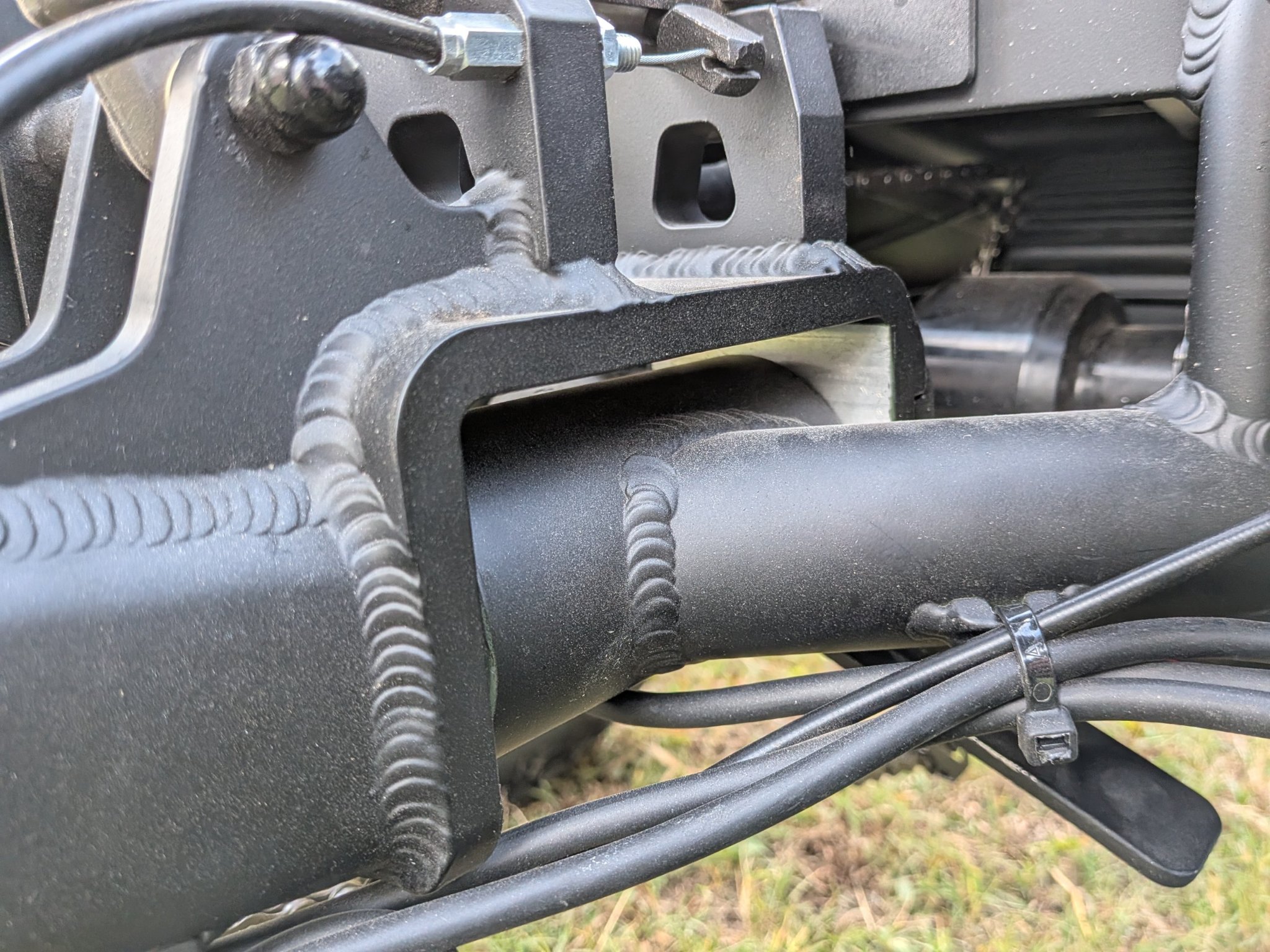
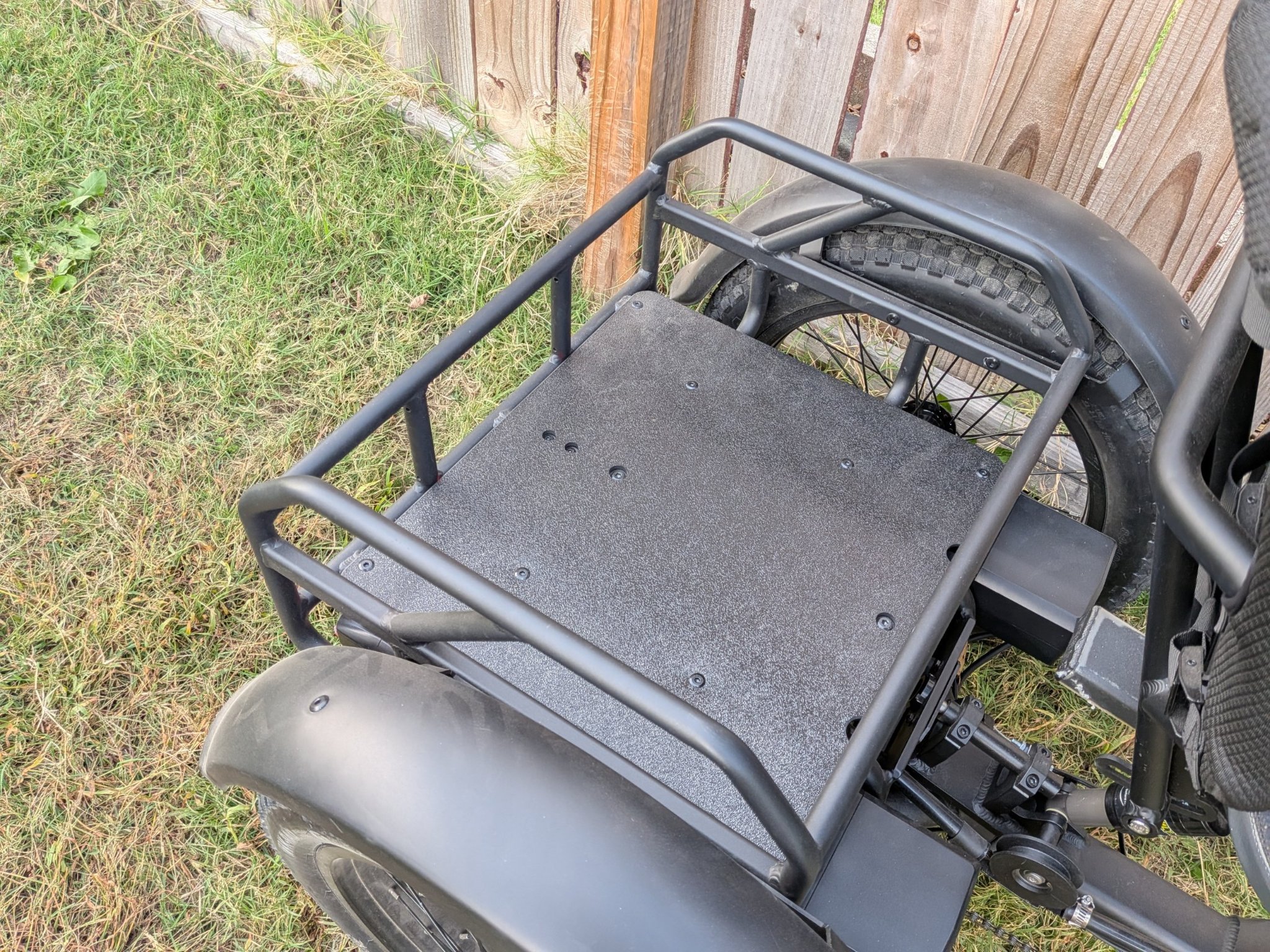
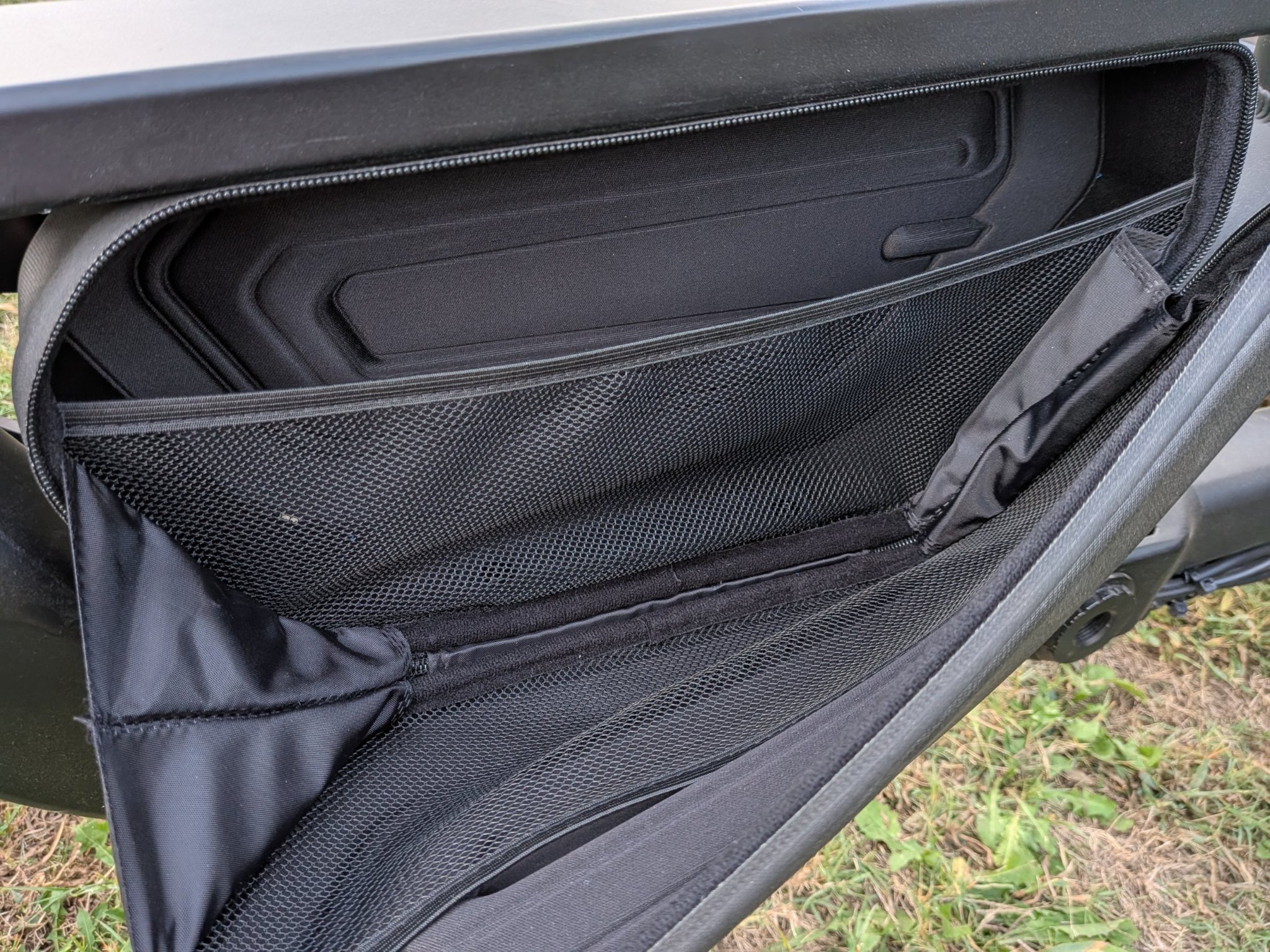
With its tall handlebars, moto-style headlight, and laid-back seat, the FlekTrike looks unlike any etrike we’ve reviewed, and everyone who saw it in person or sat on it loved it. It comes with fenders on all three wheels, a frame storage bag, grippy platform pedals, and a large rear basket that’s great for groceries or gear. Assembly is a bigger job than most etrikes. It arrives in multiple pieces, you’ll use a special wrench to join the front and rear sections, and you’ll need to install a rear hydraulic brake and connect the tilt cable. If you’re handy, you can figure it out, but plan on watching FlekTrike’s assembly video or getting some help.
FlekTrike lists a rider range of 5’3″ to 6’5″, and we’d treat the top of that with caution. Because the seat slides front to back instead of rising, our 6′ tester with a 32-inch inseam couldn’t get full leg extension even with the seat all the way back. It wasn’t uncomfortable, but taller riders should expect a more bent-knee pedaling position. Our 5’5″ rider fit comfortably. The trike is heavy at a listed 154 lb with both batteries, and payload capacity is 330 lb. Despite the recumbent position, you sit high enough to stay visible to drivers, which we appreciated on the road to our test hill.
FlekTrike Pro Specifications
Here are the full specs for the FlekTrike Pro, from FlekTrike’s listing and our own testing.
| Component | FlekTrike Pro |
|---|---|
| Price | $3,099 ($2,899 with code EBIKEESCAPE) |
| Type | Semi-recumbent electric trike with lockable tilt |
| Top Speed | 25 mph (claimed); about 23 mph on throttle in our testing |
| Weight Capacity | 330 lbs |
| Weight | 154 lbs with batteries (claimed) |
| Motor | 750W rear-mounted drive motor, 1,400W peak, integrated differential (up to 120Nm) |
| Battery | Dual 48V 30Ah (60Ah total), removable; not UL 2271 certified to our knowledge |
| Claimed Range | Up to 85 miles |
| Charger | Two 54.6V 3A chargers included (about 10 hrs per battery from empty) |
| Pedal Assist | Torque sensor, 5 levels |
| Throttle | Full twist grip, available in every assist level |
| Display | Color display with speed, battery %, voltage, trip data, and power bar |
| Drivetrain | 8-speed with LTWOO A3 rear derailleur and trigger shifter |
| Brakes | Hydraulic disc, 2-piston calipers, 180mm rotors on all three wheels; parking brake on both levers |
| Fork | Dual-crown hydraulic suspension fork with compression and preload adjustment |
| Rear Suspension | HLT-100 coil shock |
| Tilt System | Lockable tilt, released from a lever on the left handlebar |
| Tires | Kenda K-Rad 20" x 3.3", puncture-resistant |
| Lights | Moto-style headlight; rear running light, brake light, and turn signals |
| Seat | Semi-recumbent seat with backrest, 150mm sliding rail, adjustable angle |
| Rider Height | 5'3" – 6'5" (claimed) |
| Seat Height | 29.5" |
| Accessories | Fenders, rear cargo basket, frame storage bag, horn |
| Water Resistance | IP63 |
| Warranty | 2 years (extended options available) |
Real World Performance Testing
Throttle
On flat ground, the full twist throttle carried the FlekTrike past the usual 20 mph cutoff and held it at about 23 mph. That’s more speed than most riders will want on a trike, especially locked, and the motor isn’t the quietest, with some rattle and reverb from the metal rear basket. The throttle is available in every assist level and modulates well. A small twist held a steady 9 mph, which also makes it the easiest way to get moving from a stop.
Torque Sensor and Pedal Assist
The torque sensor is approachable in the lower levels, with assist level 1 giving a gentle, easy push. Moving up adds power, but not as much as we expected, and it’s hard to get anything close to the throttle’s output from pedaling alone. In the middle levels, we cruised at 9 to 11 mph with light effort, level 5 held about 14 mph, and pushing hard in eighth gear got us to 18 and finally 20 mph. Around 15 mph felt like the comfortable ceiling, which is about as fast as you’d want to take a corner on a trike anyway. Our approach would be to use the throttle to get going and on hills, and pedal alongside it the rest of the time.
Tilt Mode vs Locked
Tilt mode takes some getting used to. Once the rear is unlocked, you’re balancing like you would on a bike, which feels strange on something with three wheels, and it’s much easier with a little momentum. Stop and the trike tips toward one side, so put a foot down and use a touch of throttle to get going again. Switching between modes is also disorienting at first, a bit like stepping onto land after a day on a boat. If you’re comfortable on a regular bike, you’ll pick it up, but expect to tip over a few times while you’re learning, as we did right after unboxing it.
Once we had the balance down, tilt mode was more comfortable and a lot of fun. Leaning into turns felt natural, while sharp turns locked put all the force into the outside wheel and, if pushed, could lift the inside rear tire. Tilt mode also handled cracked sidewalks and uneven grass far better, since a locked trike gets pushed from side to side by every bump. At higher speeds, though, we preferred to lock it, especially over bumps, where the extra stability inspires more confidence. You can relock it while moving, but you have to find the spot where it engages, so it’s better done at low speed.
Hill Climb
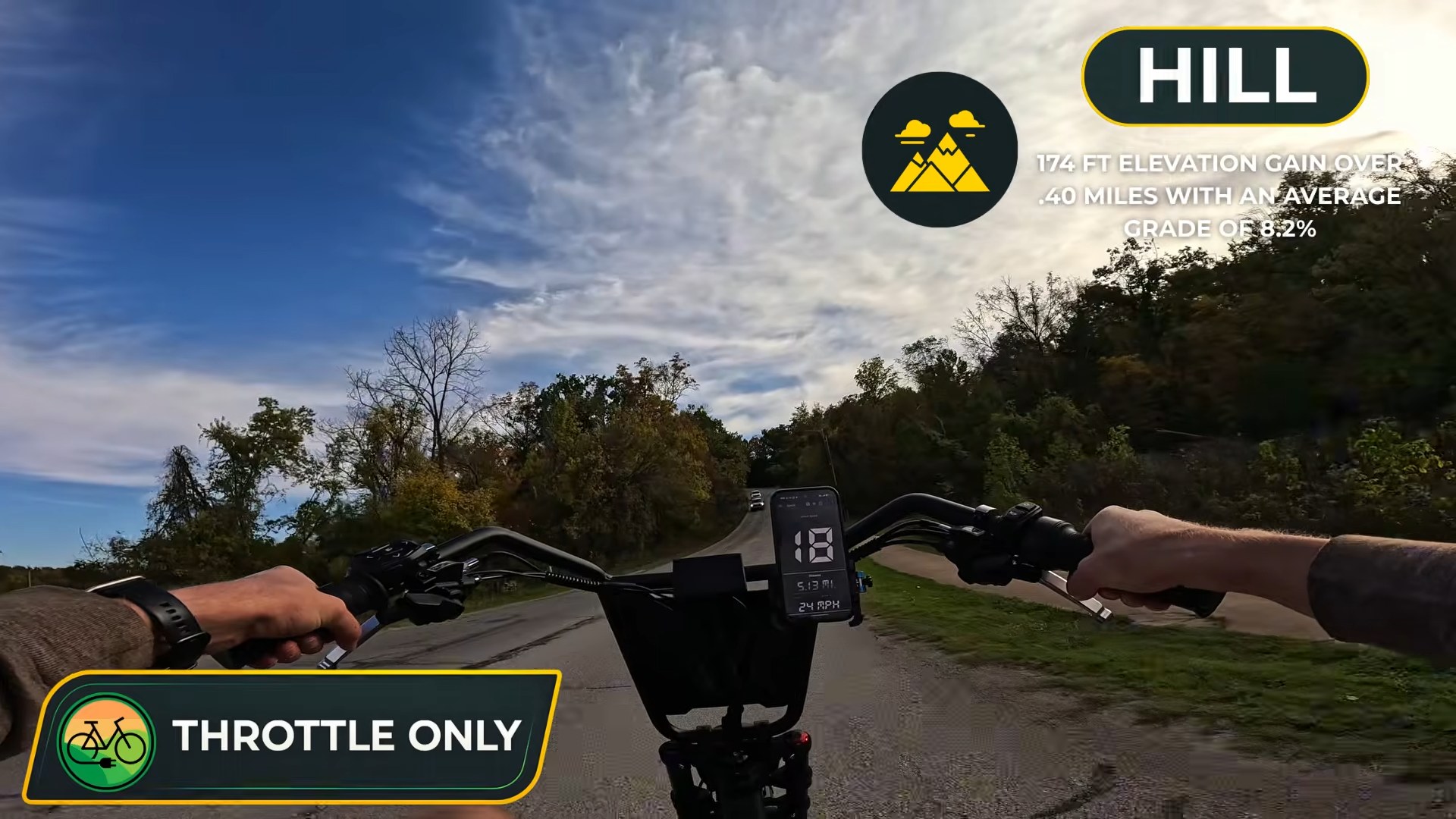
We locked the tilt for our hill climb, so balance wasn’t a concern. On throttle alone, speed dropped from 12 mph to 7 mph and held there for most of the climb, with the motor working audibly but never giving up. That’s better than we expected for a 154 lb trike, though our tester is on the lighter side. Pedaling didn’t add much on top of that. Even in assist level 5 with a low gear, we couldn’t get full power from the motor, so we added throttle and pedaled alongside it, again holding about 7 mph. Even after leaning on the throttle for much of our ride, the batteries still read 89% at the top, so range won’t be the limiting factor.
Off-Road
FlekTrike markets the Pro as an all-terrain trike, so we tried a steep, rocky climb, and it made it up with throttle and pedaling, though it was jarring and the front suspension was clearly at its limit. On grass, smoother dirt, and fire roads, it was much more at home, and unlocking the tilt helped it follow uneven ground instead of rocking the whole trike. Treat it as a trike for pavement, grass, and light trails, not technical terrain.
FlekTrike Pro vs Velotric Triker vs Lectric XP Trike 2
| Spec | Lectric XP Trike 2 | Velotric Triker | FlekTrike Pro |
|---|---|---|---|
| Price | From $1,499 (500W) / $1,799 (750W) | $2,399 when we reviewed it | $3,099 ($2,899 with code EBIKEESCAPE) |
| Design | Upright delta trike, folding | Upright delta trike, folding | Semi-recumbent, lockable tilt |
| Motor | 500W, 1,092W peak, 65Nm (750W option) | 750W, 1,300W peak, 90Nm | 750W, 1,400W peak, rear differential (up to 120Nm) |
| Pedal Sensor | Cadence | Torque or cadence (SensorSwap) | Torque |
| Battery | 48V 13Ah (17.5Ah on the 750W model) | 48V 16.75Ah | Dual 48V 30Ah (60Ah) |
| Top Speed | 14 mph | 20 mph (adjustable) | About 23 mph on throttle in our testing |
| Gearing | Single speed | Shimano 7-speed | 8-speed |
| Suspension | Front fork | Front fork | Front fork and rear shock |
| Weight (with battery) | 91.5 lb (measured, 500W) | 85.8 lb (listed) | 154 lb (listed) |
| Payload Capacity | 415 lb | 500 lb | 330 lb |
| UL Certification | UL 2271 battery, UL 2849 electrical system | UL-certified battery, UL 2849 electrical system | Batteries not UL 2271 certified, to our knowledge |
If budget is the priority, the Lectric XP Trike 2 is the etrike we recommend most often. It starts at $1,499 with a 500W motor and 48V 13Ah battery, and a 750W version with a 17.5Ah long-range battery is available for $1,799. It’s a familiar upright delta trike with a cadence sensor, single-speed drivetrain, front suspension fork, parking brakes, and a folding frame, and its battery and electrical system are UL certified. Top speed is 14 mph, which suits the relaxed, stable riding most trike owners are after, and you get Lectric’s support network and accessory lineup at less than half the FlekTrike’s price. Check current pricing at Lectric.
The Velotric Triker is the step up. At $2,399 when we reviewed it, it adds a 750W motor, Shimano 7-speed gearing, and Velotric’s SensorSwap, which lets you switch between a torque sensor and a cadence sensor. It also carries the most of the three, with a 500 lb payload and a 120 lb-rated rear rack, and it still folds and keeps UL-certified electronics. You can check the latest Triker pricing at Velotric.
Pick the XP Trike 2 if you want a proven, affordable trike for errands and neighborhood rides, and the Triker if you want more power, gears, and hauling capacity in the same upright design. The FlekTrike Pro is the only one of the three with a reclined seat, rear suspension, a tilting front end, and several times the battery capacity. Choose it if comfort and fun come first and you’re willing to pay for them, along with more assembly, a lot more weight, and batteries without UL certification. For more options, see our best ebikes for seniors guide.
Pros and Cons
Save $200: Use code EBIKEESCAPE at checkout on the FlekTrike Pro.
Final Thoughts
Is a tilting trike a good idea? After riding the FlekTrike Pro, we think it is, for the right rider. Locked, it’s a comfortable, full-suspension semi-recumbent trike with a strong motor and more range than you’re likely to use. Unlocked, it turns cornering on three wheels from something you brace for into something you enjoy. The real compromises are outside the ride: assembly is a big job, the batteries aren’t UL 2271 certified, it’s heavy, and Freego’s support is still an unknown to us. If you want a trike that’s comfortable, goes the distance, and is actually fun in the corners, and you’re up for the setup, the FlekTrike Pro is worth a close look.
Ready to ride? Check current pricing on the FlekTrike Pro and use code EBIKEESCAPE to save $200.
