

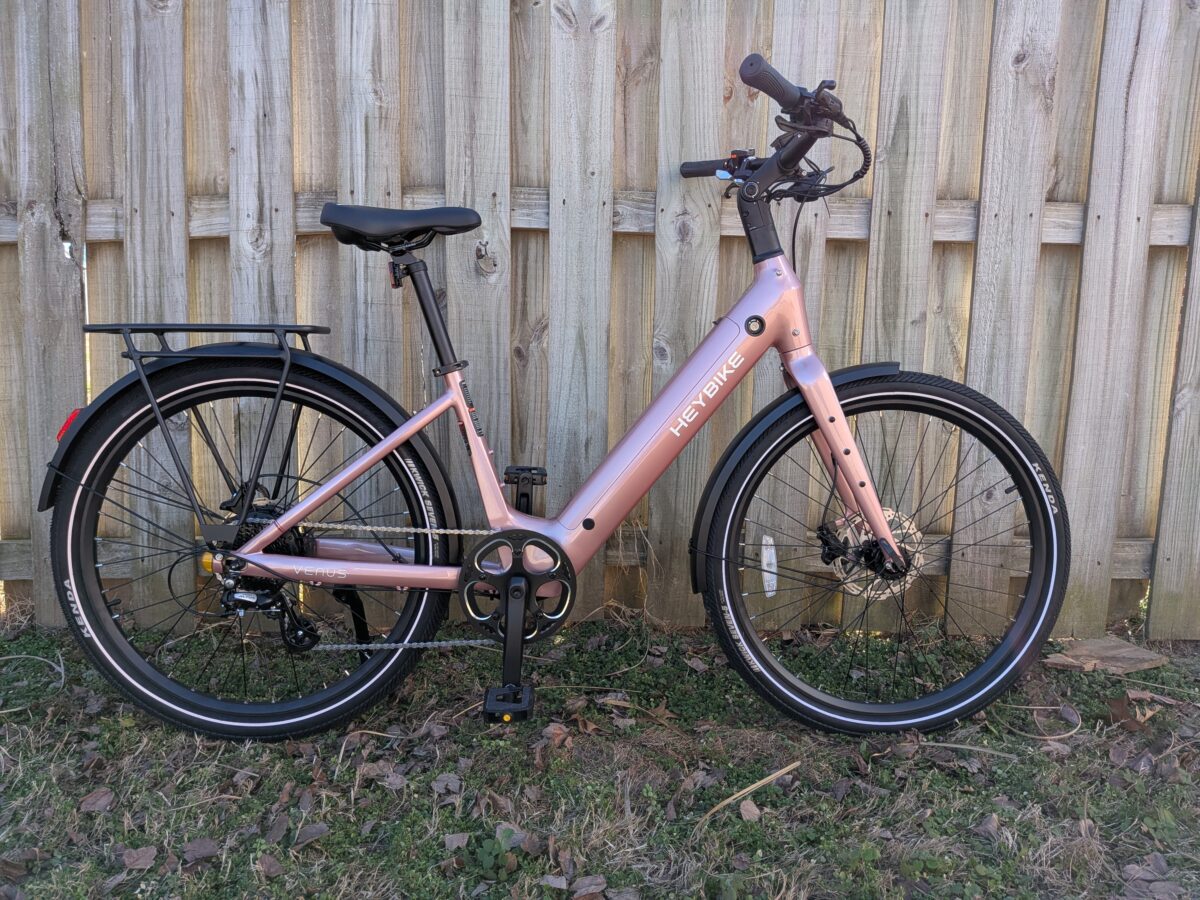
While the brand is perhaps best known for their popular, high-performance folding models, the Heybike Venus takes things in a completely different direction. Priced competitively at $1,499, this commuter and cruiser ebike is designed with accessibility in mind. It offers a lighter frame and an approachable step-through design that caters to a wide variety of riders, all without sacrificing the impressive motor performance we’ve come to expect from the company.
Our review will explore the standout features, share insights on specs, sizing, and the overall ride feel. Pair that with explanations how the swappable sensor technology translates to the pavement and straightforward results from our real-world performance tests, and you’ll have all the context you need to decide if the Heybike Venus is your next daily rider.
Did our content help you decide on a model from Heybike? Save $100 using our discount code EE100 and help us create more reviews like this by using our affiliate link when you go to make your purchase. Thank you for the support!
Watch Our Heybike Venus YouTube Review | See It In Action!
If you want the full hands-on experience, definitely check out our video review. We get up close with every component, walk you through the display and tech features, and put the ebike through riding tests specifically tailored to commuting. Plus, we lay out all of our straightforward pros and cons.
Standout Features of the Heybike Venus
Powerful Motor in a Lightweight Package
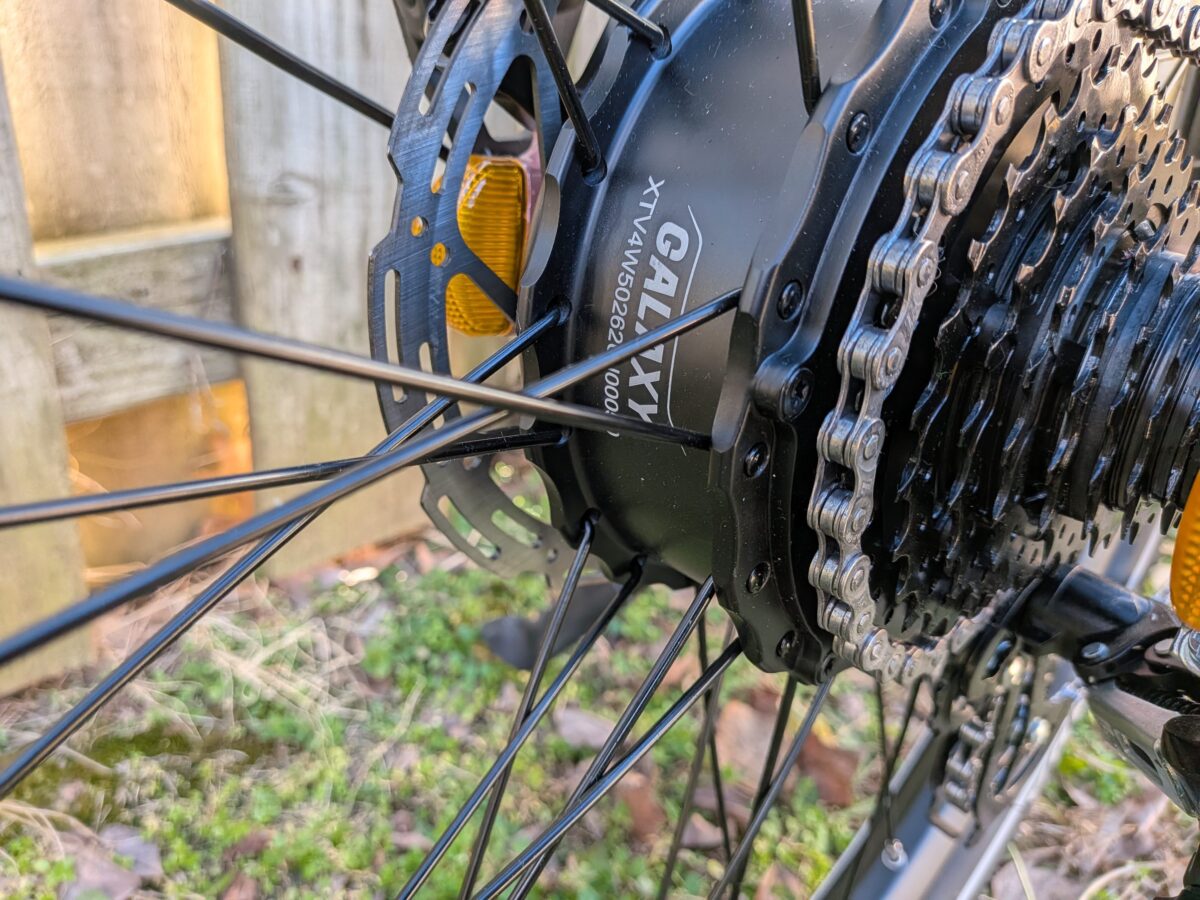
Despite its lighter, commuter-friendly design, this model doesn’t skimp on power. It packs a 750-watt motor pushing out 70 Nm of torque. That means you get serious get-up-and-go while still maneuvering a bike that weighs just under 57 lbs with the battery installed.
Top-Load Battery Certified to UL Standards
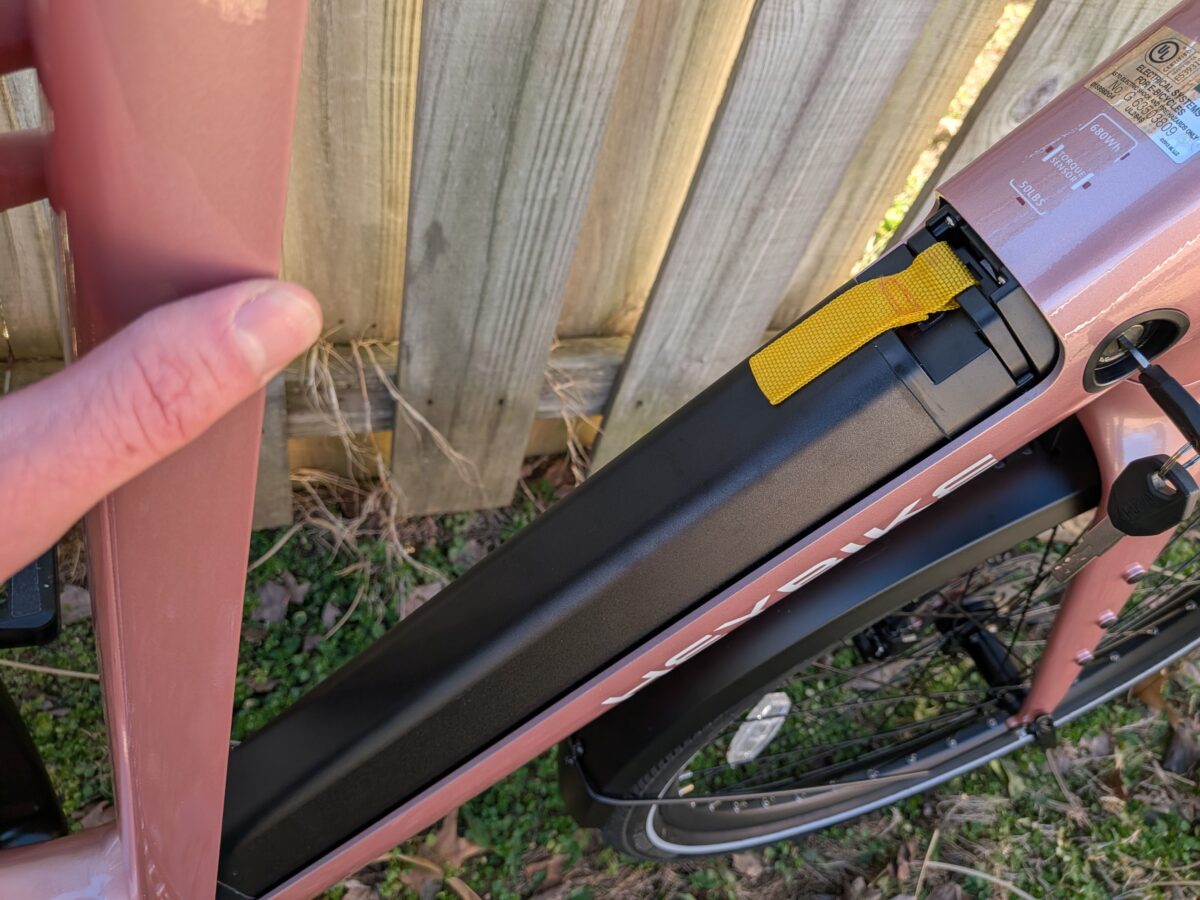
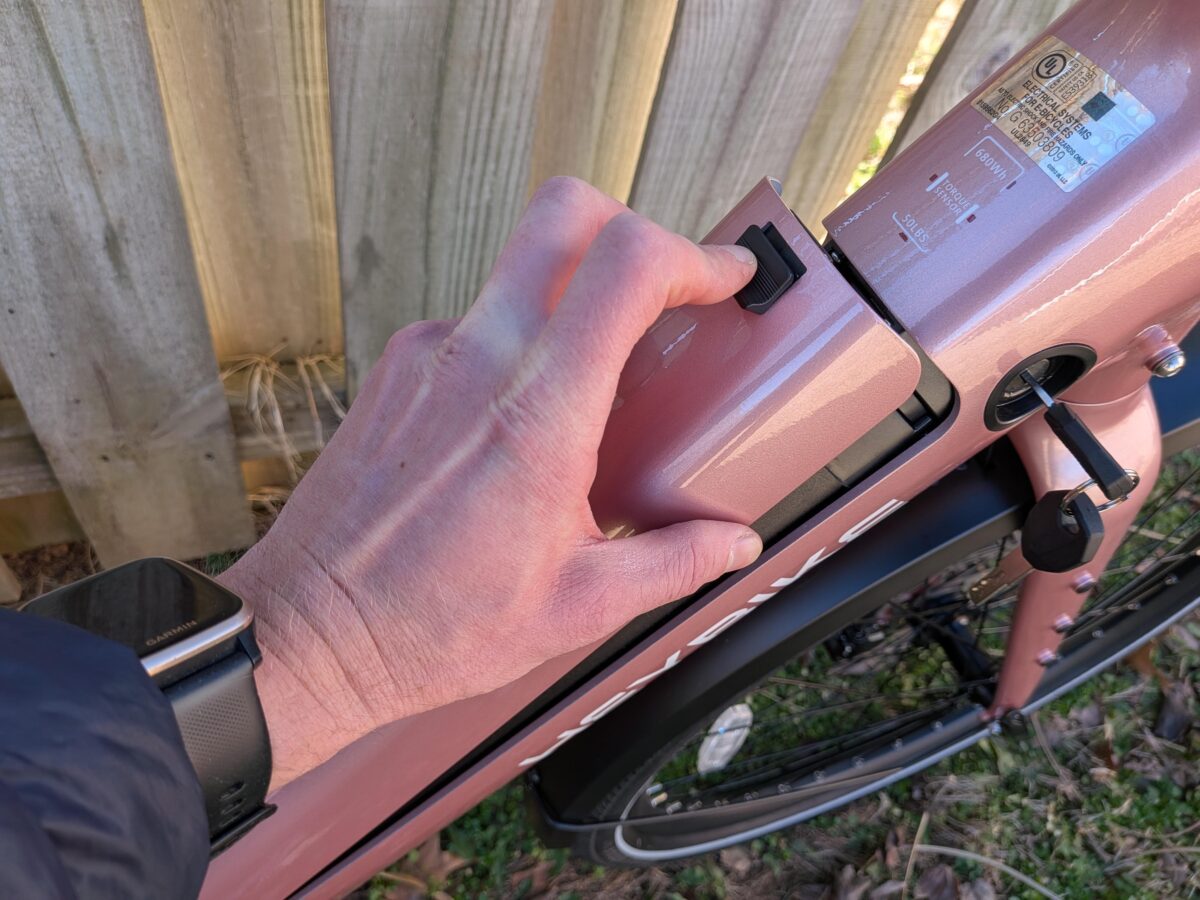
Powering the system is a 48-volt, 14.2 amp-hour top-load battery yielding 680 watt-hours. We really appreciate the top-load design because it’s simply much easier to remove and replace compared to bottom-loading packs, even though you do have to manage a separate physical cover. For peace of mind, the battery is certified to UL 2271 standards, and the entire electrical system is certified to UL 2849.
Swappable Sensor Technology
One of the coolest features here is the ability to swap between a cadence sensor and a torque sensor on the fly. Just by holding the M button, you can toggle the modes, letting you decide whether the motor should respond to simple pedal rotation or the actual effort you’re putting in.
Integrated Safety Features
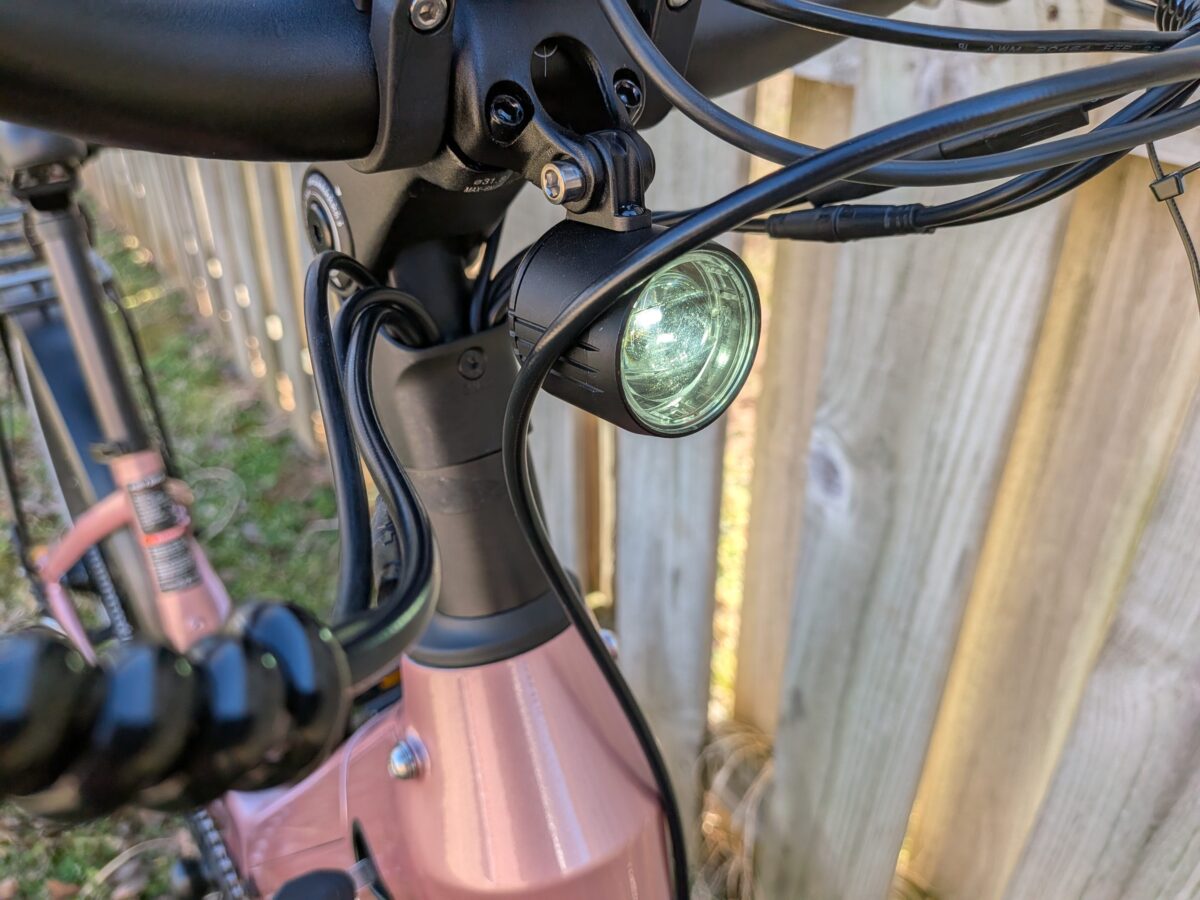
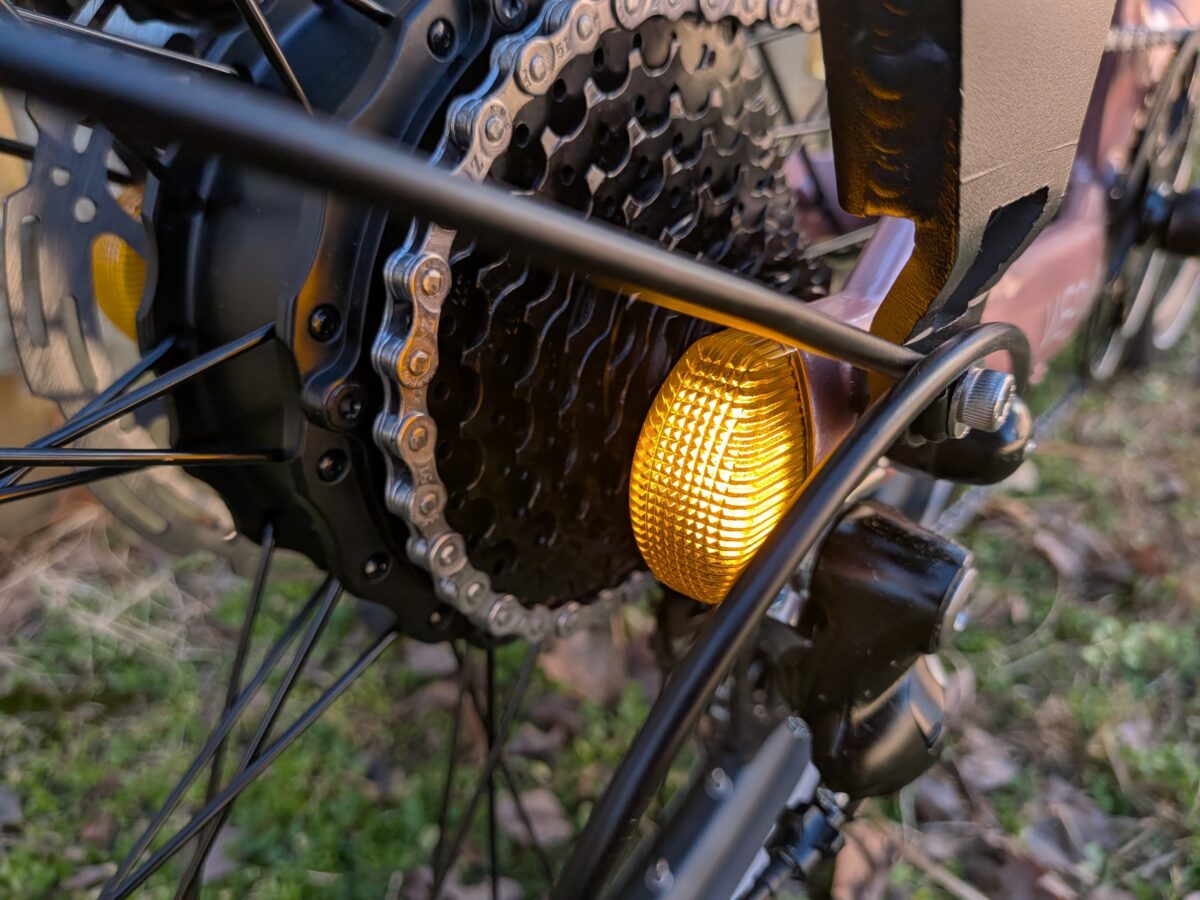
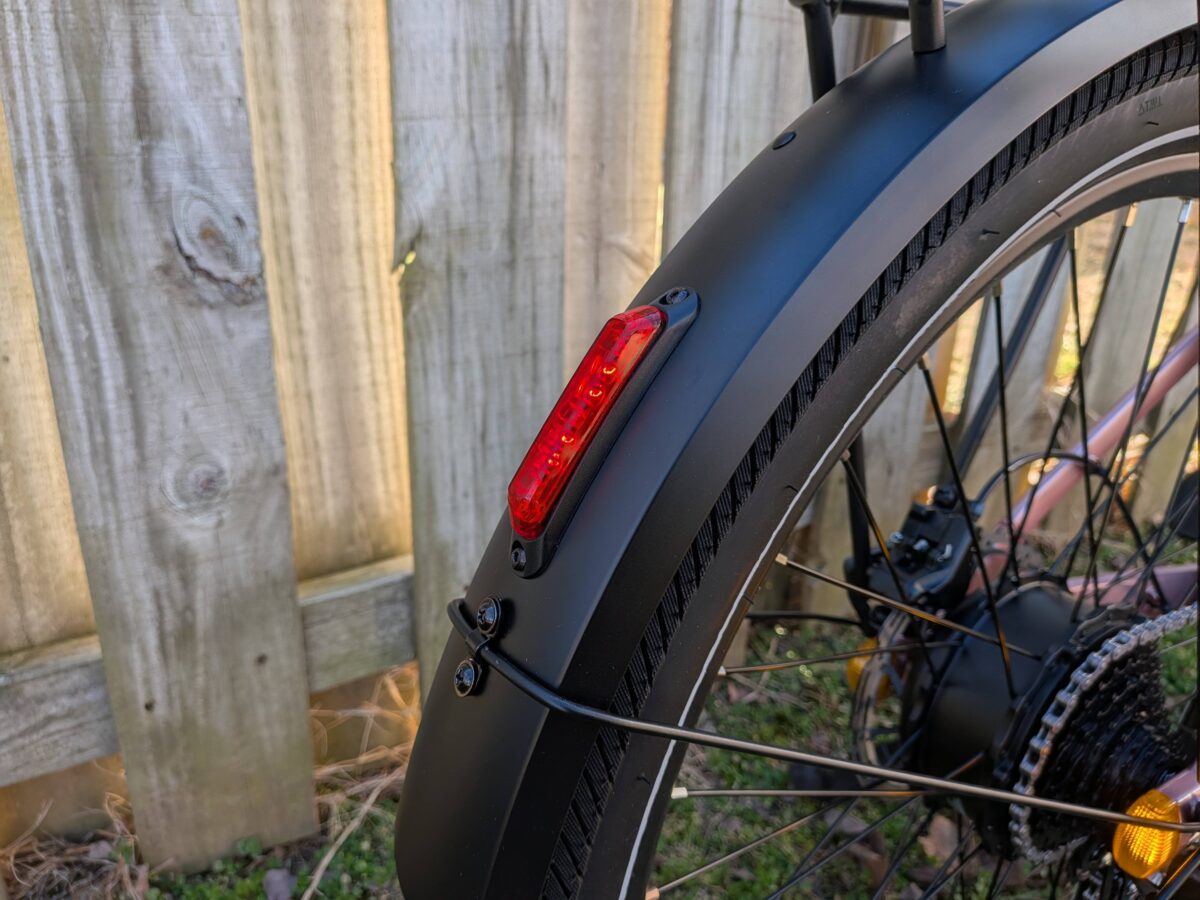
Safety features are baked right into the frame, including flush-mounted rear turn signals. You also get an integrated electronic horn and a bright front headlight that runs directly off the main battery, adding a nice layer of security when commuting in traffic.
Frame Design, Options, and Sizing
When it comes to design, this step-through commuter uses swept-back handlebars and an adjustable stem to dial in a familiar, comfortable, upright riding posture. To keep the weight down, Heybike intentionally opted for a rigid front fork instead of a heavier suspension setup. You also get to choose from three distinct color options: Rose Gold, Pearl White, and Titanium Gray.
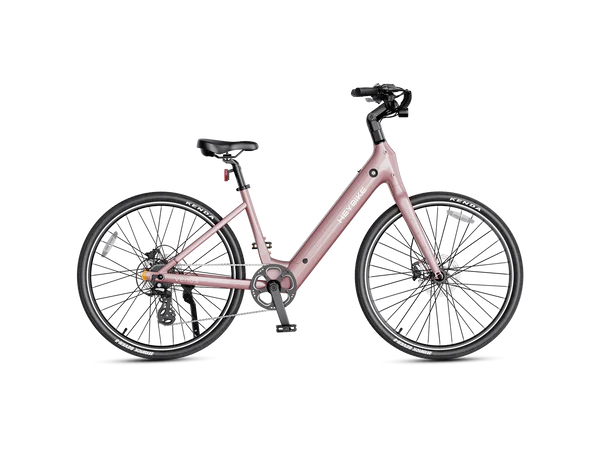
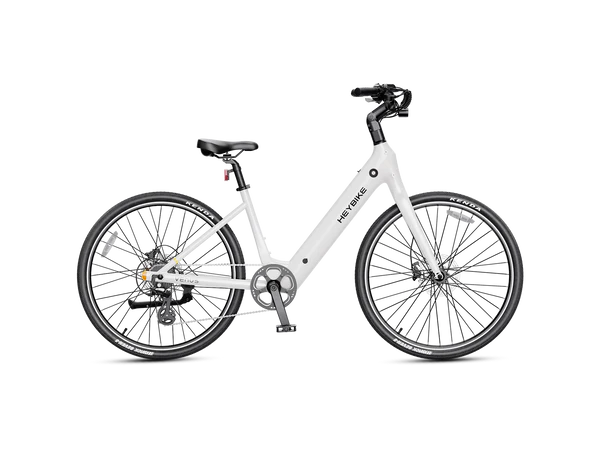
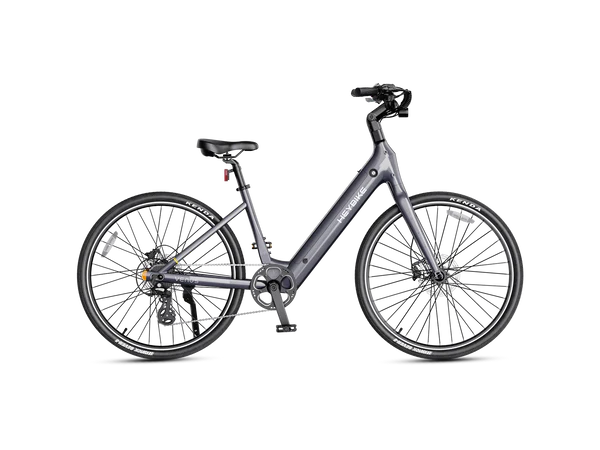
The step-through frame offers a great low standover height that makes getting on and off a breeze. Sizing guidelines suggest it fits riders from 4’11” up to 6’2″, though our 6-foot-tall (32″ inseam) reviewer was definitely at the top end of that spectrum. If you’re much taller, you might struggle to get full leg extension on this specific frame.
Full Specs: Heybike Venus Review
Want to know exactly what makes this ebike tick? Check out our complete breakdown of the components below.
Real-World Performance Tests
Throttle-Only Acceleration
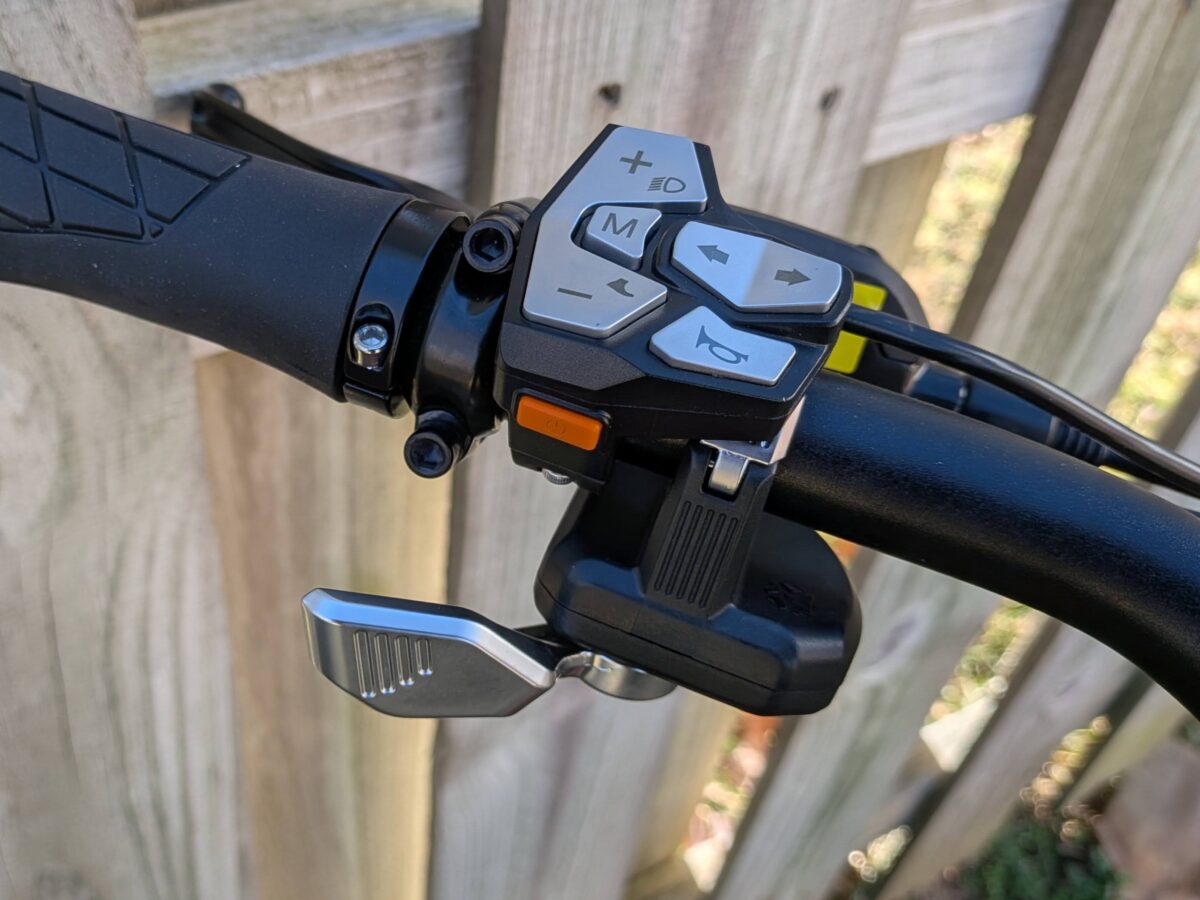
With speed restrictions lifted, the 750-watt motor ramped up smoothly on throttle alone, carrying us right up to 27 mph. The default throttle is limited to true Class 2 speeds, but it can throttle beyond 20 mph, speeds typically only street legal when pedaling. The throttle output can be limited within the app, capping performance at the top speed of your current pedal assist level. This is an awesome accessibility feature if you find thumb throttles hard to modulate and each assist level’s top speed is customizable. However, your pedal and throttle speeds are locked together when using this feature. We would love to see independent controls for throttle and PAS speeds in the future.
Pedal Assist and Sensor Performance
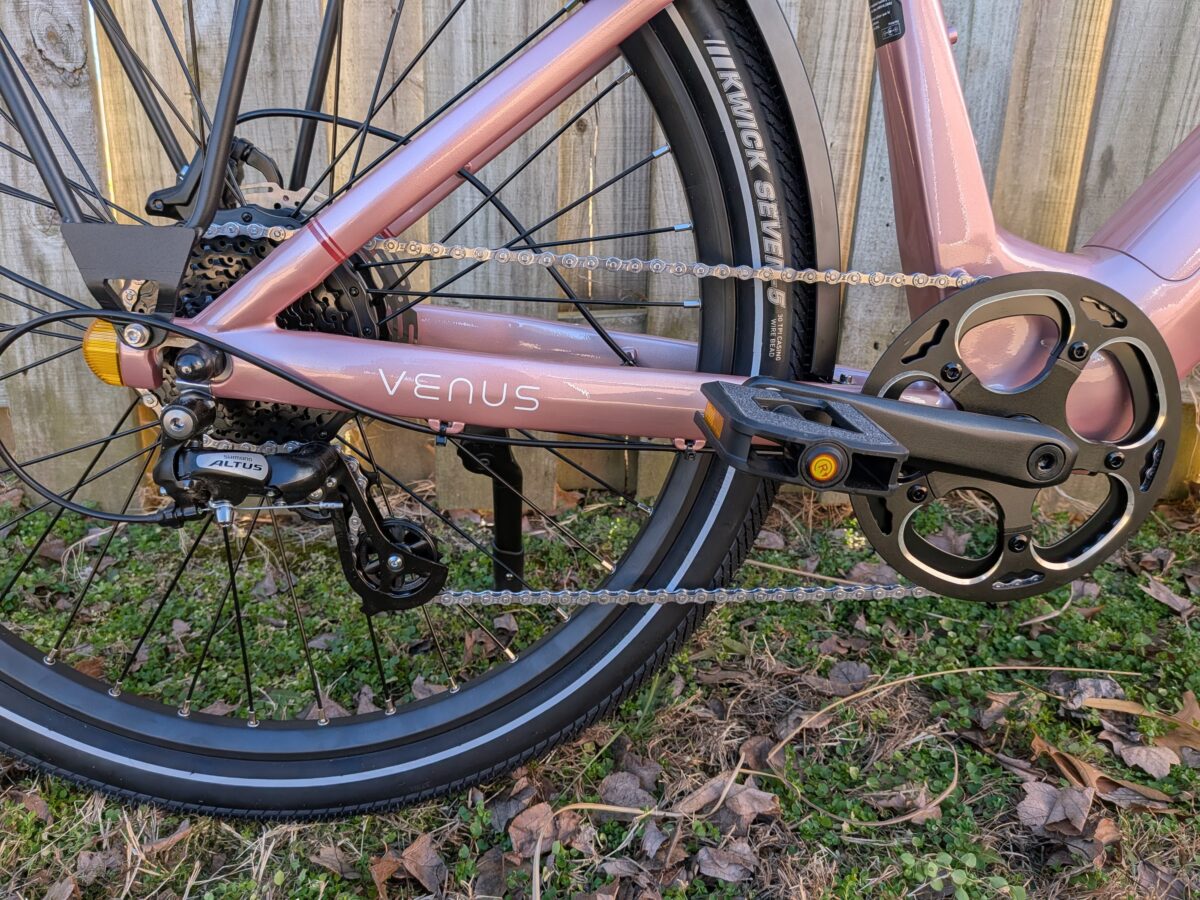
Putting both sensor modes through their paces revealed plenty of available power.
The Cadence Sensor Experience
A cadence sensor essentially acts like an on/off switch for the motor since it just detects whether your pedals are turning. On this model, we found the power ramps in smoothly after about a half-turn of the cranks, giving you a steady push regardless of how hard you’re actually pedaling.
Riding With the Torque Sensor
Normally, a torque sensor measures your physical effort and multiplies it, rewarding you for pedaling harder. However, we found the torque sensor here is tuned to give you power very easily. You can hit higher speeds without breaking a sweat, making it feel almost identical to the cadence sensor in those upper assist levels.
Hill Climb Test

Throttle-Only Climbing Performance
Confronting our large local hill climb test, the motor proved it has plenty of muscle. Relying strictly on the throttle, we easily maintained a solid 20 mph all the way up the incline.
Pedal-Assisted Climbing Performance
Using the torque sensor and pedaling in first gear, we held a steady 7 mph climb with minimal physical effort in PAS 3. To make sure we were squeezing every ounce of power out of the motor on the steepest sections, we used the hot-swap feature to jump over to the cadence sensor mid-hill, which effortlessly pulled us to the top.
Heybike Venus vs Velotric Breeze 1 | Step-Thru Commuter Showdown
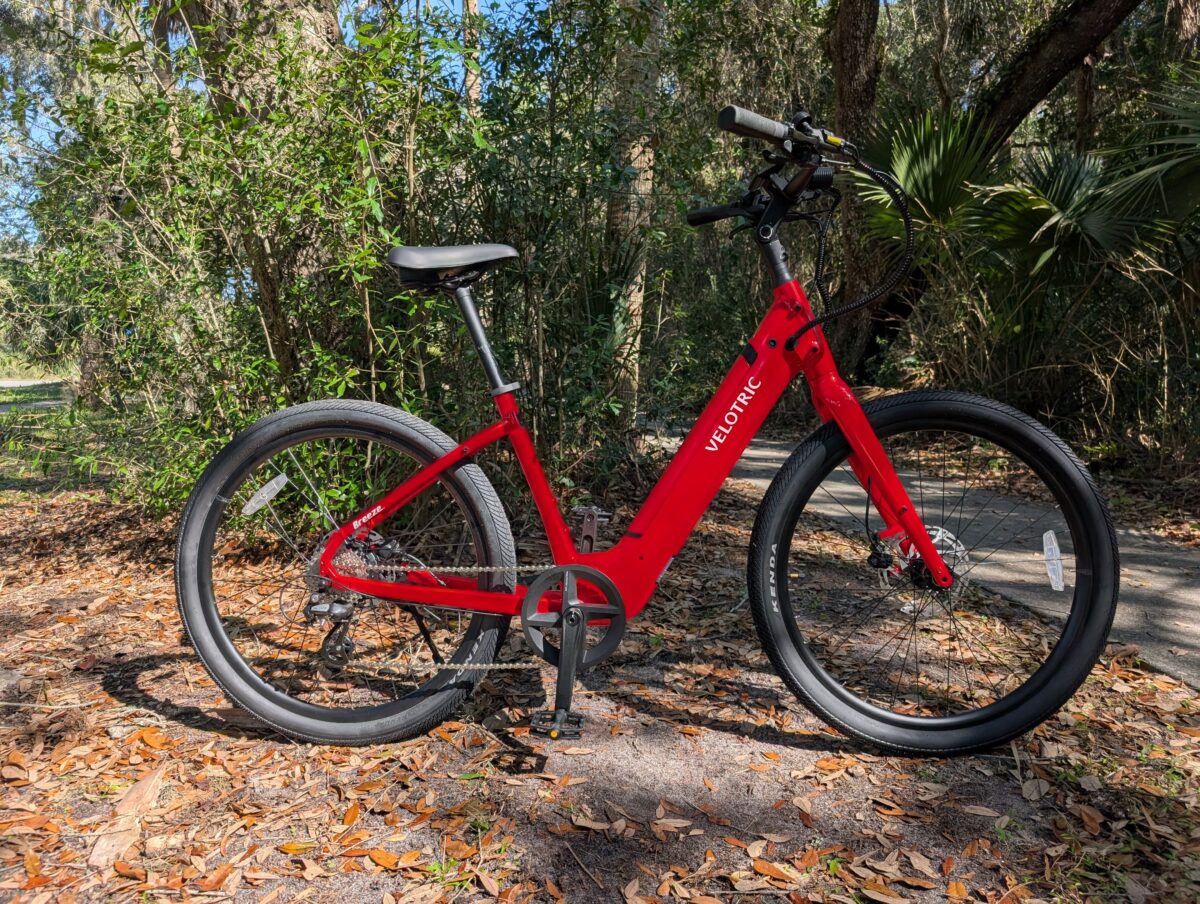
Looking across the commuter landscape, the Velotric Breeze 1 serves as a strong point of comparison. Priced at $1,799, it targets the same lightweight, step-through commuter experience featuring a rigid fork, adjustable stem, and swept-back handlebars. Both ebikes are incredibly close on the scale, sitting right around 48 to 49 pounds with their batteries removed. They also share 750-watt motors, hydraulic disc brakes, and the standout ability to hot-swap between cadence and torque sensors mid-ride.
However, the riding experiences differ a bit. The Venus boasts slightly more torque at 70 Nm compared to the Breeze 1’s 65 Nm, pairs it with a slightly larger battery, and features a torque sensor tuned for effortless power access. The Breeze 1’s torque sensor provides a much more natural power integration that rewards your physical effort. Velotric also pulls ahead with best-in-class water resistance (IPX6 for the bike, IPX7 for the battery), Apple FindMy integration, and deeper app customization allowing for independent pedal assist and throttle speed limits. Plus, Velotric gives you the massive advantage of over 1,200 local dealers.
Choosing between these two commuters comes down to budget and your preferred riding style. The Breeze 1 appeals to riders willing to spend $300 more for a natural pedaling feel, highly customizable software, premium water resistance, and local bike shop support. On the flip side, the Heybike Venus delivers effortless, punchy motor power and identical sensor versatility while keeping the initial purchase price highly competitive.
Read our full Velotric Breeze 1 Review here.
Pros and Cons
Final Thoughts: Who Is The Heybike Venus For?

After logging some miles, it’s clear this is a highly capable mid-tier option that balances everyday utility with raw motor power. Because the geometry caters heavily to shorter riders, it carves out a great niche for anyone who finds standard commuter frames a bit too large or unwieldy. If you have been looking for a lighter ebike with accessible ergonomics that does a lot of the heavy lifting for you, this commuter should be on your radar.
Decided the Heybike Venus is the right fit for you? Support our future reviews by grabbing yours through our affiliate link and be sure to use code EE100 to save $100 at checkout.
