
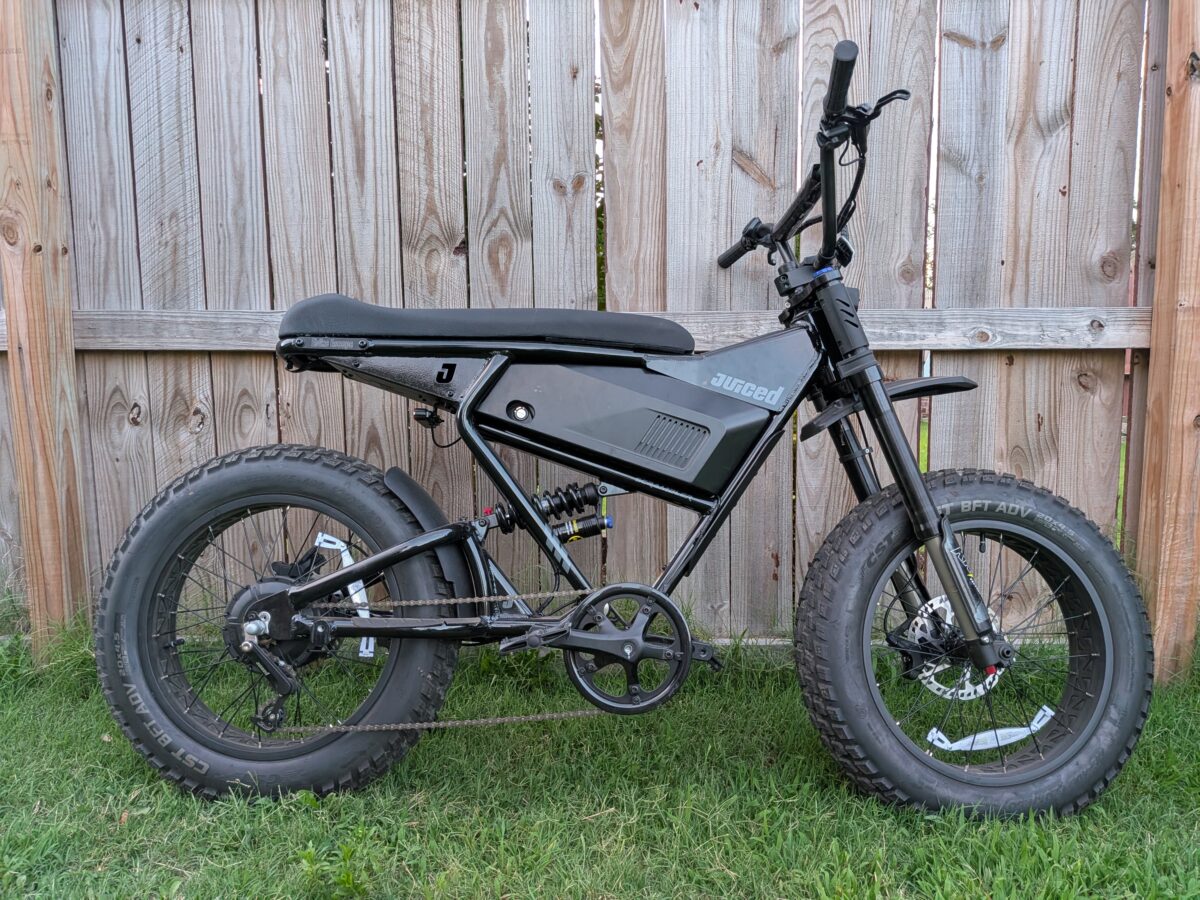
Plenty of moped-style ebikes advertise full suspension, but often the rear shock is more for show than function, there to finish the look rather than do real work over rough ground. Building both ends around genuine moto components from KKE, the Juiced Scrambler Full Suspension lets you float over potholes, grass, or a rooted trail, all on a frame modeled after a pit bike. It keeps the throttle-happy 52V performance that the Juiced name was built around, while staying strictly street legal under the full Class 1, 2, and 3 definition of an actual electric bike. At $1,899 it is not the cheapest moped-style ebike, and it sits $200 above its sibling hardtail version, an upgrade that adds comfort but also presents some tradeoffs.
We start with the standout features and how it fits a range of riders, then get into the real-world testing, from throttle runs and pedal assist on both the cadence and torque sensors to our Bentonville hill climb and a session off the pavement. Since the two Scramblers share so much, we also lay out where the extra $200 goes and where the hardtail still holds the edge.
If this review helps you settle on a Juiced model, consider using our affiliate link when you buy. It costs you nothing and keeps reviews like this one coming. Thanks for the support.
Juiced Scrambler Full Suspension Video Review
The full video covers everything written below and offers more. You get up-close looks at all the components, a walkthrough tutorial of the display and its settings, ride-along footage that puts you behind the handlebars for the throttle, pedal assist, off-road, and hill climb runs, and third-person shots of the bike in motion.
Standout Features of the Juiced Scrambler Full Suspension
KKE Front and Rear Suspension
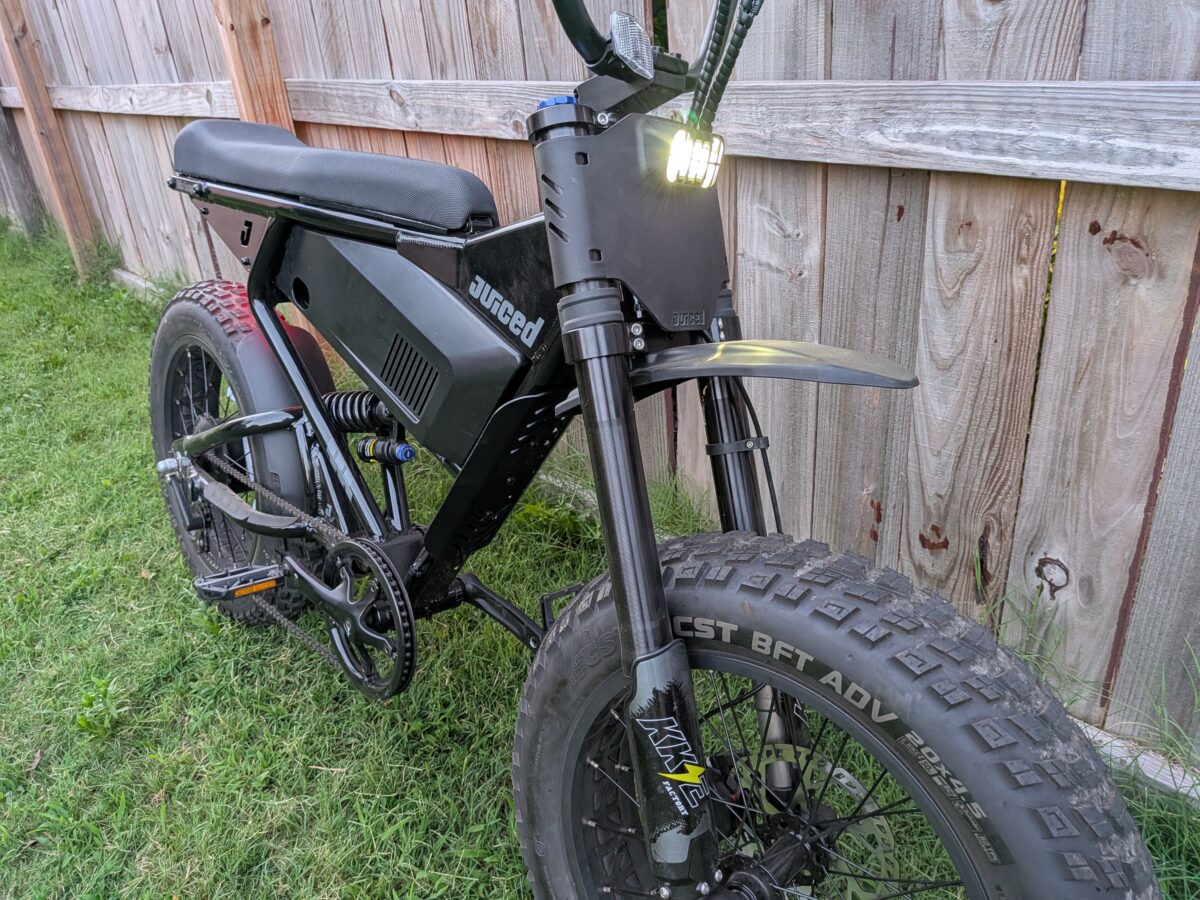
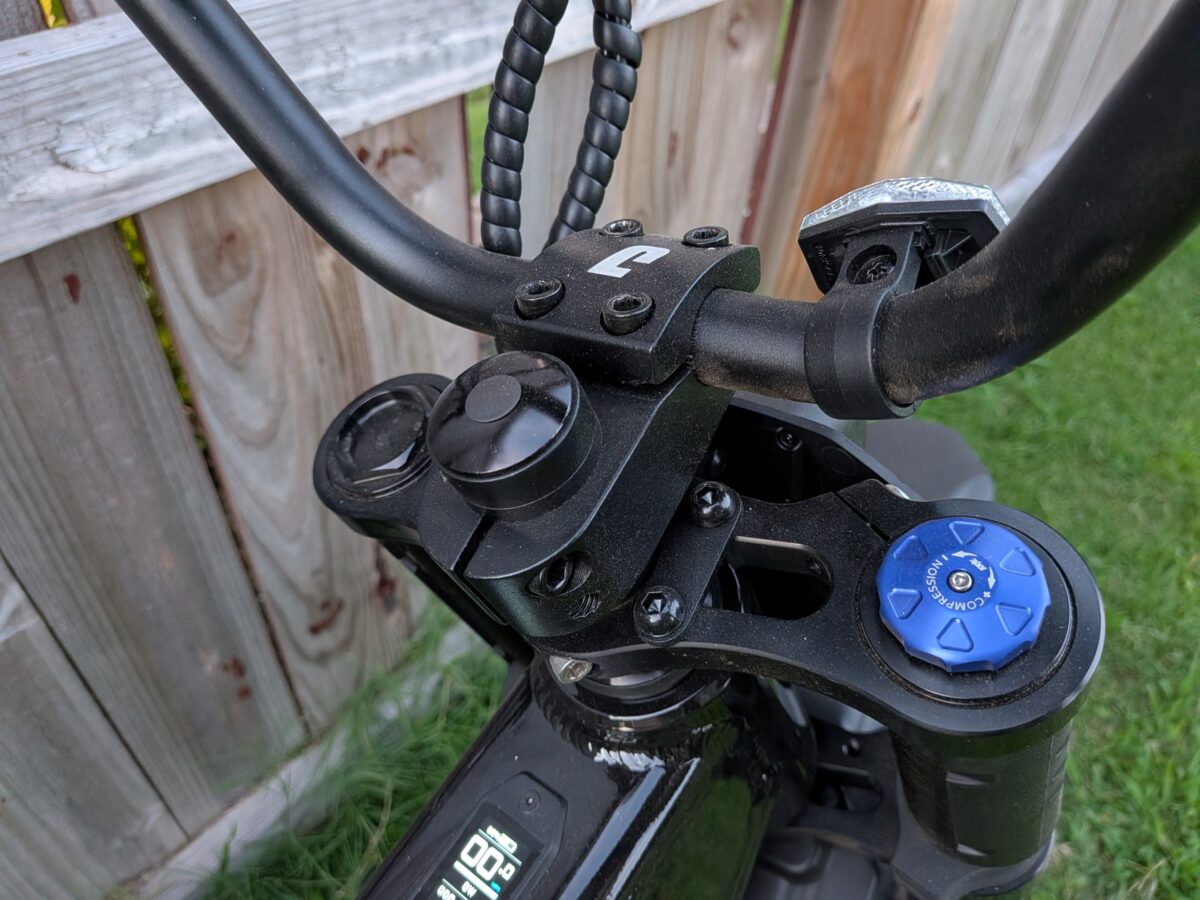
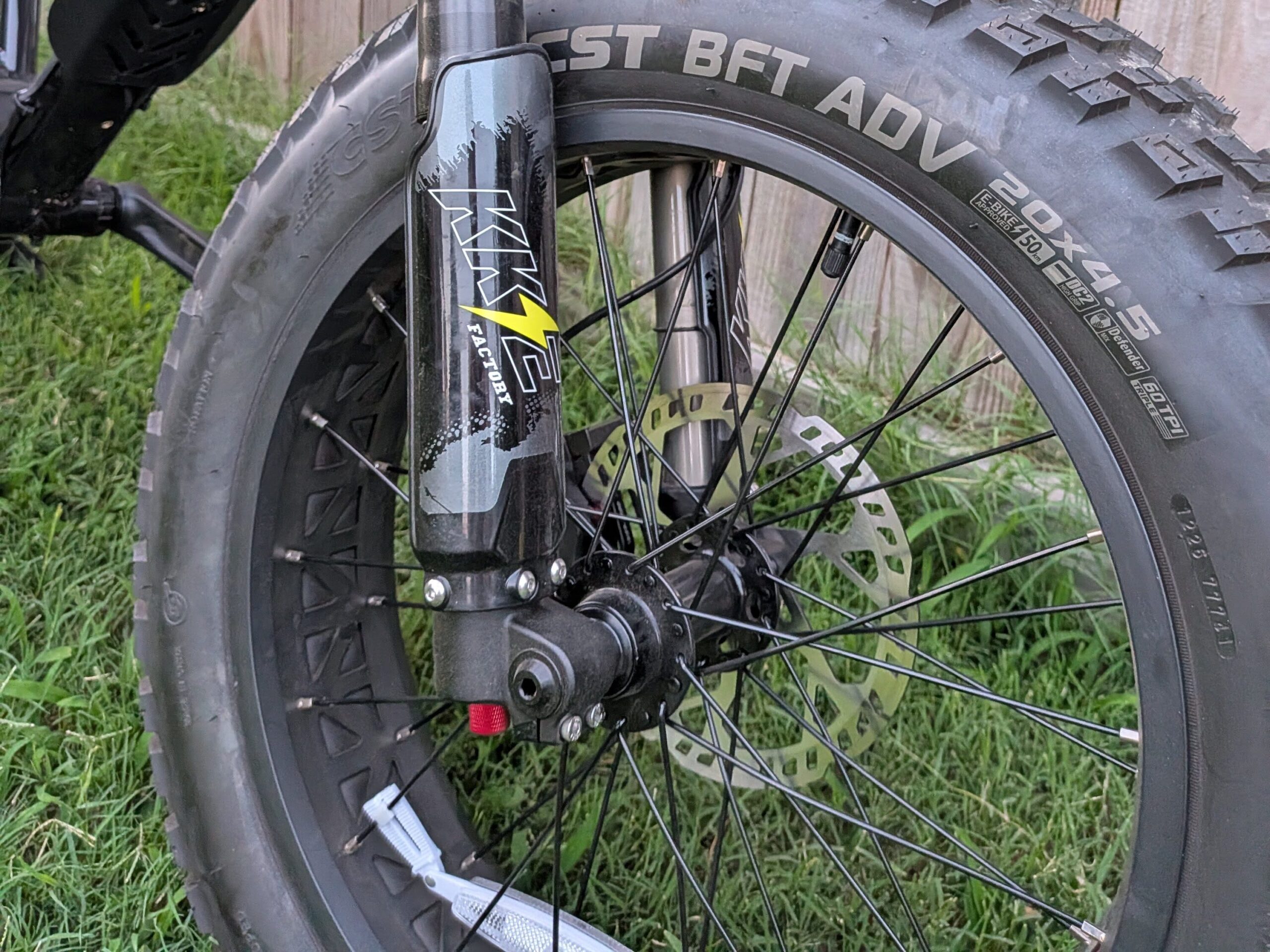
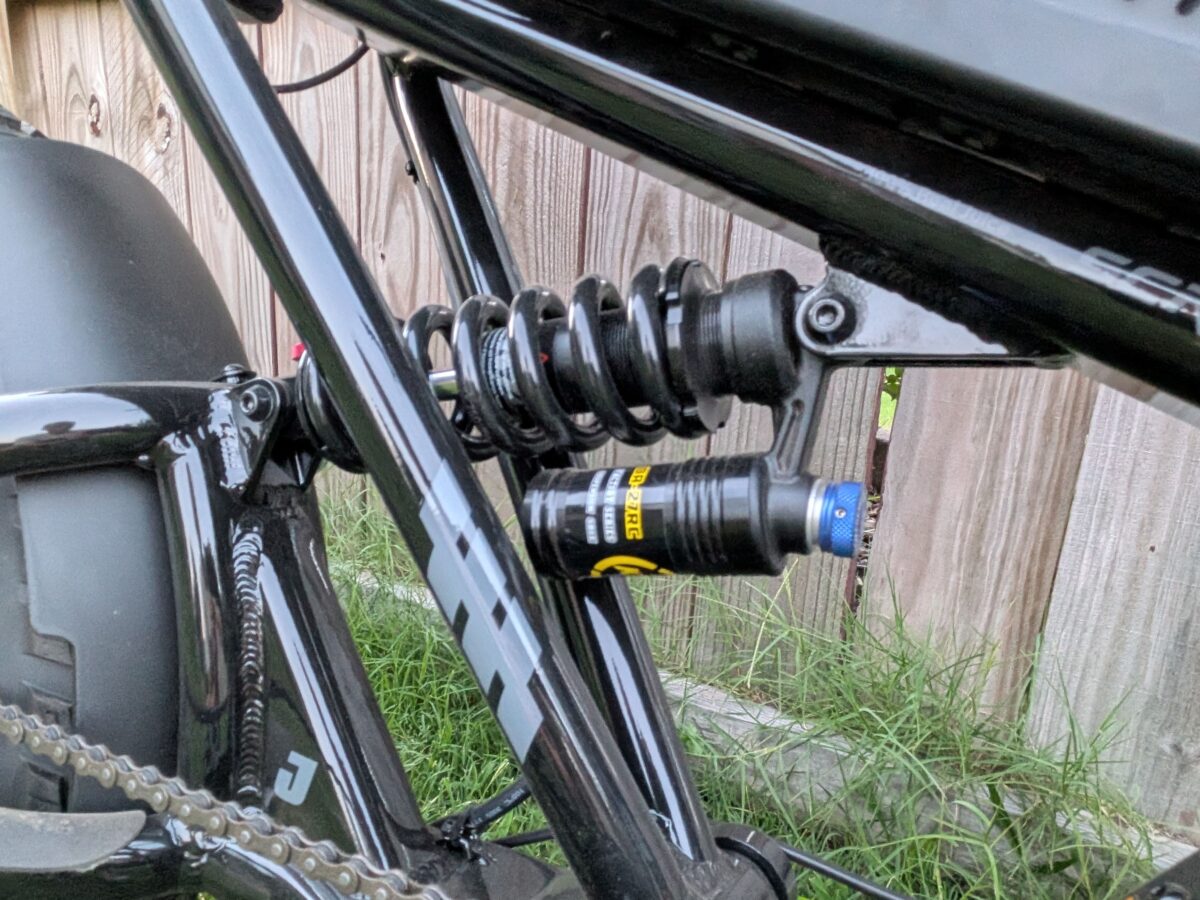
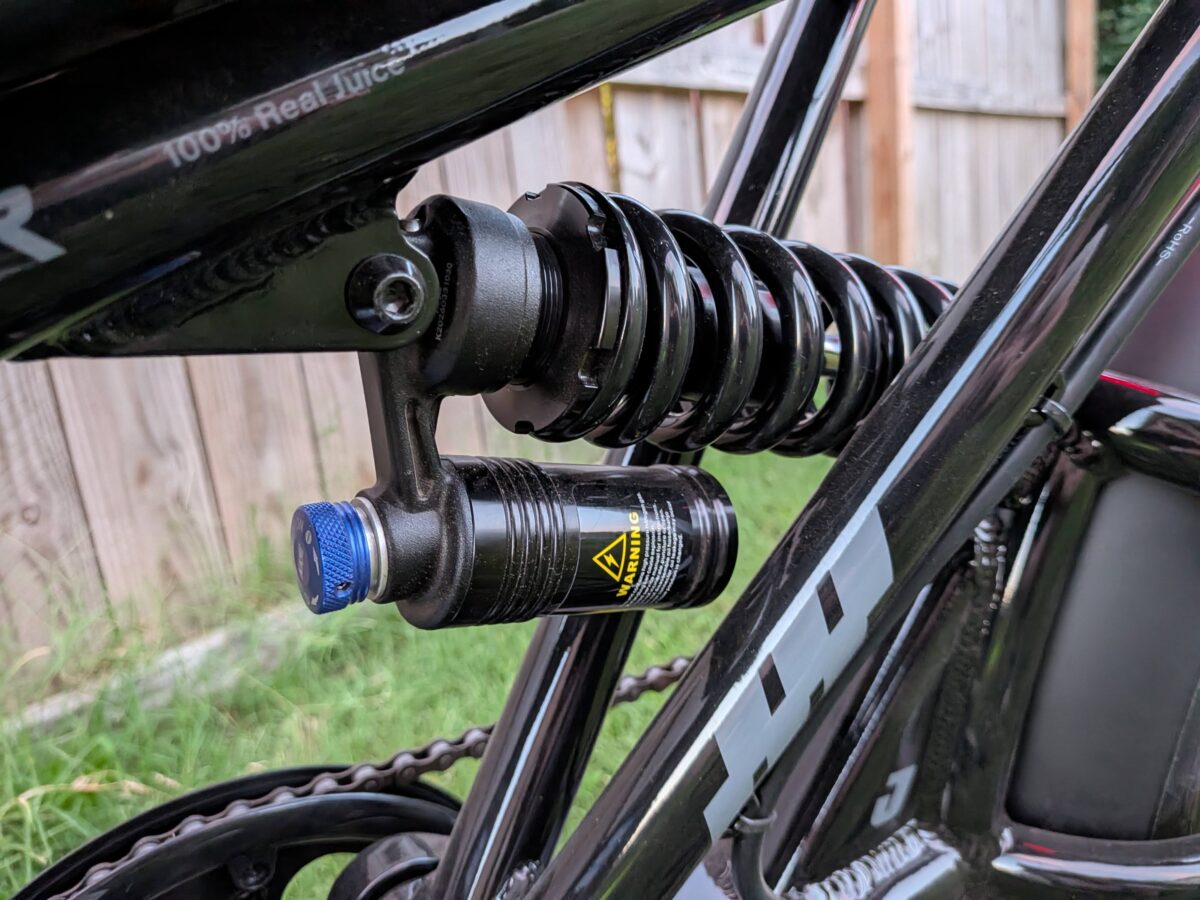
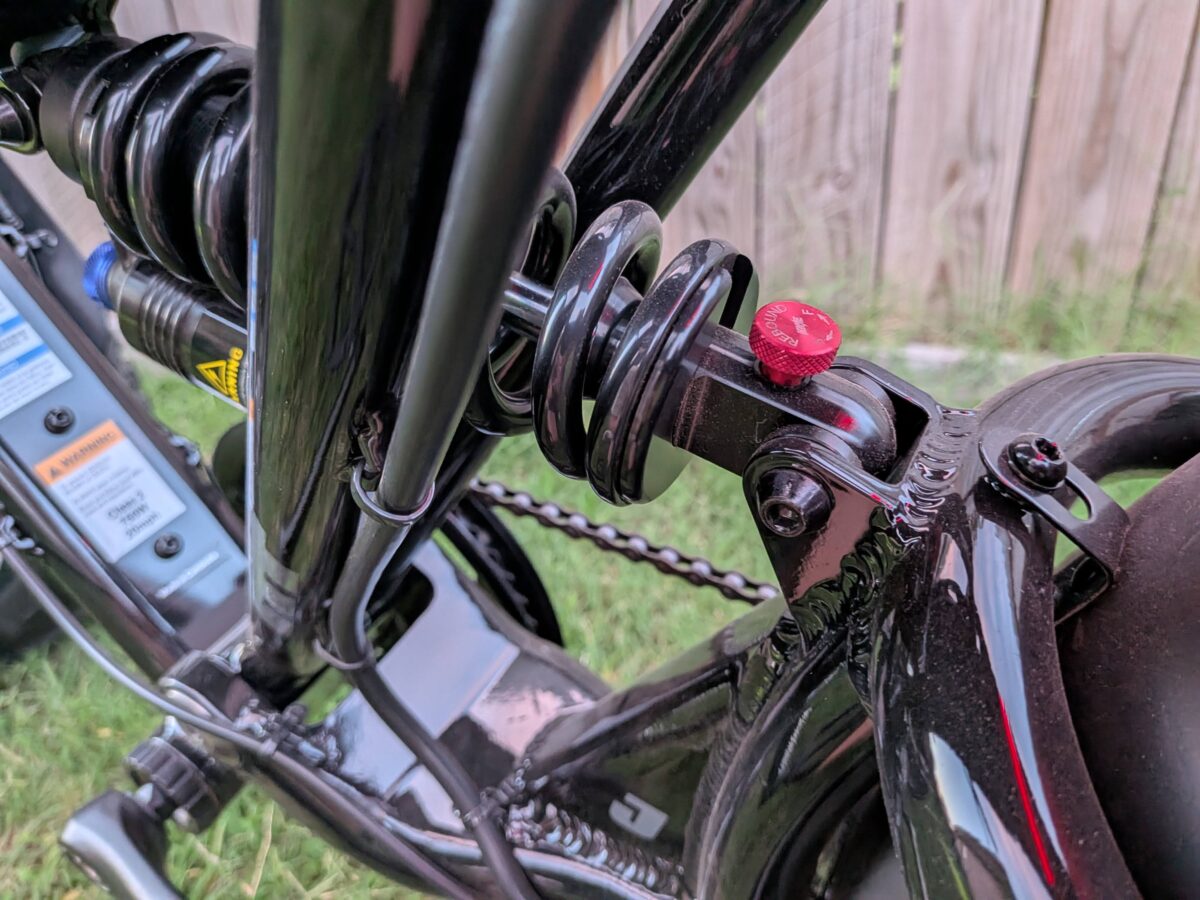
Borrowed from the motorsports world, the KKE suspension is the headline upgrade over the hardtail. Up front sits an inverted fork with 140mm of travel, with compression adjustment on the right leg and rebound below; out back, a KKE coil shock adds its own compression and rebound adjustment along with spanner-adjustable preload. Suspension this capable is uncommon under $2,000.
Aggressive All-Terrain Tires
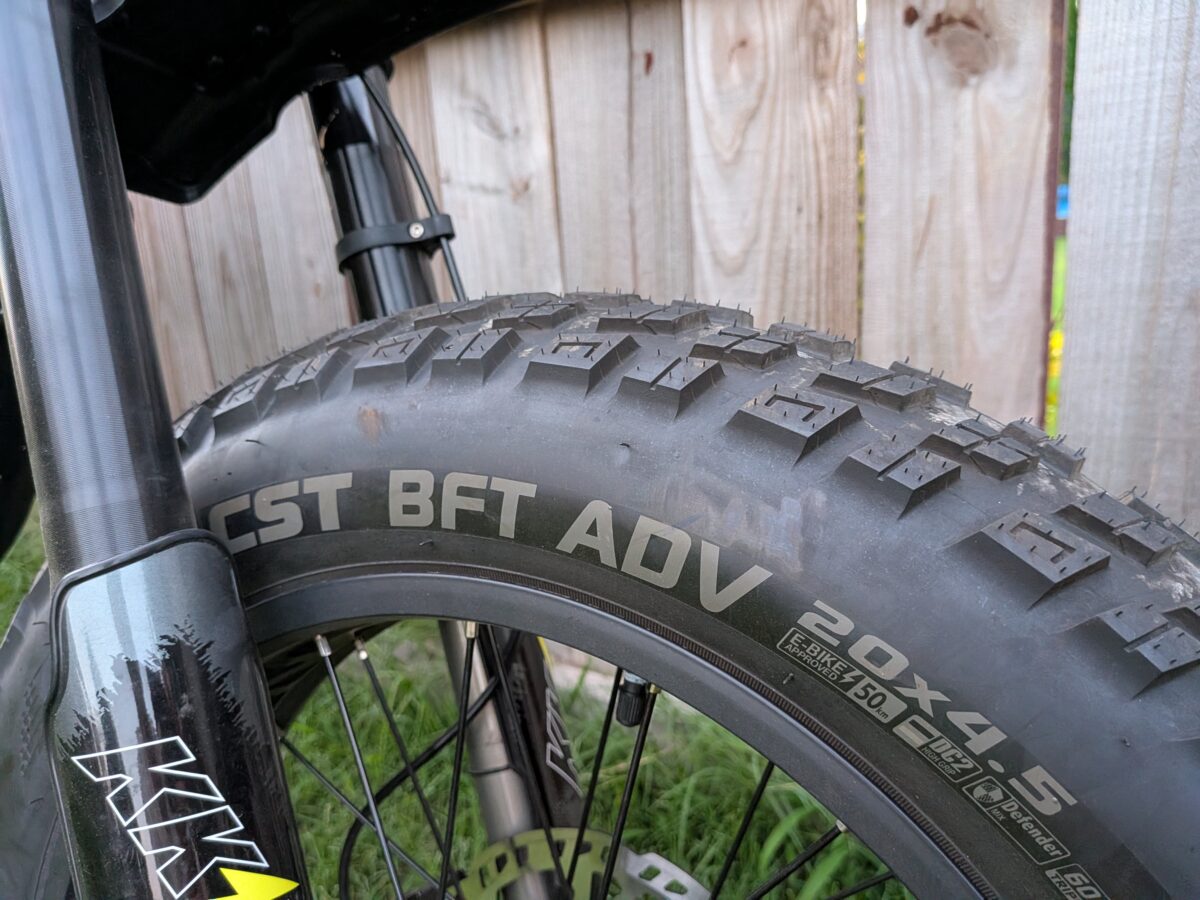
Where the hardtail rolls on a smoother street tread, this one runs wider 4.5 inch knobby tires built to leave the pavement. The aggressive tread digs into loose dirt, gravel, and grass for traction the hardtail cannot match off the road, and the extra width stacks its own cushion on top of the suspension. The flip side shows up on pavement, where the hardtail’s tires have less rolling resistance and run quieter, so the tire really comes down to where you plan to ride.
High-Peak Motor and High-Capacity Battery
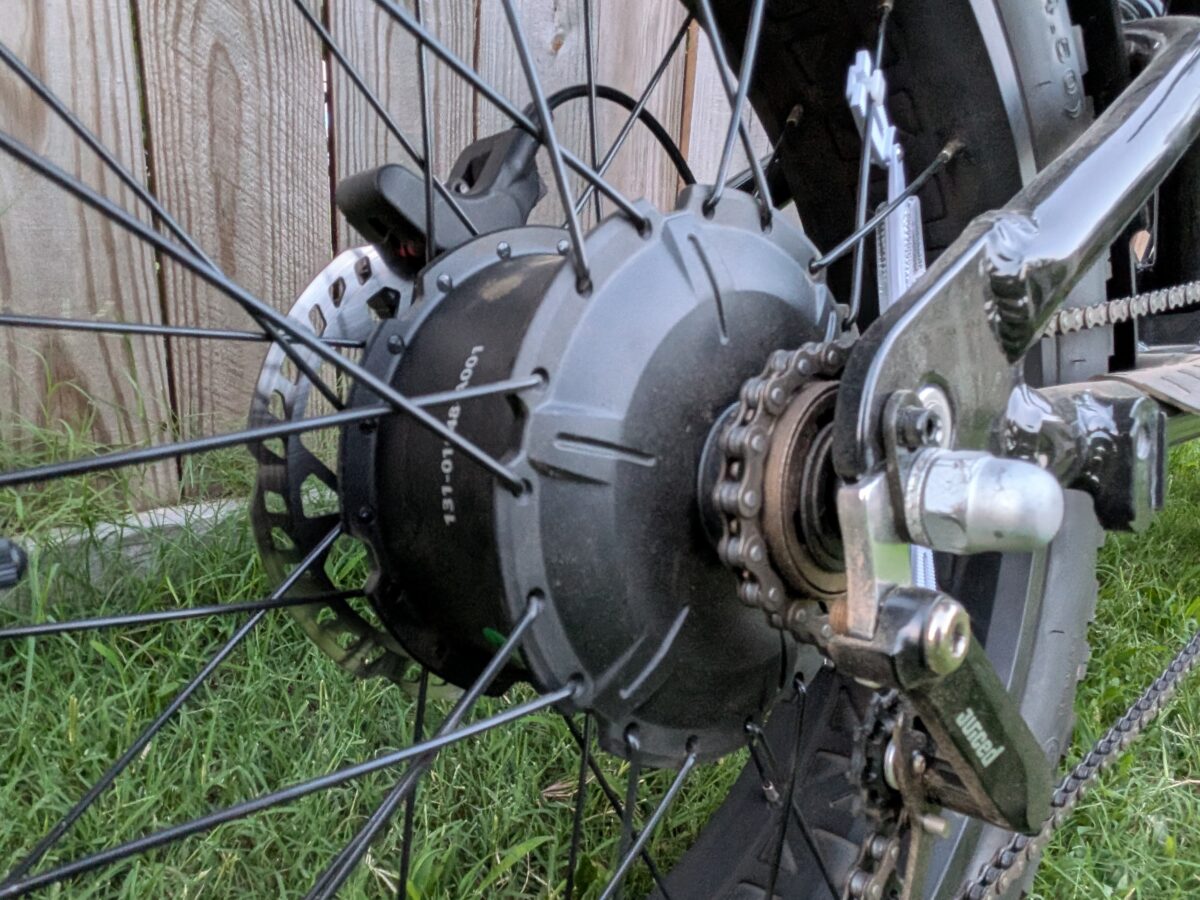
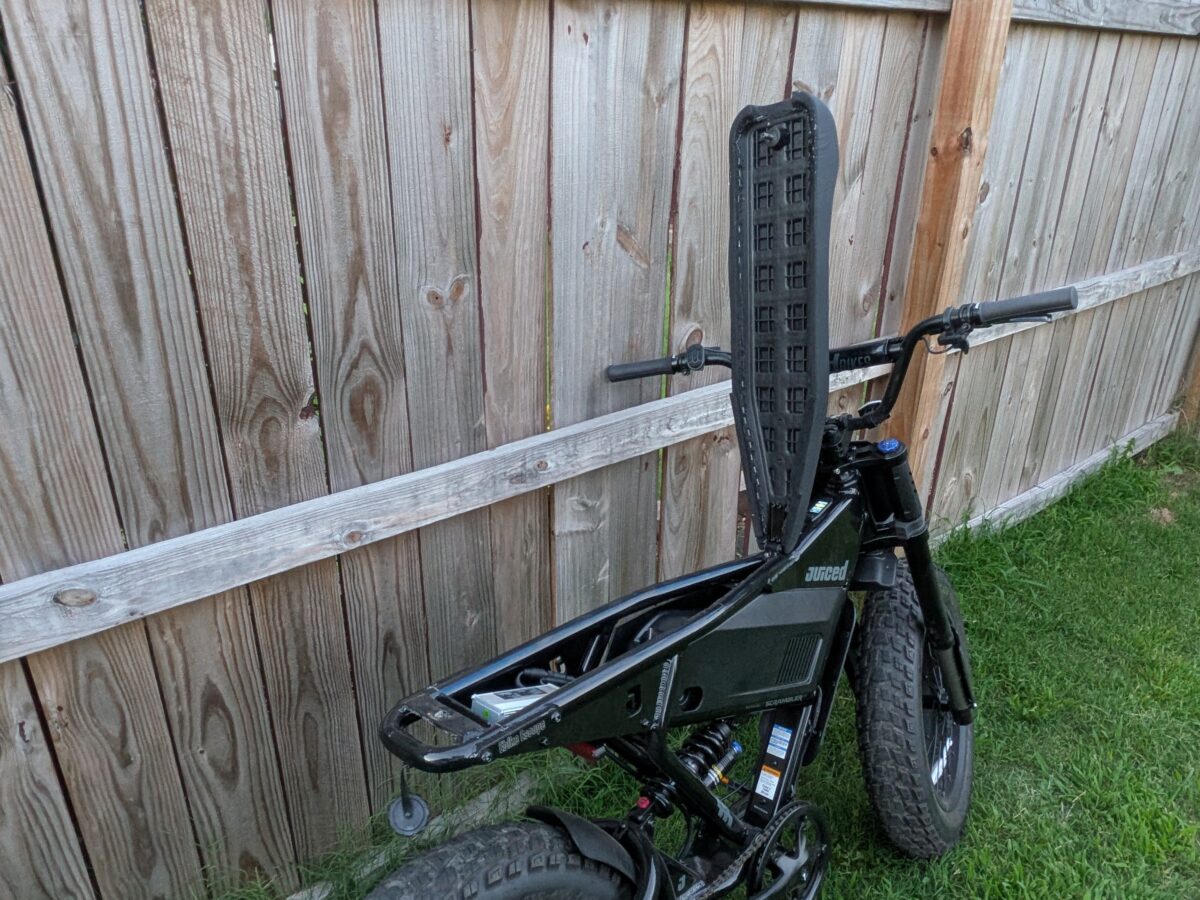
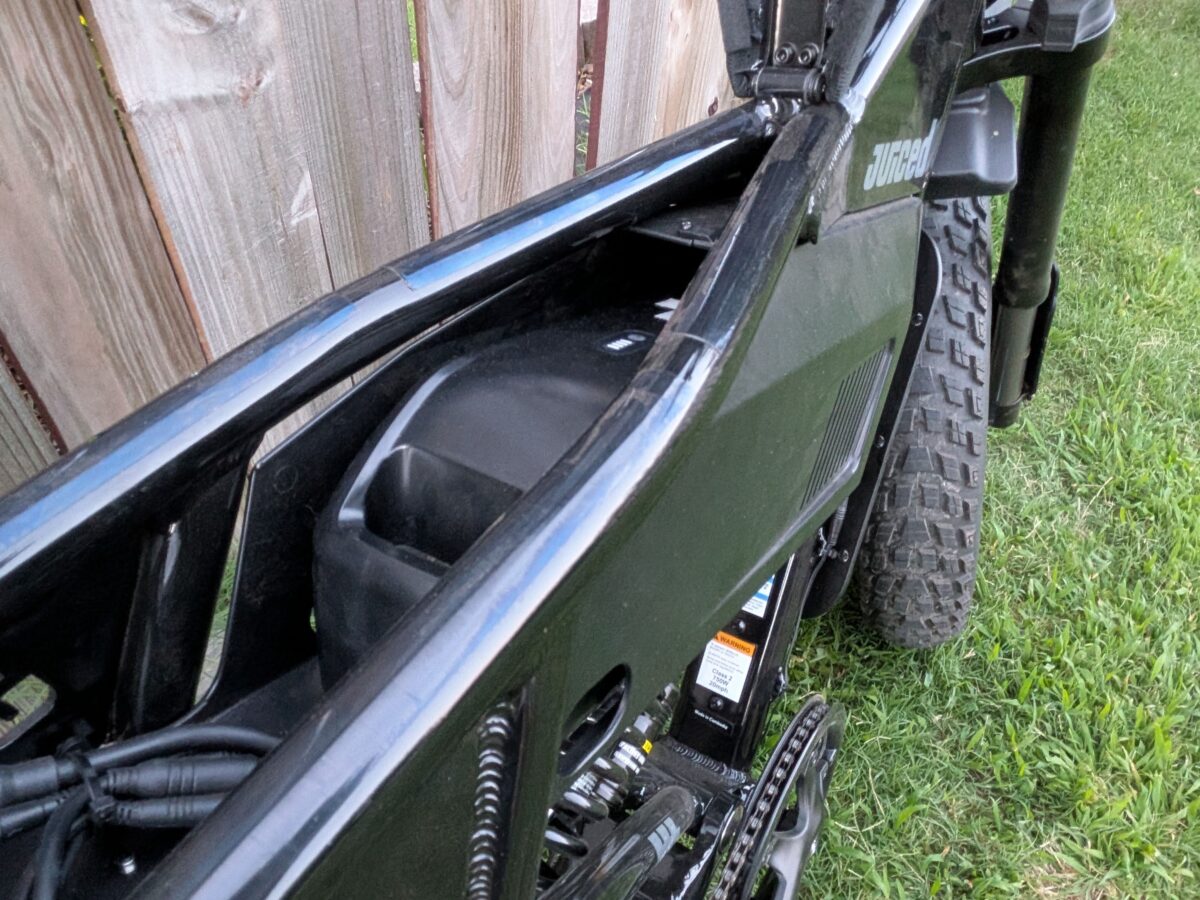
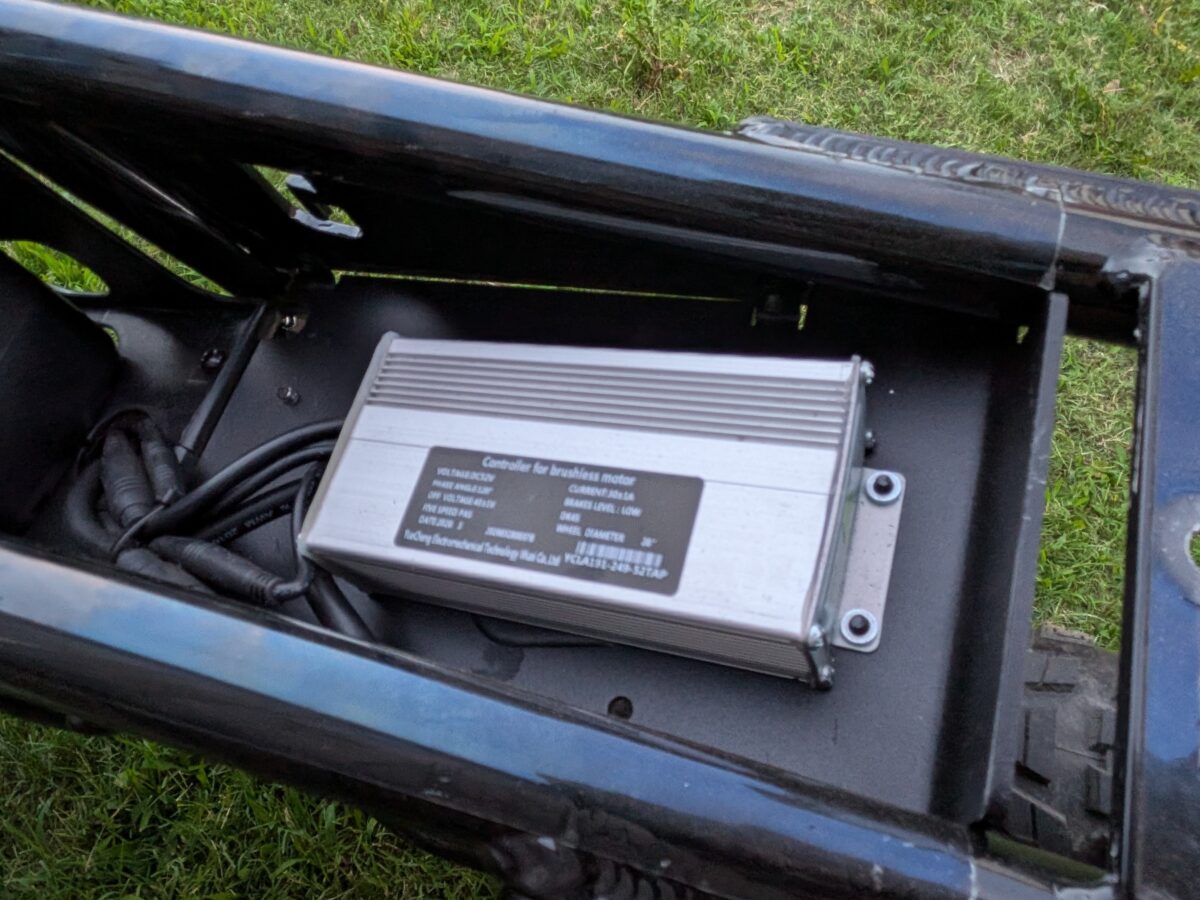
Regardless of which Scrambler you choose, the power is the same: a 750W rear hub motor that peaks at 1,764W with 90 Nm of torque, fed by a 52V 19.2Ah battery. A thumb screw releases the seat to reveal the battery and the 30A controller. Best case range estimates from Juiced are up to 60 miles, though a realistic floor for most riders on throttle alone is around 40. Opting for the full suspension also means you can choose to pedal with a cadence sensor like the hardtail, or switch to a torque sensor. It’s a nice touch, but the single-speed drivetrain and overall geometry mean you’ll likely lean on the right-hand thumb throttle more. The pack is certified to UL 2271 and the full system to UL 2849.
Talon P4 4-Piston Hydraulic Brakes
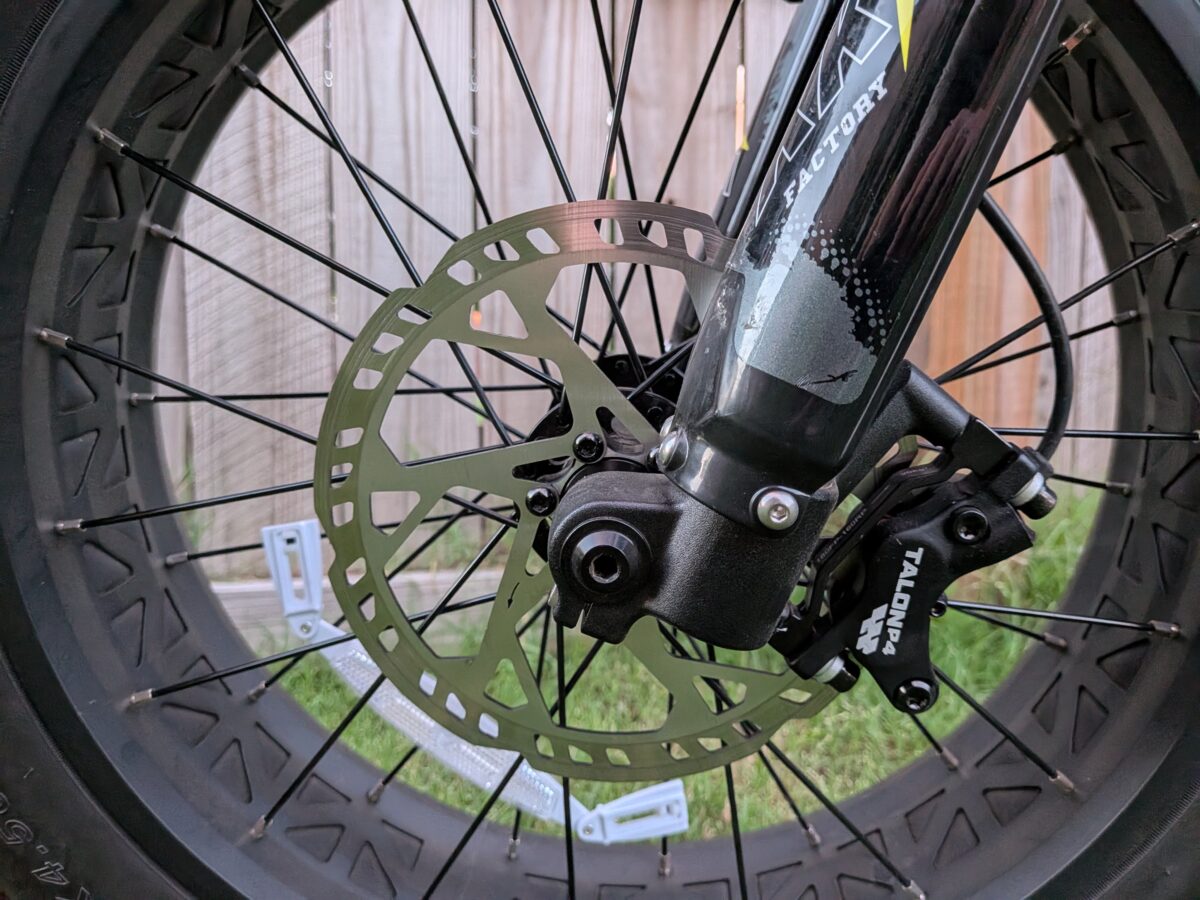
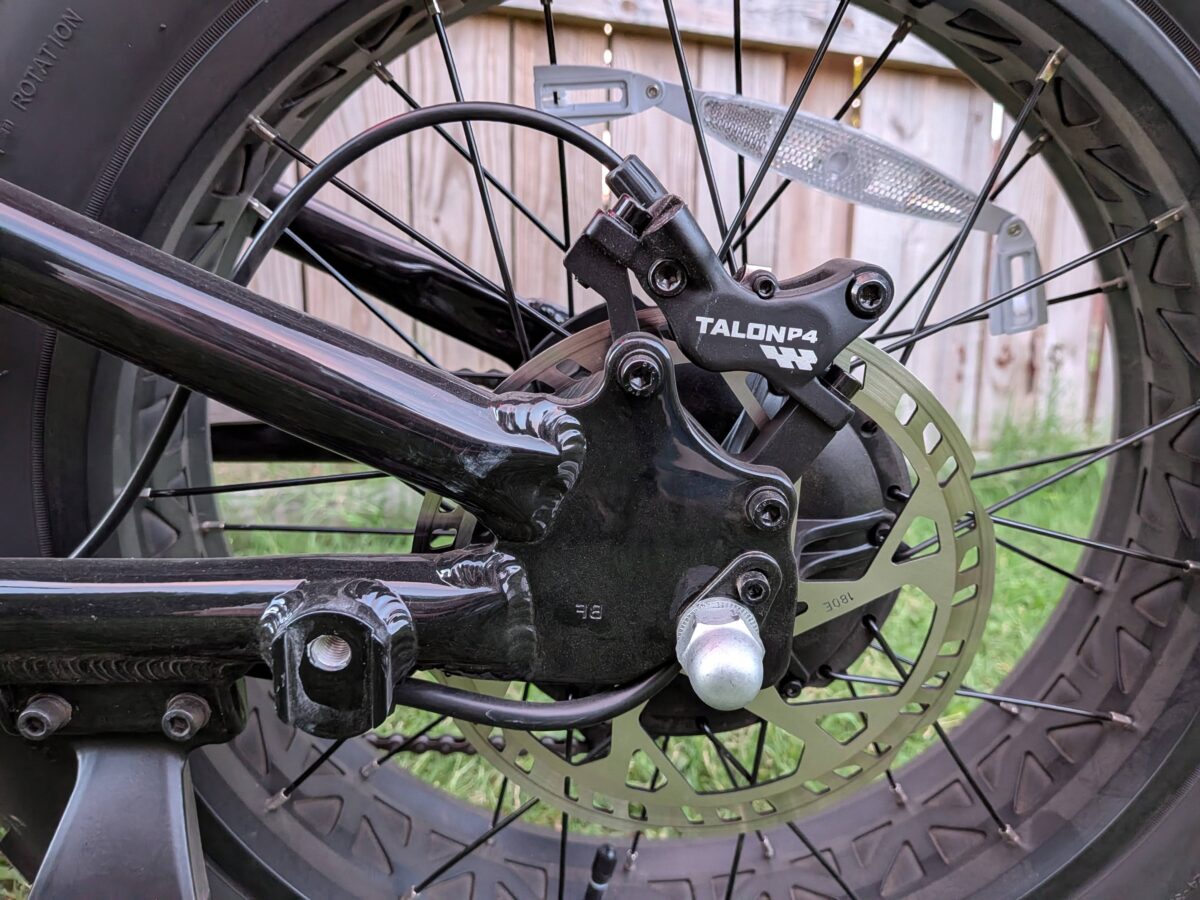
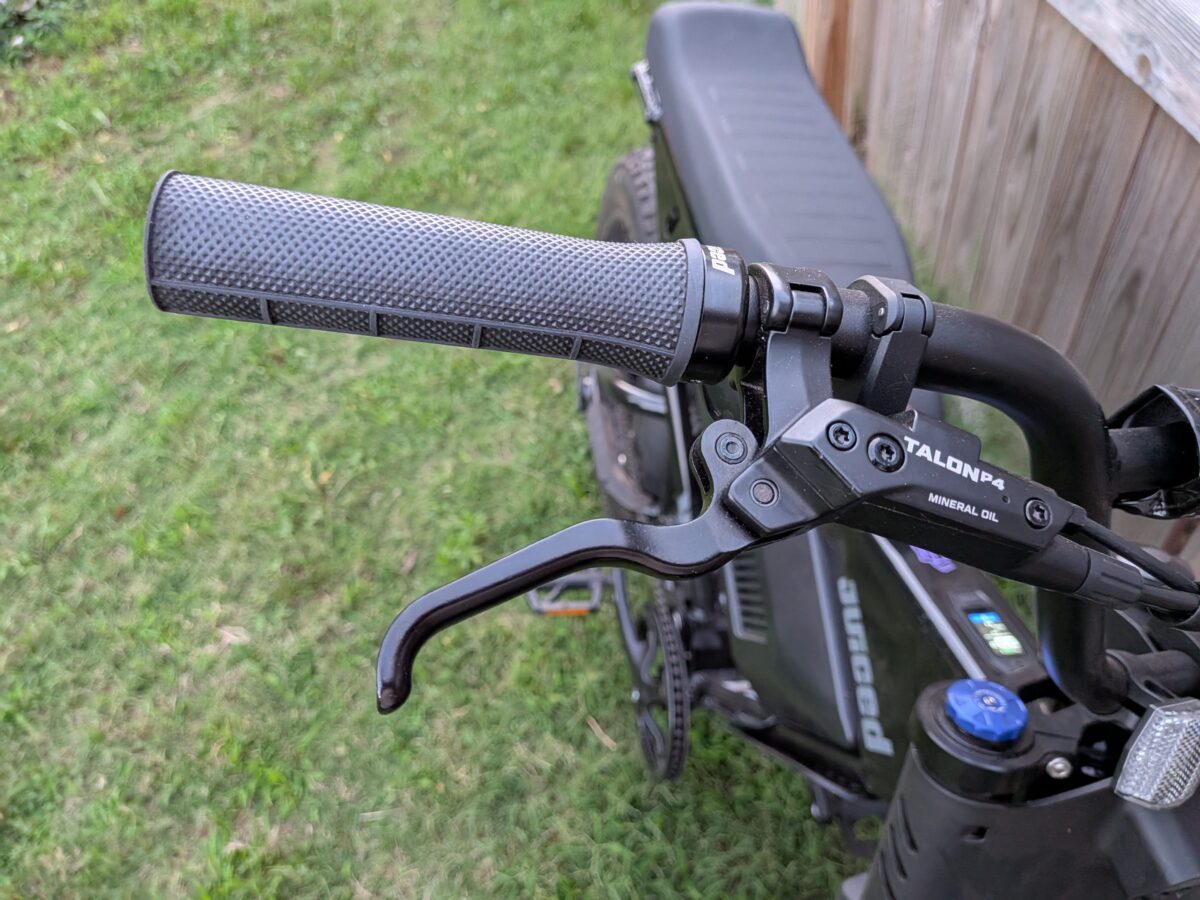
Stopping 85 pounds of moped-style ebike at 20-plus mph falls to the Talon P4 4-piston hydraulic disc brakes, paired with 180mm rotors front and rear and levers with motor cutoffs. They bite hard, and in testing we could lock up the rear and lay down a strip of rubber under heavy pressure. The setup is identical to the hardtail’s, so neither model gives anything up on stopping.
Moto-Style Lighting and Included Accessories
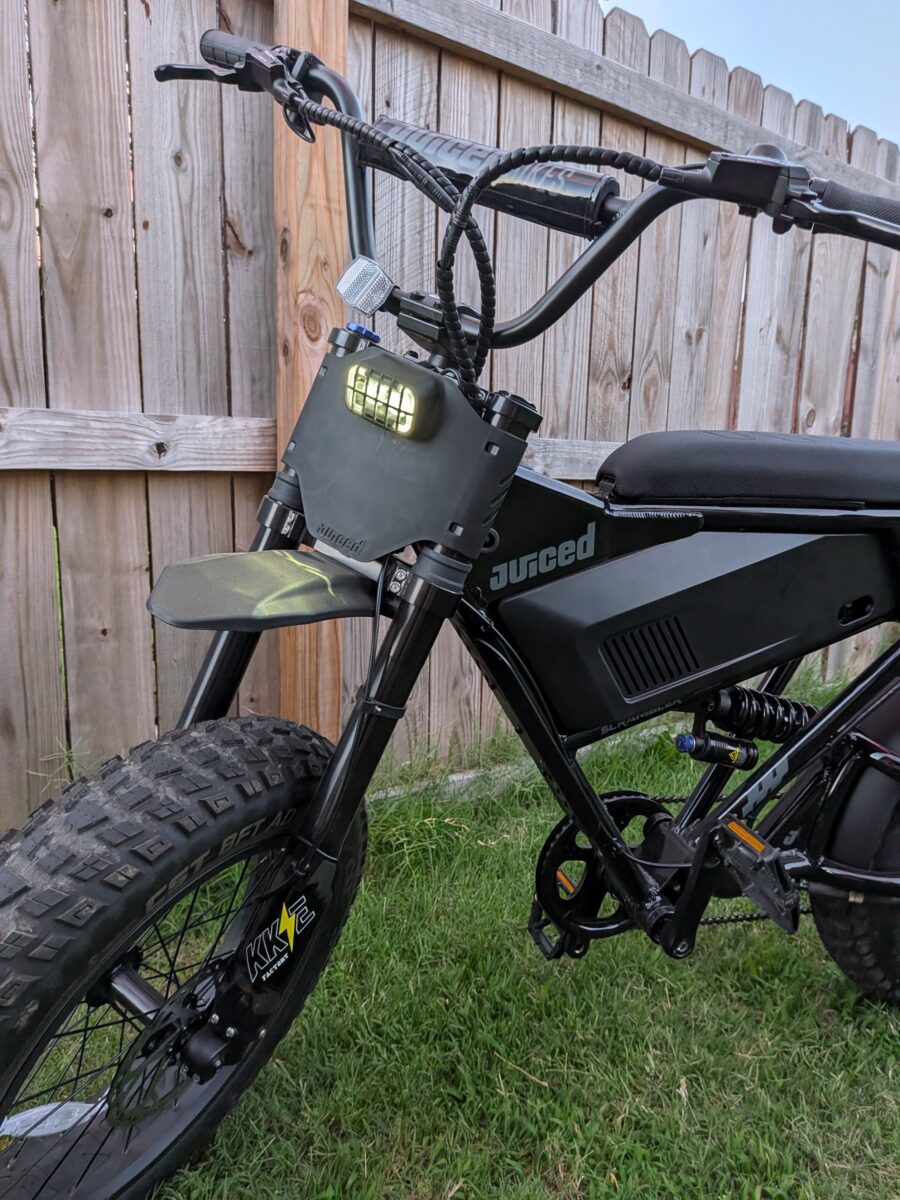
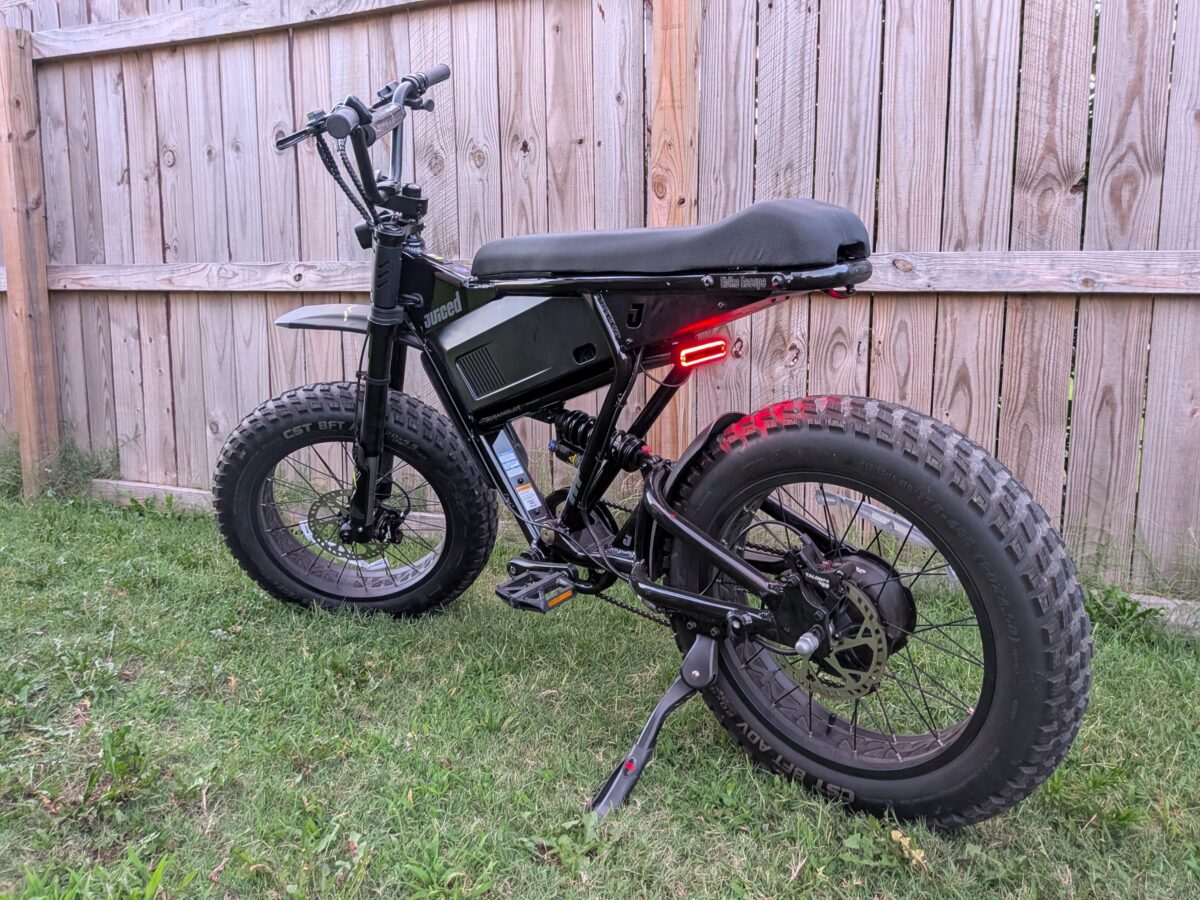
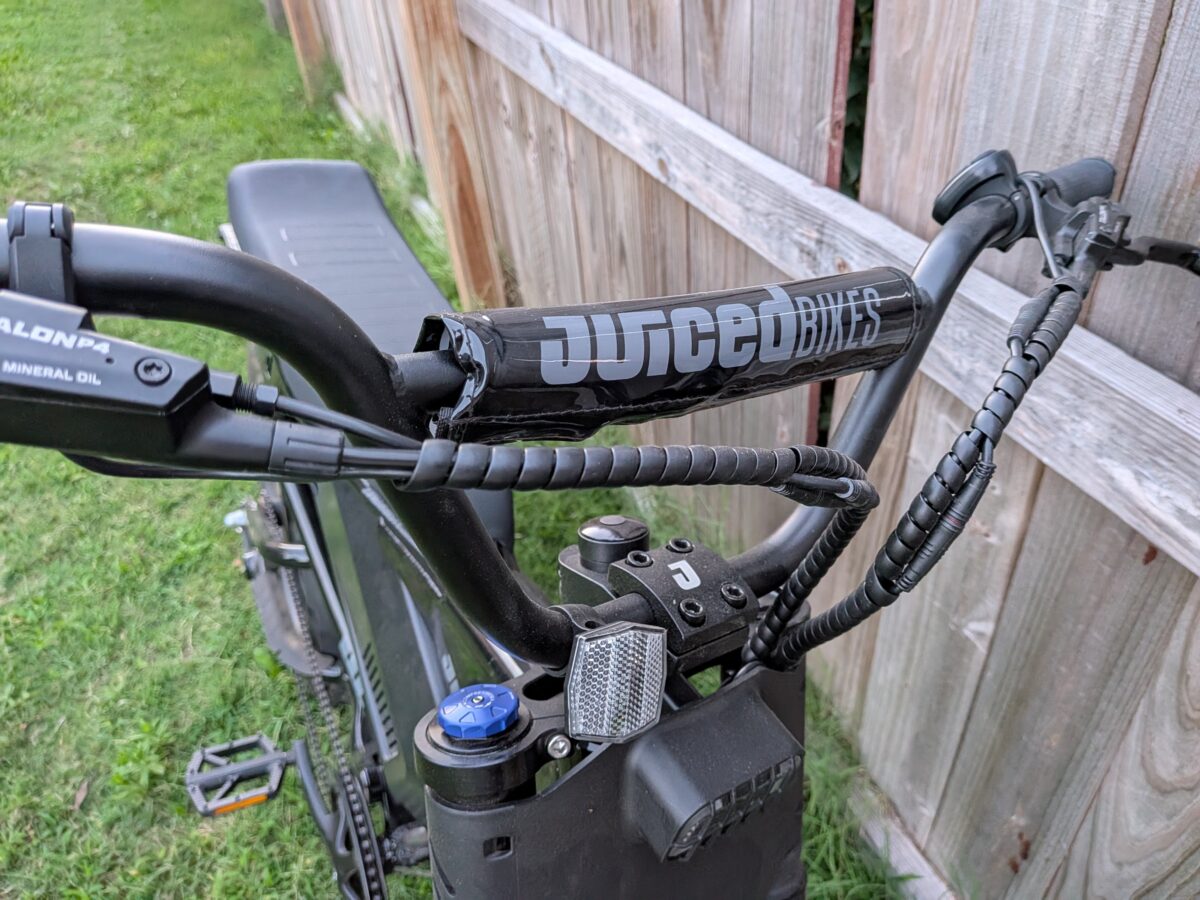
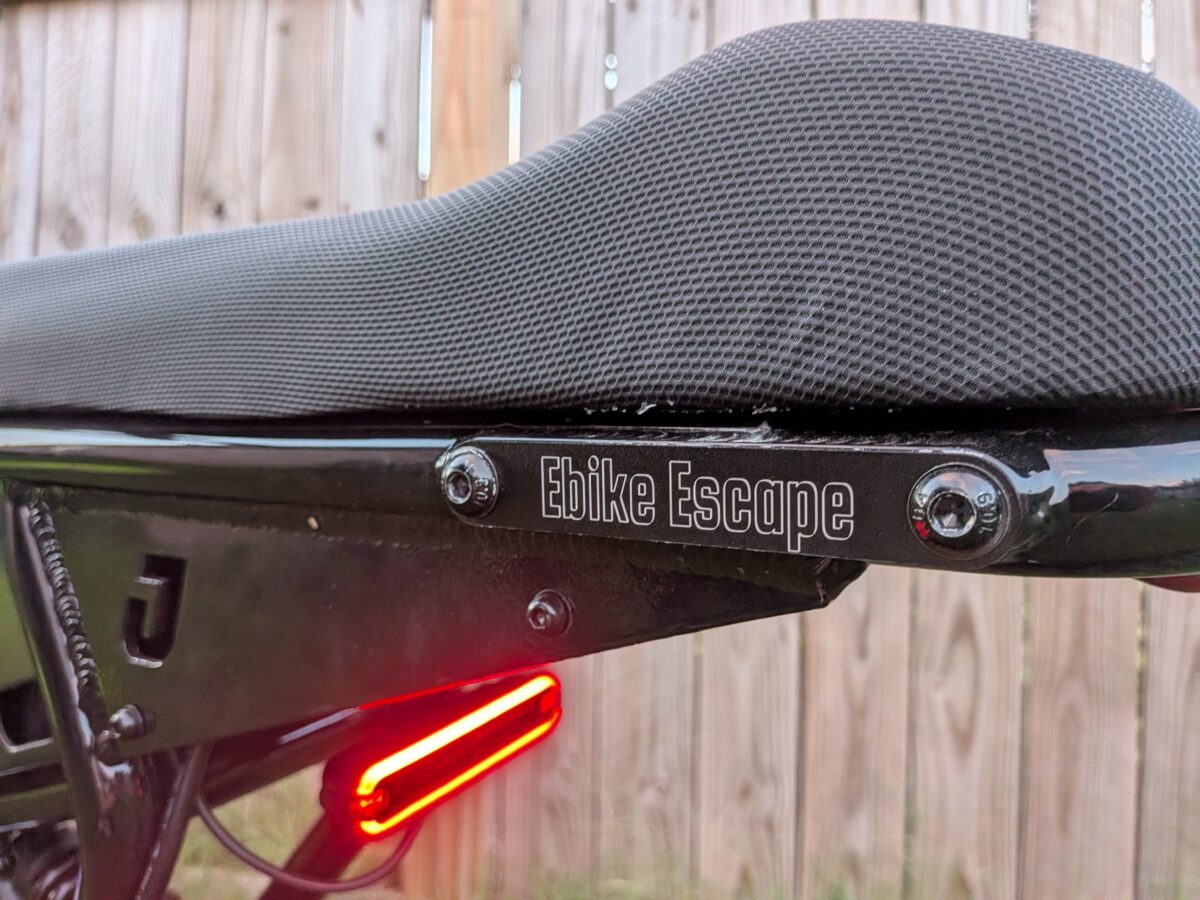
The lighting plays into the moto-style look and is road-ready out of the box, with a headlight, turn signals, and a taillight that jumps brighter the moment you touch the brakes. The box is well stocked beyond that, at least for now: front and rear fenders, a front headplate, a retro bar pad, a handlebar bag for small-item storage, and a sticker pack for personalizing the frame. Juiced even throws in a custom name plate, and ours came stamped with the Ebike Escape name. Between functional lighting and a stack of included gear, it is a lot of value to find in the box at this price.
Frame, Sizing, and Options
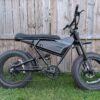
Up close, the Scrambler reads as part motorcycle, part ebike, all of it wrapped in retro pit-bike styling that sits low and planted. BMX-style handlebars set an upright, relaxed riding position, and a long bench saddle gives you room to slide forward or back to dial in leg room. Payload tops out at 225 pounds, a step down from the hardtail because the rear shock changes how the frame carries weight, and you can add pegs at the rear if you want to bring a second rider along. It comes in three colorways: Blackberry, Grape Juice, and White Cherry.
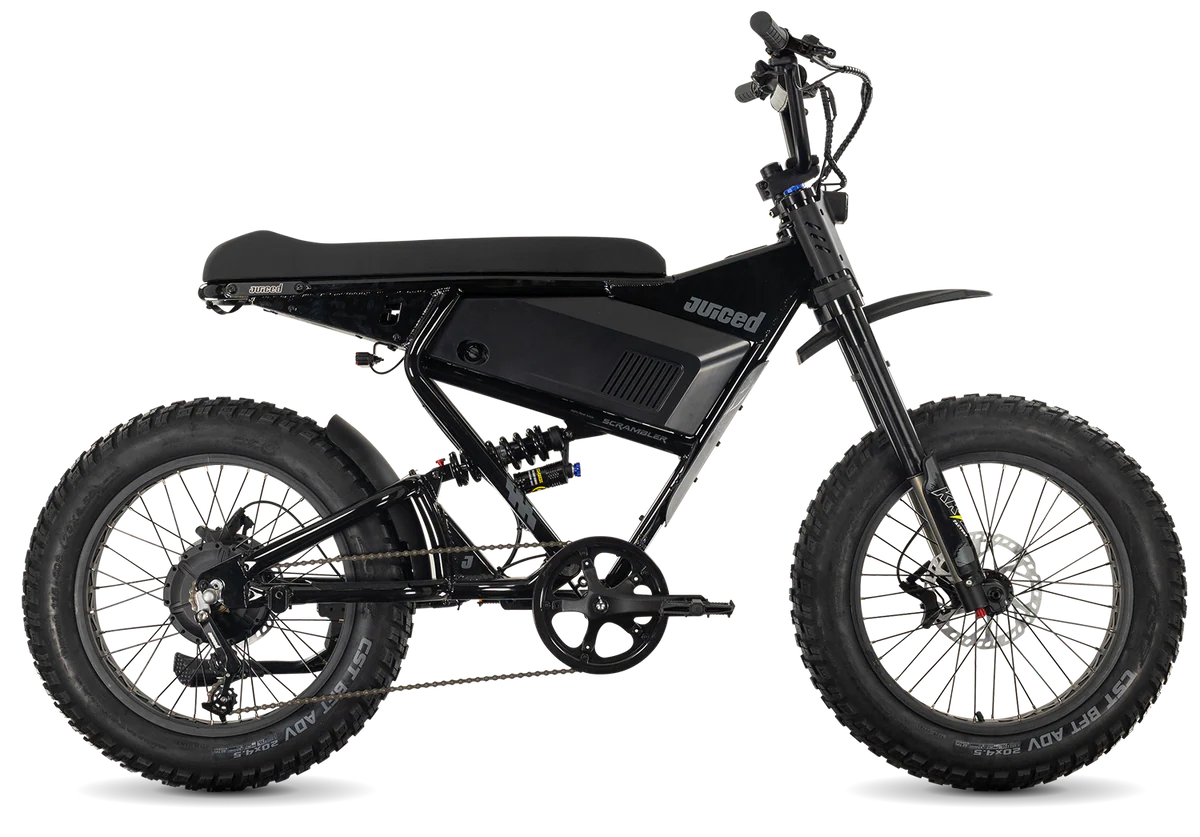
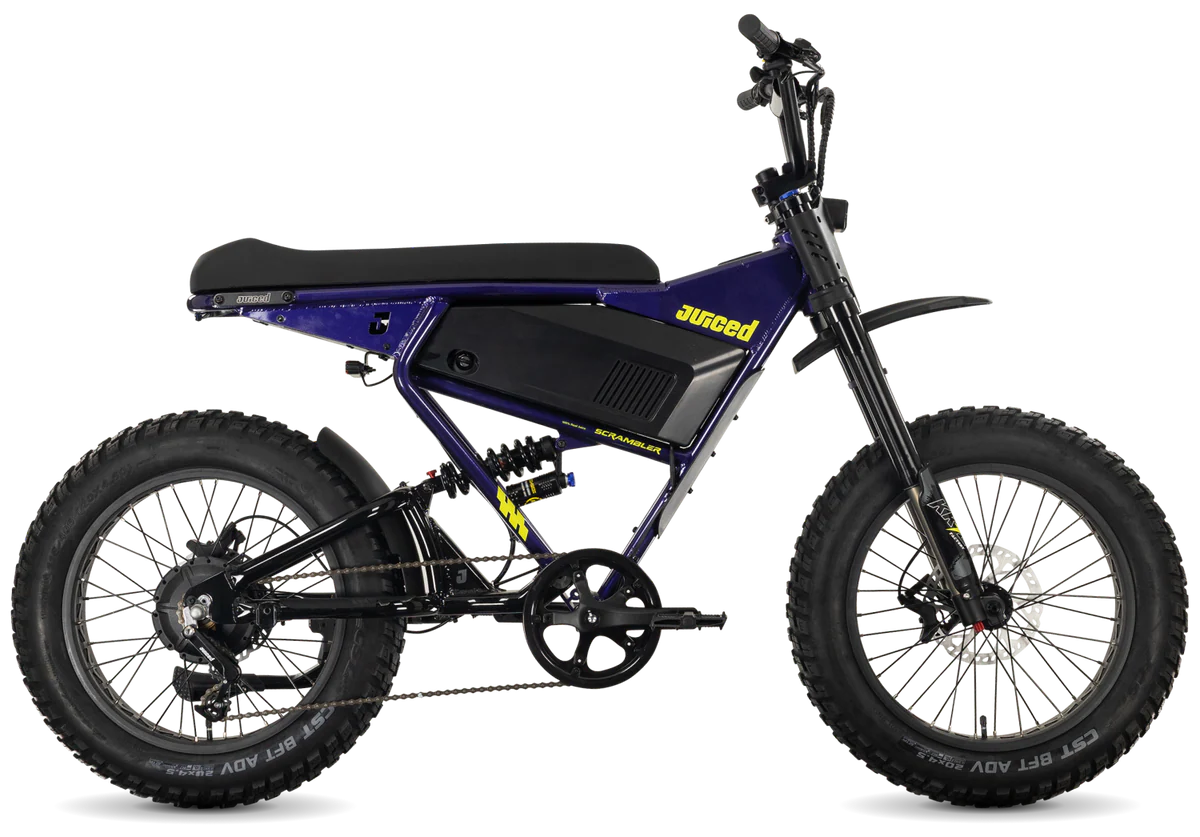
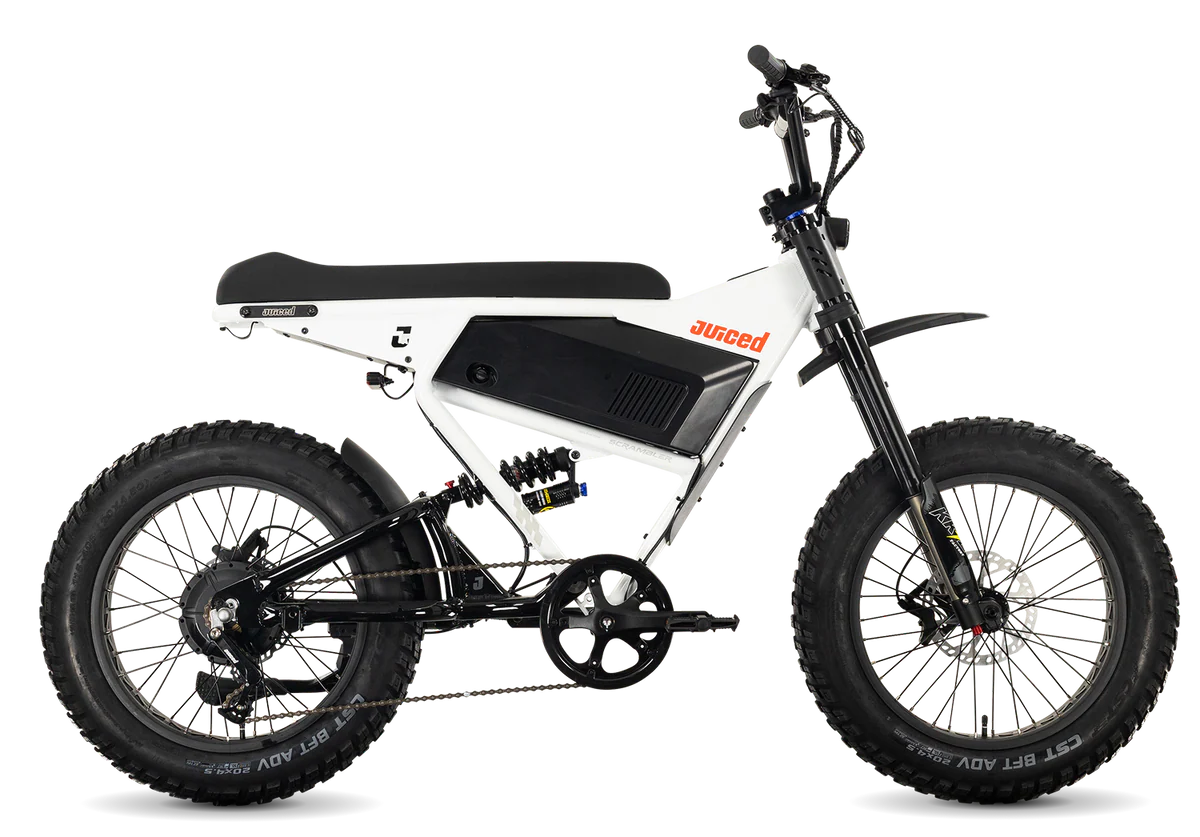
Fit is forgiving thanks to that sliding seat position, and Juiced lists a rider range from 4’10” to 6’3″. Our main tester rode it at 6 feet with no trouble getting comfortable, and a 5’5″ rider in our testing settled in just as easily. At 85 pounds it is a heavy bike, a couple of pounds up on the hardtail because of the rear shock, so plan on some effort lifting it onto a rack. Find the full frame details below.
Juiced Scrambler Full Suspension Full Specifications
Here is the complete spec sheet, with the hardtail alongside for comparison.
Real-World Performance Testing | Juiced Scrambler Full Suspension
We put the bike through throttle runs, pedal assist in both sensor modes, our standard hill climb, and an off-road session. Here is how each one went.
Ebike Class and Speed Settings
Out of the box this is a fully legal ebike, but the settings menu, run from a TFT display integrated into the top tube, gives you a lot of say over how it behaves. Between the standard classes, a California mode, and a fully custom setting, you can dial the top speed to match your local rules or your comfort level:
- Class 1: 20 mph max, pedal assist only, no throttle.
- Class 2: 20 mph max on both pedal assist and throttle.
- Class 3: 28 mph max while pedaling, throttle capped at 20 mph.
- California Class 3: 28 mph max while pedaling, no throttle.
- Custom: any pedal-assist top speed from 1 to 28 mph, with the throttle still capped at 20 mph.
For parents, there is a speed lock that hides your chosen top speed behind a PIN so it cannot be changed without the code. The same menu is where you choose your sensor and decide whether the throttle delivers full power in every assist level or scales back in the lower ones.
Throttle Speed and Acceleration
On a flat road with nothing but the thumb throttle, the Scrambler pulls hard and reaches its 20 mph cap quickly, with the display showing up to 1,764 watts. For that kind of power, it stays surprisingly quiet, more subdued than a lot of high-output hubs we have ridden. Throttle current delivers either full motor power or can be tied to your assist level. Because every level still reaches 20 mph, the lower settings just soften the launch for newer riders without capping the top.
Pedal Assist
Pedaling is where the full suspension and hardtail part ways, since this one lets you choose your sensor. Two things are worth knowing before the numbers: it is a single-speed, so once you pass roughly 18 to 19 mph your legs spin faster than they are doing any real work, a sensation known as ghost pedaling; and the sensor you pick mainly changes the bottom of the range, not the top.
Cadence Sensor
A cadence sensor only cares whether the pedals are turning. Spin them and the motor feeds a set amount of power for your assist level; pushing harder or easier changes nothing, because the system is current-based rather than speed-based. Even level 1 hands over a lot of power, around 400 watts, enough to keep us rolling at 21 to 22 mph with light effort. Each step up pushes quicker toward the 28 mph Class 3 ceiling, though our GPS was reading as high as 30 mph in the top level.
Cadence mode works like a power dial: pick a level, keep your legs moving, and let the motor set the pace.
Torque Sensor
A torque sensor measures how hard you press and amplifies it, so it rewards real pedal effort instead of just motion. That character really only comes through in level 1: easy, unhurried pedaling draws around 250 watts for a controlled cruise at a steady 14 mph, while a solid push into the pedals brings a surge that pulls you into the mid-20s. Above level 1 it was hard to feel much difference between the torque and cadence sensors, since the single-speed gearing makes it tough to load the pedals and you end up spinning for power either way.
For most riders the throttle stays the main event here. Reach for torque level 1 when you actually want to pedal at an easy pace, and the cadence levels and the throttle cover the rest.
Hill Climb | Bentonville
A heavy bike with a hub motor is the kind of setup that can bog down on a steep grade, so our Bentonville climb is a real test of the throttle. With our roughly 140-pound test rider and the battery near full, the Scrambler held its full 1,764 watts the whole way up, easing from 18 mph to a steady 15 mph at the steepest pitch. Even carrying the extra weight of the rear shock, it climbed right alongside the hardtail, and it stayed relatively quiet doing it. With 90 Nm of torque on tap, a grade like this is no trouble on the throttle, so expect to hold the mid-teens on a sustained steep climb.
Off-Road and Suspension
Over rocks and washboard bumps the rear shock soaked up impacts that would have come straight through a rigid frame, and no matter how hard we pushed it, we never really found the limits of the suspension. The front fork stays active and sensitive over small hits, and the tires held their line across loose grass and gravel. The confidence carried onto the road too, and by the end we had stopped bracing for potholes and broken pavement the way you would on a rigid moped-style bike.
Juiced Scrambler Full Suspension vs Hardtail
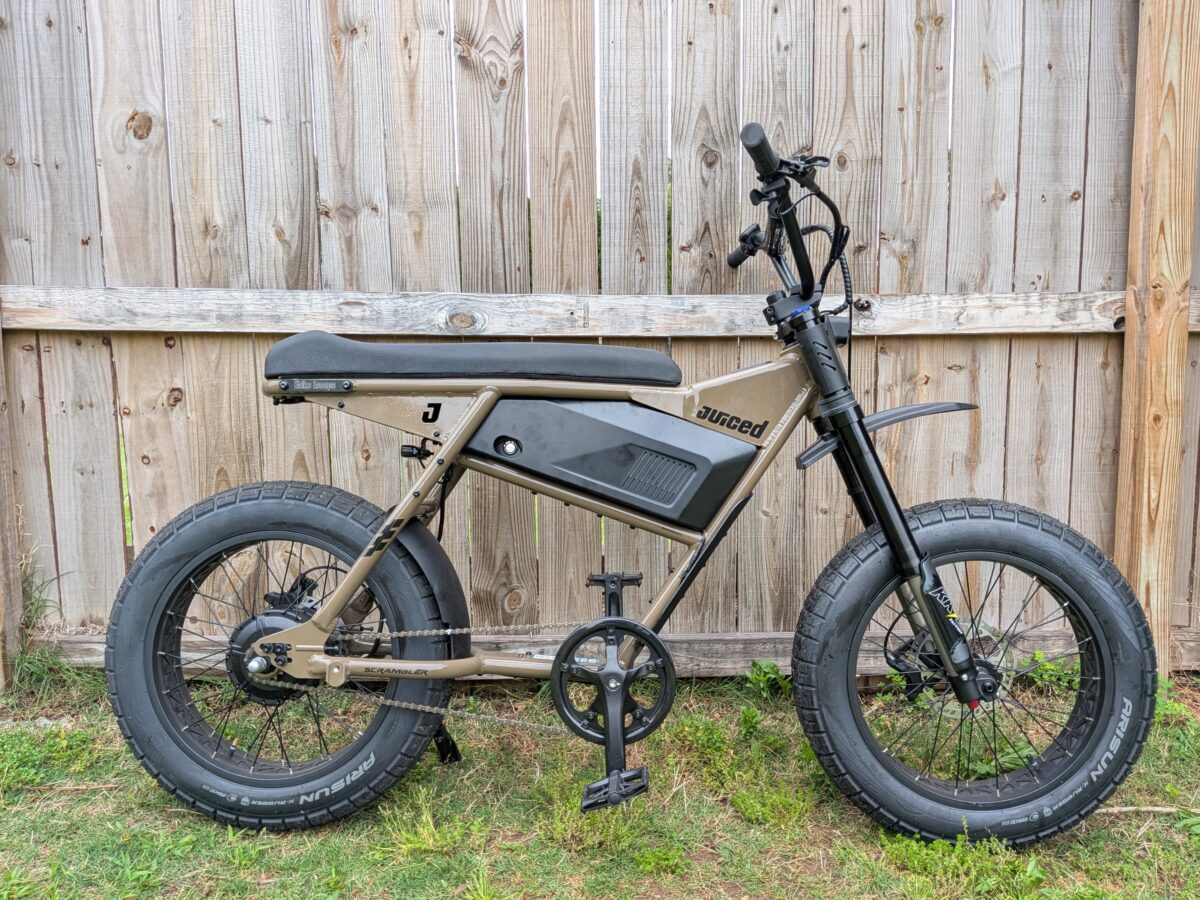
Since both bikes share the same motor, battery, and electronics, the real question is whether the full suspension’s gains are worth what it trades away, and the hardtail makes a genuine case for itself. It carries more, 300 pounds of payload against 225 here, because the rear shock changes how the frame handles weight. It also keeps mounting points for an optional second battery that the full suspension drops, and while Juiced does not sell that pack yet, the door stays open on the hardtail and closed here. Its smoother street tread rolls easier on pavement, too.
So the pick tracks with where you ride. If you spend most of your time on pavement, haul cargo, or want the option to double your range down the road, the hardtail is the smarter buy and saves you $200. If your rides head off the pavement, or you just want the added comfort and traction, the full suspension earns its premium. Either way, the full rundown on the cheaper model is in the Juiced Scrambler Hardtail review.
Juiced Scrambler Full Suspension Pros and Cons
Final Thoughts on the Juiced Scrambler Full Suspension
Under new ownership, Juiced has delivered the quality and performance that made the brand a household name, and done it in a package that stays street legal. Pulling the suspension straight from the moto world was a smart move, and it is what sets this Scrambler apart from most full-suspension builds in the class. There is room to refine, but as the model tasked with relaunching the brand, it is an impressive debut.
If our review helped you land on the Scrambler Full Suspension, consider buying through our affiliate link. It costs you nothing, and it is what makes these detailed reviews possible. Thank you.
