

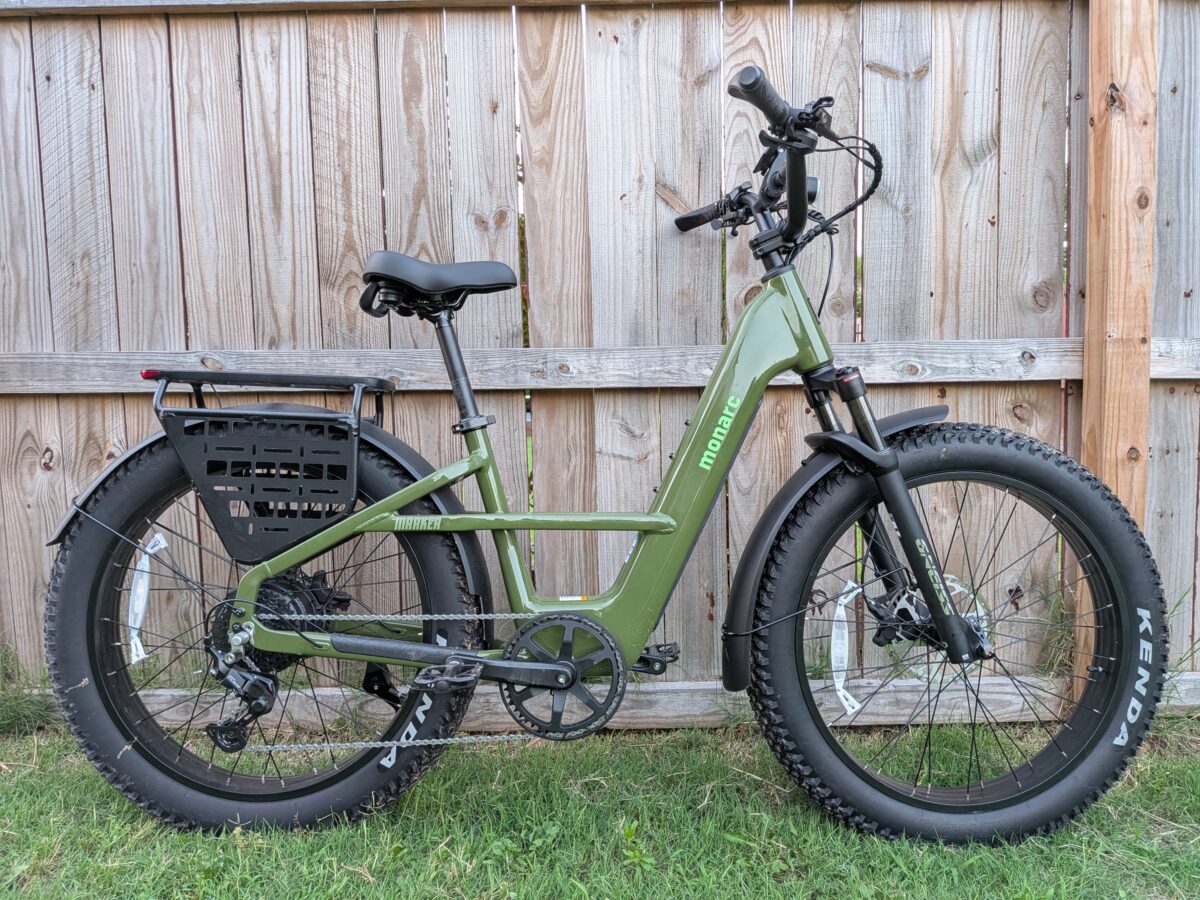
It isn’t every day a brand-new company’s first ebike shows up this well-equipped. The Monarc Marker is a new fat tire ebike out of Minnesota, backed by an investment from Lectric, the best-selling ebike brand in the country, and it shows. For $1,999 you get a 1,638W peak Bafang motor, two LG-cell batteries instead of one, a Shimano Cues 9-speed, 4-piston hydraulic brakes, a touchscreen display, and a modular cargo rack. It looks the part too, with a clean frame and aggressive 26 x 4-inch Kenda tires.
We put a lot of miles on this one, on and off road, so this review walks through the components worth calling out, the full spec sheet, and how the Marker fits riders of different sizes. From there we get into the performance testing, from pedal-assist and throttle behavior to a hill climb and some real off-road, then line it up against a fat tire rival at the same price. Pros, cons, and where the money went round it out.
If you decide the Marker is your bike, using our affiliate link is an easy way to support Ebike Escape at no extra cost to you.
Every Monarc ships with a MIK rack, so bags, baskets and coolers click on without straps. See our MIK-compatible bags and baskets for what fits.
Monarc Marker Video Review
Our video review gives a close look at every component before putting you behind the handlebars for the performance testing, on pavement, up our test hill, and off-road. You’ll also see the Marker sized up with a taller and a shorter rider, plus third-person footage of how it looks on the move.
Standout Features of the Monarc Marker
Bafang 750W Hub Motor and Two Batteries
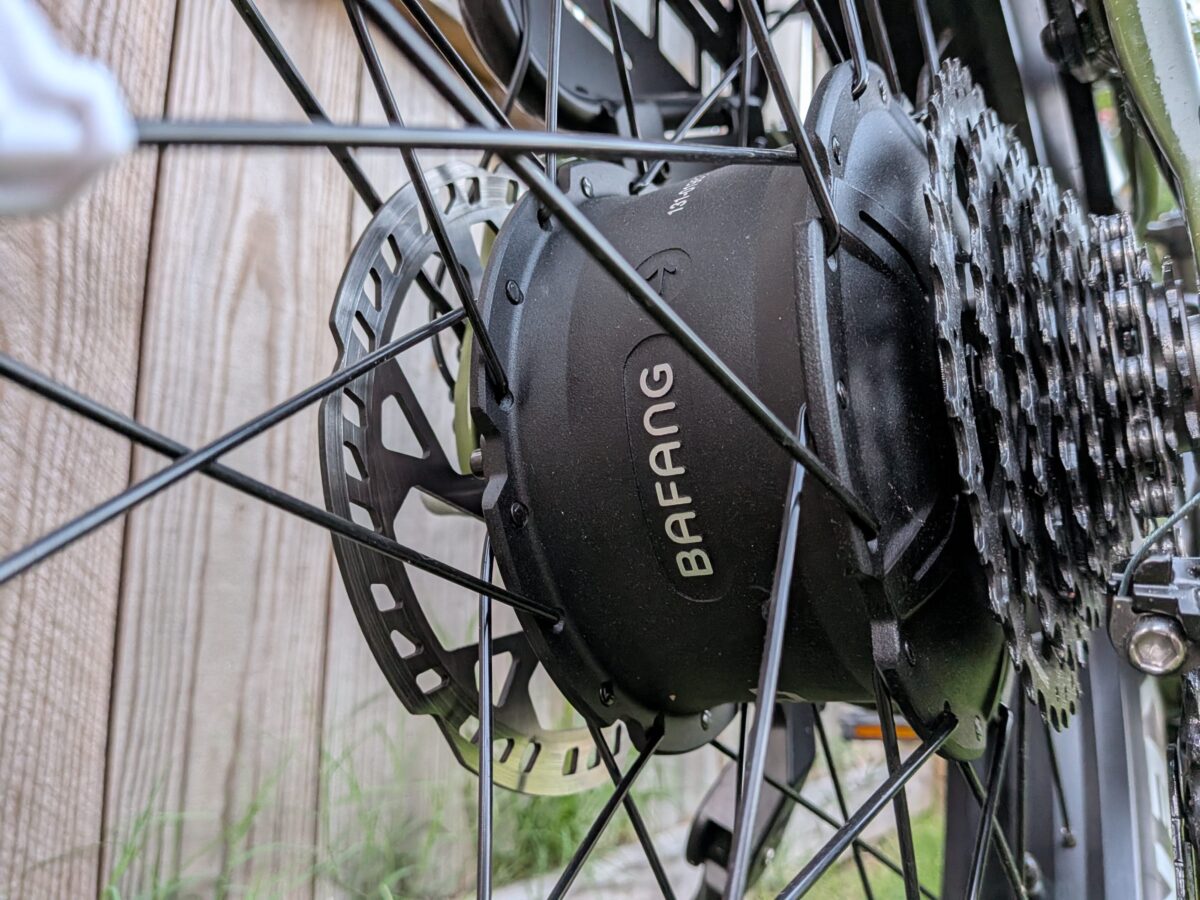
(1,638W Peak | 85 Nm of Torque)
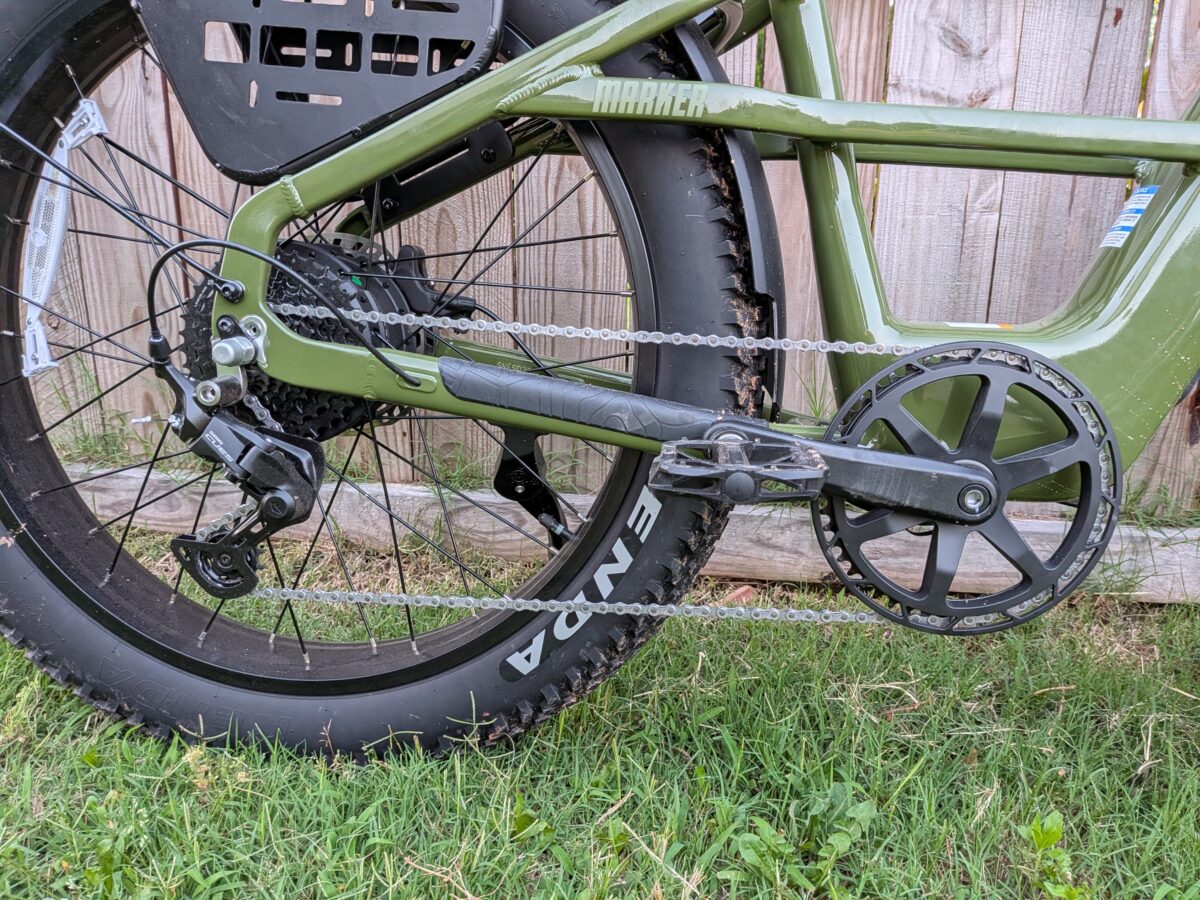
Power comes from a Bafang B750 rear hub motor rated at 750W nominal, though the figure that does the heavy lifting is the 1,638W peak it pulls through a 30A controller, with 85 Nm of torque for climbs and soft ground. What sets it apart at the price is the second battery in the box (a $579 value if purchased separately), both packs built with name-brand LG cells. The bike runs one pack at a time, so the charged spare is what stretches a ride toward 60 to 120 miles when you bring it along. Refilling is quick too, with the included 5A fast charger topping off a single battery from empty in about 3 hours, well ahead of the 2A units most brands pack in.
Shimano Cues and Talon P4 Brakes
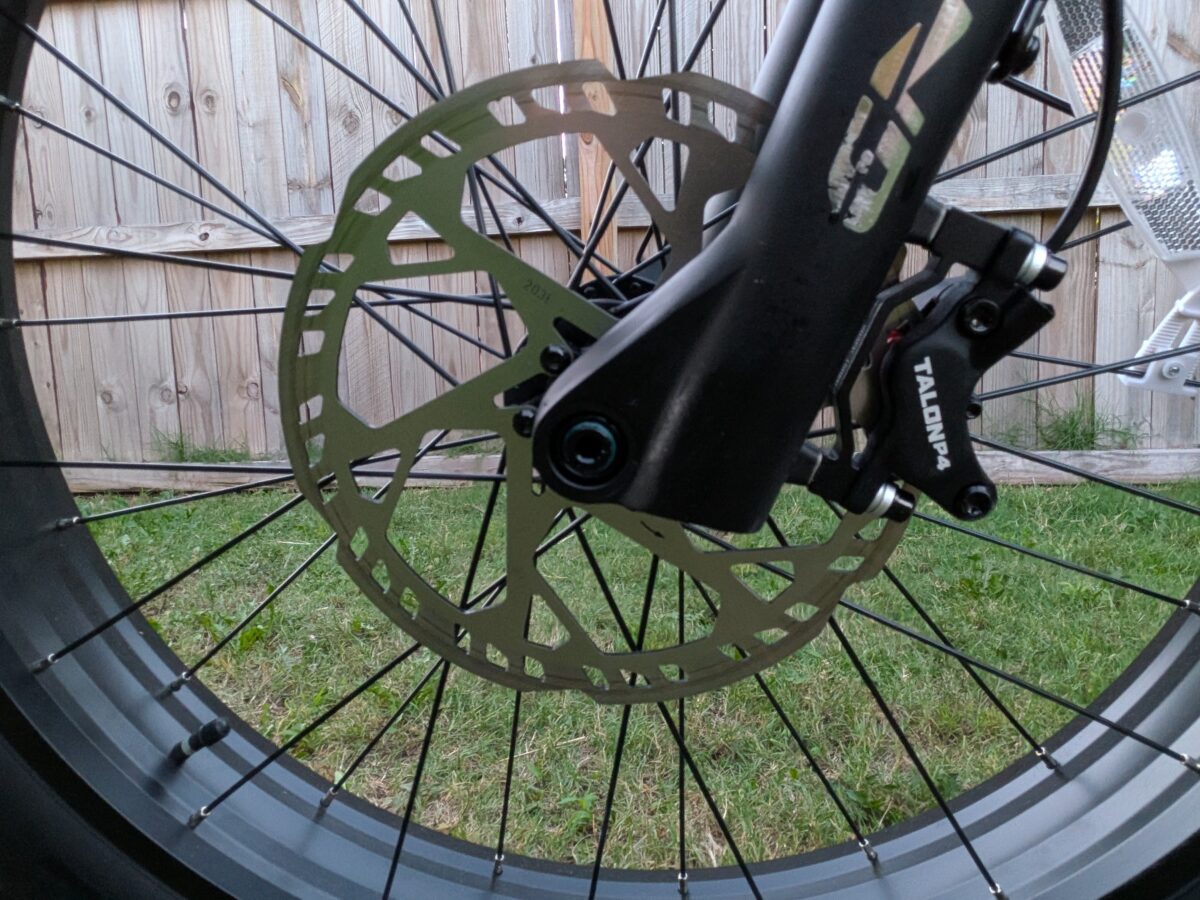
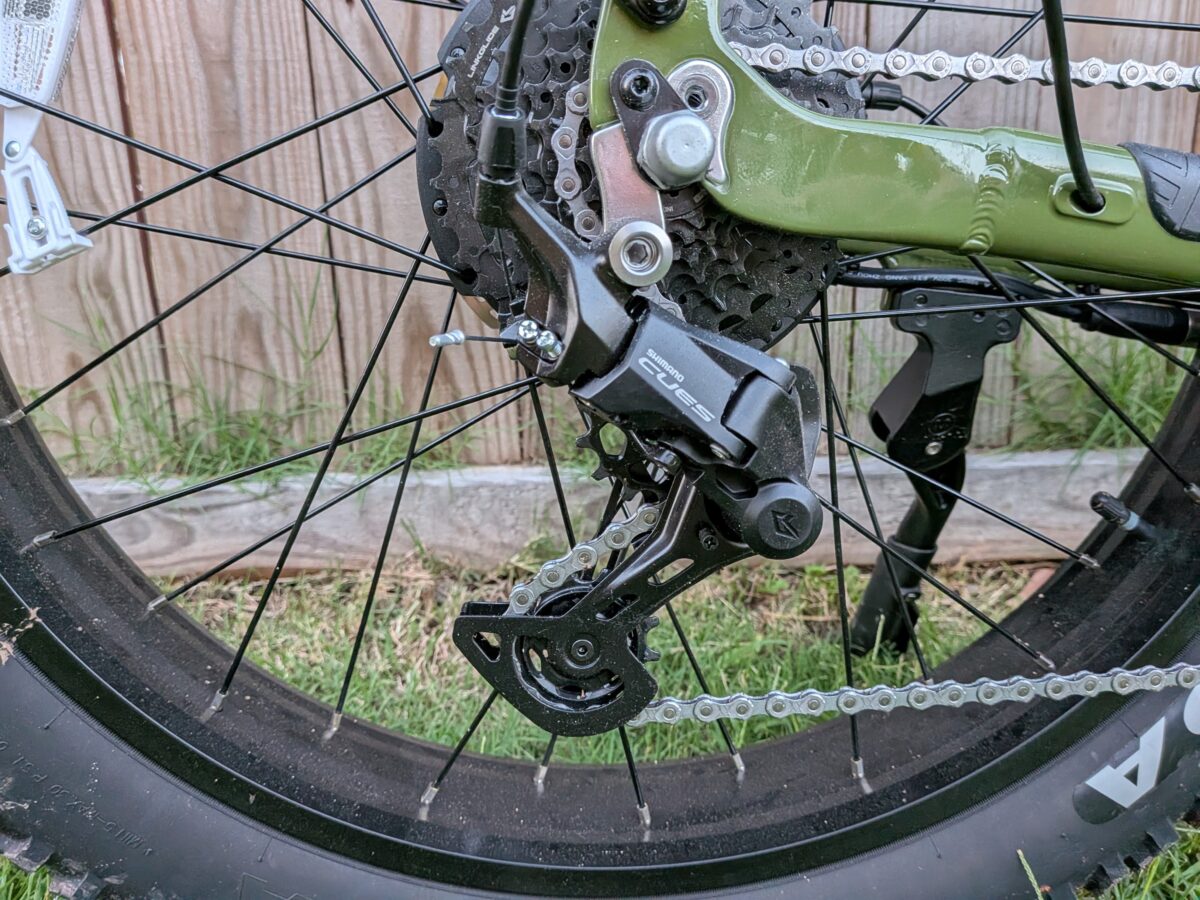
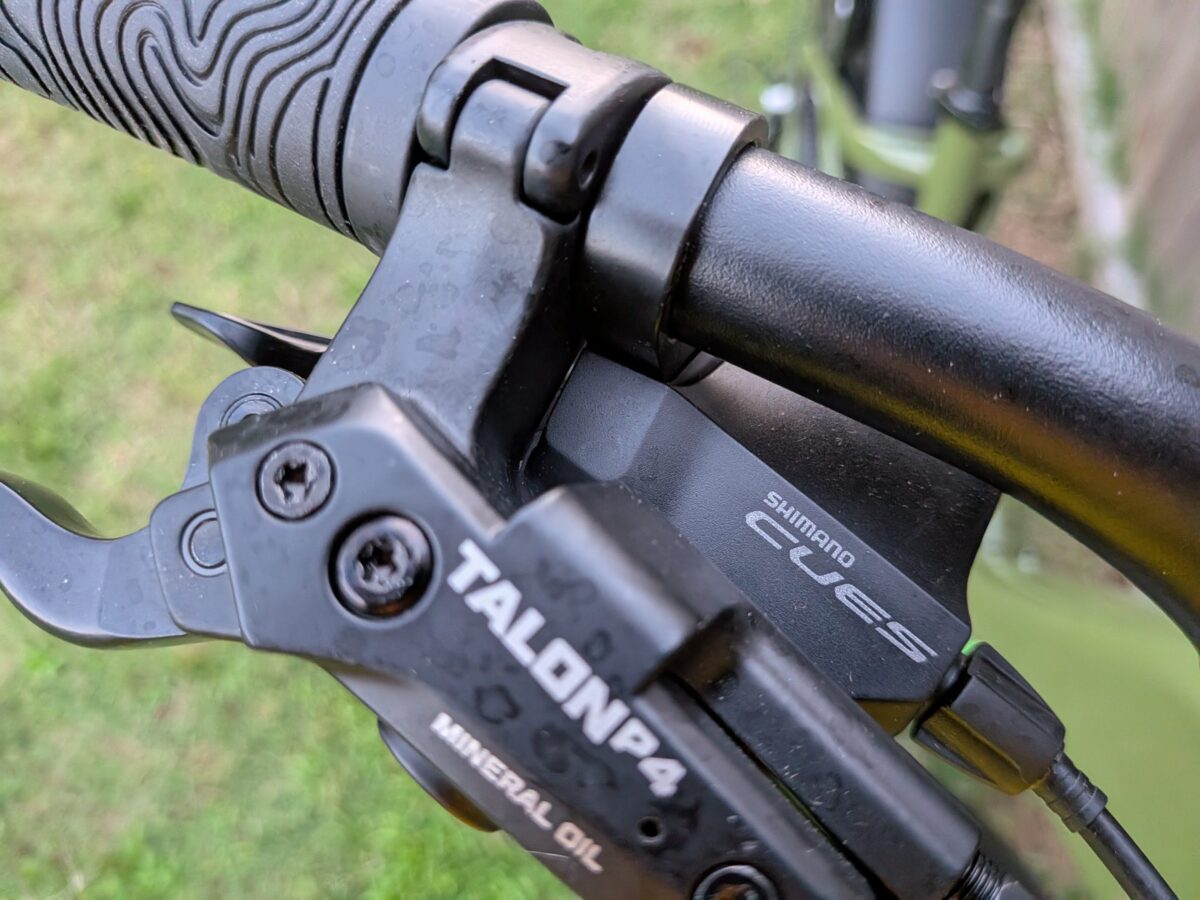
A couple of parts here punch above their weight. The drivetrain is a Shimano Cues 9-speed groupset, both shifter and derailleur, a clear step up from what we normally see at this price, with enough gear range to give you a low gear for climbing without leaving you spinning at speed. The brakes match it: Star Union Talon P4 4-piston hydraulic discs on a 203mm front rotor and a 180mm rear, more stopping power than most heavy fat tire ebikes bring. On a bike this heavy, that means less effort at the lever and better control on long or loaded descents.
Gneiss Reverse-Arch Fork and Kenda Knobby Tires
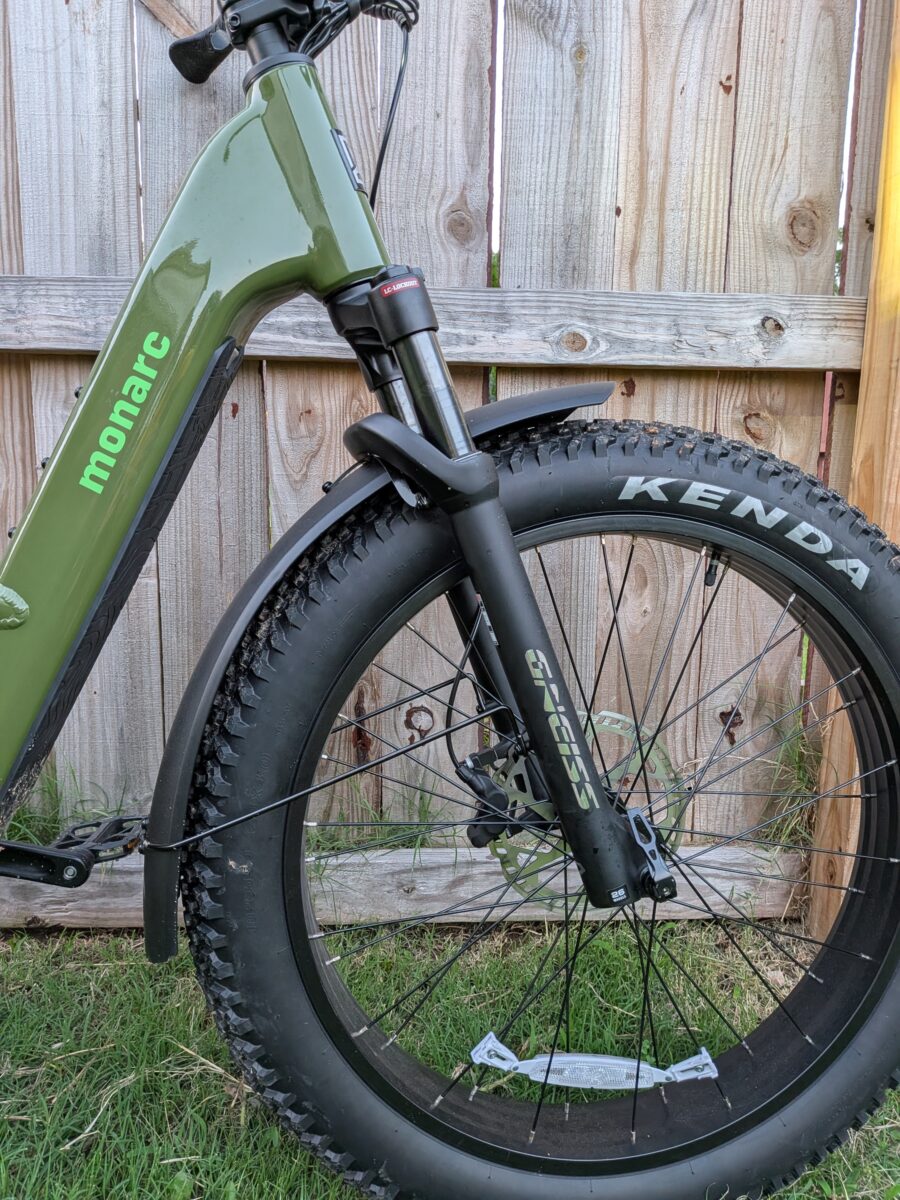
(Preload Adjust, Lockout)
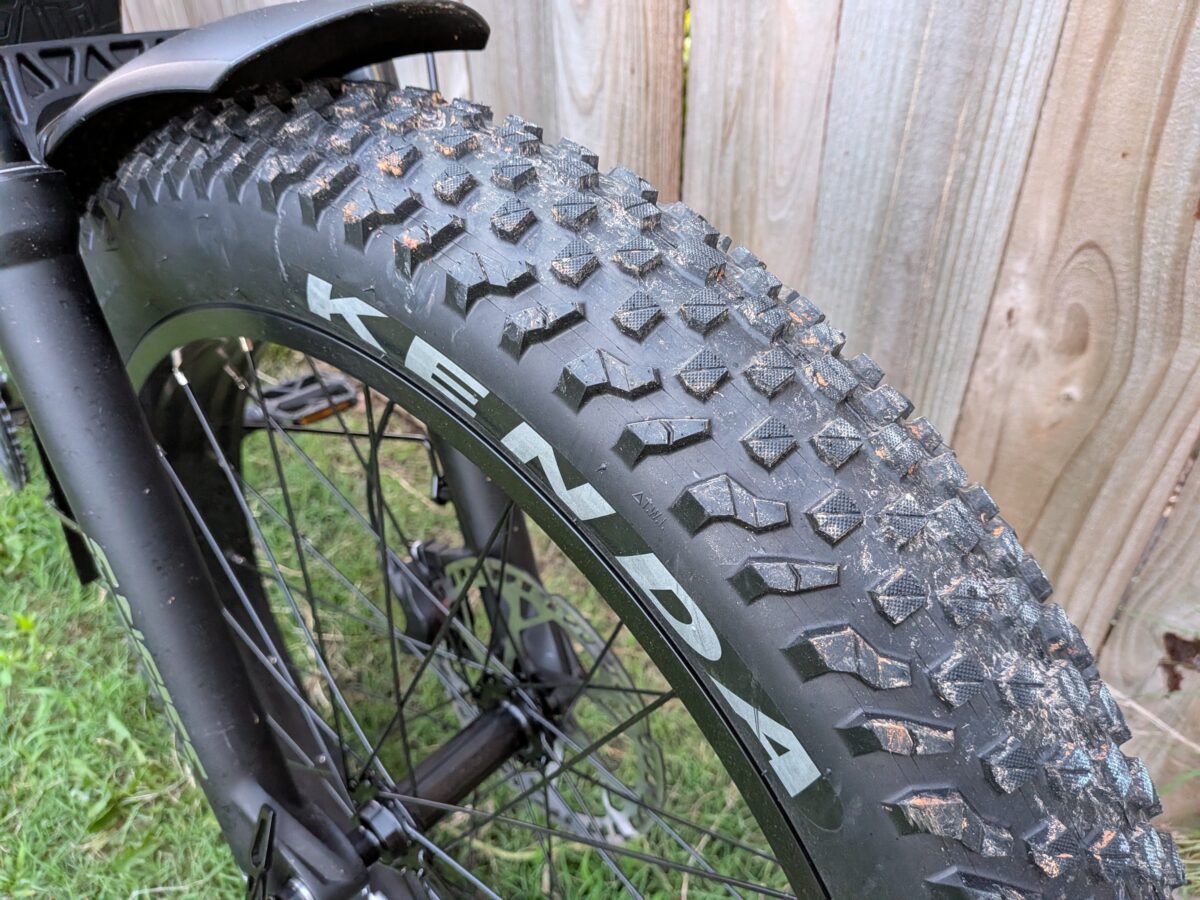
Mixed-terrain riding is the whole point of this pairing. Developed in-house by Monarc, the Gneiss fork combines a reverse-arch lower with 80mm of coil travel, preload on one side, and a lockout on the other, so you can soak up trail chatter or firm things up for the road. Add 26 x 4-inch Kenda knobby tires you can air down for grip, and the Marker takes gravel roads, packed dirt, broken pavement, and light off-road in stride.
Touchscreen Display, Customization, and Connected Features
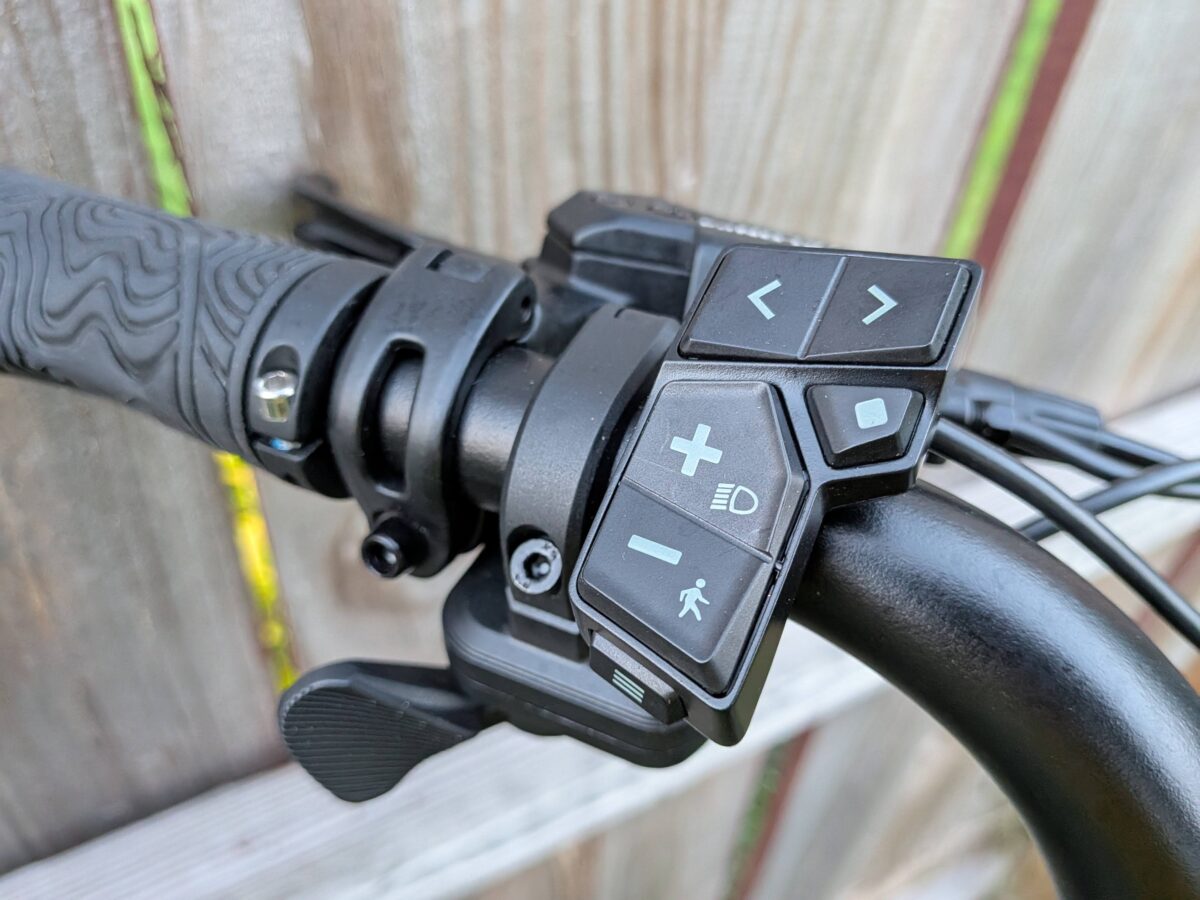
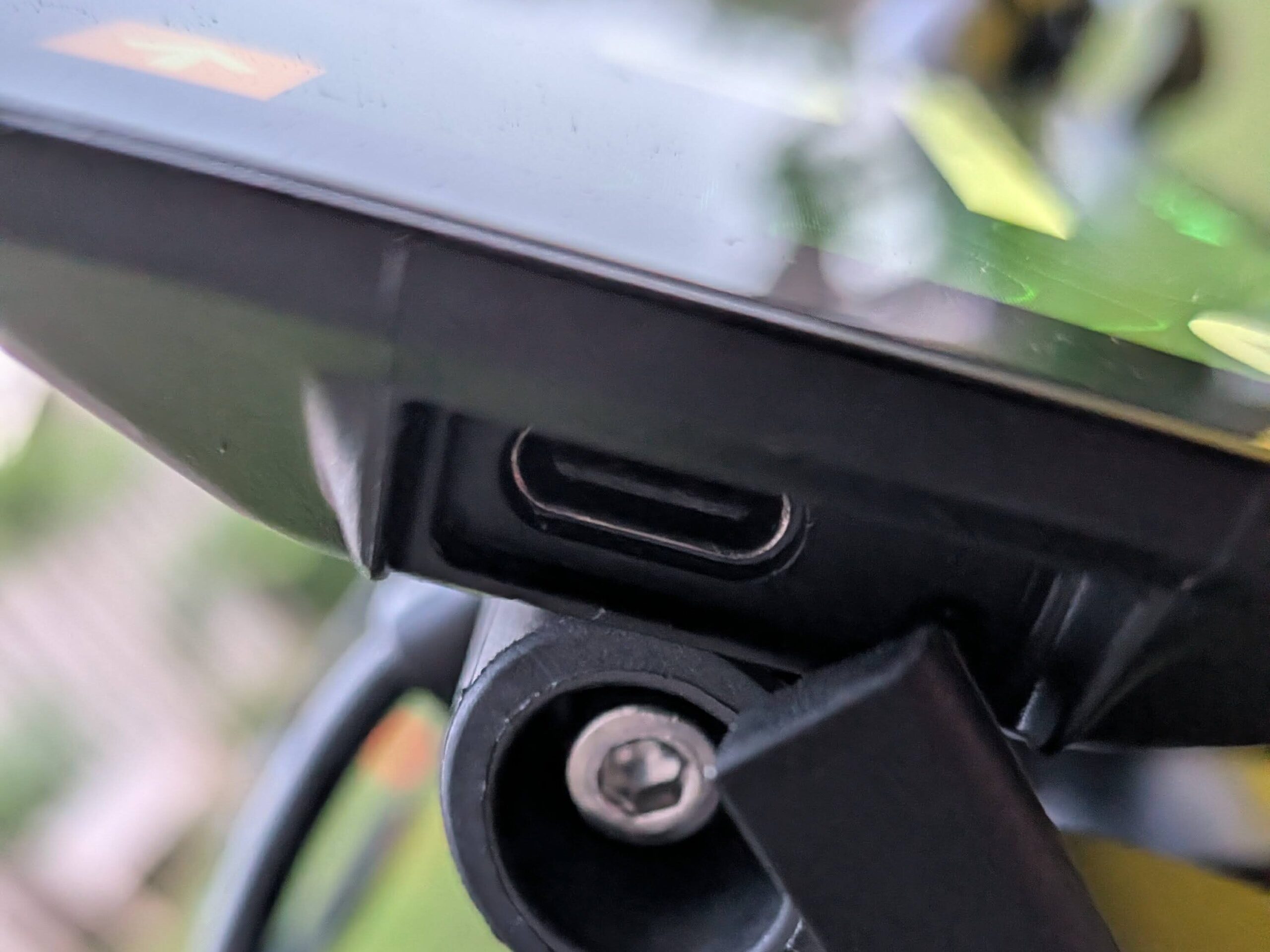
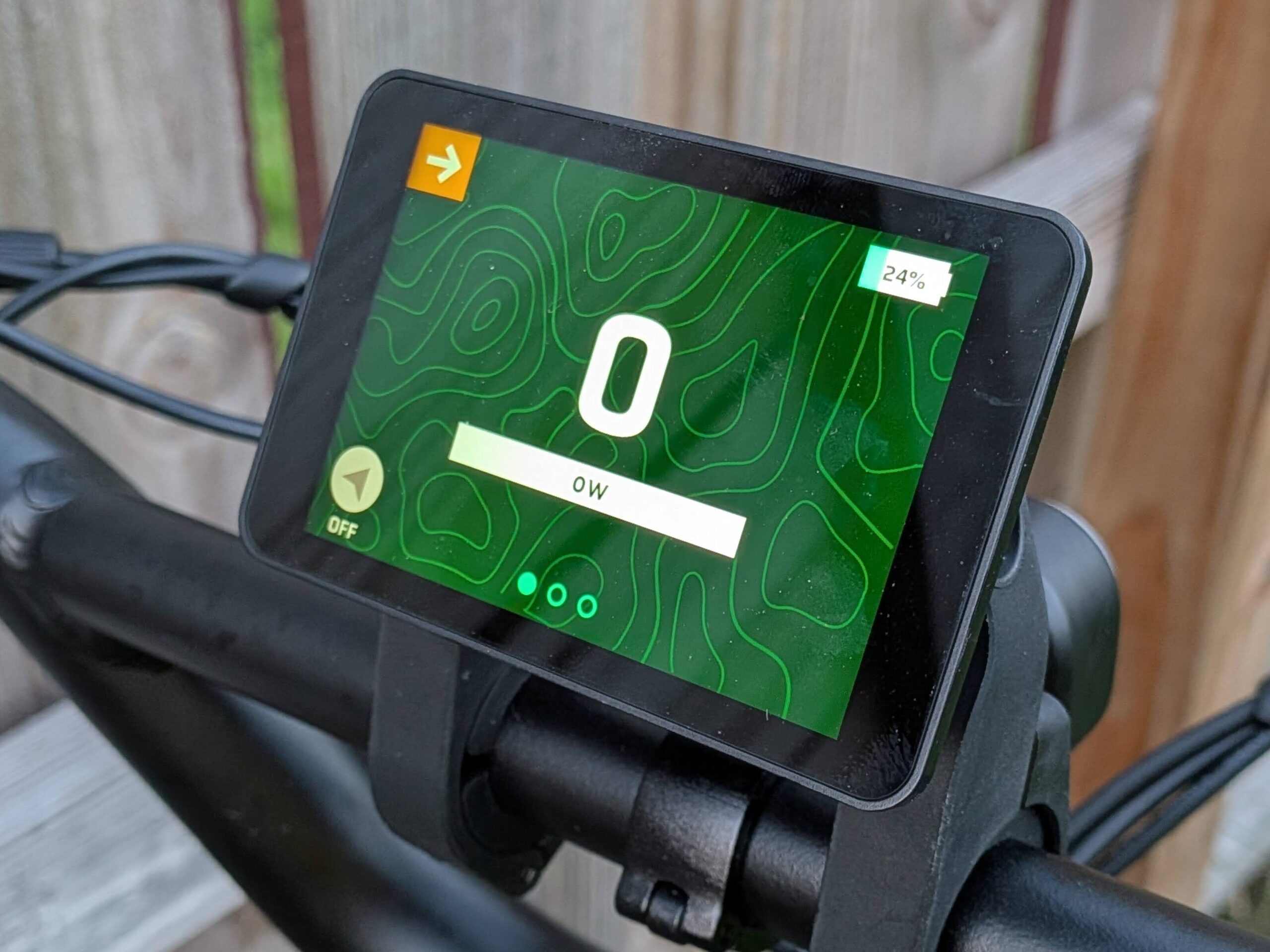
Dialing the Marker in to how you ride runs through a 3.5-inch color touchscreen, a rarity at this price, and it doubles as a button-controlled display if you’d rather not tap the glass. The settings go deep: each of the five pedal assist levels lets you adjust torque output and pedal response; you can switch between Class 1, 2, and 3; and you can flip the sensor between torque and cadence depending on the moment. You can also set a maximum charge level, like 80% instead of a full charge, which is an easy way to slow long-term battery wear.
Additional Smart Devices
Monarc is currently including their Smart Helmet as a launch special ($229 when purchased separately), which ships right with the ebike. It features an adjustable fit, integrated turn signals and brake lights, plus built-in Bluetooth audio for music, calls, and turn-by-turn navigation.
They also offer two optional smart upgrades for $89 each: a Rear Radar that sends visual traffic alerts to your display and audio alerts to the helmet, and a waterproof TPMS system that monitors real-time tire pressure and temperature. We haven’t gotten our hands on these yet, so we can only report on their specs for now, not their real-world performance.
Commuter-Ready Build and Strong Water Resistance
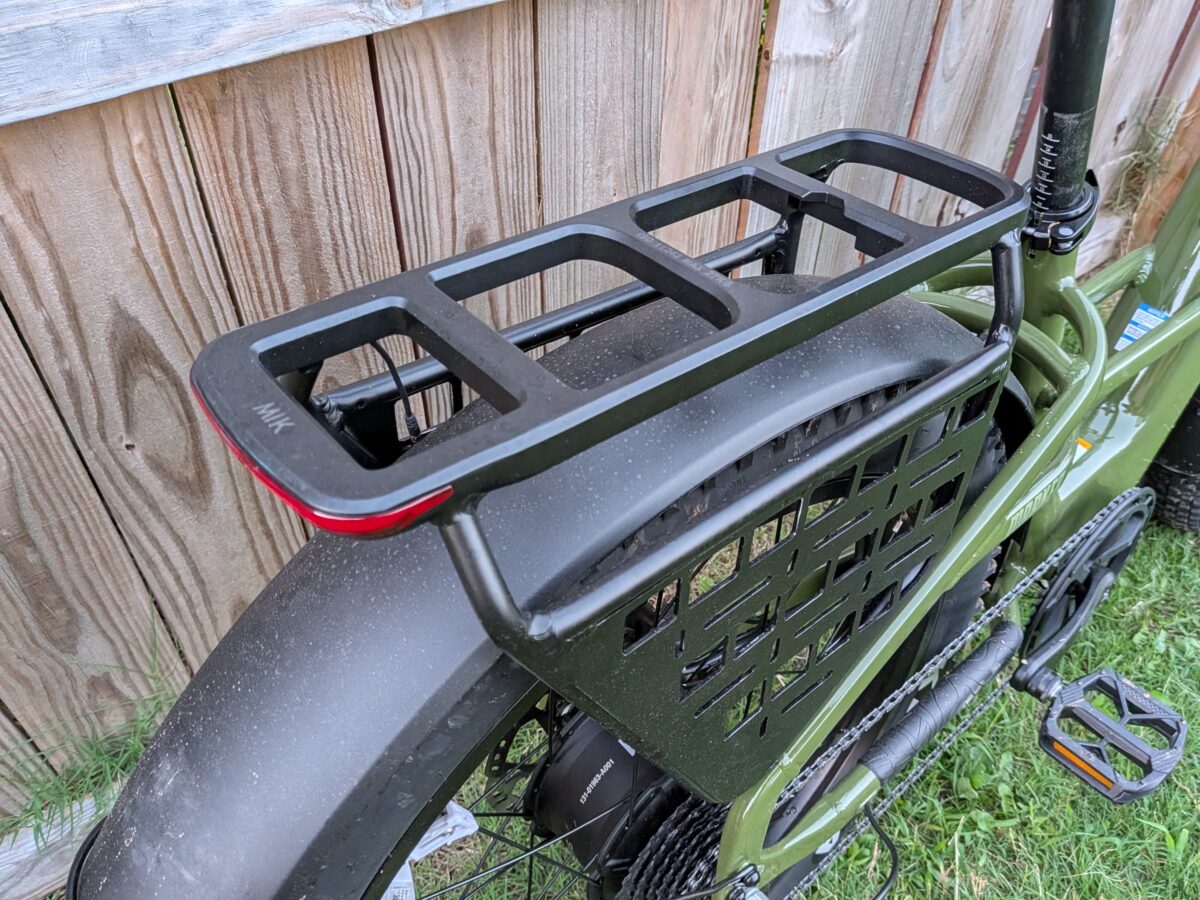
with Taillight and Turn Signals
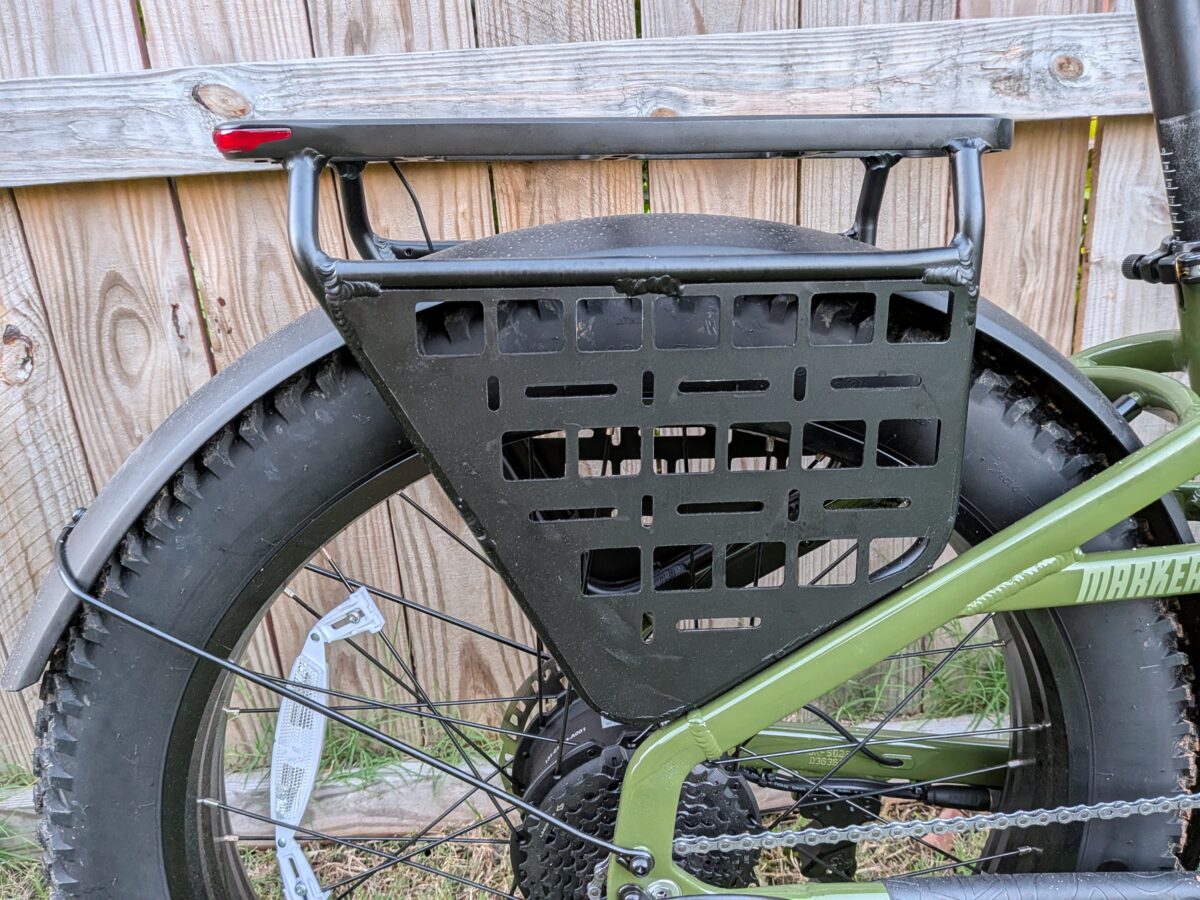
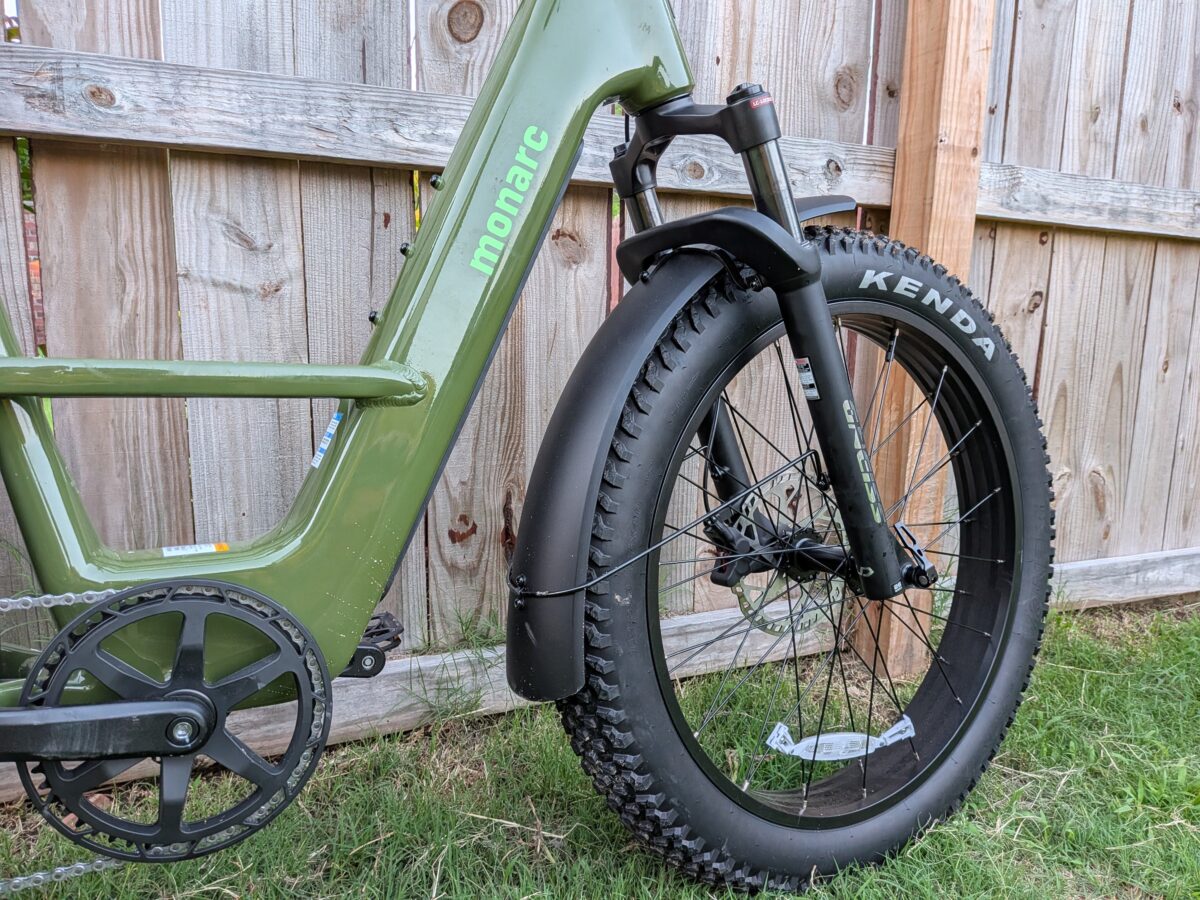
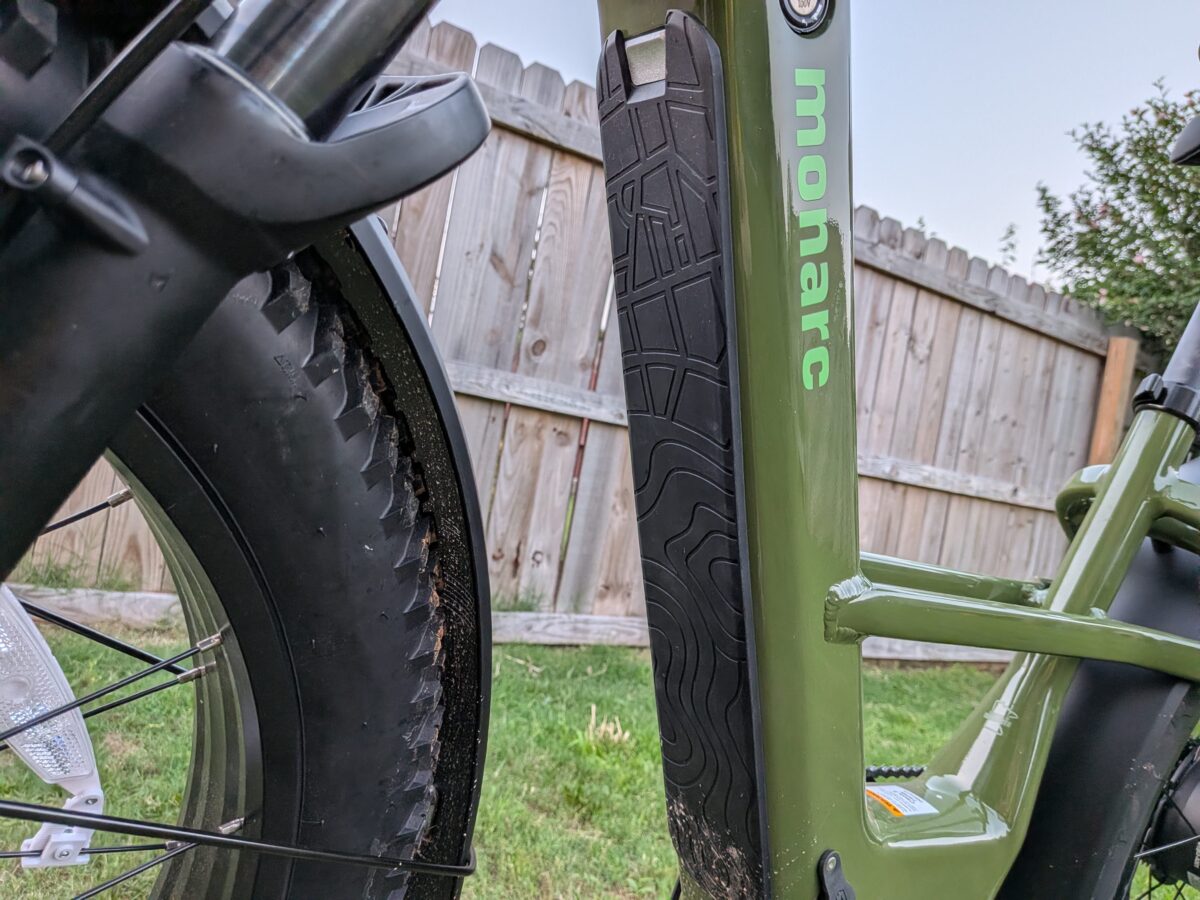
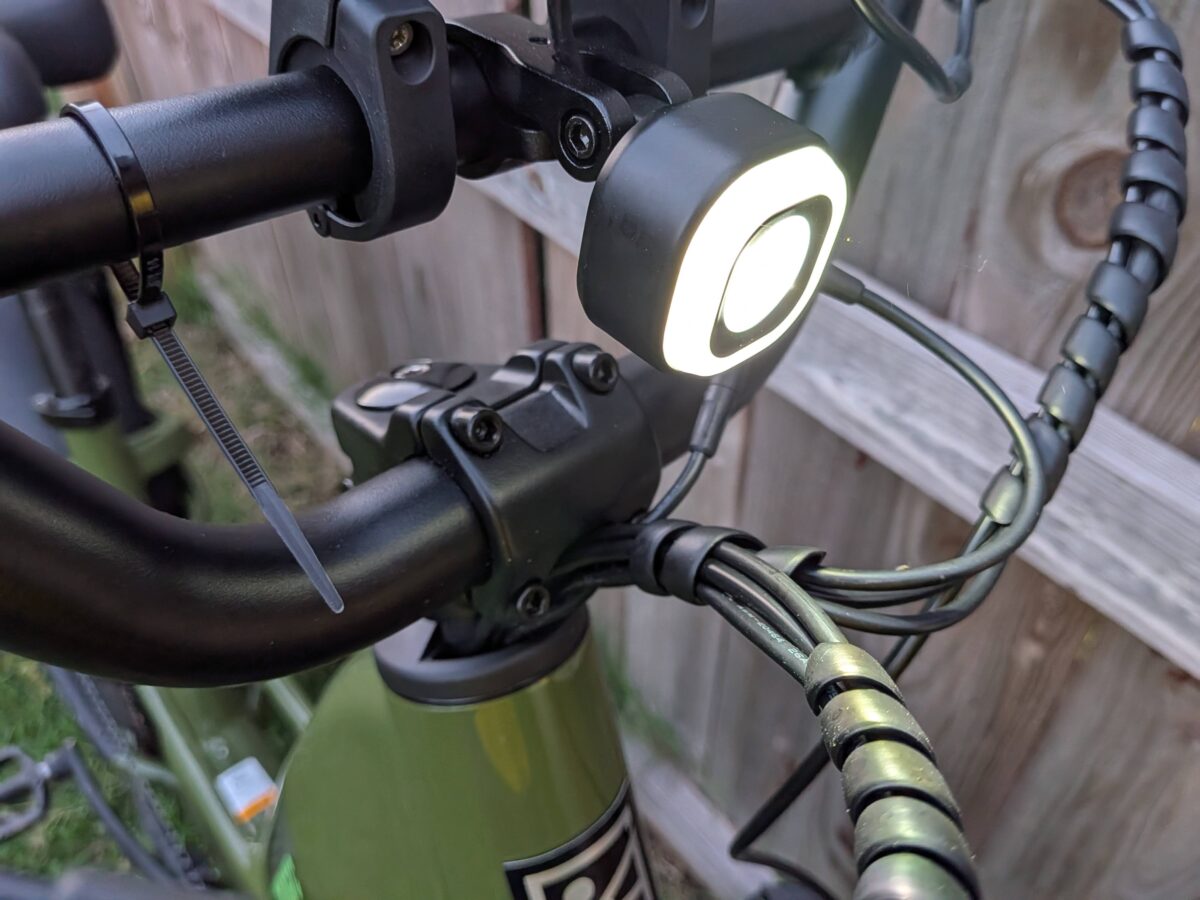
Day-to-day practicality is built in rather than sold as an upgrade. The rear rack is MIK-compatible for click-on bags and baskets and adds a MOLLE panel, so you can strap down anything from a pannier to a bedroll, and it carries up to 66 lb. Full polypropylene fenders run front and rear to keep the spray down. Lighting is a real safety asset too: a handlebar-mounted headlight runs off the main battery, while the rear lights sit high on the rack where they’re easy to see, brighten under braking, and add hazards plus left and right turn signals. The bike’s water resistance is rated to IPX6 and the batteries to IPX7, so wet commutes and damp trails are well within what it’s built to handle.
Frame, Sizing, and Options
Two frame styles cover most riders: a step-over and a step-thru, the latter dropping the top tube to make hopping on easier and adding more swept-back handlebars for a more upright posture. Both share a hydroformed aluminum frame, a saddle that’s genuinely comfortable and carries a grab handle for moving the bike around, and ergonomic lock-on grips. Practicality runs through the rest, with a 420 lb total payload and three mounting points on the down tube for a bottle cage or a folding lock. The step-over comes in Cedar or Taconite, and the step-thru in Birchwood or Greenway.
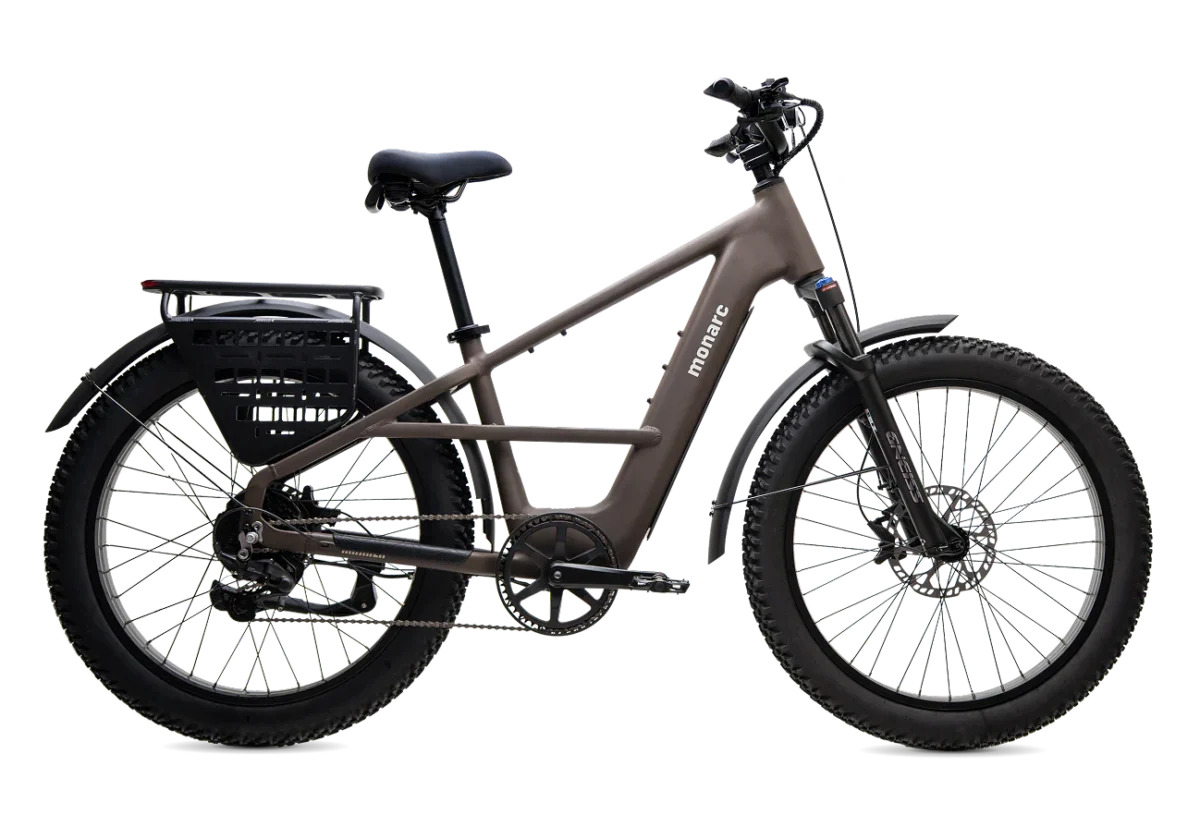
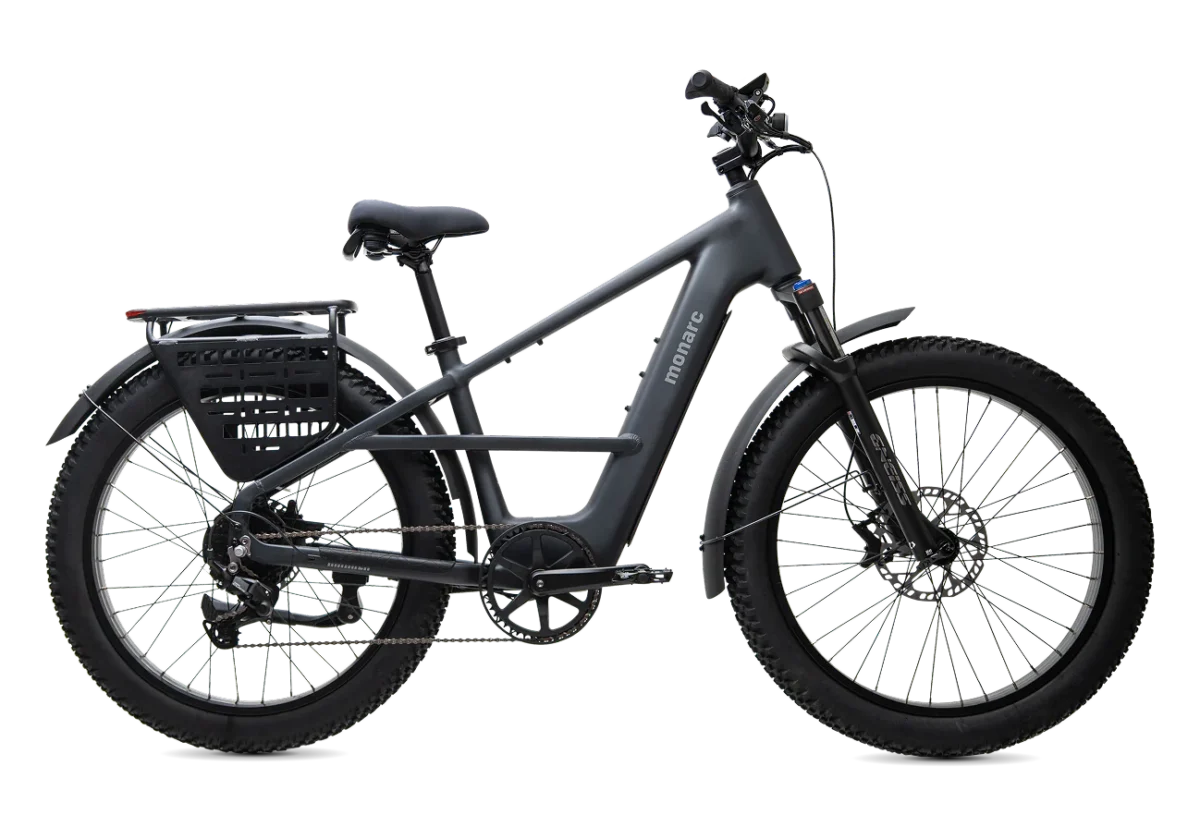
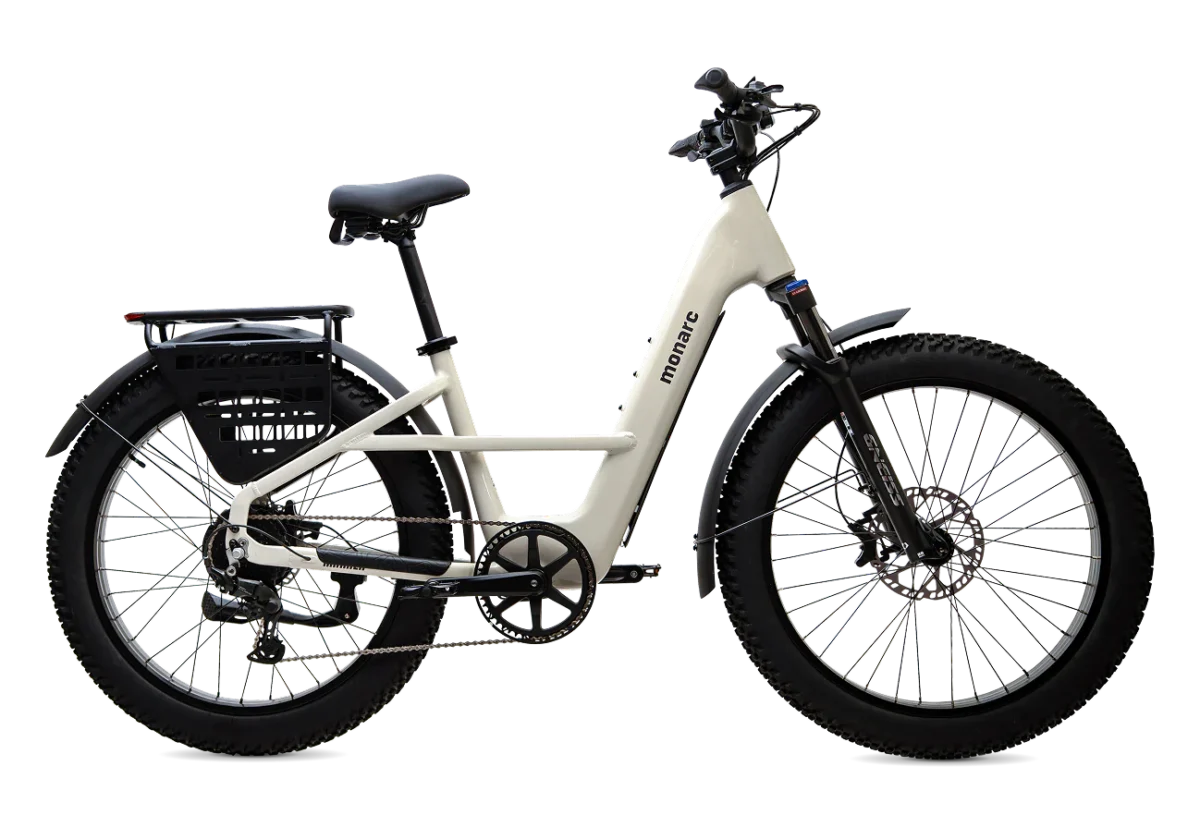
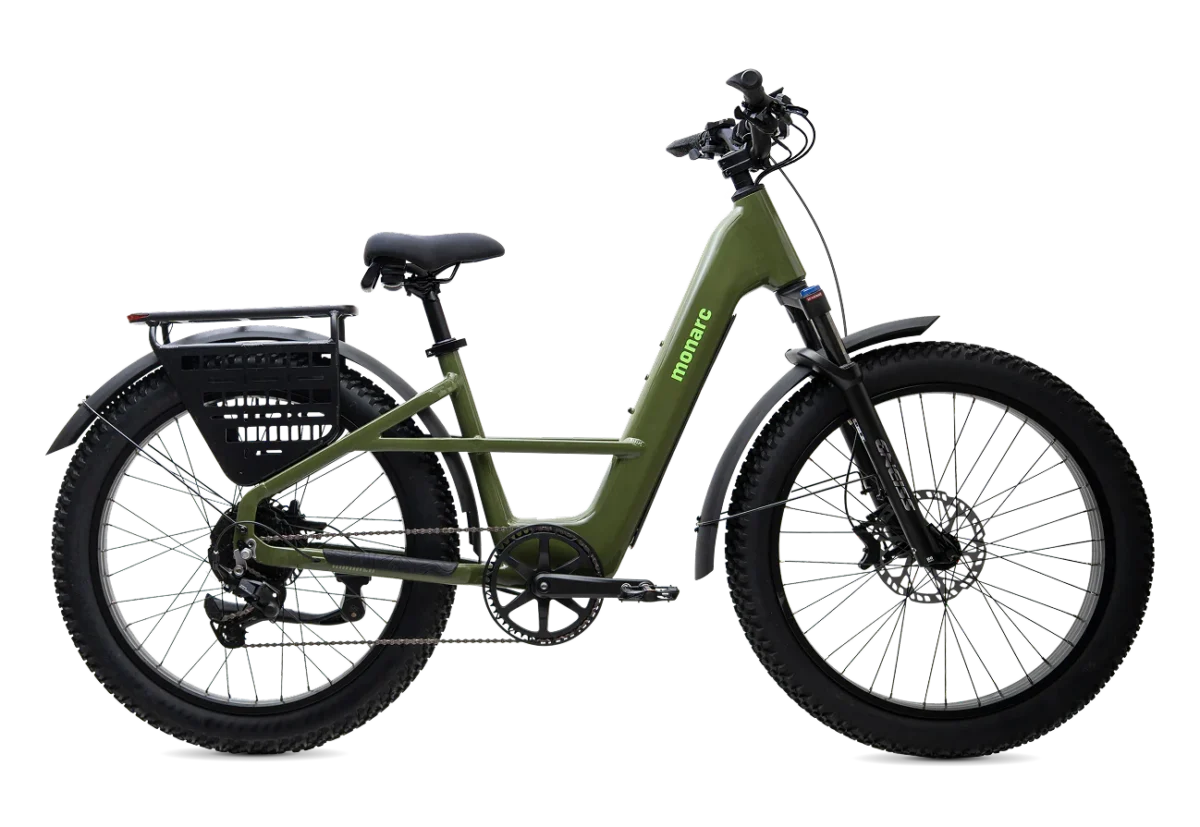
A range of riders tested the Marker for fit, and it suited most of them well, from a 6 foot rider with a 32 inch inseam to a 5’5″ rider, though anyone near the shorter end of the range may find it a little big. Monarc prioritized frame rigidity over the lowest standover, so it isn’t the most accessible bike to climb aboard, but the step-thru and its swept-back bars help. At 87 lb it’s heavy, which is about par for a fat tire ebike this size, though it’s worth knowing before you ride or lift it onto a hitch rack. One small thing from our time with it: the rear fender needed a quick tweak out of the box to keep it from rubbing the tire. The numbers for both frames are below.
| Category | Monarc Marker |
|---|---|
| Total Weight w/ Battery | 87 lb (advertised) |
| Payload Capacity | 420 lb |
| Rider Height Range | Step-Over 5’4″ to 6’5″ | Step-Thru 5’2″ to 6’3″ |
| Standover Height | Step-Over 31.4 in (798mm) | Step-Thru 22.6 in (573mm) |
| Wheelbase | 46.7 in (1185mm) |
Monarc Marker Full Specifications
| Component | Monarc Marker |
|---|---|
| Price | $1,999 (launch: free Smart Helmet, a $229 value) |
| Type | Fat tire ebike (electric adventure bike) |
| Class | Class 1/2/3, ships as Class 2 |
| Weight Capacity | 420 lb total payload (330 lb max rider, 66 lb rear rack) |
| Top Speed | 28 mph in Class 3 (20 mph as shipped) |
| Motor | Bafang B750 rear hub, 750W nominal, 1,638W peak (30A controller) |
| Torque | 85 Nm |
| Battery | Two 48V 15Ah (720Wh) LG-cell packs |
| Claimed Range | Up to 120 miles (up to 60 per battery) |
| Charger | 48V 5A fast charger, 3 hours per battery |
| Display | Monarc 3.5-inch touchscreen (touch or button control) |
| Sensor | Switchable torque/cadence, defaults to torque |
| Throttle | Left-side thumb throttle |
| UL Certifications | Ebike certified to UL 2849 (and ISO 4210); battery certified to UL 2271 |
| Water/Dust Resistance | Ebike IPX6; battery IPX7 |
| Shifter | Shimano Cues, 9-speed trigger |
| Derailleur | Shimano Cues, 9-speed |
| Chainring | Prowheel, 48T |
| Cassette | 11-36T |
| Brakes | Star Union Talon P4, 4-piston hydraulic disc |
| Levers | Talon P4 with motor cutoffs |
| Rotors | 203mm front, 180mm rear |
| Frame | 6061 aluminum, hydroformed; step-over and step-thru |
| Fork | Monarc Gneiss reverse-arch, 80mm travel, preload and lockout |
| Axle | Thru-axle front, bolt-on rear |
| Tires | Kenda all-terrain, 26 x 4-inch |
| Handlebars | Riser (more swept-back on the step-thru) |
| Grips | Ergonomic lock-on (Monarc) |
| Saddle | Monarc comfort saddle with grab handle, 2-bolt seatpost |
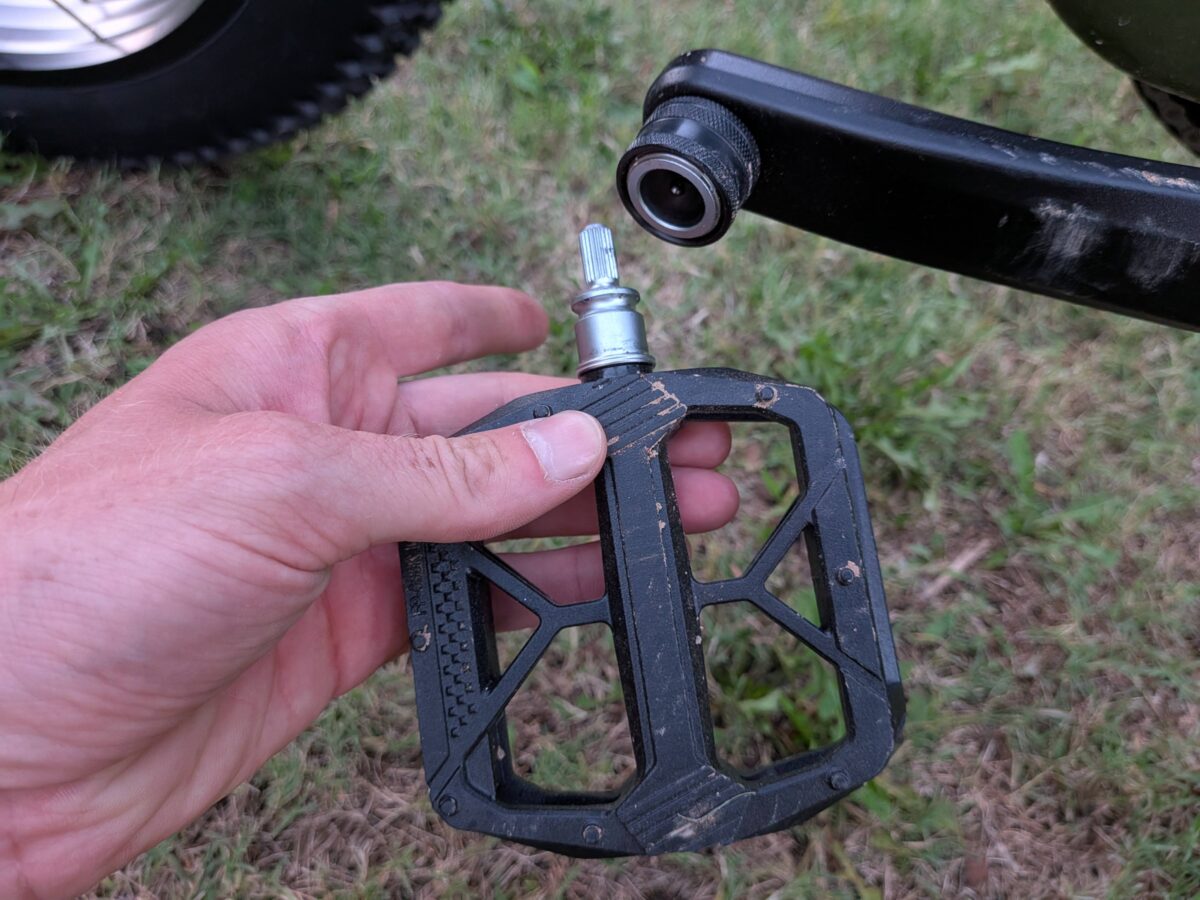
| Pedals | Metal, quick-release |
| Fenders | Polypropylene, front and rear |
| Rear Rack | MIK-compatible with MOLLE panel, 66 lb capacity |
| Kickstand | Rear-mounted |
Real-World Performance Testing | Monarc Marker
Pedal Assist
The five pedal assist levels are named Cruise, Breeze, Explore, Sport, and Boost, from lowest to highest.
Torque Sensor
Out of the box, the Marker defaults to its torque sensor, measuring how hard you pedal and metering out motor power to match. Easy spinning gets you a little help, while digging in delivers a surge of power. Here is how the stock tuning breaks down:
- Cruise: A gentle 70W baseline. With a heavier pedal stroke, you can push it to 150W and 12 mph.
- Breeze: Settles in at 200W for a comfortable 12 mph, reaching 300W and 14 to 15 mph when you put in more effort.
- Explore: A casual cadence holds 16 to 17 mph drawing 300 to 500W, but aggressive pedaling unleashes up to 900W to carry you into the low 20s.
- Sport: The motor becomes incredibly responsive. You can easily spin at 23 to 25 mph, or push slightly harder to max out at 28 mph.
- Boost: All the motor, all at once. The 9-speed gearing keeps your cadence comfortable, making it incredibly easy to hit the 28 mph Class 3 top speed.
The stock tuning is dialed in so well that most riders will not need to touch it, though per-level customization is waiting in the settings if you do.
Cadence Sensor
Flip the sensor over to cadence in the settings and the feel changes entirely. Rather than reading effort, it simply checks whether you are pedaling and then hands over a set amount of power for the level you are in:
- Cruise: Holds around 200W, pushing you to roughly 20 mph whether you are working hard or barely turning the pedals.
- Breeze: Steps up to 400W, making it easy to cruise into the low 20s.
- Explore: Delivers a consistent 700W of motor power.
- Sport: Jumps to 1100W, which delivers enough power to comfortably reach 28 mph.
- Boost: Gives you full motor power simply by keeping the pedals moving.
There is no on-the-fly swap between the two that we found, so it is a menu change rather than a button, but having both on hand is a nice bit of flexibility. For most people, the torque sensor is the one to ride for the most natural pedal experience. You can always ride along with the throttle if you need to tap into full motor power.
Throttle Acceleration
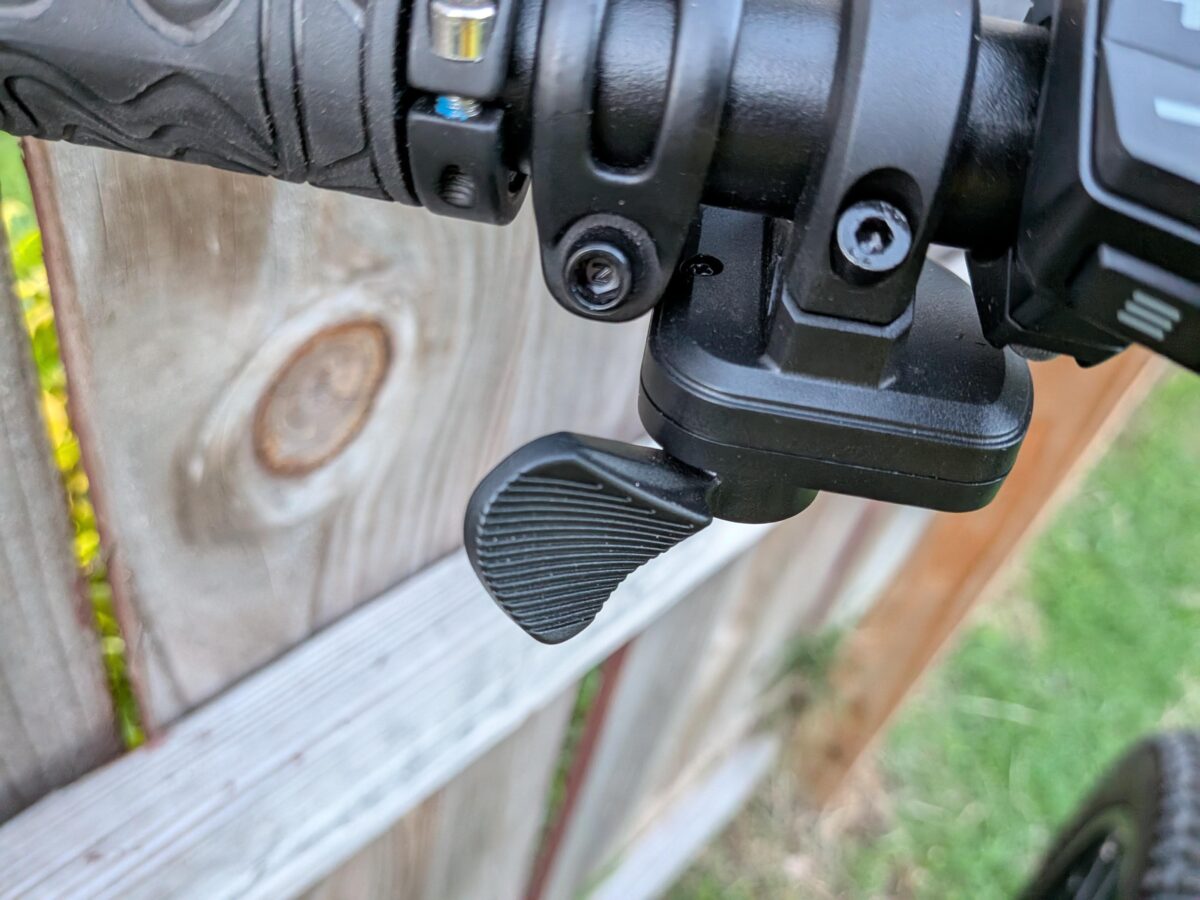
From a standstill in its default mode, the throttle pulls the Marker cleanly to 20 mph before the motor eases off at the Class 2 cap, with the display reading around 1,400W as it builds speed. The setting worth finding is in the menus: left on high, the throttle delivers full power in any assist level, while switched to low it scales with the level you’re in, gentle in Cruise at around 200W and nearly full in Sport. It’s a practical way to decide how much punch sits under your thumb.
Hill Climb
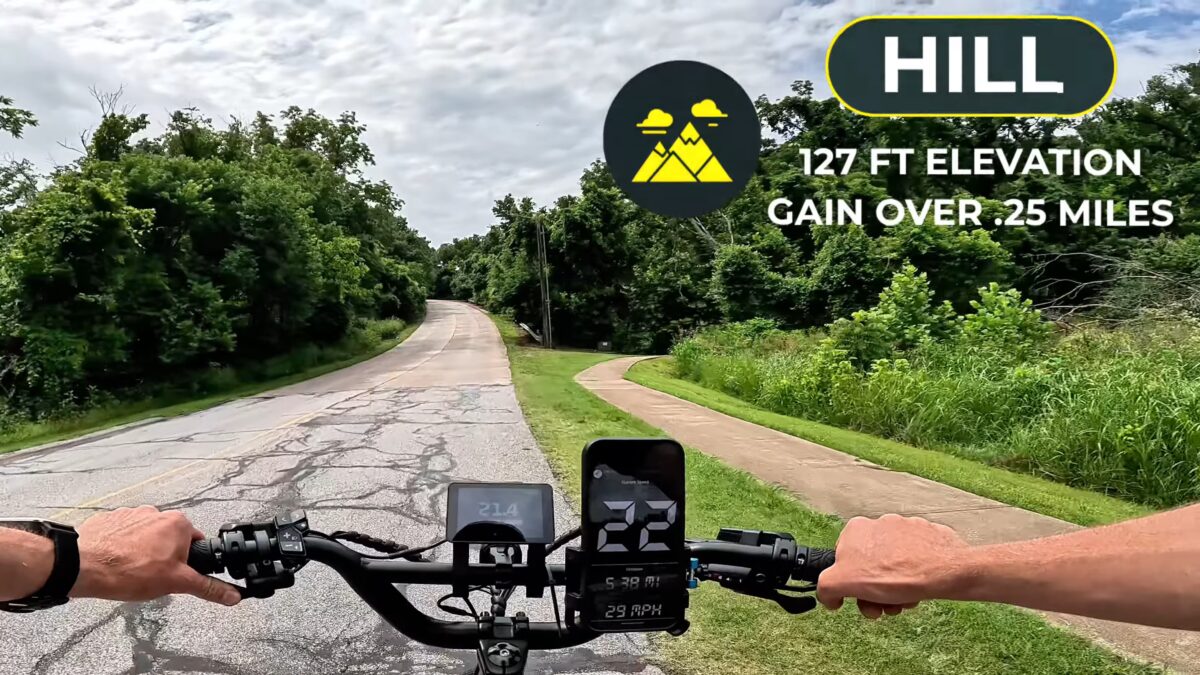
On throttle alone, with no pedaling at all, the Marker held between 13 and 16 mph the whole way up our Bentonville test hill, which is strong for a heavy fat tire ebike. Pedaling with the torque sensor told a more nuanced story, since the lower assist levels leave most of the work to your legs: Cruise and Breeze had us pushing hard for not much speed, Explore and Sport added real relief in the 300 to 500W range, and Boost was the one that let us spin up the climb comfortably at around 7 mph while the motor pulled close to 700W. The takeaway is simple enough. On a steep, sustained climb, lean on Boost or just use the throttle, and the Marker gets up without complaint.
Off-Road Capability
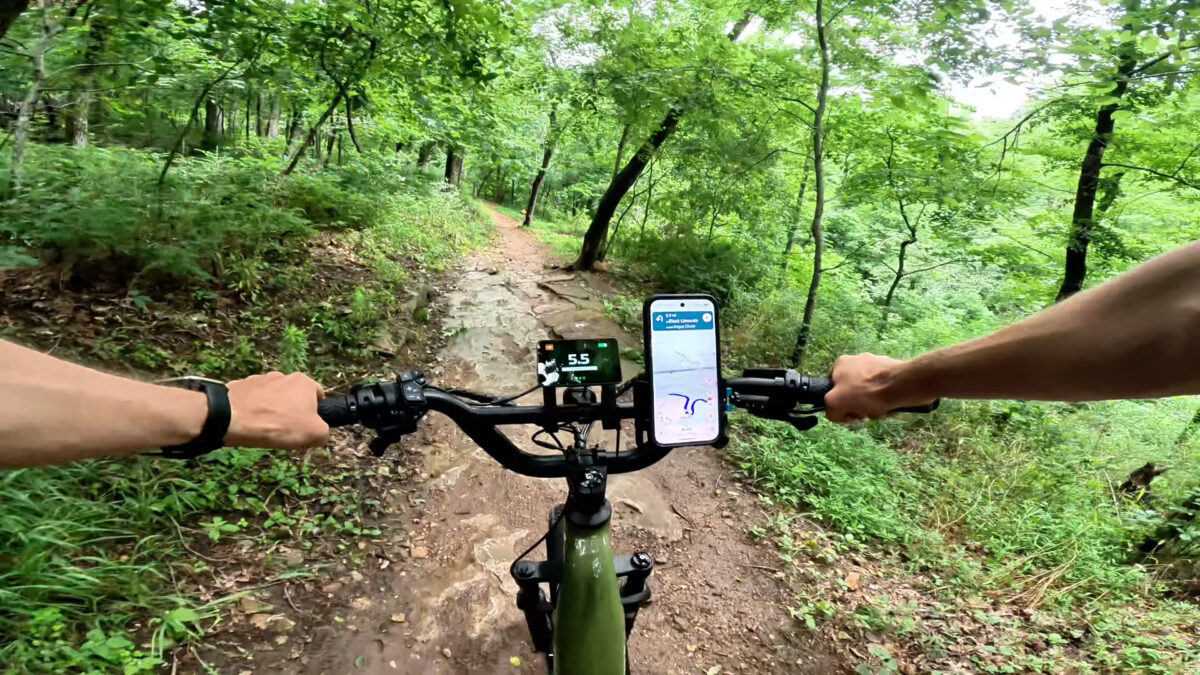
On crushed gravel, fire roads, and dirt paths, the fat tires found grip easily and the Gneiss fork took the edge off the bumpy stretches. We rode some light single track too, but a bike this heavy isn’t nimble enough for genuinely technical trails. The upside of that weight is grip and a grounded, planted feel on looser, open ground.
President Bush Push | Off-Road Hill Climb
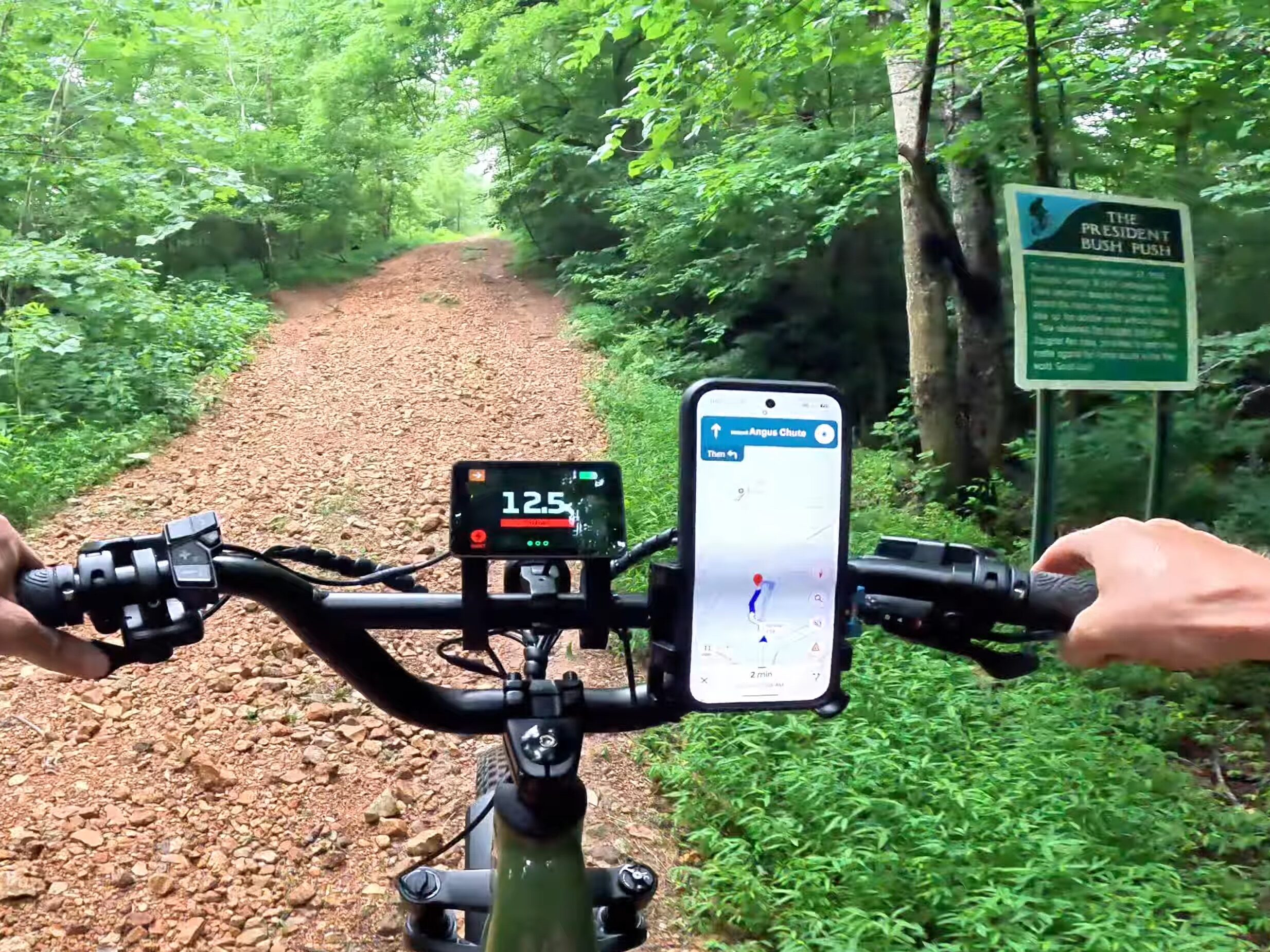
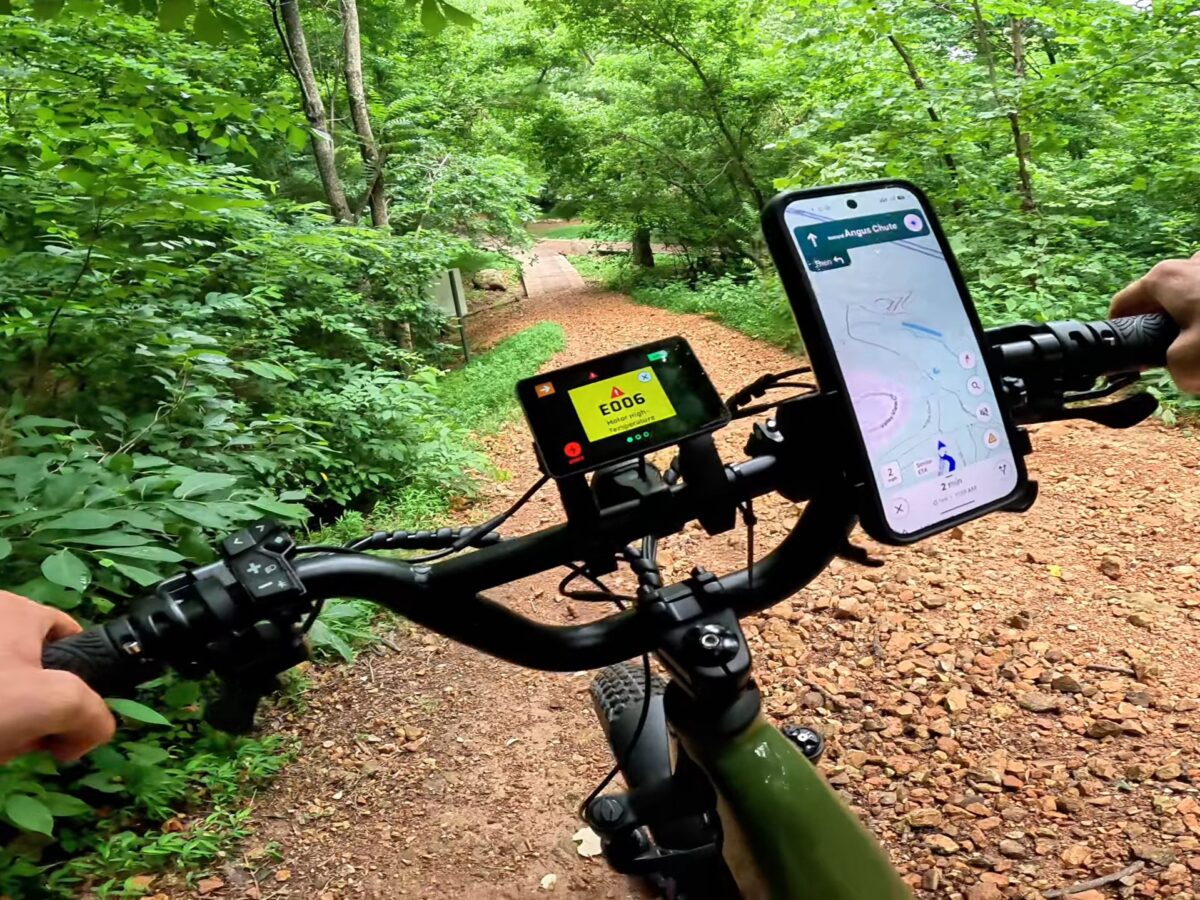
This was the toughest test we threw at the Marker, a steep, rocky scramble straight uphill. The first attempt ended when the rear tire spun out, and on the second we bounced off our line and lost momentum, which is when we got a motor high-temperature warning. That’s no surprise on a slow, grinding crawl, and it’s reassuring that the system warns you before the heat does any damage. We let it cool and let some air out of the tires for the third attempt, and the added grip carried us up this genuinely challenging climb.
Monarc Marker vs Aventon Aventure 3
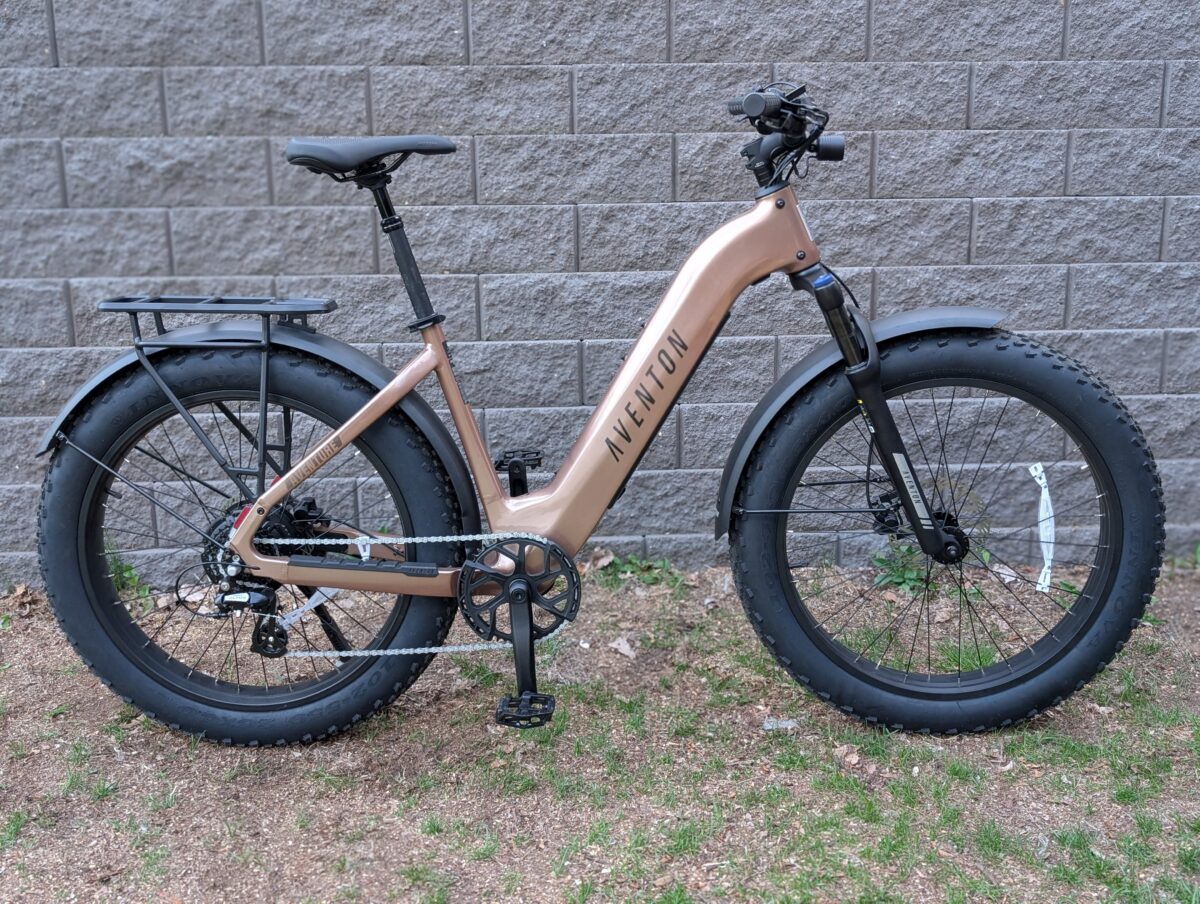
At the same $1,999, the Aventon Aventure 3 is the bike most cross-shoppers will weigh against the Marker, and it makes its case a little differently. It’s lighter at 76 lb and adds a suspension seatpost for extra cushion, and it leans hard into security: a keyless battery and an electronic rear wheel lock are built in, with a connected layer of 4G GPS tracking, geofencing, and motion alerts on top, though that connectivity runs about $20 a year after the first. It offers ride tuning and performance customization much like the Marker, too, but you make those adjustments through the Aventon app rather than on the bike itself, where the Marker gives you that control right on the touchscreen.
What really separates them is track record. Aventon has a network of more than 1,800 dealers for test rides and in-person service, and it has already established itself as a major player with real staying power. Monarc is still earning its stripes, but it’s hard to deny the first showing is a compelling one, especially with Lectric, another well-established name, behind it. You can dig into the full breakdown in our Aventon Aventure 3 review.
Monarc Marker Pros and Cons
Final Thoughts on the Monarc Marker
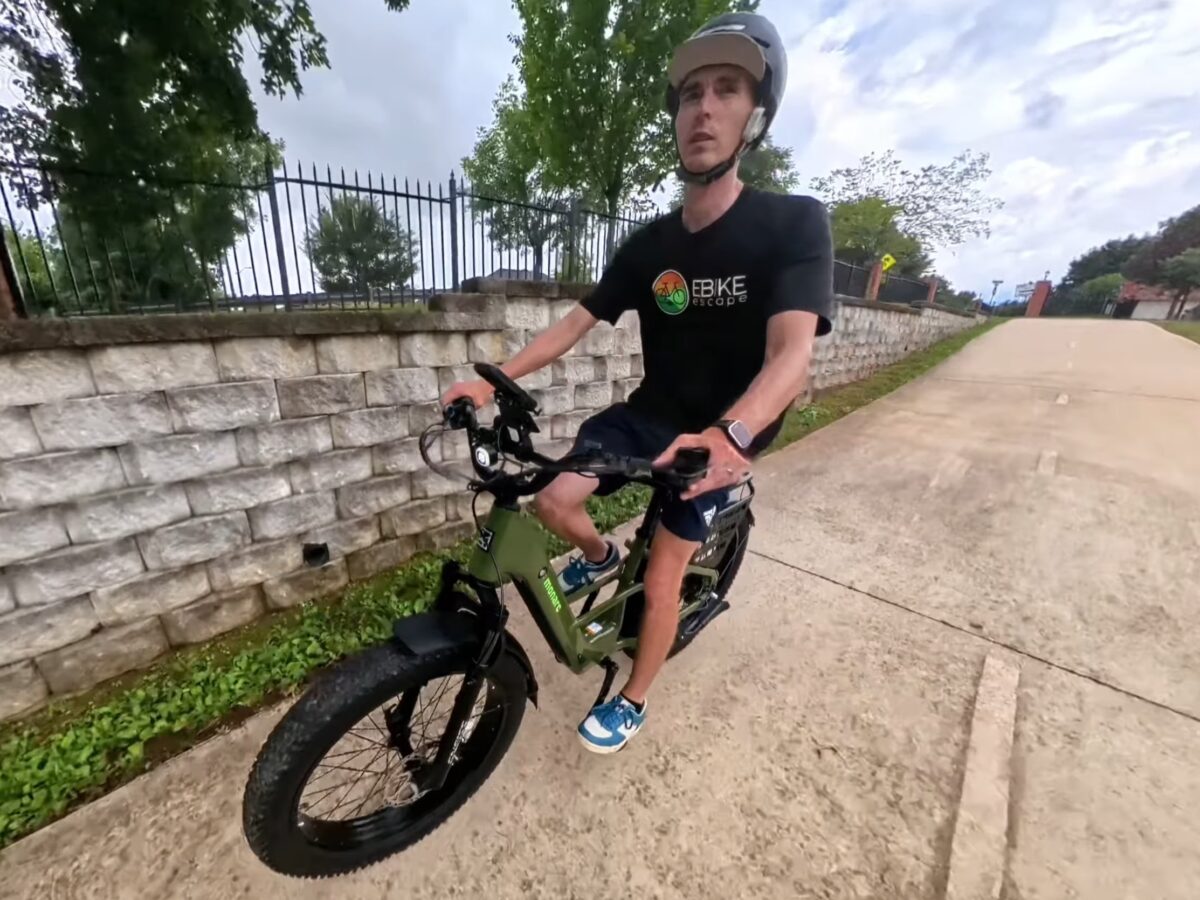
For a first effort, the Marker lands as a remarkably complete fat tire ebike, and it’s easy to see where the money went: two LG-cell batteries, a name-brand Shimano Cues drivetrain, 4-piston brakes, a touchscreen, and a fast charger add up to a build that genuinely outpunches its $1,999 price. It’s aimed at the rider who wants one bike for commuting, hauling, and weekend exploring, and who values long range and the convenience of a charged spare over shaving weight. The compromises are the ones you’d expect from a heavy, do-everything machine and a company still finding its feet: it’s a beast to lift at 87 lb, the standover isn’t the most accessible, and the app and smart accessories that round out the tech story weren’t ready at launch. Backed by a 5-year warranty and Lectric’s support team, the early signs are promising, and as a first bike from a new brand, the Marker sets a high bar.
If our coverage helped you land on the Marker, using our affiliate link to buy is a simple way to support Ebike Escape at no extra cost to you, and you’ll see any accessories currently included with the bike.
