

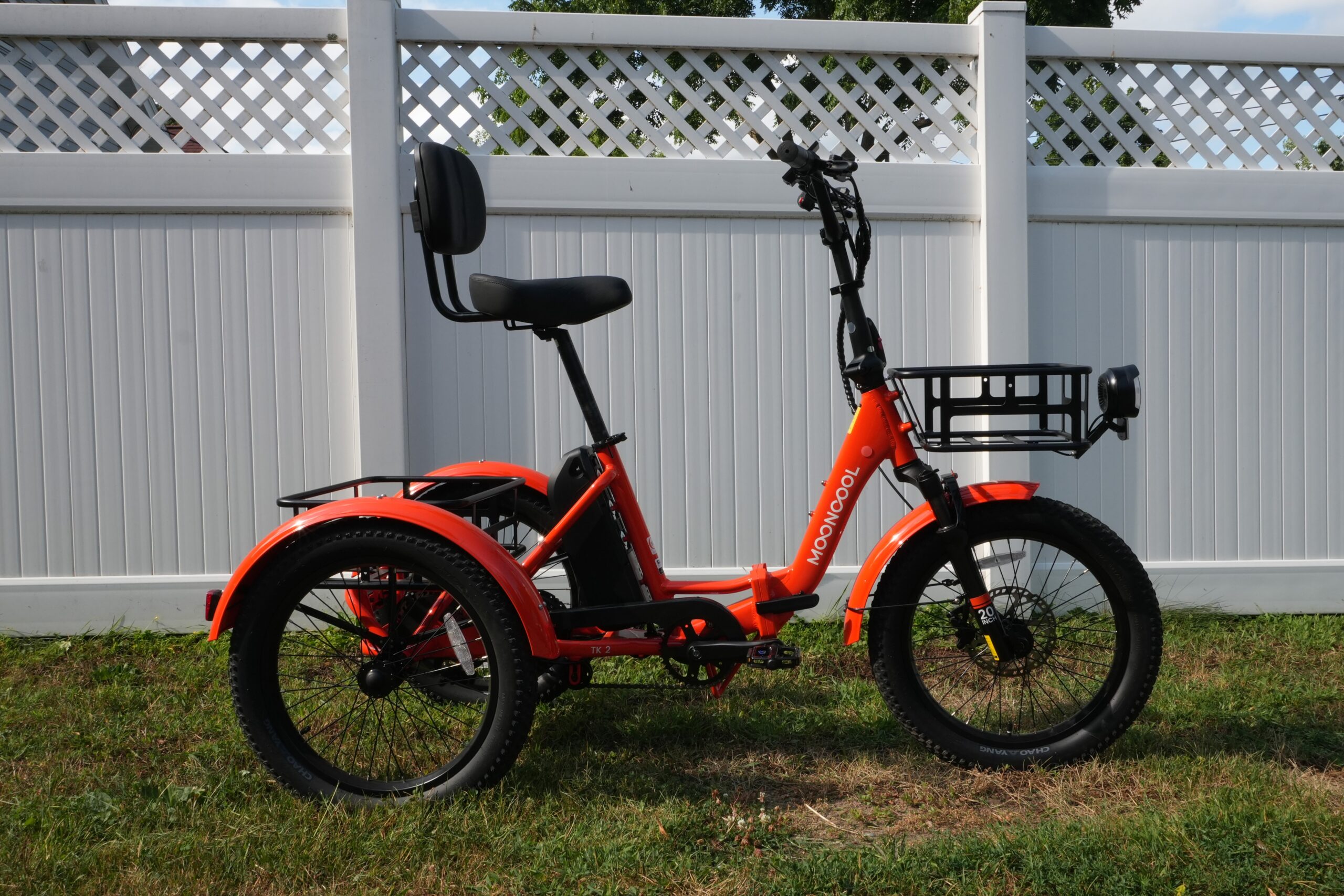
Delta-style electric trikes have caught on with riders who want a stable way to get around or haul a little cargo. That means there is more competition than ever, and the Mooncool TK2 is the second generation of a model that’s been a popular option for a while. At $1,499, it offers a personalized touch with a bunch of color options and comes with a lot of included accessories out of the box that other models don’t, from front and rear baskets to a full lighting package with turn signals and an integrated horn. This is also the first model in their lineup to feature a dedicated reverse function.
So the question is what the TK2 brings to the table. To answer it, we cover the standout features, the frame and how it fit two riders of different heights, and the full specs, then take it out on pavement and up our test hill. We also compare it to a close rival before finishing with the pros and cons.
Ebike Escape is reader-supported. If you buy through links on our site, we may earn an affiliate commission at no extra cost to you.
Video Review | Mooncool TK2
Our video covers every component up close, walks through the TFT display and its settings, shows the trike folded down, and takes it out on the road to test the motor, the pedal feel, and the hill climb. It also shows a 6-foot and a 5-foot-4 rider getting set up on it.
Standout Features of the Mooncool TK2
Motor and Battery
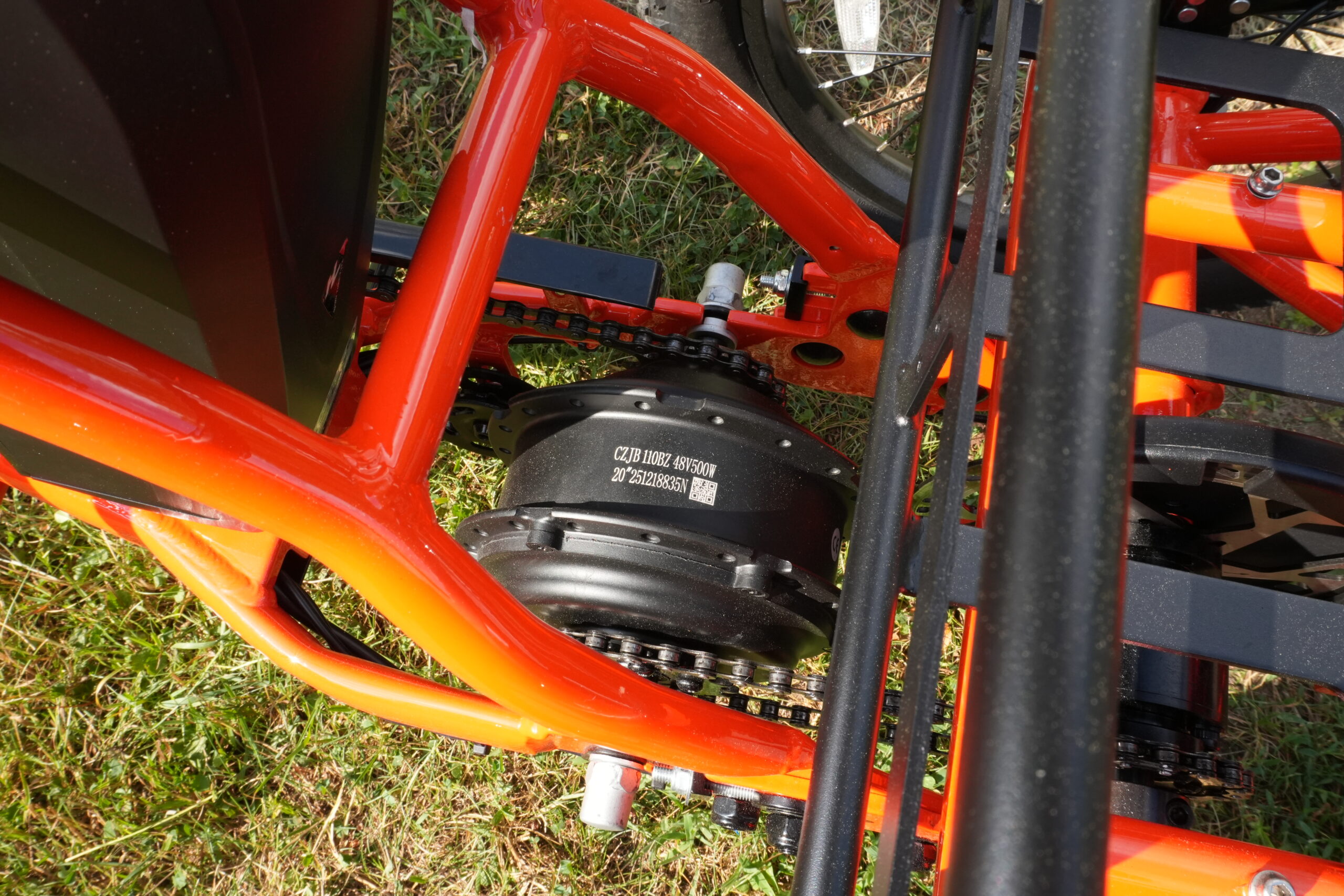
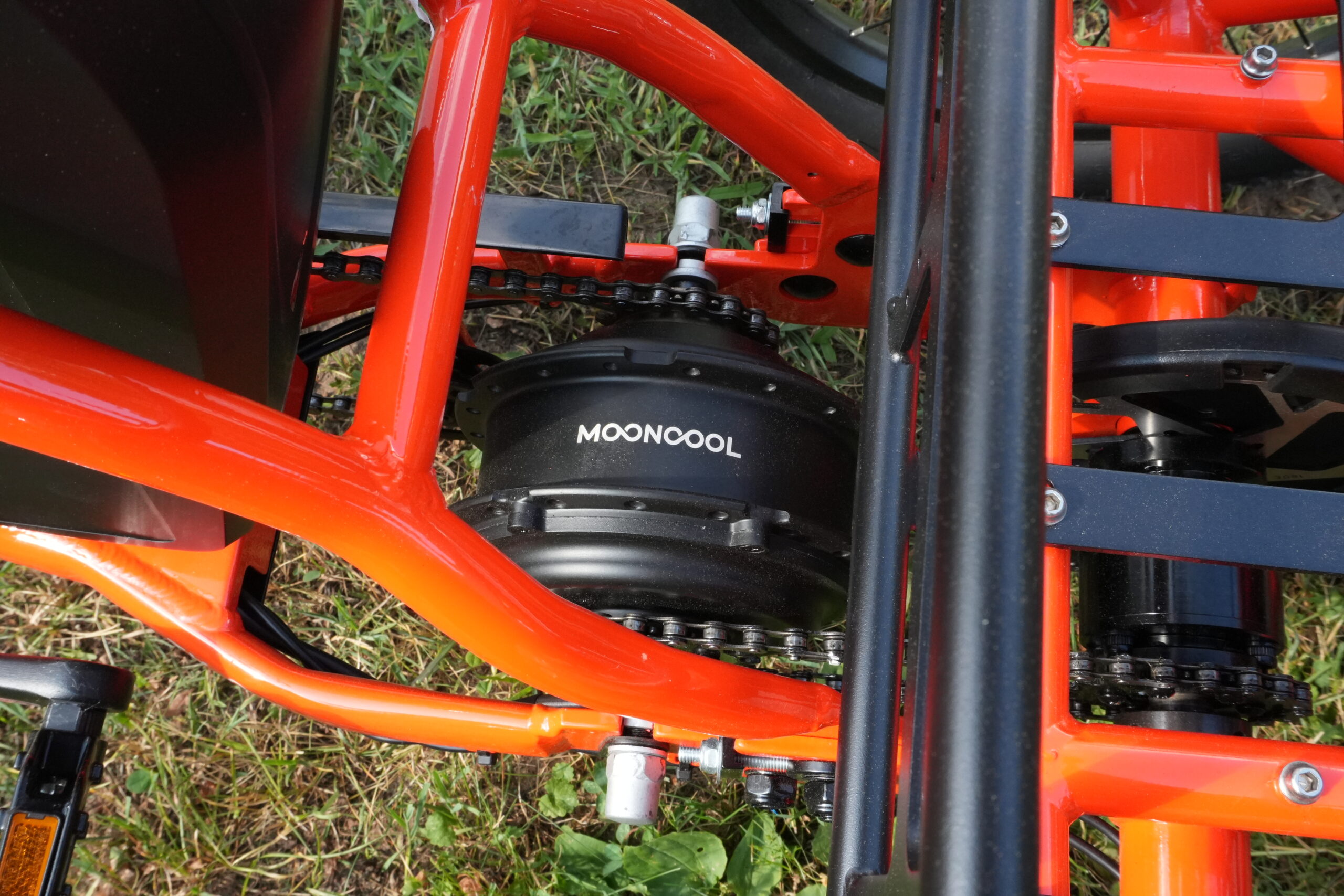
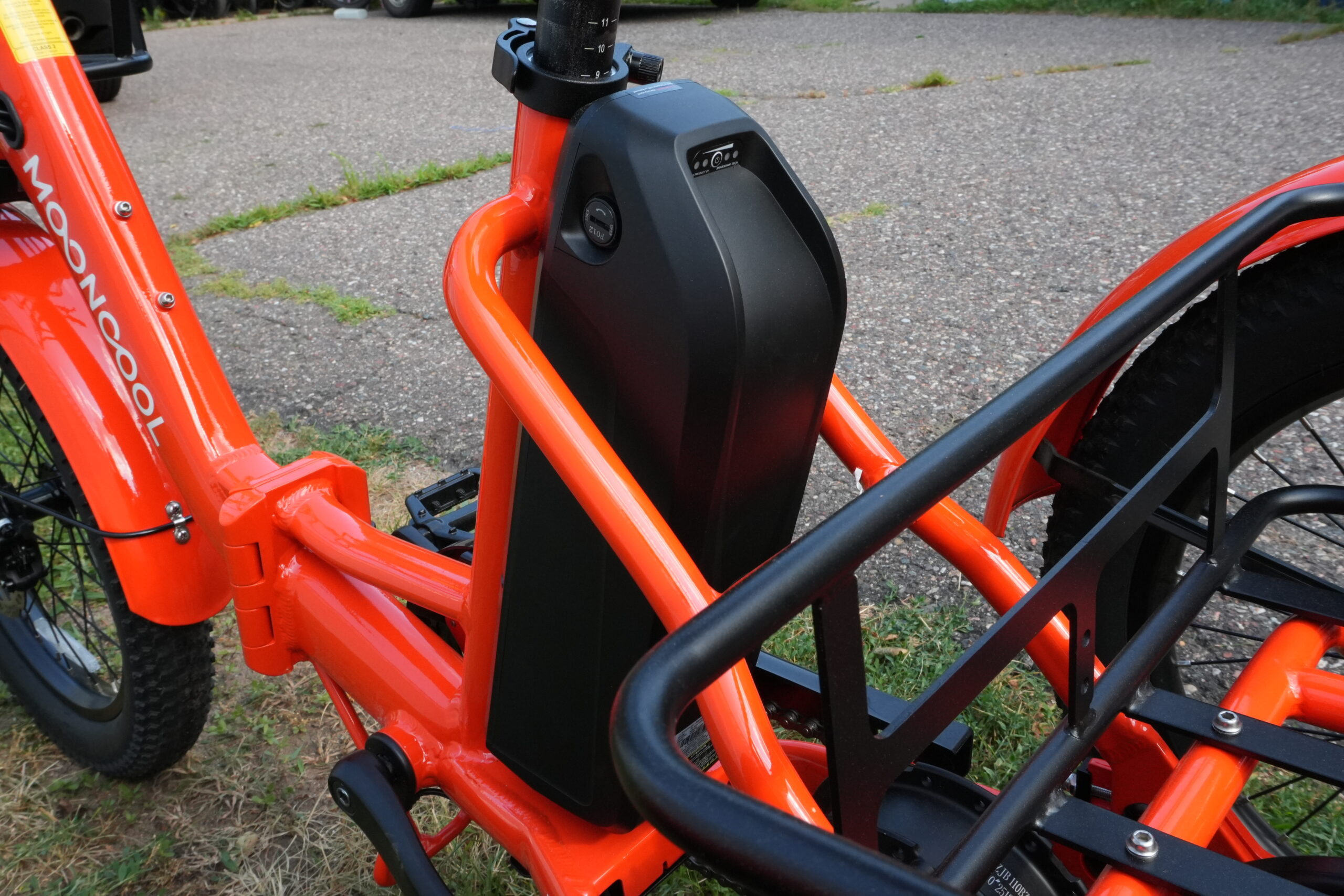
At 500W, the hub motor reads modest for a trike this heavy, but it pulls harder than that suggests, with a 1,092W peak that gives it more to work with on climbs and heavier riders. It’s fed by a 48V 15Ah battery that offers the all-day range most casual rides call for, rated at 35 to 60 miles depending on how much assist you use.
Reverse Function
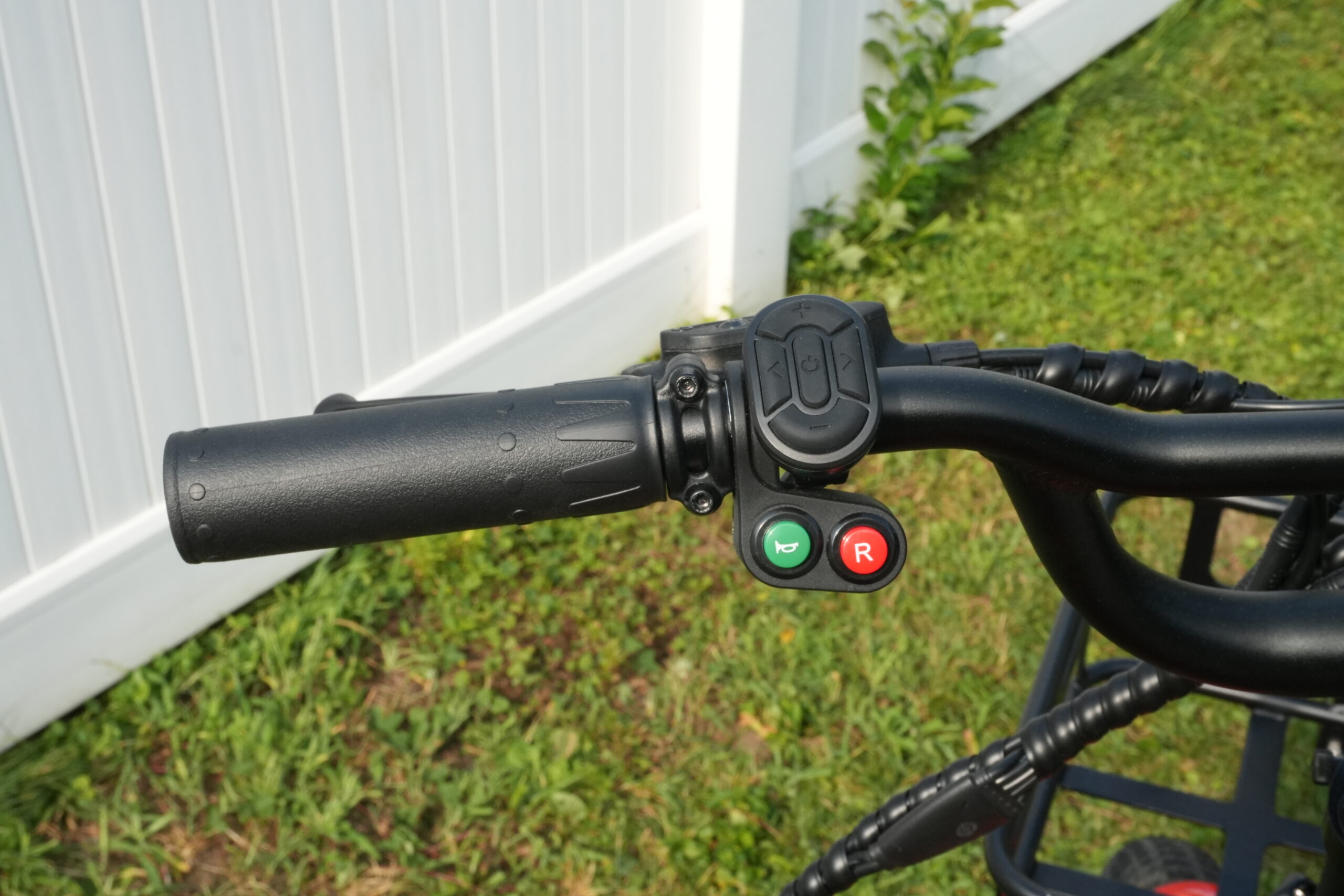
Reverse isn’t common on trikes at this price. To use it, you drop the assist one level below off and hold the R button, and the trike backs up on its own at 1 to 2 mph. It stays controlled and will even back up a slight incline, which helps for repositioning a heavy trike in a tight spot without moving it by hand. There is a walk mode as well, held from the assist down button while in an active level.
Included Accessories
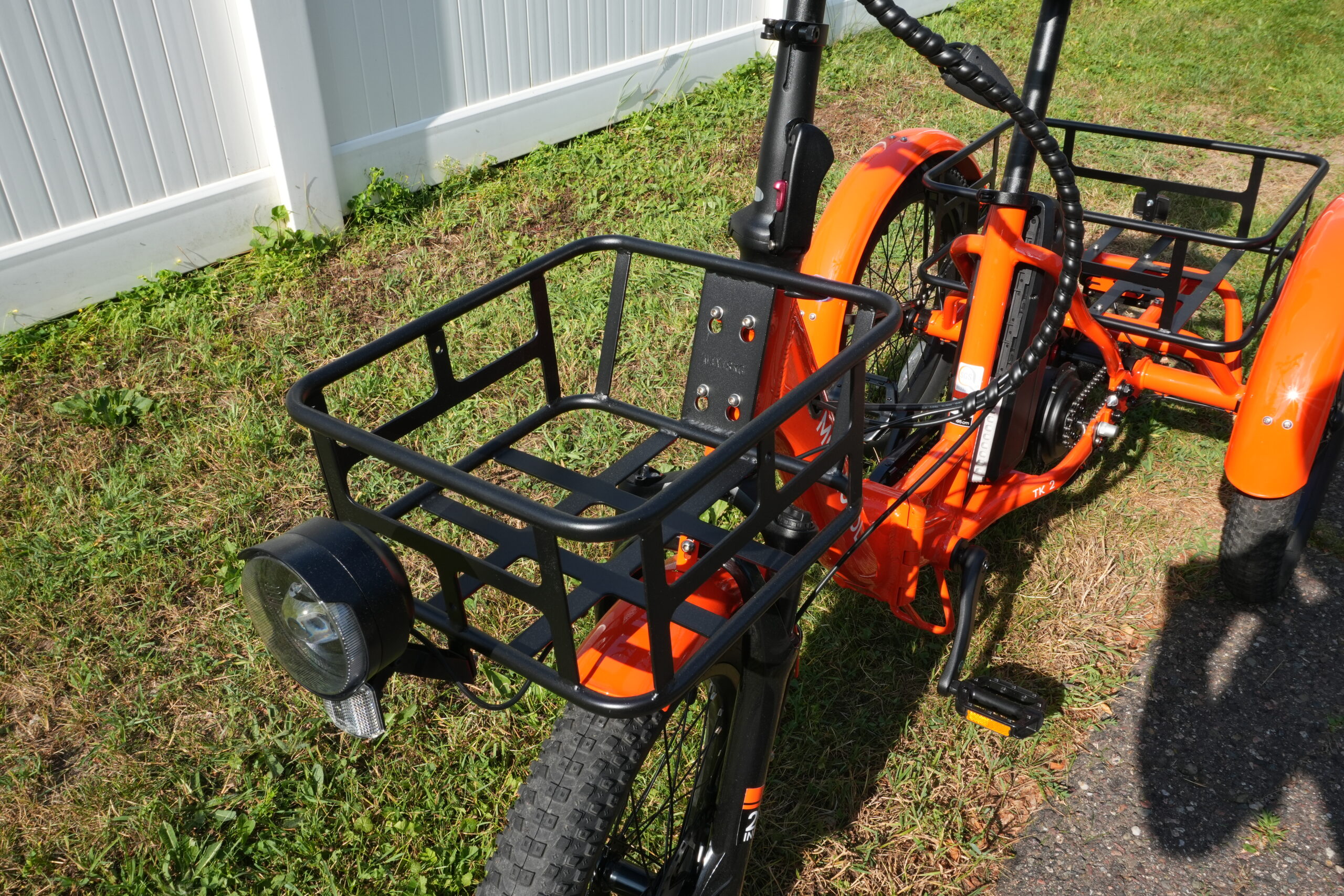
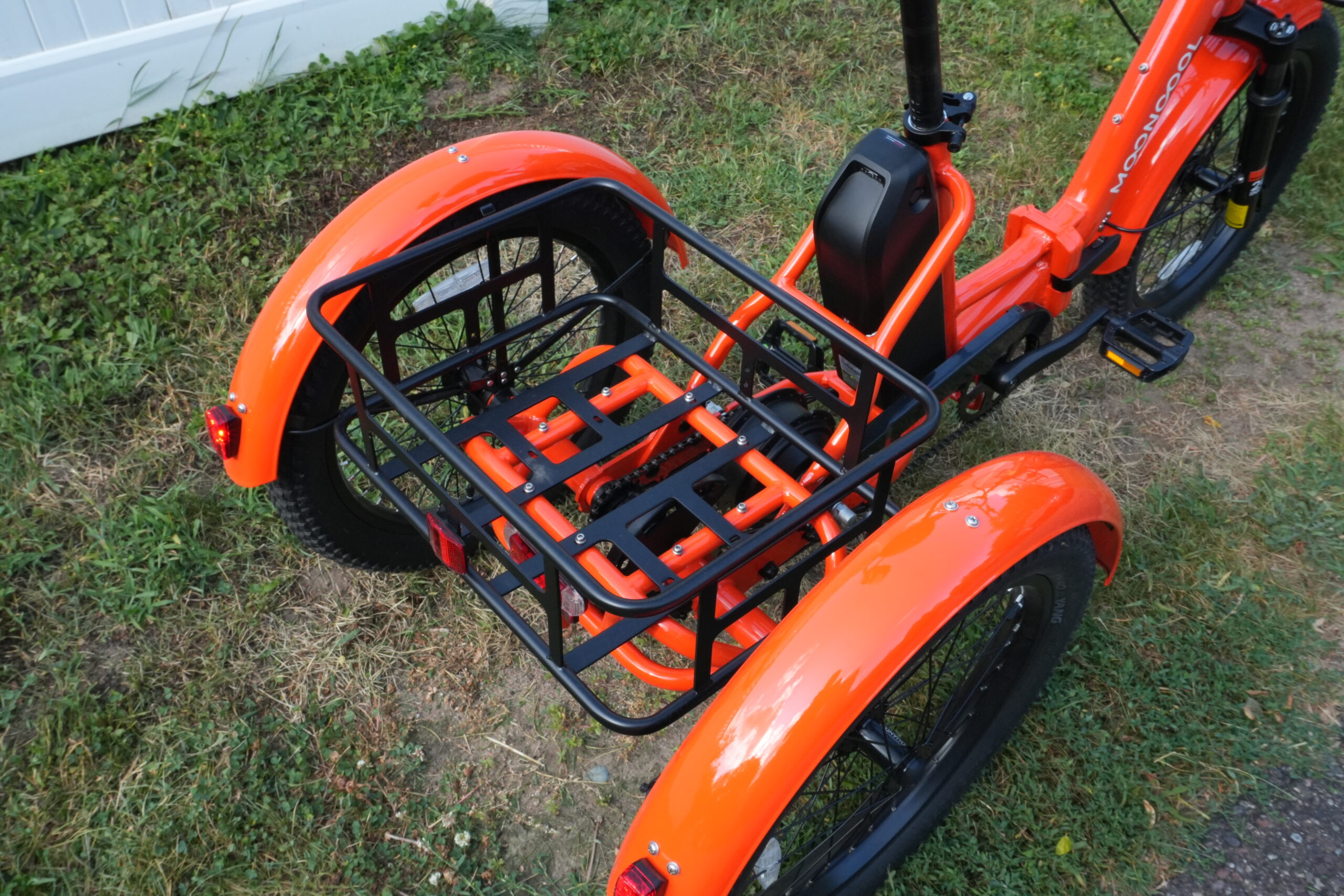
A lot comes in the box that other trikes leave off. Front and rear baskets are included, along with a cargo net, a bottle cage, and a multi-tool. The front basket holds up to about 40 lb (18 kg). Mooncool advertises tool-free assembly, which holds if you are only fitting the front wheel, but the fenders and the rest of the setup need tools, and they include Allen keys, wrenches, and an owner’s manual with the assembly instructions. Paint-matched fenders come standard.
Lighting and Safety
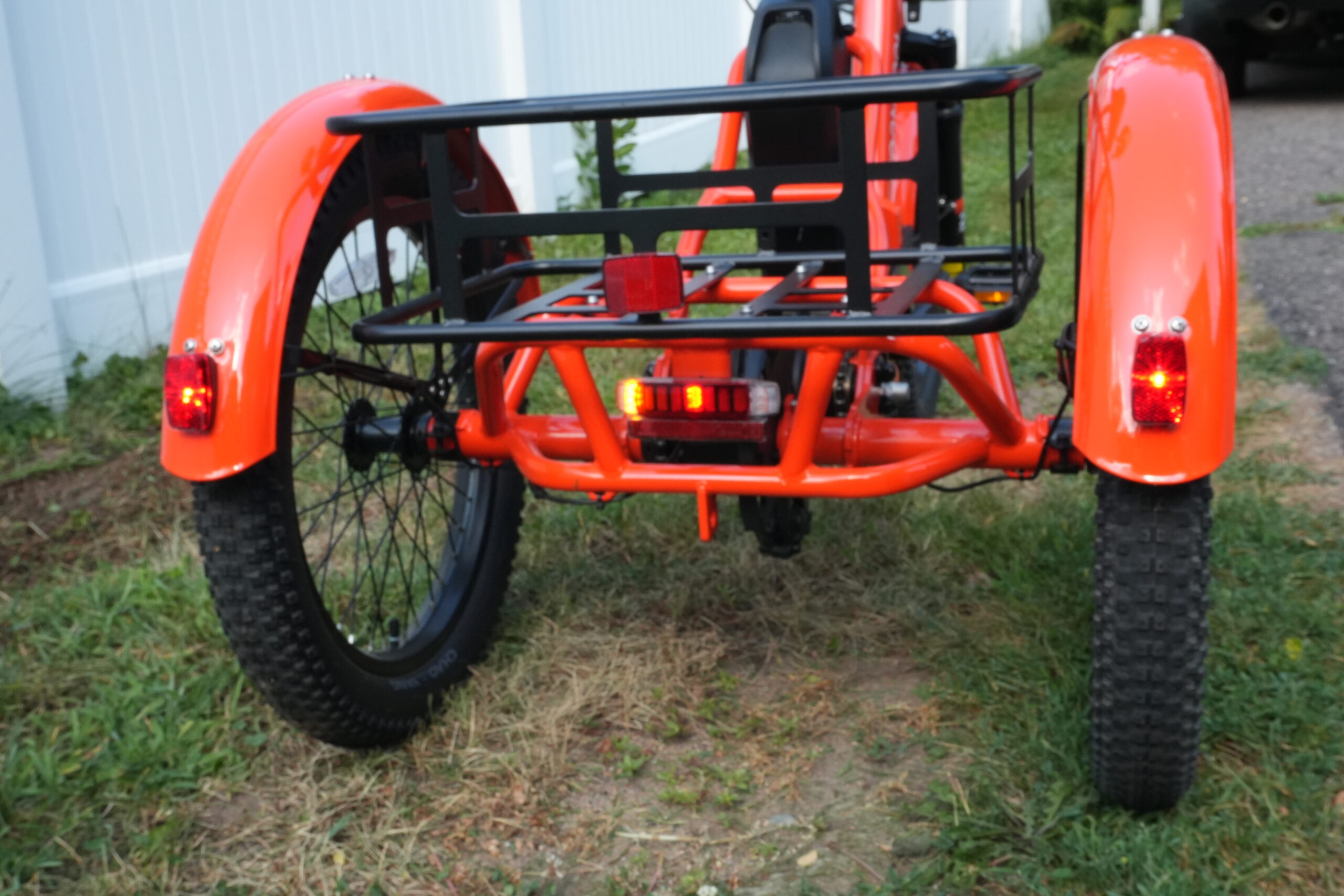
The lighting package is more complete than most trikes offer. There’s a bright headlight with an integrated horn up front, and at the back a taillight with turn signals plus running lights built into both rear fenders. All three rear lights brighten when you pull either brake lever. The turn signals do not cancel on their own, so you have to switch them off after the turn. The battery has been tested by SGS to UL 2271 and the trike to UL 2849, and the electronics carry an IPX5 water resistance rating.
Frame, Sizing, and Options
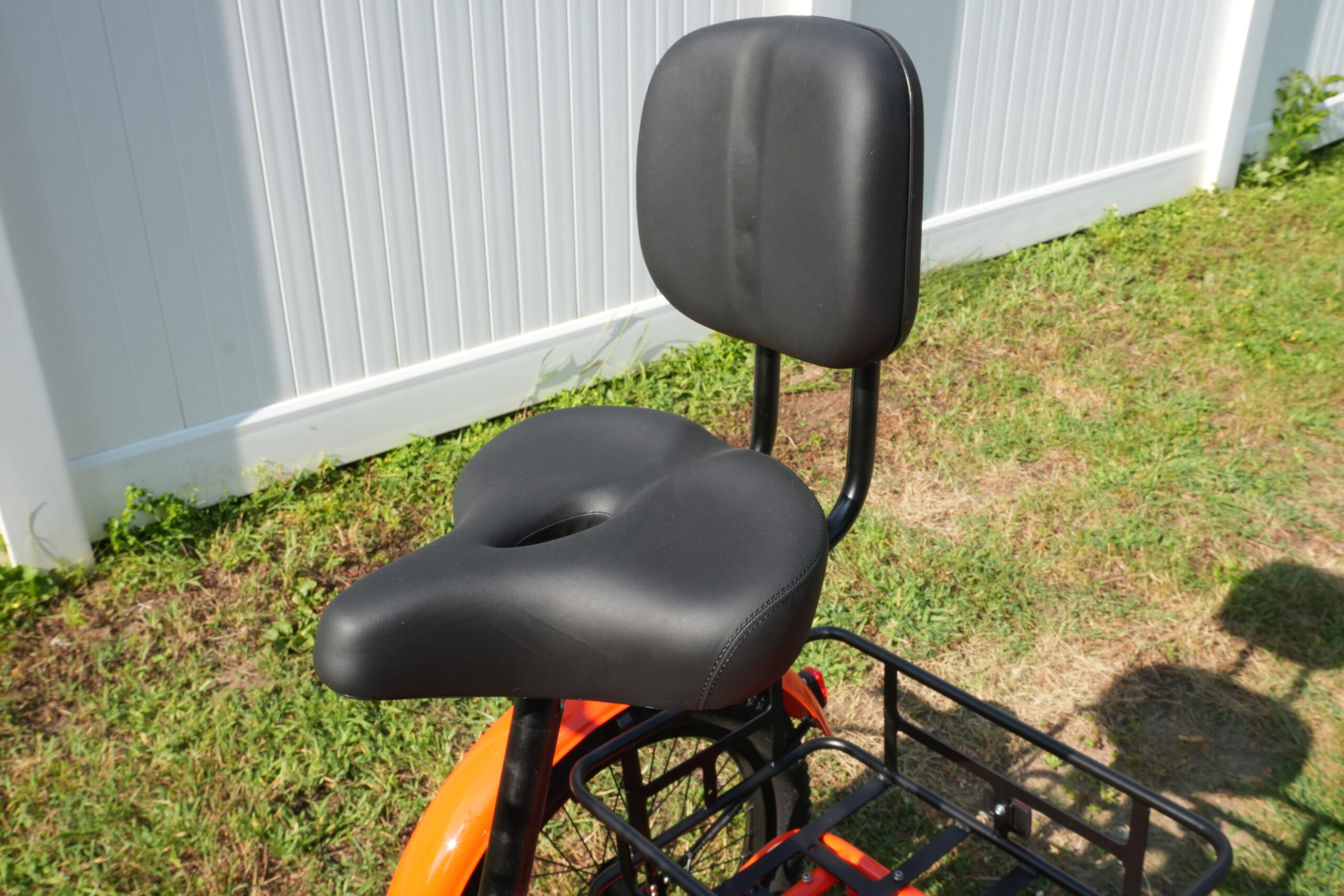
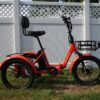
Styling is clean and upright. The saddle is wide and padded with a backrest attached to it. The backrest adjusts up and down but not front to back, and the saddle slides forward and back a little. Cables route into the down tube, the handlebars telescope for height, and there’s a grab handle on the frame for lifting and moving it. Payload capacity is 450 lb. The six color options are vibrant orange, cyan green, slate gray, white, serenity blue, and lavender purple.
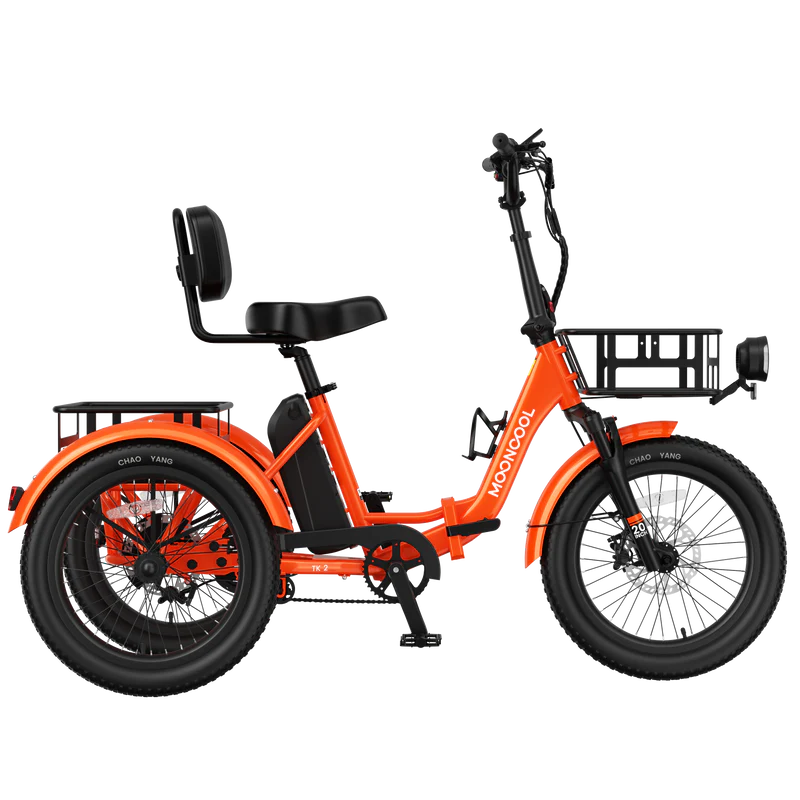
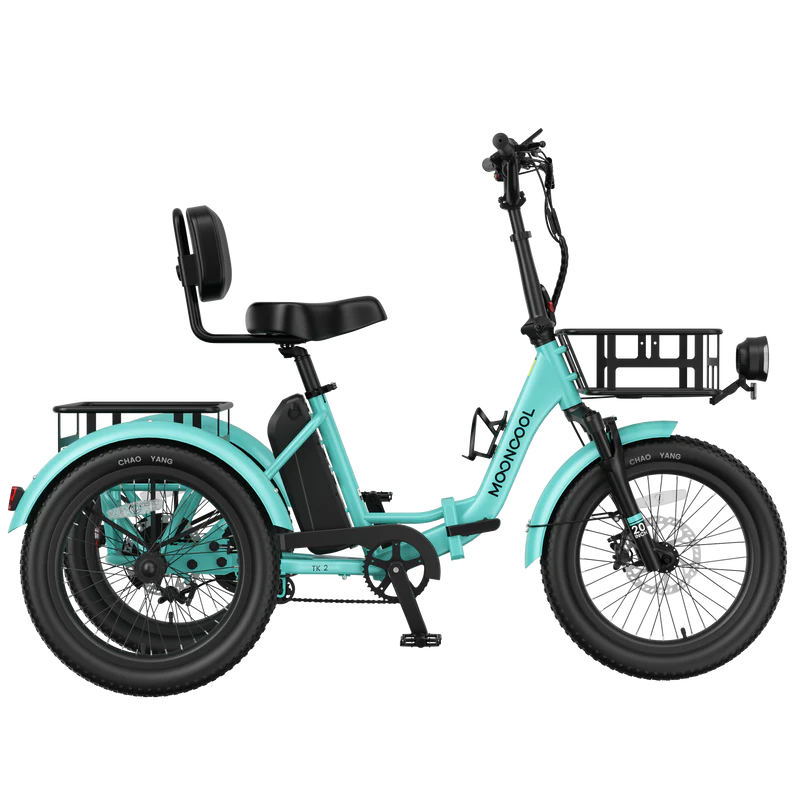
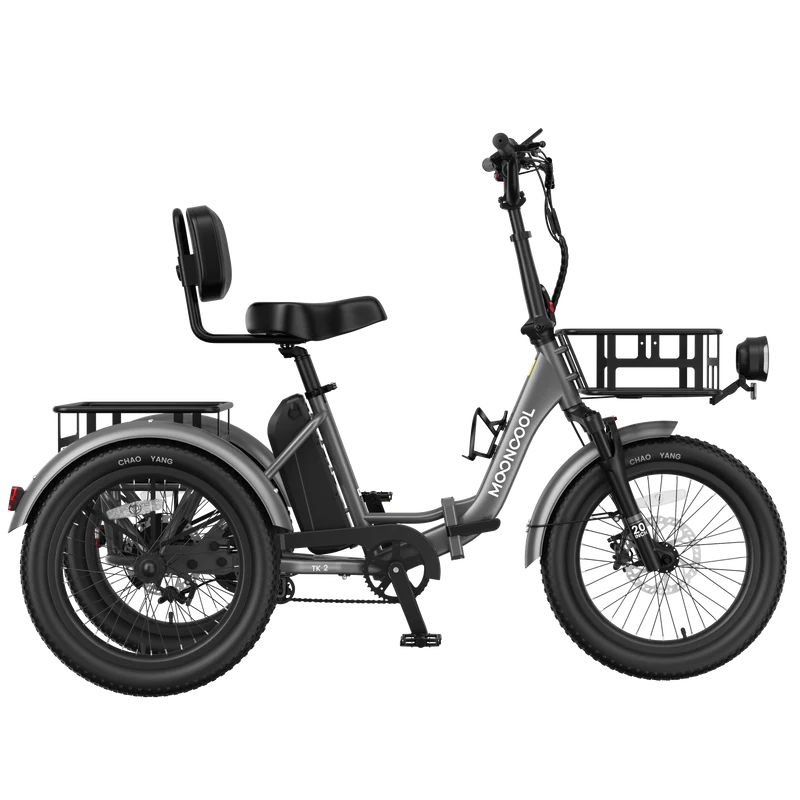
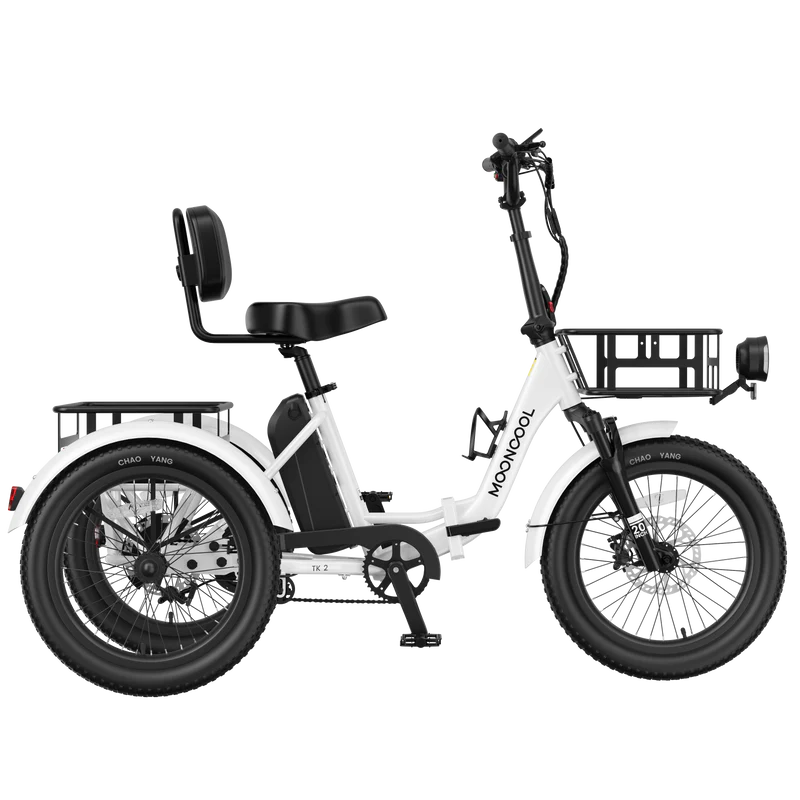
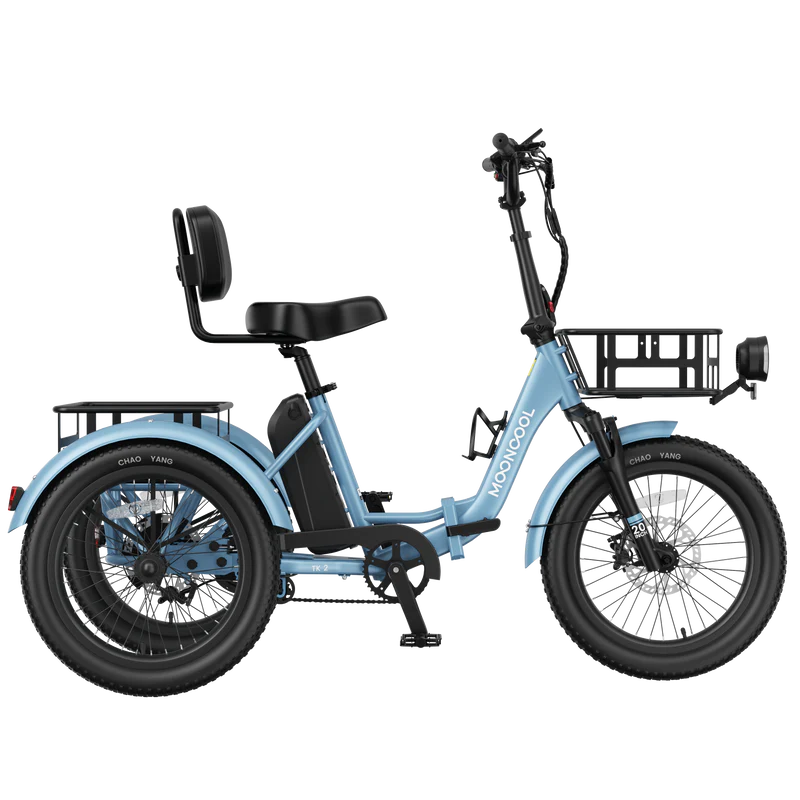
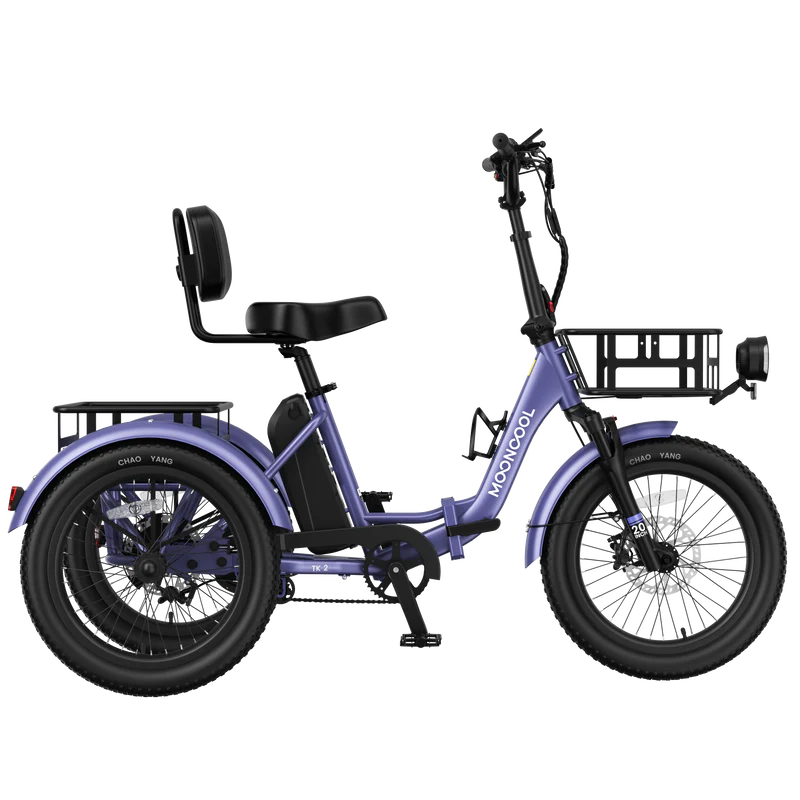
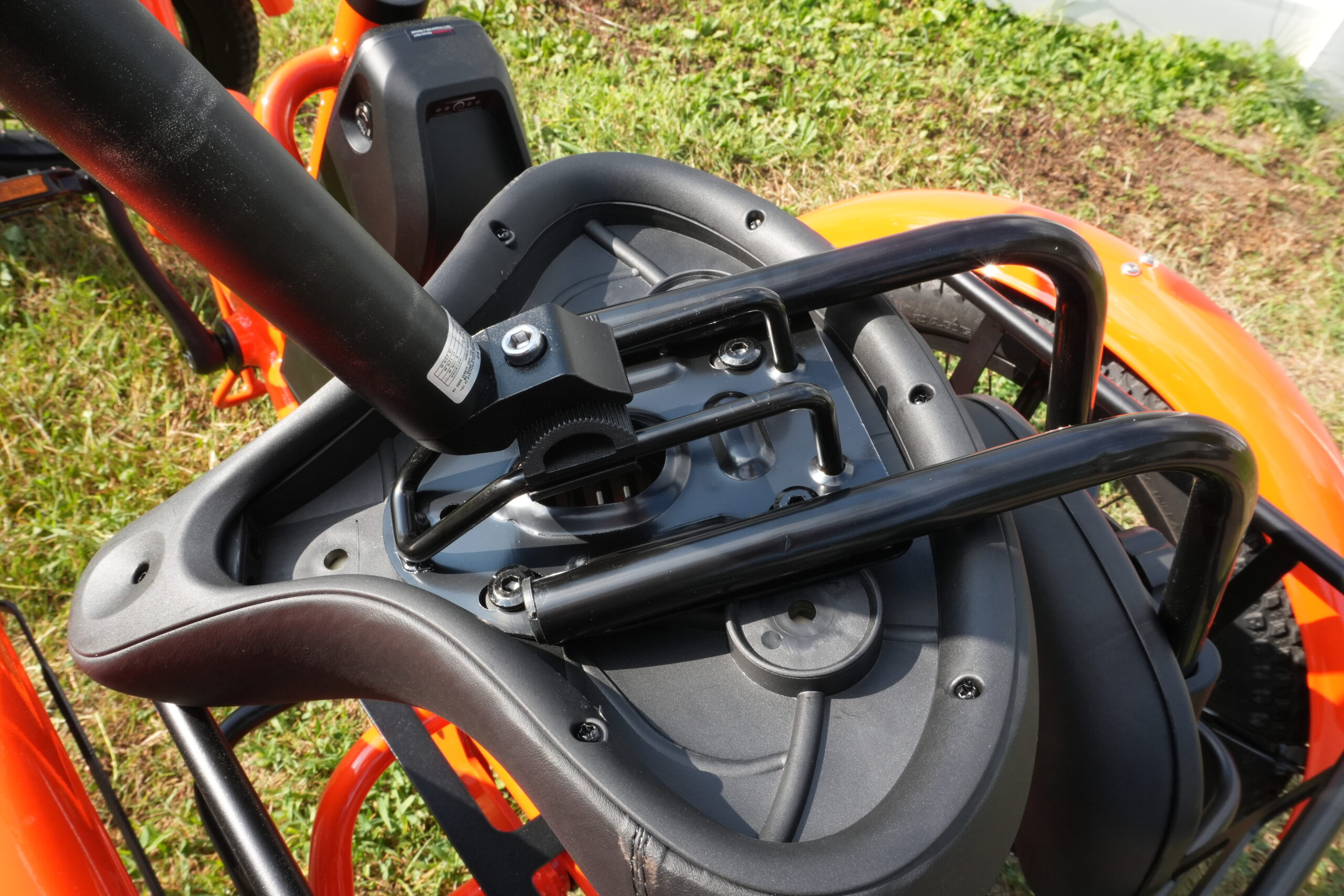
Fit worked across a range of heights. Our 6-foot rider with a 33-inch inseam got full leg extension with the seat post near its highest setting, so the 6-foot-3 upper limit looks accurate. Our 5-foot-4 rider also fit, with room to lower the seat further and the handlebars near their lowest. One limitation came up for both riders. Even with the saddle slid back, both of us wanted to sit farther back than the backrest allowed. The trike comes in one frame and one size, with a 16-inch standover and no step-thru option. It’s heavy, around 90 lb before accessories, so moving it or loading it into a vehicle is a two-person job.
| Category | Mooncool TK2 |
|---|---|
| Total Weight w/ Battery | 90 lbs (without accessories) |
| Payload Capacity | 450 lbs |
| Rider Height Range | 5'~6'3" |
| Standover Height | 16" |
| Total Width | 29" |
| Folded Dimensions | 39.4" × 30.3" × 29.5" |
Folding and Transport
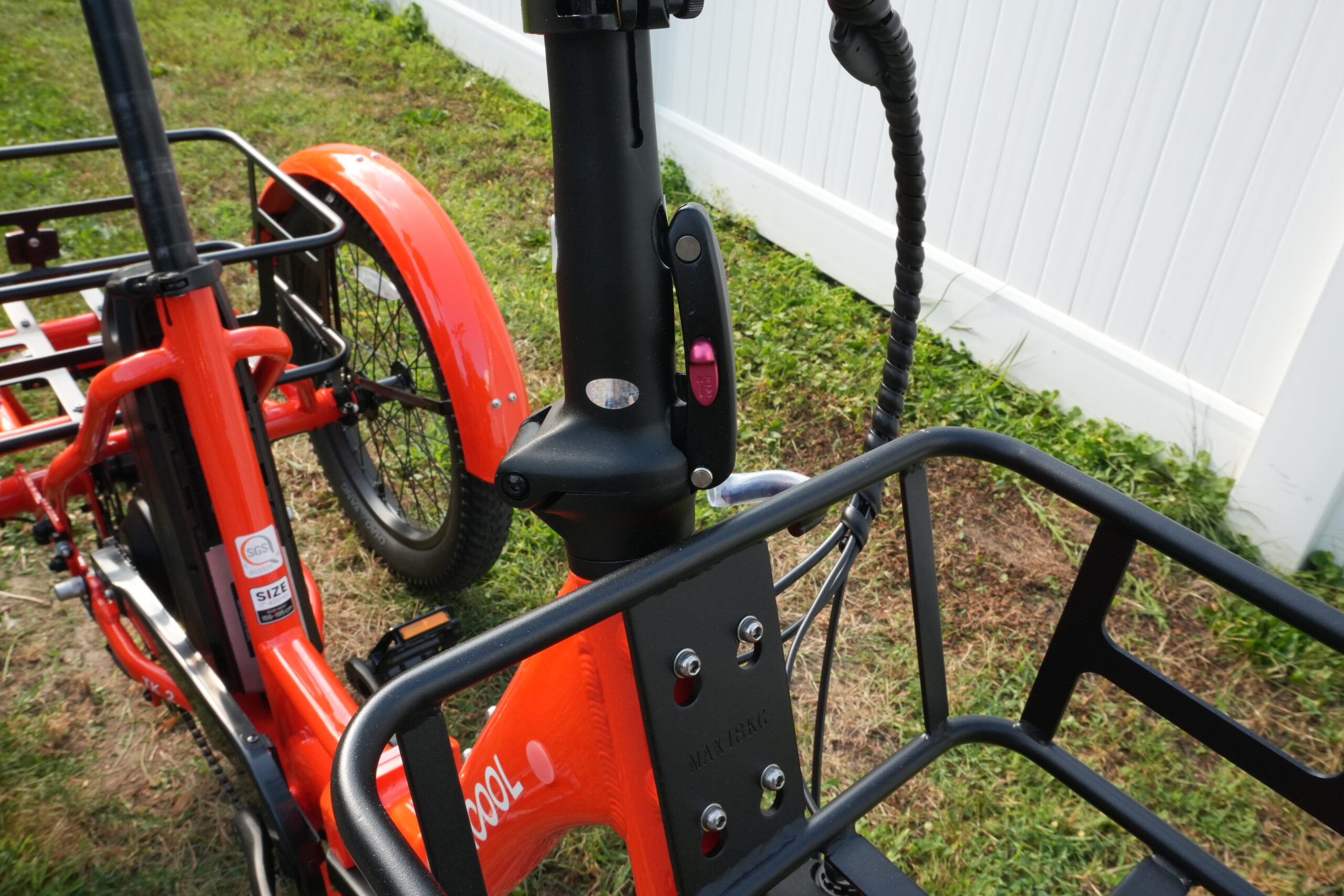
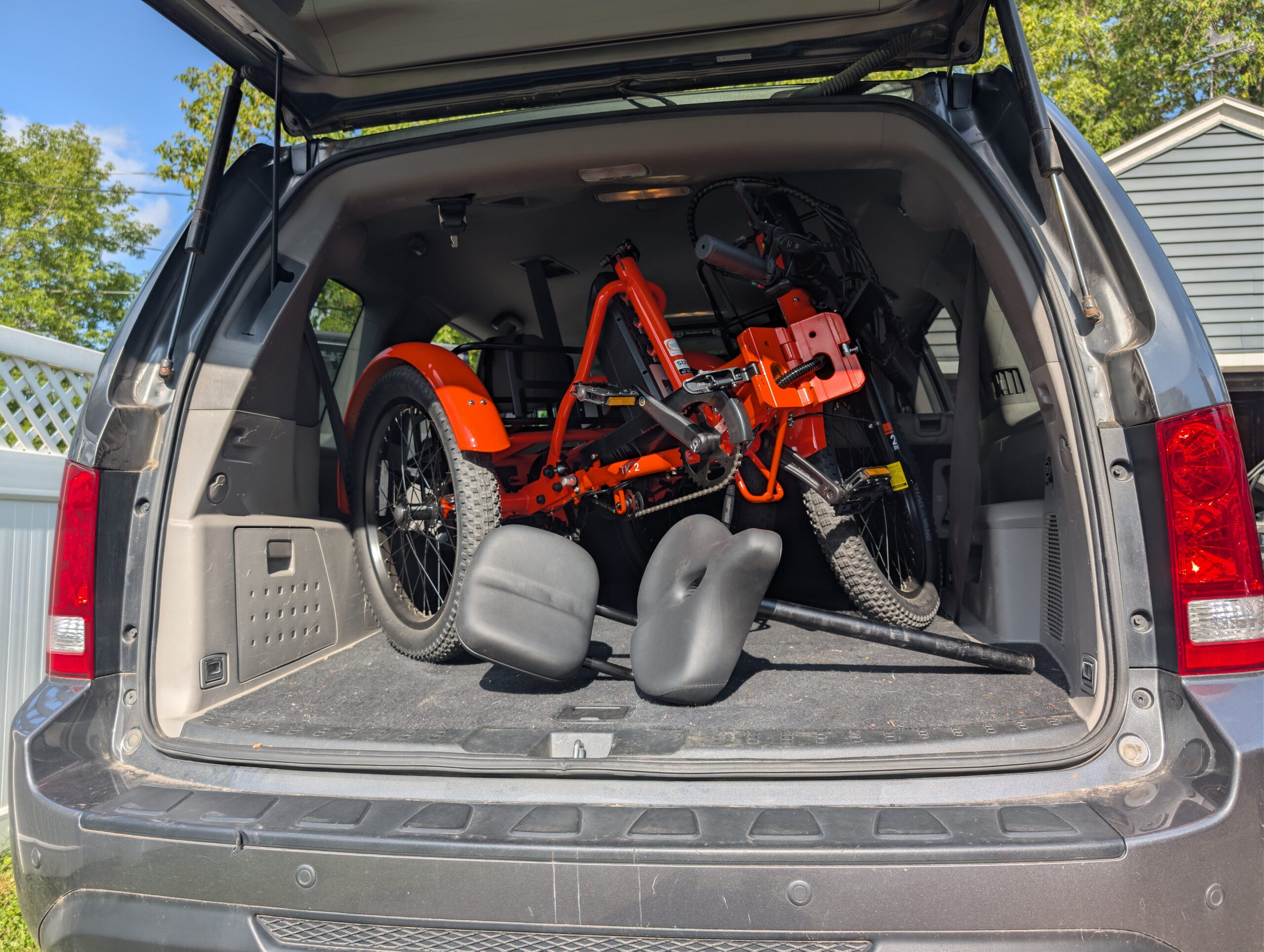
Folding starts with dropping the seat, then the handlebars. Lifting the red release and pulling the latch folds the bars down to the side, and lining a pedal up with the drivetrain before you release the frame latch makes the next step easier. From there the front wheel walks around to the side. The front basket keeps the trike from folding fully and resting on the metal stand, so folding fully requires removing it. A quick release lets you pull the front wheel to save more space, but doing that takes the rotor out of the hydraulic caliper, so you have to avoid squeezing the brake lever while the wheel is off. We were able to load it into the back of a Honda Pilot with the front wheel and front basket installed while keeping the second row seating available, so a vehicle around that size should let you skip that step entirely.
Mooncool TK2 Full Specifications
Every confirmed spec is in the table below, checked against Mooncool’s listing and what we saw on the trike.
| Component | Mooncool TK2 |
|---|---|
| Price | $1,499 |
| Type | Delta-style folding electric trike |
| Class | Class 2 |
| Weight Capacity | 450 lbs |
| Top Speed | 15.5 mph advertised (about 15 mph observed) |
| Motor | 500W Mooncool rear hub motor (1,092W peak) |
| Torque | 65 Nm |
| Battery | 48V 15Ah (720Wh) removable, tested by SGS to UL 2271 |
| Claimed Range | 35 to 60 miles |
| Charger | 2A (7 to 9 hours) |
| Display | 3.5-inch color TFT with integrated controls |
| Sensor | Cadence (24-signal) |
| Throttle | Half-grip twist throttle |
| UL Certifications | UL 2849 (trike electronics), UL 2271 (battery), tested by SGS |
| Water/Dust Resistance | IPX5 |
| Chainring | 36T |
| Cassette | 18T freewheel |
| Levers | Hydraulic with motor cutoff and ratcheting parking brake |
| Rotors | 180mm front and rear (one rear rotor with heat shield) |
| Frame | Folding alloy delta frame with rear differential |
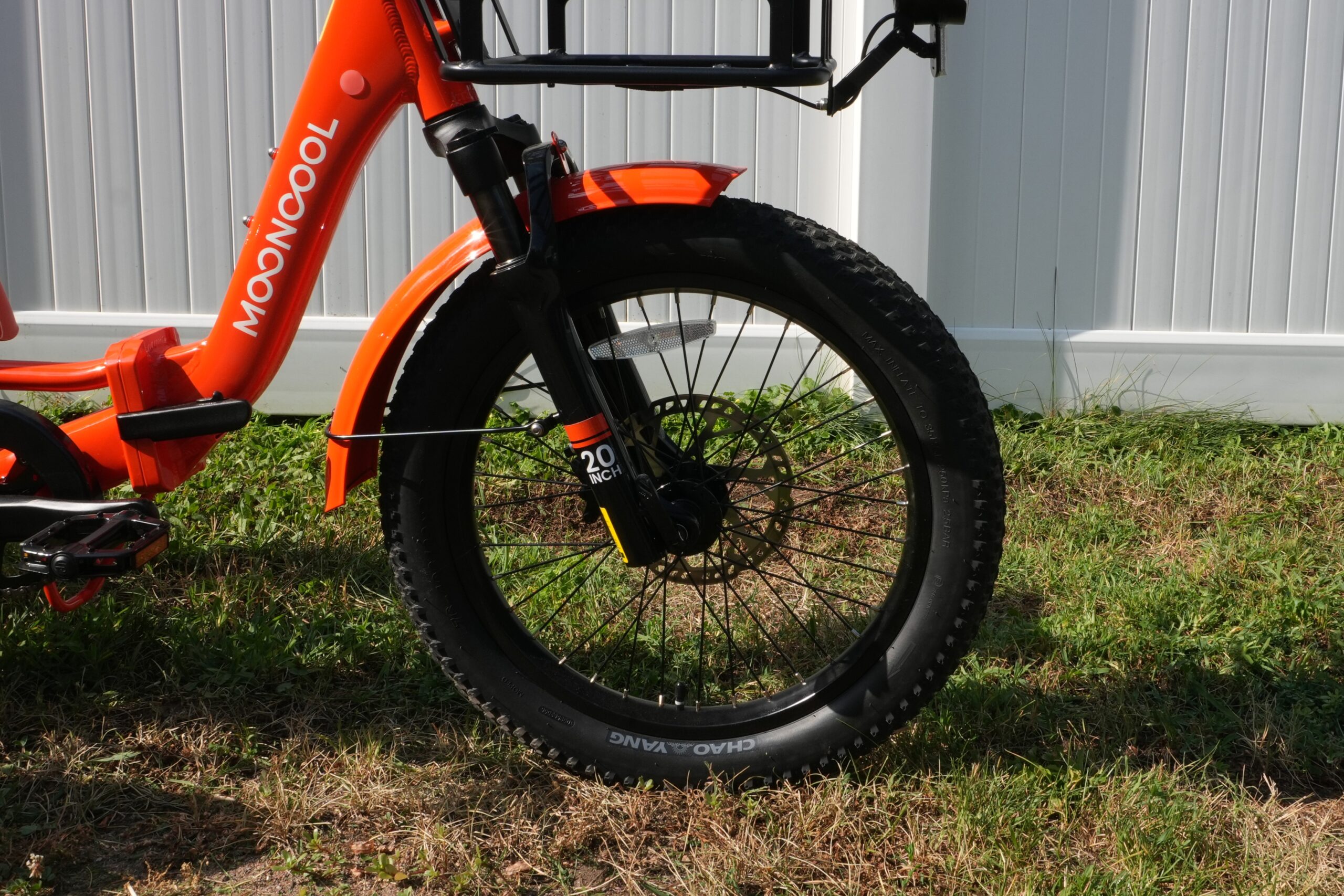
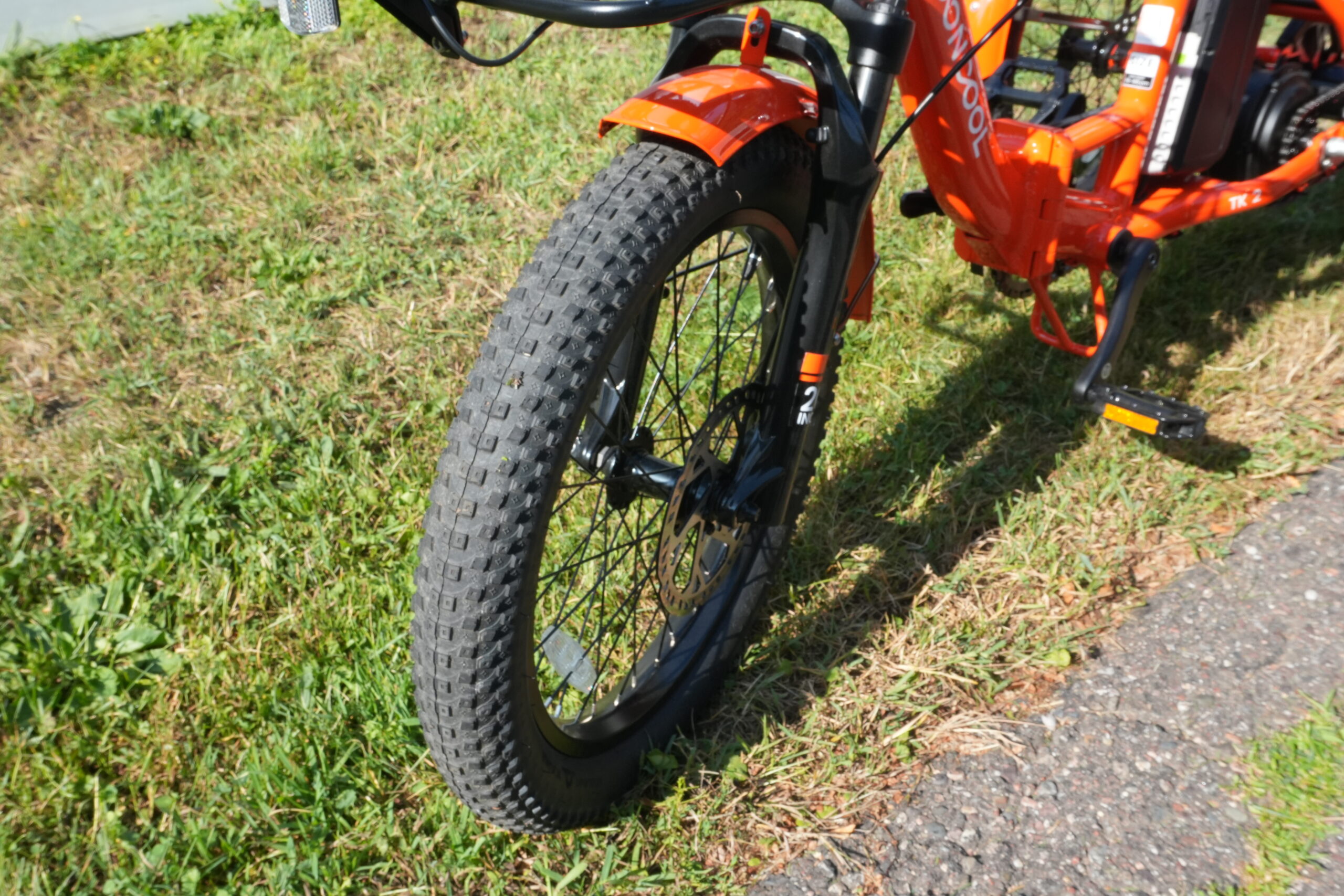
| Fork | Alloy suspension fork, 40mm travel, preload adjust and lockout |
| Axle | Front quick release |
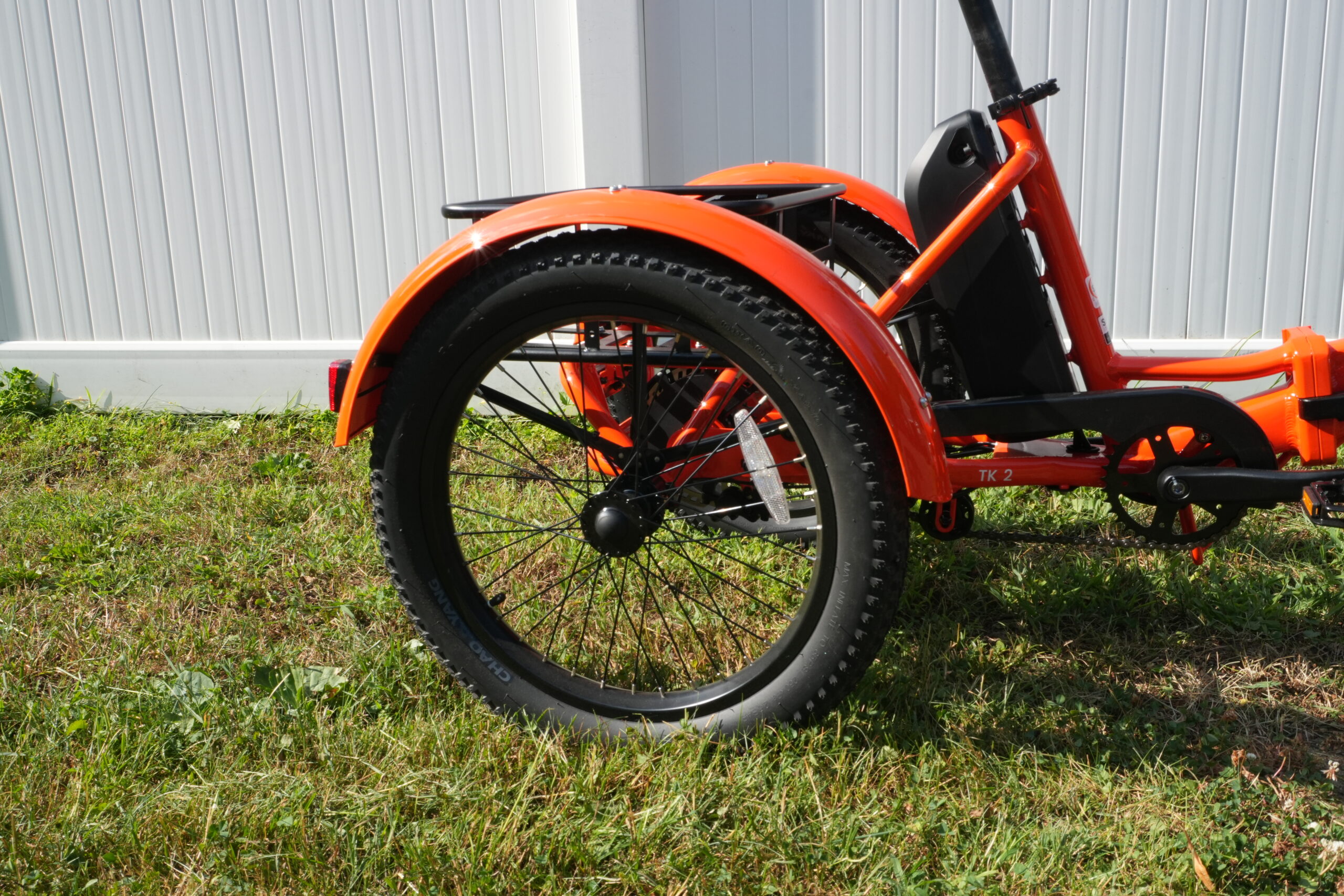
| Tires | Chaoyang 20 x 3.0 inch (all three) |
| Handlebars | Alloy with telescoping height adjustment |
| Grips | Rubber (half grip on throttle side) |
| Stem | Forged alloy, folding |
| Saddle | Wide comfort saddle with adjustable backrest |
| Pedals | Alloy platform |
| Fenders | Full coverage, paint-matched, with integrated running lights |
| Brakes | STARUNION 2-piston hydraulic disc |
Real-World Performance Testing | Mooncool TK2
We rode about 15 miles on pavement for this testing, with a 200 lb rider and a full charge to start.
Speed Based Pedal Assist Levels
Each of the five assist levels is tied to a speed rather than a power output. Whatever level you’re in sets how fast the trike will go, and the throttle and the pedal assist both top out at that same speed. Eco holds around 7 mph, Tour around 9 mph, Sport around 11 mph, Sport Plus around 12 to 13 mph, and Turbo opens up the full 15 mph. Since the caps are shared, picking a level comes down to choosing your speed, whether you’re on the throttle or pedaling.
The display menu also has a max assist setting that limits the trike to three assist levels and a 12 mph top speed. Unlocking it restores all five levels and the full 15 mph, so a trike shared between riders can be set to match whoever is on it.
Throttle-Only Acceleration
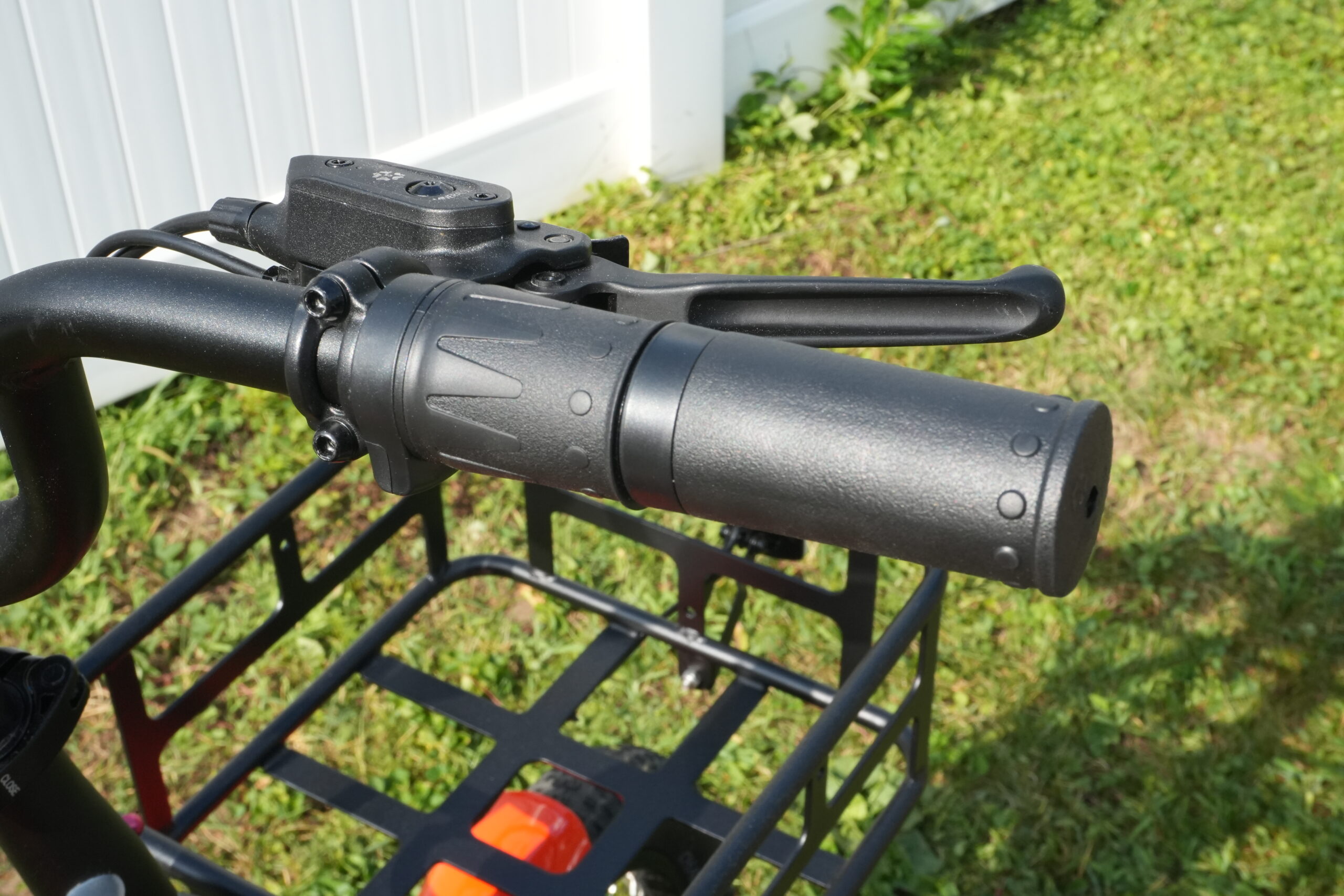
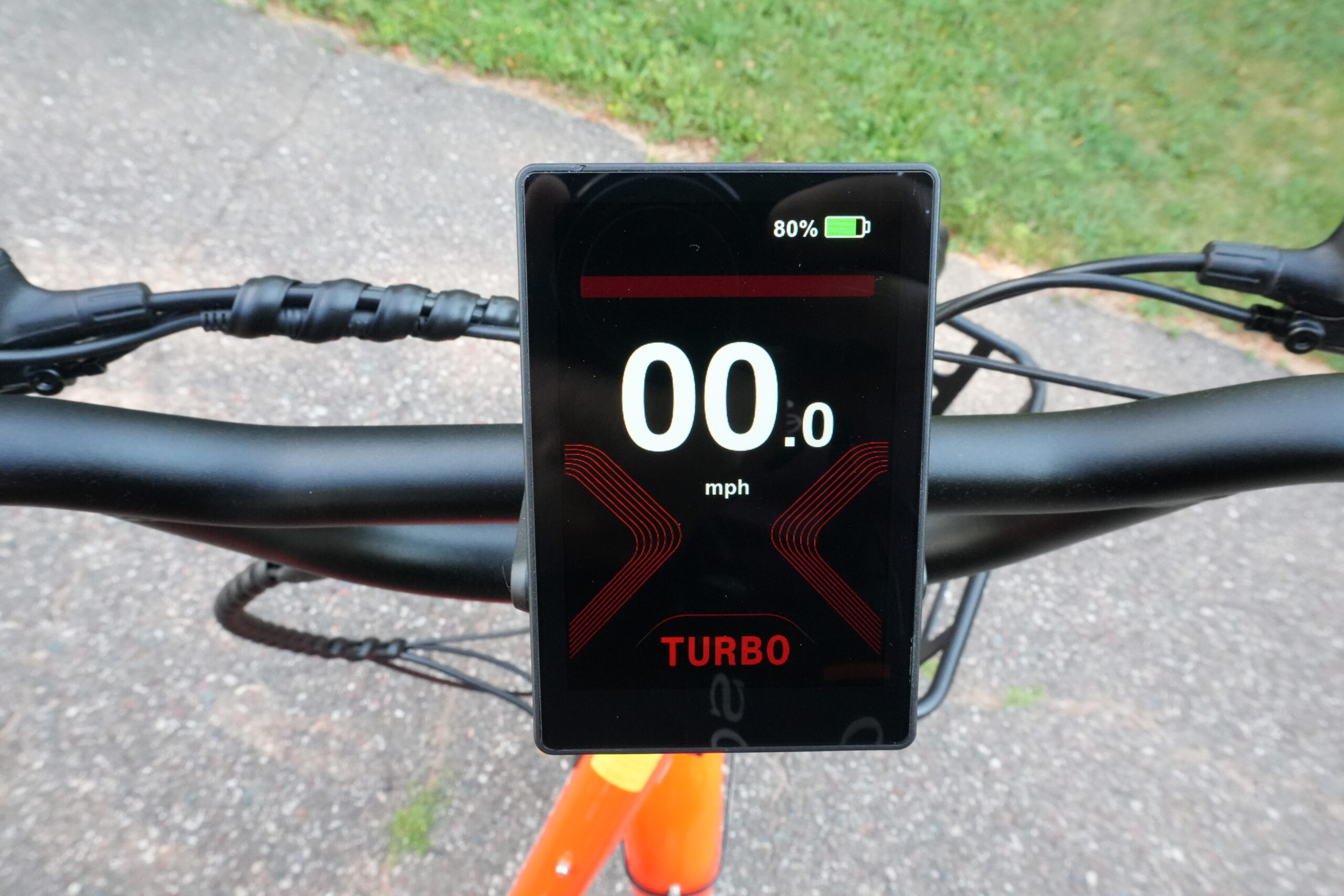
On throttle alone, acceleration starts off slow. It picks up once you cross 5 mph, then tapers again past 12 to 13 mph, so reaching the full 15 mph on motor power alone takes a good stretch of runway to let it build. Once you’re at that speed, it holds you there without dropping off.
Pedal Assist
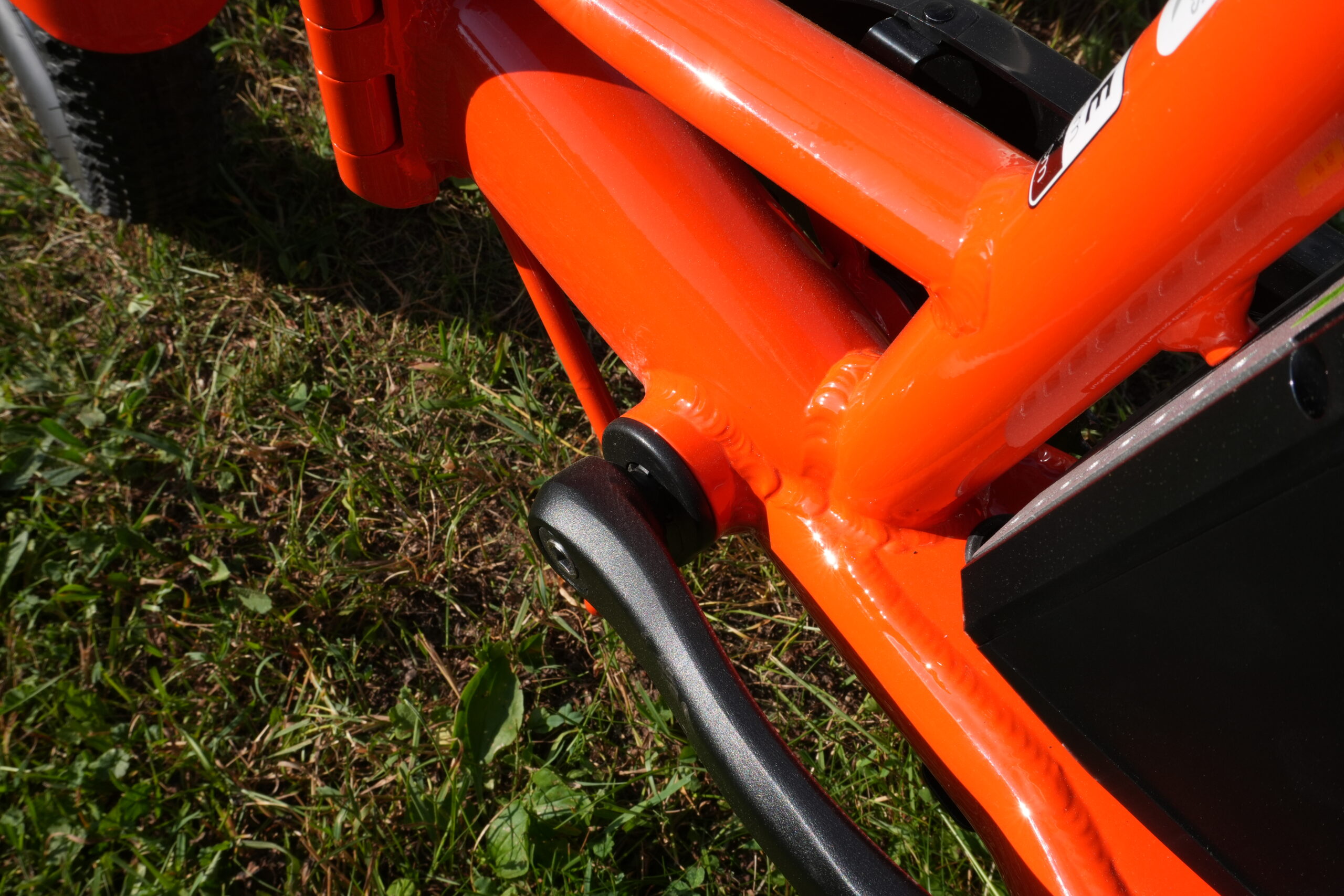
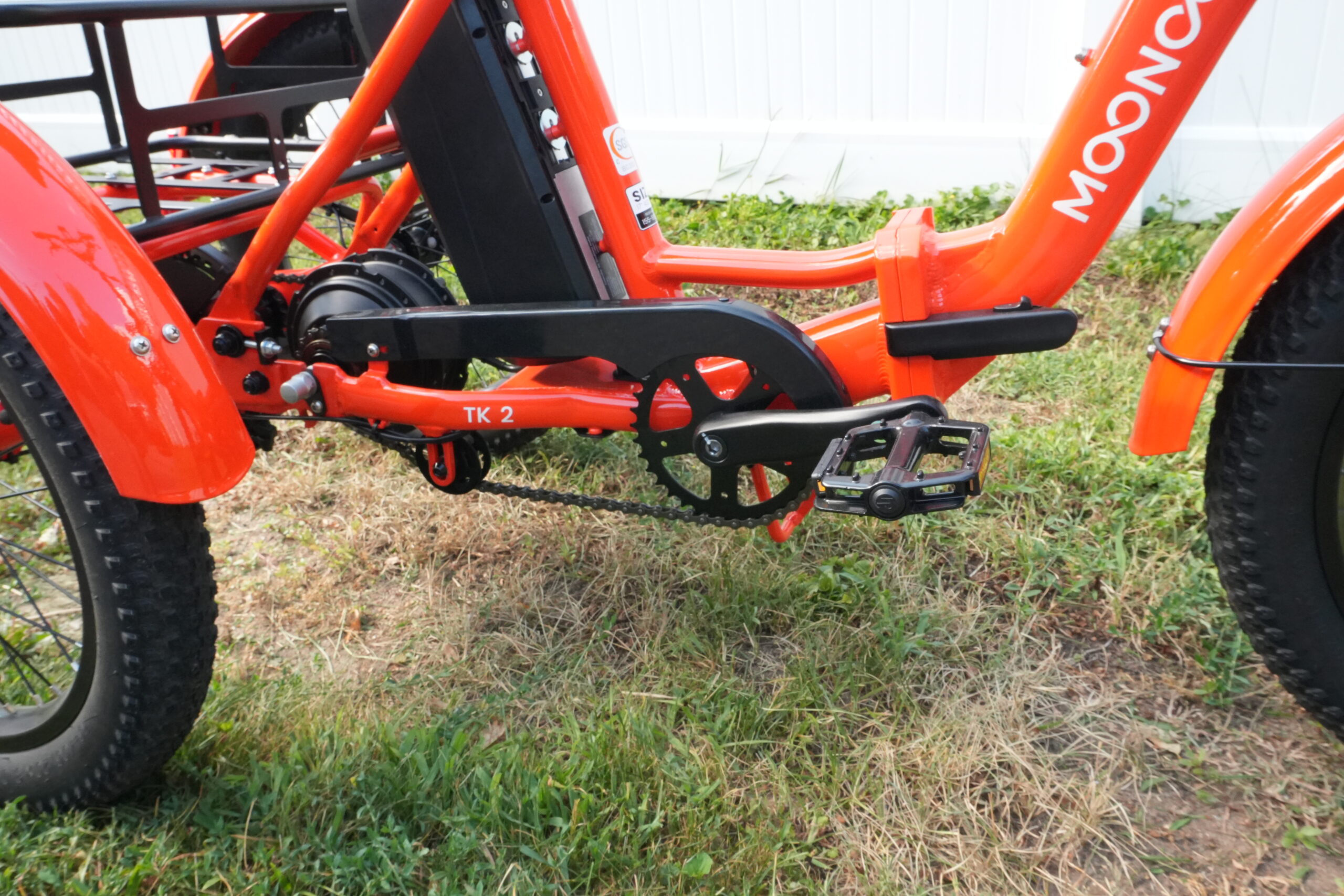
Power on the pedals comes through a cadence sensor and a single-speed drivetrain. A cadence sensor reads whether you’re pedaling, not how hard, and then delivers power based on the assist level. With each level capped to a speed, pushing harder will not add power or get you there any faster.
Because it’s a single speed, your legs spin faster the closer you get to top speed. Comfortable pedaling sits in the 8 to 12 mph range, and above that most riders will use the throttle to reach top speed rather than keep pedaling.
Hill Climb
We ran the hill on throttle alone with a 200 lb rider. On the steepest section the speed dropped to about 8.5 mph and the motor maxed out, pulling close to 900 watts. From there it picked back up to 9.5 mph as the grade eased, rather than losing steam. There was some motor noise but no real whine.
Climbing under pedal assist told the same story. Even in the lowest level, the motor held its capped speed up the grade whether we pedaled hard or barely turned the cranks, so the climb came down to the assist level rather than effort.
Ride Feel and Stability
The trike stayed steady and predictable through our testing, including hopping up onto sidewalks, and the rear differential lets it make tight turns while keeping both rear wheels tracking. Above about 11 mph it feels less settled unless you’re going straight, since it doesn’t lean into turns. The riding position is upright and comfortable, though our taller rider was at the top of the handlebar adjustment and would have liked to go higher. The suspension fork has 40mm of travel but is stiff. We couldn’t bottom it out even with the preload backed all the way off and full weight on the front, so it takes the edge off bumps without much give.
Braking
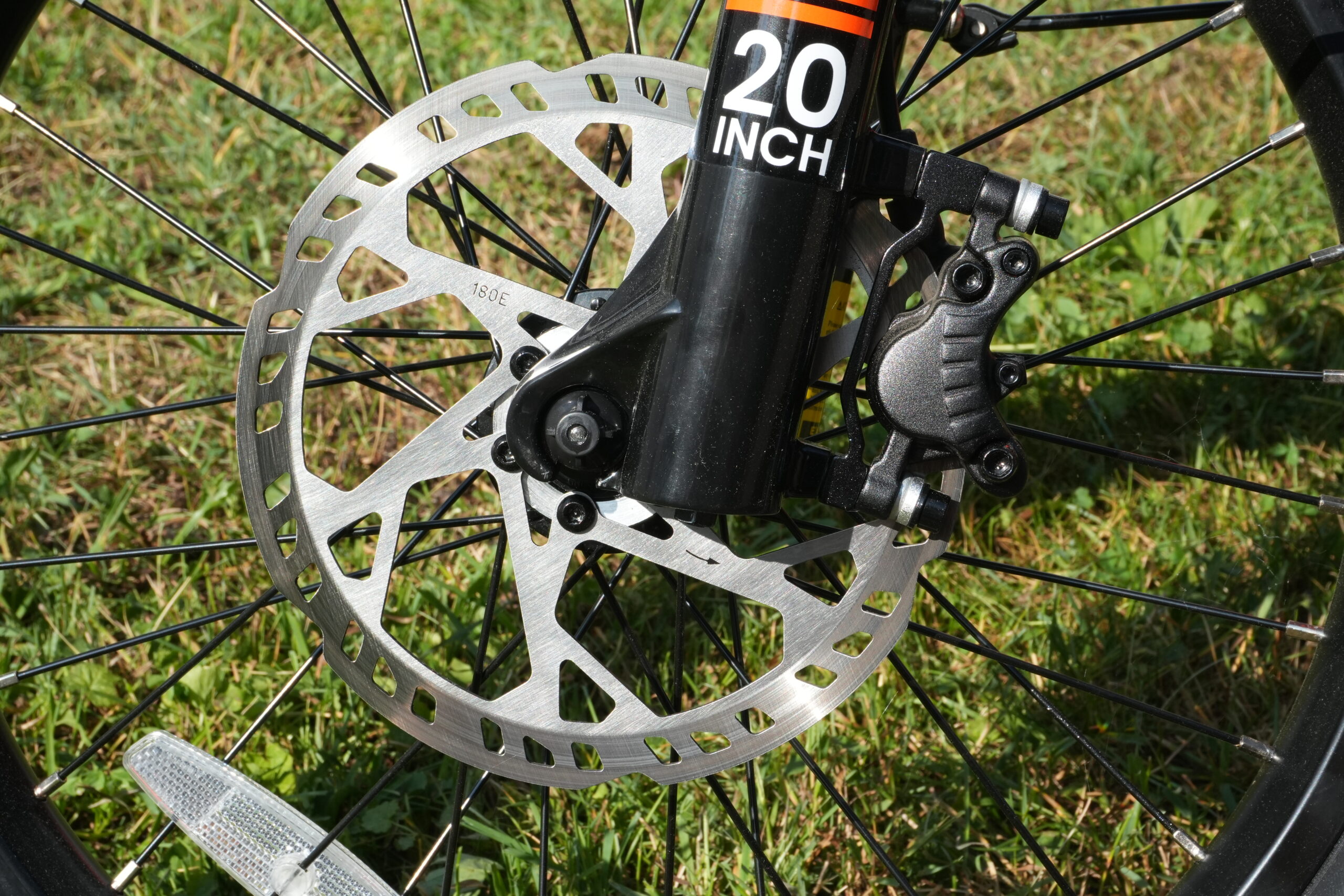
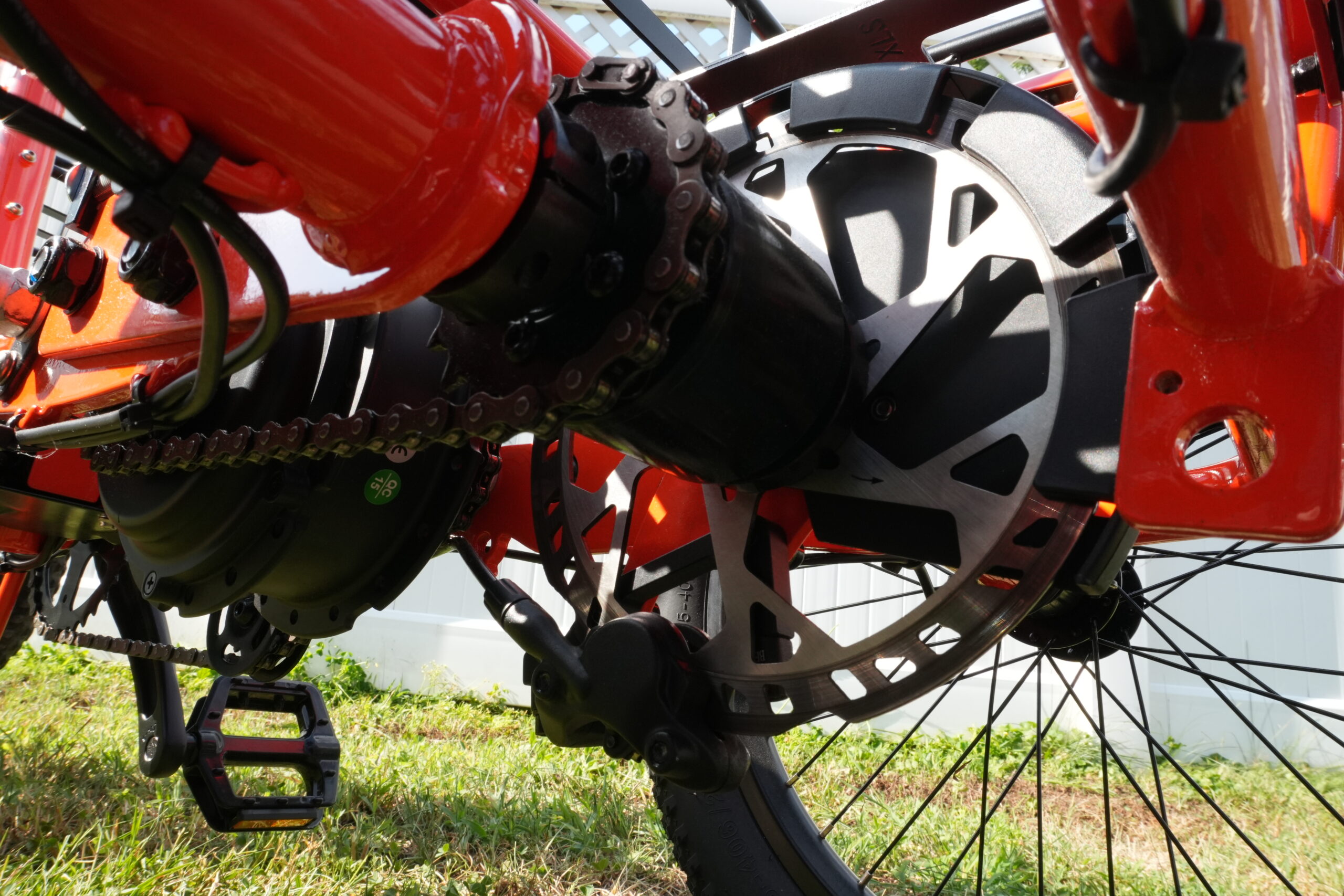
Stopping comes from 2-piston hydraulic disc brakes. From around 15 mph riding down our test hill, they brought the trike to a stop quickly, with good control at the lever. The front and rear use the same brakes and 180mm rotors, with one rear rotor handling both rear wheels behind a heat shield. The levers also include a parking brake to hold the trike in place while loading.
Mooncool TK2 vs Lectric XP Trike 2
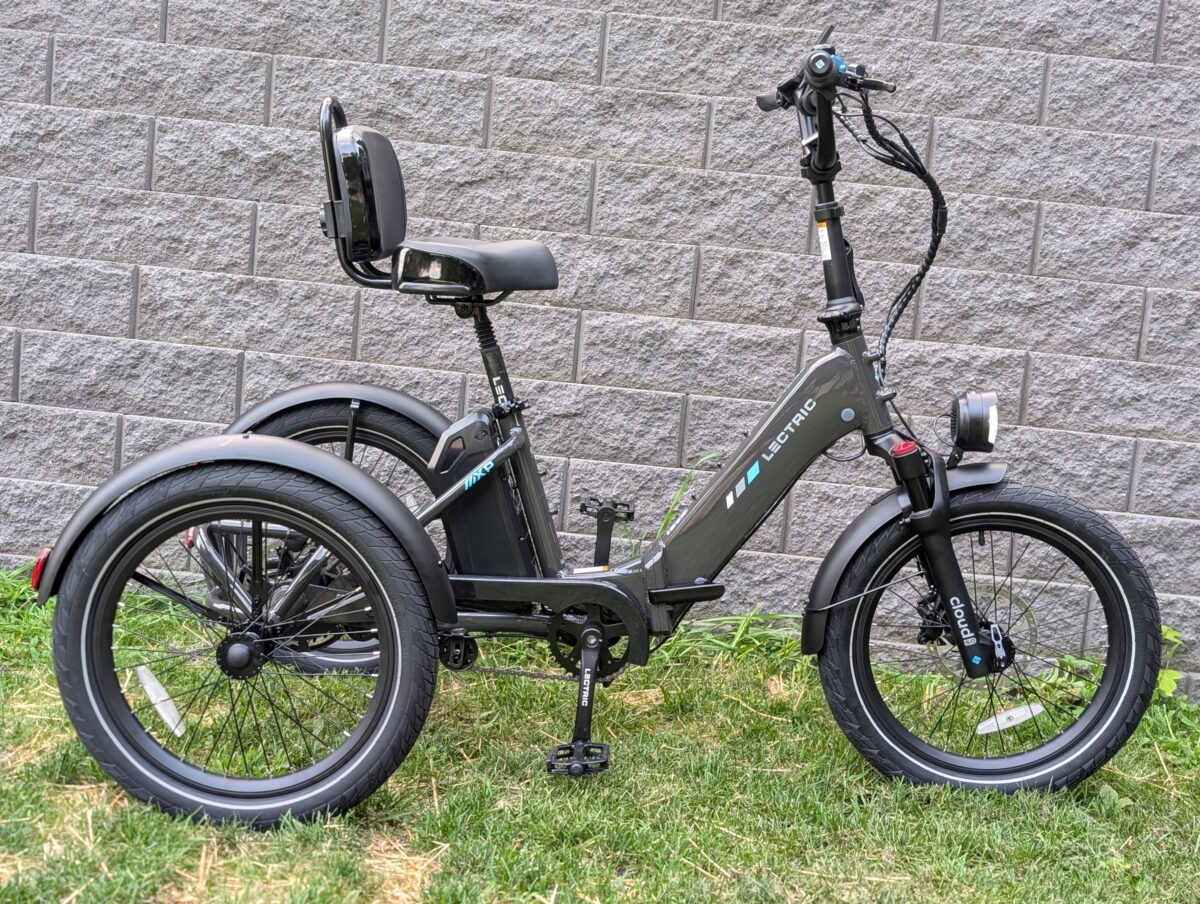
At $1,499, the closest comparison to the TK2 is the Lectric XP Trike 2, which is the same price. The two share a lot of the same hardware, including a 500W rear hub, single-speed drivetrain, cadence sensor, rear differential, and 2-piston hydraulic brakes. The TK2 comes with a larger battery, both front and rear baskets, six color options, and the reverse function, which the XP Trike 2 doesn’t have.
Lectric answers with a longer-travel suspension fork and an included suspension seat post, and a lower 13.5-inch standover that’s easier to step over. Lectric also offers a step-up version with a 750W motor and a 17.5 Ah battery for more power and range. Which one fits comes down to priorities, either the TK2’s reverse, larger battery, and included accessories, or the Lectric’s more comfortable ride and lower standover. Our Lectric XP Trike 2 review covers it in full.
For more options, see our best electric trikes roundup.
Mooncool TK2 Pros and Cons
Final Thoughts on the Mooncool TK2
Across our testing, the TK2 largely impressed us. The motor pulled harder than its rating suggested and never struggled on our test hill, the battery covers the range most casual riding calls for, and the build holds up from the brakes to the frame. The seat is the one piece we would change, since the backrest only moves up and down and there is no scooting back to a comfortable spot on the saddle. Riders who actually like to pedal should also know what the speed-based levels and cadence sensor ask of them, which is to spin your legs while the motor handles getting you up to speed. What you end up with is a trike that arrives fully equipped, does most of the work for you, and includes a reverse function, all without stretching the budget.
If the TK2 is the right trike for you, using our affiliate link to buy is a free way to support our testing. Ebike Escape may earn a commission on purchases made through our links.
