

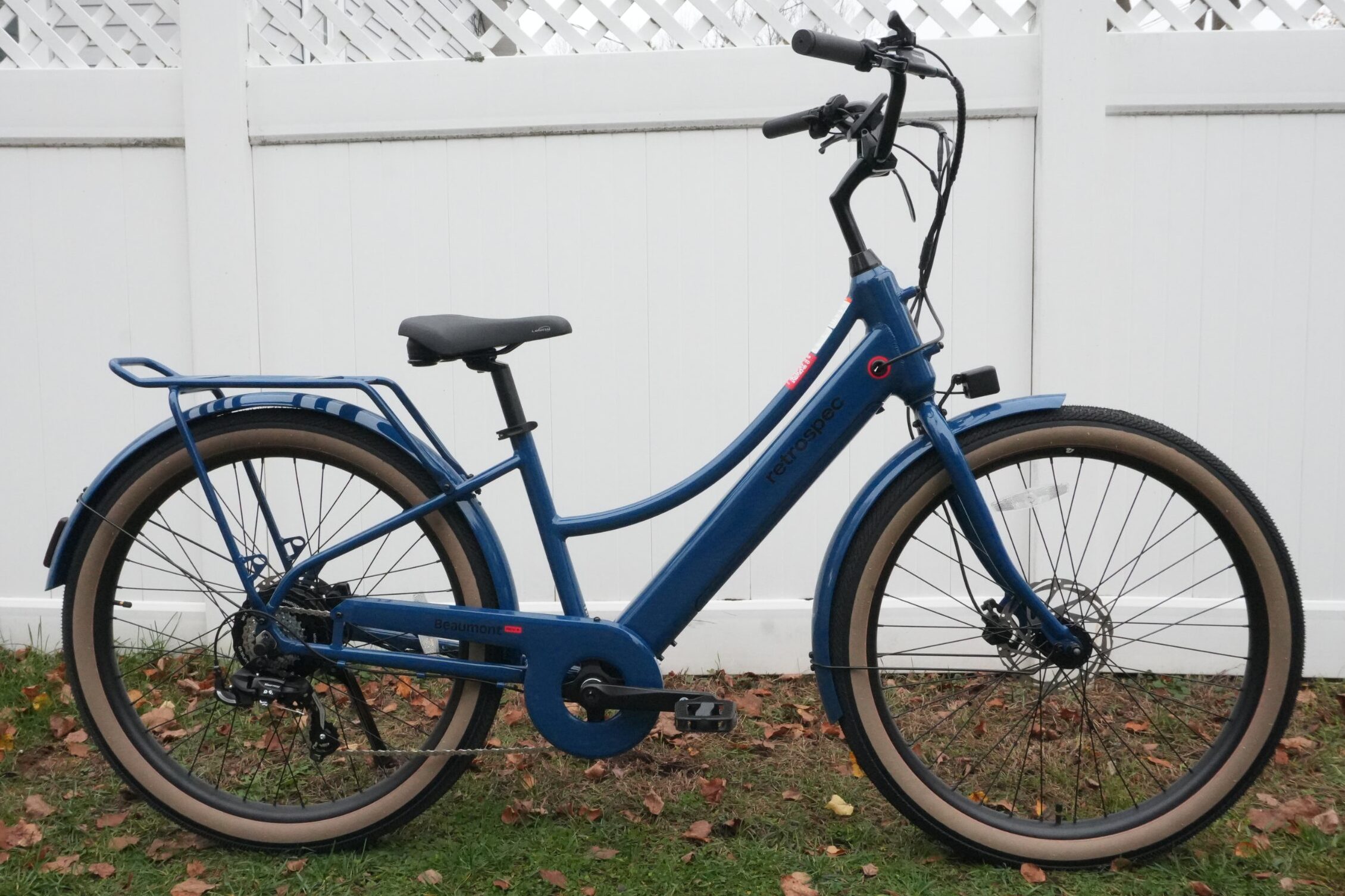
We recently reviewed the Beaumont Rev 3, Retrospec’s sub-$1,000 cruiser that captures the classic cruiser look and comfort. Despite its smaller motor and battery, its customized Ananda electrical system performed way better than we expected. The Beaumont Rev+ takes that platform and upgrades pretty much everything. It swaps in a torque sensor for a more natural pedal feel, steps up to a 48V system with a 500W rear hub motor, and integrates a larger battery into the frame for a sleeker look. It also adds hydraulic brakes and a full-color display while keeping a complete Ananda system. At a $1,599.99 list price, the question is whether those upgrades are worth spending $600 more.
Below, we break down the upgrades that matter most, what to expect from the fit and options, and what our real-world testing on pavement, gravel, and our test hill showed about its throttle, torque sensor tuning, and range. We finish with a side-by-side comparison against the Rev 3 to help you decide which one is the better buy.
This article contains affiliate links. If you buy through our Retrospec link, we may earn a commission at no extra cost to you.
Retrospec Beaumont Rev+ Video Review
Our video review gives you an up-close look at every component, a full walkthrough of the color display and its settings, and battery removal. From there we head out for throttle and pedal assist tests on the road, a ride over gravel and grass, throttle-only and pedal assist runs up our test hill, and a check on how much battery we used along the way.
Standout Features
Ananda Electronics and Integrated Battery
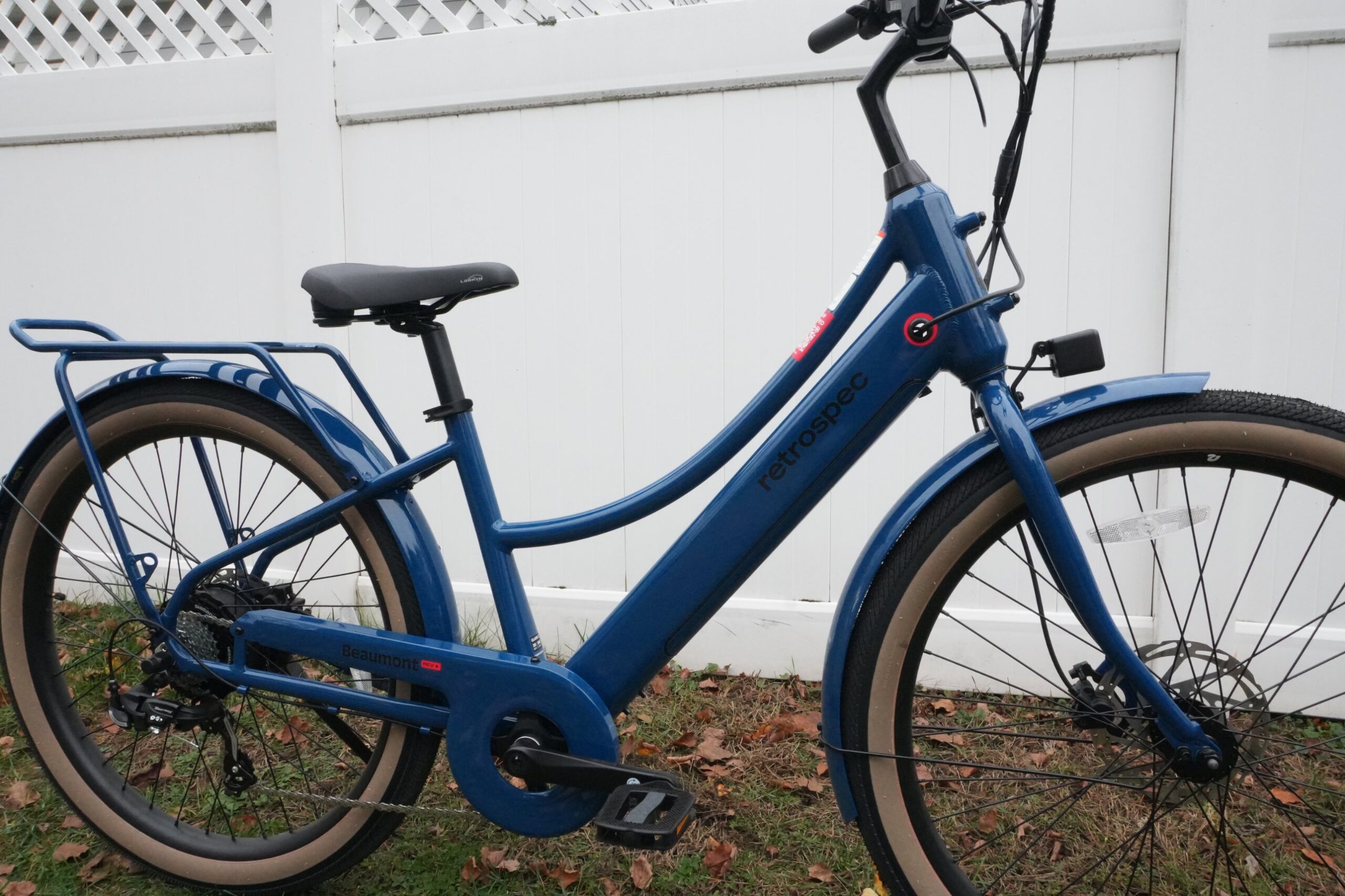
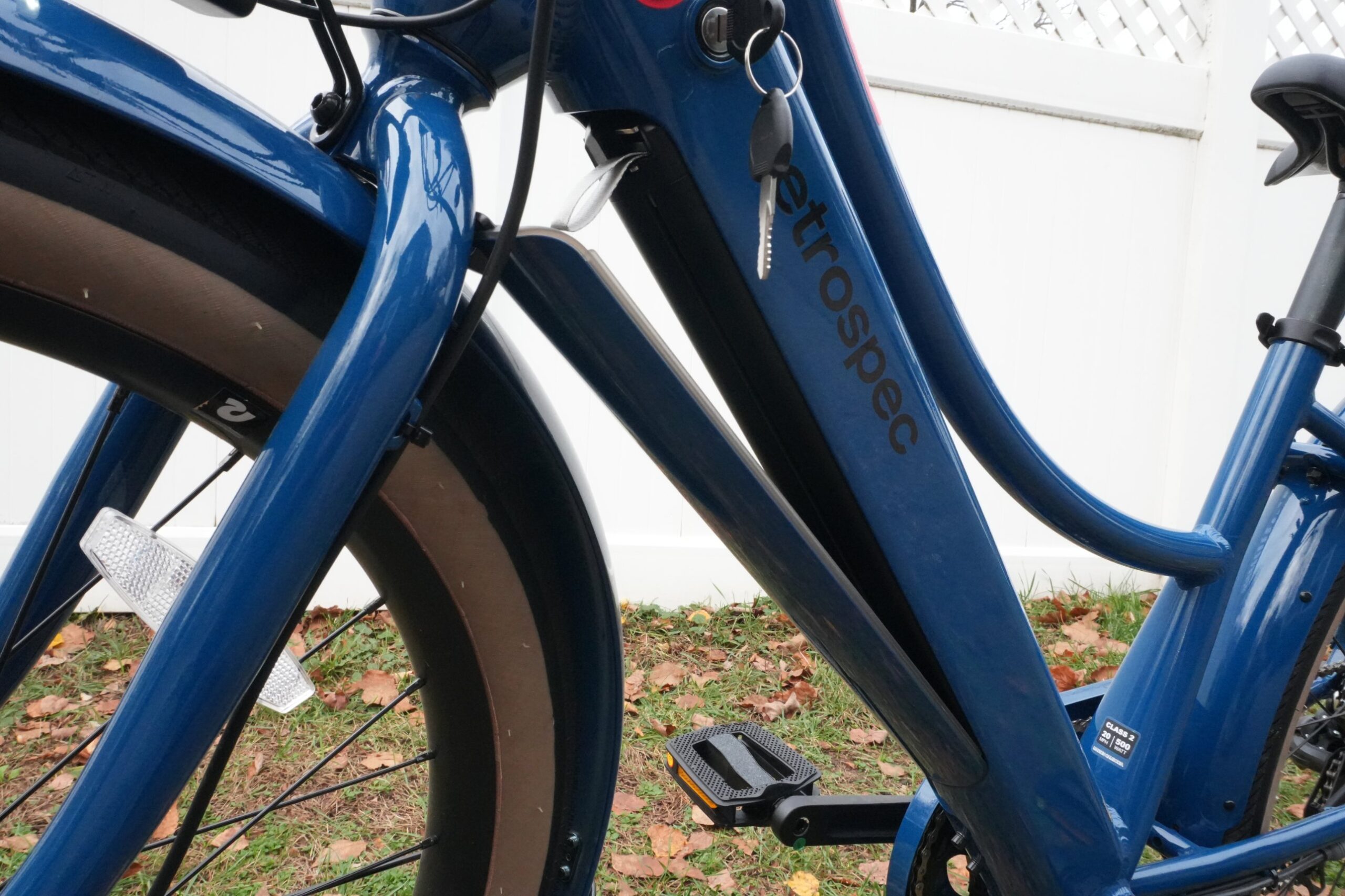
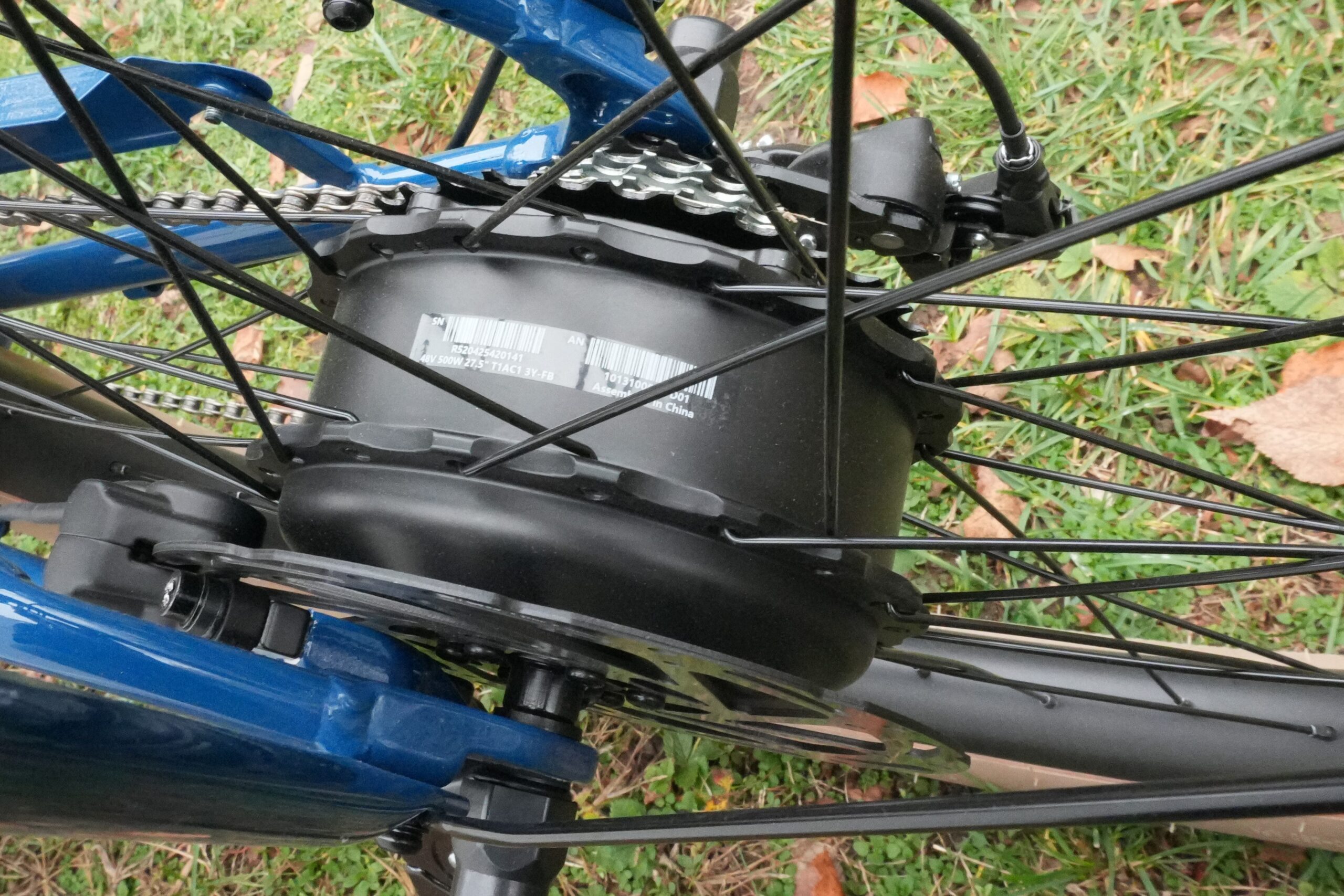
Retrospec stuck with a complete Ananda system, meaning the motor, controller, battery, and display come from one brand and are designed to work together. That was the Rev 3’s quiet strength, and it carries over here with more muscle: the Rev+ moves from 36V to 48V and pairs a 500W rear hub motor rated for 65Nm of torque with a 48V 10.5Ah battery (Retrospec lists it as 500Wh). The battery now sits inside the down tube under a paint-matched cover for a much cleaner look than the Rev 3, and it locks with a key, though you don’t need to ride with the key in. The cover comes off separately from the battery, so it’s one more piece to set aside every time you pull the battery to charge it inside. You can charge it on or off the bike, and the included 2A charger should take roughly five to six hours from empty. The battery is certified to UL 2271 and the bike’s electrical system to UL 2849. Retrospec advertises up to 75 miles of range.
Torque Sensor and Color Display
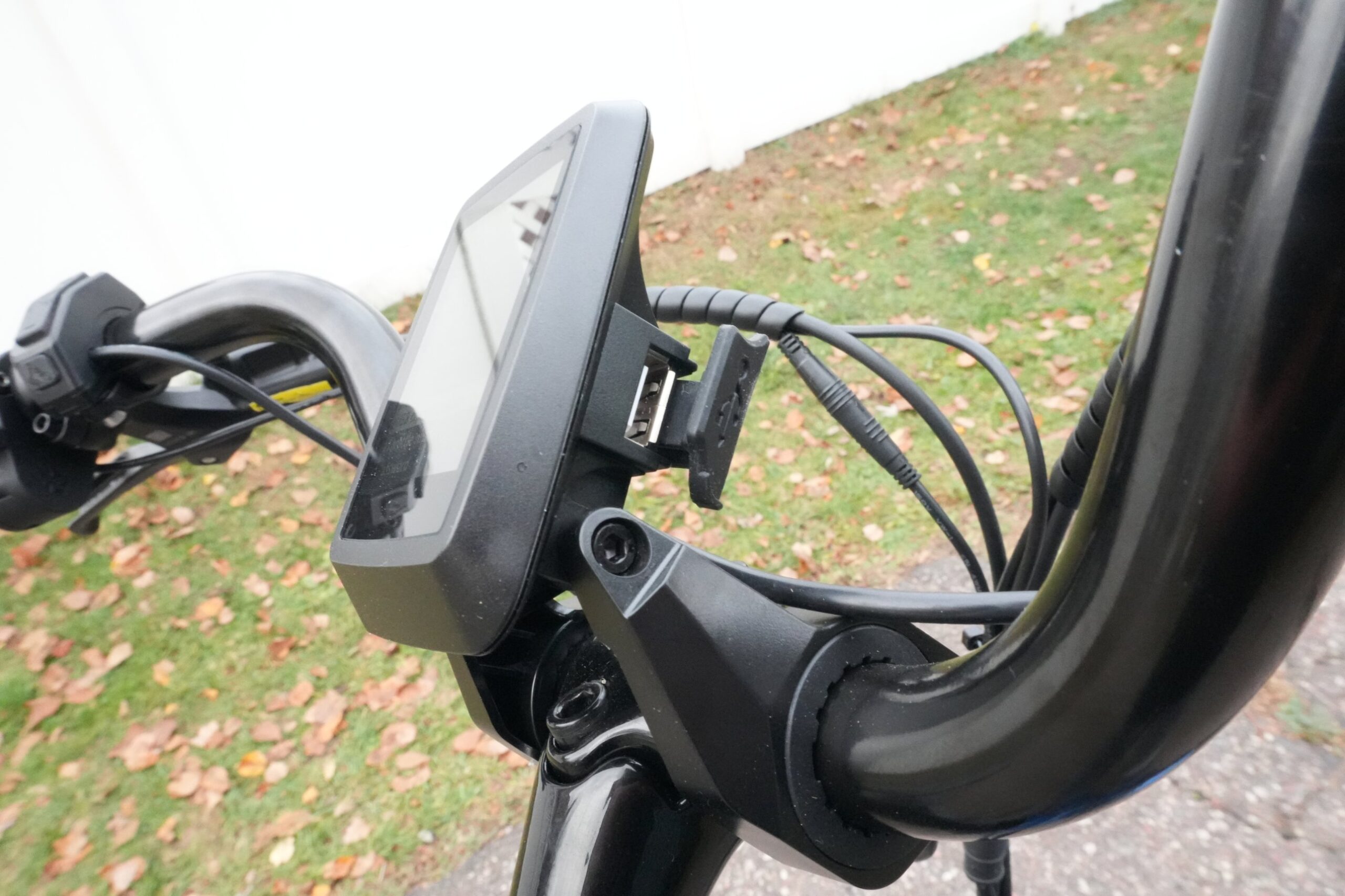
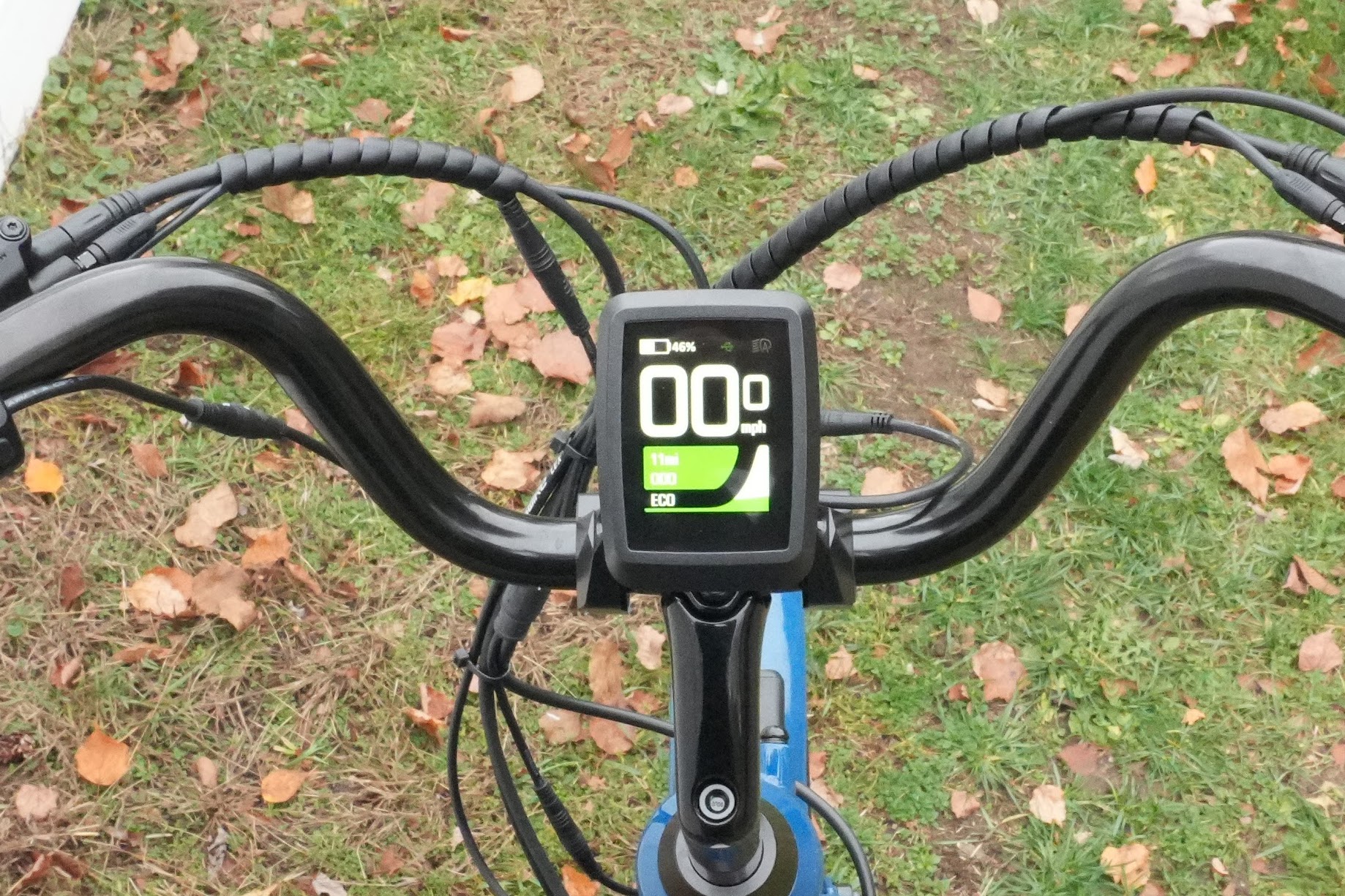
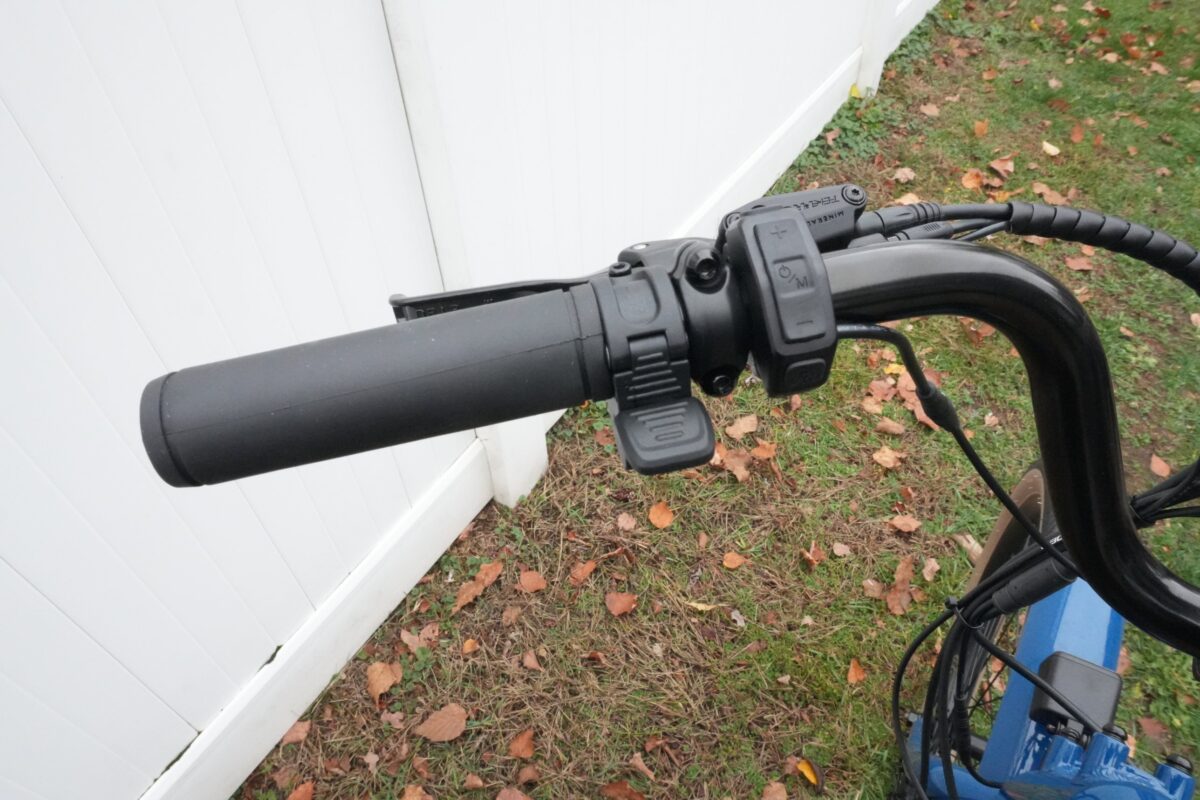
The biggest change to how this bike rides is the torque sensor. A cadence sensor like the Rev 3’s delivers a set amount of power as soon as the cranks turn, no matter how hard you push. A torque sensor measures how much pressure you put into the pedals and scales the motor’s output to match, so light pedaling gets a gentle boost and digging in gets a lot more. It feels closer to riding a regular bike, and the motor responds the instant you press down instead of waiting for the cranks to rotate. You get four assist levels (Eco, Tour, Sport, and Turbo), a walk mode, and a left-hand thumb throttle.
Those all run through a color display that’s a huge step up from the Rev 3’s LED indicator lights. You get a real speed readout, battery percentage, trip data, average and max speed, motor and rider power, and a range estimate, and you can hide any of those readouts you don’t care about. Two settings matter most for buyers. Throttle mode lets you choose between full motor power in every assist level or throttle power that scales with whichever level you’re in, which is a genuinely useful accessibility feature that not every ebike offers. You can also set three low-battery alarms at whatever percentages you like. There’s a USB-A port on the side of the display for charging a phone, and it can be switched off in the menu. What you can’t do is unlock more speed: this is a Class 2 ebike with a 20 mph ceiling on both throttle and pedal assist, and there are no settings for max speed or motor power.
Hydraulic Brakes, Lights, and Cruiser Extras
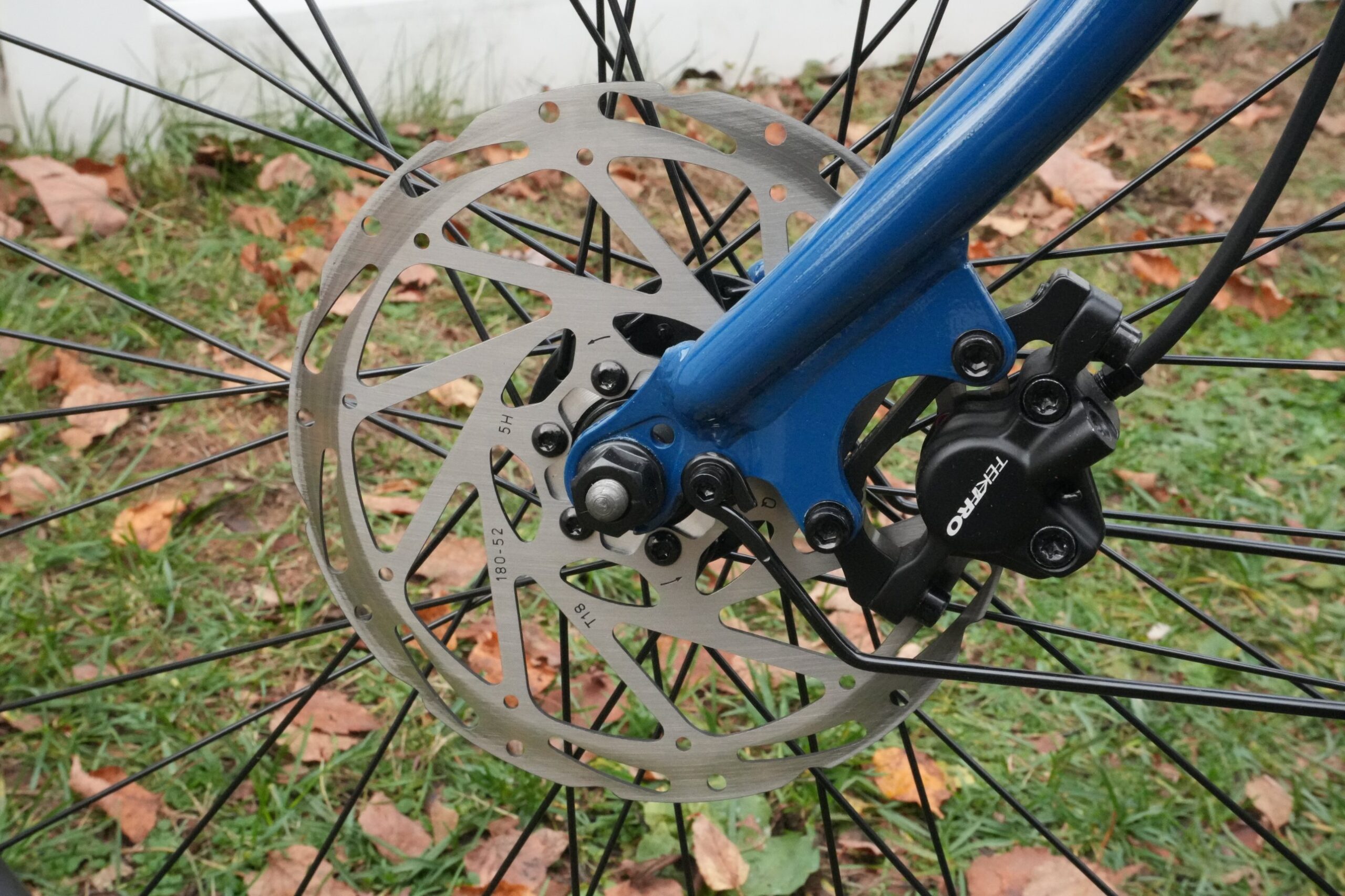
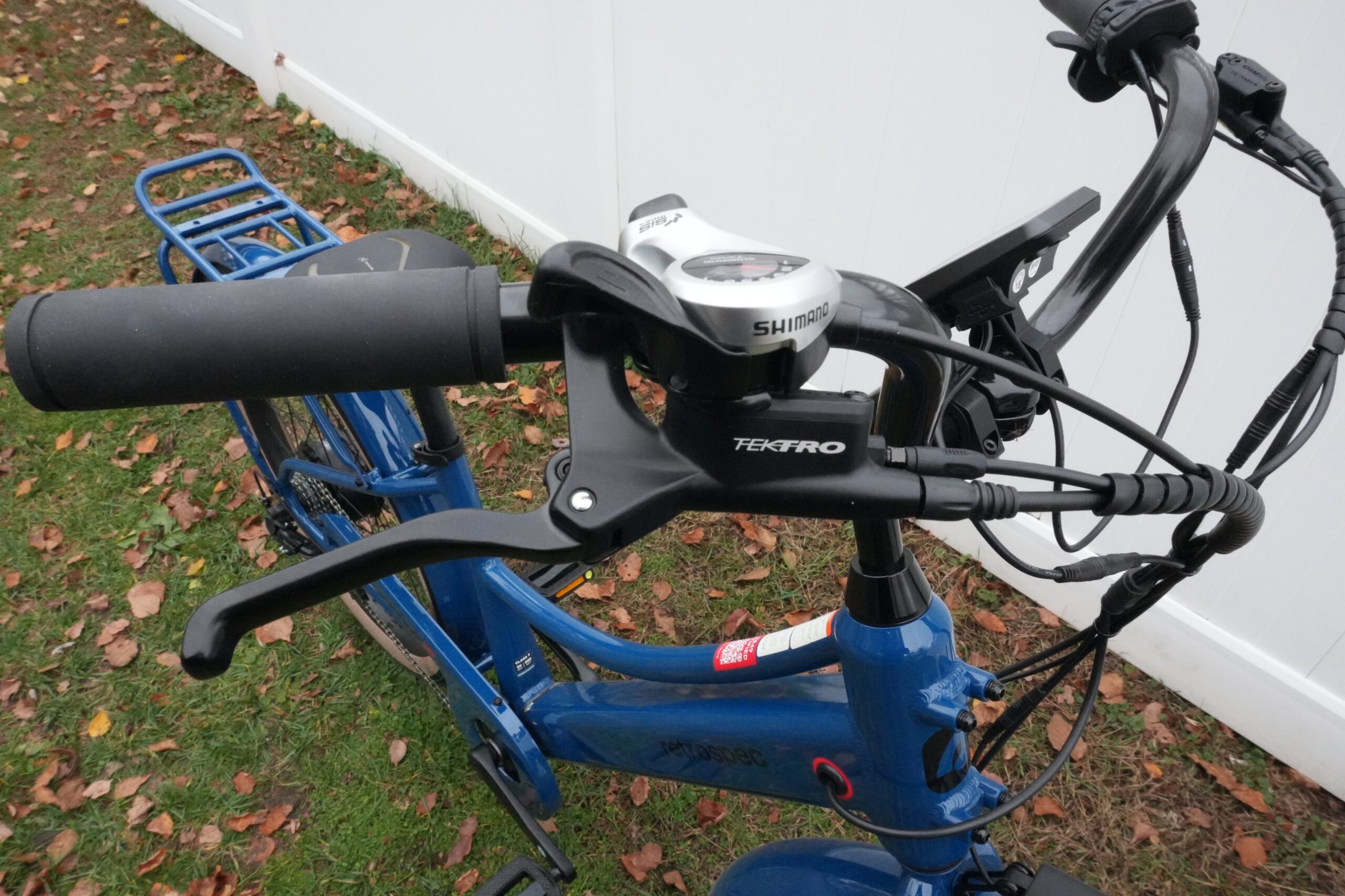
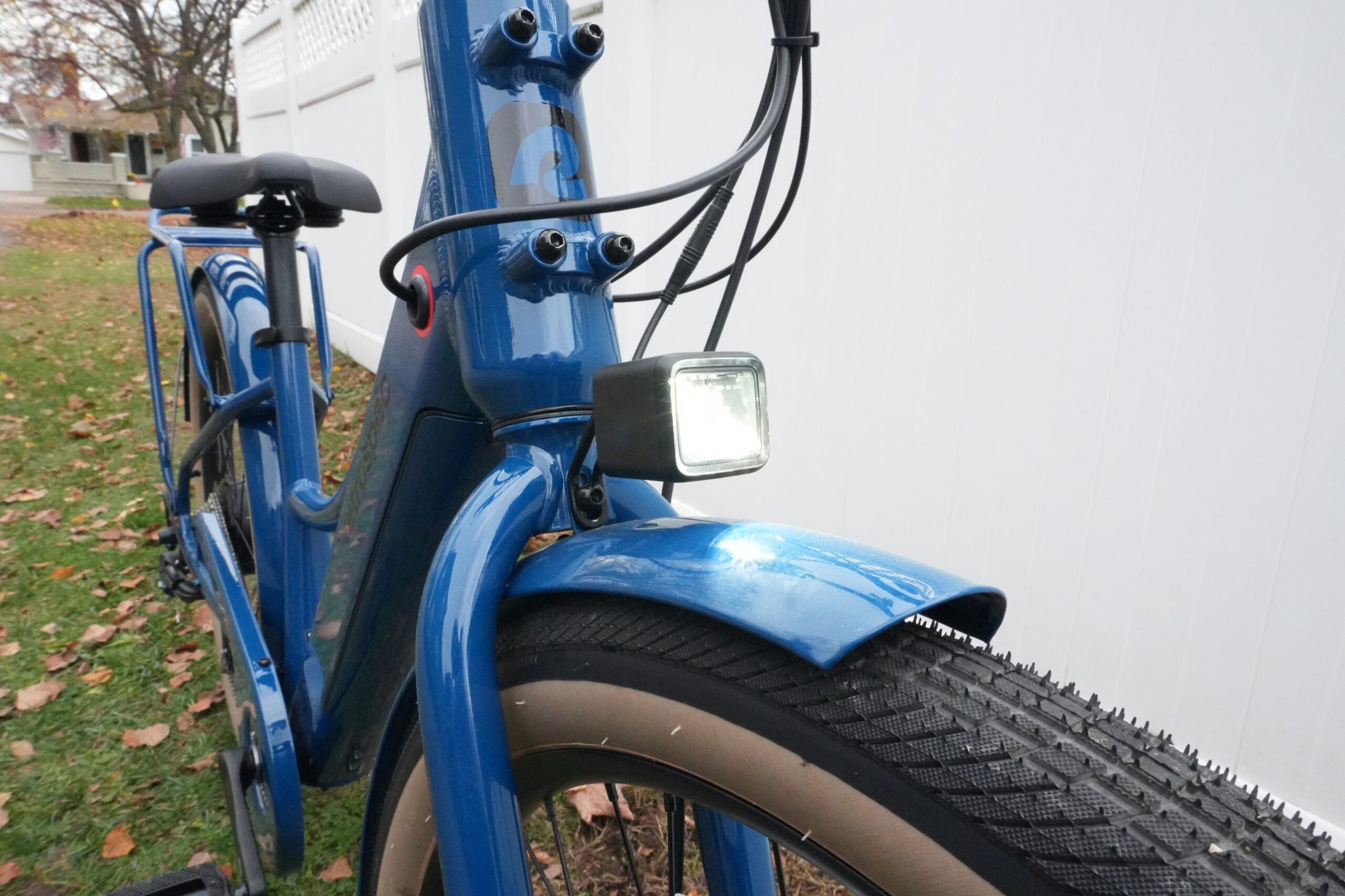
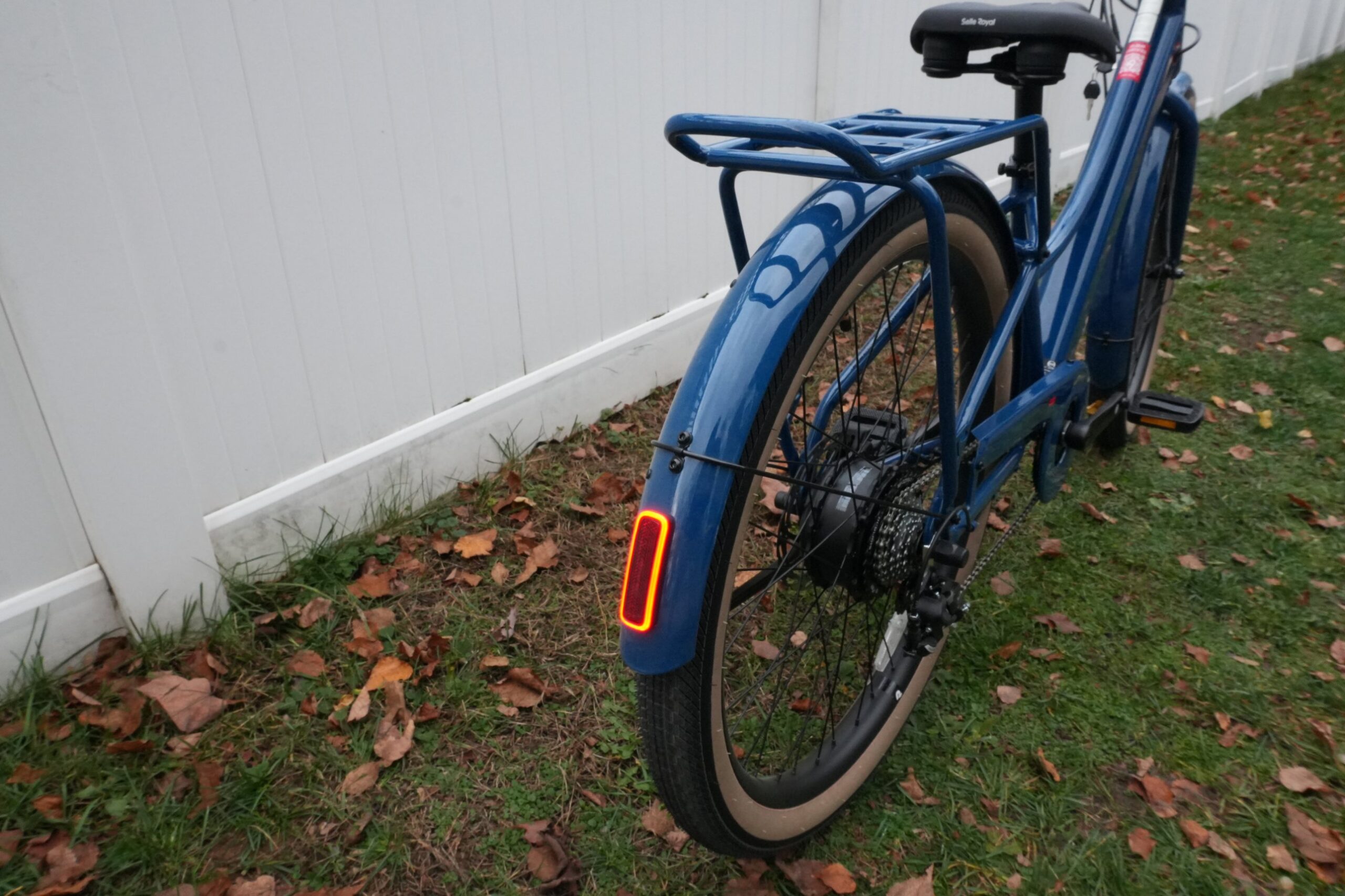
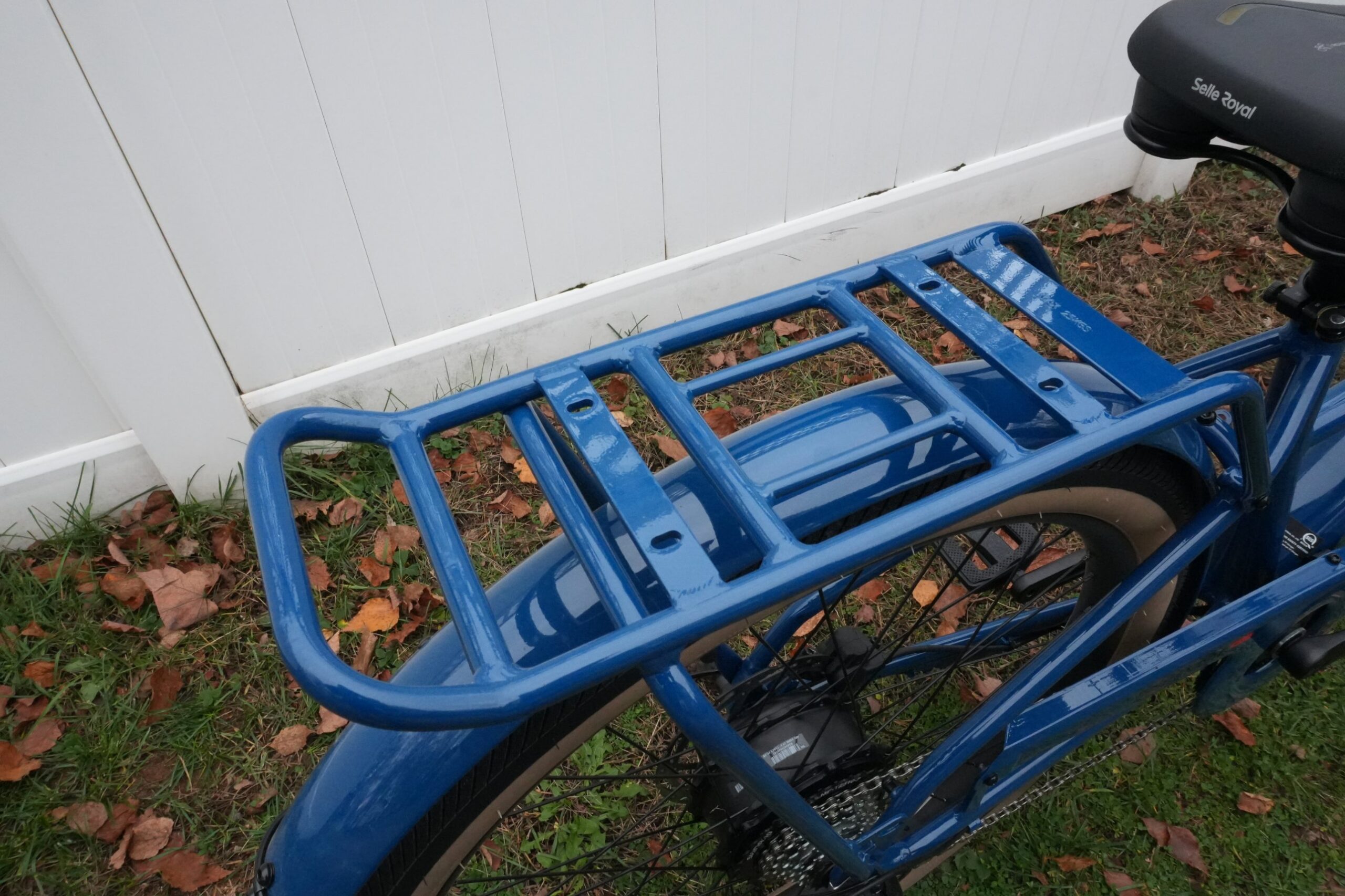
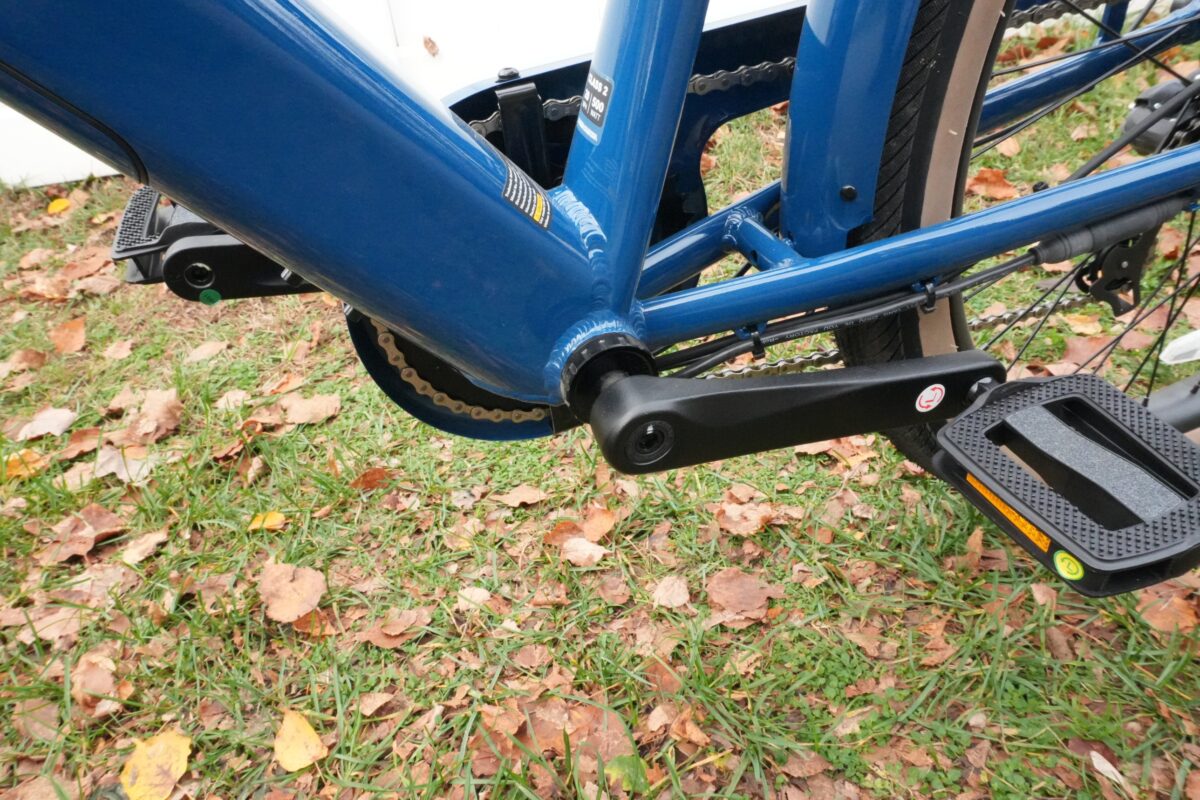
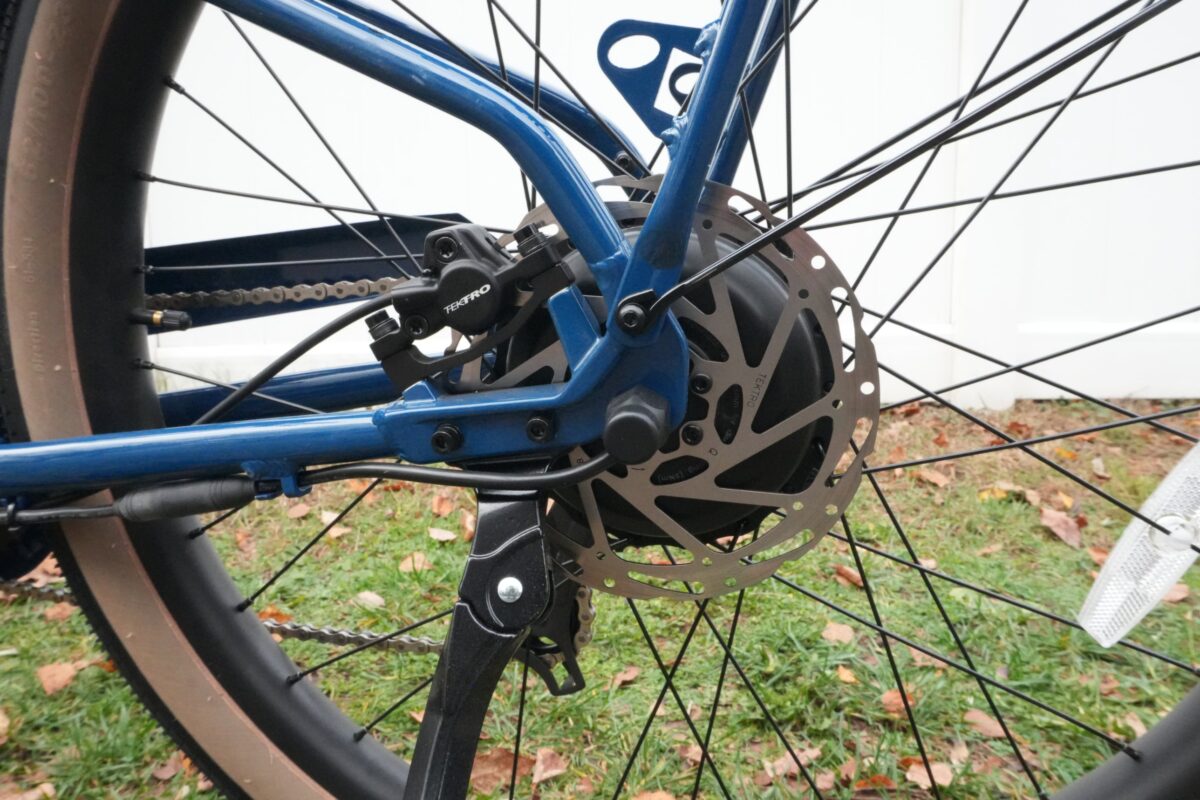
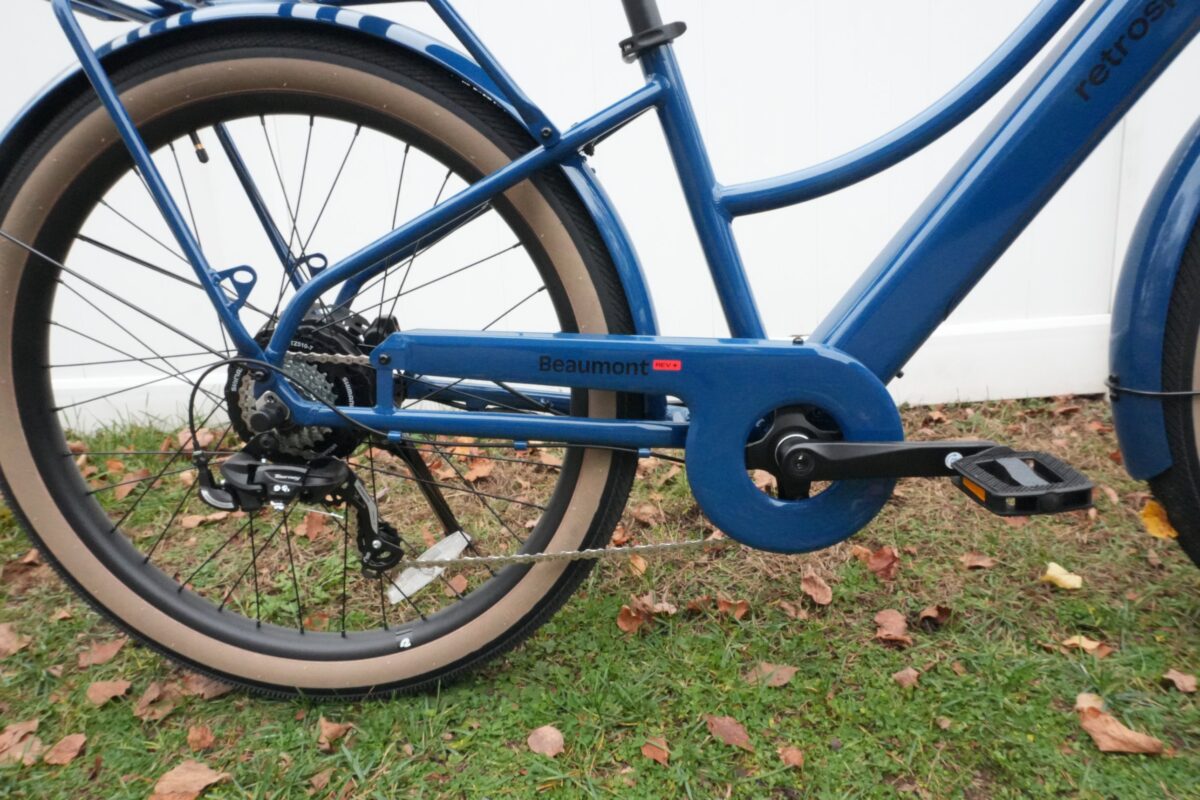
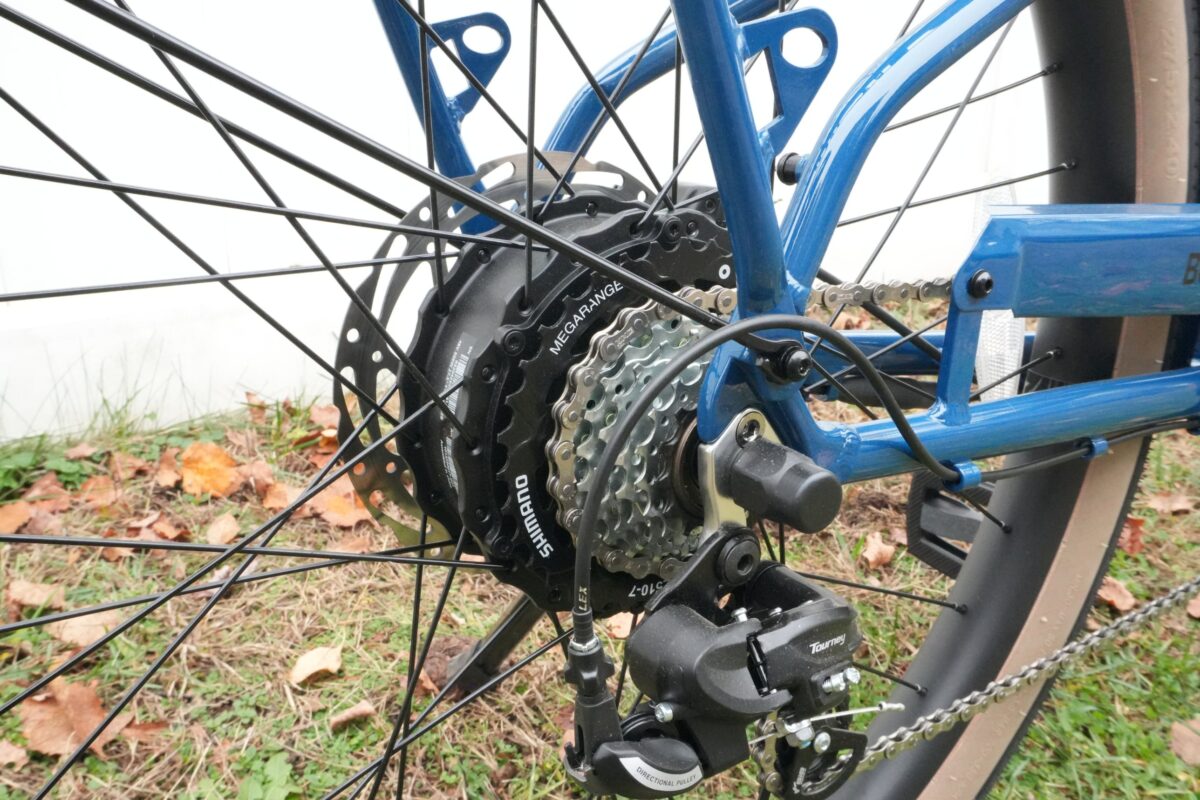
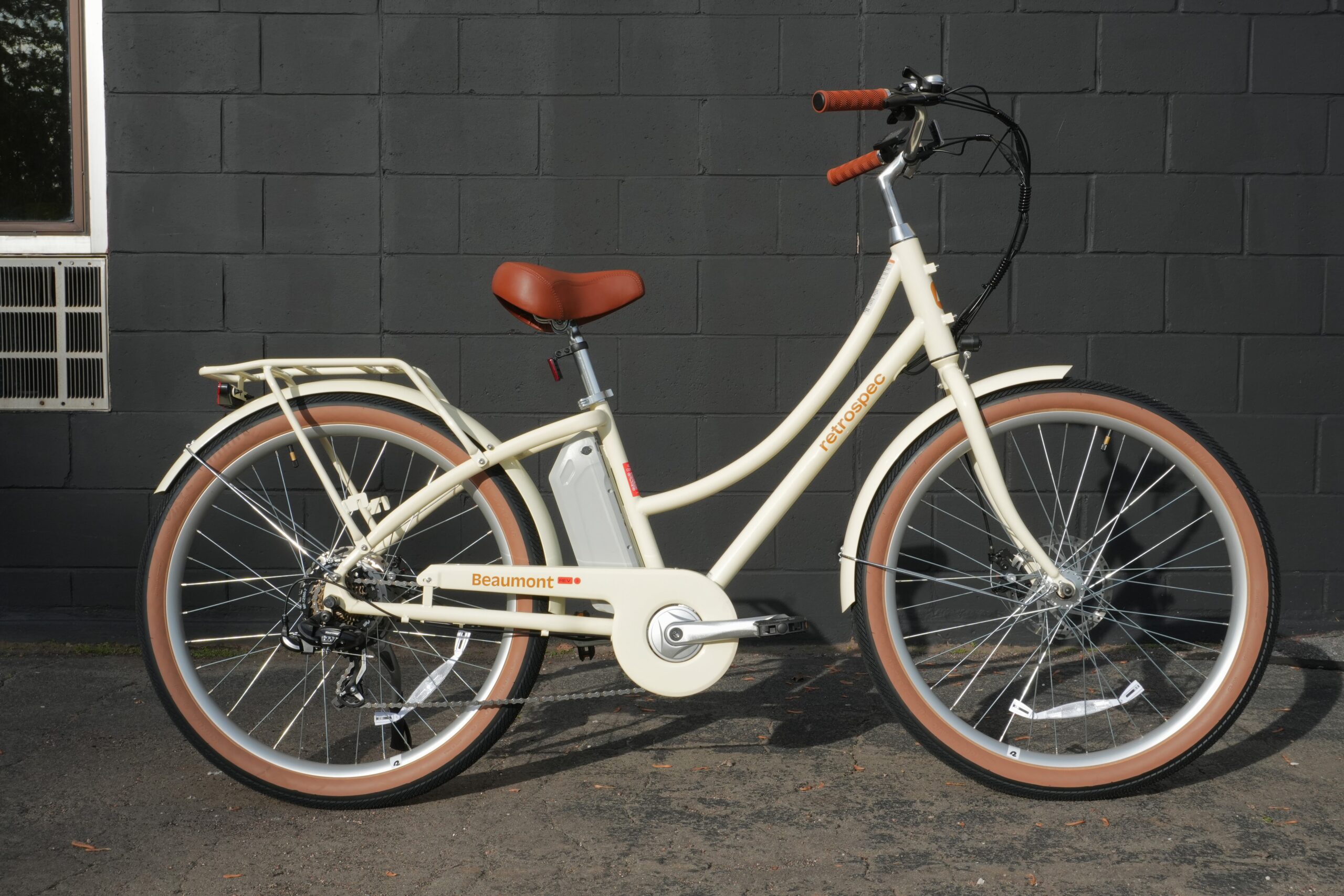
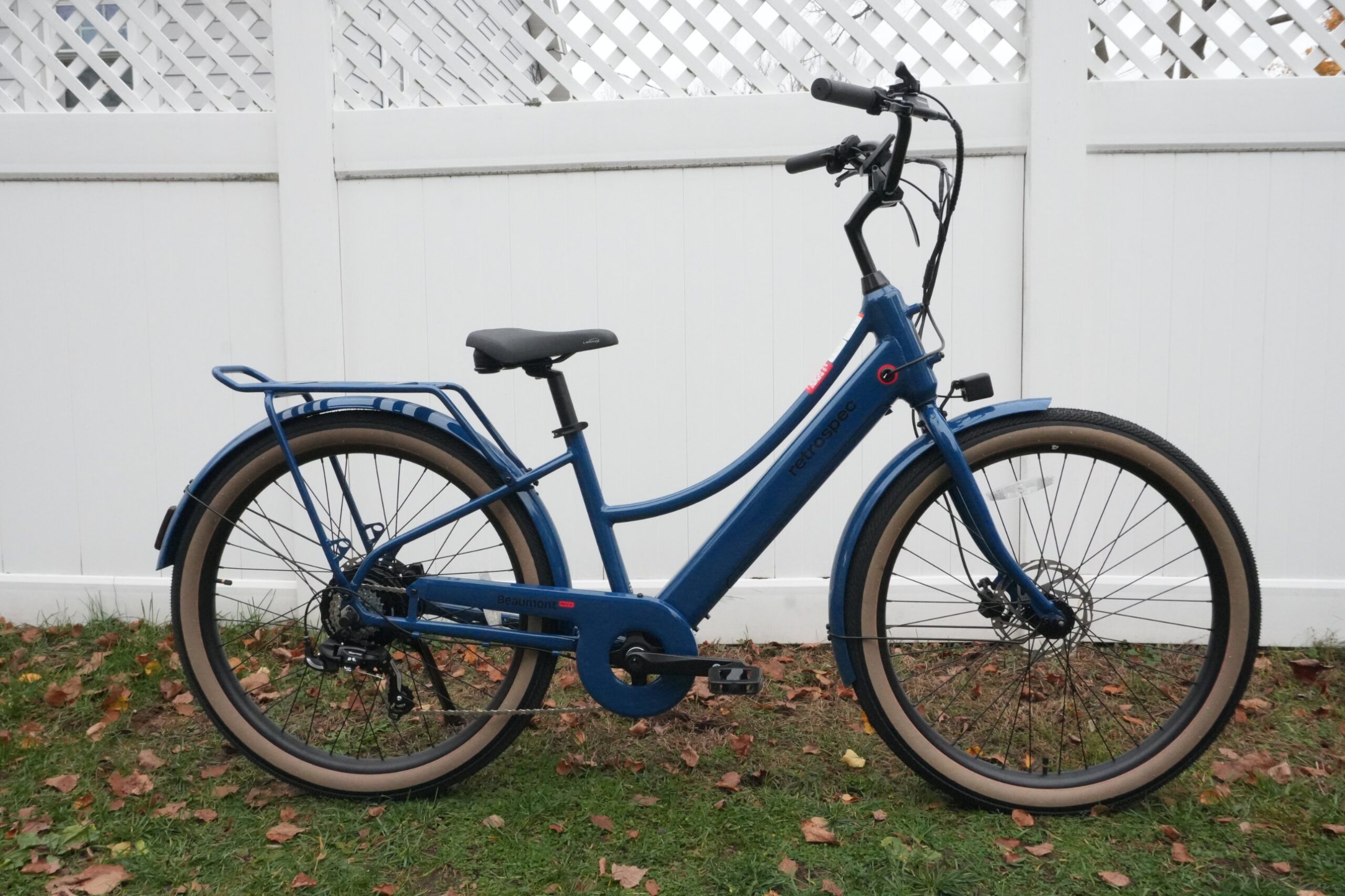
Swapping the Rev 3’s mechanical discs for two-piston Tektro hydraulic brakes on 180mm rotors front and rear means less hand effort for the same stopping power, which matters on a nearly 60 lb bike with a relaxed riding position. Both the 80-lux headlight and the taillight run off the main battery, and the taillight is built into the rear fender and brightens when you squeeze the brake levers. Around those, Retrospec includes the cruiser essentials: full-coverage steel fenders, a full chain guard, a bell, a rear-mounted kickstand, and a paint-matched rear rack rated for 55 lb. There are four mounting points up front for an optional basket, and Retrospec lists the bike as compatible with its Rover trailers and a Thule Yepp child seat. The 27.5 x 2.4 inch tires add puncture protection and a brown sidewall that suits the classic look, and the rear wheel uses Retrospec’s easy-change system, so a flat on the motor wheel only takes a 17mm wrench.
Frame, Options, and Fit
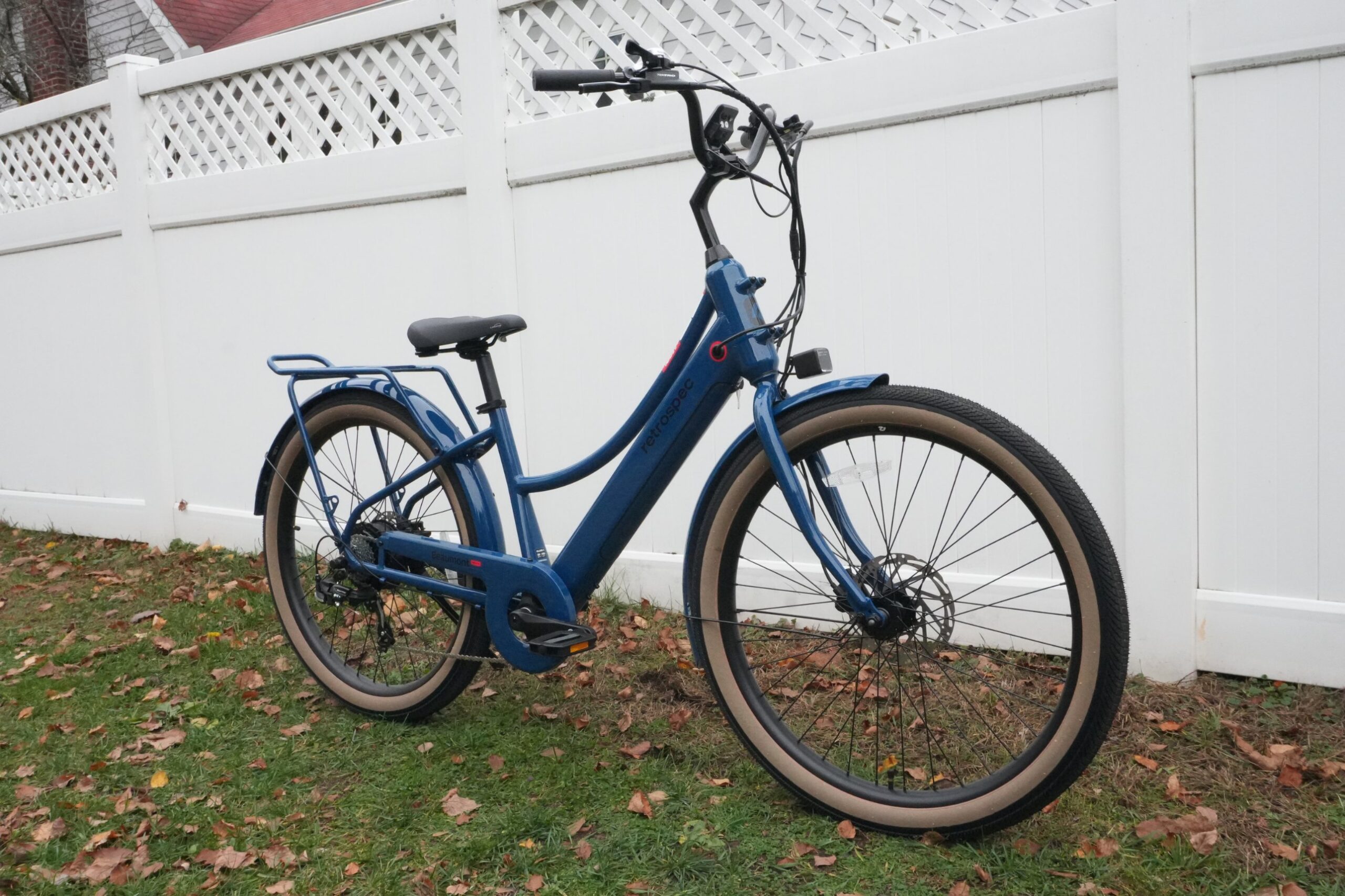
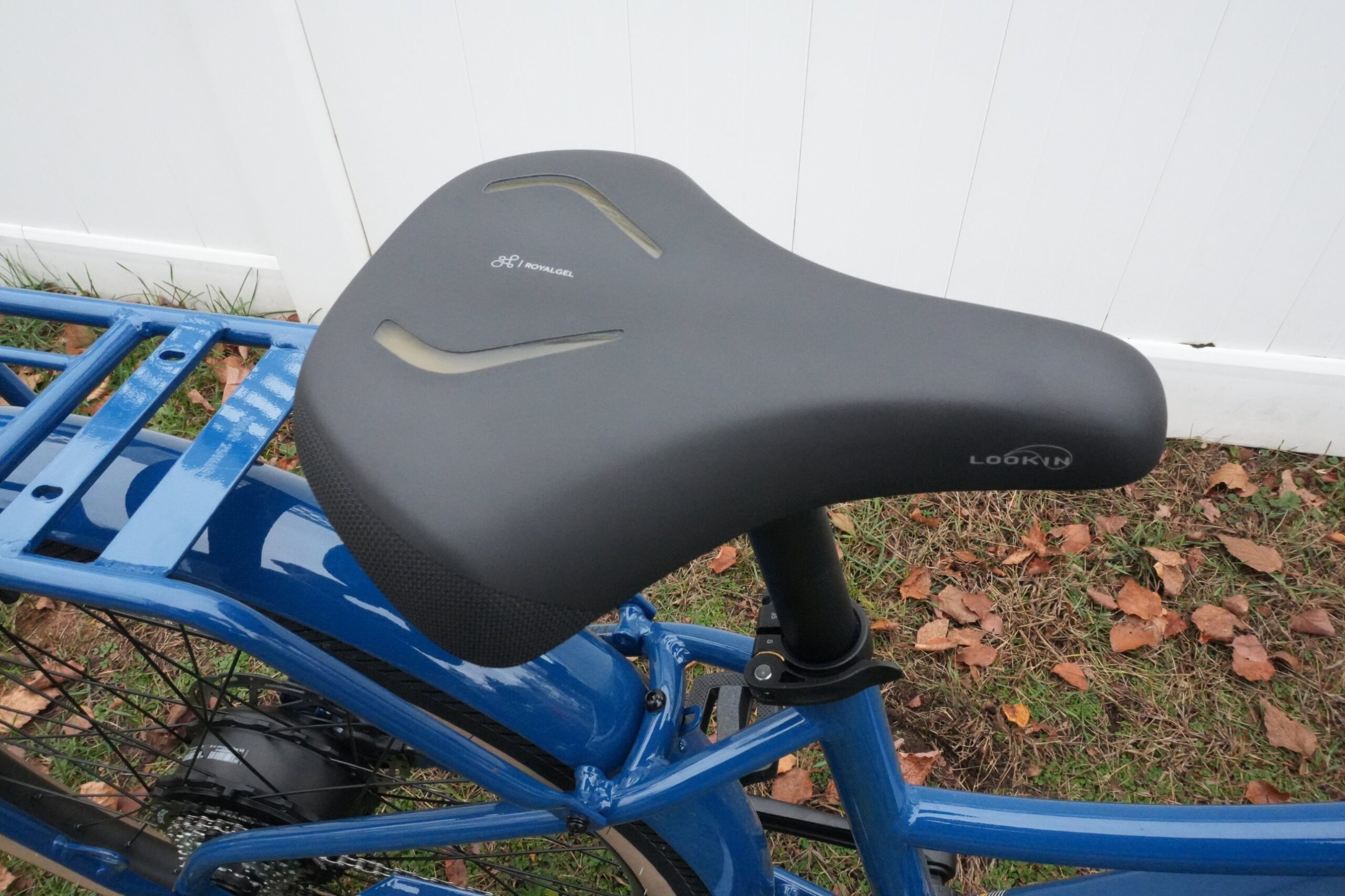
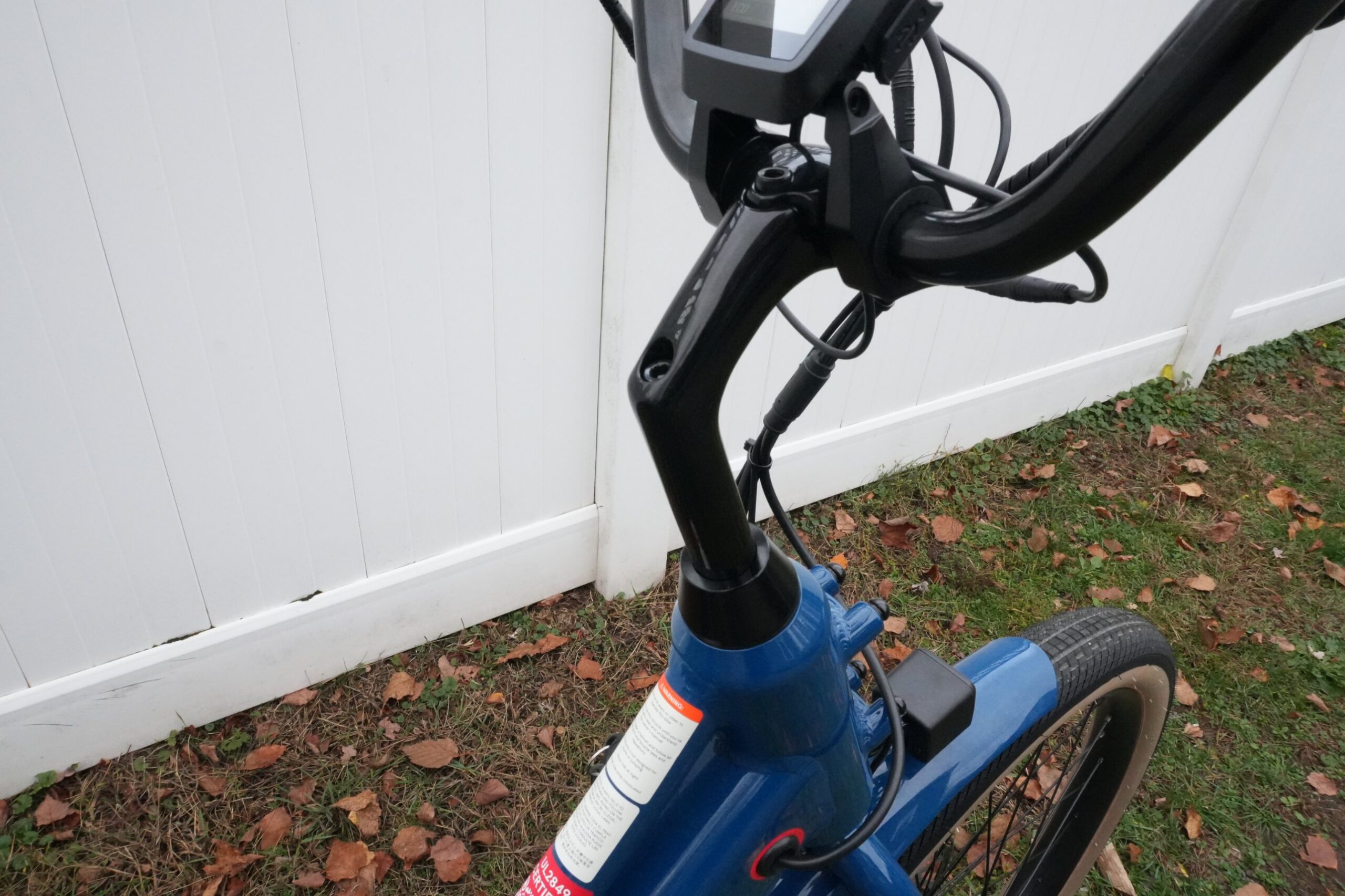
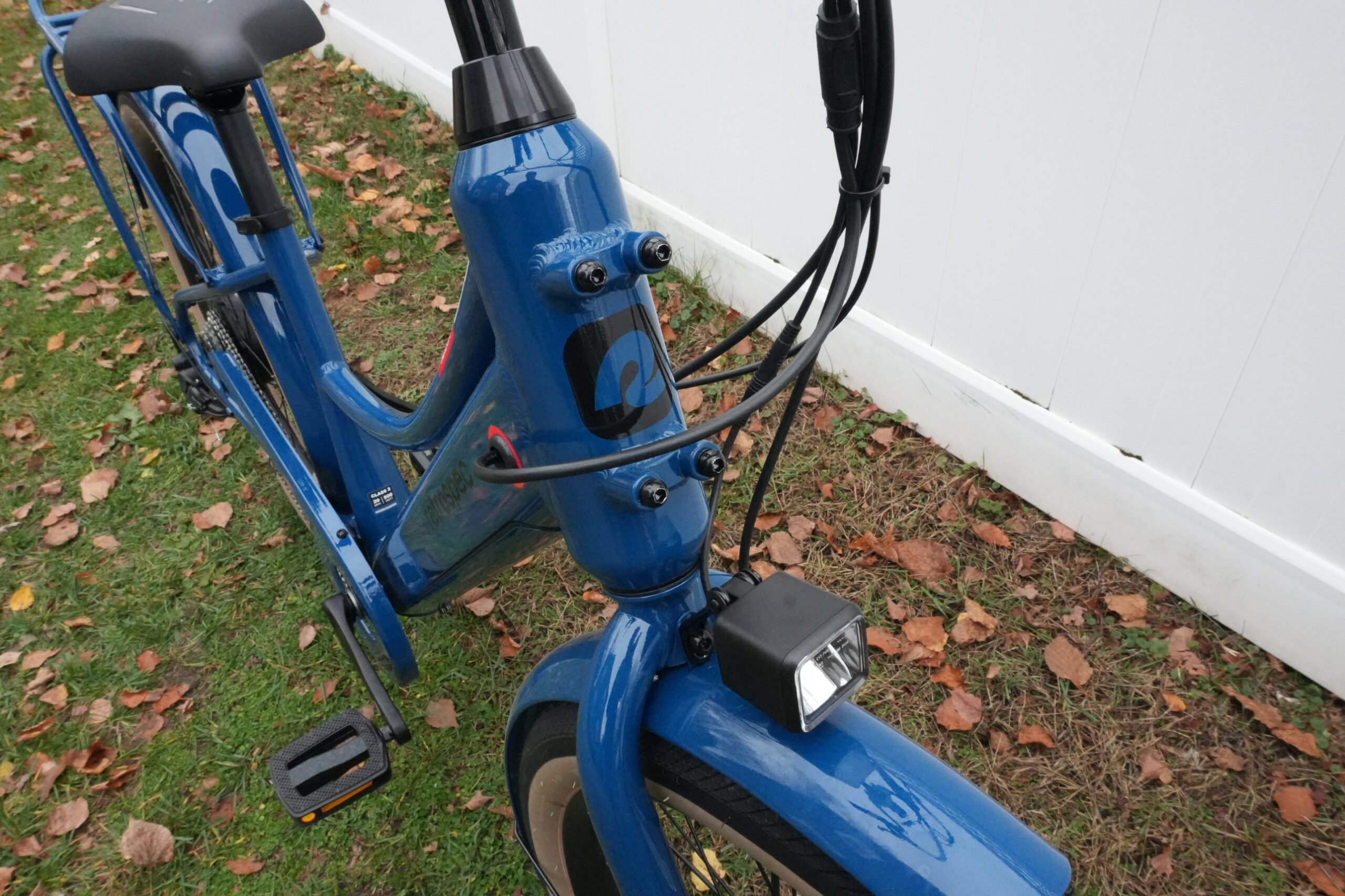
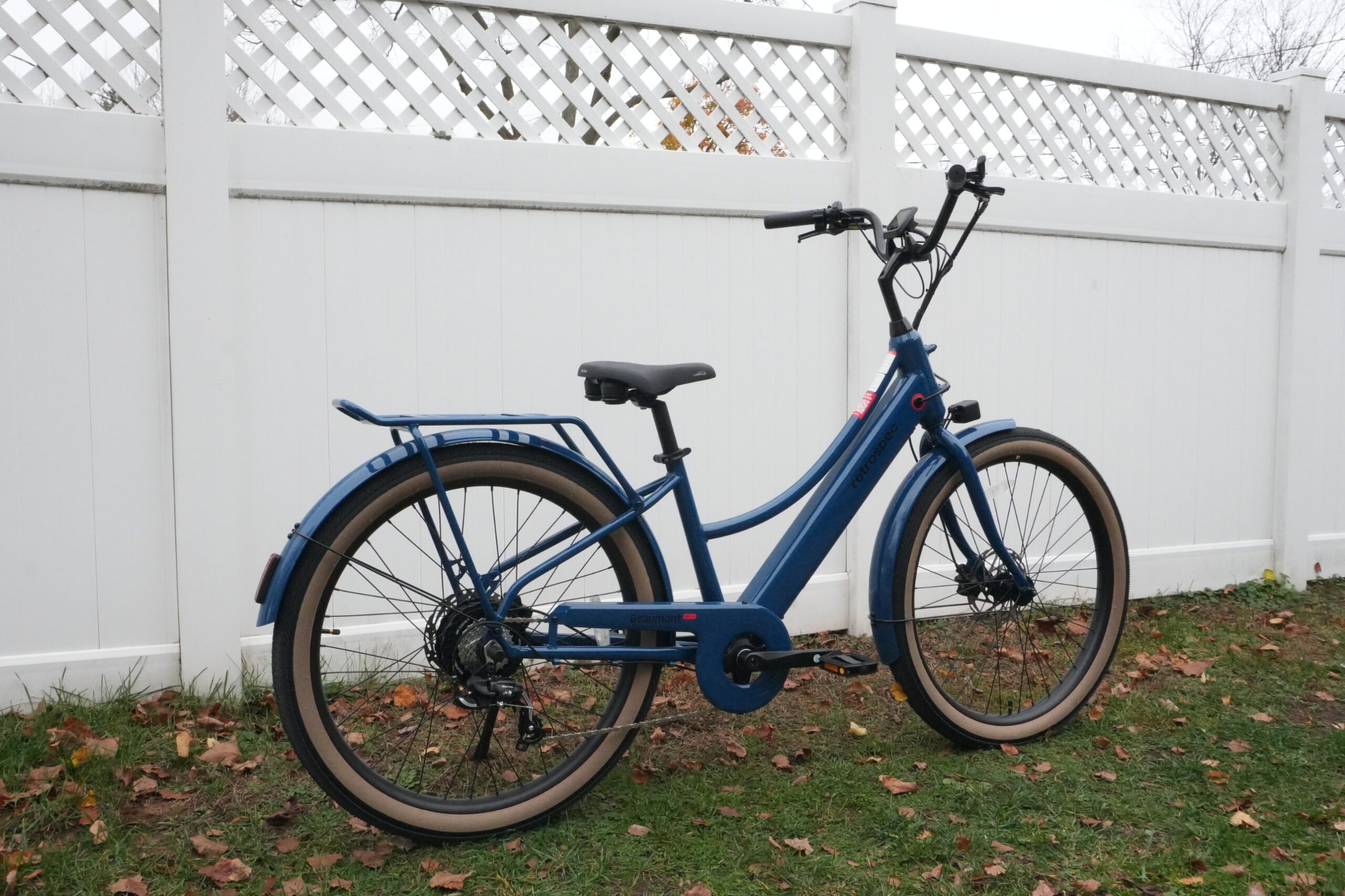
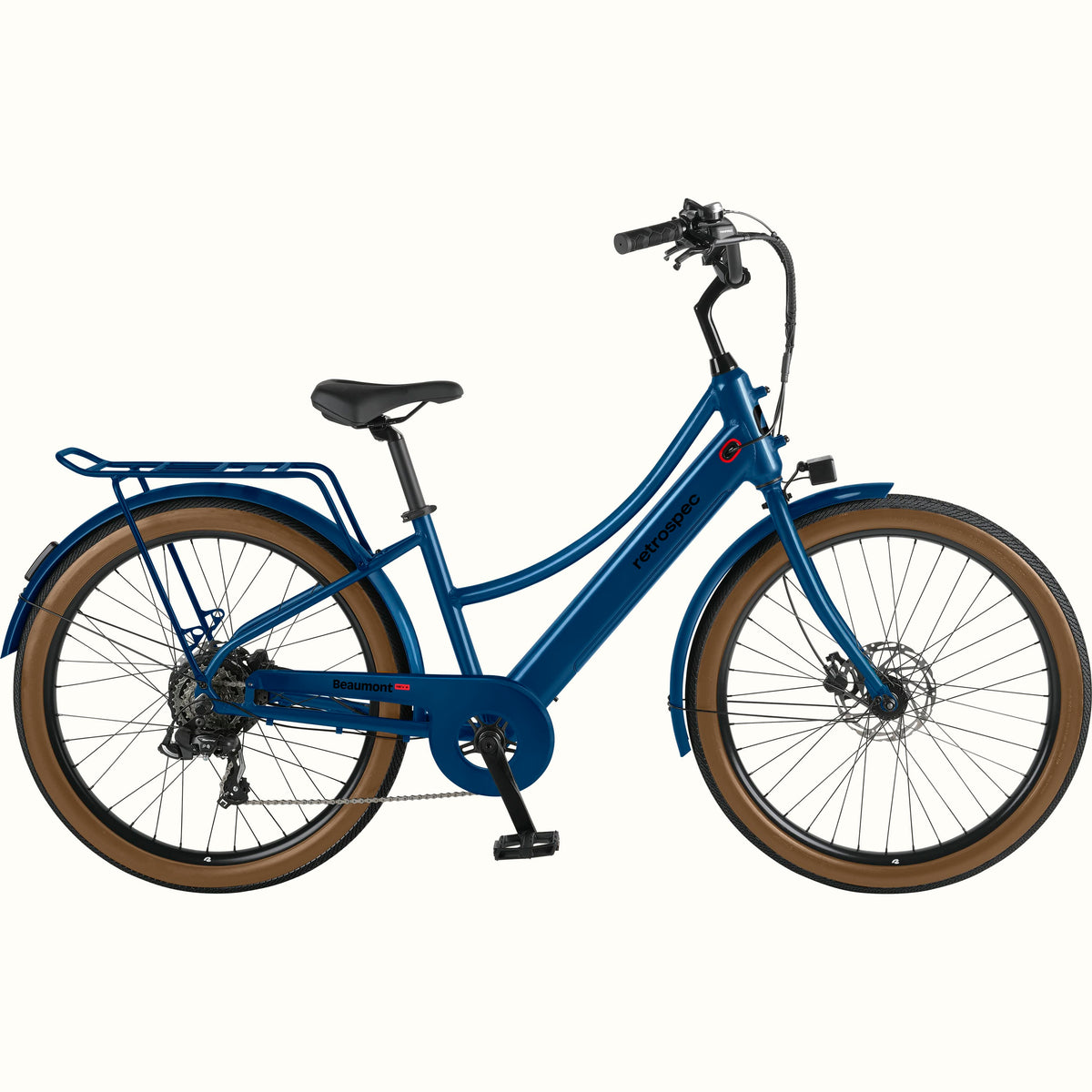
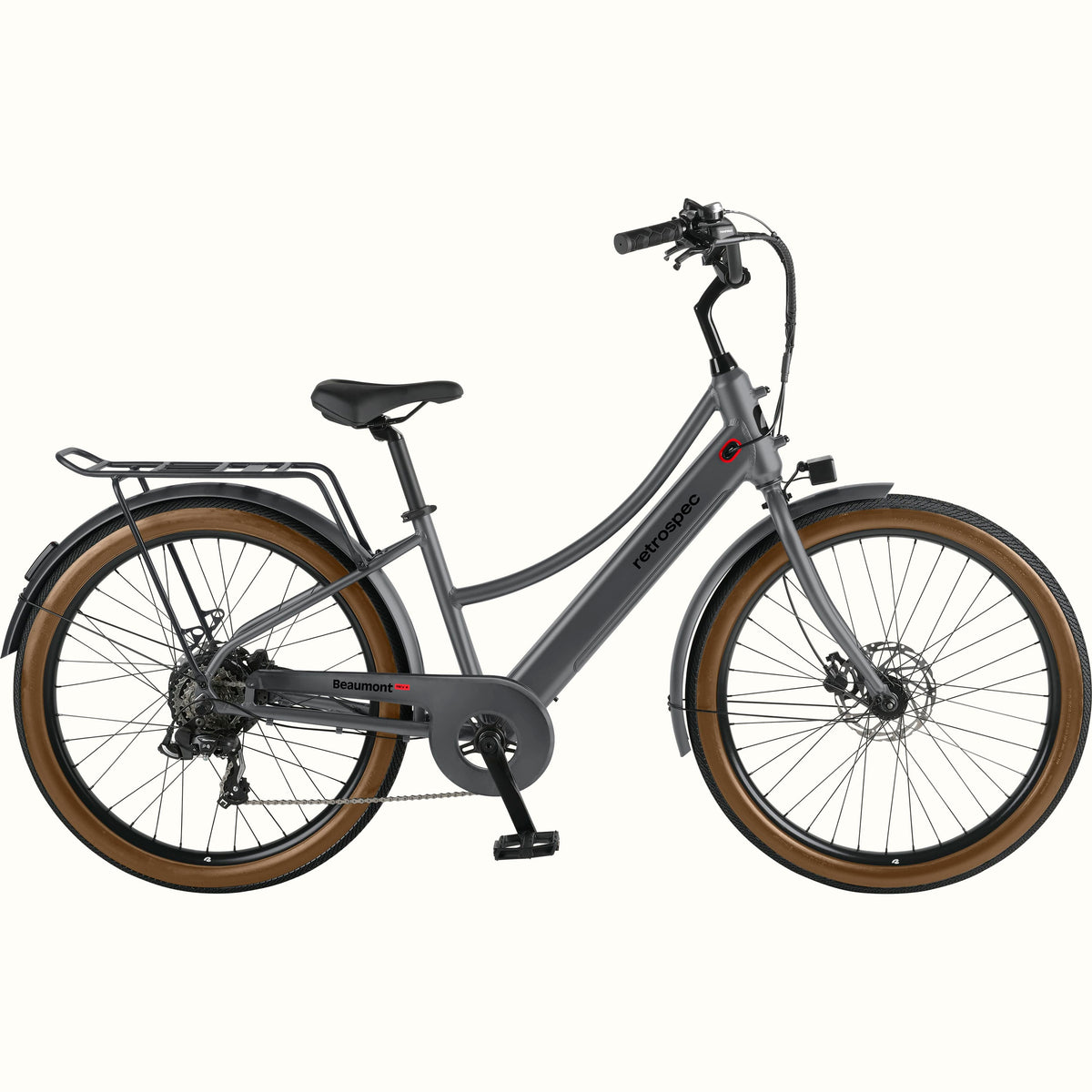
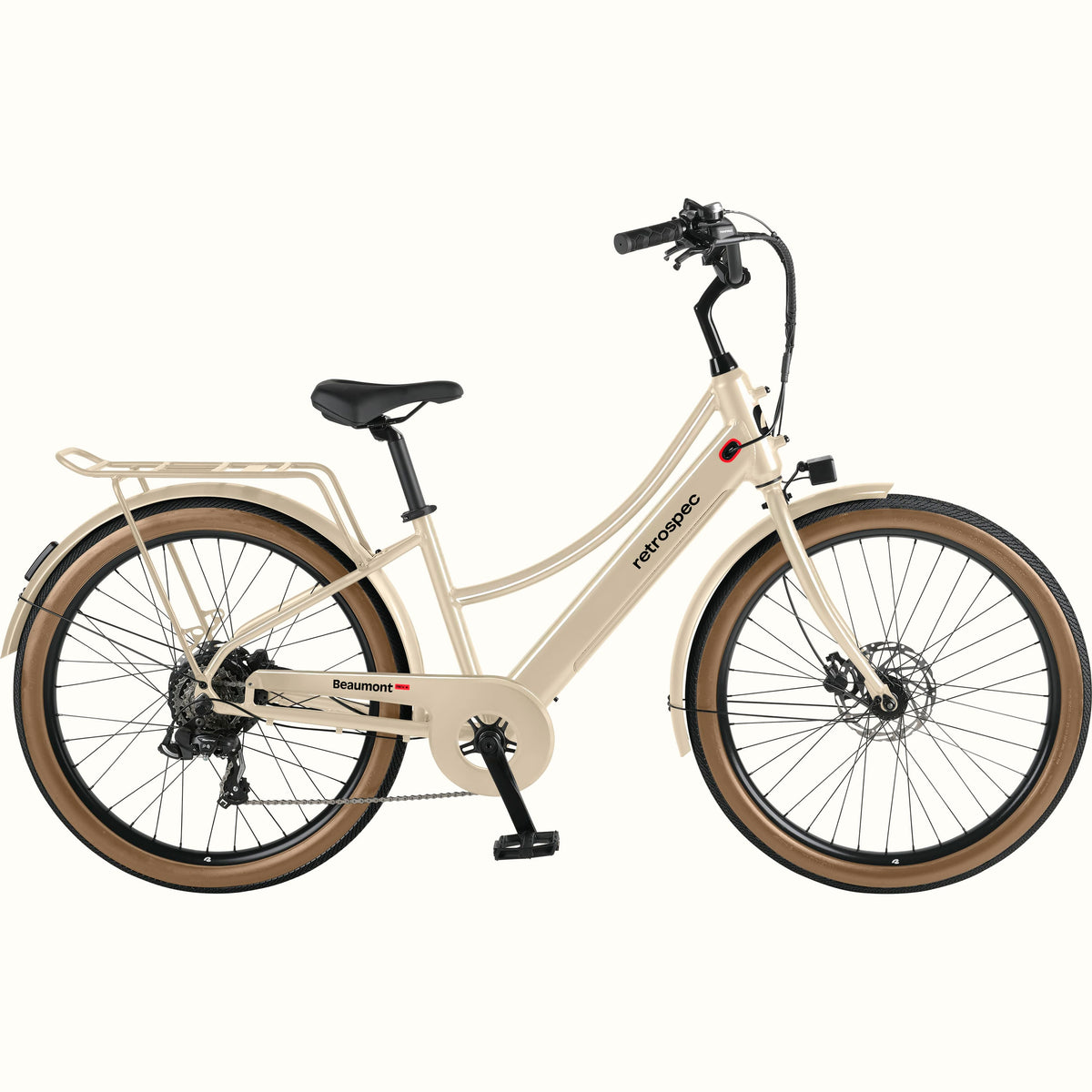
Retrospec offers the Rev+ as a step-thru aluminum frame only, set up the way a cruiser should be. High-rise Dutch-style swept-back handlebars, an adjustable quill stem, and slightly pedal-forward geometry put you in an upright, relaxed position with a straight back and no pressure on your wrists. The Selle Royal Lookin gel saddle strikes one of the best balances of firmness, surface area, and cushion we’ve tested in a while. The finish is clean too, with the battery hidden in the down tube, cables routed through the frame, and a paint-matched rack, fenders, and battery cover. It comes in four colors: Classic Blue, Matte Graphite, Oat, and Fern.
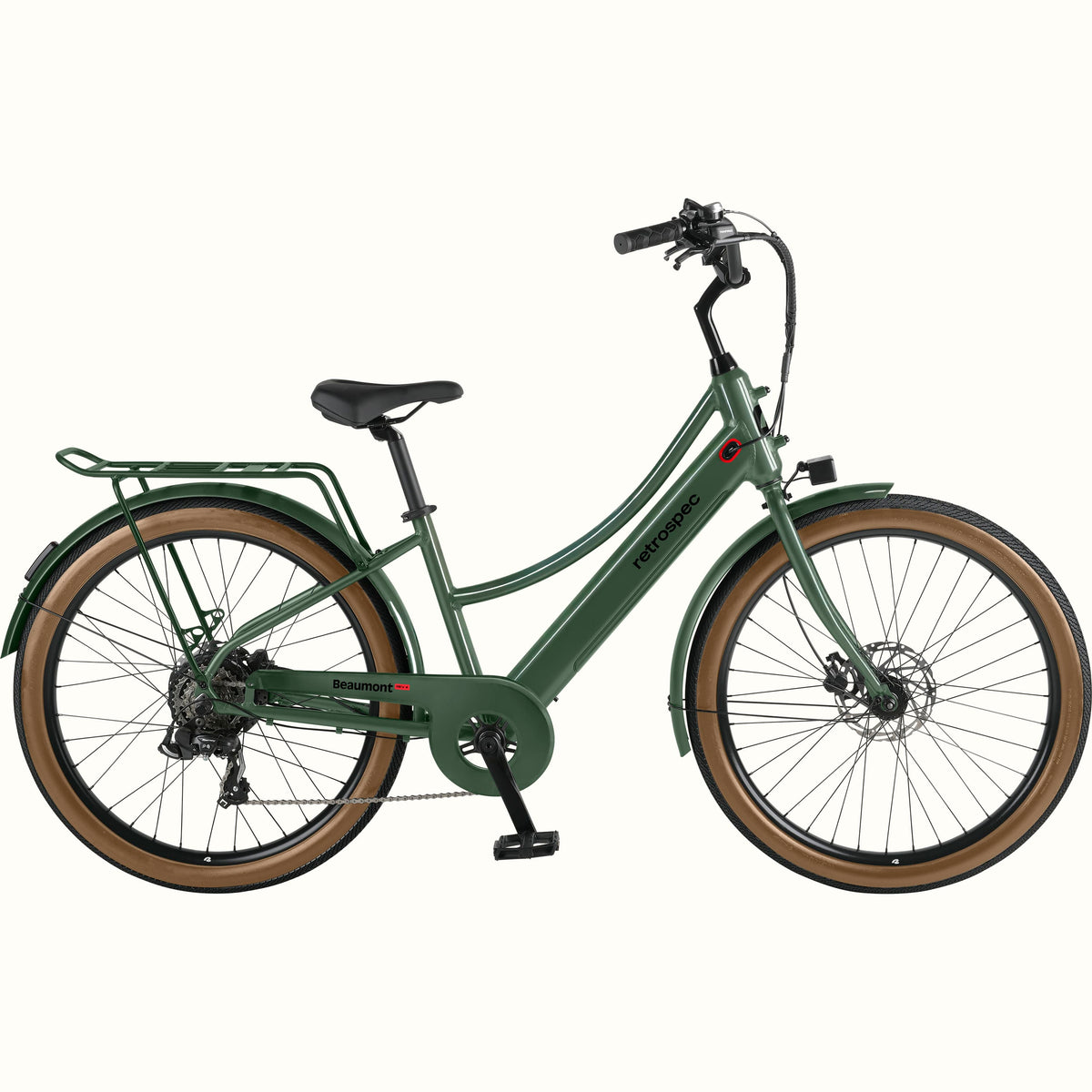
It comes in one size with a 24.4 inch standover height, and Retrospec recommends it for riders 5’3″ to 6′. That range looks a little conservative from our testing. A 6’1″ rider with a 32 inch inseam dialed in a comfortable fit with the quill stem and seatpost, and a 5’4″ rider fit comfortably too. On our scale, the Rev+ came in just under 59 lb with the battery, right in line with Retrospec’s listed 58.6 lb. That’s heavy for a city bike, so the step-thru frame is a welcome help when you’re getting on and off. Its 350 lb recommended weight limit leaves plenty of room for riders and cargo. Assembly was on par with most direct-to-consumer ebikes; if you can put together flat-pack furniture, you’ll be fine, and Retrospec includes a multi-tool that covers it.
With a rigid steel fork and a fixed seatpost, you feel bumpy roads and railroad crossings through the saddle, and Wisconsin has plenty of both. A suspension seatpost is the easiest comfort upgrade here. The Rev+ uses a 30.9mm seatpost, so the 30.9mm BumpStop suspension seatpost from our shop drops right in, and on those railroad tracks we’d expect it to have you floating over the bumps instead of feeling each one.
| Category | Step-Thru |
|---|---|
| Total Weight w/ Battery | Just under 59 lbs (our scale), 58.6 lbs claimed |
| Payload Capacity | 350 lbs |
| Rider Height Range | 5'3" to 6' |
| Standover Height | 24.4" |
| Frame Size | 16" (one size) |
Retrospec Beaumont Rev+ Specifications
Here’s the full breakdown of components on the Beaumont Rev+.
| Component | Retrospec Beaumont Rev+ |
|---|---|
| Price | $1,599.99 (on sale for $1,399.99 in Classic Blue and Matte Graphite at time of writing) |
| Type | Classic Step-Thru Cruiser |
| Class | 2 |
| Weight Capacity | 350 lbs |
| Top Speed | 20 mph |
| Motor | Ananda 48V 500W Rear Hub (65Nm) |
| Battery | 48V 10.5Ah (500Wh listed), integrated in the down tube |
| Claimed Range | Up to 75 miles |
| Charger | 48V 2A (5 to 6 hours for a full charge) |
| Display | Center-Mounted Ananda Full-Color TFT with USB-A Port |
| Sensor | Torque |
| Throttle | Left-mounted Thumb Throttle |
| UL Certifications | UL 2849 (electrical system), UL 2271 (battery) |
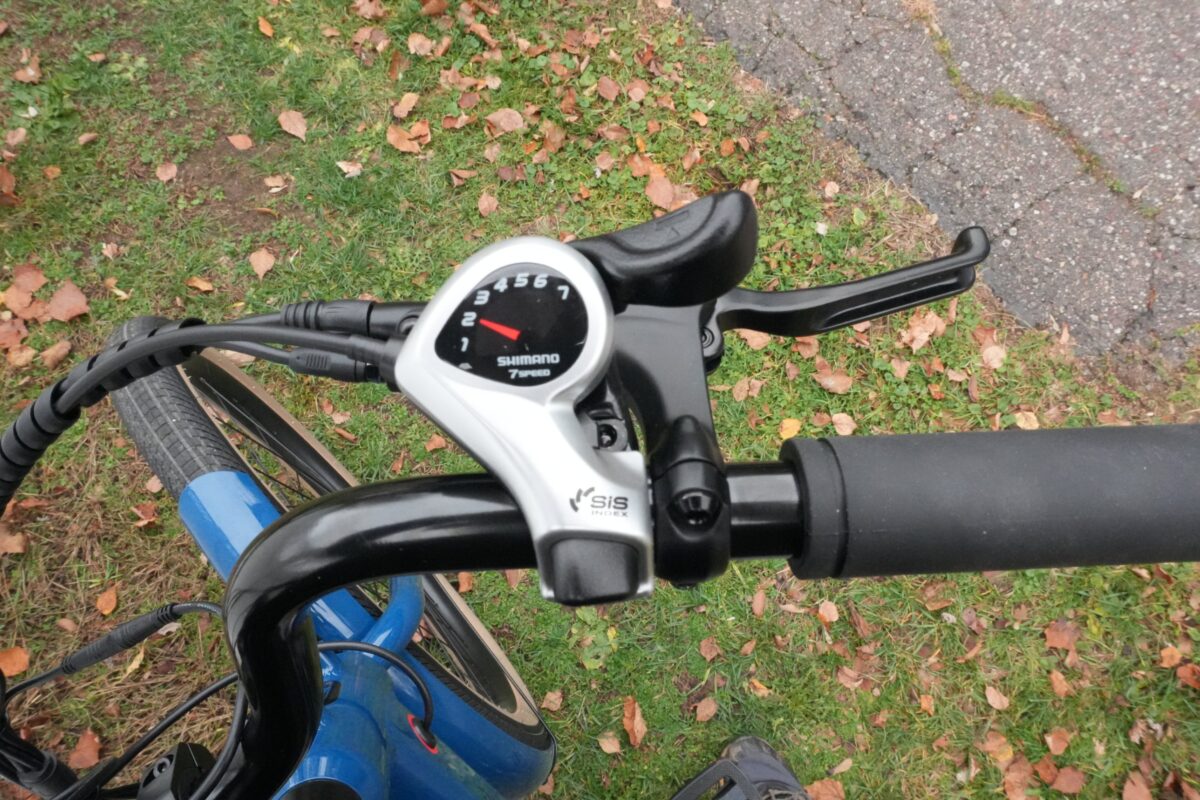
| Shifter | Shimano 7-Speed SIS-Index Thumb Shifter |
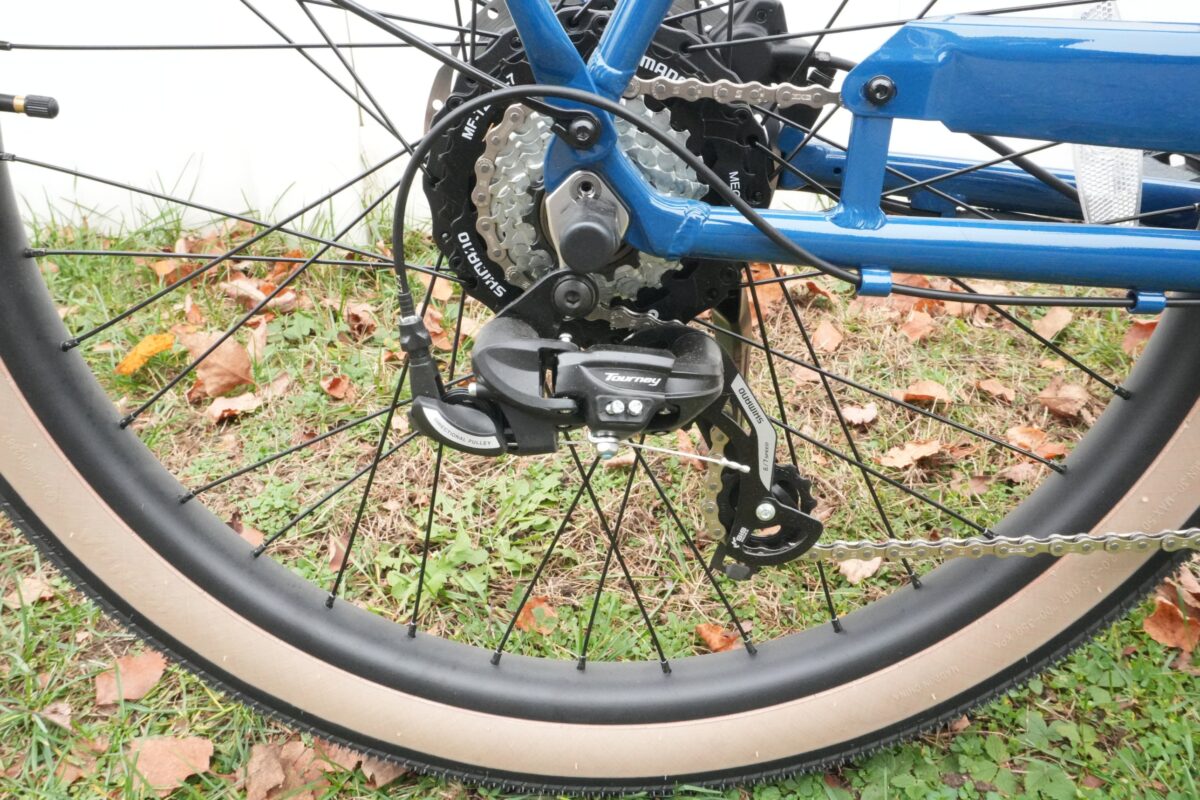
| Derailleur | Shimano Tourney 7-Speed |
| Chainring | 44T |
| Cassette | Shimano 7-Speed MegaRange Freewheel, 14-34T |
| Brakes | Tektro Two-Piston Hydraulic Disc |
| Levers | Tektro Hydraulic with Motor Cutoff |
| Rotors | 180mm Front and Rear |
| Frame | 6061 Aluminum Step-Thru, Integrated Battery |
| Fork | Rigid Steel |
| Axle | Bolt-On, 17mm Axle Nuts |
| Tires | 27.5 x 2.4" Puncture-Protected City Tires, Brown Sidewall |
| Handlebars | High-Rise Dutch-Style Swept-Back |
| Grips | Rubber Lock-On Comfort Grips |
| Stem | Adjustable Quill Stem |
| Saddle | Selle Royal Lookin Gel |
| Pedals | Plastic Platform with Grip Tape |
| Fenders | Paint-Matched Full-Coverage Steel |
| Rear Rack | Paint-Matched, 55 lbs Capacity |
| Kickstand | Rear-Mounted, Wide Foot |
| Seatpost | 30.9mm Aluminum, Quick-Release Clamp |
| Lights | Integrated 80-Lux Headlight, Taillight with Brake Light |
Real World Performance Testing
All of our testing was done by a 200 lb rider on a warm day in the low 80s, using the display for wattage and a GPS speedometer app to check its speed readings.
Throttle Acceleration and Throttle Modes
From a stop, the throttle eases you into motion rather than jumping off the line, then pulls steadily up to 20 mph on the display. Our GPS read about 1 mph lower at top speed, so expect a true 19 mph or so on throttle. The first thing we noticed was how little we could hear. The Ananda motor is nearly silent on flat ground, and that held true even later under full load on our hill. With throttle mode set to full power, you get that same 20 mph pull in every assist level.
Switching throttle mode to follow the assist levels doesn’t cap your speed. Every level still reaches 20 mph, just with less power behind it, which makes for a gentler, more gradual takeoff in the lower levels. Here’s the peak wattage the display showed on the throttle in each level.
| Assist Level | Peak Throttle Power (display) | Throttle Top Speed |
|---|---|---|
| Eco | About 280 W | 20 mph |
| Tour | Just under 500 W | 20 mph |
| Sport | About 620 W | 20 mph |
| Turbo | Just under 800 W | 20 mph |
Torque Sensor Pedal Assist
The torque sensor is the best part of this bike, and Retrospec tuned it well. Support kicks in the moment you press on the pedals, with no lag from a standstill, and none of the levels have a speed cap, so how fast you go depends on how much power you ask for. Eco makes you put in real leg effort. Light pedaling barely pulls 30 to 40 watts and holds you around 10 mph, while pushing harder in a higher gear brings 200 to 250 watts and lets you work up to 20 mph. Tour adds a couple of mph to that easy-pedaling pace and makes 20 mph noticeably easier to reach, with the display passing 400 watts when we pushed.
Sport is where most riders will spend their time, giving around 250 watts with easy pedaling, and shifting up and pushing a little harder zips you right to 20 mph. Turbo gets you from a stop to 20 mph quickly with full power as soon as you press down, which leaves it for hills and getting away from intersections. Once you’re at top speed, the 44-tooth chainring and 14-34T freewheel give a comfortable pedaling cadence, so you aren’t spinning out at 20 mph.
Hill Climb
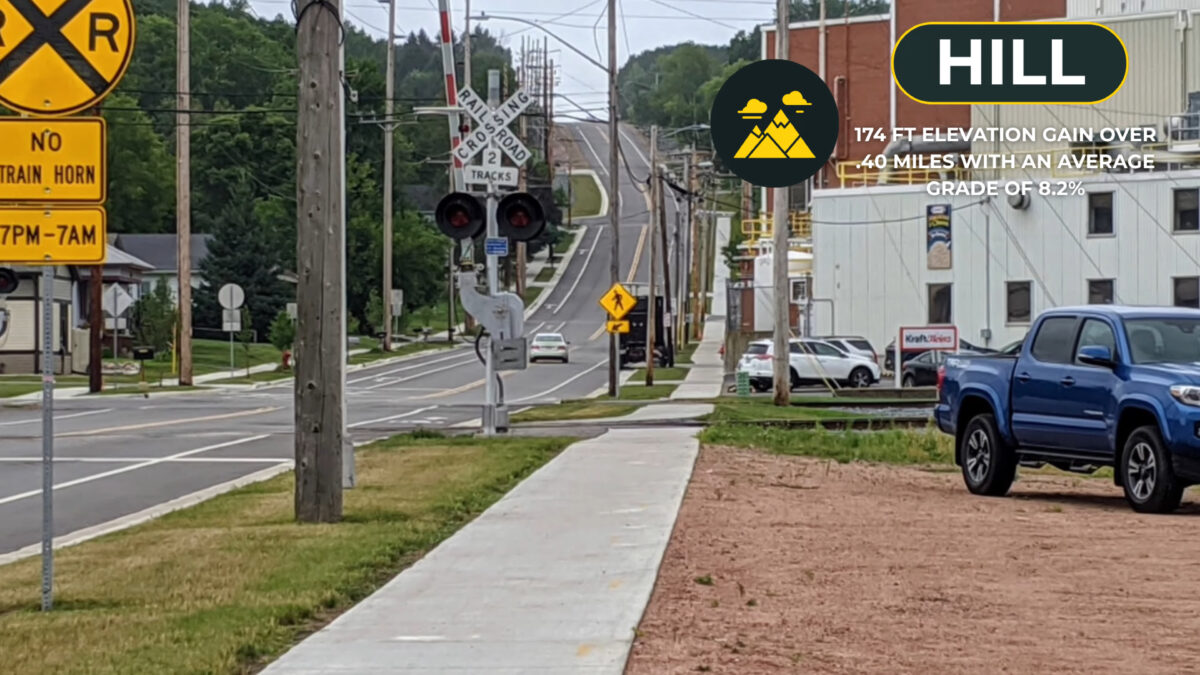
On throttle alone, the Rev+ bottomed out at around 8 mph on the steepest section, briefly dropping to 7.7 mph, while the display showed it pulling just over 500 watts. Even under that load, we could barely hear the motor. Near the top, though, power faded on its own and we had to restart before finishing the climb. We suspect the controller was heating up and dialing back power to protect itself. Our test was on a warm day in the 80s with a 200 lb rider, so lighter riders or cooler weather may not see the same cutoff. Interestingly, the Rev 3 made it up the same hill without stopping, though on a 45-degree day and at a much slower minimum speed of around 5 mph.
Pedaling up, the low gear on the MegaRange freewheel lets you spin easily, and even in Eco we held about 6 mph through the steep part with moderate effort and around 200 watts from the motor. The jump from first to second gear is a big one, though, and our legs felt it right away. Tour took noticeable weight off our legs, with the display reading 300 to 350 watts, and let us hold 8 to 9 mph in second gear. Sport brought the display up to around 470 watts, and Turbo pushed past 500 watts and kept us picking up speed. Pairing your own leg effort with the motor makes a big difference here, so plan on pedaling for steep climbs rather than relying on the throttle.
Gravel Paths and Light Off-Road
The high-volume 2.4 inch tires do a good job on crushed gravel. We felt very little chatter through the handlebars, and traction was never a concern. The bike handled grass fine too, so a short detour off pavement isn’t a problem, but it’s built for pavement and paths first.
Battery Use and Range
After about 30 minutes and 6.5 miles of testing that included two runs up our hill, 368 feet of climbing, and a lot of time in the higher assist levels, we still had 73% battery left. Retrospec’s 75-mile claim is a best case that you’d only approach by riding in Eco on flat ground. If you rely on the throttle and higher assist levels, we’d expect somewhere in the 25 to 35 mile range. Because Eco feels good if you like to pedal, it’s easy to stretch that well beyond our estimate. If you want to carry a spare battery on longer rides, the 55 lb rack has room for one in our waterproof, flame-resistant battery bag.
Retrospec Beaumont Rev+ vs Beaumont Rev 3
| Spec | Retrospec Beaumont Rev+ | Retrospec Beaumont Rev 3 |
|---|---|---|
| List Price | $1,599.99 | $999.99 |
| Motor | Ananda 48V 500W rear hub, 65Nm | Ananda 36V 350W rear hub |
| Battery | 48V 10.5Ah (500Wh), integrated | 36V 10.4Ah (374Wh), not integrated |
| Sensor | Torque | Cadence |
| Pedal Assist | 4 levels, no speed caps | 5 speed-limited levels |
| Display | Full-color TFT, adjustable throttle mode | LED indicators, no speed readout |
| Brakes | Tektro hydraulic disc | Tektro mechanical disc |
| Lighting | Integrated headlight and brake-activated taillight on main battery | Headlight on main battery, battery-powered rear light |
| Rear Rack Capacity | 55 lb | 22 lb |
| Class | Class 2, 20 mph | Class 2, 20 mph |
| Colors | 4 | 5 |
| Throttle-Only Hill Minimum Speed | About 8 mph (briefly 7.7 mph; paused near the top on an 80-degree day) | About 5 mph (completed on a 45-degree day) |
The Beaumont Rev 3 is a smooth, quiet cruiser at $999.99. It shares the Rev+’s Ananda motor quality, classic Dutch-style ergonomics, and paint-matched rack and fenders, and it comes in five colors with color-matched hardware that gives it a cohesive look. Its cadence sensor and speed-limited assist levels make it simple to ride, since you pick a level and the bike holds you at that speed. The tradeoffs are a 36V 350W motor, a smaller external battery, mechanical brakes, and LED lights in place of a real display, so you’ll need a phone app to see your speed or trip data.
If you want the lowest price and a set-it-and-ride experience, the Rev 3 delivers. If you can catch the Rev+ on sale for $400 more, you get the integrated battery, a display you’ll actually use, hydraulic brakes, a rack that carries more than twice as much, and a torque sensor that makes it a much more engaging bike to pedal.
Pros and Cons
Final Thoughts
So is the Beaumont Rev+ worth the upgrade over the Rev 3? A $600 jump at full price is significant, but it comes with meaningful upgrades that improve the ride. The torque sensor gives it a much more natural pedal feel, the 48V 500W motor brings stronger performance, and the hydraulic brakes, full-color display, and integrated battery give it better components and a cleaner look. At the time of writing, it’s on sale for $1,399.99, which makes it a much easier recommendation. If you need to save money, the Rev 3 is a great option that shares the same quiet Ananda system, but if you can stretch for the Rev+, it’s our favorite cruiser we’ve tested from Retrospec.
If our review helped you decide on the Beaumont Rev+, you can support content like this by purchasing through our affiliate link at no extra cost to you. Thank you!
