

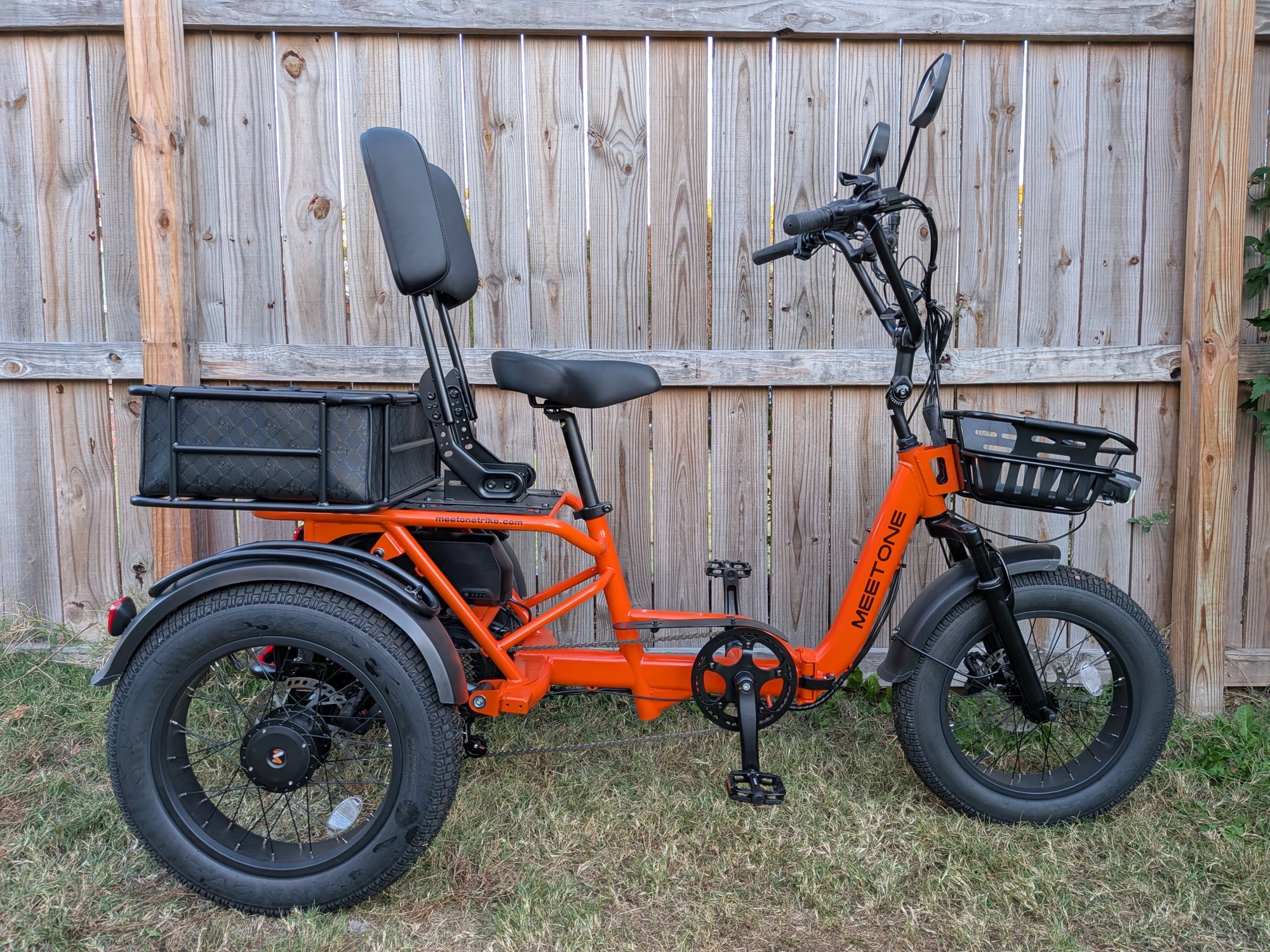
Most electric trikes around $1,700 stick to the basics: a rear motor, a basket, maybe a front suspension fork. Meet One, a mostly direct-to-consumer brand that specializes in semi-recumbent trikes, took a different route with the Breeze Pro 2.0 and packed in features we rarely see at this price, including full suspension, a reverse mode, a torque sensor, a 7-speed drivetrain, hydraulic disc brakes on all three wheels, and one of the largest adjustable backrests we’ve tested. It also ships with a 48V 20Ah battery, which is above average for an etrike and helpful on something this heavy, with room for a second one. At $1,699 at the time of writing, that’s a long feature list for the money, and plenty of riders seem to have noticed.
Below, we cover the features that set it apart, the folding frame and fit for a 5’5″ and a 6′ rider, and the full spec sheet. Then we get into how the 750W motor and torque sensor felt on pavement and sidewalks, the hidden pedal assist setting we’d turn on right away, how it handled our test hill, and how it compares with the Lectric XP Trike 2.
Ebike Escape is reader-supported. If you buy through our Meet One Breeze Pro 2.0 link, we may earn a commission at no extra cost to you.
Meet One Breeze Pro 2.0 Video Review
Our video review starts with a close look at every component and the display, then folds the trike down to see how it travels. From there, we ride it in first person on throttle only, test the torque sensor in each pedal assist level, check the top speed, try the extra assist levels hidden in the settings, back it up in reverse, and take it up our test hill on throttle and pedal assist before wrapping up with the pros and cons.
Standout Features
Adjustable Backrest and Semi-Recumbent Seat
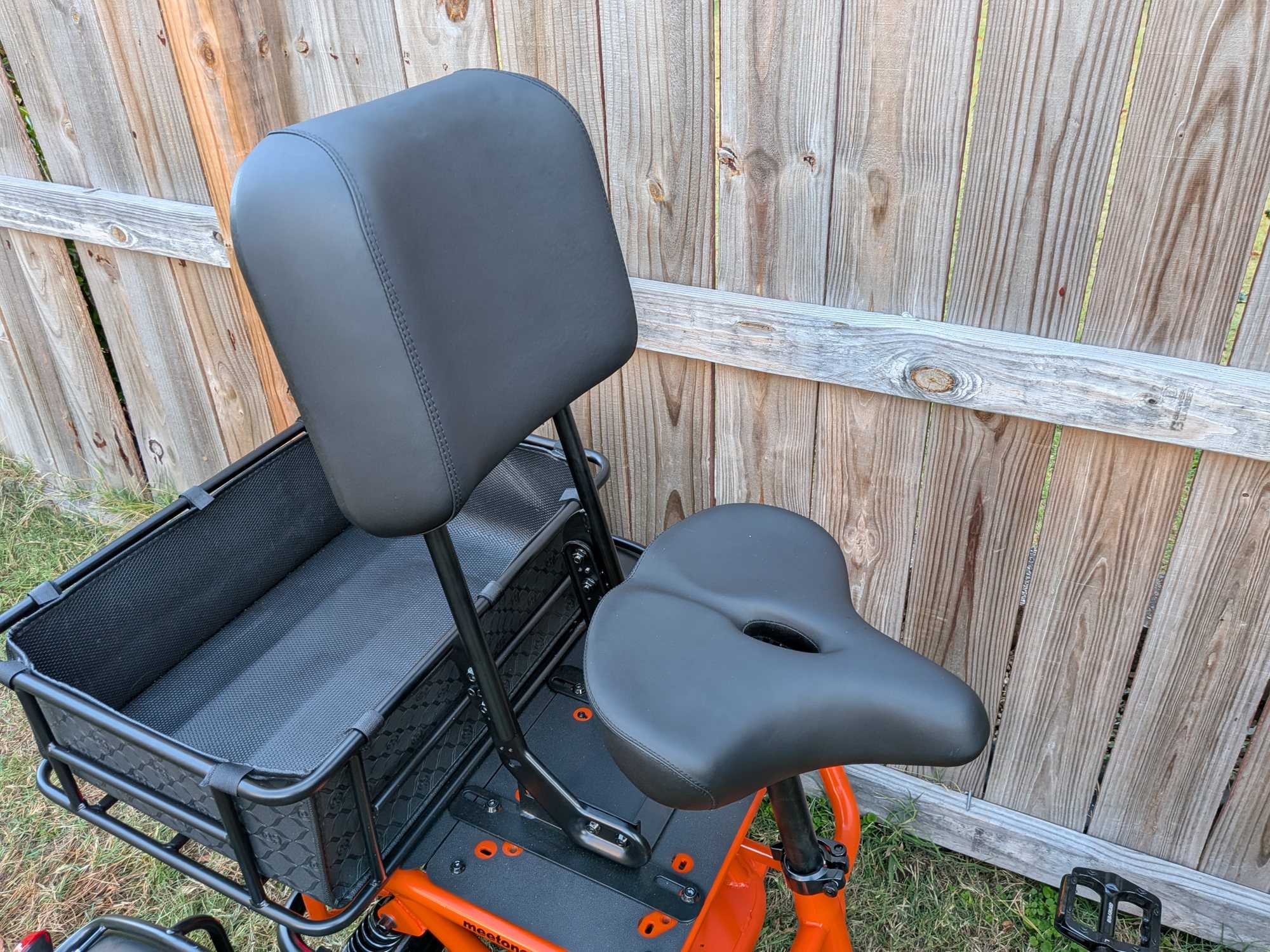
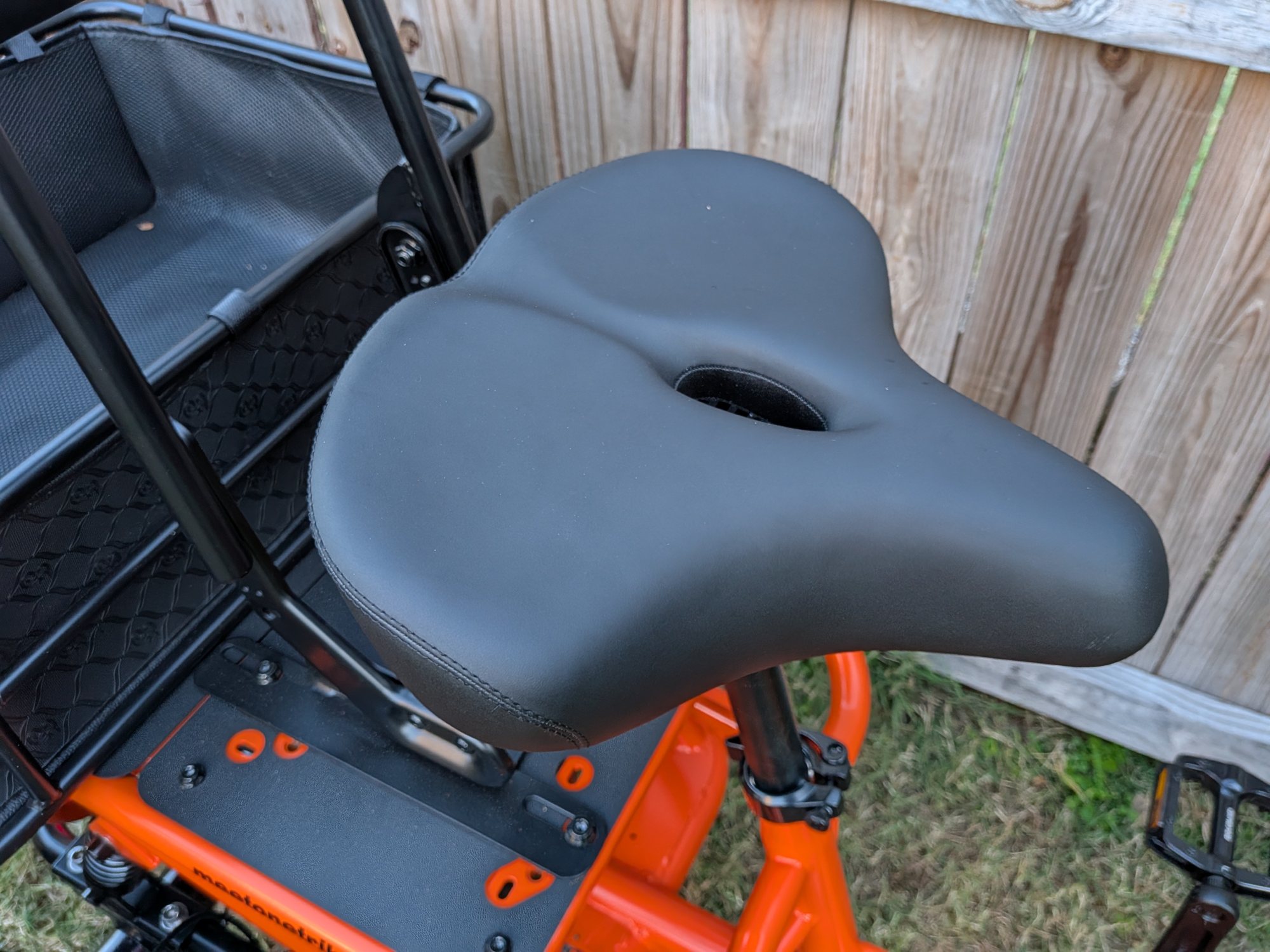
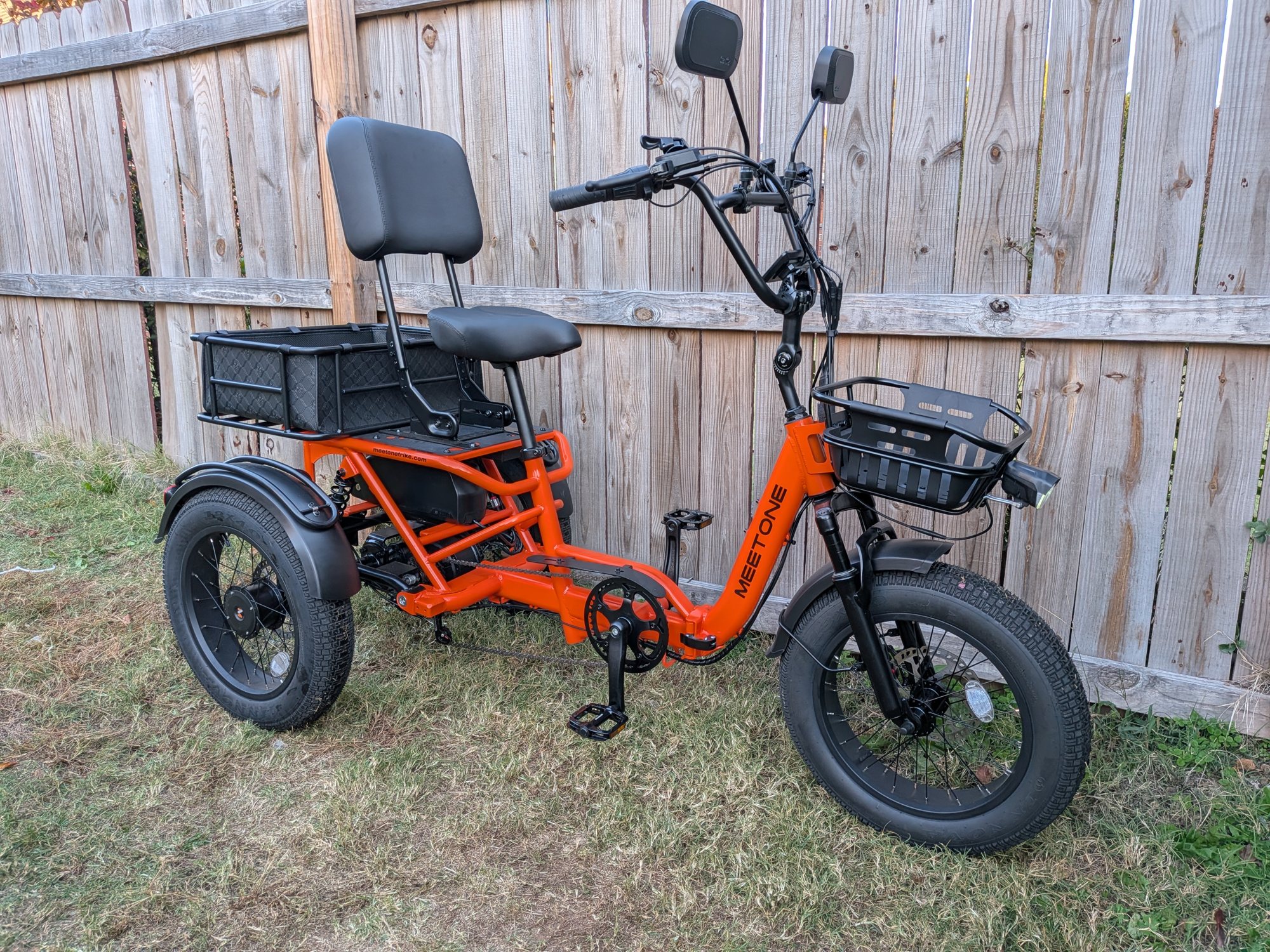
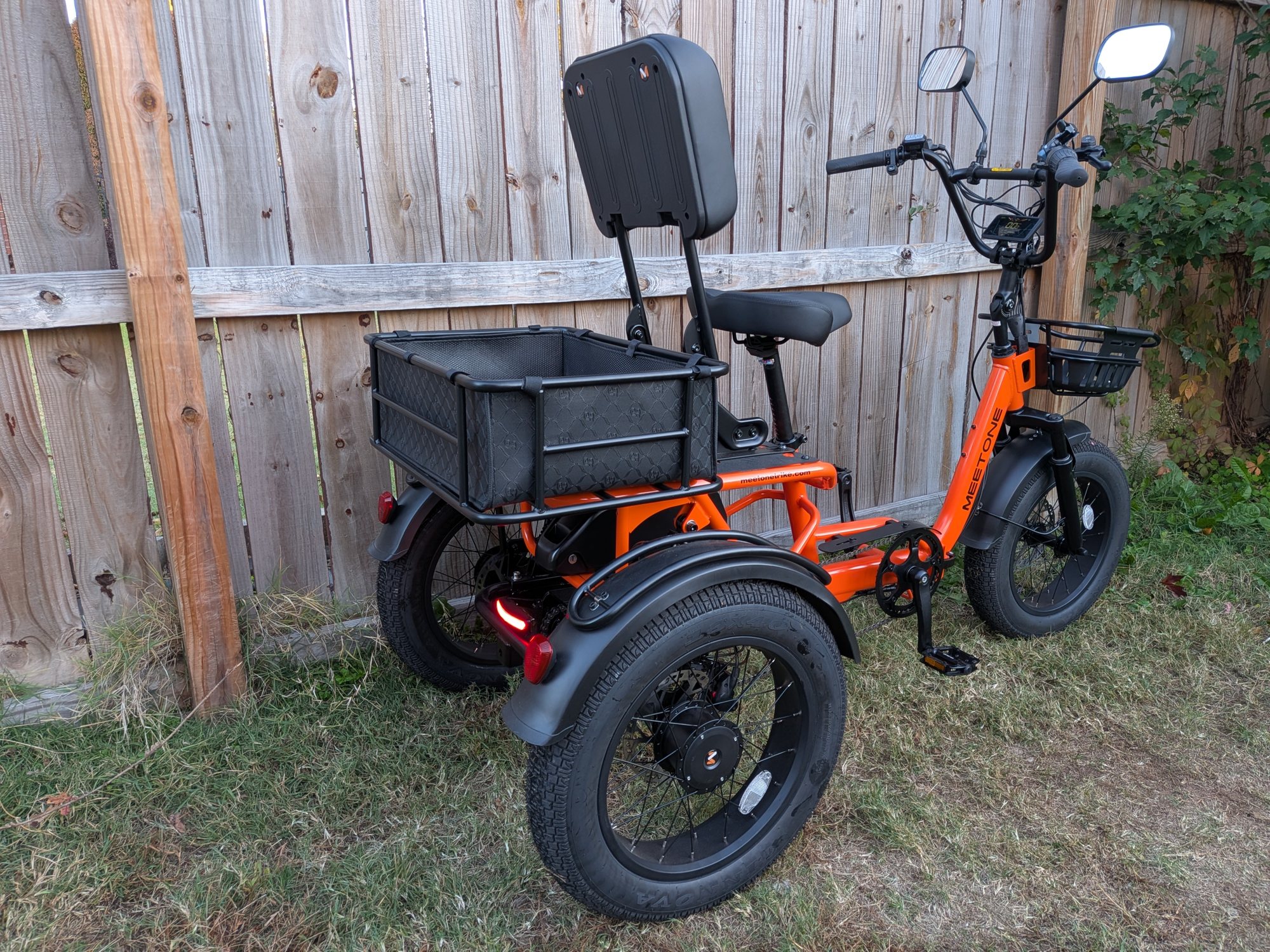
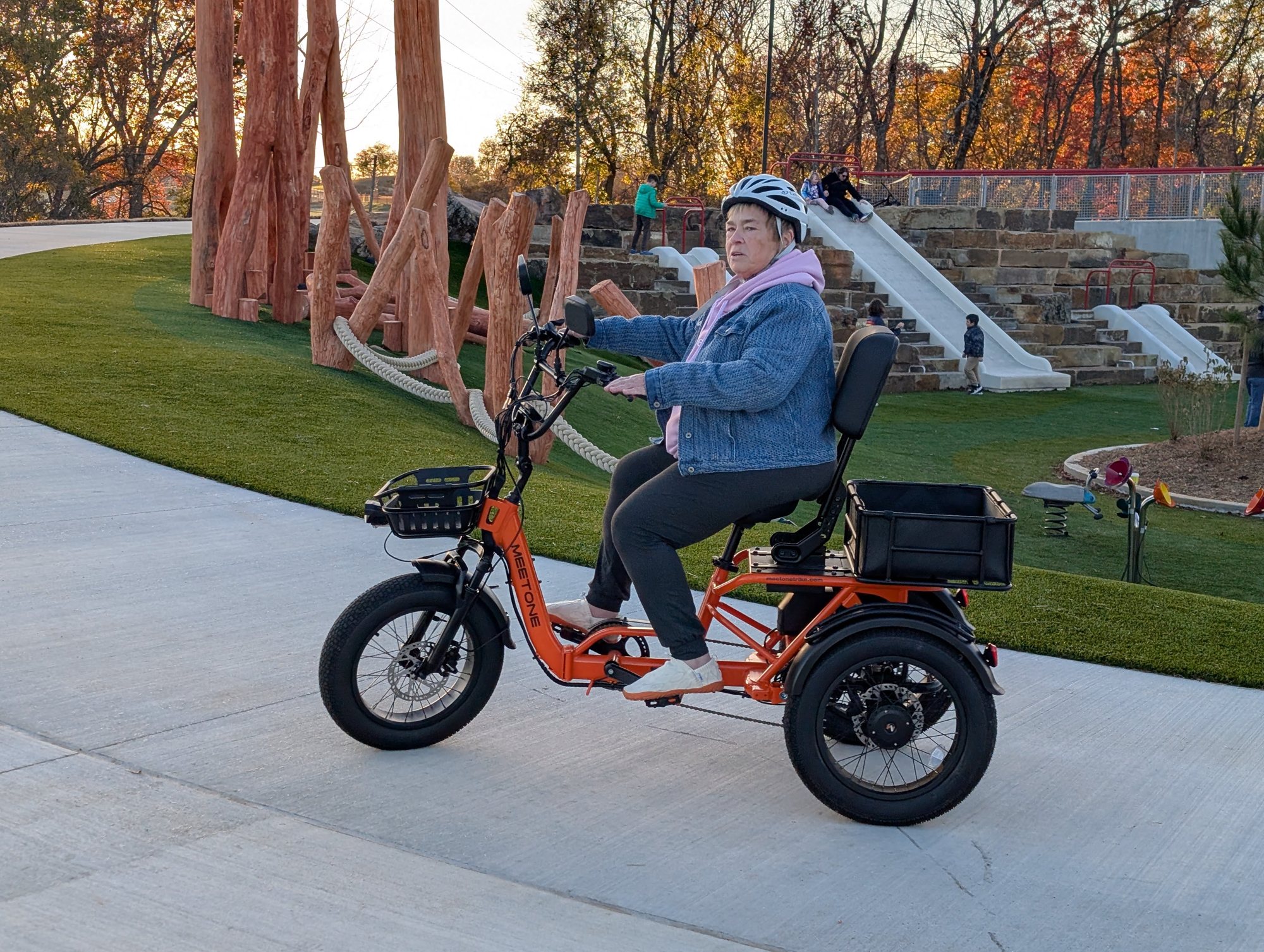
Plenty of etrikes add a backrest, but most are small pads you barely notice once you’re pedaling. This one is tall and curves around your lower back, and you can raise or lower it with a couple of bolts and slide it forward or back on its rails. We pulled the handlebars back toward us to see whether we’d actually feel it while riding, and we did. It’s the feature we’d point to first for anyone who wants real support on longer rides. Meet One calls the layout semi-recumbent, which means the pedals sit slightly ahead of the wide saddle. Don’t expect a laid-back recumbent position, though. You’re still mostly over the pedals with your legs a little out front, which Meet One pitches as easier on your knees, hips, and lower back.
Full Suspension and Fat Tires
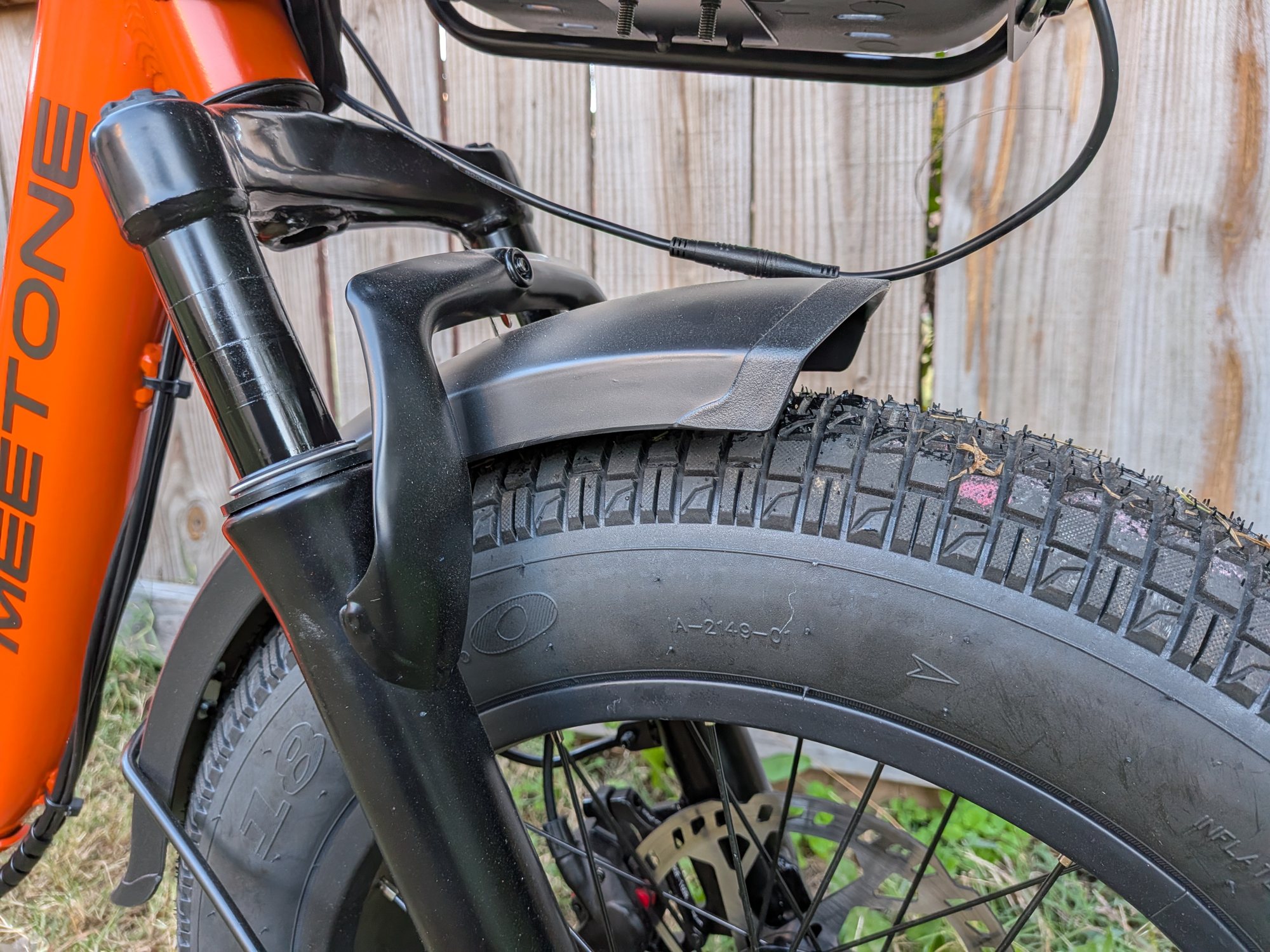
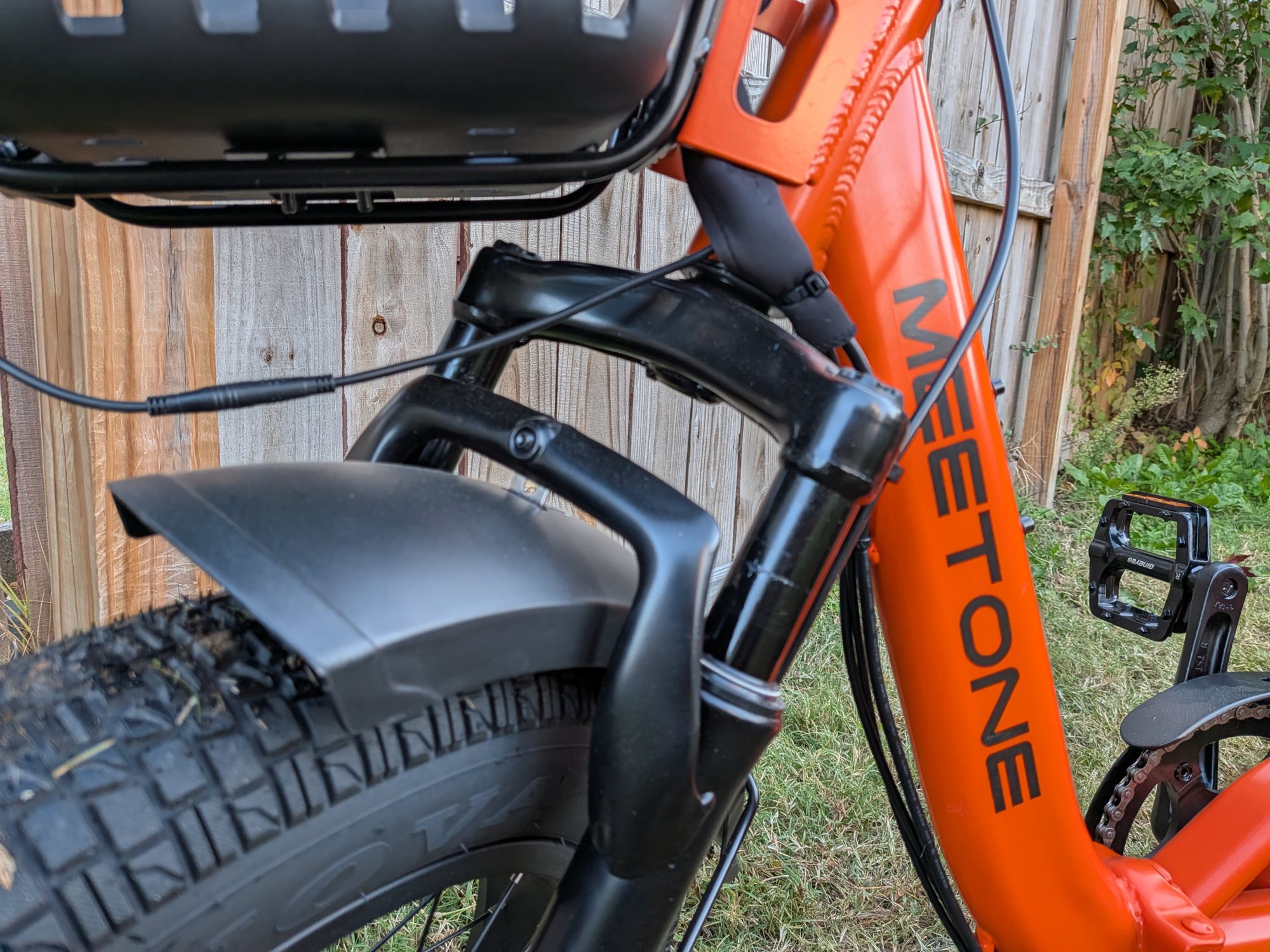
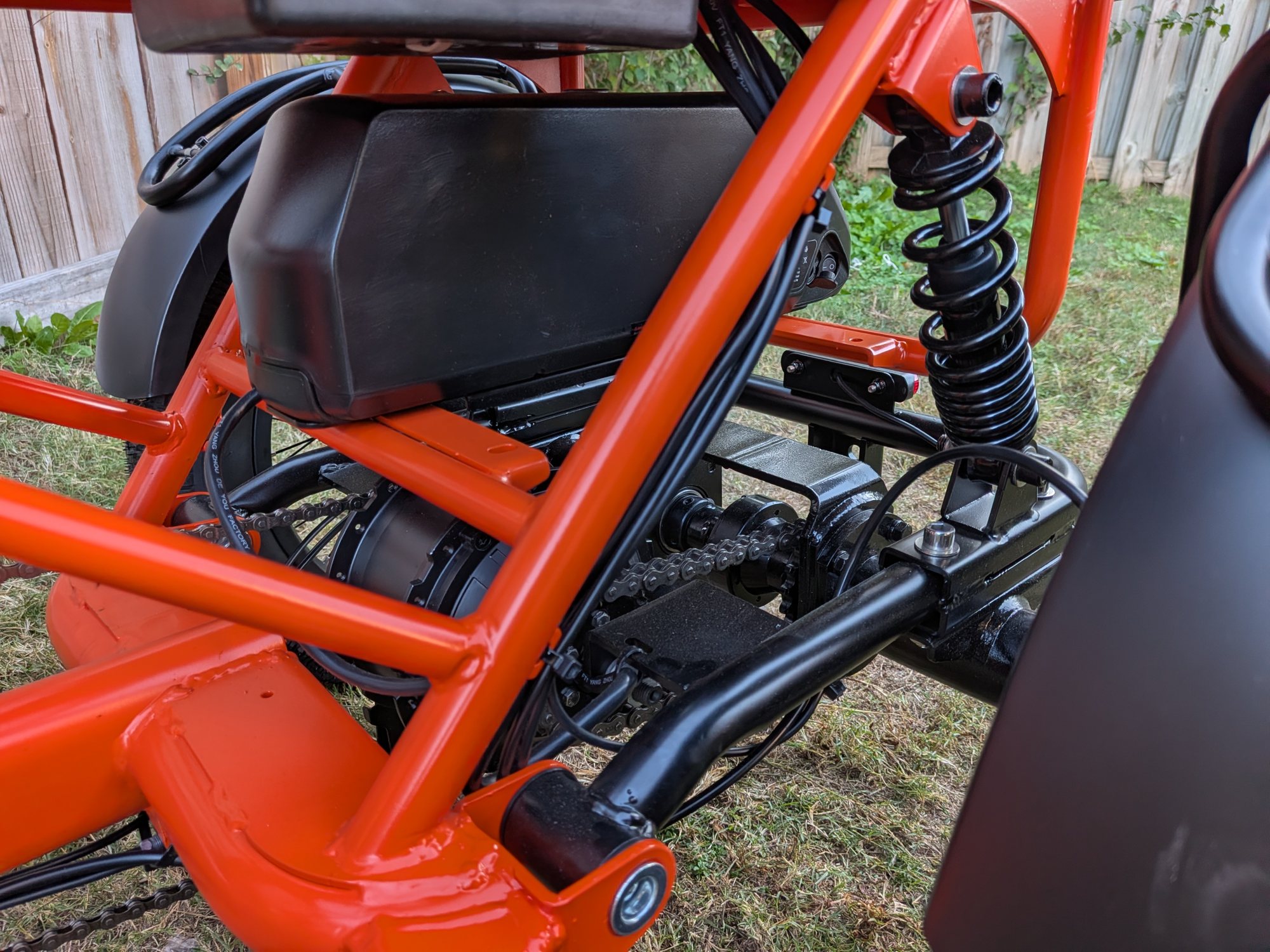
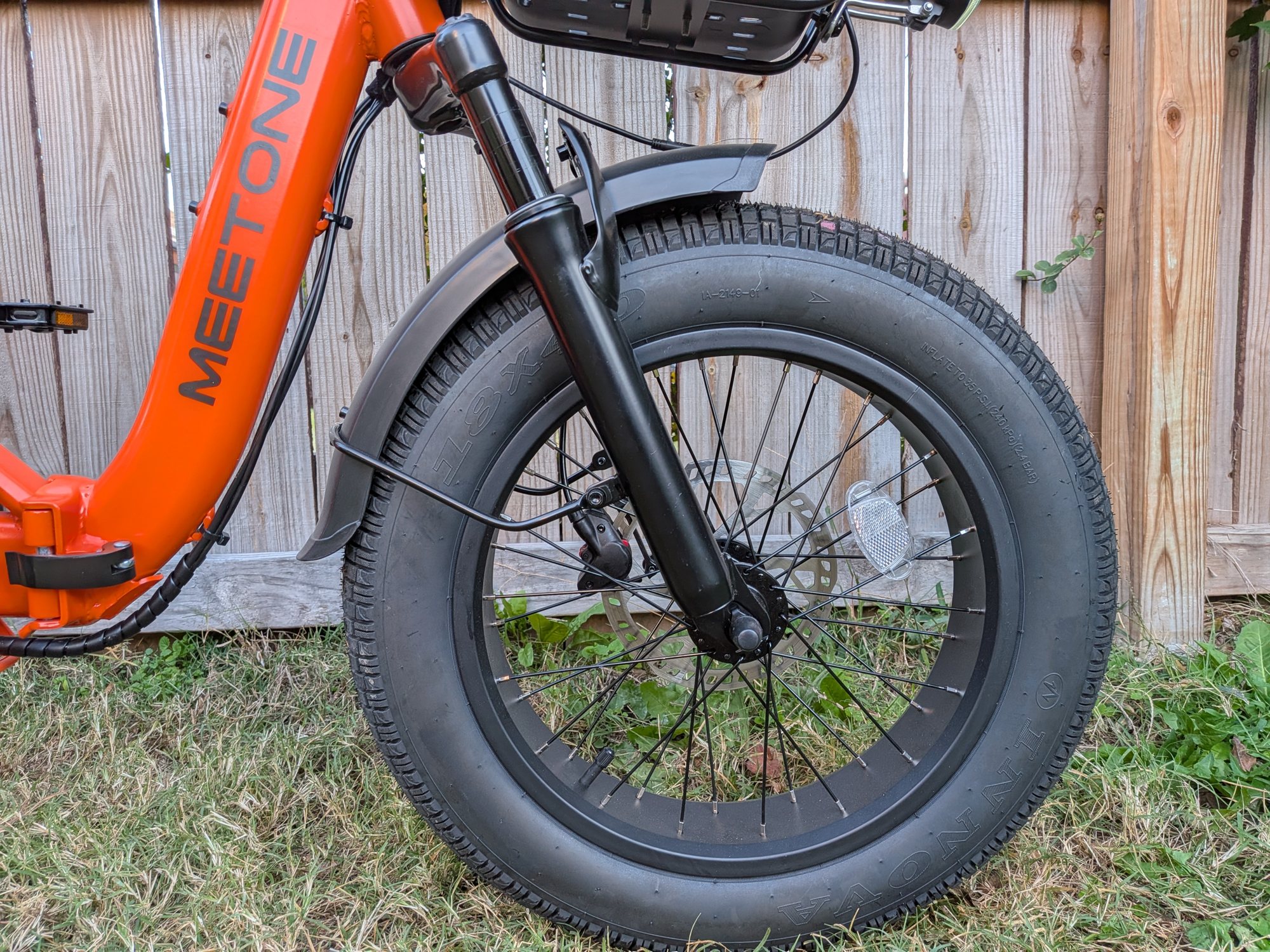
The 2.0 update adds a pair of rear coil shocks to the front suspension fork, which makes this a full suspension etrike. Both ends are basic. The fork has no preload or lockout adjustment, and the rear shocks don’t have much travel, so think of them as a way to take the edge off cracks and curbs rather than a reason to leave the pavement. We could feel the fork working when we rolled up onto a sidewalk, and we’d bet the bumps would hit harder without the rear shocks. Innova 18 x 4 in tires on all three wheels add a little more cushion and make the trike feel planted, and fenders cover all three.
Motor, Battery, and Reverse
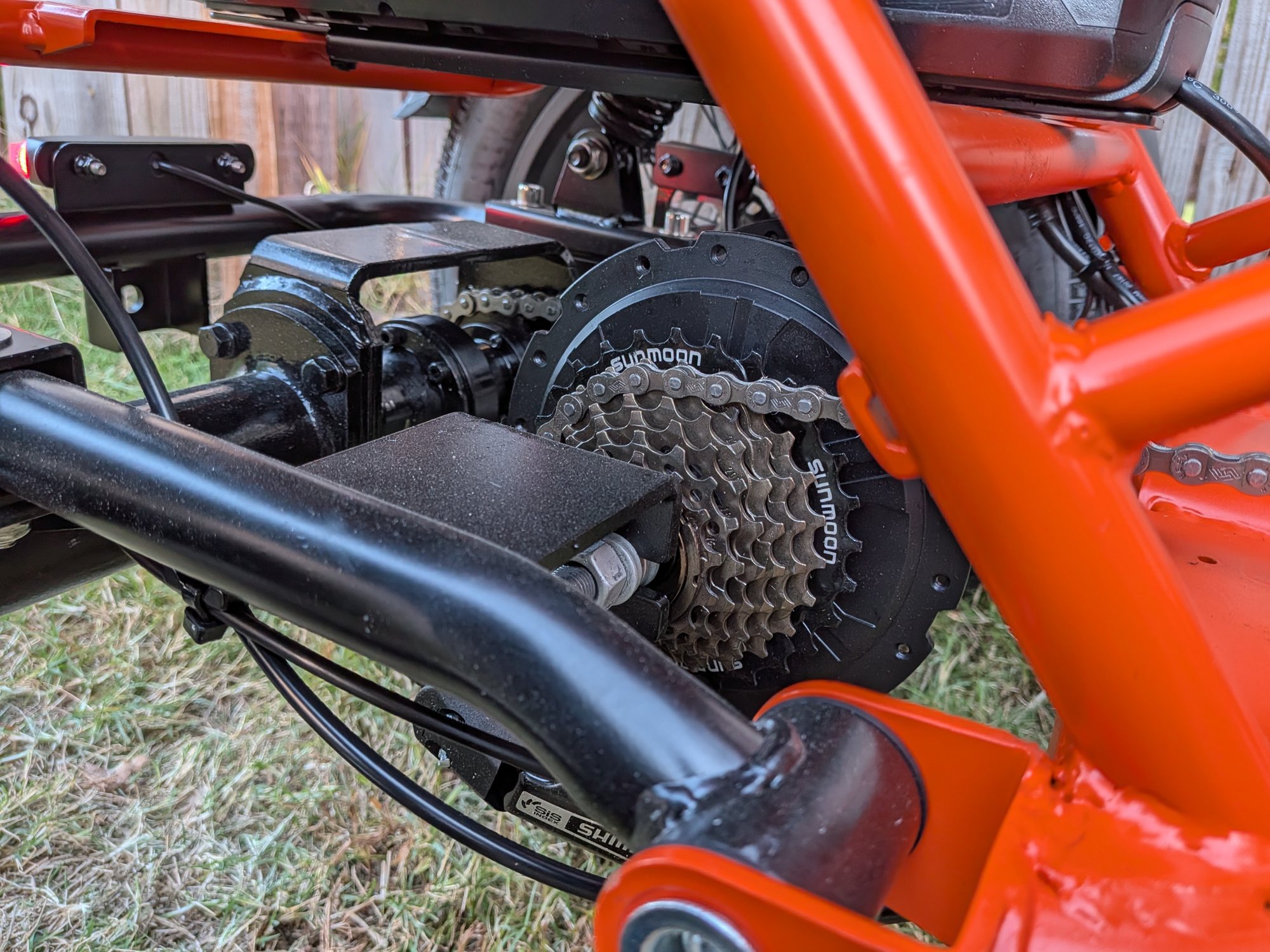
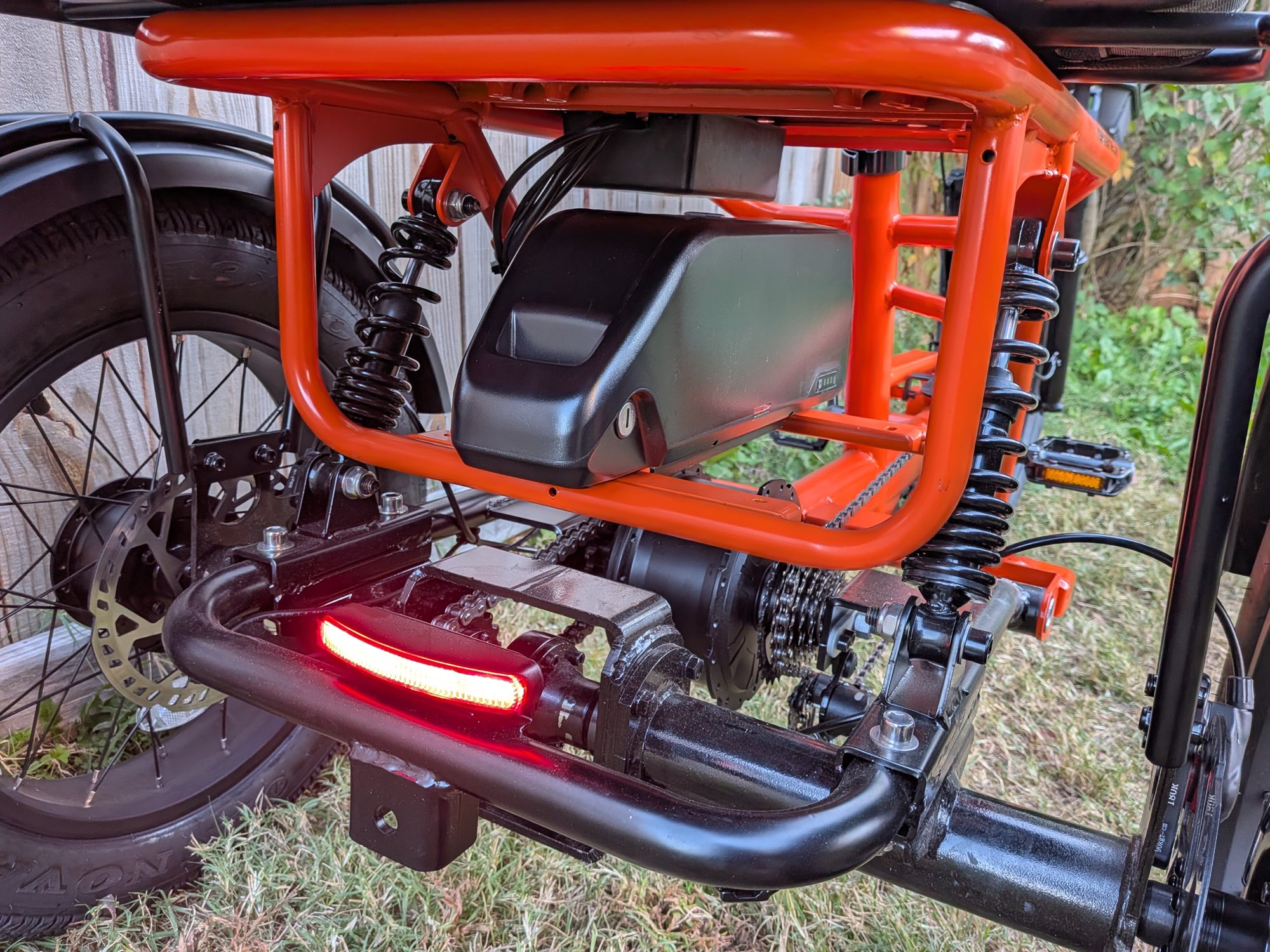
A 750W Sunmoon motor tucked in the rear peaks at 1,200W and puts out 90Nm of torque, and it drives a differential so each rear wheel can spin independently through turns. Power comes from a 48V 20Ah (960Wh) battery with LG cells that slides out from under the rear deck once you unlock it. Meet One claims 40 to 100 miles of range, which we didn’t test. There’s space for a second battery, and the dual-battery option brings total capacity to 40Ah for $500 more at the time of writing. The included 3A charger takes just under seven hours to fill the standard battery from empty.
Reverse is the other headline feature. Drop to pedal assist level 0, hold the down button until the display shows R, and the throttle backs the trike up slowly. Etrikes turn tightly enough that you won’t need it often in the open, but it’s genuinely handy for backing out of a garage or a tight parking spot.
Cockpit, Controls, and Display
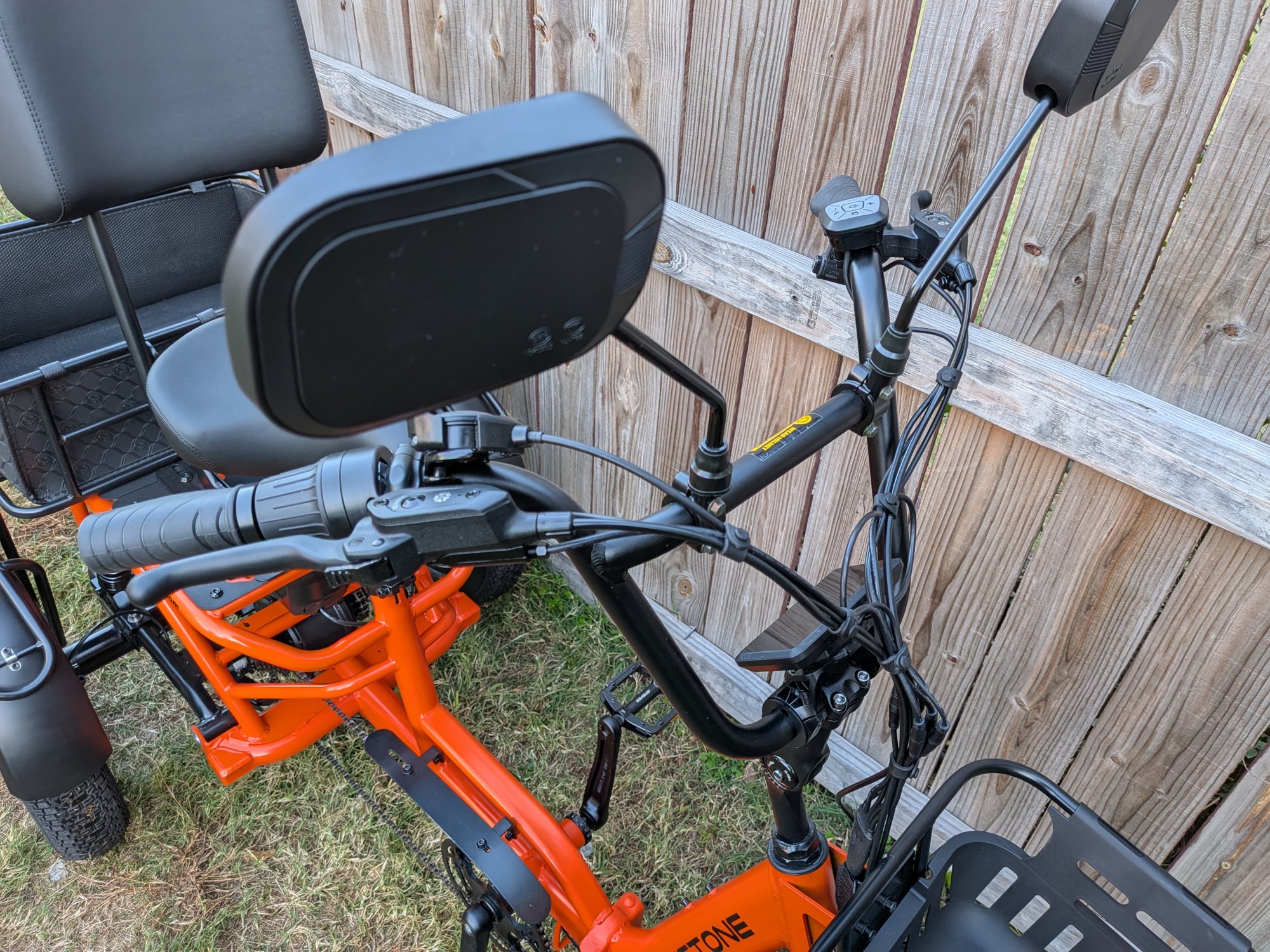
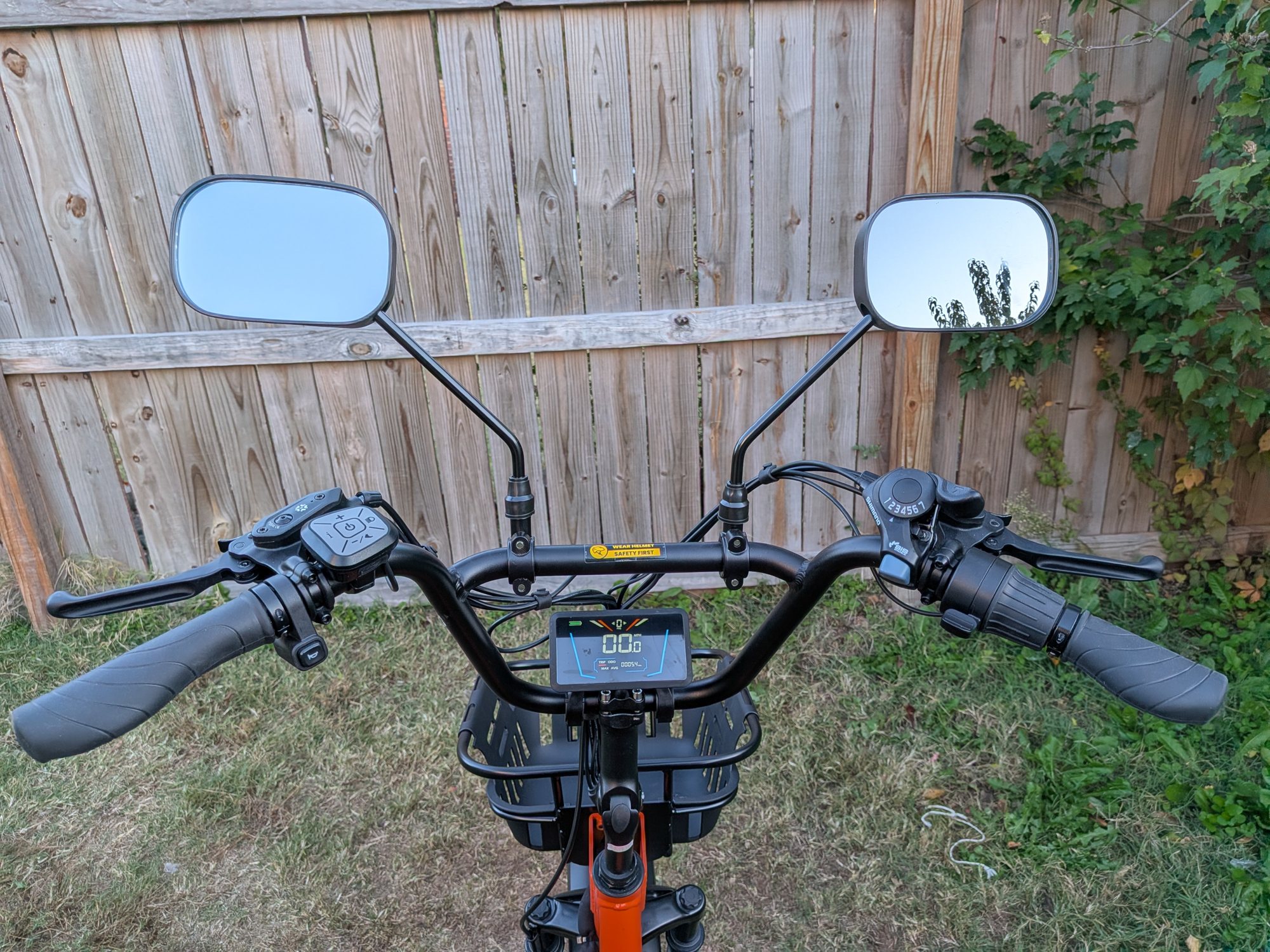
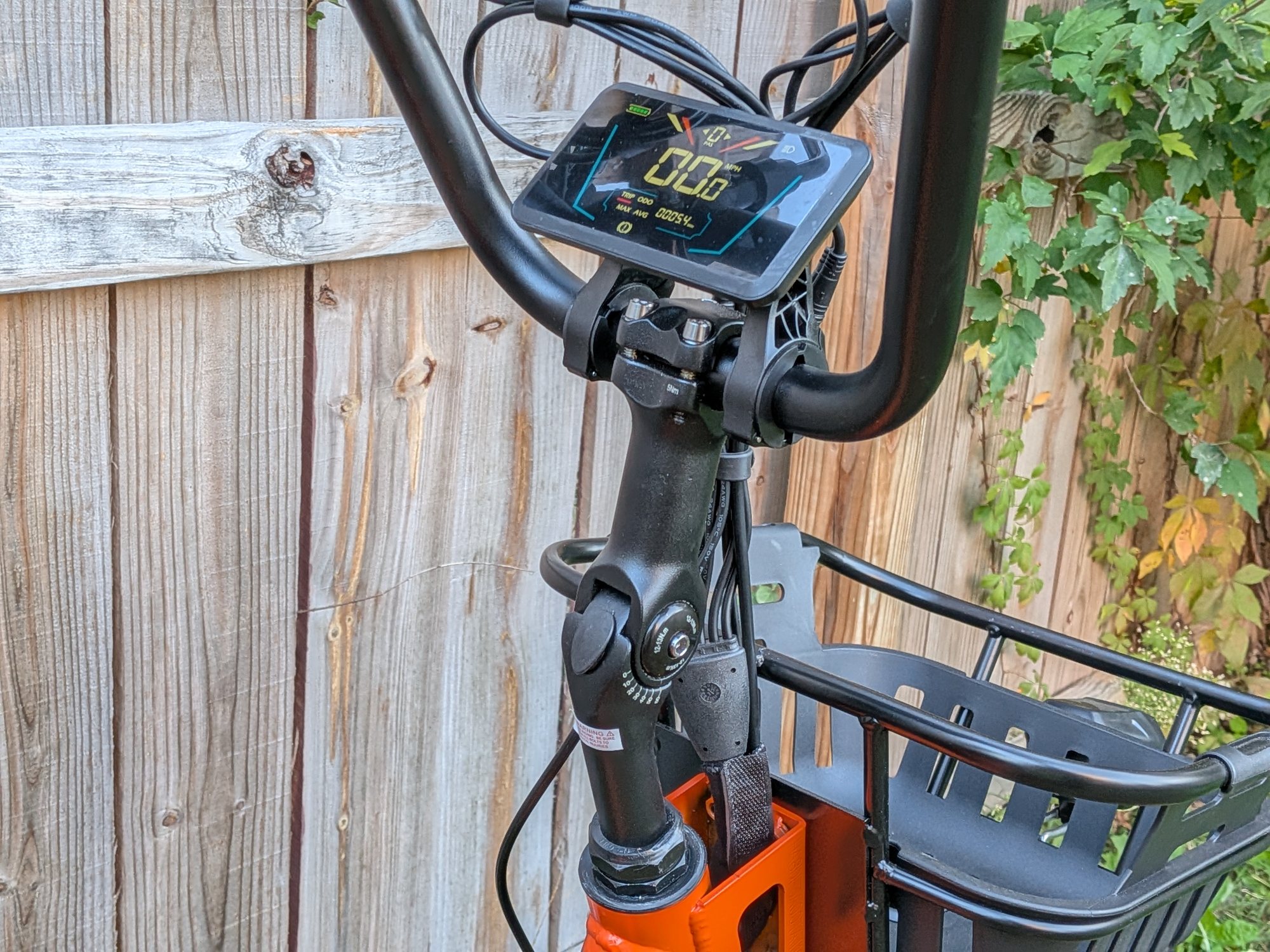
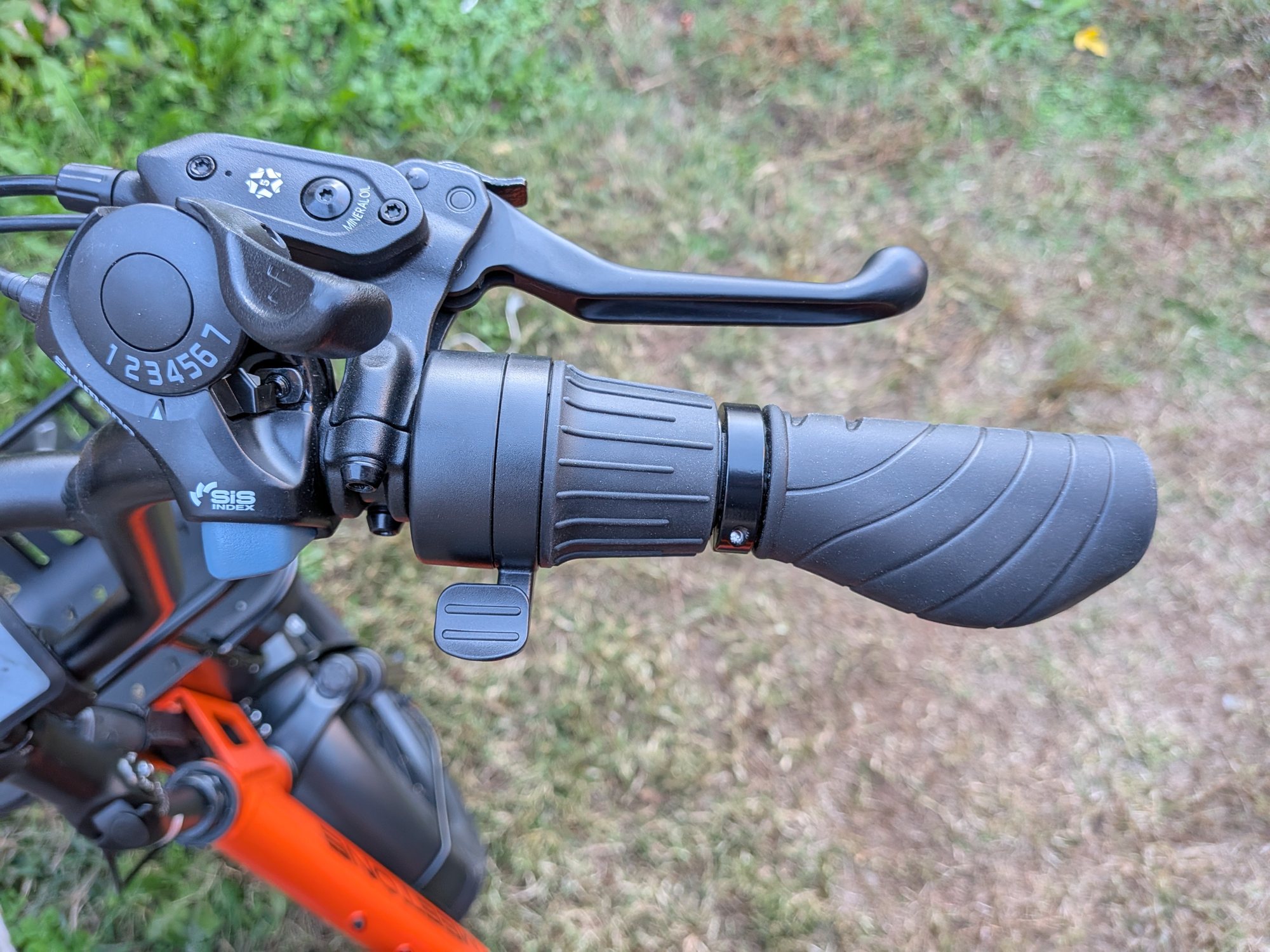
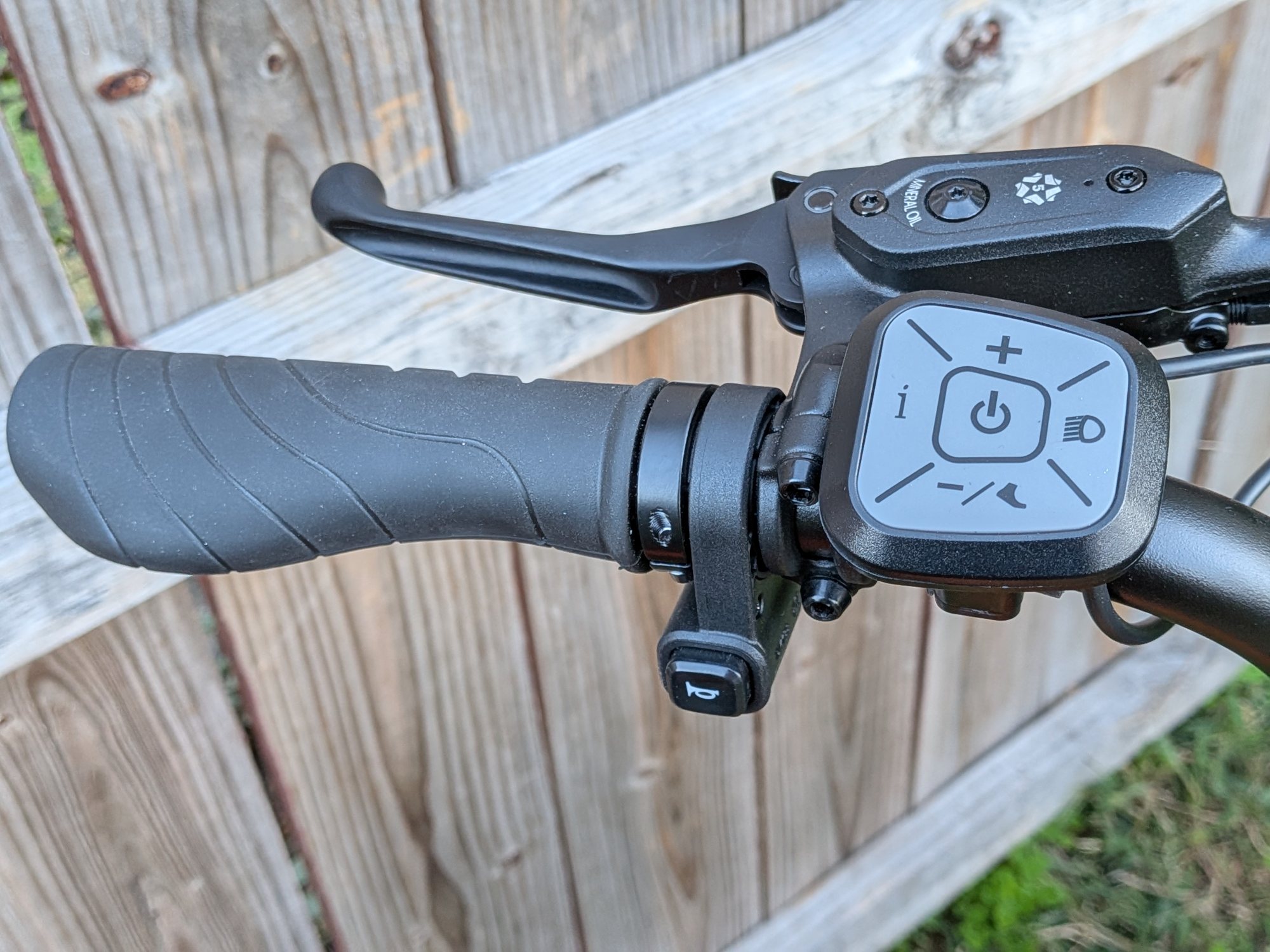
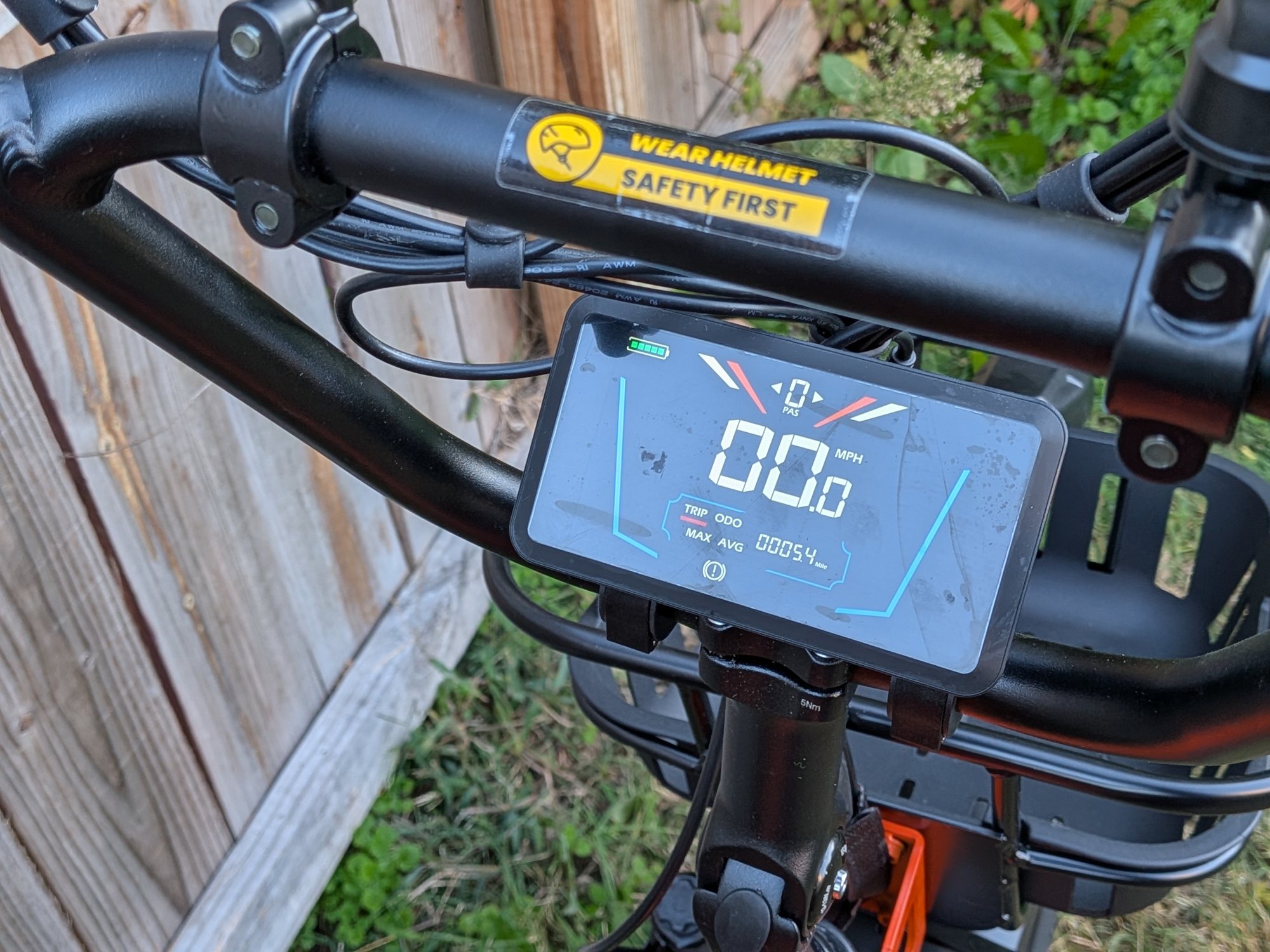
The handlebars are huge and sweep back toward you, and paired with the adjustable stem, they give you a lot of room to set up the cockpit the way you want. The throttle is a twist grip with a small nub, so you can also push it with your thumb if that’s easier on your hands. On the left, a simple control pad handles power, assist level, the info screen, and the lights, and a horn button sits nearby. The color display shows battery level, assist level, speed, trip, odometer, max and average speed, plus voltage and amps, and it dims when the lights are on. Mirrors, locking ergonomic grips, and a USB-A charging port under the controls round it out.
Brakes and Drivetrain
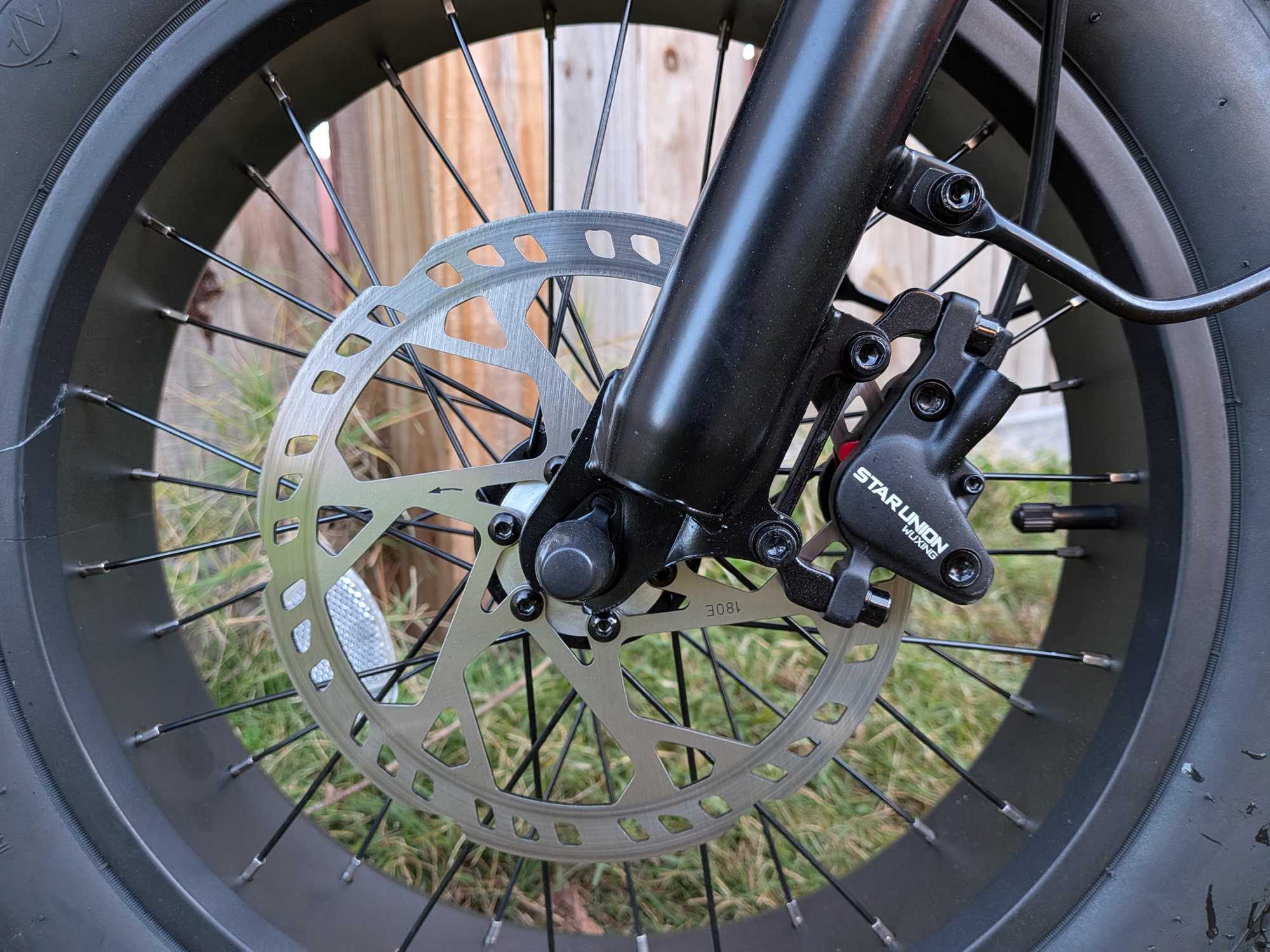
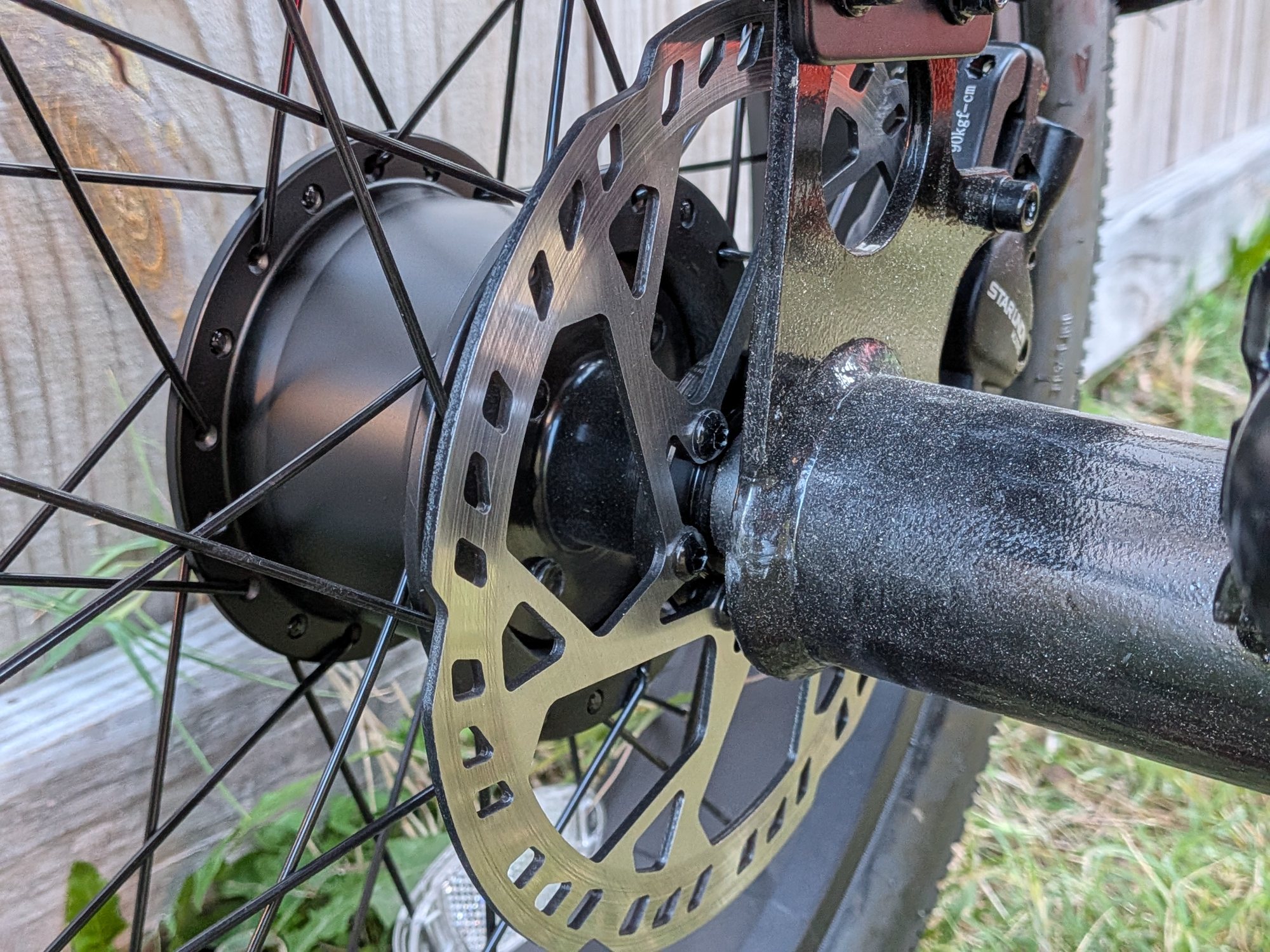
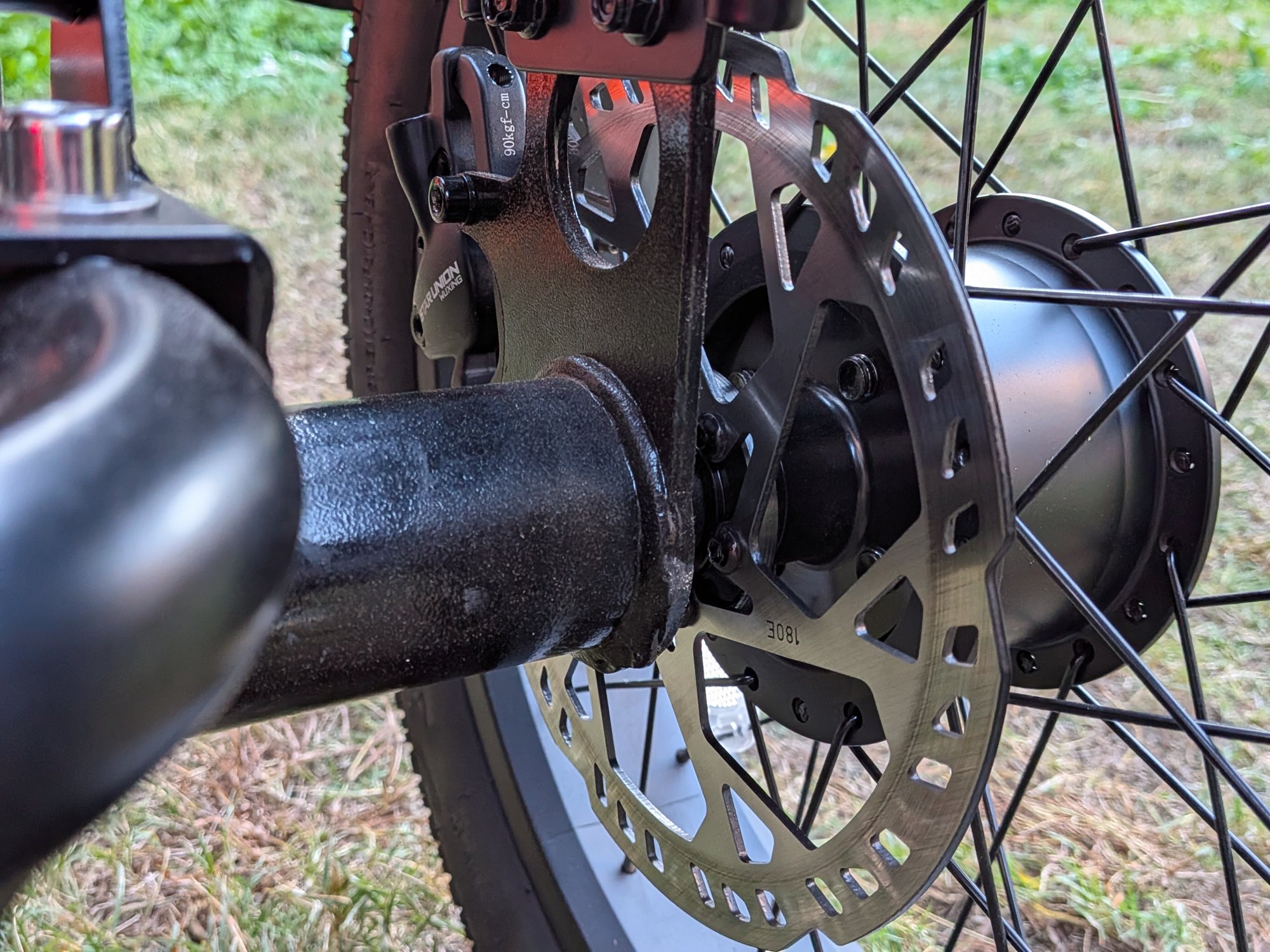
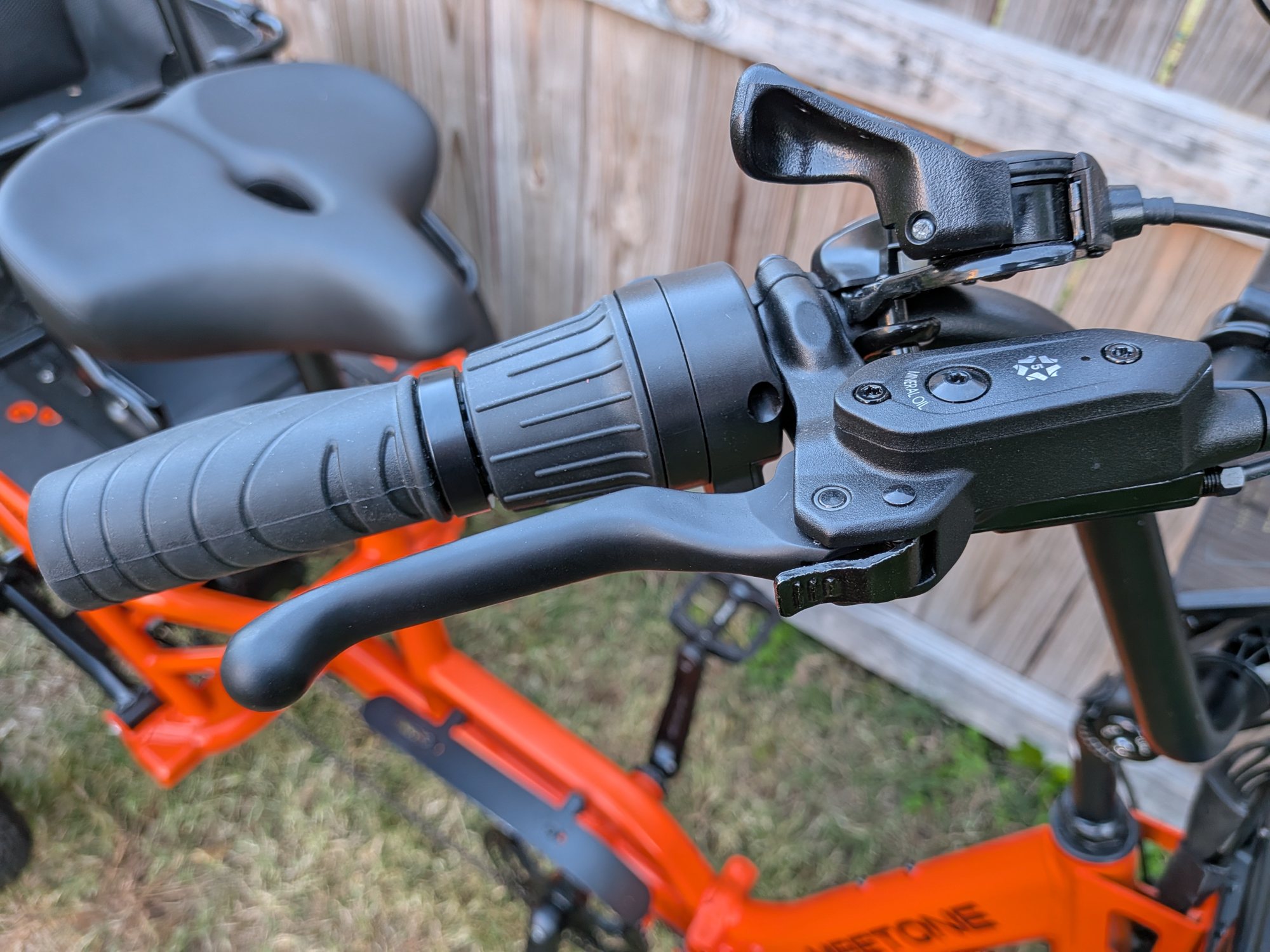
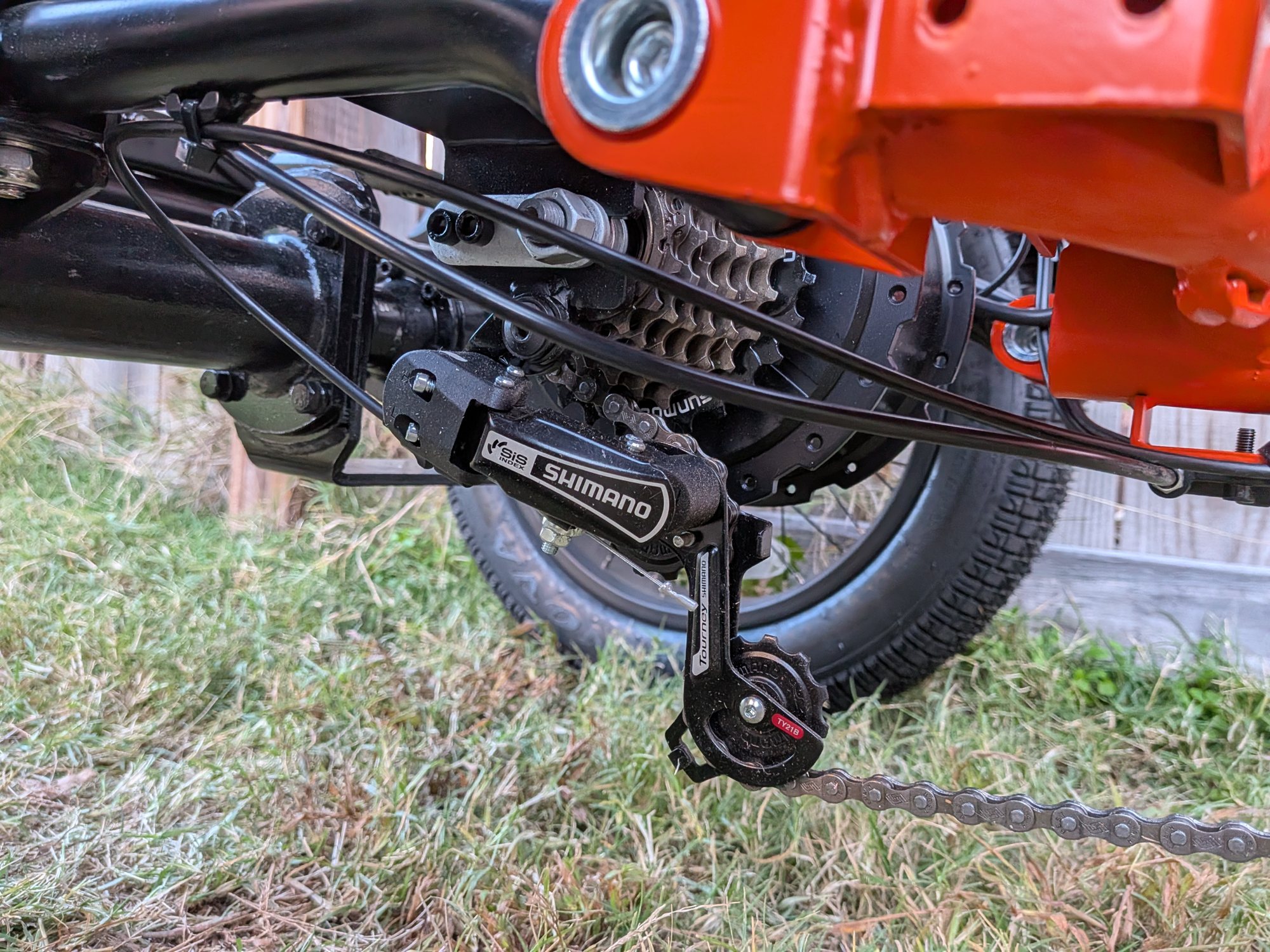
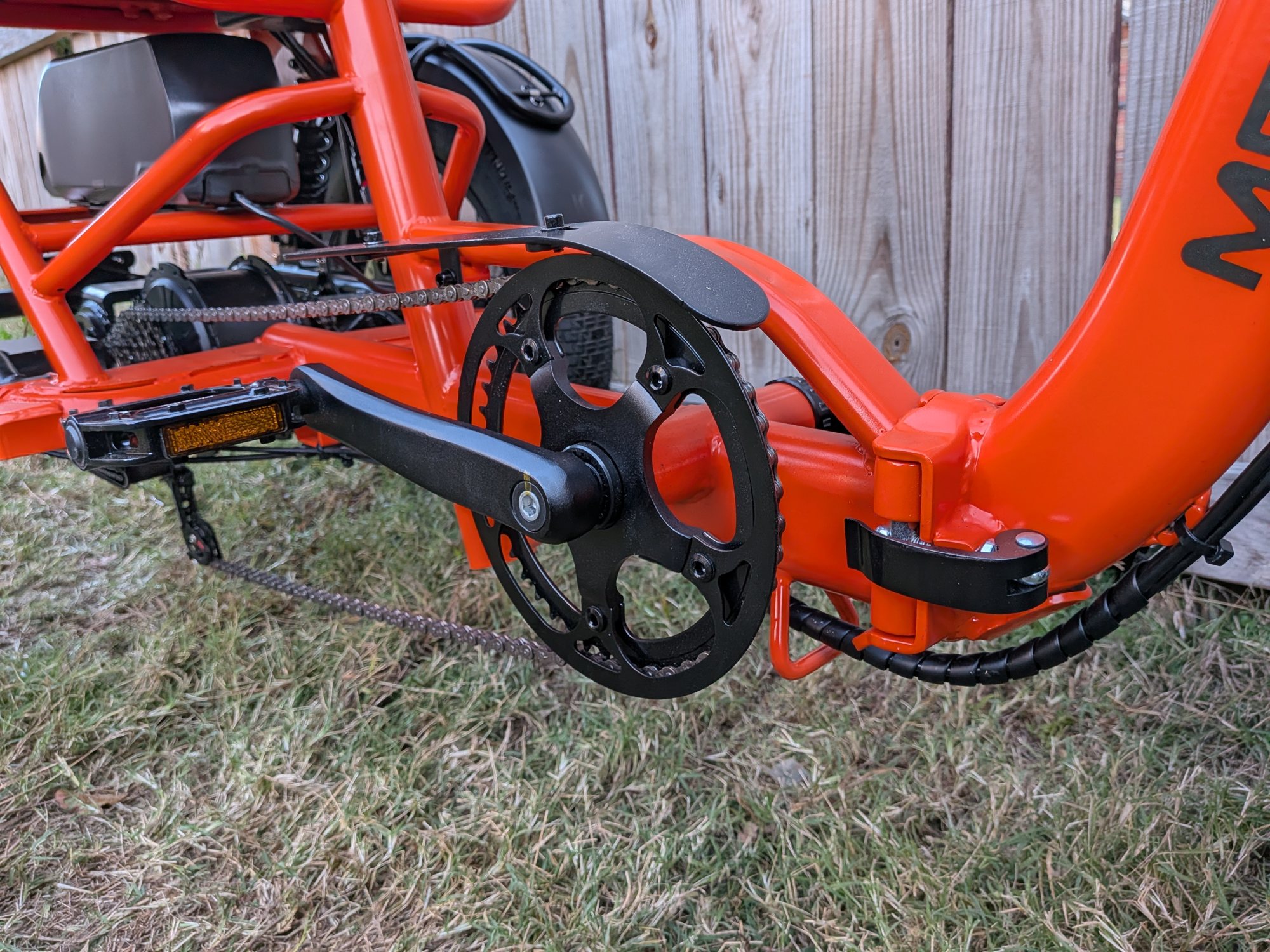
Star Union hydraulic disc brakes with 180mm rotors cover all three wheels, with a separate brake on each rear wheel, and both levers have motor cutoffs and a parking brake. To set it, you squeeze the lever and push a small latch down. That matters on a trike with no kickstand, though we prefer the ratcheting style some competitors use. Most etrikes in this range are single speeds, so the Shimano Tourney 7-speed drivetrain (14-28T cassette with a 44T chainring and chain guard) is a welcome extra for anyone who wants to choose how hard they work.
Lights, Baskets, and Hitch
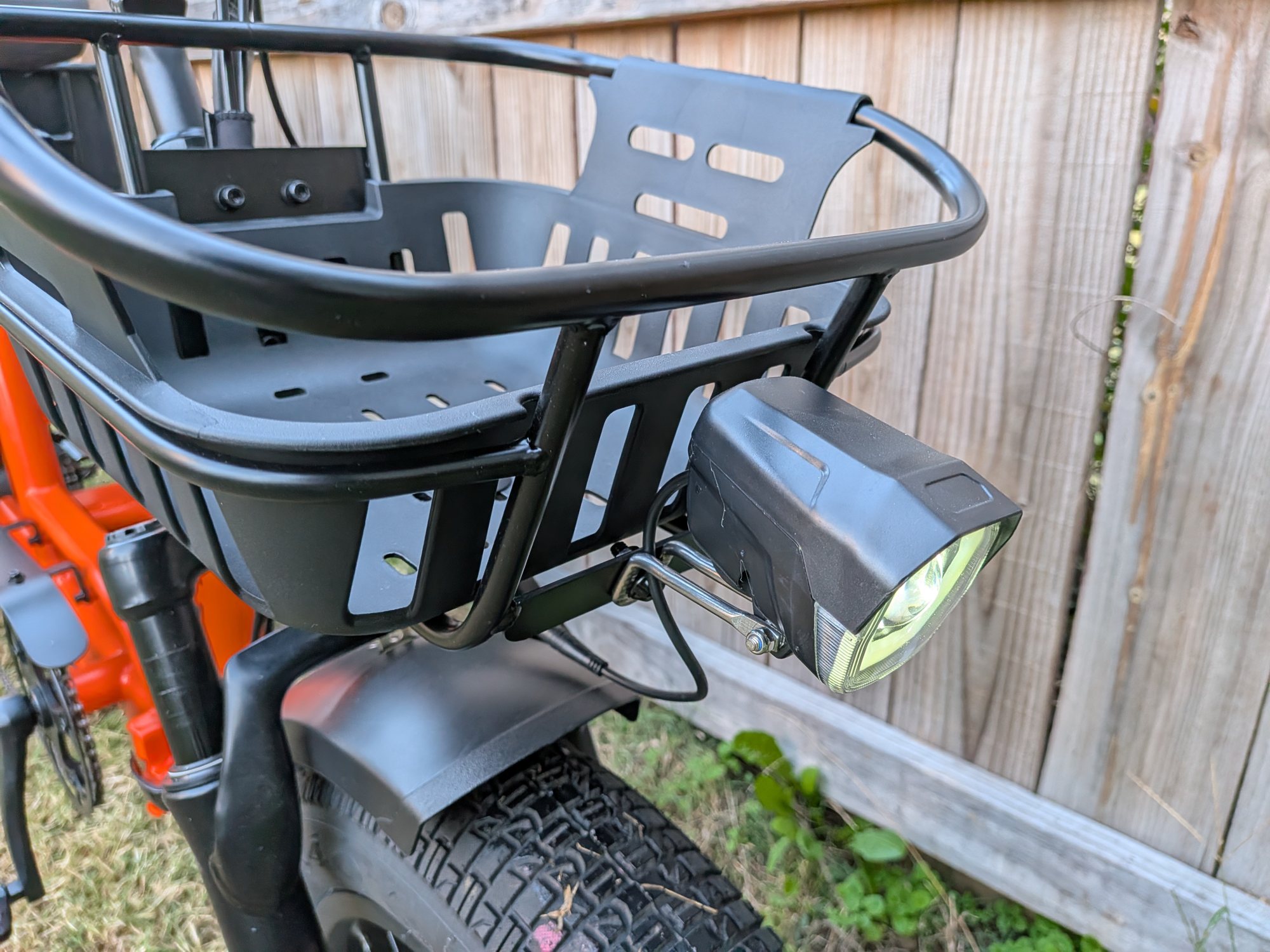
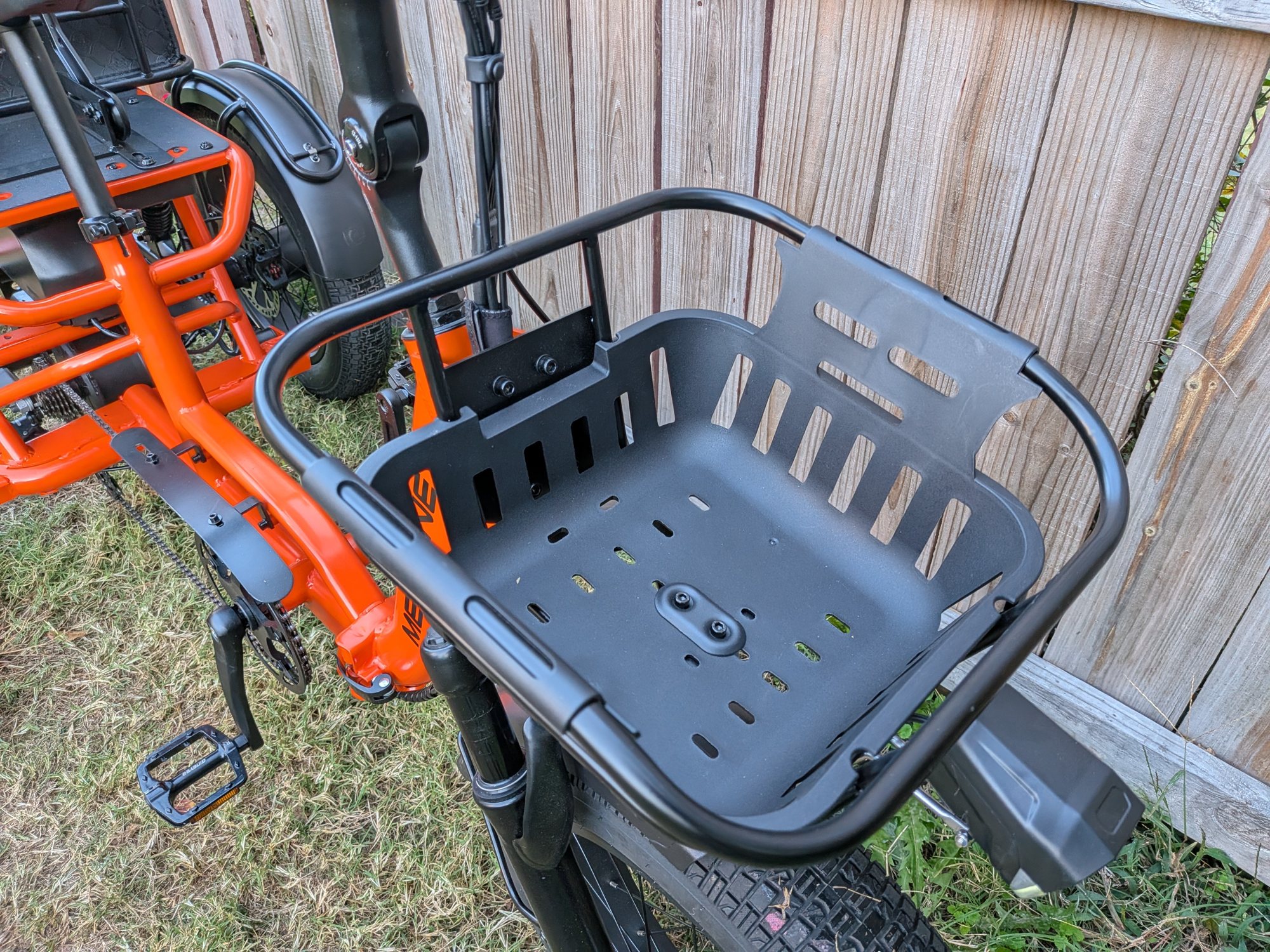
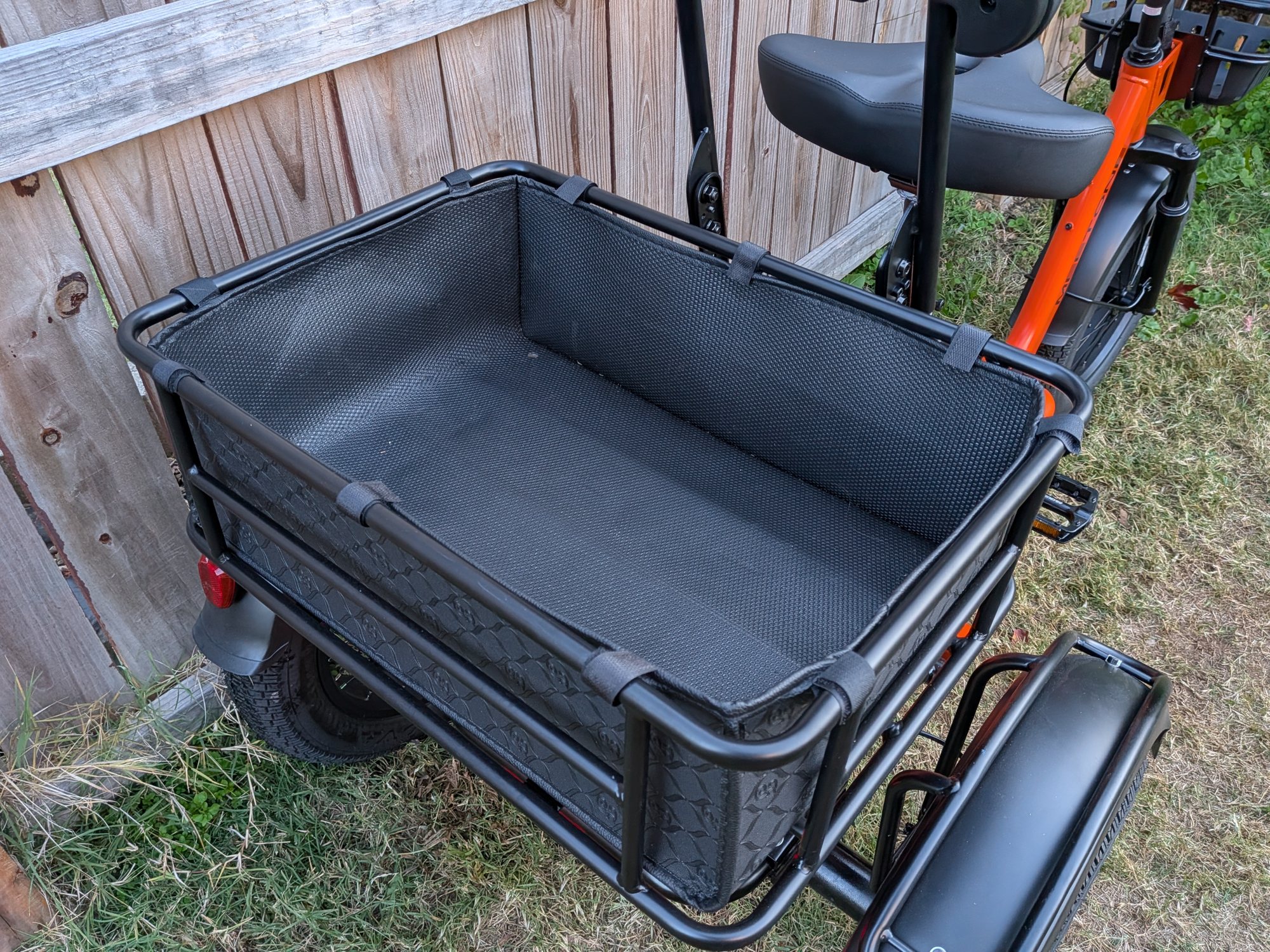
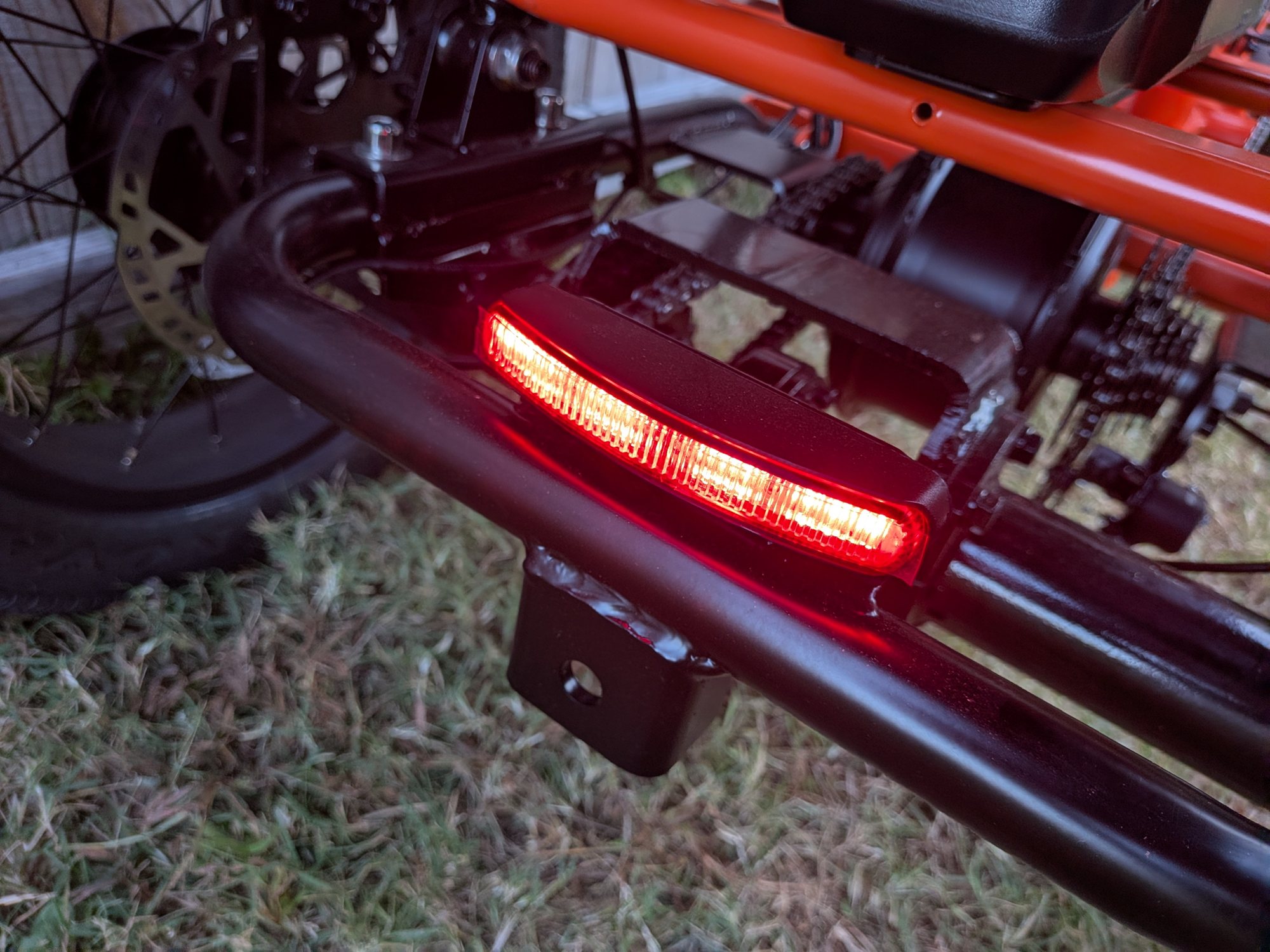
Meet One includes both a front basket and a large rear basket, so groceries or a bag for the park come along without extra purchases. The headlight runs off the main battery, and the rear light bar brightens when you brake. Below the rear axle, there’s a hitch mount for towing a trailer, and Meet One sells its own cargo trailer alongside the Breeze Pro 2.0. The box also includes a cable lock, the tools you’ll need for assembly, and touch-up paint.
Frame, Options, and Fit
The low step-through frame folds at a quick release hinge, and folded, the front wheel tucks neatly beside the left rear wheel. It’s not the worst fold we’ve seen, helped by the small front basket, but it’s still a big package that needs a larger SUV, and you’ll want to loosen the stem plate or pull the seat post to get it lower. The backrest stays put either way. Fit and finish are about what you’d expect at this price, with external cables and a basic folding mechanism. You can pick the standard seat with the backrest or add Meet One’s premium seat with armrests for $250 more, and either battery setup, in two colors:
- Orange
- Gray
It’s a one-size trike that Meet One lists for riders from 4’7″ to 6’3″. Our 6′ tester with a 32″ inseam had room to spare with the seat in its highest position, and the seat drops low enough for much shorter riders, so we think that range holds up. It’s rated for a 450 lb max load, and it’s a heavy trike. Meet One lists it at 127.9 lb without packaging, and it was too big for our scale, so we couldn’t weigh it ourselves. Expect some assembly, too. You’ll attach the rear wheels, backrest, and handlebars, and Meet One has an assembly video worth watching before the box arrives.
Meet One Breeze Pro 2.0 Specifications
Here are the full specs for the Meet One Breeze Pro 2.0, from Meet One’s listing and our own testing.
| Spec | Meet One Breeze Pro 2.0 |
|---|---|
| Price | $1,699 (standard seat, single battery) at the time of writing; $2,199 with dual batteries |
| Motor | 750W rear Sunmoon motor, 1,200W peak, rear differential |
| Torque | 90Nm |
| Pedal Sensor | Torque |
| Battery | 48V 20Ah (960Wh), LG cells, removable; dual-battery option for 40Ah |
| Claimed Range | 40 to 100 miles |
| Charger | 3A, just under 7 hours from empty |
| Top Speed | 15 mph as shipped; 20 mph claimed |
| Throttle | Twist grip with thumb nub |
| Pedal Assist | 3 levels (up to 5 in settings), plus reverse |
| Display | Color LCD |
| Drivetrain | Shimano Tourney 7-speed, 14-28T cassette, 44T chainring |
| Brakes | Star Union hydraulic disc, 180mm rotors (one per wheel), parking brakes, motor cutoffs |
| Suspension | Front suspension fork, dual rear coil shocks |
| Tires | Innova 18 x 4.0 in |
| Lights | Headlight, tail light with brake light |
| Max Load | 450 lb |
| Rider Height | 4’7″ to 6’3″ |
| Weight | 127.9 lb (per Meet One; too big for our scale) |
| Certifications | UL 2849 (by SGS); battery UL 2271 |
| Warranty | Up to 5 years (per Meet One) |
| Colors | Orange, Gray |
| Included | Front and rear baskets, fenders, mirrors, USB-A port, cable lock, tools, touch-up paint |
Real World Performance Testing
Throttle
Throttle power depends on your assist level, and as shipped, the speeds are gentle: about 3 mph in level 1, 7 mph in level 2, and 15 mph in level 3, where it ramps in fairly quickly. We couldn’t feather the throttle below those speeds in the lower levels, but in level 3, a light twist lets you cruise anywhere under 15 mph, so you can leave it there and simply give it less throttle. That low, predictable power is exactly what most trike riders want, and having both twist and thumb options helps anyone with limited grip strength.
| Speed by Assist Level | Level 1 | Level 2 | Level 3 | Level 4 | Level 5 |
|---|---|---|---|---|---|
| Throttle (as shipped) | 3 mph | 7 mph | 15 mph | – | – |
| Pedaling (as shipped) | 4 mph | 7 mph | 15 mph | – | – |
| Pedaling (5-level setting) | 4-5 mph | 6 mph | 8 mph | 12 mph | 15 mph |
| Unlocked top speed | 5-6 mph | 11 mph | 20 mph | – | – |
Torque Sensor
A torque sensor normally means more leg effort brings more motor power. Here, every assist level has its own speed cap, and the low caps change how it feels. In levels 1 and 2, pushing harder didn’t bring noticeably more help, and level 1 had real pedal resistance even in first gear. Level 3 ramps in slowly, and it’s the one level where we clearly felt the sensor reward a harder push, right up to the 15 mph cap. It’s still an easy, accessible ride. Just know that if you want resistance on the pedals, you’ll get it, and if you want the motor to respond to your effort, you’ll need the top level.
Our biggest tip for owners is to raise the number of assist levels to five in the advanced settings. That spreads the caps out to roughly 4 to 5, 6, 8, 12, and 15 mph, so you can settle into whatever speed feels comfortable instead of jumping from 7 to 15. Level 5 takes a little work to reach 15 mph, but not much.
Top Speed, Handling, and Reverse
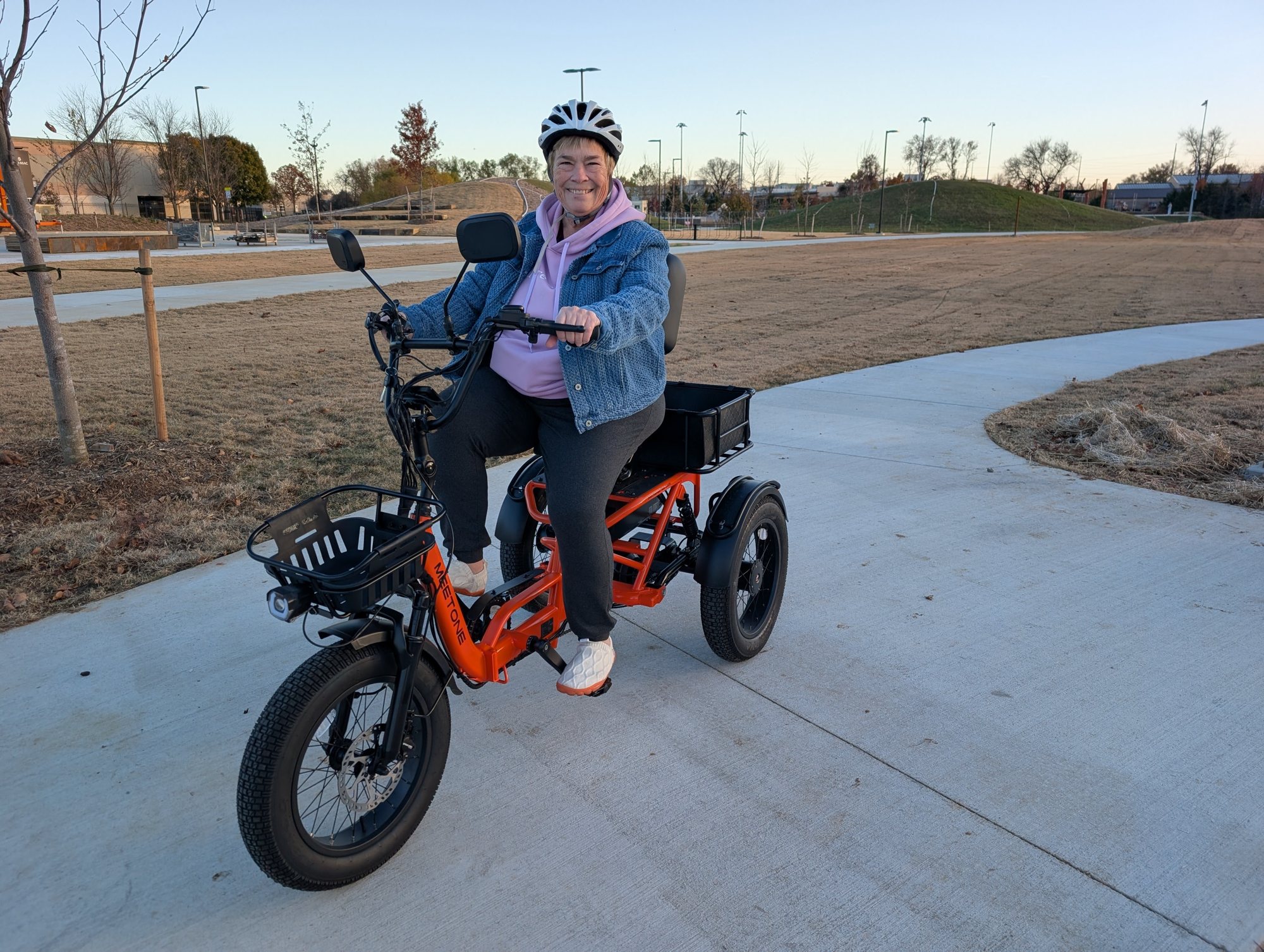
Meet One lists a 20 mph top speed, and with the limit unlocked, we did reach it on throttle in level 3 and while pedaling, though we were close to ghost pedaling by then. We wouldn’t ride it there. Any turn at 20 mph feels sketchy on a trike, and we wanted to slow way down even for gentle bends, so most riders should leave it capped at 15. At lower speeds, it’s stable and nimble enough to turn around on the inside rear wheel, and reverse makes a Y-turn easy. Uneven ground is the adjustment for anyone coming from two wheels. Rolling up onto a sidewalk or over a dip pushes one rear wheel higher than the other and jostles you sideways, which isn’t dangerous unless it’s steep, but takes some getting used to. In our brake test, the hydraulic brakes had more stopping power than we expected and could lock the rear wheels with a hard squeeze.
Hill Climb
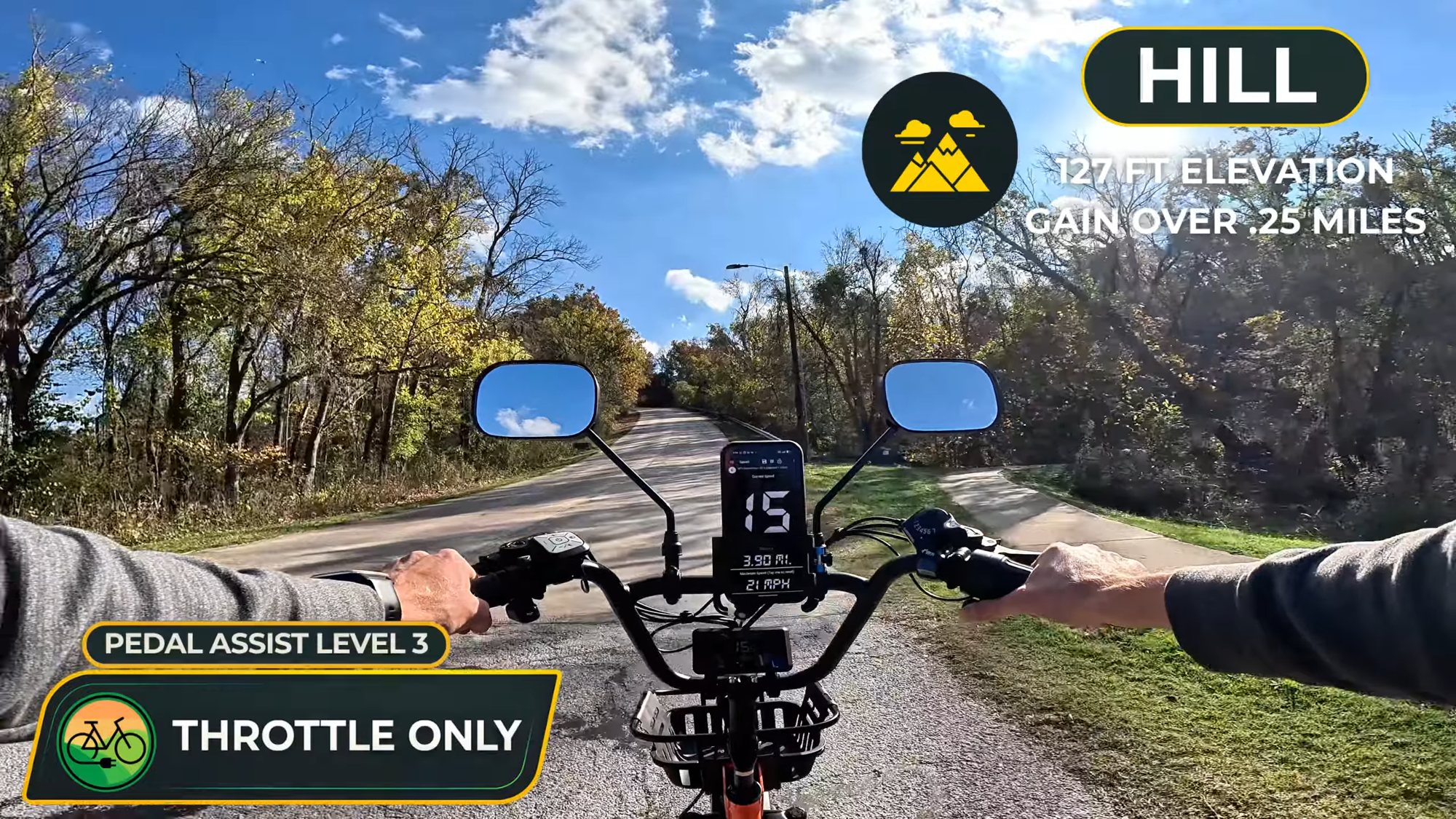
On throttle alone in level 3, the Breeze Pro 2.0 held about 9 mph for most of our test hill and dipped to 8 mph near the steepest part. You can hear the motor working back there, but it’s not bad, and that’s a strong result for a trike this heavy. Pedaling up was a different story. Level 1 wasn’t going to make it, level 2 helped only a little, and level 3 in first gear got us up with some effort on our legs, though it still didn’t feel like full motor power. Adding throttle while pedaling brought us back to about 8 mph with our legs spinning comfortably. On steep hills, that combination is the way to ride it: throttle for the motor’s full help, and pedal as much or as little as you want.
Meet One Breeze Pro 2.0 vs Lectric XP Trike 2
| Spec | Meet One Breeze Pro 2.0 | Lectric XP Trike 2 |
|---|---|---|
| Price | $1,699 | From $1,499 (500W) / $1,699 (750W) at the time of writing |
| Design | Semi-recumbent, folding | Upright, folding |
| Motor | 750W, 1,200W peak, 90Nm | 500W, 1,092W peak, 65Nm (750W option) |
| Pedal Sensor | Torque | Cadence |
| Battery | 48V 20Ah (40Ah dual option) | 48V 13Ah (17.5Ah on the 750W model) |
| Top Speed | 15 mph as shipped, 20 mph claimed | 14 mph |
| Gearing | Shimano 7-speed | Single speed |
| Suspension | Front fork and dual rear shocks | Front fork |
| Brakes | Hydraulic, 180mm rotors, latch parking brakes | Hydraulic, 180mm rotors, ratcheting parking brakes |
| Max Load | 450 lb | 415 lb |
Most shoppers will cross-shop the Lectric XP Trike 2, which takes a simpler, more upright approach. The base 500W model uses a cadence sensor and a single-speed drivetrain, so you get consistent, set-and-forget assistance with no shifting. Lectric’s hydraulic brakes come with ratcheting parking brakes we like, along with a brake light and turn signals. Lectric is also a brand we’ve tested many times, which counts for something if a part shows up damaged.
Pick the XP Trike 2 if you want an upright riding position, the simplest controls, and the lowest starting price. Pick the Breeze Pro 2.0 if comfort and features matter more: the backrest, full suspension, a torque sensor, gears, reverse, and a bigger battery make it the better-equipped trike for a similar price. Meet One also sells the standard Breeze 2.0 for less, but it steps down to a smaller battery, a speed sensor, and mechanical brakes, so we’d stretch to the Pro.
Pros and Cons
Final Thoughts
Can a $1,699 etrike really deliver full suspension, a torque sensor, gears, reverse, and a backrest that actually supports you? For the most part, yes. It rides comfortably, the motor has plenty of power for a heavy trike on hills, and the backrest and adjustable cockpit set it apart from most trikes we’ve tested. The compromises are the ones you’d expect from a brand packing in as many features as possible at this price: basic suspension, a torque sensor that only comes alive in the top level, some assembly, and support that’s mostly online from a brand that’s still new to us. If comfort and features top your list and you’re fine with a bit of setup, it’s an easy trike to recommend. Turn on the five assist levels, leave the top speed at 15 mph, and enjoy the ride.
Interested in the Meet One Breeze Pro 2.0? Check the latest price through our Meet One link.
