
A hybrid ebike, or hybrid electric bike, is the one bike for people who don’t want to choose between a commuter and a trail bike. In practice that means two kinds of bikes: commuter builds with enough suspension and tire to handle dirt, gravel, and light trails, and hardtail electric mountain bikes with the mounting points to carry fenders and a rack to work. We’ve tested both, and the five best hybrid ebikes here run from $1,298 to $2,899, with hub-drive commuters at one end and mid-drive trail bikes at the other.
We’ve ordered the list from the most commuter-leaning pick to the most trail-focused, so you can jump to the end of the spectrum that matches how you ride. Every bike here is certified to UL standards, comes from a brand we’re comfortable recommending, and has a full review on our site if you want to go deeper. For each pick you’ll find what it does best, the components that make it work on and off pavement, and the trade-offs you should know before buying.
Prices change often, so treat the figures below as a snapshot from when we published this article. Our links go to current pricing, and using them costs you nothing while helping support the testing we do here. Thank you.
Best Hybrid Ebikes of 2026: Watch Our Full Breakdown
Myles walks through every pick in the video, with trail and hill climb footage and a look at how each bike handles commuter duty. If you’d rather read, the breakdown below covers the same ground plus links to each full review.
Best Hybrid Ebikes Compared
Here’s how the five picks stack up on price, motor, suspension, and tires. Specifications come from each manufacturer and our own reviews; full details are in each linked review.
| Model | Best For | Price | Motor | Suspension | Tires | Throttle |
|---|---|---|---|---|---|---|
| Ride1Up Vorsa | Most Versatile | $1,495 | 750W AKM rear hub, 95 Nm | 100mm coil fork | 27.5 x 2.6" | Yes |
| Euphree Stellar Falcon 2 | Most Comfortable | $2,299 | 750W Bafang rear hub, 90 Nm | 90mm air fork + suspension seatpost | 27.5 x 2.8" | Yes |
| Velotric Summit 2 | Pavement and Trails Equally | $2,099 | 750W rear hub, 100 Nm | 120mm air fork | 27.5 x 2.4" | Yes |
| Ozark Trail M.2 Ridge+ | Best Budget Mid-Drive | $1,298 | 350W Ananda mid-drive | 120mm coil fork | 29 x 2.4" (27.5" Small) | No |
| Aventon Ramblas ADV | Best Premium | $2,899 | Aventon A100 mid-drive, 100 Nm | 130mm coil fork | 29 x 2.4" | No |
How We Test Hybrid Ebikes
Every bike on this list has been ridden by us on the same roads and trails around Bentonville, Arkansas. We run each one up the same test hill on throttle alone where the bike has a throttle and record how far the speed drops, then take it onto real singletrack and gravel to see where its suspension, tires, and motor placement start to run out. On the commuter side, we look at what actually ships in the box (fenders, lights, racks, tracking) and what you’d need to add, and we weigh how involved assembly and support are when the bike shows up at your door.
The 5 Best Hybrid Ebikes of 2026
1. Ride1Up Vorsa: Most Versatile Hybrid Ebike
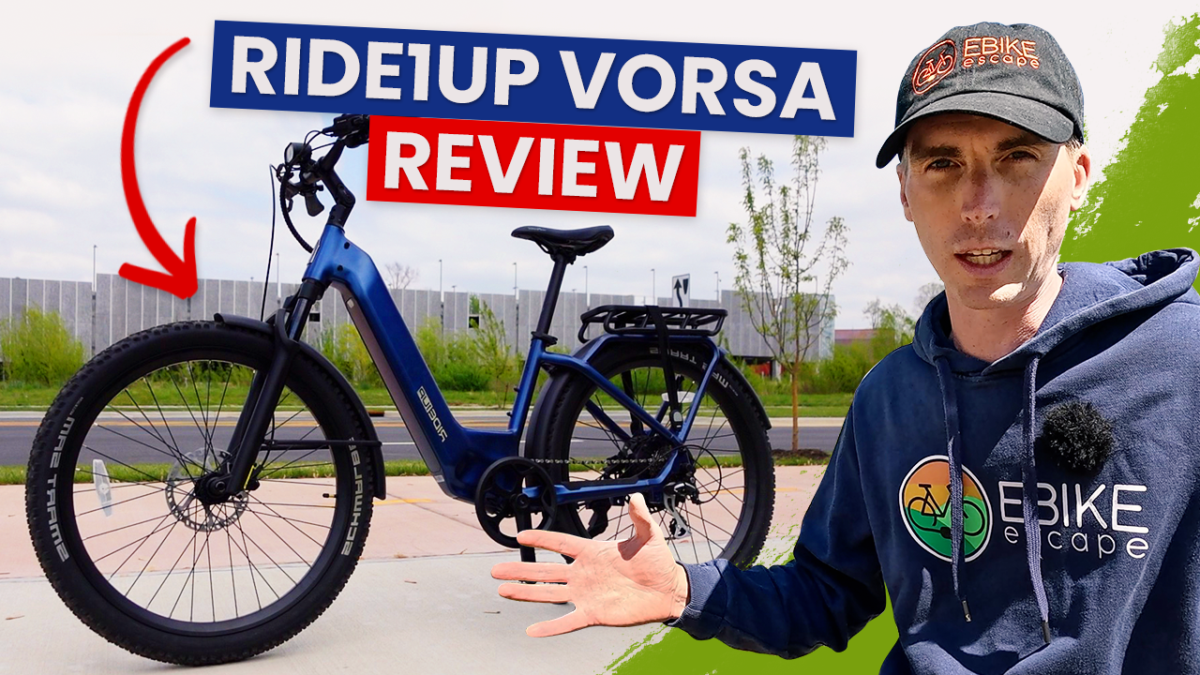
At around $1,495, the Vorsa is the pick if most of your riding is on pavement but you want a bike that won’t flinch at gravel, dirt paths, and light trails. It leans commuter, with alloy fenders and a Connect Plus rear rack rated for 150 lb, but a 100mm suspension fork and Schwalbe Smart Sam 27.5 x 2.6-inch tires give it real grip and comfort off road. Ride1Up’s Connect Plus system lets you swap accessories like a passenger seat, cooler, baskets, and a rack extension without tools, and with a 440 lb total payload, it’s the best hauler on this list.
It’s also one of the most powerful hub motors we’ve tested. The 750W AKM motor puts out 95 Nm of torque and held 11 to 14 mph on throttle alone up our Bentonville test hill, and it reaches 28 mph in Class 3 without much effort. You can ride it as a Class 1, 2, or 3 ebike, switch between a torque sensor and a cadence sensor in the settings, and tune each assist level’s power ceiling and how hard you need to push to reach it. Most riders will prefer the torque sensor’s natural feel, and a left-side thumb throttle is there when you want full power. Apple Find My tracking, a USB-C port on the display, and an 8-speed Shimano Acera drivetrain round out a strong commuter package.
The trade-offs start with that motor, which is noticeably louder than most. You can’t swap sensors on the fly, and with fenders and the rack it weighs around 70 lb. Assembly is more involved than many direct-to-consumer bikes, including installing the front brake caliper, so budget for a bike shop if that sounds daunting. Both the step-over (5’5″ to 6’4″) and step-through (5′ to 5’9″) come in one size with an adjustable stem. If you don’t need the rack, the Vorsa Lite drops to 61 lb, and the Vorsa FT adds fat tires for more all-terrain grip.
2. Euphree Stellar Falcon 2: Most Comfortable Hybrid Ebike
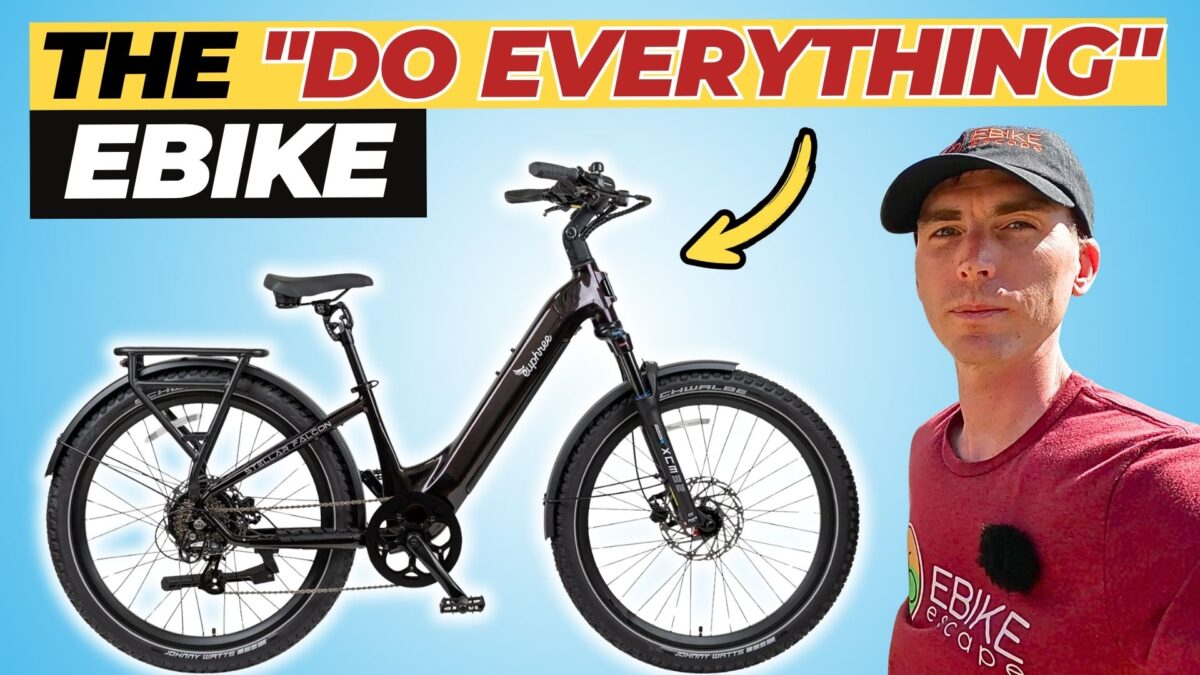
At $2,299, the Stellar Falcon 2 is the plushest ride on this list. An SR Suntour NCX suspension seatpost works with a 90mm air fork and the widest tires here, 27.5 x 2.8-inch Schwalbe Johnny Watts, to smooth out rough pavement and give you a lot of confidence on dirt and light trails. It isn’t a dedicated trail bike, but it handles far more than a typical commuter. It also arrives ready for the commute: alloy fenders, a bright headlight, a rear light that brightens when you brake, and a MIK-compatible rear rack rated for 55 lb. MIK lets you quickly swap compatible bags and baskets, which Euphree sells and so do we at shop.ebikeescape.com.
This generation fixed our biggest complaint about the original: motor noise. The 750W Bafang geared hub still makes 90 Nm of torque but now runs around 60 dB, and it held 10 to 12 mph on throttle up our test hill before dipping to 9 just shy of the top. Like the Vorsa, you choose between a torque and cadence sensor in the menu, and Euphree goes further on tuning. Every assist level gets one of three power levels and a fast, medium, or slow ramp-up, and the left thumb throttle can match whichever level you’re in, which is a great accessibility feature. Larger 203mm rotors on the Tektro hydraulic brakes suit the bike’s weight, and a 10-tooth cog keeps your pedaling cadence low at top speed. Euphree advertises up to 70 miles from the 48V 15Ah battery, but expect 30 to 40 on demanding rides.
At 74 lb, it’s the heaviest bike here, and the Shimano Altus drivetrain feels basic next to the rest of the build. There’s no app or tracking, and navigating the display’s many settings is a bit clunky. Both frames come in one size with an adjustable stem: the step-through (5’2″ to 6′) has swept-back cruiser bars, while the mid-step (5’5″ to 6’3″) has straighter bars and is the one we’d pick if trails are a regular thing. Euphree backs it with US-based support, a growing network of more than 170 dealers, and a five-year warranty on the frame, motor, and components plus two years on the battery.
3. Velotric Summit 2: Best Hybrid Ebike for Pavement and Trails Equally
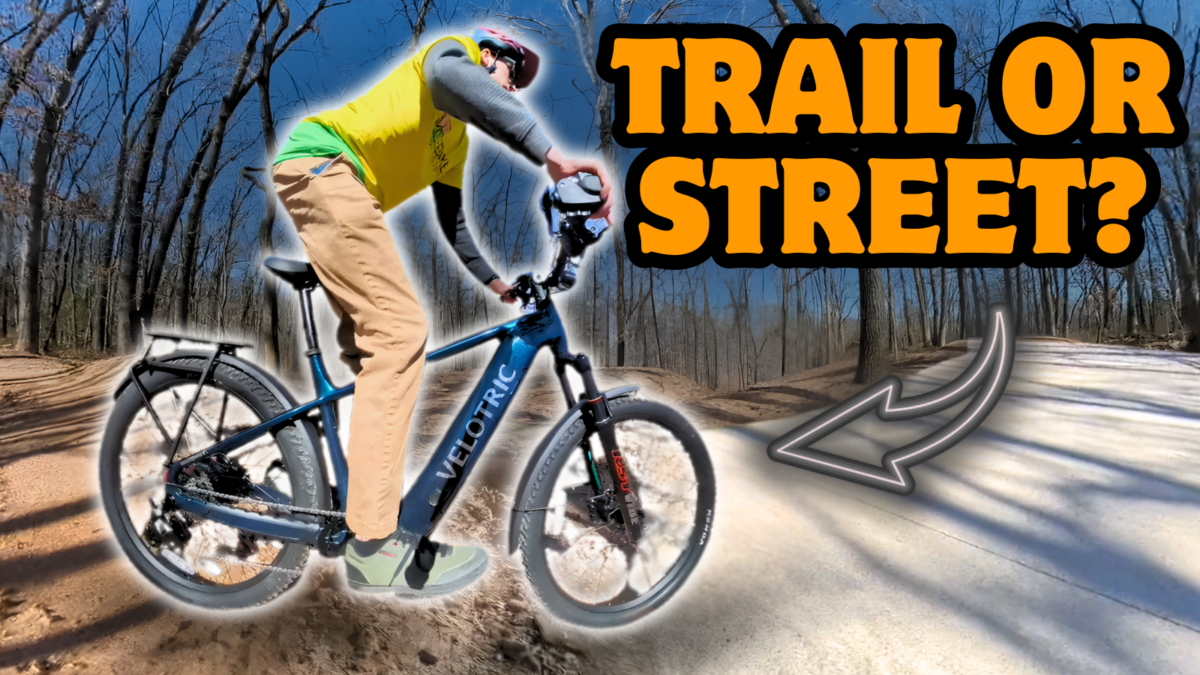
If you split your time evenly between pavement and trails, the Summit 2 is the bike we’d point you to. At $2,099, it’s built more like a mountain bike than the first two picks: a 120mm RST Vibe air fork with lockout and rebound adjustment, 27.5 x 2.4-inch mountain bike tires, flat mountain bike bars, and a 9-speed Shimano Acera drivetrain with a wide 11-46 cassette. It’s great on rolling green trails and fire roads, and it powered through rooty, rocky blue trails, though the rear hub motor’s weight makes it feel noticeably less nimble there than a mid-drive eMTB. That motor is strong: a 750W hub with a 1,300W peak and 100 Nm of torque held 13 mph on throttle all the way up our test hill, the best result from any hub motor on this list.
The tech is where Velotric pulls ahead. You can swap between the torque and cadence sensors with a button press while you ride, which makes the feature far more useful, since you can drop into cadence mode for steady support on a climb. Ride tuning lets you set max torque and acceleration for every assist level, throttle sync can tie the throttle to your current level, and you can change all of it on the display or in the app. A heart rate monitor comes in the box and pairs with Pulse mode, which adjusts motor output to keep you in a target heart rate zone. It also has the biggest battery here, a 48V 16.7Ah (801.6Wh) pack that’s removable and IPX7 rated, and realistic range lands around 70 miles on low assist and 35 to 40 if you lean on the throttle.
The commuter kit is complete: full fenders, a 500-lumen headlight, brake lights and turn signals in the seatstays, a kickstand, a USB-C port, and a MIK HD rear rack rated for 66 lb. Velotric is one of the first brands we’ve seen to support both Apple Find My and Android Find Hub, so you get subscription-free tracking on either phone, and the bike unlocks with NFC cards. The step-over frame comes in two sizes covering riders from 5’2″ to 6’5″, and Velotric sells through a large network of partner bike shops for service and test rides. Just over $2,000 is on the high end for a hub motor ebike, but you’re paying for the tech and a build that arrives ready to ride. Code eBikeEscape60 takes $60 off any Velotric ebike and stacks with sale prices.
4. Ozark Trail M.2 Ridge+: Best Budget Mid-Drive Hybrid Ebike

This is where the list leaves commuter builds behind. The M.2 Ridge+ is Walmart’s 29-inch hardtail electric mountain bike, and at $1,298 it’s the cheapest way we’ve found into real mid-drive trail riding. It earns a spot here because it has mounting points for fenders, a rear rack, and even a rear kickstand, so it can still handle a ride to work. Its components are what make it stand out at this price: an SR Suntour XCM fork with 120mm of travel, a 9-speed Shimano CUES drivetrain, Tektro two-piston hydraulic brakes, 29 x 2.4-inch Maxxis Recon tires on tubeless-compatible rims, a dropper post, and a tapered head tube if you want to upgrade the fork later.
The 36V, 350W Ananda mid-drive is modest next to the hub motors above, and it’s a Class 1 bike with a 20 mph top speed and no throttle, so it’s built for pedaling rather than cruising. It comes in three sizes, with the Small rolling on 27.5-inch wheels so shorter riders get a bike that actually fits, and our Medium weighed just under 56 lb. The display sits on the top tube, which makes it harder to glance at while riding but keeps it out of harm’s way in a crash.
Walmart sells it online and ships it to your door. You can likely handle a return at a store, but service and support happen online or by phone, Walmart doesn’t sell spare batteries for it on its site yet, and we don’t have much data on its long-term support record. It also sells out almost as soon as it’s restocked, so you may need some patience to get one.
5. Aventon Ramblas ADV: Best Premium Hybrid Ebike
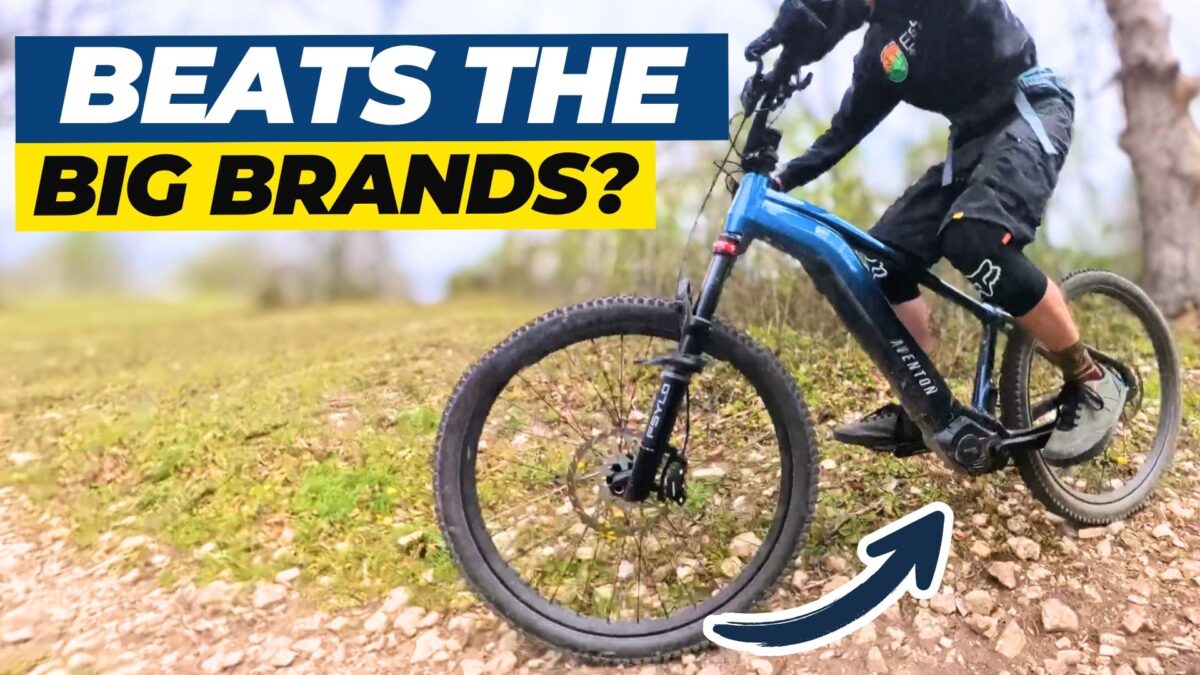
The most premium pick here is also a hardtail electric mountain bike, and at $2,899 it’s one of the best values we’ve tested in a mid-drive eMTB. Like the Ridge+, it has front and rear mounting points for fenders and a rack, and Aventon sells a rack and fender set made for this model for about $130, so it can still handle errands and the commute. A mid-drive matters on the trail because the motor sits low and centered on the frame, which handles technical terrain better than a hub motor and lets the motor work through the gears. Aventon’s A100 puts out 100 Nm of torque through a 12-speed SRAM NX Eagle drivetrain, and this second-generation motor got rid of the original’s high-pitched whine.
The rest of the build reads like it came from avid mountain bikers: a 130mm RockShox Psylo coil fork, tubeless-ready 29 x 2.4-inch Maxxis Recon tires, a 150mm dropper with a much easier-to-use lever this generation, and SRAM four-piston brakes with 200mm rotors. At an advertised 54 lb, it’s one of the lightest bikes here. It has four ride modes, and we found Auto tends toward more power, so we used Eco and Trail a lot on technical sections, while uphill start assist helps you get going on a climb. Ride Tune in the app lets you set max torque and pedal response for each mode, so you can tune Eco for efficient commuting, though the app is effectively required since the display can’t change settings. The removable battery is rated for up to 90 miles in Eco, enough to ride to the trailhead instead of loading up a car rack.
As an eMTB first, it has trade-offs a commuter will notice. There’s no throttle, it ships as Class 1 (Class 3 speeds up to 28 mph unlock in the app), it has no integrated lights, and it skips the tracking and security tech found on many Aventon models. The fork only has rebound adjustment, with no preload or lockout, which heavier riders may notice, and we heard some cable rattle on rough descents. It comes in three sizes, but Aventon dropped the Small this generation, so shorter riders should check the sizing chart. Aventon’s network of more than 1,800 bike shops, a two-year warranty, and a lifetime frame warranty with registration are big advantages at this price.
How to Choose a Hybrid Ebike for Commuting and Trails
Hub drive or mid-drive?
This is the biggest decision on a hybrid. Rear hub motors, like those on the Vorsa, Stellar Falcon 2, and Summit 2, are simple, powerful on throttle, and usually come with a full commuter kit, but the motor’s weight sits in the rear wheel, which makes a bike feel less nimble on technical trails. Mid-drives, like those on the Ridge+ and Ramblas ADV, sit low and centered on the frame and work through the bike’s gears, so they climb and handle on singletrack much more like a mountain bike. If trails are a regular part of your riding, lean mid-drive. If you mostly ride pavement and want a throttle, a hub motor is the more practical choice.
Suspension and tires
Fork travel and tire width do most of the work off pavement. Around 90 to 100mm of travel with wide tires handles gravel, dirt paths, and light trails comfortably, while 120 to 130mm with true mountain bike tires is what you want for roots and rocks. An air fork you can tune to your weight with a shock pump, like the Summit 2’s, adapts to more riders than a basic coil fork, and a suspension seatpost adds a lot of comfort on any surface.
Commuter features you’ll actually use
The commuter-leaning picks ship with fenders, lights, racks, and in some cases GPS tracking, while the eMTBs need you to add most of that yourself. Count the cost of a rack, fenders, and lights when you compare prices, and check that the bike has the mounting points to carry them. Throttles are worth weighing too: none of the mid-drive mountain bikes here have one.
Support and safety certification
Direct-to-consumer brands keep prices down but handle support online or by phone and leave some assembly to you, while brands with dealer networks like Aventon, Velotric, and Euphree let you test ride and get service locally. Every bike on this list, along with its battery, is certified to UL standards, and we’d treat that as a hard requirement wherever you shop.
Final Thoughts
The best hybrid ebike comes down to which end of the spectrum you ride on most. If pavement and hauling come first, the Ride1Up Vorsa is the most versatile pick for the money, and the Euphree Stellar Falcon 2 is the one to choose if comfort matters most and you don’t mind the weight. If your time is split evenly, the Velotric Summit 2 is the most complete hybrid we’ve tested, with the tech, commuter kit, and trail capability to back it up. If trails come first, a mid-drive hardtail you can still ride to work is the better tool: the Ozark Trail M.2 Ridge+ is the cheapest real entry point if you can get one, and the Aventon Ramblas ADV is the one to buy if you want a proper eMTB with dealer support behind it.
If our testing helped you narrow it down, buying through our links is a great way to support this content. Thank you.
