

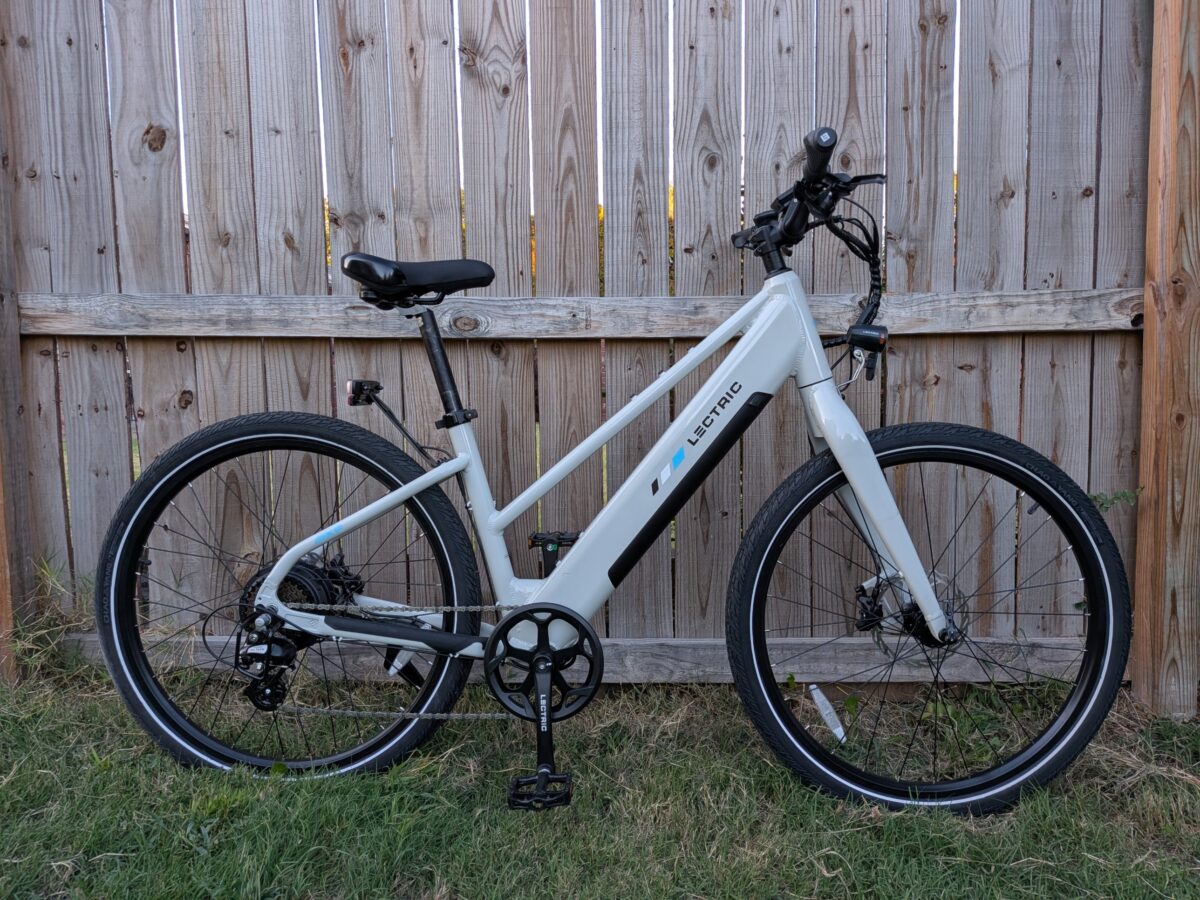
Lectric sells more ebikes than anyone in the United States, and at $1,099 the XPress Lite is now its most affordable commuter and its first mid-step. Most bikes from established brands near that $1,000 mark are folders, so a full-size 27.5-inch commuter at this price is notable on its own. The real pitch, though, is weight. Our scale read 53 lb with the battery installed, about 19 lb less than the XPress 2 we tested earlier this year. Lectric got there by dropping the suspension fork, rack, and fenders and pairing a 500-watt version of its M24 hub motor with a 374Wh battery. What it kept is just as interesting: switchable torque and cadence sensing, hydraulic brakes, integrated turn signals, a display with a surprisingly deep settings menu, and a battery that swaps with the rest of the XPress lineup.
We start with the components, including the advanced display settings you won’t find spelled out on Lectric’s website. From there we cover the frame, fit, and real-world weight, then take the XPress Lite through our pavement testing in both sensor modes and both torque multiplier settings, plus our hill climb. We finish with how it stacks up against the XPress 2 and who should pick which.
Ebike Escape is reader-supported. If you buy through our Lectric XPress Lite link, we may earn a commission at no extra cost to you.
Lectric XPress Lite Video Review
Our video review walks through every component, the full display menu and advanced settings, the battery and suspension seatpost install, and first-person riding footage covering the throttle, cruise control, each pedal assist level in torque and cadence mode, and our hill climb. It wraps with our pros and cons.
Standout Features
Lightweight Frame and Rigid Fork
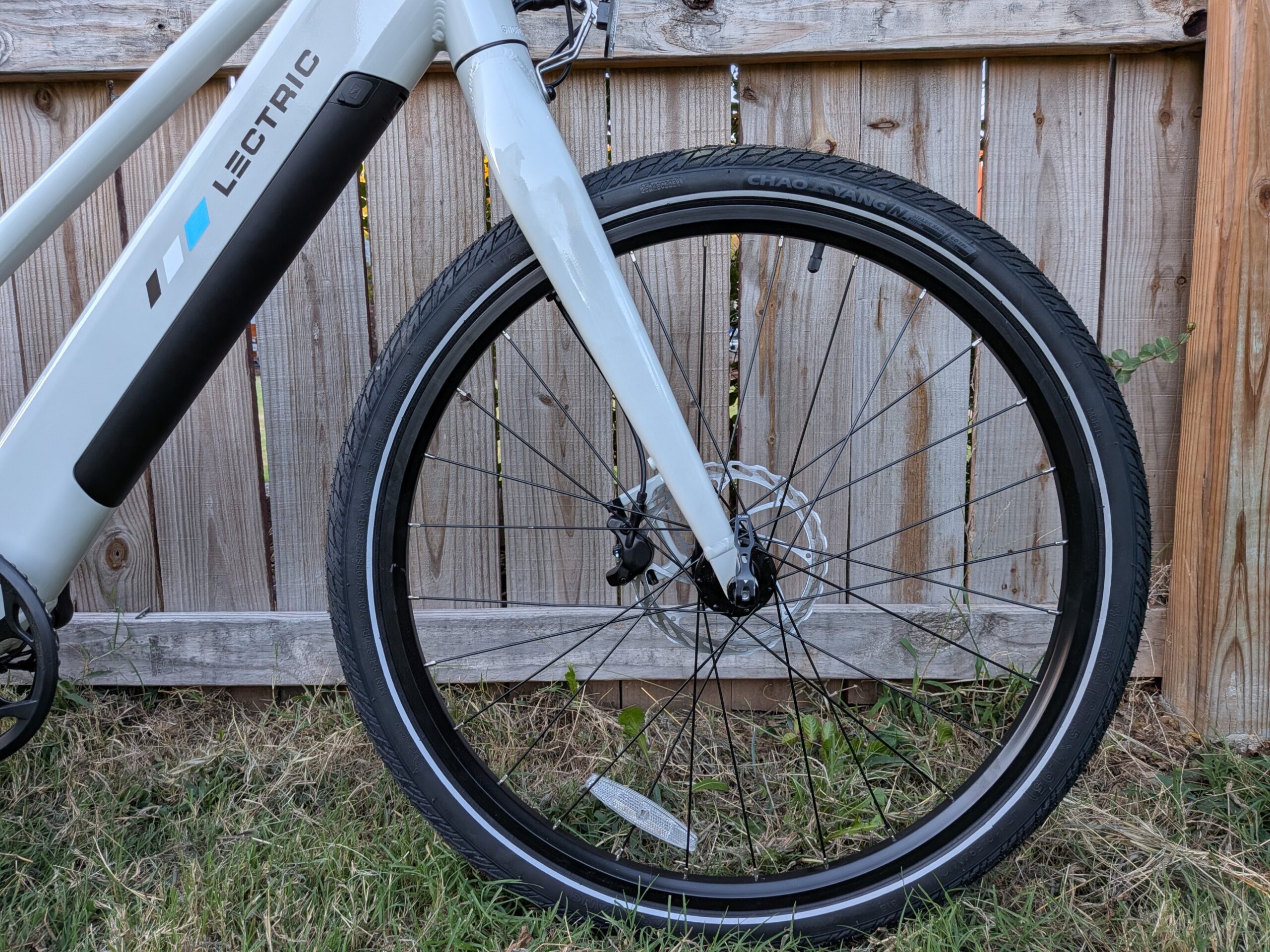
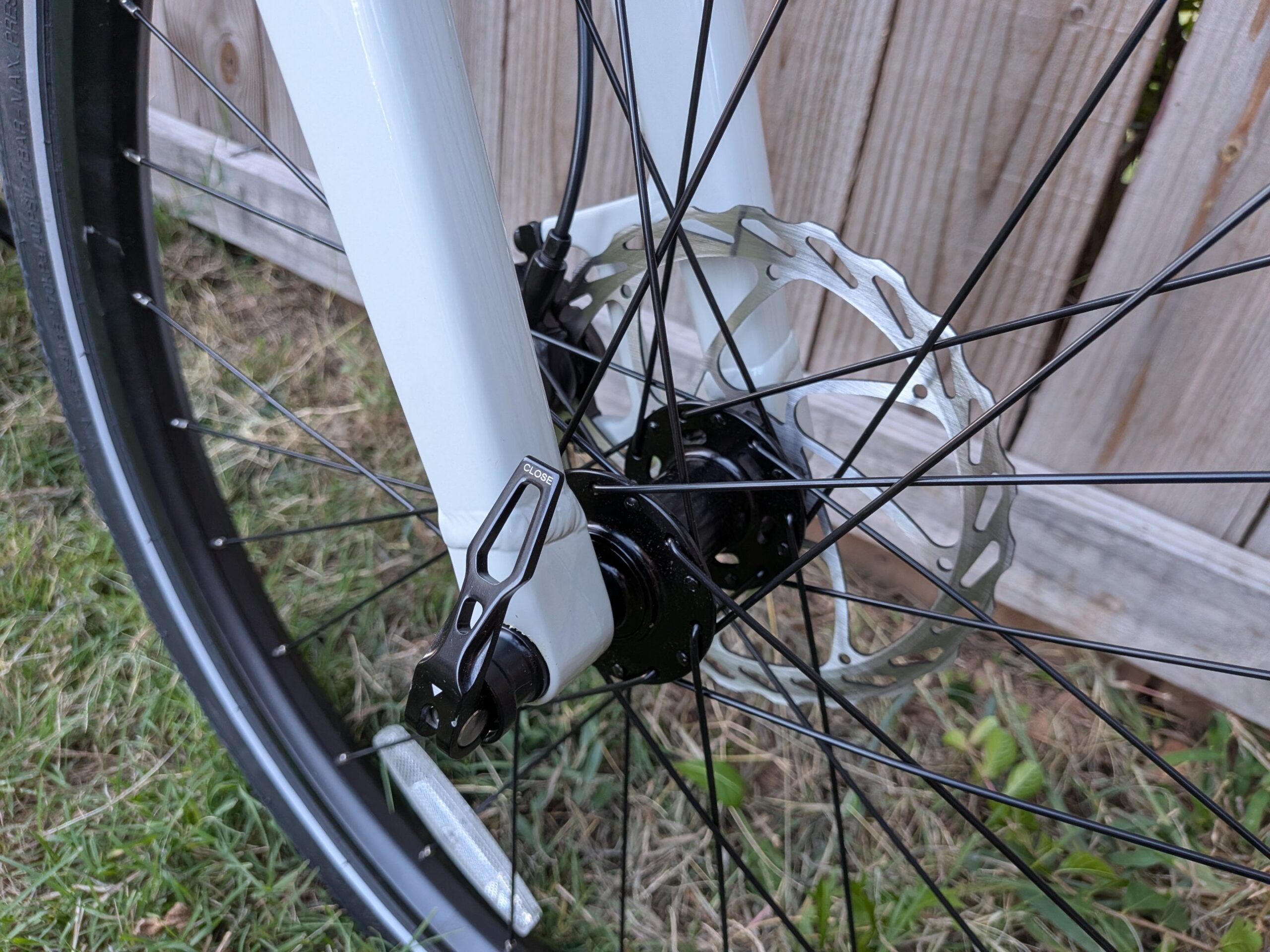
Lectric markets the XPress Lite as “lightweight where it counts,” and the frame is where most of that happens: a 6000-series aluminum mid-step paired with an aluminum rigid fork and a thru-axle up front. Shaving weight matters most off the bike, whether you’re lifting it onto a hitch rack, carrying it up a few stairs, or just feel better standing over something you can easily control. The trade-off is comfort. A rigid fork sends every crack and pothole straight to your hands, and the 27.5 x 1.95-inch Chaoyang slicks (Slime pre-installed) don’t do much to soak it up.
Motor and Battery
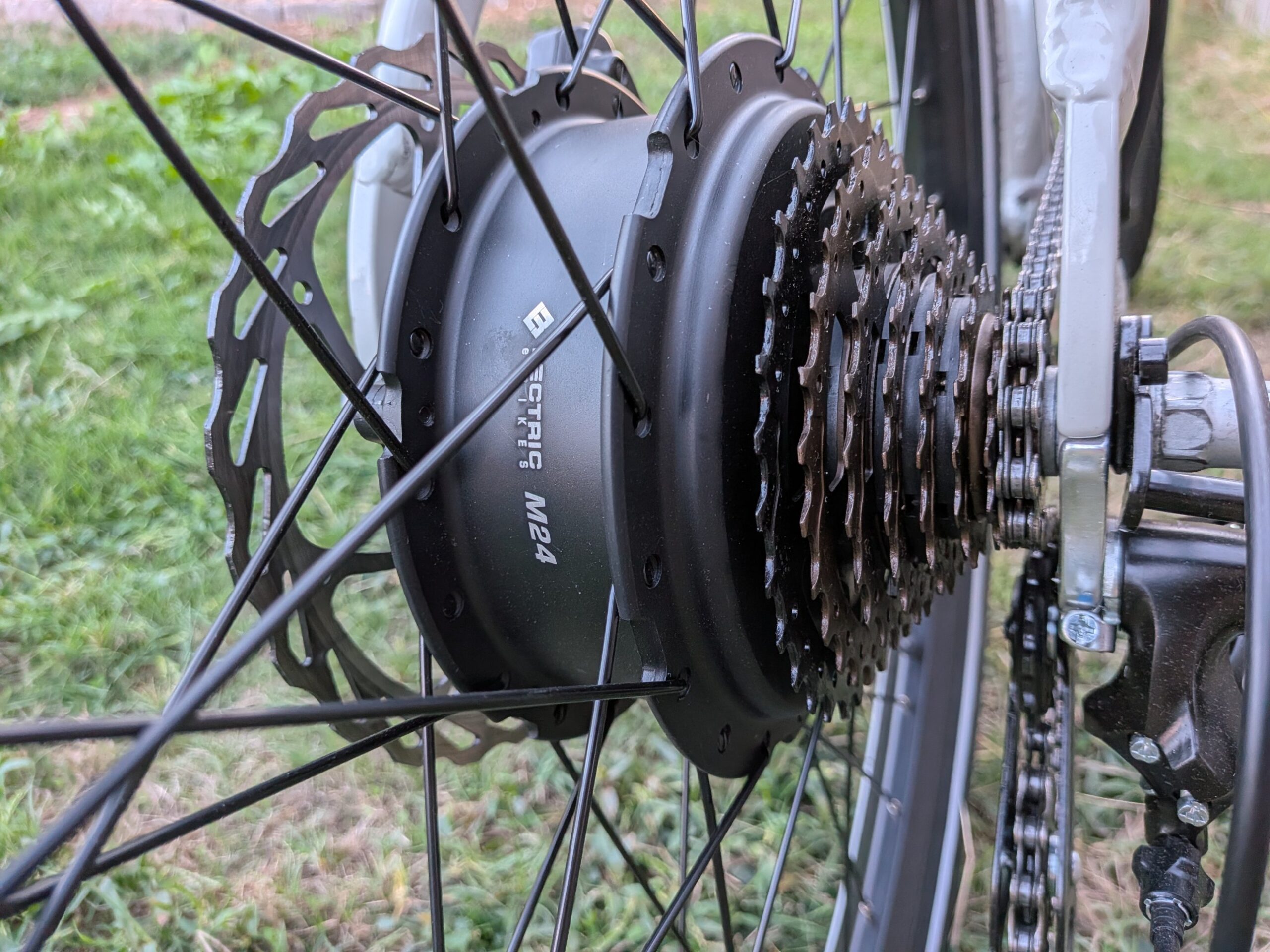
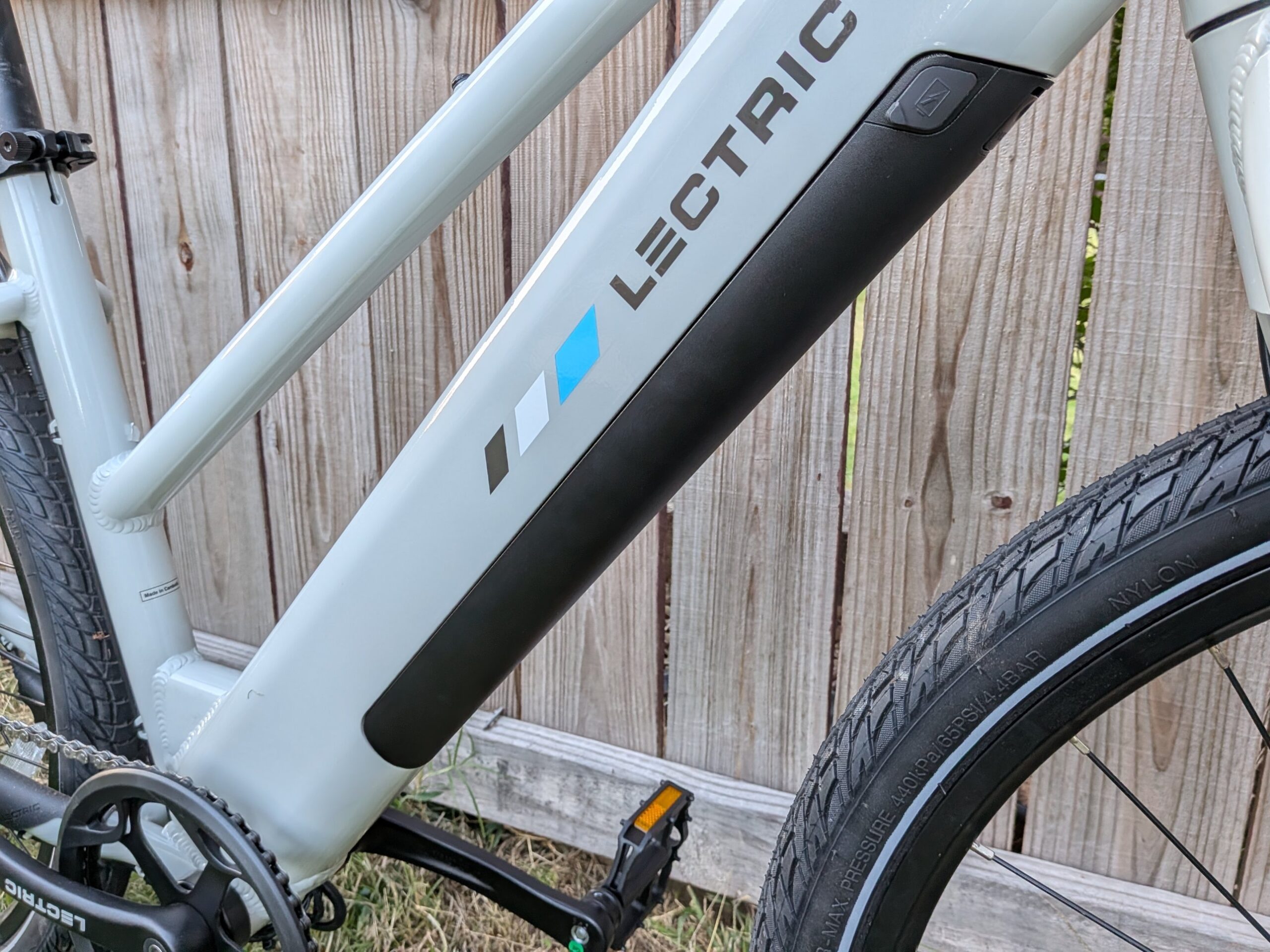
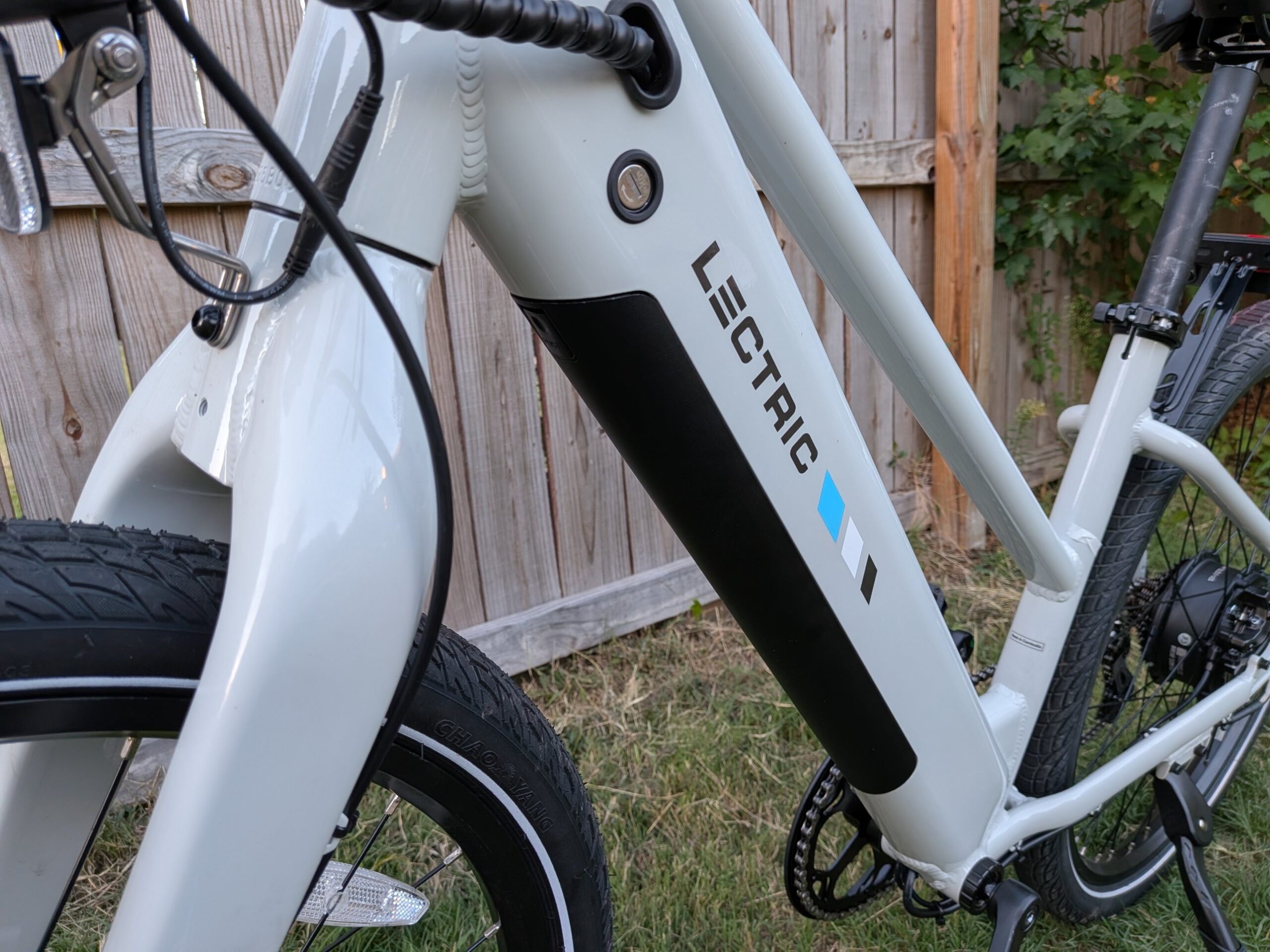
Power comes from Lectric’s Stealth M24 rear hub, the same motor family as the XPress 2 but in a 500-watt nominal version, rated at 864 watts peak and 61 Nm of torque. On paper that’s a big step down from the 750-watt XPress 2, which is exactly why we were curious how it would feel on our hill. Lectric also bills it as its quietest, smoothest ride, and that claim gets tested in the performance section too.
The 48V 7.8Ah (374Wh) battery sits semi-integrated in the down tube, weighs just under 7 lb, and needs a key only to remove it. You can charge it on the bike through a port on the right side, and the included 2A charger fills it from empty in about four hours. Lectric claims up to 45 miles. Based on our riding, we’d plan on roughly 15 to 20 miles using the throttle alone, and something closer to Lectric’s figure only in the lowest assist level on mostly flat ground. The good news is that the battery is cross-compatible with the rest of the XPress lineup, so you can run the XPress 2’s 672Wh pack if you need more range, at the cost of extra money and some of the weight you saved. The battery is certified to UL 2271 and the full electrical system to UL 2849.
Sensors, Display, and Customization
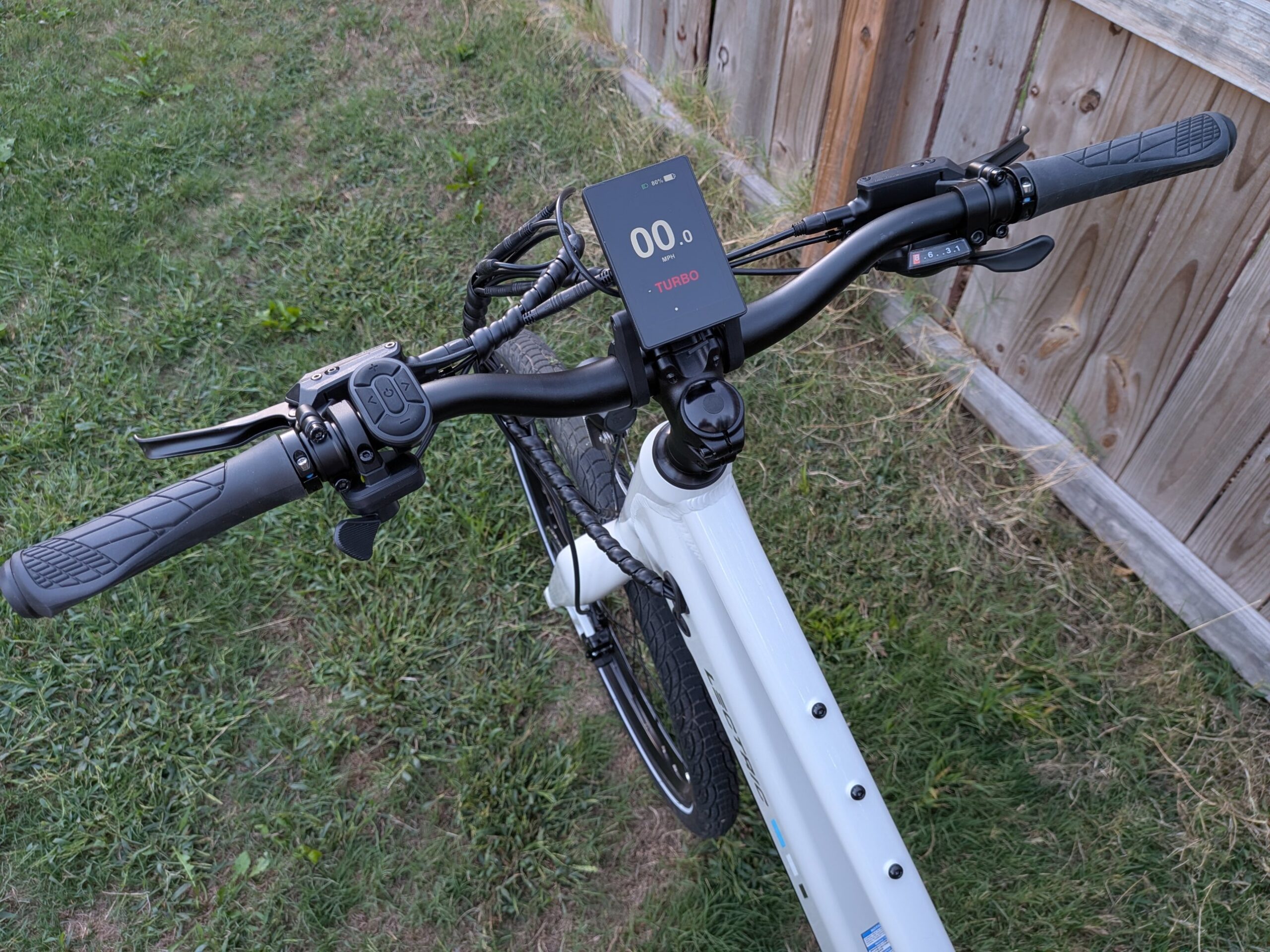
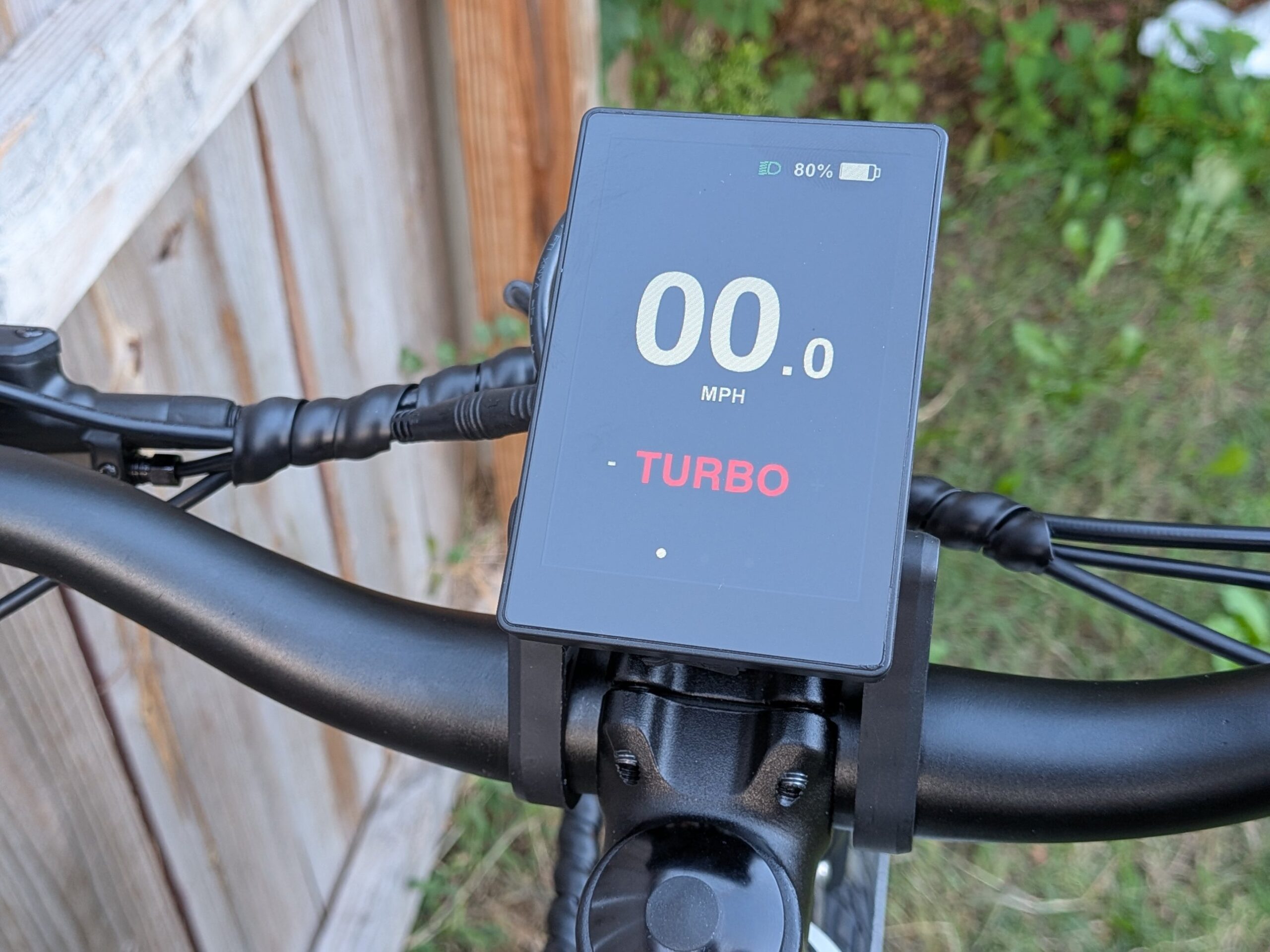
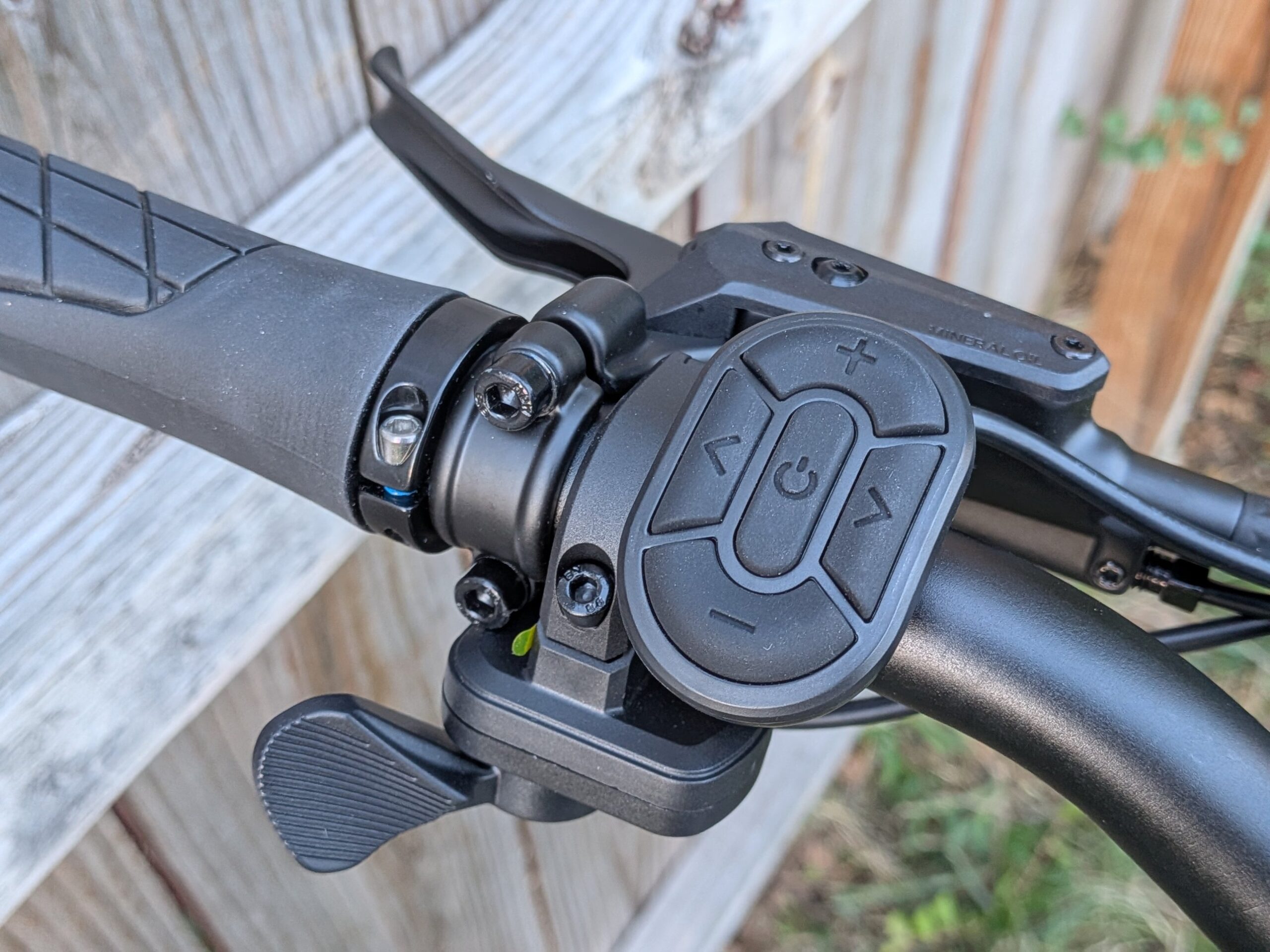
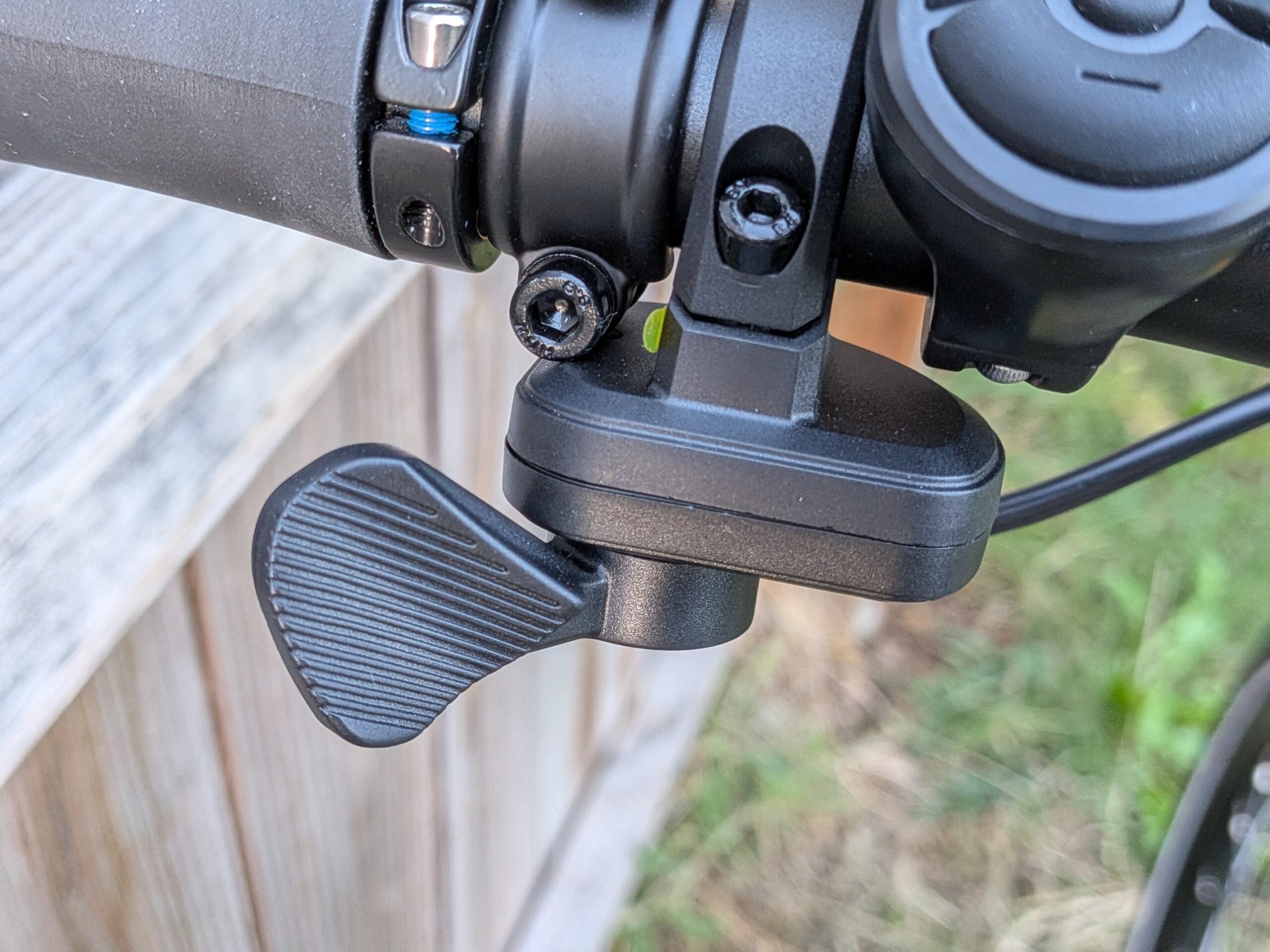
Lectric’s XPerience Switch lets you choose between torque and cadence sensing. A torque sensor measures how hard you push on the pedals and scales motor output to match, so it feels like a stronger version of your own legs. A cadence sensor only checks whether the cranks are turning and then delivers a set amount of power for each assist level. On top of that, the XPress Lite offers a standard or increased torque multiplier, which changes how easily the torque sensor hands out power. You’ll see in testing that the difference is smaller than you might expect.
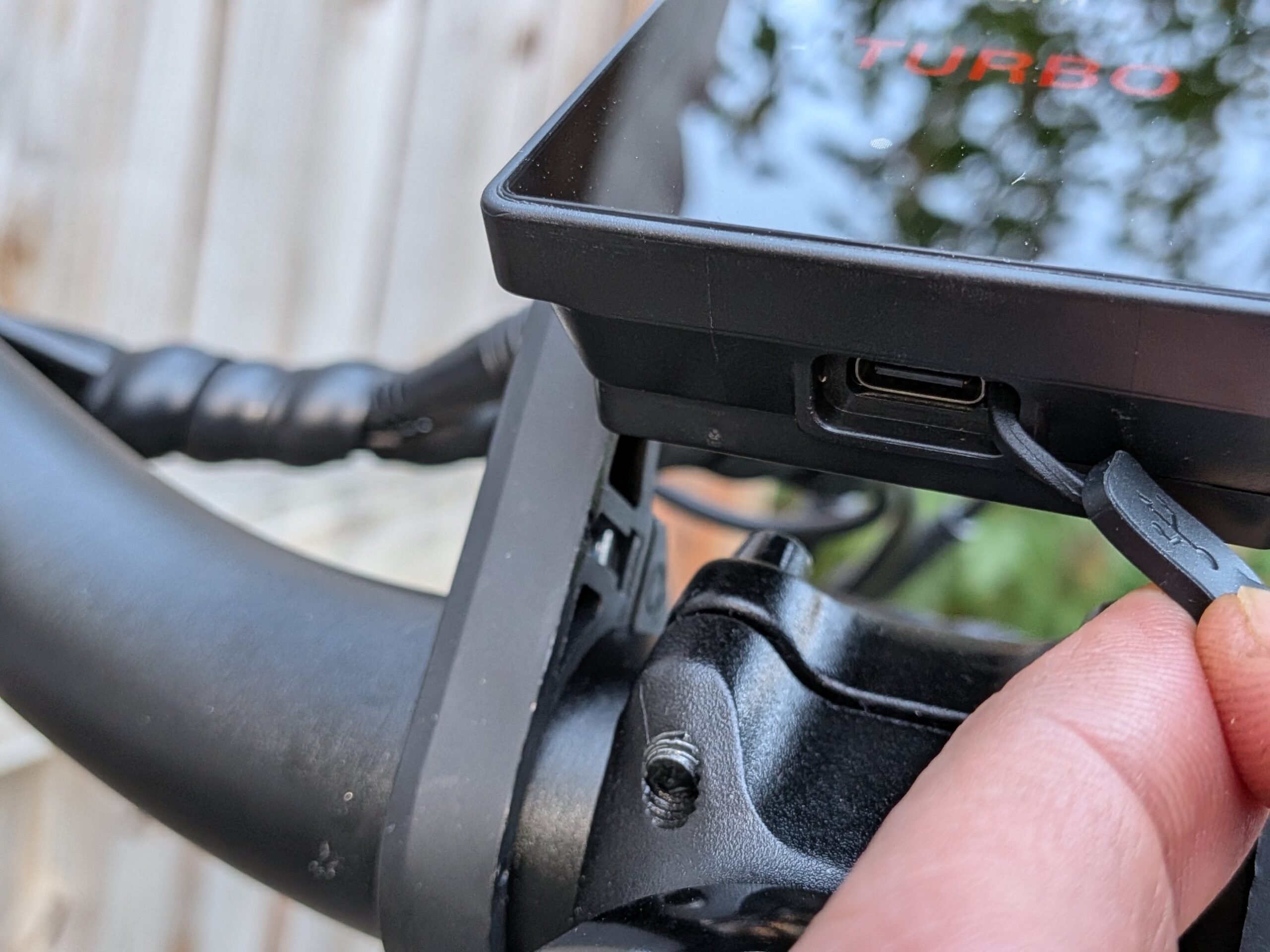
The 3.5-inch detachable color TFT display is easy to read while riding and has a USB-C port underneath for your phone. Beyond the main screen, two extra pages show cadence, trip time and distance, odometer, and live input power, motor power, amps, and voltage. The advanced menu is where this bike stands out at its price. You can set it as a Class 1, 2, or 3, or as a California Class 3 (28 mph pedal assist with the throttle disabled), tie throttle output to each assist level or give it full power in any level, require the bike to be moving before the throttle engages, disable pedal assist or the throttle entirely, and set the lights to flash whenever the bike is on. There’s also cruise control, which Lectric doesn’t advertise. One small knock: the battery readout moves in 10% steps, so it’s not the most precise gauge for planning a longer ride.
Brakes and Drivetrain
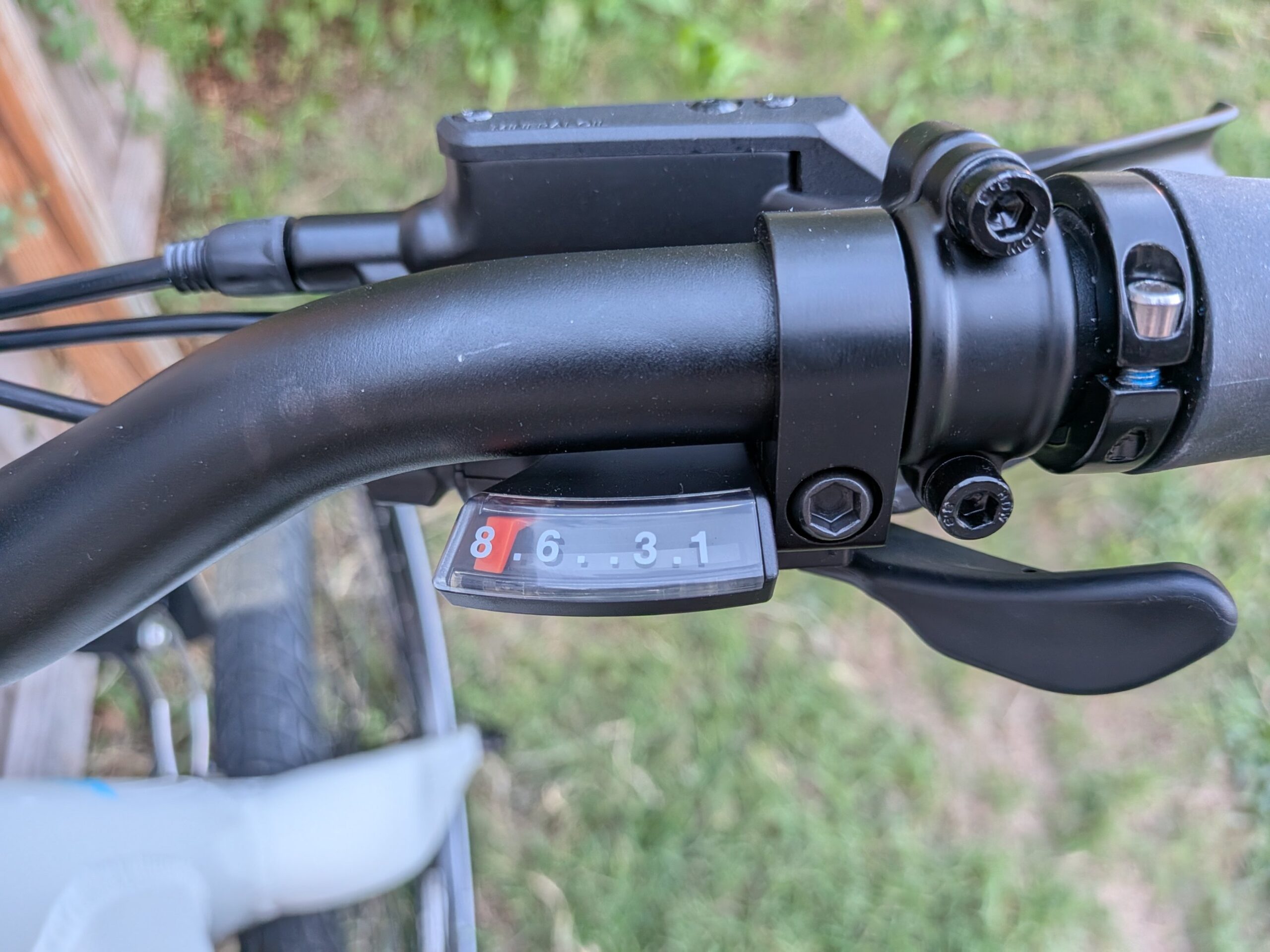
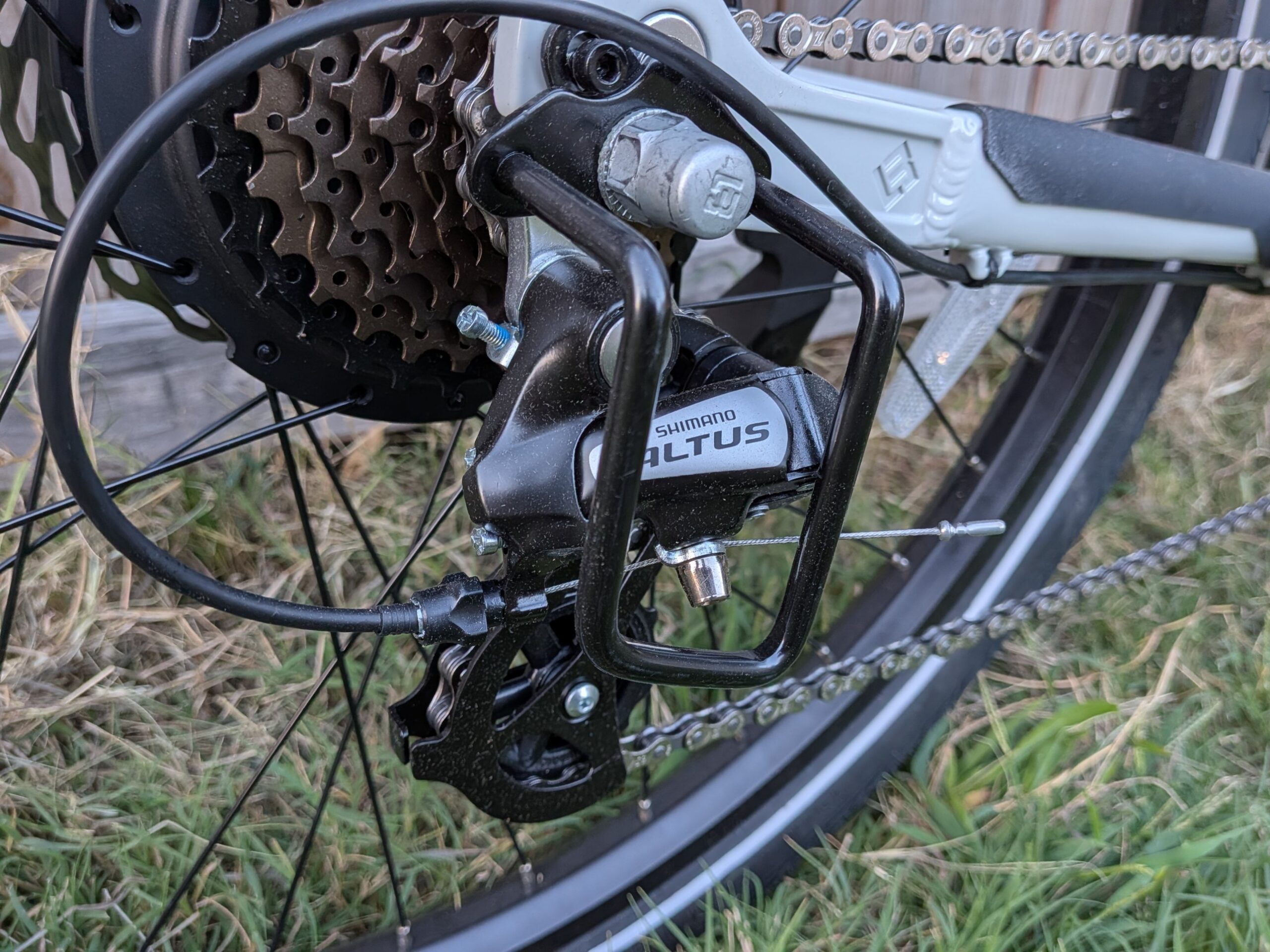
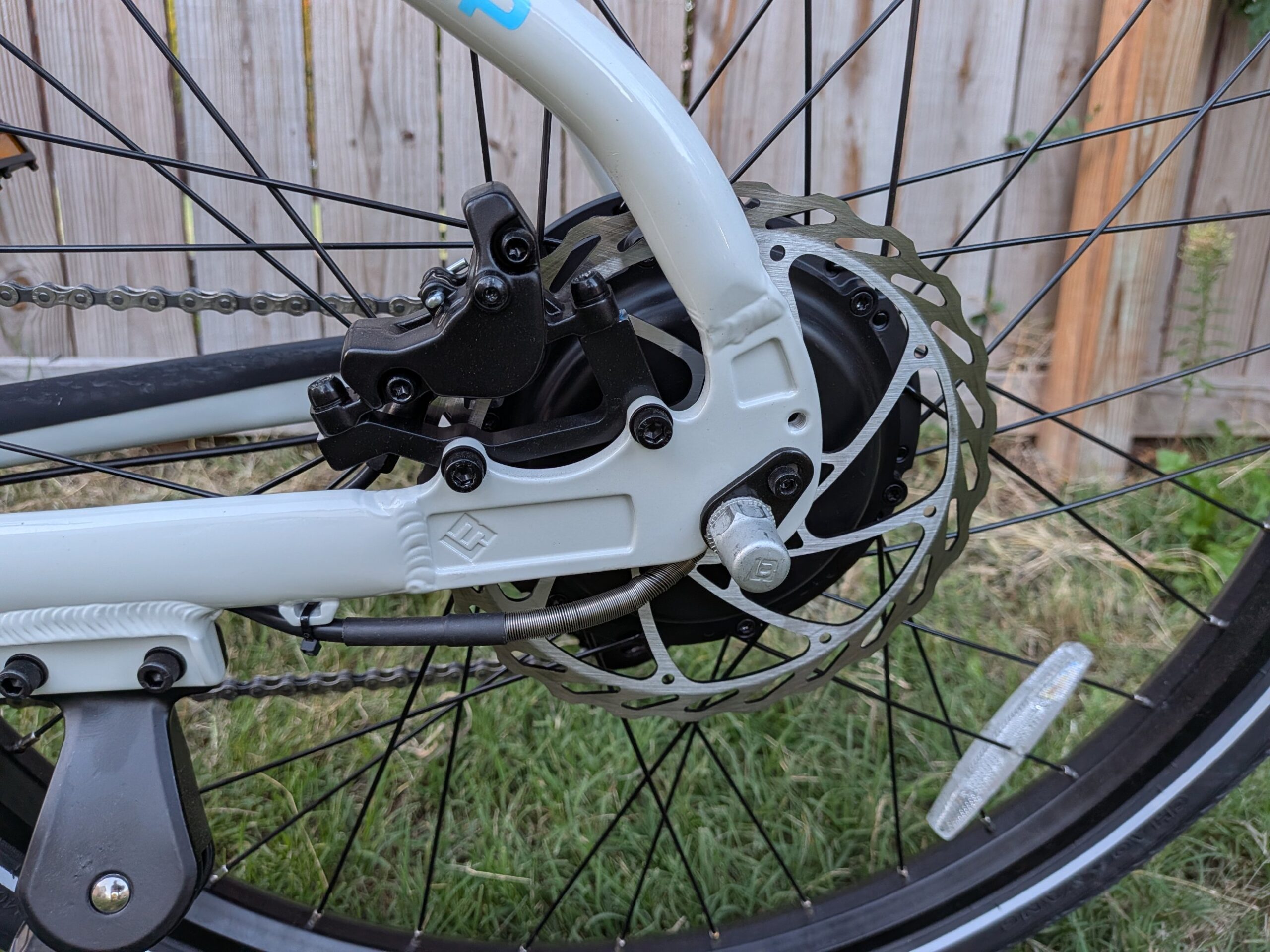
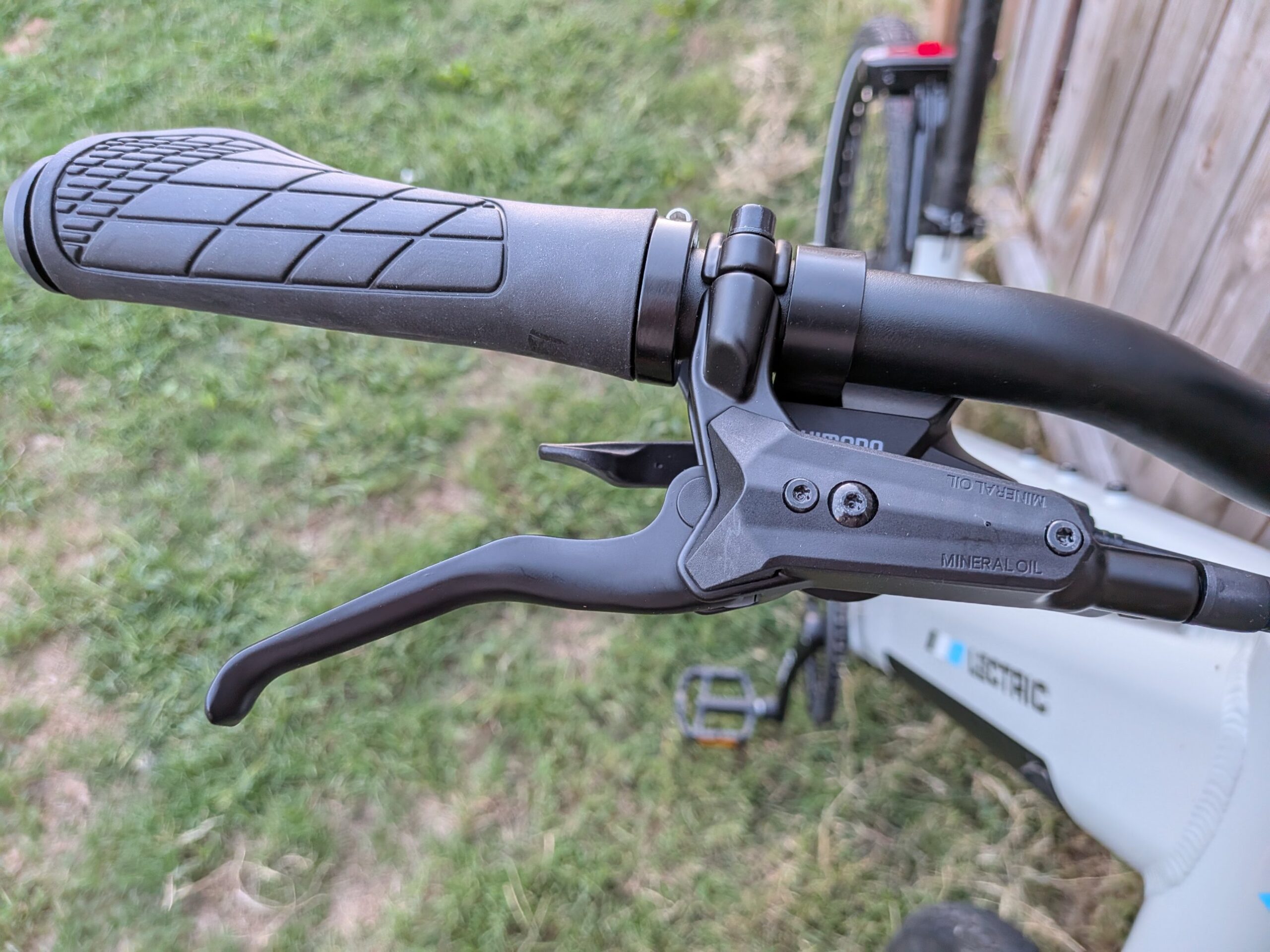
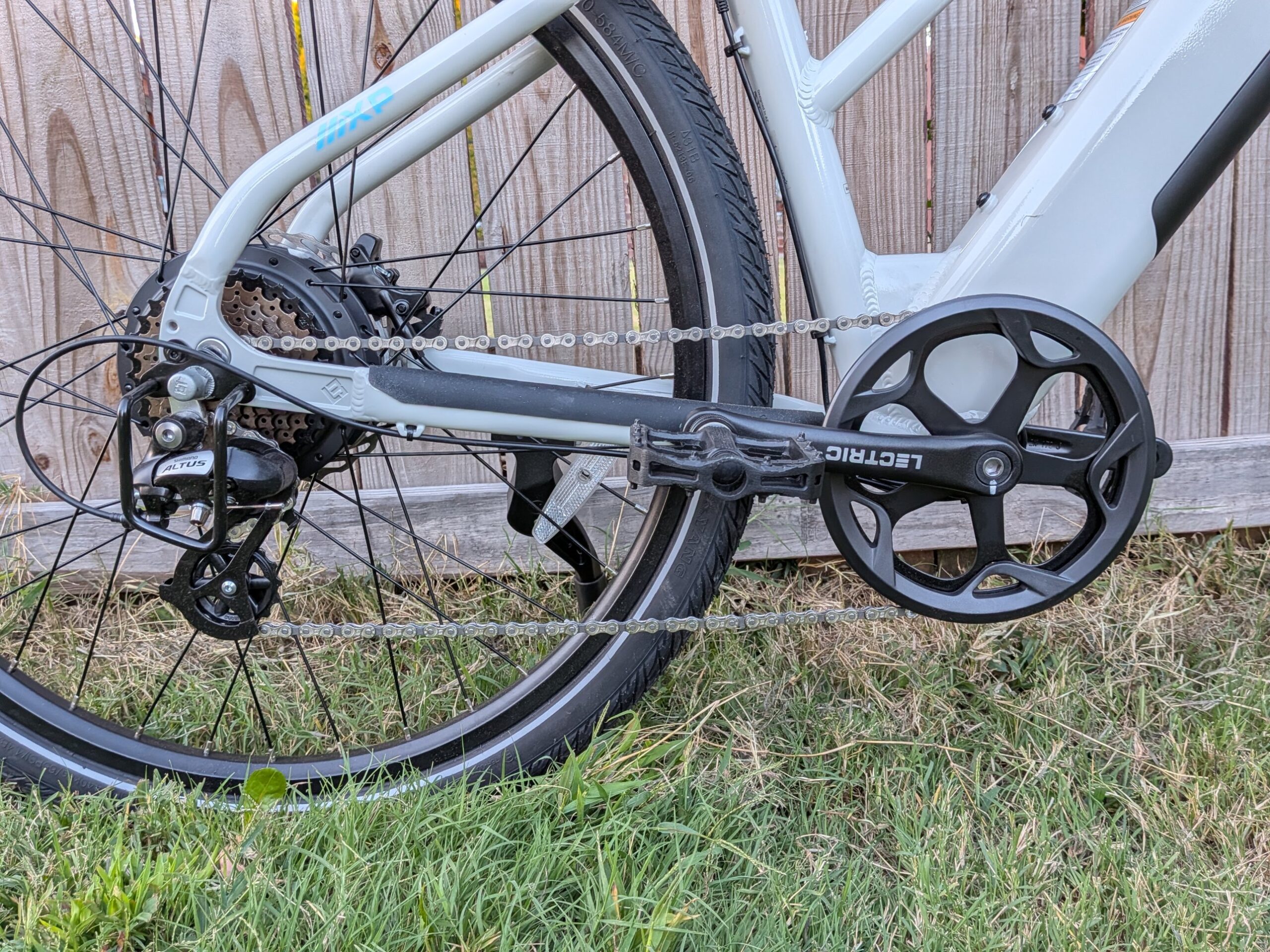
Stopping duty falls to Star Union two-piston hydraulic brakes with 180mm rotors and motor cutoff levers. They delivered adequate, predictable stopping in our brake test, and we’ve had good luck with Star Union hardware on other Lectric models, including more than 1,000 miles on our XPedition. Shifting is handled by a Shimano Altus 8-speed derailleur and trigger shifter with an 11-32T freewheel and a 46T chainring, which is plenty of range for pavement commuting and casual riding.
Frame, Options, and Fit
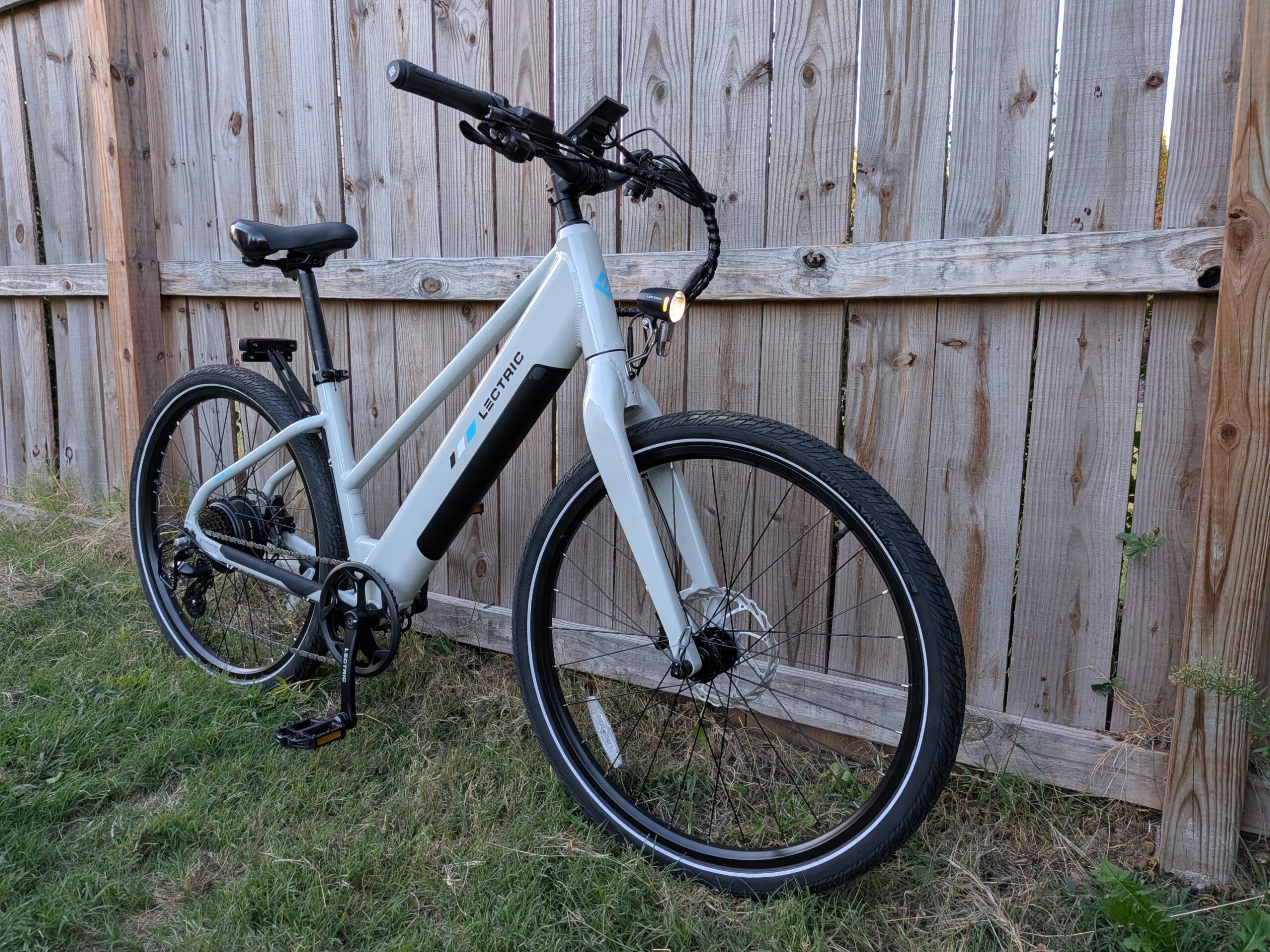
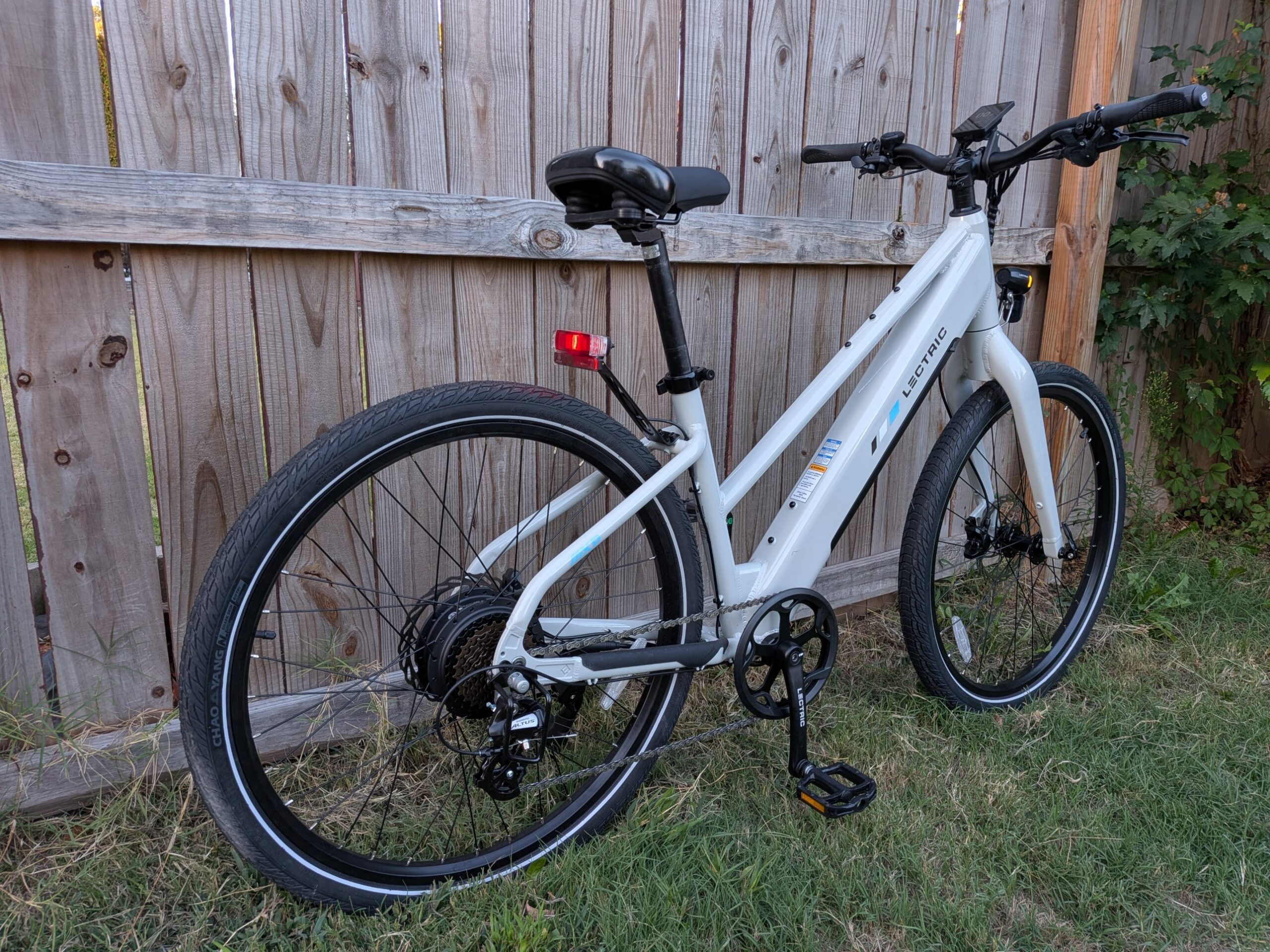
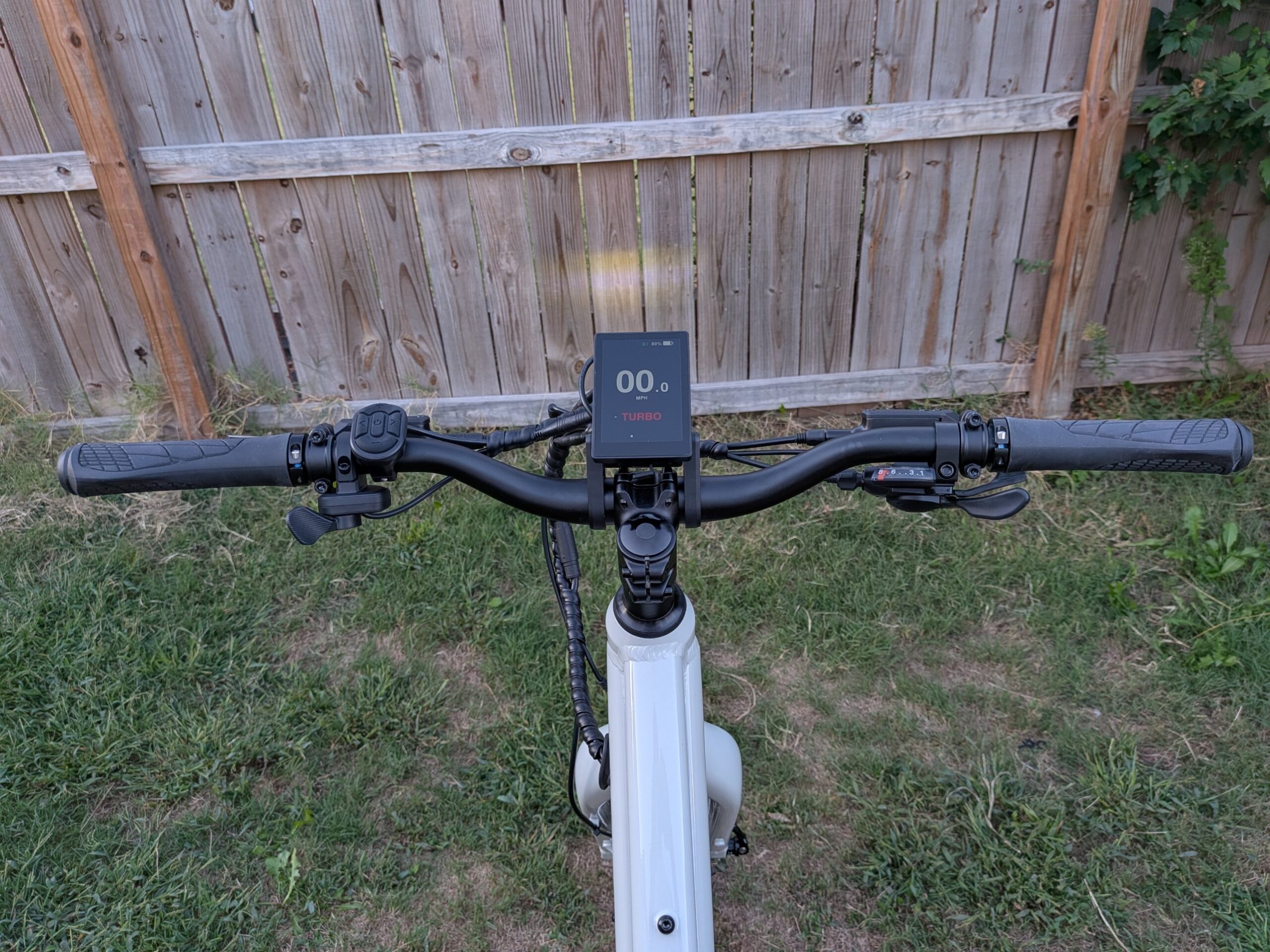
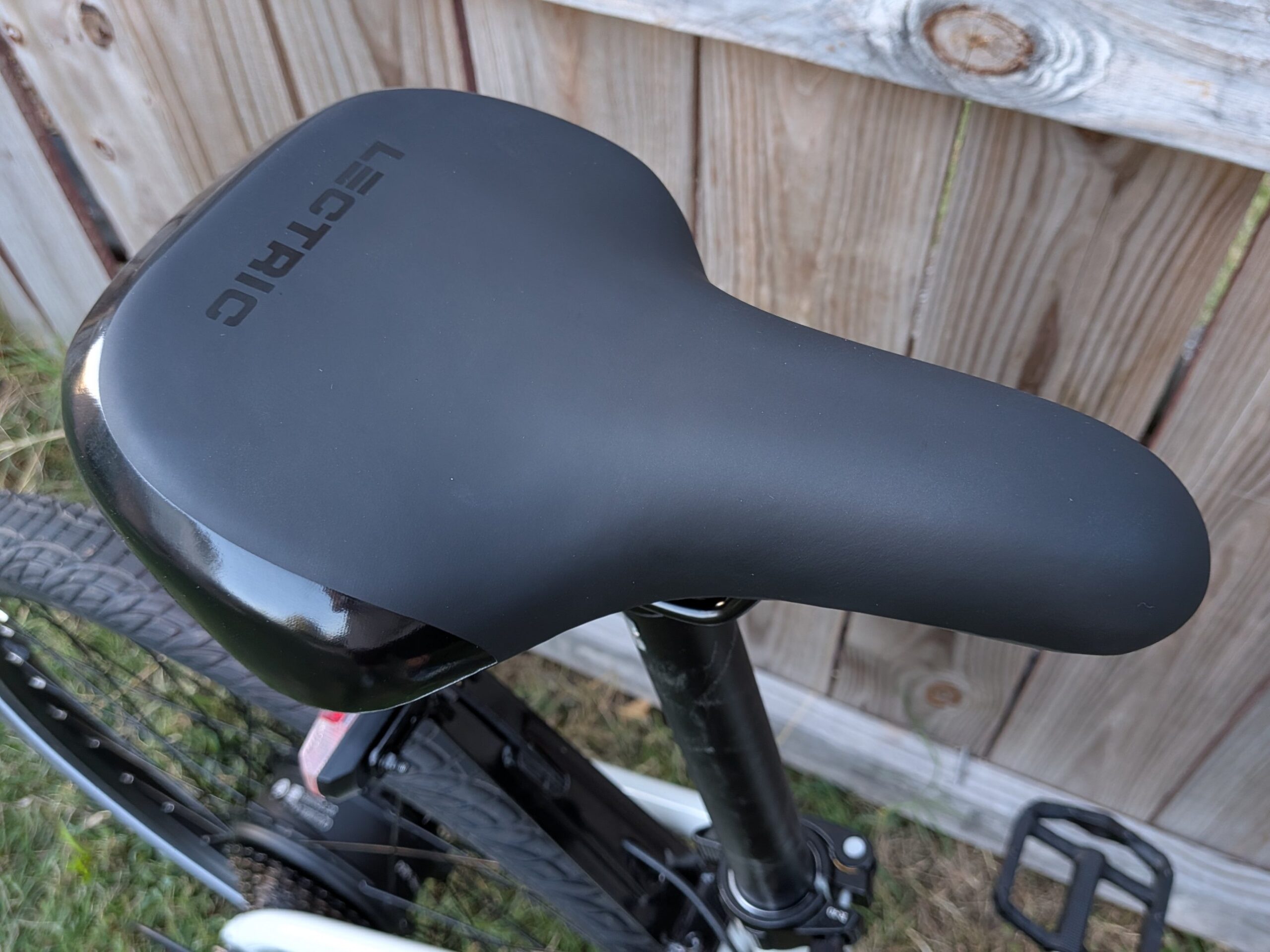
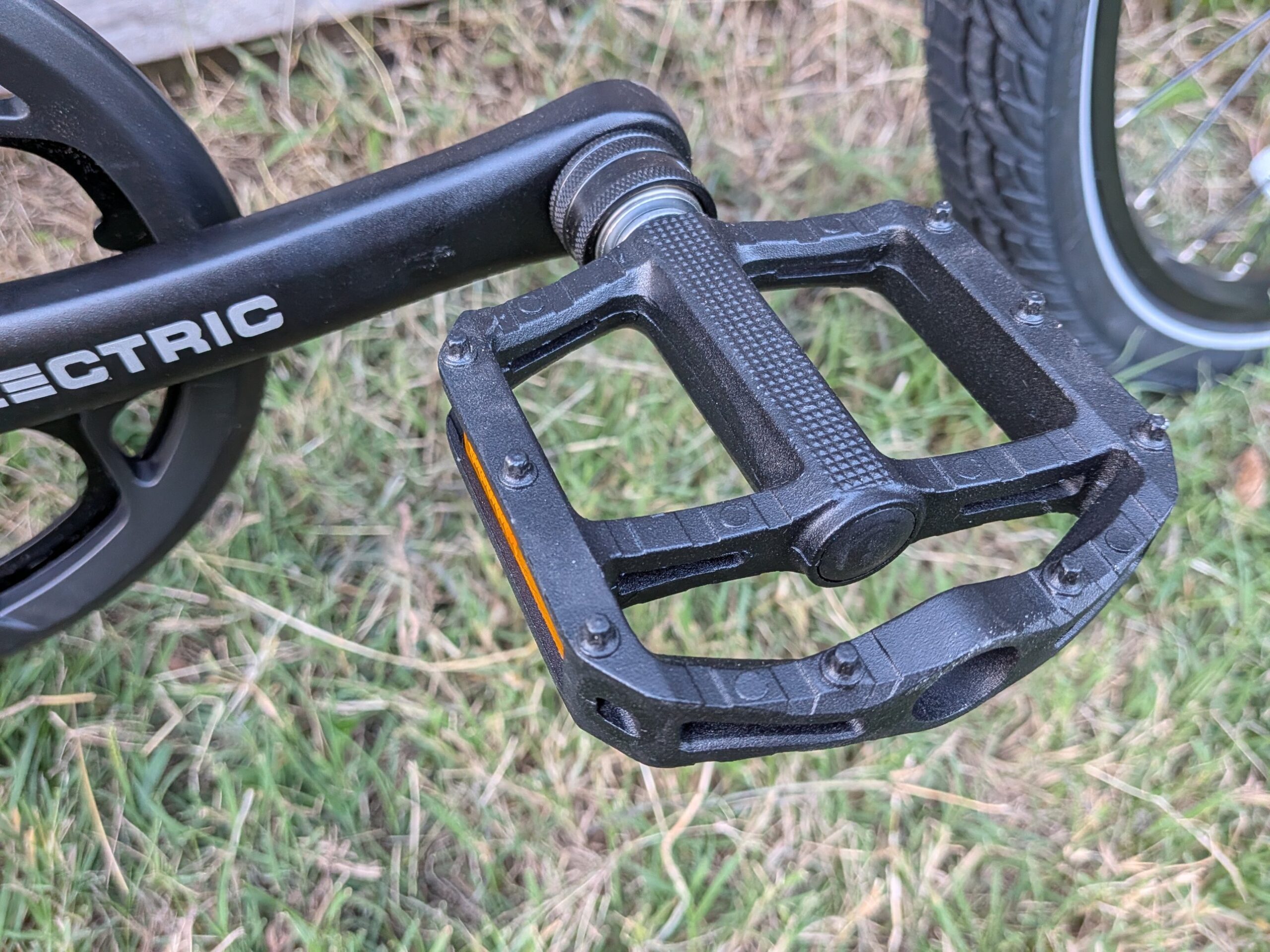
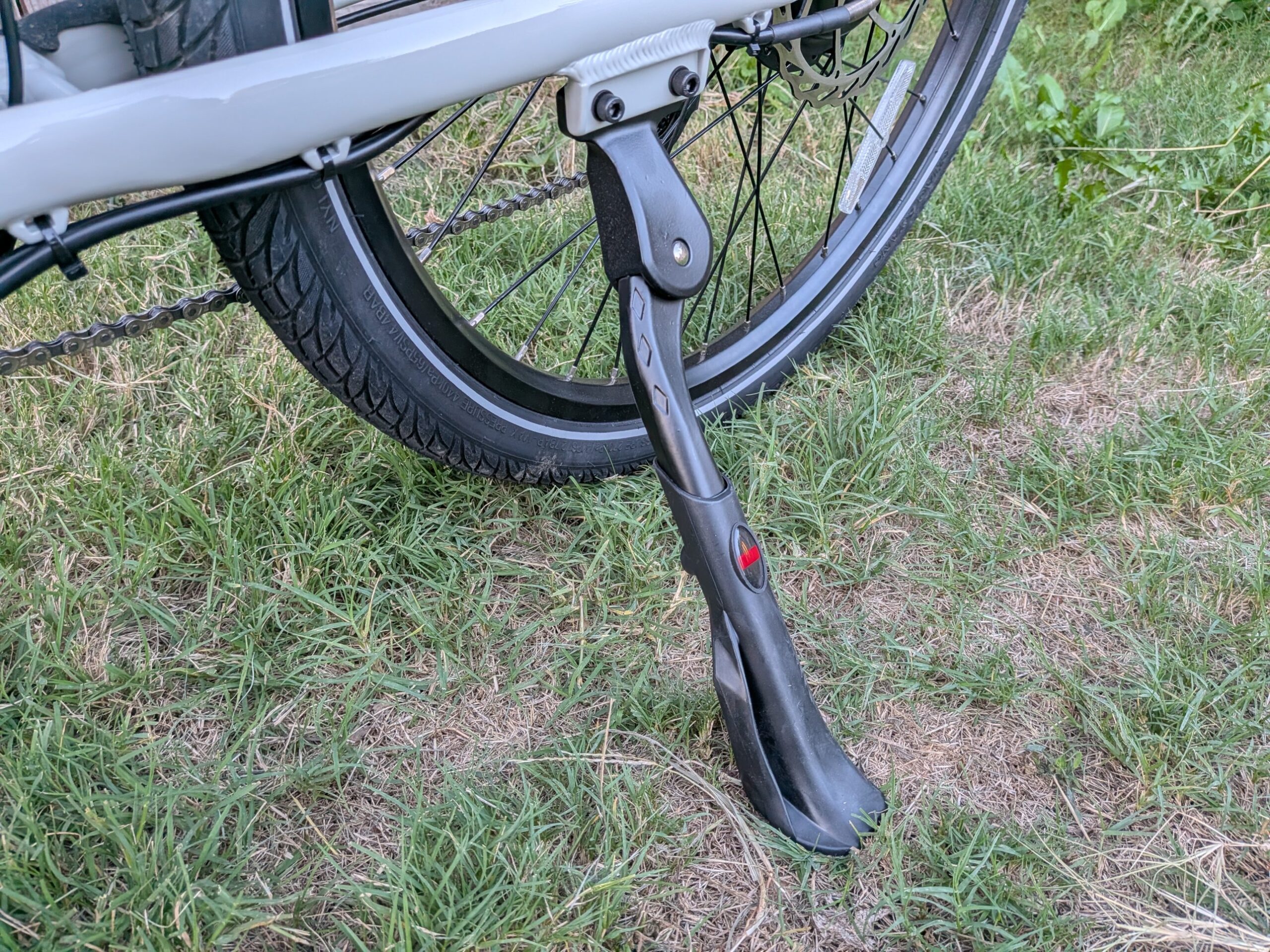
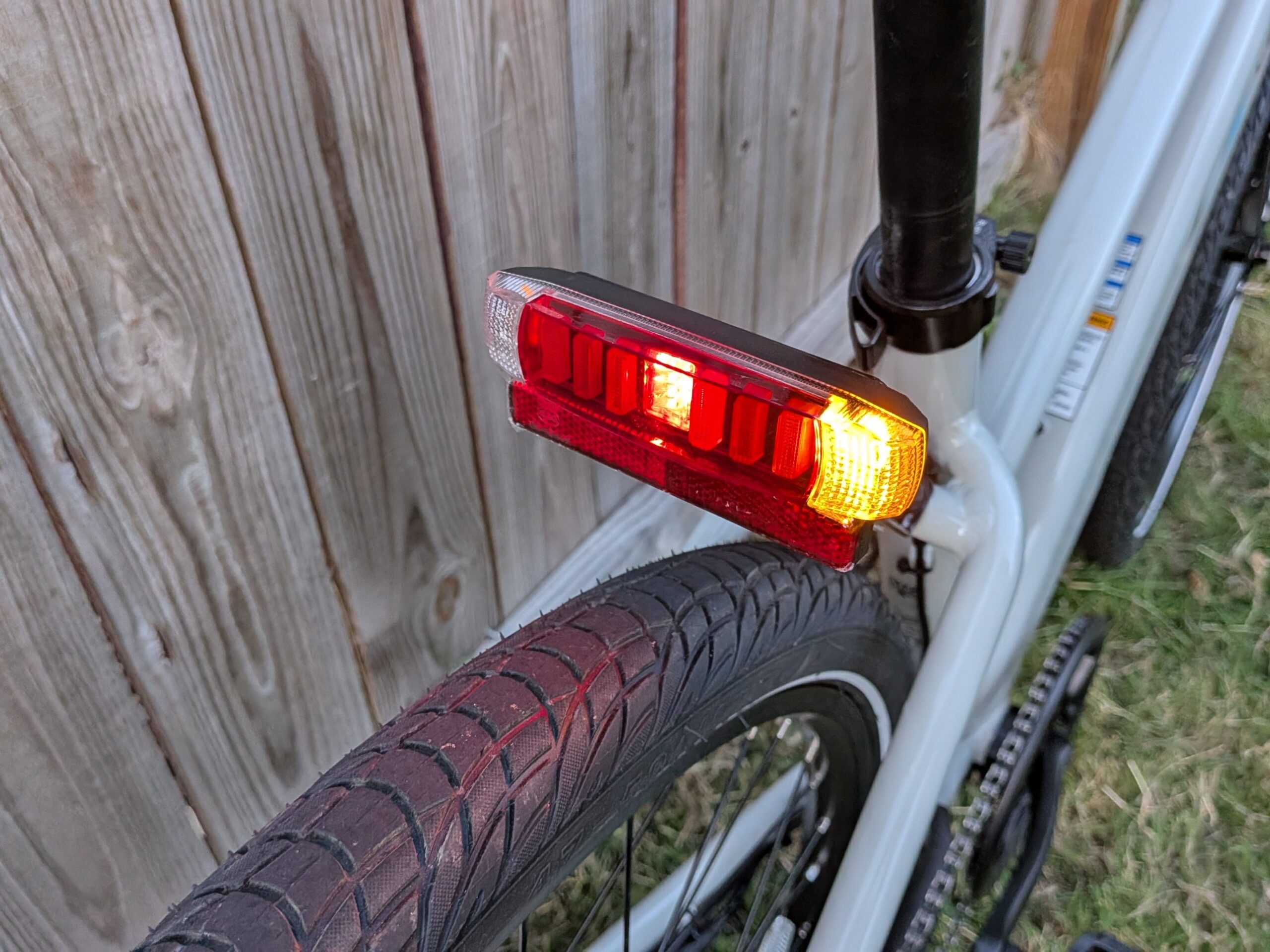
As Lectric’s first mid-step, the XPress Lite rides a lot like a traditional diamond-frame hybrid. The Hybrid Sprint handlebars have a slight rise, but the fixed stem puts you in a fairly sporty, forward position, so an adjustable stem is worth considering if you’d rather sit more upright. In return the bike feels nimble and easy to toss around. Without a suspension fork you’ll feel the bumps, so we’d budget for a suspension seatpost on day one. Our 31.6mm post worked on our test bike, and if you want an exact match for Lectric’s 31.8mm size, we also offer our 27.2mm post with a shim. Paired with a softer saddle, it takes the edge off rough surfaces, even though it can’t fully replace a suspension fork.
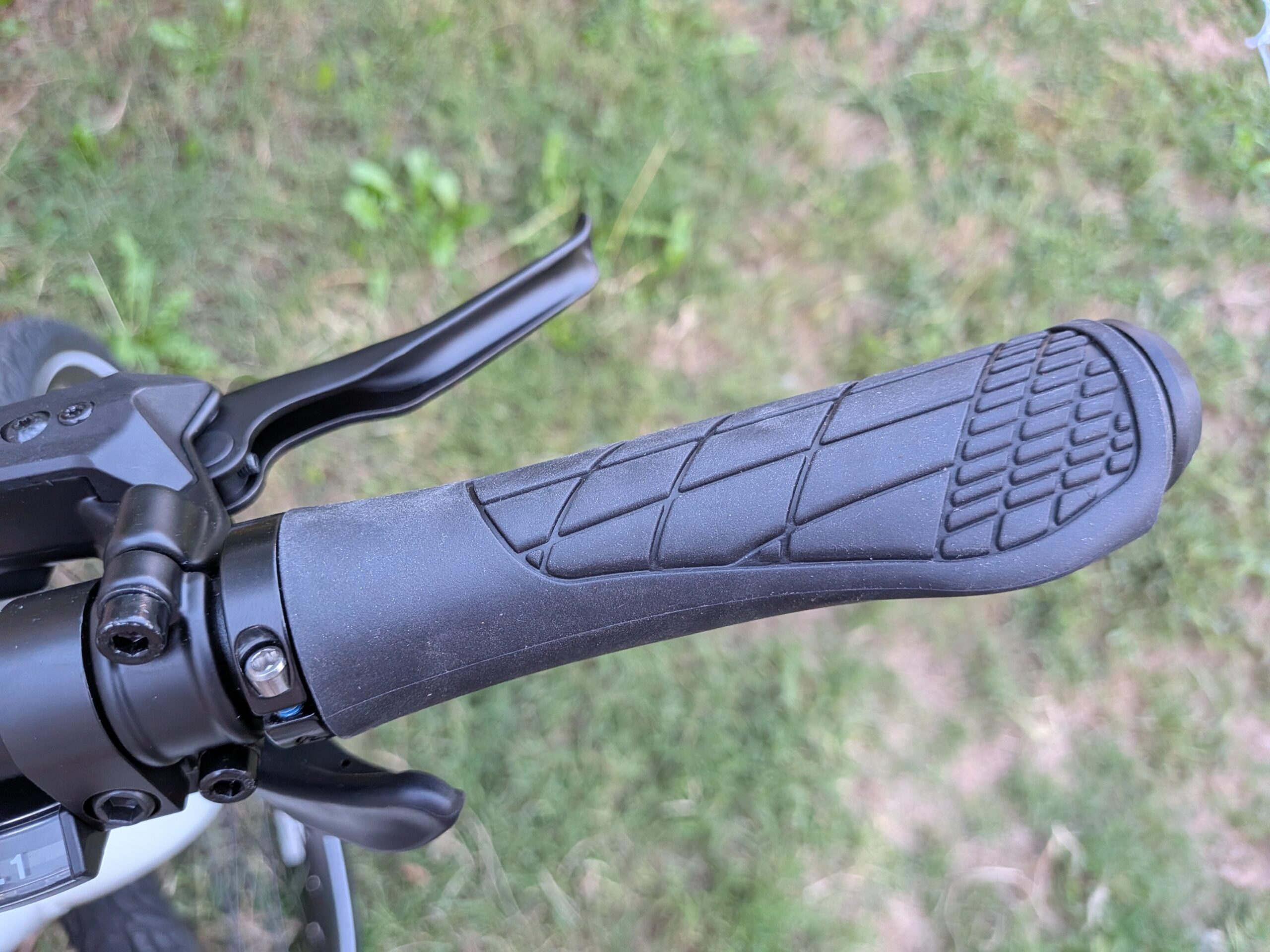
Fit and finish are clean, with cables routed through the frame, ergonomic lock-on grips, metal quick-release pedals, a sturdy rear-mounted kickstand, and three accessory mounts on the top tube plus two on the down tube. Lectric also left off fenders and a rear rack to hit the lower weight, though both are sold as accessories, and the rack is rated for 30 lb. You still get a headlight, a taillight that doubles as a brake light, and turn signals. The battery also fits our small battery bag for storage and charging. It comes in four colors: Toasted Marshmallow, Pine Green, Glacier Blue, and Stratus White.
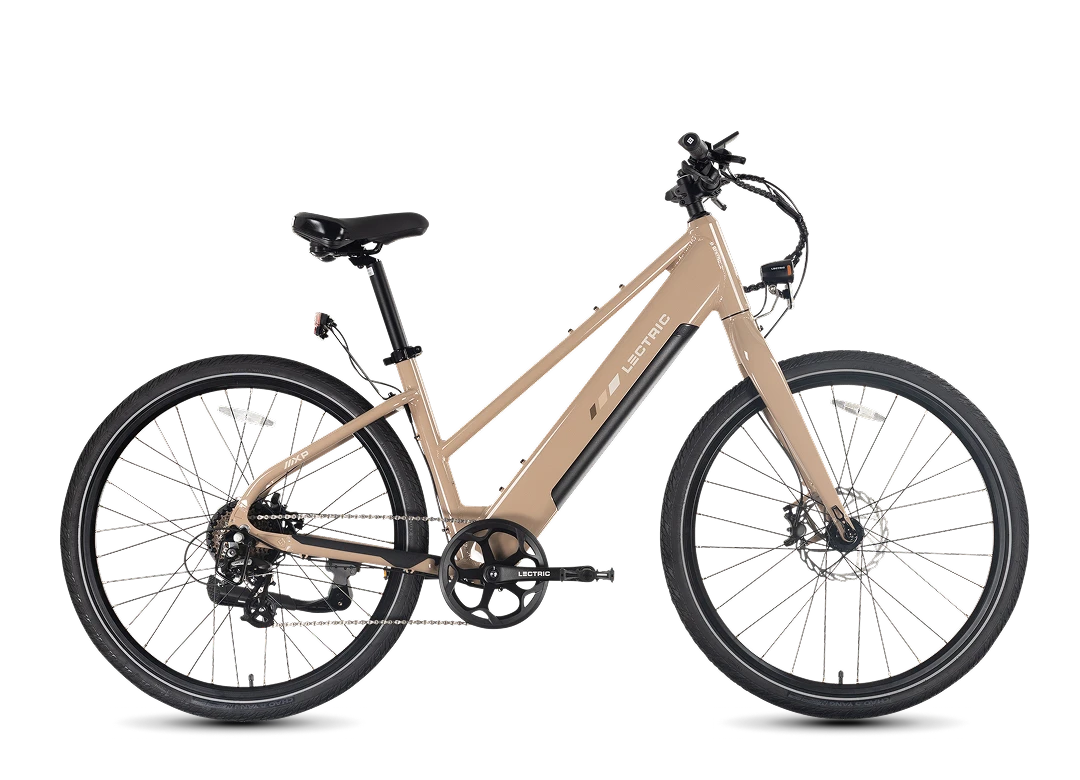
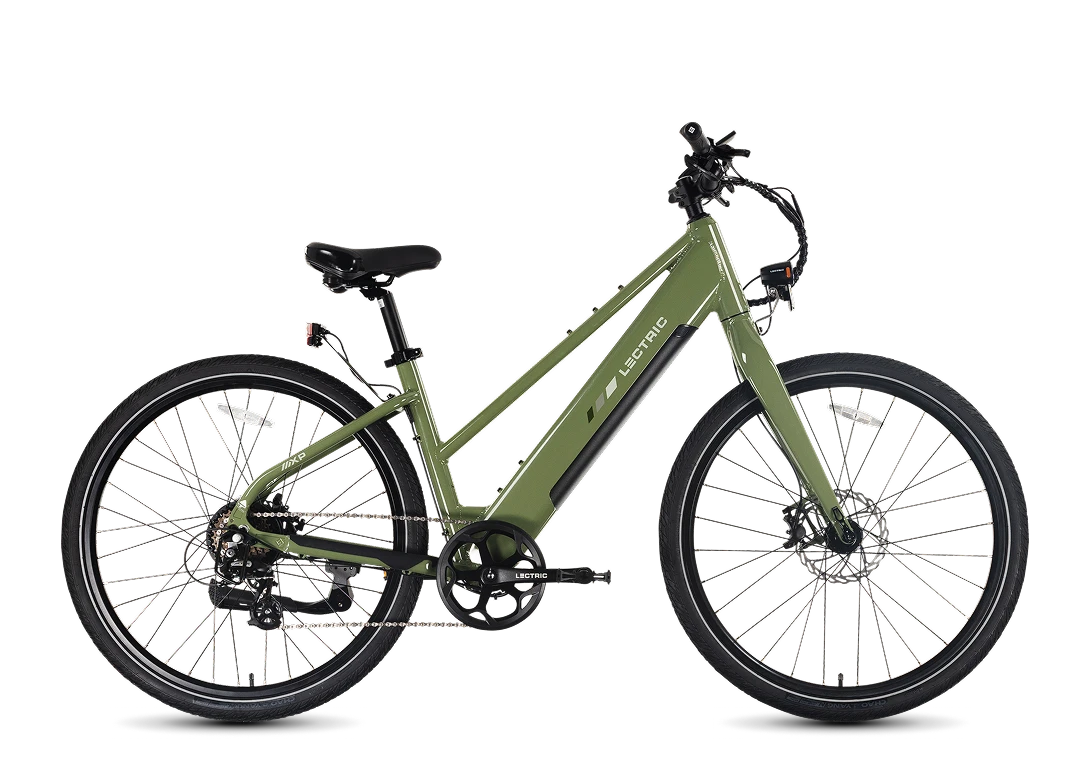
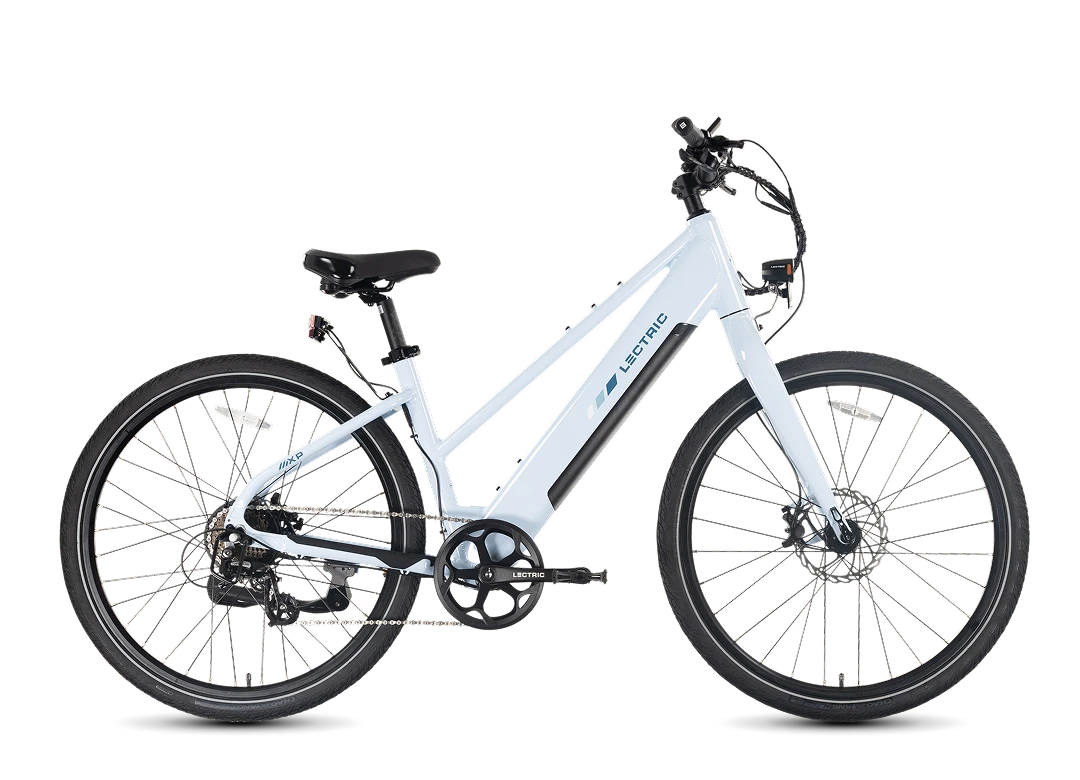
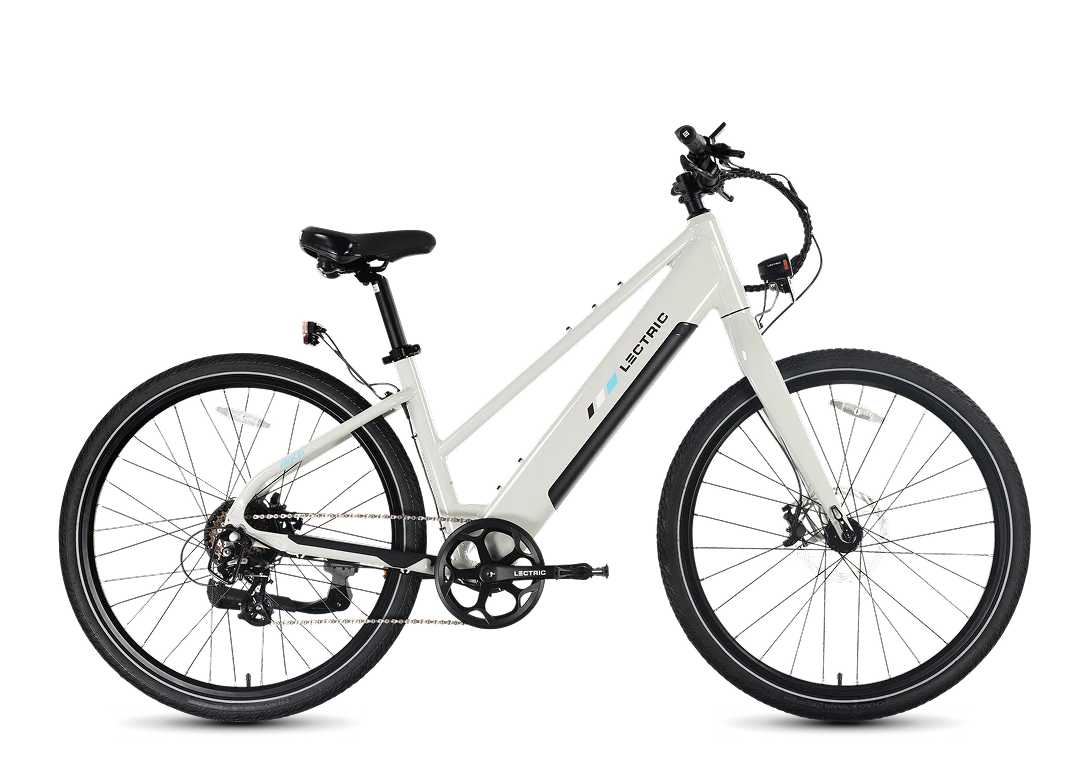
It’s a single frame size that Lectric lists for riders from 5’4″ to 6’4″. A 6’0″ rider with a 32-inch inseam still got full leg extension, and a 5’5″ rider on our team fit comfortably too, so the listed range looks about right. Payload capacity is 275 lb, which is lower than many commuters and worth checking if you plan to carry cargo.
| Category | Lectric XPress Lite |
|---|---|
| Total Weight w/ Battery & Accessories (our scale) | 53 lbs |
| Weight without Battery (our scale) | 46 lbs |
| Claimed Weight | 45.6 lbs (without battery) |
| Payload Capacity | 275 lbs |
| Rider Height Range | 5'4" to 6'4" |
| Standover Height | 24" |
| Seat Height Range | 31.5" to 43.5" |
Lectric XPress Lite Specifications
Here’s the full spec sheet and geometry for the Lectric XPress Lite, pulled from Lectric’s product page and checked against our test bike.
| Component | Lectric XPress Lite |
|---|---|
| Price | $1,099 |
| Type | Lightweight mid-step commuter ebike |
| Class | 1/2/3 or California Class 3 (selectable) |
| Weight Capacity | 275 lbs |
| Top Speed | 28 mph pedal assist, 20 mph throttle |
| Motor | 500W Stealth M24 rear hub (864W peak), 61Nm torque |
| Battery | 48V 7.8Ah (374Wh), removable, cross-compatible with XPress batteries |
| Claimed Range | Up to 45 miles |
| Charger | 2A, under 4 hours from empty |
| Display | Detachable 3.5" color TFT, USB-C charging |
| Sensor | Torque + cadence (selectable) |
| Throttle | Left-hand thumb throttle |
| UL Certifications | UL 2849 (electrical system), UL 2271 (battery) |
| Shifter | Shimano 8-speed trigger |
| Derailleur | Shimano Altus 8-speed |
| Chainring | 46T |
| Cassette | 11-32T, 8-speed freewheel |
| Brakes | Star Union two-piston hydraulic disc |
| Levers | Aluminum hydraulic with motor cutoffs |
| Rotors | 180mm front and rear |
| Frame | 6000-series aluminum mid-step, one size (5'4" to 6'4" riders) |
| Fork | Aluminum rigid |
| Axle | Front thru-axle |
| Tires | Chaoyang 27.5 x 1.95" puncture-resistant slicks, Slime installed |
| Handlebars | Hybrid Sprint |
| Grips | Ergonomic lock-on |
| Stem | Fixed |
| Saddle | Lectric sport saddle |
| Seatpost | Telescoping, quick-release collar |
| Pedals | Aluminum quick-release |
| Fenders | Optional accessory |
| Rear Rack | Optional accessory (30 lb capacity) |
| Kickstand | Rear-mounted folding kickstand |
| Lights | 90-lumen headlight with amber side lights; rear running light, brake light, and turn signals |
| Colors | Toasted Marshmallow, Pine Green, Glacier Blue, Stratus White |
Real World Performance Testing
Throttle and Cruise Control
From a stop with a 140 lb rider, the throttle pulled up to about 968 watts on the display and got us to the 20 mph throttle cap in about 6 seconds, surprisingly, only one second longer than the more powerful XPress 2. With throttle output tied to the assist level, each level caps throttle power (see the table below), which gives you a gentler, more manageable takeoff in Eco and Tour. That’s a nice option for new rider. Switch to full throttle output and you get the motor’s full power in any level. Cruise control is set by holding the throttle and the minus button together. We locked it at 9 mph and the bike held that speed. Braking cancels it, and you can pedal past your set speed and coast back down, at which point the motor picks you up again.
| Assist Level | Power Output |
|---|---|
| Eco | ~215W |
| Tour | ~430W |
| Sport | ~645W |
| Sport+ | ~800W |
| Turbo | ~968W (full) |
Torque Sensor
We started with the increased torque multiplier, and engagement was quick from the first pedal stroke. In Eco, light pedaling brought around 100 watts and an easy 8 mph cruise, while pushing harder pulled more than 500 watts and got us to 20 mph. Tour put the low 20s within easy reach, and in Sport we reached 28 mph with real but manageable effort. Sport+ and Turbo work differently. Even with very little leg input, the motor jumped to peak watts, so these top two levels feel closer to a cadence sensor than a true torque sensor. Lectric has tuned other models the same way.
Switching to the standard multiplier made less difference than we expected. Eco still delivered close to 300 watts when we leaned on it and could hold 20 mph with light pedaling, and Sport, Sport+, and Turbo still reached the low 900s with little effort. That makes the standard setting the better default for most riders: it feels more natural, you get exercise when you want it, and it should help squeeze more range out of the small battery. Save the increased multiplier for days when you want the motor to do more of the work.
Cadence Sensor
In cadence mode, each level delivers a fixed amount of power as long as your legs are turning, so how hard you push doesn’t change the output. The levels are evenly spaced, from about 200 watts in Eco to the full ~968 watts in Turbo (see the table above). In Sport+ we had to shift into a higher gear just to put any effort into the pedals at speed. It’s a simple, relaxed way to ride, but we think most people will want to stick with the torque sensor.
Hill Climb
On throttle alone, starting at 20 mph, the XPress Lite held around 954 watts all the way up and bottomed out at 9 mph, a solid result for a 500-watt motor. It was also remarkably quiet under full load, which backs up Lectric’s marketing and matches what we’ve heard from its other recent models. Pedaling with the torque sensor told a level-by-level story. Eco and Tour, at roughly 230 to 300 watts, would get you up but with significant effort, and Sport, closer to 500 watts, still asked a lot of your legs. Sport+ was where the motor started taking over at around 700 watts. In Turbo, gentle pedaling held between 850 and 950 watts, and pushing just a little harder locked in the full 954. Not every torque-sensing ebike makes it that easy to reach peak power on a climb.
Lectric XPress Lite vs Lectric XPress 2
For $300 more, the XPress 2 adds most of what the XPress Lite leaves out: a 750-watt motor with 85 Nm of torque, almost twice the battery capacity (672Wh), an SR Suntour suspension fork, a rack and fenders, and a choice of step-thru or step-over frames. It also weighed 72 lb on our scale. We put both bikes side by side, including a 0 to 20 mph throttle test and the same hill climb, in our Lectric XPress Lite vs XPress 2 comparison. Pick the XPress Lite if weight and price come first and your rides are mostly shorter trips on pavement, and the XPress 2 if you have a longer commute, ride rougher roads, or want a fully outfitted bike out of the box.
Pros and Cons
Save on your Lectric: Check our Lectric discount code page for the codes and accessory deals live this month.
Final Thoughts
What do you actually give up to get a lighter Lectric for $1,099? Less than we expected. The 500-watt motor packs a punch for its rating, climbed our hill without trouble, and offers more tuning than most bikes at this price, all in a package light enough to make a real difference every time you lift it. The compromises that matter are the rigid fork and the small battery. A suspension seatpost goes a long way toward fixing the first. The smaller battery may mean more time on the charger, but we think it will still cover the average rider’s range needs. If you ride mostly on pavement and your rides don’t take you too far from home, the XPress Lite is a great option. If you’re a heavier rider, have a longer commute, or want to explore gravel, the XPress 2 is worth the extra $300.
Ready to ride? Check current pricing and accessory offers on the Lectric XPress Lite. Buying through our link supports Ebike Escape at no extra cost to you.
