

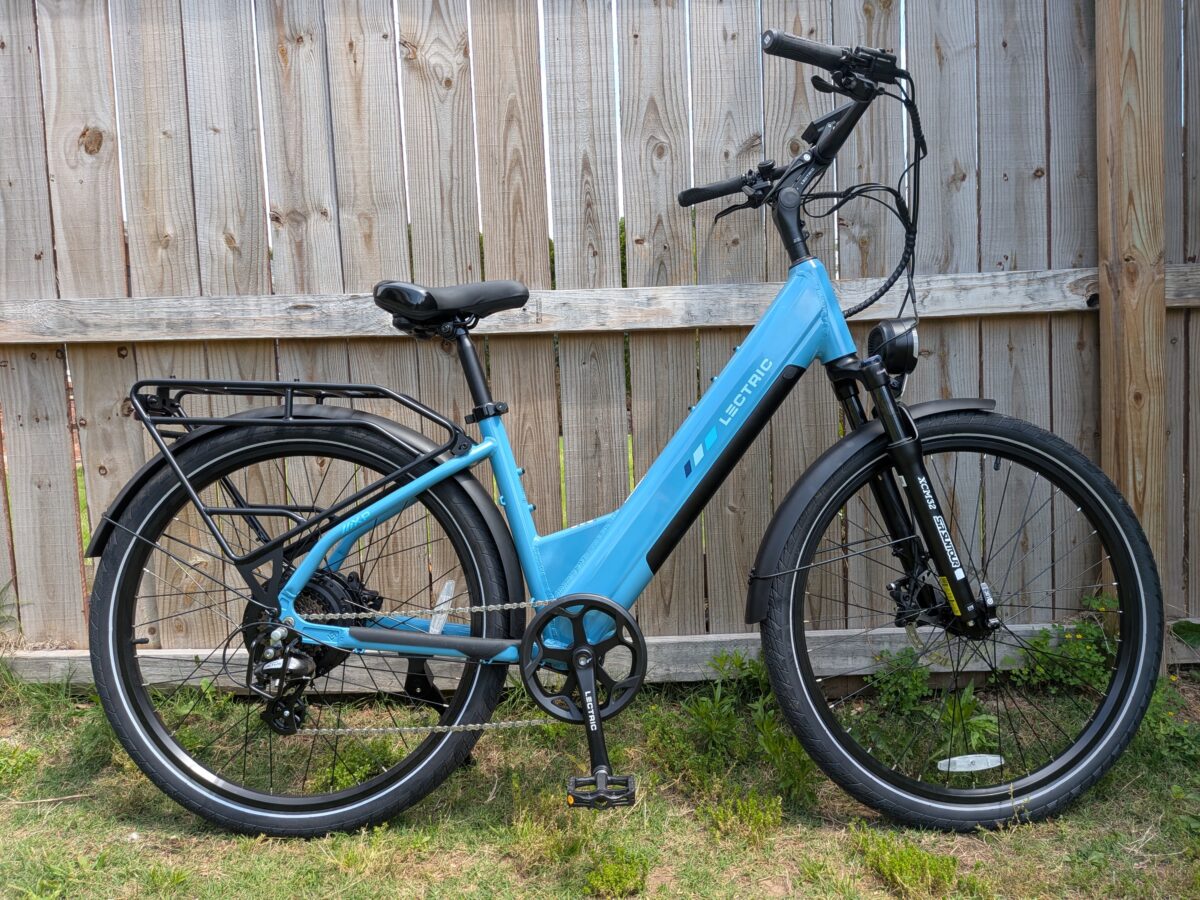
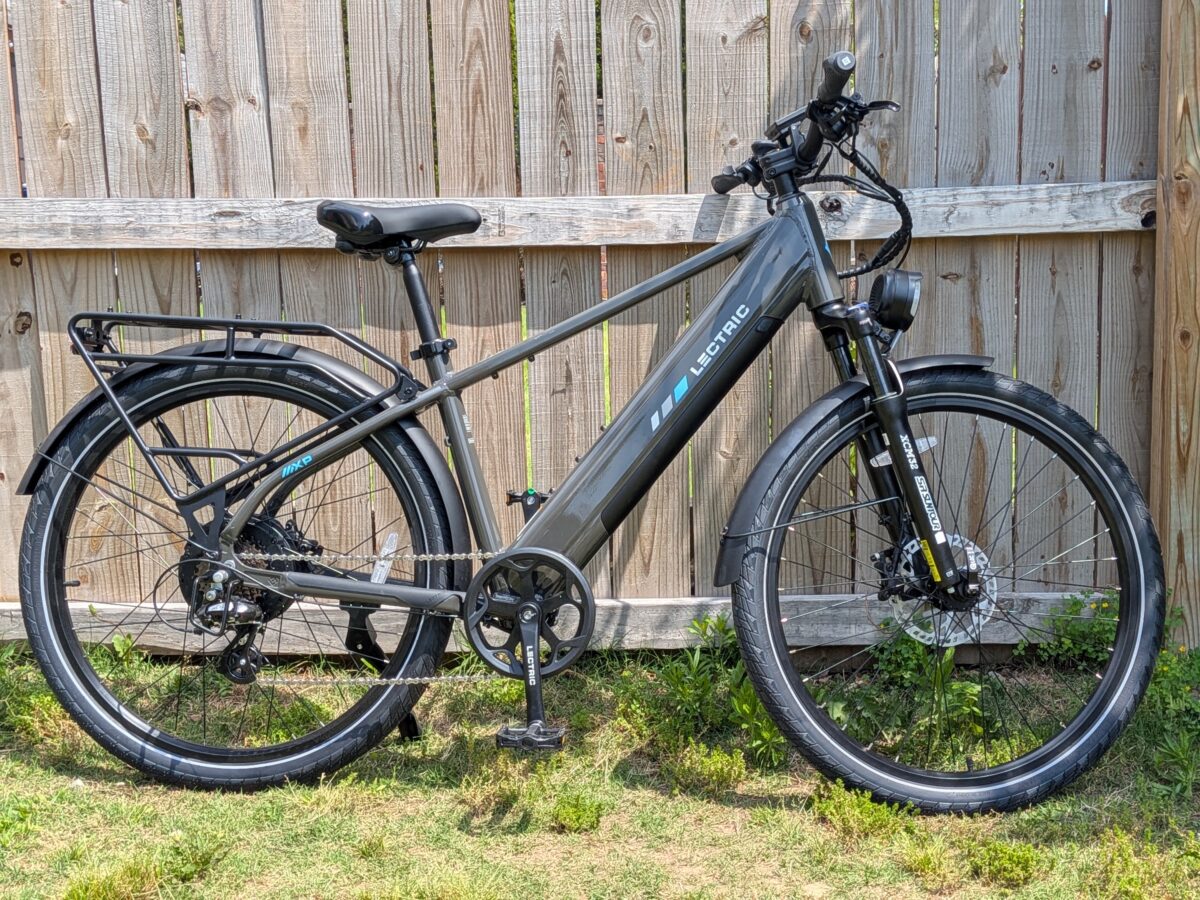
Time and time again, Lectric impresses us with their ability to make significant updates to their lineup while delivering incredible value. The release of the XPress 2 brings the big upgrades to their popular commuter ebike, but it shows a slight shift in priority over the previous generation. It appears riders largely opted for the more powerful model on the original release. By eliminating the base 500W option, it now comes standard with Lectric’s 750W hub motor, and they claim this new iteration is 99% quieter. This also simplifies the choices down to whether you want to ride more actively with the step-over frame, or more laid back with the cruiser vibes of the step-thru.
The new entry price has moved up to $1,399, but that increase comes with upgrades to key components like the suspension, drivetrain, and brakes, along with a new detachable display with settings that are actually easy to navigate. Now, you can switch between riding with a cadence sensor for more consistent motor support, or a torque sensor for a natural pedaling experience. This article will explore how these new features and components impact the ride. We will detail our findings from our performance tests and break down the key considerations. Do these refinements keep the XPress at the top of its class and justify the price increase? Let’s find out.
If our review helps you decide on a model from Lectric, you can help make content like this possible by purchasing through our affiliate link. It is a great way to support our work at no extra cost to you. Thank you!
Lectric XPress 2 Video Review
Want to see the XPress 2 in action? Our full video review provides a close up look at all the components, a detailed walkthrough of the new display and settings, takes you along for a first-person test ride to demonstrate exactly how the quieter 750W motor performs on the pavement and up our steep test hill, and explores the real world differences between the swappable cadence and torque sensors.
Key Upgrades on the XPress 2
Quieter 750W Motor
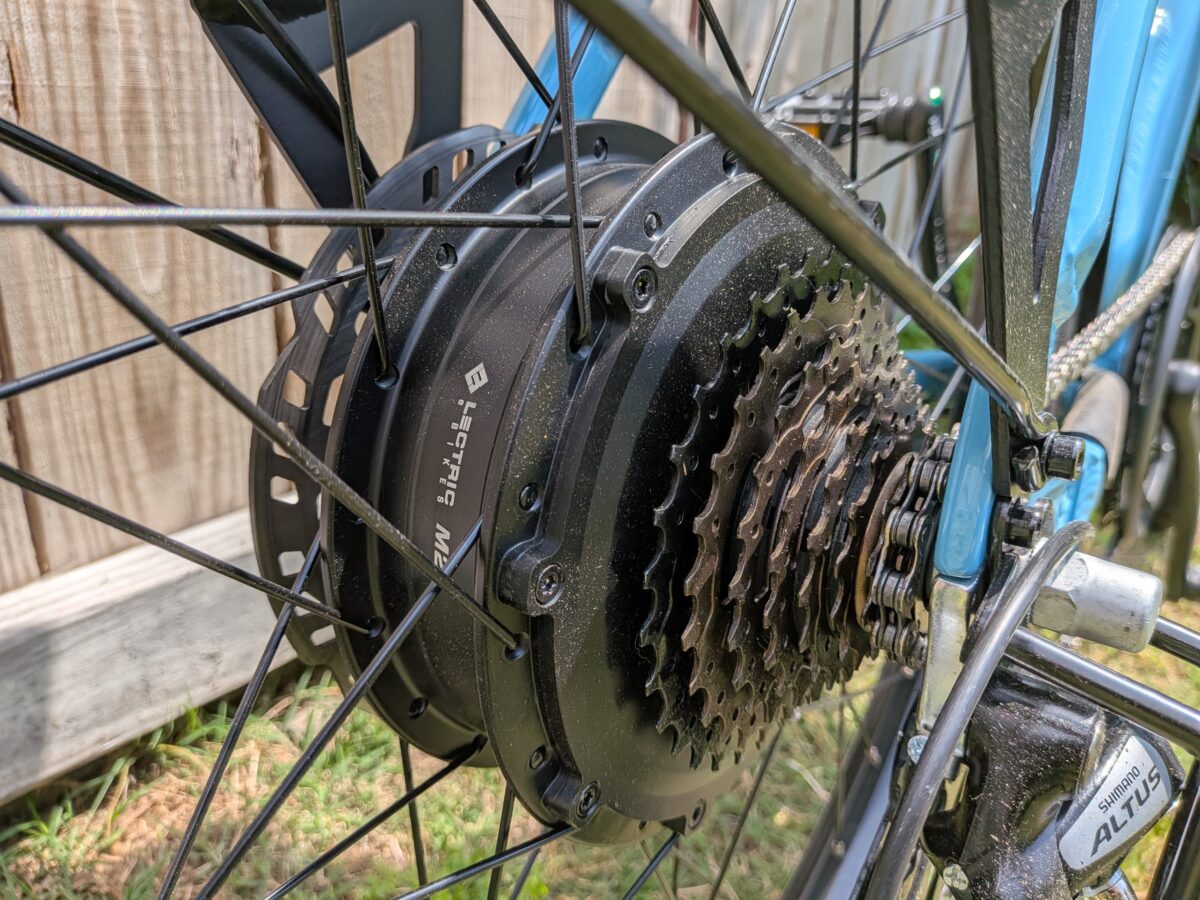
Lectric claims this iteration of their 750W Stealth M24 motor is 99% quieter, and on the road, that translates to a powerful ride without the high-pitched whine found on the previous generation. It is paired with a 48V 14Ah battery with an advertised range up to 60 miles. Full certifications from SGS to UL 2849 and UL 2271 mean peace of mind that a third-party verified the electrical safety.
Swappable Pedal Assist Sensors
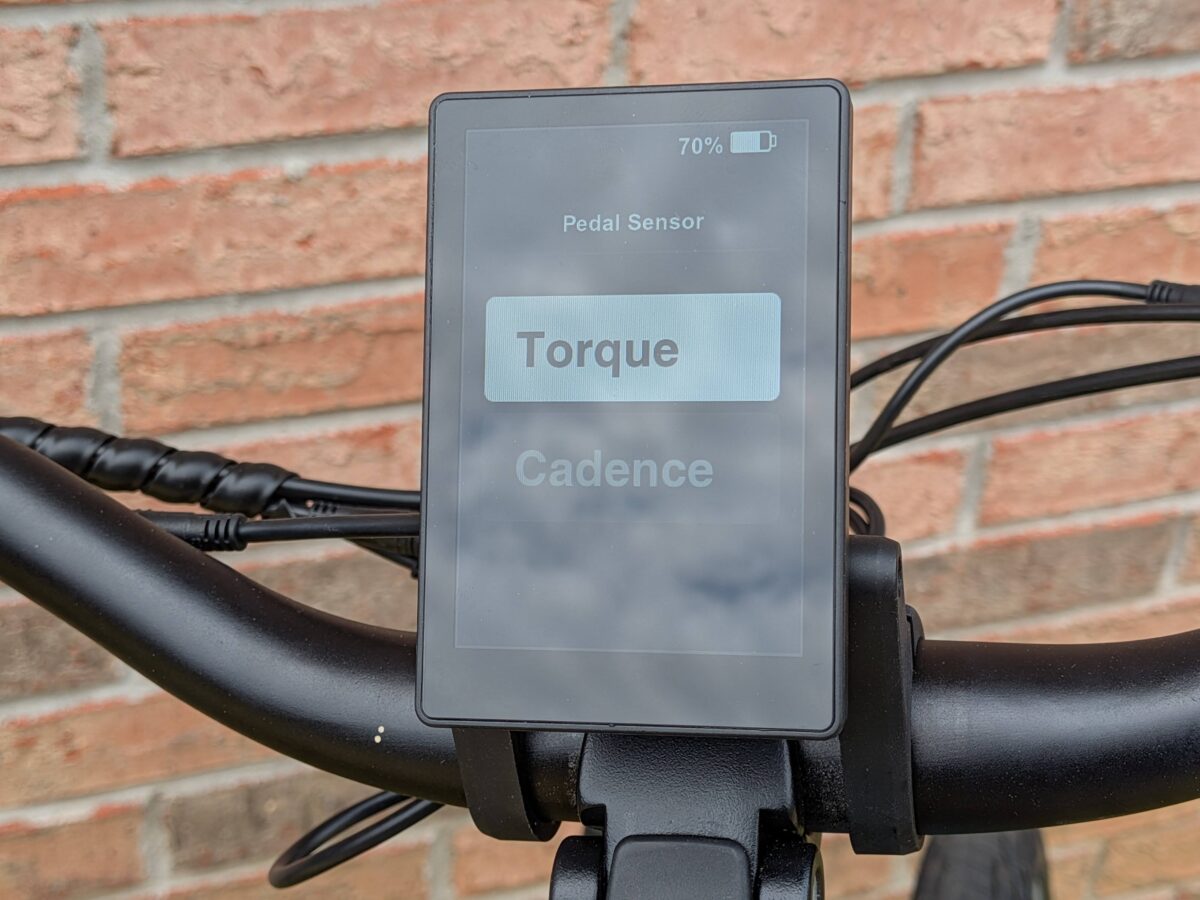
No longer do you have to choose between the natural, responsive feel of a torque sensor or the effortless cruising of a cadence sensor. You can now swap between the two with Lectric’s “XPerience Switch” feature. If you want the motor to actively amplify your leg effort, leave it on torque. If you want to simply spin the pedals after a long day and let the motor do all the heavy lifting, switch over to cadence.
Better Suspension, Drivetrain, and Brakes
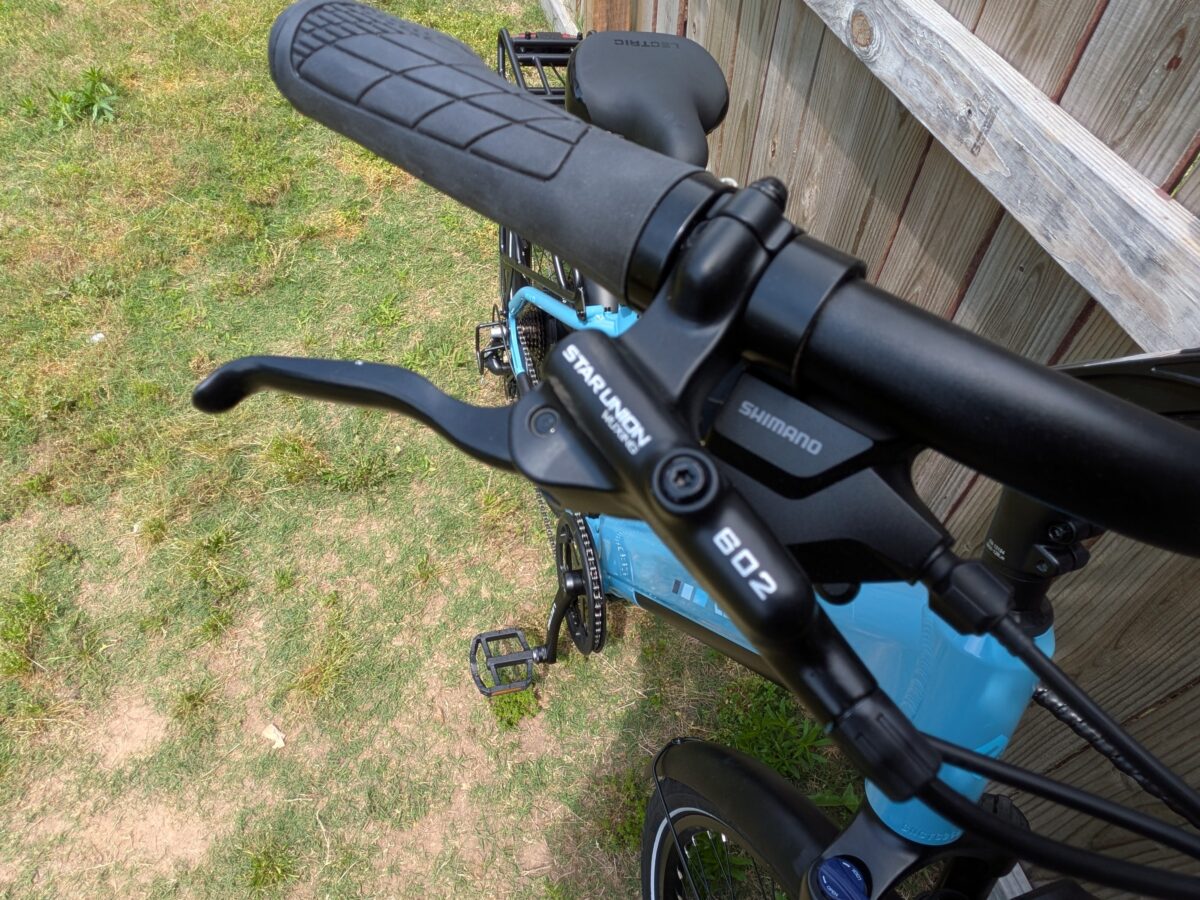
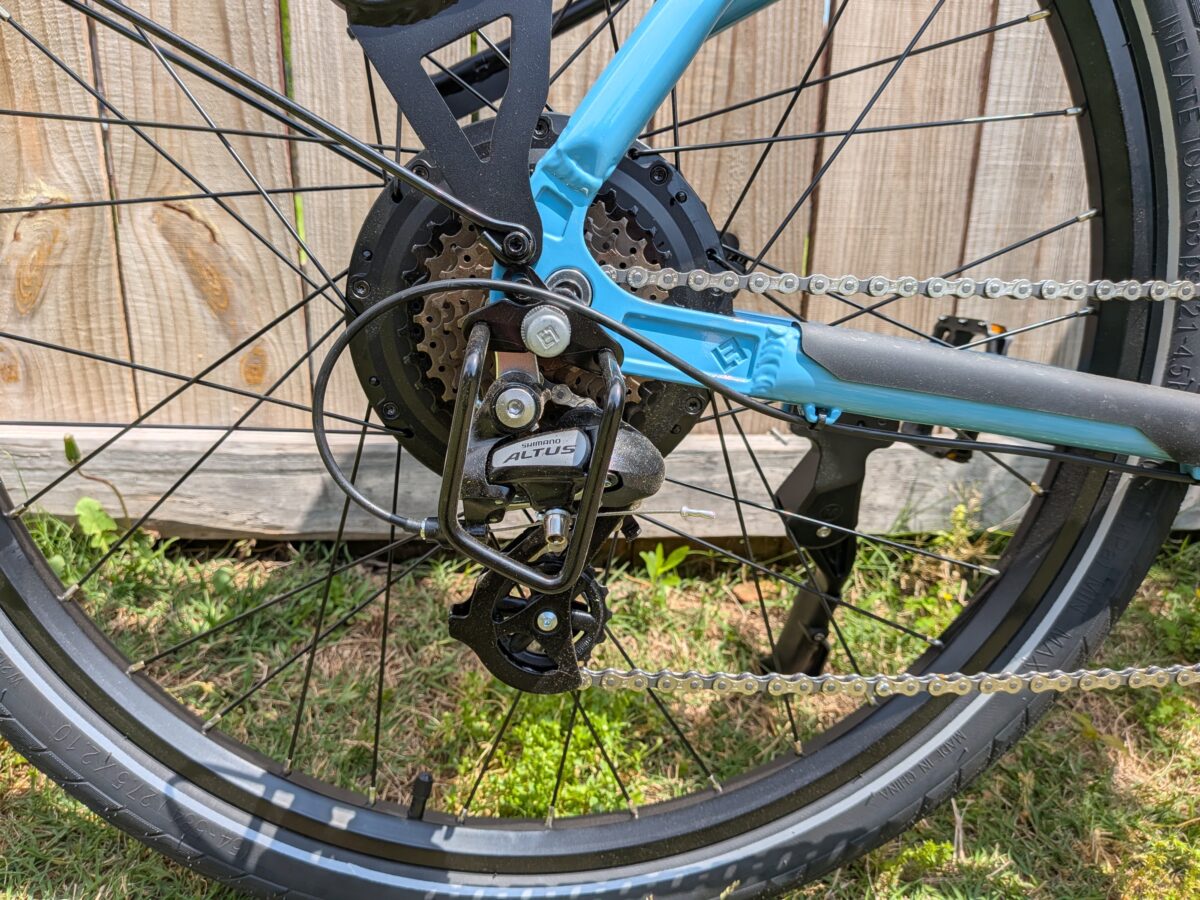
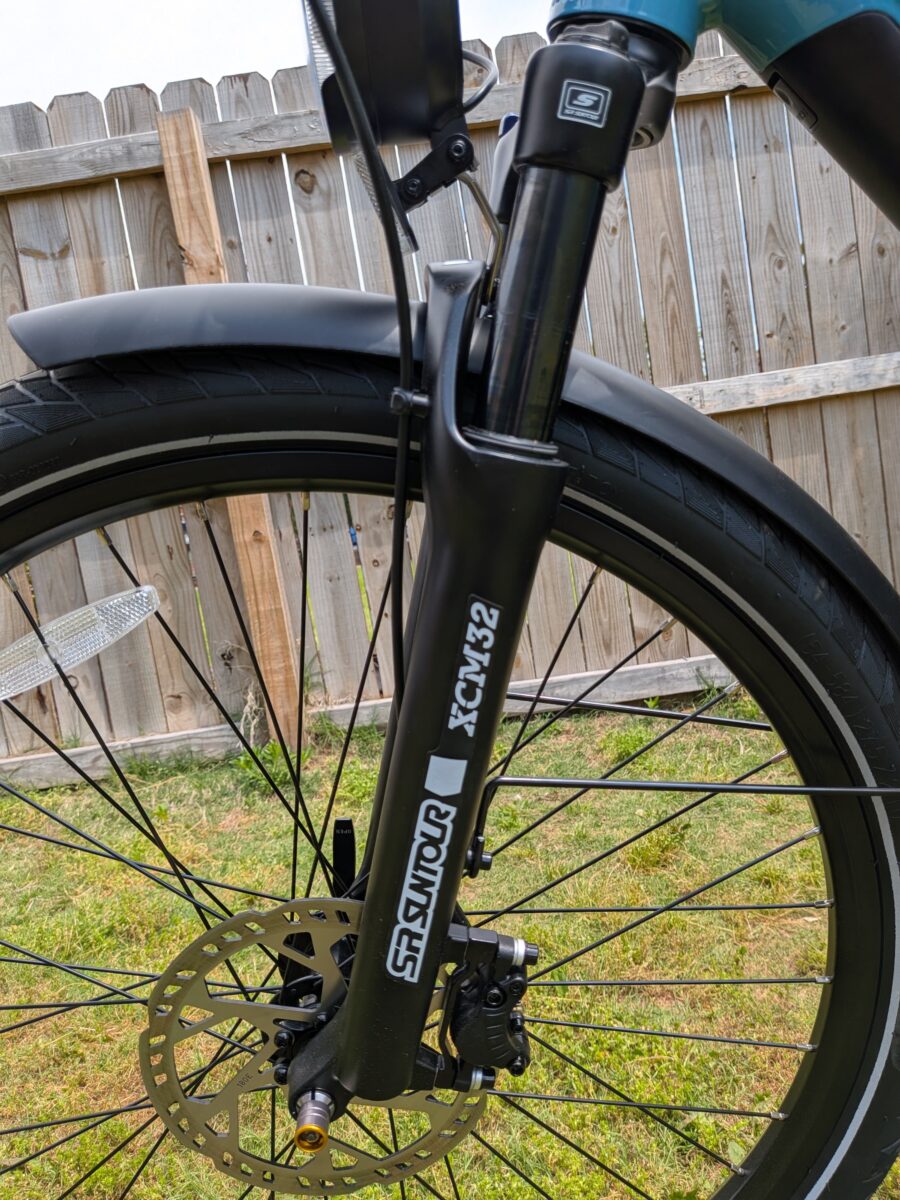
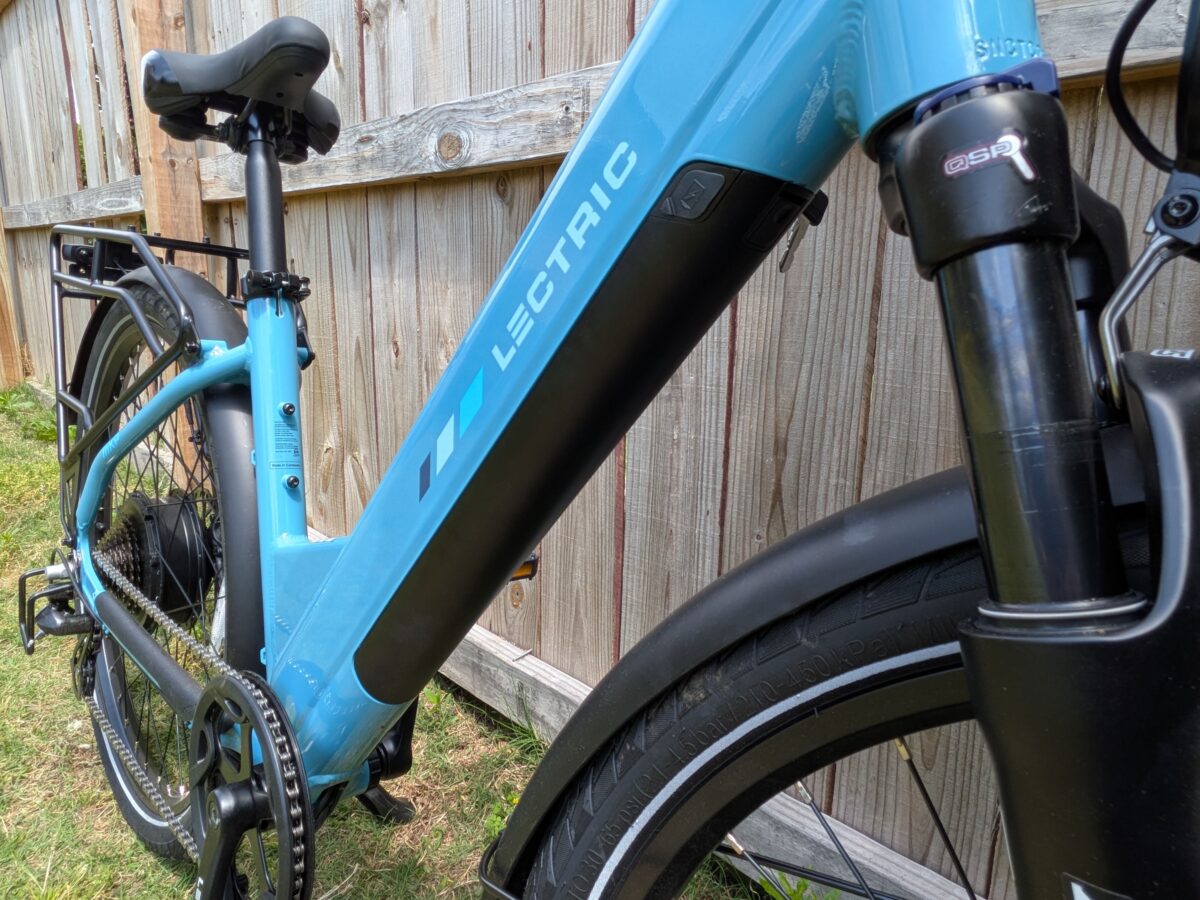
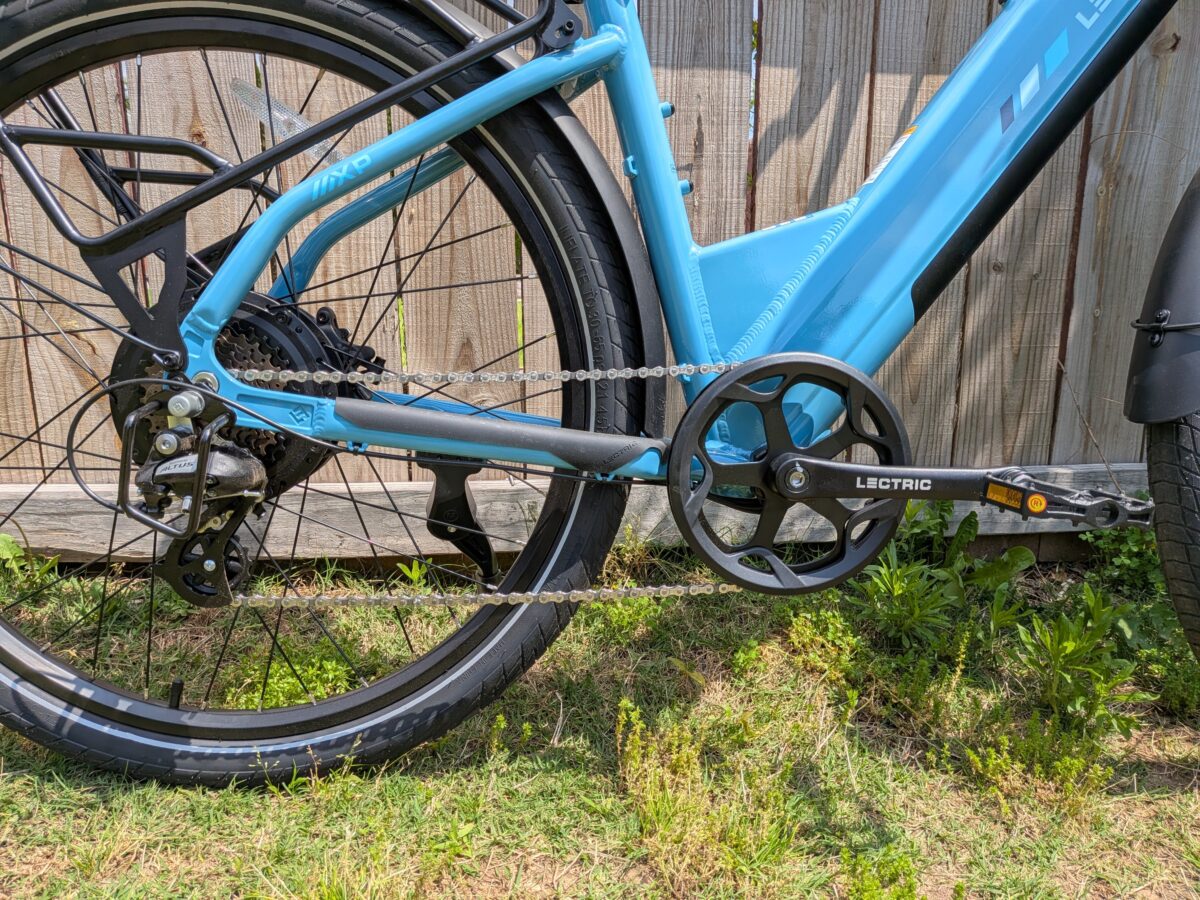
Seeing an SR Suntour XCM 32 suspension fork on a $1,399 ebike is rare. This 80mm travel fork is a huge step up from generic suspension component and does an excellent job of soaking up potholes and rough city streets. The drivetrain also sees a bump up to an 8-speed Shimano Altus derailleur with a trigger shifter, providing reliable gear changes. For stopping power, the custom 602 2-piston hydraulic disc brakes from Star Union are paired with 180mm rotors to give you the confident stopping power you need when riding at Class 3 speeds.
New TFT Color Display and Settings
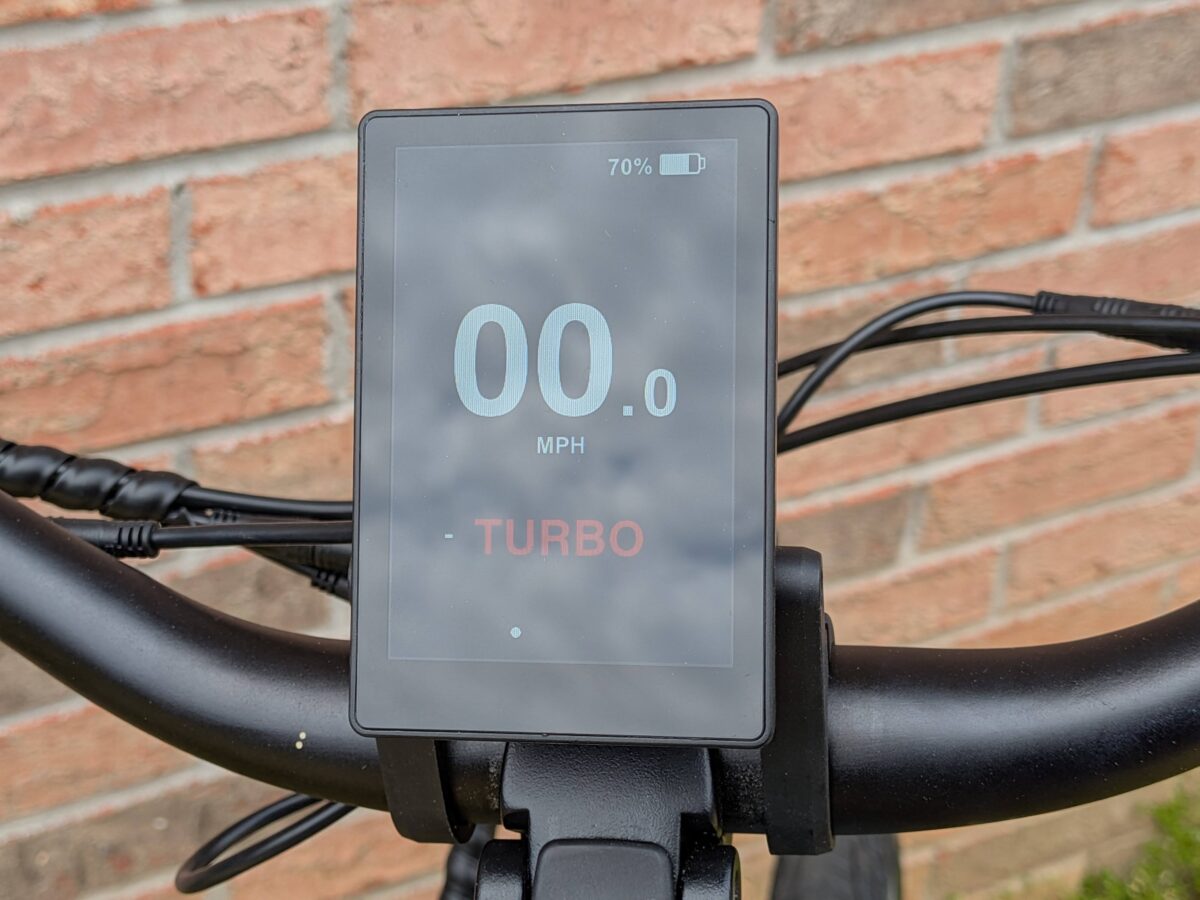
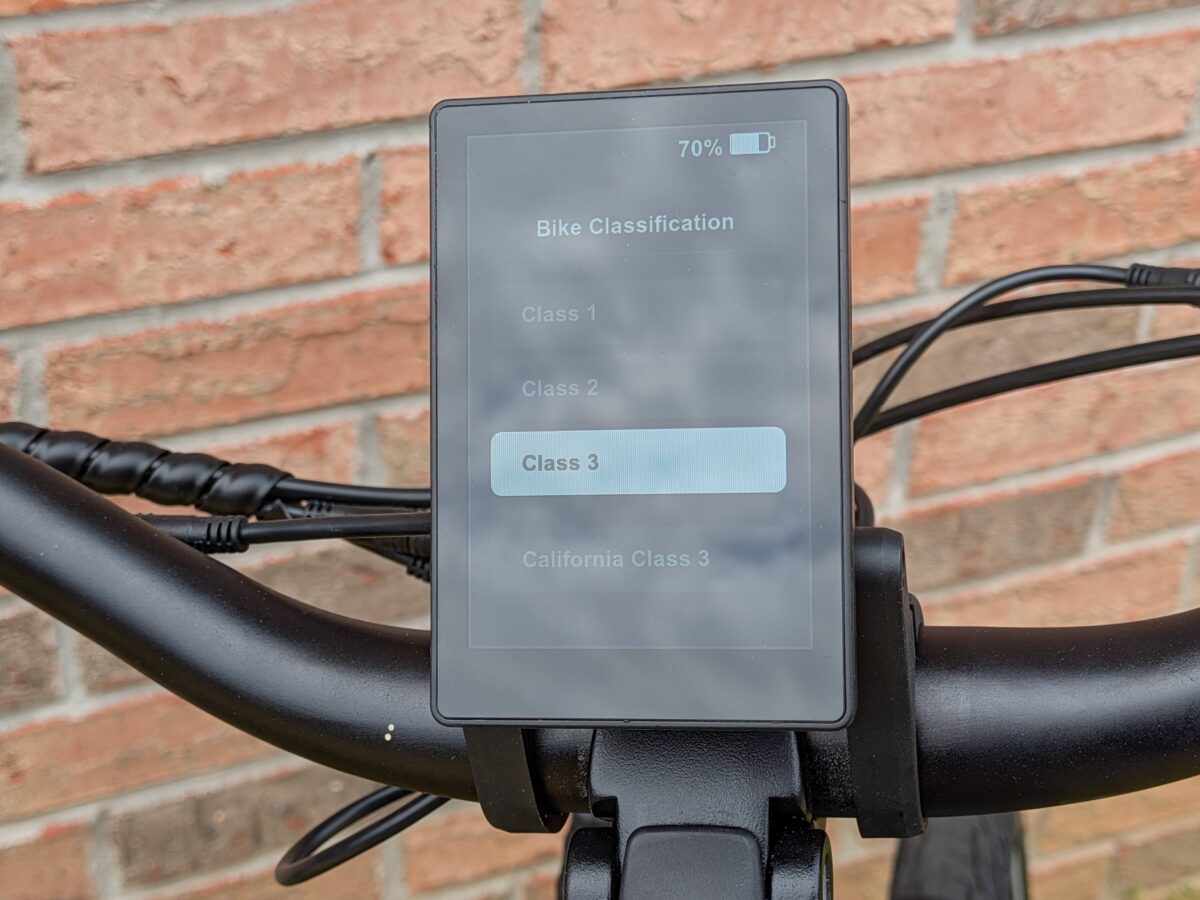
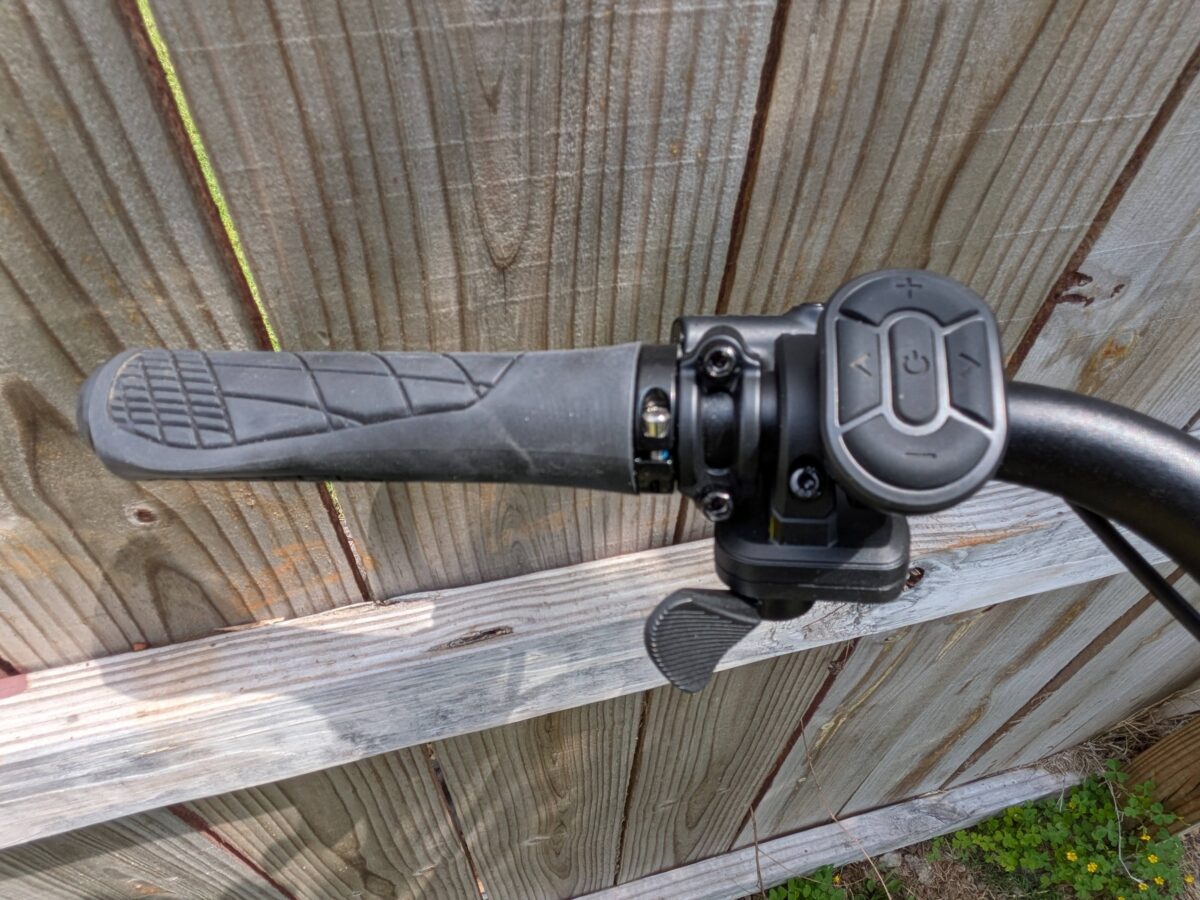
Ditching the old screen for a new 3.5-inch TFT color display completely modernizes the cockpit. It is easy to read in direct sunlight and tracks battery life in 10% increments. More importantly, the advanced settings menu is much more user friendly. No more P-settings! You can customize your ride right from the handlebars, adjusting things like the top speed, torque multiplier, sensor selection, or limiting the throttle output for a gentler takeoff.
Commuter Accessories and Upgraded Lighting
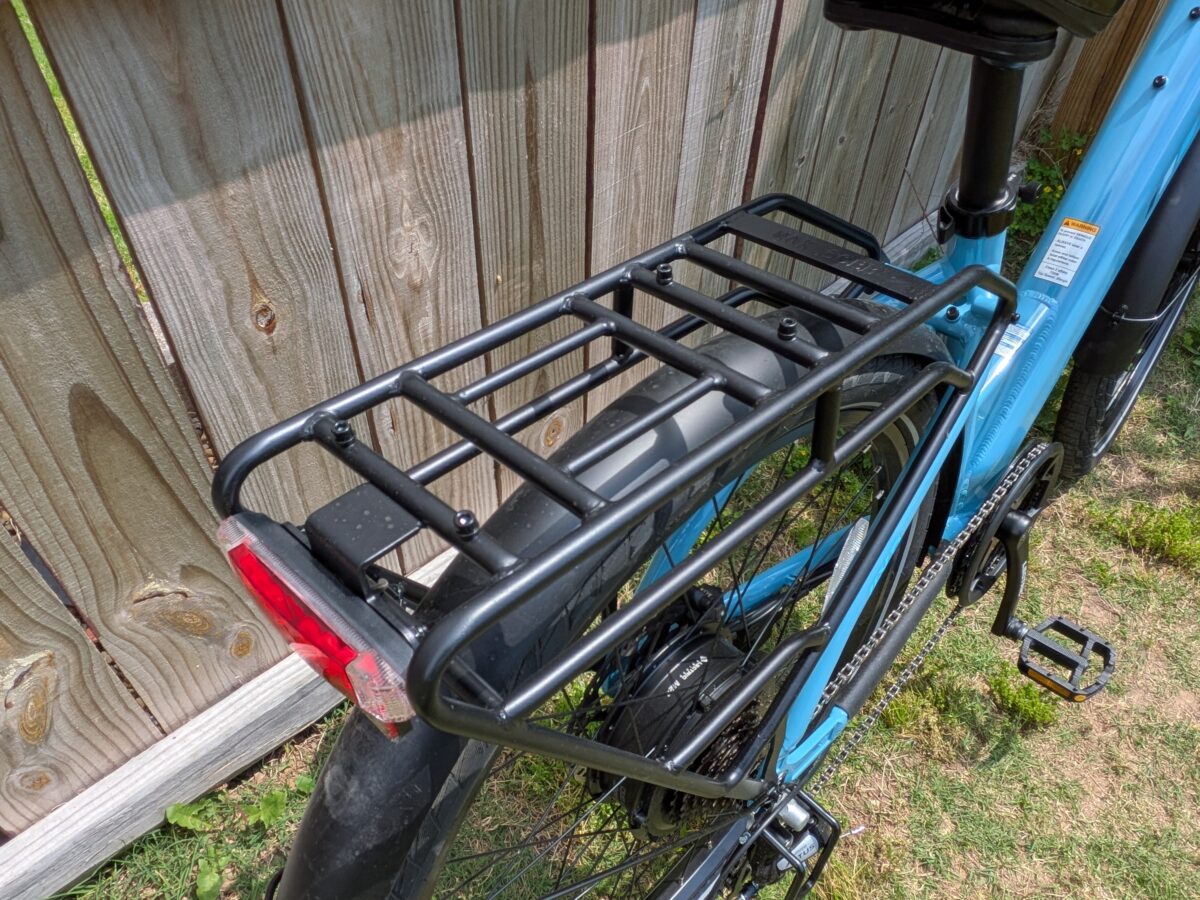
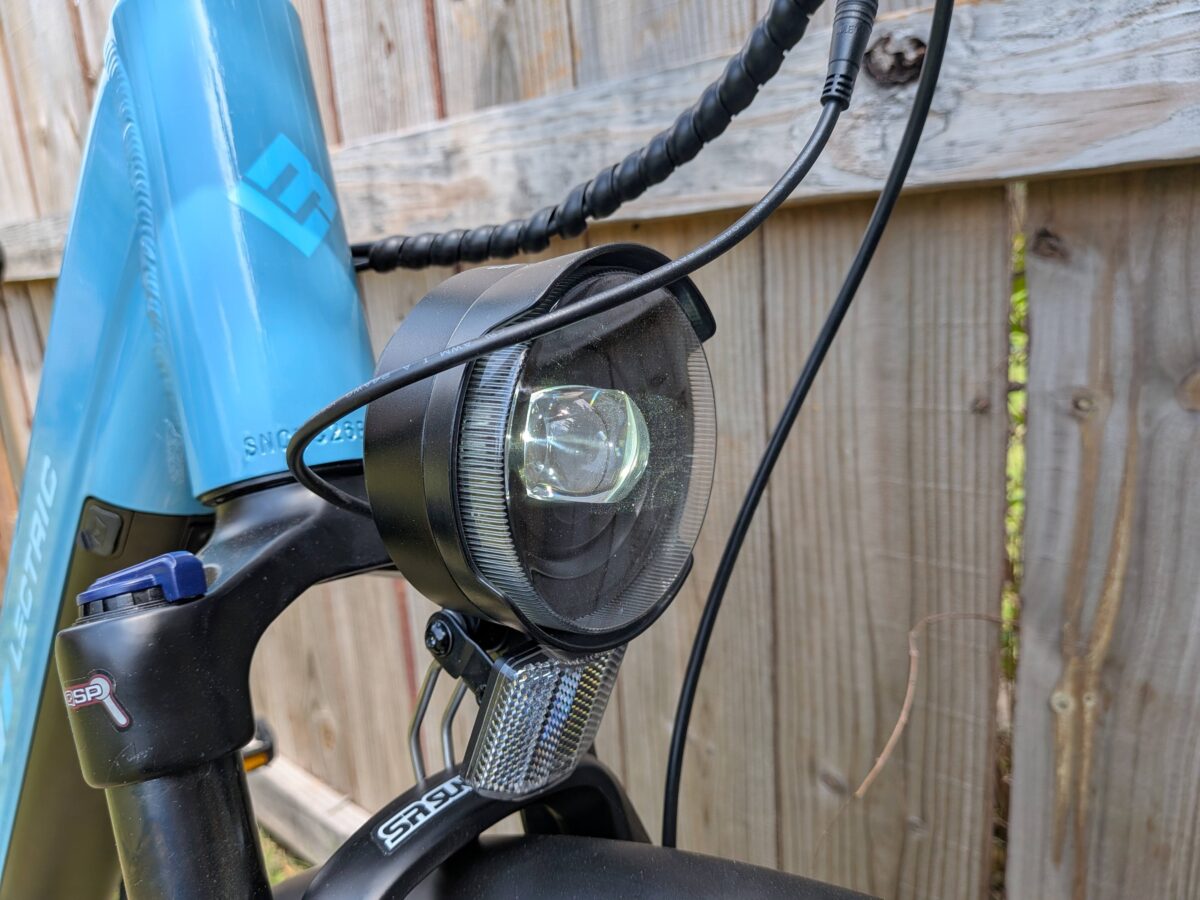
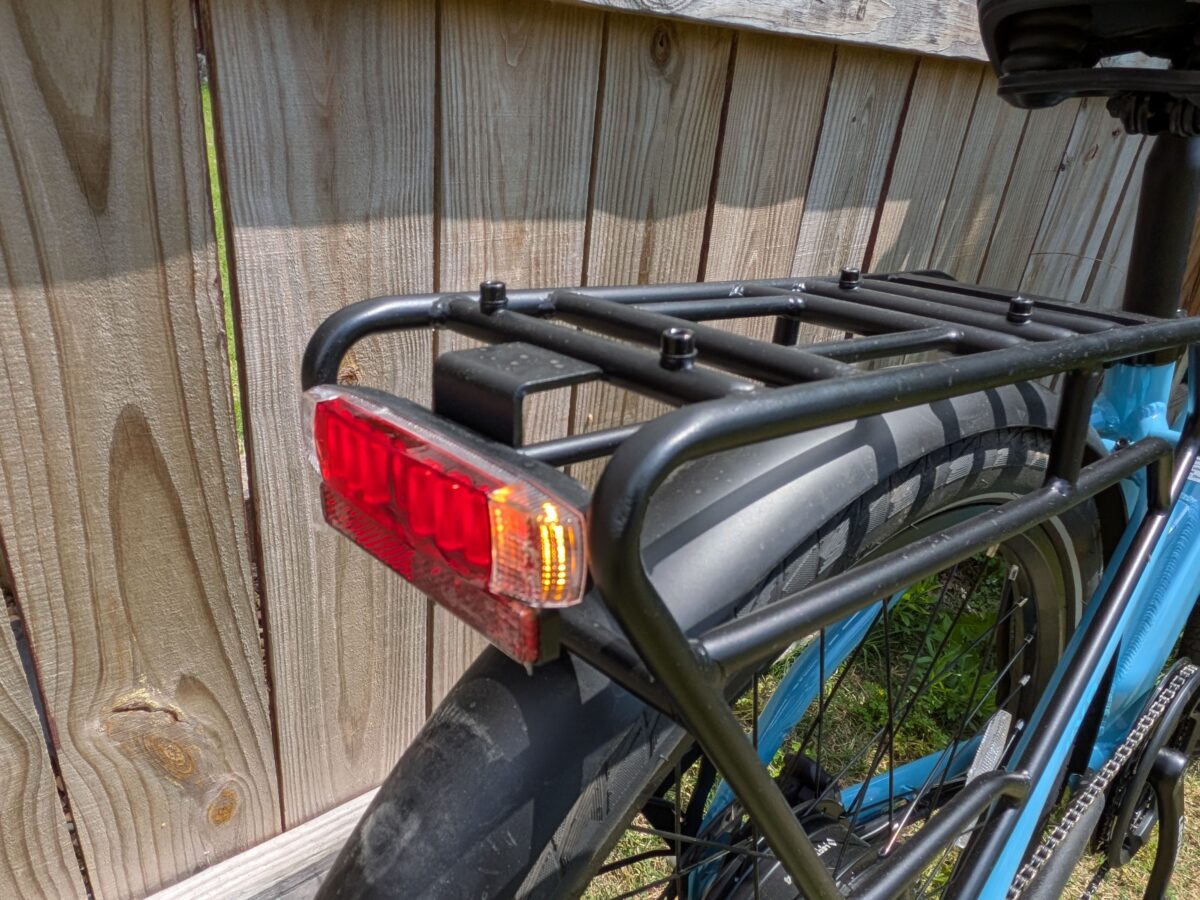
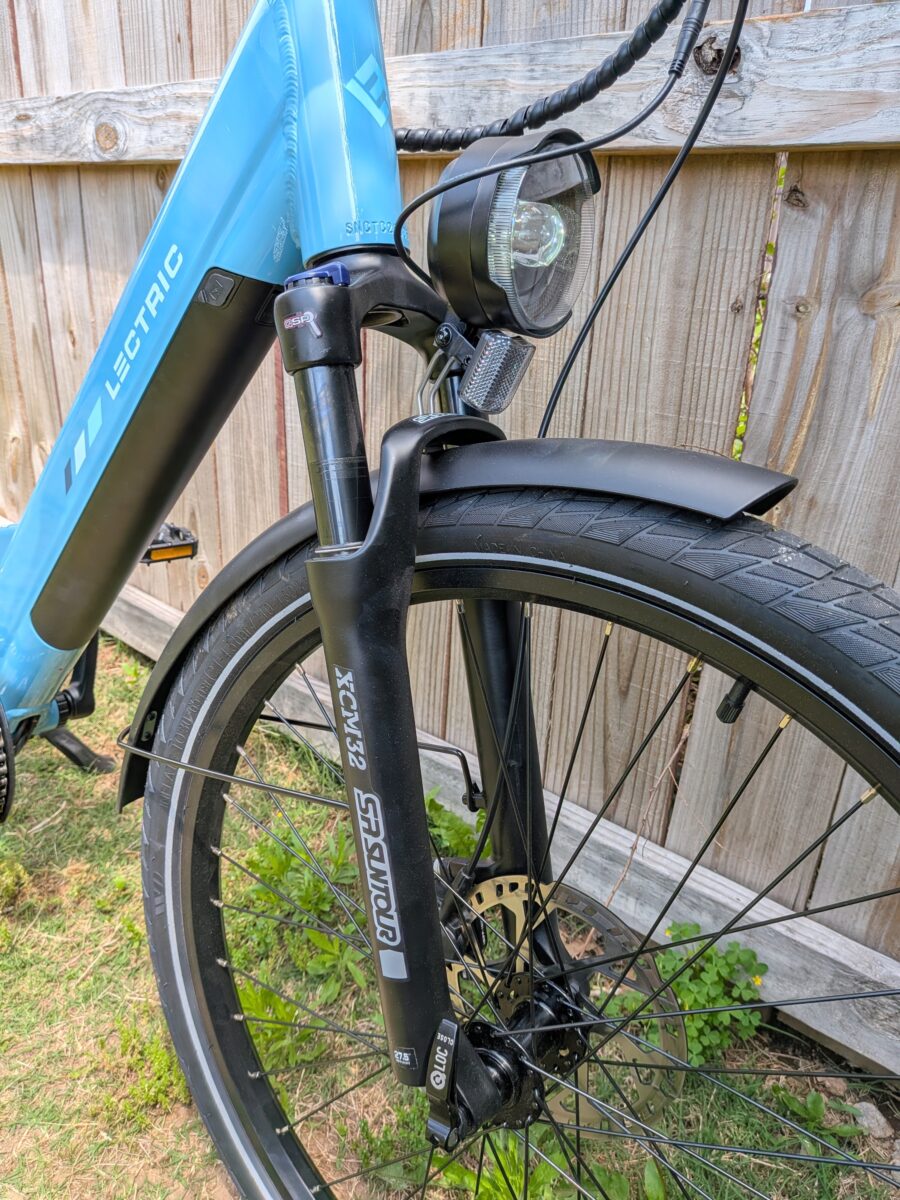
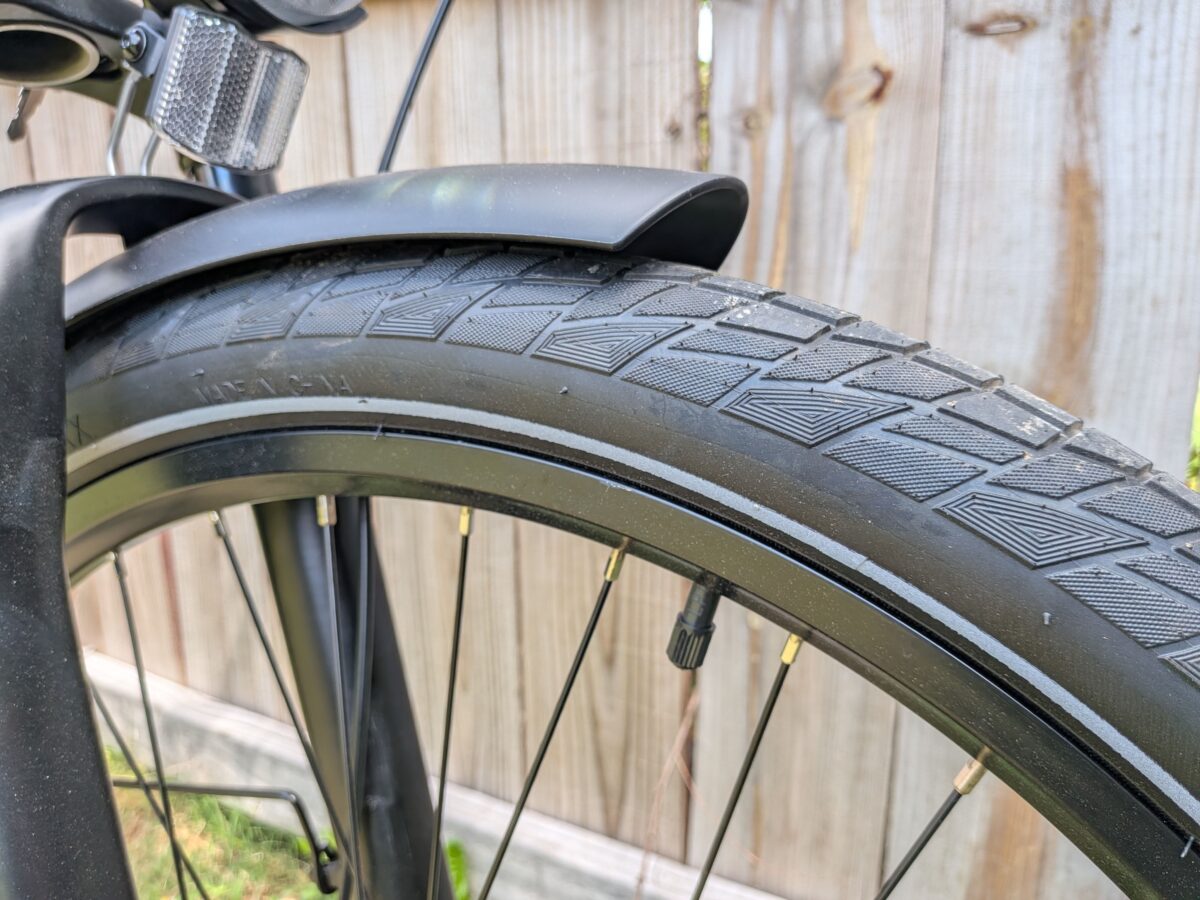
The original XPress launched as a bit of a blank canvas. It featured basic front and rear lighting, but essential commuter accessories like fenders and a rear rack were upgrades you had to budget extra for. That changes with the XPress 2, which comes fully equipped with full-coverage fenders and a rear rack with a 30-pound payload capacity and pannier hangers for hauling your gear. The lighting package also sees an improvement. Lectric’s Elite headlight provides 850 lux for night riding, and the integrated rear taillight features braking functionality and turn signals to ensure you remain visible to traffic.
Updated Assembly Process
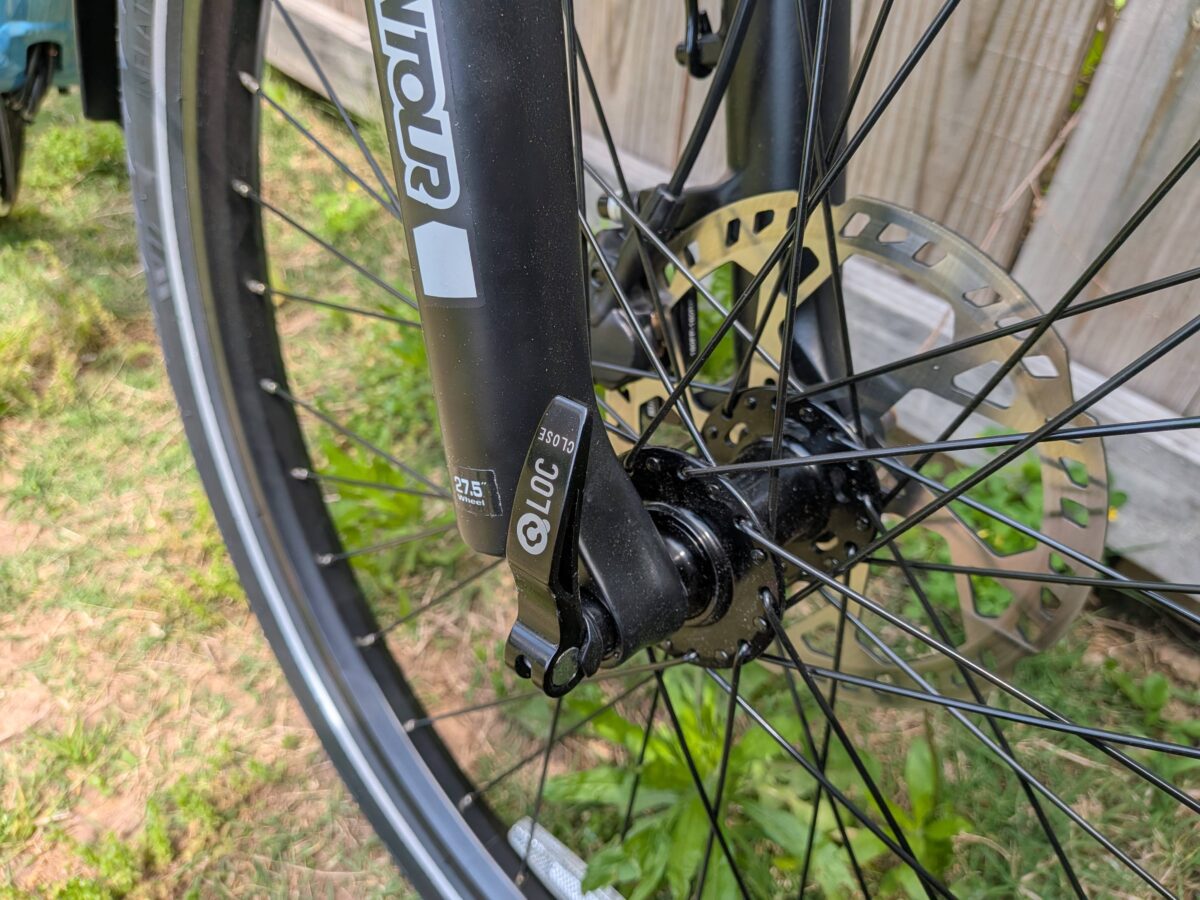
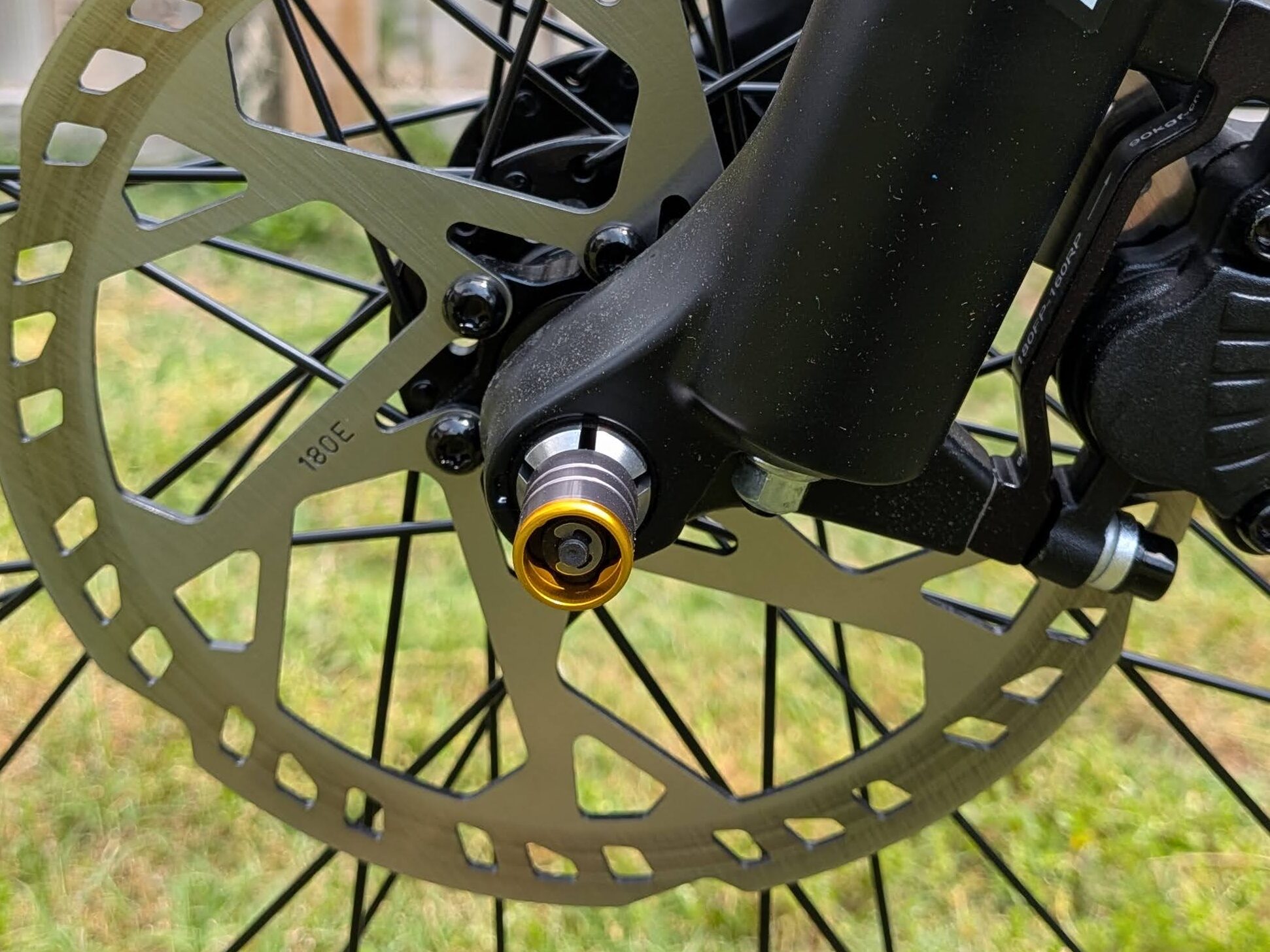
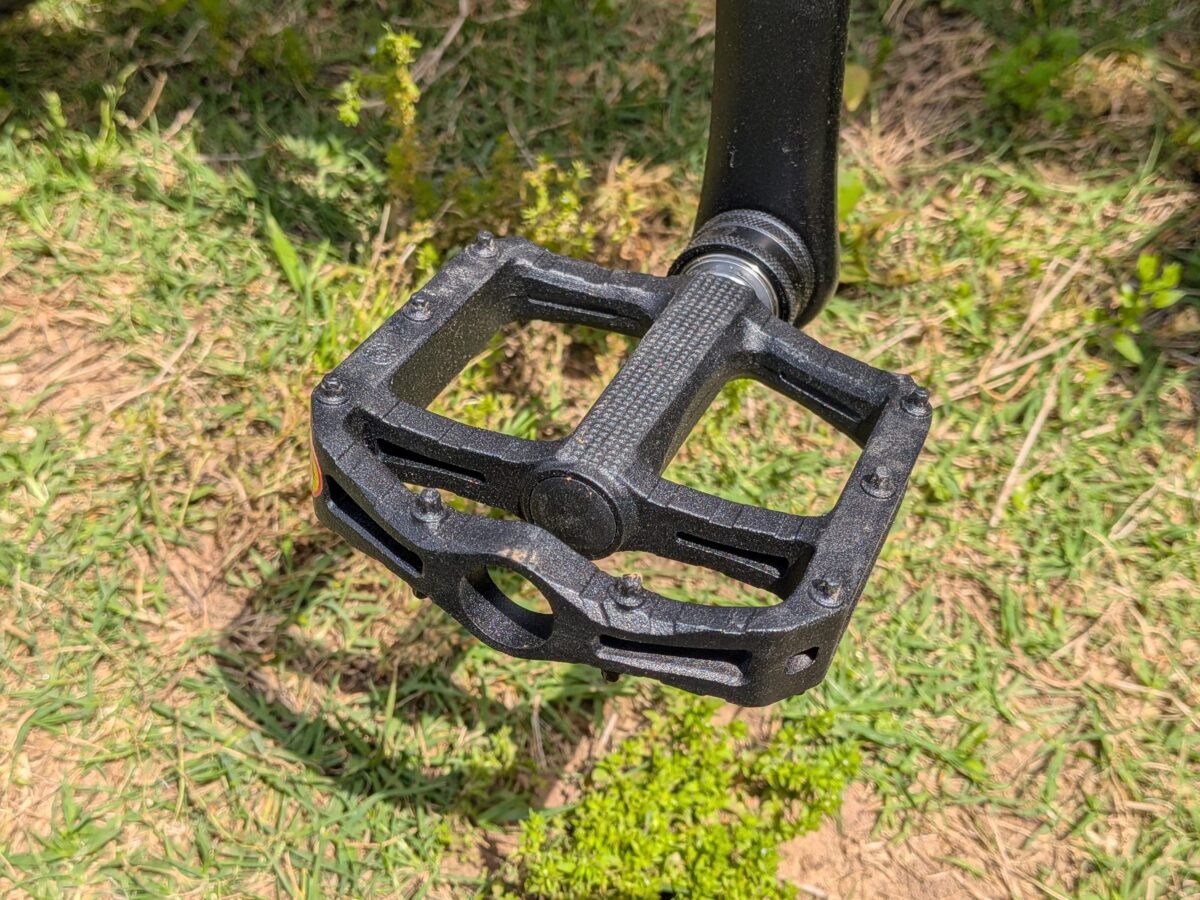
An easy assembly process has always been a priority for the brand. The previous generation already featured a quick-release thru-axle, but the updated design is unlike any we’ve ever seen and makes installing and removing the front wheel even easier. Combined with the quick-release pedals, many of the steps are toolless. While you now need to attach the handlebars yourself, Lectric actually includes a torque wrench in the box to get everything tightened down to spec. Putting everything together takes a bit longer than the advertised 5-minute assembly time, but the overall process remains one of the easiest from any direct-to-consumer company.
If you are curious about what it actually takes to put the XPress 2 together, we assemble both the high-step and step-thru in our unboxing video below.
Frame Styles and Sizing
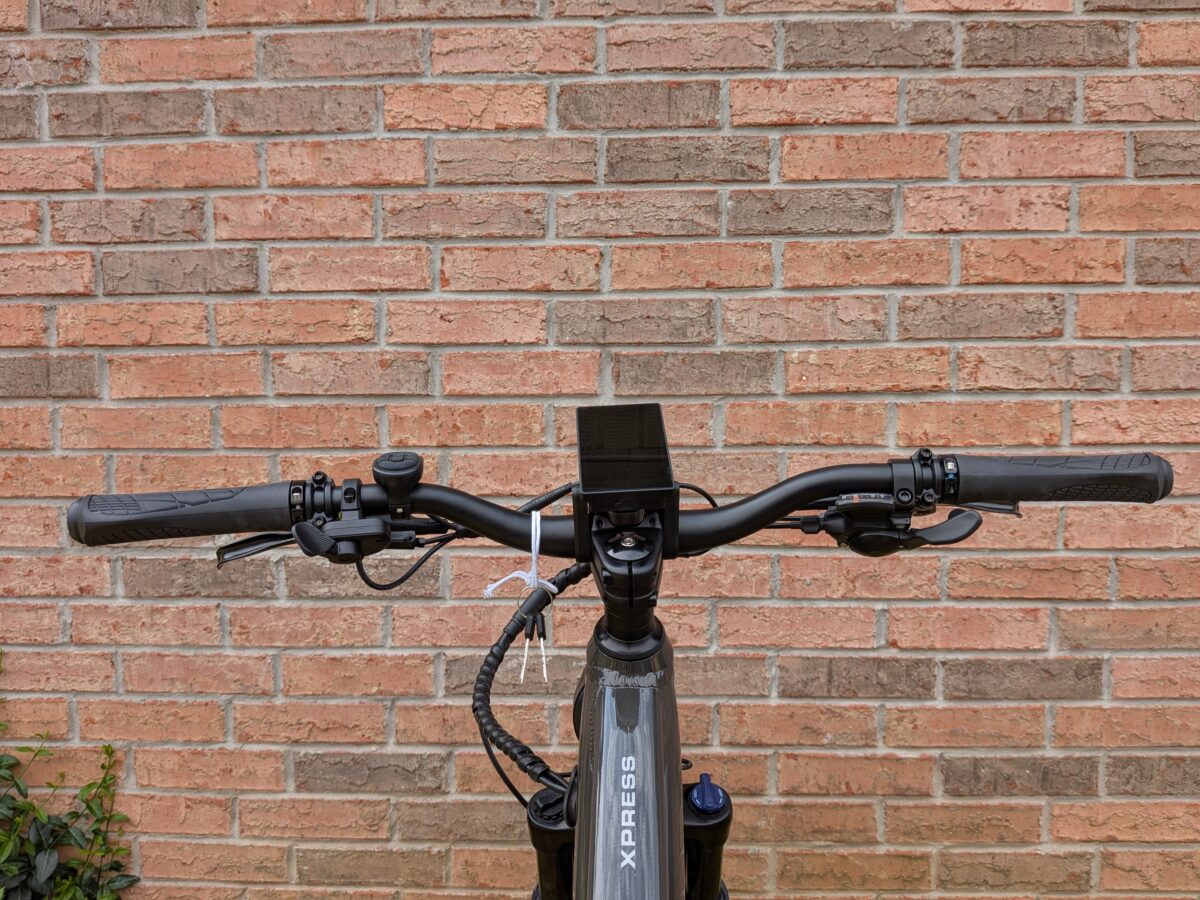
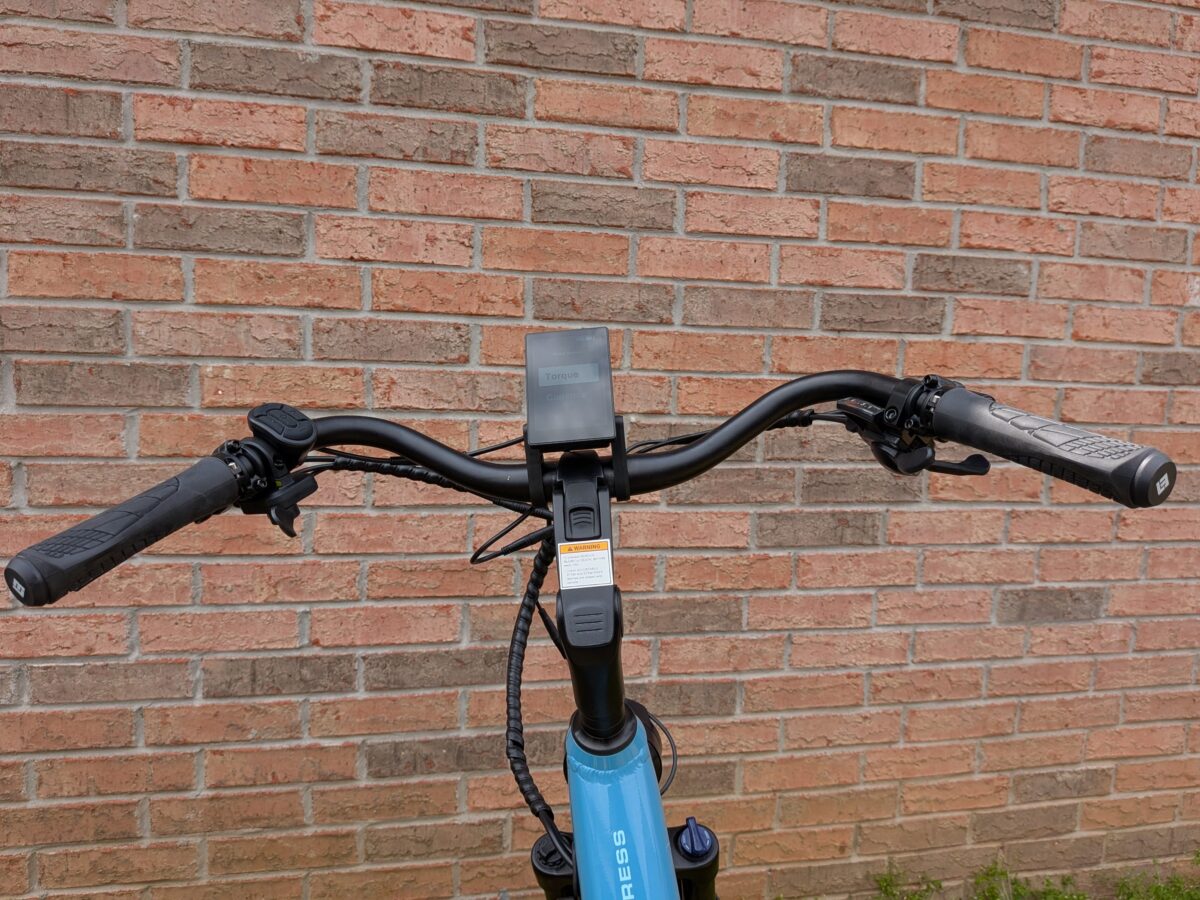
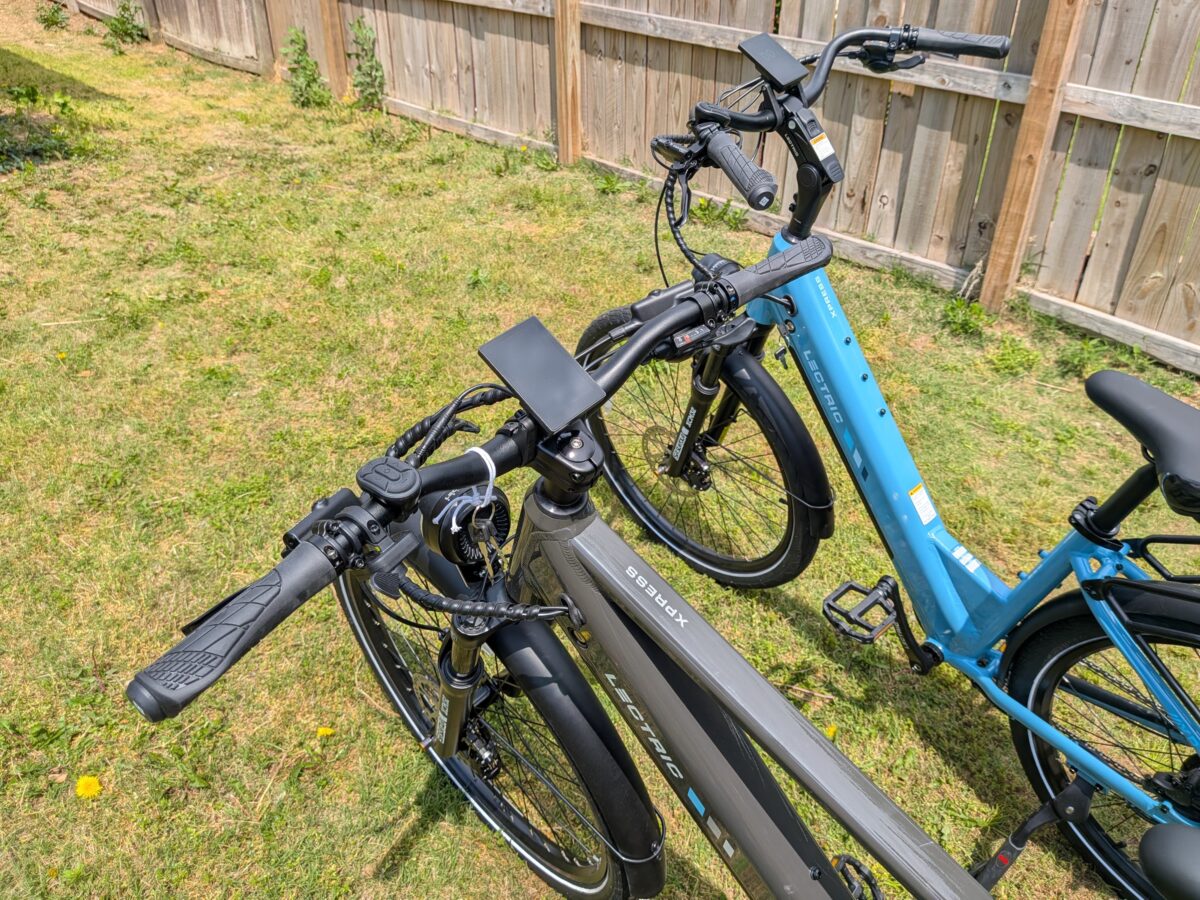
Lectric offers the XPress 2 ebike in two distinct frame styles to cater to different riding preferences. Both frames share the exact same weight and payload capacities, so your choice comes down entirely to how you want the ebike to feel on the road.
Step-Thru Cruiser
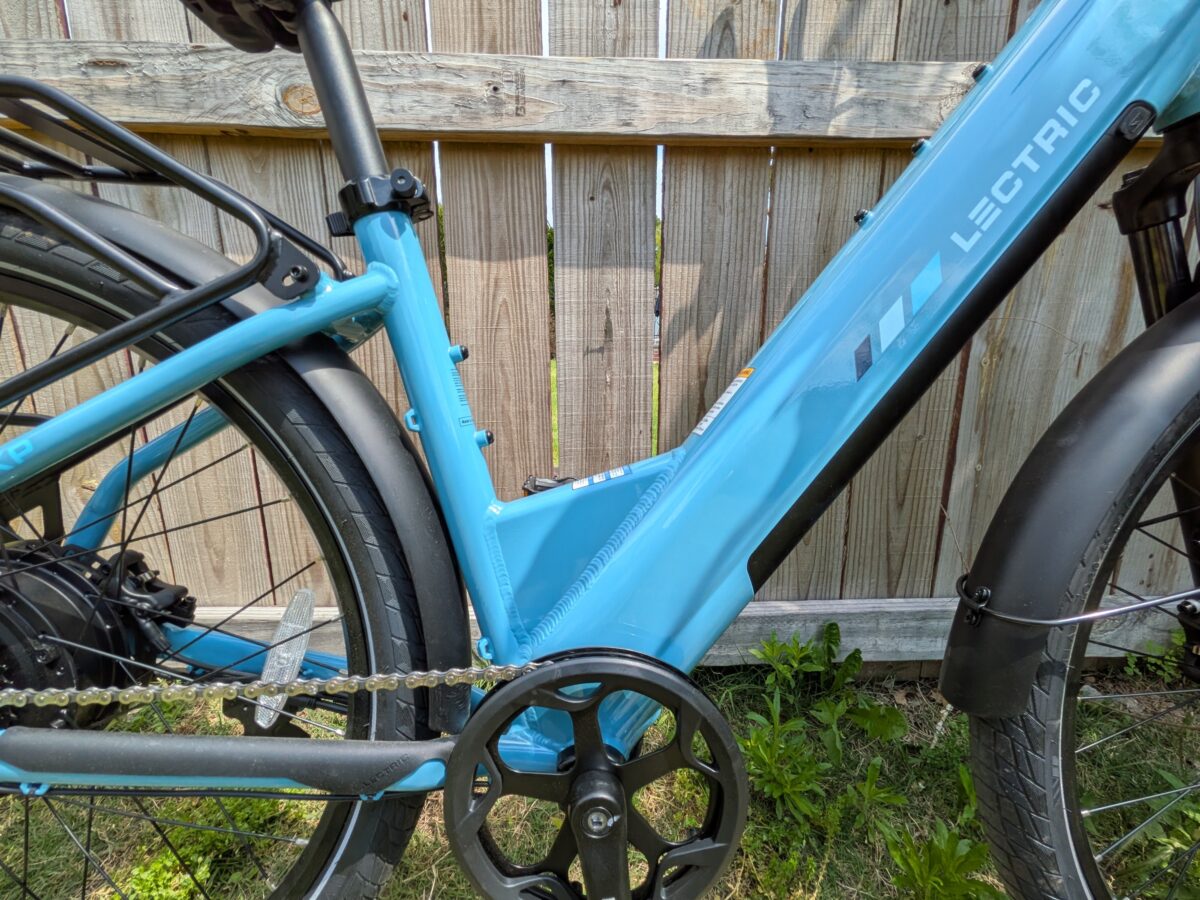
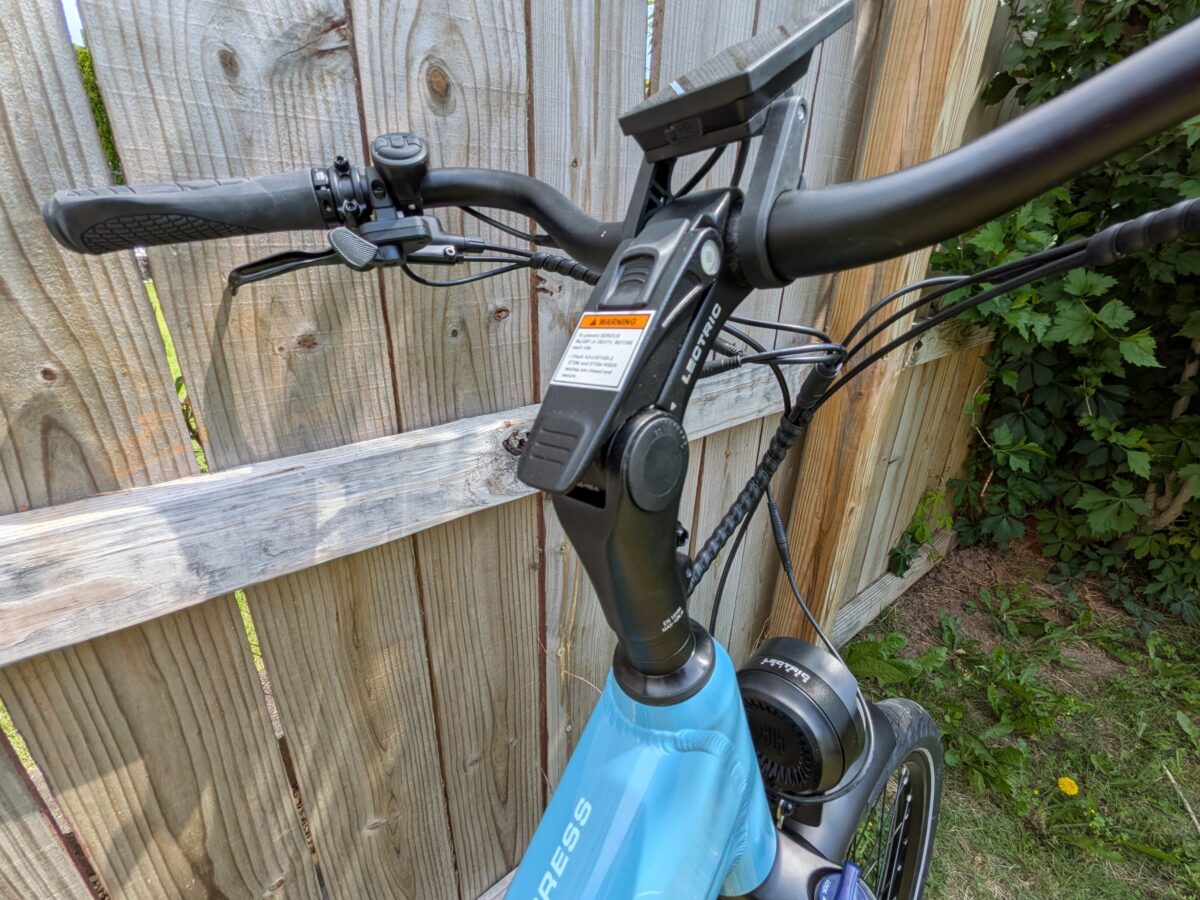
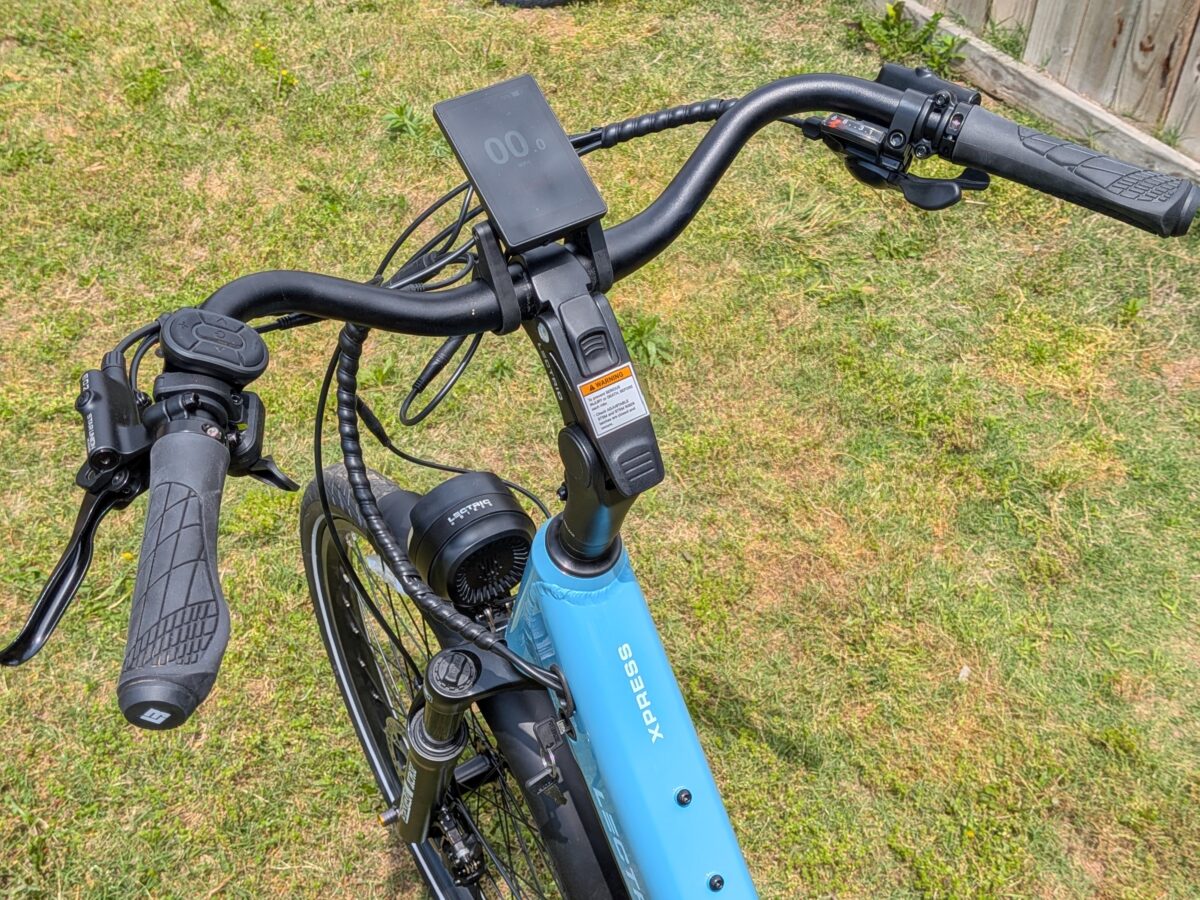
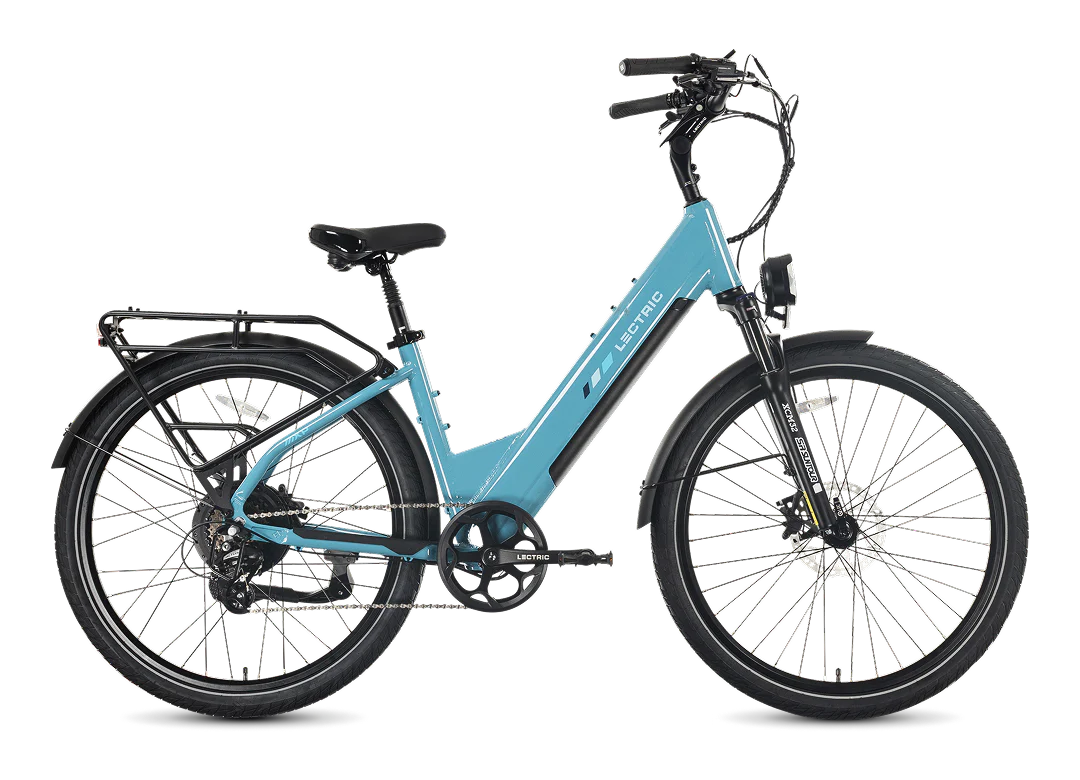
If you are prioritizing comfort, the Step-Thru is the clear choice. The frame design makes it incredibly easy to mount and dismount, which is especially nice if you ride in stop-and-go city traffic. This model swaps the straighter handlebars for generously swept-back bars and adds a tool-free adjustable stem. You can quickly and easily dial in the reach for an upright riding posture that takes the pressure off your arms and hands.
Step-Thru Color Options: Raindrop Blue and Stratus White.
Step-Over Commuter
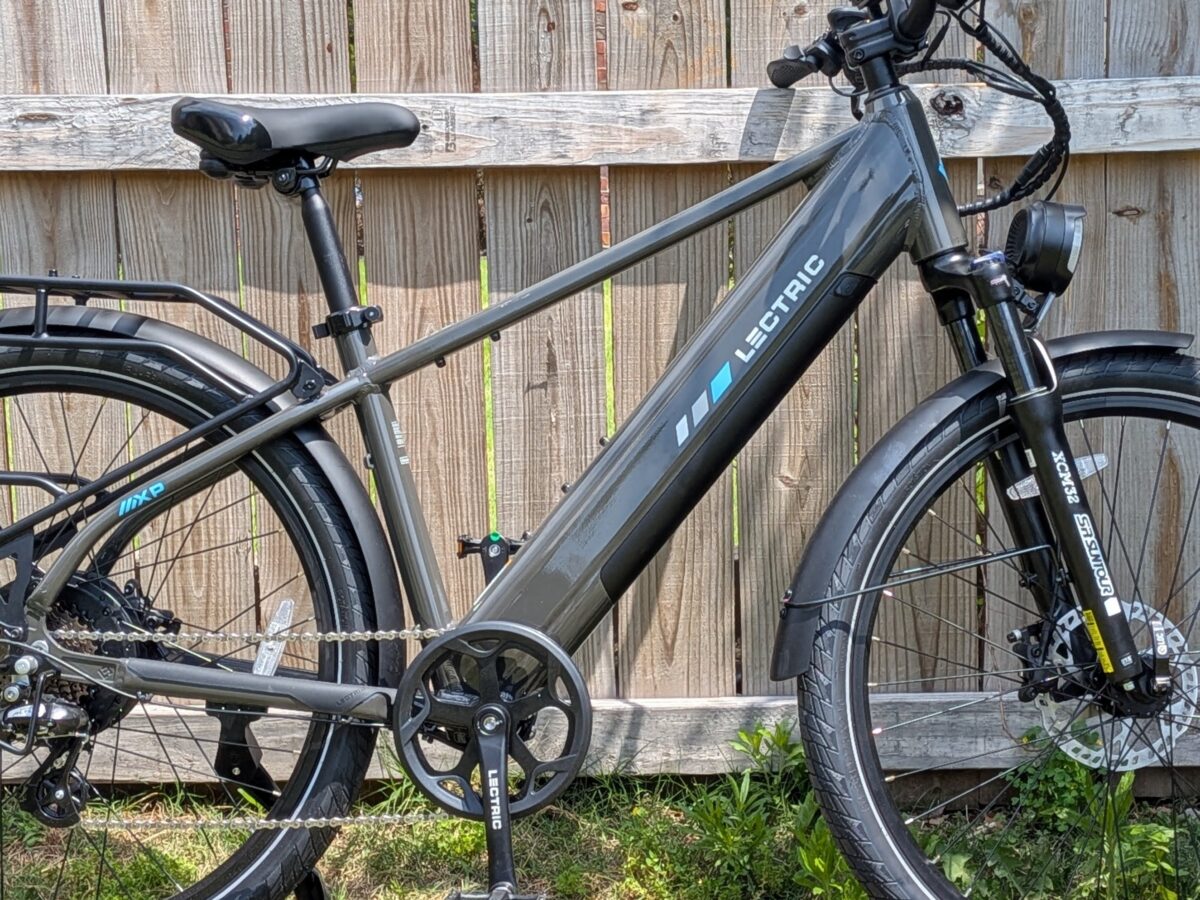
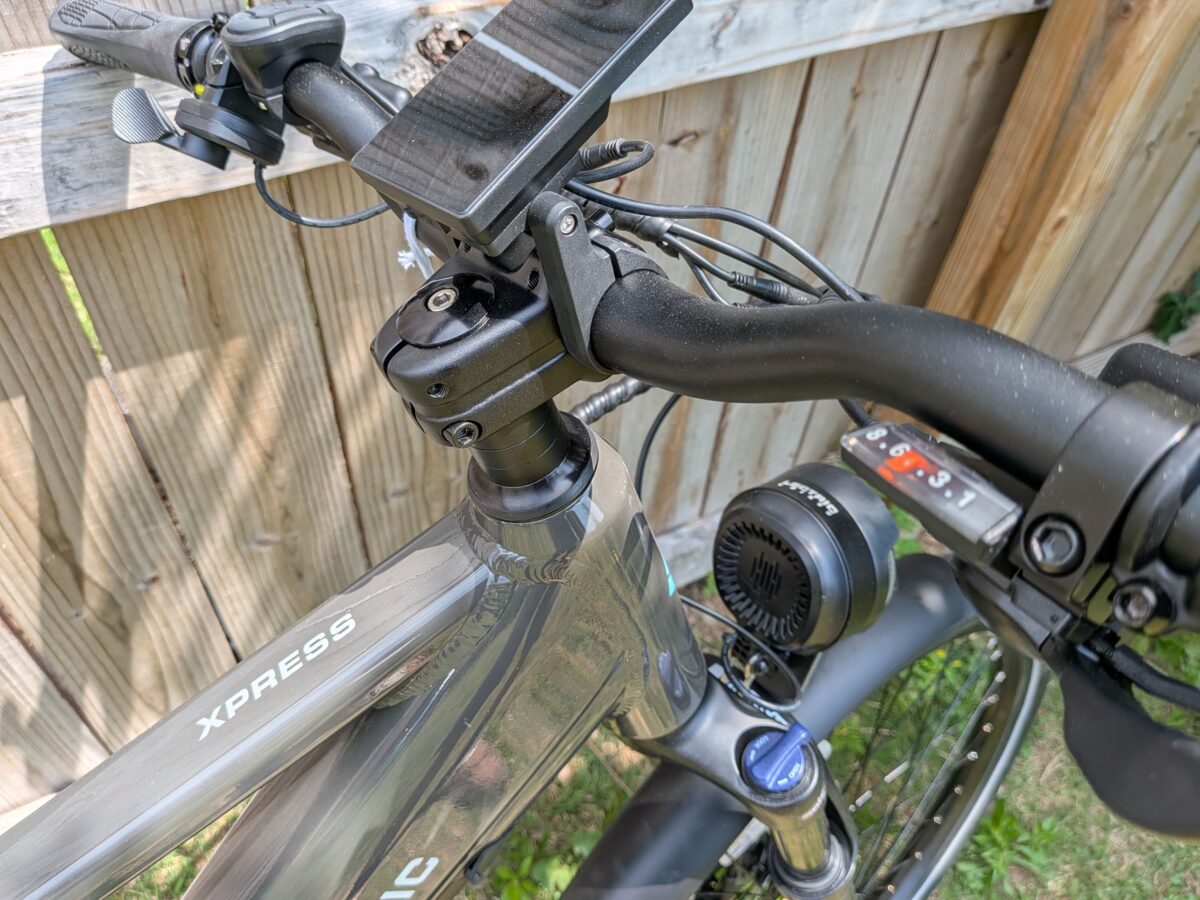
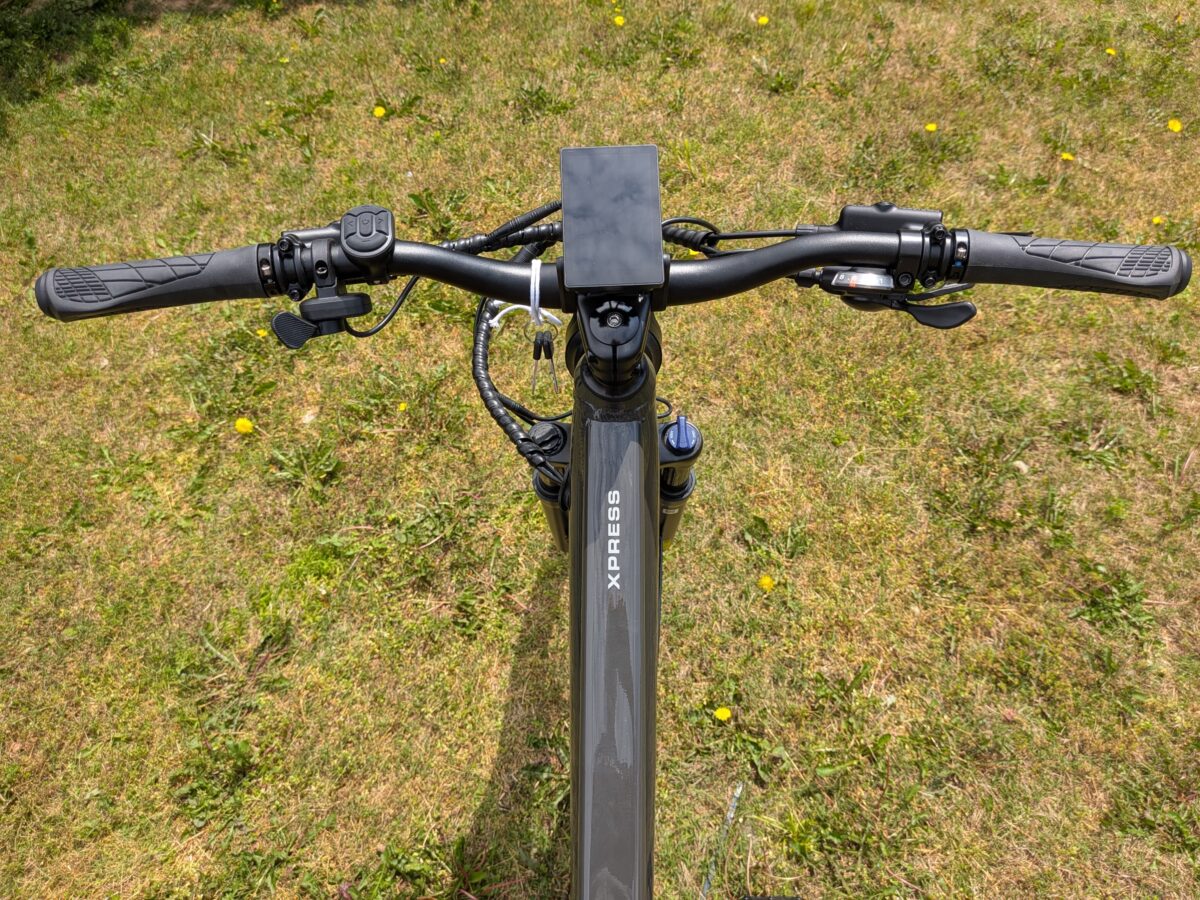
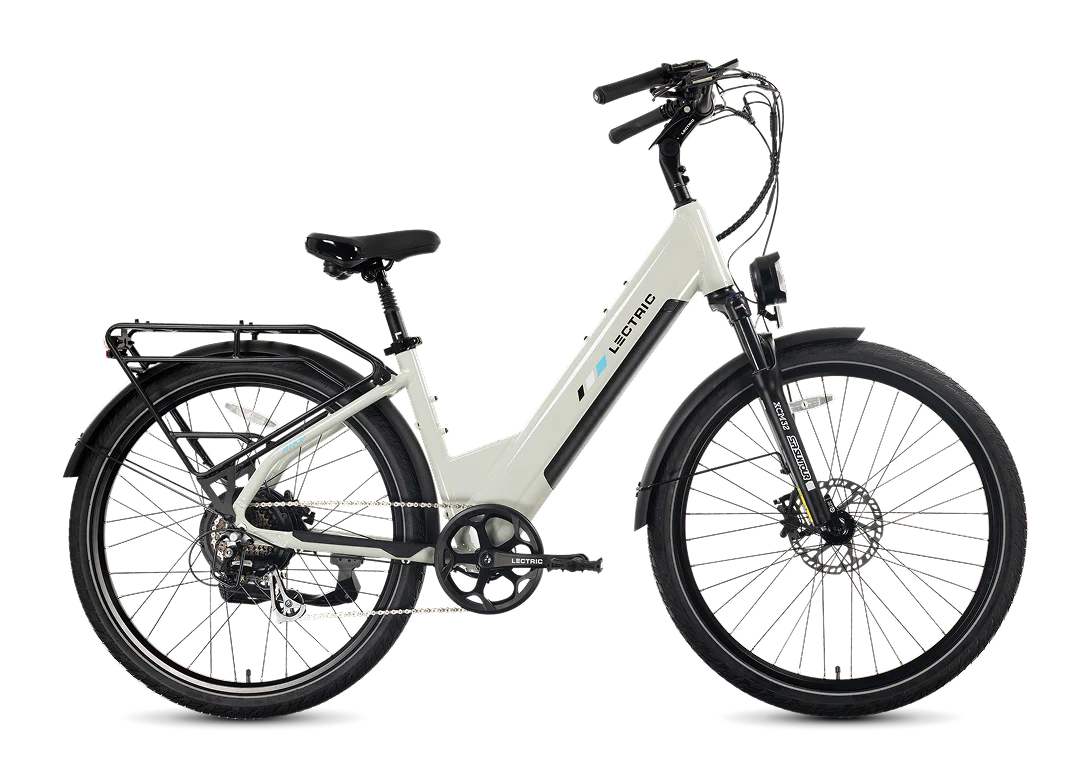
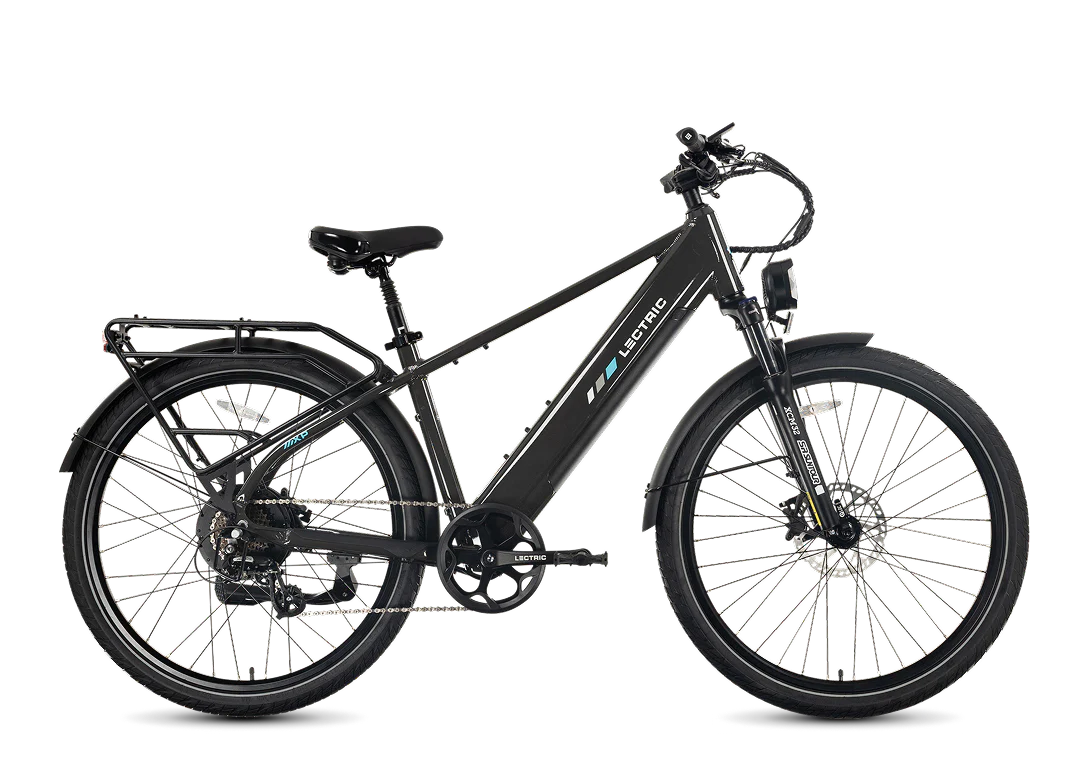
The step-over features a traditional diamond frame paired with a fixed stem and hybrid sprint handlebars. This setup pulls you into a more forward-leaning, active riding posture that feels inherently sporty. It is a great option if you prefer a traditional bike feel and are comfortable swinging a leg over the frame.
Step-Over Color Options: Tempest Grey and Pine Green.
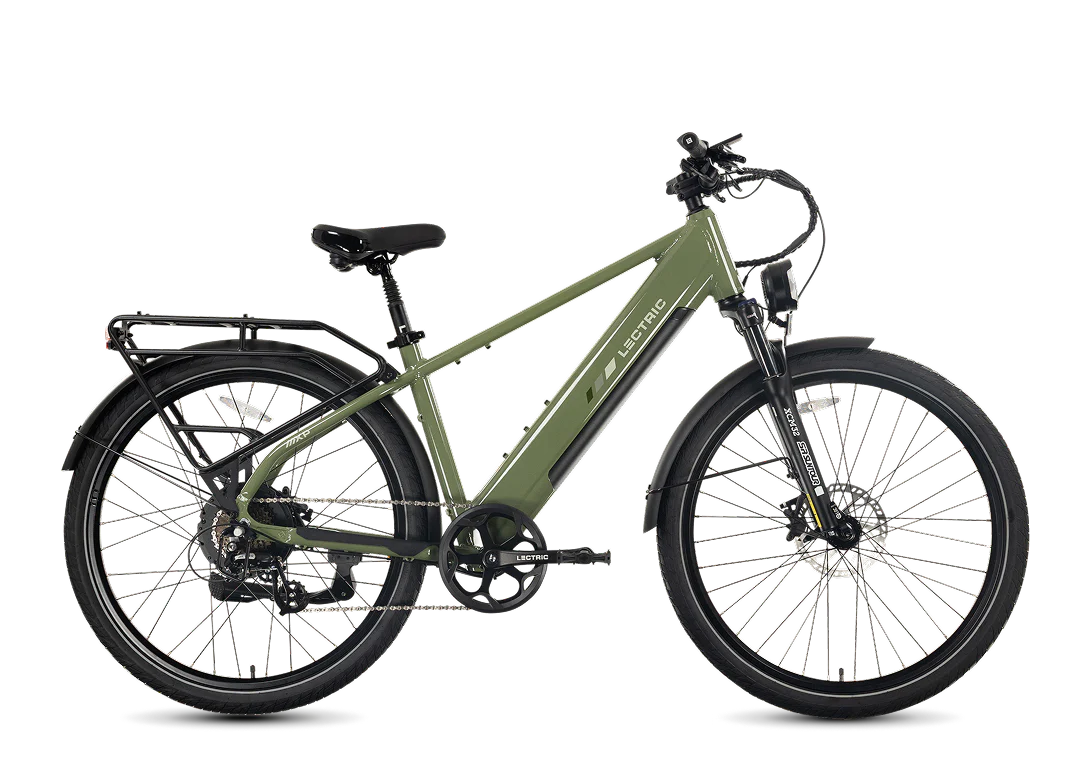
Lectric XPress 2 Full Specifications
If you are looking to dig into the exact hardware, electronic details, and component brands, we have compiled the complete spec sheet for the XPress 2 below.
Real World Performance Testing
Throttle Acceleration and Control
We tested the thumb throttle from a dead stop to gauge the raw power delivery. In Turbo mode, the motor quickly peaked near 1,300 watts and hit 20 mph in under 6 seconds. Because that much instant power can be overwhelming, the XPress 2 allows riders to limit the throttle output based on their current pedal assist level. When dropped down to Eco, the throttle provided a much gentler takeoff, peaking around 200 watts and steadily creeping up in speed rather than jolting forward.
Cadence Sensor Cruising
With the cadence sensor engaged, the motor requires about a half rotation of the pedals to kick in. Rather than being speed-based, where the motor cuts off completely once you reach a specific mph ceiling, this system is current-based. Power delivery is tied directly to the wattage output of the selected assist level, regardless of how fast or hard you pedal. In Eco, the motor provided a steady 166 watts for a relaxed 11 mph cruising pace. Stepping up to Sport+ pushed the motor to nearly 1,000 watts and easily maintained 27 mph. Shifting into Turbo unlocked the full power to hit the maximum 28 mph without breaking a sweat.
Torque Sensor Responsiveness
Switching to the torque sensor completely changes the ride dynamic, making the motor much more responsive right from a stop. It measures your leg effort and amplifies it, rewarding harder pedaling with more motor power. In the lower assist levels, such as Eco, putting in minimal pedal effort resulted in a modest 53 watts of assistance from the motor and cruising speeds around 9 to 10 mph. This makes it incredibly easy to control your speed in crowded areas or traffic. In Turbo, the torque sensor required more effort than the cadence sensor to reach 28 mph but was still very achievable.
For riders who want the natural feel of a torque sensor but prefer slightly easier access to high speeds, Lectric includes an increased torque multiplier setting. Activating this setting noticeably boosts the motor output across all assist levels. In Eco, that same human input jumps the motor assistance up closer to 100 watts, and our cruising speed immediately increased to 12 mph. In Turbo, the multiplier made maxing out the motor and hitting 28 mph significantly easier.
Steep Hill Climb Test
We put the 750W motor to the test on our steep local hill. On throttle alone, the XPress 2 maintained an impressive minimum speed of 12 mph without producing the loud we remember from the original XPress 750. This performance holds its own against heavier ebikes pushing 1,700 watts of peak power, which dropped to 14 mph on the same incline. We also tackled the hill using the torque sensor. Lectric tunes their higher assist levels to be very generous with power, so in Turbo, the motor practically took over completely and required very little leg effort to reach the top.
Braking Performance
To ensure the stopping power matches the acceleration, we performed a brake test from high speeds. The custom Star Union hydraulic disc brakes performed exceptionally well. The 2-piston calipers paired with 180mm rotors provided plenty of stopping power.
Lectric vs Aventon: When to Spend More
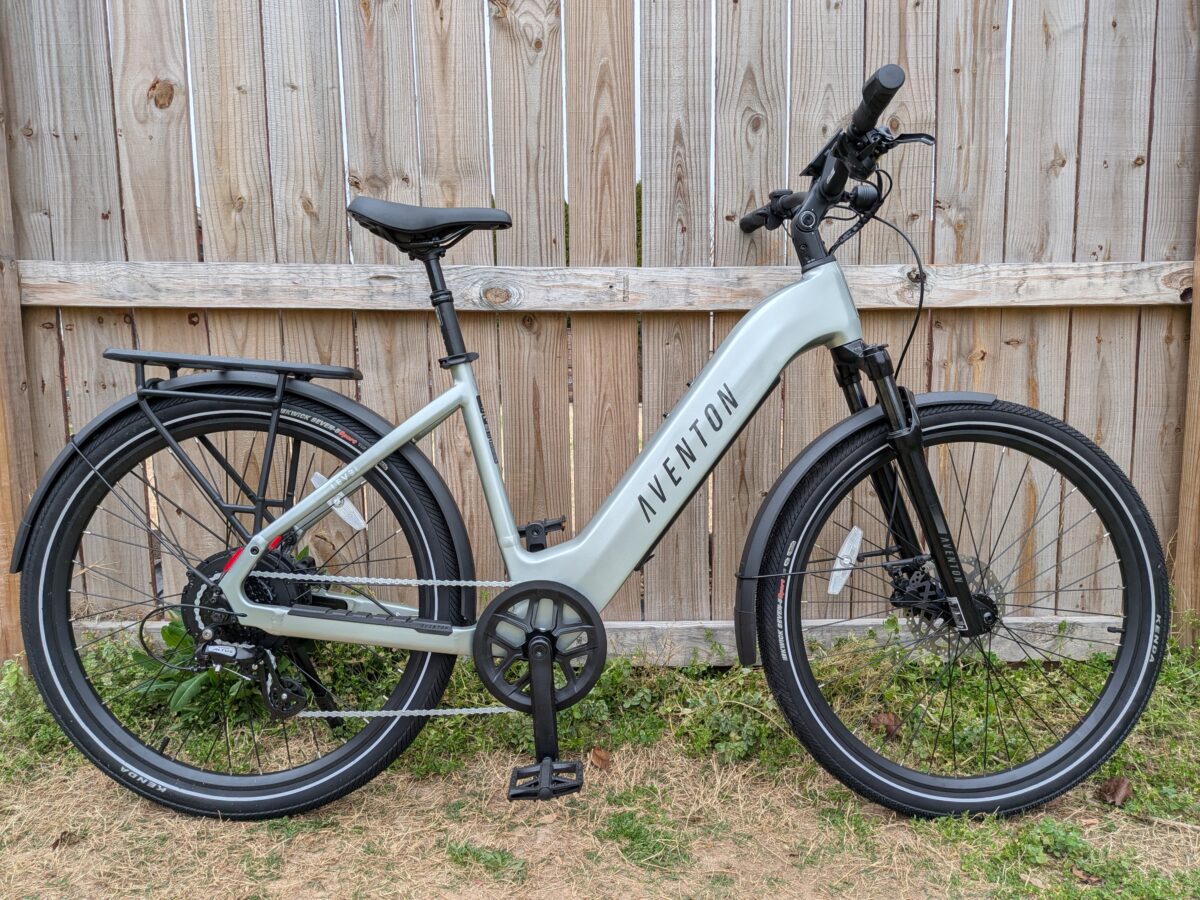
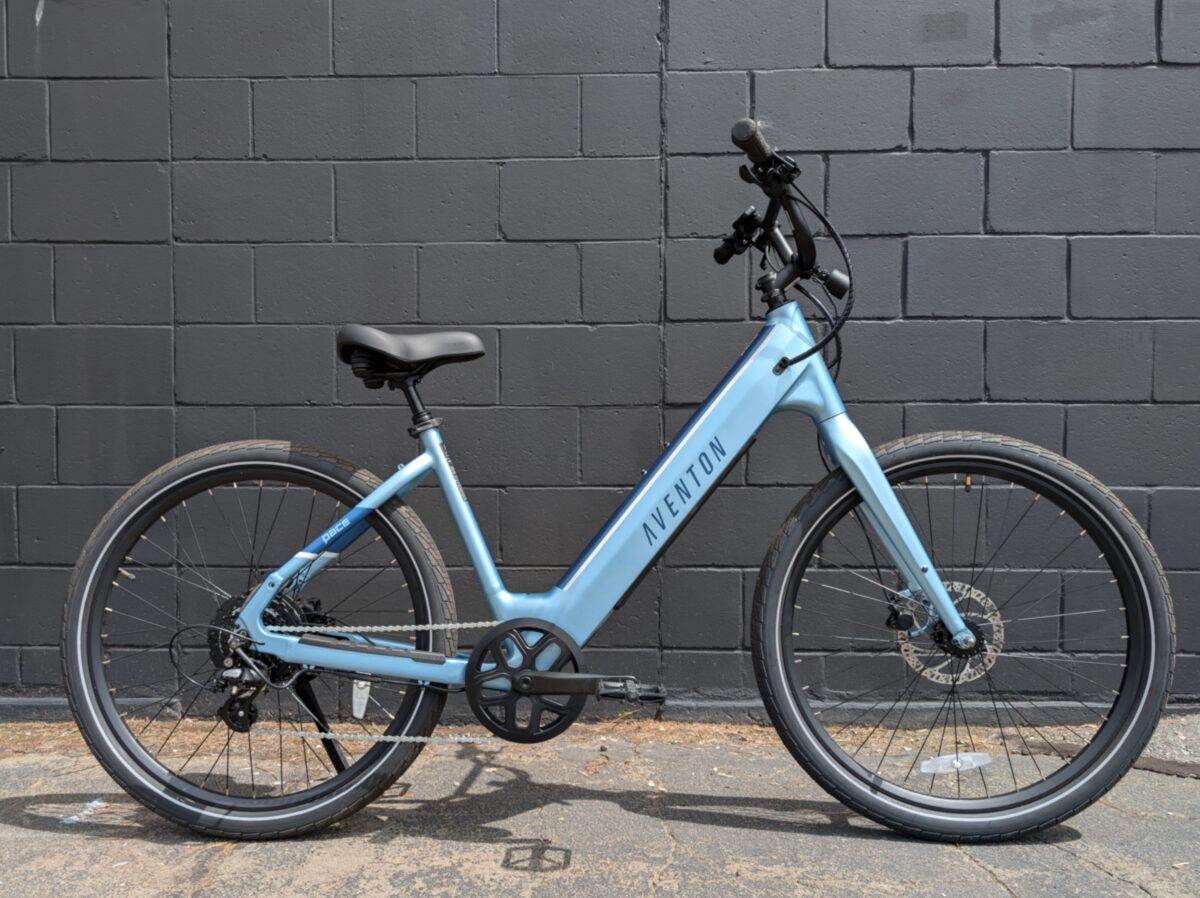
The XPress 2 sets a high bar for value, but if you are looking for a more refined experience, competitors like Aventon offer a more premium, albeit more expensive, commuter lineup. The Level 4 REC is the main competition in their lineup and is currently priced at $1,999. For those specifically eyeing the step-thru model, Aventon’s Pace 4 is much closer in terms of step-thru cruiser geometry and comfort.
When you step up to these higher price points, you are generally paying for a few key trade-offs:
- Local Dealer Support: While Lectric’s direct-to-consumer model is highly efficient, Aventon maintains a dealer network of over 1,800 bike shops across the United States. This allows you to test ride models, skip the assembly process, and rely on a local shop for in-person servicing and repairs.
- Tech Ecosystems: Aventon has invested heavily in their tech and security ecosystem. This includes a robust companion app for tracking your rides, advanced performance tuning, 4G security, and over-the-air firmware updates.
- Refined Aesthetics and Finish: More attention to detail is paid in the physical construction. You will find smoothed frame welds, proprietary lighting integrations that blend seamlessly into the design, and premium paint finishes.
- Dialed-in Sizing: Where the XPress 2 uses a “one size fits most” geometry, Aventon offers multiple distinct frame sizes, which provide a more tailored, ergonomically precise fit for a wider range of rider heights.
The choice comes down to whether you prioritize the raw performance-to-dollar ratio that Lectric provides or the peace of mind and refinements that come with a dealership-supported, premium commuter.
Check out our full Level 4 REC and Pace 4 reviews to learn more about Aventon’s commuter lineup.
Thinking about a step up within the same family? We compared the XPress 2 directly with Monarc’s $1,899 Tracer, which adds a second battery, a 9-speed Shimano Cues drivetrain, and 4-piston brakes, in our Lectric XPress 2 vs Monarc Tracer comparison.
If weight matters more to you than suspension or range, Lectric now also sells the XPress Lite. It costs $300 less and came in 19 lb lighter on our scale, trading the suspension fork, rack, fenders, and larger battery for a 500-watt motor and a rigid fork. We tested both bikes side by side in our Lectric XPress Lite vs XPress 2 comparison.
Pros and Cons | Lectric XPress 2 Review
Excellent!
Final Thoughts | Lectric XPress 2 Review
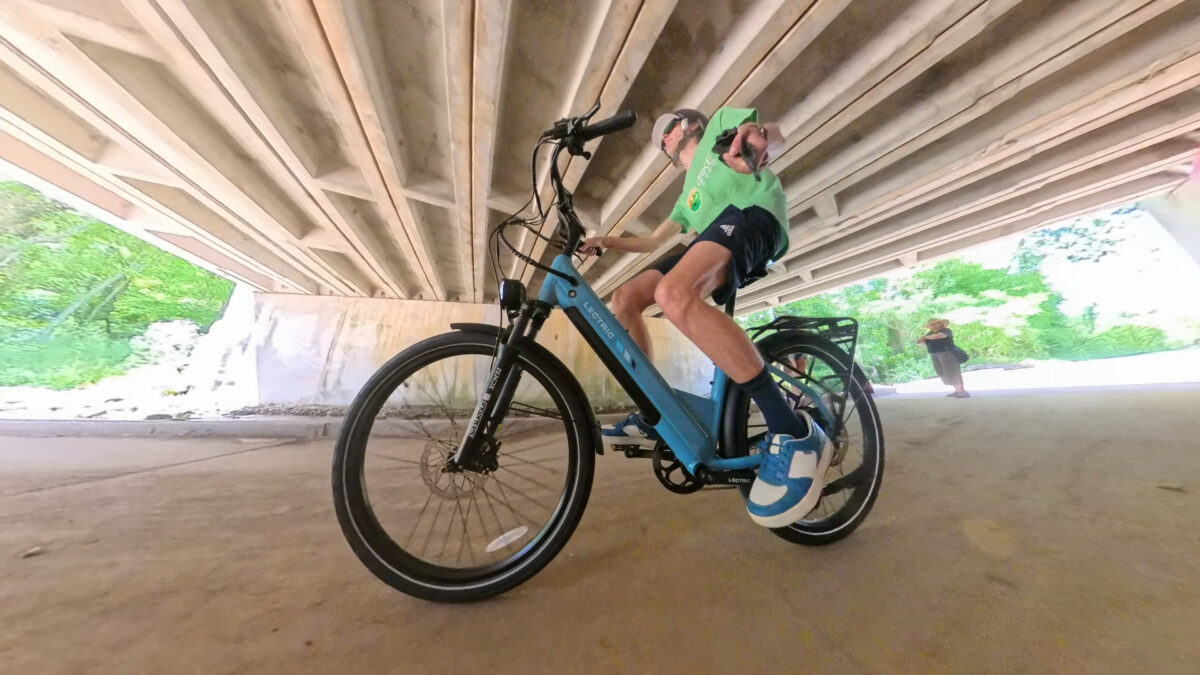
By standardizing the 750W motor, Lectric delivers the power and range people want and simplifies the choice down to the step-thru’s relaxed cruiser comfort or the high-step’s active commuter posture. They also made tangible improvements by delivering a quieter motor, an upgraded drivetrain and brakes, and standard accessories like fenders and a rear rack. These updates bring the XPress 2’s entry price up to $1,399, but it offers impressive value with premium features like a brand-name suspension fork and the ability to seamlessly toggle between torque and cadence sensors. It is no longer just a great ebike for the money; it is simply a great commuter.
If our review helped you decide on the XPress 2 or another model from Lectric, you can help make content like this possible by purchasing through our affiliate link. It is a great way to support our work at no extra cost to you. Thank you!
