

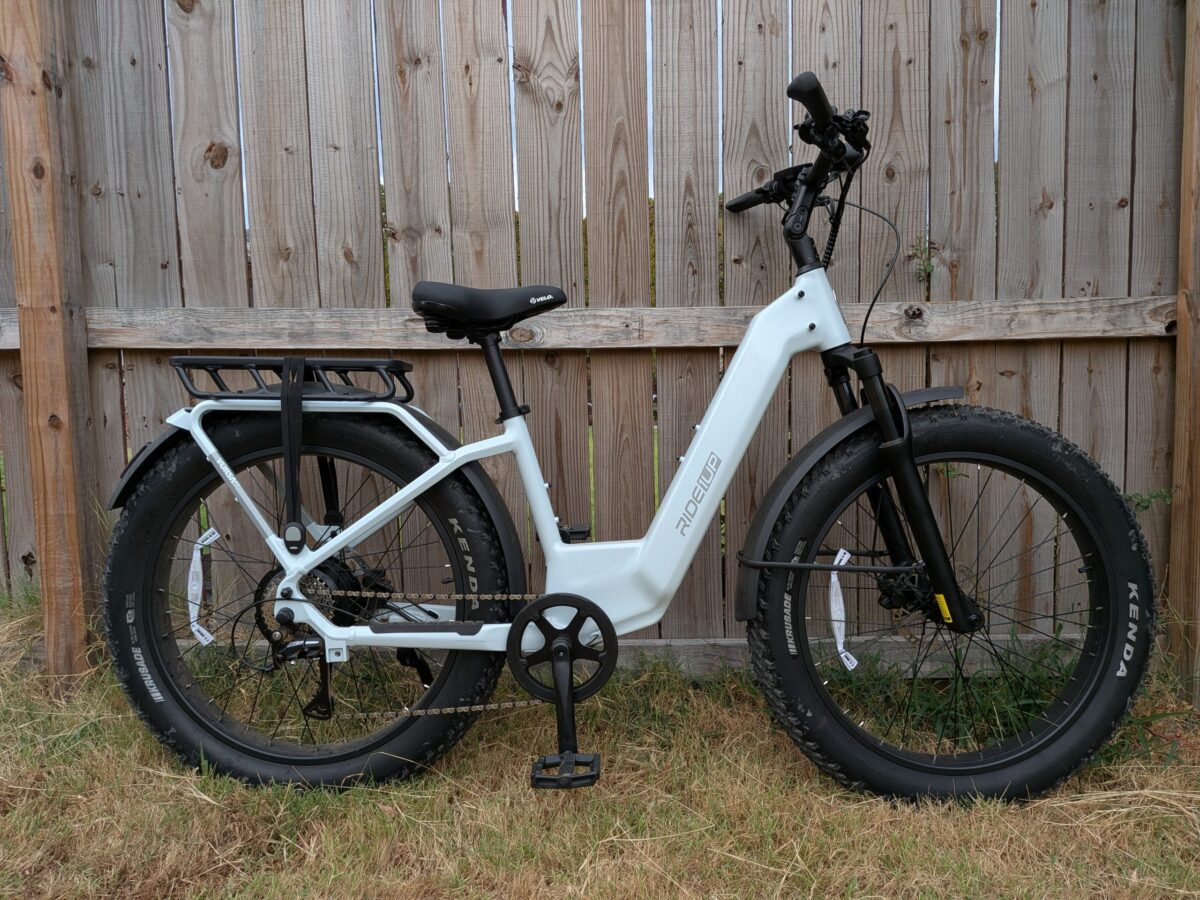
Fat tire ebikes from reputable brands have been creeping up in price, and most of the names you’d recognize now sit around $2,000. The Ride1Up Vorsa FT comes in well under that at $1,695, and it was on sale for $1,545 at the time of writing this post. It’s the newest of three Vorsa models, alongside the Vorsa Lite and the standard Vorsa, and it shares their 750W AKM hub motor with 95Nm of torque, 720Wh battery, 100mm suspension fork, and choice of torque or cadence sensor. What the FT really does is bring the standard Vorsa’s utility to the fat tire market, including a modular Connect+ rear rack rated for 150 lbs, something we haven’t seen on any other fat tire ebike we’ve tested.
In this Ride1Up Vorsa FT review, we break down the components and the settings that let you tune every assist level, cover the frame options, fit, and how much the bike actually weighs, and share how it performed on pavement, steep hills, and trails. We also compare it with one of the most popular fat tire ebikes on the market to see whether the lower price makes it a worthy alternative, or whether corners were cut to get there.
This article contains affiliate links. If you buy through our Ride1Up link, we may earn a commission at no extra cost to you.
Ride1Up Vorsa FT Video Review
If you’d rather see the bike in action, our video review covers everything in this article and then some. We start with a full component walkthrough, including a close look at the display and every menu in the advanced settings, then head out for first-person riding footage. You’ll see our throttle-only acceleration test, a level-by-level run through both the torque sensor and the cadence sensor, braking from speed, our throttle and pedal assist hill climbs, and a stretch of off-road riding on dirt, roots, rock, and gravel before we wrap up with the pros and cons.
Standout Features
750W AKM Motor and 720Wh Battery
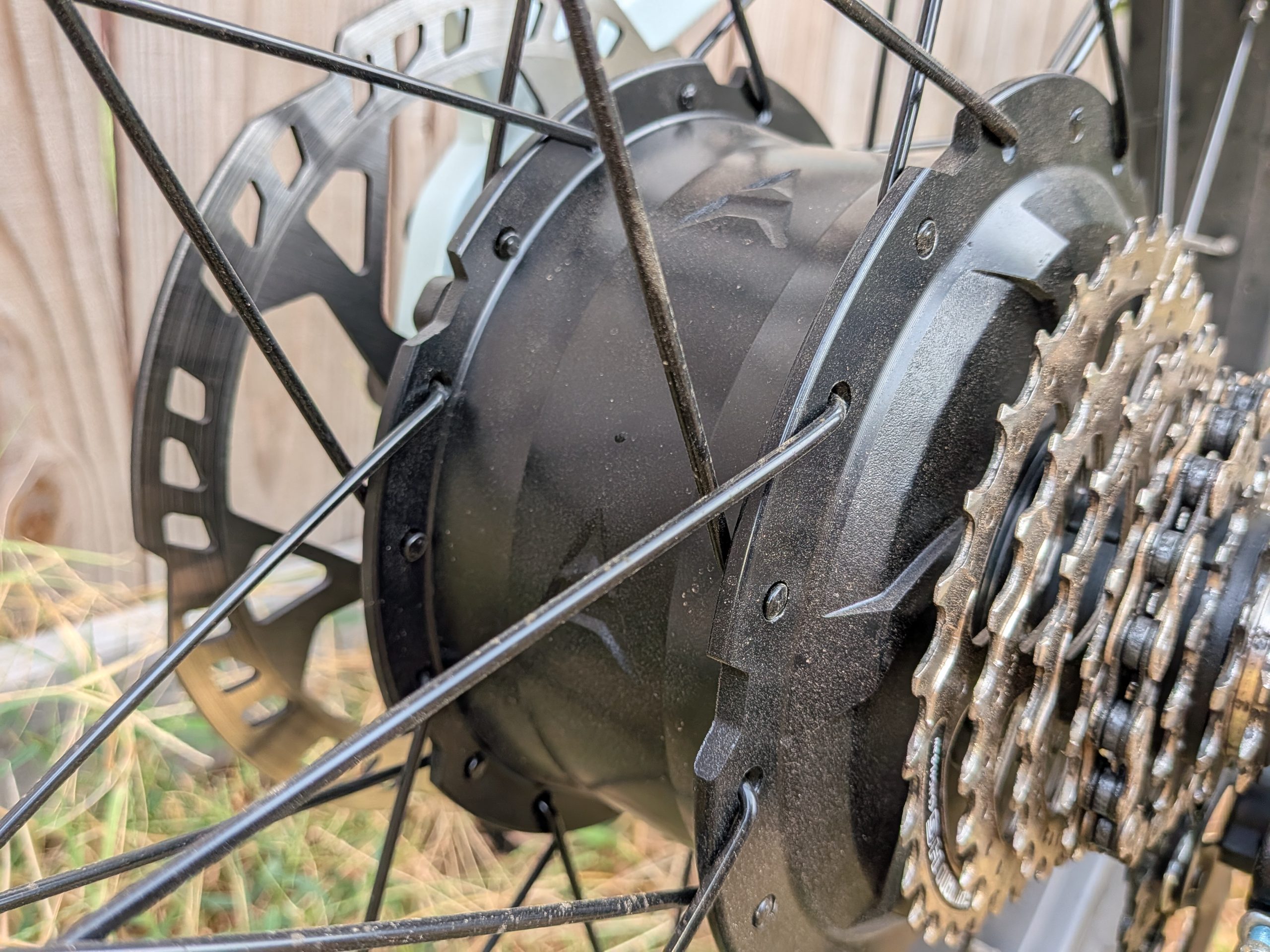
Every Vorsa model is built on the same foundation, starting with a 750W rear hub motor from AKM rated at 95Nm of torque. Ride1Up bills it as a best-in-class hill climber among 750W motors and points to AKM’s reputation for reliability, which is exactly why we were curious to see how it handled our standard hill climb on a heavy fat tire ebike. You can tap into that power with the left-hand thumb throttle in every assist level, even with assist turned off, so full motor output is always a thumb press away.
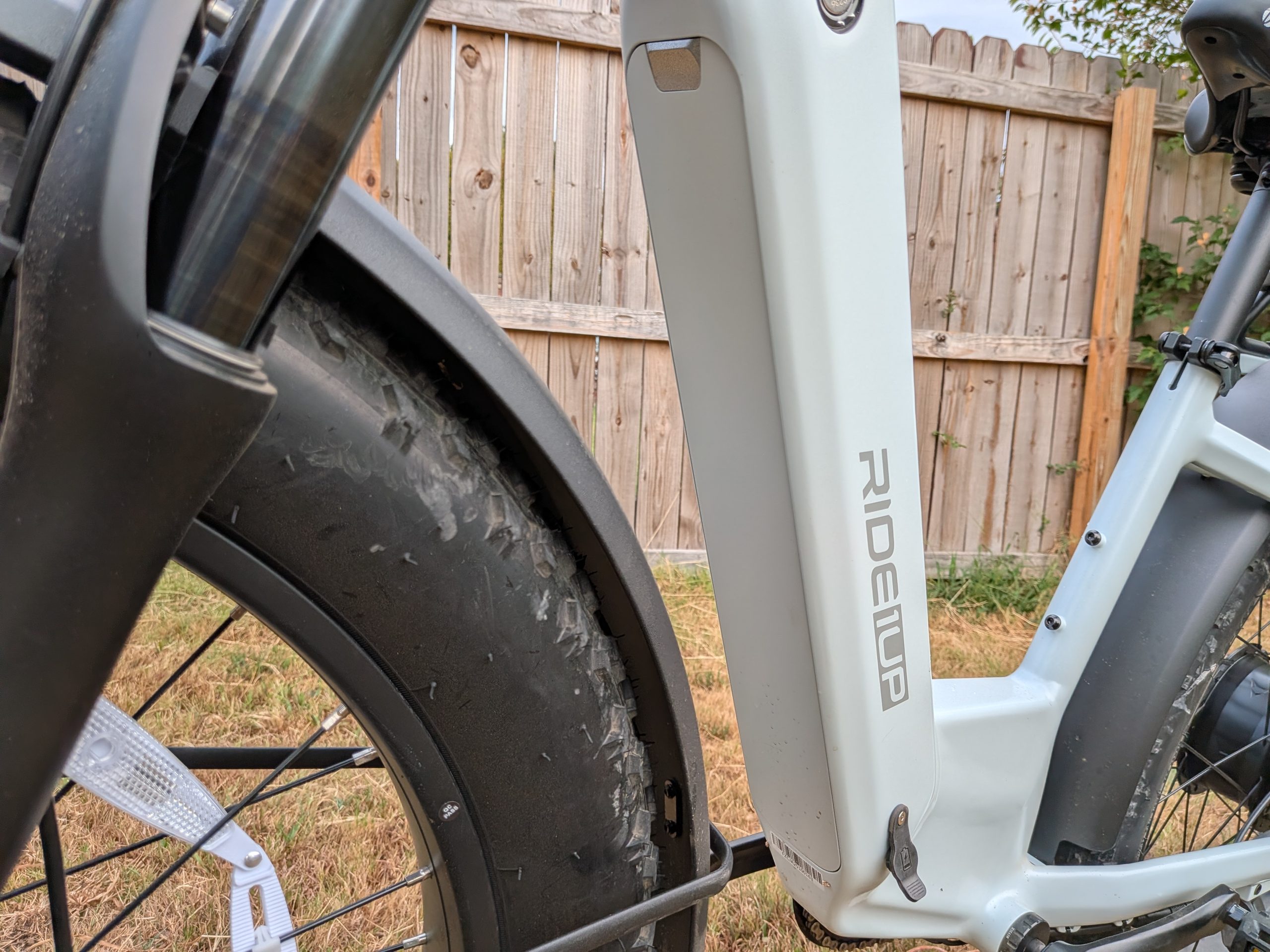
Powering it is a 48V, 15Ah (720Wh) battery built with Samsung 50GB 21700 cells. It’s certified to UL 2271, and the bike’s full electrical system is certified to UL 2849. The pack is paint-matched to the frame, locks into the downtube with a key, and charges on or off the bike, though the included 2A charger takes about 7.5 hours from empty. Ride1Up estimates 30 to 60 miles of range, which is what we typically see from a battery this size.
150 lb Modular Rear Rack and Connect+ Accessories
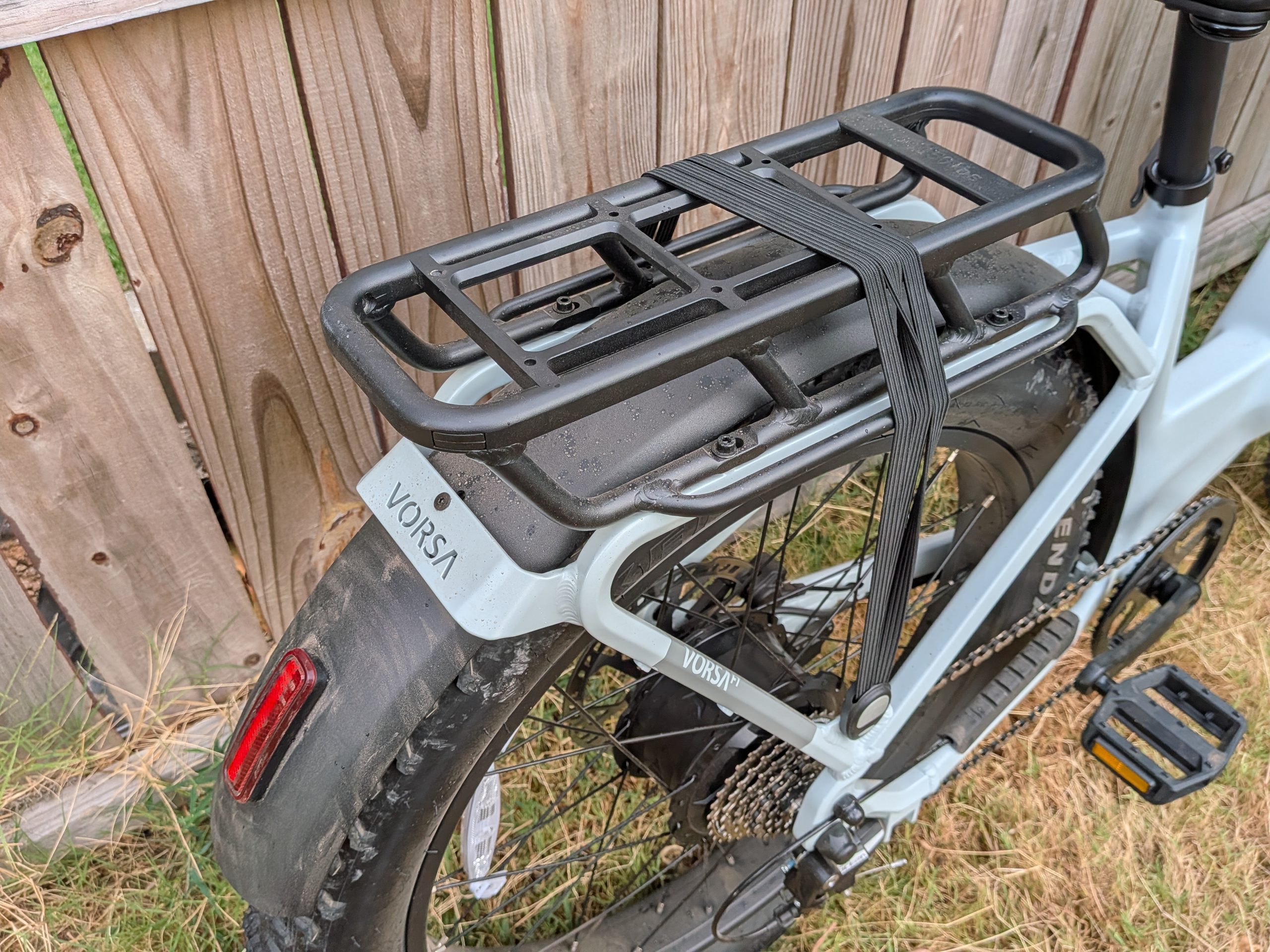
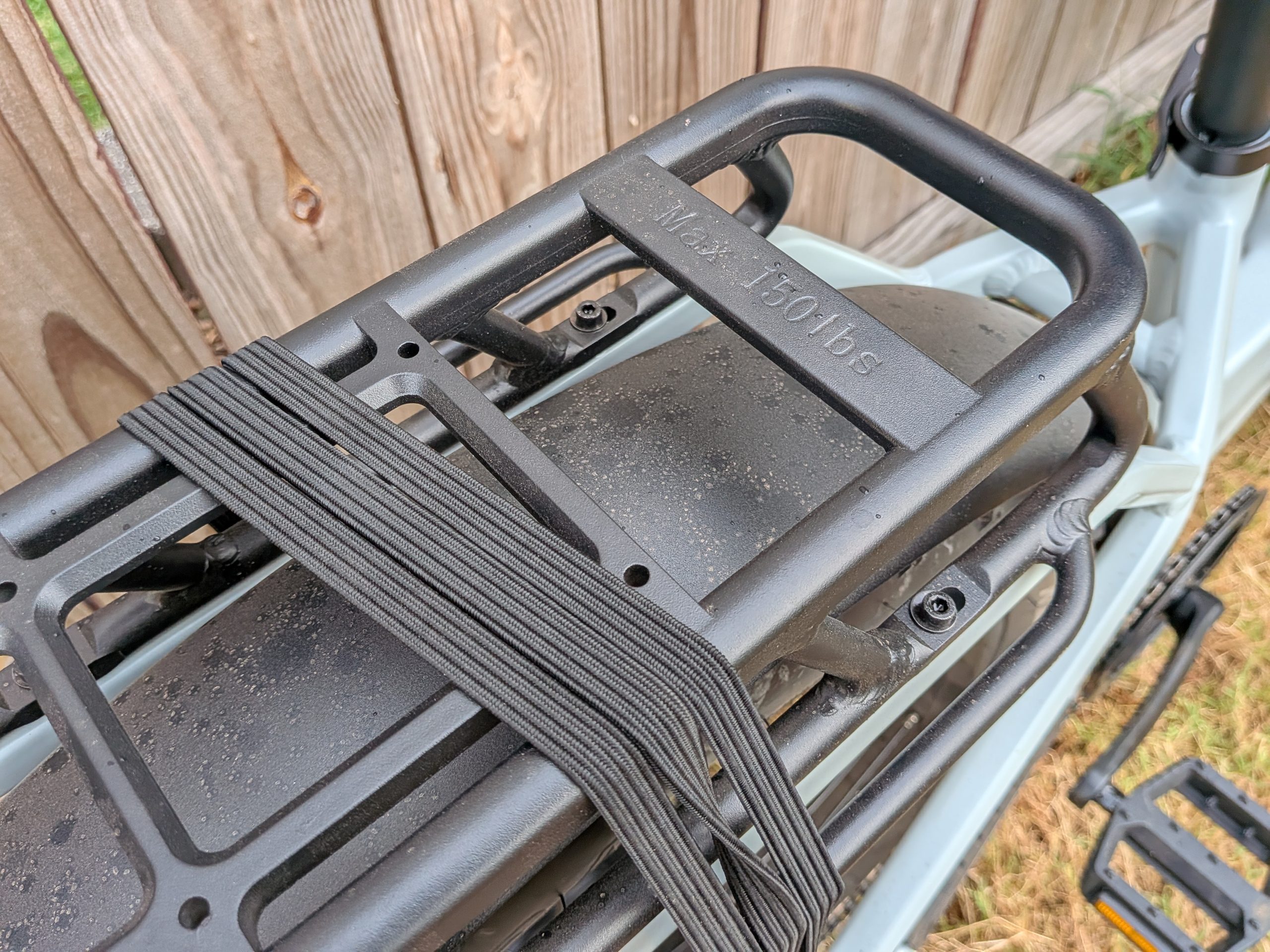
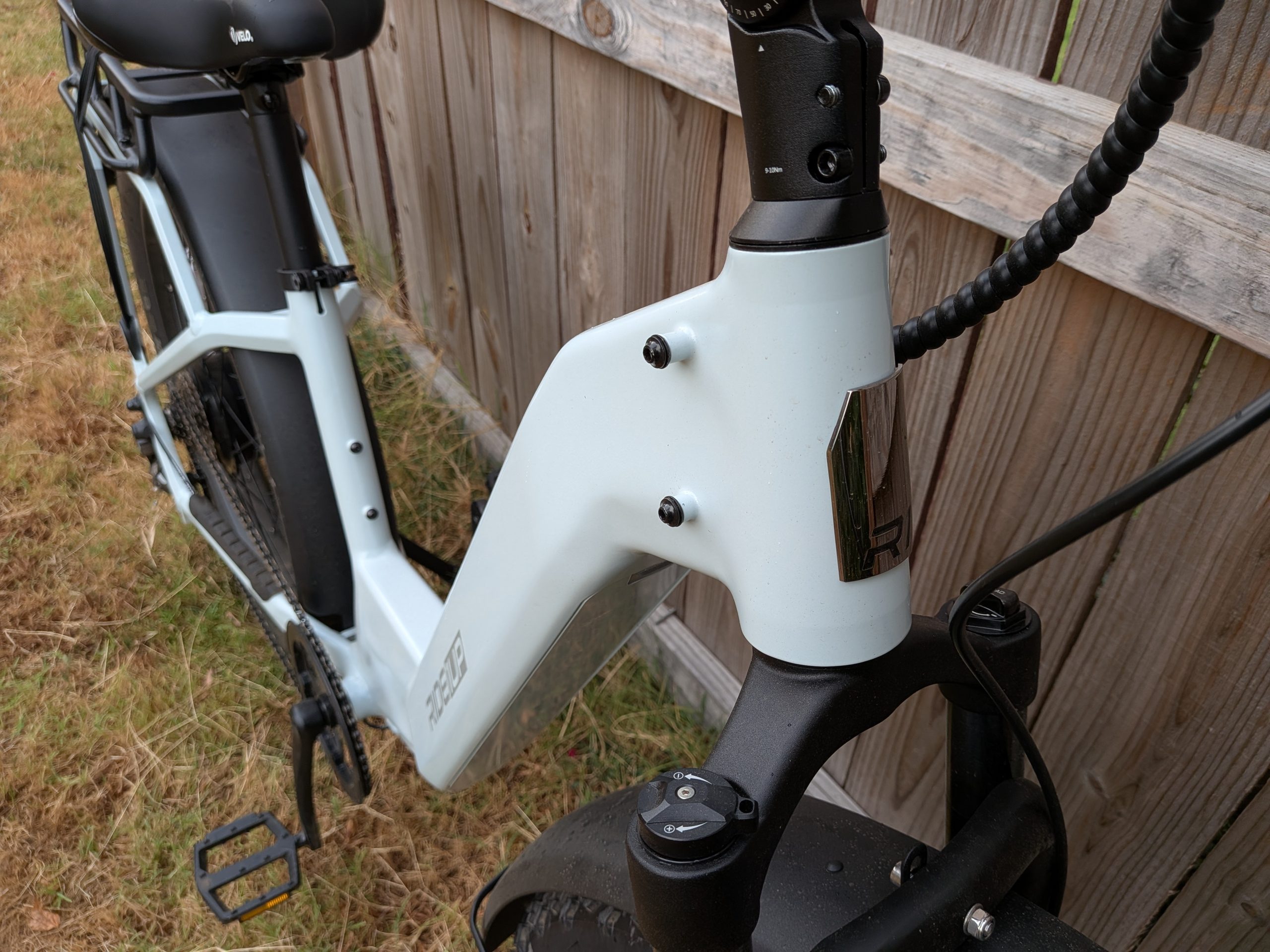
The rear rack is where the Vorsa FT separates itself from most fat tire ebikes. It’s rated for 150 lbs on its own, the bike’s total payload capacity is 440 lbs, and the rack is modular, bolting onto a welded mounting system so it can come off when you don’t need it. It ships with a set of cargo straps, has pannier hangers, and Ride1Up lists the FT as trailer hitch compatible. Up front, there are mounting points on the head tube for a front rack, which isn’t a given at this price.
The rack also works with Ride1Up’s Connect+ system, which lets accessories snap on and release with a lever. Options include a small basket rated for 20 lbs, a large cargo basket rated for 40 lbs, and an insulated cooler rated for 30 lbs. The one that really stands out is the passenger kit, which adds a Connect+ seat, foldable foot pegs that mount on each side of the frame, and a passenger handle that clamps to the seat post. It’s not something you see offered for many fat tire ebikes.
Not every Connect+ accessory fits the FT, though. Ride1Up’s extended passenger rack and the Captain’s Chair bundle built on it are standard Vorsa only, so if either one is on your list, the standard Vorsa is the better fit.
MIVICE Dual Sensors and Display Customization
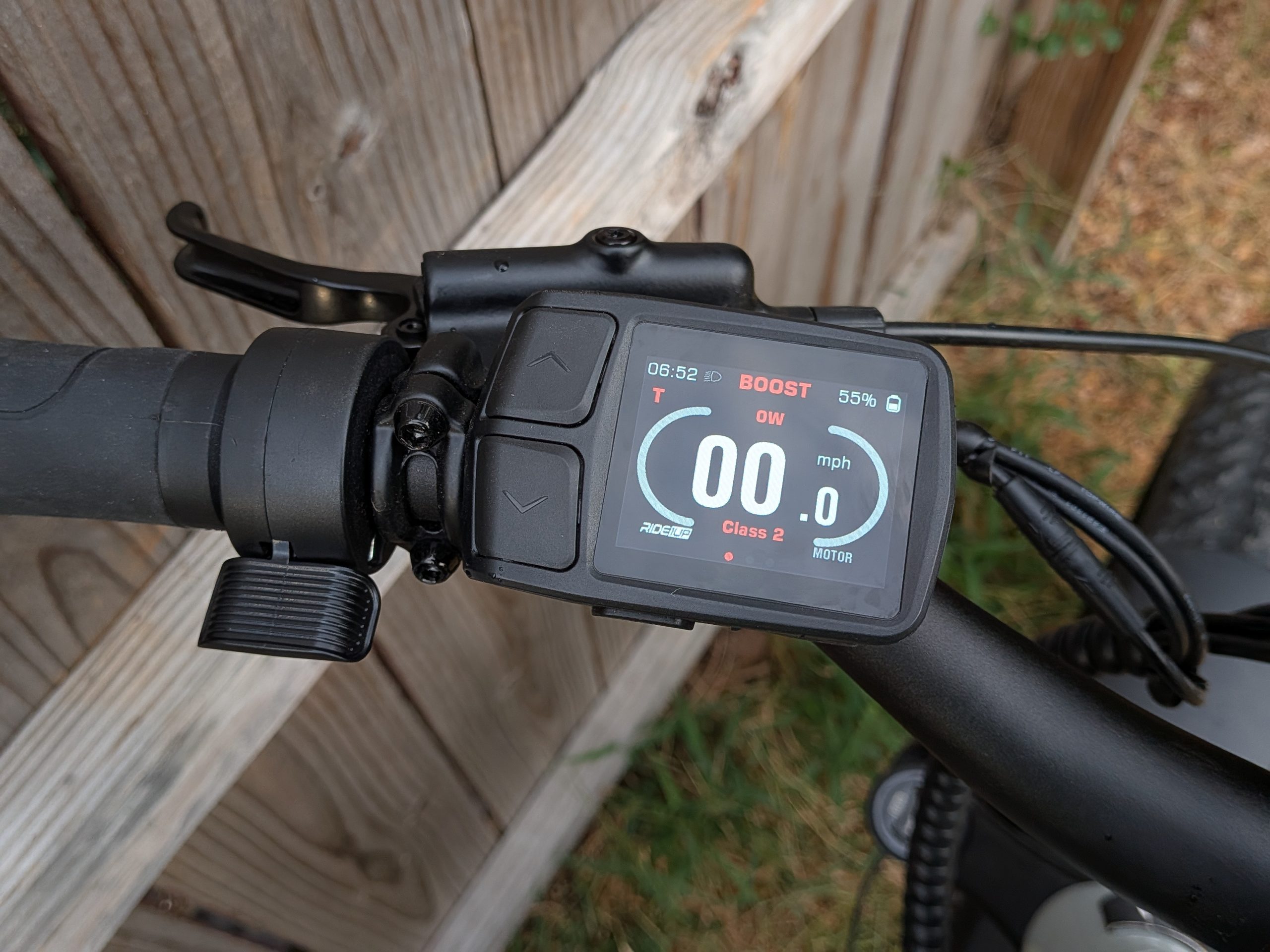
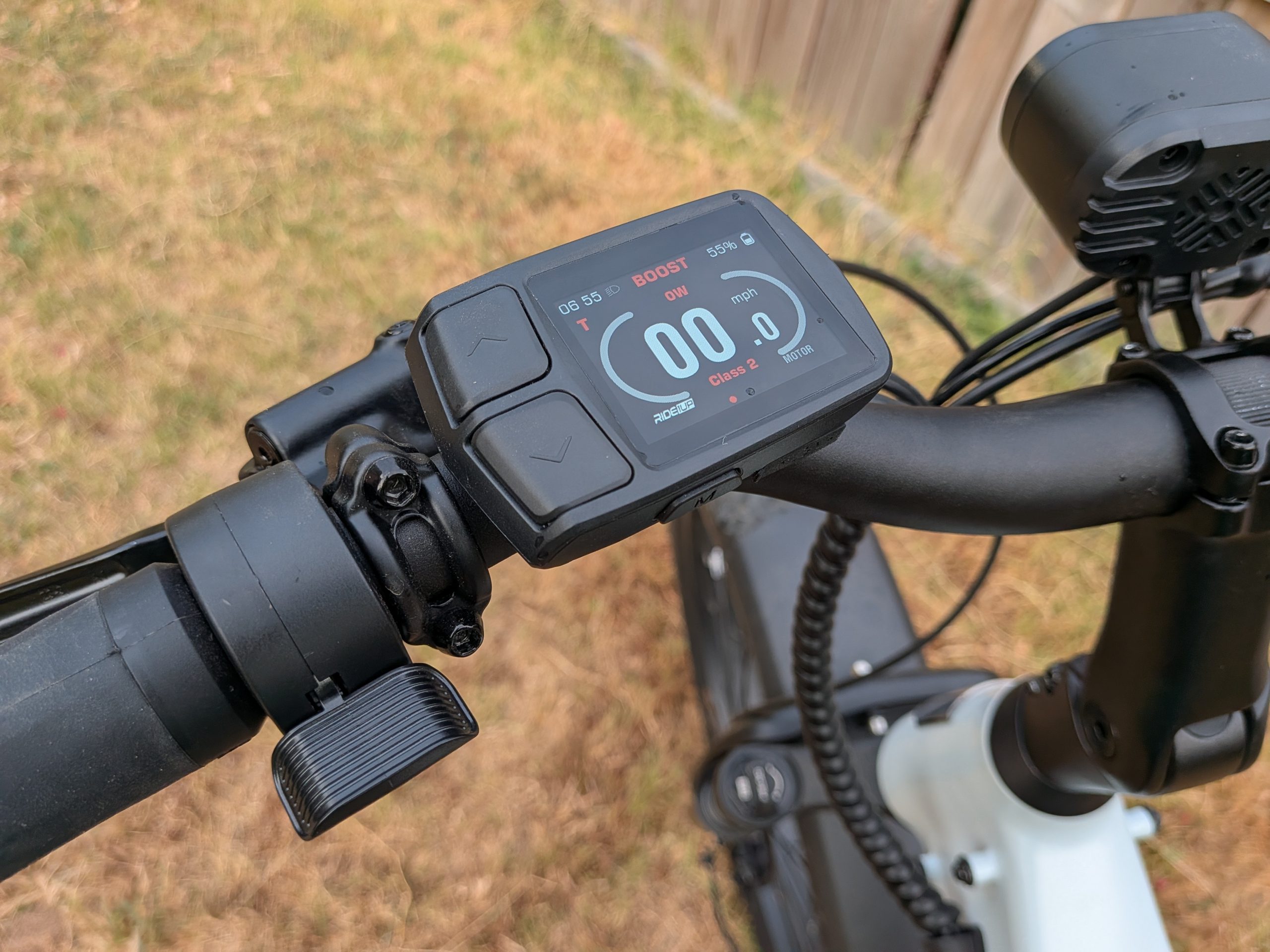
Dual sensor setups are showing up on more ebikes every year, but this one stands out because Ride1Up sources both sensors and the 48V, 25A controller from MIVICE, so they’re designed to work together. With either sensor, higher assist levels mean more power. The cadence sensor gives you a consistent amount of power for each level as long as you’re pedaling, while the torque sensor lets your effort decide how much of that level’s power you get. Pedal harder, and you will get more motor power. You choose between them in the display settings, and we cover how each one rides in the testing section below.
Both sensors are tuned through the color display, which also has a USB-C port for charging your phone and Apple Find My tracking built in. Hold the bottom button to reach the advanced settings, where every assist level has two values you can adjust. Amp output sets how much of the motor’s power that level can use, and torque ratio sets how hard you have to pedal to reach it. With the cadence sensor, amp output alone decides your power in each level. The same menu lets you choose class 1, 2, or 3, or an off-road mode, and the bike ships in class 2.
There’s no quick way to swap between sensors, and no saved profiles, so switching means going back into the settings and adjusting amp output to suit the other sensor. Think of it as picking the sensor that fits how you ride and setting it up once.
26 x 4 Inch Kenda Krusade Tires and 100mm Fork
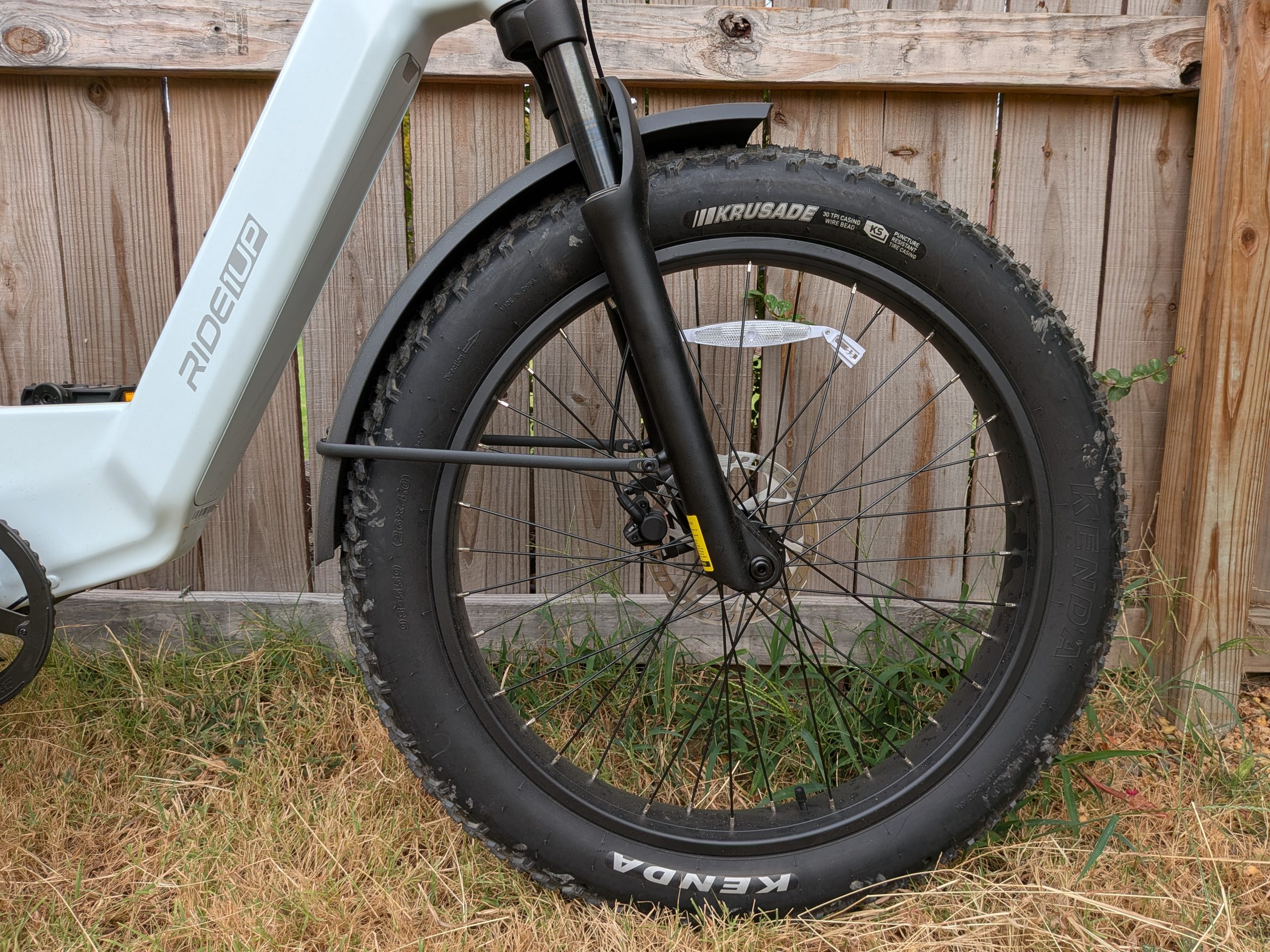
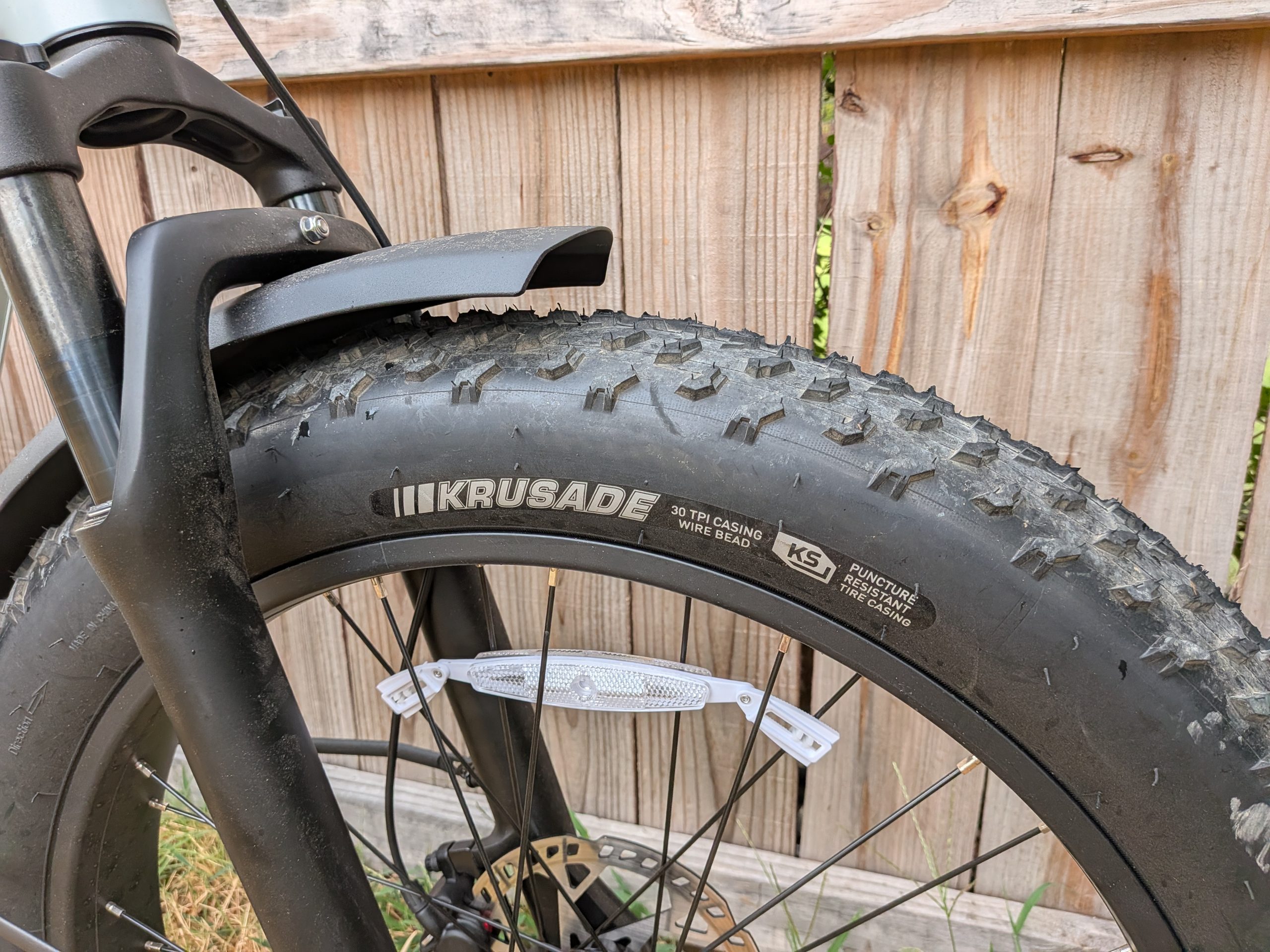
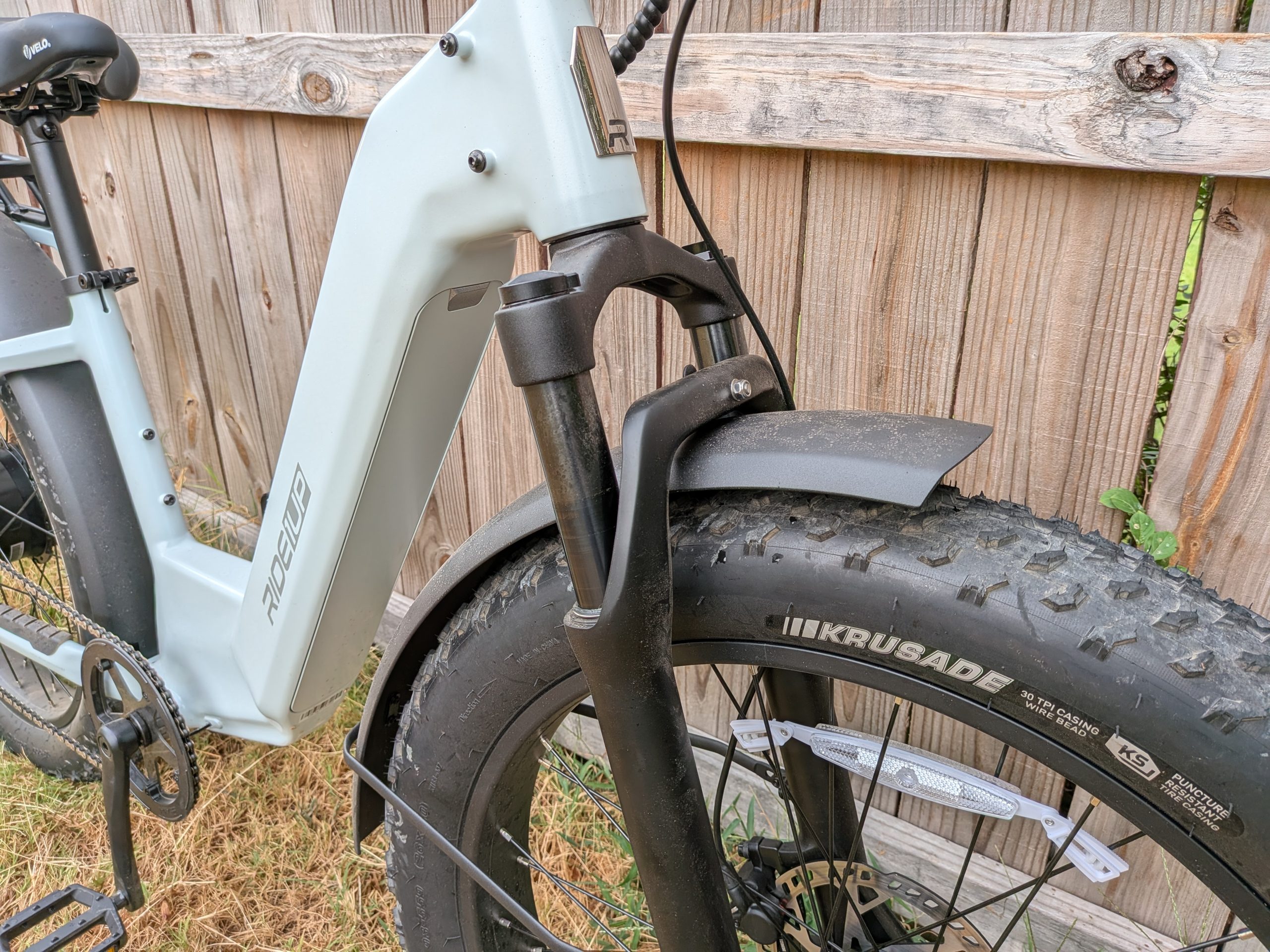
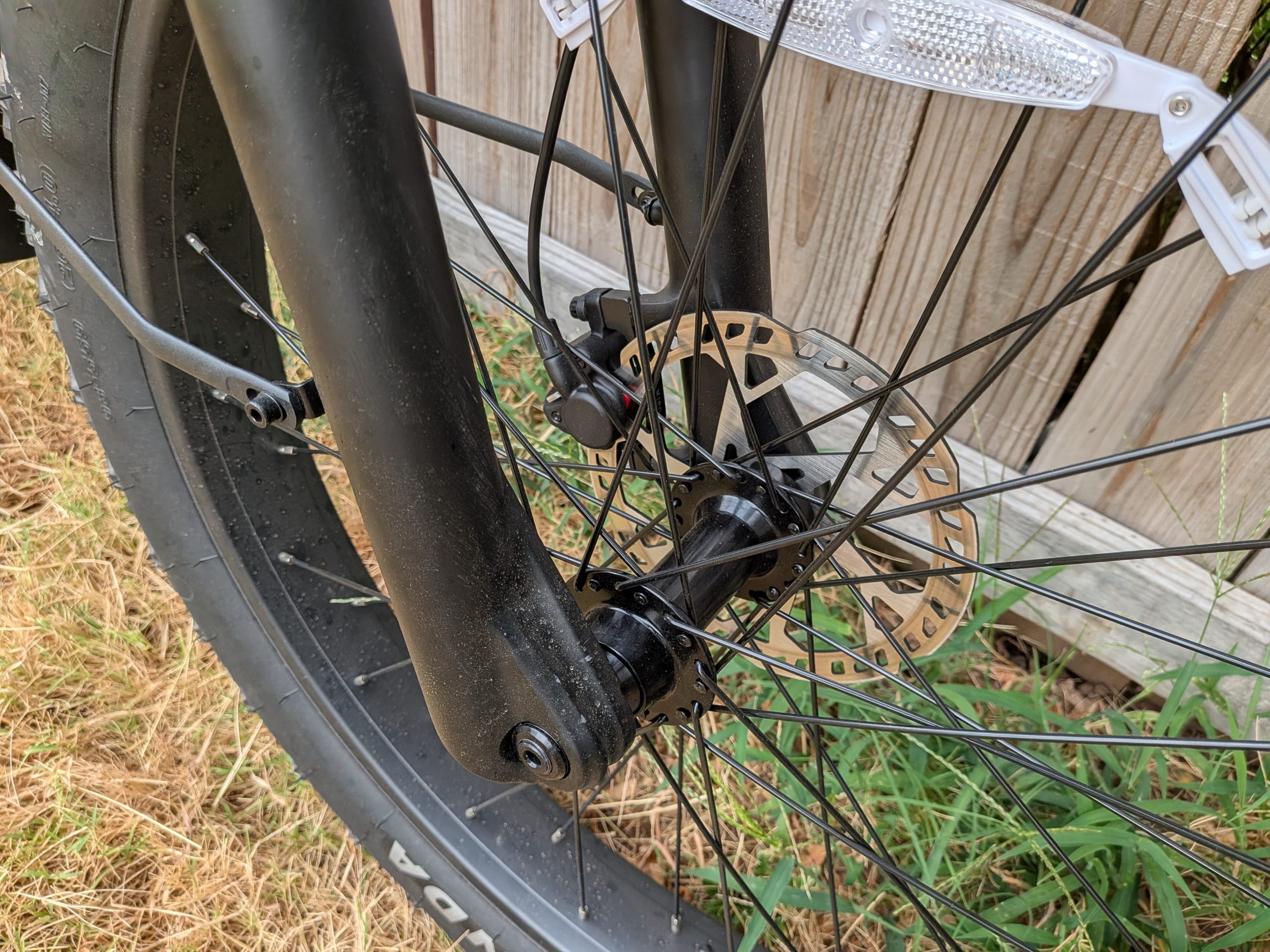
The knobby tires are 26 x 4 inch Kenda Krusades with thorn protection, a common pick on fat tire ebikes. The front wheel mounts with a thru-axle, and up front is a 100mm coil suspension fork with preload adjustment on the left leg and a hydraulic lockout on the right. The fork is basic, and it will top out on really chunky terrain. The bigger comfort story is the tires, which are rated down to 5 PSI, so you can let air out for a softer ride when the pavement ends, a big part of why people buy fat tire ebikes in the first place.
Shimano Acera Drivetrain and Star Union Brakes
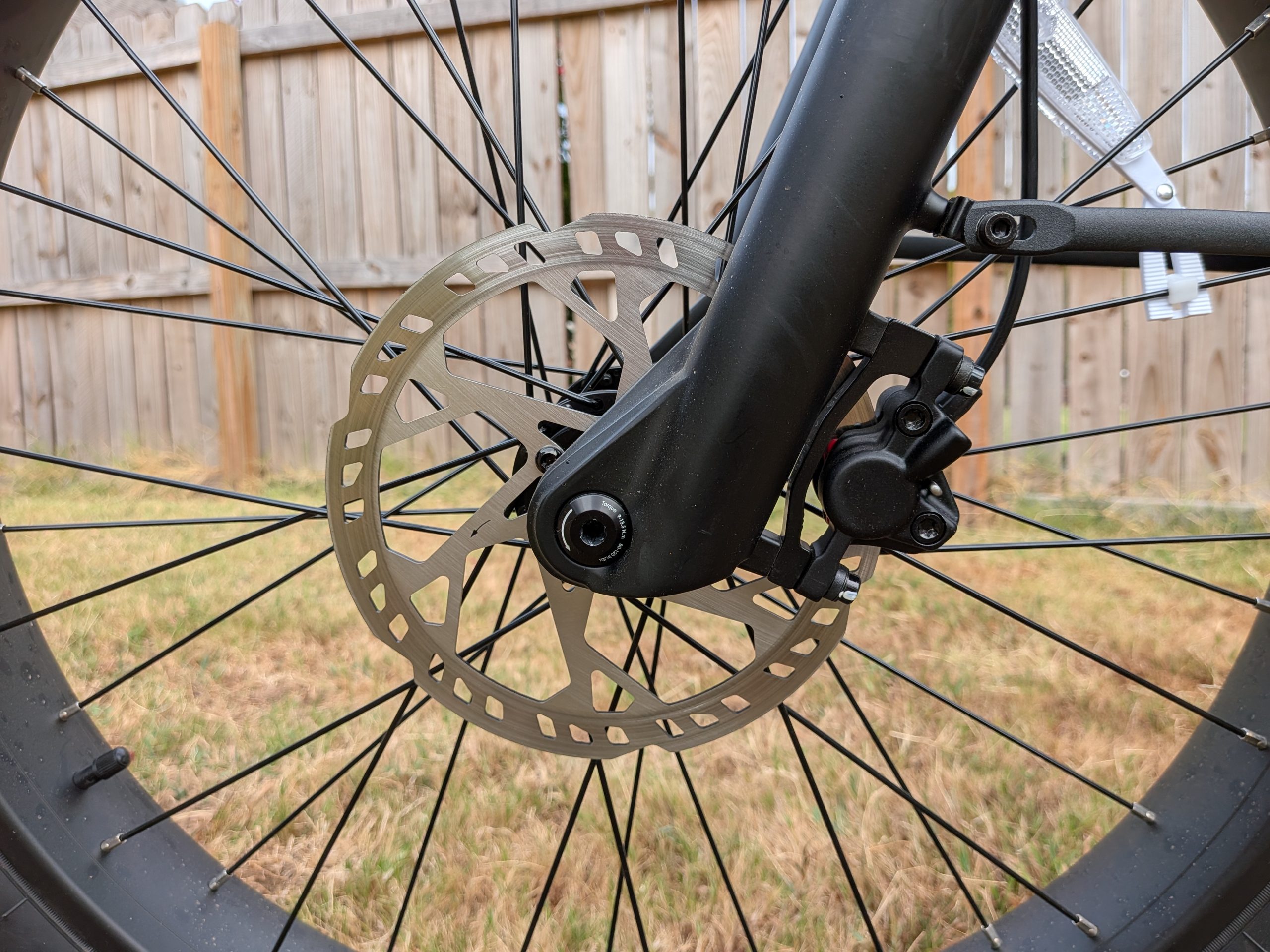
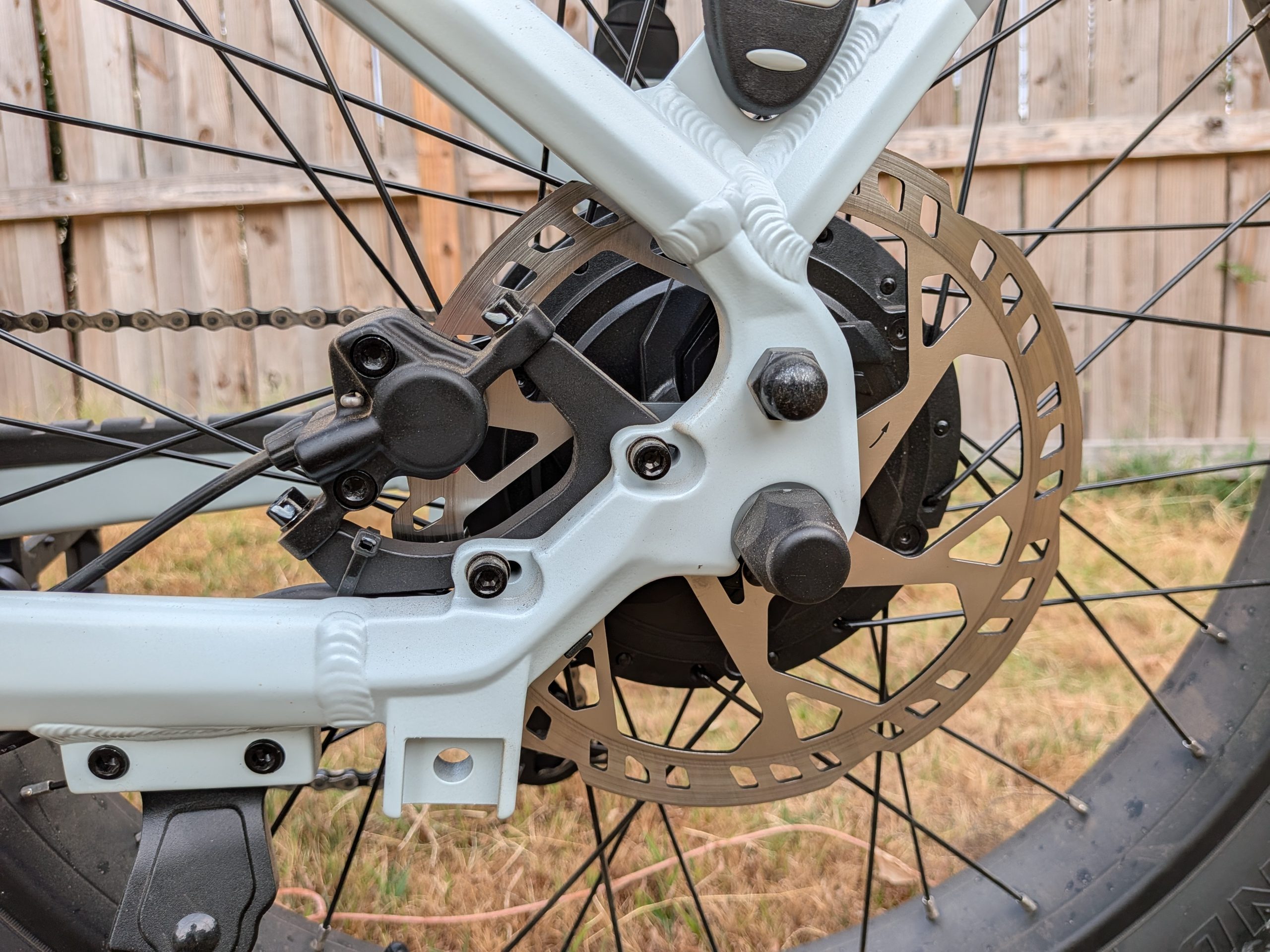
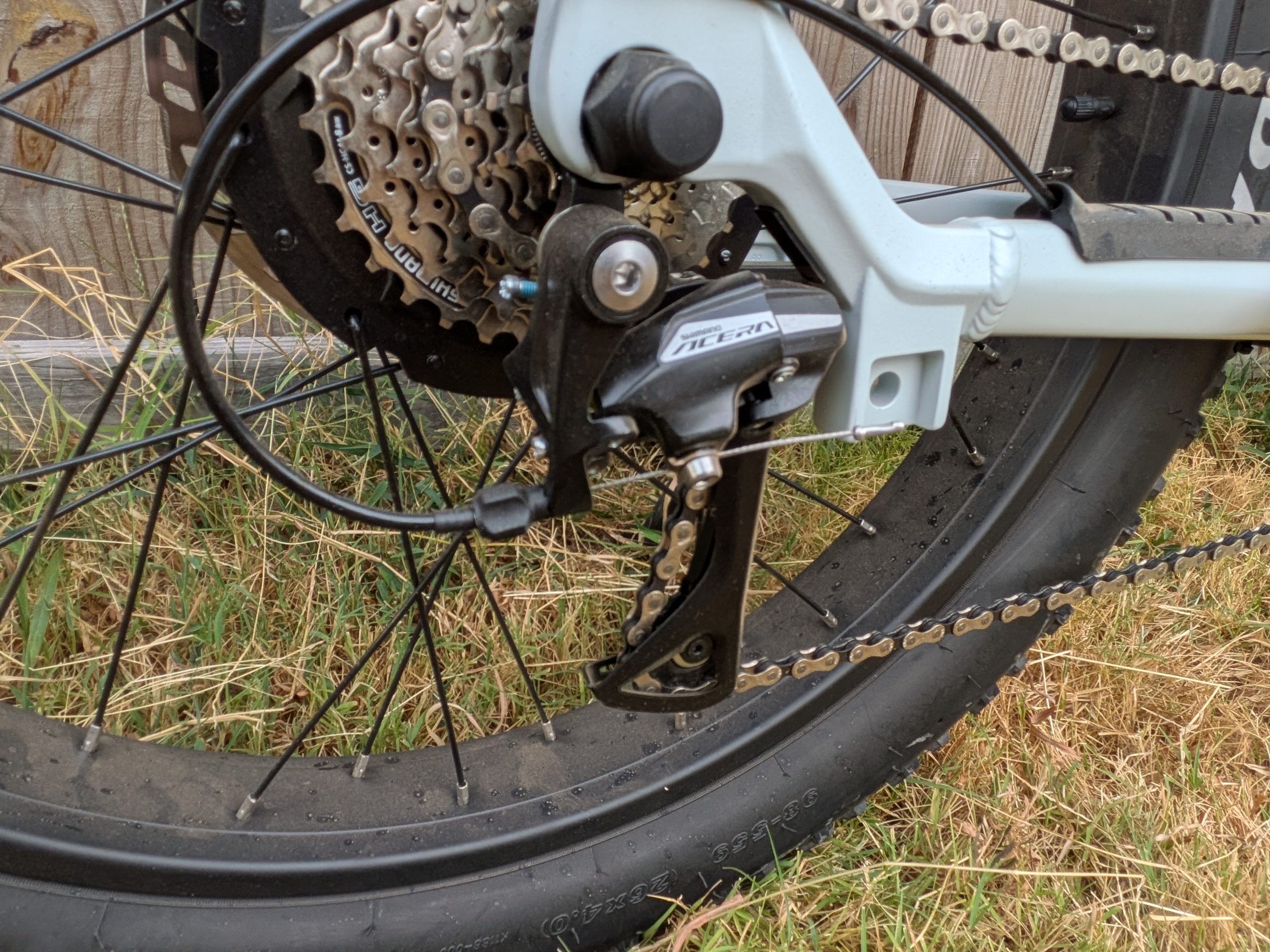
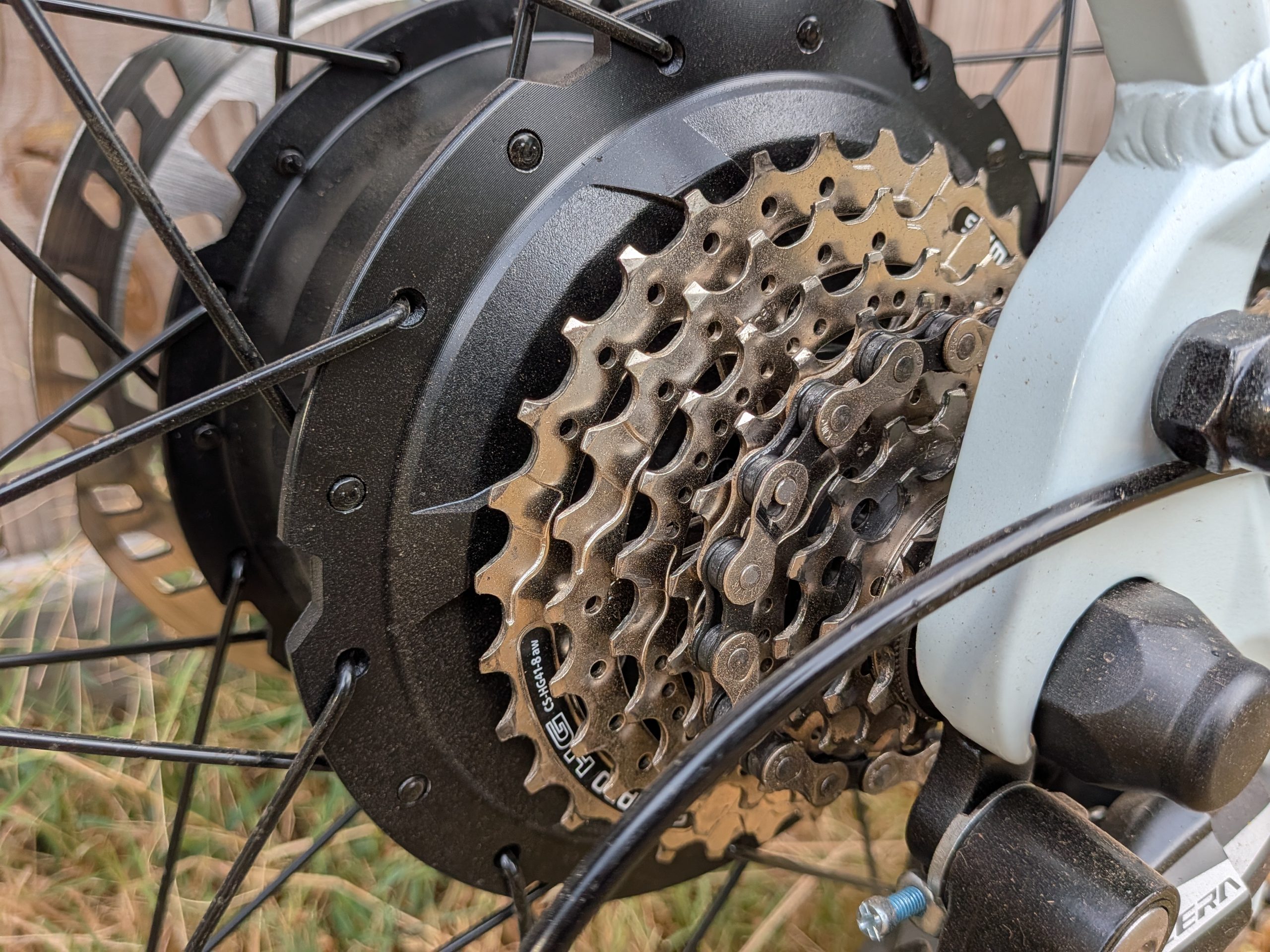
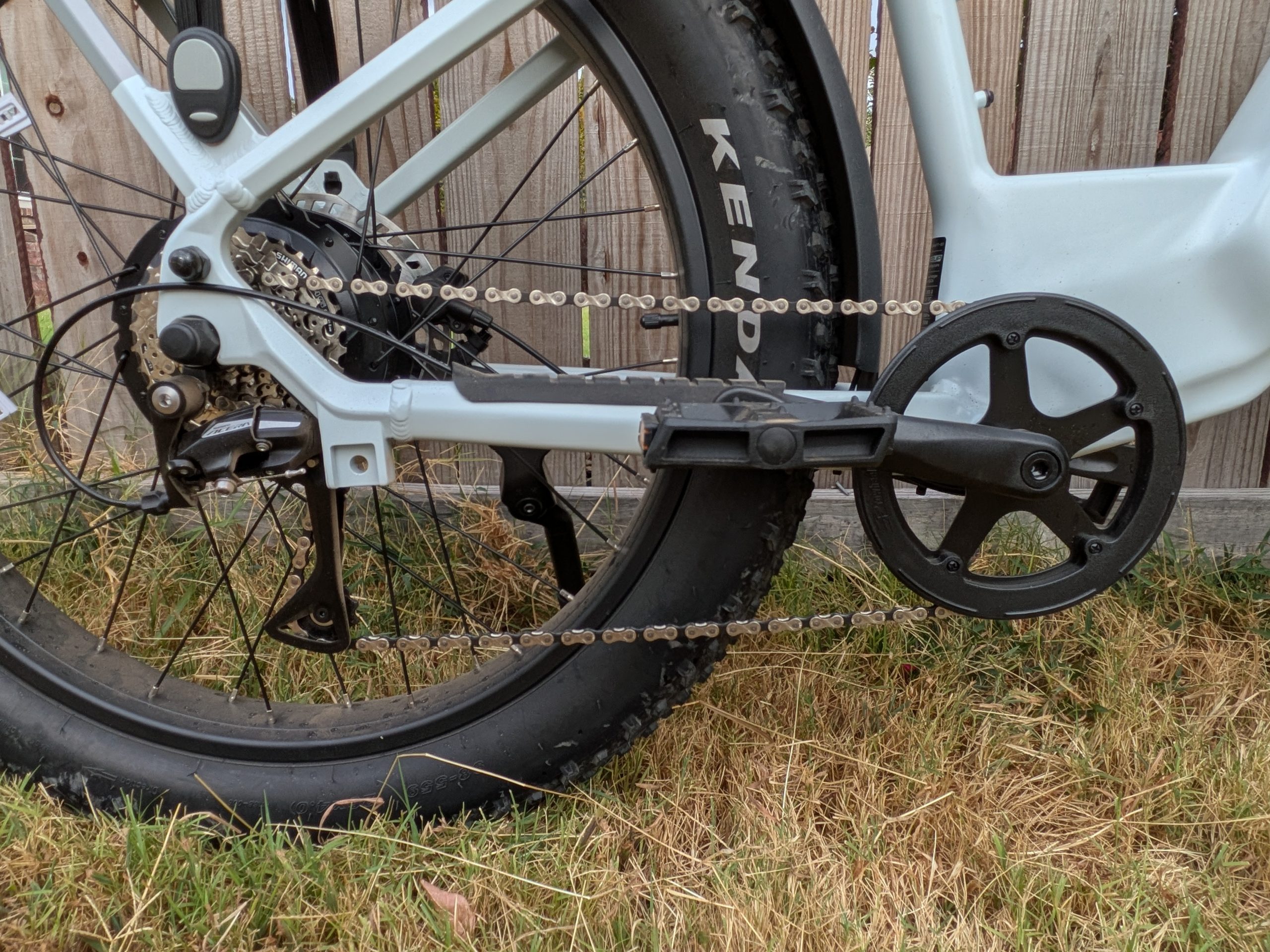
Shifting runs through a Shimano Acera rear derailleur and 8-speed trigger shifter, with an 11-32T cassette and a 48T chainring. Acera is a step up from what we typically see at this price, and at this point it’s something of a Ride1Up signature. Braking comes from two-piston Star Union hydraulic disc brakes with motor cutoffs, a 180mm rotor up front, and a larger 203mm rotor in the rear. We’ve had good experiences with Star Union over the years, though the brand doesn’t carry the same name recognition as Tektro.
Cockpit and Adjustable Stem
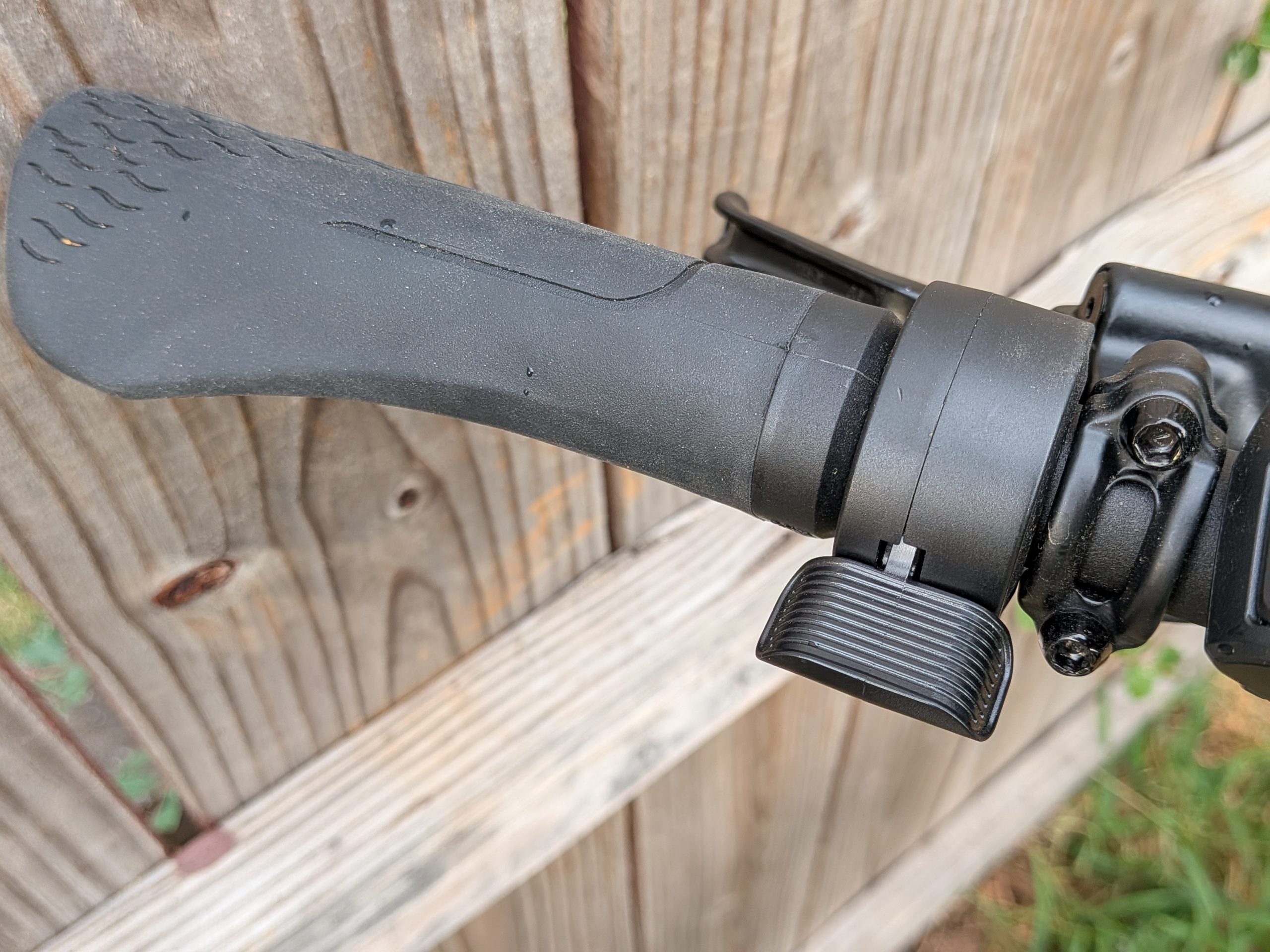
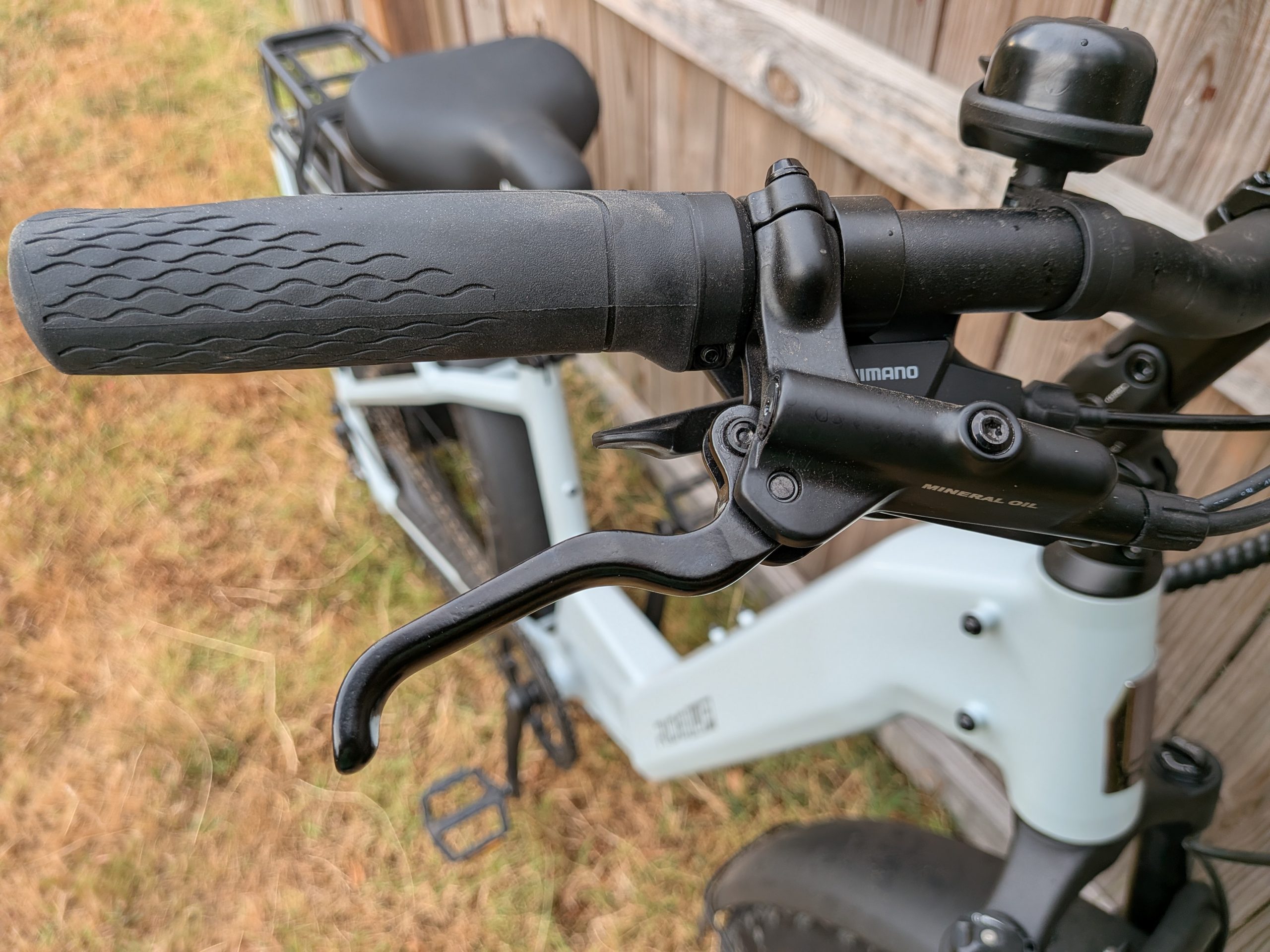
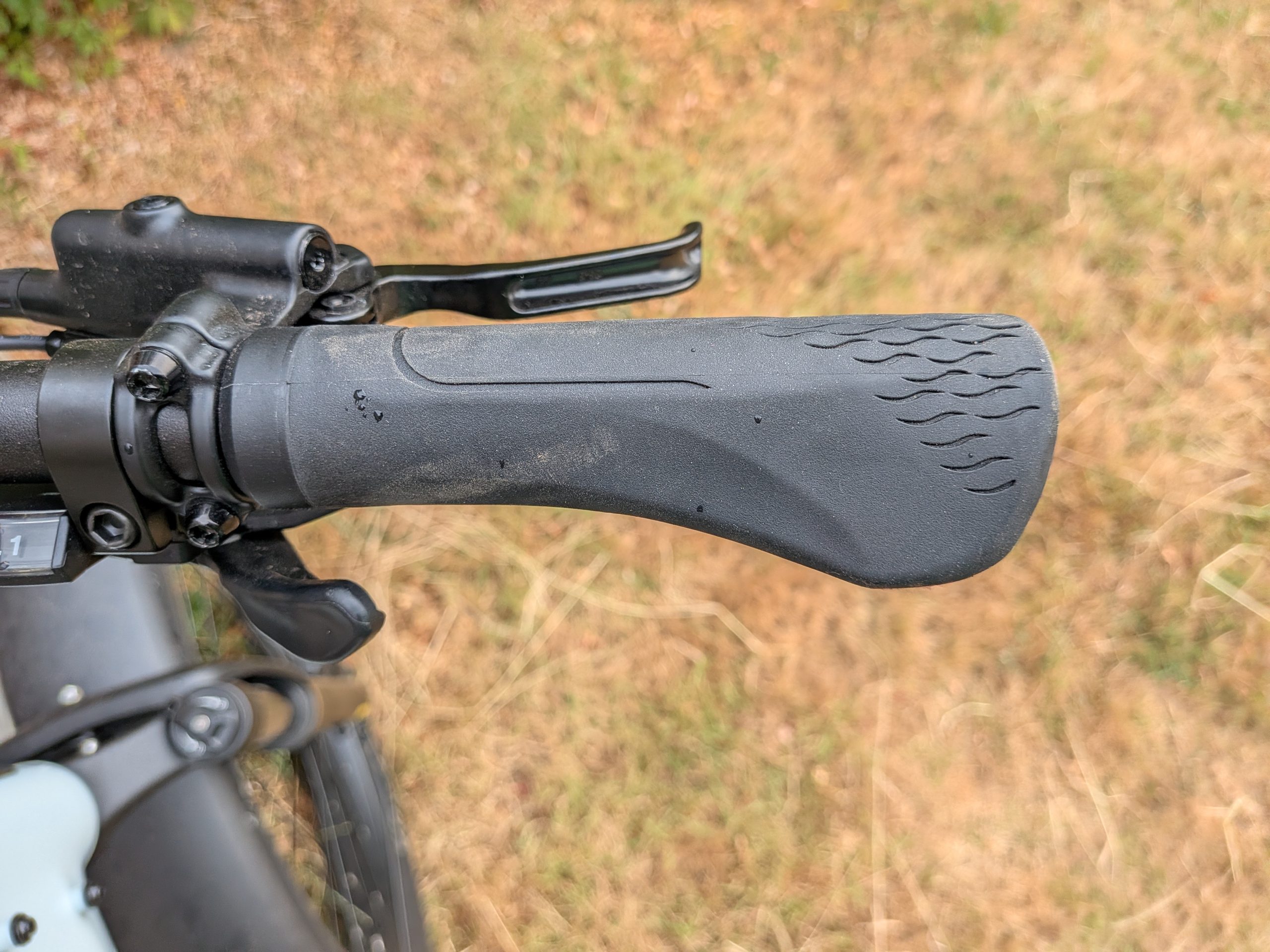
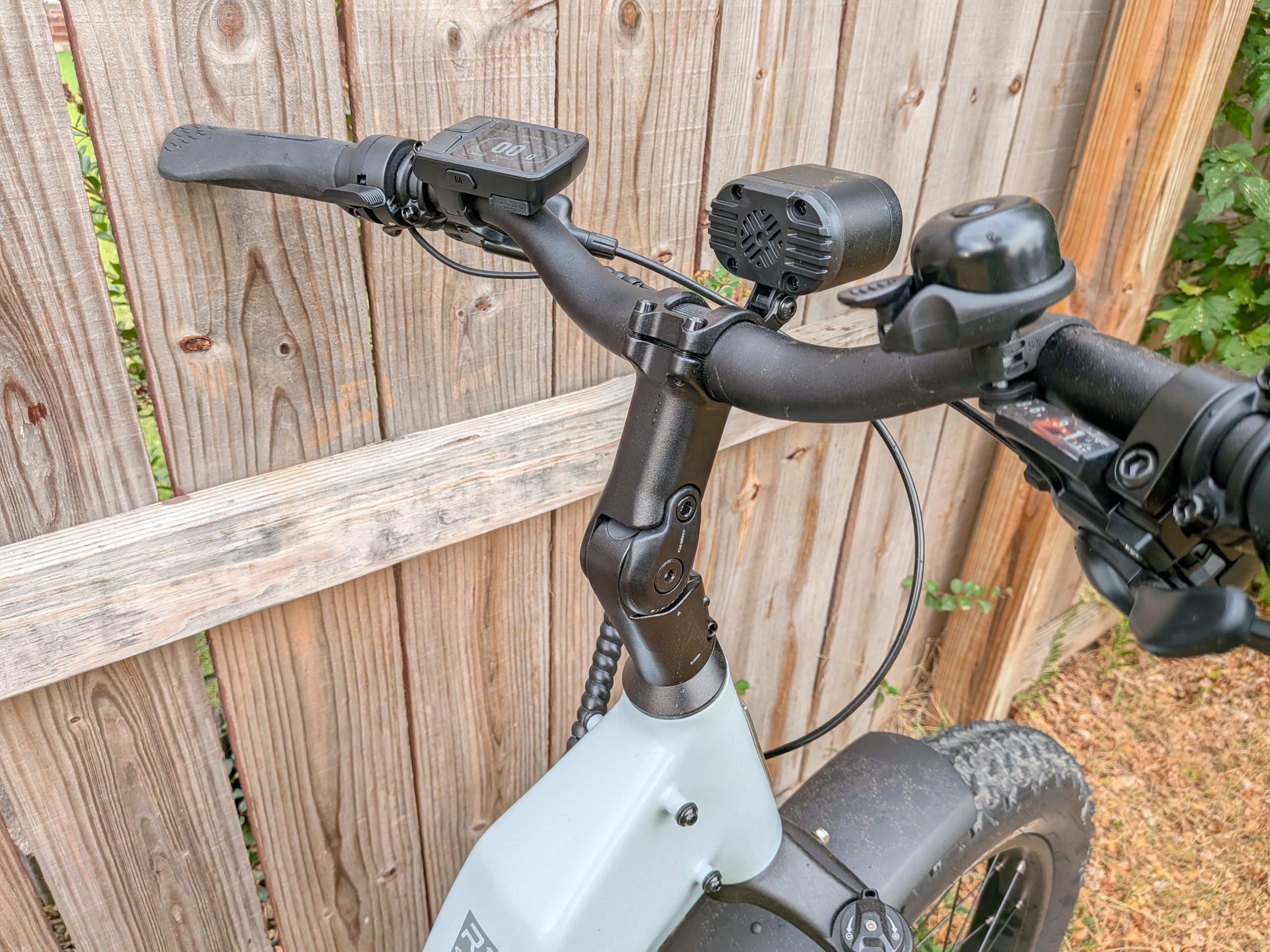
The handlebars sweep back slightly and sit on an adjustable stem, so you can bring the bars up and back for a more upright position or keep them low for a sportier one. You get locking ergonomic rubber grips, hydraulic brake levers with motor cutoffs, a left-hand thumb throttle, a bell, and the Shimano 8-speed trigger shifter.
Lights, Fenders, and Extras
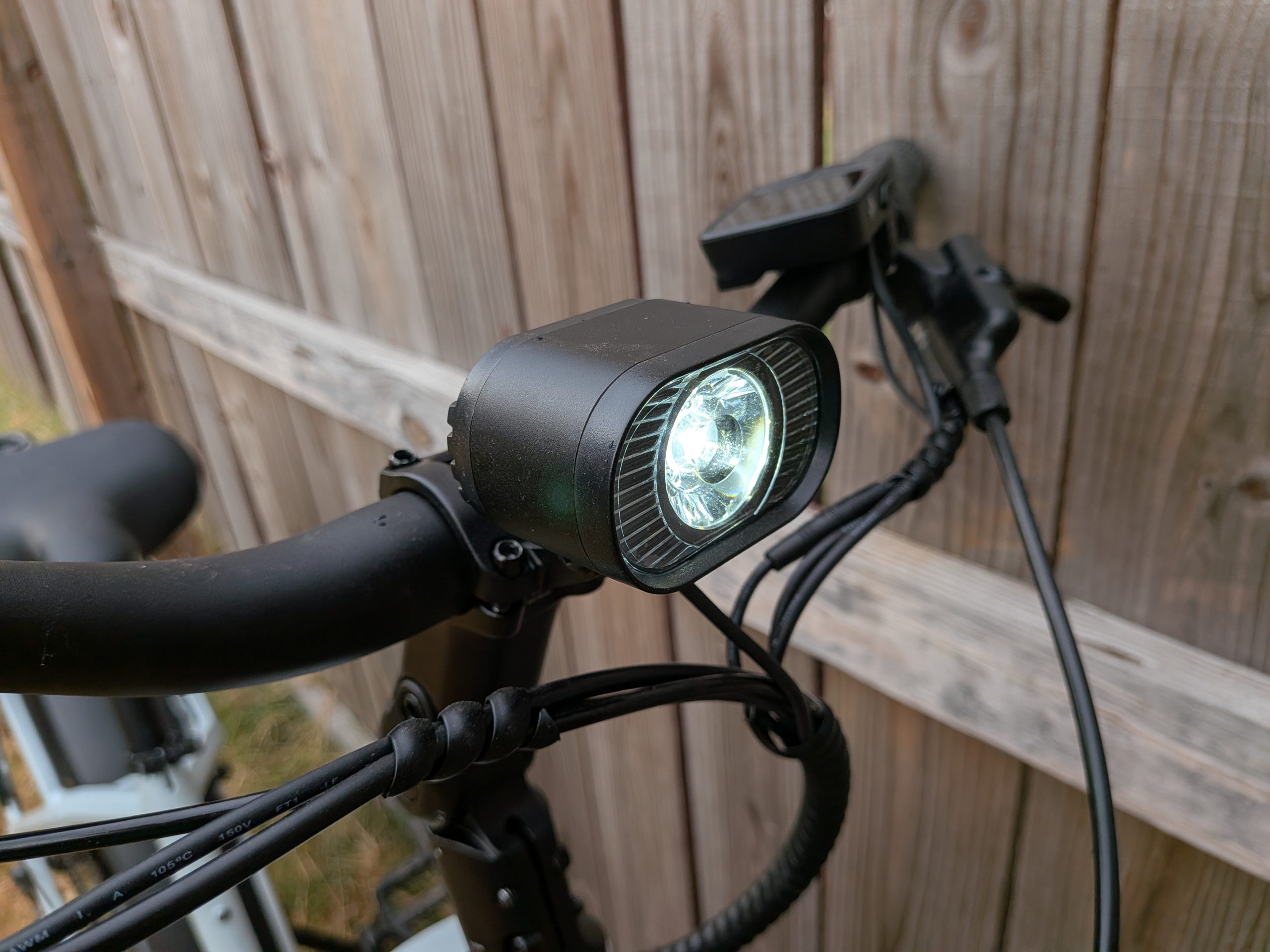
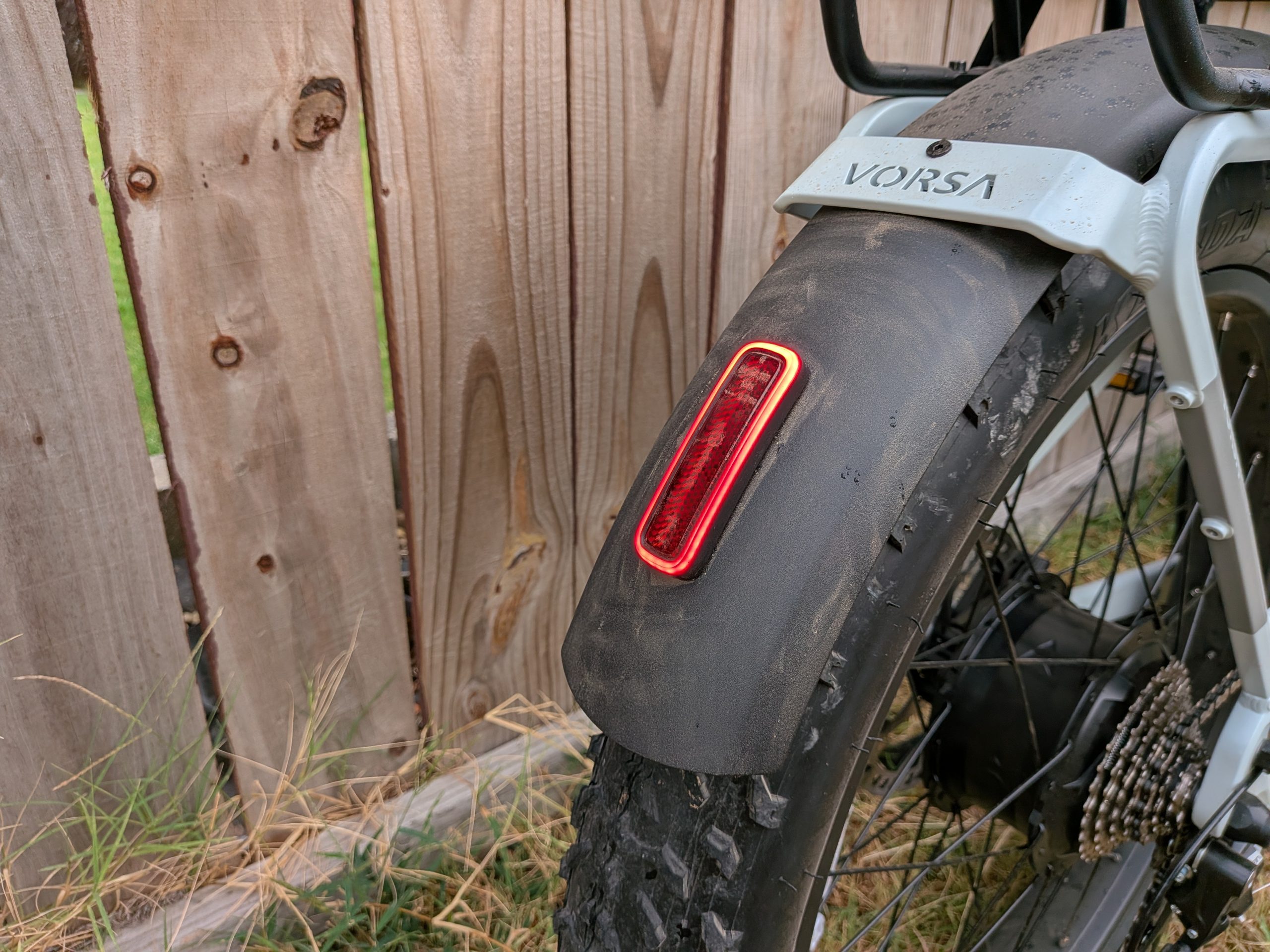
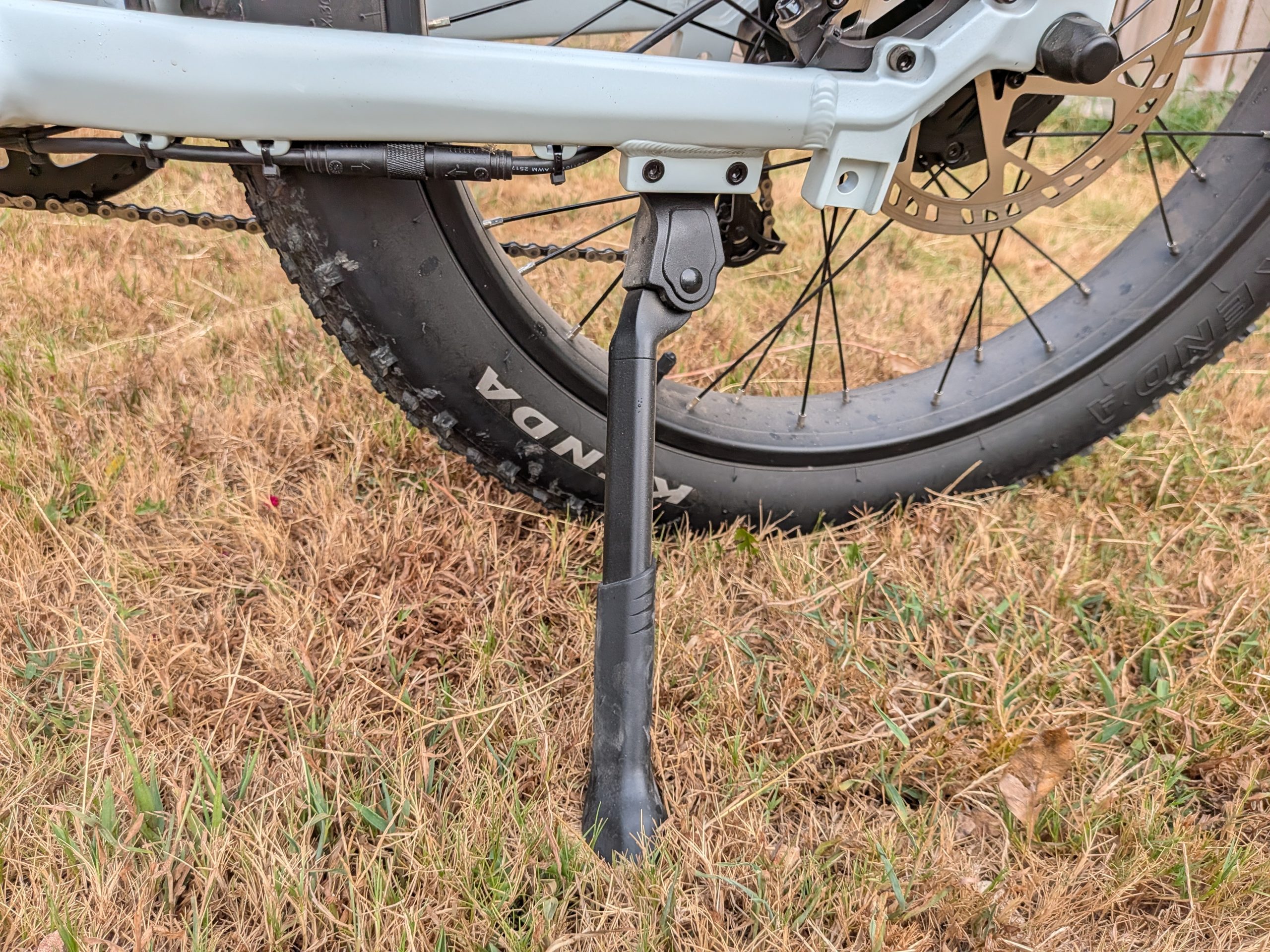
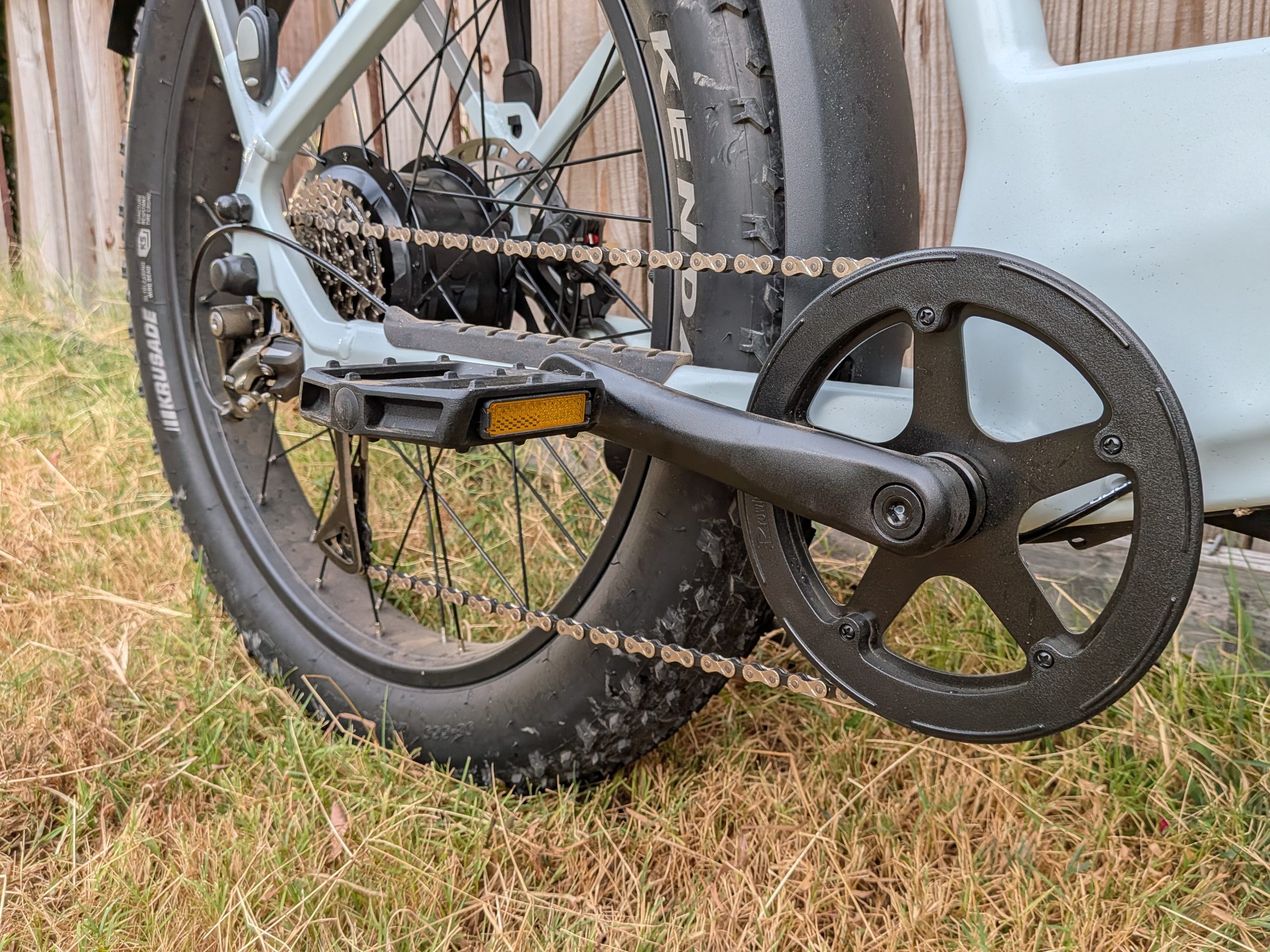
The 100 lux headlight runs off the main battery, and the tail light is built into the rear fender and brightens when you brake, a detail we always like to see. Both fenders are metal, the cables route cleanly through the frame, and you also get two sets of bottle cage mounts, plastic platform pedals, a rear-mounted kickstand, and a rubber chainstay protector. In the box, Ride1Up includes a beanie, maintenance grease, a couple of wrenches, and an Allen key set that’s actually nice enough to keep in your tool drawer.
Frame, Options, and Fit
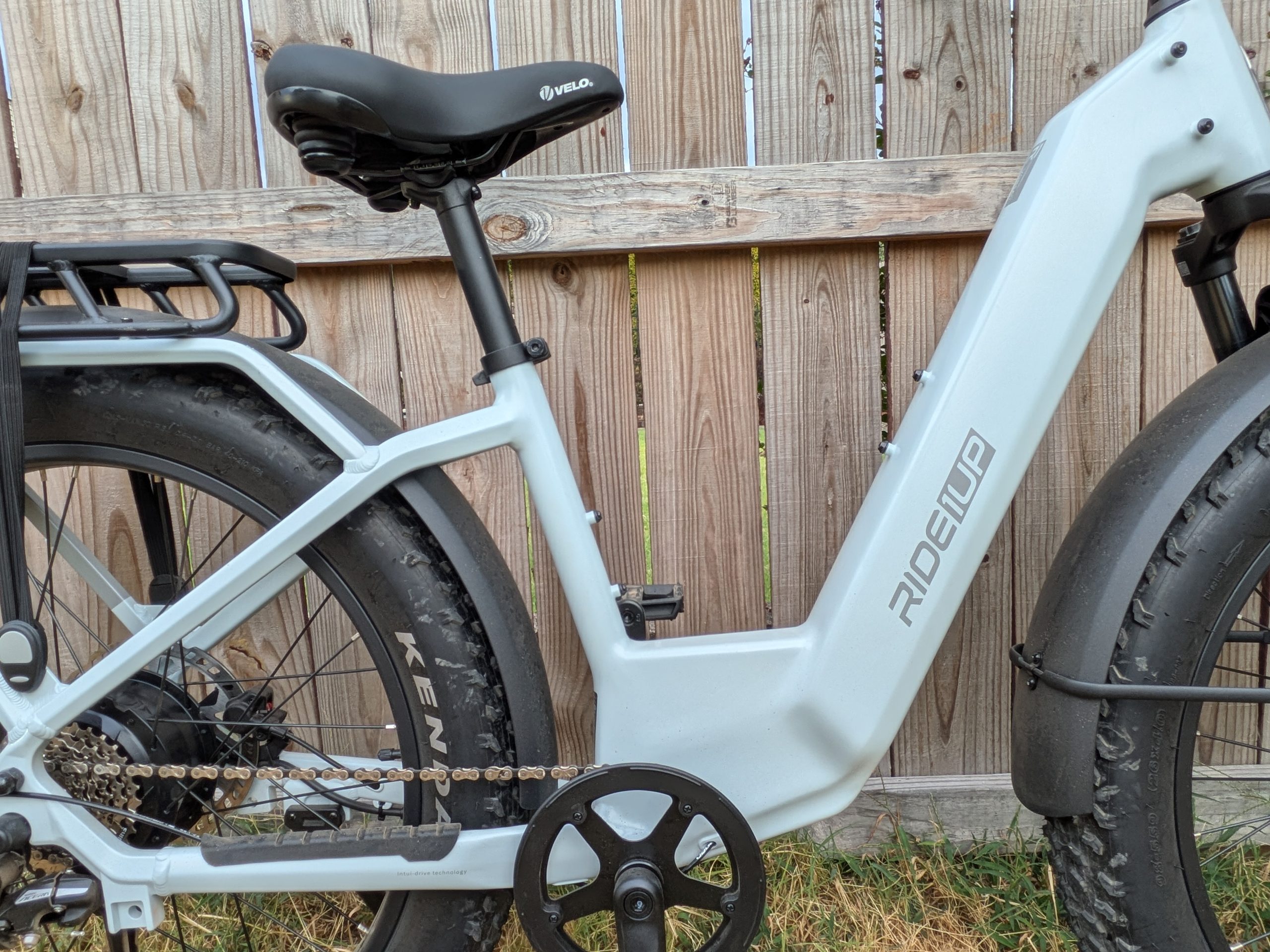
You get a choice between the step-thru and the high-step, which Ride1Up calls the XR, and we prefer the step-thru for its much lower standover, which makes a big difference when you’re carrying cargo or a passenger and need to swing a leg over. The swept-back bars and adjustable stem let you sit upright for comfort or lower for a sportier position, and fit and finish are a highlight, with smooth welds all the way around until you reach the rear triangle and a paint-matched battery. Colors are Glacier, Slate, and Snow, which is the color on our test bike.
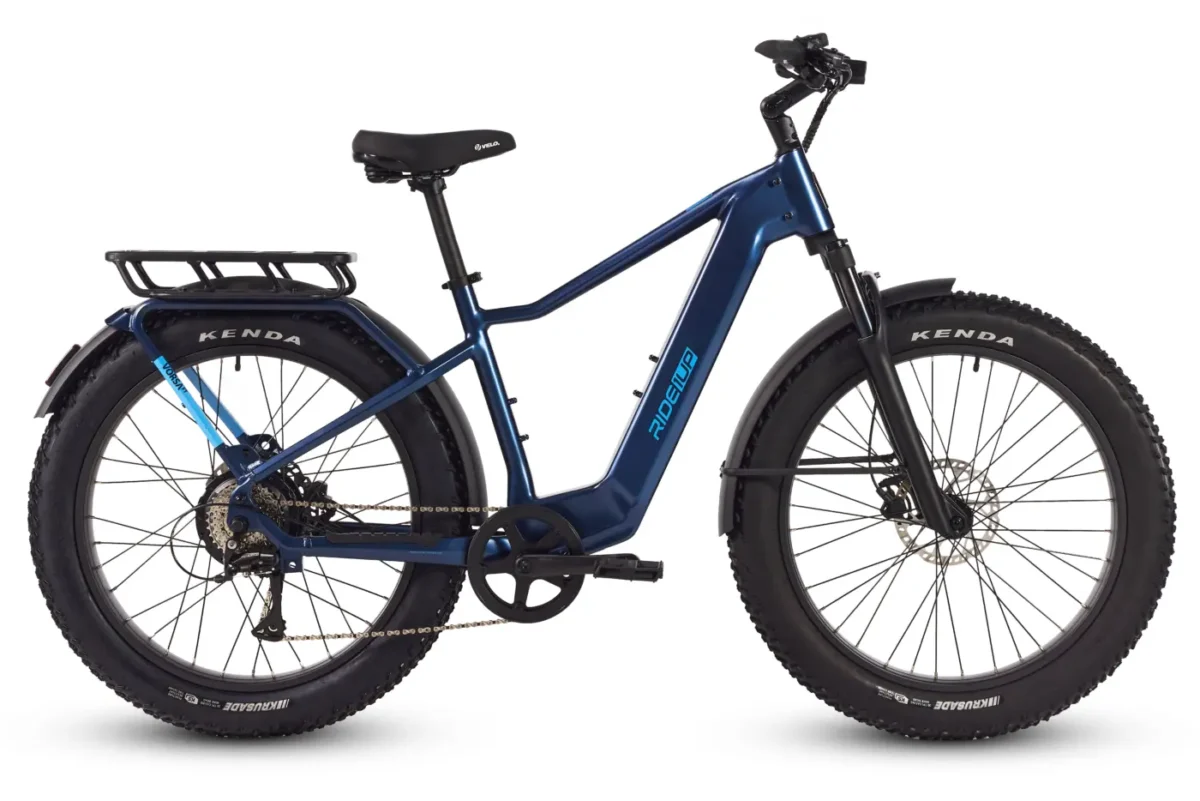
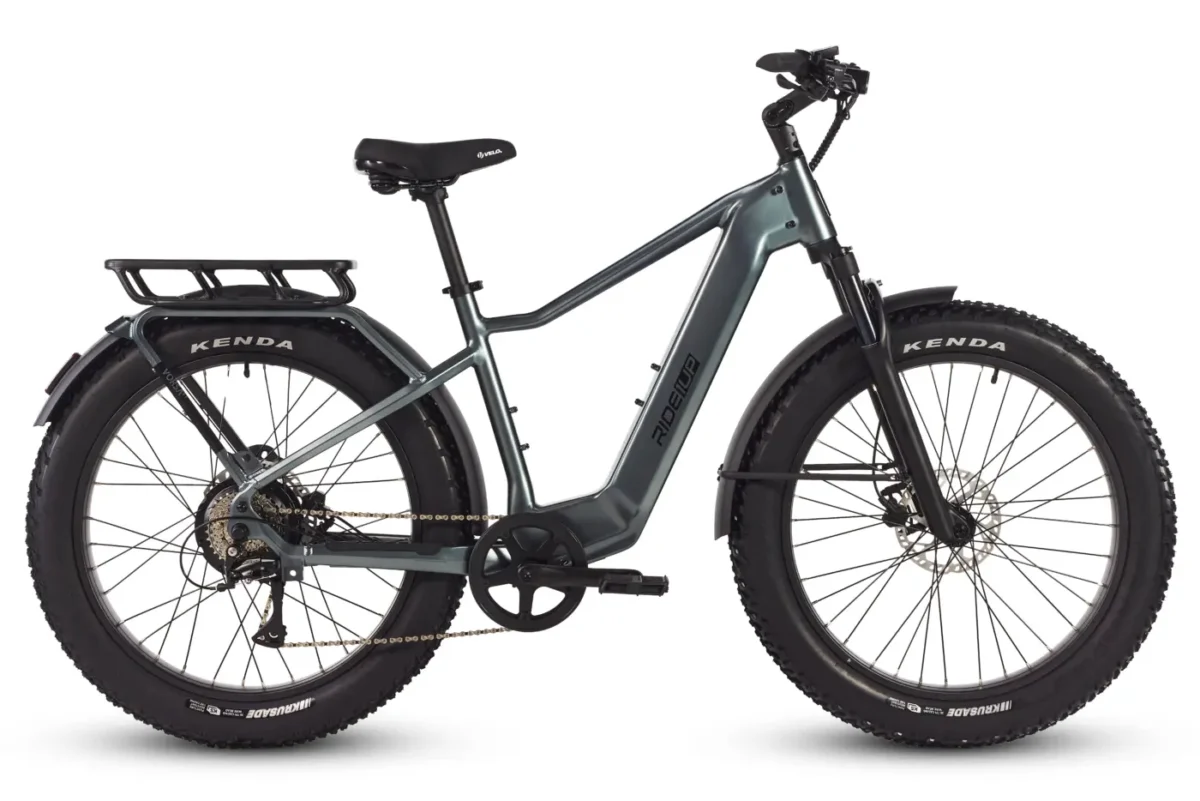
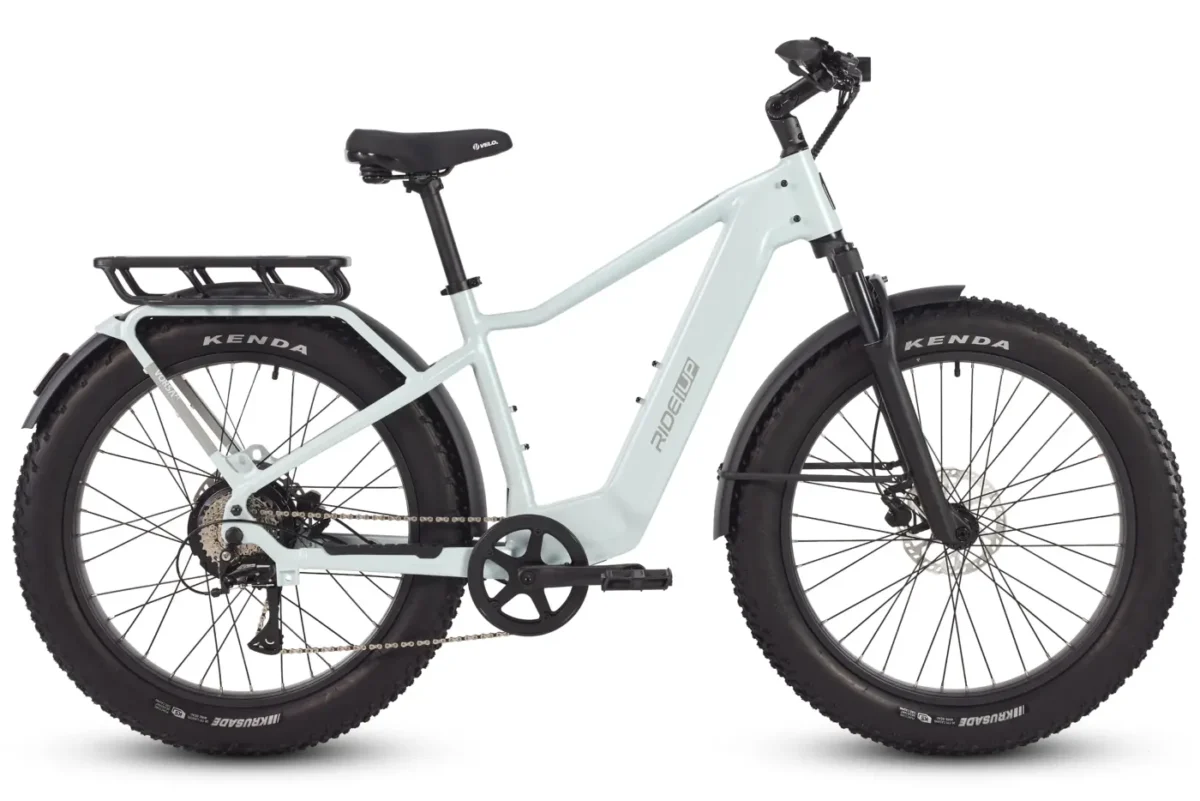
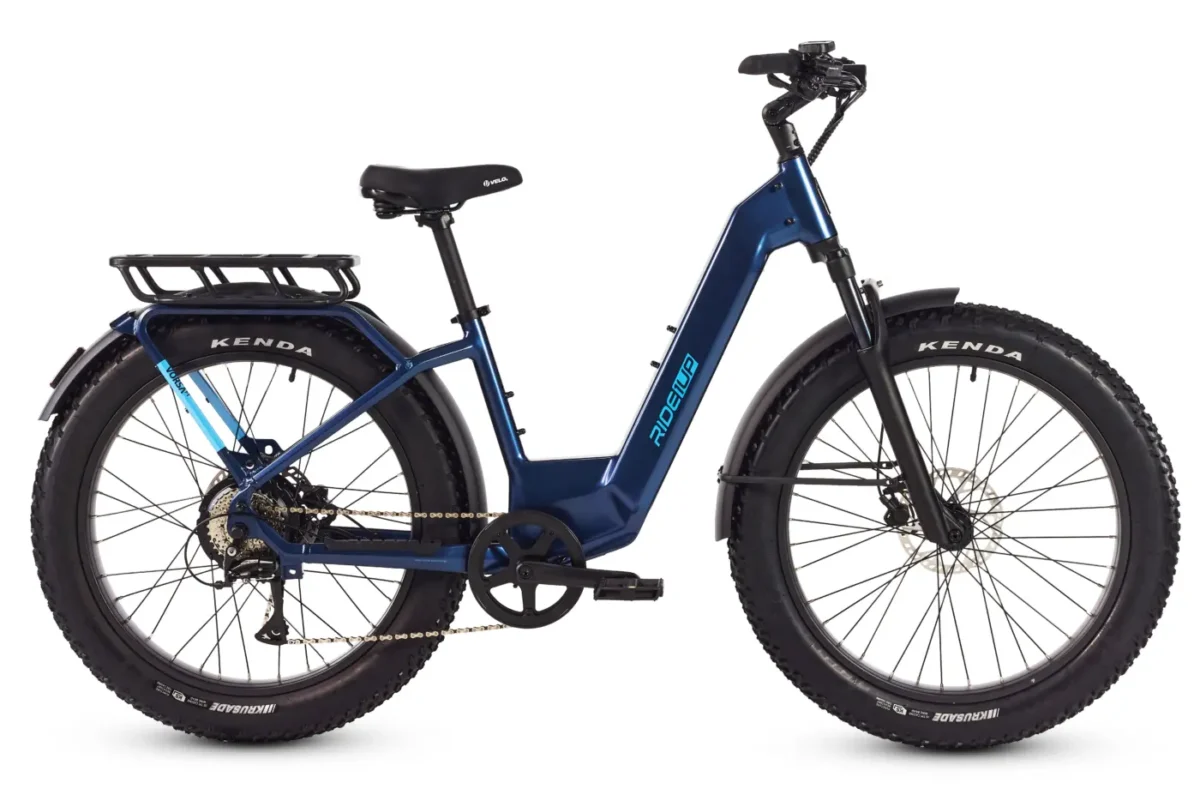
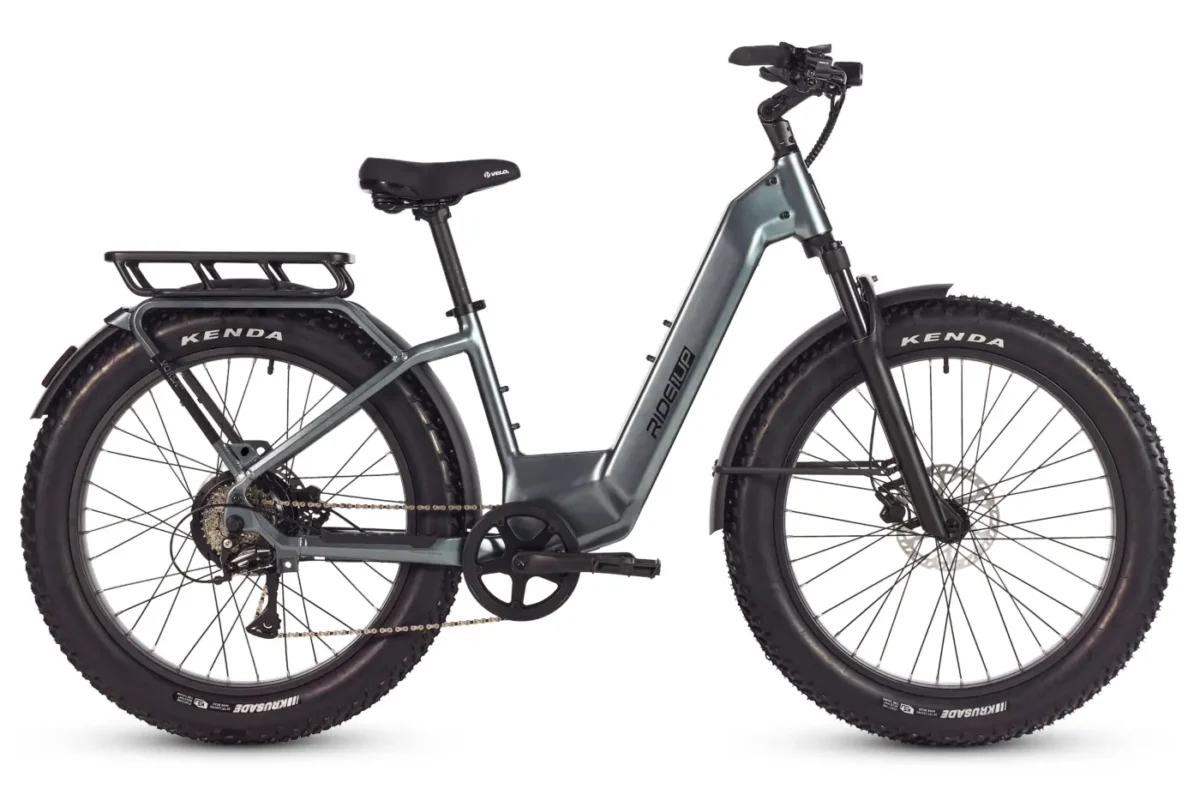
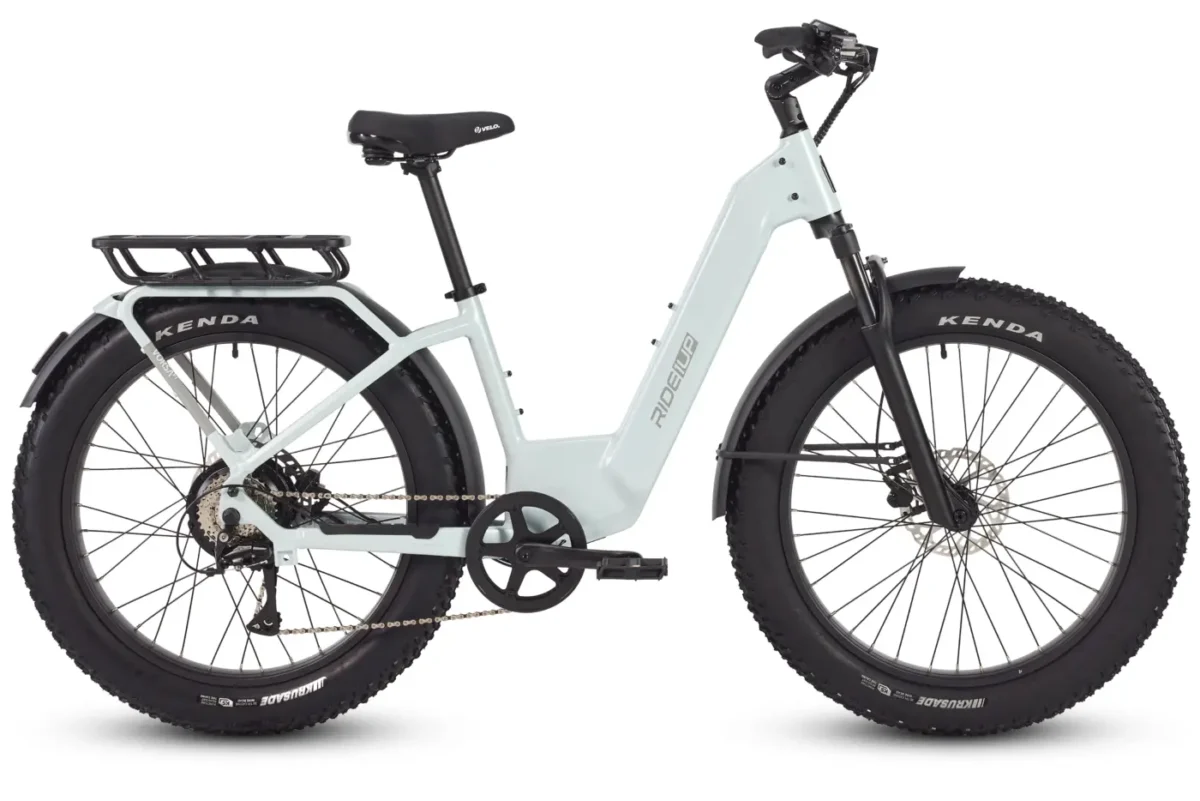
Each frame style comes in a single size, as you’d expect at this price, so the listed rider ranges matter. The step-thru’s range is conservative, though. A 6-foot rider still got full leg extension, so taller riders who want the lower frame shouldn’t rule it out. It’s also a heavy bike. The FT weighed 84 lbs with the battery on our scale, 7 lbs more than Ride1Up’s listed weight with add-ons, so plan around our number. You’ll find the listed rider heights and seat height ranges for both frames in the table below.
| Category | Ride1Up Vorsa FT |
|---|---|
| Total Weight w/ Battery & Accessories (our scale) | 84 lbs |
| Weight without Battery (our scale) | 75 lbs |
| Claimed Weight | 72 lbs (77 lbs with add-ons) |
| Payload Capacity | 440 lbs |
| Rider Height Range | ST 5'0"-5'11" | XR 5'5"-6'4" |
| Standover Height | ST 18.66" | XR 29.21" |
| Wheelbase | ST 43.6" | XR 43.5" |
| Seat Height Range | ST 27.5"-38.9" | XR 31.37"-40.7" |
Ride1Up Vorsa FT Specifications
Here’s the full component list for the Vorsa FT, pulled from Ride1Up’s product page and checked against our test bike.
| Component | Ride1Up Vorsa FT |
|---|---|
| Price | $1,695 ($1,545 on sale at time of filming) |
| Type | Fat Tire Ebike |
| Class | 1/2/3 plus off-road mode (ships in class 2) |
| Weight Capacity | 440 lbs |
| Top Speed | 28 mph |
| Motor | 750W AKM rear hub, 95Nm torque |
| Battery | 48V 15Ah (720Wh), Samsung 50GB 21700 cells |
| Claimed Range | 30-60 miles |
| Charger | 2A, about 7.5 hours from empty |
| Display | Color display, USB-C charging, Apple Find My |
| Sensor | MIVICE torque + cadence (selectable) |
| Throttle | Left-hand thumb throttle |
| UL Certifications | UL 2849 (electrical system), UL 2271 (battery) |
| Shifter | Shimano Acera 8-speed trigger |
| Derailleur | Shimano Acera 8-speed |
| Chainring | 48T |
| Cassette | Shimano Acera 11-32T, 8-speed |
| Brakes | Star Union two-piston hydraulic disc |
| Levers | Hydraulic with motor cutoffs |
| Rotors | 180mm front, 203mm rear |
| Frame | Step-thru (ST) or high-step (XR), one size each |
| Fork | 100mm coil, preload adjustment, hydraulic lockout |
| Axle | Front thru-axle |
| Tires | Kenda Krusade 26" x 4" with thorn protection |
| Handlebars | 680mm riser, 30mm rise, 10° sweep |
| Grips | Velo ergonomic locking grips |
| Stem | 0-60° adjustable, 90mm extension |
| Saddle | Velo comfort saddle |
| Seatpost | 31.6mm x 350mm |
| Pedals | Plastic platform |
| Fenders | Front and rear metal fenders |
| Rear Rack | 150 lb capacity, Connect+ compatible, passenger kit available |
| Kickstand | Included, rear mounted |
| Lights | 100 lux stem-mounted headlight, fender-integrated brake light |
| Colors | Glacier, Slate, Snow |
Real World Performance Testing
Throttle Acceleration
We started with a throttle-only run from a stop. The motor ramps in smoothly rather than lurching forward, then pulls hard, with the display showing a peak of 1,470 watts on the way up to speed. Because the bike was set to class 2 for this test, it topped out right at the limit: 19 mph on our GPS and 19.7 mph on the display, holding that speed at around 495 watts once it settled in.
Torque Sensor
We rode the torque sensor in class 3 on stock settings, except for raising the Boost torque ratio to 100 so full motor output is easier to reach. The MIVICE sensor responds the moment you push harder, and each assist level raises the baseline, so you always feel how much help you’re getting. Eco starts at about 26 watts with easy pedaling, enough to cruise just under 10 mph. Moderate effort brought it to around 100 watts and 12 mph, and pushing hard enough to feel a good burn in our legs capped it at 200 watts and 17 mph. Tour makes 100 watts the base, and more effort lifts it to 250 to 300 watts in that 15 to 17 mph zone.
Sport raises the base to 200 watts. A little more push brought us to 18 mph, a speed we could hold for a decent stretch, and a stronger push crested 20 mph. Turbo starts around 350 watts, so cruising just below 20 mph is easy, and moderate effort brought 24 to 25 mph with the display showing 400 to 450 watts. In Boost, very easy pedaling drew 500 to 600 watts and the speed kept creeping toward the max. Holding 24 to 25 mph is very easy, and really digging in pulled the same 1,400 watt peak we saw on throttle, enough to reach 27 to 28 mph. It takes a bit of effort, but riding at those higher speeds is very doable.
Cadence Sensor
Once the cadence sensor is active, a C replaces the T on the display. We turned the stock amp output values down significantly before riding, to the settings below. Because this is a current-based system, each level sets how much power the motor delivers, and the motor will push you as fast as that power allows, up to the max speed.
| Assist Level | Amp Output | Approx. Power | Speed |
|---|---|---|---|
| Eco | 10% | 140 W | 14 to 15 mph |
| Tour | 20% | 280 W | 18 mph |
| Sport | 40% | 560 W | 24 mph |
| Turbo | 80% | 1,120 W | 27 mph |
| Boost | 100% | 1,400 W | 28 mph |
That’s why even Eco at 10 percent moves you along at 14 to 15 mph with almost no effort, so newer riders who want a gentler ride should turn it down further. At the other end, Turbo reached 27 mph before we ever touched Boost. The cadence sensor is the easy way to get lots of power with very little work, but given how responsive and customizable the torque sensor is, that’s the setup we’d choose for most riding.
Hill Climb Test
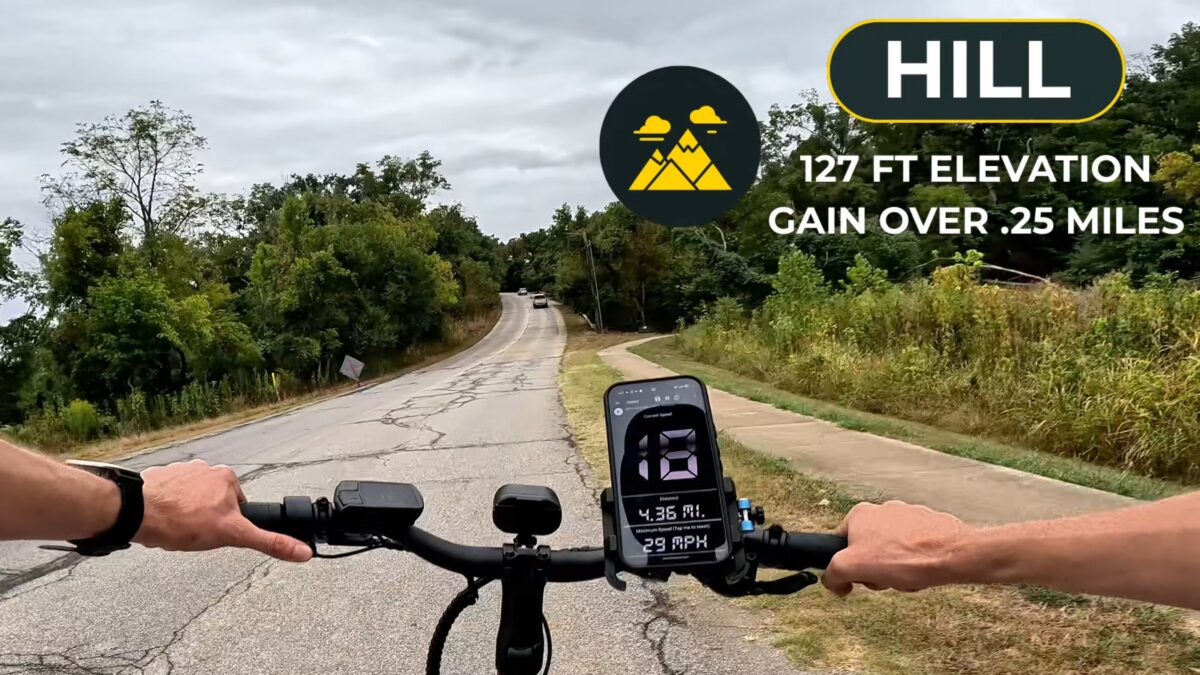
We always run our standard hill climb throttle-only first, then on pedal assist. On throttle, the motor pulled over 1,400 watts the whole way up and never dropped below 12 mph, a strong result for a heavy fat tire ebike. This is also where the motor noise is most noticeable. You can clearly hear it working, and it’s louder than fat tire ebikes that put a quiet ride at the top of their priority list.
Pedal assist is where the torque sensor shows its one weak spot. Even with the Boost torque ratio at 100, Eco through Turbo asked a lot of our legs. Boost made the climb doable at around 600 watts as long as we kept the pedals turning, but we were still crawling up at about 6 mph, because on steep grades it’s harder to pull full motor output through the pedals alone. If you live somewhere hilly, set the Boost torque ratio to 100 and blend in a little throttle as you pedal, which gets you up noticeably faster without giving up the torque sensor’s feel. The cadence sensor is another option, since it delivers its set power no matter how hard you push.
Off-Road Riding
Before heading off-road, we let air out of the tires, which we’d kept near max pressure for the on-road tests, until they felt noticeably softer and could soak up bumps better. We also raised the handlebars for a more upright position, and the difference was immediate. On old, broken-up pavement, the softer tires and the fork worked together to take the edge off every bump, and the fork did more work than we expected from one at this level, though that was with a lighter rider, so heavier riders may notice it less. If your roads are full of potholes, that combination is a real quality-of-life upgrade, even if the saddle feels firm.
On a blue trail with roots and rocks, the motor never struggled in Boost or Sport. Over the chunkiest sections the fork occasionally topped out, and a heavy bike on 4 inch tires isn’t especially nimble in tight terrain, so we wouldn’t push it any further than this, but it handled more than we expected and was simply fun to ride. Where the FT really shines is double track, grass, flat green trails, and gravel, where the wide tires give you plenty of traction and confidence. That’s the terrain it’s built for, and it makes the FT the most capable off-road option in the Vorsa lineup.
Ride1Up Vorsa FT vs Aventon Aventure 3
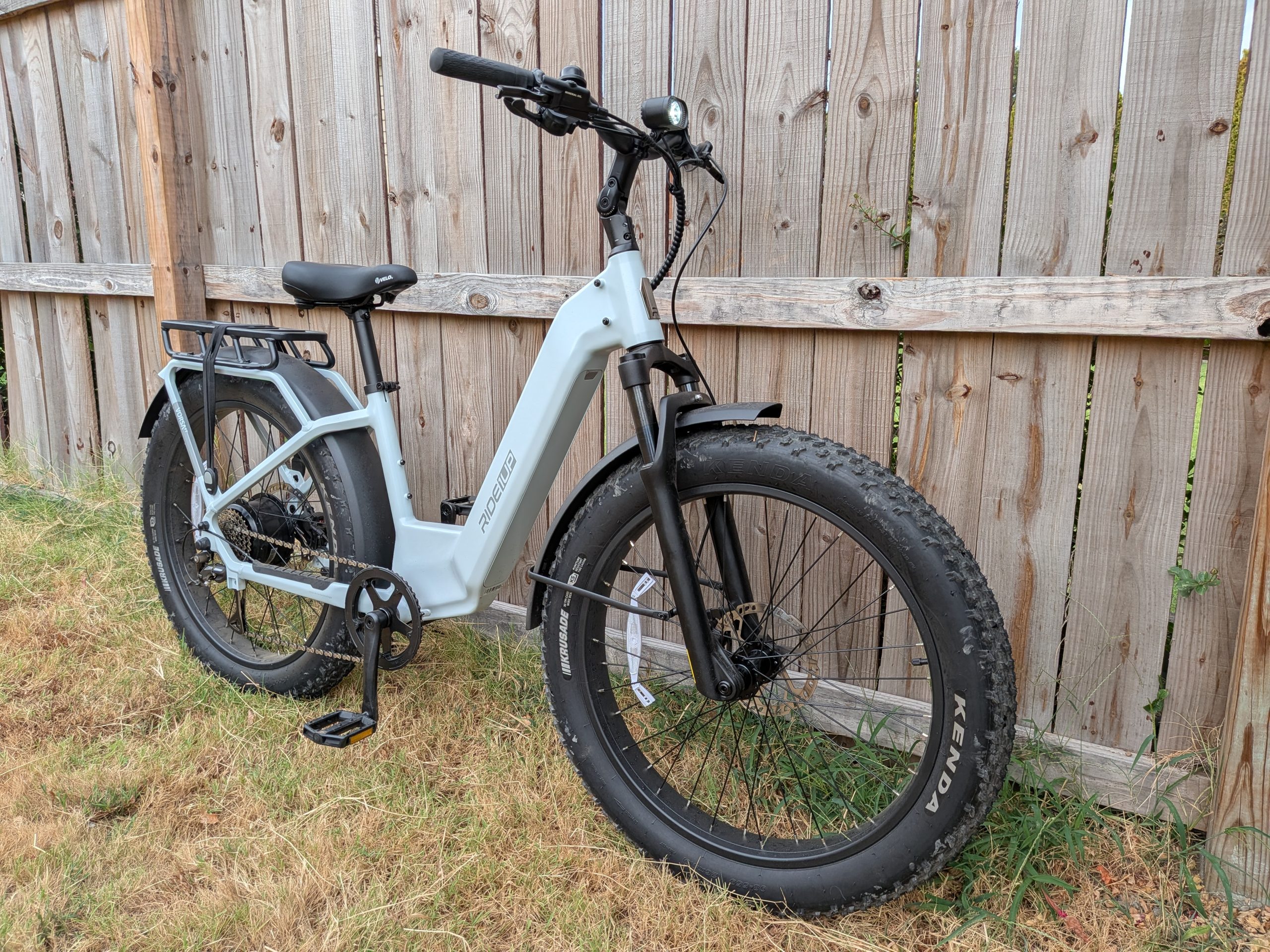
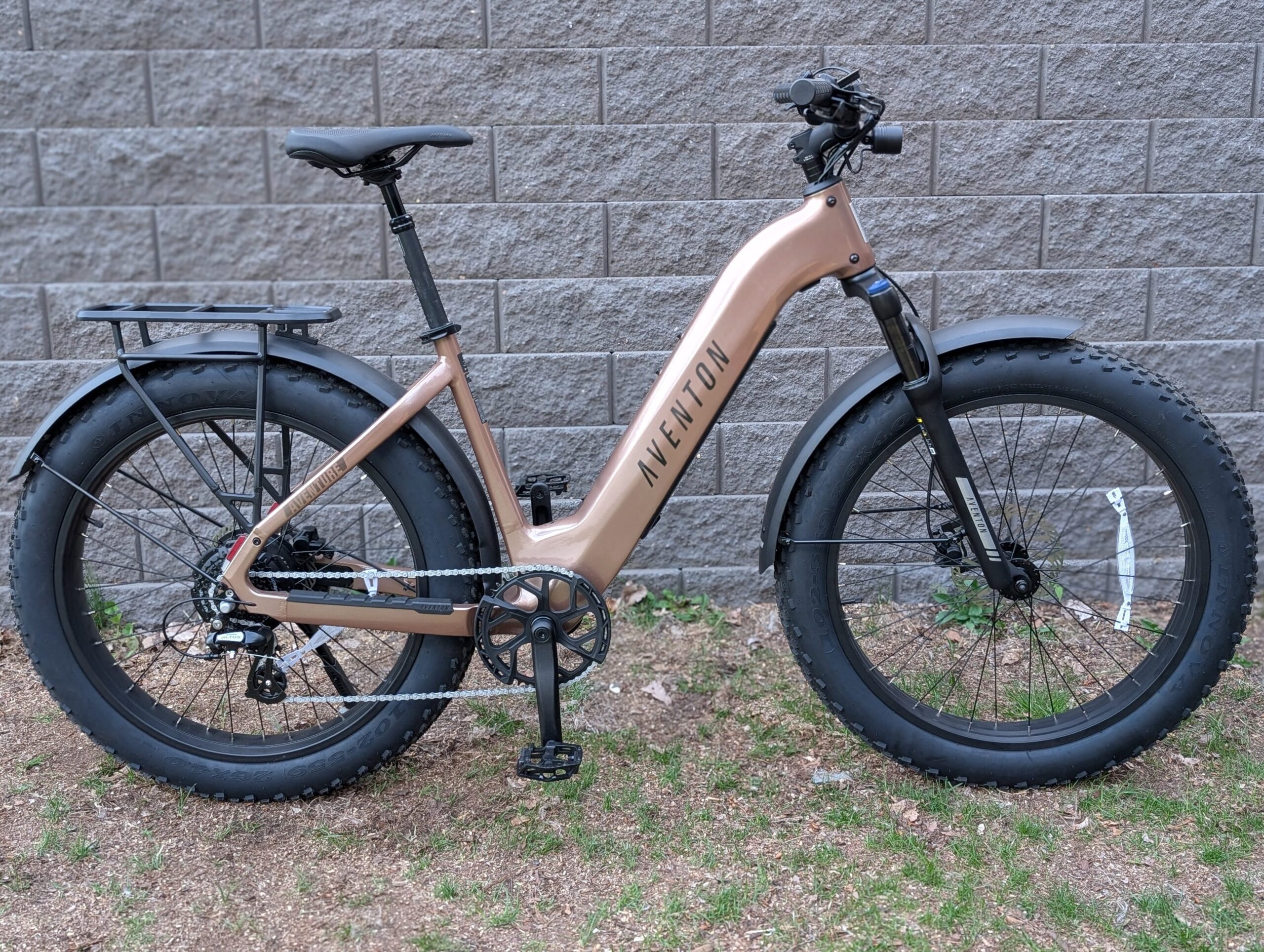
If you’re shopping fat tire ebikes around $2,000, the Aventon Aventure 3 is almost certainly on your list, since it’s one of the most popular fat tire ebikes out there. Here’s how the two line up.
| Ride1Up Vorsa FT | Aventon Aventure 3 | |
|---|---|---|
| List price | $1,695 | $1,999 |
| Motor | 750W AKM hub, 95Nm | 750W hub (1,188W peak), 80Nm |
| Battery | 48V 15Ah (720Wh) | 36V 20Ah (720Wh) |
| Charger | 2A, about 7.5 hours | 4A, about 5 hours |
| Pedal sensors | Torque or cadence (selectable) | Torque |
| Fork | 100mm coil, lockout | 80mm, preload and lockout |
| Brakes | Star Union, 180mm / 203mm rotors | Tektro, 180mm rotors |
| Derailleur | Shimano Acera 8-speed | Shimano Altus 8-speed |
| Rear rack | 150 lbs, Connect+ | 59 lbs, MIK compatible |
| Payload capacity | 440 lbs | 400 lbs |
| Weight | 84 lbs (measured) | 76 lbs |
| Sizes | One size per frame style | Two sizes per frame style |
| Tech | Apple Find My | App, 4G GPS tracking, wheel lock, alarm, geofencing, turn signals |
| Buying and support | Direct to consumer, US-based support | Direct plus a large dealer network |
Where the Vorsa FT pulls ahead is utility and value: more than double the rack capacity, the option of a cadence sensor, and a list price about $300 lower. The Aventure 3 counters with a much deeper tech package, though its connected features carry a $20 yearly subscription after the first year, plus a faster charger, a lighter build, two sizes per frame, and a dealer network where you can test ride one and get local service.
If hauling and value matter most, the Vorsa FT is the pick. If tech, fit options, and dealer support are worth the extra $300, the Aventure 3 is still one of our favorite fat tire ebikes. And if you’re deciding within the Vorsa family, the standard Vorsa is $100 less with narrower 27.5 x 2.6 inch tires that are quicker on pavement, while the Vorsa Lite starts at $1,495 for riders who don’t need a rack.
Ride1Up Vorsa FT Pros and Cons

Final Thoughts on the Ride1Up Vorsa FT
When a fat tire ebike comes in hundreds less than the competition, it’s fair to wonder where the savings came from. With the Vorsa FT, Ride1Up spent money where it shapes the ride and held back where it doesn’t. The MIVICE dual sensors and controller set its ride apart from other fat tire ebikes at this price, and the 150 lb rack, adjustable stem, front rack mounts, and Acera derailleur aren’t found on every fat tire ebike. The trade-offs are easy to live with: a louder motor, a basic fork, a slow charger, one size per frame, and less high-end tech than pricier bikes, though Apple Find My is built in. If you want a great riding experience from an established direct-to-consumer brand with US-based support, the Vorsa FT is well worth a look.
If you’re planning to buy a Ride1Up ebike, please use our Ride1Up link. It costs you nothing extra and helps support our reviews. Thank you!
