

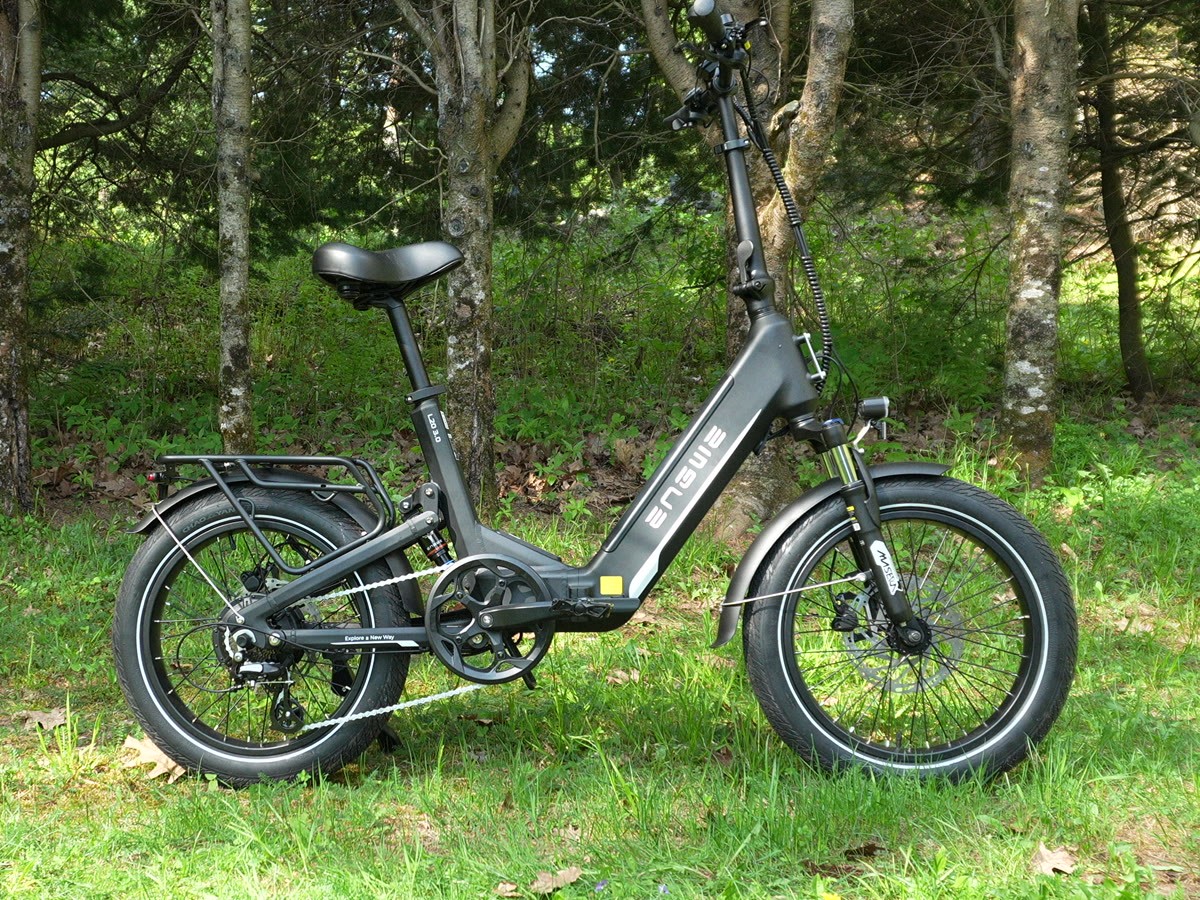
Heavy-duty, high-performance folding ebikes have long been a go-to for RVers and anyone looking for a do-anything option they can transport without a bike rack and easily store. You need to do something special to stand out in this popular category, and the Engwe L20 3.0 brings full suspension, a motor that peaks at 1,500W, components from trusted brand names, and integrated 4G tracking and security features. At $1,599, it’s a folder built for riders who want plenty of power, plus a few features we don’t often see at this price.
On paper, Engwe’s product page makes a strong case, so we set out to see how that spec sheet translates to the real world. In this review, we dive into the standout features, frame and fit, and full specs, then detail our performance results on pavement, up our test hill, and over rough patches. From there, we compare it to one of the most popular folding ebikes on the market and add up the pros and cons to help you decide if the L20 3.0 is the right fit for you.
If our review helps you decide on the Engwe L20 3.0, you can support us by purchasing through our affiliate link. Use code EBIKEESCAPE at checkout for 10% off. Thank you for the support!
Engwe L20 3.0 Video Review
It is hard to capture everything about an ebike in an article. Our video review goes over every component up close, walks through the display menus, how to unlock the top speed, the security features, and the Engwe app. We show you the folding process step-by-step and put you behind the handlebars through our performance tests with first-person footage. See for yourself if the Engwe L20 3.0 matches your riding style.
Standout Features of the Engwe L20 3.0
A Strong Motor With Two Ways to Pedal
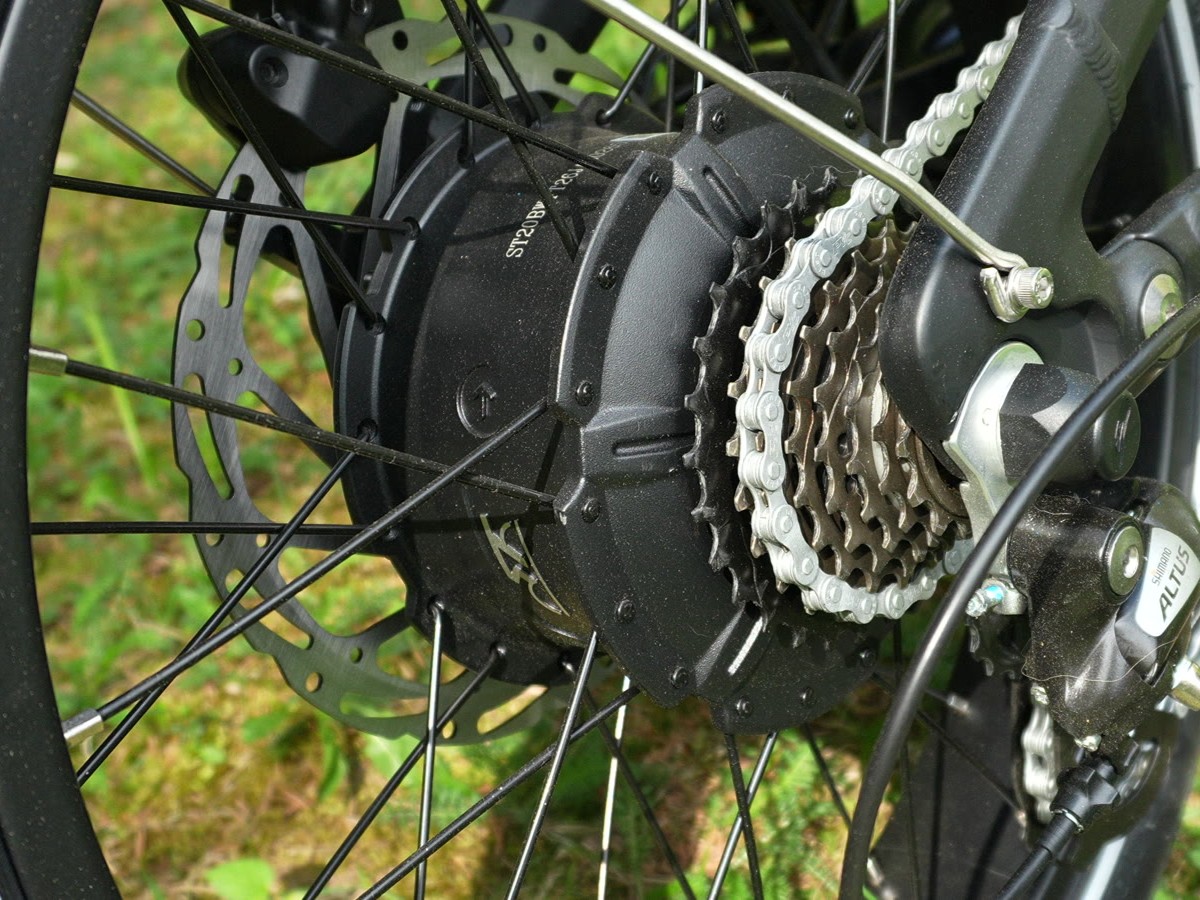
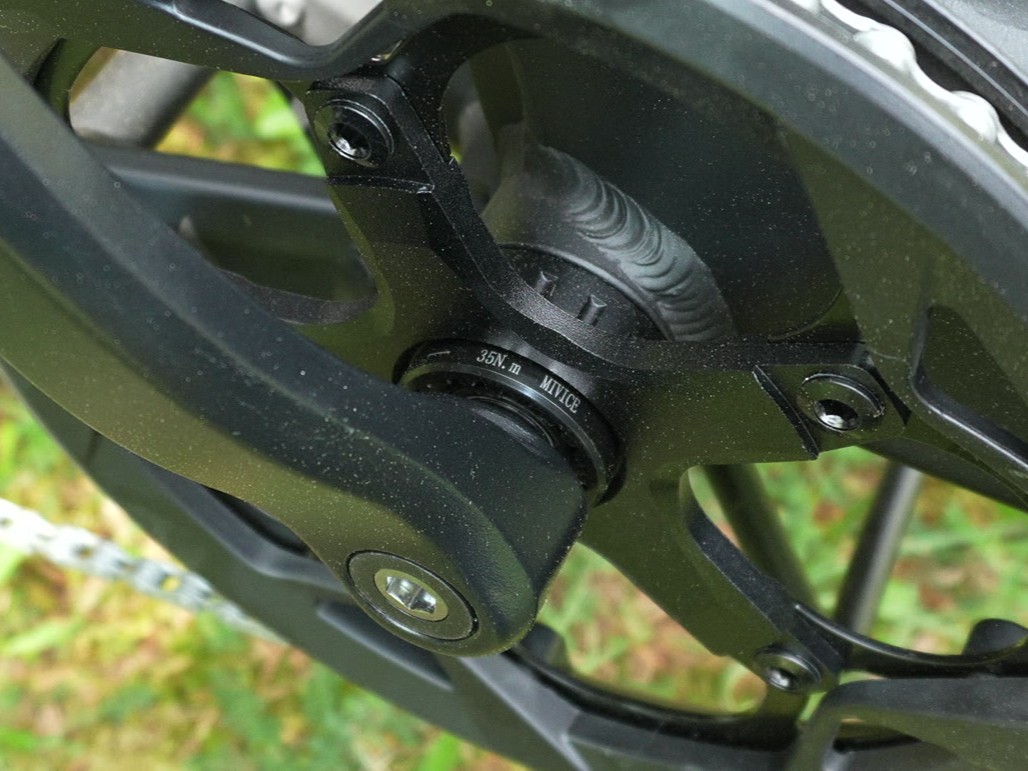
A 750W rear hub motor that peaks at 1,500W with 90 Nm of torque is a lot of motor. How that power shows up is your choice because you can swap between a torque and cadence sensor. The torque sensor is sourced from Mivice, a brand launched in 2017 by M&S E-Driving, a motor maker that spent eight years building electric motors in collaboration with Bosch. It is the default and responds to how hard you press the pedals, which gives the ride a more natural feel, while the cadence sensor can be enabled through the settings and hands over a set amount of help and speed per assist level as long as your feet are turning. Having both on one bike lets it suit a rider who wants a workout as well as one who just wants predictable and easier power.
Two-Hour Charging and a Top-Load Battery
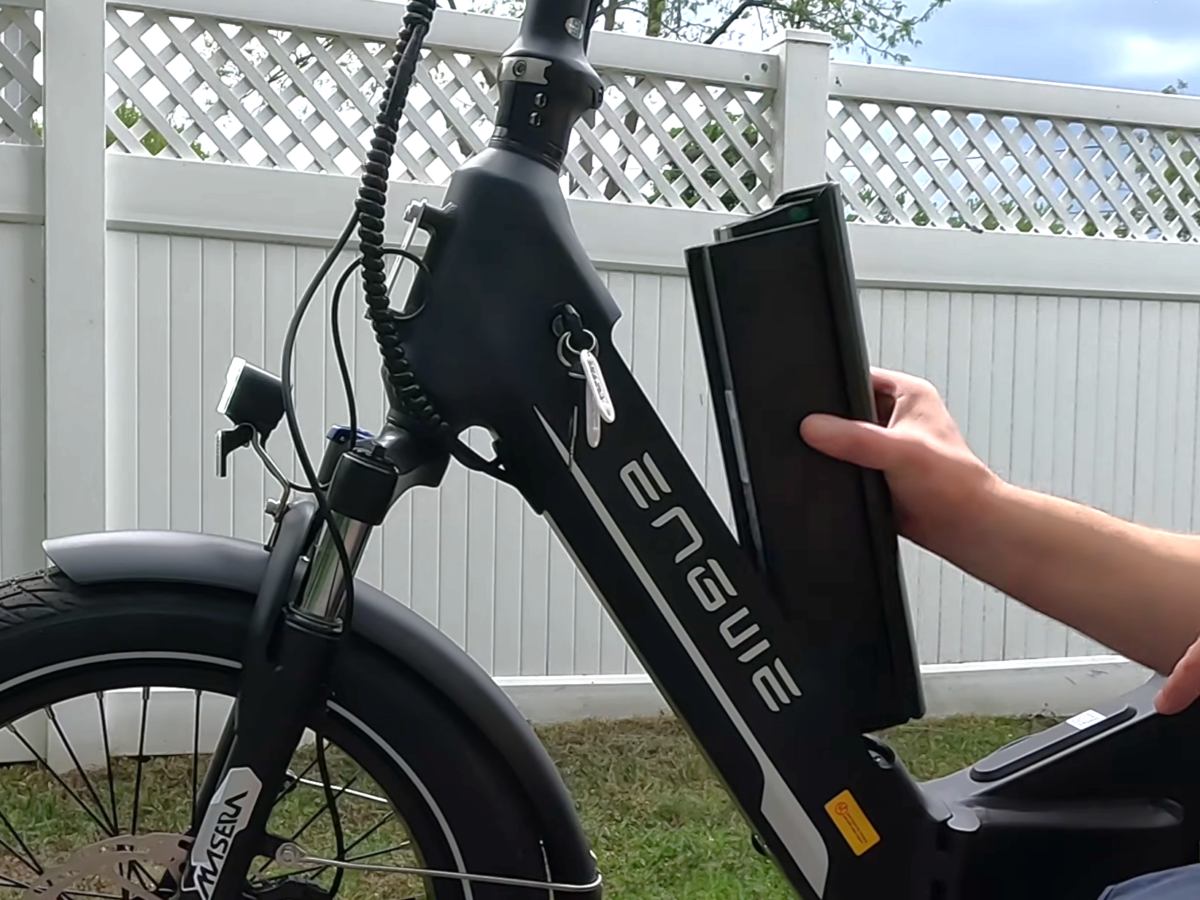
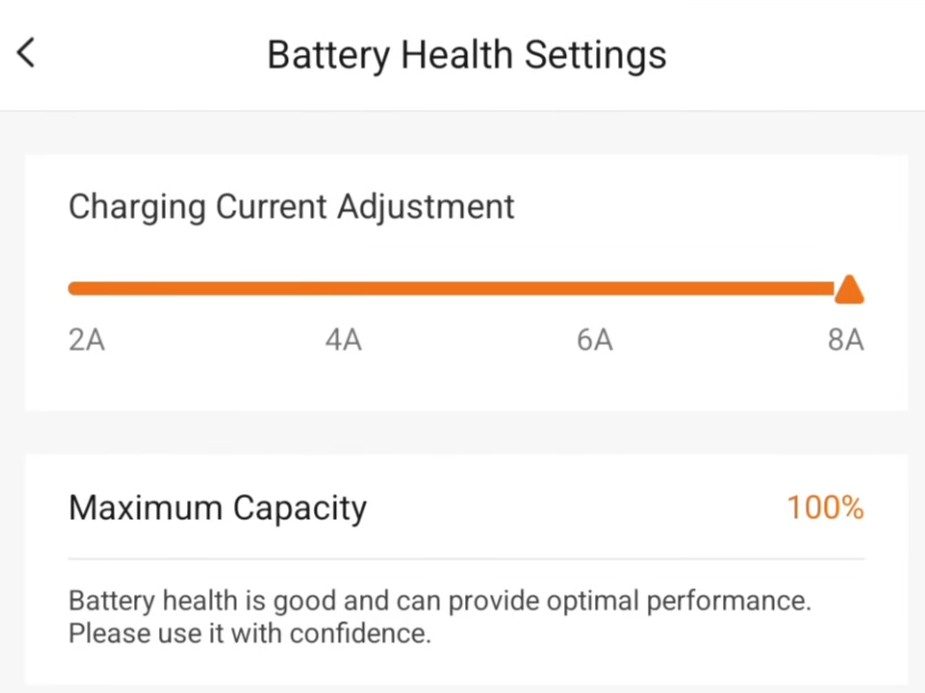
Most ebikes ship with a charger that needs five to seven hours to fill a battery this size. Engwe includes an 8A charger that does it in about two, and the app lets you dial the charging current down as low as 2A when you’re not in a hurry, which is easier on the battery over the long run. The 48V, 15Ah pack lifts out of the top of the frame instead of dropping out the bottom, so there’s no fumbling under the down tube to line it back up, and a port on the side lets you charge it on the bike. Engwe rates it for up to 60 miles in assist level one. If you lean on the higher assist levels or the throttle, plan on something closer to 30 to 35 miles.
IoT Security and the Engwe App
A 4G module built into the bike unlocks remote monitoring and GPS security features. You’ll get a notification on your phone if the bike is moved unexpectedly or when the battery finishes charging, and Find My Bike shows where it is on a map with directions to walk you there. Geofencing lets you set boundaries on a map for where the bike is allowed to ride, and if it leaves that area, the onboard alarm sounds and your phone gets an alert. Most of these features run on Engwe’s IoT service, which is controlled through the app. It’s free for the first year and turns on automatically once you pair the bike, then costs $39.99 per year after the trial ends. The app also covers the everyday stuff: battery level, ride history, remote lock and unlock, the lights, a bell you can ring from your phone, and firmware updates.
Front and Rear Suspension on a Folding Frame
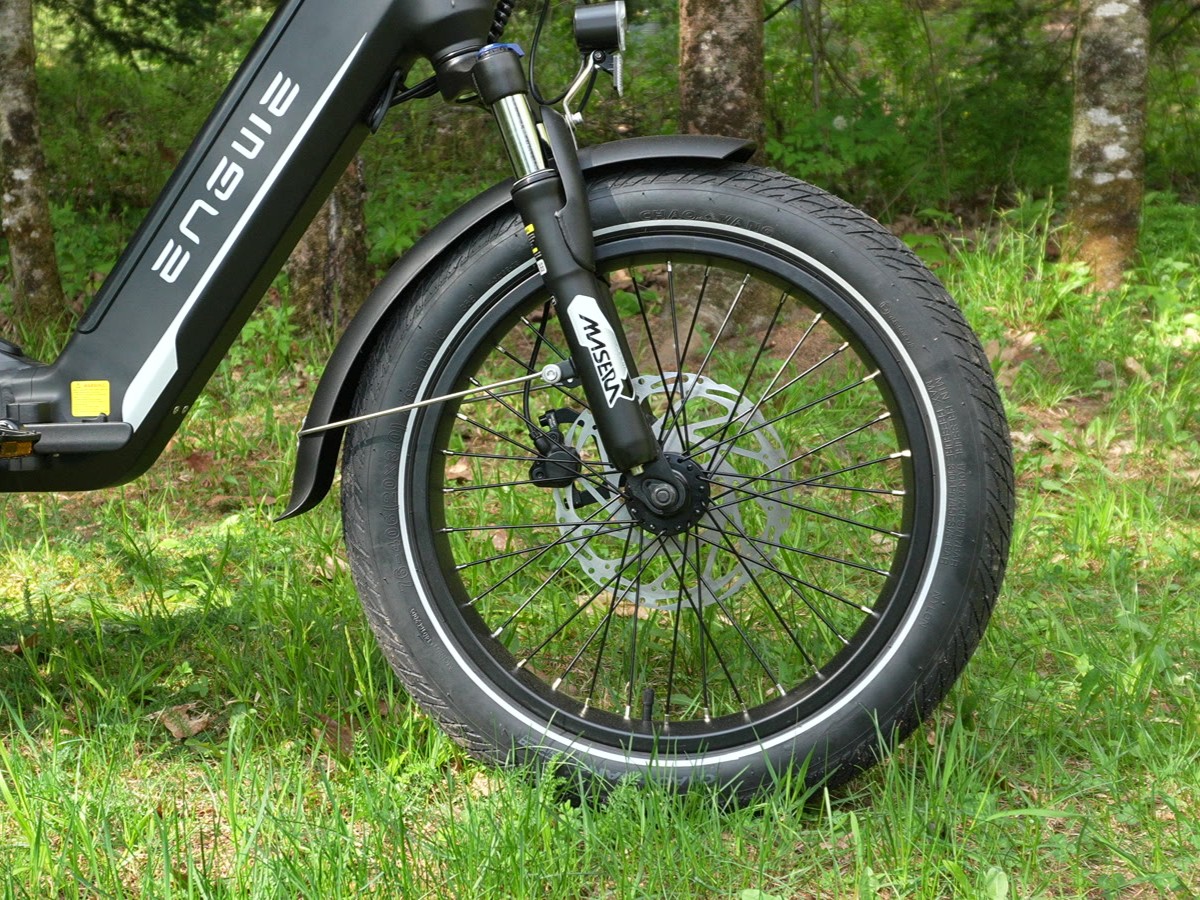
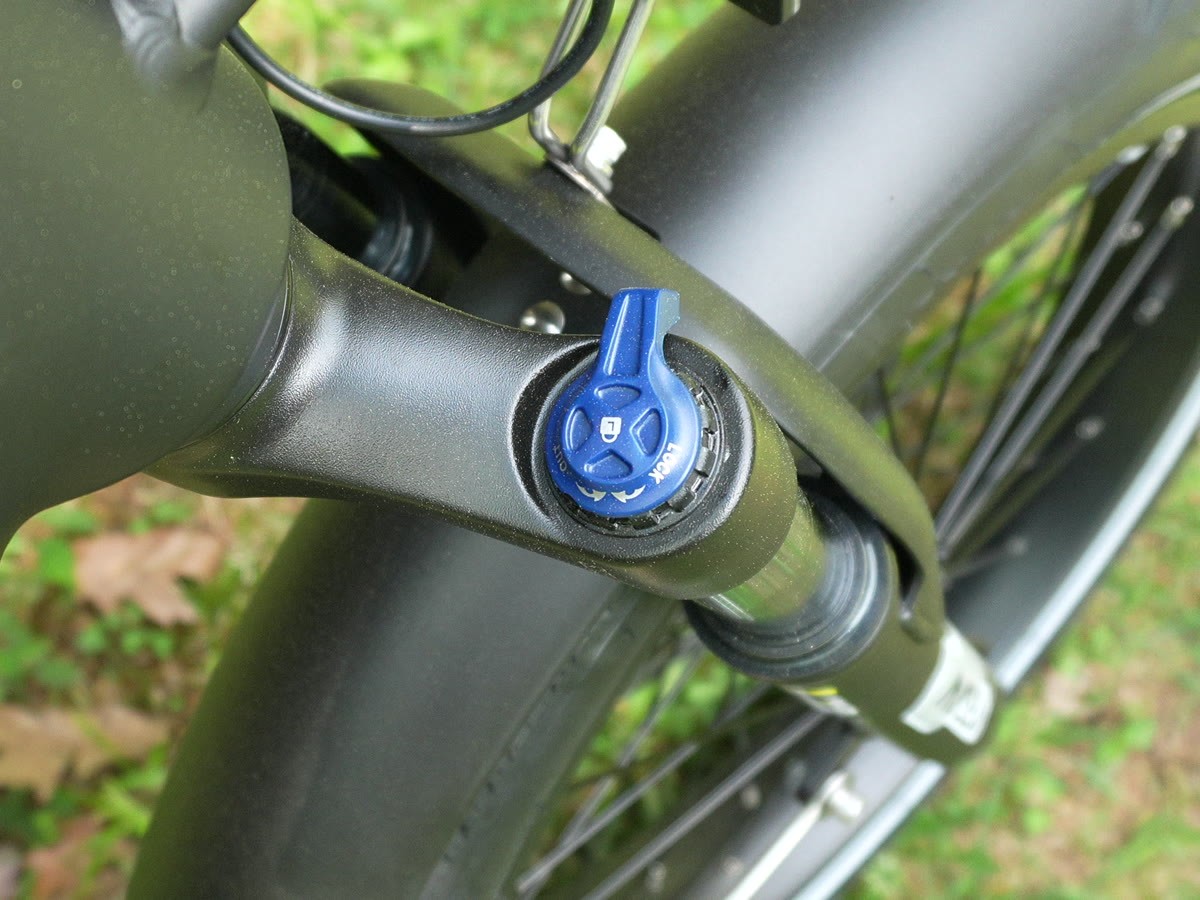
Up front is a Zoom suspension fork with 40mm of travel, a preload adjuster on the left leg, and a lockout on the right. Out back, an Engwe-branded shock adds another 30mm. Both are short-travel pieces meant to take the sting out of potholes, cracked pavement, and railroad crossings rather than rough trails. They work alongside 20 by 3-inch Chaoyang street tires with a 3mm puncture protection layer and reflective sidewalls.
203mm Rotors on Both Wheels
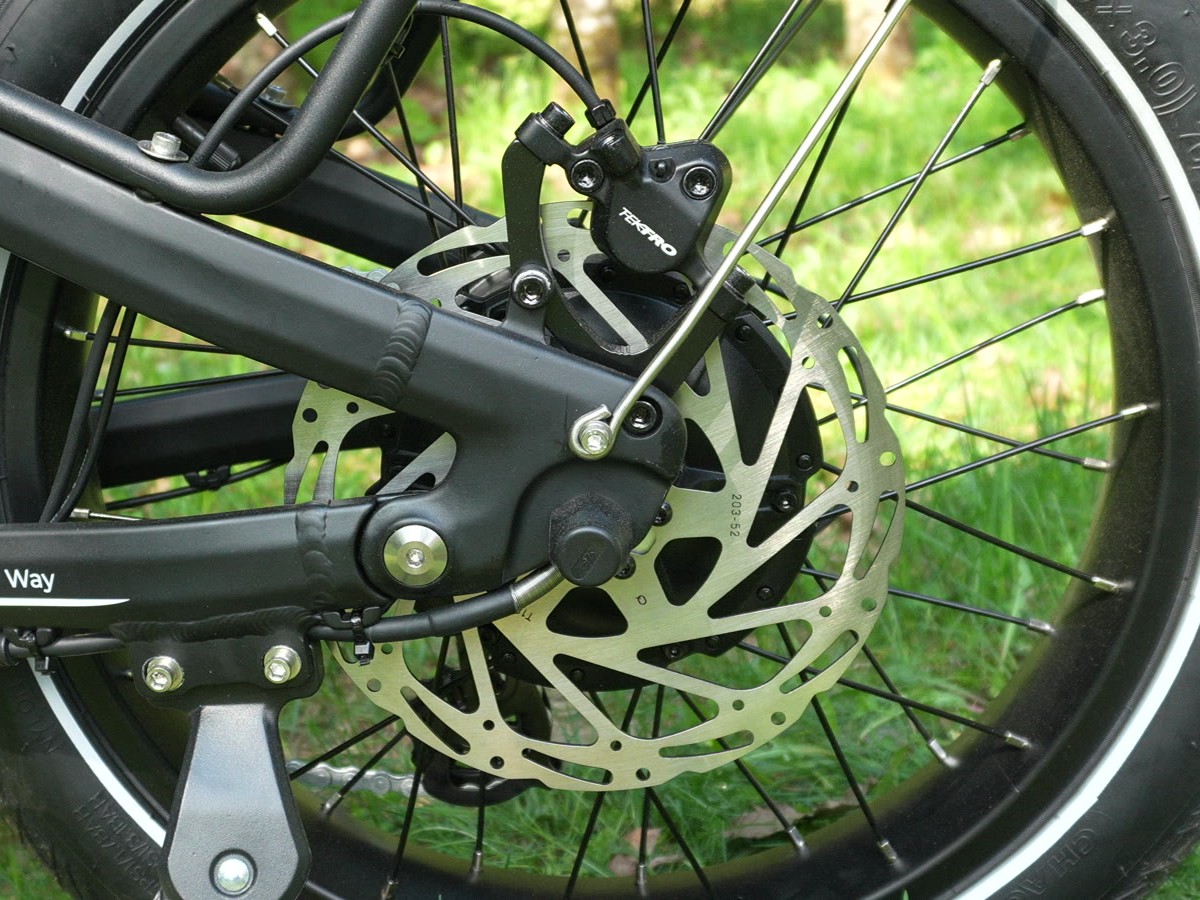
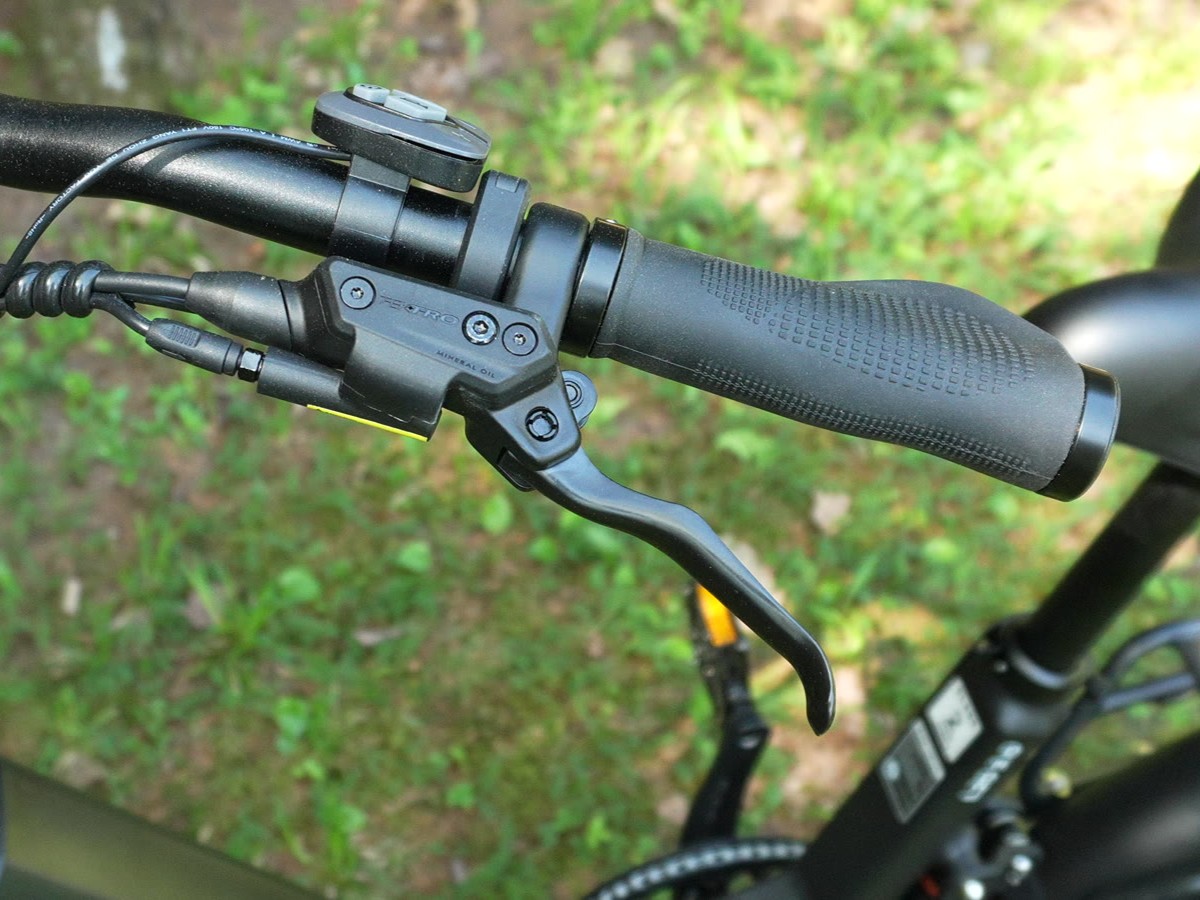
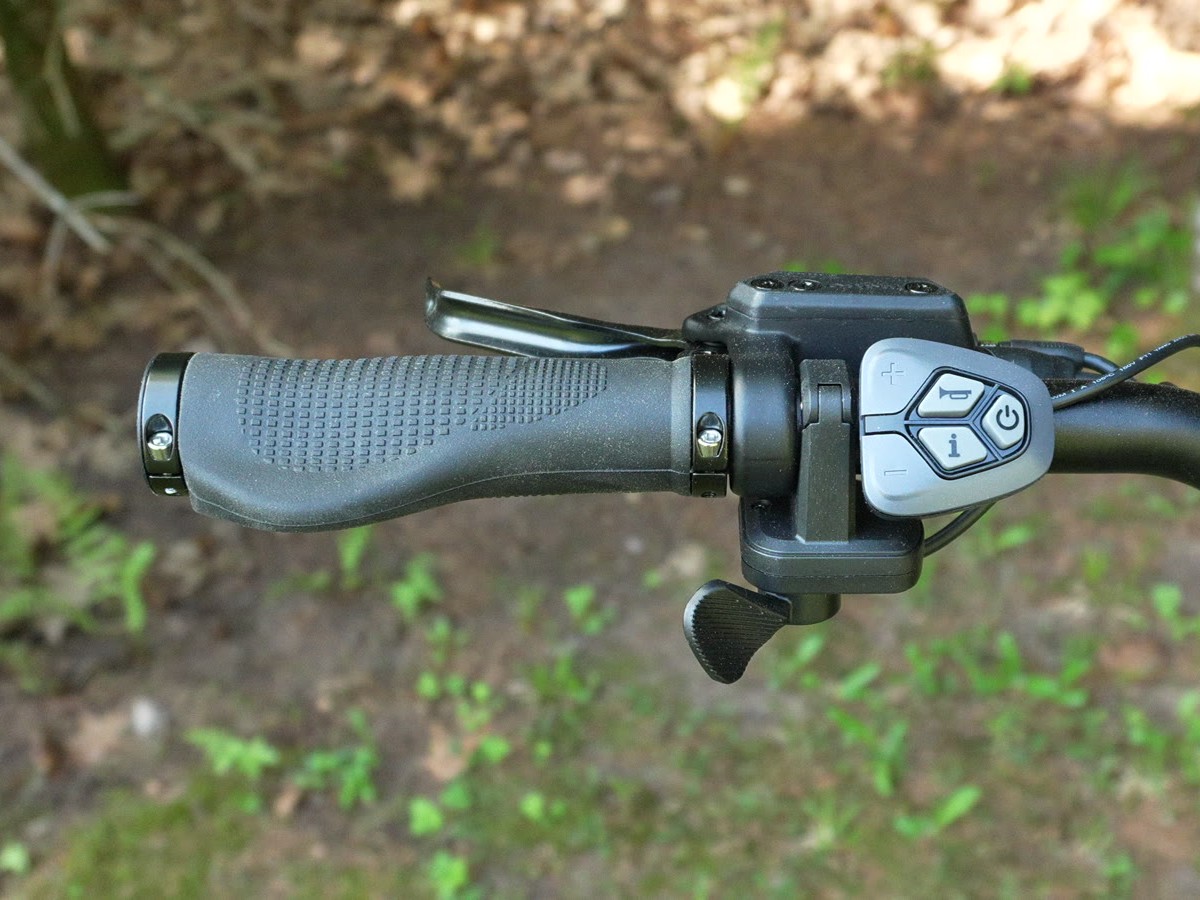
Two-piston Tektro hydraulic disc brakes show up on plenty of ebikes. Pairing them with 203mm rotors front and rear is much less common at this price. A bigger rotor gives the caliper more leverage and more surface to shed heat, which counts on a 76 lb bike that can carry up to 330 lbs and reach 28 mph. The Tektro levers also cut motor power the moment you pull them.
Frame, Sizing, and Options
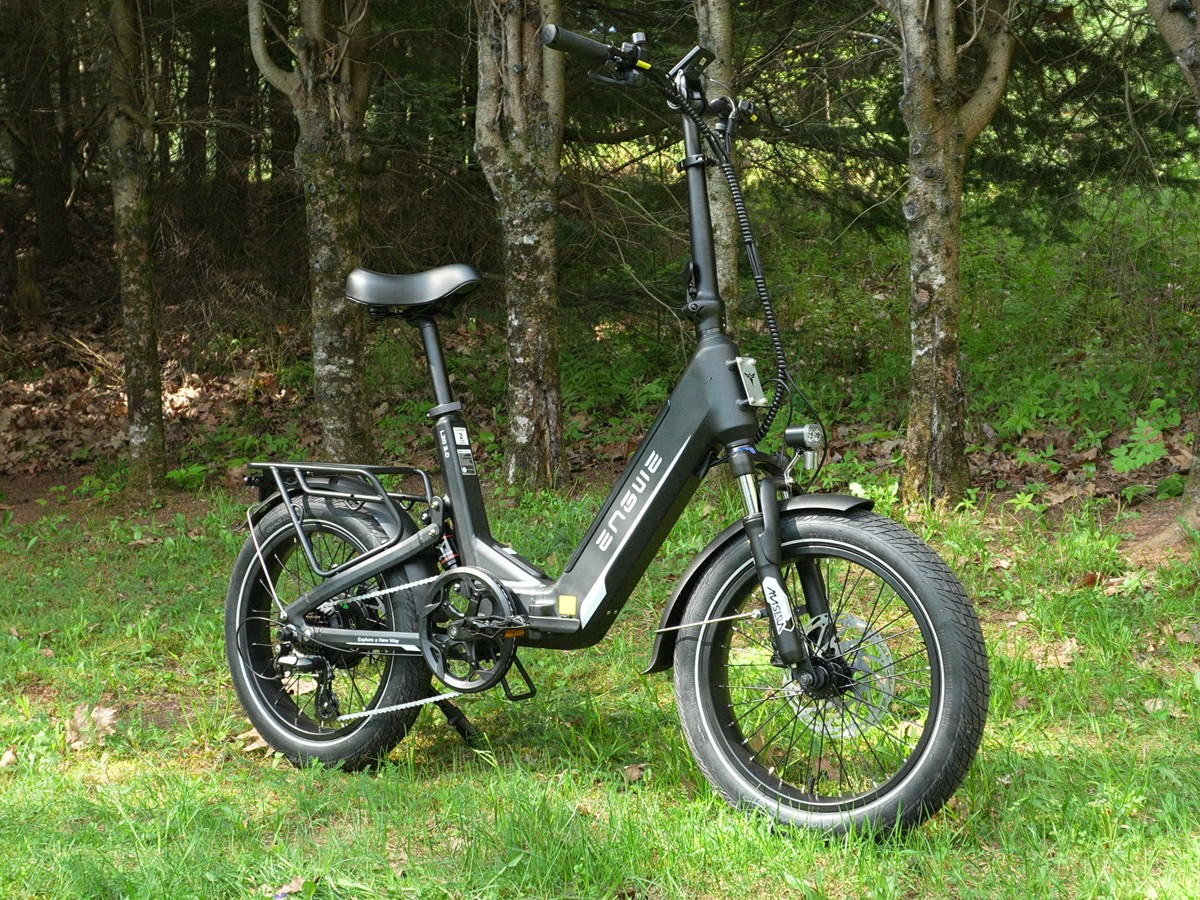
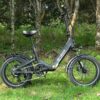
Getting on is easy thanks to a low, wide step-thru window with a standover height of about 15 inches. Cables route underneath the frame, which keeps the look clean. The handlebar stem folds down to the side with a latch and also telescopes, so you can raise or lower the bars to suit your height, and the bars have a slight rise with lock-on ergonomic grips. It comes in one size and two colors, black and champagne.
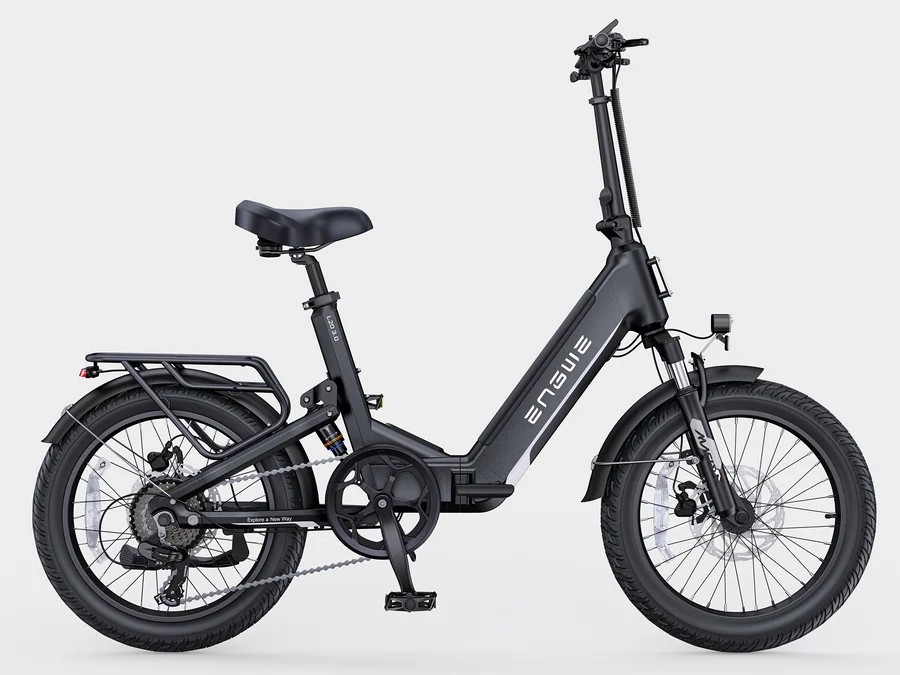
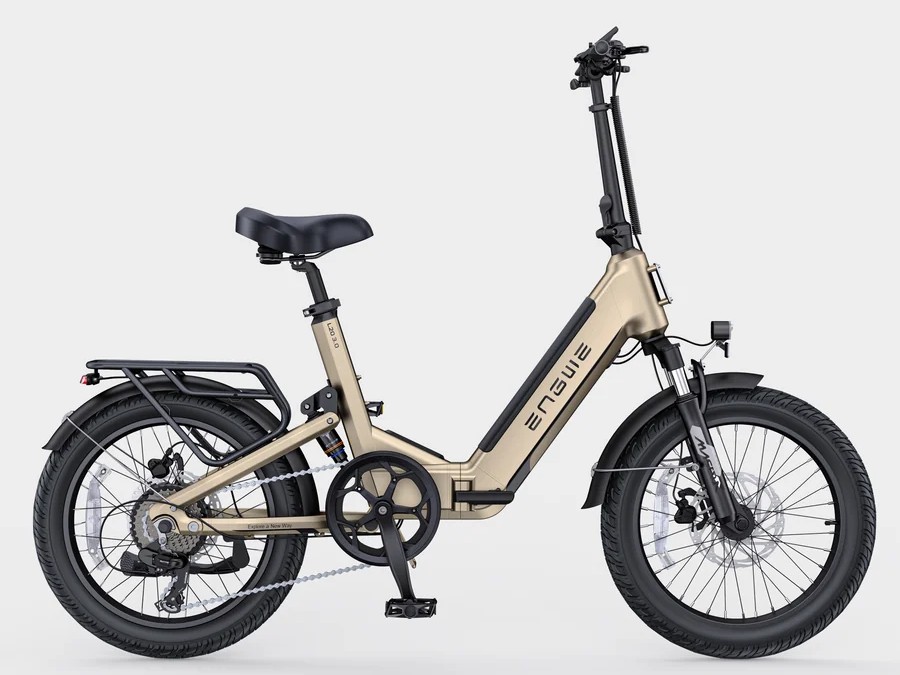
Between the telescoping stem and the seatpost, there’s plenty of room to adjust the fit. A 6’1″ rider with a 33-inch inseam got full leg extension without needing the handlebars at their highest setting. A 5’4″ rider found a comfortable position with the bars in the middle and room left to lower the seat, though she was reaching forward a bit for the grips. It’s a heavy bike to lift, and pulling the top-load battery first takes a real chunk of that weight off before it goes into a car or up a flight of stairs.
| Category | Engwe L20 3.0 |
|---|---|
| Total Weight w/ Battery & Accessories (our scale) | 76.26 lbs (67.9 lbs without battery) |
| Payload Capacity | 330 lbs |
| Rider Height Range | 5'0"-6'2" |
| Standover Height | 15" |
| Saddle Height Range | 32.3"-40.2" |
| Bike Dimensions (Unfolded) | 66.1" L x 43.4" H (handlebar), 44.3" Wheelbase |
| Folded Dimensions | 39.4" L x 20.1" W x 29.5" H |
Folding and Transport
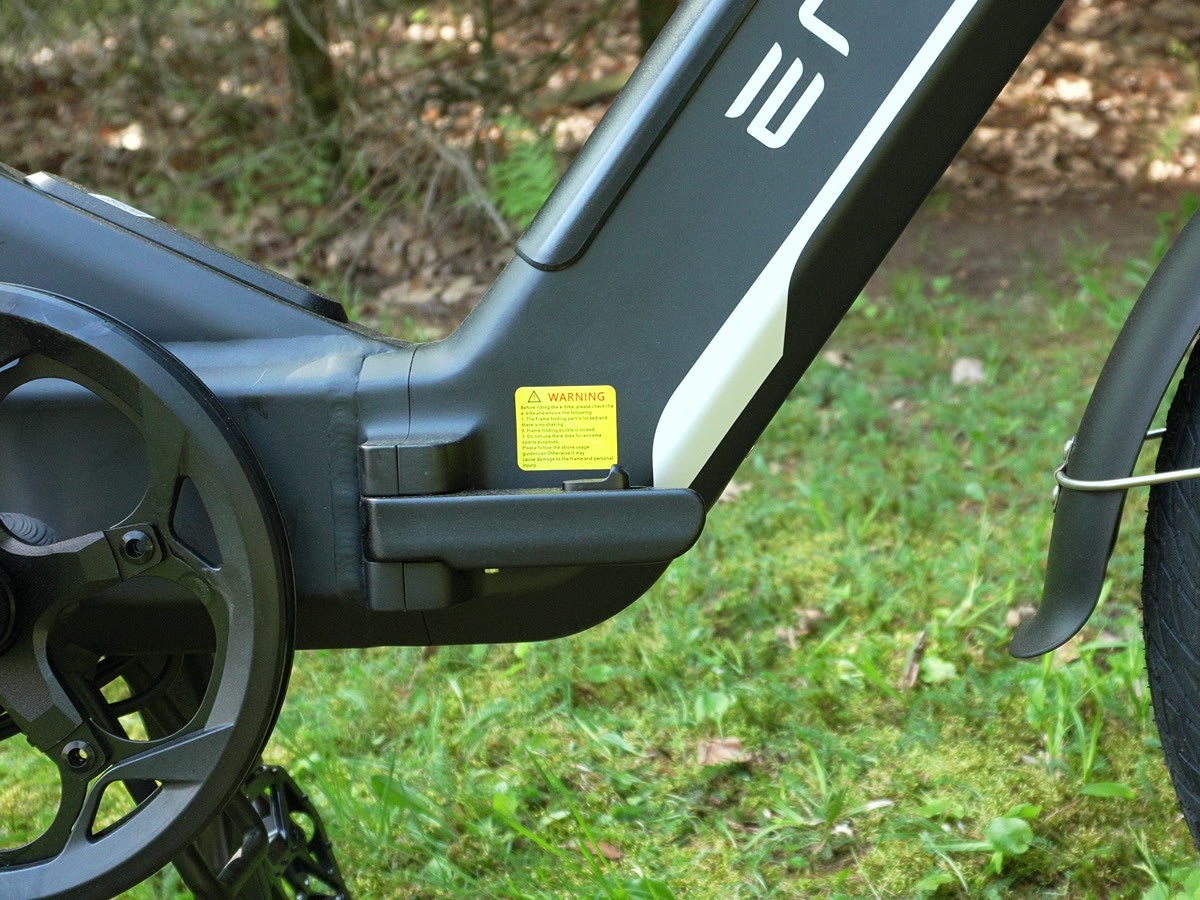
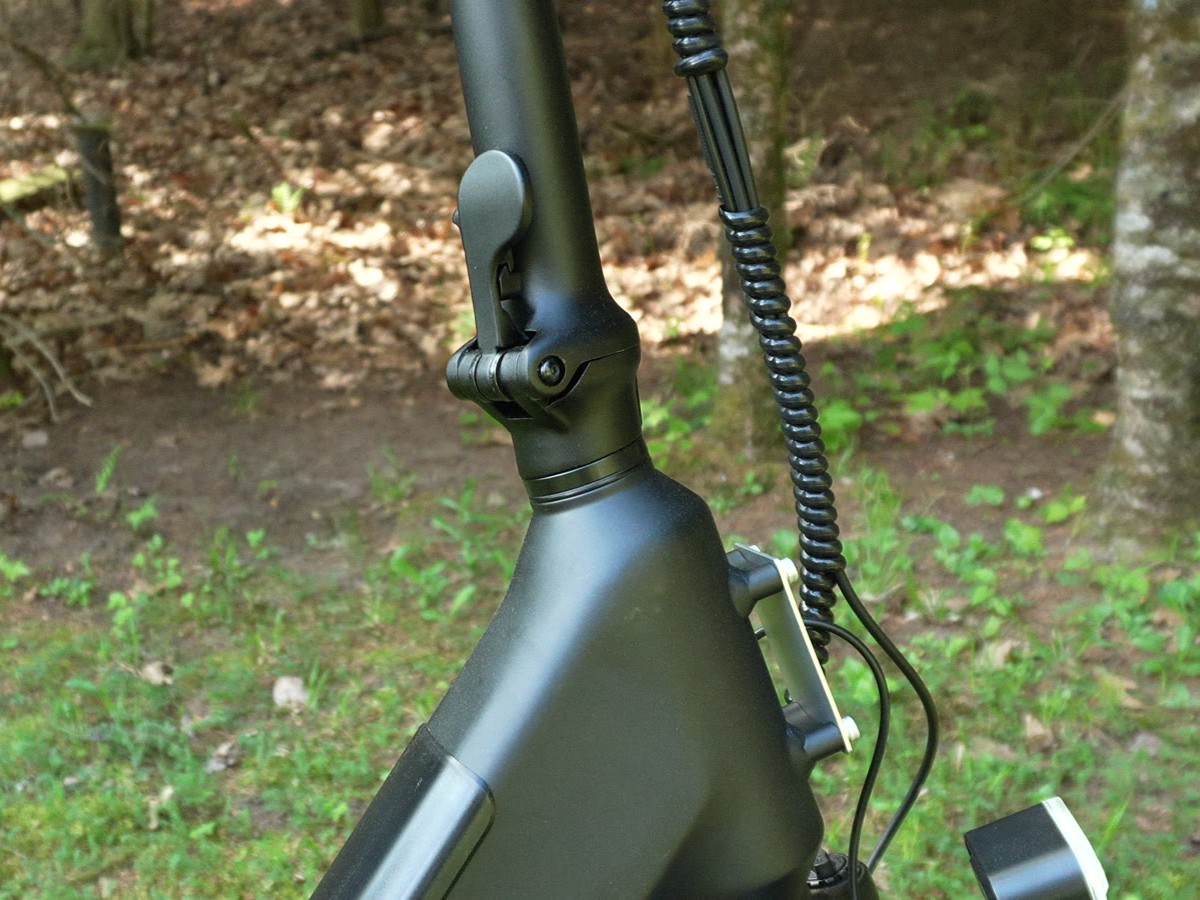
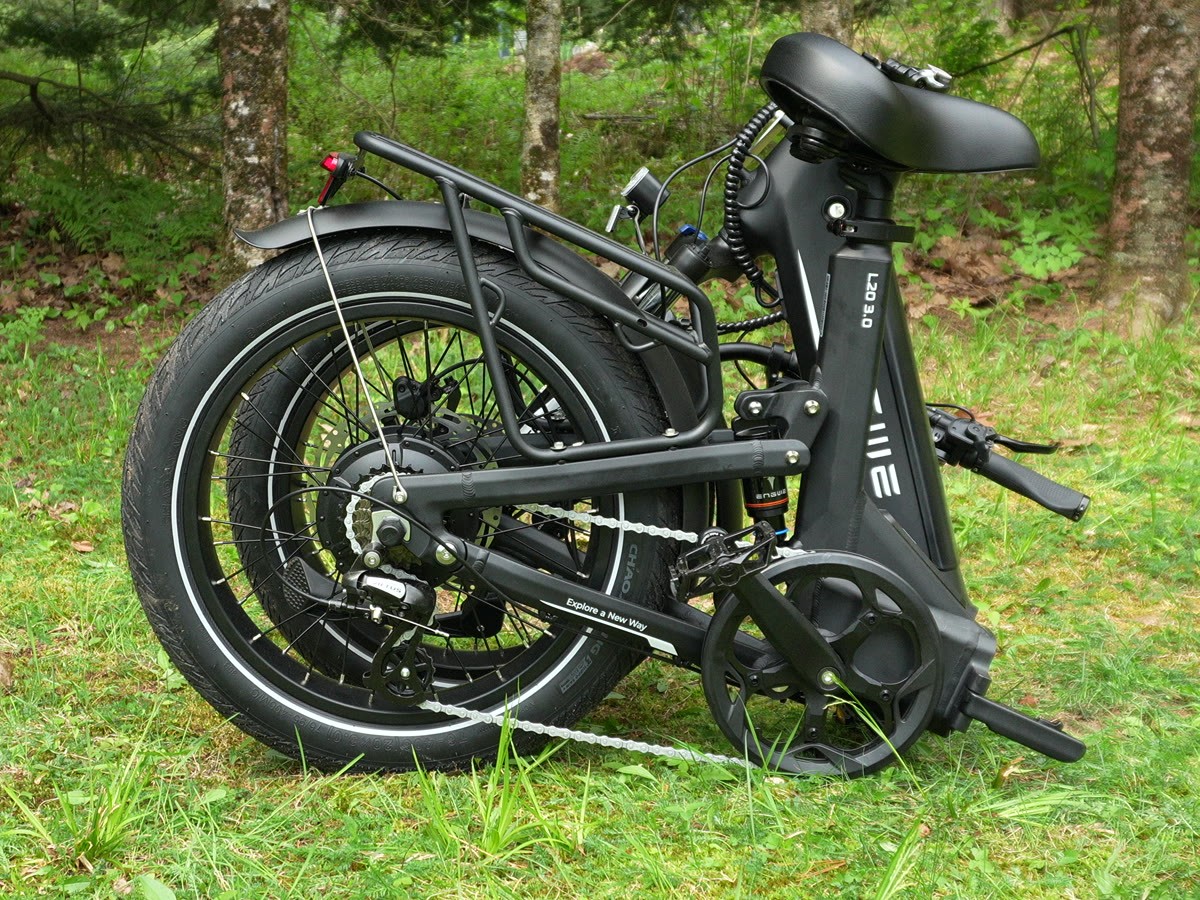
Folding takes a handful of steps: drop the handlebars and fold them down, lower the seatpost, release the frame latch, and swing the rear half around while bracing it with your leg. Flip up the kickstand, rotate the pedals out of the way, and the folded bike rests on a small metal stand. It fits in the back of an SUV or the back seat of a car, but at this weight it’s clumsy to carry any distance. A large plastic tote helps keep it contained for travel, and we’ve used a 70-gallon tote for this in the past.
Engwe L20 3.0 Full Specifications
| Component | Engwe L20 3.0 |
|---|---|
| Price | $1,599 |
| Type | Folding Full Suspension Ebike |
| Class | Class 2 (throttle and PAS unlockable to 28 mph) |
| Weight Capacity | 330 lbs |
| Top Speed | 20 mph (28 mph unlocked) |
| Motor | 750W Rear Hub Motor (1,500W Peak) |
| Torque | 90 Nm |
| Battery | 48V, 15Ah (720Wh) LG Cells, Top-Load Removable |
| Claimed Range | Up to 60 miles |
| Charger | 54.6V, 8A (about 2 hr full charge), adjustable down to 2A in app |
| Display | 3.5" Color LCD, Center-Mounted |
| Sensor | Mivice Torque Sensor / Cadence (switchable in settings) |
| Throttle | Left-side Thumb Throttle |
| UL Certifications | Certified to UL 2849 |
| Water/Dust Resistance | IPX4 |
| Shifter | Shimano 8-speed Trigger Shifter (SL-M315-8R) |
| Derailleur | Shimano Altus |
| Chainring | 52T |
| Cassette | 13-28T, 8-speed |
| Brakes | Tektro 2-Piston Hydraulic Disc Brakes |
| Levers | Tektro Hydraulic w/ Motor Cutoff |
| Rotors | 203mm Front & Rear |
| Frame | 6061 Aluminum, Folding Step-Thru |
| Fork | Zoom Suspension Fork, 40mm Travel, Preload Adjust and Lockout |
| Rear Suspension | Engwe Rear Shock, 30mm Travel |
| Axle | Bolt-On Front and Rear |
| Tires | 20 x 3.0-inch Chaoyang, Street Tread, Reflective Sidewall, 3mm Anti-Puncture Layer |
| Handlebars | 680mm w/ Slight Rise |
| Grips | Lock-on Ergonomic |
| Stem | Folding, Telescoping Height Adjust |
| Saddle | Wide Cushion Saddle |
| Pedals | Wellgo Alloy |
| Lights | Integrated Headlight w/ Horn, Brake-Activated Taillight |
| Smart Features | Engwe IoT (GPS, 4G, Bluetooth), first year free then $39.99/yr |
| Fenders | Plastic, Front & Rear |
| Rear Rack | Included, 55 lb Capacity |
| Kickstand | Rear-Mounted, Wide Foot |
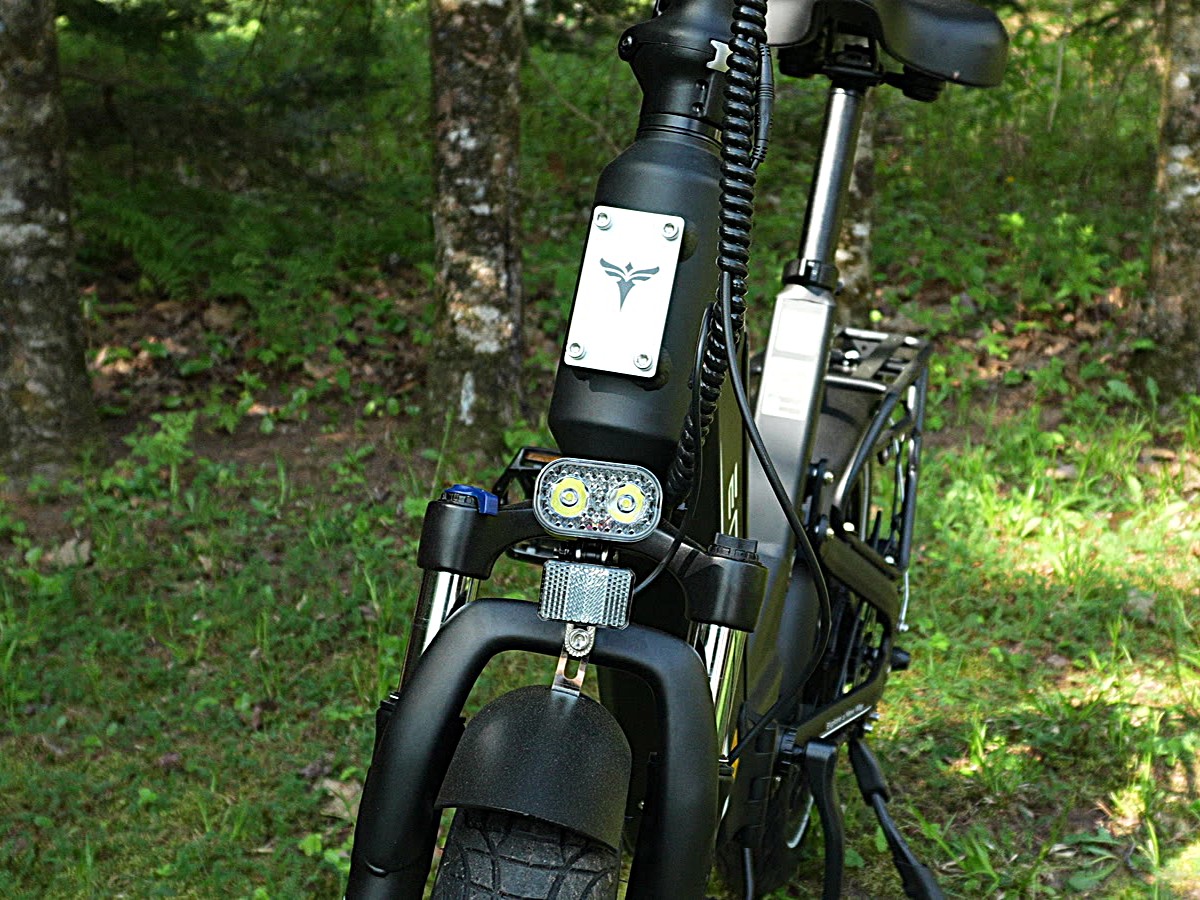
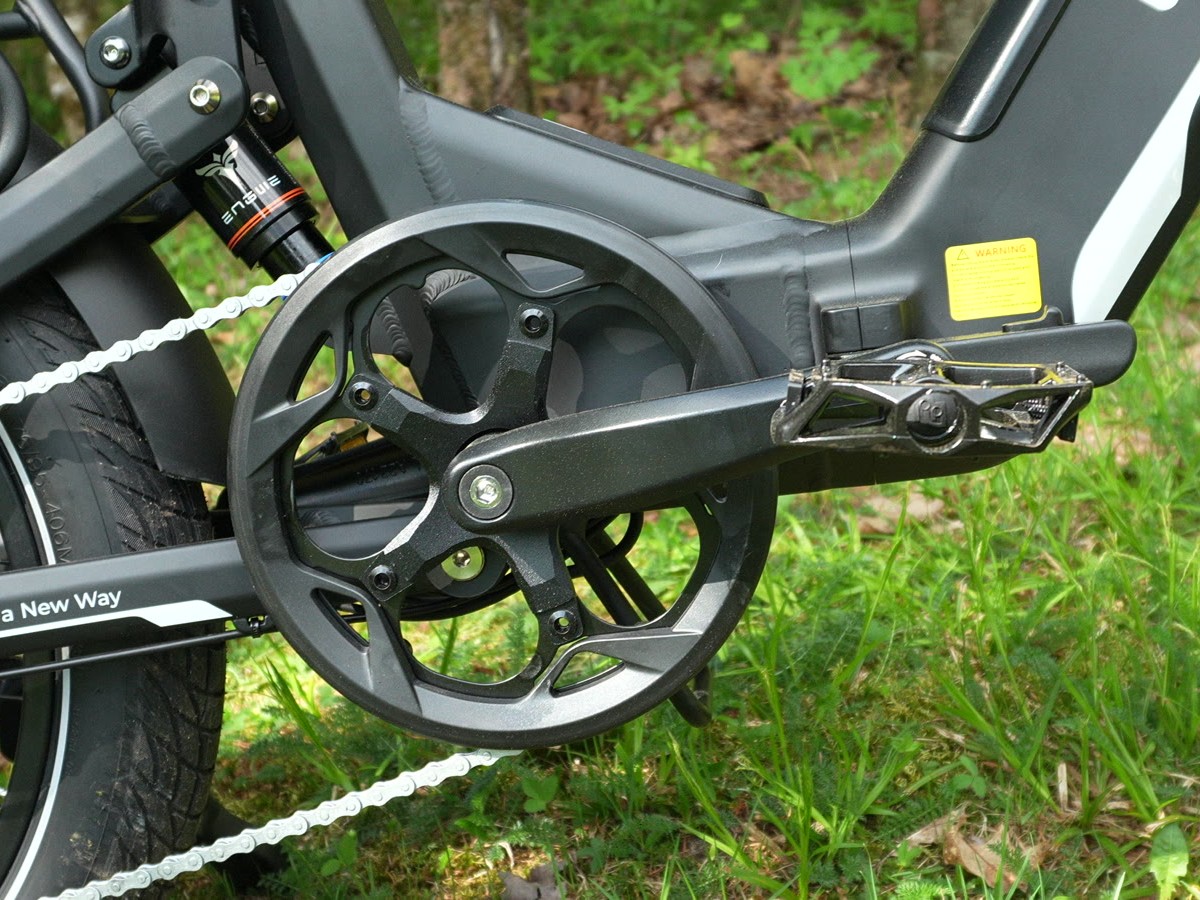
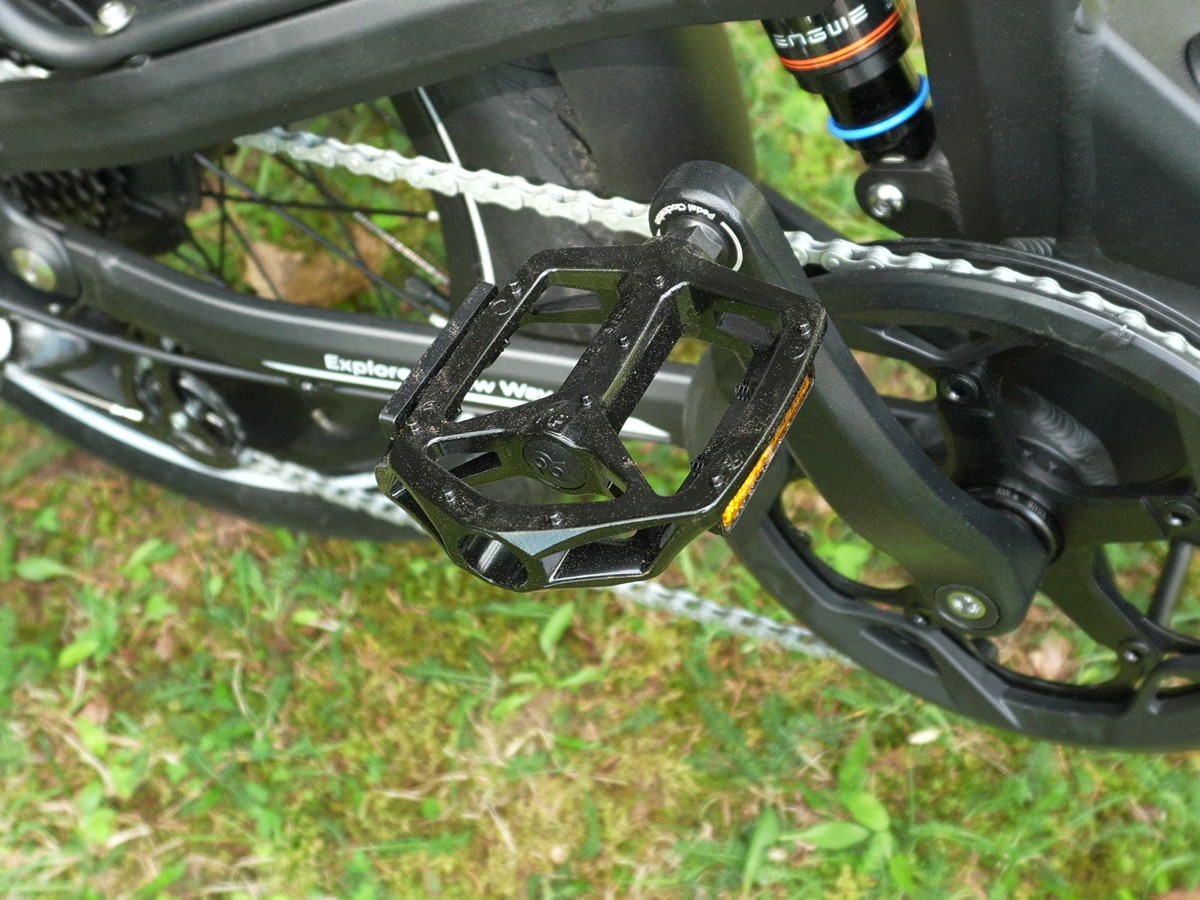
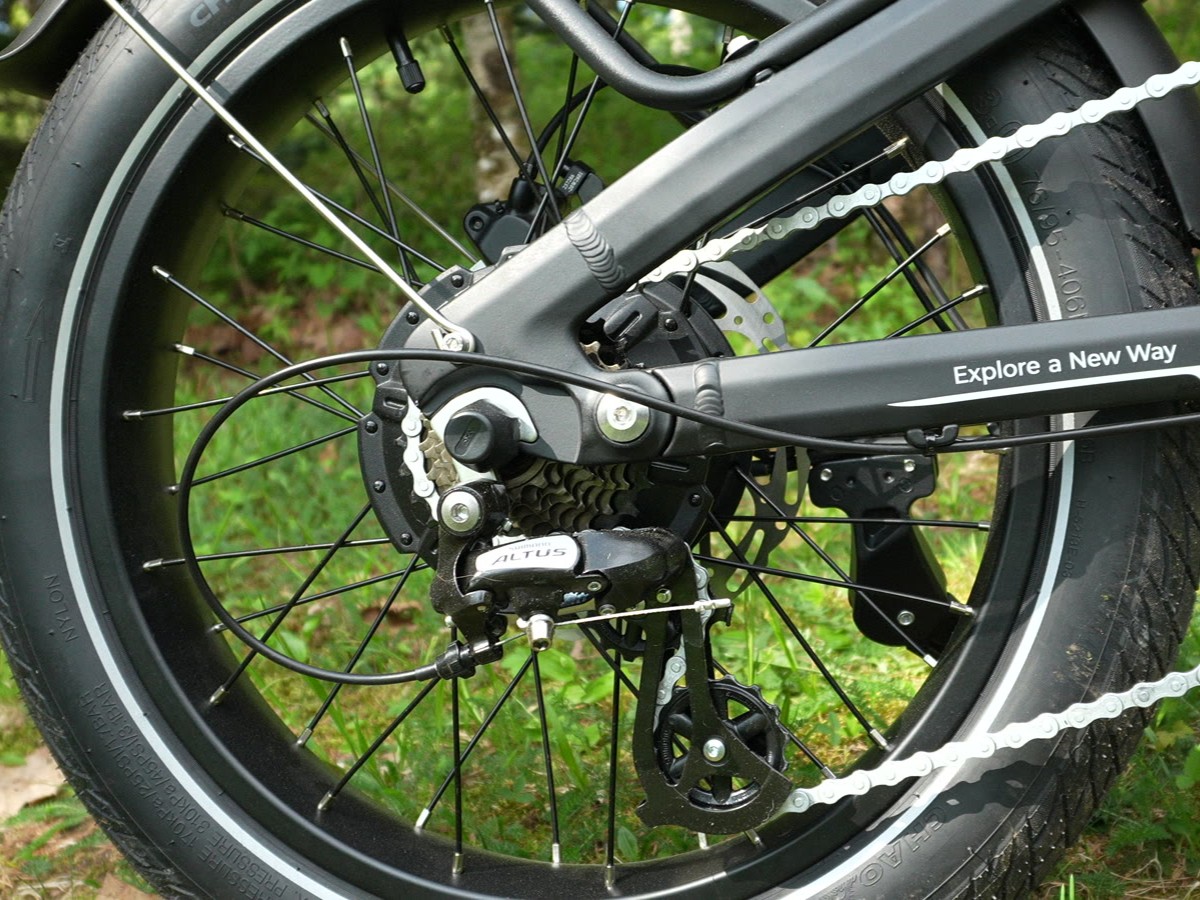
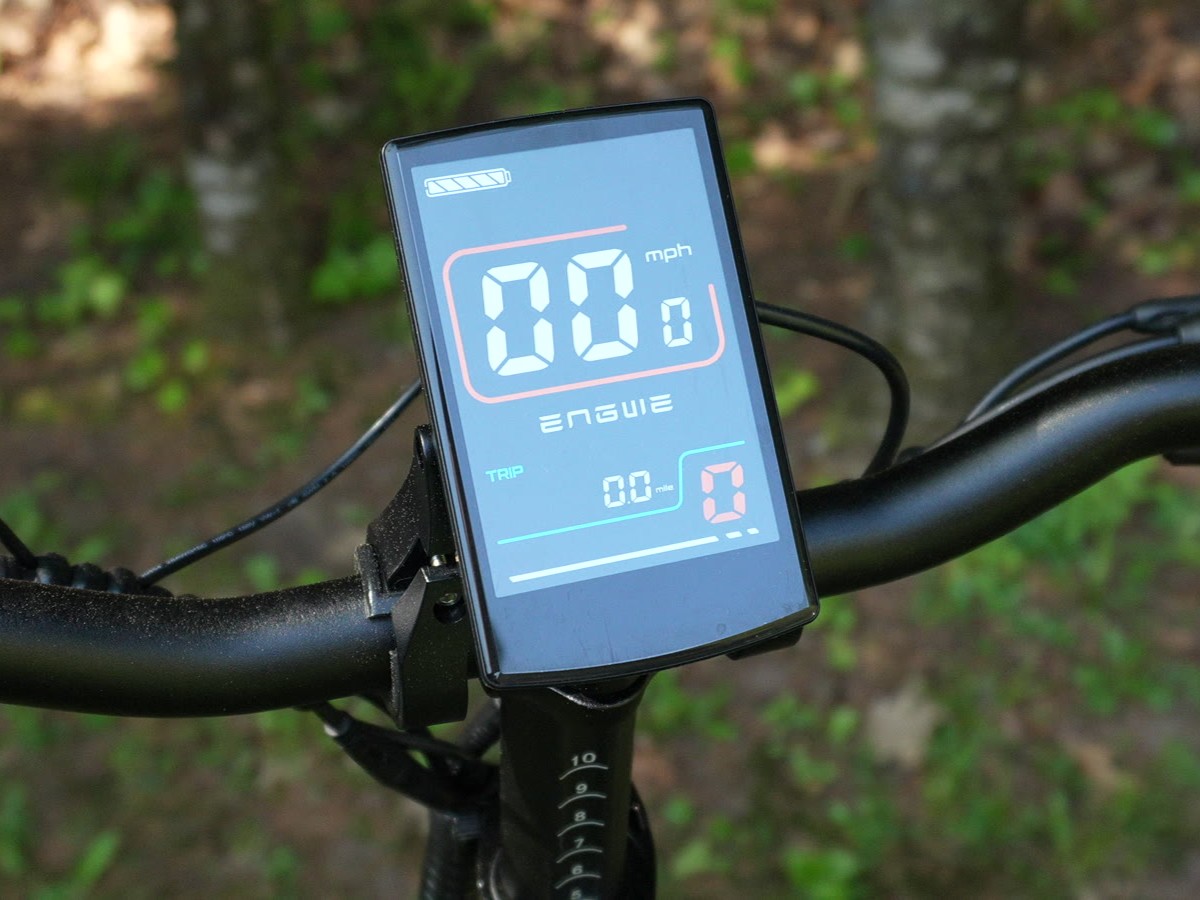
A few odds and ends round out the package. Plastic fenders cover the front wheel and give full coverage in the back, and four mounting points up front accept an optional basket. The included rear rack is rated for 55 lbs. The headlight has a built-in horn that’s plenty loud, and the taillight stays on while you ride and brightens when you squeeze the brakes. A short rear-mounted kickstand with a wide foot holds it up, and Wellgo alloy pedals come standard. The color display is easy to read but basic, with battery level, speed, assist level, and a line that cycles through trip, odometer, power, ride time, max speed, and average speed, plus a walk mode that gives about 3 mph of assistance. In the box you’ll also find a derailleur guard for off-road riding, a pump, rear rack mounting hardware, and the tools needed for assembly.
Real-World Performance Testing | Engwe L20 3.0
Our testing was done by a 200 lb rider, mostly with the bike’s 28 mph setting unlocked, which you enable in a hidden display menu by holding the assist buttons. We also ran the cadence sensor at the Class 2 limit of 20 mph to show what each assist level delivers with the default speed cap. Beyond acceleration and pedal assist tests on pavement, we climbed our test hill on throttle and on pedal assist and rode over railroad tracks and rough patches to see how the suspension handles bumps.
Throttle Acceleration
Launching on throttle alone with the full speed unlocked, it pulled hard, passed 20 mph almost immediately, and kept a strong push all the way to 28 mph on the display (about 27 on our GPS). That full power is available in every assist level, even level one, with no setting to limit it. On a motor this strong with a thumb throttle that isn’t easy to feather, we’d like to see that option for safety and accessibility. Keep in mind that throttle speeds above 20 mph do not fall within the three ebike classes and are not street legal without proper registration, licensing, equipment, and insurance.
Pedal Assist and Sensor Swapping
Cadence Sensor
A cadence sensor only checks whether the pedals are turning, not how hard you push. On this bike, each level adds power up to a set speed, and past that the motor stops helping. We tested it with the top speed at the Class 2 limit of 20 mph and again with the full 28 mph unlocked. Here’s where the motor cut out in each level at both settings:
| Assist Level | Class 2 (20 mph) | Unlocked (28 mph) |
|---|---|---|
| Level 1 | 7~8 mph | 8~9 mph |
| Level 2 | 10~11 mph | 12~13 mph |
| Level 3 | 13~14 mph | 17~18 mph |
| Level 4 | 16~17 mph | 22~23 mph |
| Level 5 | Up to 20 mph | Up to 28 mph |
Torque Sensor
Instead of watching the cranks, a torque sensor measures how hard you press on the pedals and answers with motor power, so easy pedaling gets a little help and digging in gets a lot. It’s responsive enough that every level can reach top speed with moderate effort, so here’s how easy and moderate to heavy pedaling played out in each level with the 28 mph setting unlocked:
| Assist Level | Easy Effort | Moderate/Heavy Effort |
|---|---|---|
| Level 1 | About 15 mph | 20~25 mph (28 mph with heavy effort) |
| Level 2 | About 20 mph | 25~28 mph |
| Level 3 | 21~22 mph | 26~28 mph with moderate effort |
| Level 4 | About 25 mph | Up to 28 mph |
| Level 5 | Up to 28 mph | Up to 28 mph |
Level five gives instant support from a stop and reaches 20 mph within moments. At 28 mph the motor cuts off abruptly but pushes you right back up to it, and top speed is easy to hold in eighth gear without spinning your legs uncomfortably fast. For a workout, the torque sensor in levels one through three still leaves room to put in effort while making 20 mph feel easy. The cadence sensor is the better pick for anyone who wants to know exactly how much help they’ll get, since it doesn’t depend on holding steady pressure on the pedals.
Ride Feel and Suspension
With the handlebars short of their highest position, a 6’1″ rider sat upright with arms straight out front and no weight on the wrists. The wide saddle is comfortable enough for shorter rides, but we could see it causing some fatigue on longer ones. The motor isn’t the quietest either. There’s an audible whine that fades into the background after a while, though you’ll hear it if you’re listening for it. One quirk on our unit: the power readout on the display stayed at zero no matter how much throttle or pedal input we gave it.
Over railroad tracks and potholes, the rear shock felt stiff under a 200 lb rider, which sits around the middle of the bike’s 330 lb capacity. Staying seated and hitting bumps on purpose, it took the edge off but didn’t move much. The fork felt stiff at first too, and backing off the preload changed it quickly, to the point where it could bottom out. At a similar weight, plan on a few minutes finding the right preload up front, and don’t expect much plushness from the rear.
Hill Climb Test
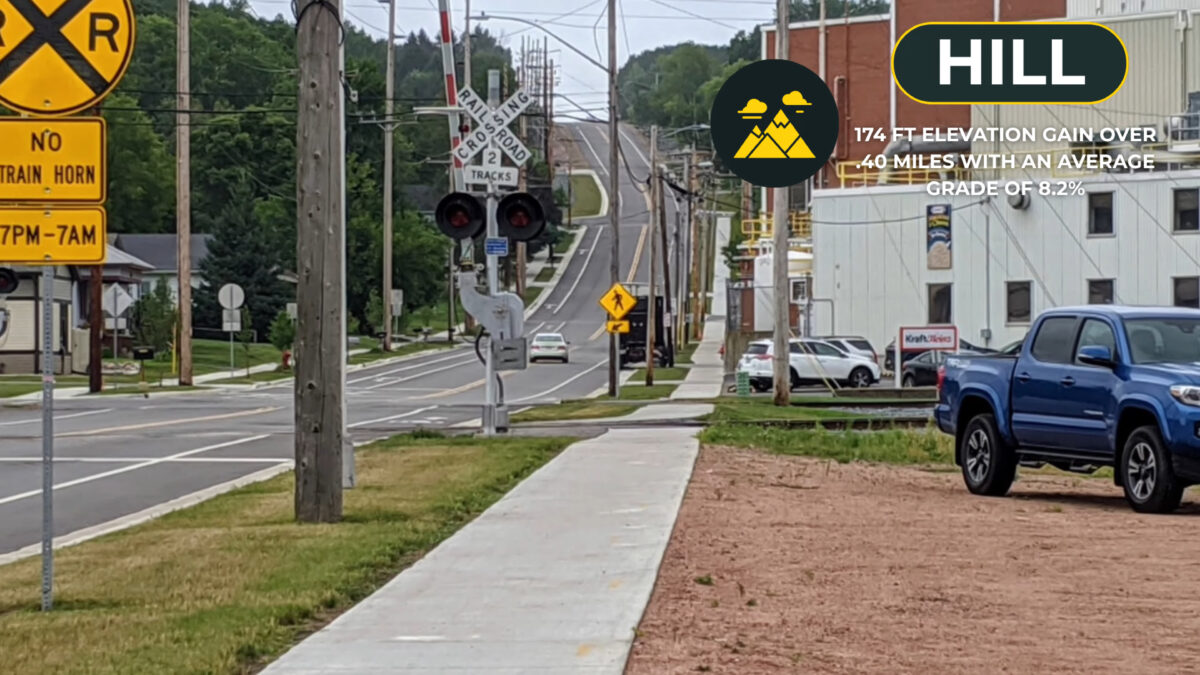
Rolling into our Wausau test hill it on throttle only, speed dropped to a low of 13 mph on the steepest part of the climb. Once the motor had a moment to regain momentum, it climbed back past 15 mph and kept picking up speed as the grade eased toward the top. That’s one of the best throttle-only runs we’ve seen on this hill.
Pedaling up with the torque sensor, level one was manageable while shifting through the gears, which is the place to be if you want to save battery and get a workout. Level two added a gentle push, level three a bigger surge, and level four took most of the load off the rider’s legs. Level five launched the bike to the top while shifting up through sixth, seventh, and eighth gear. The catch with the torque sensor on a climb is that steady pressure on the pedals can be hard to hold, which makes full motor power harder to tap into. The throttle is always there to fill that gap, and the cadence sensor is the easier choice when you want predictable power on a steep grade.
Geofencing and Alarm Test
To put the security features to work, we set a small geofence around the park we were riding in and rode out of it. The alarm sounded as we crossed the boundary and a notification came through on the phone, so the core function works. The alarm is on the quiet side, though. Someone walking right past would notice it, but it’s unlikely to draw attention from anyone farther away, and it’s much quieter than the bike’s own horn. The motor also kept working after we left the zone, so the alarm sounds and the app alerts you rather than stopping the ride.
Buying and Owning the Engwe L20 3.0
Update the firmware through the app first, since our unit needed it before all of the IoT services worked, and set a display passcode so the remote lock actually keeps the bike off. After the free year, $39.99 per year is on the steeper side, though at under $4 a month it may be worth it for some riders. Buying is mostly direct to consumer with limited dealer support, and assembly takes a few extra steps like installing the folding handlebar assembly. The IPX4 rating covers light splashes only, so we’d skip riding in heavier rain.
Our review unit also had a fault where the motor kept running when we weren’t pedaling or using the throttle. The motor cutoff prevented a runaway situation, and Engwe quickly sent a replacement torque sensor that fixed it. It appears to have been an isolated incident, but with only two Engwe bikes reviewed so far, we don’t have much long-term data on the brand’s support yet.
Engwe L20 3.0 vs Lectric XP4
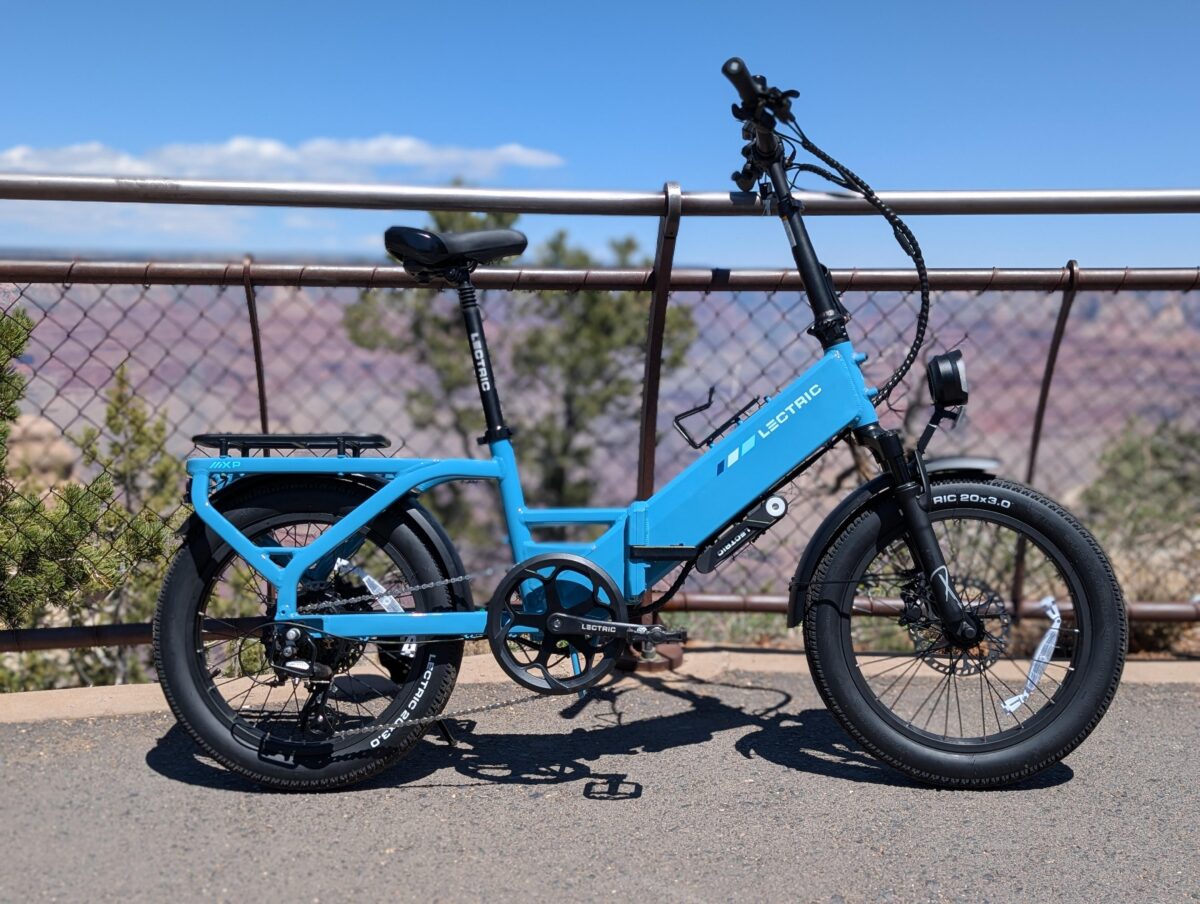
The Lectric XP4 is one of the best-selling folding ebikes on the market, and it comes in two performance tiers. The standard XP4 at $999 runs a 500W motor that peaks at 1,092W with 55 Nm of torque and a 48V, 10.4Ah battery rated for up to 50 miles. The 750W Long-Range at $1,299 steps up to a 1,310W peak, 85 Nm of torque, and a 48V, 17.5Ah battery rated for up to 85 miles. Both run Lectric’s in-house torque sensor, an 8-speed Shimano Altus drivetrain, Star-Union two-piston hydraulic brakes with 180mm rotors, a 50mm coil fork with preload and lockout, and 20 by 3-inch mixed-terrain tires. Lectric’s 3.5-inch color TFT display is one of the easiest to read and navigate that we’ve used, with top speed and assist settings you can adjust right from the menu, and every XP4 comes in step-thru and high-step frames with a handful of colors to pick from.
Utility is where the XP4 stands out. Its rear rack is rated for 150 lbs, nearly three times the L20 3.0’s 55 lb rack, which opens it up to heavier cargo and Lectric’s wide range of rack accessories. The L20 3.0 counters with full suspension, more peak power and torque, a switchable cadence sensor, 203mm rotors, two-hour charging, and GPS tracking. Riders who want a lower price, a choice of frames, and a rack built for real hauling will likely prefer the XP4, especially the 750W Long-Range for its range and climbing power, while riders who want a softer ride over rough pavement and a harder-pulling motor will get more out of the L20 3.0. For the full breakdowns, see our Lectric XP4 750W review and our Lectric XP4 500W review.
Engwe L20 3.0 Pros and Cons
Final Thoughts on the Engwe L20 3.0
Plenty of heavy-duty folding ebikes from direct-to-consumer brands try to impress with big specs, and the L20 3.0 does too. What sets it apart is an impressive component outfit for what you’re paying. There’s room for refinement, like the basic display, lack of performance settings, and a stiff rear shock that could do more to cushion the ride. Still, it pulled one of the strongest throttle-only climbs we’ve recorded on our test hill, and for riders shopping for a folding ebike that can do a bit of everything, it’s a well-rounded package with serious power behind it.
If our review helped you decide whether the L20 3.0 is right for you, purchasing through our affiliate link makes a big difference for us, and code EBIKEESCAPE takes 10% off at checkout. It’s completely free for you and helps support content like this.
