

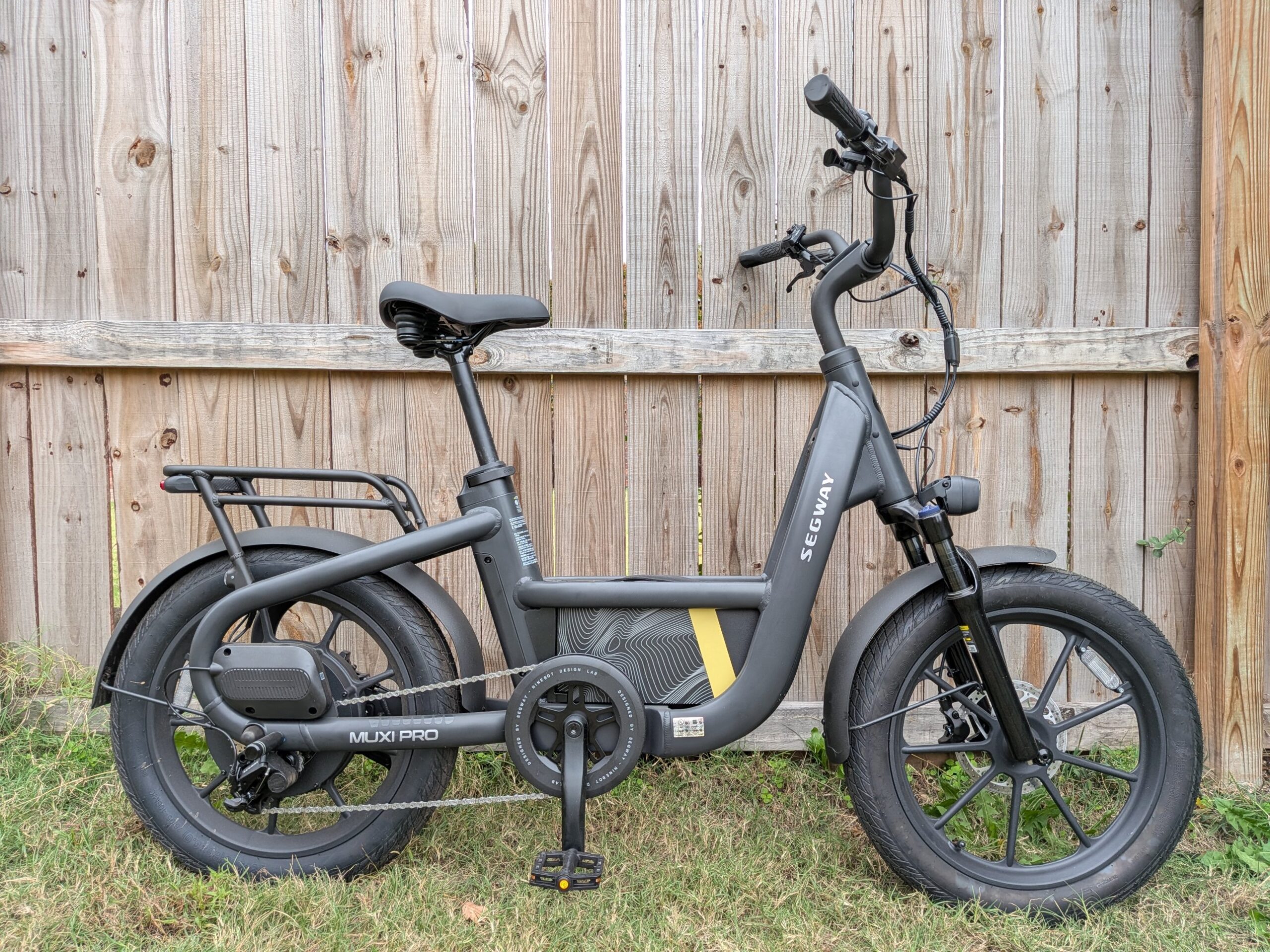
Segway built the original MUXI around software, with regenerative braking, proximity unlocking, traction control, and a nearly silent direct-drive motor on a single-speed utility frame. What it left out were the mechanical parts most riders expect at this price, and the MUXI Pro goes back for them. An extra $300, for $1,999.99 at the time of writing, adds nine electronically shifted gears with an automatic mode, a suspension fork, fenders, integrated turn signals, and a pedal-assisted top speed of 28 mph instead of 23. The motor, battery, and frame carry over unchanged. So does the cockpit, which looks nothing like any other ebike we’ve tested, and because Segway sells through dealers, there’s a decent chance you can ride one before you buy it.
Below, we cover what’s new, what carries over, how the controls, app, and security features work, and how the frame fits a taller rider. Our testing runs through the throttle, every assist level, manual and automatic shifting, regen, our hill climb, and the hill descent control on the way back down. We finish by stacking it up against the standard MUXI, since the $300 question is the one most buyers will be asking.
Ebike Escape is reader-supported. If you buy through our Segway MUXI Pro link, we may earn a commission at no extra cost to you.
Segway MUXI Pro Video Review
Our video starts with the five differences between the MUXI and the MUXI Pro, then walks through the components, the handlebar controls and display, the app settings, and the removable battery. From there, we ride it in first person through the throttle and all the assist levels, try manual and automatic shifting, test the regen, climb our test hill on throttle and pedal assist, come back down with hill descent control off and on, and finish with the pros and cons.
Standout Features
Direct-Drive Motor, Regen, and Hill Control
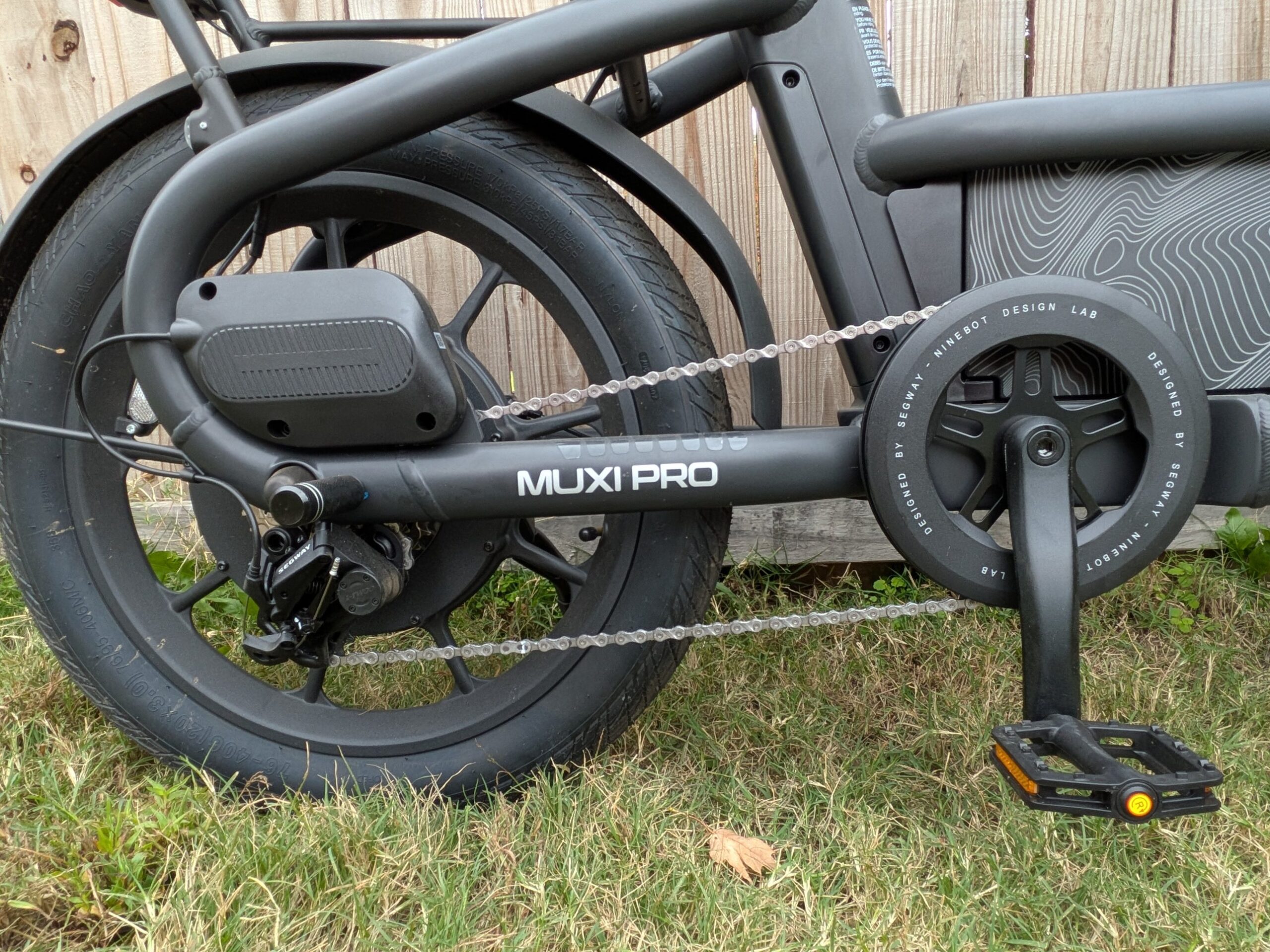
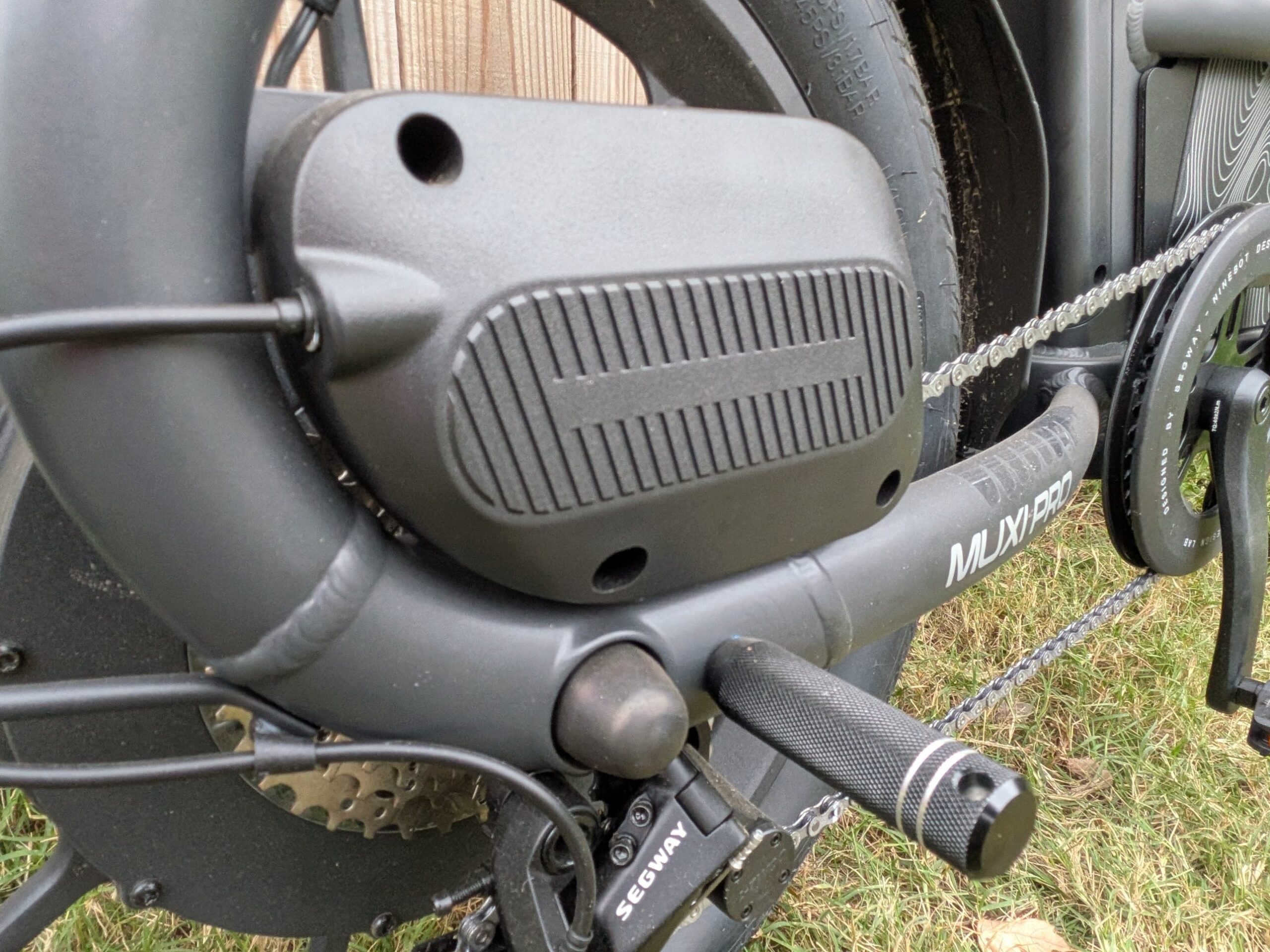
Most ebikes at this price use a geared hub, so a 750W direct-drive motor with 80 Nm of torque is an unusual choice. There are no internal gears to whine, and it feels like something Segway built for this bike rather than pulled off a shelf. Direct drive also lets the motor double as a generator. Kinetic energy recovery feeds power back into the 717 Wh battery when you touch the brake levers, and hill descent control uses the same braking force to hold your speed on a steep grade without the pads. Traction control watches for rear wheel slip, and hill start assist keeps you from rolling backward after you’ve held the brakes for a few seconds on an incline. Most of it can be switched on or off in the app.
Nine Speeds with Electronic Auto Shift
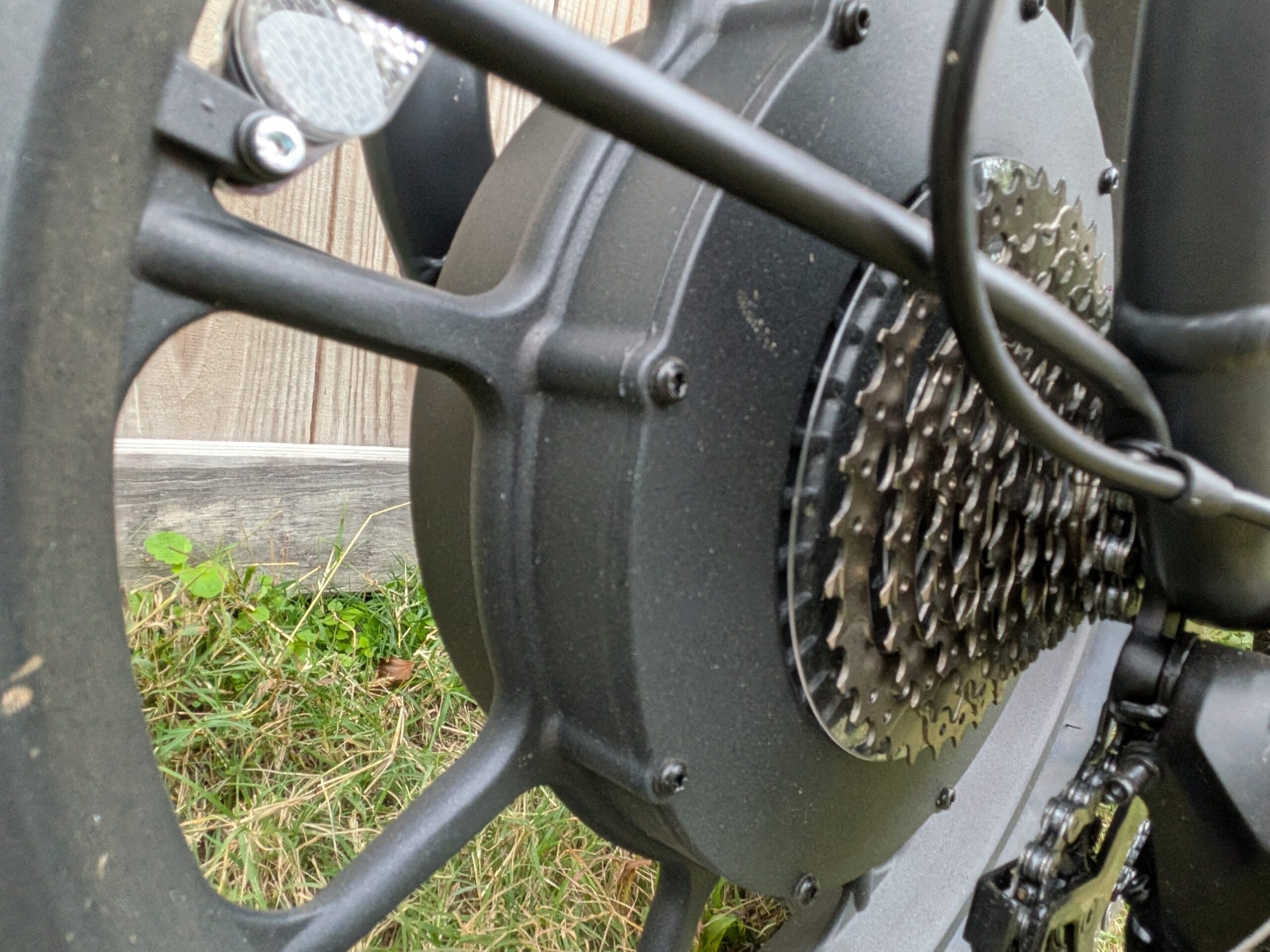
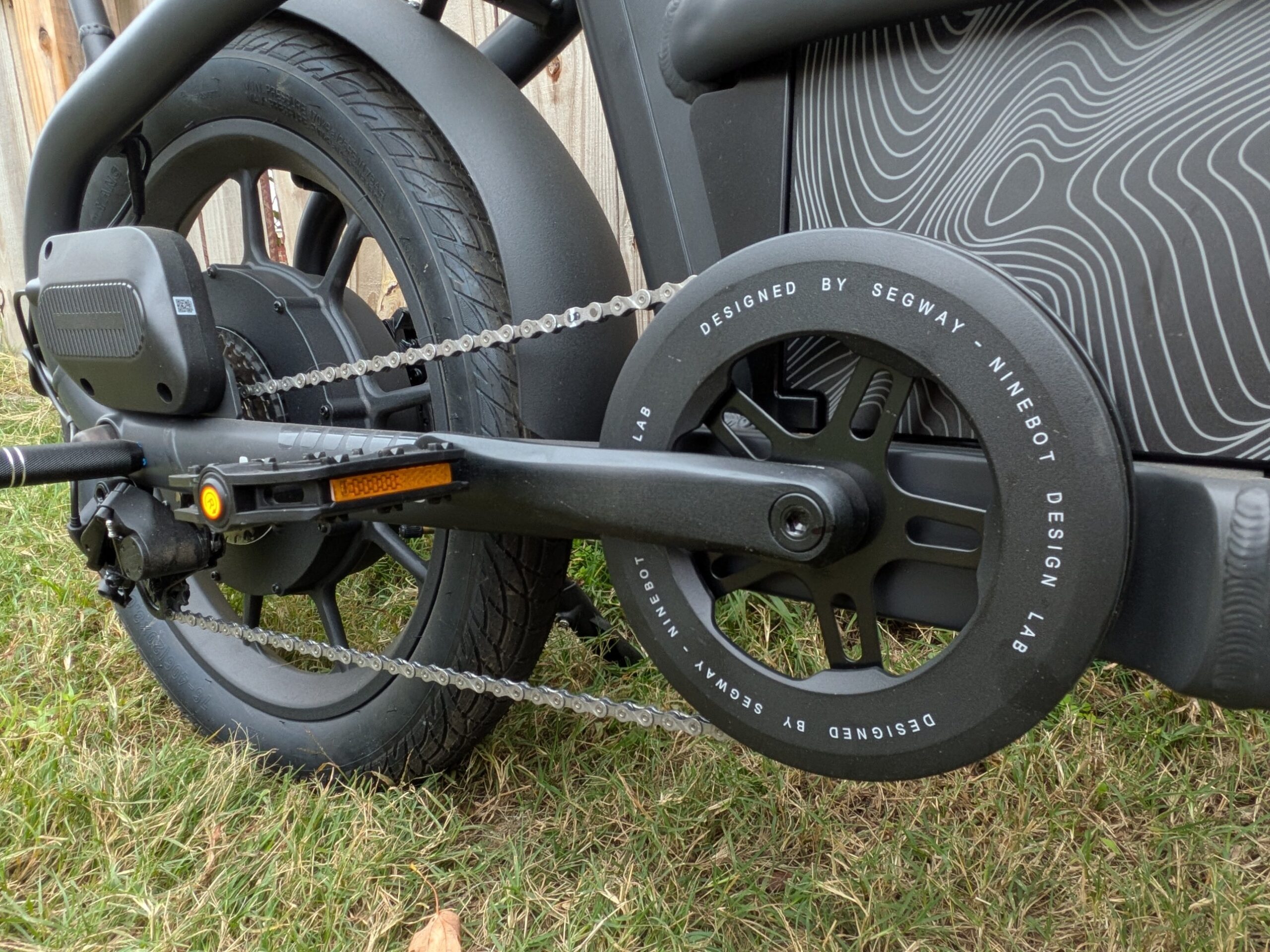
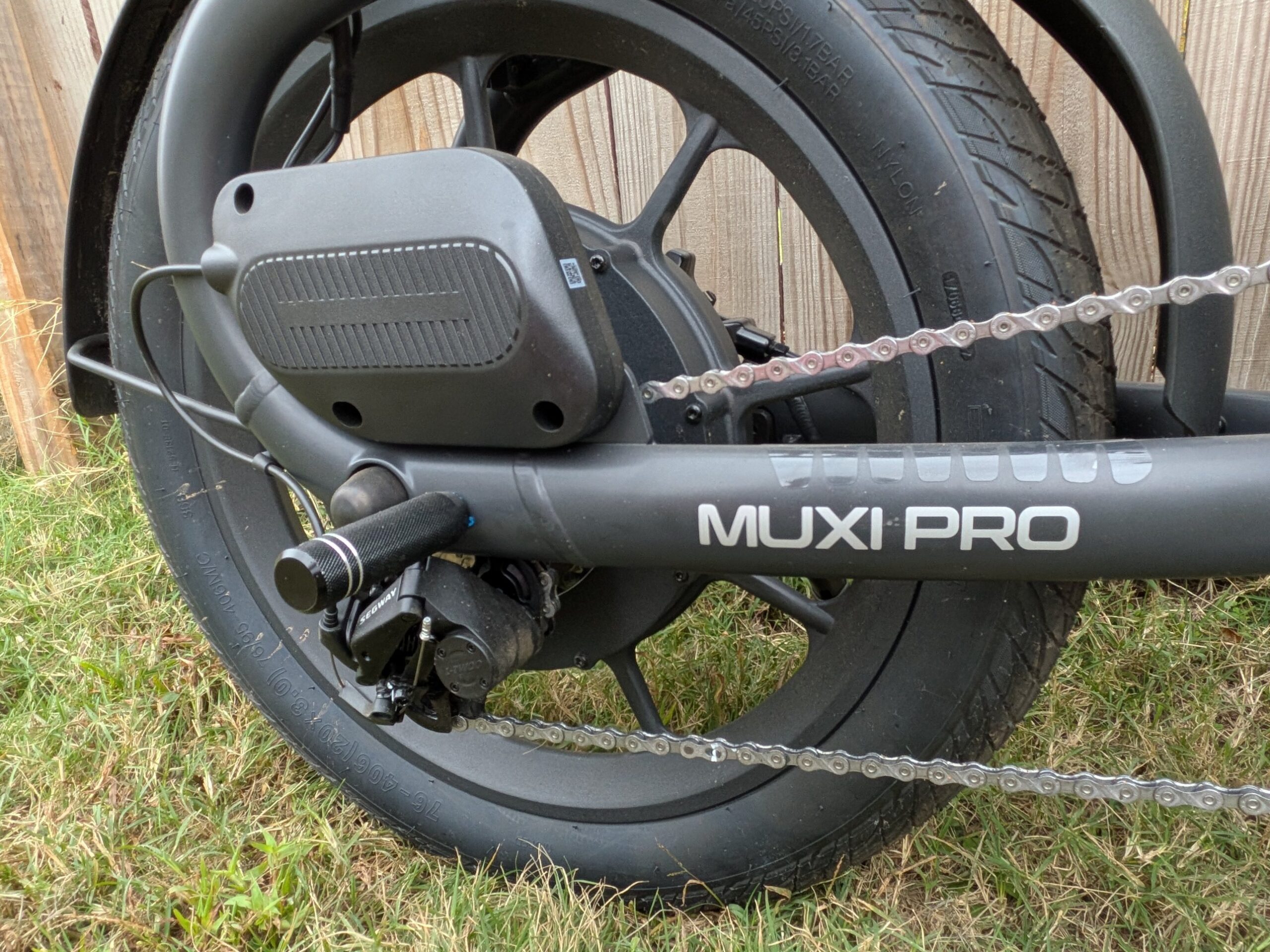
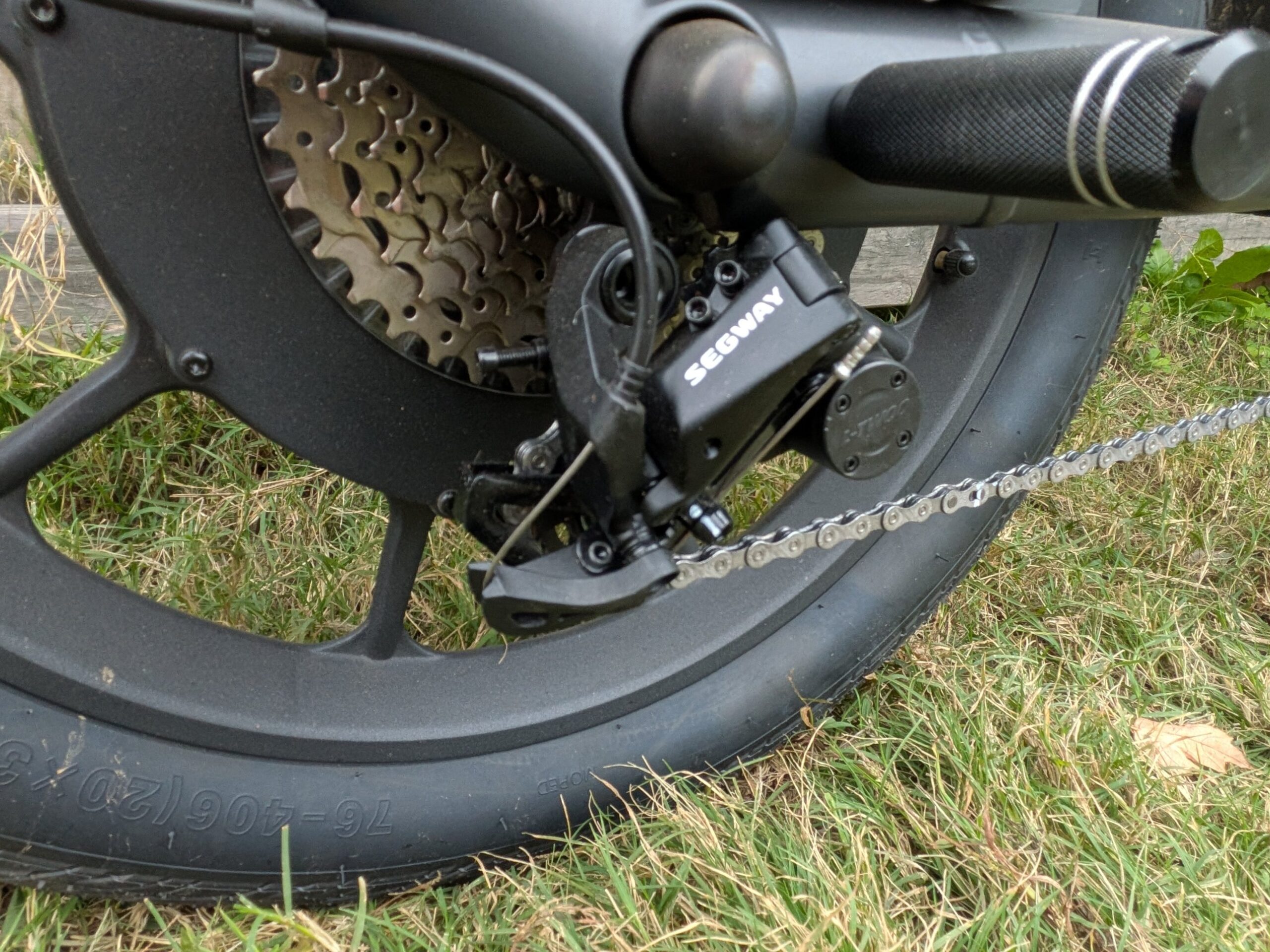
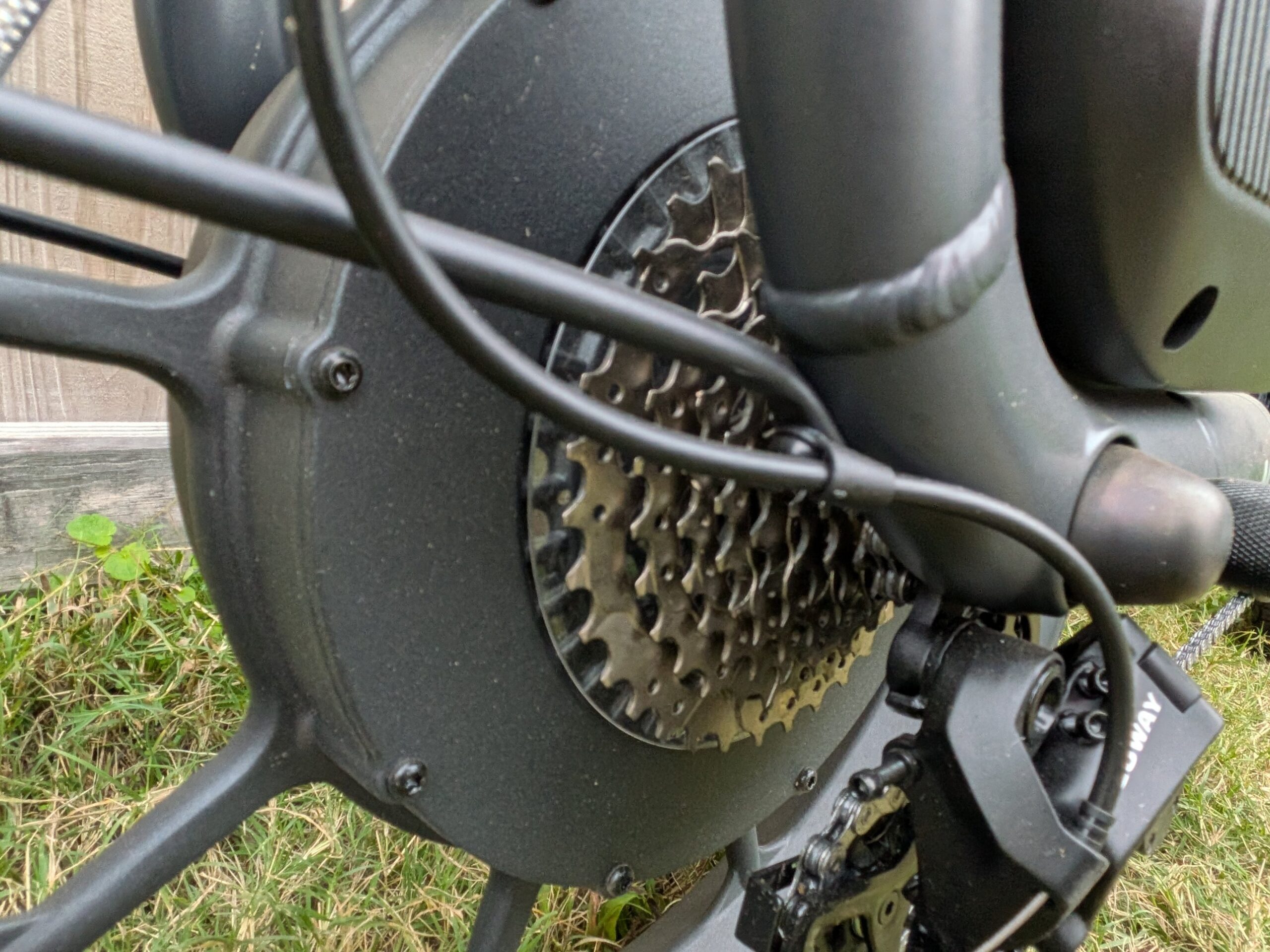
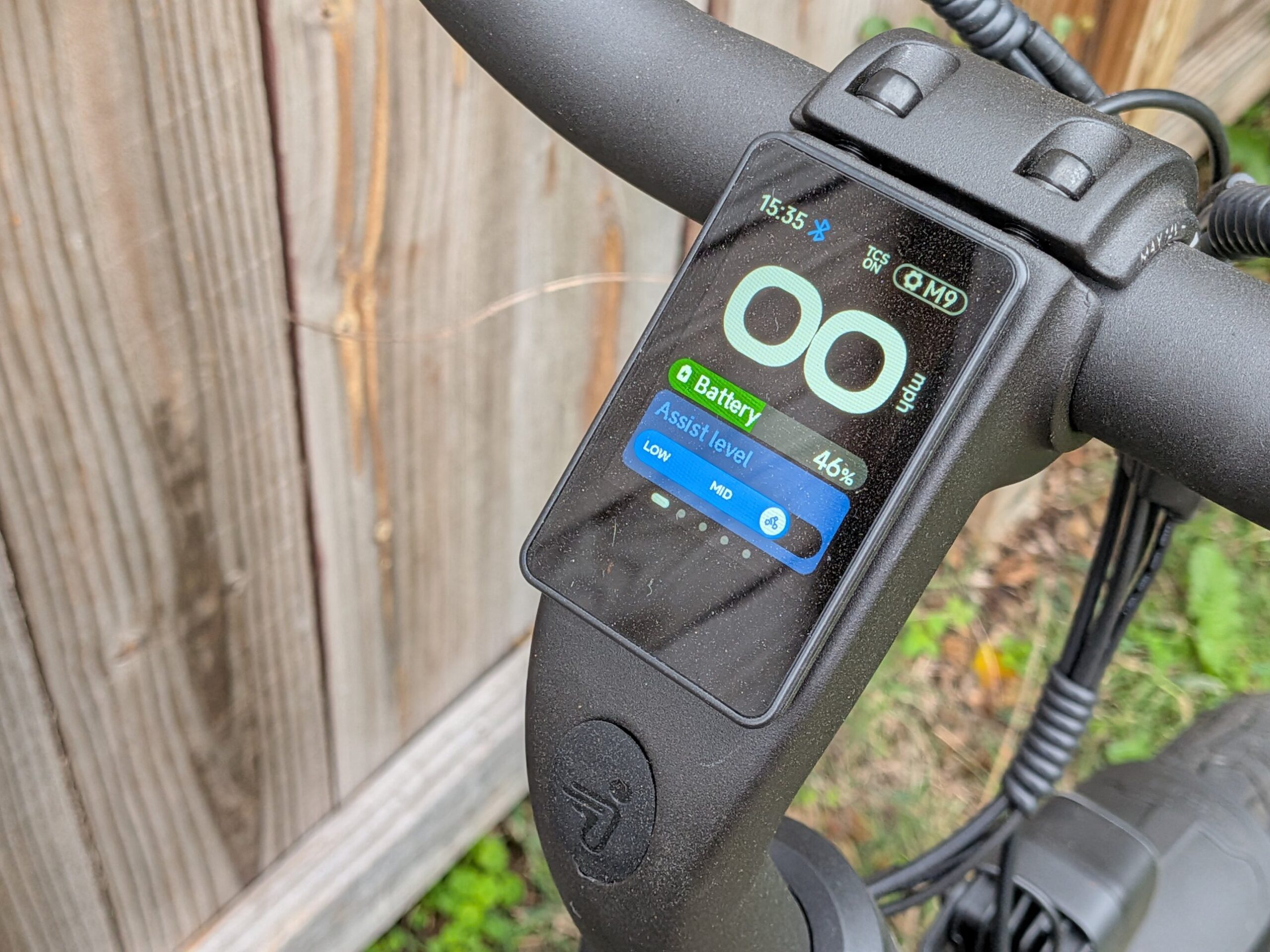
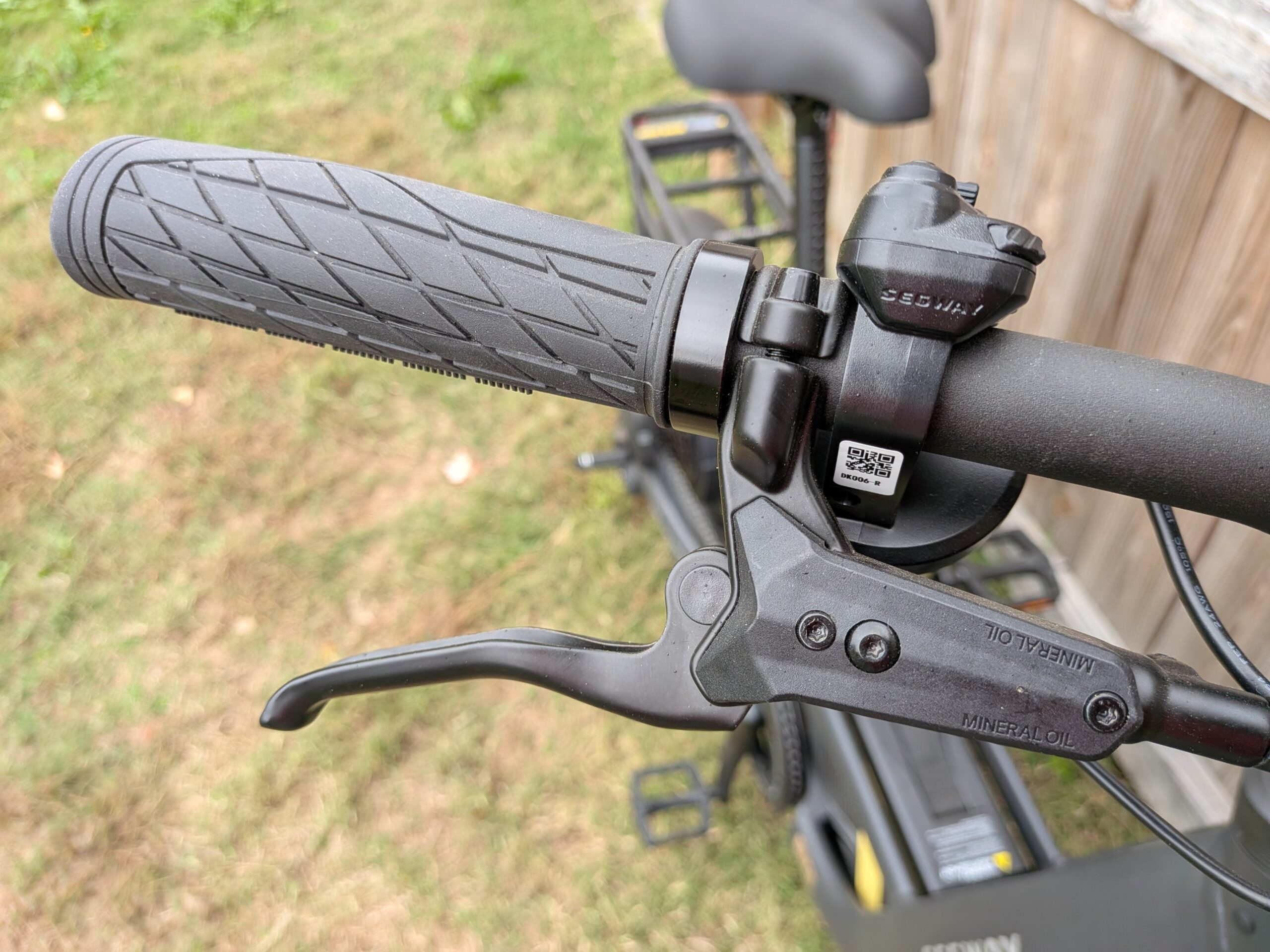
The biggest change from the single-speed MUXI is a 9-speed drivetrain with an 11-36T cassette and a Segway-branded derailleur made by LTWOO. A small electronic cable puller on the rear of the frame does the shifting, so a toggle at your right thumb moves through the gears in manual mode, and the current gear shows on the display. Press that toggle and the bike switches to automatic, where the same control raises or lowers your target cadence instead. Segway says the auto mode uses speed, cadence, and incline sensors, and the app lets you pick a Casual, Standard, or Sport shift style, shift more or less often, and choose which gear the bike starts in. Since it’s still a cable moving a mechanical derailleur, you’ll feel each shift in the pedals, which is a different experience from a sealed automatic hub.
Suspension, Fenders, Lights, and Brakes
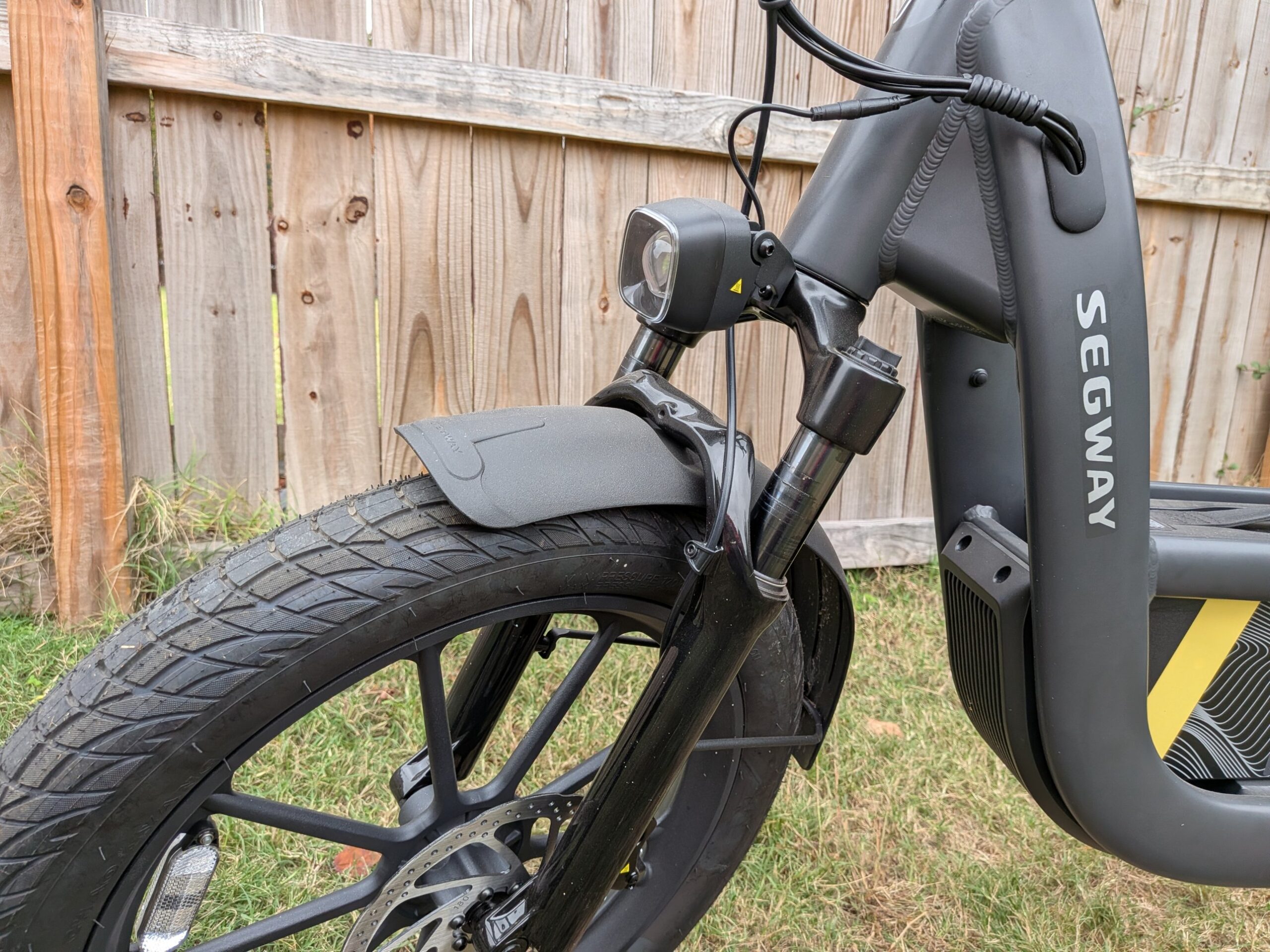
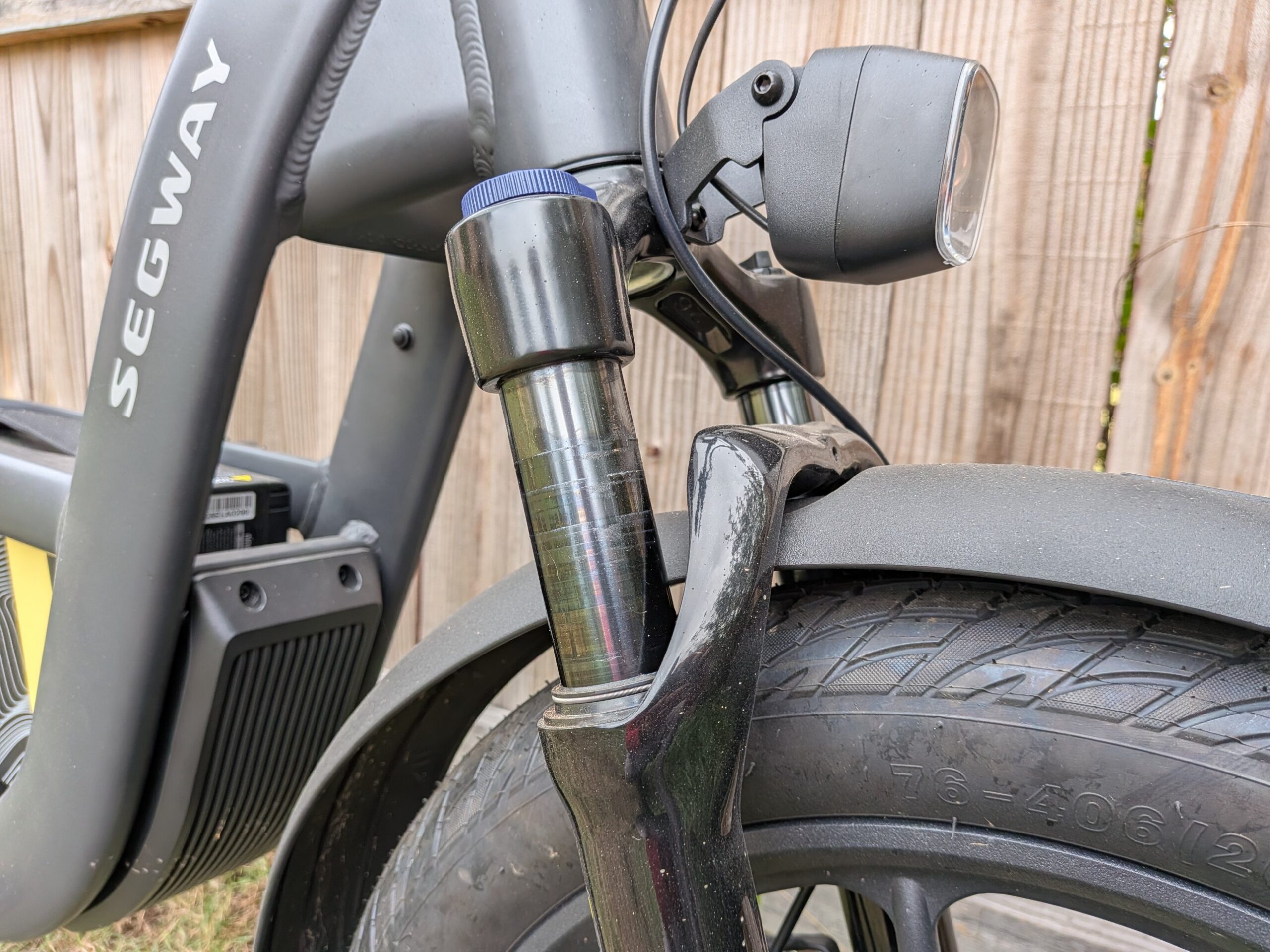
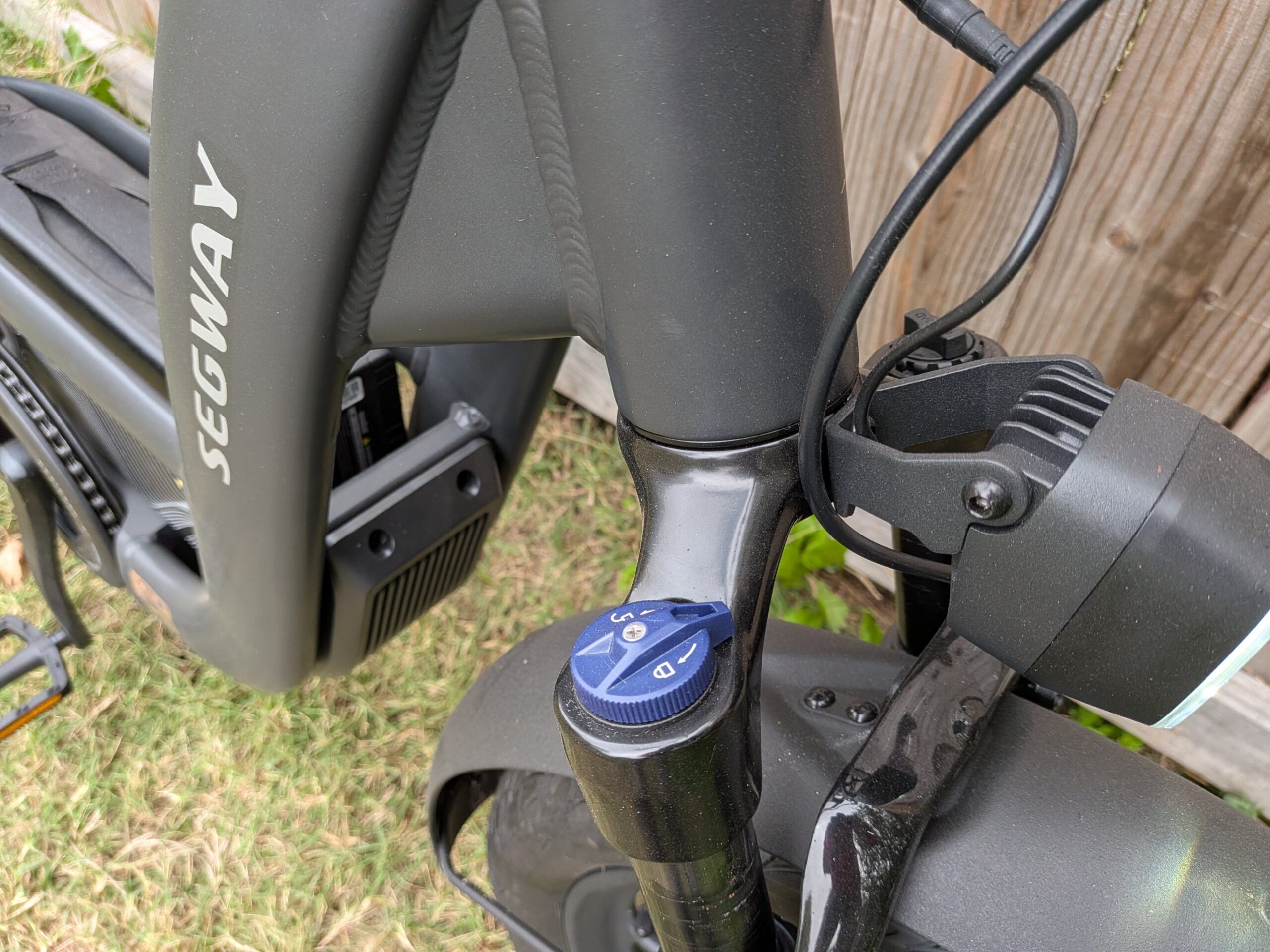
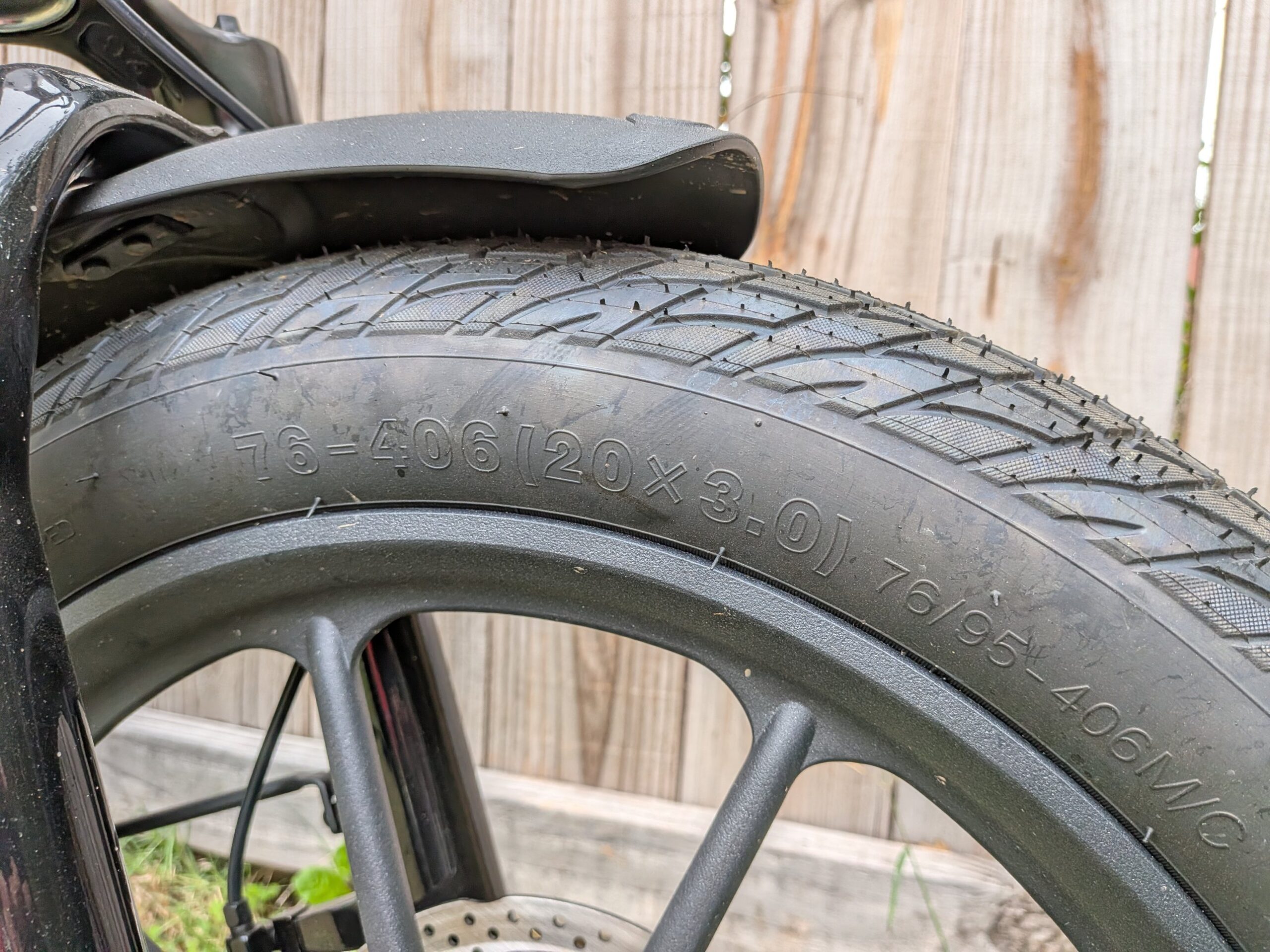
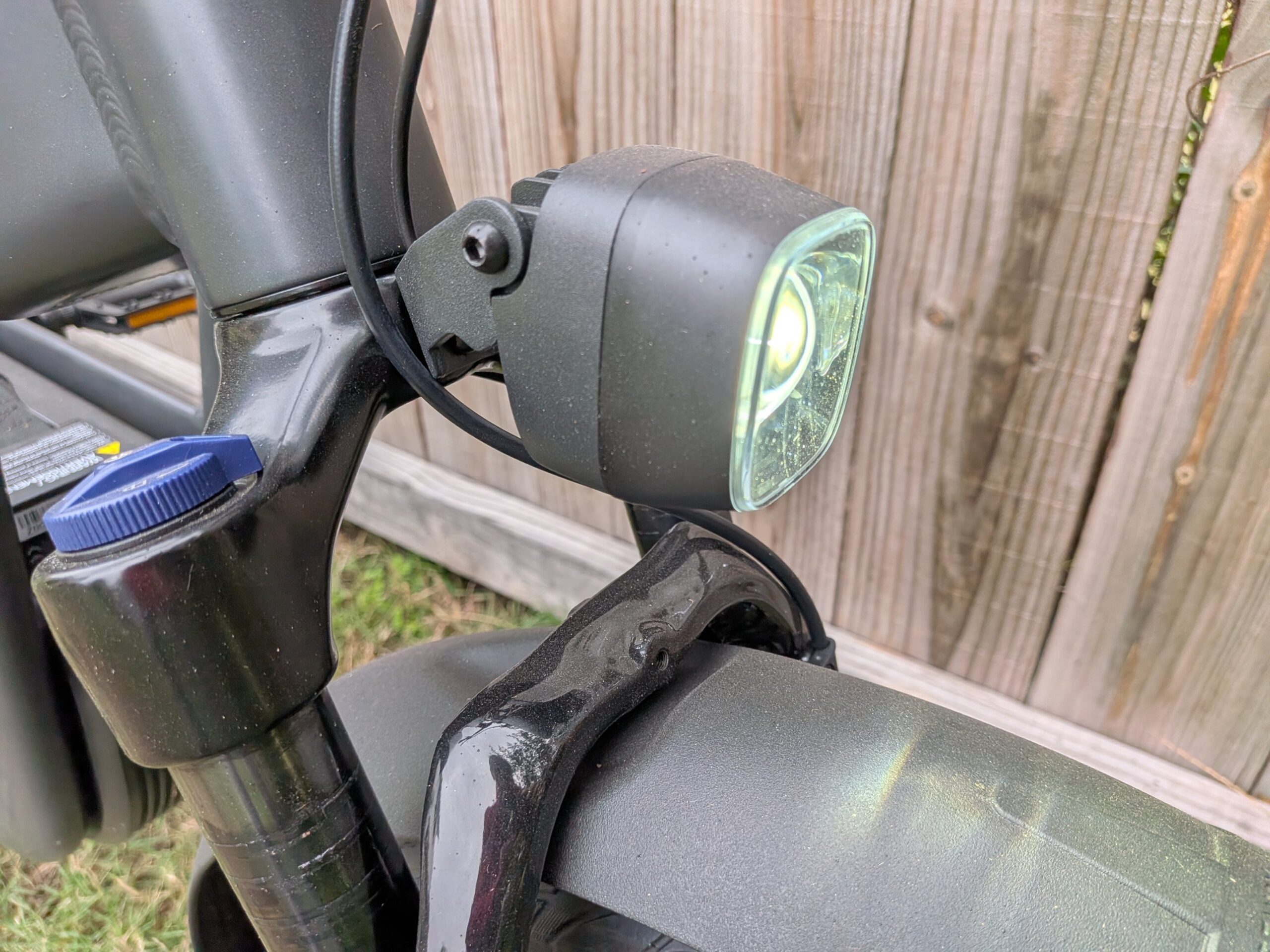
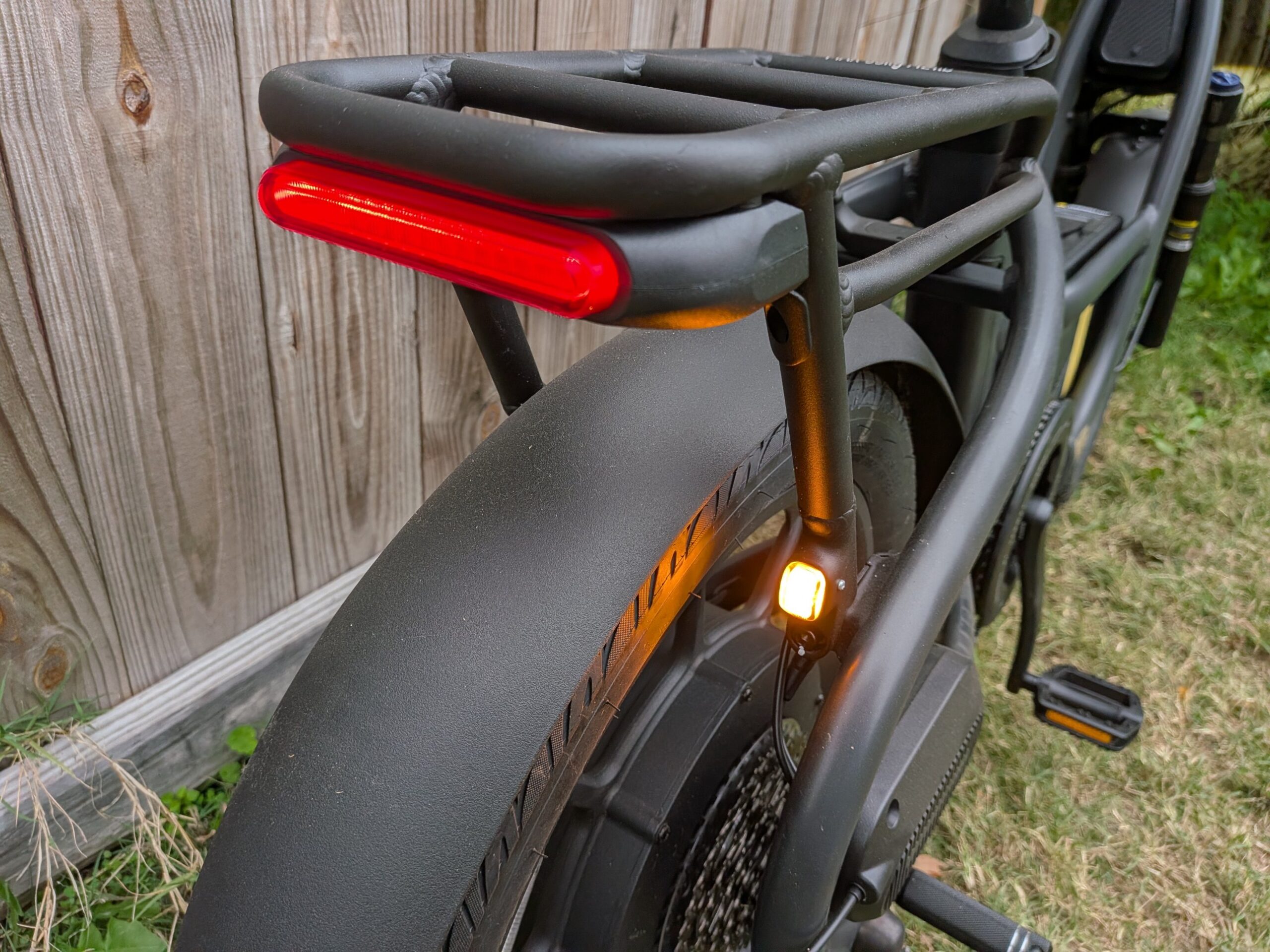
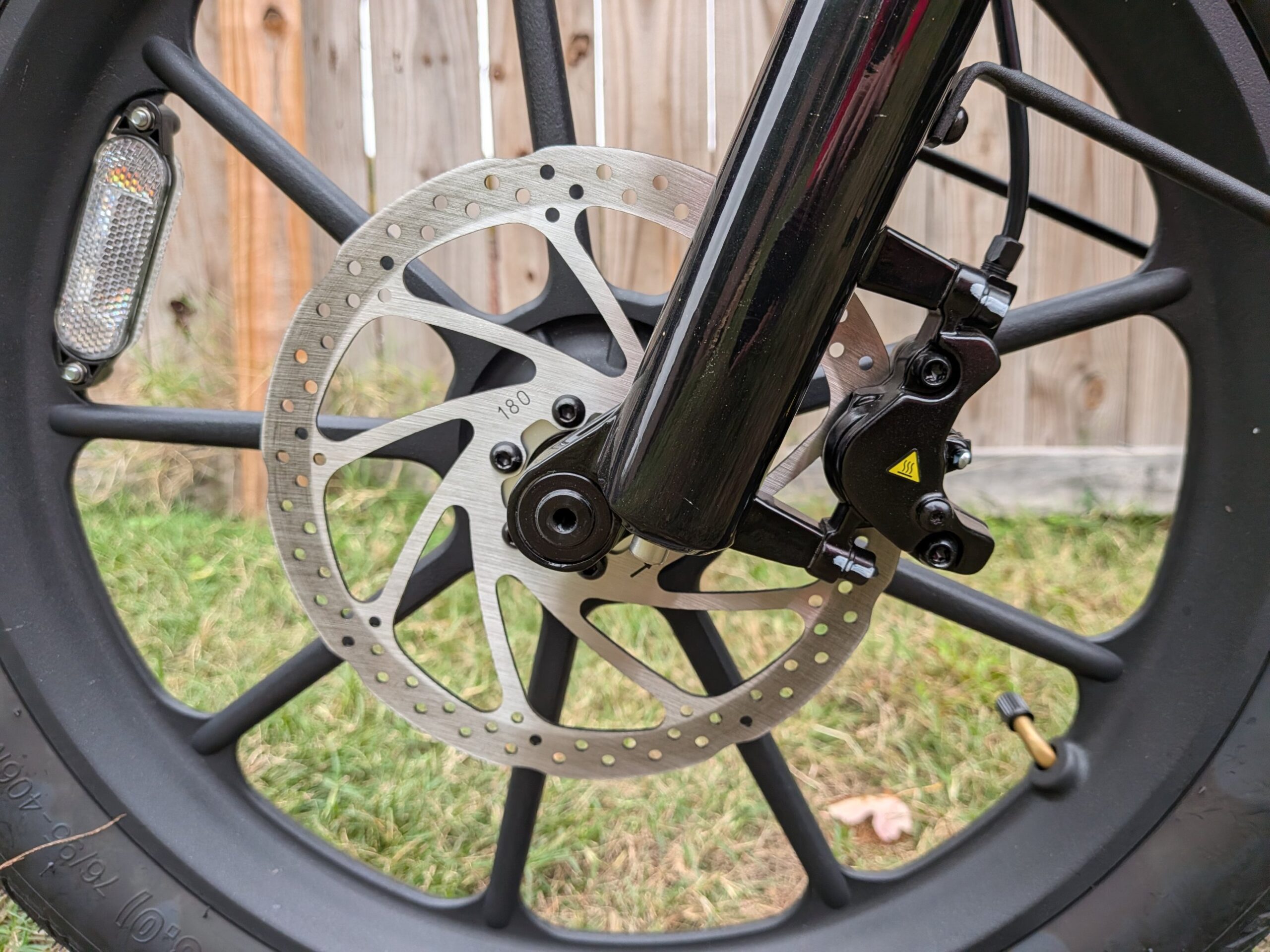
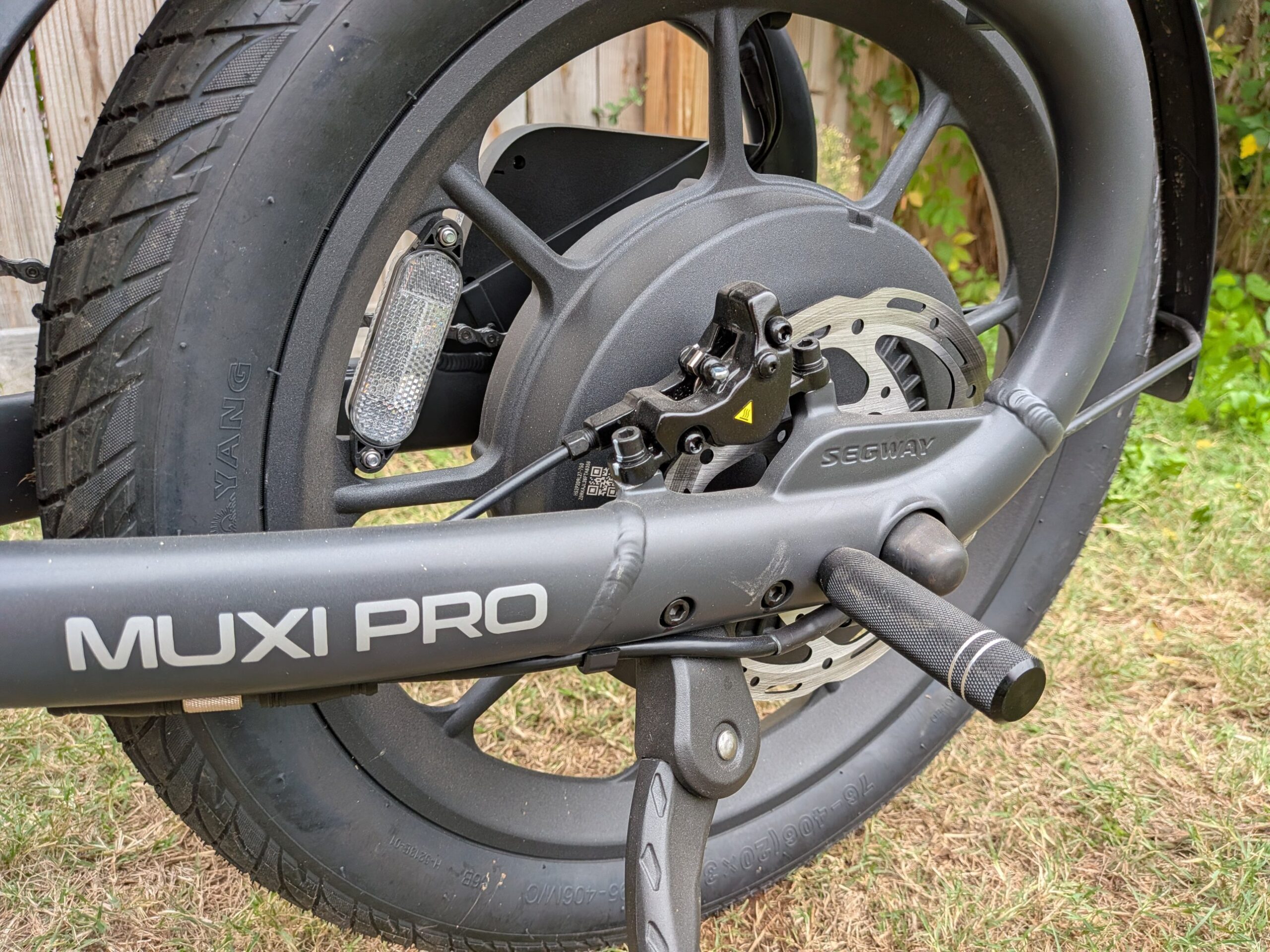
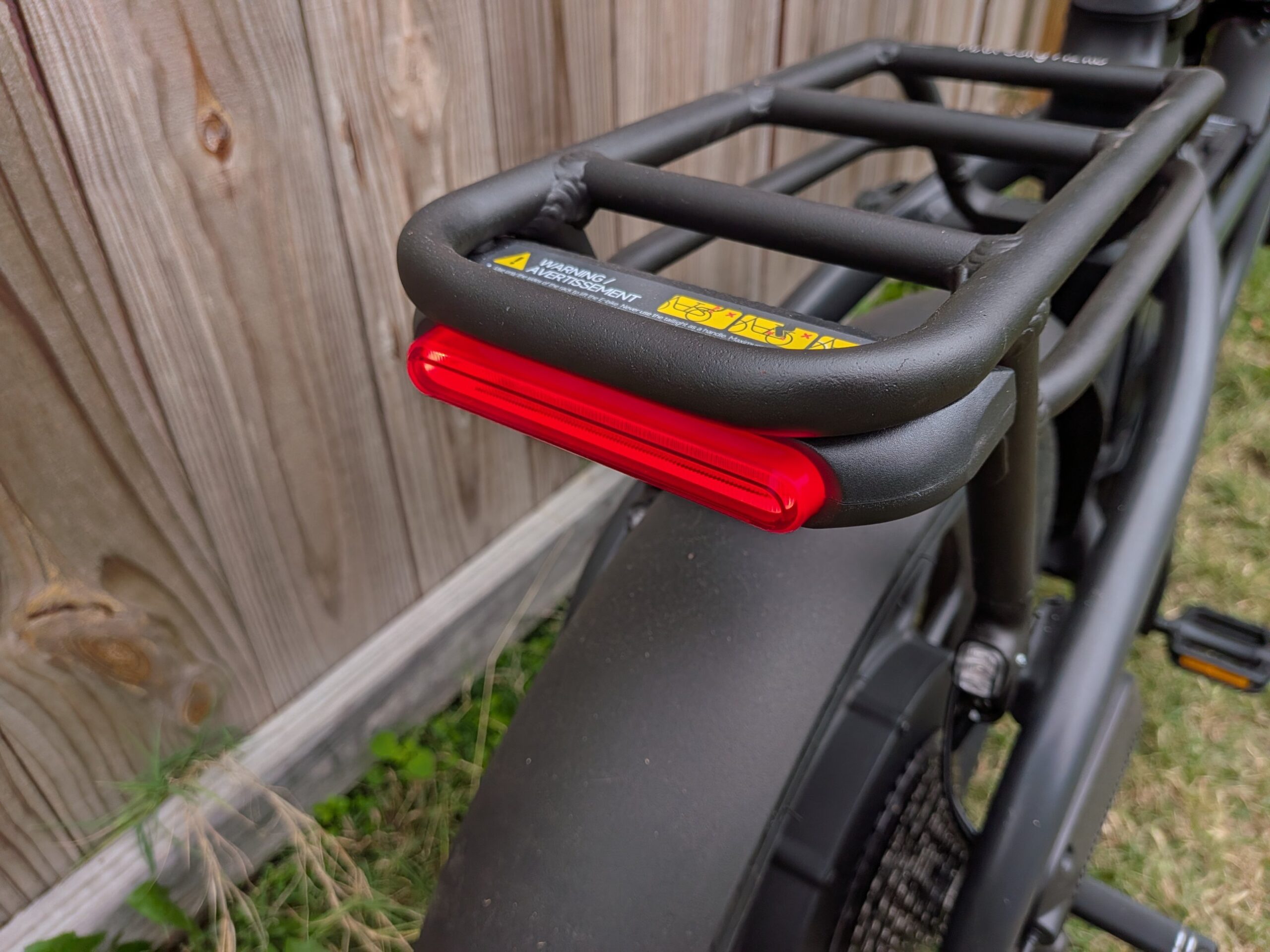
A 70mm suspension fork replaces the MUXI’s rigid unit, with preload adjustment on the left leg and a lockout on the right. Front and rear fenders are now standard, as are turn signals built into the bike, which make a sound when they’re on and show on the display. The rest of the lighting runs off the main battery, including a taillight that brightens when you brake. Stopping comes from unbranded two-piston hydraulic disc brakes on 180mm rotors, and they had no trouble scrubbing off speed in our testing. The wheels are spoke-free mag units wrapped in 20 x 3-inch Chaoyang street tires. They weigh more than spoked wheels, but you’ll never have to true them, and the front wheel attaches with a through axle.
Cockpit, App, and Security
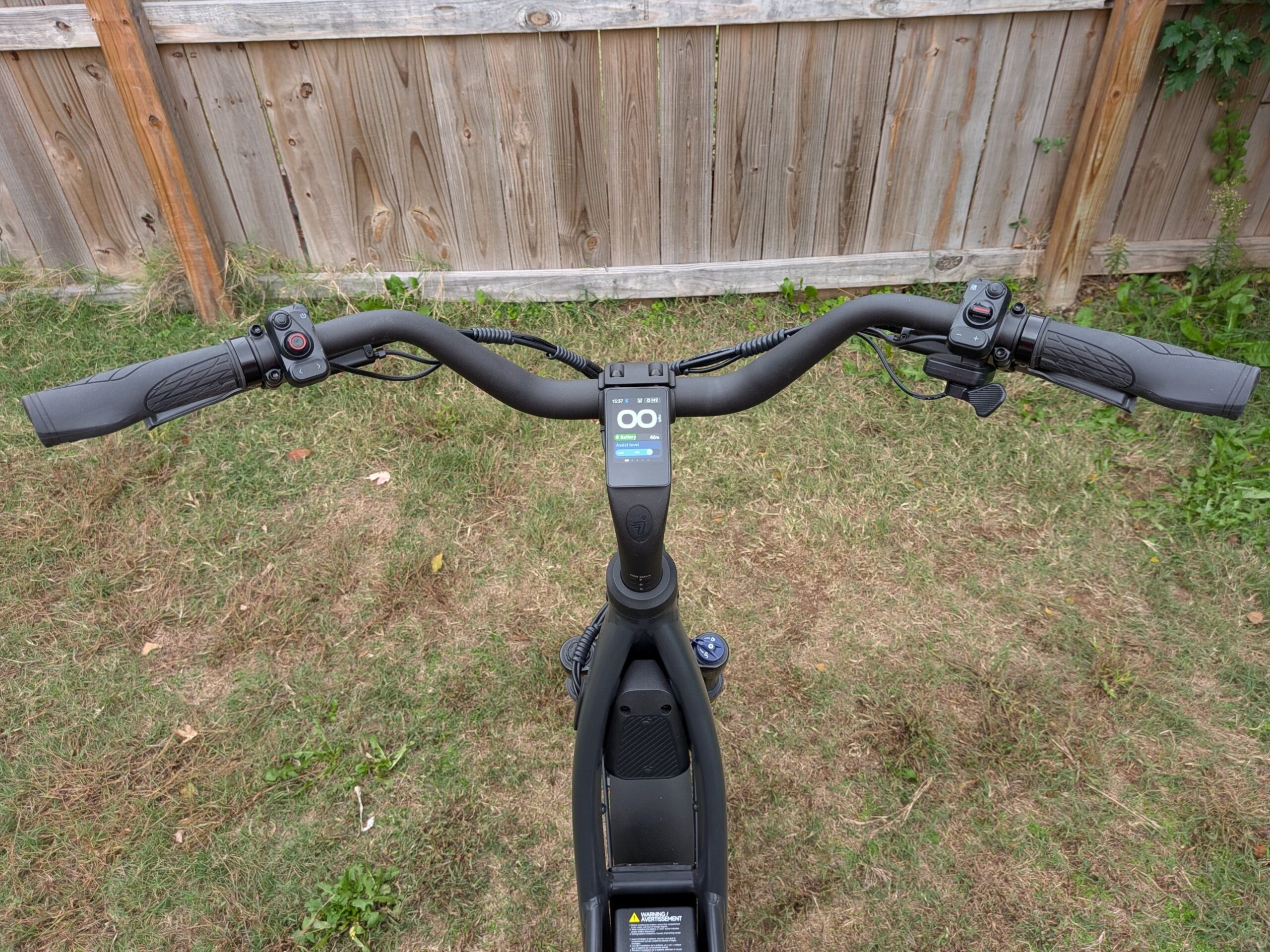
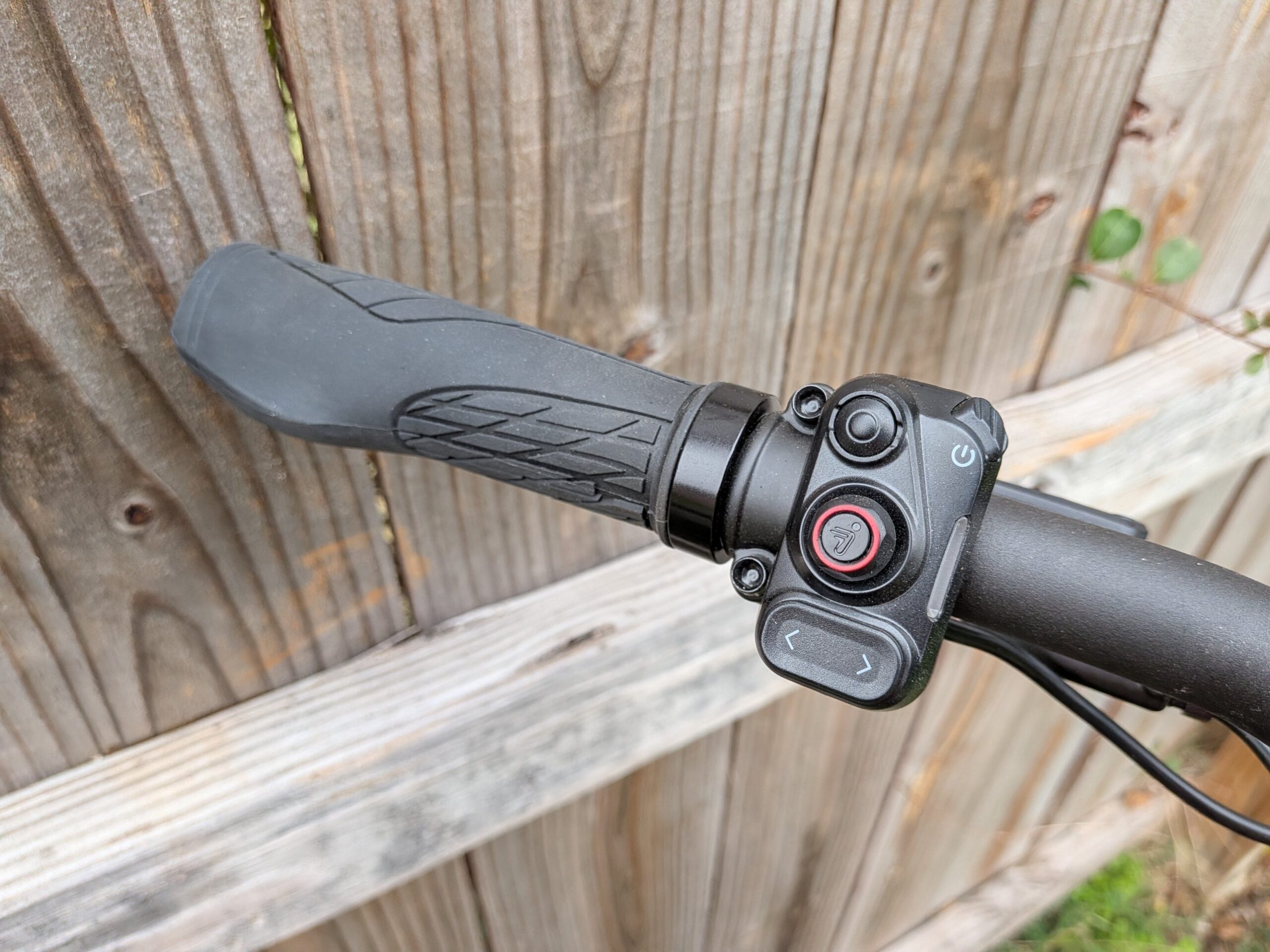
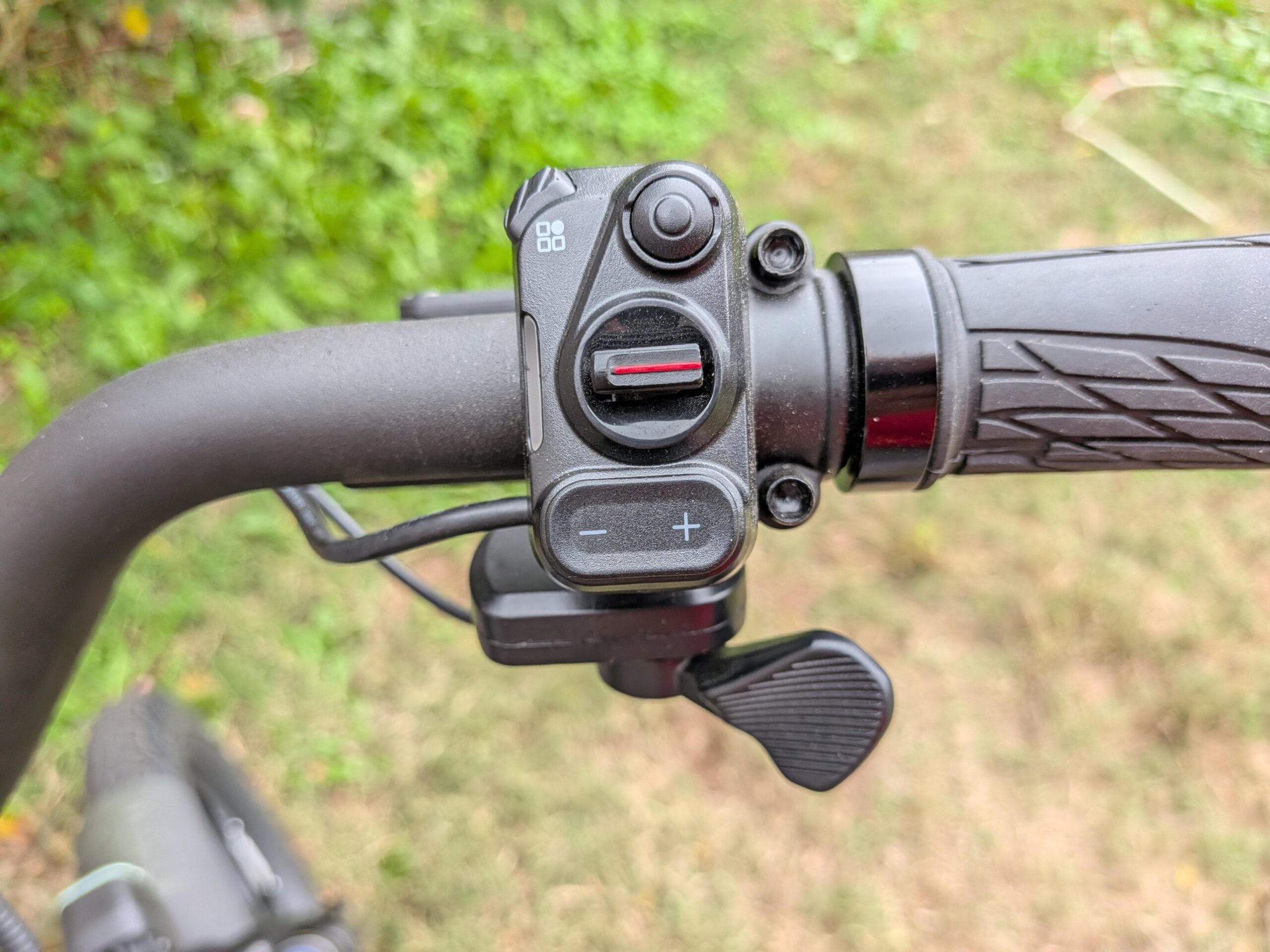
Riders coming from a normal ebike will need a few minutes with the controls. A joystick on the left pod scrolls through display pages for ride stats, grade, navigation, and music, while separate buttons handle the horn, power, turn signals, lights, and walk mode. Being able to skip a song or change the volume from the grip isn’t something we’ve seen from many brands, and it’s a nice touch for commuters. The horn has selectable sounds, though we’d like a louder option that drivers can actually hear inside a car. Light bars on the left pod flash yellow when the optional $99.99 rearview radar detects an approaching car. The app is deep enough to feel overwhelming at first, and it’s where you’ll adjust pedal assist sensitivity and adaptive power, share the bike with family, and calibrate AirLock so it reliably wakes when you walk up with your phone.
Security gets the same attention. With the bike off, the rear wheel can lock, and moving it sets off the horn and lights while sending a push notification to your phone. GPS tracking is free for the first year and $20 a year after that, which seems fair for the ability to see where your bike is at any time. Apple Find My support is on board as well.
Cargo Capacity and Accessories
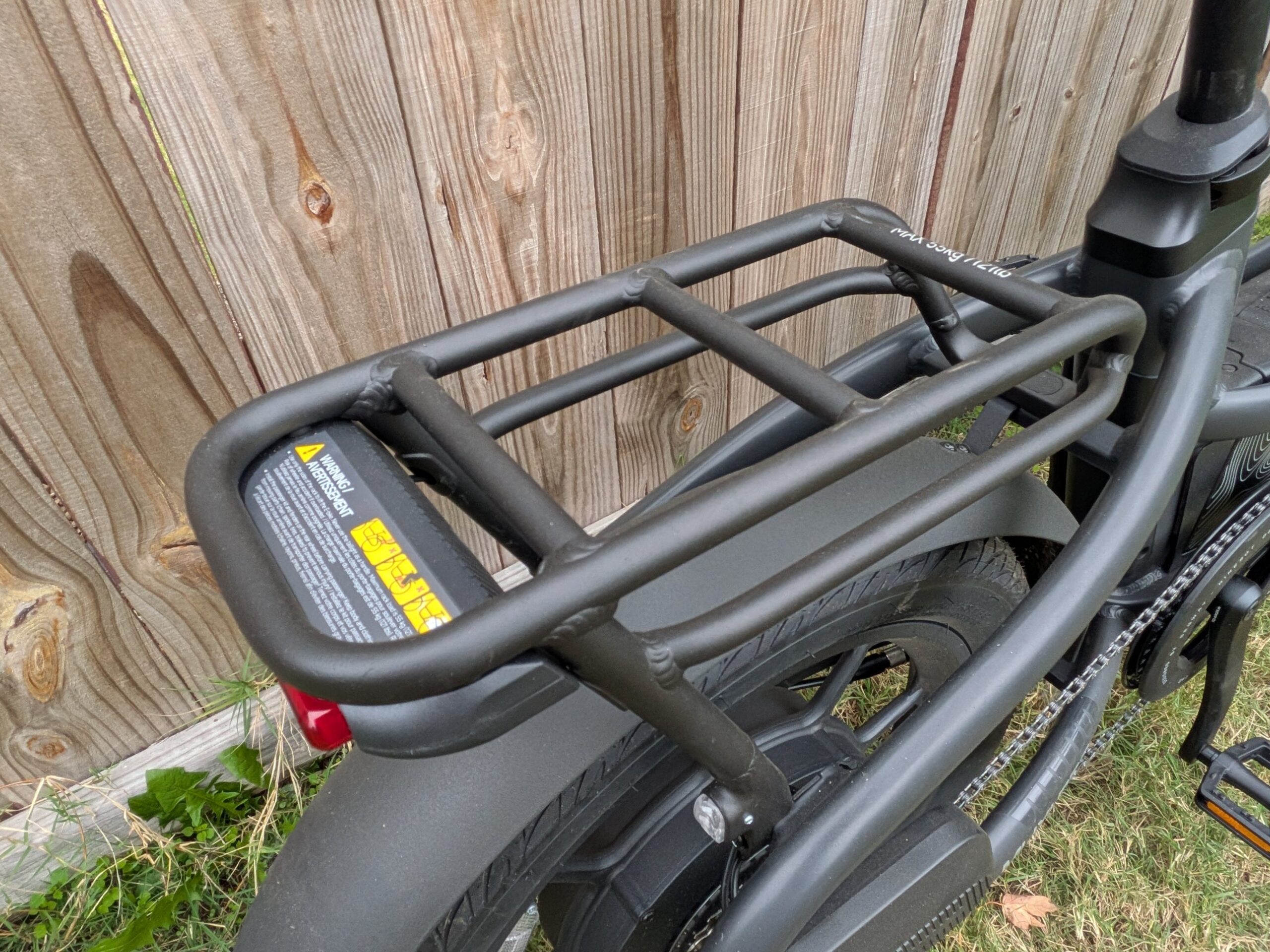
Segway rates the bike for 418 lb in total, with a 265 lb rider limit. The included rear rack is rated for 121 lb and has pannier hangers, and head tube mounts accept a $99.99 front basket rated for 33 lb. A $129.99 middle basket fits inside the frame, and there’s a $229.99 Xiro automatic dropper post. A drink holder comes in the box. The $119.99 passenger kit is rated for a passenger up to 120 lb, but there’s nothing for a young child to hold on to, so we’d keep any trips with our own kids short.
Frame, Options, and Fit
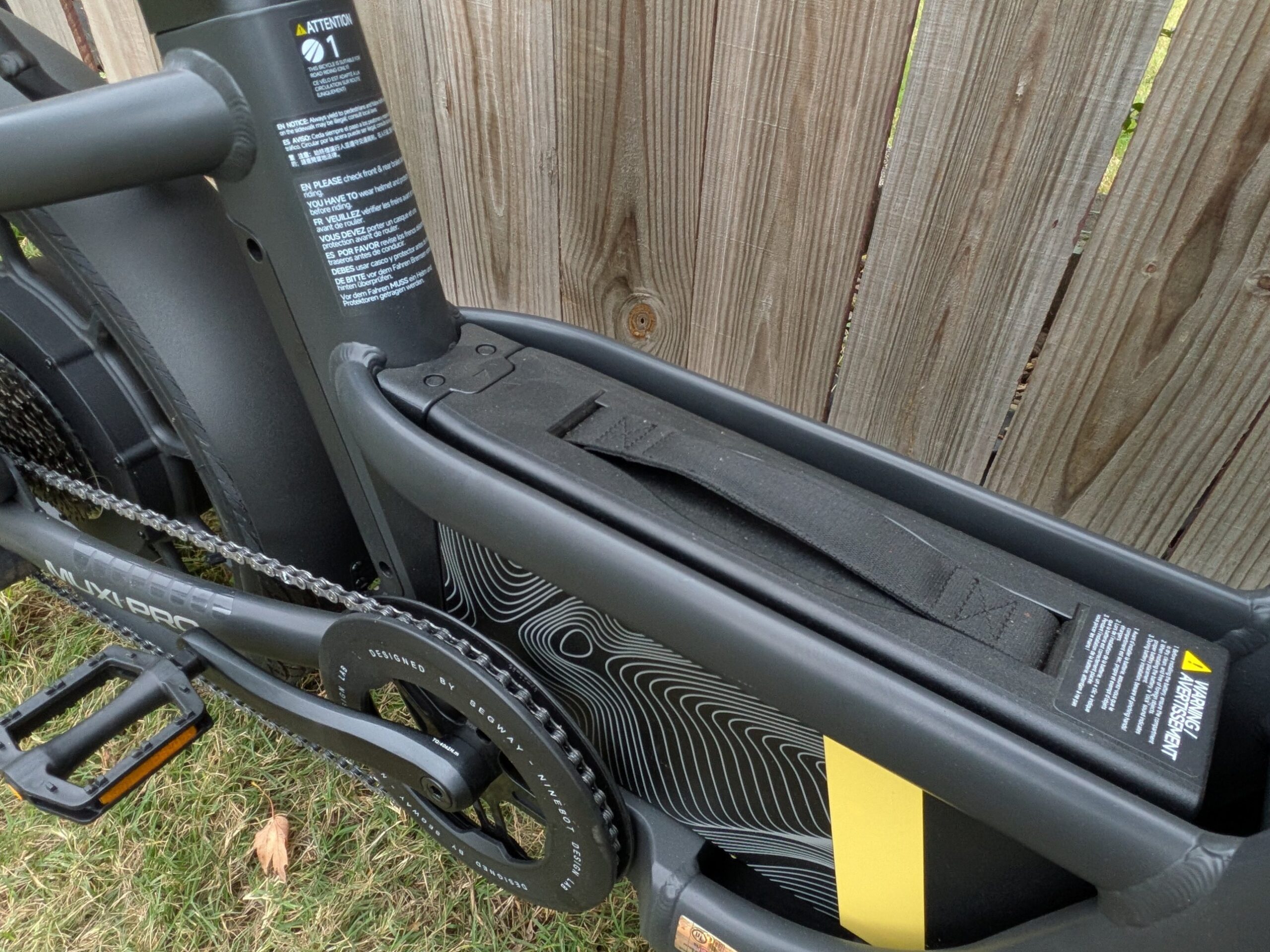
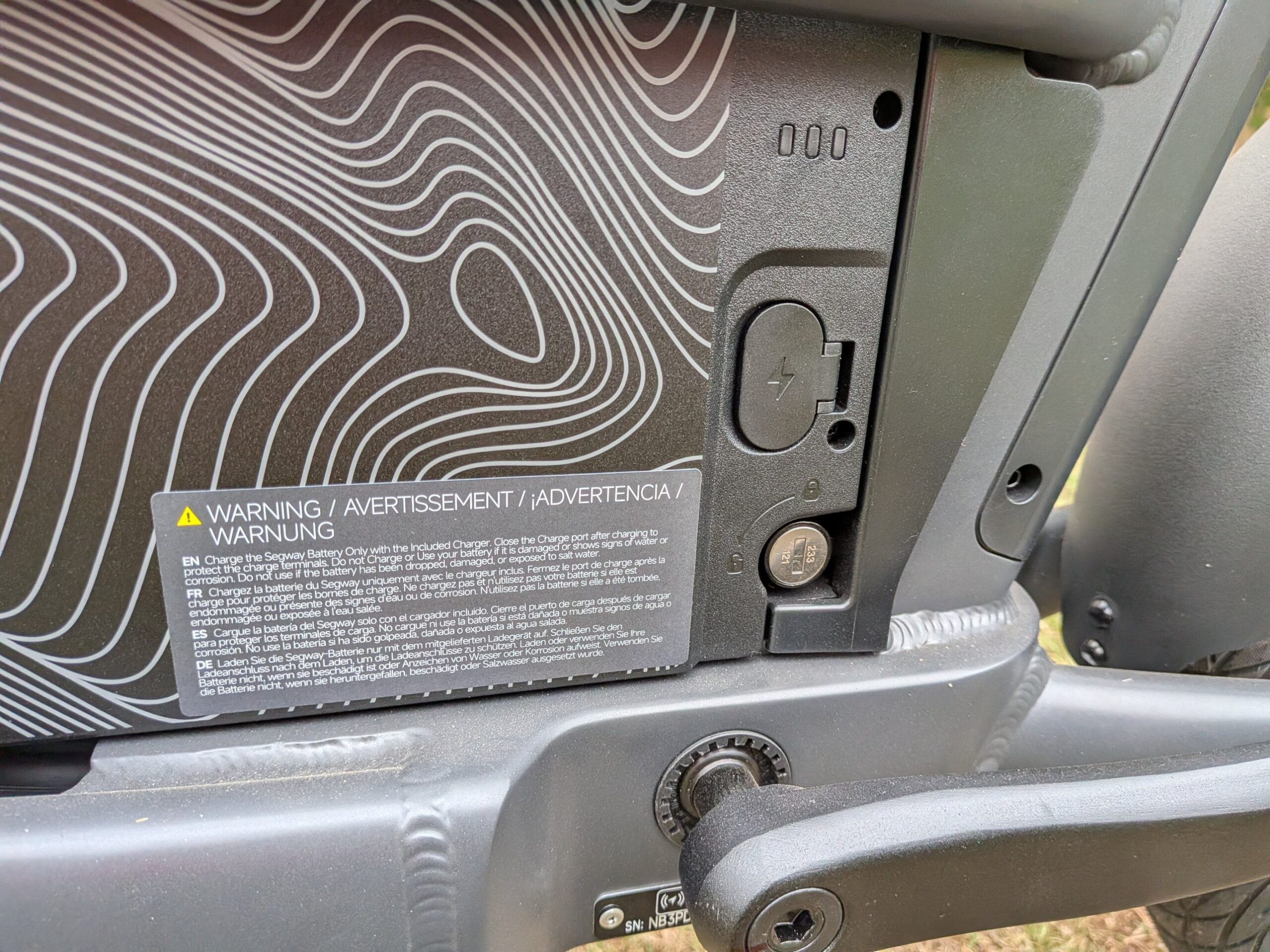
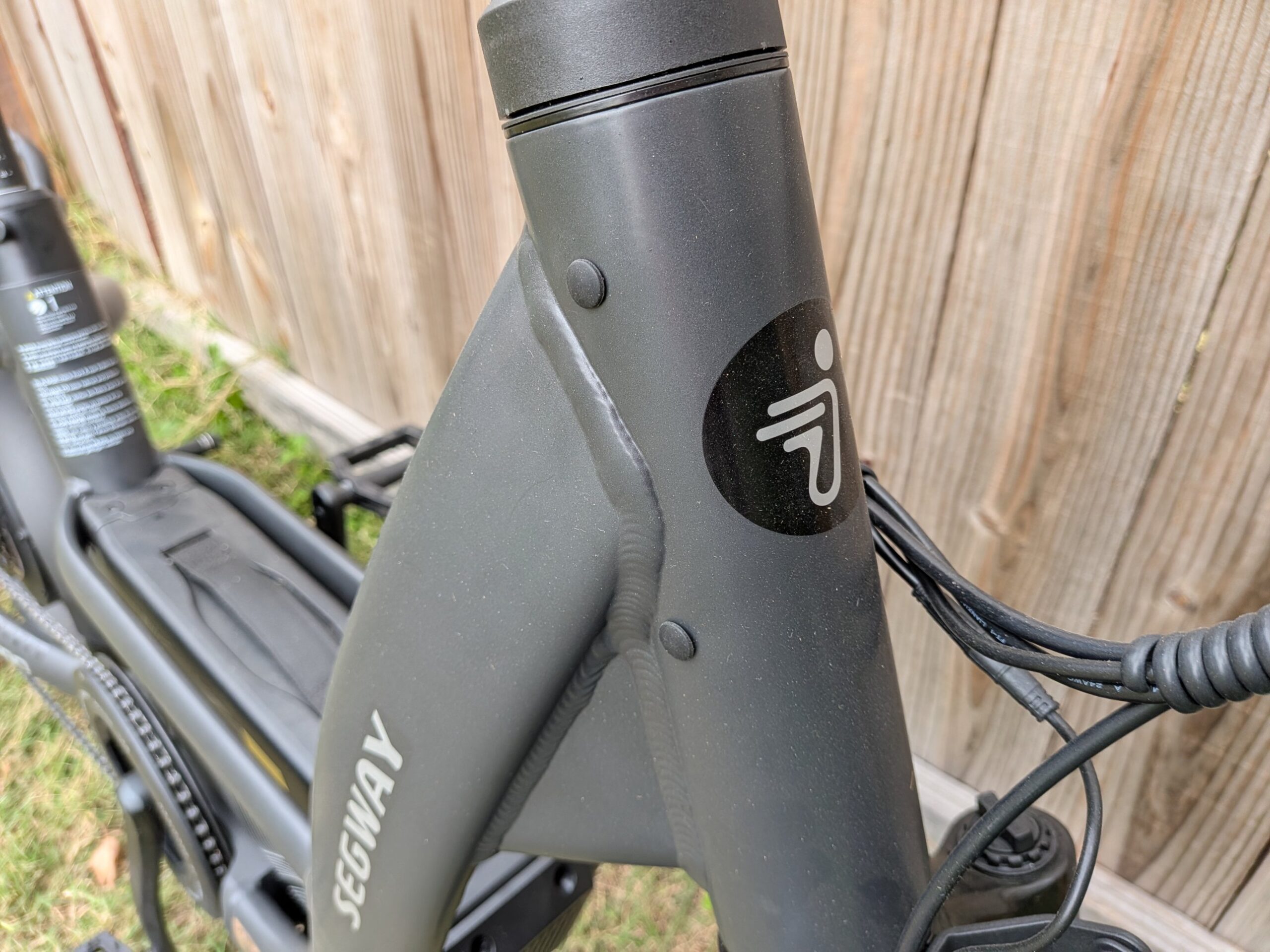
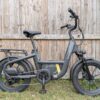
The twin-tube step-thru frame is carried over from the MUXI, with the battery tucked into the bottom of the bike to keep the weight low. It locks in with a key below the charge port and lifts out by a built-in grab handle, and it’s rated IPX7 while the full bike is rated IPX5. The swept-back handlebars put you in a comfortable position that’s close to fully upright, and the funky proportions are part of the appeal. A rear-mounted single-leg kickstand holds it up fine, though a dual-leg stand would suit a bike built for loading cargo. Colors are limited to two:
- Anthracite
- Reef Blue
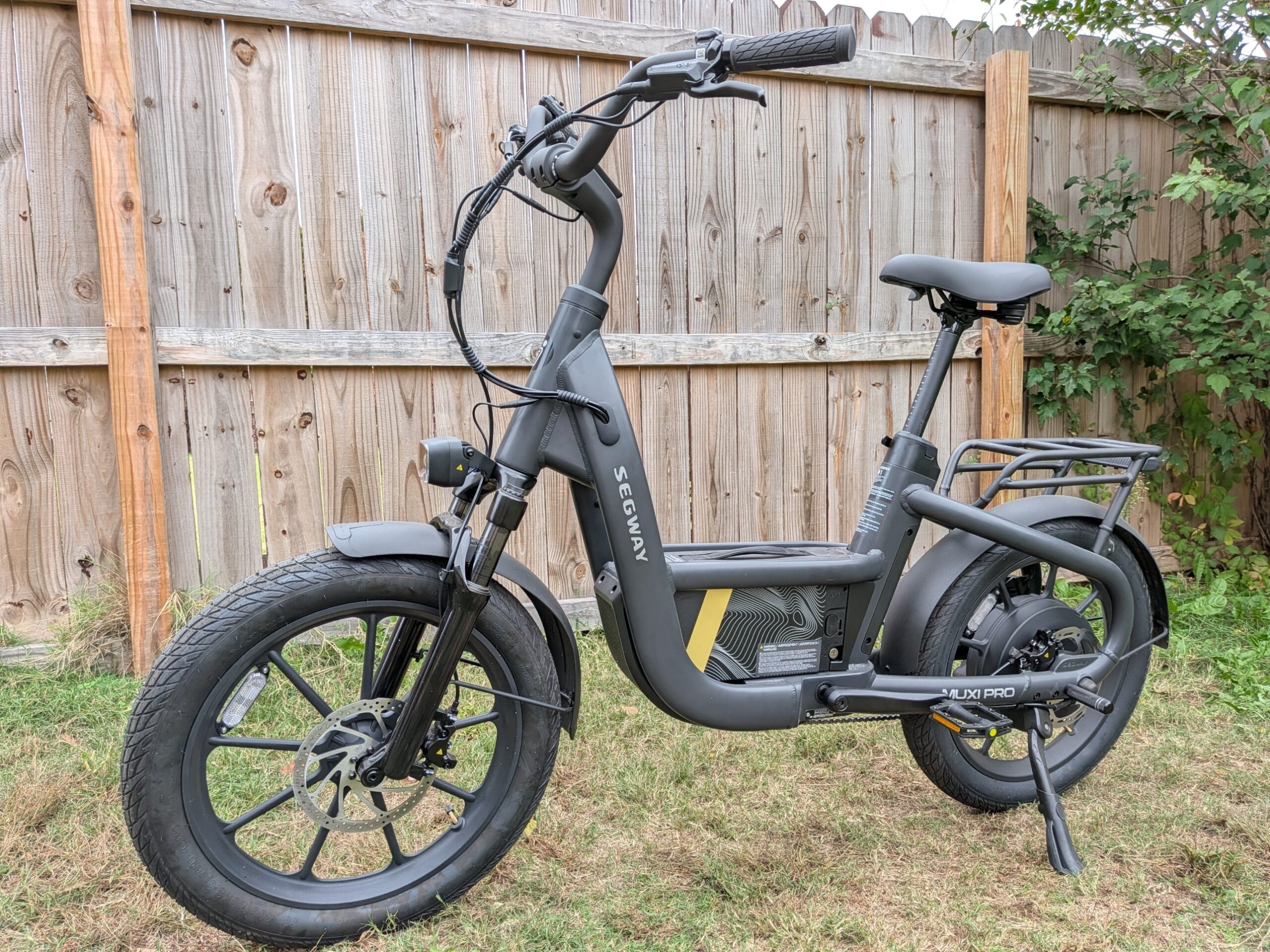
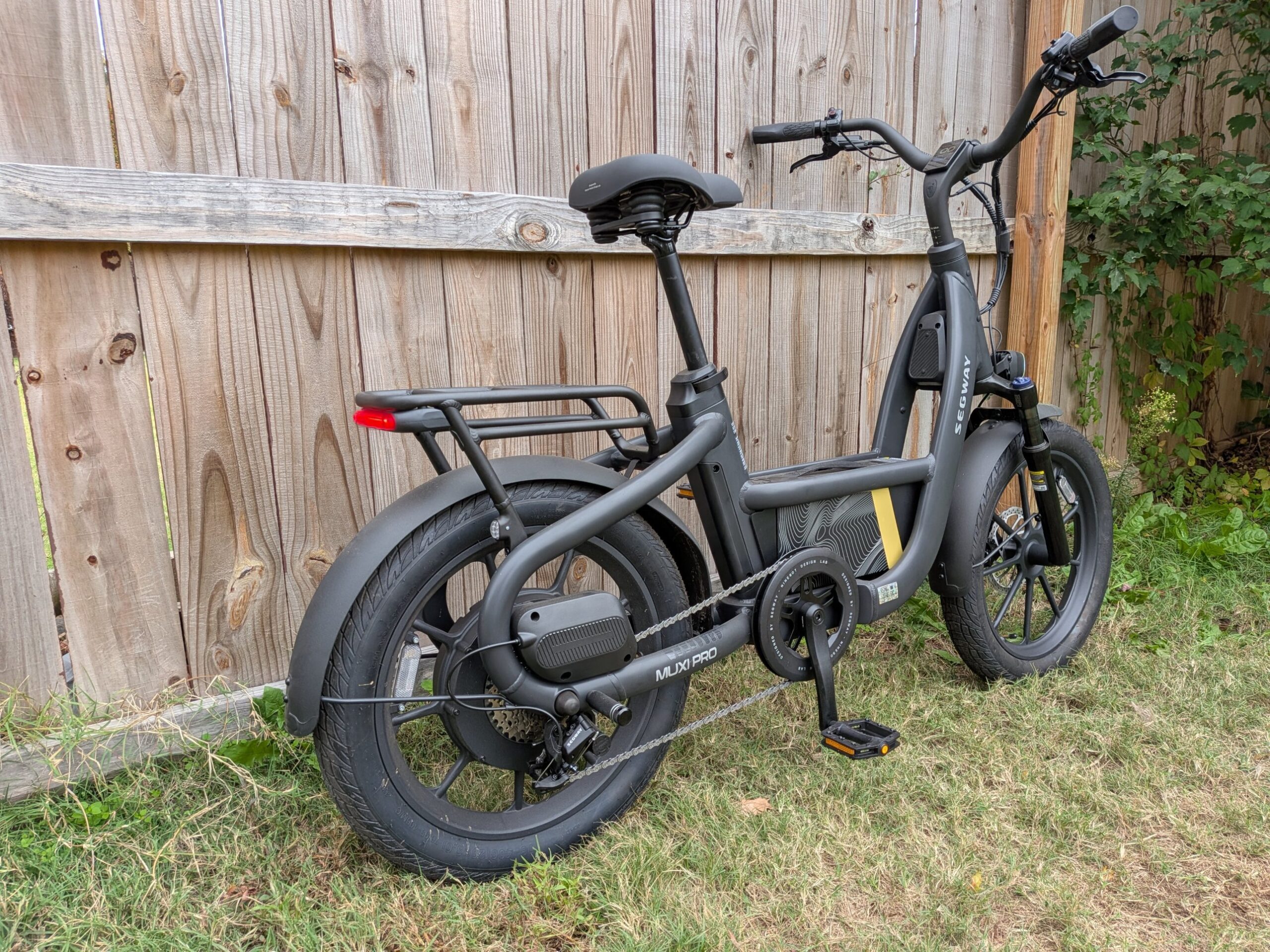
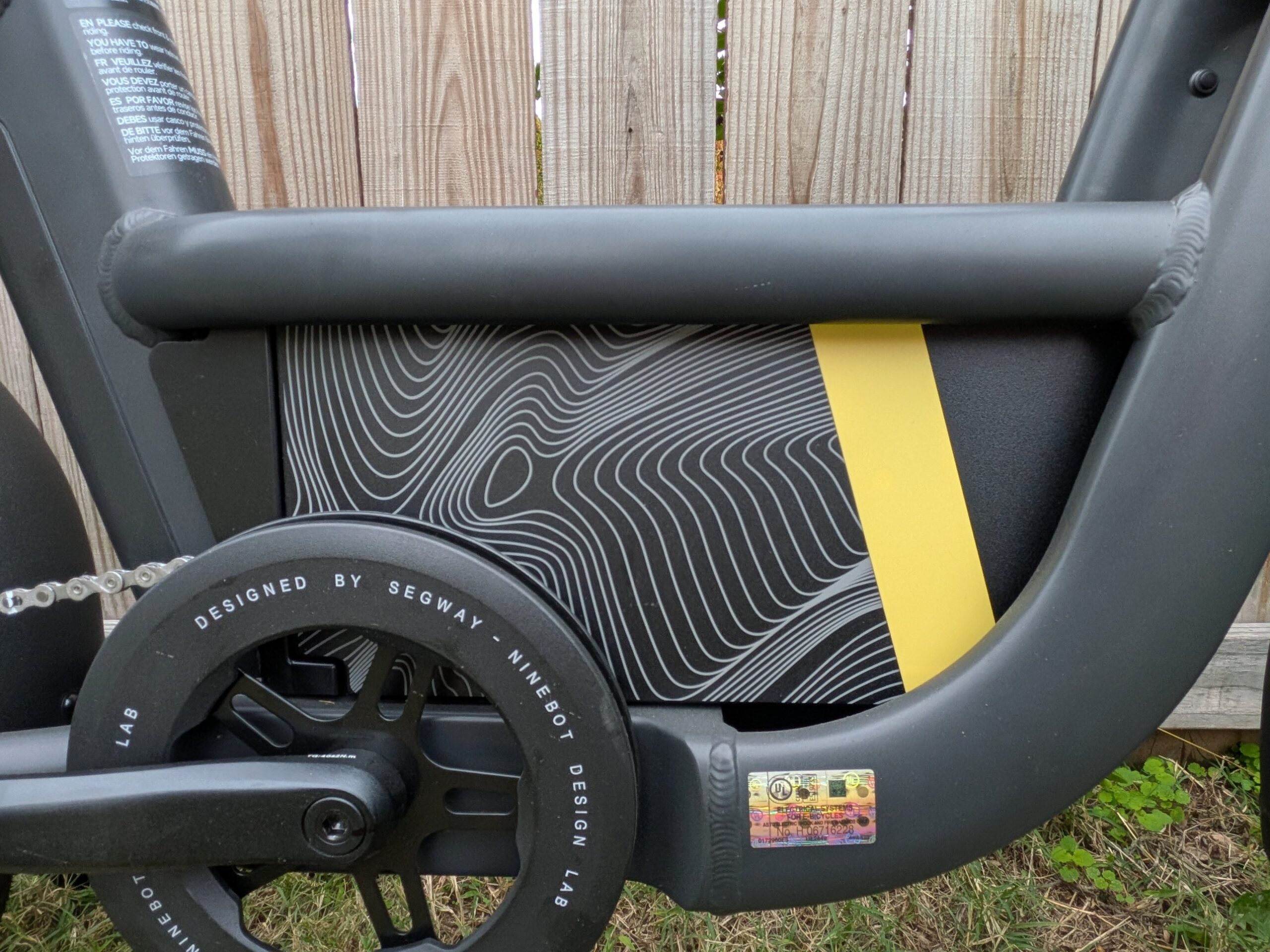
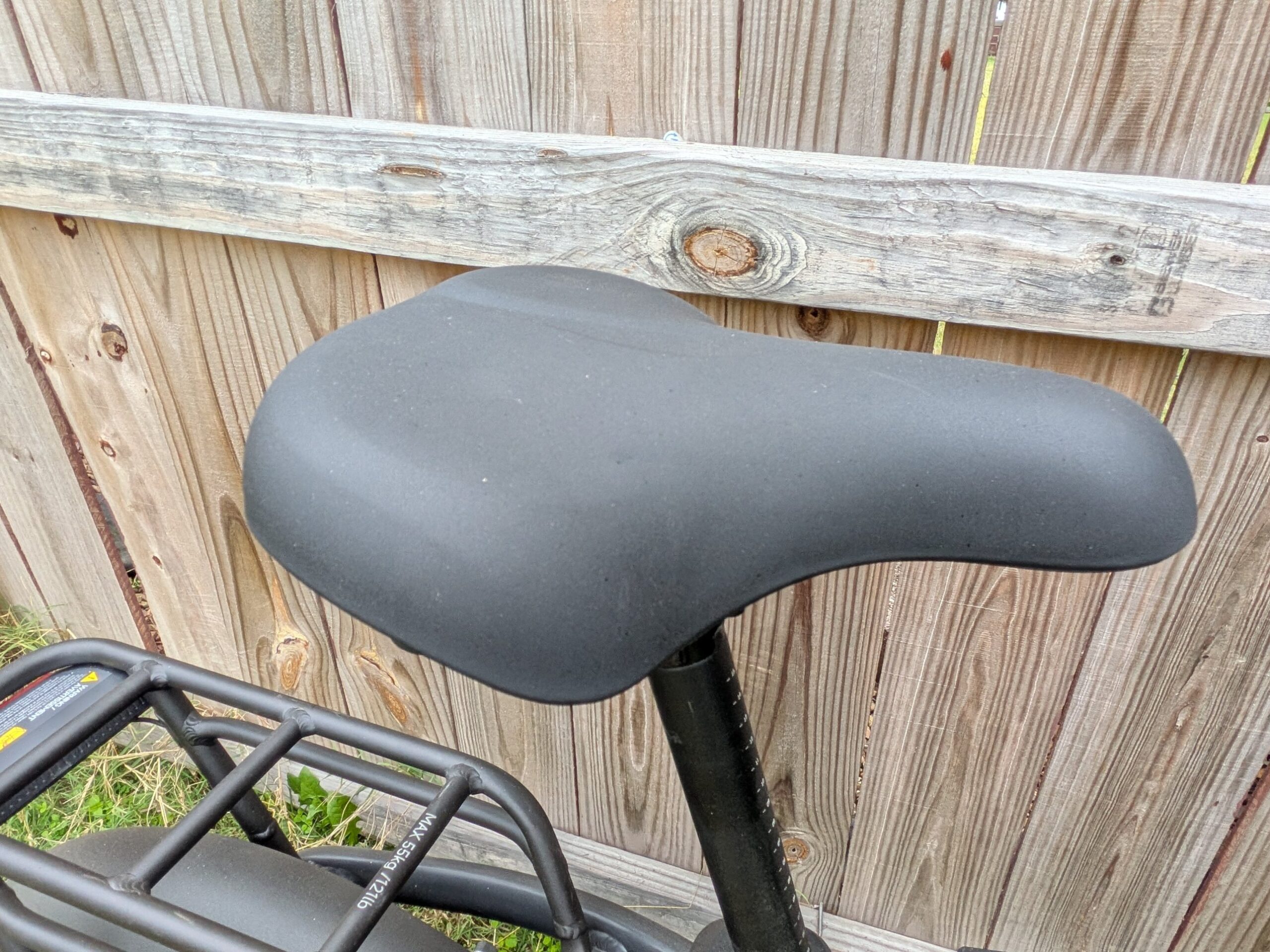
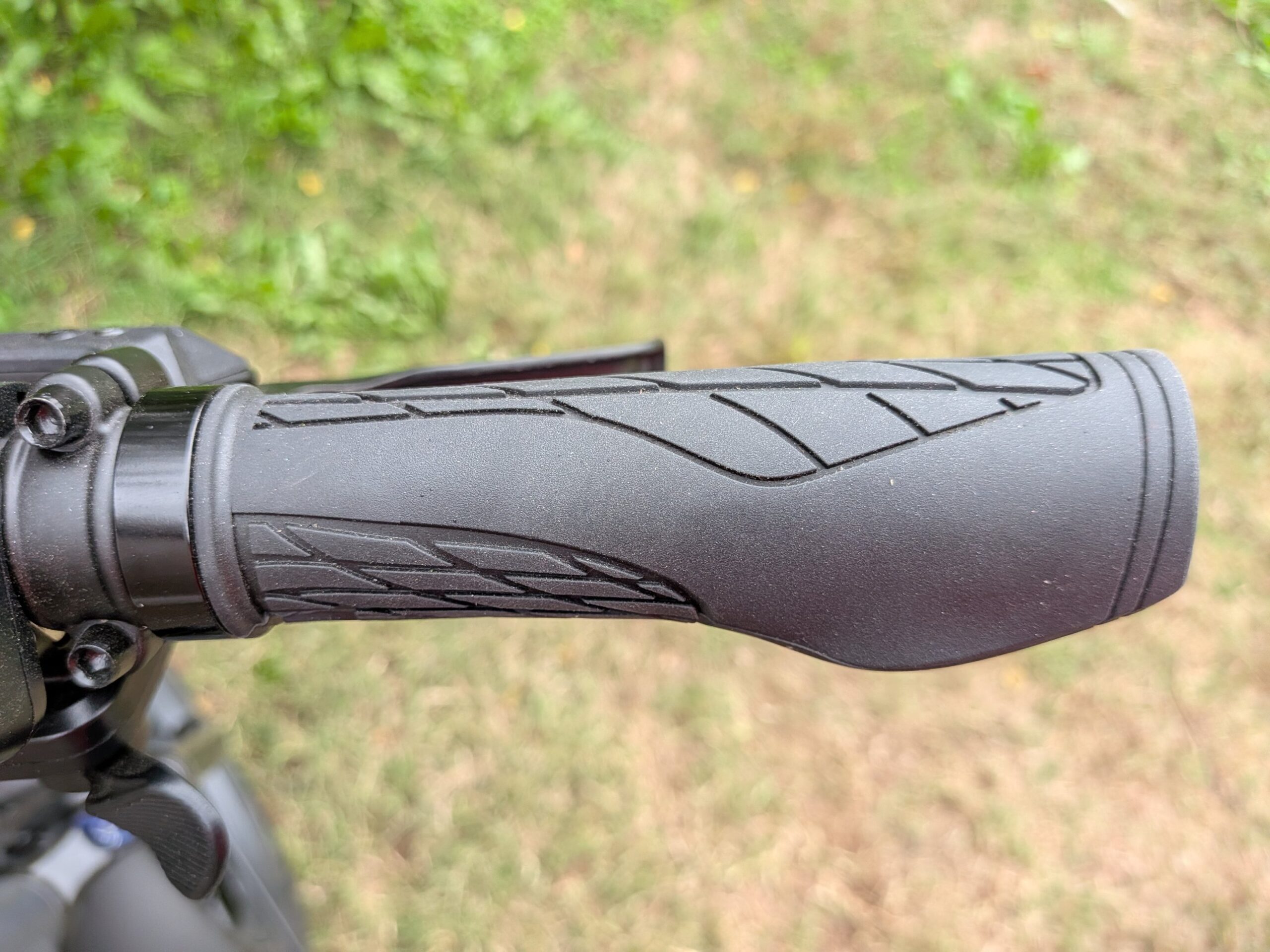
There’s one frame size, and it clearly favors shorter riders. At 6 feet with a 32-inch inseam, our tester had the seat at its highest position and was still just shy of full leg extension, which puts him at the top of what we’d recommend. The fixed stem doesn’t leave much room to adjust reach, either. It weighed 82.9 lb on our scale, a little over Segway’s listed 82.2 lb and about 10 lb more than the standard MUXI, and it’s noticeable if you have to lift it, though not once you’re moving.
Segway MUXI Pro Specifications
Here are the full specs for the MUXI Pro, from Segway’s listing and our own testing.
| Component | Segway MUXI Pro |
|---|---|
| Price | $1,999.99 |
| Type | Utility Ebike |
| Class | 1/2/3 and Hybrid (selectable) |
| Weight | 82.9 lbs measured (82.2 lbs listed) |
| Weight Capacity | 418 lbs total (265 lb rider limit) |
| Top Speed | 28 mph |
| Motor | 750W Direct-Drive Rear Hub with Regen |
| Torque | 80 Nm |
| Battery | 48V 717 Wh, removable |
| Claimed Range | Up to 73 miles |
| Charger | 3.9A, ~7 hr full charge |
| Display | Color TFT, auto-brightness |
| Sensor | Cadence-based with Adaptive Power |
| Throttle | Right-hand thumb (Max Speed: 20 mph) |
| UL Certifications | UL 2849 (electrical system) |
| Water/Dust Resistance | IPX5 (bike), IPX7 (battery) |
| Drivetrain | 9-speed electronic, manual or auto shift |
| Derailleur | Segway-branded, made by LTWOO |
| Cassette | 11-36T |
| Chainring | 48T |
| Brakes | Unbranded hydraulic disc brakes, 2-piston |
| Levers | Hydraulic, with motor cutoff |
| Rotors | 180mm front and rear |
| Frame | Step-thru aluminum twin-tube, low battery placement |
| Fork | 70mm travel suspension, preload and lockout |
| Axle | Front through axle |
| Tires | Chaoyang 20×3.0 in, street tread, spoke-free mag wheels |
| Handlebars | Swept-back riser |
| Grips | Locking ergonomic |
| Stem | Fixed |
| Saddle | Segway |
| Pedals | Plastic platform |
| Fenders | Front and rear included |
| Rear Rack | Included (121 lb capacity), pannier hangers |
| Kickstand | Rear-mounted single-leg |
| Lights | 600-lumen headlight, taillight with brake signal, integrated turn signals |
| Warranty | 2-year limited; battery 2 years or 500 cycles |
Real World Performance Testing
Throttle
The right-hand thumb throttle tops out at 20 mph on the display, whether you’ve got pedal assist turned up or switched off. What changes is the pull. Launching with the assist at its highest level felt noticeably stronger than with assist off, so if you plan on using the throttle from a stop, leave the bike in a higher level. Either way, it stays quiet enough that we’d call it one of the quietest motors we’ve tested, and possibly the quietest.
Pedal Assist and Speed Modes
Pedal assist has six levels, though the display labels them on a scale from low to high rather than numbering them, so we counted up from the bottom. The first two are mellow and leave you at a relaxed cadence, and pushing a little harder on the pedals brings in a bit more power. Level three is where it really wakes up, although the power takes a moment to arrive. From there, the takeoff stays gentle before the motor ramps in hard, and the gears let you keep pedaling at speeds that would’ve left you spinning out on the single-speed MUXI. We hit 28 mph on the display in level four, in ninth gear. Your legs do have to move quickly at that speed, faster than we’d prefer, but there was still resistance to push against. Each level above that just gets you there sooner.
| Assist Level | Gear | Speed We Reached |
|---|---|---|
| 1 | 5th | About 12 mph |
| 2 | 5th | About 15 mph |
| 3 | 8th | 20 mph |
| 4 | 9th | 28 mph |
| 5 | – | 28 mph |
| 6 | – | 28 mph |
Speed modes for Class 1, 2, and 3 are on the display and in the app, along with a Hybrid mode that keeps the throttle at 20 mph while allowing pedal assist to reach 28 mph. We’d also like the option to adjust power curves and top speeds per level. The bike gets over-the-air updates, so that could still come.
Manual vs. Automatic Shifting
Manual shifting was precise and properly adjusted right out of the box, and each press took effect immediately. Automatic is more of a mixed bag. On the standard setting it was too slow moving through the gears, and switching to sport in the app made a real improvement. With a target cadence of 70, it stepped up through the gears nicely as we gained speed on flat ground. Slowing down is the problem. When we stopped pedaling and coasted, the bike stayed in eighth gear, which is where automatic shifters tend to struggle, since real stops usually happen faster than the system can react. Setting a higher starting gear and leaning on the throttle from a stop would ease that. Riders who don’t think about gears may be happy to let the bike handle them, especially on steady routes. If you do a lot of stop-and-go riding or just want control over your gear, you’ll probably end up in manual, as we did.
Regenerative Braking
Before the pads ever make contact, a light squeeze of the levers brings in the motor’s braking force, and it might be the best regen we’ve felt on an ebike. Starting from 20 mph, we got down to about 8 mph with little or no help from the pads. It won’t bring you to a full stop, and the range you gain back will be small, but it saves wear on your brake pads and makes slowing down feel smooth.
Hill Climb
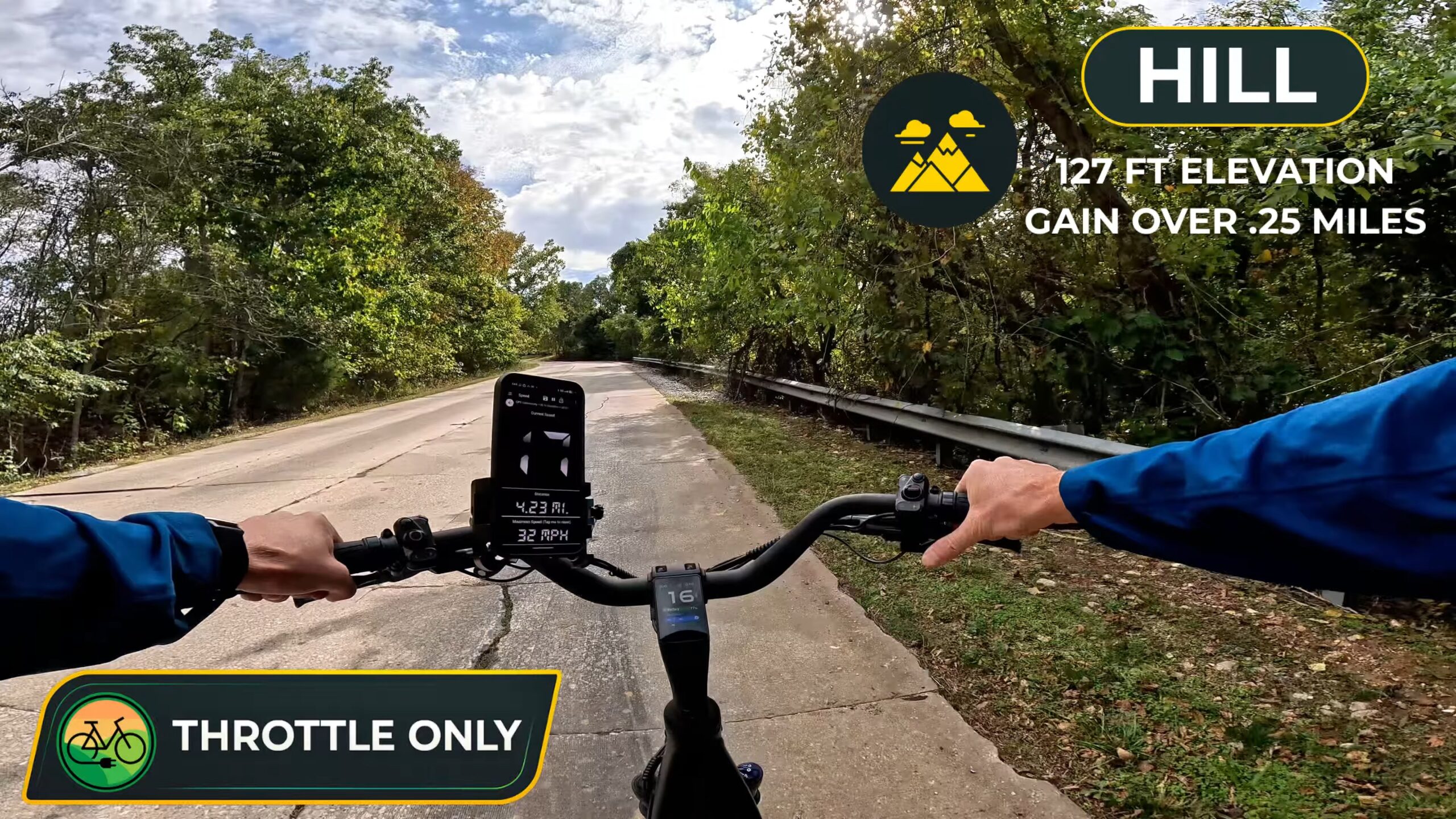
On throttle alone, the MUXI Pro held a minimum of 14 mph on GPS, with the display dipping to 13 for a moment, and there was no sign of the motor struggling. It’s impressive from any motor, and more so from one you can barely hear. Pedaling in first gear at the lowest assist, we could feel some effort in our legs and still hold a conversation, and level two wasn’t much different. At level three the motor took over, leaving almost no pressure on the pedals even after shifting up, and we climbed at around 10 mph with plenty of assist still in reserve. We also tried hill start assist partway up. After a few seconds on the brakes the bike holds itself in place, and it lets go when you start pedaling or use the throttle, which is the easier option if you stopped in a tall gear.
Hill Descent Control
This was the highlight of our test. With hill descent control off, we hit 30 mph coming down the hill and had to get on the brakes hard, which they handled well. With it on, the bike read the slope and held us at 10 mph on the steep section while we did nothing at all, with no brakes and no throttle, sending that energy back to the battery. It released as the road flattened out. It’s better than we remember on the original MUXI, and it’s a real confidence boost if you live somewhere hilly or you’re carrying a load downhill.
Range
Segway claims up to 73 miles, which is probably only realistic in the lowest level of assist. We’d expect around 30 miles on throttle alone and 40 to 50 for most riders using a mix of pedaling and assist levels. Those are our estimates, since we didn’t run a dedicated range test.
Segway MUXI Pro vs Segway MUXI
| Spec | Segway MUXI Pro | Segway MUXI |
|---|---|---|
| Price | $1,999.99 | $1,699.99 |
| Motor | 750W direct drive, 80 Nm | 750W direct drive, 80 Nm |
| Battery | 48V, 717 Wh | 48V, 717 Wh |
| Drivetrain | 9-speed electronic, manual or auto | Single speed |
| Top Speed (Pedal Assist) | 28 mph | 23 mph |
| Throttle Top Speed | 20 mph | 20 mph |
| Fork | 70mm suspension, preload and lockout | Rigid |
| Fenders | Included | Optional ($79.99) |
| Turn Signals | Integrated | None |
| Claimed Range | Up to 73 miles | Up to 80 miles |
| Weight | 82.9 lb measured (82.2 lb listed) | 72.75 lb |
| Rear Rack | 121 lb | 121 lb |
| Colors | Anthracite, Reef Blue | Dusty Sage, Olive Rush |
Since the motor, battery, frame, and most of the tech are shared, the standard Segway MUXI still gets you the quiet power, regen, hill descent control, app, and security features for $300 less. It’s also about 10 lb lighter, and with fewer moving parts there’s less to maintain. In exchange you’re limited to one gear, which stops being pedalable at around 23 mph, and a rigid fork that relies on the tires to soak up bumps. Add the optional fenders and the real price gap shrinks to about $220.
If most of your riding is short, relaxed, and on smooth pavement, the MUXI is still a strong value. If you want to pedal comfortably at a range of speeds, ride on rougher city streets, or commute in traffic where the turn signals earn their keep, the Pro is worth the extra money, and that’s the one we’d pick. To see how both compare with bikes from other brands, read our roundup of the best utility ebikes.
Pros and Cons
Final Thoughts
Is the MUXI Pro worth $300 more than the MUXI? For most riders, we think so. The gears, the fork, and the extra speed fix the things that held the original back, and they don’t take anything away from the tech that made it interesting in the first place, least of all a descent control system that genuinely changes how a steep hill feels. Taller riders should test the fit first, which Segway’s dealer network makes easier than it is with most online brands, and anyone planning to rely on automatic shifting in stop-and-go traffic should expect to spend some time in manual. For a shorter rider who wants one quiet, connected bike to handle commuting and errands, it’s an easy recommendation at this price.
If the MUXI Pro is the right ebike for you, buying through our Segway MUXI Pro link is a free way to support our reviews. Thank you for reading!
