

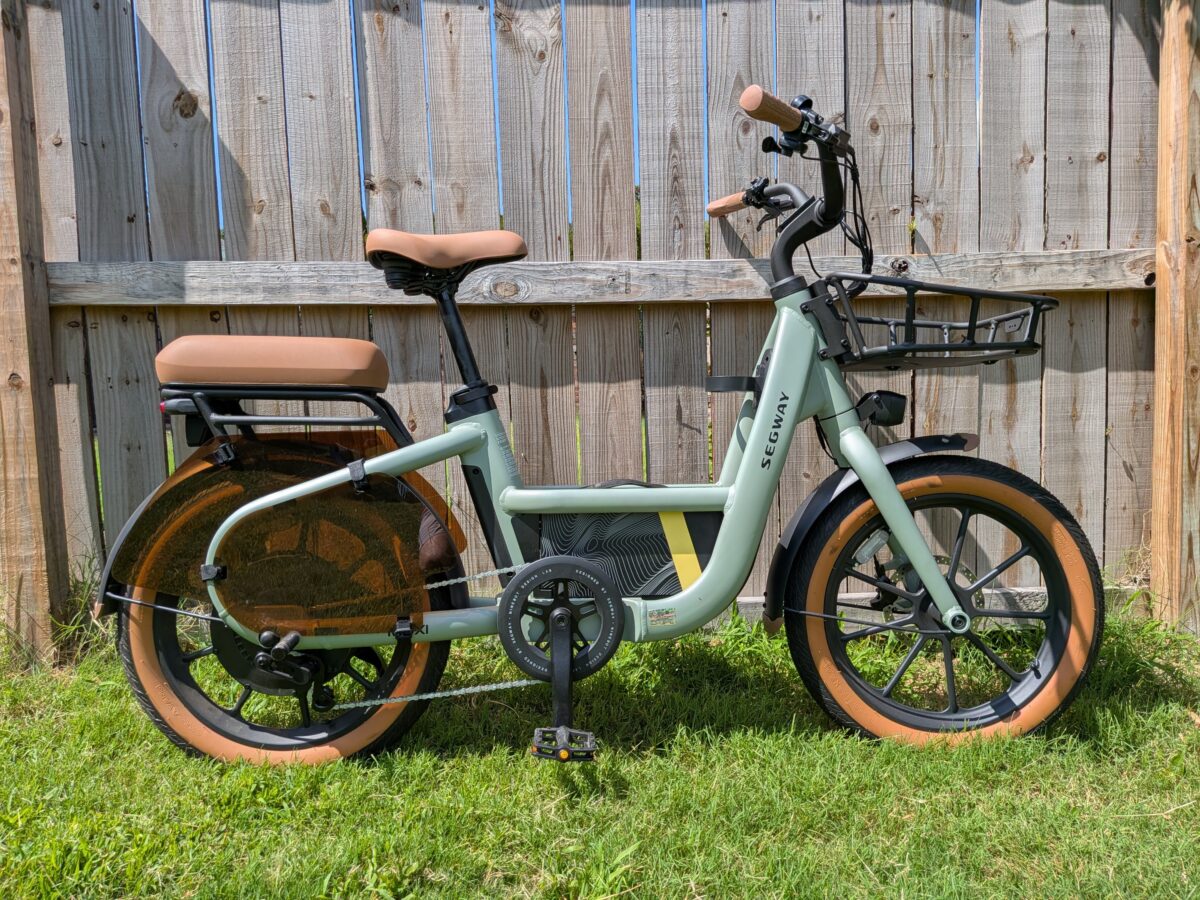
The Segway MUXI is clearly a technology company’s take on a utility bike, with more integrated tech than some cars. Walk up to this bike with your phone in your pocket and it wakes and unlocks itself before you touch a thing. Traction control adjusts motor power for predictable handling. A gyroscopic sensor enables features like hill descent control, hill start assist, and adaptive power that reserves peak output for hills. An optional rear radar keeps an eye on your back. It even includes regenerative braking, a feature most brands skip but one that has had a quiet revival this year. Rather than slap a label on a preexisting platform or assemble it from off-the-shelf parts, Segway built the MUXI from the ground up. The motor, controller, and software are all engineered in house. All of this lands at $1,699, but does it really haul and climb the way a utility bike needs to?
That is one of several questions a bike this new and this feature-packed raises, and this review is built to work through all of them. Ahead you will find the standout features, the full specifications, and the frame and sizing details. Our real-world testing covers throttle runs, pedal assist at every level, our standard hill climb, and how the regenerative braking and radar hold up on the road. We also get into Segway’s dealer-based buying model and the realities of ownership, stack it up against a close rival, and lay out where it lands in the pros and cons. If you have a question about this one, you should find the answer below.
If our review helps you decide on the Segway MUXI, support our reviews for free by purchasing through our affiliate link. It really makes a difference, thank you for your support!
Segway MUXI YouTube Review: See It In Action!
Our full video review dives into the details that an article simply cannot capture. We provide an up-close look at every component and show exactly how the ebike fits and looks with different sized riders. You will also get a detailed walkthrough of the intuitive controls, the full-color TFT display, and the robust Segway companion app. When it is time to ride, our first-person riding footage puts you right behind the handlebars for our real-world testing, while our third-person footage lets you see the bike in its element. Hit play on the video above to see it all in action.
Standout Features of the Segway MUXI
A Quiet, Torque-Rich Direct-Drive Motor
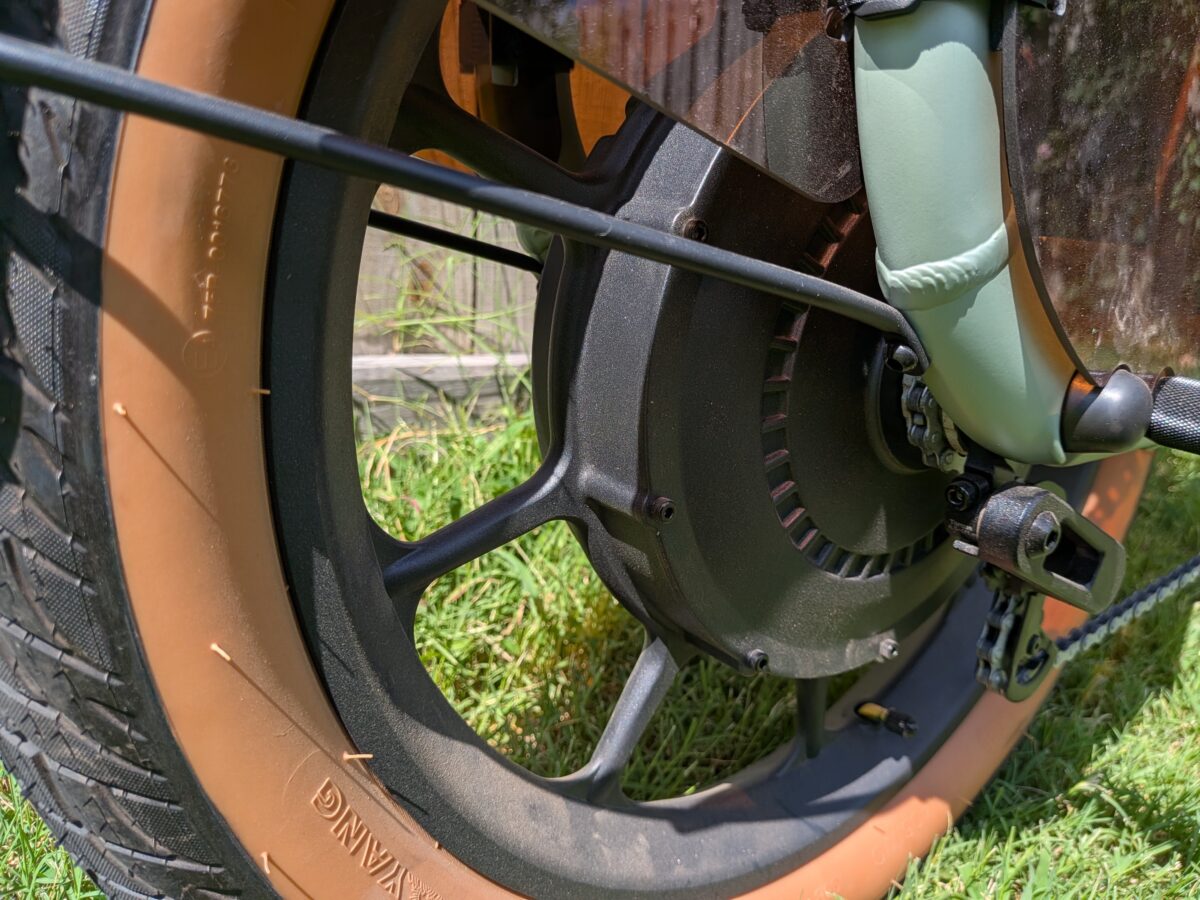
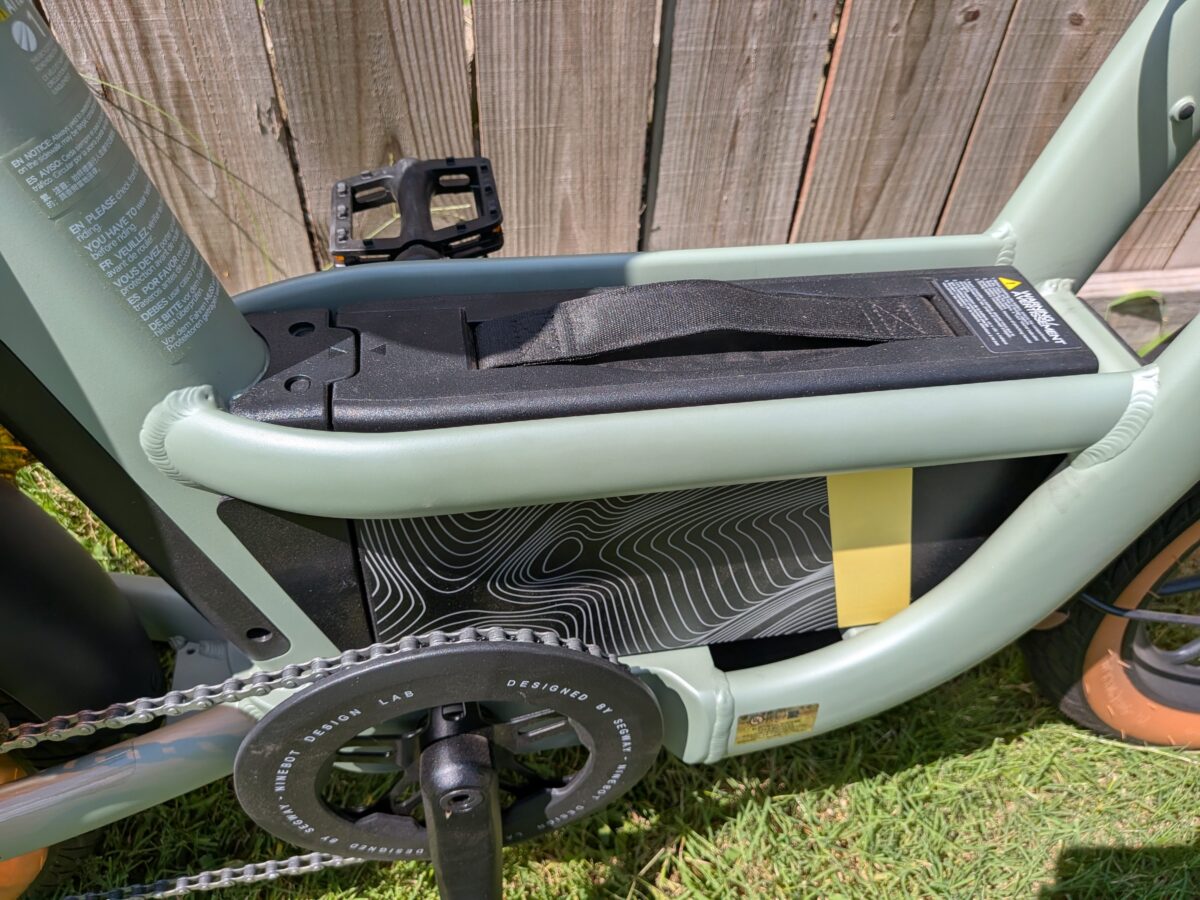
Segway developed its 750W direct-drive rear hub motor from scratch, and it is practically silent, even under heavy load. It is an uncommon choice these days, where geared hubs are the norm and tend to be lighter and punchier off the line. That said, the MUXI delivers 80 Nm of torque, providing plenty of muscle to hold a fast pace and tackle steep grades on throttle alone. Powering the setup is a 48V, 15Ah (717Wh) battery tucked below the step-through window. The capacity is pretty standard at this price, but the low placement gives the ebike an excellent center of gravity, and it features an unusual design that automatically pushes the battery out when unlocked. This direct-drive setup also acts as the foundation for Segway’s Intelligent Ride System.
The Segway Intelligent Ride System
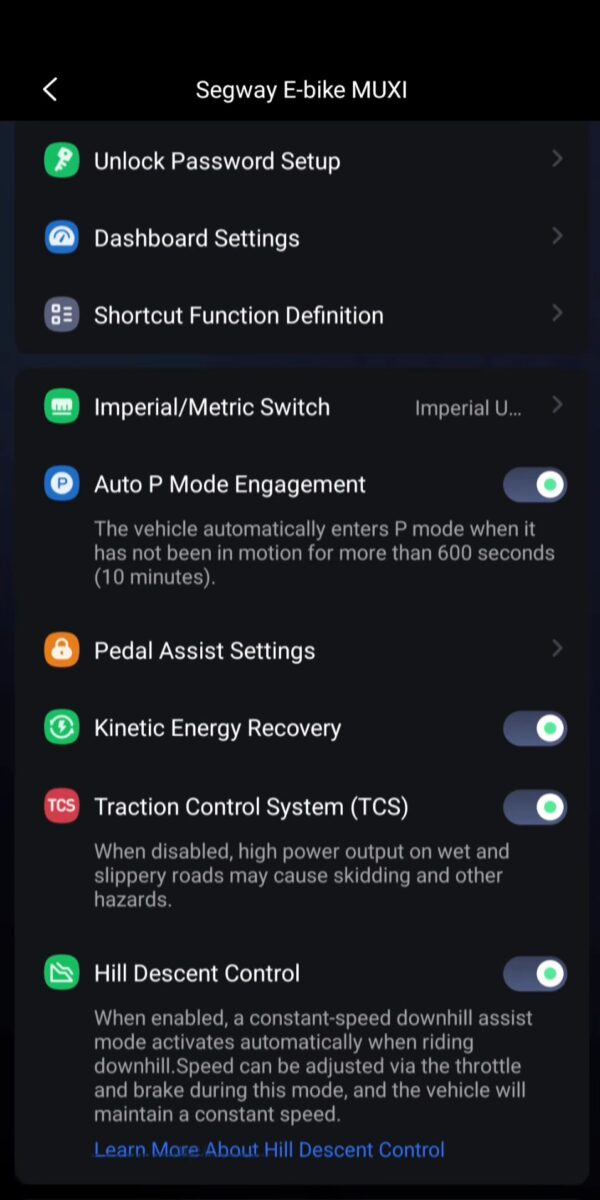
A cluster of rider-assist systems runs quietly in the background, and the sheer number of them is uncommon on an ebike. The system relies heavily on a built-in gyroscopic sensor that even provides real-time hill grade measurements right on the display. Traction control adjusts motor power if the rear wheel starts to slip, and hill descent control uses the motor to hold your speed in check on downhills. There is also a hill start assist feature that keeps the ebike from rolling back when you stop on a grade. In practice, this functions more like a hill hold; holding both brake levers for 3 seconds completely locks the rear wheel so you can rest without rolling backward. Adaptive Power rounds it out by smoothing power delivery based on how you are riding, which noticeably reduces the effort required on climbs. Most of these are switched off by default and live inside the app, including experimental features found in the Segway Lab, so you will want to spend time enabling and learning the ones you care about.
Cockpit, App, and Cloud Services
Display, Controls, and Navigation
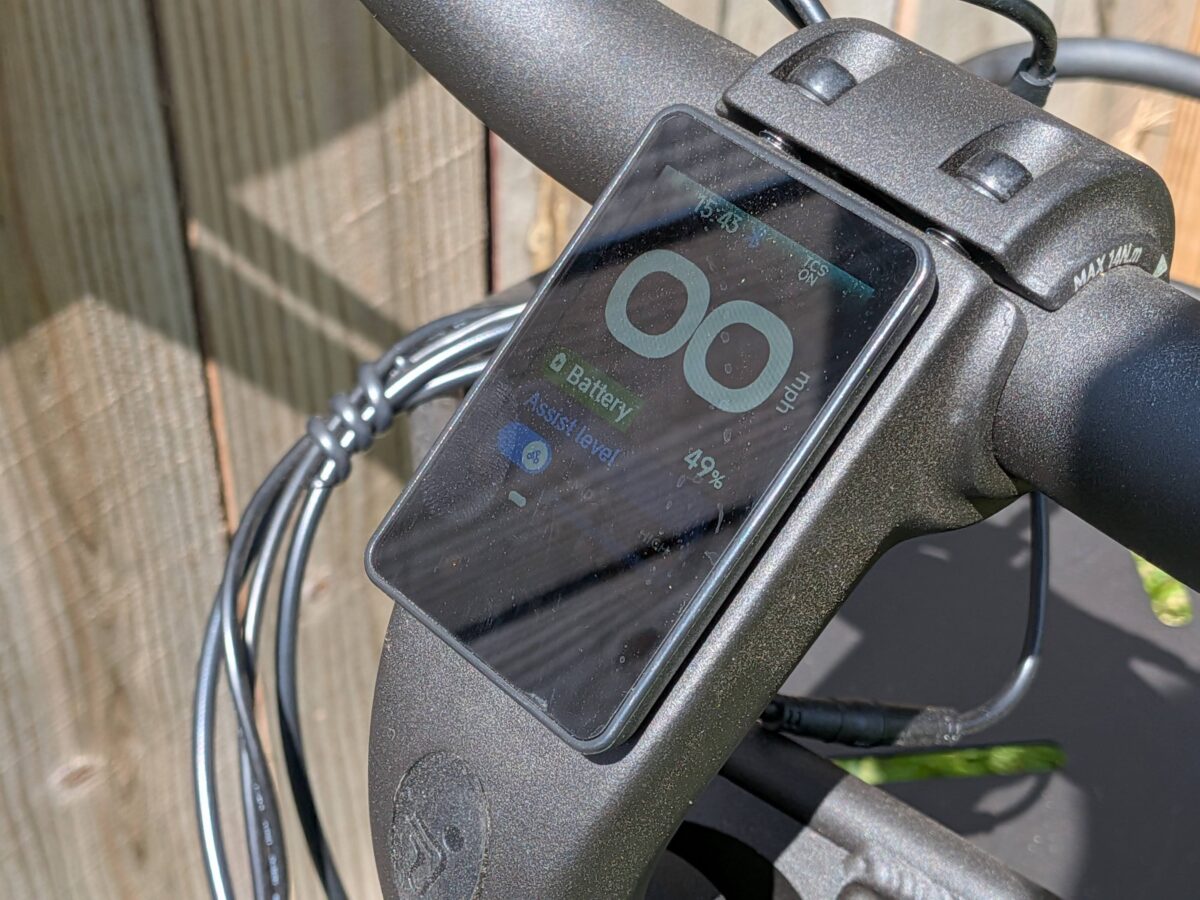
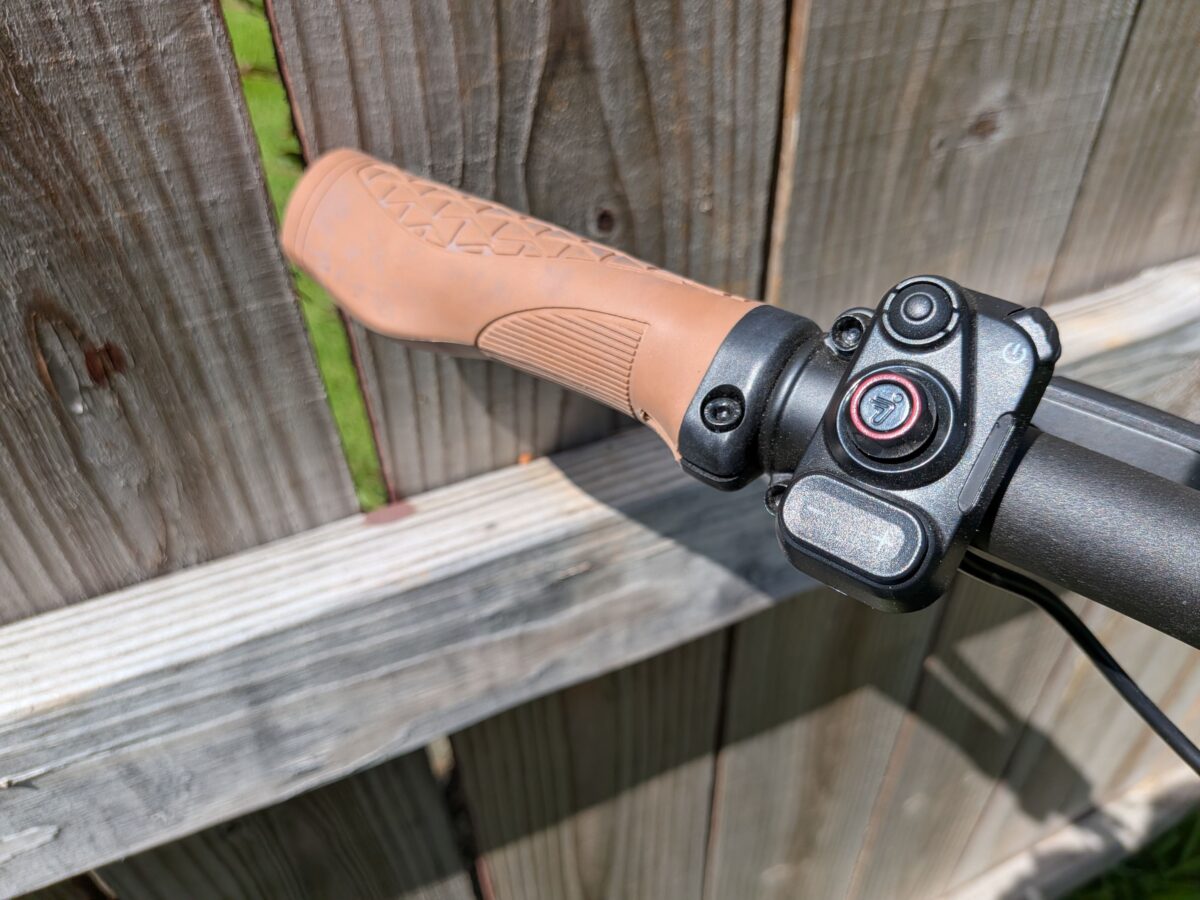
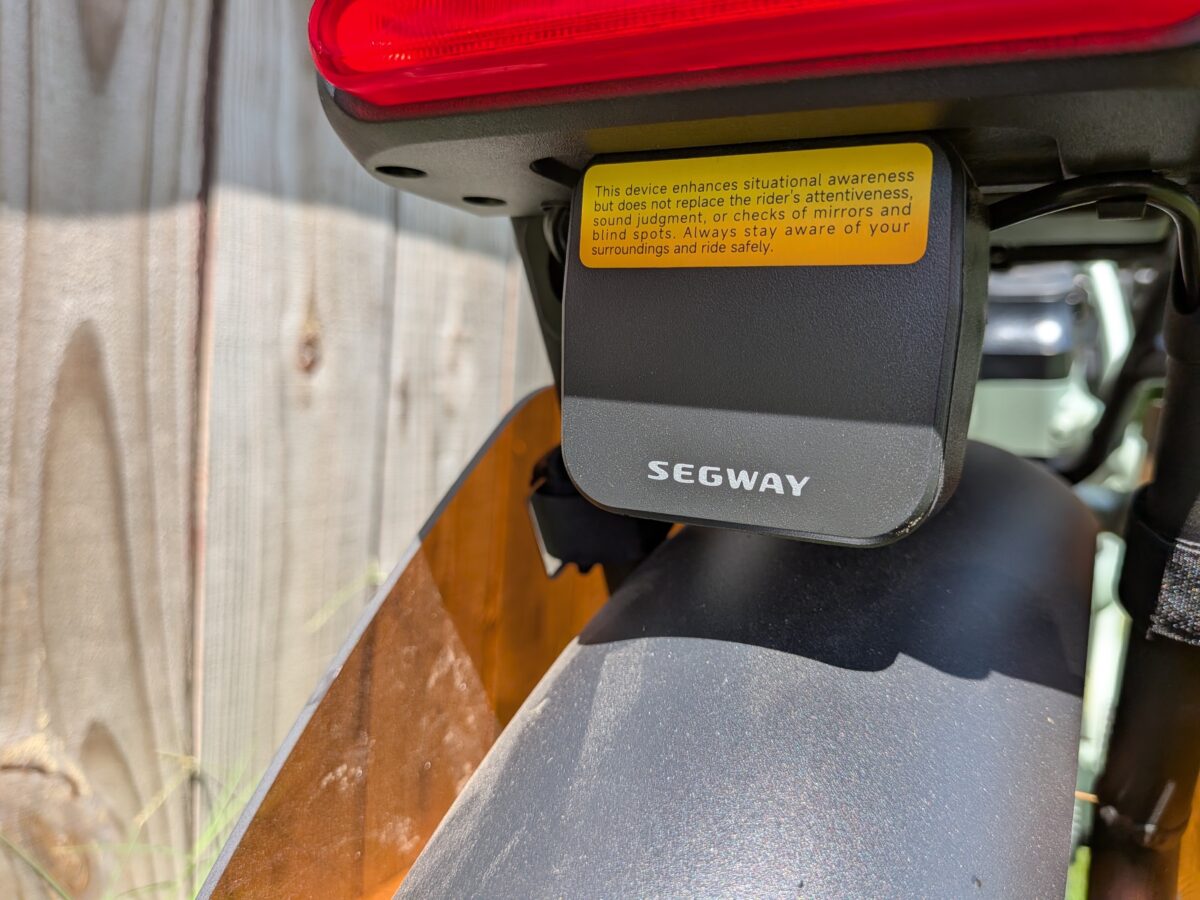
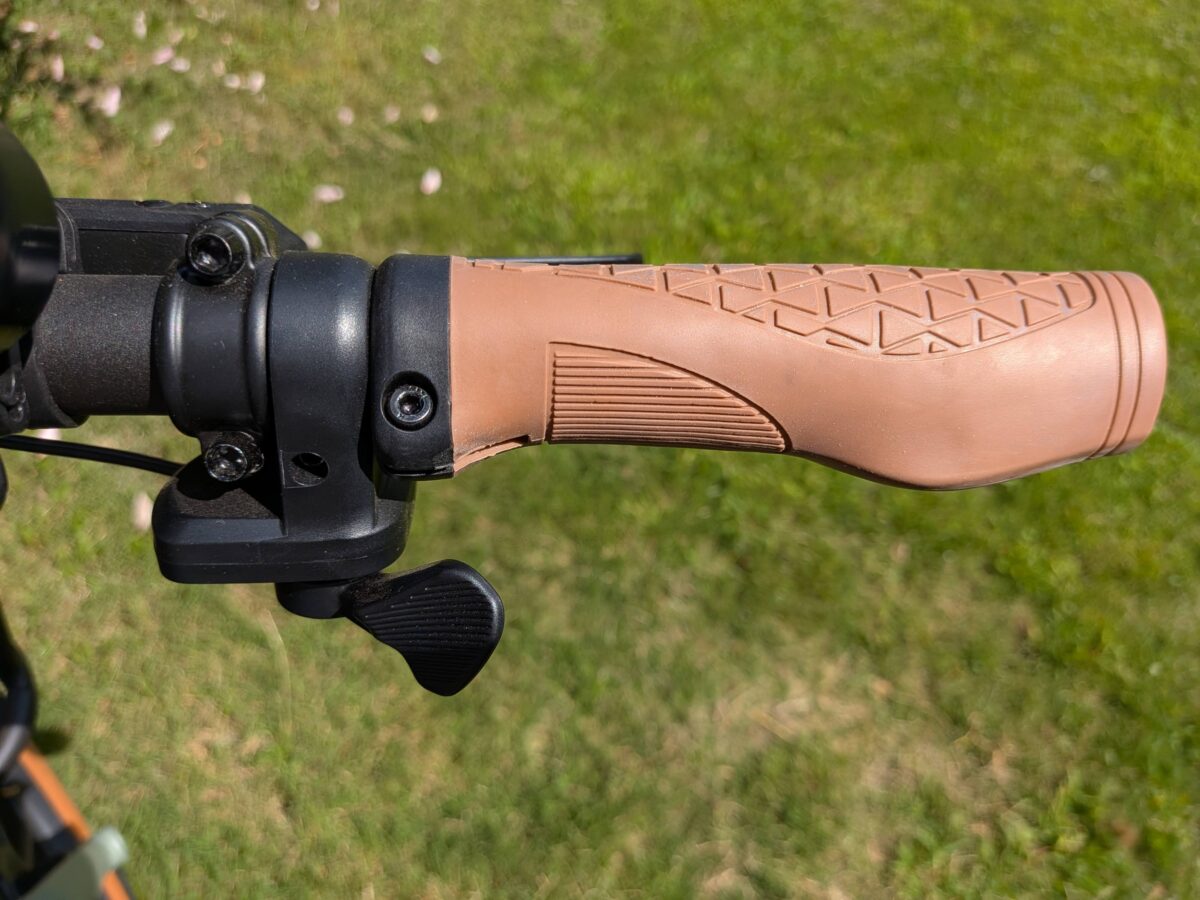
Controls take some getting used to, but they reward the effort. A control pad that looks and feels like a game controller sits at the left grip, with a clickable joystick that scrolls through the color display, adjusts volume, skips music from your phone, and pulls up turn-by-turn navigation right on the screen. It took only a few minutes to feel natural, even coming from a normal set of ebike controls. The optional rearview radar also plugs into this system, mounting neatly under the rear rack. When a vehicle is closing in behind you, it grabs your attention by flashing a light on the control pad and sounding an alert.
The Segway App and Cloud Services
To manage the MUXI’s deep technology stack, the Segway companion app is practically a requirement. While you can ride the bike in a limited trial mode, linking it to the app is how you unlock its full potential and gain access to the core rider-assist features. During setup, you will not only want to link the ebike itself but also pair the battery. Pairing the battery gives you a direct window into real-time charging status, charging notifications, and critical health data like battery temperature. The app itself is incredibly robust, though it packs so many settings that it borders on overwhelming.
Security is where Segway leans on its scooter roots the most, but it is worth knowing exactly which features are included out of the box and which carry an ongoing cost.
Built-in features (no subscription required)
Fortunately, you do not have to pay a subscription to keep the ebike secure and updated. The following features function entirely independently of the paid service:
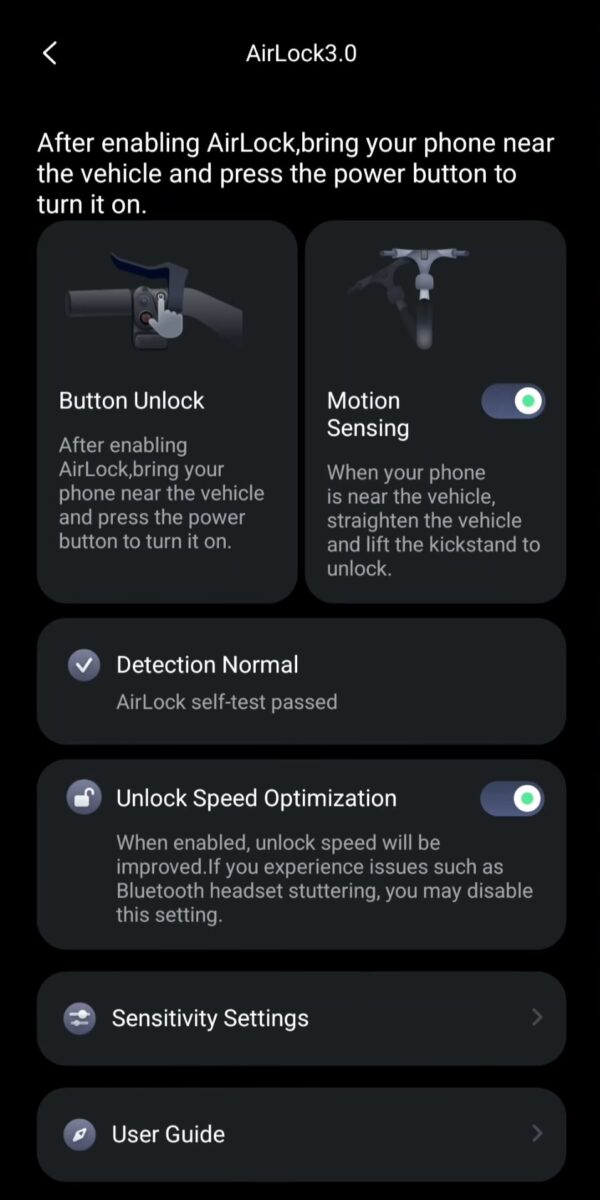
- AirLock proximity unlock: Unlocks the bike over Bluetooth as your phone gets close, letting you skip the passcode or a key. It worked reliably for us once calibrated.
- Local security alarm: Park and walk away, and the rear wheel locks while a loud alarm and flashing lights greet anyone who tries to move it.
- Apple Find My: Free location tracking that works seamlessly within the Apple ecosystem.
- Bluetooth OTA updates: Firmware and system updates can be downloaded and installed locally over a standard Bluetooth connection.
IoT subscription services ($20/year)
Segway’s network and cloud-based IoT services are free for the first 12 months. After the first year, maintaining these features requires a $20 annual subscription:
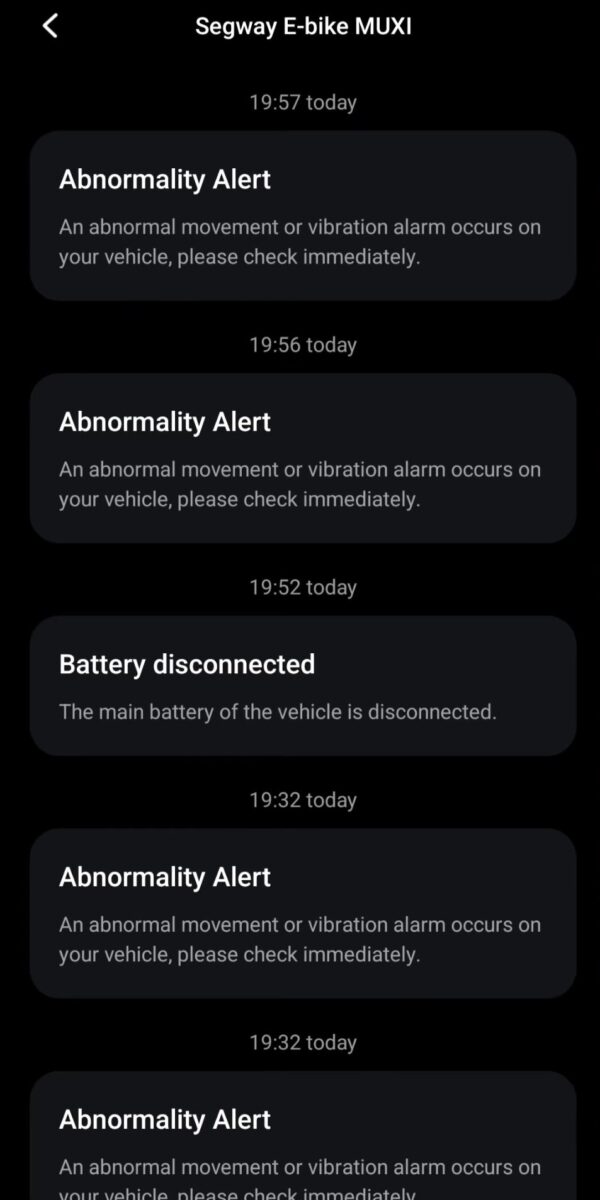
- Premium app features: Advanced, real-time motion alerts and remote monitoring pushed directly to your phone.
- Live GPS tracking: Remote, real-time tracking of the ebike’s location from anywhere.
- Lost Mode: The ability to remotely disable the bike and battery if it goes missing.
- 4G OTA updates: Lets the ebike receive firmware updates remotely without needing a Bluetooth connection to your phone.
Frame, Sizing, and Options

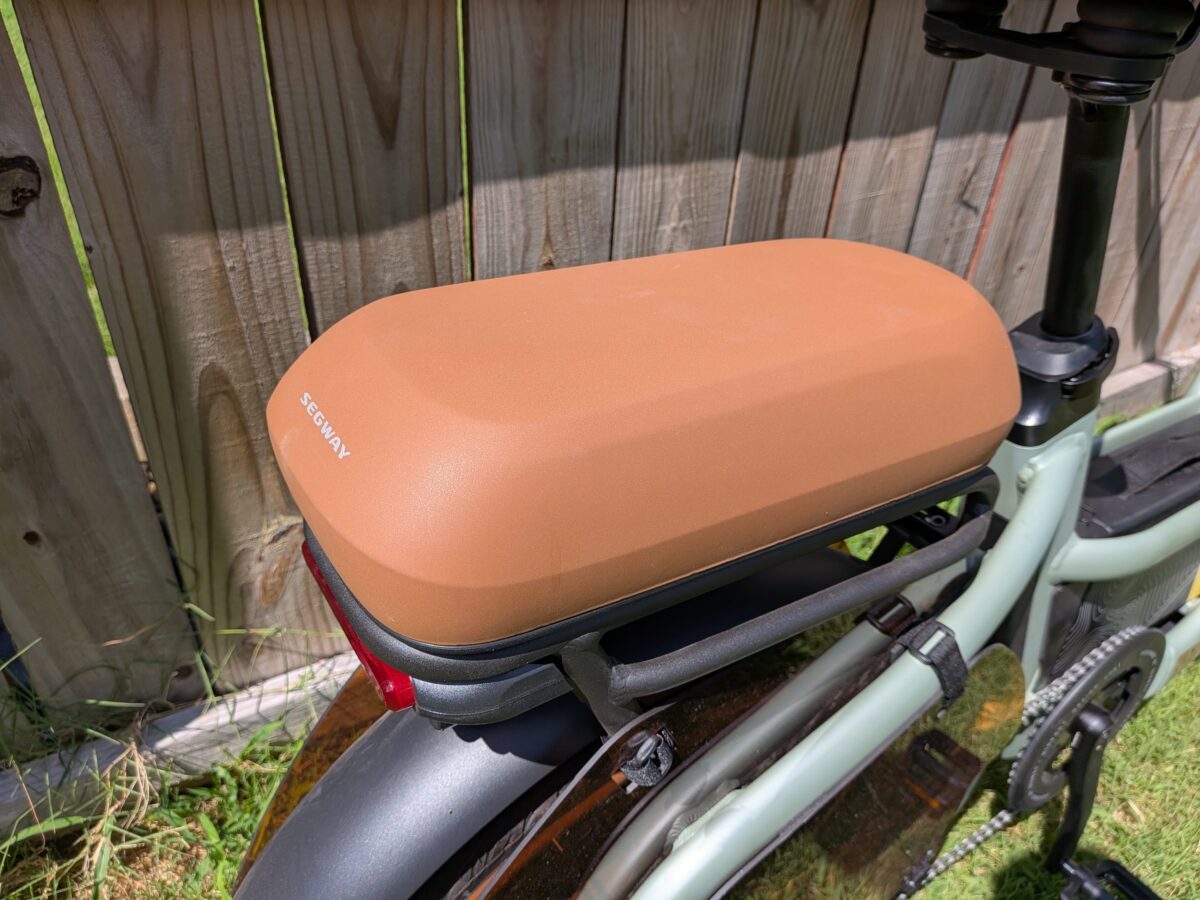
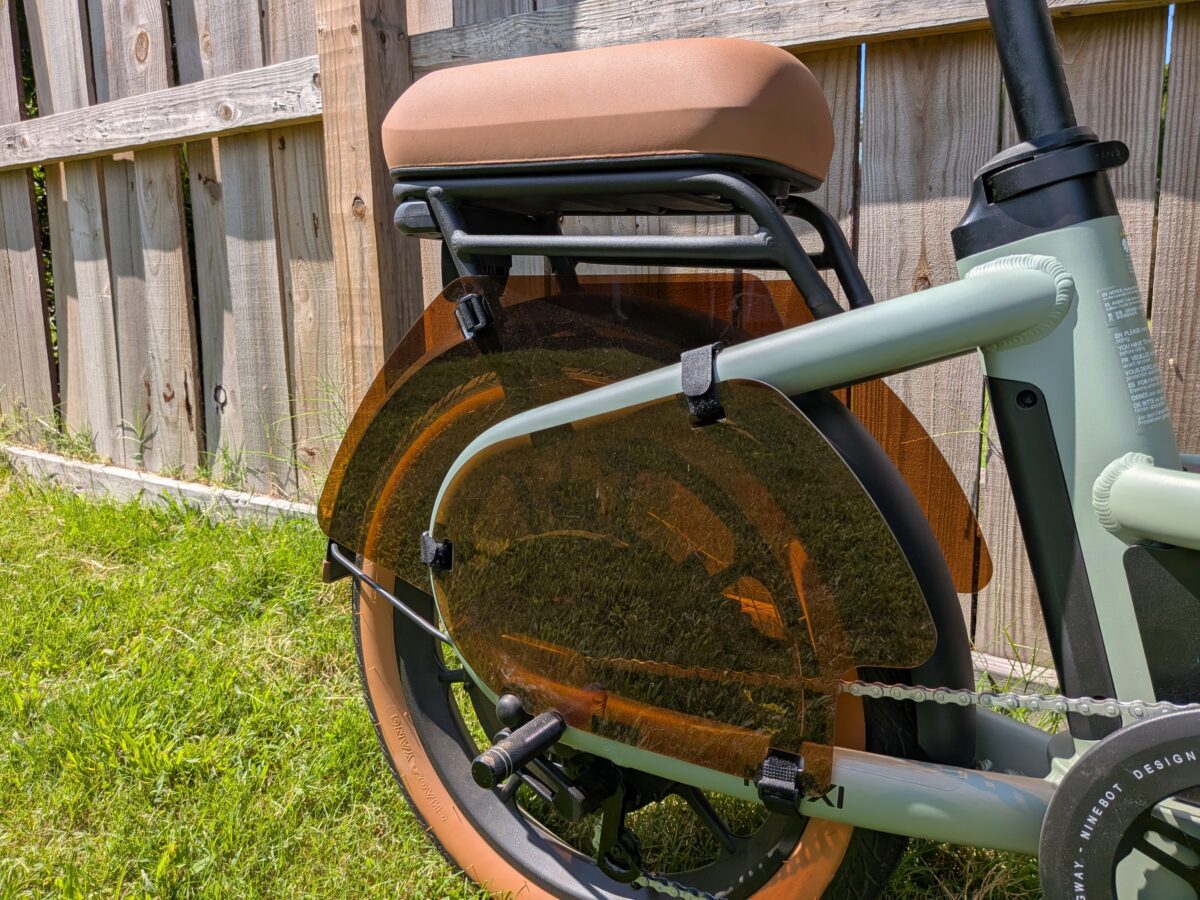
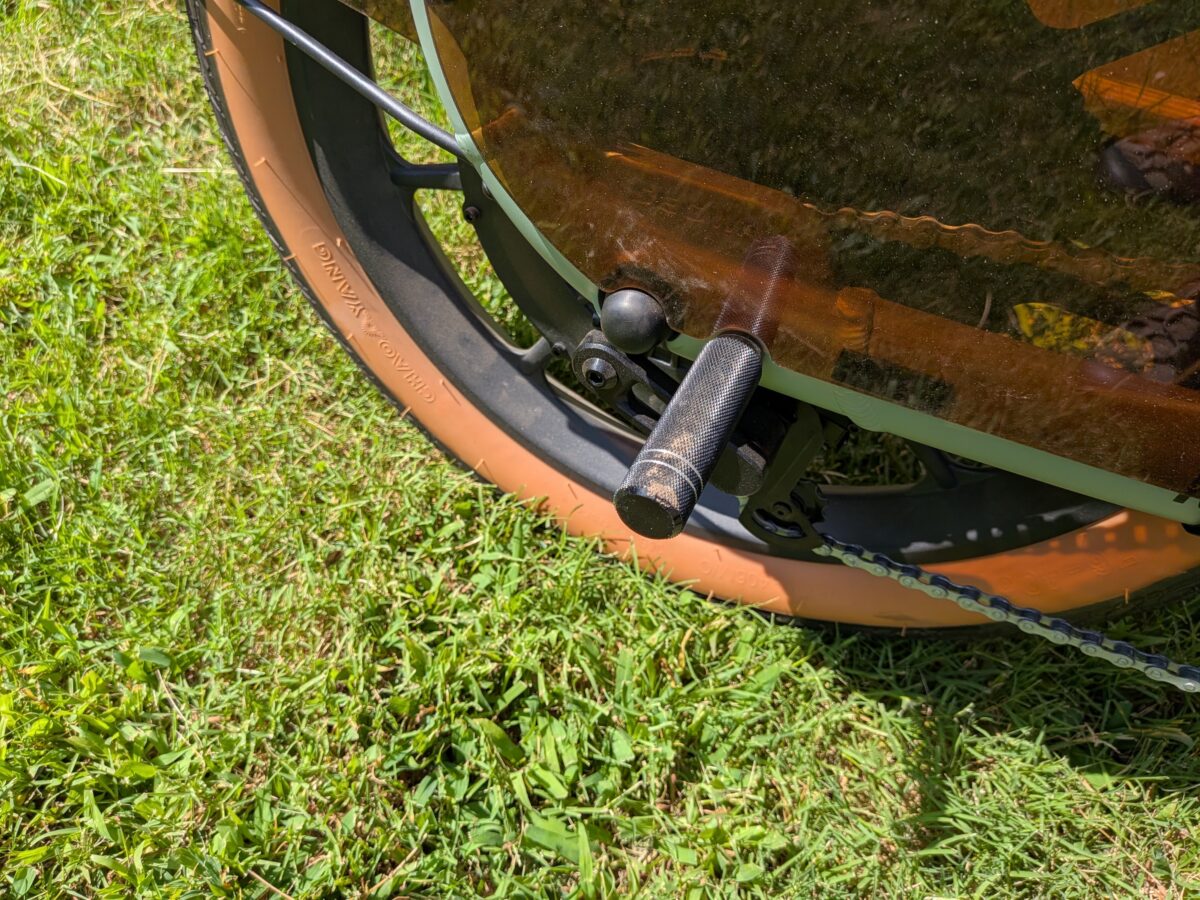
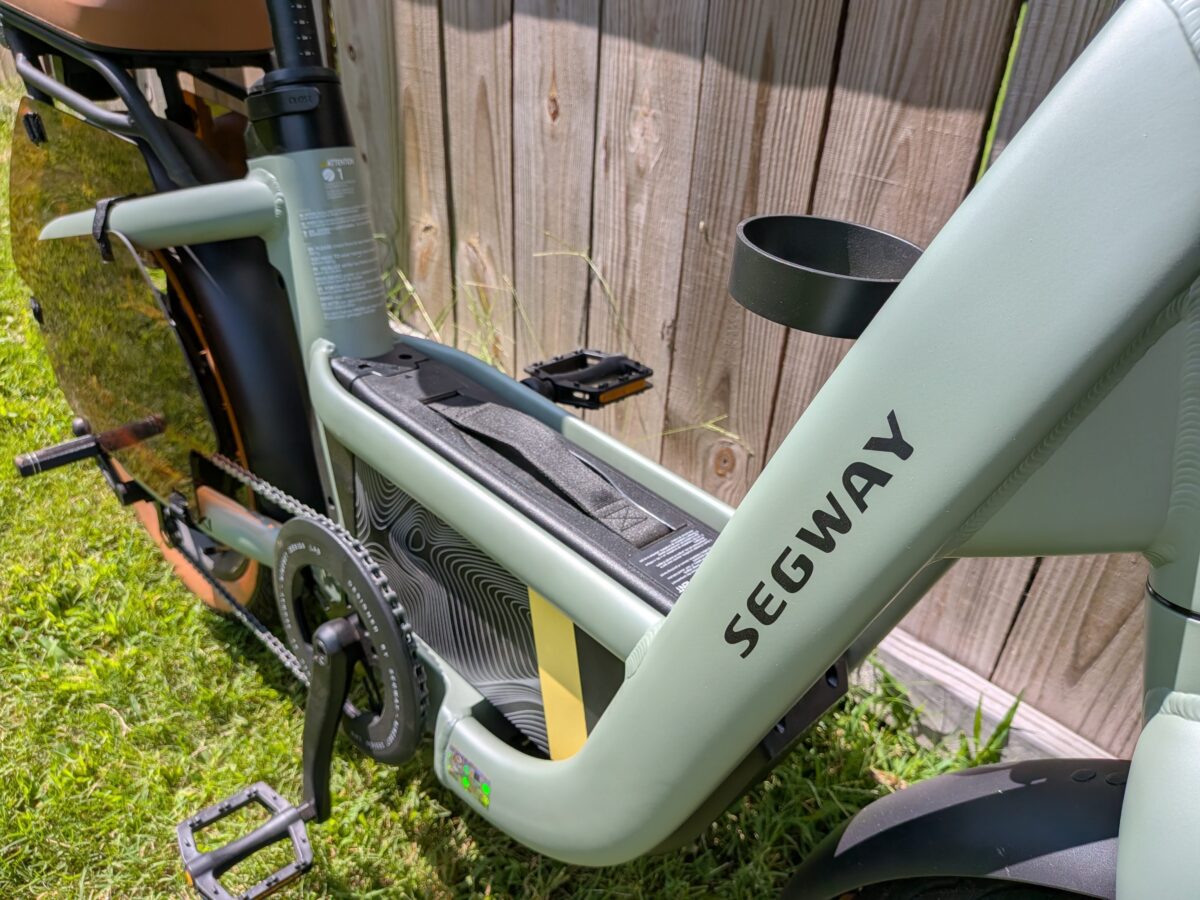
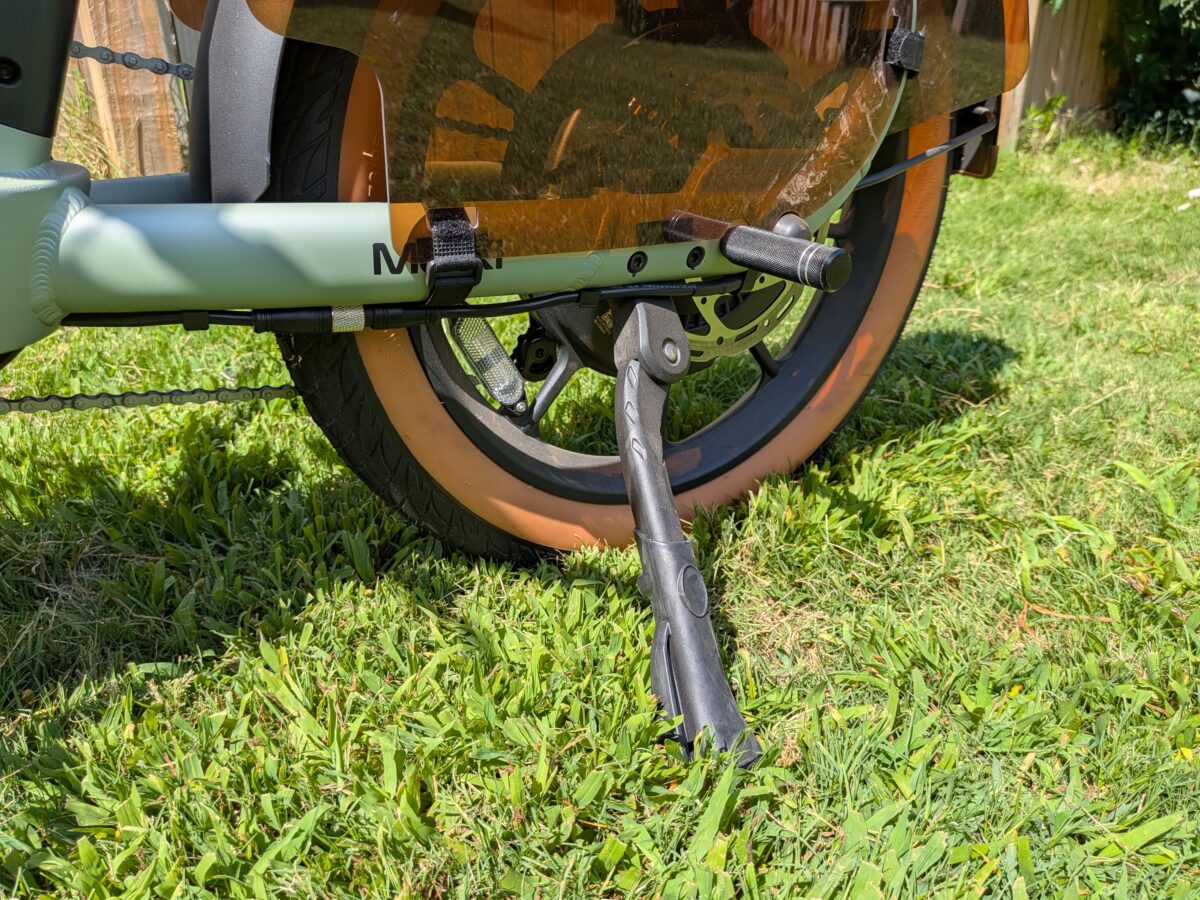
A twin downtube design keeps the step-through space wide open while tucking the battery into the bottom of the frame. Utility is baked in, with a 418 lb total payload and an included rear rack rated at 121 lb, though the single-leg kickstand is a step down from the dual-leg stands we often see on utility bikes. Optional accessories include a front basket rated for 33 lb, a middle basket for extra carrying room between your knees, fenders, an automatic dropper seatpost, and the passenger kit our test bike was equipped with. It comes in two colors, Dusty Sage and Olive Rush.

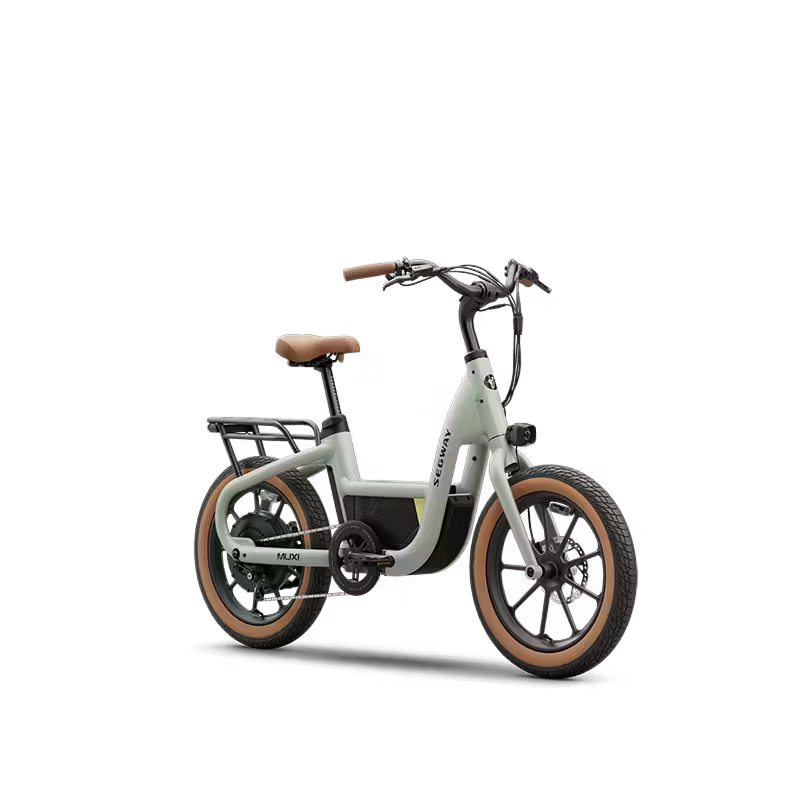
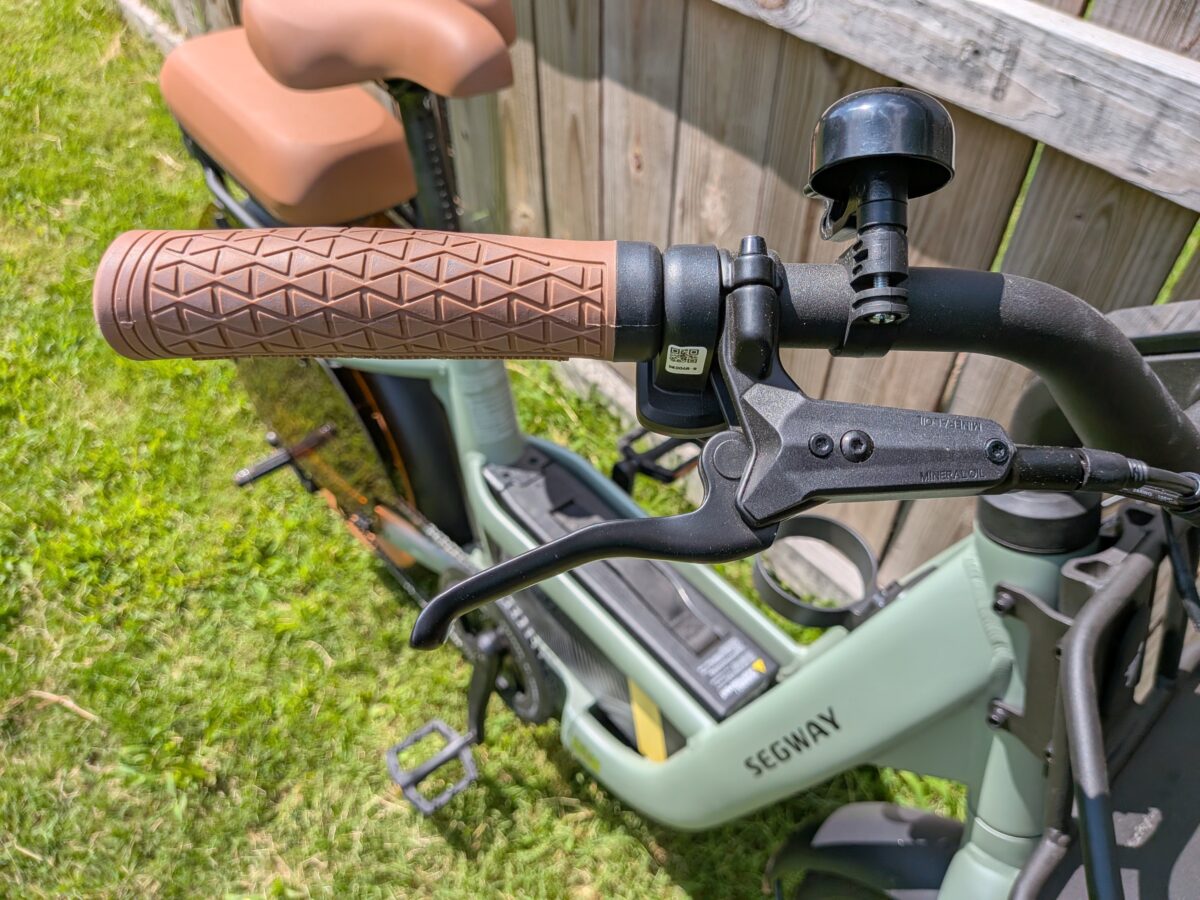
Sizing is straightforward with a single step-through frame that Segway rates for riders from 4’8″ up to 6′. At 6′ with a 32-inch inseam, our taller tester was right at the edge of full leg extension, while our 5’5″ tester felt immediately at home. It features a rigid fork, so it relies on its 20 x 3-inch wheels for cushion. The smaller wheels and step-through design make it easy to stand over and approachable for newer or shorter riders, though the fixed stem limits how much you can dial in the reach. It is not a light bike at 72.75 lbs, but it is not too heavy when compared to other utility-style ebikes.
Segway MUXI Full Specifications
Here is the full component loadout, from the drivetrain to the safety certifications, in the table below.
| Component | Segway MUXI |
|---|---|
| Price | $1,699 |
| Type | Utility Ebike |
| Class | 1/2/3 |
| Weight Capacity | 418 lbs |
| Top Speed | 23 mph |
| Motor | 750W Direct-Drive Rear Hub |
| Torque | 80 Nm |
| Battery | 48V 15Ah (717 Wh) |
| Claimed Range | Up to 80 miles |
| Charger | 3.9A ~6.5 hr full charge |
| Display | 2.4" color TFT, auto-brightness |
| Sensor | Cadence |
| Throttle | Right-hand thumb (Max Speed: 20 mph) |
| UL Certifications | Certified to UL 2271 (battery) & UL 2849 (electronics) |
| Water/Dust Resistance | IPX5 (bike), IPX7 (battery) |
| Chainring | 48T |
| Rear Cog | 13T |
| Brakes | Segway hydraulic disc brakes, 2-piston |
| Levers | Hydraulic, with motor cutoff |
| Rotors | 180mm front and rear |
| Frame | Step-thru aluminum, low battery placement |
| Fork | Rigid |
| Axle | Front through axle |
| Tires | 20×3.0 in, street tread, spoke-free mag wheels |
| Handlebars | Swept-back riser |
| Grips | Locking ergonomic |
| Stem | Fixed |
| Saddle | Segway (brown) |
| Pedals | Plastic platform |
| Fenders | Optional ($79.99) |
| Rear Rack | Included (121 lb capacity) |
| Kickstand | Rear-mounted single-leg |
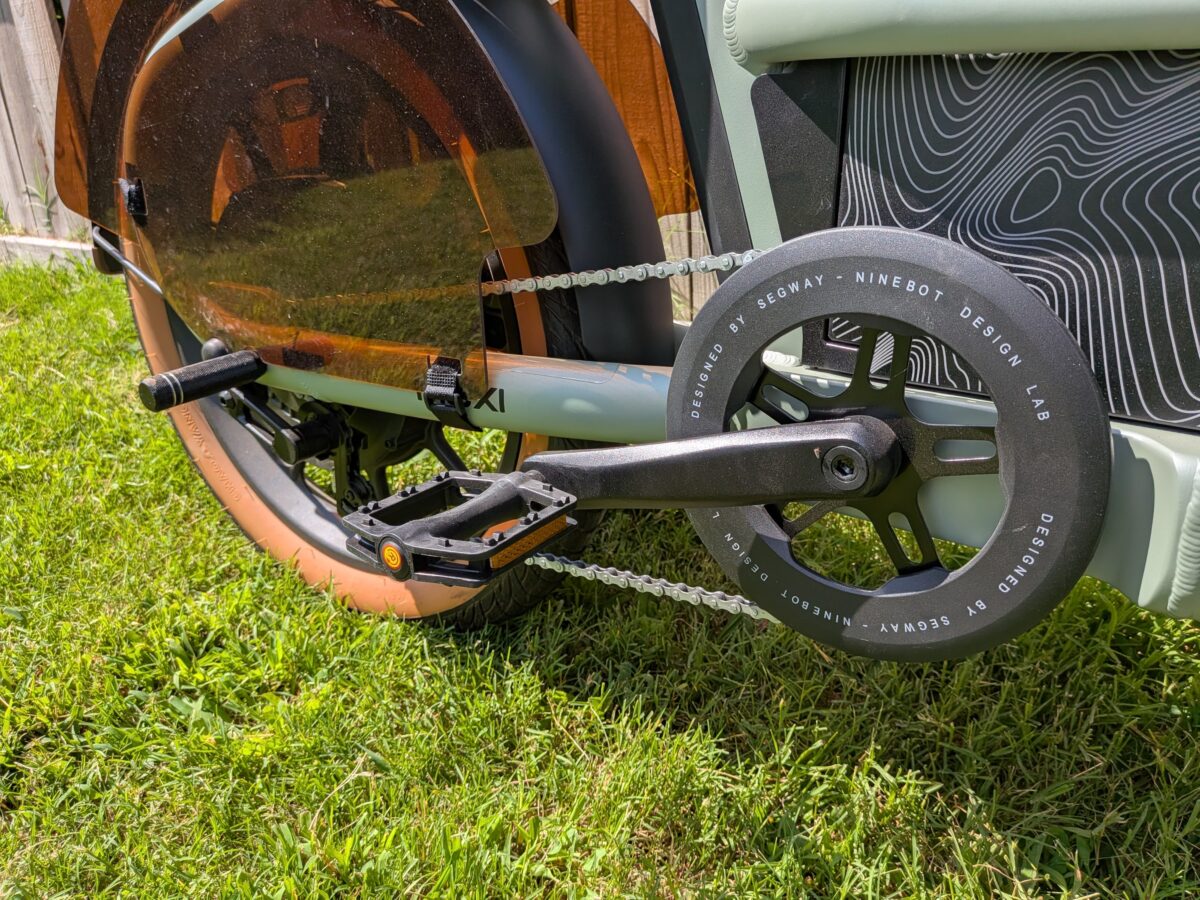
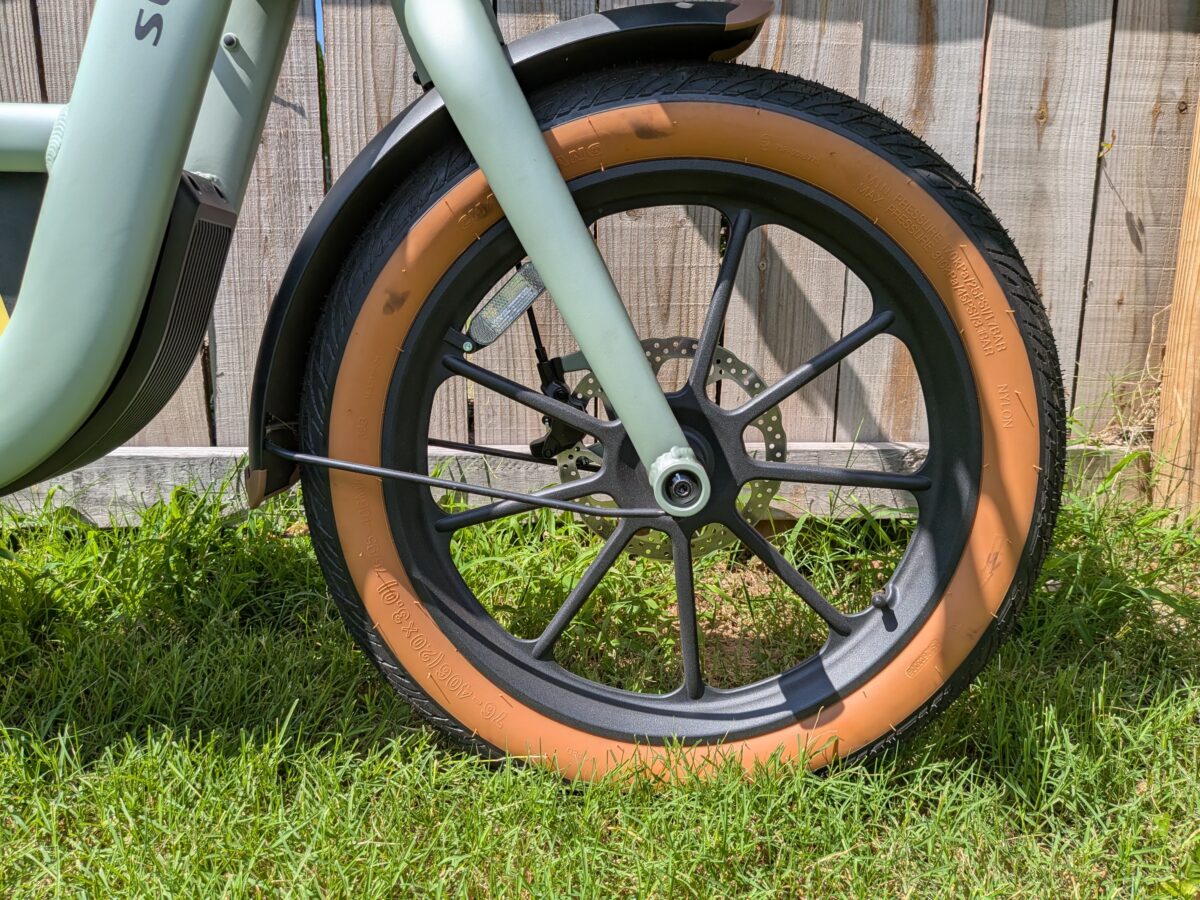

Real-World Performance Testing | Segway MUXI
Our test loop ran about 11 miles and included everything from flat-ground throttle pulls to two demanding climbs up our standard test hill. With a 140 lb tester on board, we finished with 68% battery remaining. Under heavy use, this translates to an estimated range of 30 to 35 miles. Using lower pedal assist levels and capturing a couple of battery points with the regen tech will push you closer to Segway’s 80-mile advertised maximum range.
Throttle-Only Acceleration
Rolling on flat ground with throttle alone, the MUXI settles at 20 mph, the legal throttle cap. We ran it at both the highest and lowest assist levels and found the takeoff a touch stronger up high, which suggests the assist setting nudges throttle output as well. What stands out more than the speed is how quiet the whole thing is, since the direct-drive motor barely registers over the sound of the tires. On a single-speed bike like this, leaning on the throttle to pull away from a stop is the easy, natural move, and it does that job smoothly.
Pedal Assist at Every Level
The pedal assist runs off a cadence sensor, and unlike some bikes in this space, it does not switch to a torque sensor. A cadence sensor works by sensing that you are pedaling rather than how hard, then feeding in a set amount of power for the level you are in, but Segway’s Adaptive Power algorithm layers on top of that and modulates the output based on how you are riding, which is why we felt more nuance than a plain cadence system usually gives. The display shows the assist as a bar from low to high, but we counted six distinct steps and called out speeds for each. Note that the display shows no wattage, so these are observed speeds and feel rather than power figures.
- Level 1: A gentle nudge of power at a slow spin, holding around 10 mph. Pedaling faster on your own does not summon more motor, so you feel real resistance if you push the cadence.
- Level 2: Barely more assist than level one to the hand, still an easy spin at a relaxed 9 to 10 mph.
- Level 3: Speeds start creeping up, settling around 13 to 14 mph with a comfortable, unhurried cadence.
- Level 4: A noticeable step, cruising at 15 to 17 mph, with a small surge of extra power arriving right around 16 to 17.
- Level 5: The motor is clearly working now, holding a relaxed 18 to 20 mph.
- Level 6: The strongest setting, responsive off the line and topping out around 24 mph when you spin quickly, though a lazy cadence still nets only about 16.
On a single-speed bike, the throttle is your shortcut to full power whenever you want it, which takes the pressure off picking the perfect level. For easy neighborhood cruising, the lower levels keep your legs moving without much effort, while levels five and six are there when you want to hold a faster pace or take on a climb.
Hill Climb Test

Our benchmark climb runs 127 feet of elevation over 0.25 miles at an average 9.2% grade. On throttle alone, the MUXI never dropped below 14 mph to the top. While our 140 lb tester’s lighter weight helps flatter those results, it is still a very impressive performance, beating out many geared hub options we have tested on this same hill with the same rider.
Pedaling up initially proved challenging, as the combination of the single-speed drivetrain and lower pedal assist levels forced a slow, heavy cadence. However, moving up to Level 4 made the assist and pedal stroke much more manageable. Bumping into Level 5 pushed the speed over 12 mph, and Level 6 unleashed full power. The rest of the climb evaporated, and we crested at 16 mph. Having Adaptive Power and a high pedal-assist sensitivity setting switched on noticeably minimized the overall effort.
Regenerative Braking on Descents
Pointing back down that same hill with regenerative braking switched on (Segway labels it Kinetic Energy Recovery in the app), the difference was immediate. Where the bike would normally coast toward 30 mph, the motor reined it in to a steady 22 to 26 mph, doing the braking on its own, and with the feature turned off we hit 28 to 29 mph and had to reach for the levers. A gyroscope is doing the clever part here, sensing the downhill grade and engaging the motor as a generator only when you are heading downhill, so it stays out of the way on flat ground. It will not meaningfully refill your battery, and our rough sense was a few percent of range at most, but the real value is saving your brake pads and holding a calmer, more comfortable speed on the way down.
Rearview Radar
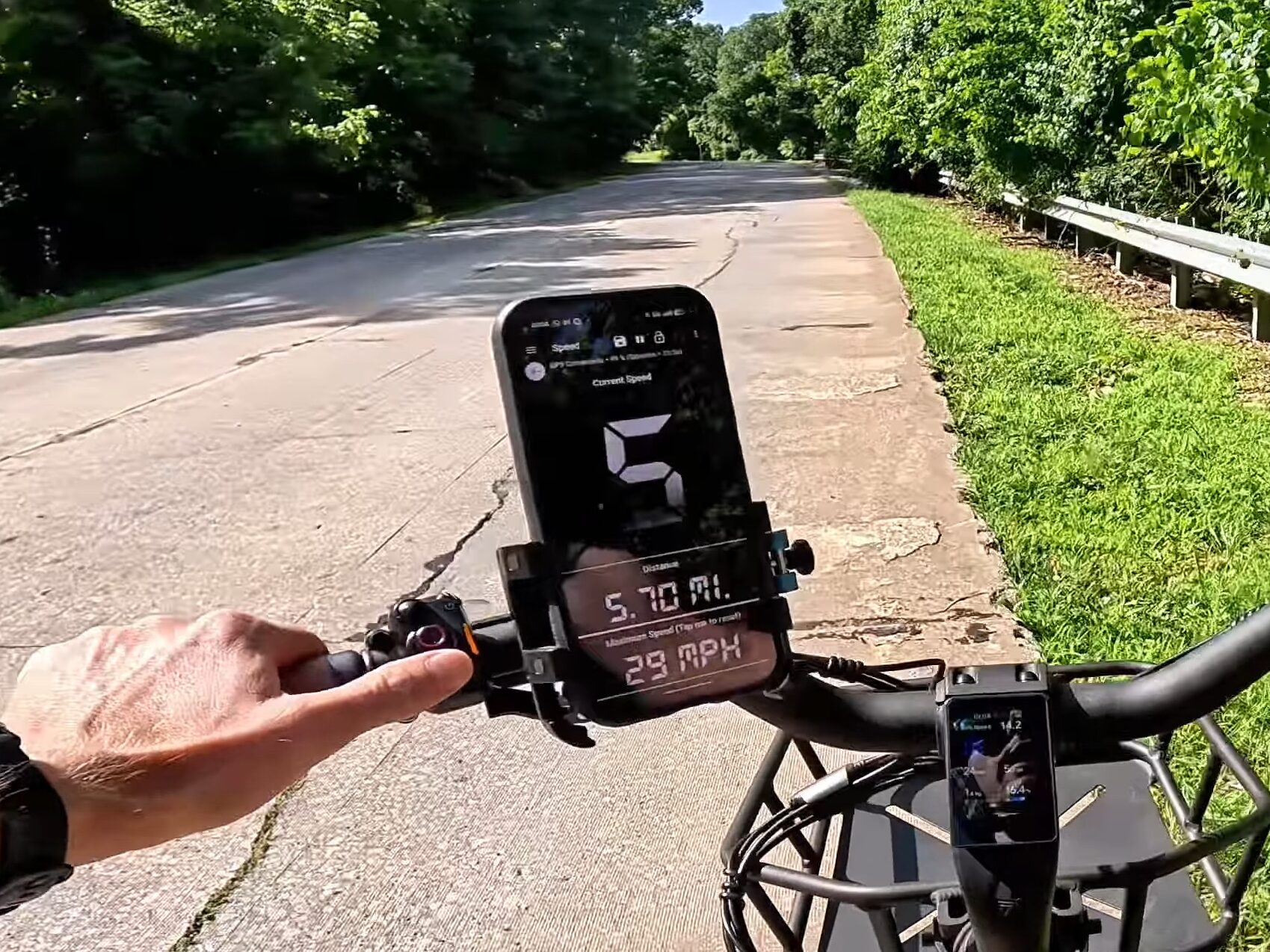
With the optional radar mounted at the rear, riding roads with light traffic gave it plenty to detect. Every time a vehicle came up behind us, a light on the control pad lit and a sound played, and it worked reliably throughout our testing. The one change we would make is timing, since the alert leans toward telling you a car is already there rather than about to pass, and a slightly earlier warning would be more useful. It is designed to grab your attention with sound more than with the display, and as a first heads-up before you glance at your mirrors, we liked having it.
Buying and Ownership
Segway does things a bit differently by routing sales through local bike shops so you get a professionally assembled, tuned ride right out of the gate. You can grab it at the shop or pay a $99 fee to have them bring it to your doorstep if delivery is available in your area. Because shipping and prepping a heavy ebike takes a ton of logistics and shop labor, changing your mind later gets expensive. Returns carry a 25% restocking fee plus a $250 flat shipping charge, and the bike has to be under 5 miles on the odometer. They do give you a quick 6.5-hour window to cancel an online order for a full refund if you have second thoughts.
Segway MUXI vs Velotric GoMad
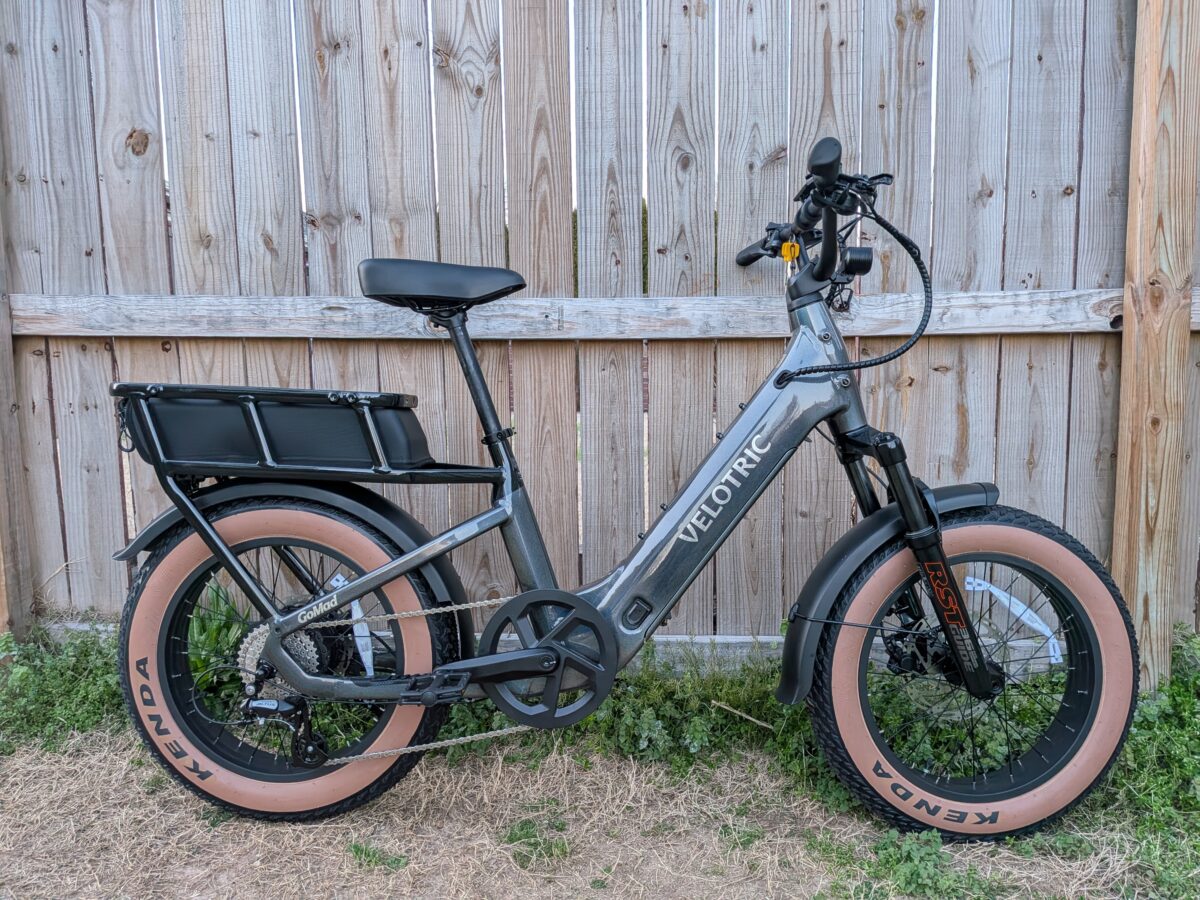
One alternative worth a look is the Velotric GoMad, which merges a fat tire ebike with a utility ebike. The result pairs serious hauling capacity with off-road capability, and at $1,999 it leans hard into that hauling and comfort side of the equation. A 750W motor peaks at 1,300W and 85 Nm of torque, an 8-speed drivetrain adds versatility and a Class 3 top speed of 28 mph, and 20 x 4-inch fat tires on a 100mm suspension fork smooth out the ride. It carries more, too, with a 500 lb total payload and a 176 lb rear rack, and its bigger 801.6Wh battery can be doubled up for extended range. Velotric also includes turn signals and builds its security tracking, including Apple Find My and Android Find Hub, without a subscription. Buying works through an omni-channel model, so you can lean on a dealer network or have the bike delivered to your doorstep.
Where the MUXI answers back is the technology and the price. Its radar, AirLock proximity unlocking, regenerative braking, and cluster of rider-assist systems go further than the GoMad’s feature set, and it does it for $300 less. The GoMad also switches between torque and cadence sensors, which the MUXI cannot, so riders who want the most natural pedal feel and the most hauling muscle will lean Velotric, while riders drawn to the connected tech and a lower entry price will find the MUXI hard to ignore. To dig into the details, read our full Velotric GoMad review.
Segway MUXI Pros and Cons

Final Thoughts on the Segway MUXI
Backed by decades in micromobility and a deep engineering bench, Segway built a rugged, low-maintenance utility bike that leads with technology instead of bolting it on later. The money went into that tech and into a quiet, torque-rich direct-drive motor that punched above its spec sheet on our test hill, while the mechanical side stayed deliberately simple, with a single gear and a rigid fork. It asks a little more of you in return, since the app takes patience and the premium tracking becomes a yearly subscription. What you get for the trouble is a compact, tech-forward machine that puts features usually reserved for pricier bikes within reach of a shorter or newer rider, one that would rather you tap a screen than fuss with a derailleur. More than a spec sheet, it rides like a preview of where Segway thinks the ebike is heading.
At $1,699 the MUXI is the value pick in our roundup of the best utility ebikes, where you can see how it compares to pricier options.
If the MUXI is the right ebike for you, buying through our affiliate link is a free way to support our reviews. Thank you for reading!
