

It was just over a year ago that we reviewed Walmart’s aluminum Concord commuter, and we did not expect that video to reach close to three-quarters of a million people. Price point matters. Walmart apparently reached the same conclusion, because there is now a cheaper way in: $478 for the Concord Commutr, against $548 for the aluminum bike. The trade that gets you there is written into the frame. Steel replaced aluminum, which does mean a heavier bike — though not by nearly as much as Walmart’s own listing suggests. The spec sheet puts the Commutr at roughly 74.7 pounds. On our scale it came in at 58.74.
One note before we get rolling. Walmart spells this one Commutr, without the second “e.” If you go looking for a Concord commuter ebike and land on a different listing, that is why.
We have reviewed more Walmart ebikes than anyone, and the interesting question is never whether a sub-$500 ebike is good in isolation. It is what you give up. So we lined the Commutr up against the Lectric XPress 2, a commuter we rate near the top of the category and one that costs almost exactly three times as much. We walked the components on both, sent them up a hill on throttle alone, timed how long each takes to reach top speed, and tested the brakes. Does the cheap bike embarrass itself, or does $478 buy more than you would guess? Let’s find out.
Ebike Escape is reader supported. If you buy through the links on this page we may earn a commission at no extra cost to you, and that is what pays for reviews like this one.
Walmart Concord Commutr Video Review
Our full video review walks every component on the Commutr, shows the LED display and how the five assist levels behave, and puts the bike side by side with the Lectric XPress 2 for a throttle-only hill climb, a top speed run, and a braking test. Watch it to hear how much this 350W motor struggles — and where it holds up better than expected.
Prefer the written breakdown? Everything from the video is covered below.
What $478 Actually Gets You
Motor and Battery
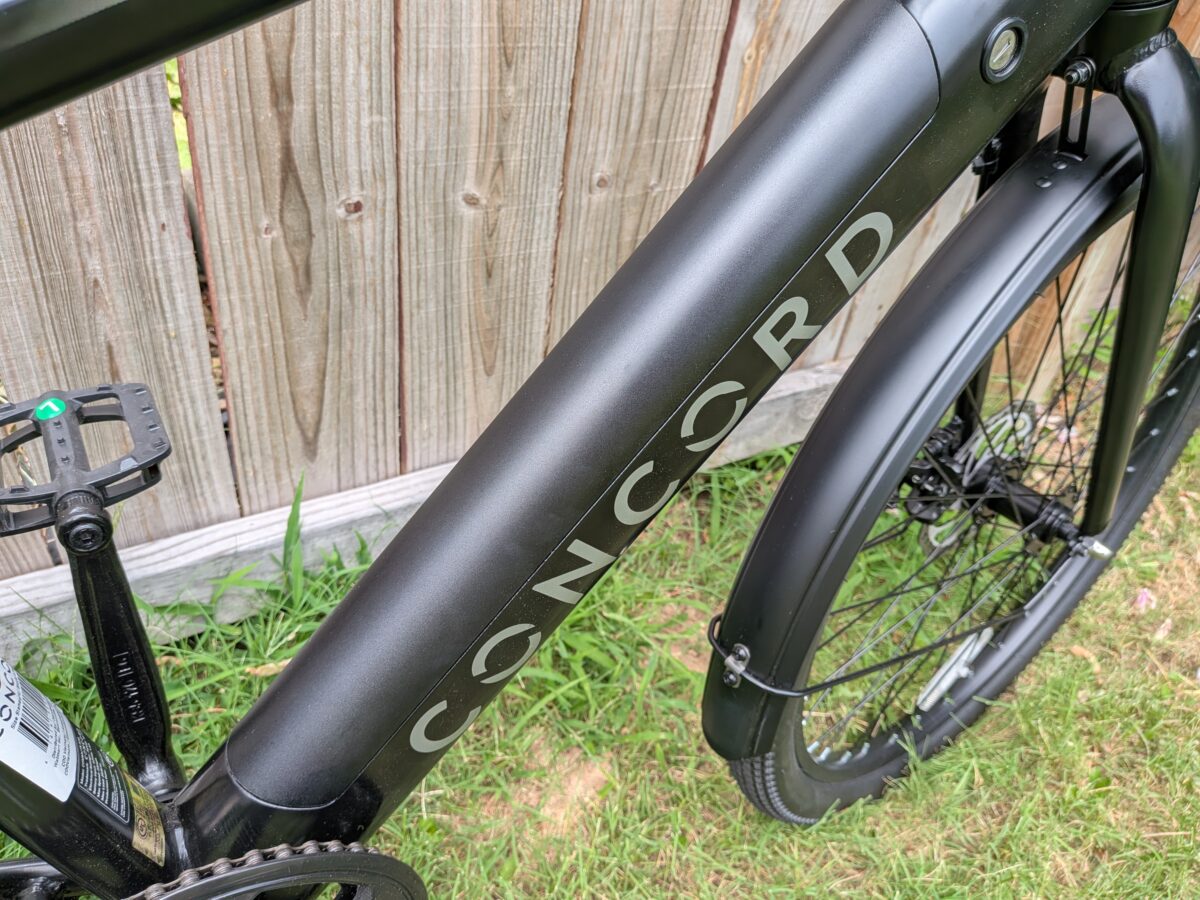
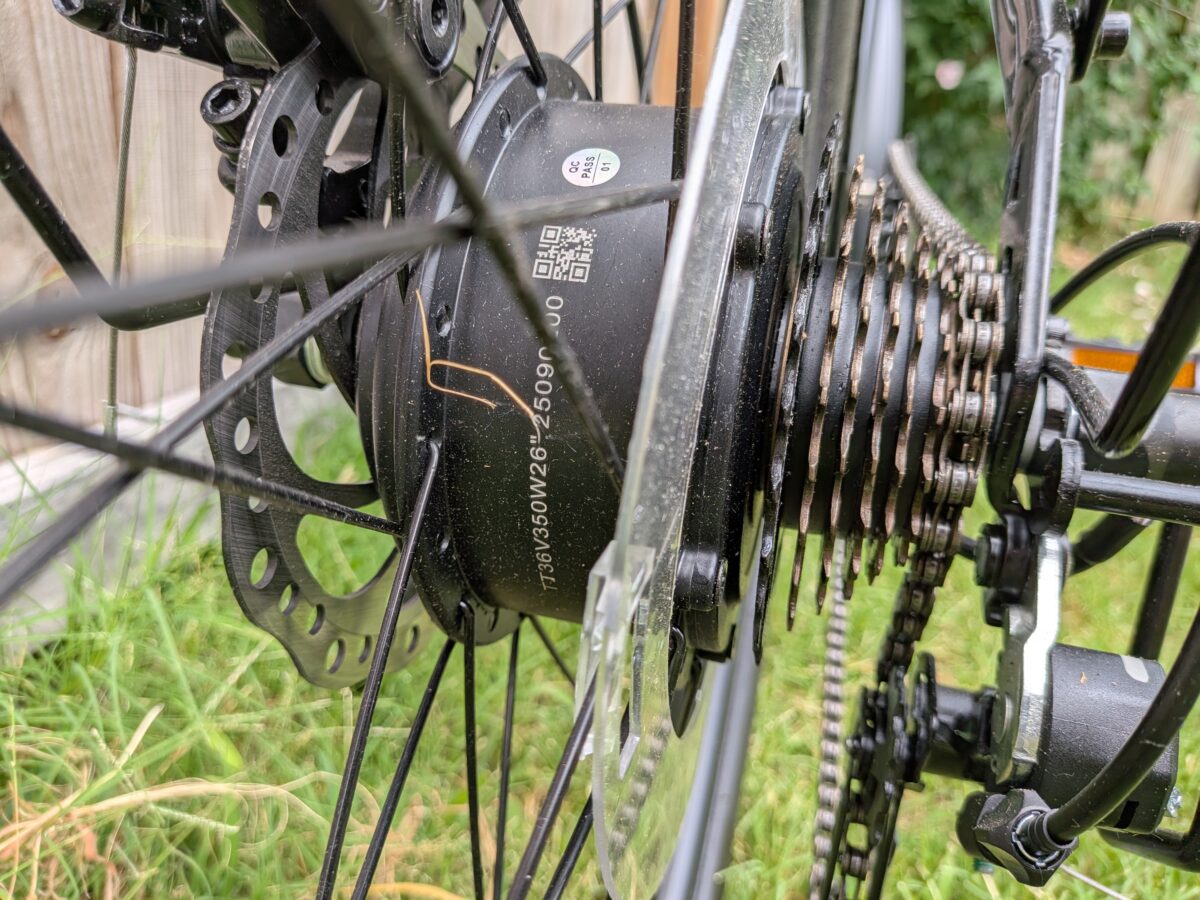
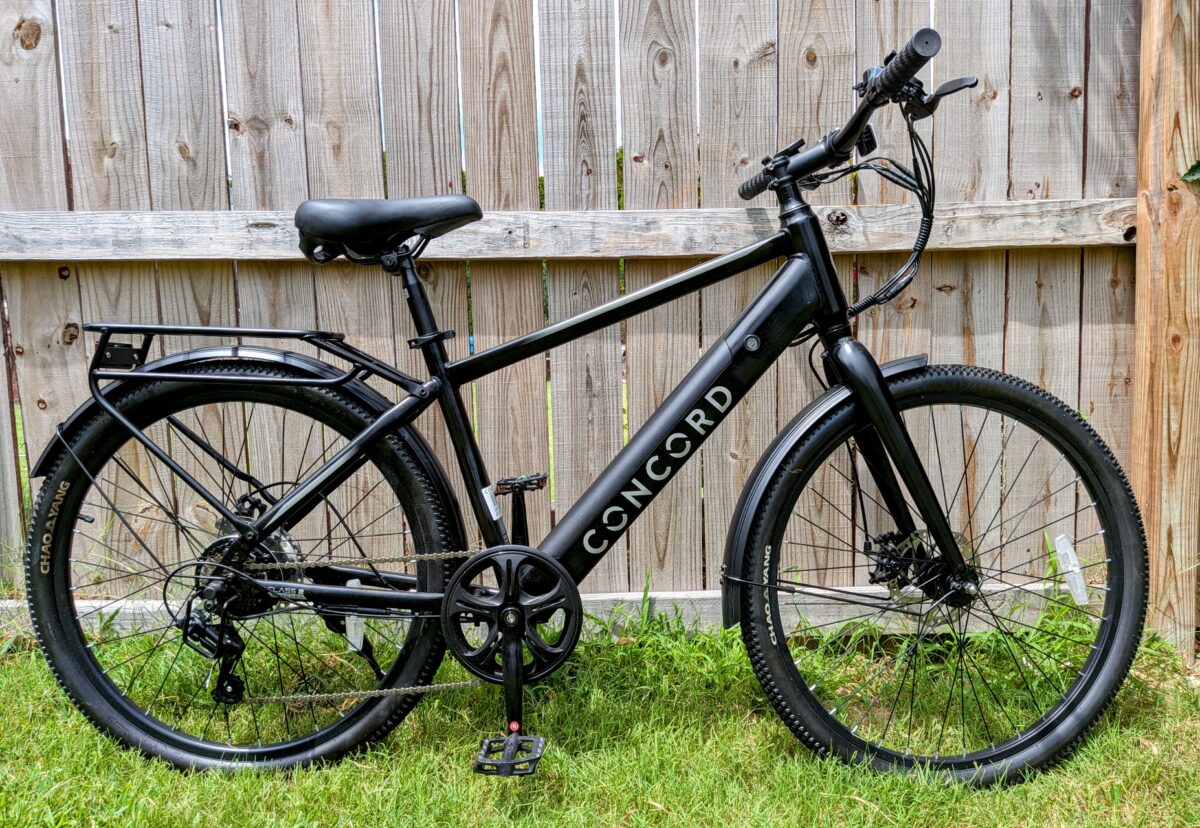
Power comes from a 36V 350W rear hub motor, the same size setup found on the aluminum Concord. The battery is integrated into the down tube and loads from the top, terminals first, then snaps into place — one of the easier battery removals we have dealt with on a budget ebike. Capacity is 36V and 10.4Ah, which works out to 374 watt hours, and Walmart advertises around 20 miles of range. A 1.5 amp charger is included, with a claimed six hour fill.
Certification is usually where budget ebikes get uncomfortable, and this one holds up. The battery pack is certified to UL2271 and the bike’s full electrical system to UL2849 — the same pairing Phoenix, the manufacturer behind Walmart’s Concord brand, documented for us when we reviewed the aluminum Concord. Having a certified battery and a certified motor on a $478 ebike is the genuinely impressive part of this bike, because those are the two expensive components on any ebike.
Brakes and Drivetrain
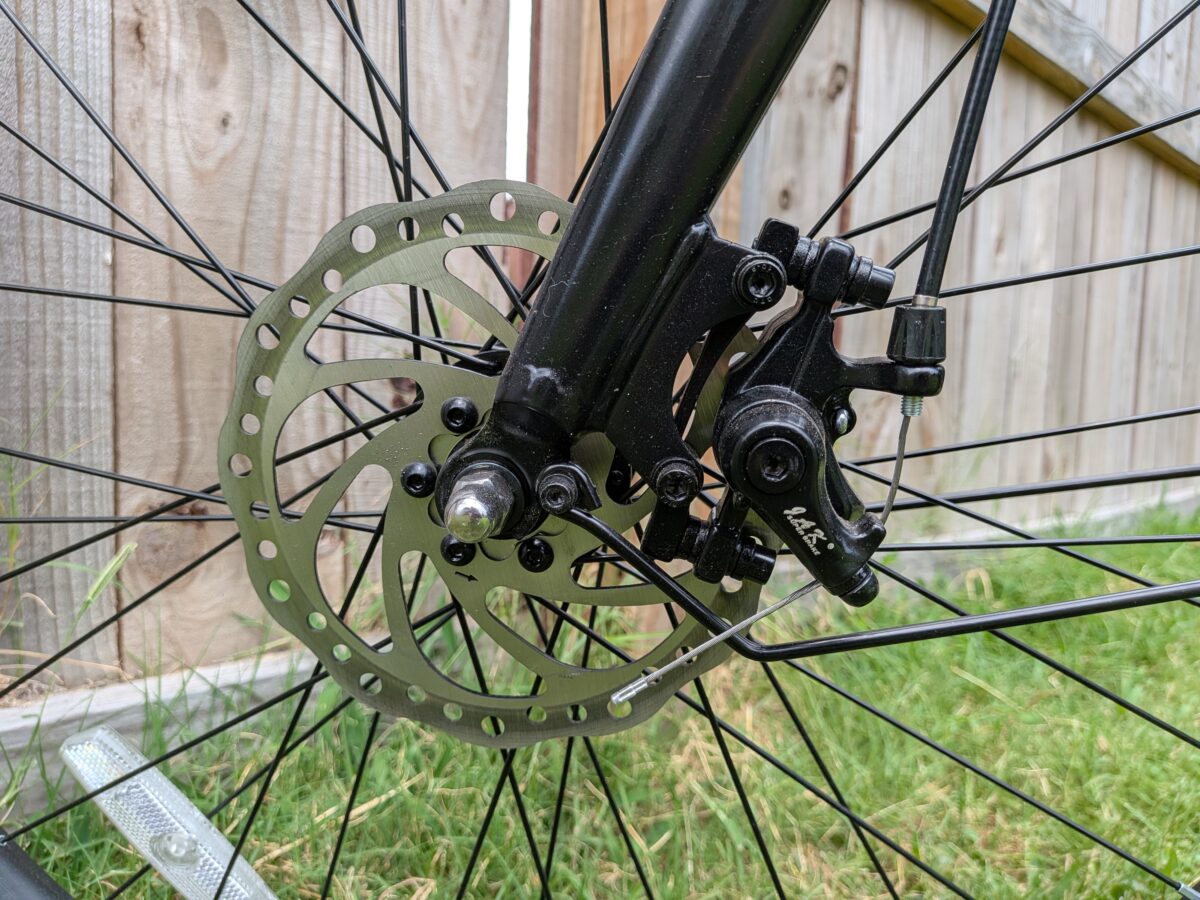
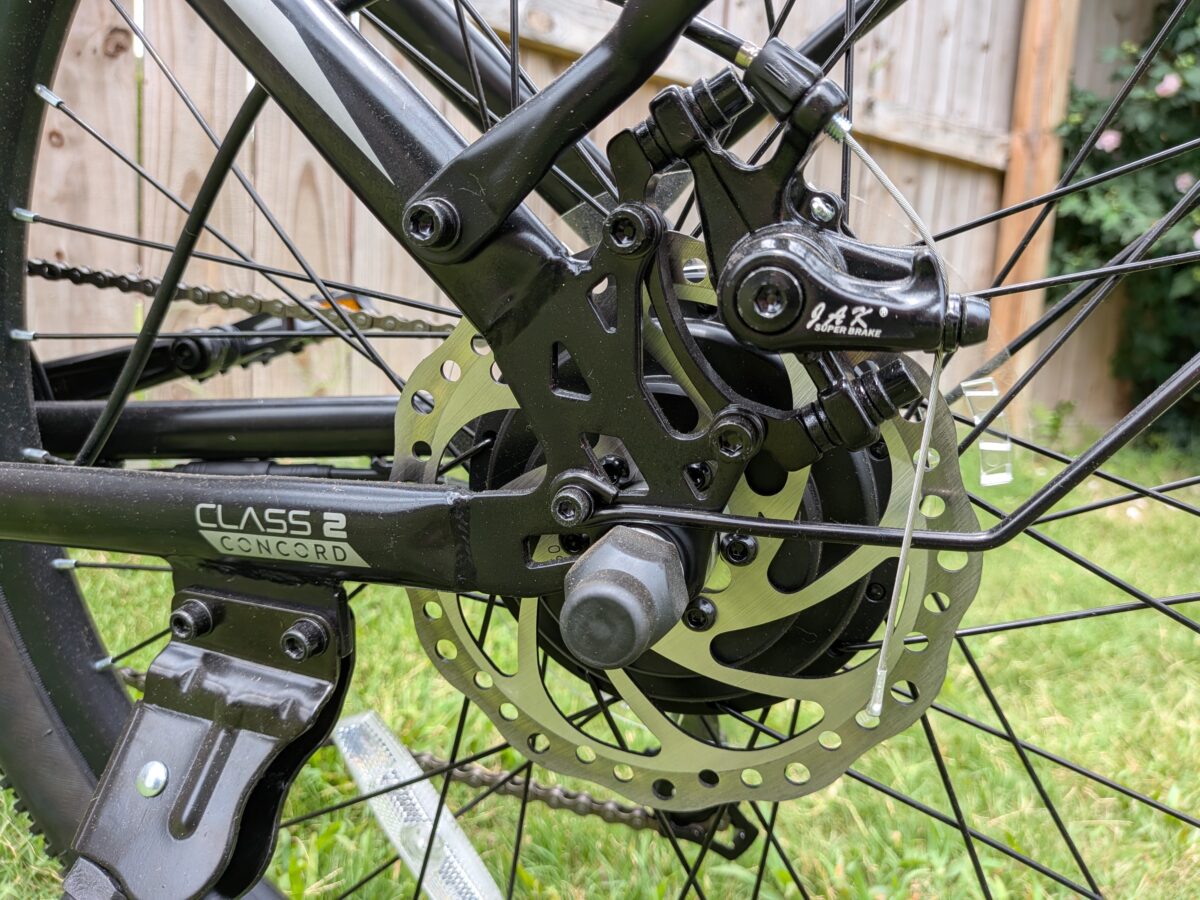
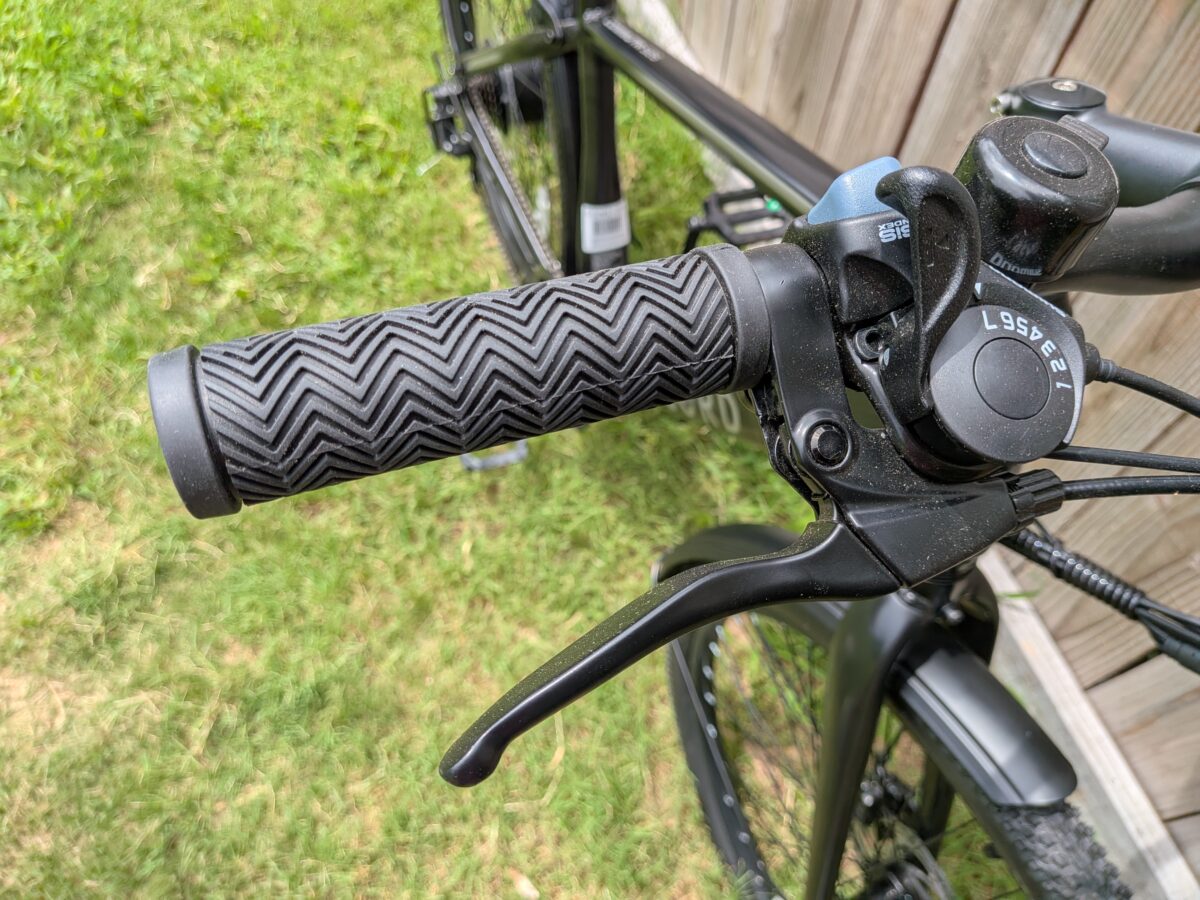
Stopping is handled by mechanical disc brakes with 160 mm rotors front and rear. The levers include motor cutoffs, so power drops the instant you reach for either one.
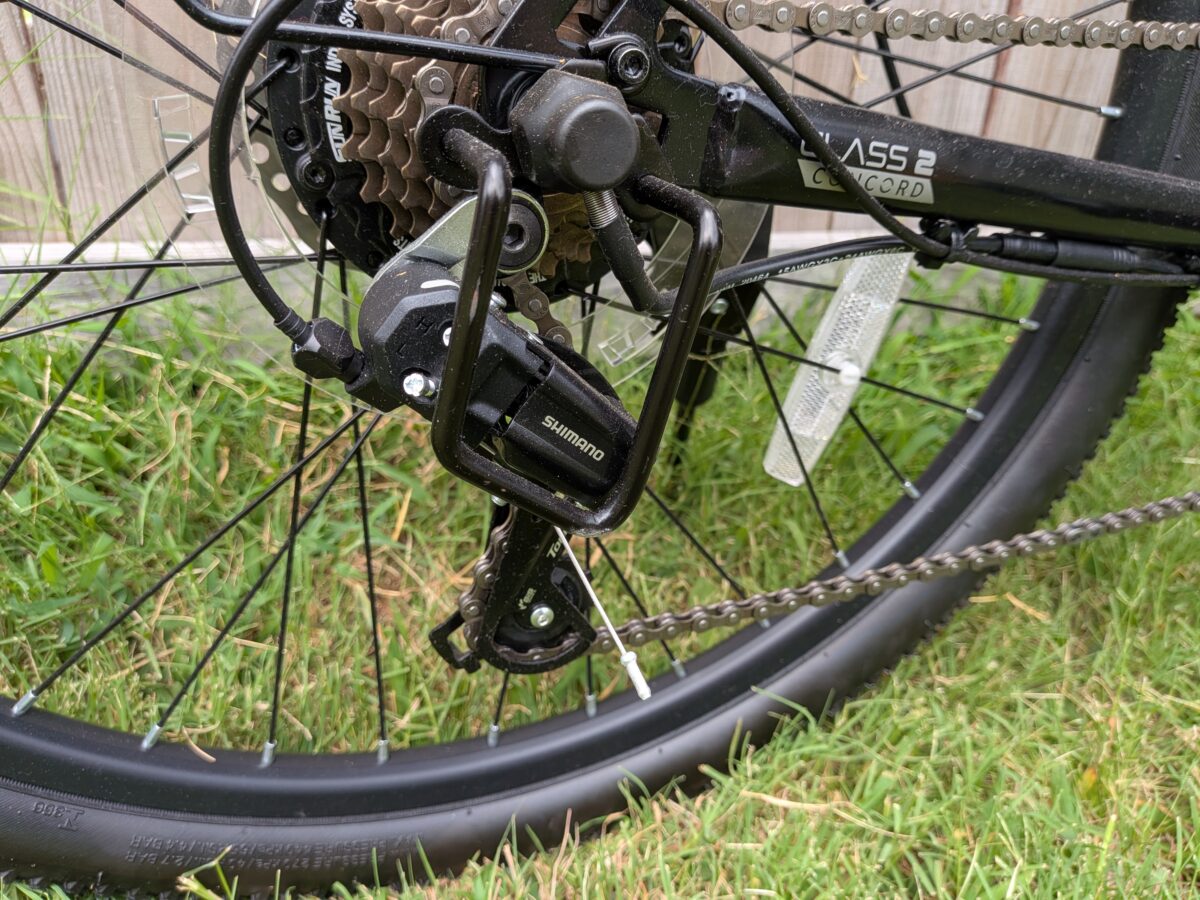
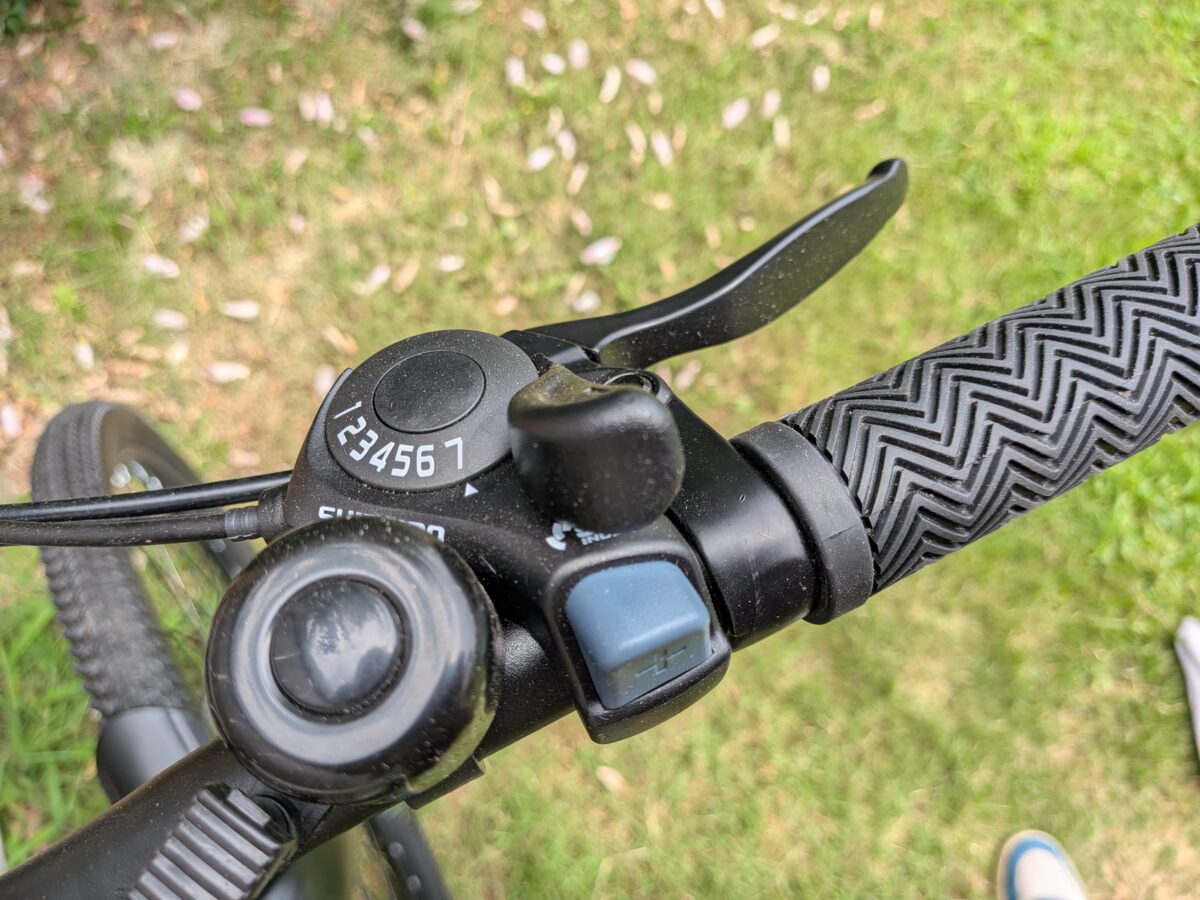
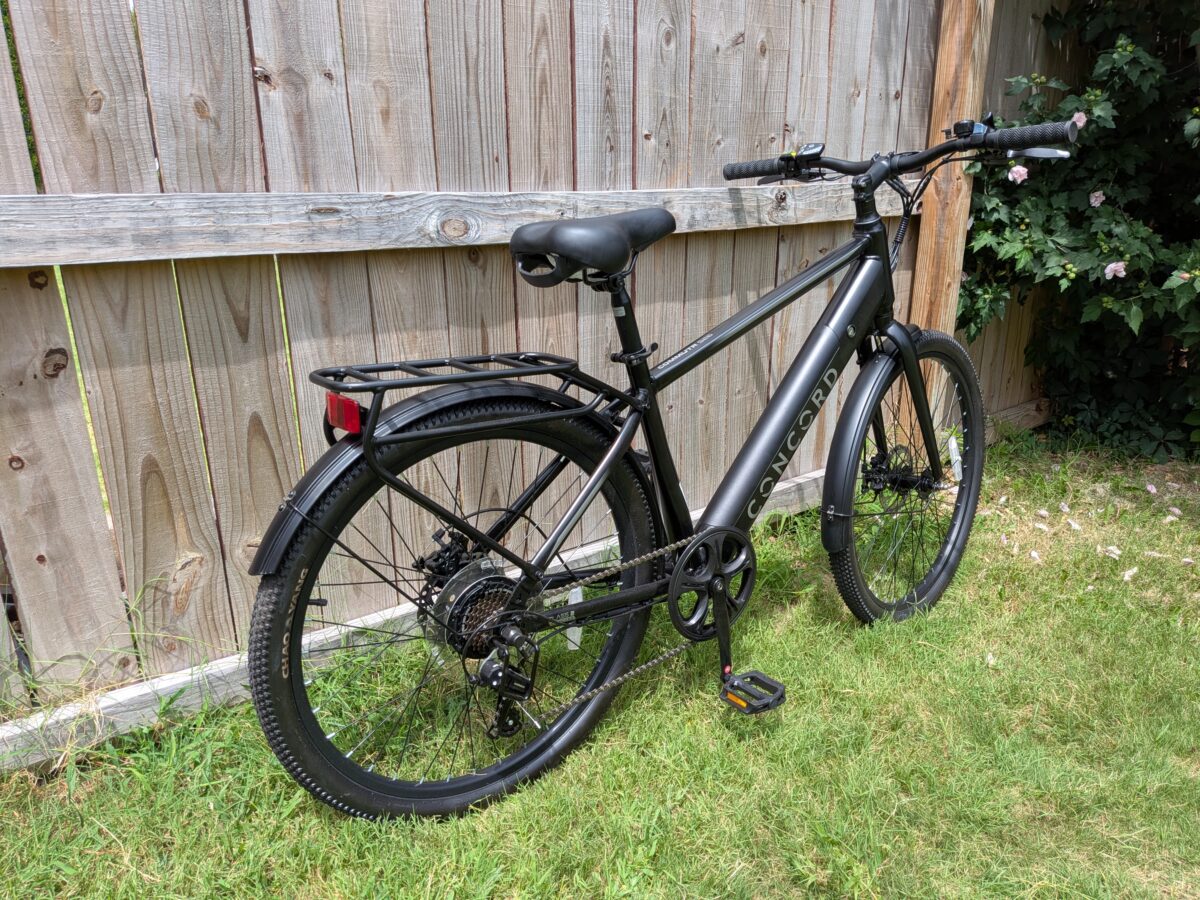
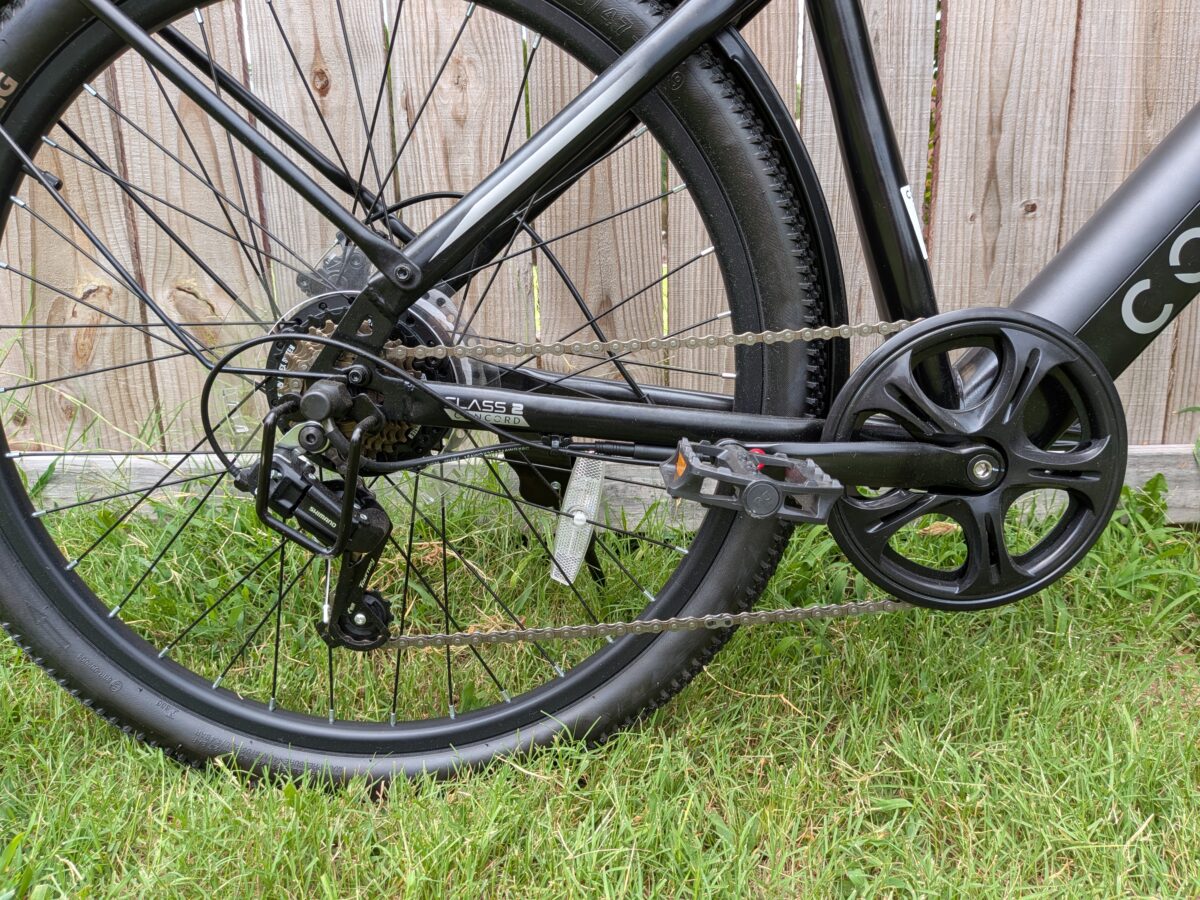
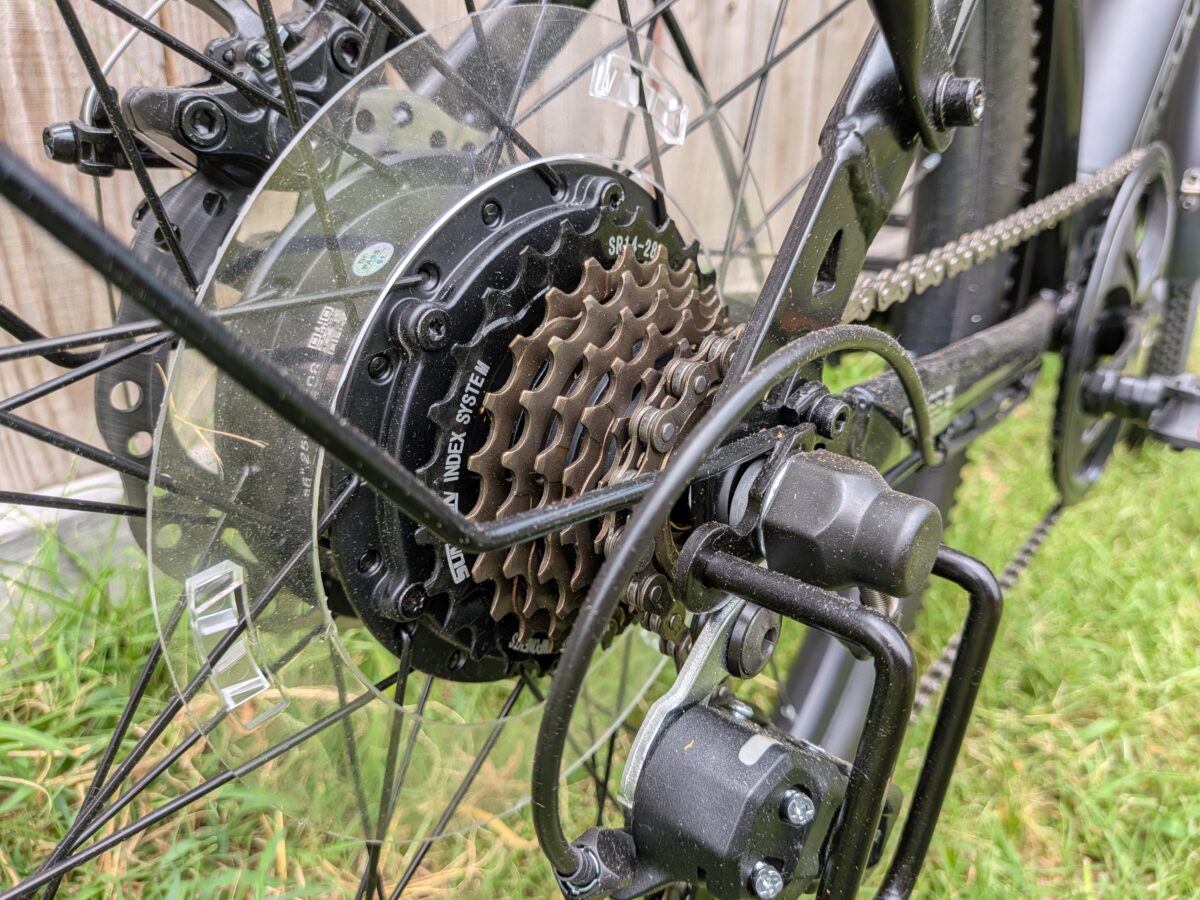
Gearing is a Shimano Tourney RD-TY200 derailleur with seven speeds, a 14-28T freewheel out back, and a 48T chainring on 170 mm cranks. Shifting happens through a Shimano index thumb shifter. None of this is exotic hardware, but seven usable gears at this price is more than we expected, and as the hill test shows, that gear range is the reason a 350W motor works at all here.
Display and Controls
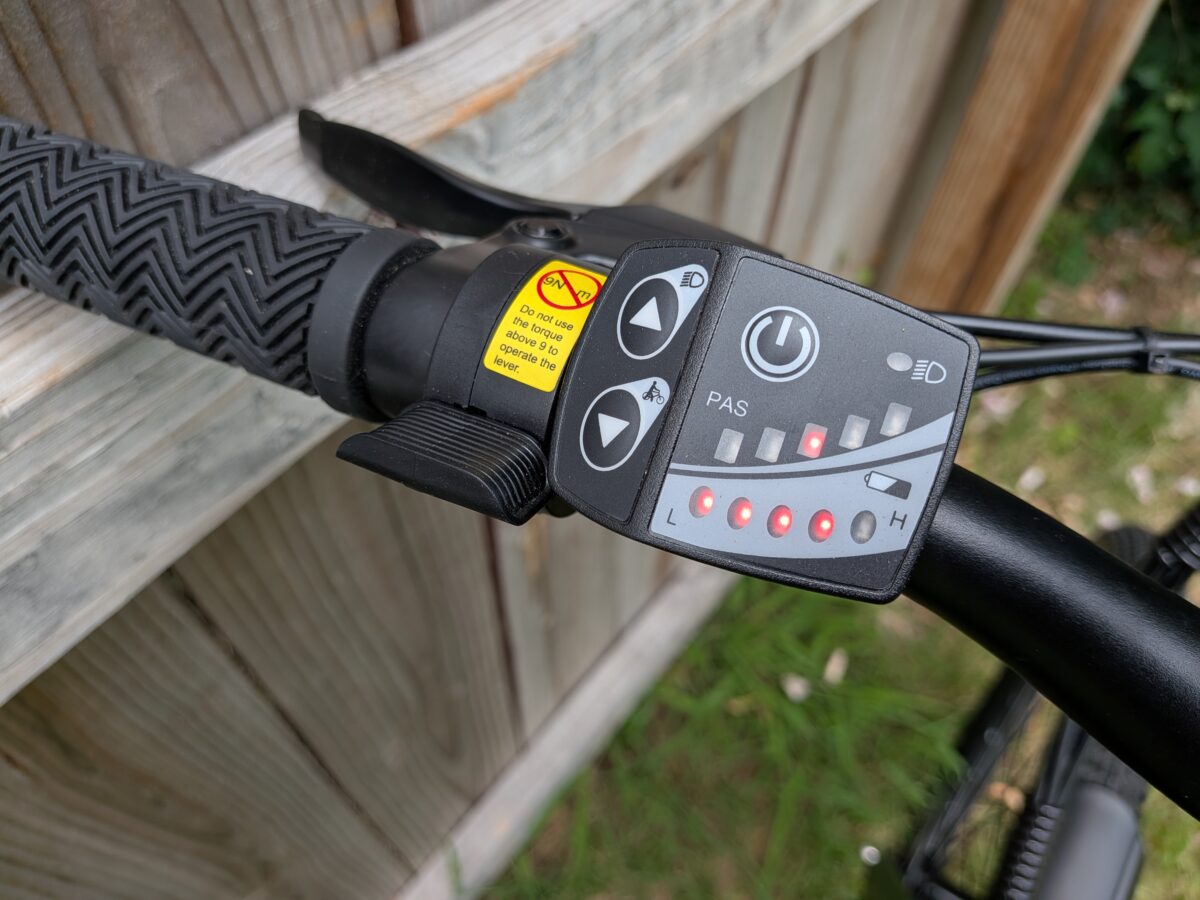
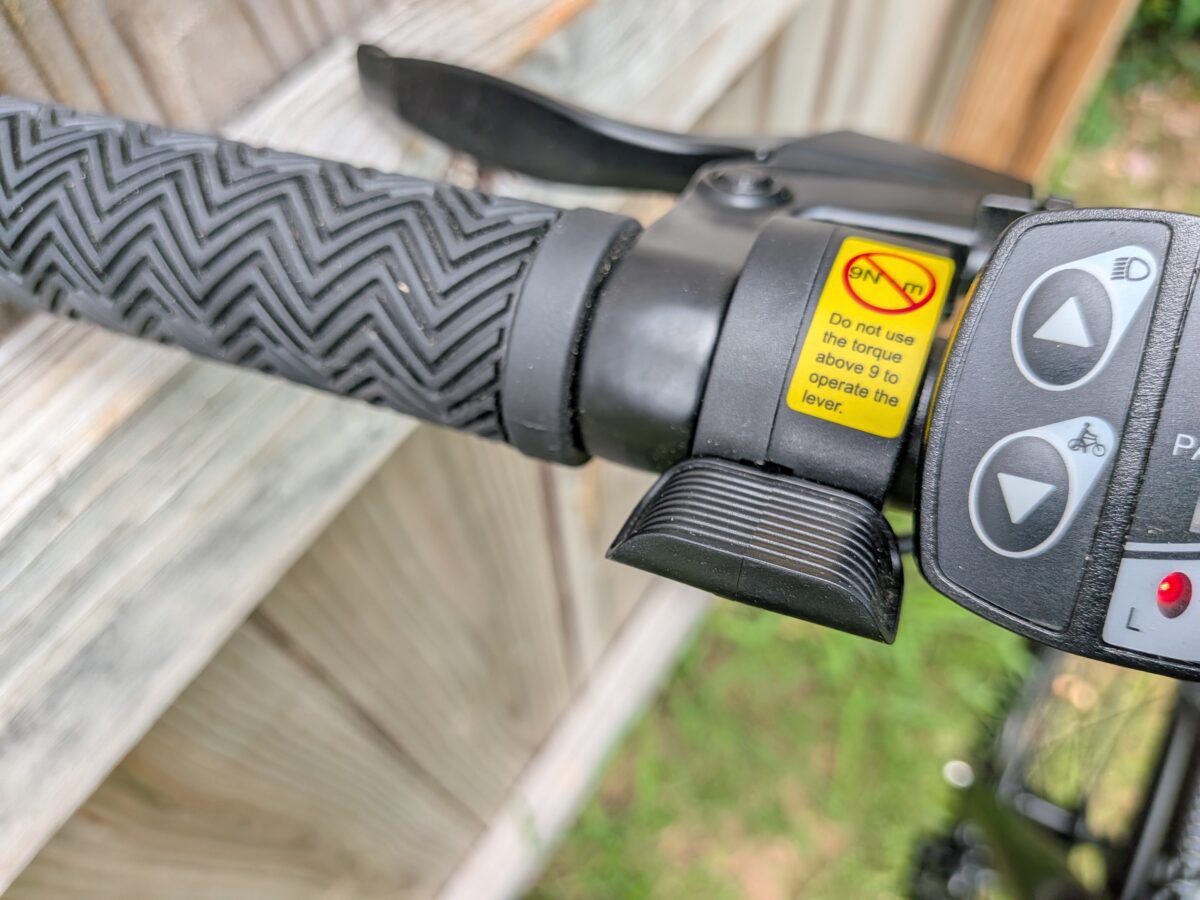
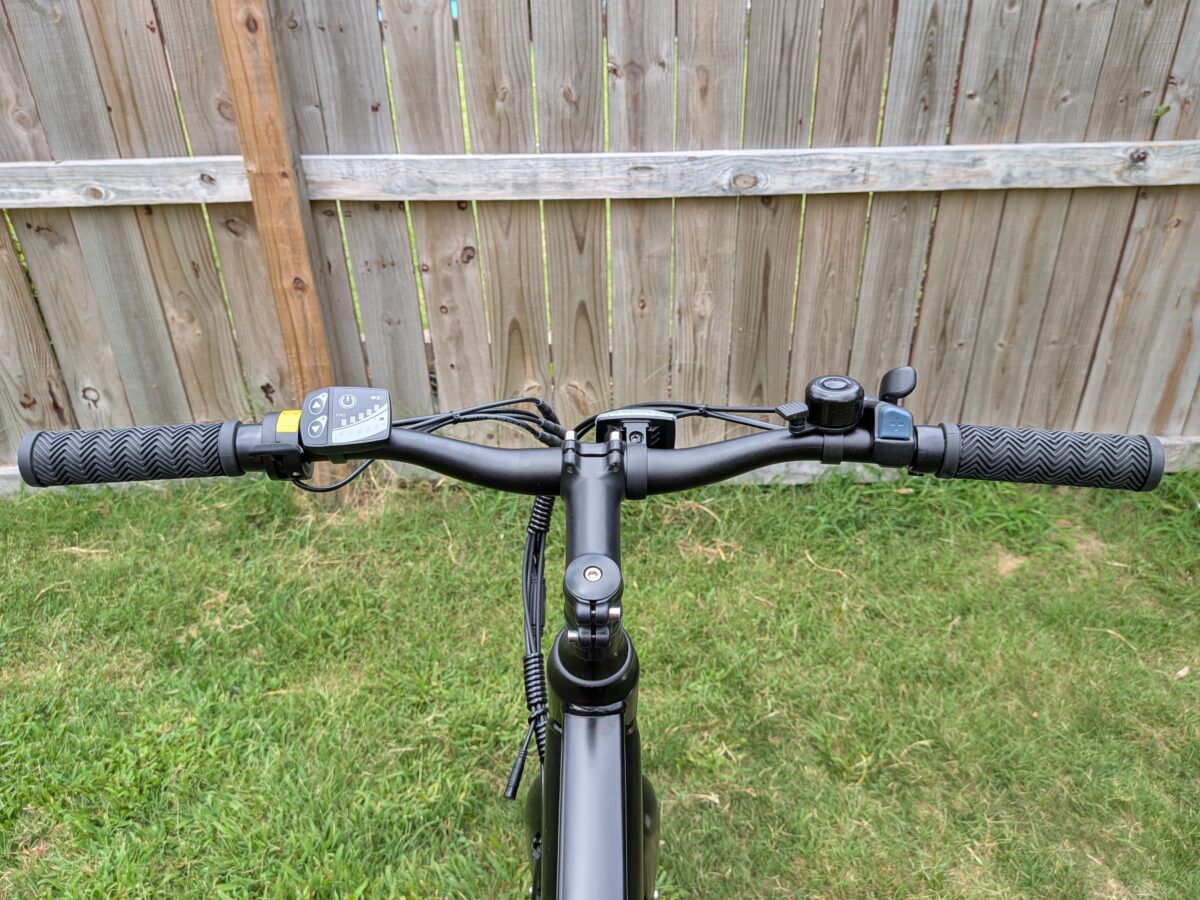
Up on the bars you get straight commuter bars, non-locking grips, a bell on the right, and an LED display that keeps everything simple. The power button wakes it up, holding pedal assist down engages walk mode, and five levels of assist are available. Holding pedal assist up would normally toggle lights, except this bike does not have any. What you will find instead is a capped connector up front, which suggests you could add lighting yourself. A left-hand thumb throttle finishes off the controls.
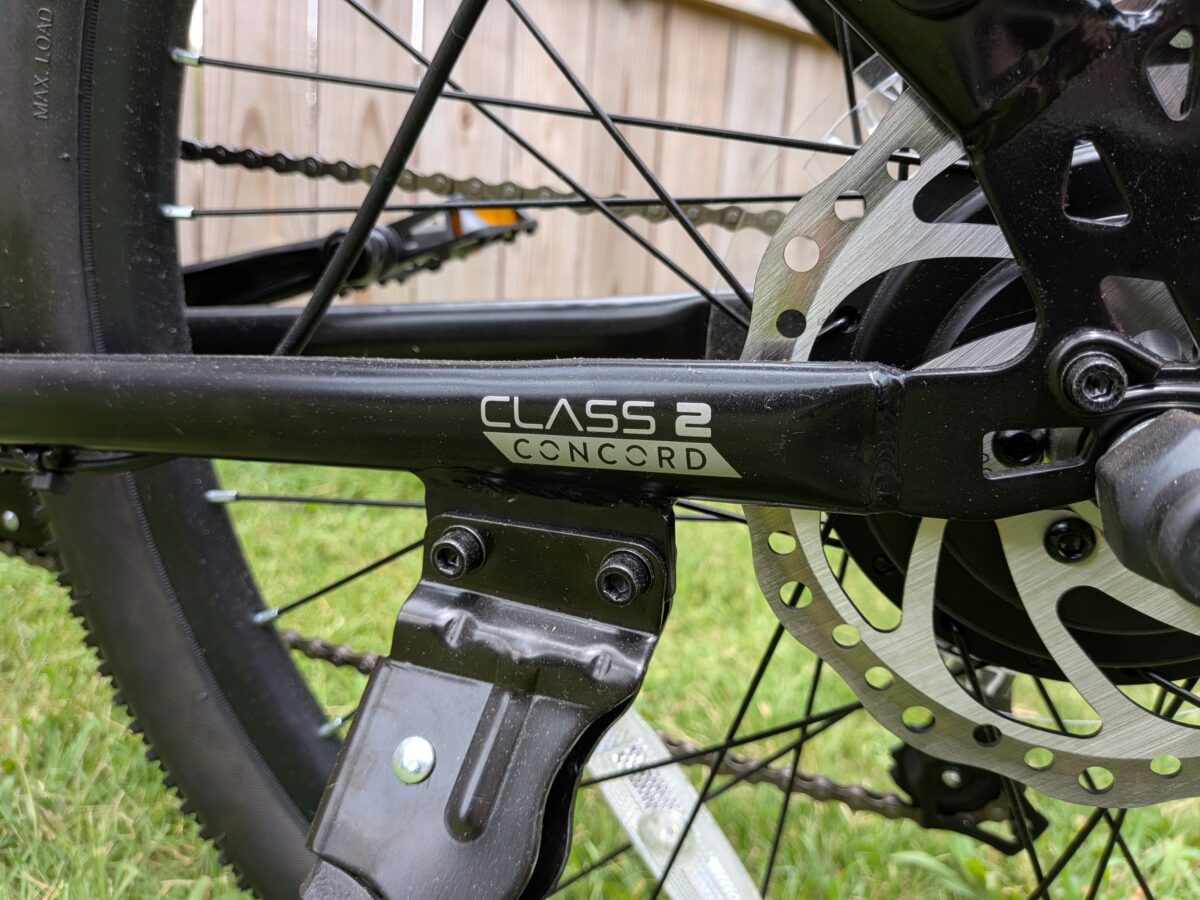
Class 2 is printed right on the frame, so top speed is 20 mph and the throttle is standard.
Commuter Gear Included
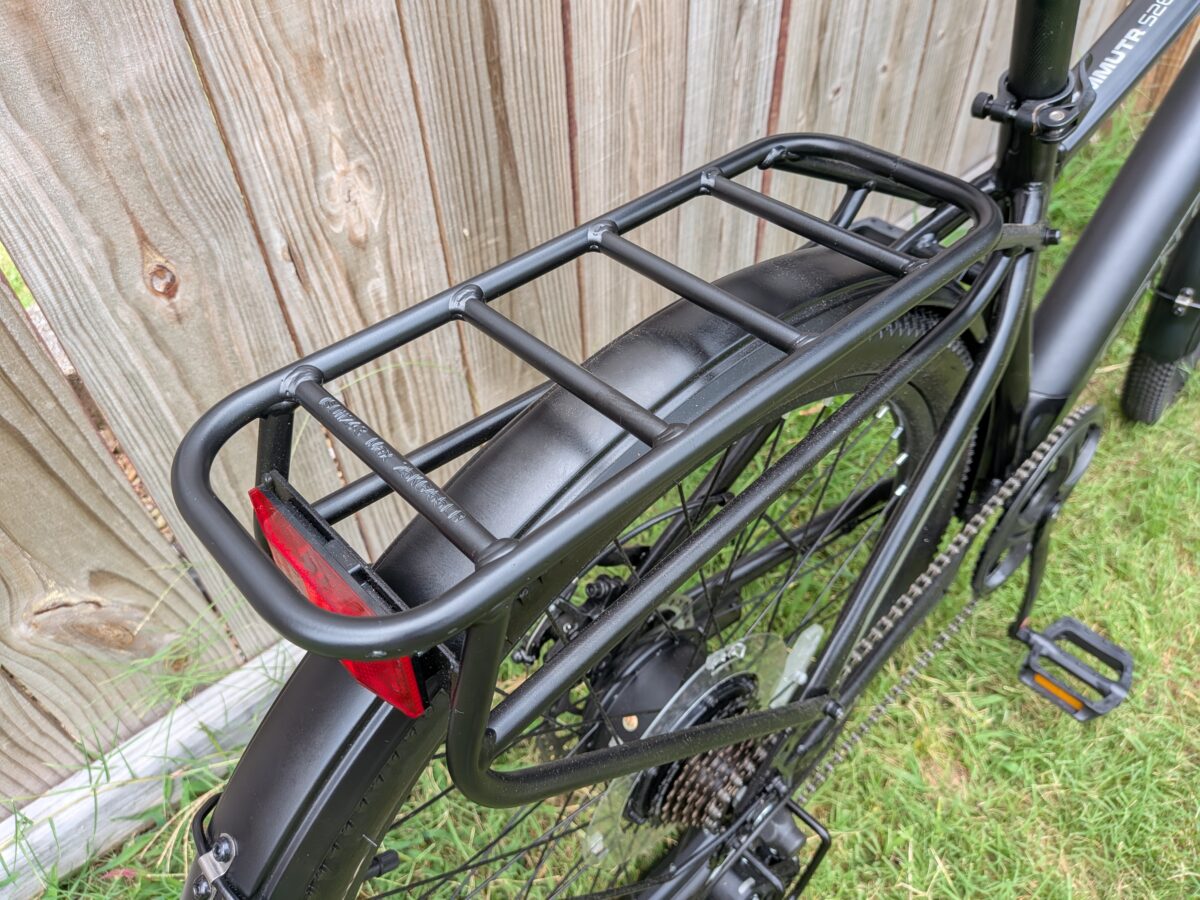
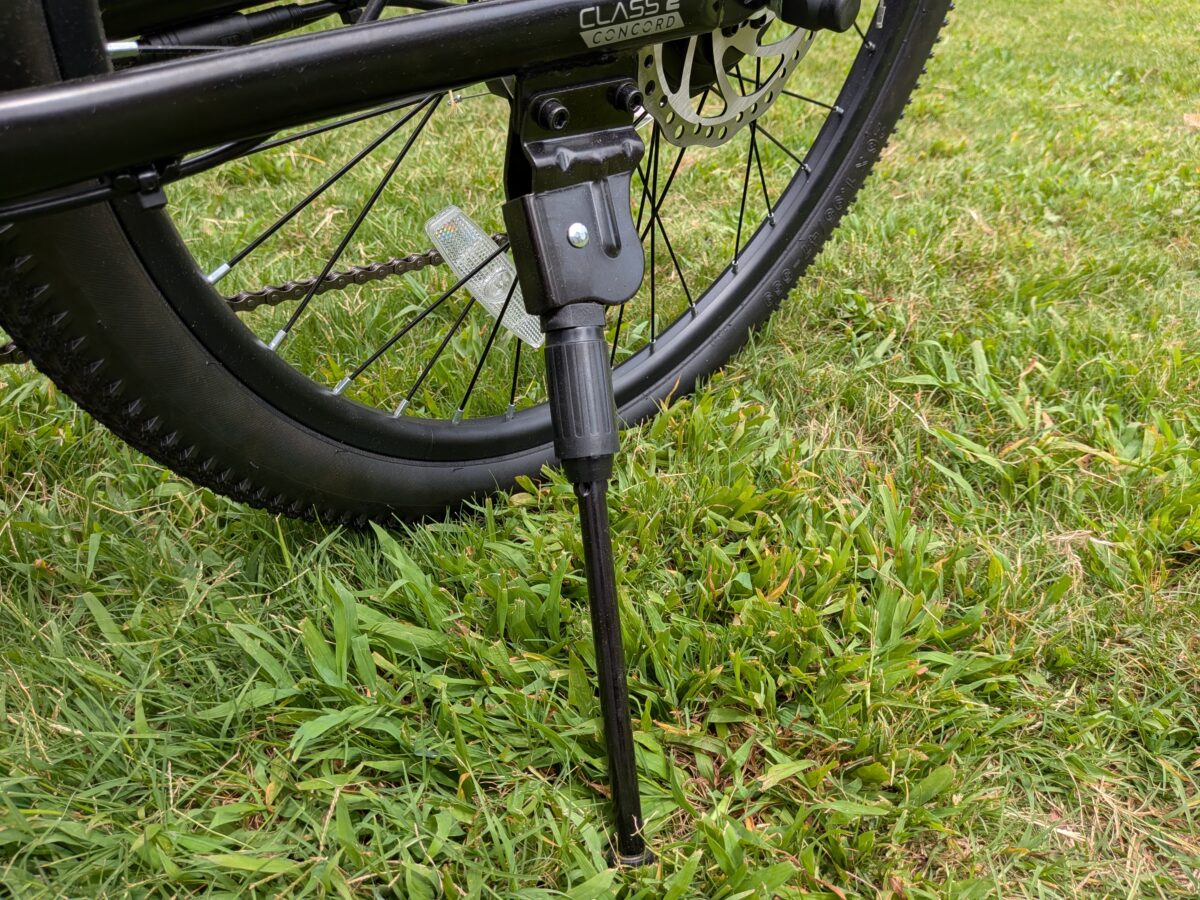
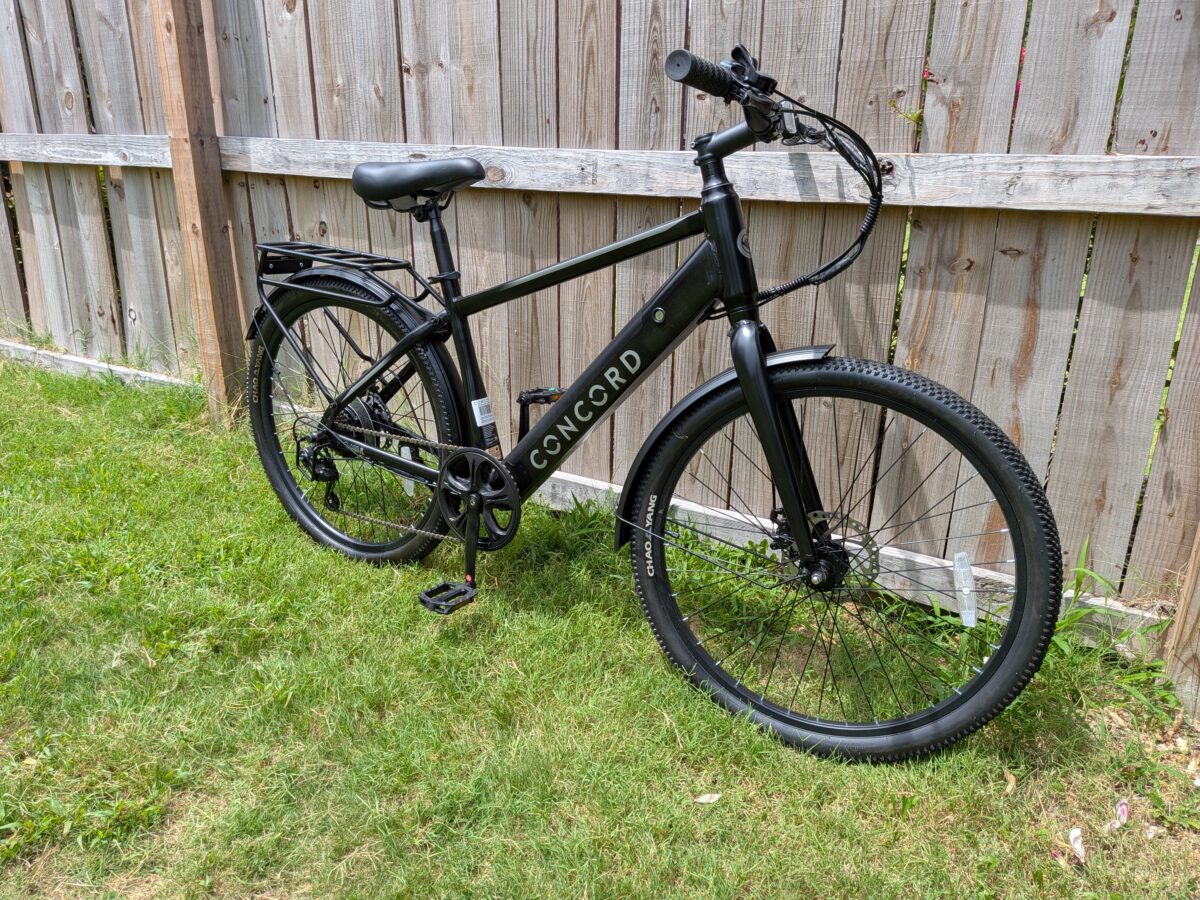
Metal fenders front and rear come standard, along with a rear rack rated to 55 pounds. At this price we would normally expect a bare bike and an accessory upsell, so finding the actual commuter necessities already bolted on is a real win. The rear-mounted kickstand is narrow but does its job, and the pedals are plastic.
Tires, Fork, and Ride Position
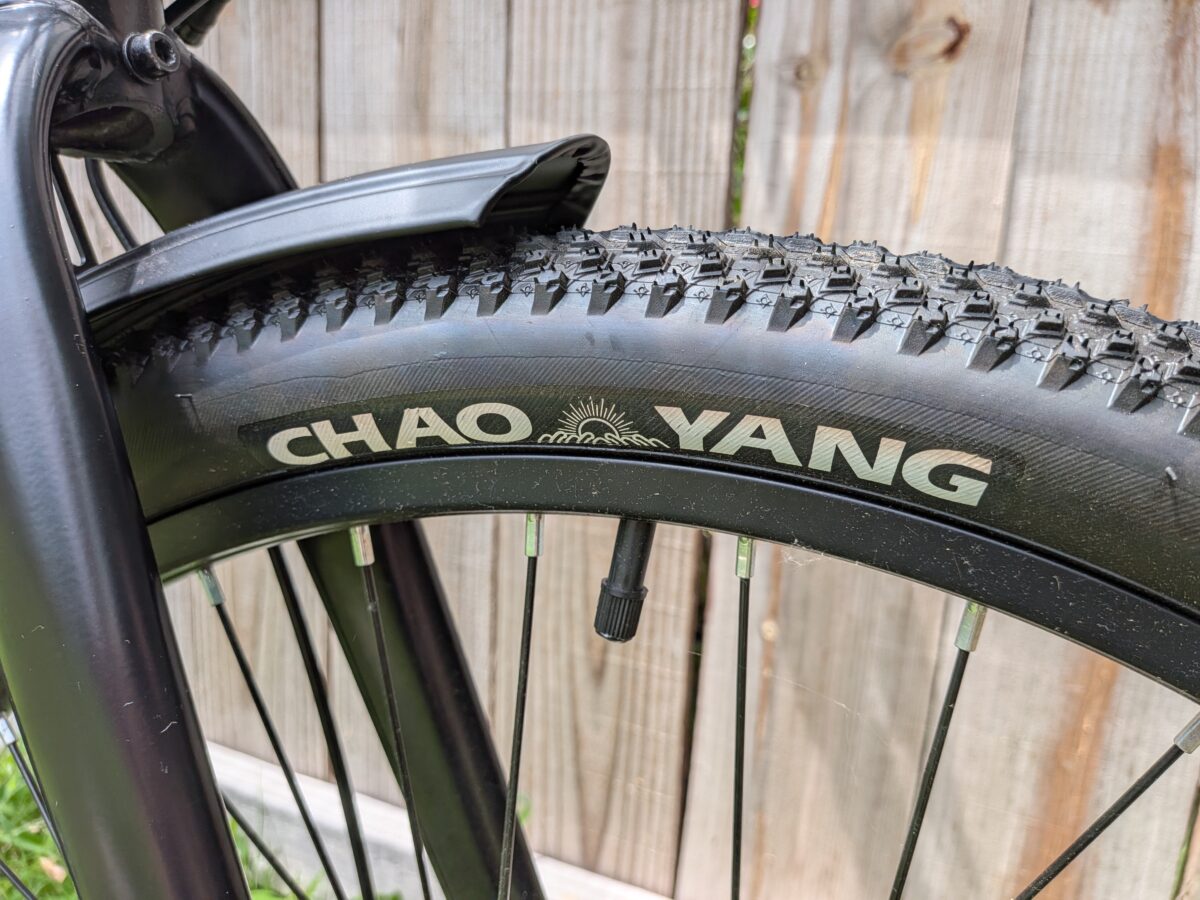
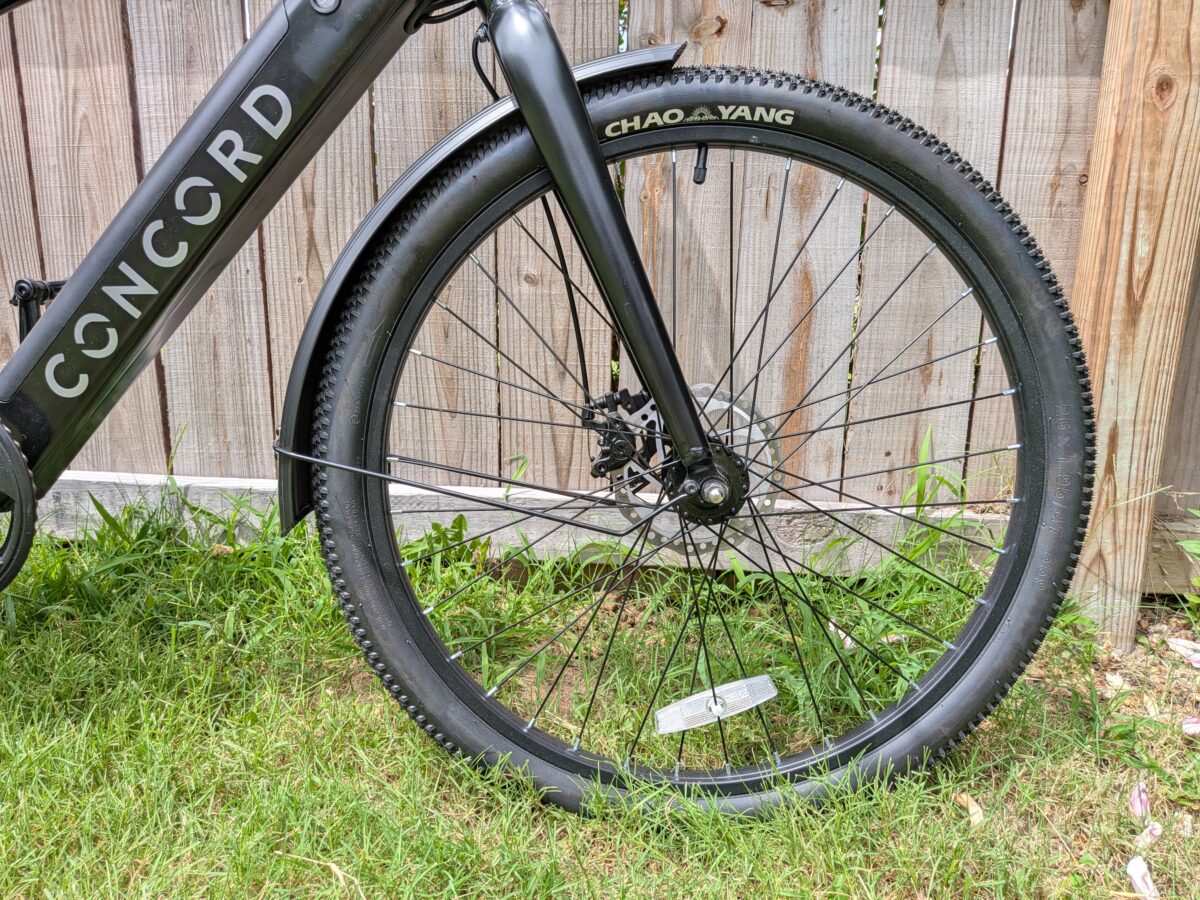
Rolling stock is a set of Chaoyang 26 x 1.95 inch tires with a hybrid tread. These are not off-road tires, but there is enough pattern in them that cutting across a grass patch to get back on the sidewalk feels more secure than it would on pure slicks.
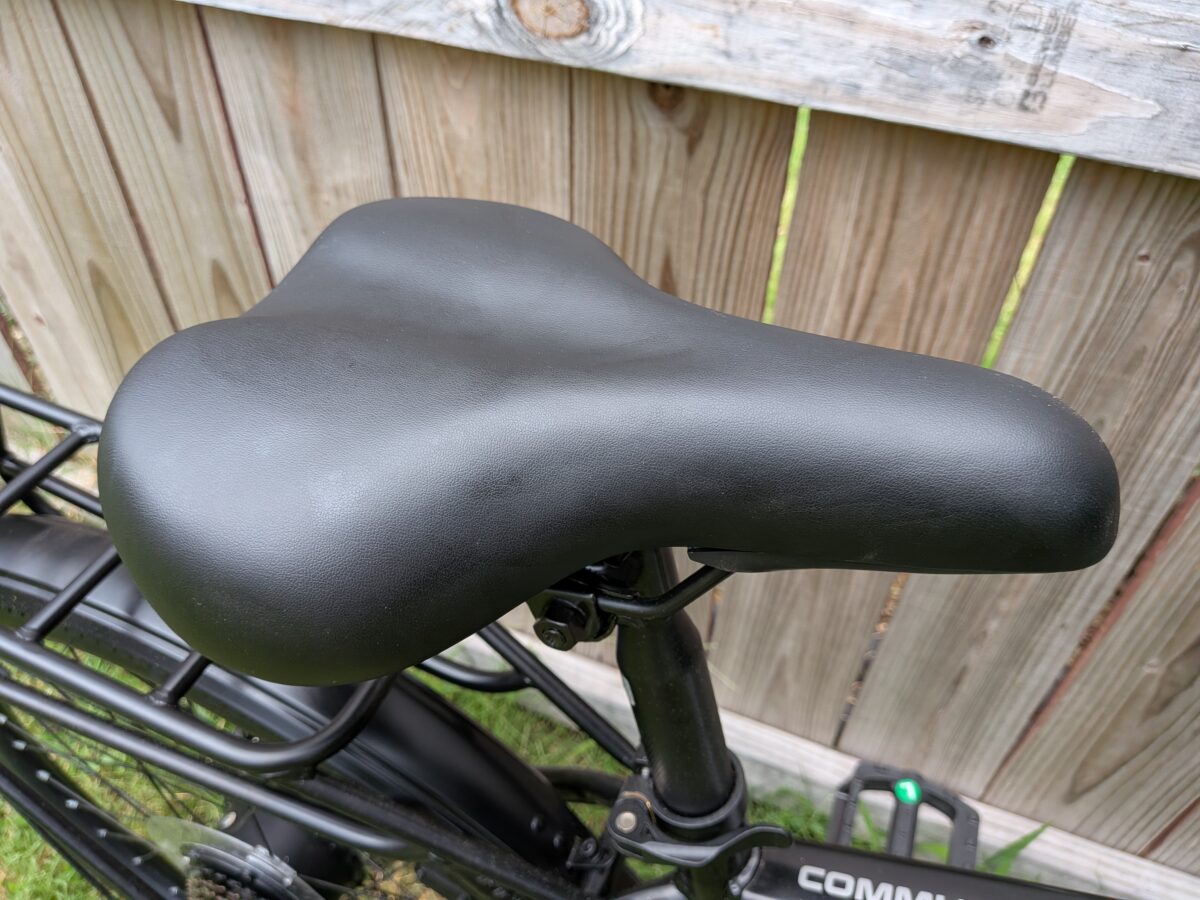
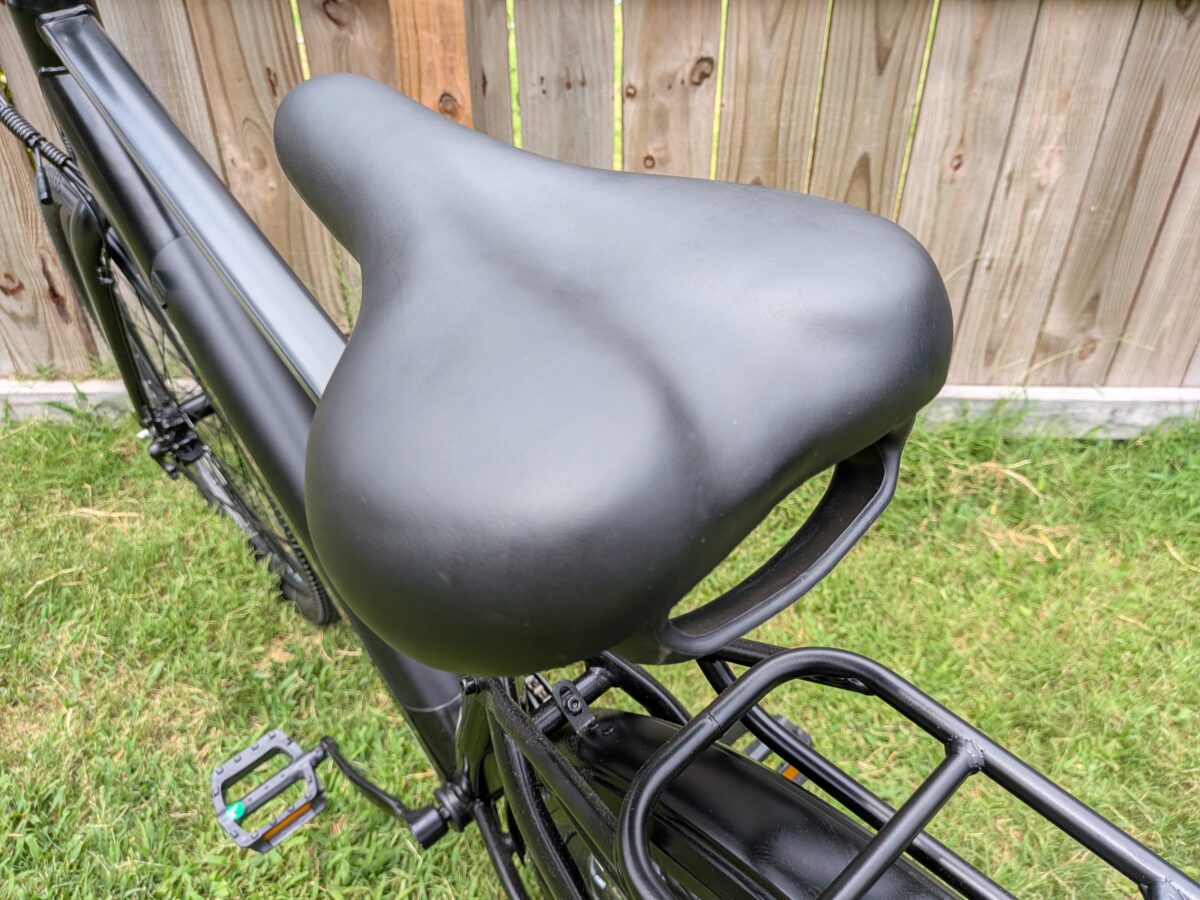
The fork is rigid steel, so there is no suspension anywhere on this bike, and the traditional diamond frame leans you forward more than a cruiser would. Comfort duty falls entirely to the 145 mm saddle on alloy rails and whatever pressure you run in the tires.
Frame, Fit, and Sizing
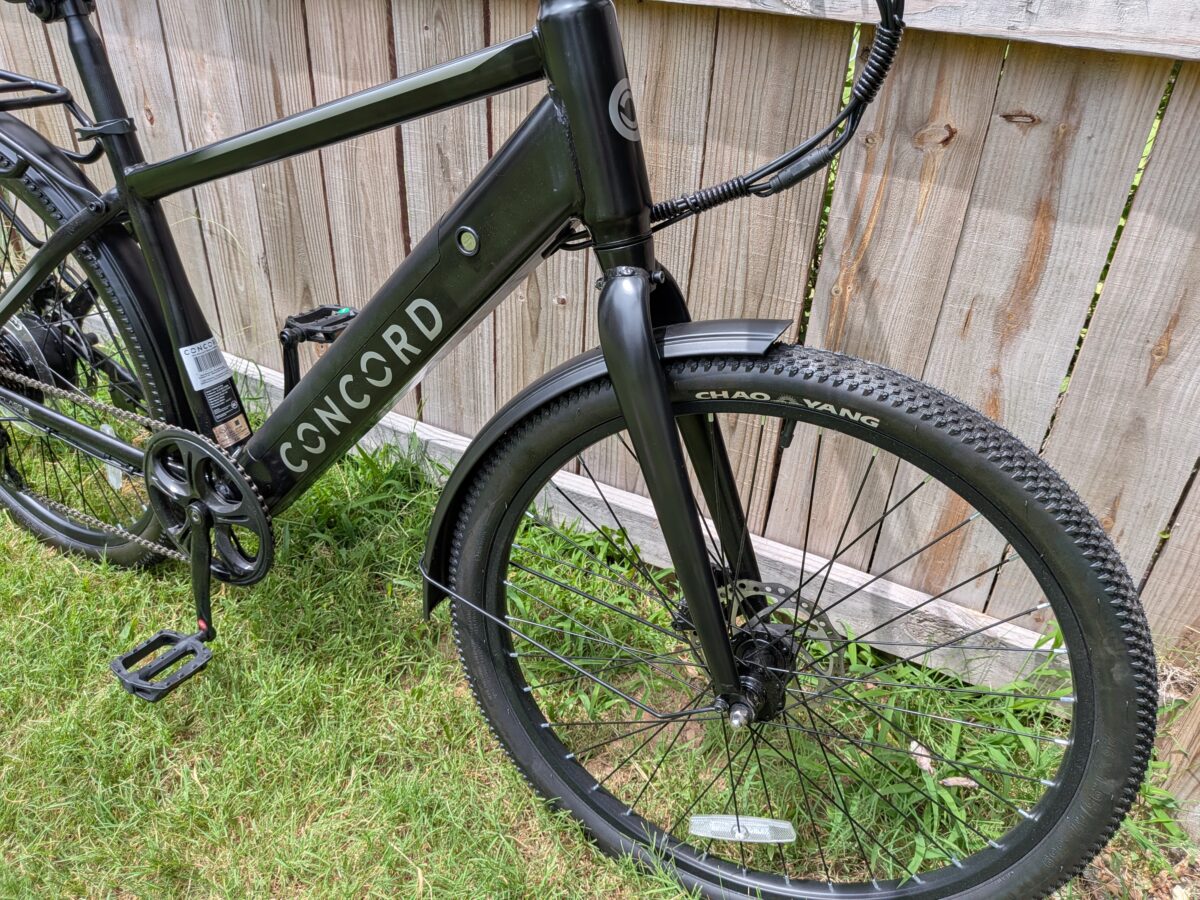
Only one frame is offered, and it is a high step. That is the first real limitation against the aluminum Concord, which is also sold as a step-thru for riders who need to step through rather than swing a leg over.
Walmart lists the fit range as 5’2″ to 5’10”. With the seat post at its highest position, our 6-foot tester with a 32 inch inseam had no trouble, so there is some headroom past the stated ceiling — just not a lot of it. Riders who want to sit taller and more upright will feel the straight bars here, since the aluminum version’s swept-back bars put you in a noticeably more relaxed position.
Concord Commutr Specifications
Here is the full component list as sold, with the Lectric XPress 2 alongside for context on where the extra money goes.
| Spec | Concord Commutr | Lectric XPress 2 |
|---|---|---|
| Price | $478 | $1,399 |
| Class | Class 2 (20 mph) | Class 3 (28 mph) |
| Motor | 350W rear hub, 36V | 750W rear hub, 1,310W peak, 85 Nm, 48V |
| Battery | 36V 10.4Ah (374Wh) | 48V 14Ah (672Wh) |
| Claimed range | 20 miles | Up to 60 miles |
| Sensor | Cadence | Swappable torque or cadence |
| Display | LED | Detachable color display, USB-C |
| Frame | Steel, high step only | Aluminum, high step or step-thru |
| Fork | Rigid steel | SR Suntour XCM suspension |
| Brakes | Mechanical disc, 160 mm rotors | Hydraulic disc, 180 mm rotors |
| Drivetrain | Shimano Tourney RD-TY200, 7-speed, 14-28T | Shimano Altus, 8-speed, trigger shifter |
| Tires | Chaoyang 26″ x 1.95″ | 27.5″ street tires |
| Lights | None (capped connector up front) | Front and rear, run off main battery |
| Fenders / rack | Metal fenders, 55 lb rear rack | Fenders and rear rack included |
| Weight | 58.74 lb on our scale (Walmart lists ~74.7 lb) | 72.48 lb on our scale |
| Certification | UL2849 system, UL2271 battery | UL2849 system, UL2271 battery |
| Charger | 1.5A, ~6 hour claimed charge | — |
Real World Performance Testing
The Throttle Works From a Dead Stop
Worth calling out first, because it is not a given: press the thumb throttle at a stop sign and this bike pulls away on its own. Several Walmart ebikes we have tested — including the aluminum Concord — require you to be already rolling before the motor will engage. Getting proper throttle-from-standstill behavior at $478 is a small thing that makes the bike meaningfully more pleasant in traffic.
Hill Climb: Throttle Only
This is where a 36V system runs out of argument. Our 145 pound rider took the Commutr up on throttle alone and watched the speed slide from seven, to six, to five, before he had to put a foot down. The XPress 2, running 48 volts, went up the same hill without drama.
We ran it again with our heavier rider, north of 200 pounds, still throttle only, and that attempt made it — but only just, holding somewhere between six and nine mph the whole way. Be clear about what this hill is: a neighborhood grade, nowhere near the steepness of our standard test hill.
Hill Climb: With Your Legs
Same hill, same bike, pedaling in fourth gear. The Commutr cut straight through it with no struggle at all. That is the entire story of this bike compressed into one run — it is not that the motor cannot climb, it is that the motor needs your legs to do it.
Given a 374Wh battery, you would not want to lean on the throttle for climbing anyway. Throttle-only riding eats through a pack this size quickly, so pedaling is both the faster and the smarter way to use this bike.
Getting to 20 mph
On a mostly flat stretch that tips up slightly, we held the throttle down to see how long the motor takes to reach its 20 mph cap. It built steadily to 17, then 18, and you could hear the motor working as the road rose. It sat at 19 for a good while and only found 20 once gravity helped on the other side. So 20 mph is real, but on throttle alone you want flat pavement to get there.
Pedal Assist and the Cadence Sensor
The motor here runs off a cadence sensor, which means it responds to your pedals turning rather than to how hard you push into them. About half a rotation gets it going. Each assist level is also speed capped rather than power based, so a given level feeds you power until you reach its ceiling and then hands the rest back to your legs.
Working up through the range: level one in first gear settled around 10 mph. Level two, still in first, held about 11. Level three came in near 14. Level four landed at 15 to 16 after a shift into fifth. Level five got to 20 with a shift into sixth. The spacing between the levels is even and predictable, which makes the system easy to read — pick a level, settle into a speed, and pedal.
Braking
Mechanical discs with 160 mm rotors on a bike just under 59 pounds is exactly the compromise you would expect. In our test the Commutr came to a rolling stop rather than a hard one. Control was there and it never felt sketchy, but for contrast, we locked up the tires on the XPress 2’s hydraulic setup with its larger 180 mm rotors.
Give yourself more stopping distance than you think you need, and plan on adjusting the cables as the pads wear. The upside of mechanical brakes is that adjustment is something you can do yourself in a driveway.
Concord Commutr vs Lectric XPress 2
At $1,399, the XPress 2 costs almost exactly three times the Commutr, and the spec sheet goes its way on nearly every line. The 750W motor peaks at 1,310 watts on a 48V system, and off the line it is noticeably peppier. Push it and the bike will carry you at 28 mph with barely any effort in the pedals — Class 3 speeds the Commutr simply cannot reach.
Sensor design is the difference riders feel most. A torque sensor measures how hard you push into the pedals and responds accordingly, which delivers a more natural pedal feel and runs more efficiently. The XPress 2 lets you switch between torque and cadence in the settings and dial in a torque multiplier if you want more power sooner. The Commutr gives you a cadence sensor and five speed caps, and that is the whole system.
Beyond the drive system, the upgrades stack up quickly: an SR Suntour XCM suspension fork, hydraulic brakes with 180 mm rotors, an 8-speed Shimano Altus drivetrain with a trigger shifter, a quick-release adjustable stem, locking grips, quick-release pedals, a far burlier kickstand, front and rear lights running off the main battery, a USB-C port for charging your phone, and a proper display with real settings. There are also two frame styles, so riders who need a step-thru have an option.
One thing runs the other way, though. We put both bikes on our scale and the Commutr came in at 58.74 pounds against 72.48 for the XPress 2. Walmart’s own listing claims 74.7 pounds, so if you wrote this bike off as a boat anchor based on the spec sheet, look again — the cheap one is the easier of the two to get onto a hitch rack.
Is the XPress 2 a better bike? In every measurable way, and it is not close. But that was never the real question. The question is whether $478 buys a functional ebike, and measured against a bike three times its price, the Commutr held up better than the numbers suggested it would. Read our full Lectric XPress 2 review for the complete picture on that bike.
The Harder Call: Commutr vs the Aluminum Concord
Honestly, the more interesting comparison is $70 away inside Walmart’s own lineup. For $548 the aluminum Concord gets you an aluminum frame in place of steel, a step-thru option for riders who need it, swept-back bars and a more upright position, 27.5 inch wheels instead of 26, and a front light that runs off the main battery. The motor and battery are the same 36V, 350W, 374Wh setup, so you are not buying more power — you are buying a front light, a more upright riding position, and a frame that a lot more people can actually get on and off of.
Aluminum does mean a lighter bike, though not by as much as you might assume. We weighed the aluminum Concord at 50 pounds when we reviewed it, and this steel Commutr came in at 58.74, so there is just under nine pounds between them. Both of those are our numbers, measured the same way — worth stressing, because Walmart’s listing for this bike claims 74.7 pounds and is off by more than fifteen.
The step-thru frame, the front light, and just under nine fewer pounds are the real arguments for spending the extra $70. The steel Commutr earns its place when $478 is a hard ceiling, or when you do not need a step-thru and would rather add your own lights. Our full review of the aluminum Concord covers that bike in detail.
Customer Support and Replacement Parts
Concord is Walmart’s own brand, built by Phoenix, and it should not surprise you that rolling this bike into a Walmart and asking someone to fix it is not an option. That service does not exist.
When we reviewed the aluminum Concord, Phoenix responded promptly to email, supplied UL documentation, and told us replacement batteries could be obtained by contacting support directly. That is better than we expected, but we would still like to see Walmart list replacement batteries and controllers for sale on the site. Knowing you need a battery and simply buying one beats opening a support ticket to find out whether you can.
Lectric is direct-to-consumer, but as the largest ebike seller in North America they keep US-based support and stock parts, so a spare battery or a specific replacement component is something they can actually help you find. That gap matters more the longer you plan to own the bike.
Pros and Cons
Final Thoughts
What this bike sets out to do is get the price of an ebike under $500 without cutting the things that matter for safety, and on that narrow goal it succeeds. The battery and motor are certified, the throttle behaves properly, seven gears give the small motor a fighting chance on hills, and the fenders and rack are already bolted on. Walmart keeps pushing on price the same way Lectric does at a higher tier — and while we would call the XPress 2 a mid-tier commuter, this is a low-tier price carrying more content than that price usually does.
What it gives up is everything you feel from the saddle: a rigid fork, mechanical brakes, no lights, and no frame option for riders who cannot swing a leg over. If you live somewhere reasonably flat, your commute is short, and $478 is the number you can spend, this is a legitimate way onto an ebike — and if you have never ridden one before, it is not a bad first one.
If you can find $70 more, the aluminum Concord gives you a step-thru option, a front light, and just under nine fewer pounds, and for most riders that is still the best value in this comparison. And if you can stretch to $1,399, the XPress 2 is a different class of bike in every sense of the phrase.
Ready to buy? Check current pricing below. Using our links costs you nothing and helps us keep reviewing ebikes like this one.
