
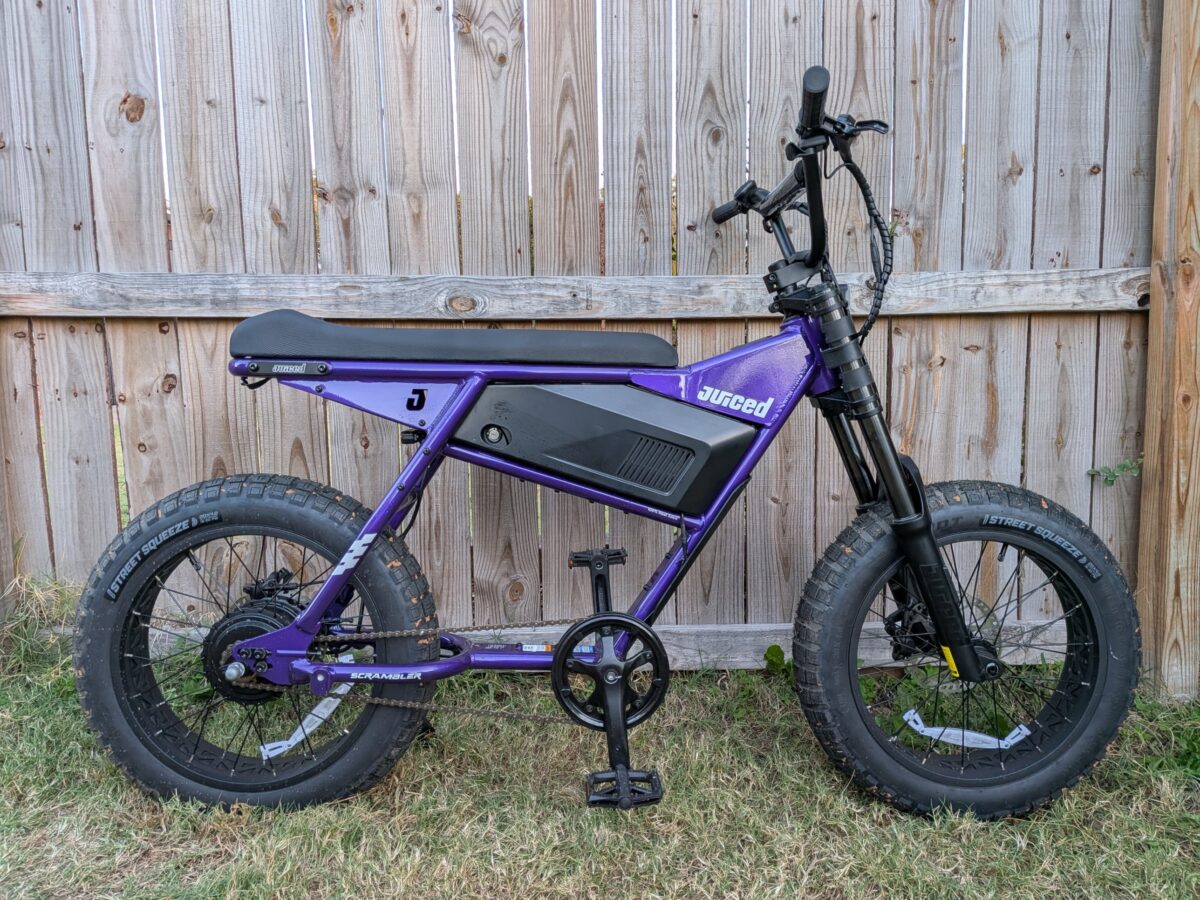
Moped-style ebikes are hugely popular with teens, and plenty of them blur the line between ebike and electric motorcycle, with some blowing right past it. Juiced’s answer is the Scrambler Core, the newest and most affordable bike in the relaunched Scrambler family. It starts at $1,399 with a 52V 10Ah battery ($1,599 for the 15Ah long-range pack) and keeps the same frame and moto styling as the $1,699 Scrambler Hardtail, while stepping down to a 500W motor that peaks at 1,176W. What really sets it apart is a top speed you can set anywhere from 1 to 25 mph and lock behind a four-digit PIN, on a bike that stays inside the federal three-class system. Add a choice of two frame sizes, and it’s a moto ebike built with families in mind without being a kids bike.
In this Juiced Scrambler Core review, we cover the components and the display settings that matter most, how the Core and Core Midsize fit riders of different heights, and how the bike performed on pavement, on our test hill, and on a gravel and grass loop. We also put it up against the Scrambler Hardtail so you know exactly what the extra $300 gets you.
This article contains affiliate links. If you buy through our Juiced link, we may earn a commission at no extra cost to you.
Juiced Scrambler Core Video Review
Our video review takes you around the whole bike, from removing the under-seat battery to a full walkthrough of the display’s advanced settings, including where the PIN-locked speed limit lives. From there, you can ride along in first-person footage as we test throttle output in every assist level, the cruise control, each cadence sensor level, an off-road loop, and our hill climb, then watch third-person riding clips to see how the bike looks and handles in motion.
Standout Features
PIN-Locked Speed Limit and Class Settings
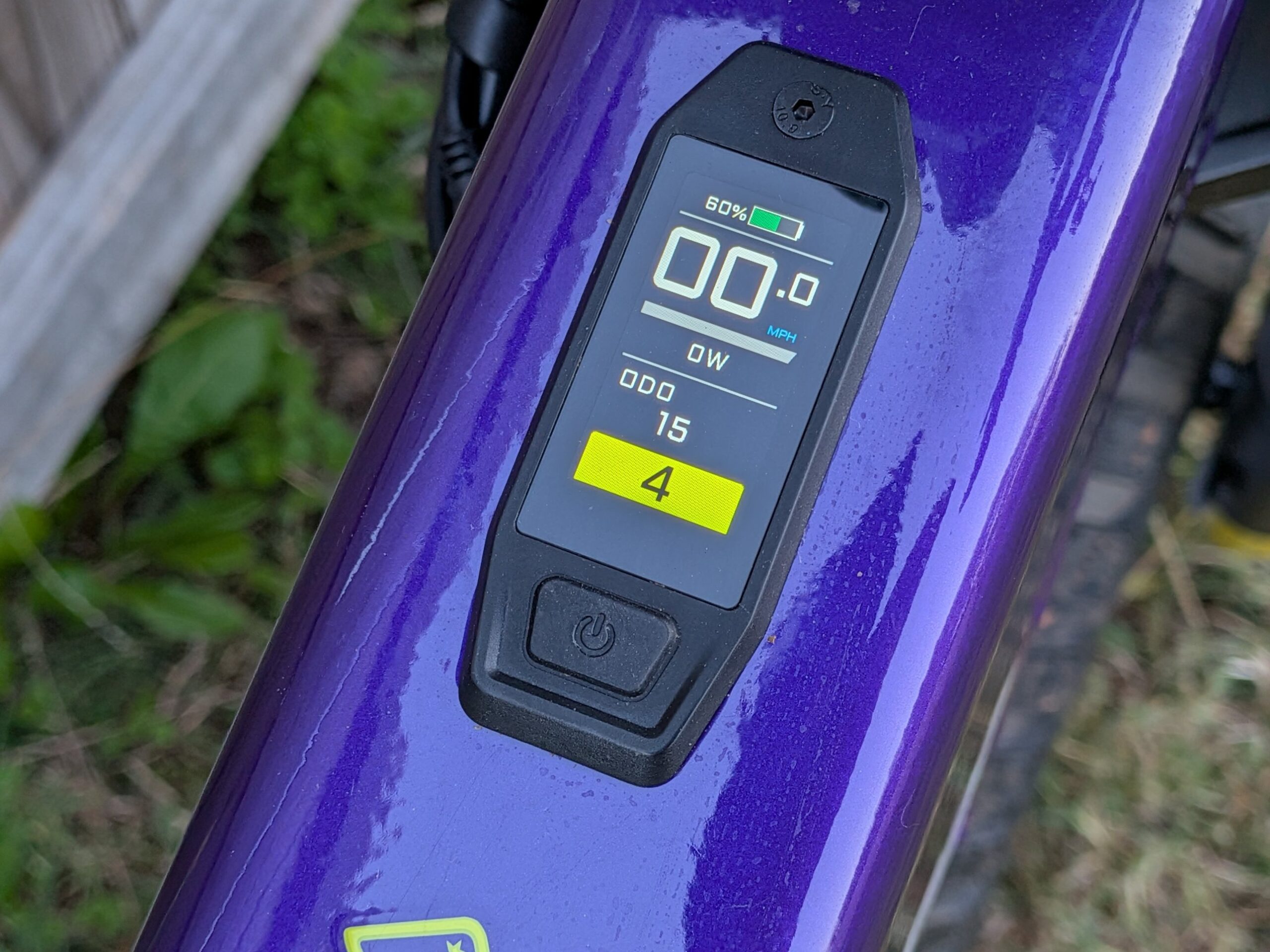
Juiced buried the most important feature in the display’s advanced settings. Under the class and speed menu, you can run the bike as a Class 1 (pedal assist only, 20 mph), Class 2 (throttle added, 20 mph), or Class 3 (throttle to 20 mph, pedal assist to 25 mph), or choose a custom top speed anywhere from 1 to 25 mph. Turn on the speed lock, set a PIN, and that setting stays put until someone enters the code. Nothing about it shows up on the main screen, so a teenager scrolling through menus will hit a password prompt rather than a faster bike. If you’re still sorting out what your kid can legally ride, our guide to ebikes that are legal for teens is a good place to start.
The same menu lets you turn the throttle off entirely and choose whether throttle power scales with each assist level or delivers full output in any level, which is another useful lever for a newer rider. You’ll also find walk mode, flashing lights, screen themes, and an auto-off timer in there.
Motor and 52V Battery
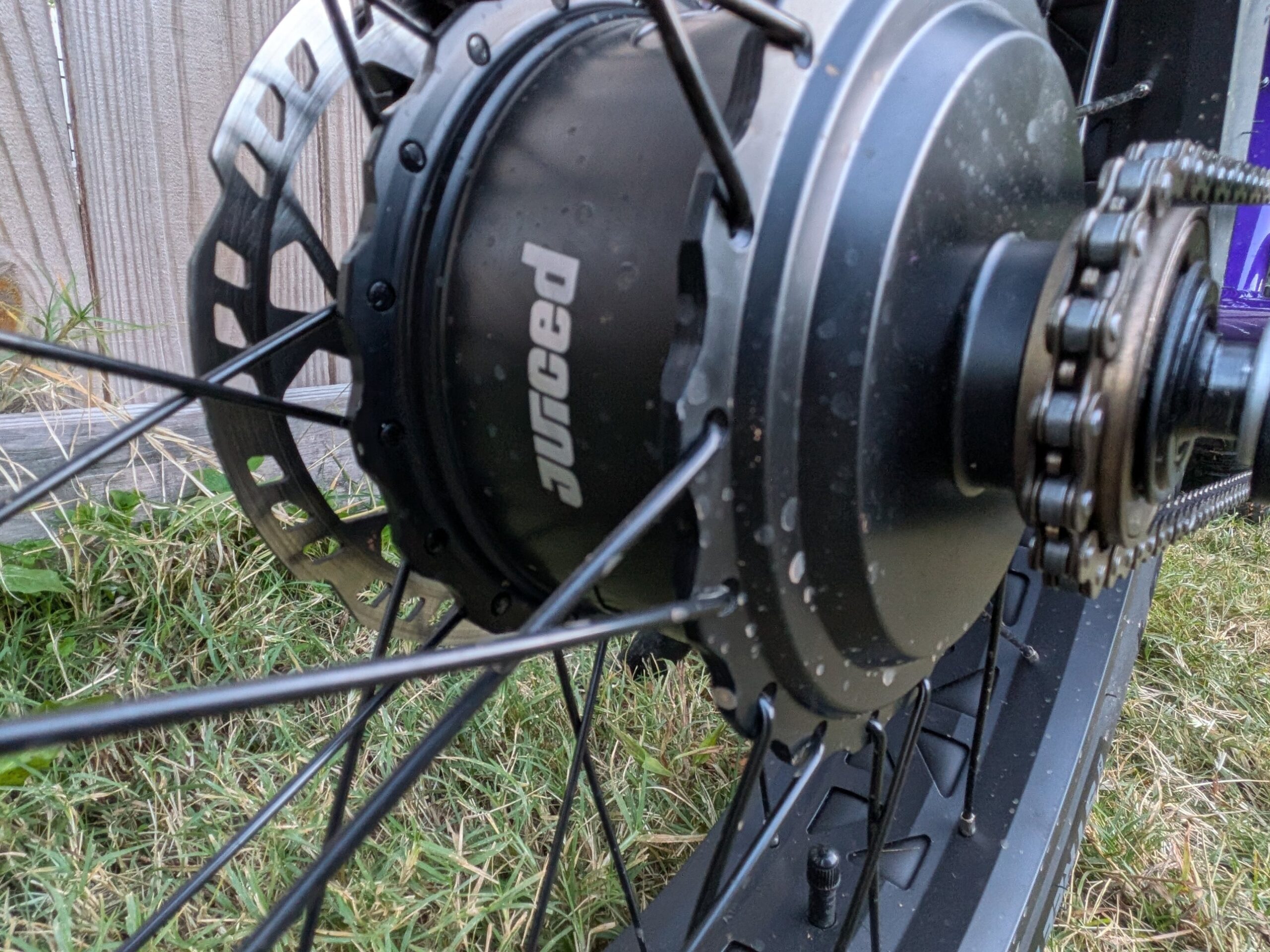
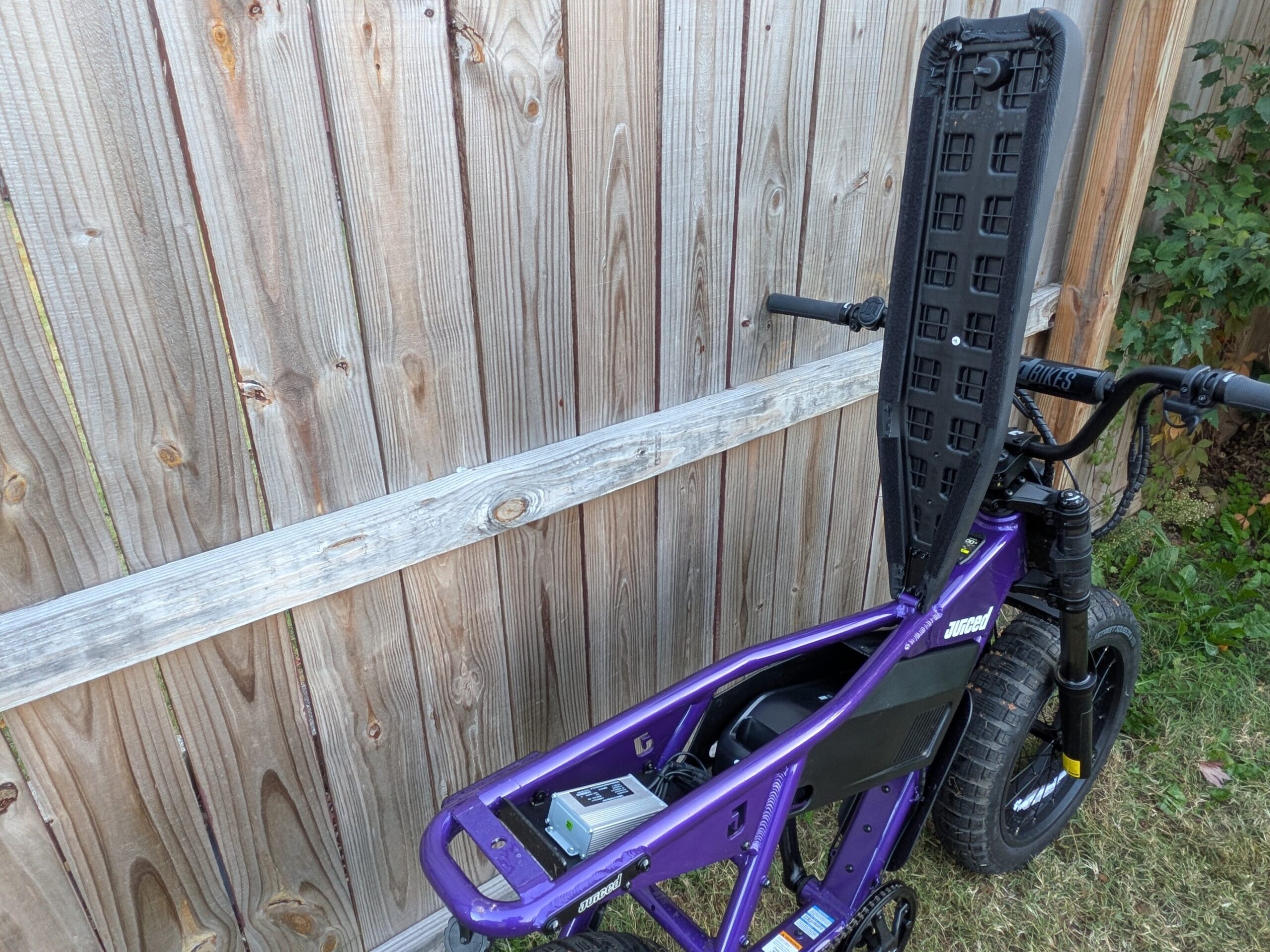
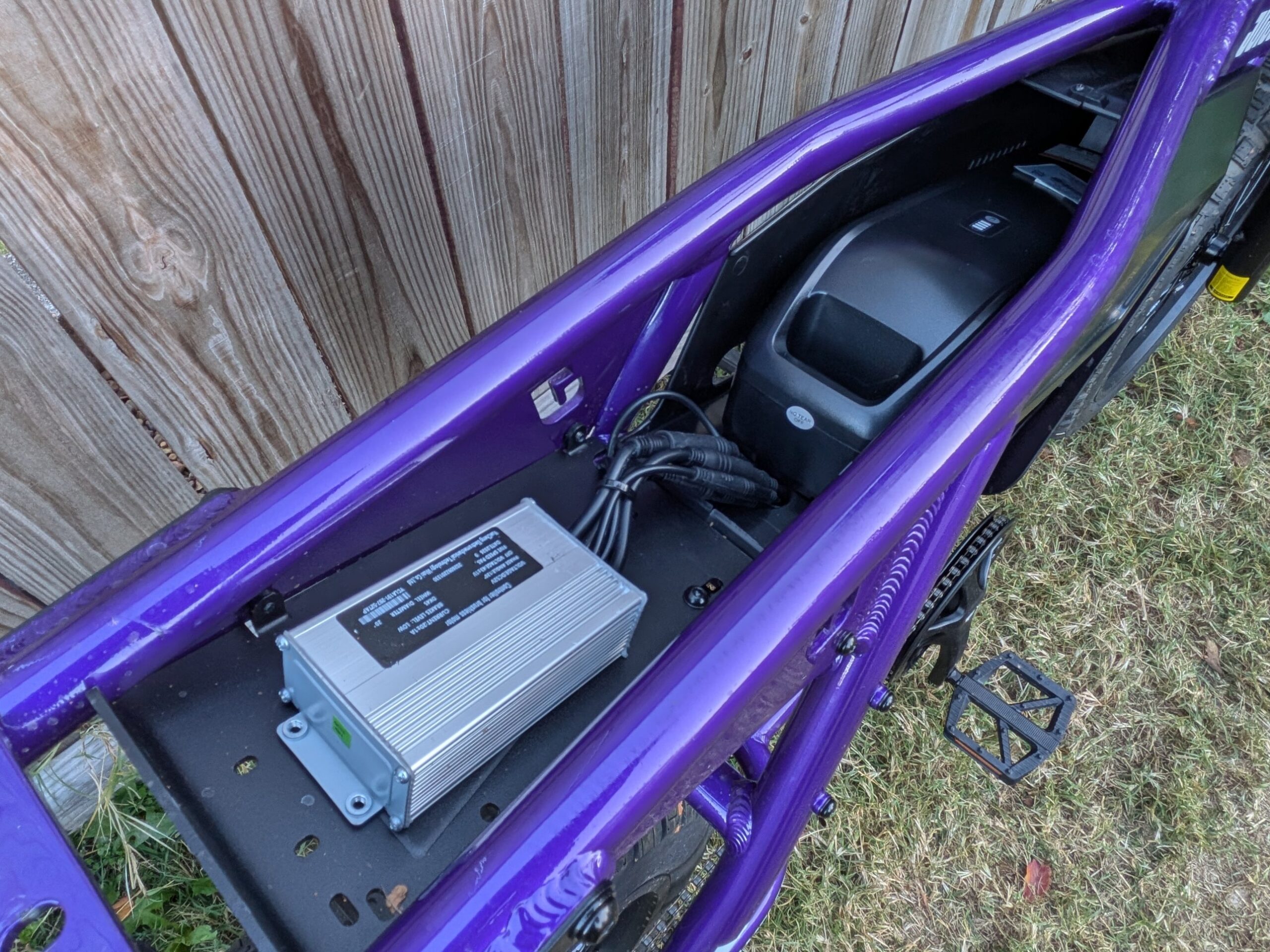
Power comes from a 500W nominal rear hub motor that peaks at 1,176W with 80 Nm of torque, run by a 20A controller and a cadence sensor. That’s a step down from the 750W, 1,764W peak setup on the Hardtail and Full Suspension models, which is exactly why we were curious how much of a difference you’d feel on our test hill.
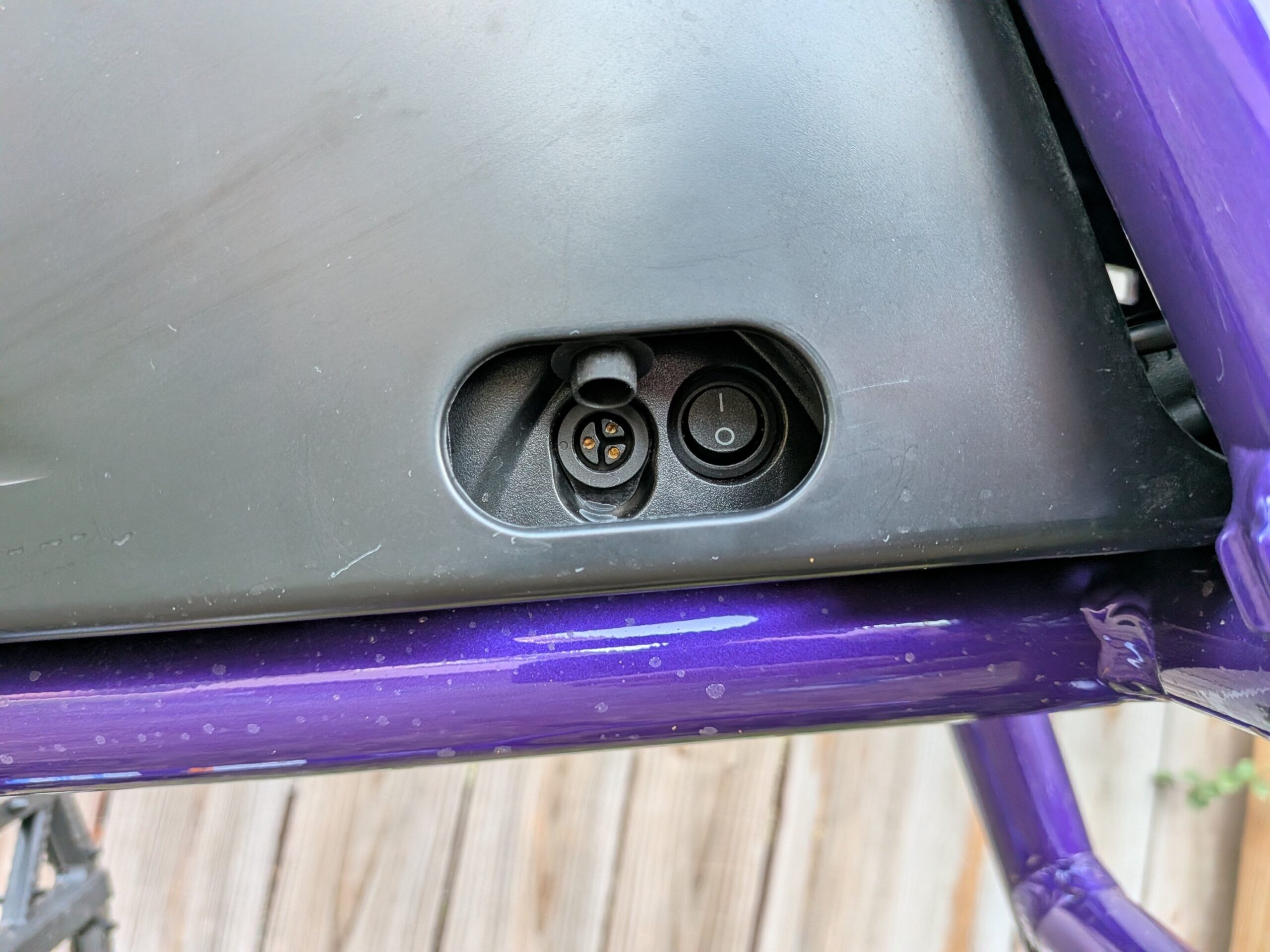
Both battery options are 52V packs rather than the 48V systems common at this price: a 10Ah (520Wh) standard pack rated for up to 40 miles and a 15Ah (780Wh) long-range pack rated for up to 60. The battery hides under the seat, which lifts after you loosen a thumb screw, and a key releases the pack. Lifting it out takes a little practice, but a cutout in the frame lets you reach the charge port so you can charge it on the bike. Juiced says the packs are cross-compatible with the other new Scrambler models, the battery is certified to UL 2271, and the bike’s electrical system is certified to UL 2849. A 2A charger comes in the box.
Suspension, Brakes, and Tires
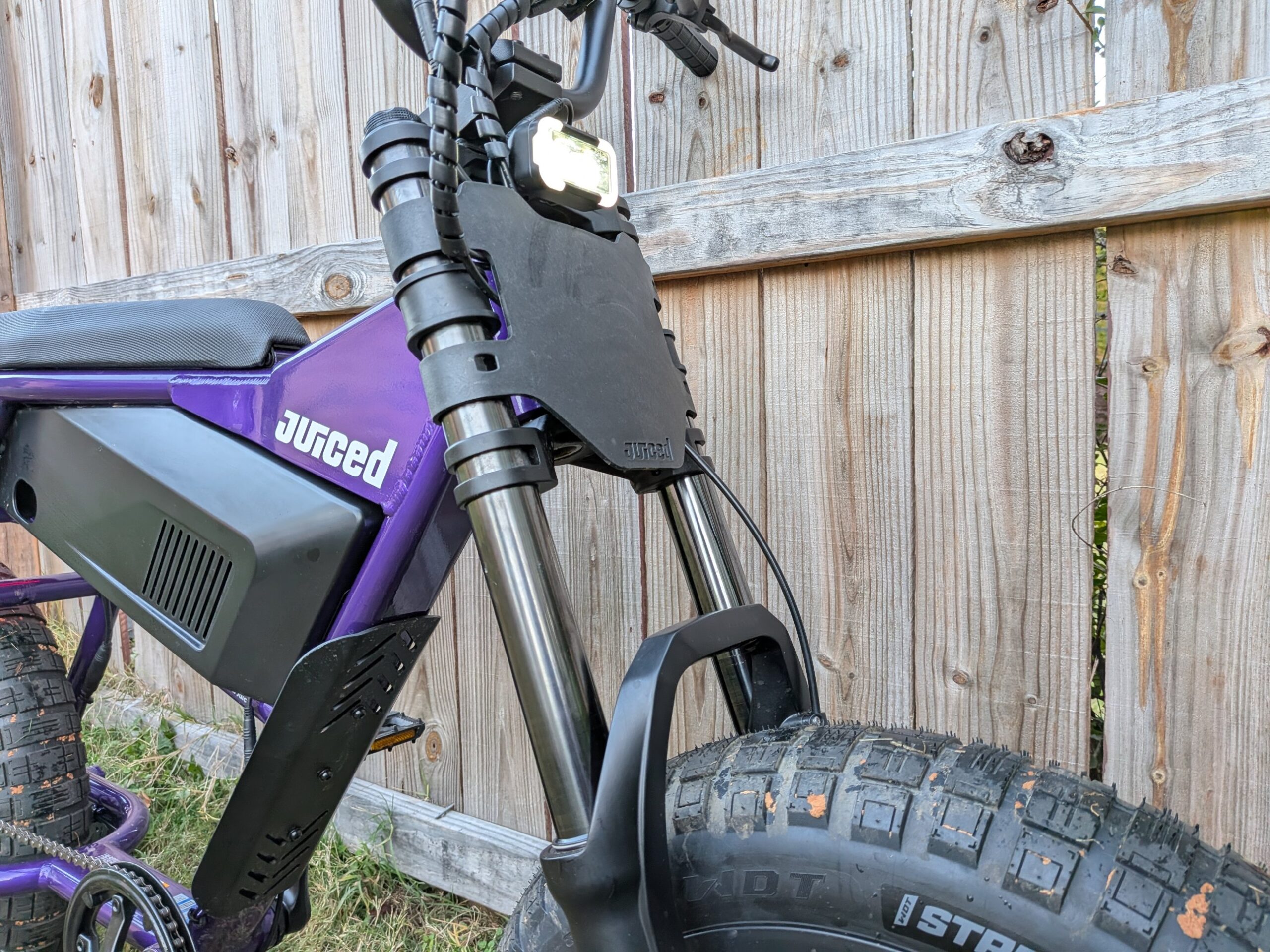
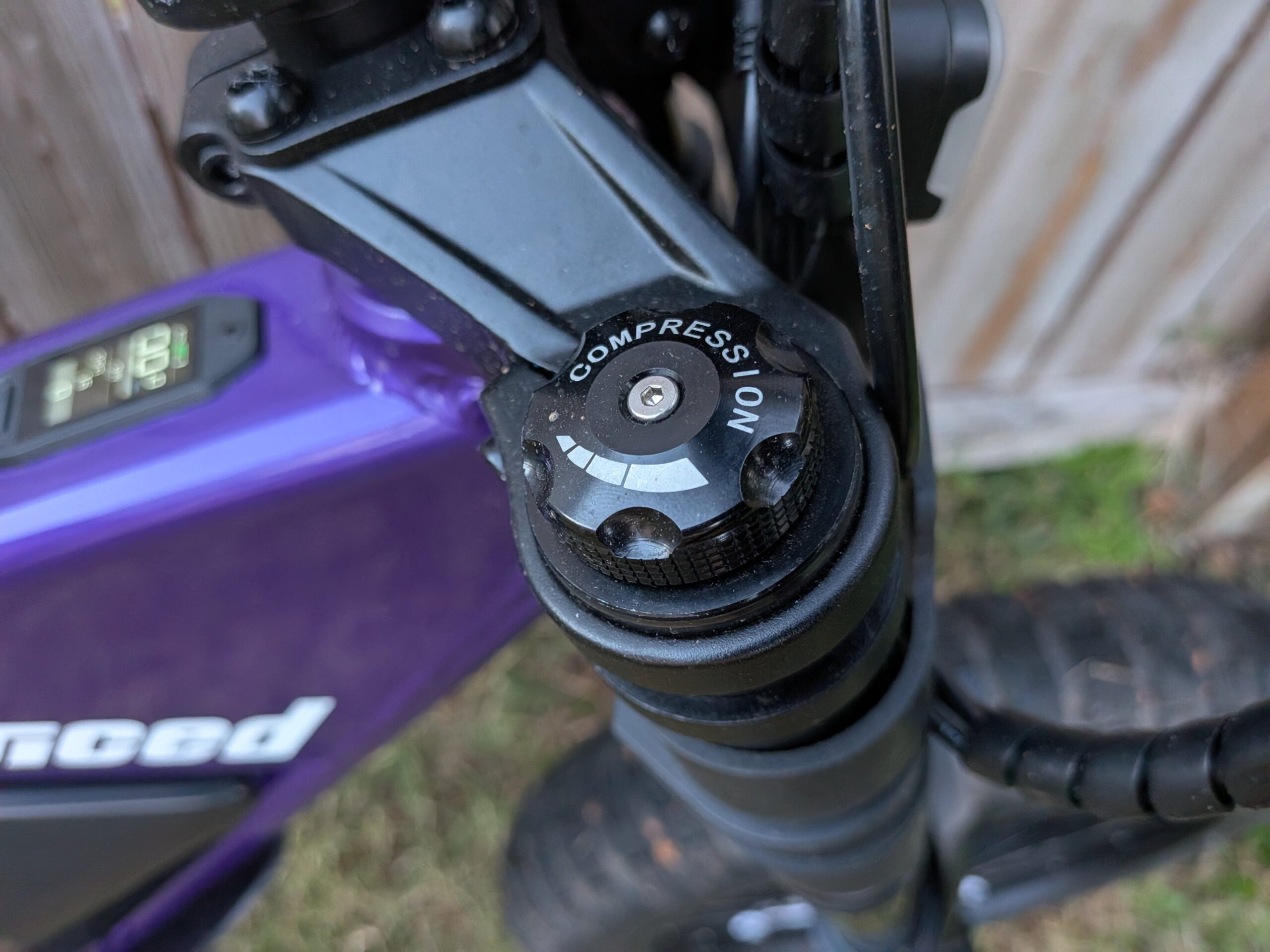
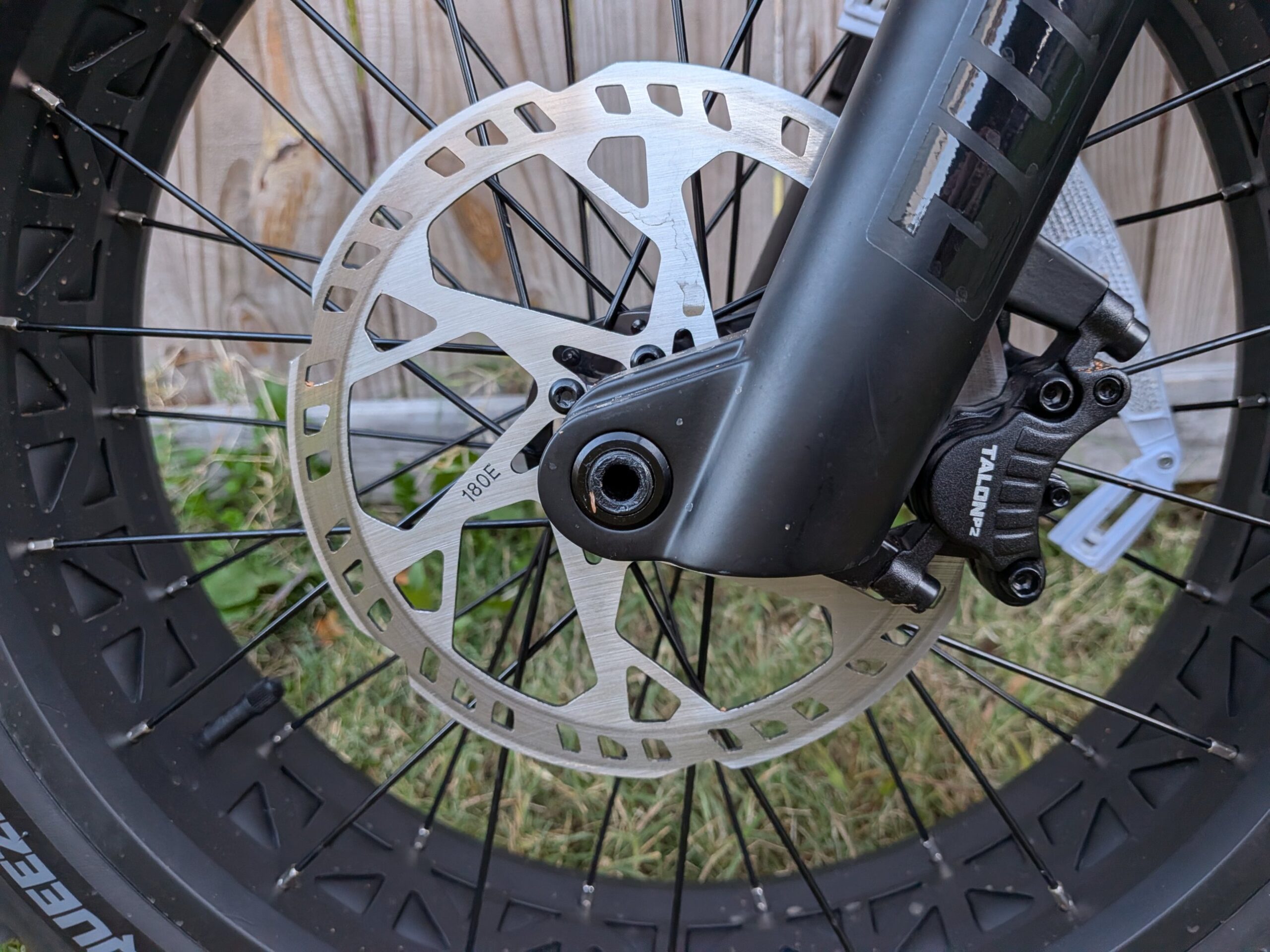
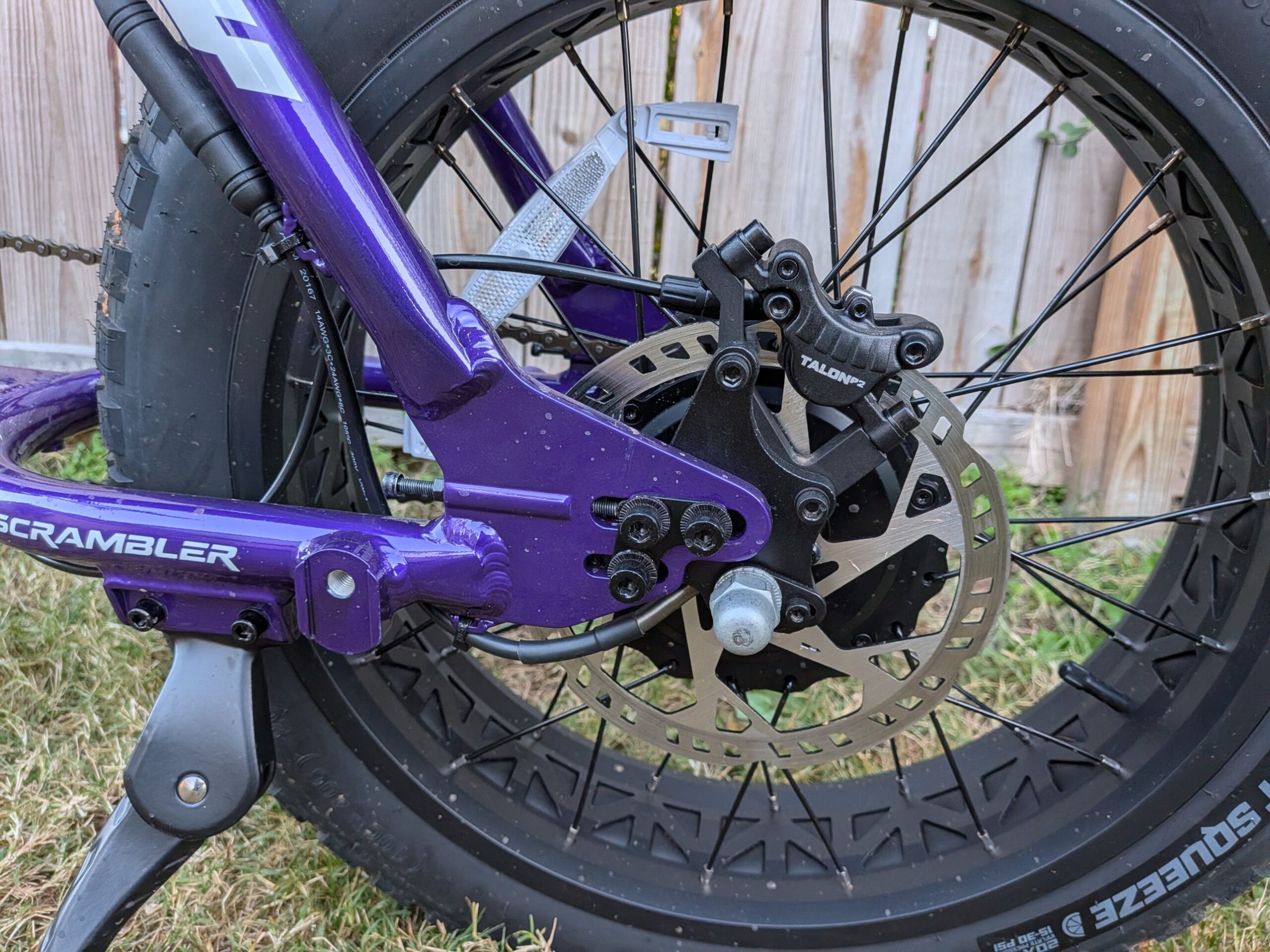
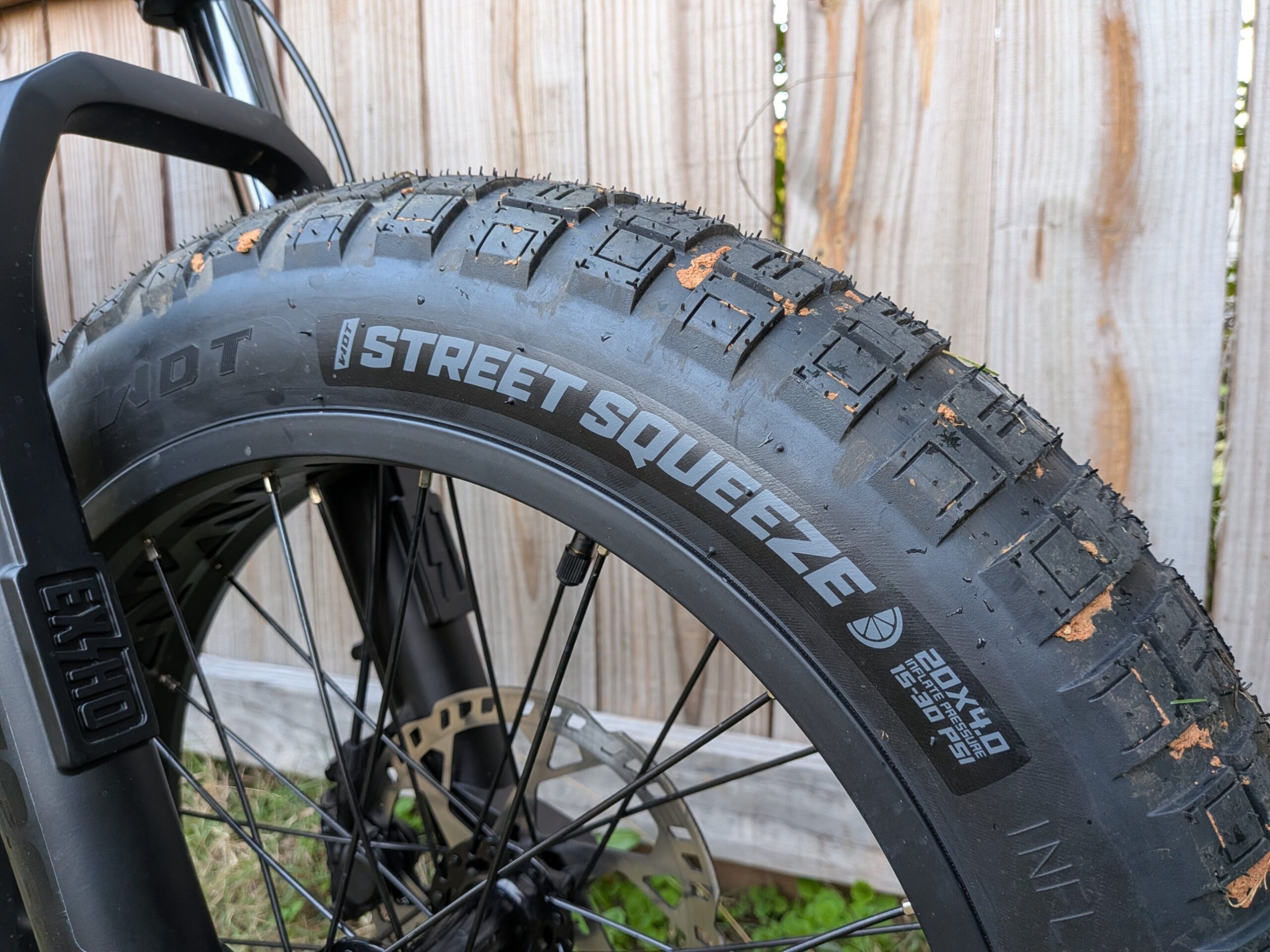
Juiced didn’t strip the core components as hard as the price suggests. Up front is an EXHO aluminum triple-crown fork with preload and compression adjustment, offering 100mm of travel on the Core and 80mm on the Core Midsize. Stopping comes from Star Union Talon P2 two-piston hydraulic brakes on 180mm rotors with motor cutoff levers, and they had no trouble bringing this heavy bike to a stop in our testing. The 20 x 4-inch Street Squeeze tires are moped-style rubber with a hybrid tread, and the front wheel mounts on a thru-axle. Neither the fork nor the brakes felt like a big step down from the pricier Scramblers, which use a 140mm inverted fork and four-piston brakes.
Lights, Cockpit, and Cruise Control
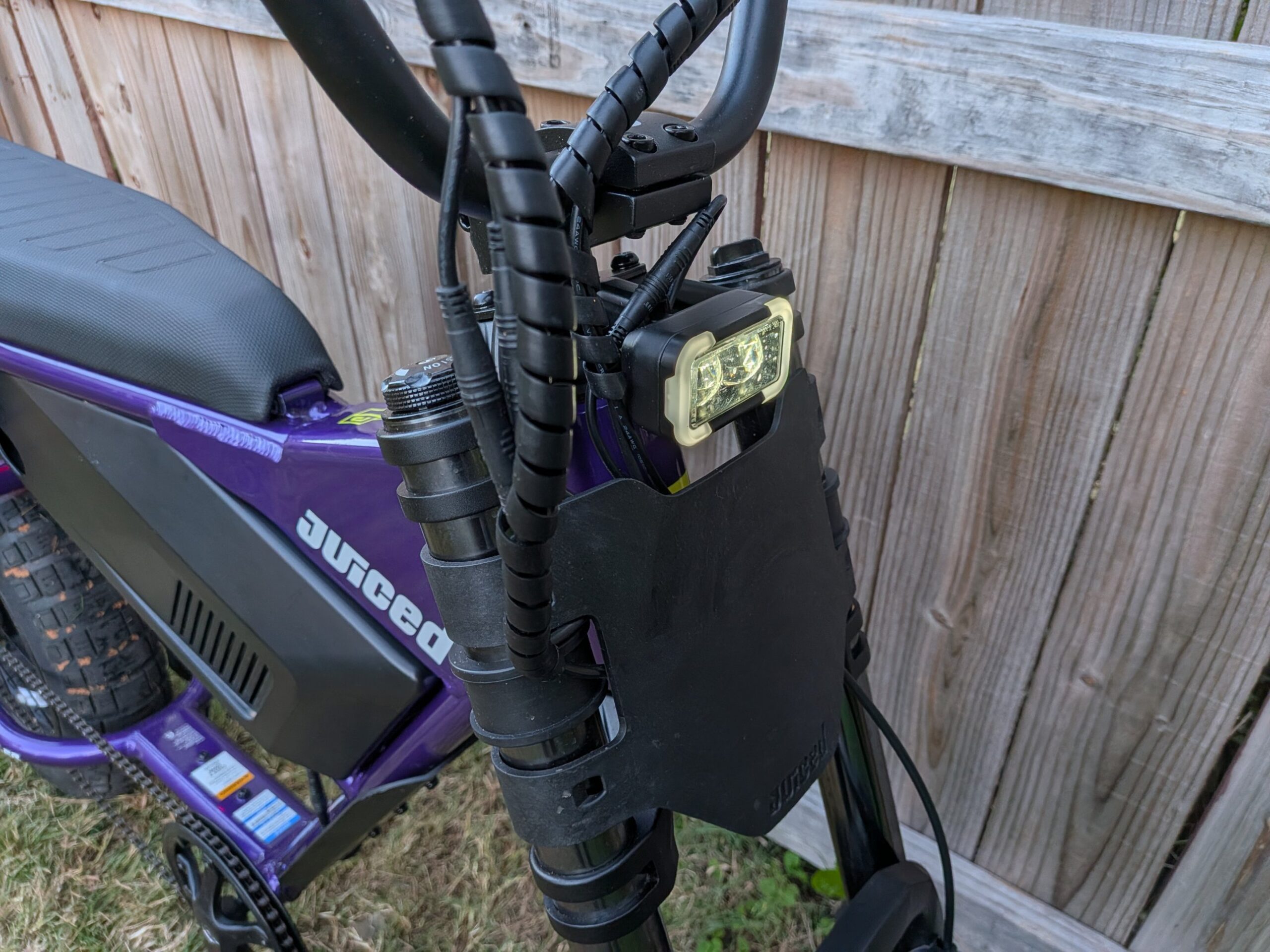
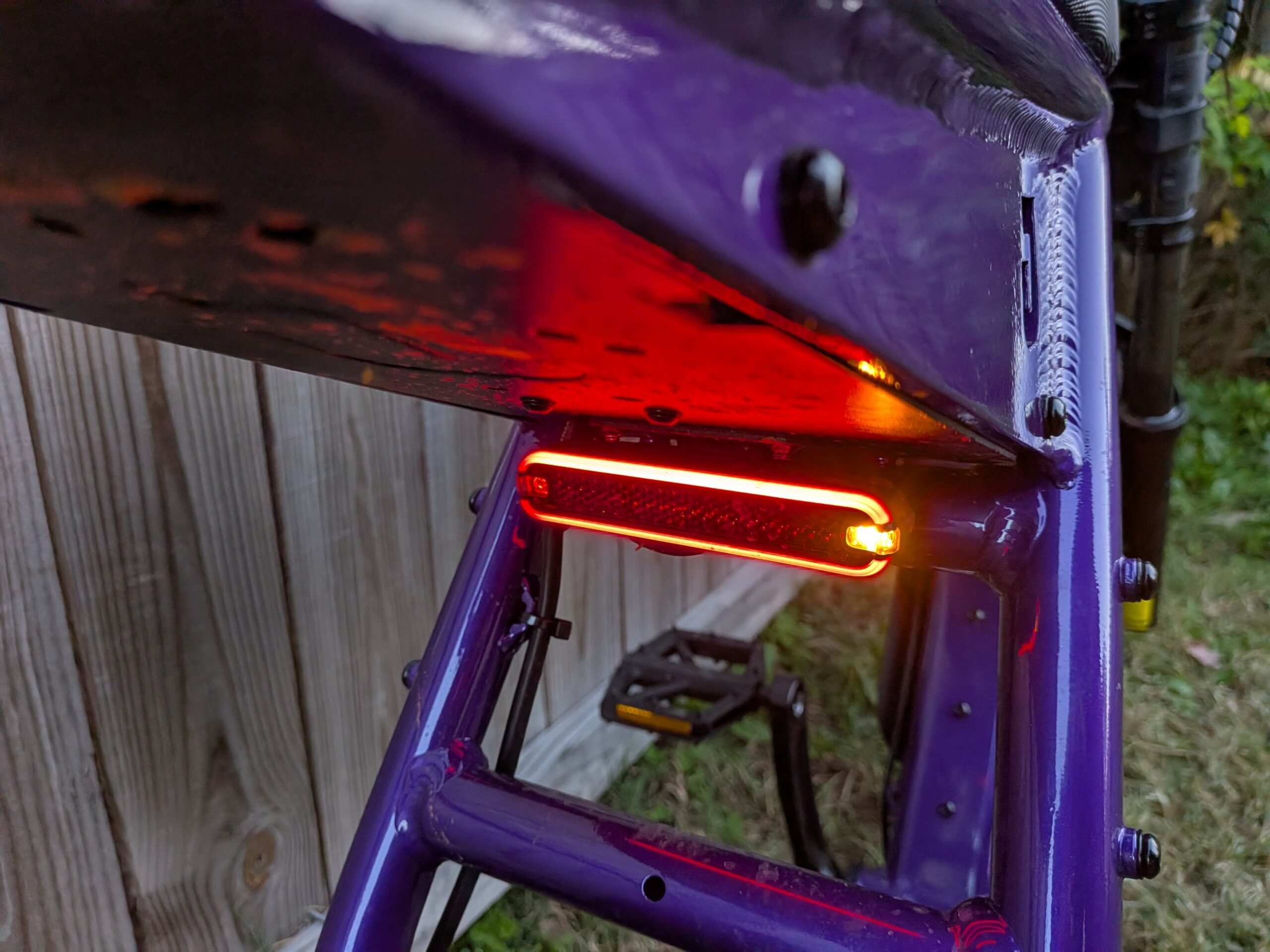
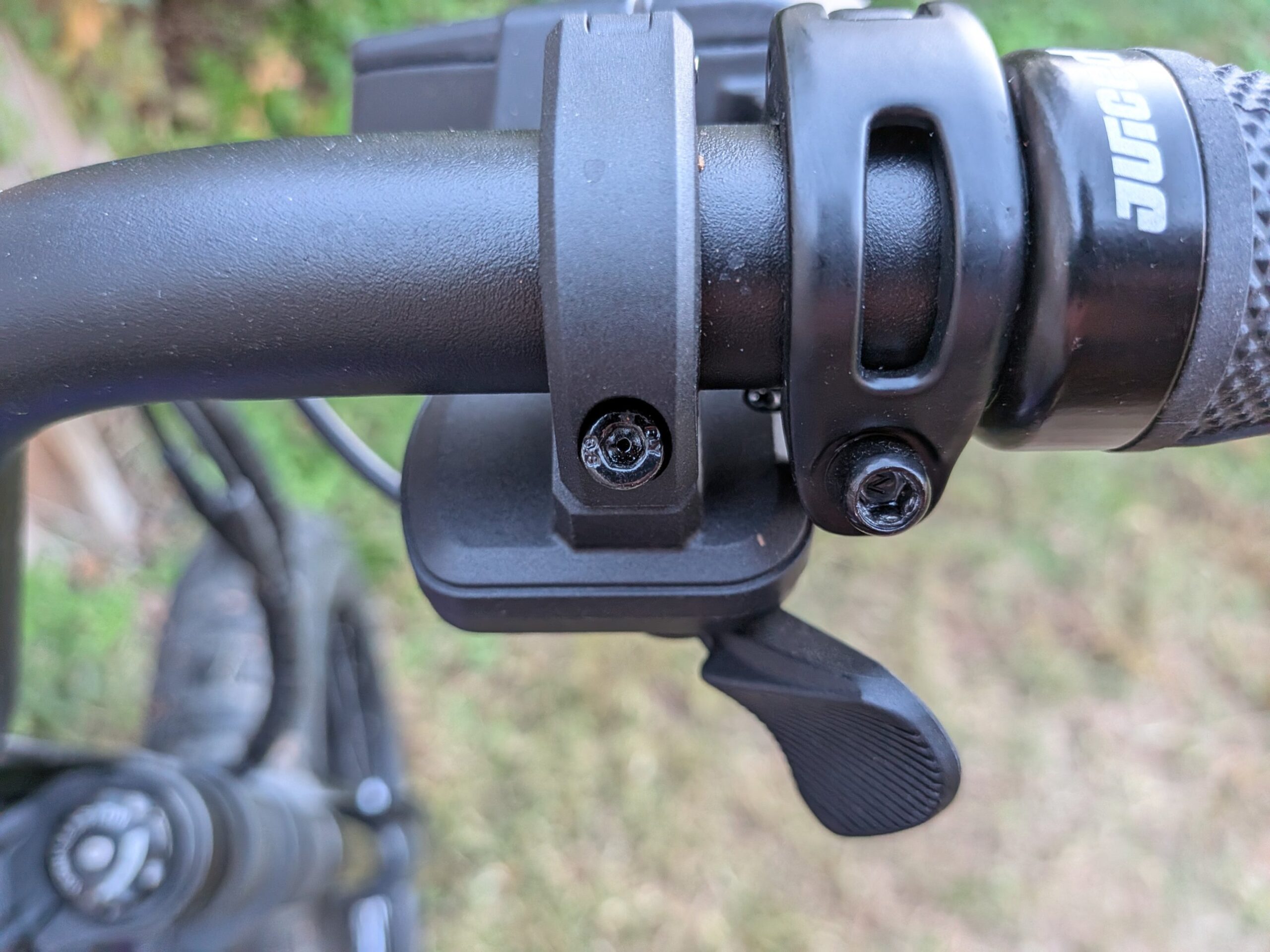
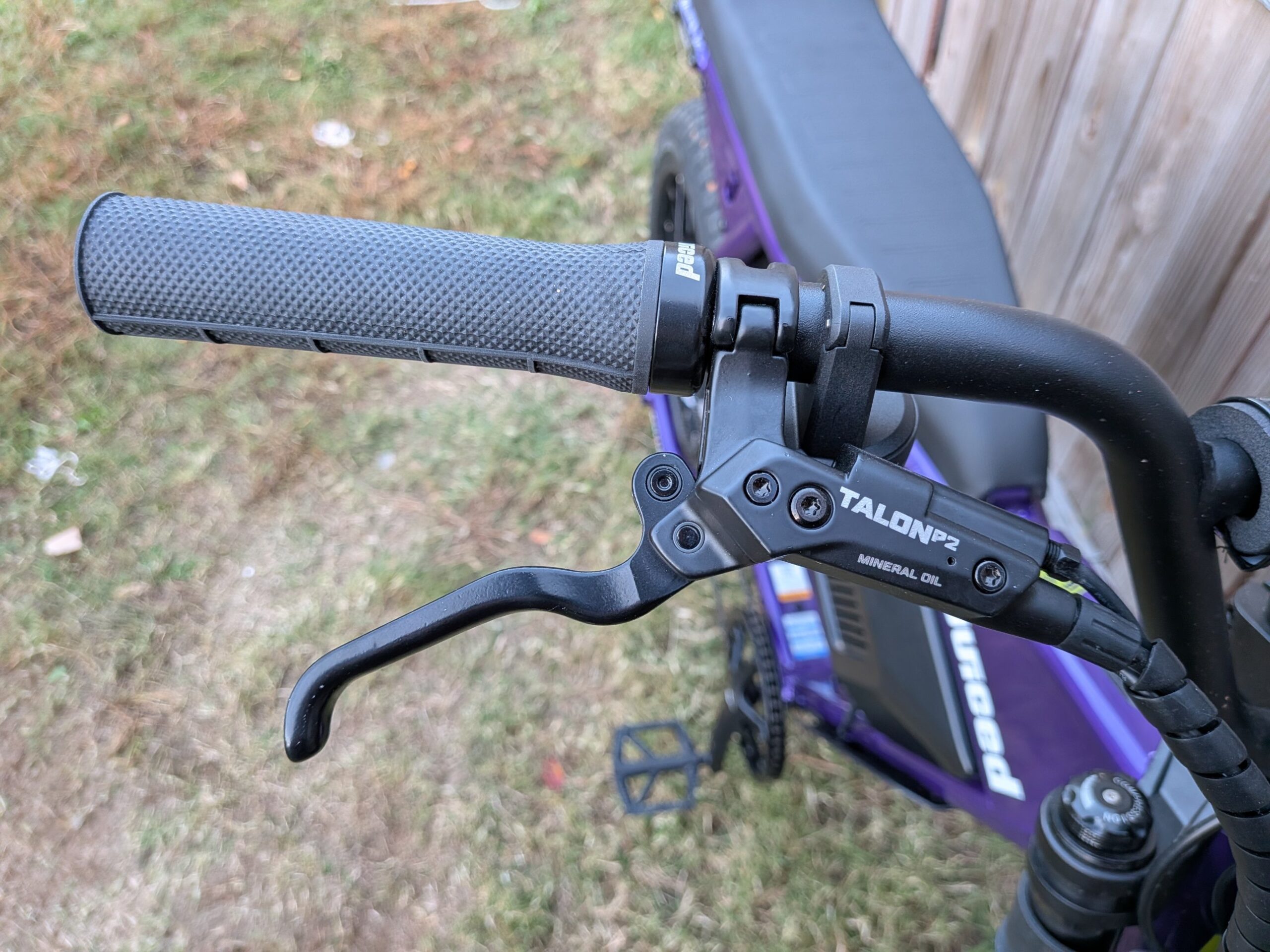
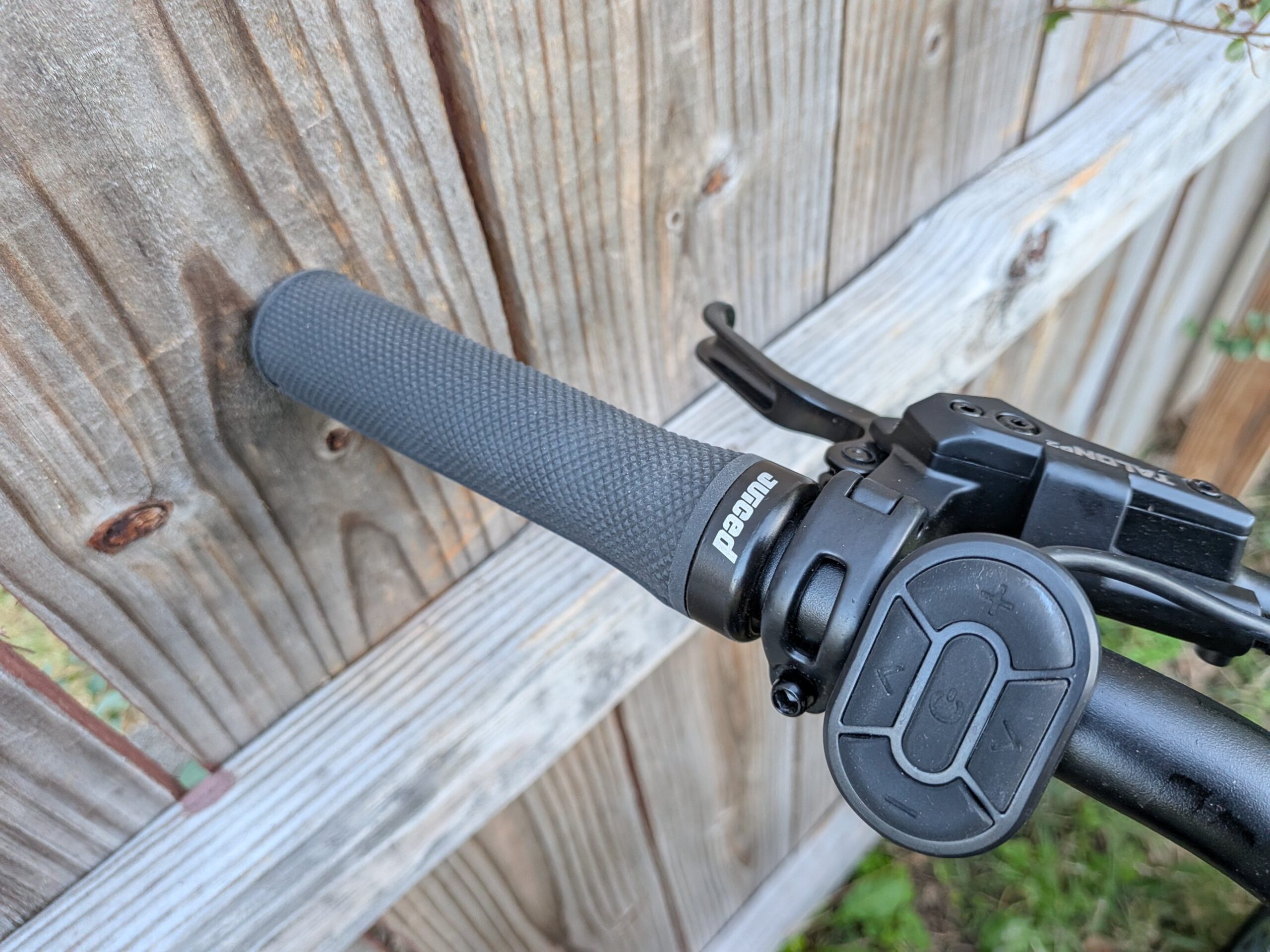
The headlight runs off the main battery, the taillight brightens under braking, and you get turn signals front and rear, though there’s no turn-signal indicator on the screen. The TFT display is built into the top tube, where it can’t get snapped off in a tip-over, and shows speed, motor wattage, battery level in 10% steps, and assist level, with trip, ride time, max and average speed, and voltage a button press away. One feature most owners probably won’t discover on their own is cruise control. Hold the throttle at your speed, press and hold the assist-down button, and a small icon appears on the display while the bike holds that pace. Touching either brake cancels it.
Frame, Options, and Fit
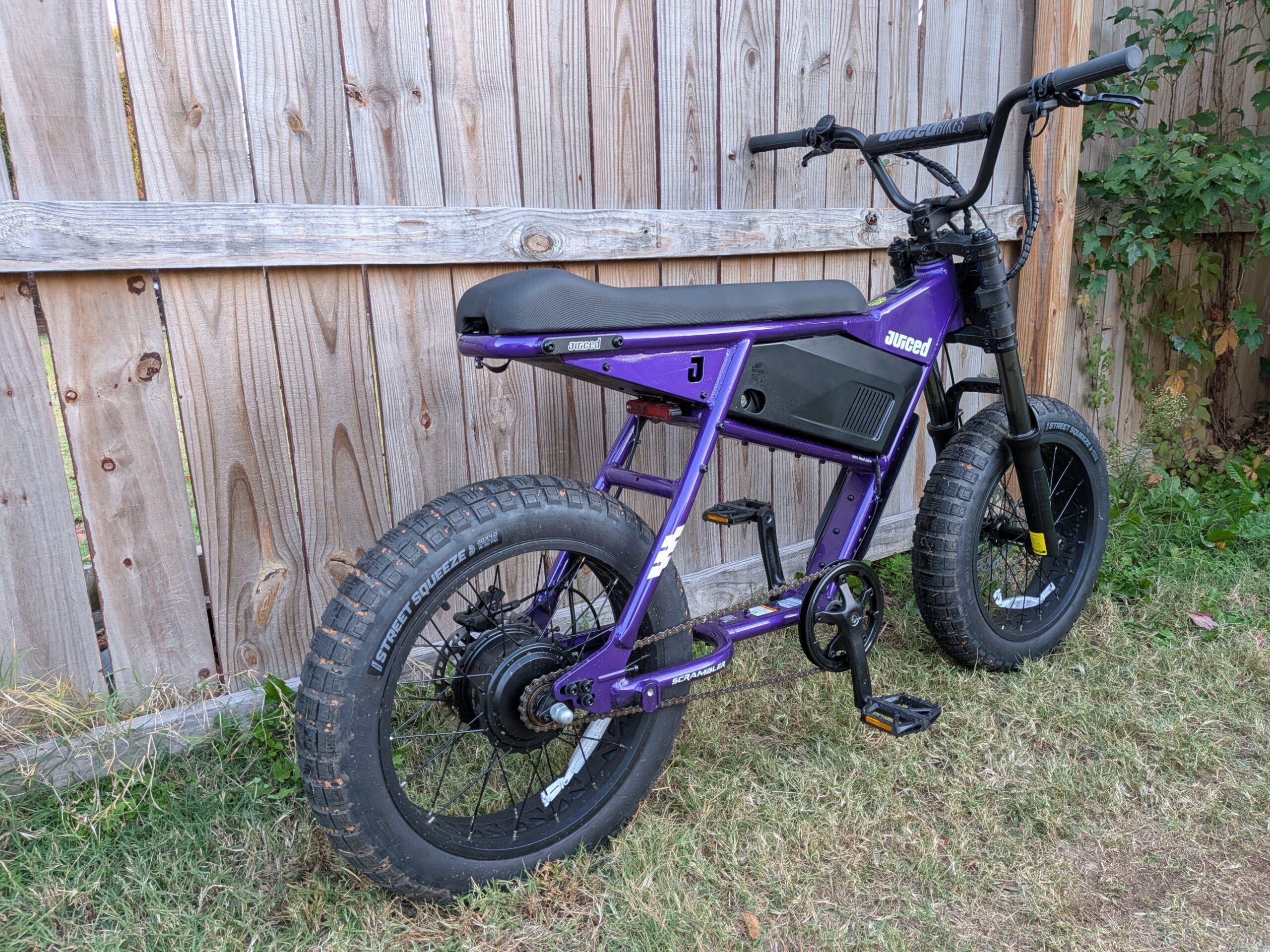
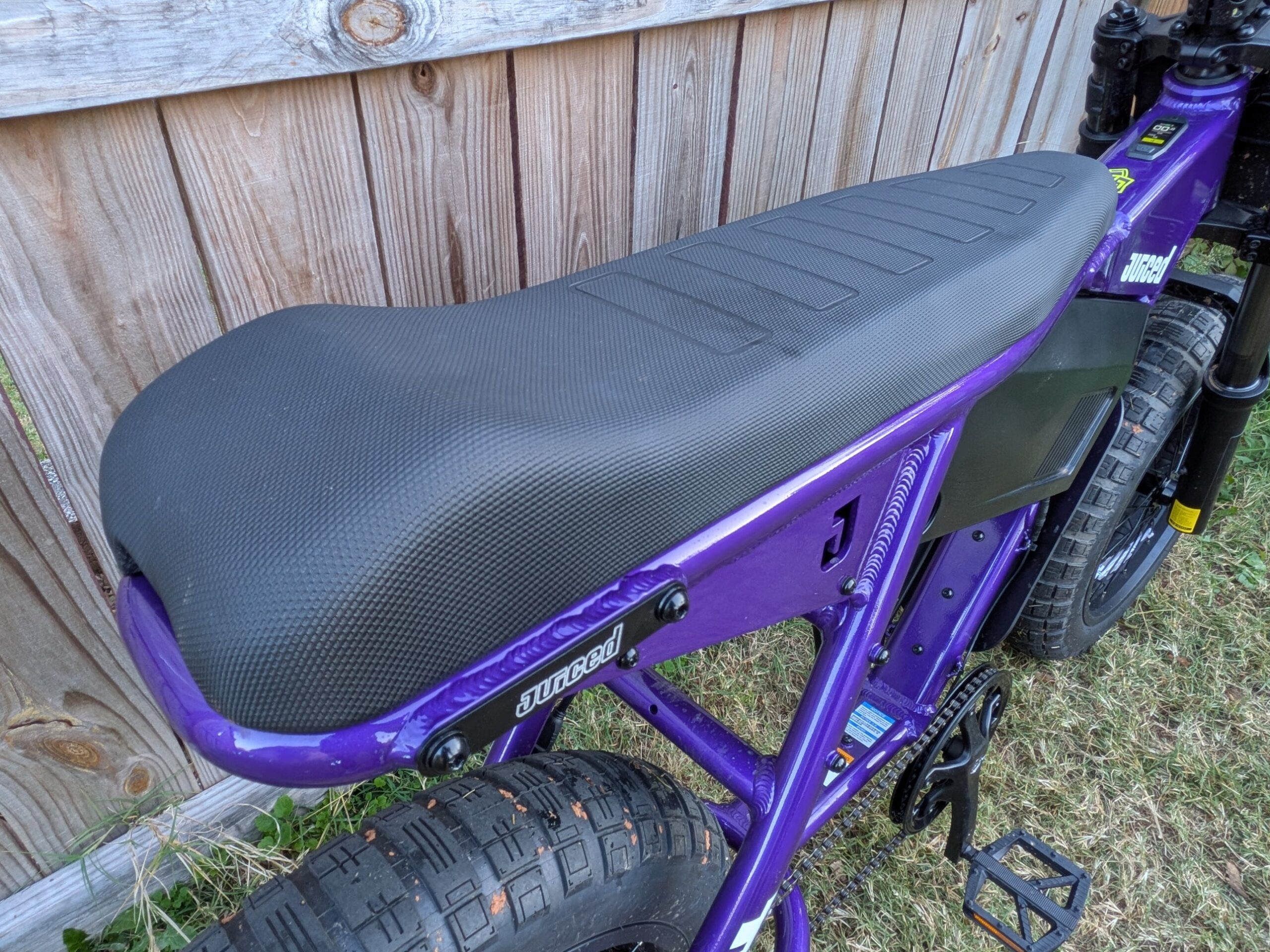
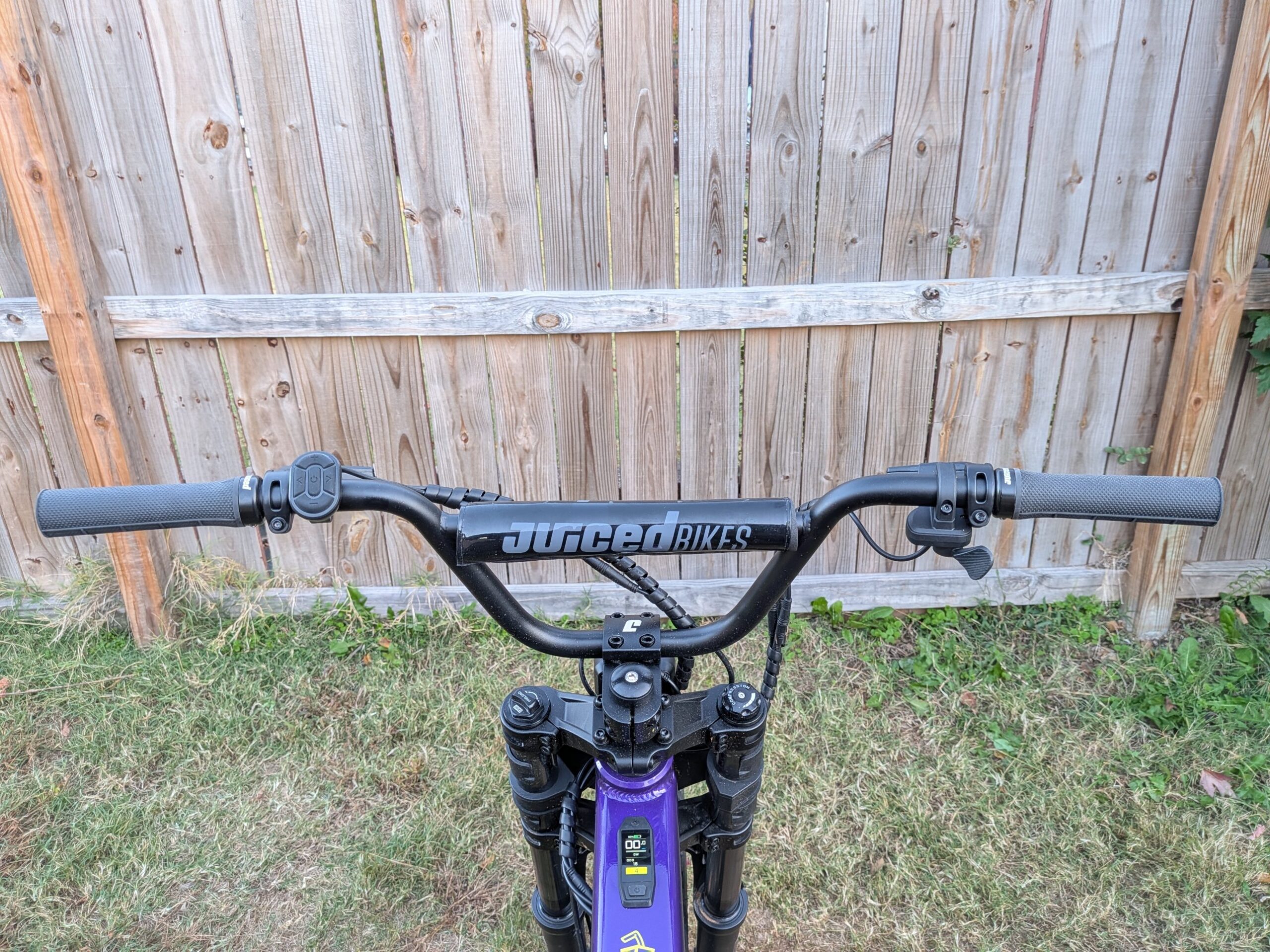
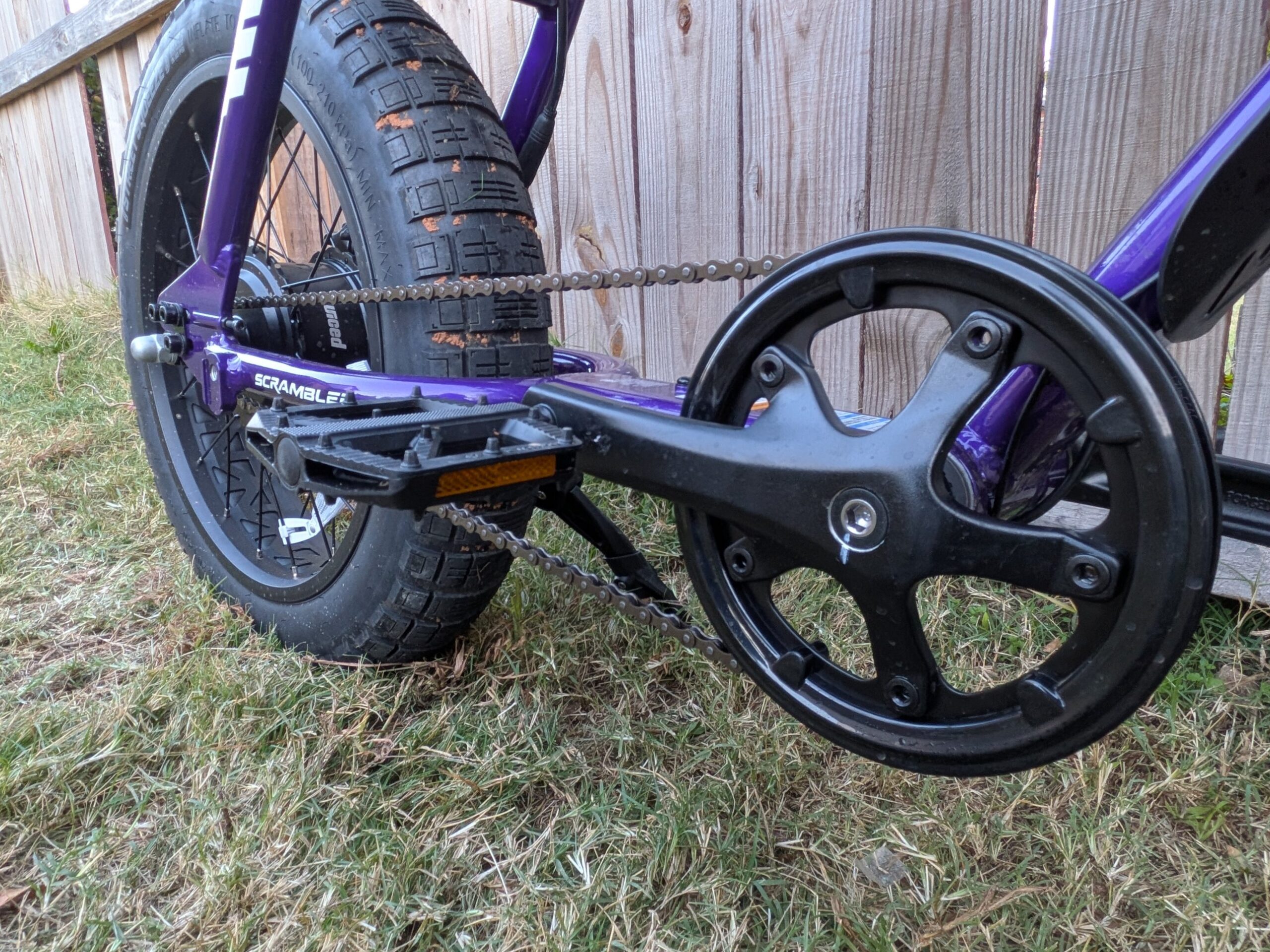
The Core uses the exact same frame as the original Scrambler, so you get the same retro pit-bike look, BMX-style handlebars, and a long moped-style seat with a lip at the back. The bars sit you upright and leave plenty of room for accessories, and you get locking grips, a Juiced bar pad, and mounts for passenger pegs. Juiced also includes a nameplate on the fork that you can personalize, and at the time of writing it’s free along with a headplate, bar pad, and sticker pack. Fenders aren’t included, though a splash guard sits under the frame. Colors depend on which frame and battery you choose:
- Core: Black Nectar (standard or long-range), Fruit Punch, Sour Grape, and White Grape (long-range)
- Core Midsize: Black Nectar (standard or long-range), White Grape, Berry Freeze, and Blood Orange (long-range)
The Core Midsize is the new option in the Scrambler family. It has a slightly shorter wheelbase and a seat that sits an inch and a half lower, and Juiced rates it for riders 4’10” and up compared to 5’2″ and up on the standard Core. At 6 feet with a 32-inch inseam, our reviewer fit the standard Core comfortably, and the long bench lets you slide forward or back to adjust leg extension. Juiced lists both frames at 73 lbs with the standard battery and 75 lbs with the long-range pack, which is a lot of bike for a smaller rider to lift onto a rack or pick back up after a tip-over, so keep that in mind if a teen will be the one handling it. You’ll find seat heights and dimensions for both frames in the table below.
| Category | Core | Core Midsize |
|---|---|---|
| Total Weight | 73 lbs (75 lbs with 15Ah battery) | 73 lbs (75 lbs with 15Ah battery) |
| Payload Capacity | 300 lbs | 300 lbs |
| Rider Height Range | 5'2" and up | 4'10" and up |
| Seat Height | 31.5" | 30" |
| Bike Dimensions | 66" x 29.5" x 43.5" (L x W x H) | 65" x 29.5" x 42" (L x W x H) |
Juiced Scrambler Core Specifications
Here’s the full component list for the Core and Core Midsize, pulled from Juiced’s product page and checked against our test bike.
| Component | Core | Core Midsize |
|---|---|---|
| Price | $1,399 (10Ah) / $1,599 (15Ah) | $1,399 (10Ah) / $1,599 (15Ah) |
| Type | Moped Ebike | Moped Ebike |
| Class | 1/2/3 | 1/2/3 |
| Top Speed | 25 mph (20 mph on throttle) | 25 mph (20 mph on throttle) |
| Weight Capacity | 300 lbs | 300 lbs |
| Motor | 500W Rear Hub (1176W Peak) | 500W Rear Hub (1176W Peak) |
| Torque | 80 Nm | 80 Nm |
| Battery | 52V 10Ah (520Wh) or 52V 15Ah (780Wh) | 52V 10Ah (520Wh) or 52V 15Ah (780Wh) |
| Claimed Range | Up to 40 Miles (10Ah) / Up to 60 Miles (15Ah) | Up to 40 Miles (10Ah) / Up to 60 Miles (15Ah) |
| Charger | 2A | 2A |
| Display | Top Tube Integrated TFT Display | Top Tube Integrated TFT Display |
| Sensor | Cadence | Cadence |
| Throttle | Right Thumb Throttle | Right Thumb Throttle |
| UL Certifications | Certified to UL 2849 (electronics), UL 2271 (battery) | Certified to UL 2849 (electronics), UL 2271 (battery) |
| Gearing | Single-Speed | Single-Speed |
| Brakes | Star Union Talon P2 2-Piston Hydraulic Disc Brakes | Star Union Talon P2 2-Piston Hydraulic Disc Brakes |
| Brake Levers | Talon P2 w/ Motor Cutoff | Talon P2 w/ Motor Cutoff |
| Rotors | 180mm | 180mm |
| Fork | EXHO Triple Crown Fork, 100mm Travel, Preload and Compression Adjustment | EXHO Triple Crown Fork, 80mm Travel, Preload and Compression Adjustment |
| Controller | 20A | 20A |
| Axle | Front Thru-Axle | Front Thru-Axle |
| Tires | Street Squeeze 20 x 4-inch | Street Squeeze 20 x 4-inch |
| Handlebars | BMX-Style | BMX-Style |
| Grips | Lock-on | Lock-on |
| Saddle | Long Moto-style | Long Moto-style |
| Fenders | Not Included | Not Included |
| Lights | Headlight, Taillight with Brake Light, Turn Signals | Headlight, Taillight with Brake Light, Turn Signals |
| Parental Speed Lock | Top speed set from 1-25 mph behind a 4-digit PIN | Top speed set from 1-25 mph behind a 4-digit PIN |
Real World Performance Testing
Throttle and Assist-Level Output
Most people buying a moped-style ebike will ride it on the throttle, and the Core’s throttle gets you to its 20 mph cap without much drama, pulling just under 1,200W at full output. Out of the box, ours was set so throttle power scales with the assist level. That doesn’t cap your speed, since every level still reaches 20 mph, but it changes how hard the bike pulls getting there. Level 1 is a gentle option for newer riders, and level 4 unlocks everything. The thumb throttle is easy enough to modulate, so cruising at 12 mph on a couple hundred watts takes nothing more than a steady thumb. If you’d rather have full power all the time, one setting change gives you full throttle in any level.
| Assist Level | Peak Throttle Output (tied to PAS) | Pedal Assist on Flat Ground |
|---|---|---|
| 1 | ~460 W | ~290 W, cruising at 15 to 16 mph |
| 2 | ~750 W | 19 to 20 mph, cadence getting fast |
| 3 | ~1,000 W | 25 mph, close to ghost pedaling |
| 4 | ~1,200 W | Full output, same as full throttle |
Cadence Sensor and Single-Speed Pedaling
A cadence sensor only checks whether the cranks are turning, so as long as your legs are moving, you get the motor’s full allotment for that level. On a single-speed moped-style ebike that’s normal, and so is reaching for the throttle to get started, because the first pedal stroke from a stop is slow. Level 1 has a comfortable cadence that settles around 15 or 16 mph. By level 2, you’re spinning quickly to stay with the motor near 20 mph, and since the throttle stops at 20, pedaling is the only way to reach the 25 mph top speed. Getting there isn’t hard, and the Core held 25 mph easily in level 3, but you’re contributing almost nothing at that point. We’d like to see Juiced add more control over the assist levels in a future update for riders who actually want to pedal.
Hill Climb Test
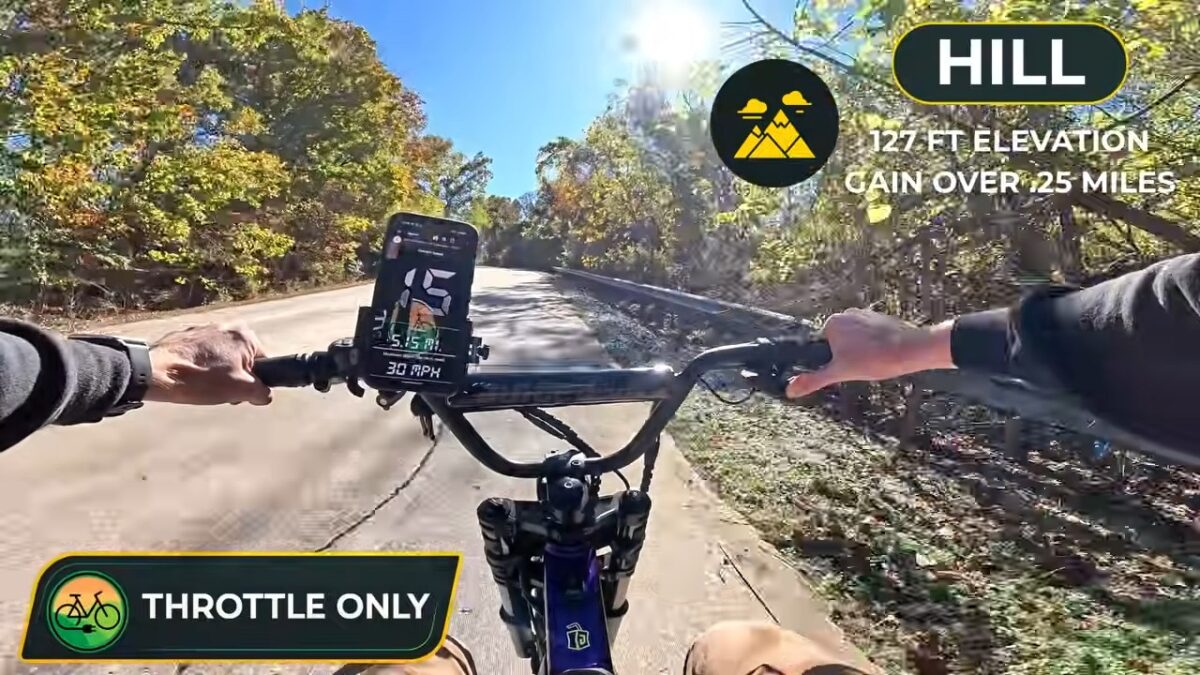
On throttle alone, the Core slowed from about 15 mph at the base of our hill to a minimum of 10 mph, settling at 10 to 11 mph for most of the climb. That’s a respectable result for a 75 lb bike with a 500W motor, and the motor stayed fairly quiet while it worked. Pedaling told a similar story. Level 1 didn’t give enough help to keep the cranks turning on the grade, level 2 let us share the work at about 6 mph, and level 3 pulled around 850W at 8 mph. Level 4 delivers the same output as the throttle, so the only difference is whatever your legs add.
Off-Road Riding
The fat tires make the Core easy to trust off pavement. It plowed through grass and loose gravel without complaint, and lowering the tire pressure adds some comfort. The front fork takes the edge off bumps, but the moped-style geometry puts most of your weight on the seat rather than your hands, and the seat is fairly firm, so you’ll still feel rough ground. Standing up off the seat helps. It’s a capable bike for trails and dirt lots, but if you plan to spend a lot of time off-road, the Scrambler Full Suspension is the more comfortable choice.
Juiced Scrambler Core vs Scrambler Hardtail
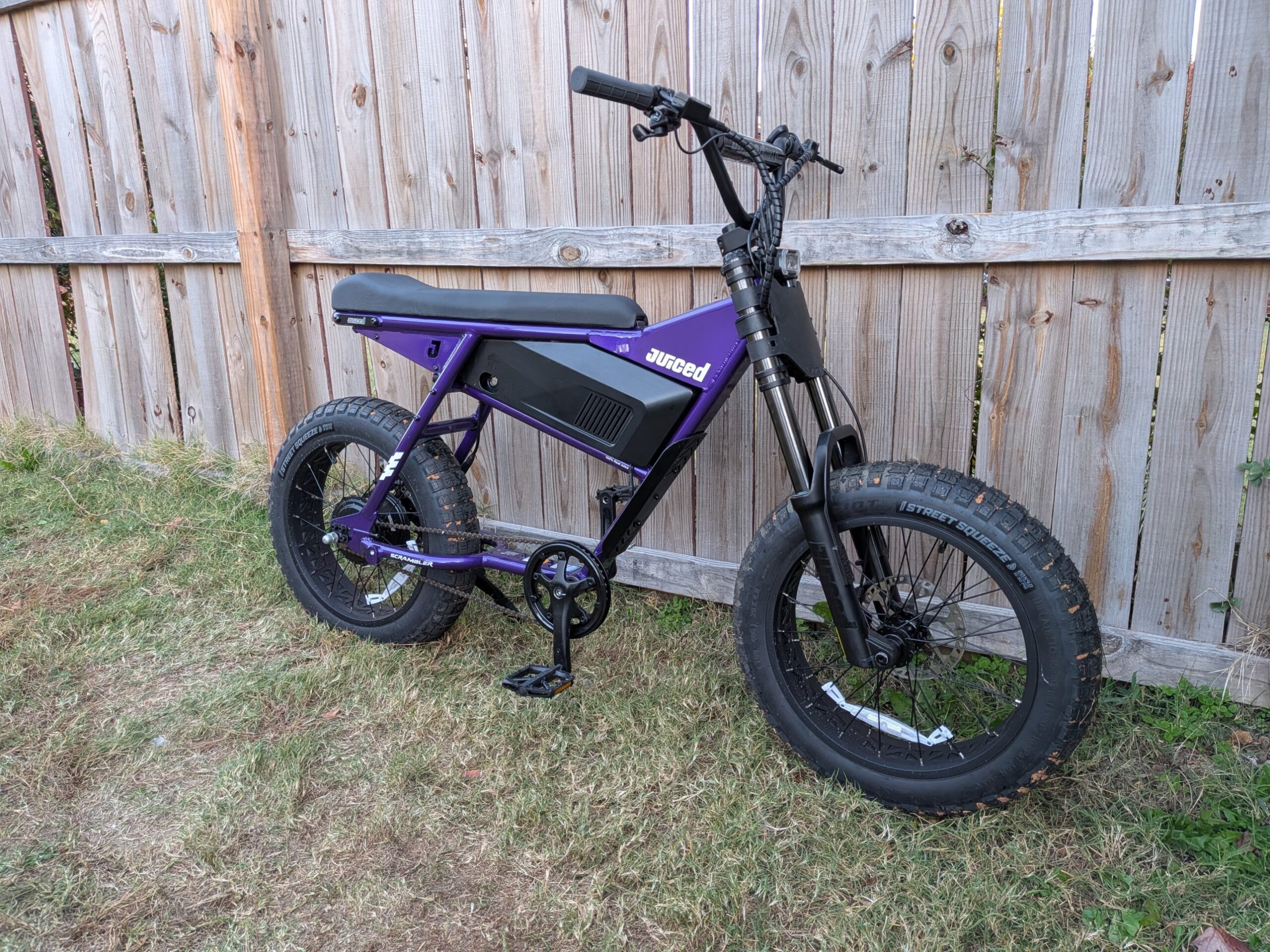
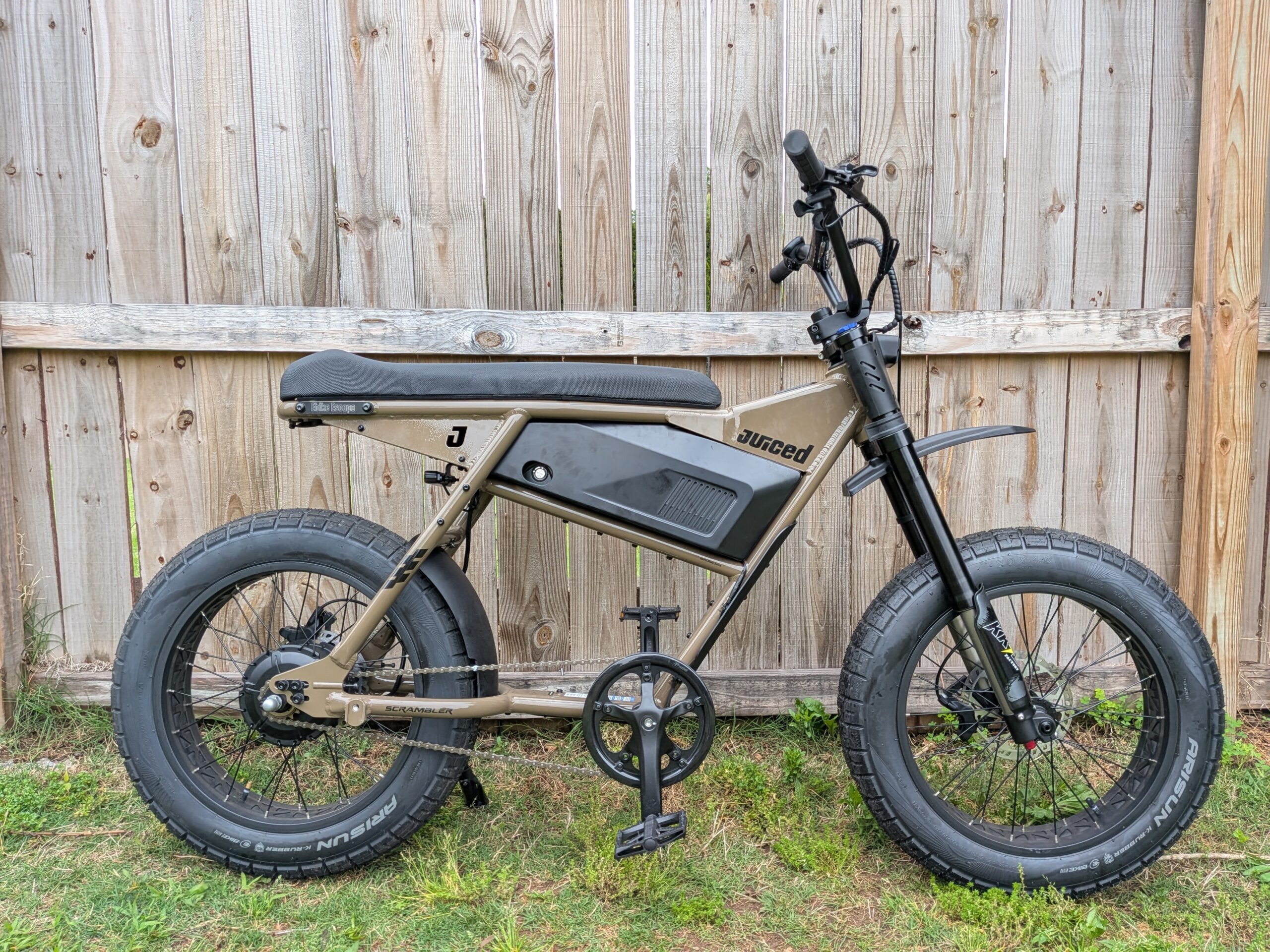
If you’re looking at the Core, the Scrambler Hardtail is the obvious step up, since it shares the same frame and styling. Here’s how the two line up.
| Spec | Juiced Scrambler Core | Juiced Scrambler Hardtail |
|---|---|---|
| Price | $1,399 (10Ah) / $1,599 (15Ah) | $1,699 |
| Motor | 500W hub, 1,176W peak | 750W hub, 1,764W peak |
| Torque | 80 Nm | 90 Nm |
| Controller | 20A | 30A |
| Battery | 52V 10Ah (520Wh) or 15Ah (780Wh) | 52V 19.2Ah (998Wh) |
| Advertised Range | Up to 40 / 60 miles | Up to 60 miles |
| Top Speed | 25 mph (pedal assist) | 28 mph (pedal assist) |
| Front Suspension | EXHO triple crown, 100mm (80mm Midsize) | KKE inverted, 140mm |
| Brakes | Talon P2 2-piston, 180mm rotors | Talon P4 4-piston, 180mm rotors |
| Frame Sizes | Core and Core Midsize | One size |
| Claimed Weight | 73 lbs (75 lbs with 15Ah) | 83 lbs |
| Payload | 300 lbs | 300 lbs |
| Hill Climb Minimum (throttle) | 10 mph | 14 mph |
For $300 more, the Hardtail gives you the bigger 750W motor, a 19.2Ah battery, a 140mm inverted fork with rebound adjustment, four-piston brakes, and a 28 mph top speed. Off the line, the difference is smaller than the spec sheet suggests. In our side-by-side testing, the Core was only about a second slower from 0 to 20 mph on the throttle. Hills are where the gap shows, with the Hardtail holding 14 mph on the same climb where the Core dropped to 10, and the larger battery gives it more range to work with.
Pick the Hardtail if you have steep hills on your regular routes, want the most range, or are buying for an adult rider who wants every bit of performance. Pick the Core if you’re buying for a teen, need the smaller Midsize frame, or mostly ride around the neighborhood, where its power is plenty. For broader context, a Super73 runs close to $2,000 and typically comes with a 20 mph cap, a battery about the size of the Core’s standard pack, and no front suspension, so either Scrambler comes out ahead on hardware. We dig into that matchup in our Super73 B1G vs Scrambler Hardtail comparison, and our roundup of the best moped-style ebikes covers the rest of the category.
Juiced Scrambler Core Pros and Cons
Final Thoughts on the Juiced Scrambler Core
For a parent shopping for a moped-style ebike, the hardest question usually isn’t whether a bike is fun. It’s whether you can trust it to stay legal and stay at a speed you’re comfortable with. Juiced answers that with a PIN-locked speed limit, a true class-system setup, and the same frame and styling as the Scramblers that cost $300 to $500 more. You do give up some punch on steep hills, and range drops quickly if you ride mostly on throttle, so the long-range battery is worth a hard look if your teen will be covering real distance. For neighborhood riding, quick trips across town, and the occasional gravel path, the Core keeps nearly everything we liked about the Scrambler and lowers the price, making it one of the best values in moped-style ebikes right now.
If you’re planning to buy a Juiced Scrambler Core, please use our Juiced link. It costs you nothing extra and helps support our reviews. Thank you!
