
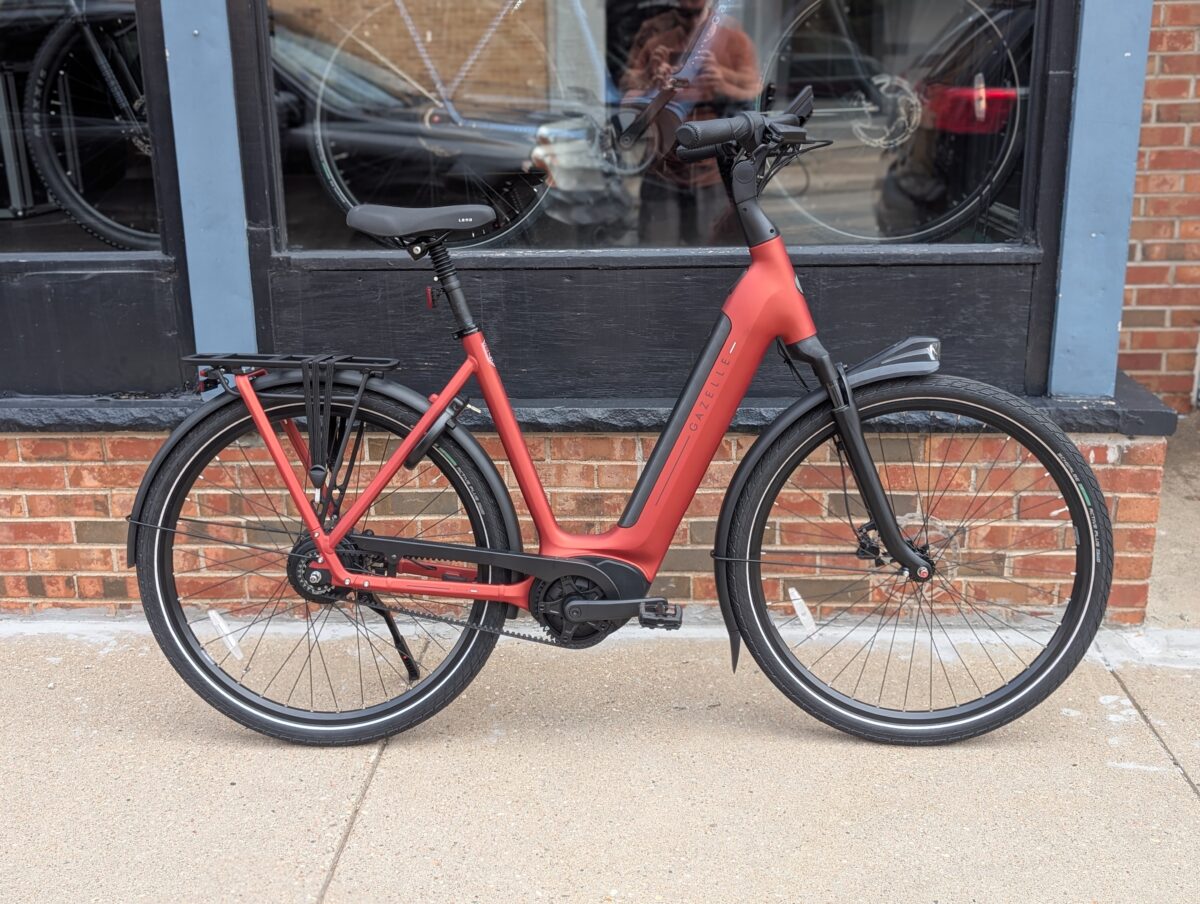
The ebike market is flooded with direct-to-consumer brands chasing flashy specs and rock-bottom prices. So, what do you actually gain by stepping up to a legacy bike shop brand? Priced at $4,499, the Gazelle Arroyo C380 Elite sits higher than many of the ebikes we typically test, but it brings the pedigree of a brand with over 130 years of cycling history. This comfort cruiser is built for everyday utility and long-lasting reliability. It trades a traditional chain for a Gates carbon belt drive, pairing seamlessly with an intuitive stepless gear system and a highly capable Bosch Performance Line motor. Add in an accessible low step-thru frame, Dutch-style swept-back handlebars, and a full suite of commuter accessories, and you have a near-zero maintenance machine purpose-built for daily riding.
But does that premium price actually translate to the ultimate commuting experience? In this review, we break down the standout components, explore the ride feel, detail our ride test insights, and discuss both the highlights and the drawbacks to help you decide if the Arroyo C380 Elite is right for you.
We do not have an affiliate relationship with Gazelle, so there is nothing in it for us either way. Links below go straight to their product page.
Gazelle Arroyo C380 Elite Video Review
Dive even deeper into the Gazelle Arroyo C380 Elite with our comprehensive video review. It takes you up close to every single component, provides a full walkthrough of the Kiox 300 display and Bosch eBike Flow app, and puts you behind the handlebars for our ride test, which includes a run up our test hill.
Standout Features
Bosch Performance Line Mid-Drive
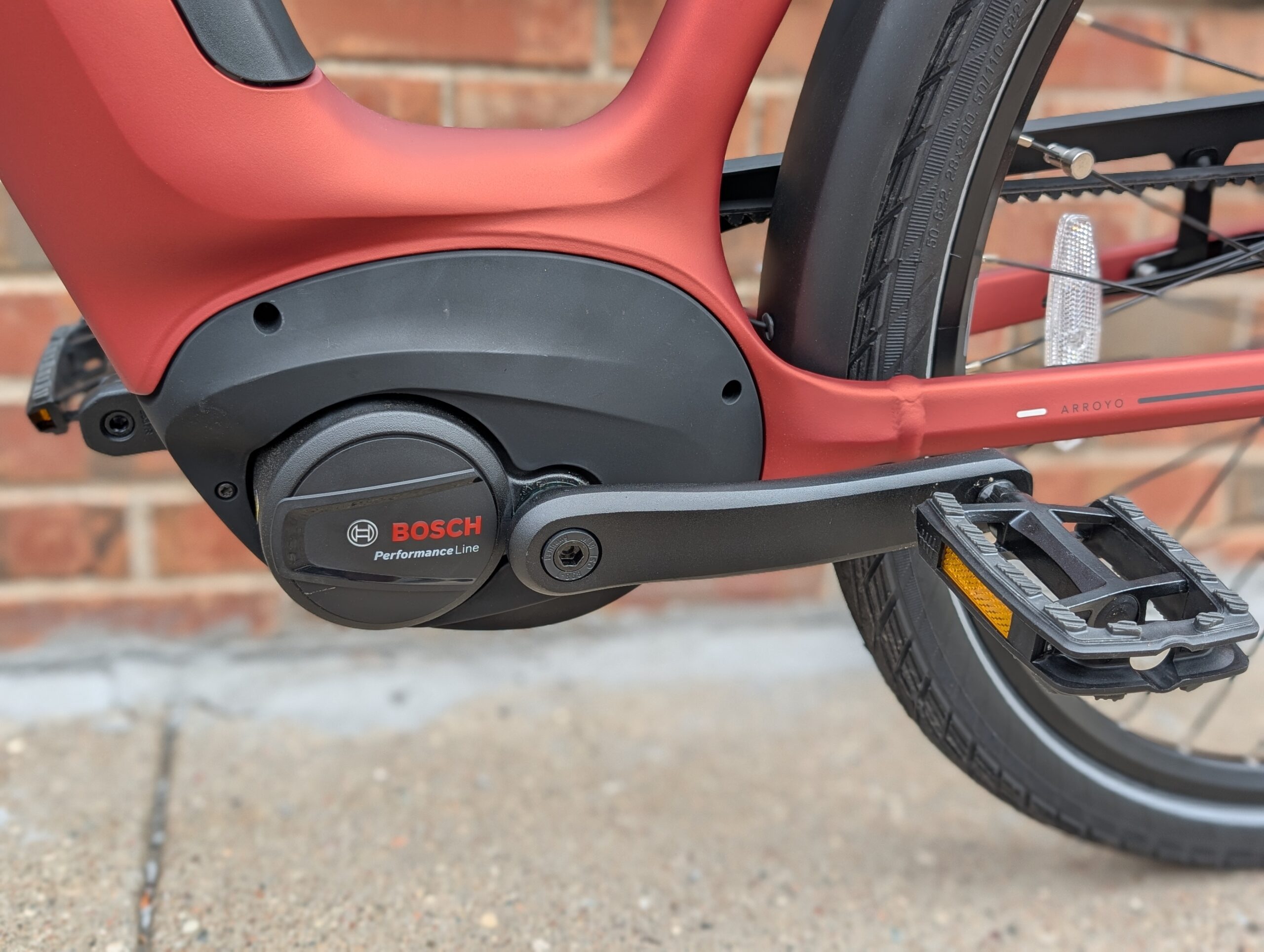
Power comes from a Bosch Performance Line motor putting out 75 Nm of torque through four assist modes: Eco, Tour, Auto and Turbo. Bosch motors have a reputation for being quiet and this one earns it. The loudest it ever got was a faint hum on the climb. Because the motor powers the belt directly, it takes advantage of the drivetrain just like you do. Combined with a responsive torque sensor, support arrives the instant you push into the pedals rather than surging in a beat late, delivering an assist that feels completely natural, efficient, and in sync with your effort.
Gates Carbon Belt and the Enviolo Stepless Hub
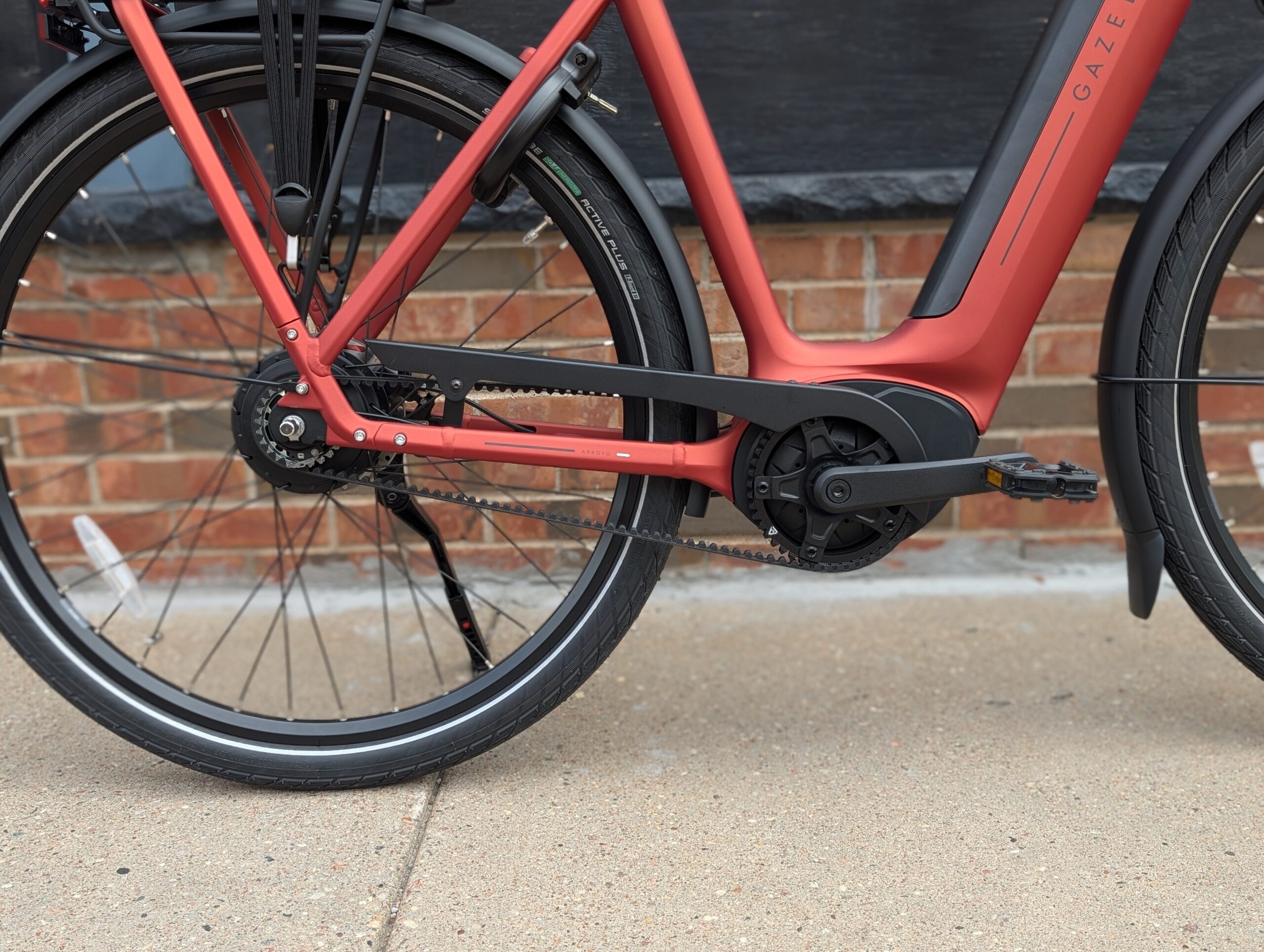
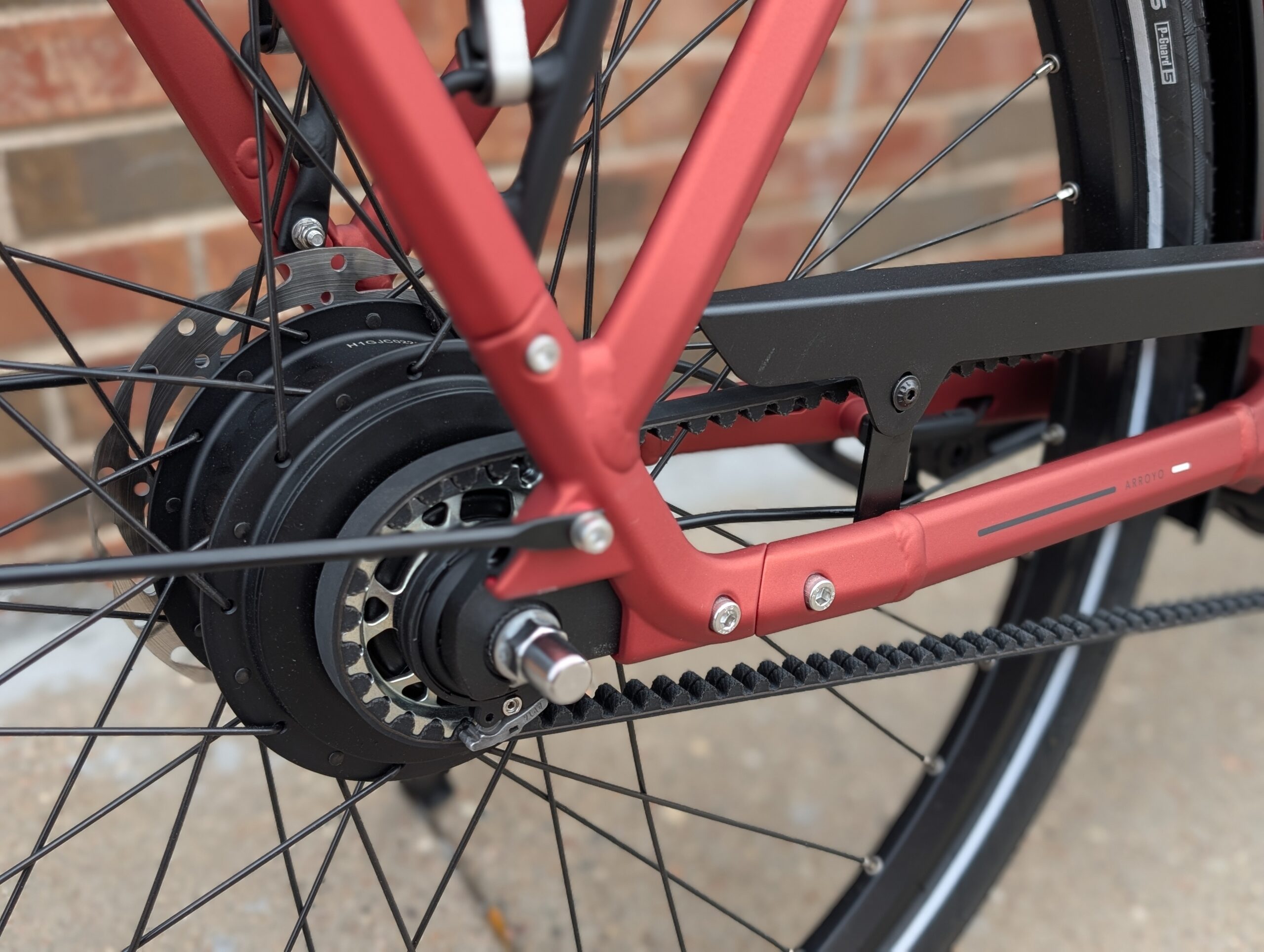
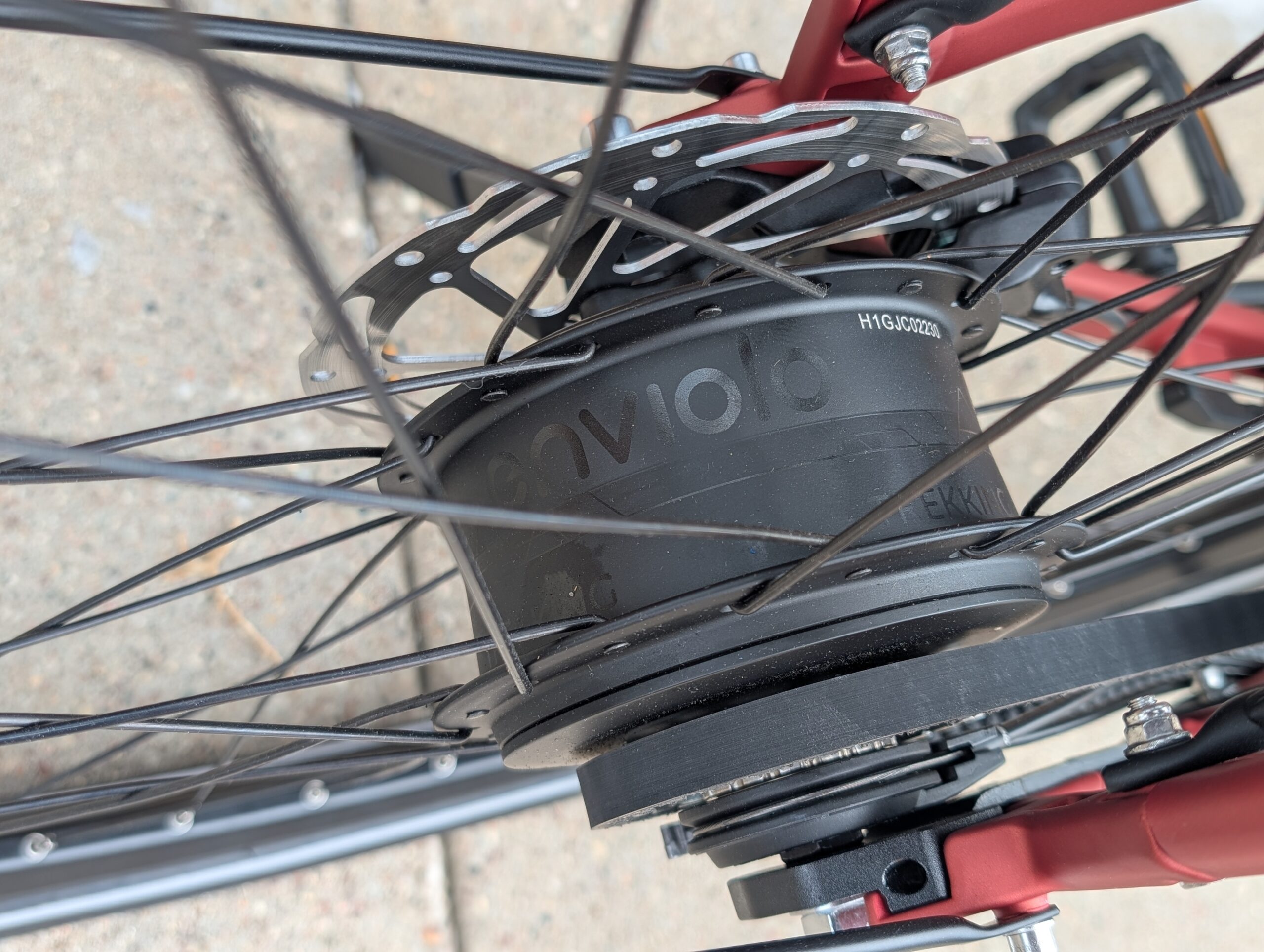
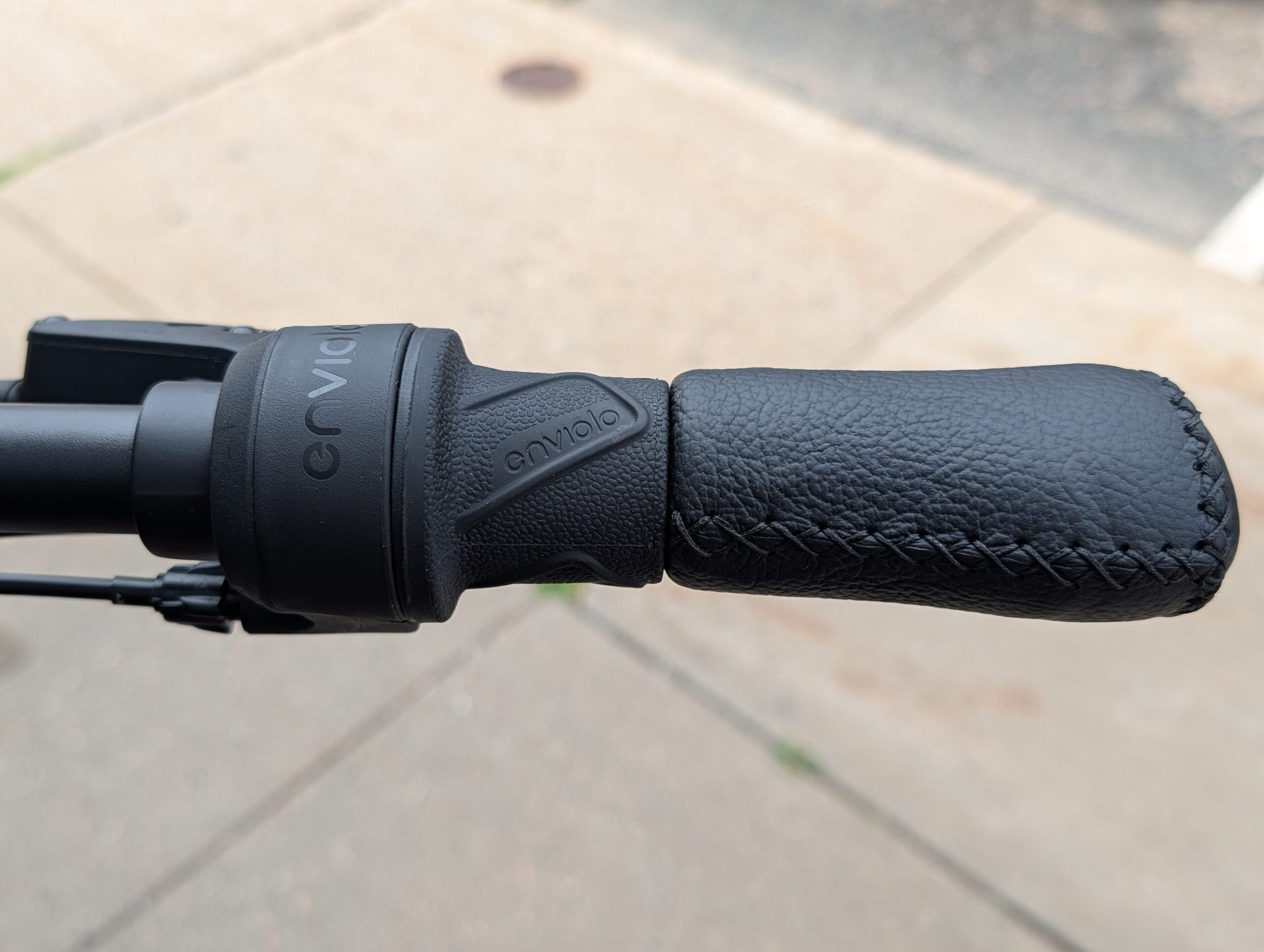
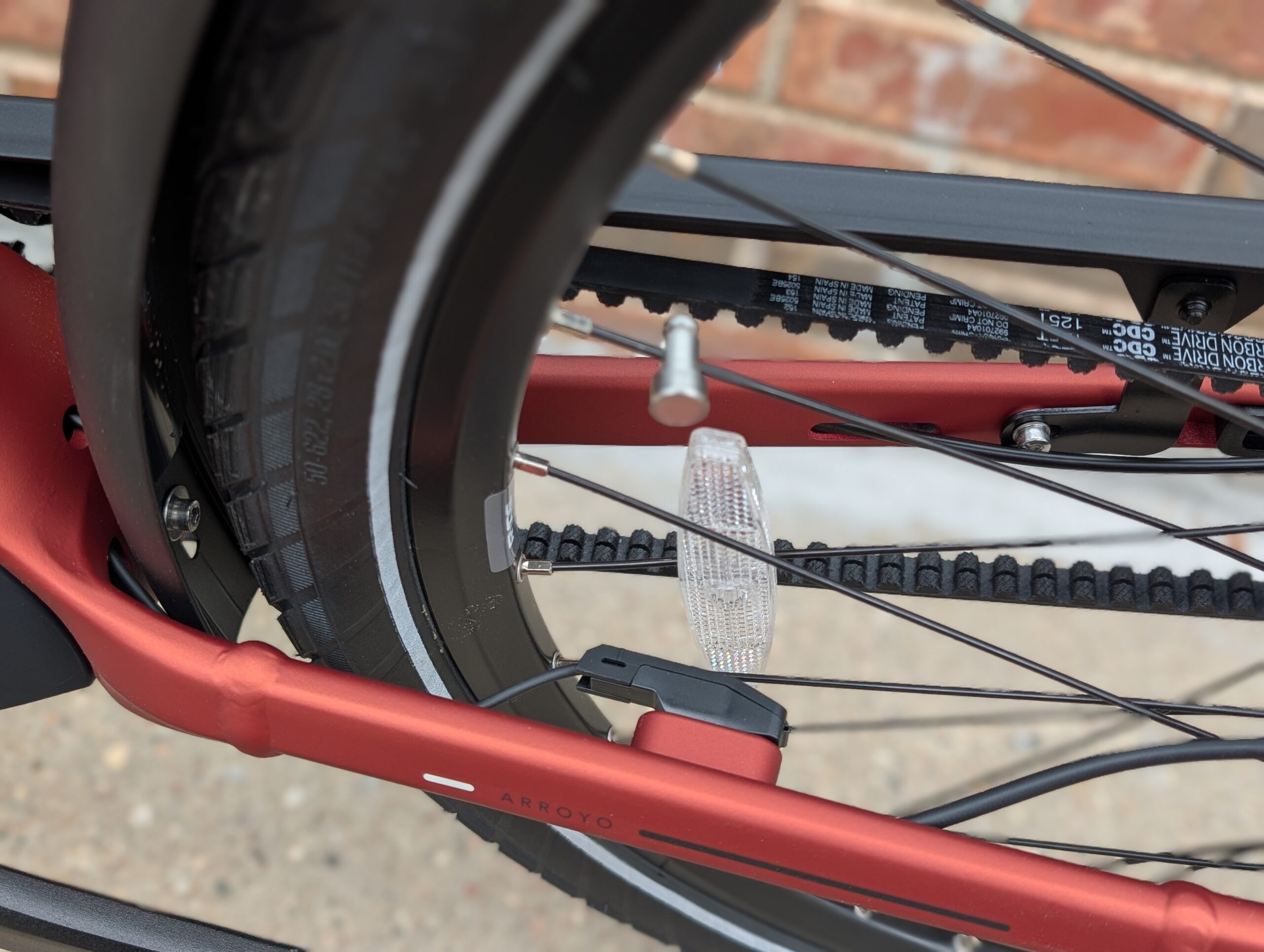
There is no chain here and no derailleur to knock out of alignment. A Gates carbon belt runs 46 teeth up front to 24 at the back, and Gates rates the belt past 10,000 miles without maintenance. No grease, no chain marks on your pants. The clever part is the Enviolo Trekking hub. Rather than fixed gears you click between, it gives you a continuous 380% range that you dial in with a twist grip, which is where the C380 in the name comes from. You are not selecting third or fourth, you are choosing the pedal cadence that feels right with a smooth, stepless system. Once you stop looking for gears and start listening to your legs, it is versatile, especially compared to the single-speed belt setups that usually come with this kind of drivetrain.
Battery and Range
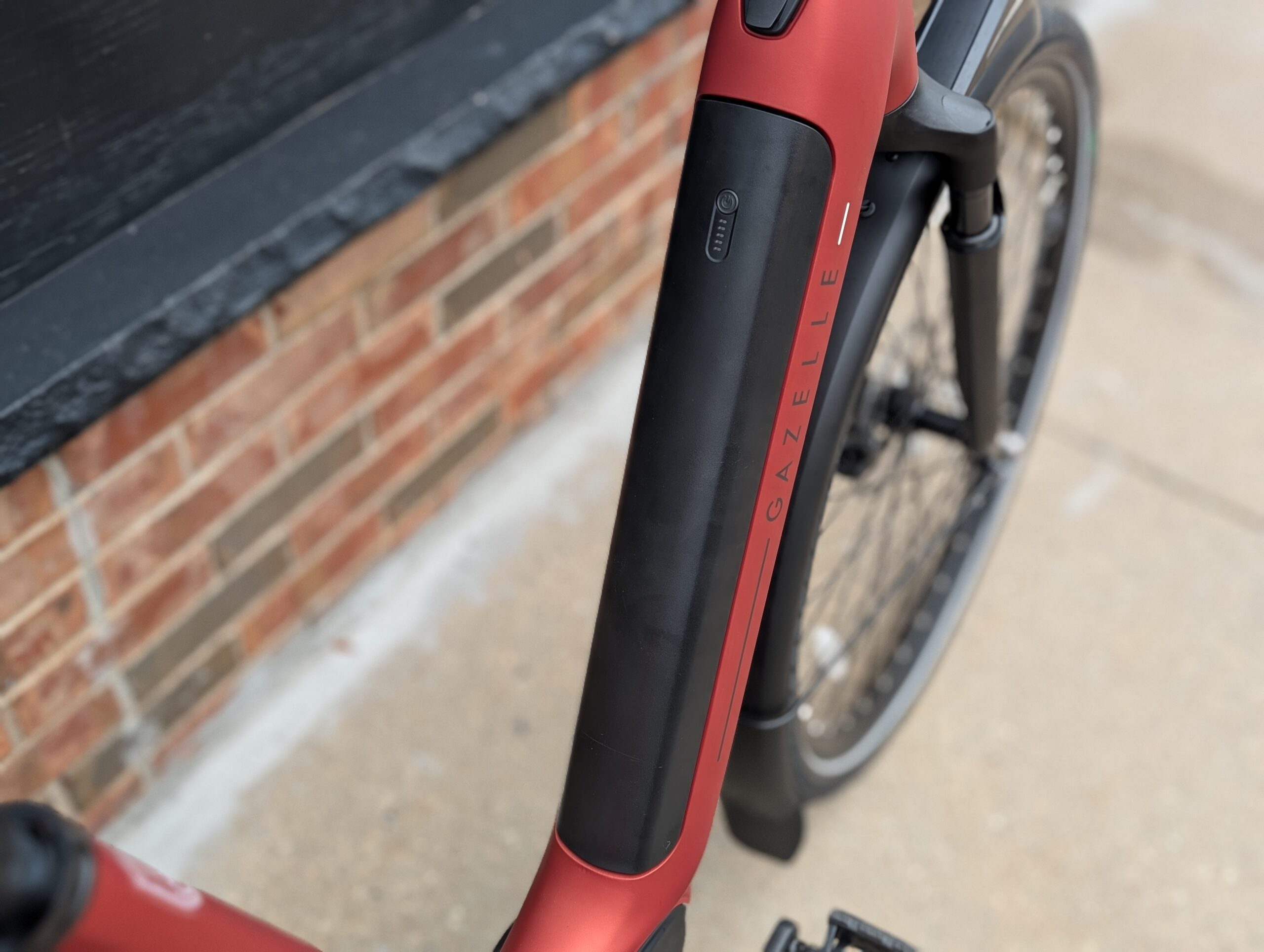
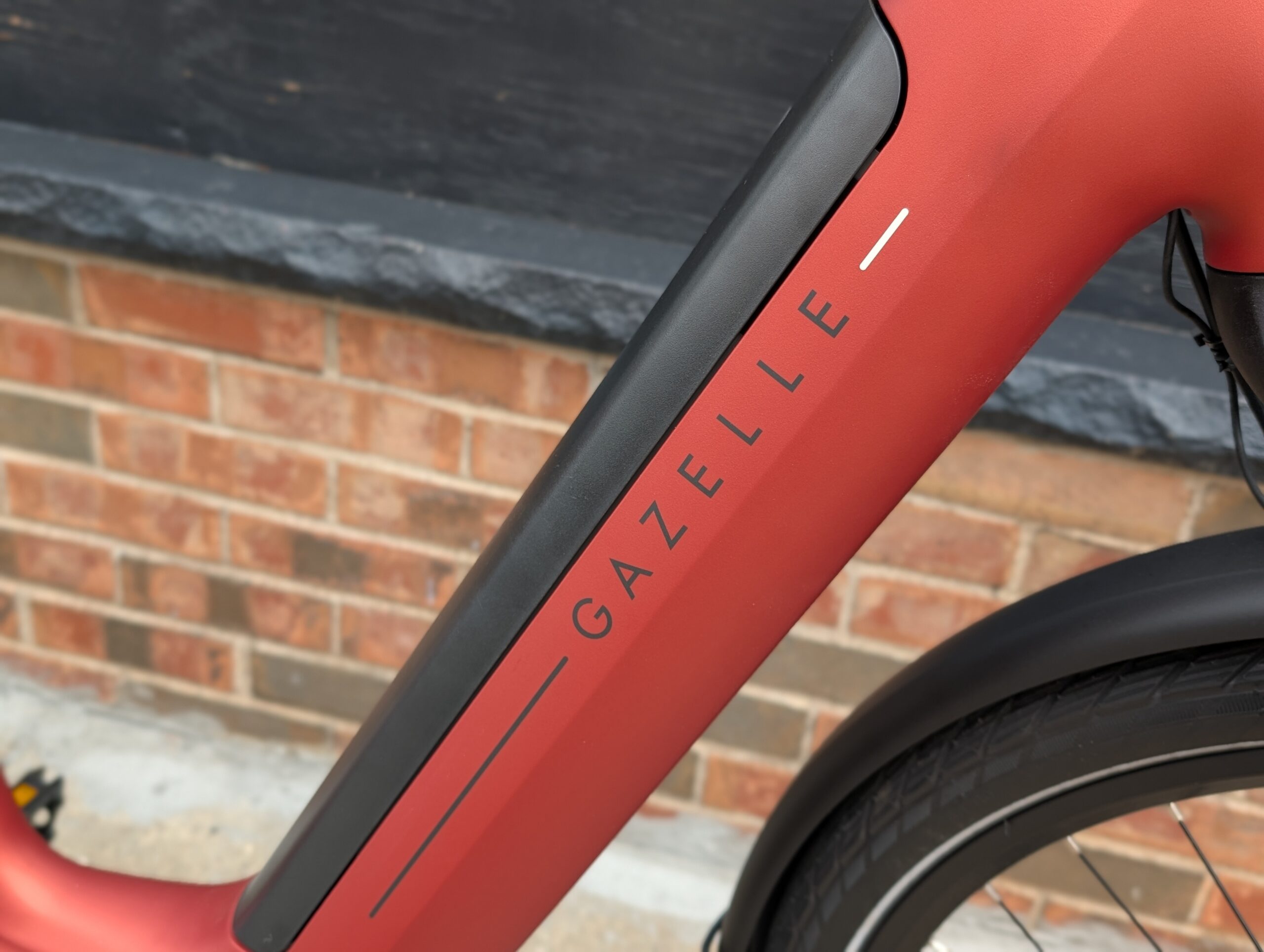
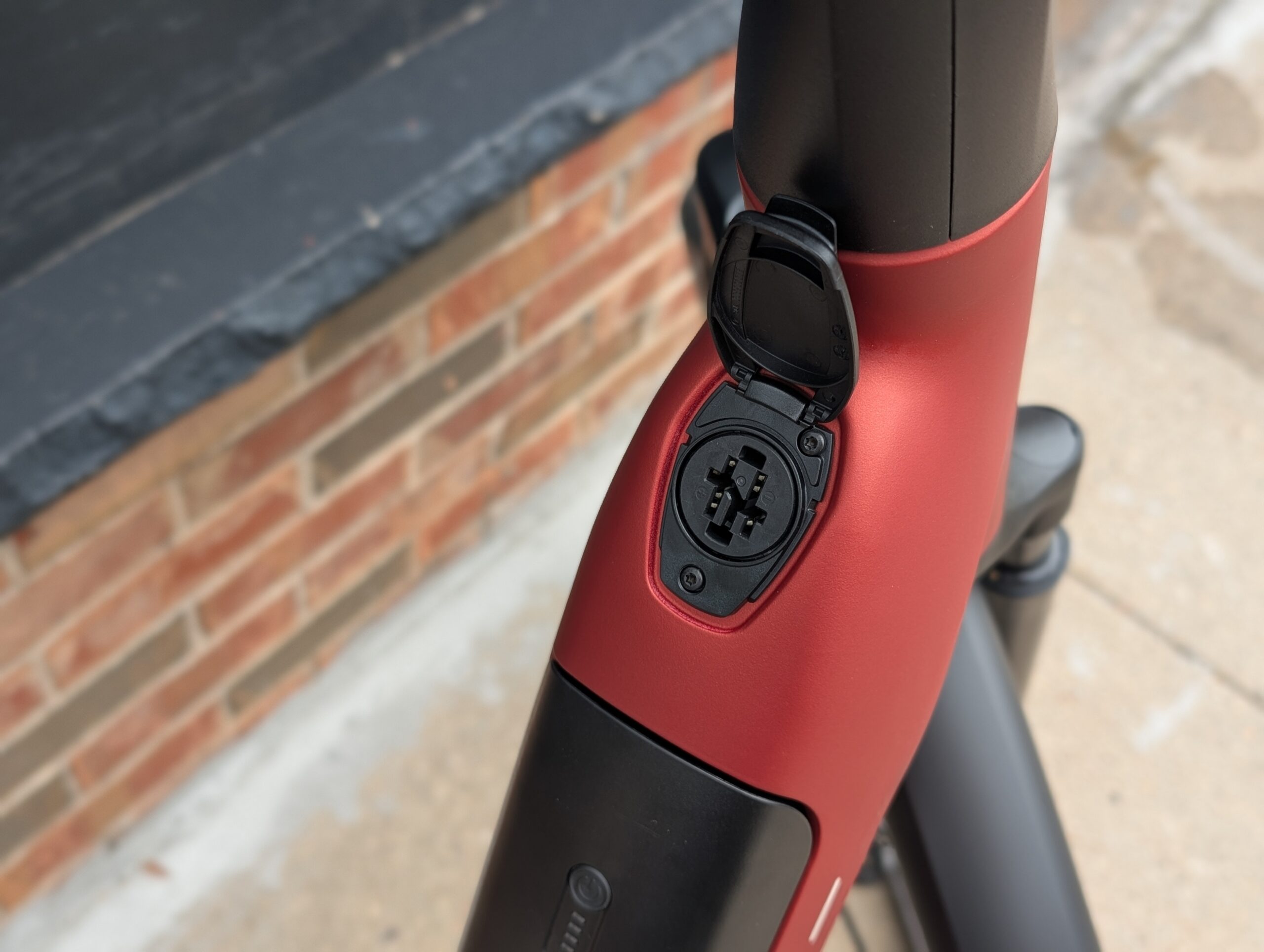
A 36V 15Ah (540Wh) Bosch battery sits inside the down tube and top-loads out with a key turn, which makes it about as easy to pull for charging as any battery we have handled. You can charge it on the bike through a covered port on the frame or off the bike with the included 2 amp Bosch charger, which Gazelle rates at about 7 hours and 42 minutes from empty. Gazelle quotes up to 94 miles in Eco, and while that estimate may be tough to actually achieve, six miles of riding with roughly 200 feet of climbing, including a full run up our test hill, left us at 83% charge. This bike is pretty efficient, and there is plenty of range here for how most people actually ride.
The Kiox 300 Display and eBike Flow App
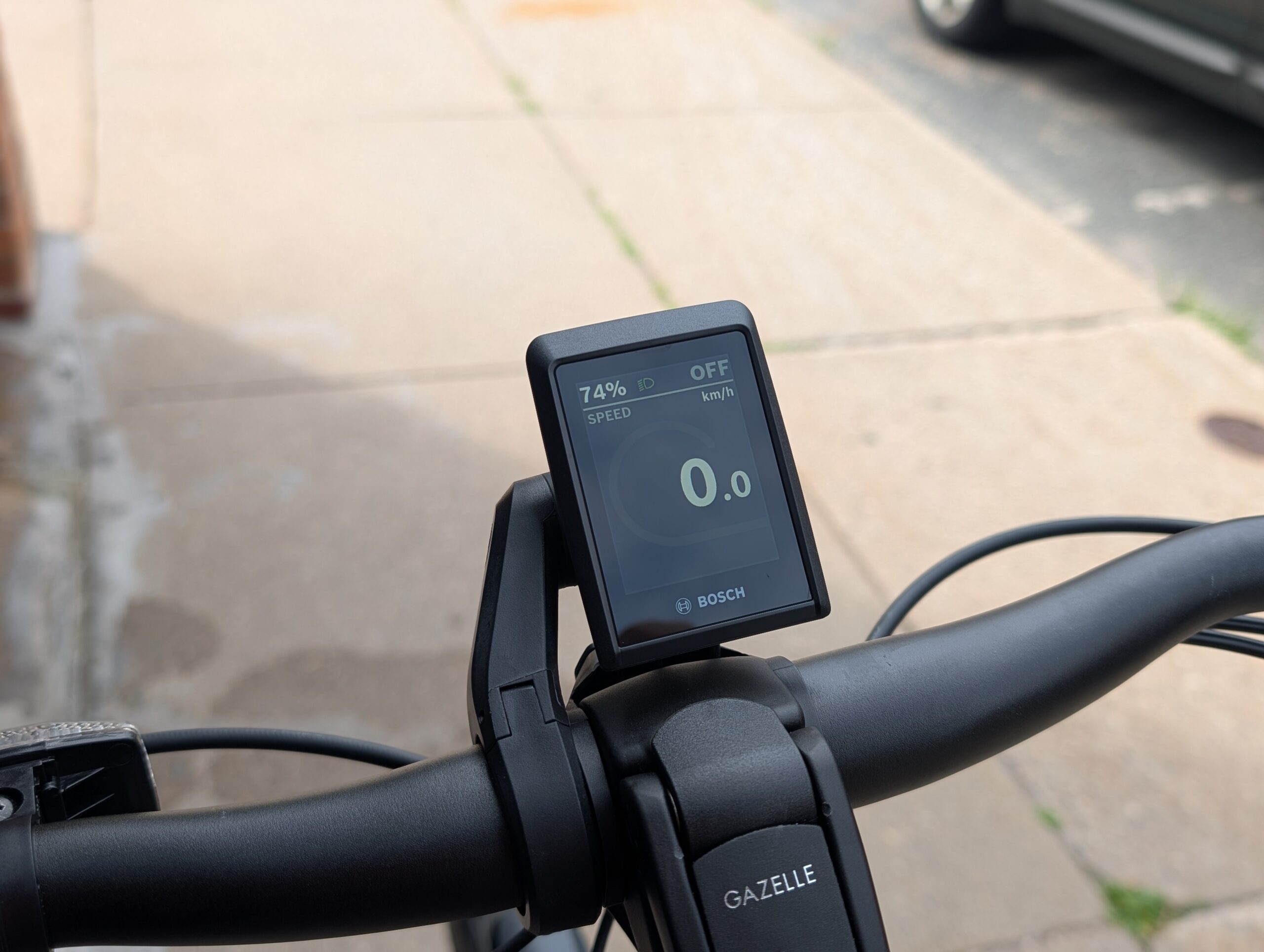
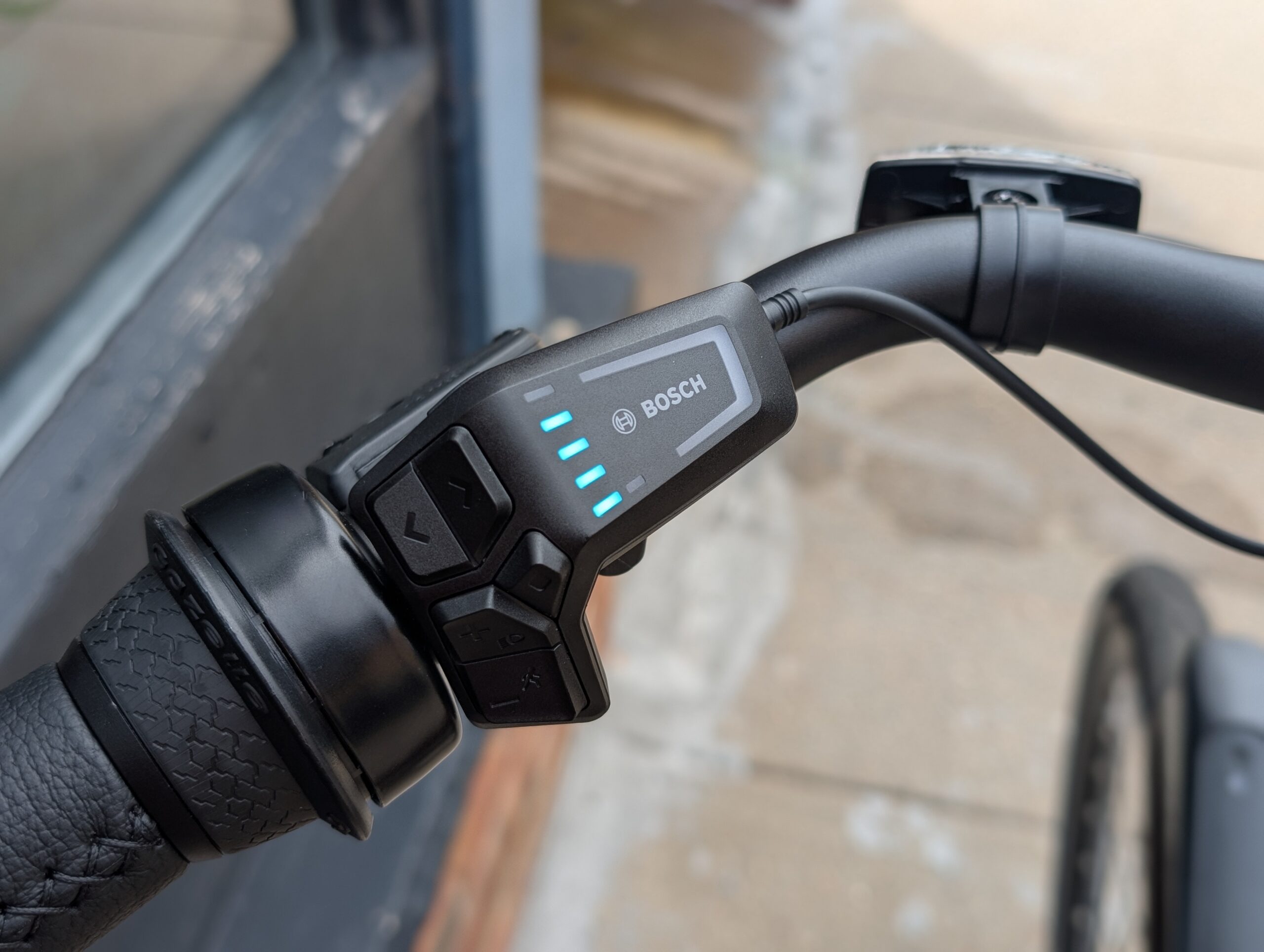
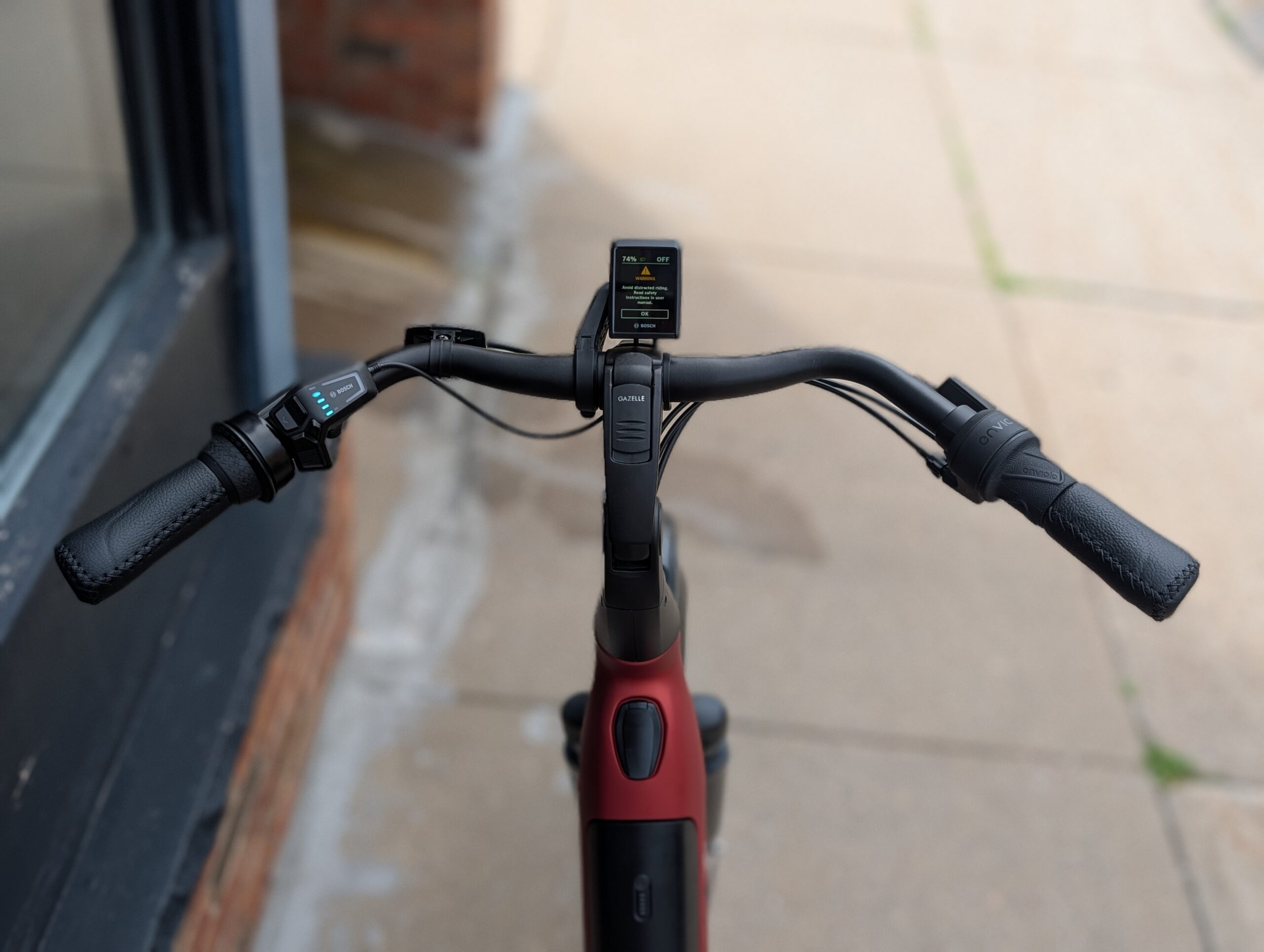
The Kiox 300 is one of the most configurable displays we have used. Out of the box you page through speed, trip data, range, live motor wattage and cadence, average and max speed, elevation, and navigation. Pairing to the Bosch eBike Flow app took under a minute. You can rebuild the display from scratch once you pair to the app. Pick a layout, drop whichever data points you want into it, drag the screens into whatever order suits you, delete the ones you do not care about. Keep it to a speed readout or uncover all the ride data you could possibly want.
More useful still, every riding mode is tunable. Max power, max torque, assistance level and top speed are all adjustable per mode, and an advanced tab lets you set how sharply the power engages, from soft to powerful. Turning Eco down for a slower cruise or a harder workout is as valid as cranking Turbo up. Even Auto, normally a set-and-forget mode, can be tailored if its default read of your riding does not match how you actually ride. The app also handles route planning, and turn-by-turn directions appear on the display itself with a map.
Comfort, Cockpit and Suspension
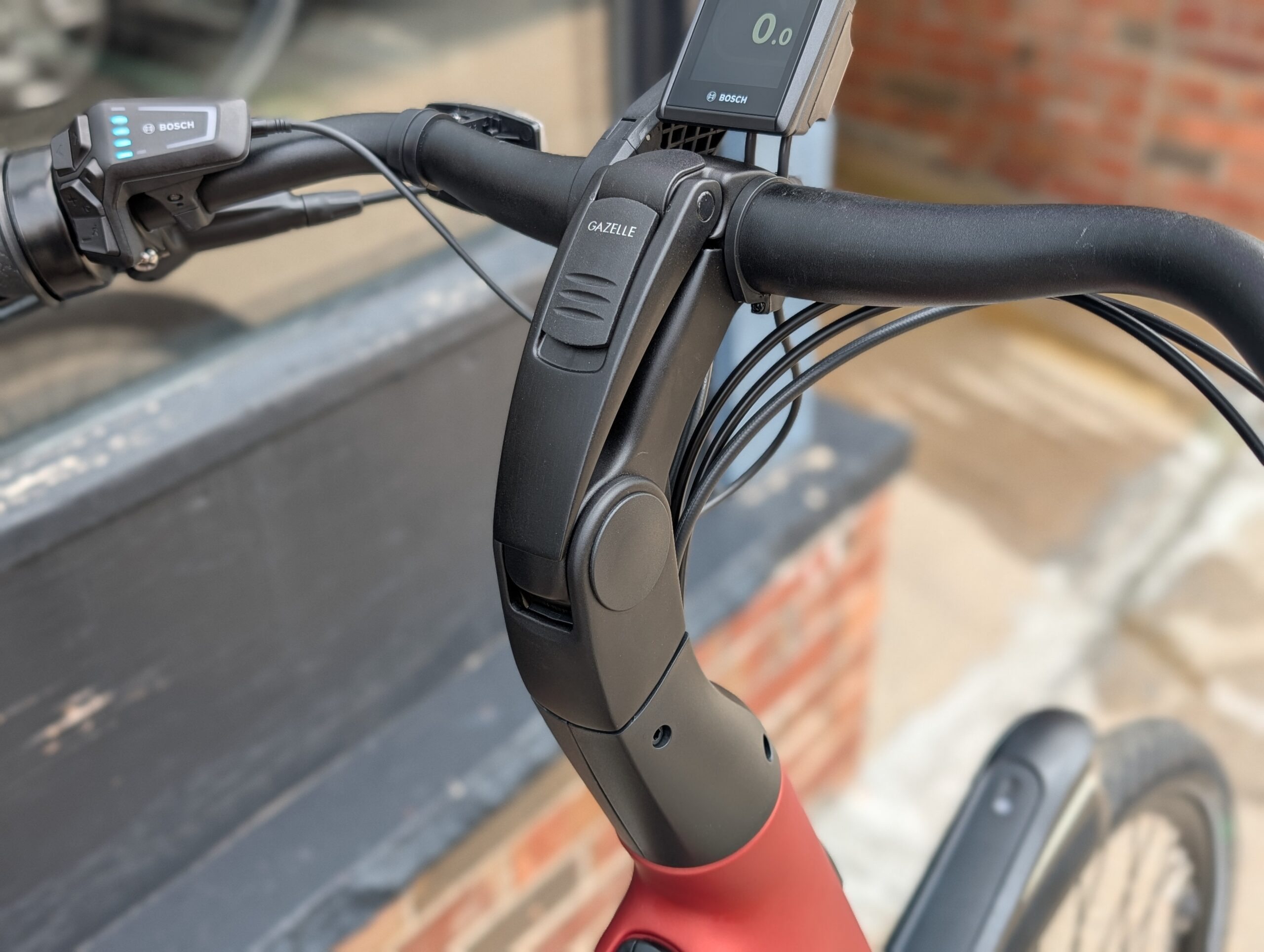
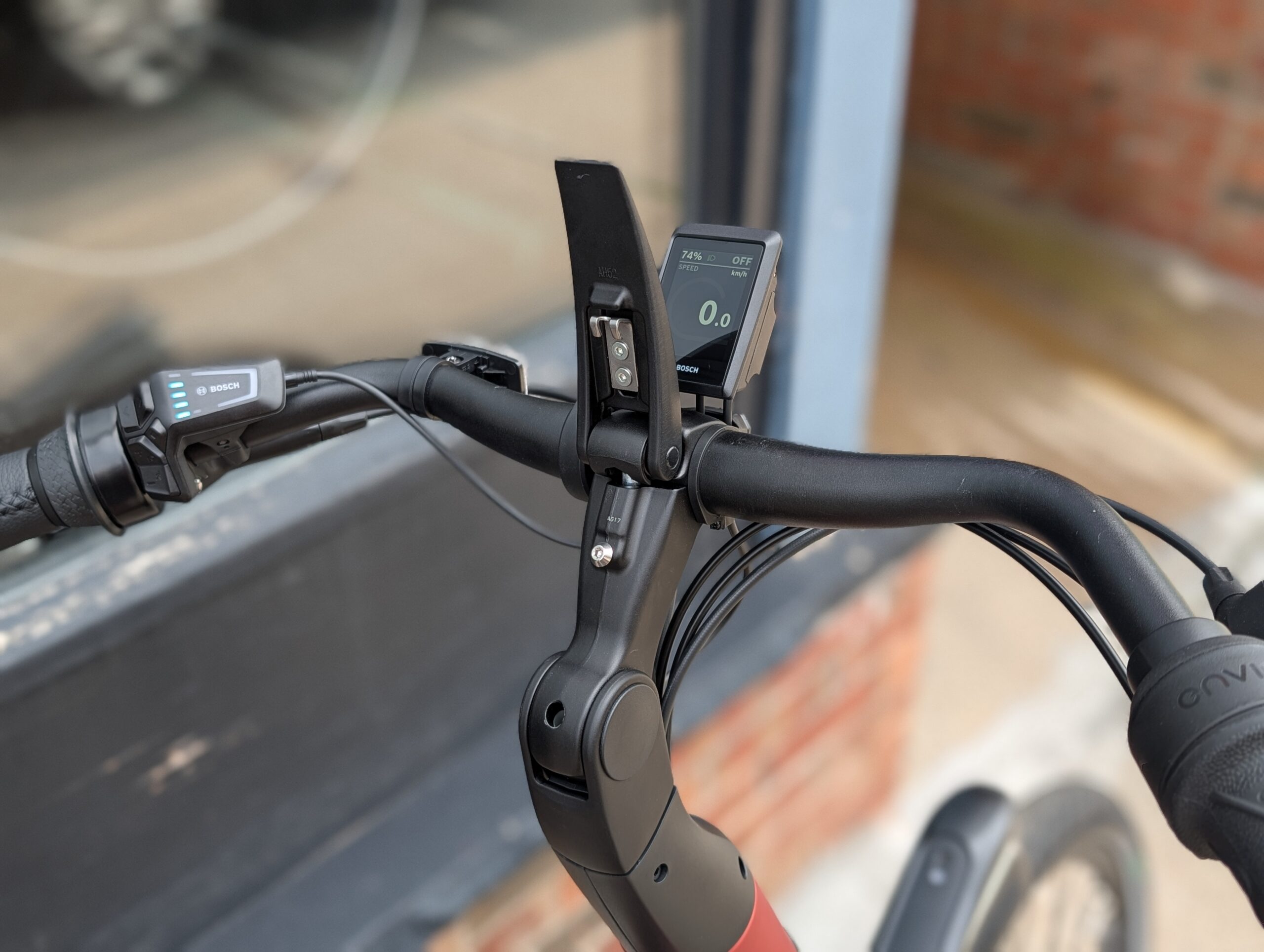
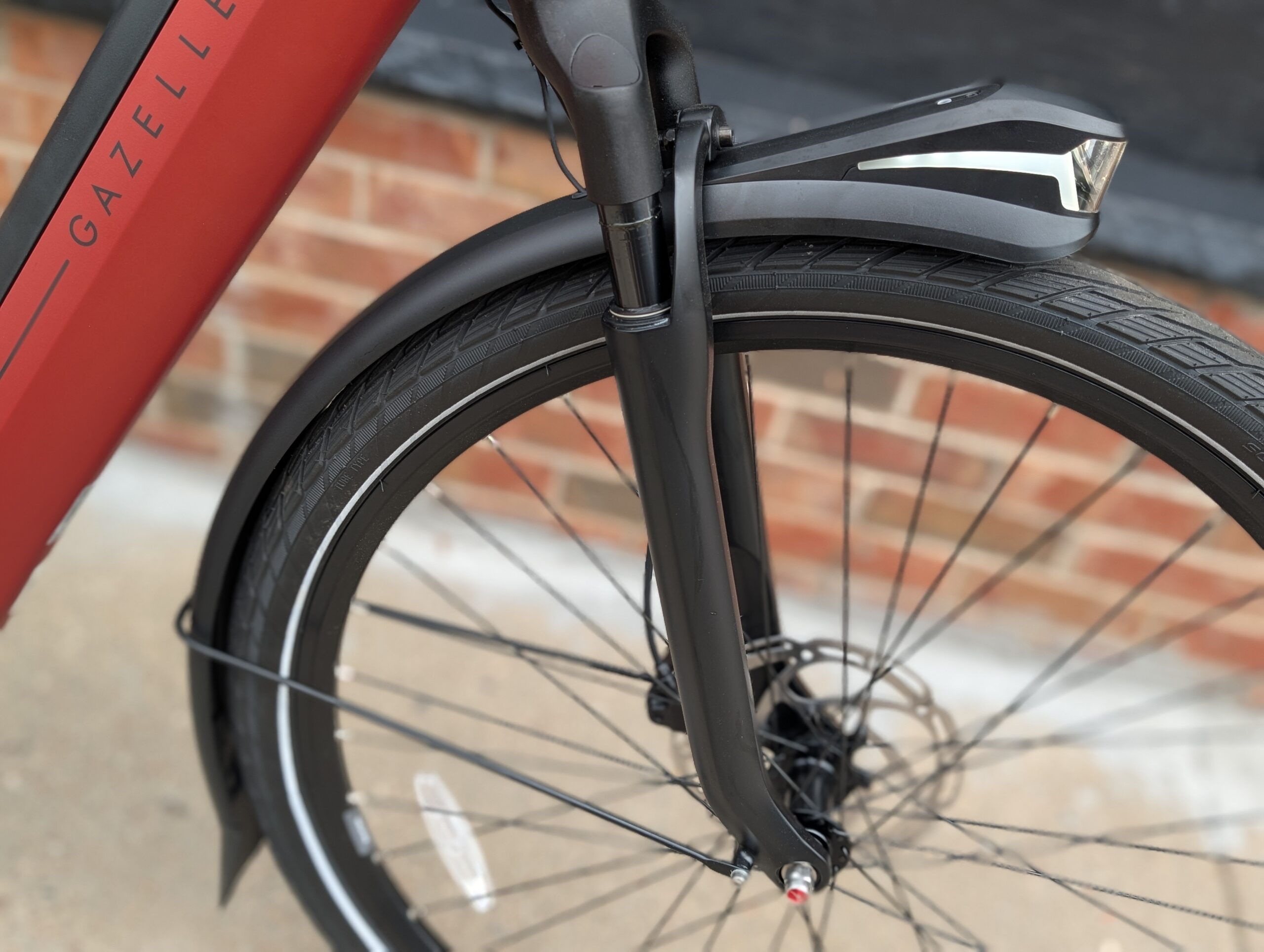
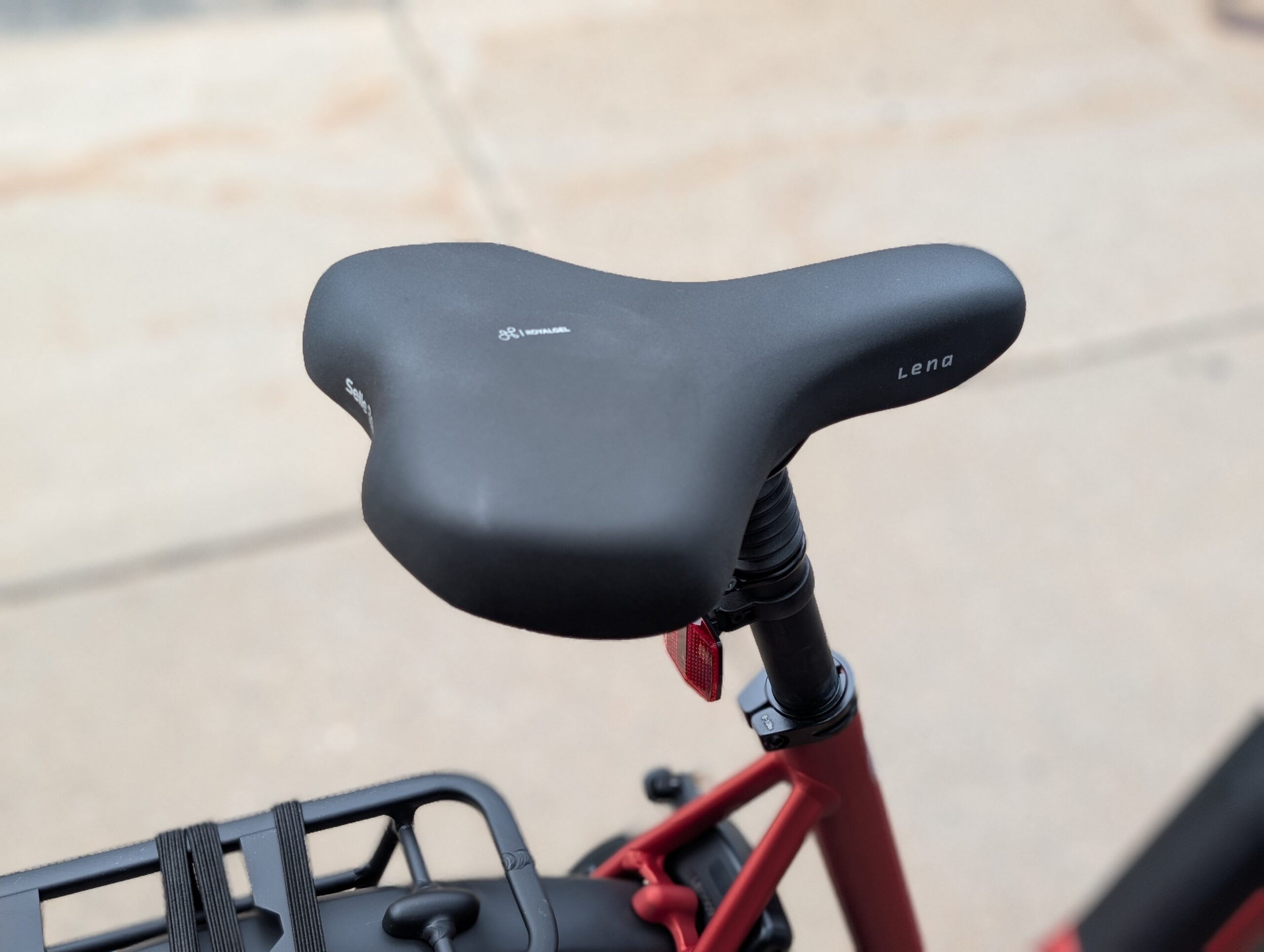
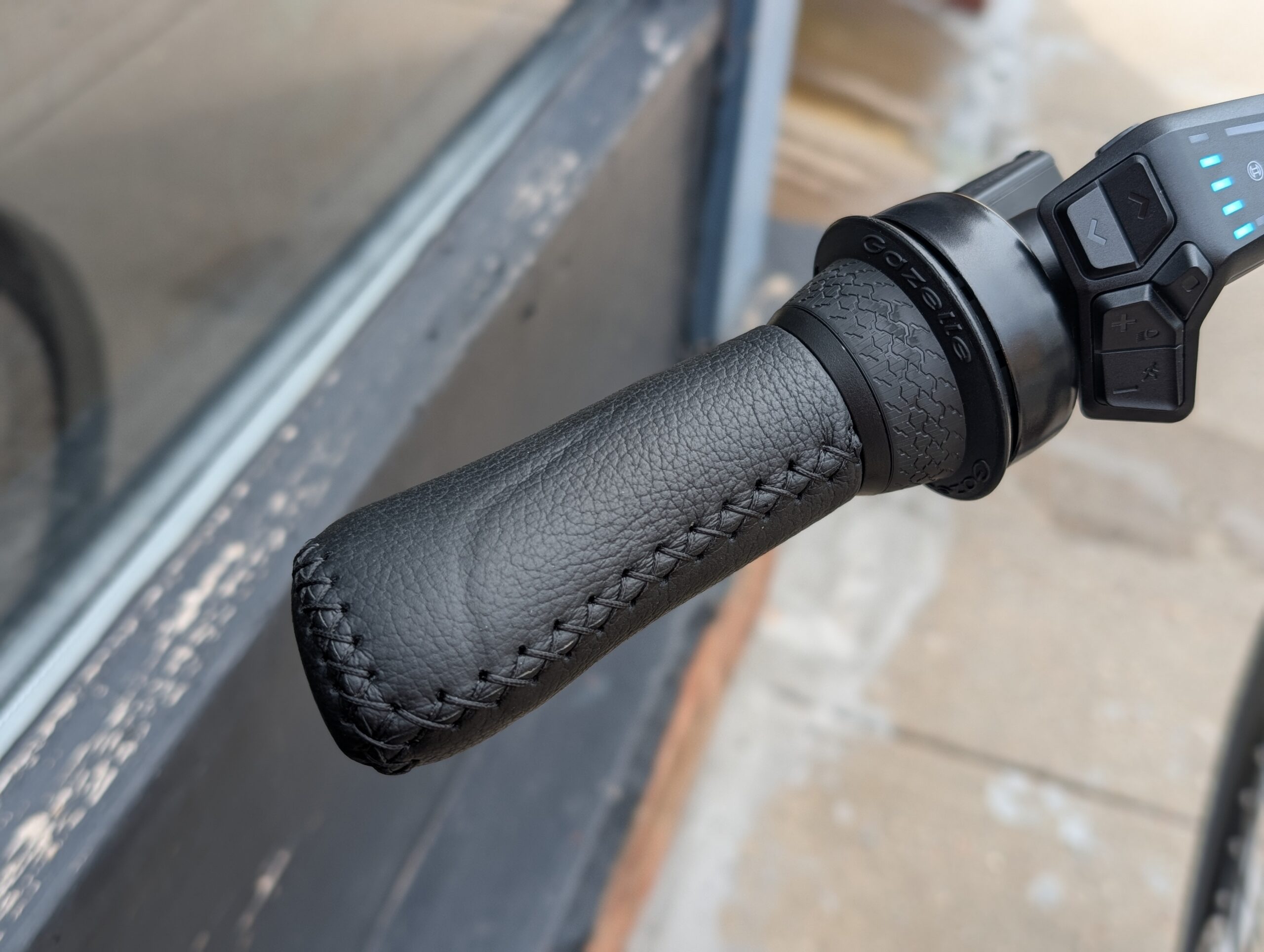
Up front there is a suspension fork with 50 mm of travel, and that is paired with a pogo-style suspension seatpost that helps absorb some road vibrations. Dutch-style swept-back bars put you properly upright, the Aero Leather lock-on grips feel great in your hand, and the Selle Royal Lena Gel saddle offers all day comfort.
The quick-release adjustable stem is the piece worth calling out. Pull the release, lift the latch, and you can change both the handlebar and stem angle by hand, then clamp it back down solid. No tools, no allen key hunt, which is very convenient if you do plan to share your ebike with another rider or make a quick adjustment.
Commuter Kit and the Cafe Lock
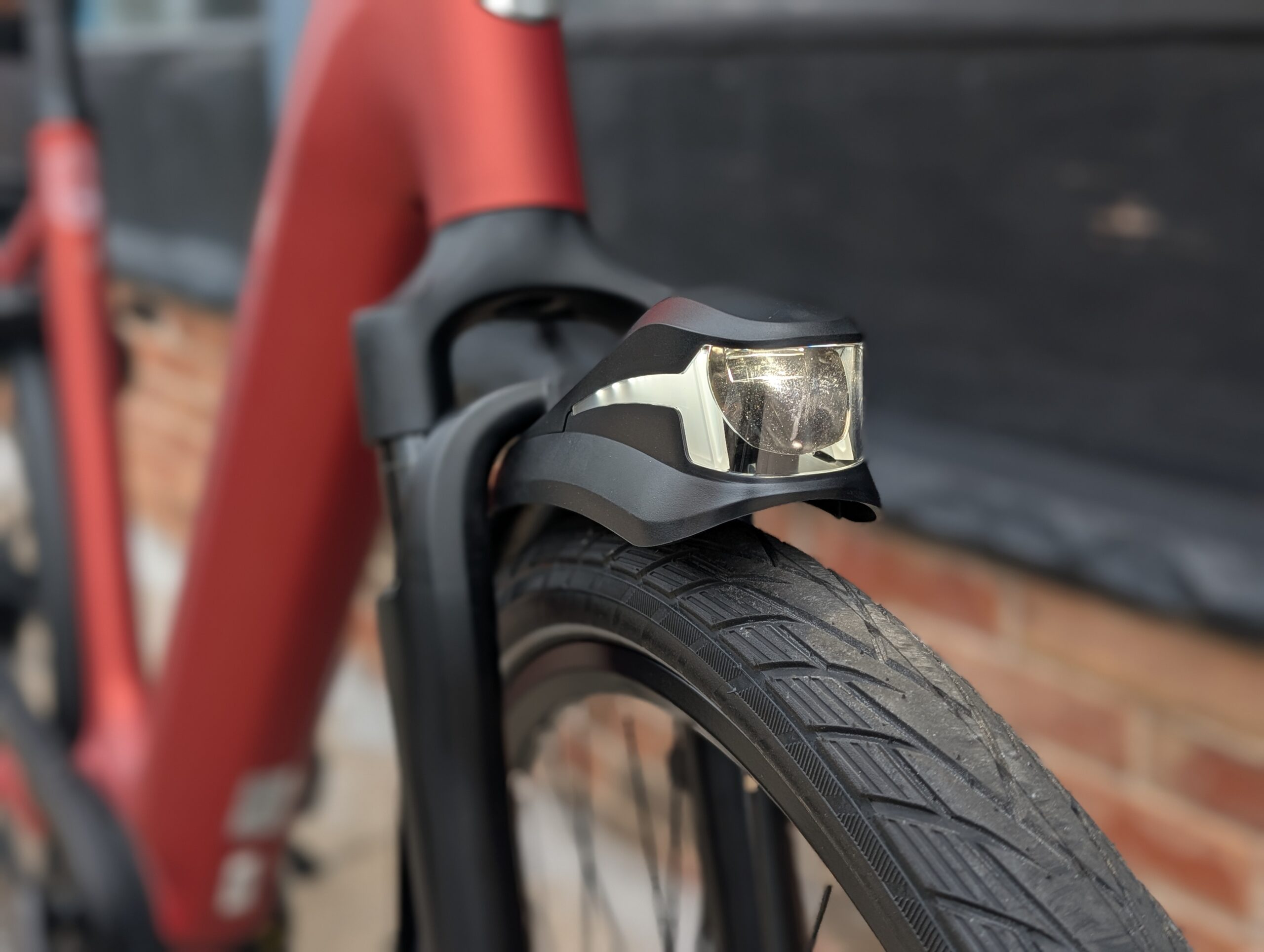
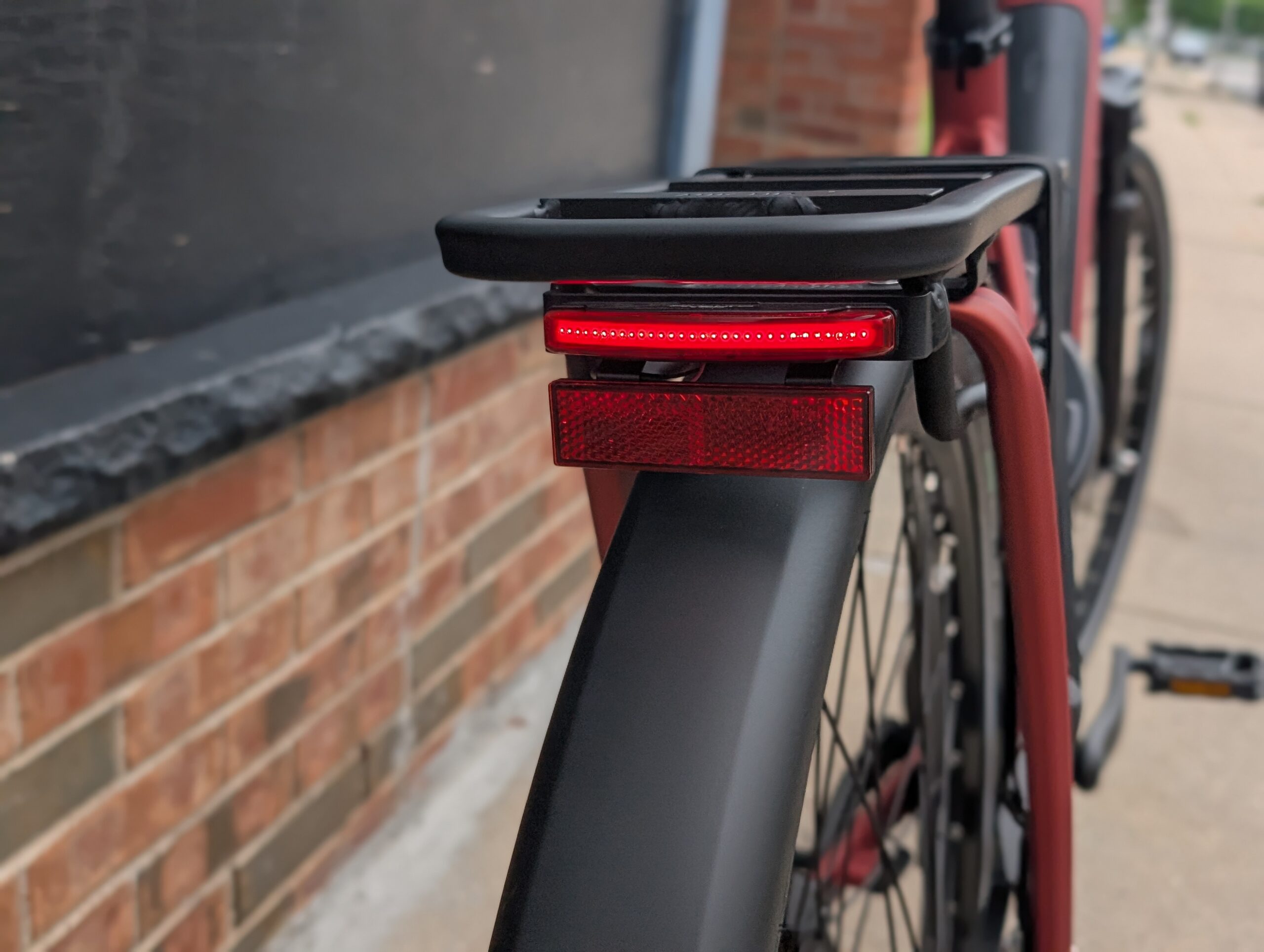
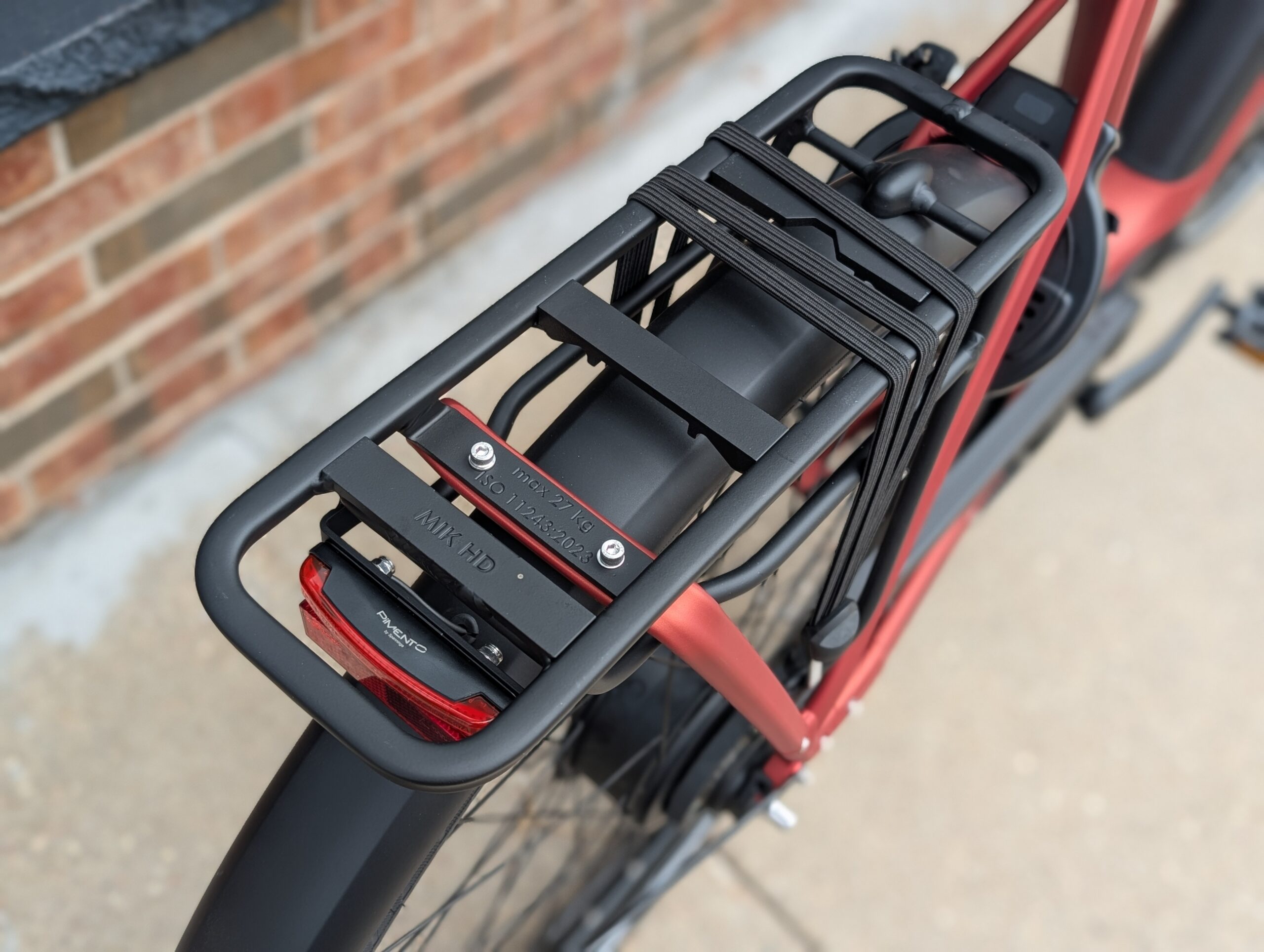
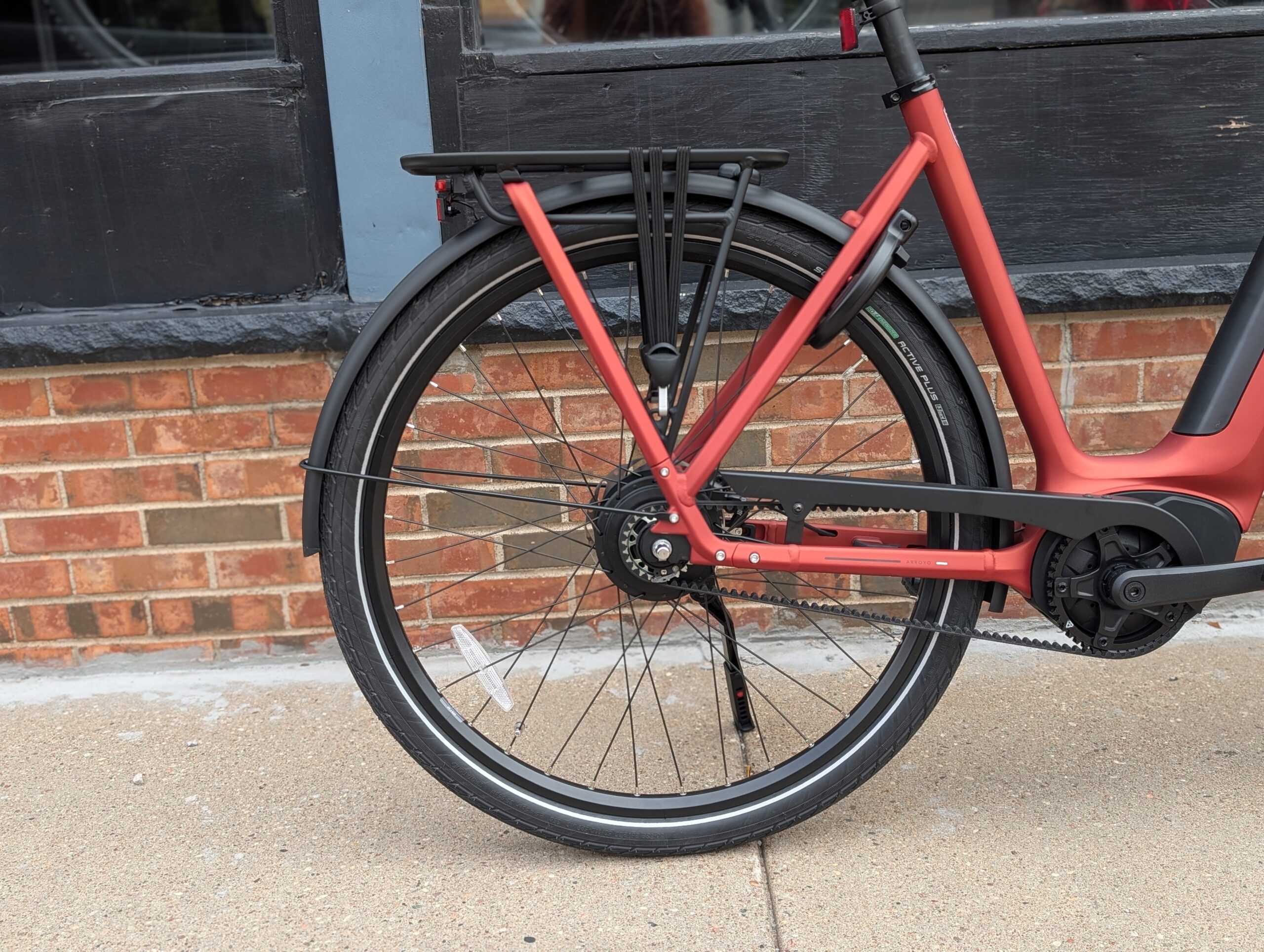
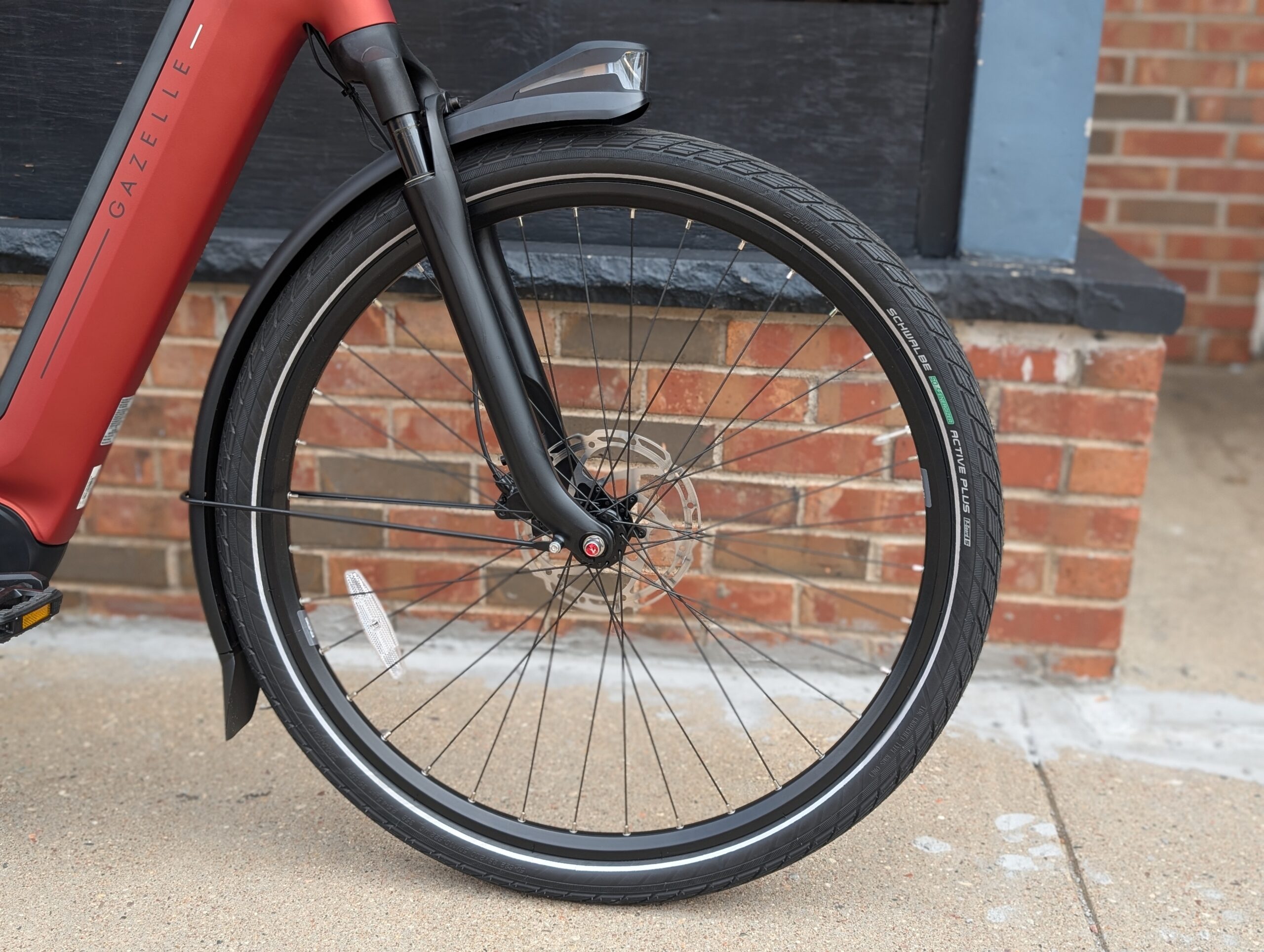
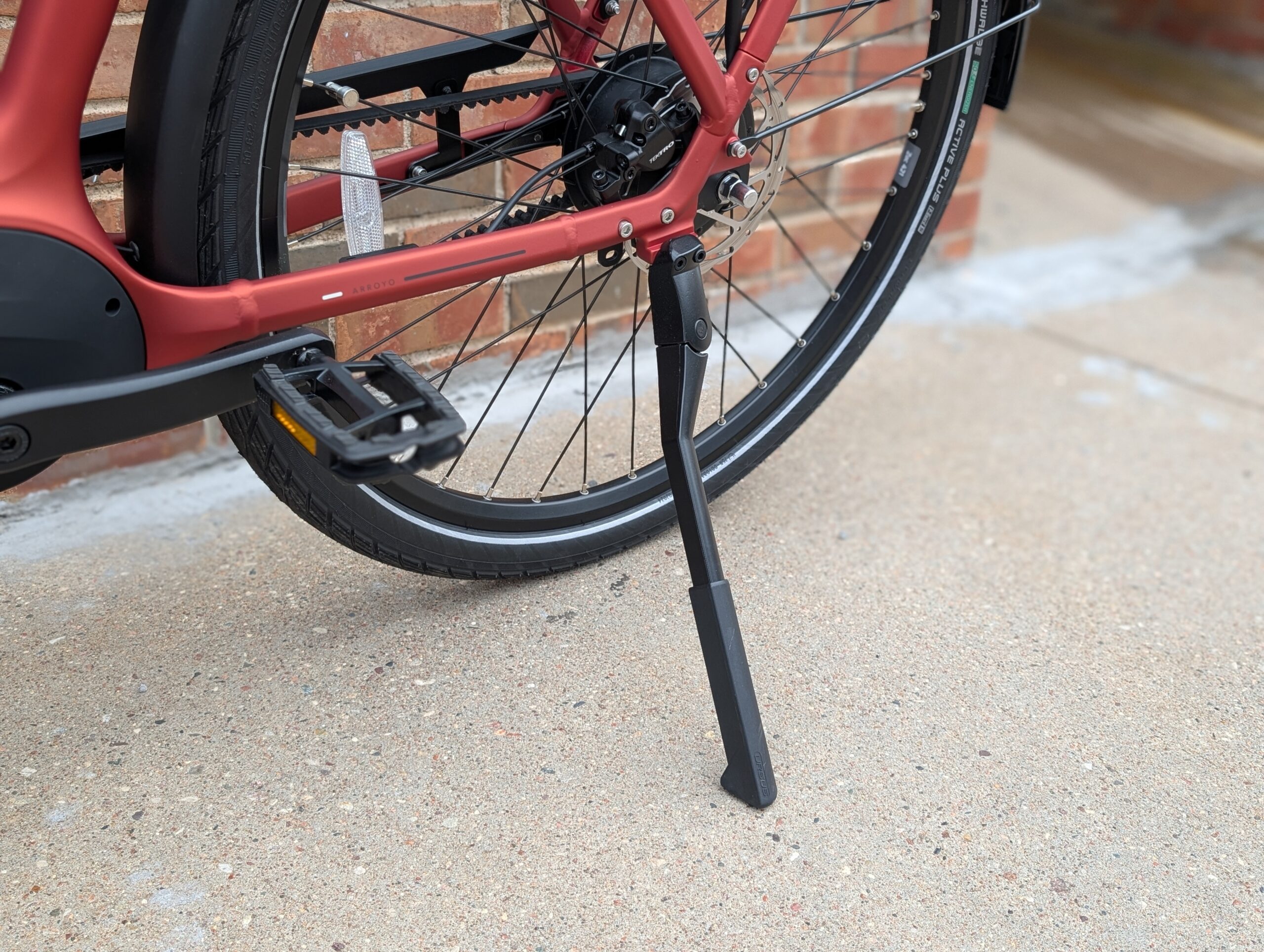
Everything you need is bolted on already. Full-coverage plastic fenders front and rear, integrated lighting wired to the main battery, and a MIK HD rear rack rated to around 60 pounds. MIK stands for Mounting Is Key, and it means bags and baskets click on and off without straps or tools. If you already run MIK gear, this rack takes it directly. We stock MIK-compatible bags and baskets in our own store if you want to kit it out.
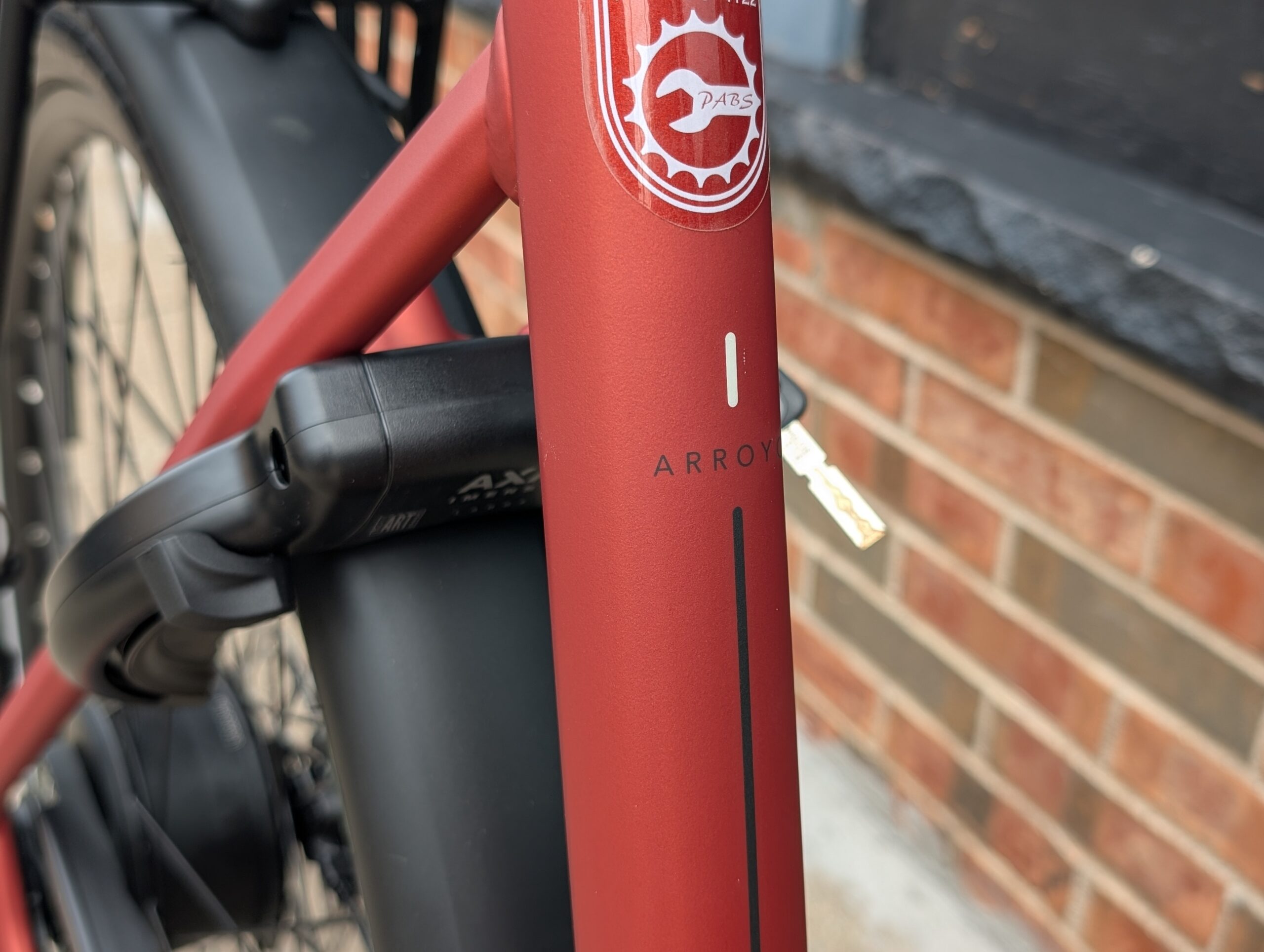
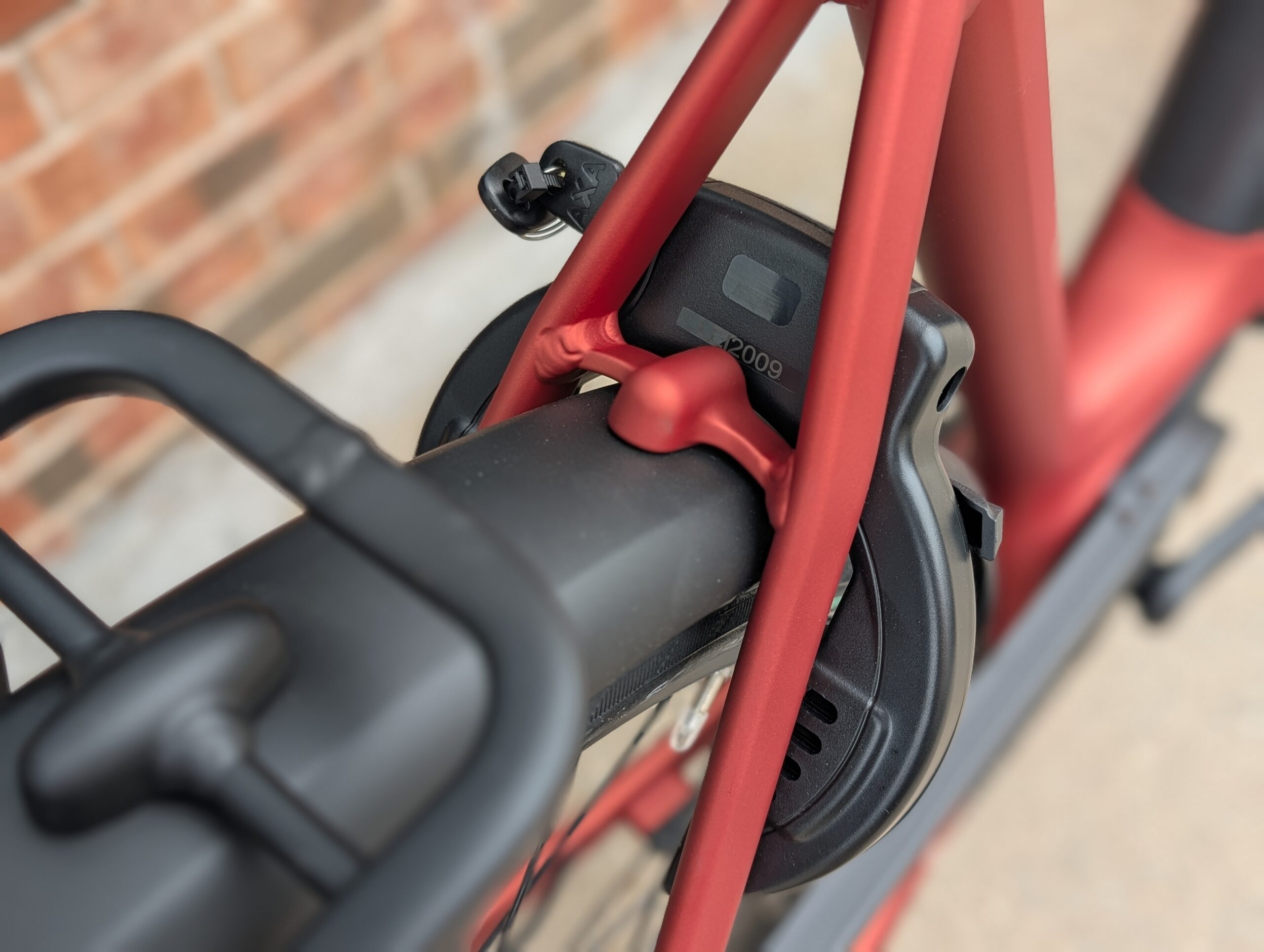
The headlight is built into the front fender with a light sensor on top that drives the automatic display brightness. Mounted under the rack, the taillight runs steady. It does not brighten when you grab the levers, so there is no brake light function, and no turn signals either. The cafe lock is the nicest surprise. It is built into the rear triangle, immobilizes the back wheel, and runs off the same key as the battery, so there are no extra keys to keep track of. Turn the key, push the lever down until it clicks, and the key comes out. Unlock it and the key locks itself in place until the bike is secured again, which makes losing it difficult. It will not stop anyone carrying the bike away, so pair it with the optional plug-in cable to lock it to something fixed for longer stops.
Brakes, Wheels and Tires
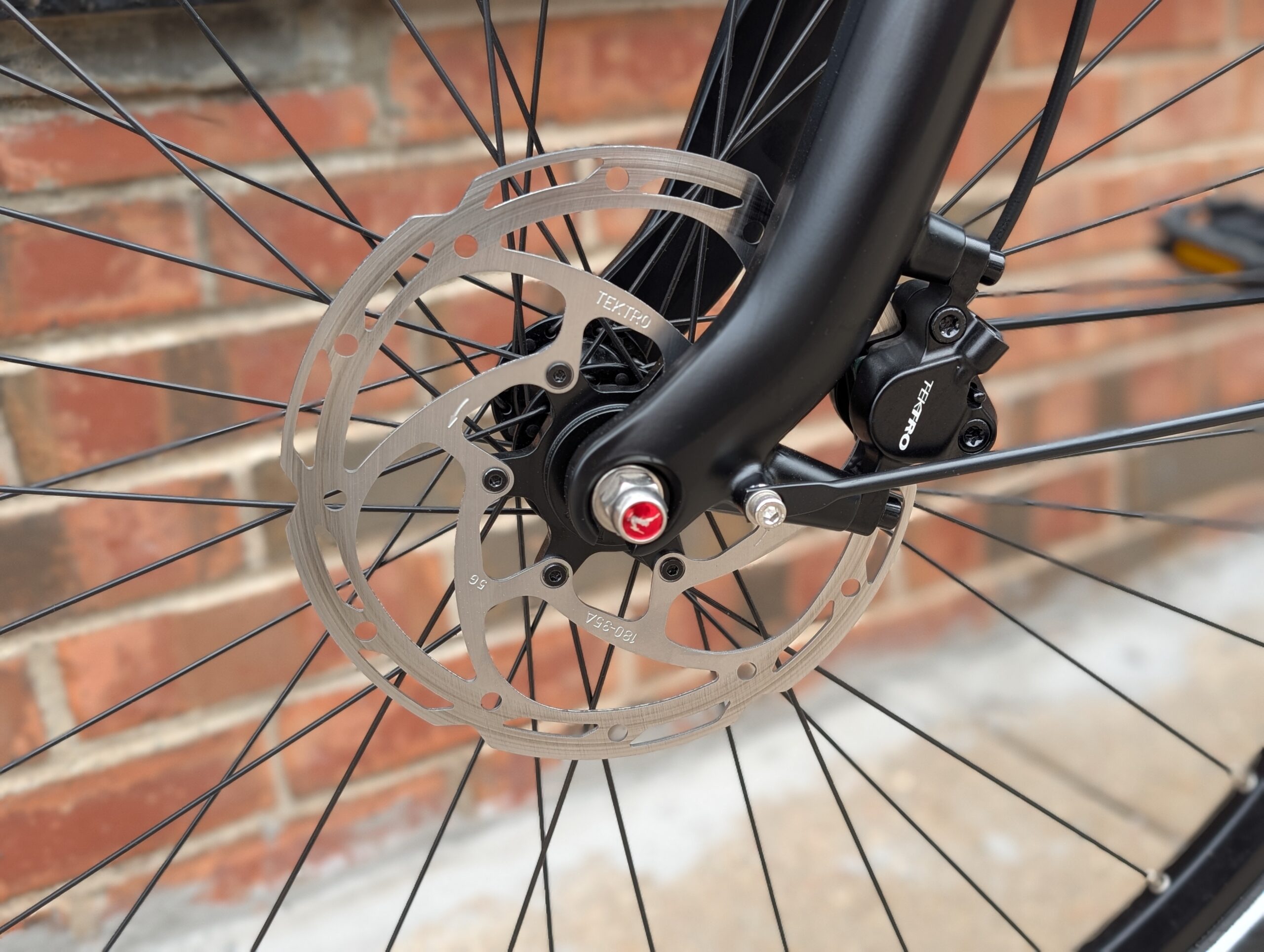
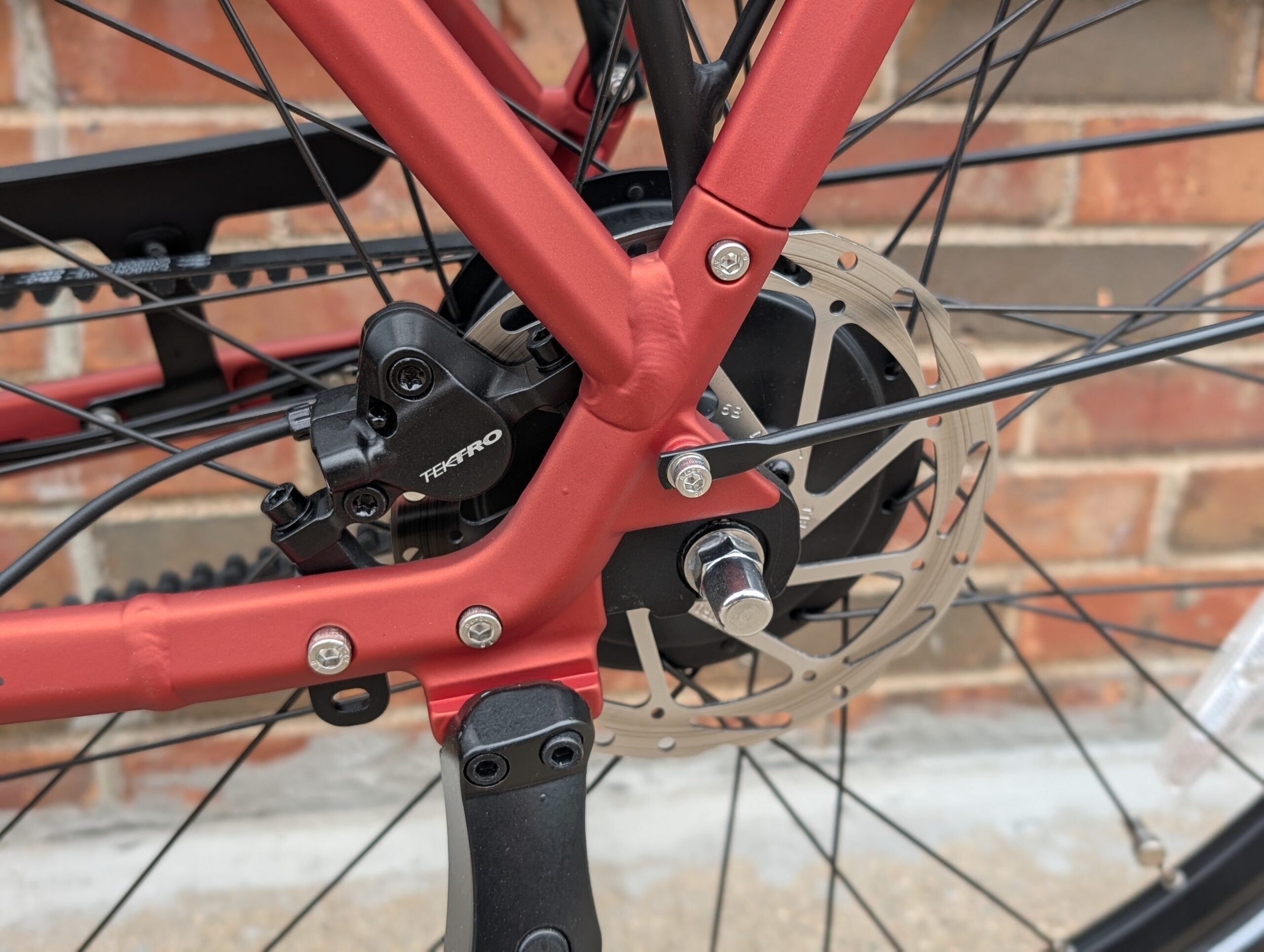
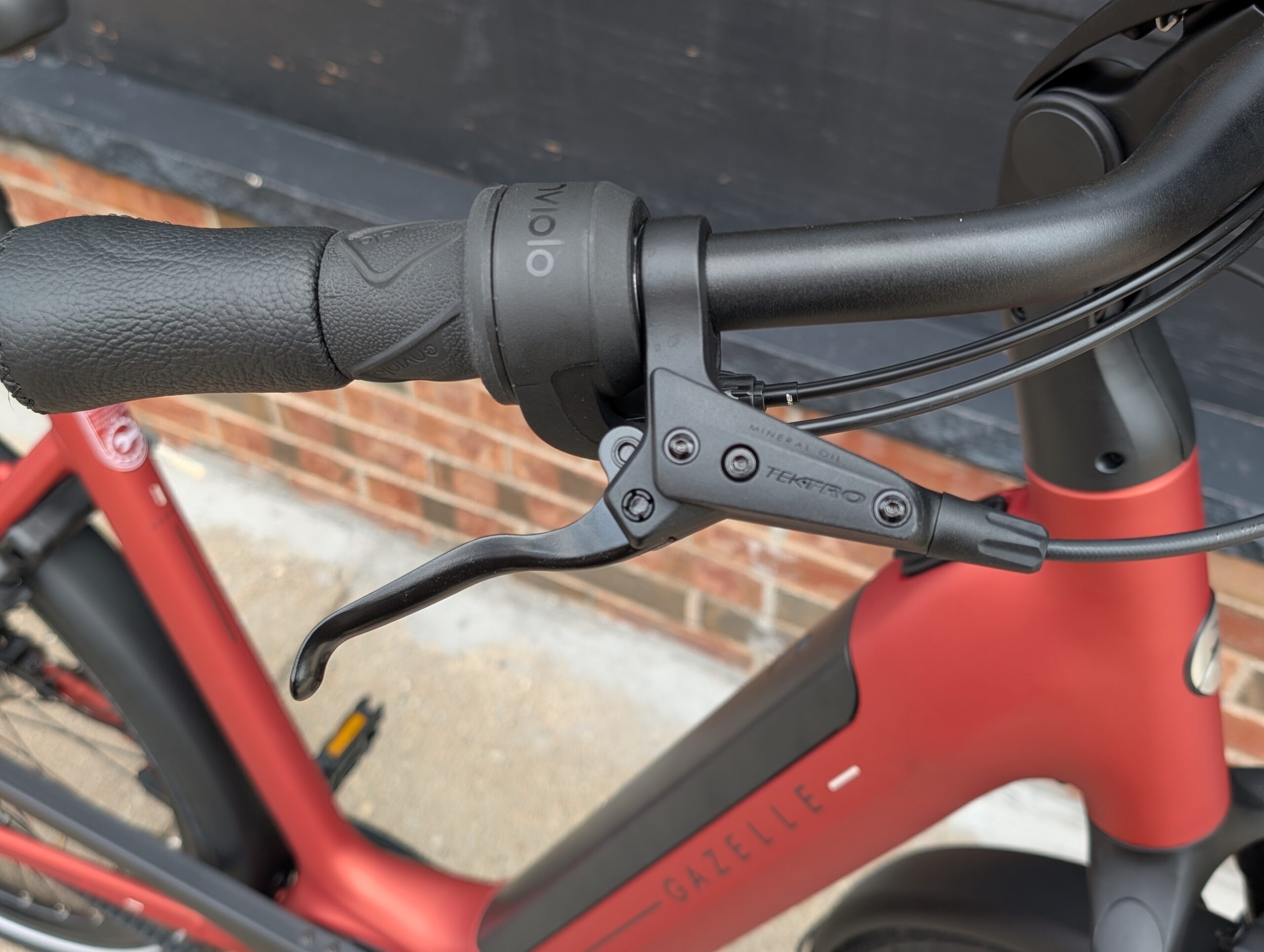
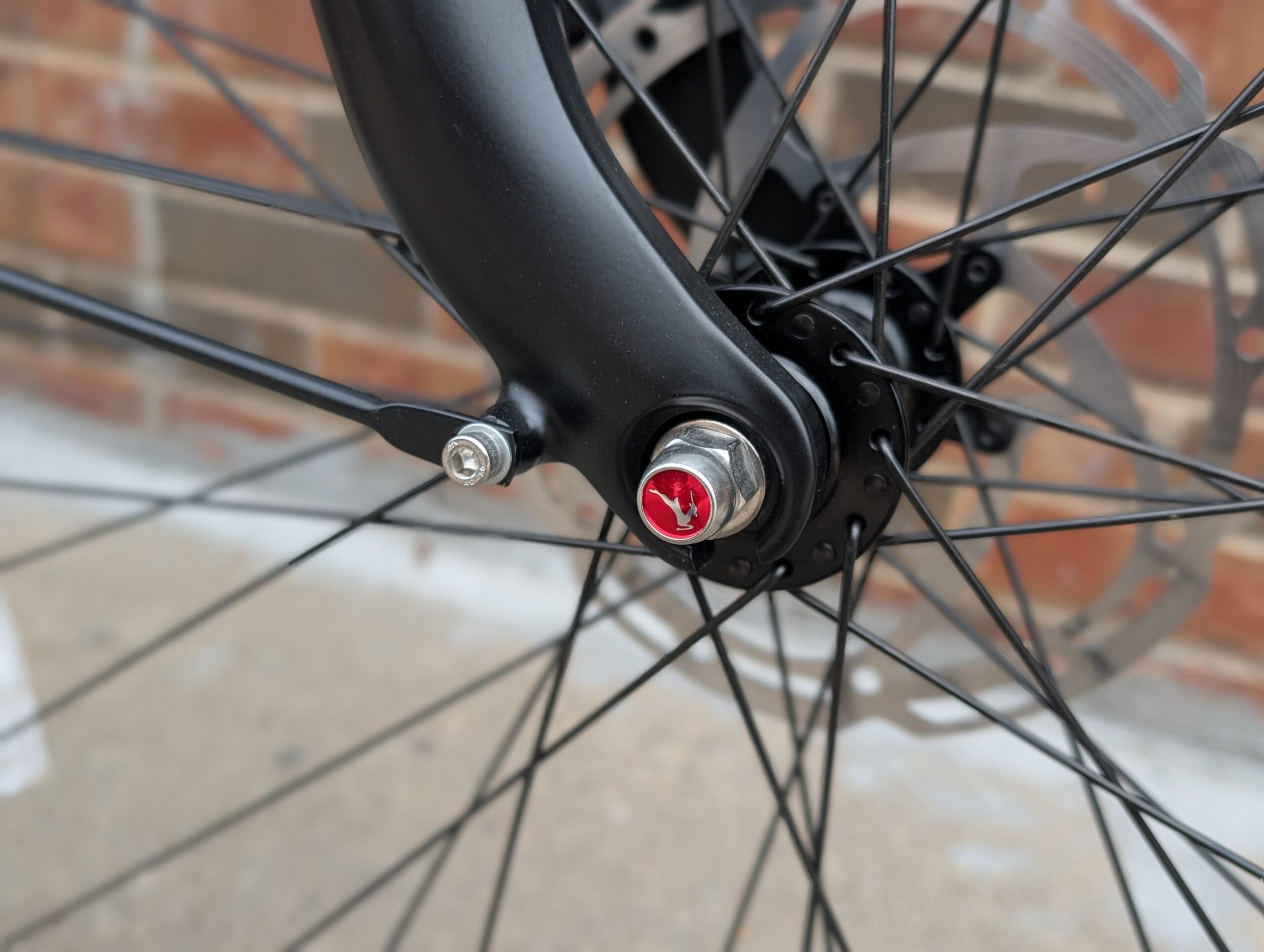
Stopping is handled by two-piston Tektro hydraulic disc brakes, 180 mm up front and 160 mm at the rear. Coming down off the test hill at speed we could lock up the front wheel without much effort. Predictable, plenty of power, no surprises. The 28 x 2.0 inch Schwalbe Energizer Active Plus tires roll fast and add a bit of cushion, and the front wheel bolts on rather than using a quick release.
Frame, Fit and Sizing
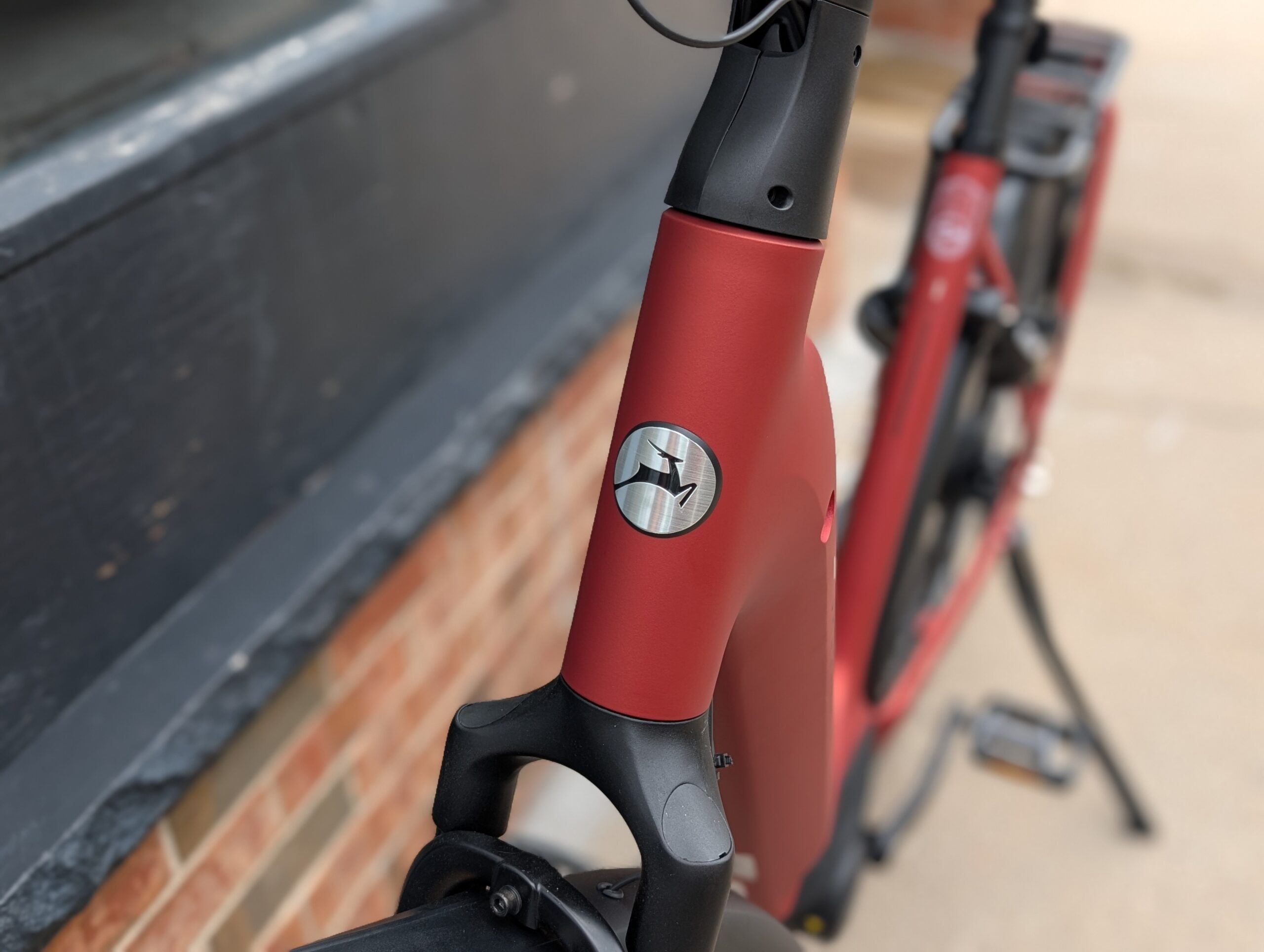
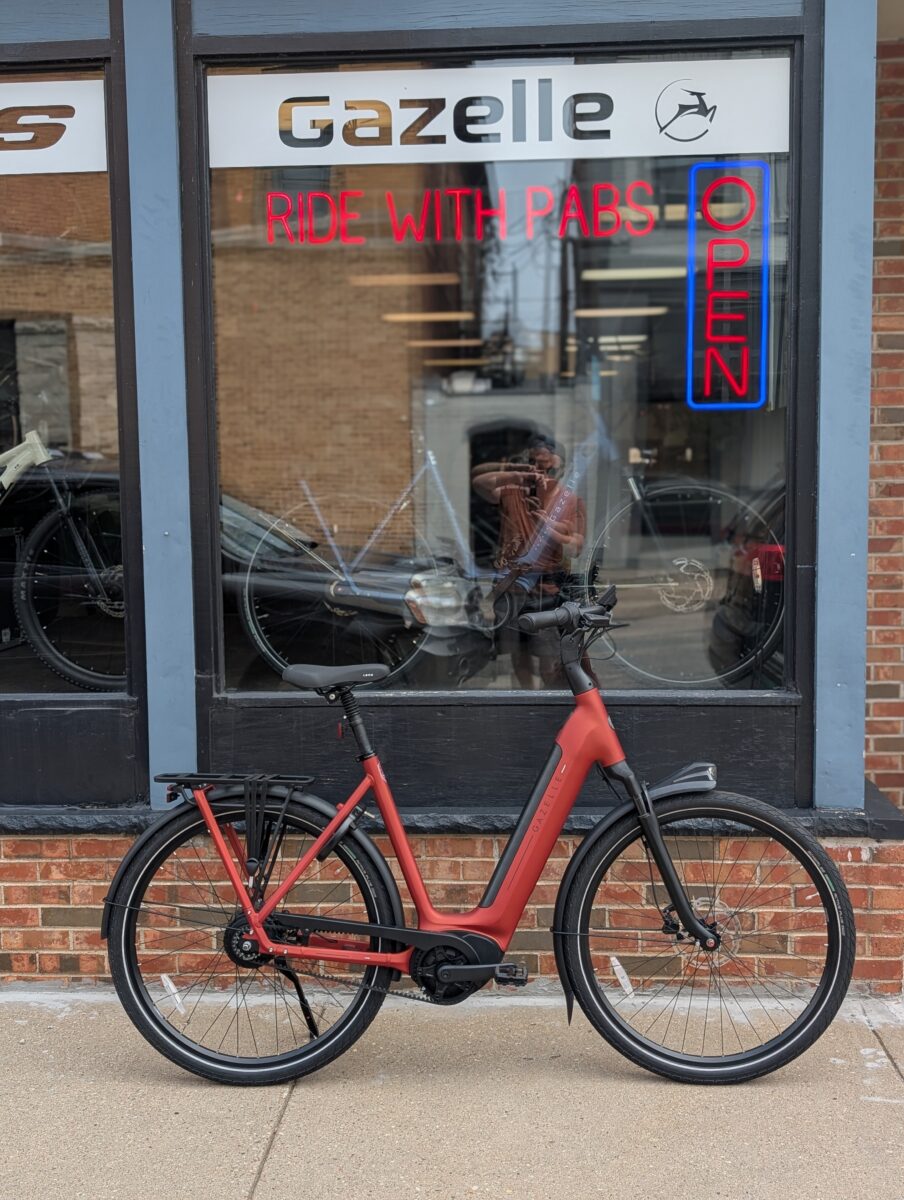
You get one frame style, a step-thru, in metallic orange with a matte finish or caramel khaki in gloss. The step-thru is not a compromise here, it is the point. With a standover height just over 17 inches, hopping on is very easy. Where the bike shop model pays off is sizing. You get three frame sizes rather than the one-size-fits-most approach most direct-to-consumer brands take. The small fits riders down to 4’10” and the large goes up to 6’4”. Our 6’1” tester with a 33-inch inseam had full leg extension on the large and it fit properly.
Gazelle advertises 60.8 pounds without the battery. Our scale put it just under 69 pounds fully kitted with the battery in. That is heavy, and worth knowing if you have stairs or need to lift it onto a rack.
Real World Performance Testing
This is a Class 1 ebike. No throttle, pedal assist only, and the motor stops helping at 20 mph.
Flat Ground Through the Assist Levels
In Eco the assist is subtle but present, and gentle pedaling holds 10 to 11 mph comfortably. Push a little harder and moderate effort brings you to around 15 mph. Tour gives a clear step up, sitting around 13 mph without trying and climbing to 17.5 mph with real effort, then 19 mph if you commit. Because the motor reads how hard you are actually pushing, the bike gives back roughly what you put in. Turbo we had already cranked to maximum power, torque and acceleration in the app. It pulls hard to the 19 to 20 mph ceiling, and holding that speed in the tallest gearing put our cadence somewhere between 90 and 100 rpm. There is no Class 3 override, so 20 mph is the ceiling regardless. Auto is the interesting one. It adapts as you go, and in practice it landed somewhere between Eco and Tour for effort while still getting to top speed when asked. We ended up leaving it there for most of the ride, which is not something we usually say about adaptive modes.
Hill Climb
We ran our test hill starting in Eco and worked up. In Eco the display showed roughly 240 to 300 watts of support, enough that we would have made it to the top albeit slowly, with a real burn in the legs by the end. Tour brought an immediate burst and dropped the draw to around 150 watts for the same progress. Auto took over and settled near 8 mph, picking up as soon as we pushed harder. Turbo delivered the most power of the four, making the rest of the hill light work.
Final Thoughts
This is a comfortable, elegant commuter that asks almost nothing of you between rides, and it delivers on exactly that. The Bosch drive is quiet and natural, the belt and stepless hub remove basically all drivetrain upkeep, and it arrives with the lighting, rack, fenders and lock already sorted. It is not the bike to buy if you want speed or spec-sheet value. There is no throttle, no Class 3 mode, no brake light, and $4,499 buys an enormous amount of ebike elsewhere. Where it makes sense is if low-maintenance commuting and comfort are truly your priorities, and if the bike shop relationship matters to you. Being fitted properly across three sizes, having it built and torqued by a technician, and having somewhere to take it when something needs attention are all levels of support that most direct-to-consumer brands cannot offer.
We have no affiliate relationship with Gazelle. If you want to check current pricing or find a dealer, head to the Arroyo C380 Elite product page. If you are kitting out the MIK rack, our MIK bags and baskets are in our own store.
