

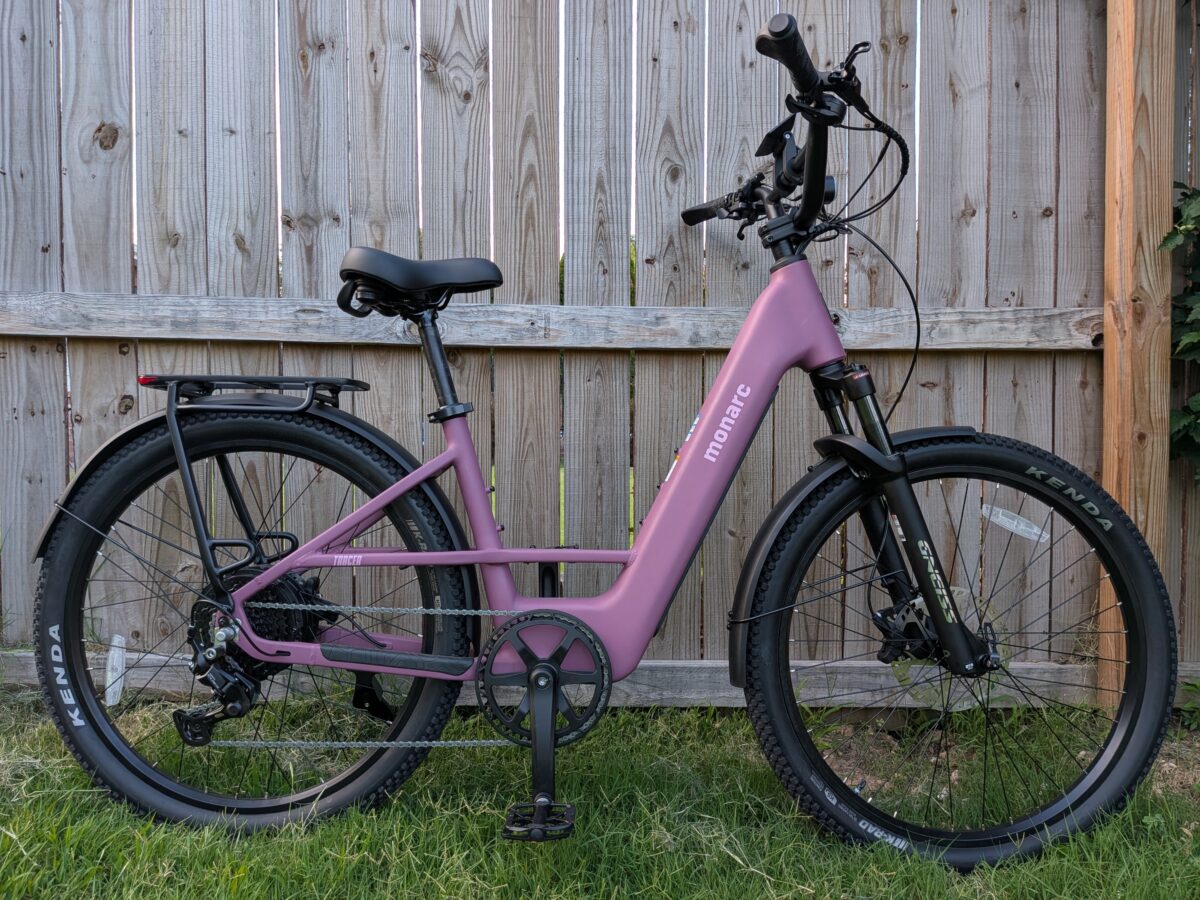
You feel range anxiety on a commuter before you feel anything else, the quiet arithmetic of whether the charge left will get you home running under every ride. Monarc takes that worry off the table by putting two batteries in the box instead of one. Each pack is advertised at up to 65 miles for a total claimed maximum range of 130. Look past that extra battery, though, and on paper the Monarc Tracer punches well above $1,899 on its own. Brand-name components, smart tech integration, and included commuter accessories position this as a top contender for one of the best-equipped commuter ebikes available.
To see if it lives up to the hype, we start with the features that set it apart, the available frame styles, and a detailed breakdown of the specs. Then we detail our real-world testing, covering throttle runs, hill climbing, and exactly what to expect from the pedal feel whether you choose the cadence or torque sensor. From there, dig into the ownership questions a new brand naturally raises, size it up against two benchmark commuters, and weigh the pros and cons. By the end of this article, you should know what you need to decide if the Monarc Tracer is the right fit for your next daily ride.
Support Our Work: If our review helps you decide on a model from Monarc, consider purchasing through our affiliate link. It is completely free to you and directly helps make hands-on testing and content like this possible. Thank you for your support!
Monarc Tracer Video Review
Our video review gives a close-up look at the Monarc Tracer’s components and walks through the touchscreen display and its menus in detail. We also show how the frame fits riders of different heights, from a 6-foot rider down to 5-foot-5. First-person riding footage puts you right behind the handlebars for our throttle, pedal-assist, and hill-climb testing, before we wrap up with third-person clips to show this commuter in action. The video provides a level of detail that is simply tough to fully capture on the page, so check it out if you want to see all the ins and outs of Monarc’s new commuter.
Standout Features of the Monarc Tracer
High-Peak-Power Bafang Hub Motor
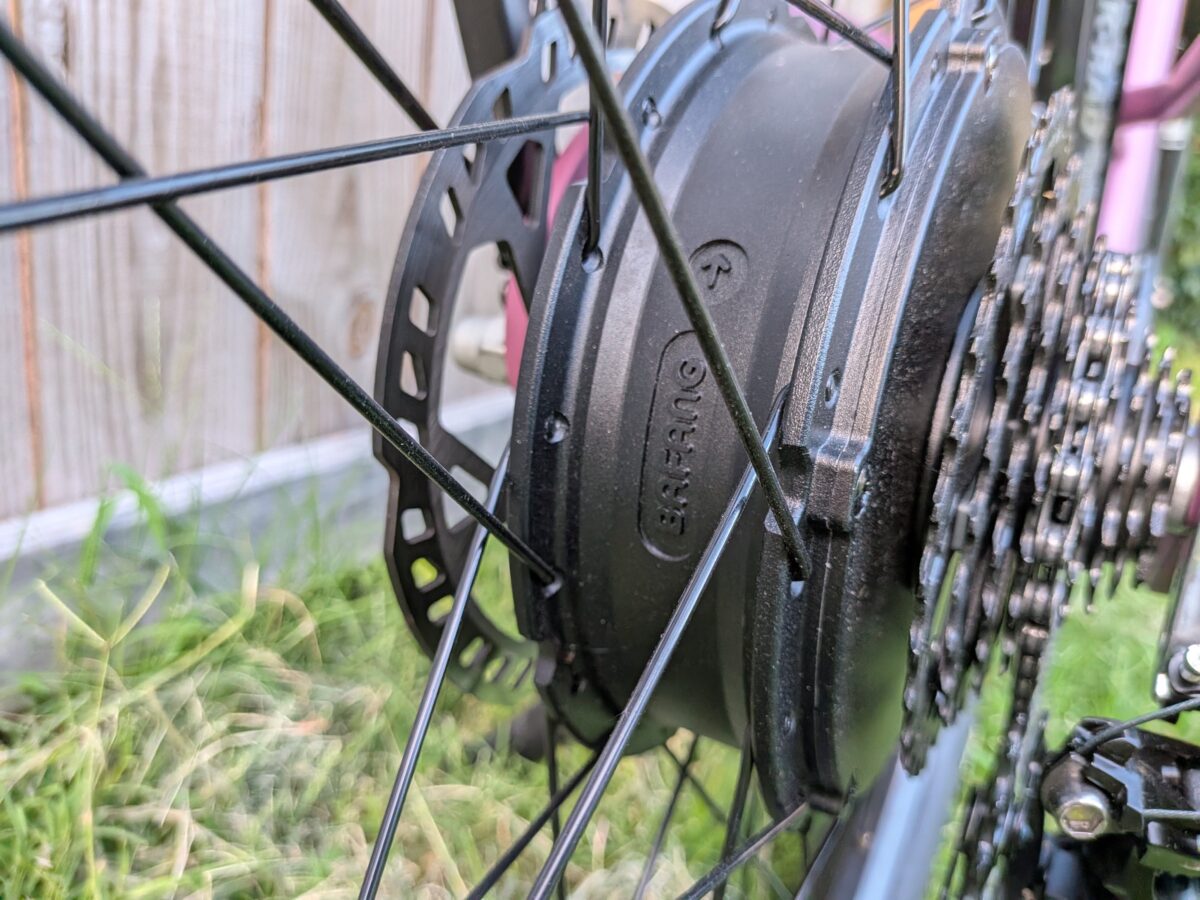
When you engage the throttle in Boost mode, the power delivery from the Bafang B750 hub motor is immediate. It carries a 750W nominal rating and peaks at an impressive 1,638W, providing a substantial amount of capability for a commuter build. A big reason behind that performance is the 30A internal controller, which delivers plenty of current to the motor when you need to pull up steep hills or accelerate quickly. Yet it operates noticeably quieter than expected for a motor putting out this much wattage. While that maximum output in Boost could feel a bit intense for a beginner, know that the throttle and each level of pedal assist are customizable. Tame the power or crank it up to dial in the ride that matches your comfort level.
Two LG-Cell Batteries and a Fast Charger
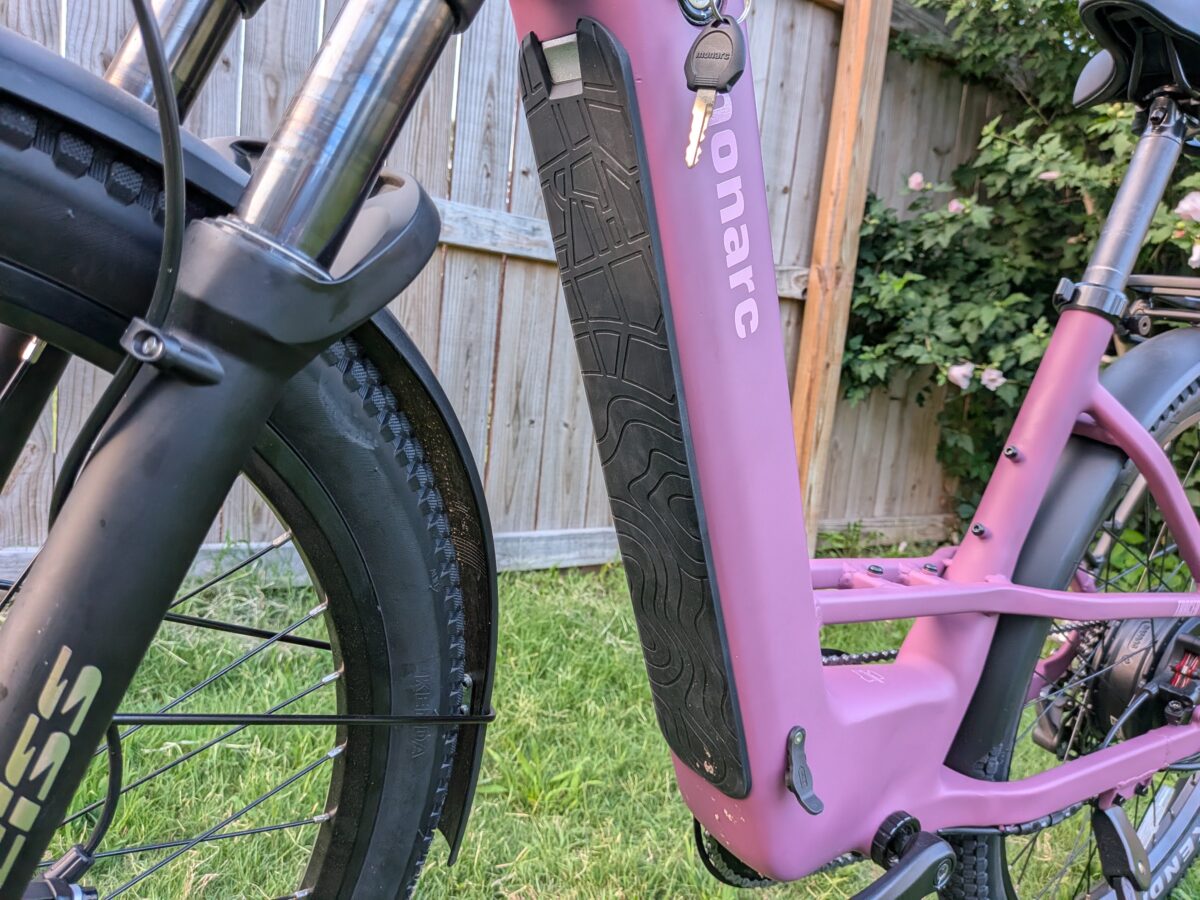
Lift one pack out, drop the other in, and you are back to a full charge without waiting on a wall outlet. That is the everyday payoff of two batteries in the box, each a 48V 15Ah pack built on LG cells for 30Ah of total capacity. Only one feeds the motor at a time, so this is a single-battery ebike that ships with a spare rather than a dual-battery setup, a distinction worth keeping straight. Keep one topped off at home and swap it in, or carry the second for a big day, and the included 5A fast charger refills an empty pack in about 3 hours, letting you charge both batteries faster than the single battery and standard 2A charger most companies use.
Component Spec Above the Price
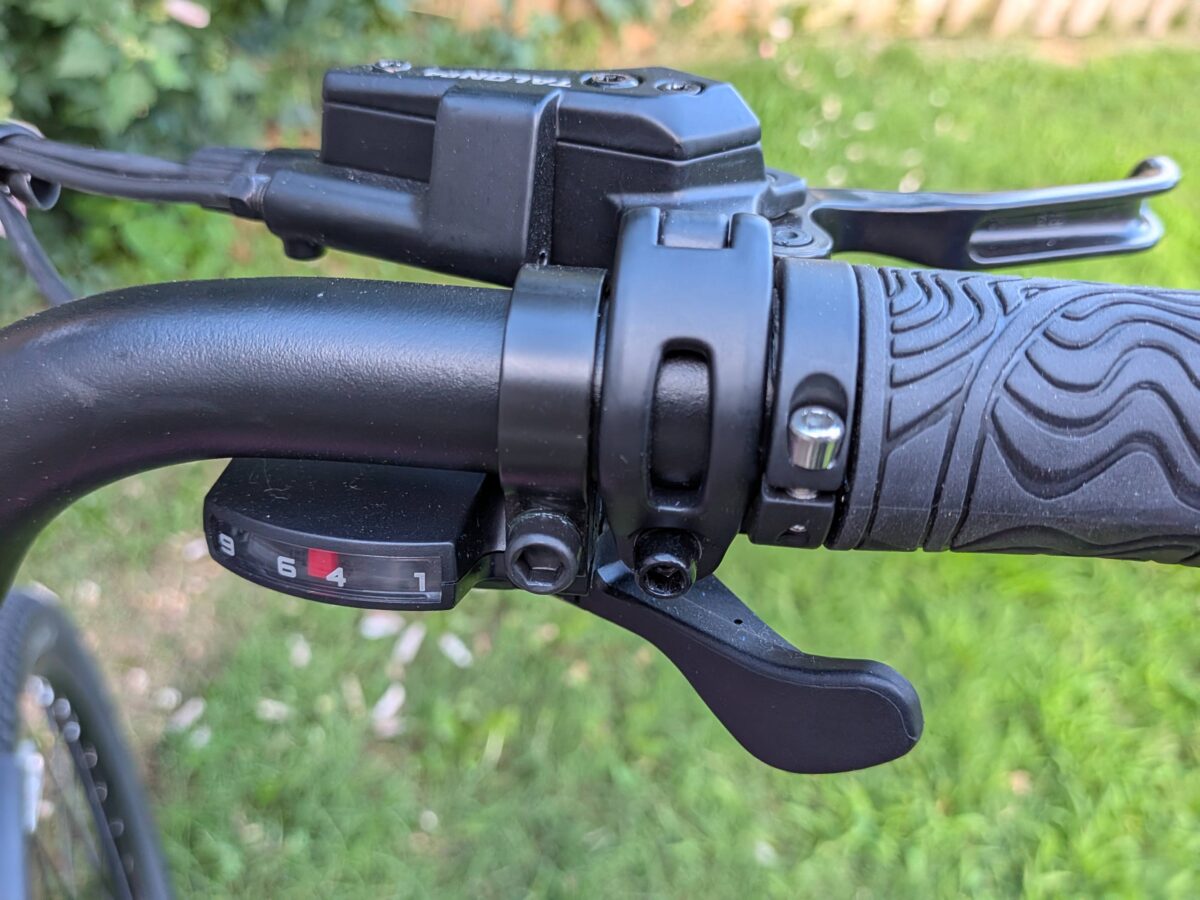
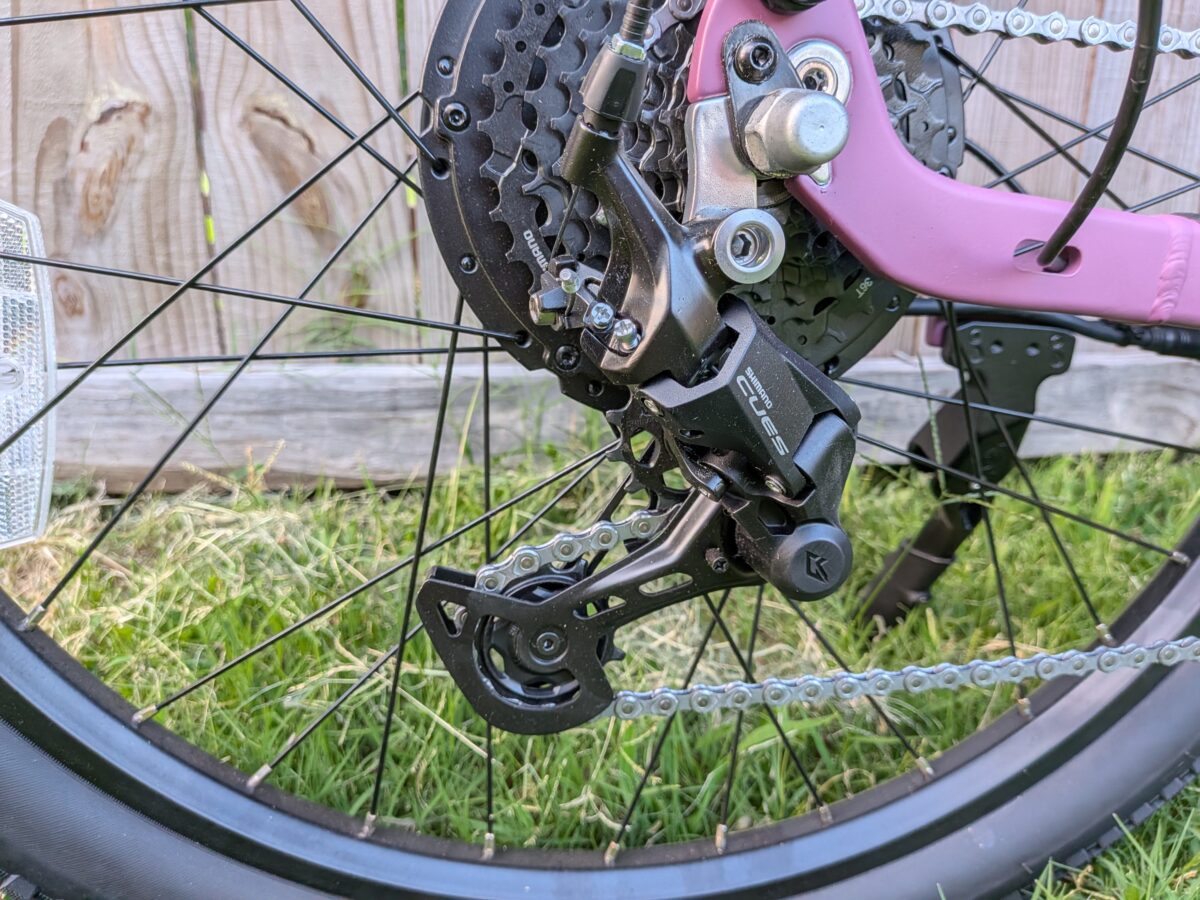
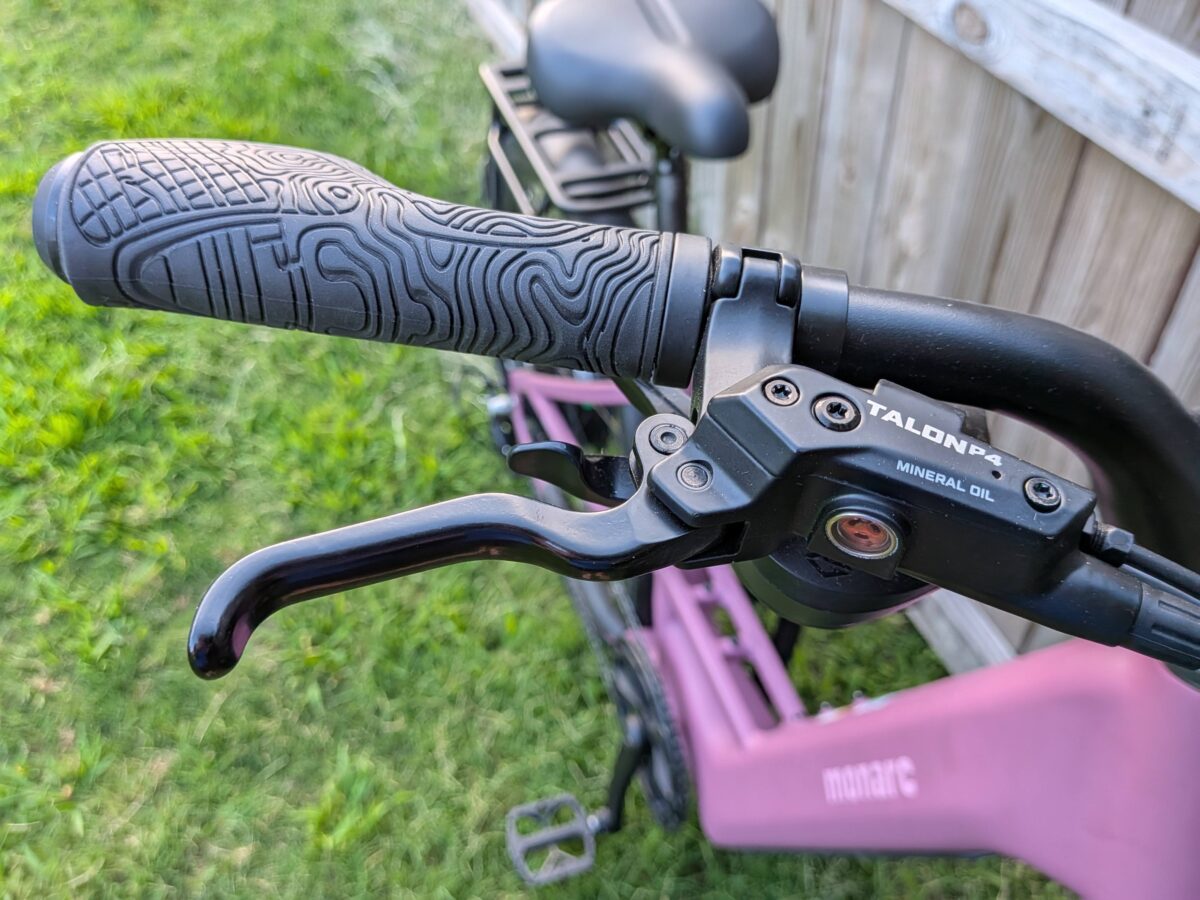
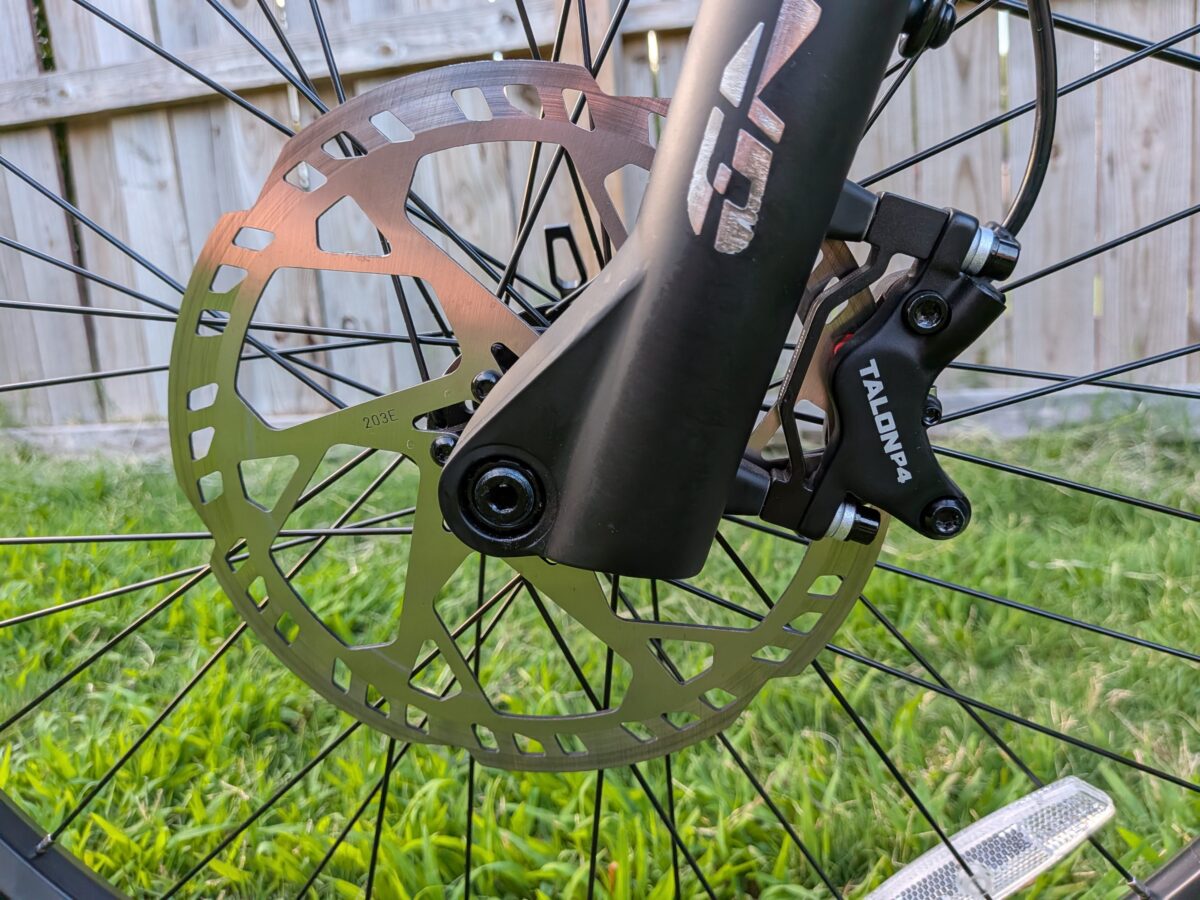
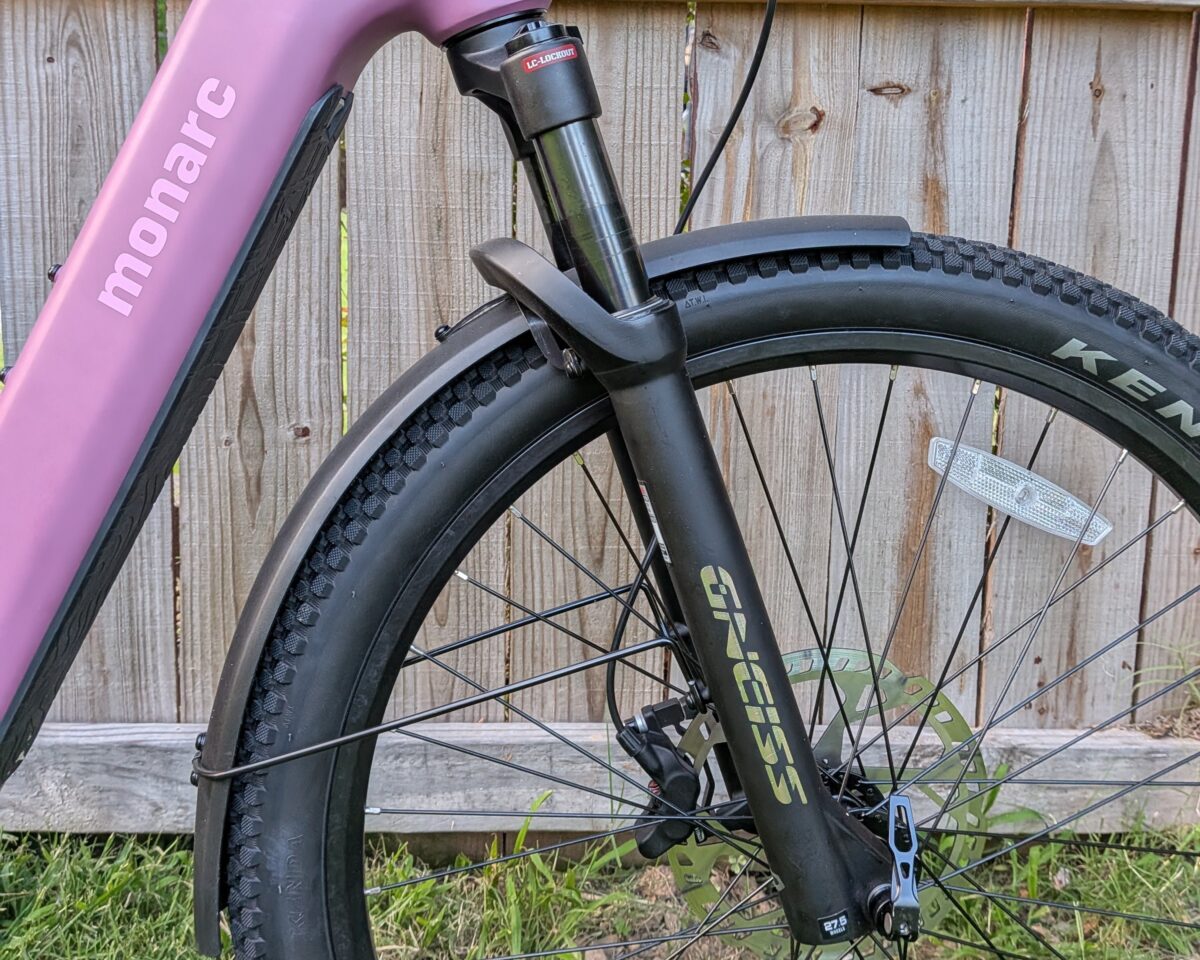
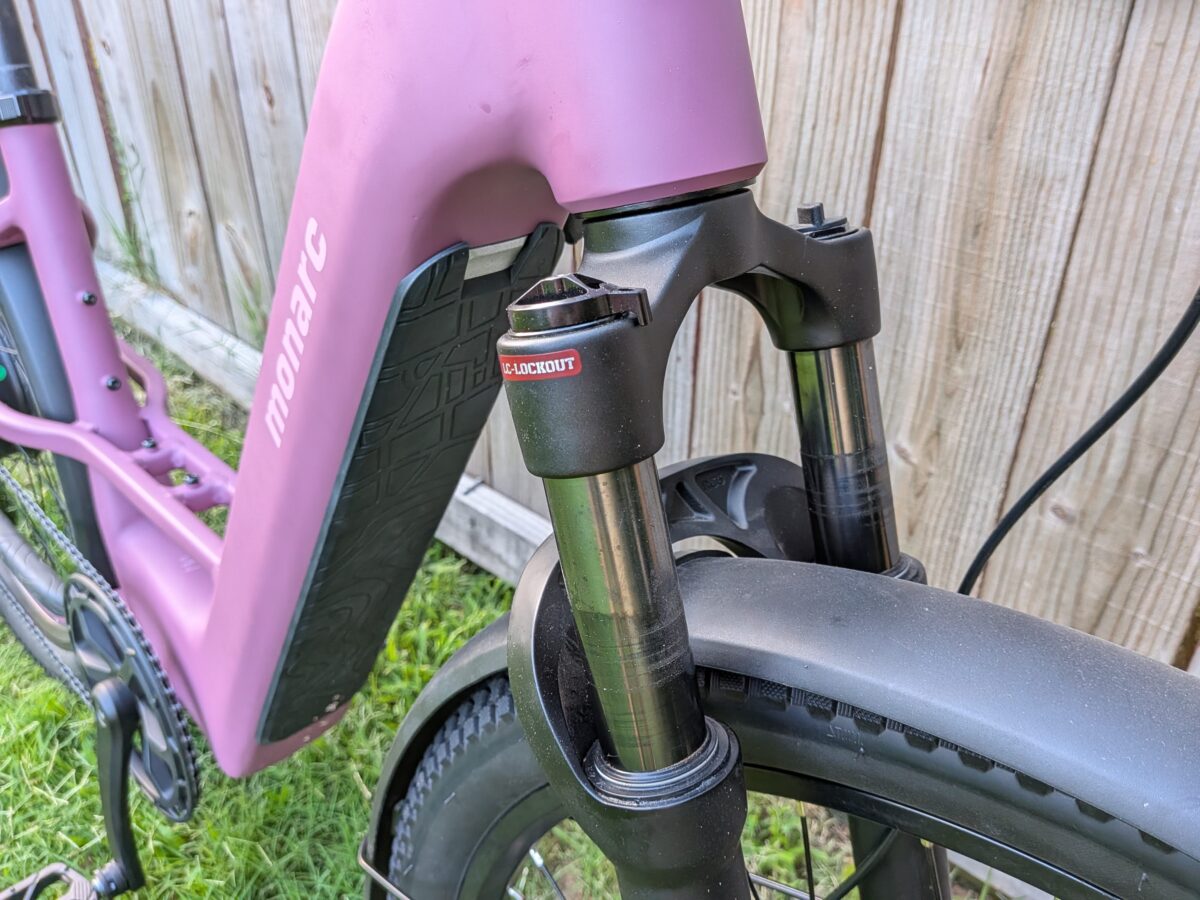
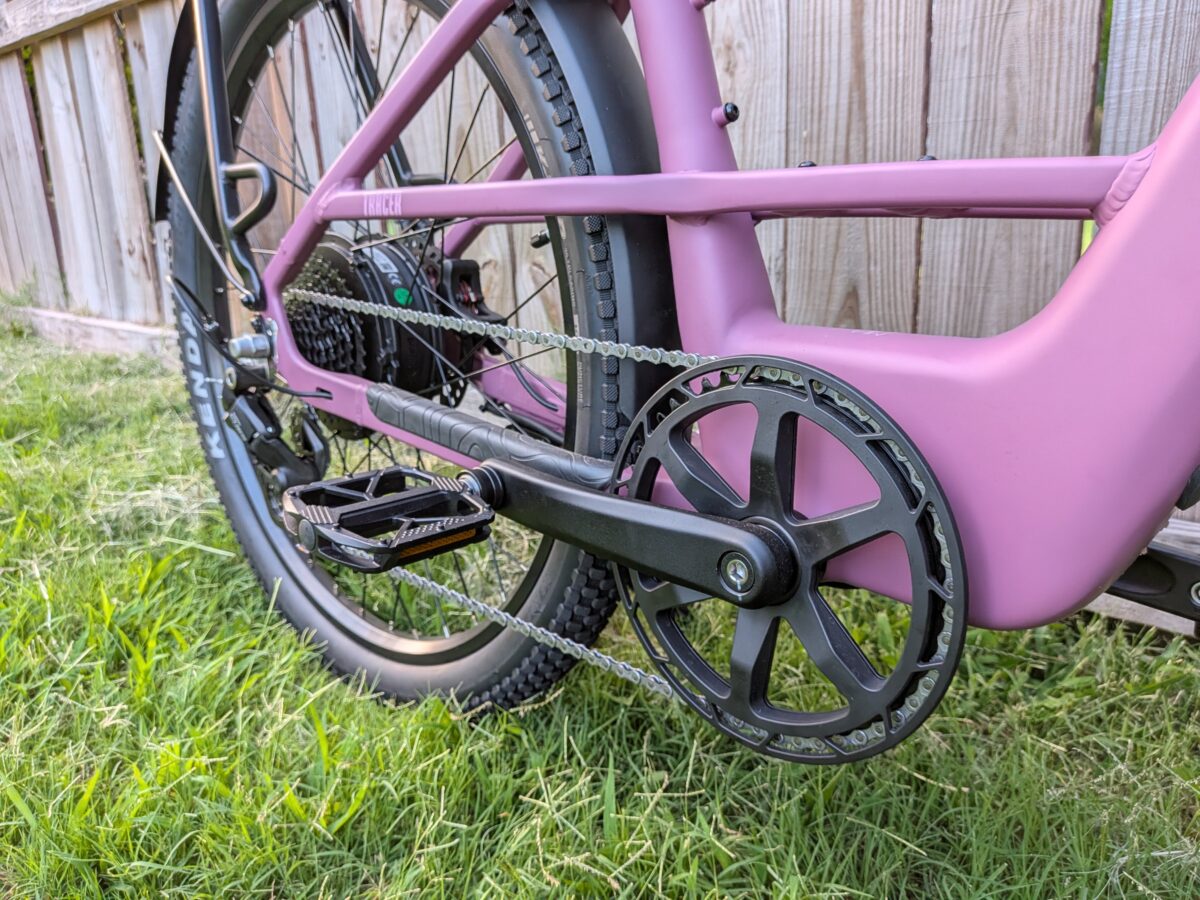
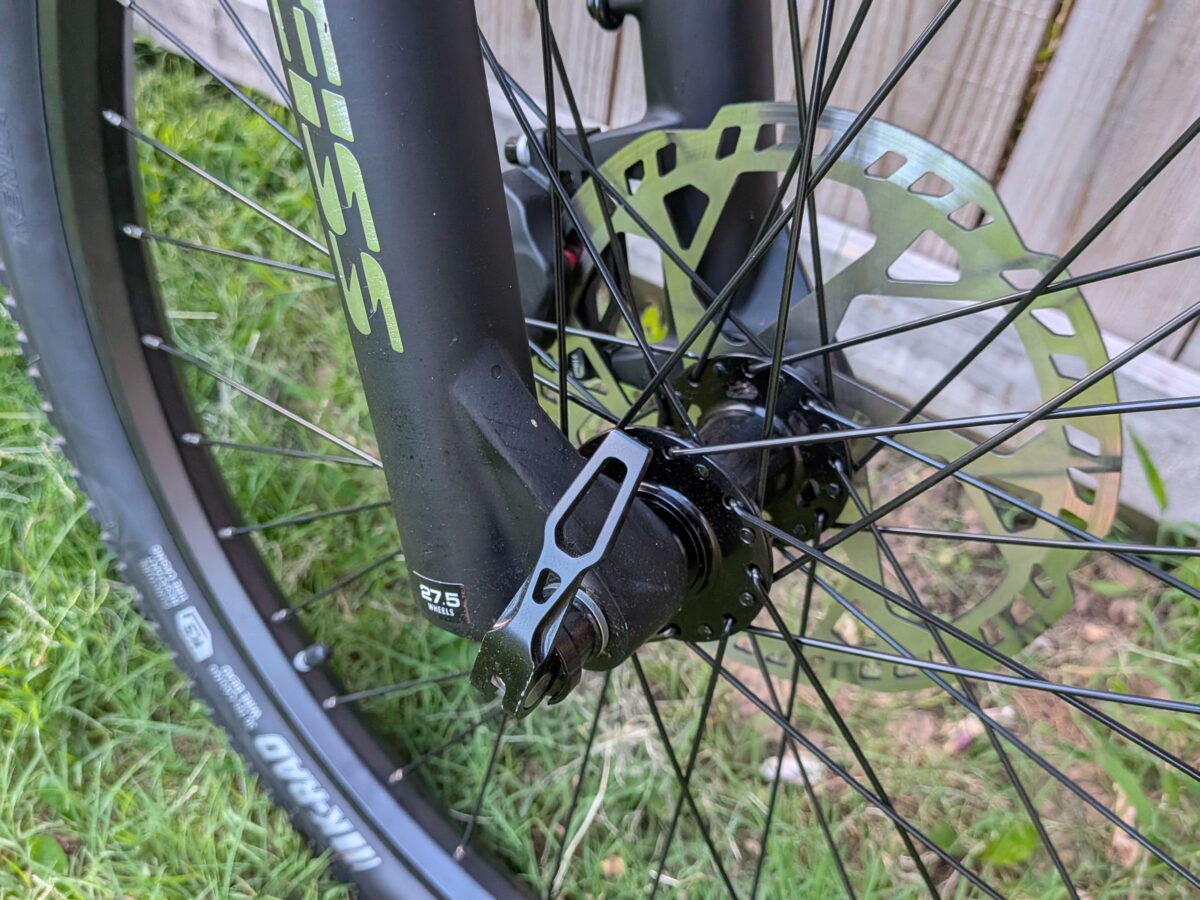
Run down the parts list and the price starts to look like a typo. The drivetrain is a Shimano Cues 9-speed, a real step up from the lower speed setups that usually land at this money, with gearing that keeps your legs at a comfortable cadence whether you are crawling or flying. Stopping comes from Star Union Talon P4 4-piston hydraulic discs, a 203mm rotor up front and 180mm out back, which is more brake than most commuters bother with. Up front, Monarc’s in-house developed Gneiss fork provides 80mm of travel with both preload and lockout adjustments. They say the reverse-arch design allows the fork to be lighter, stiffer, and stronger than traditional suspension forks.
Touchscreen Display and Smart Ecosystem
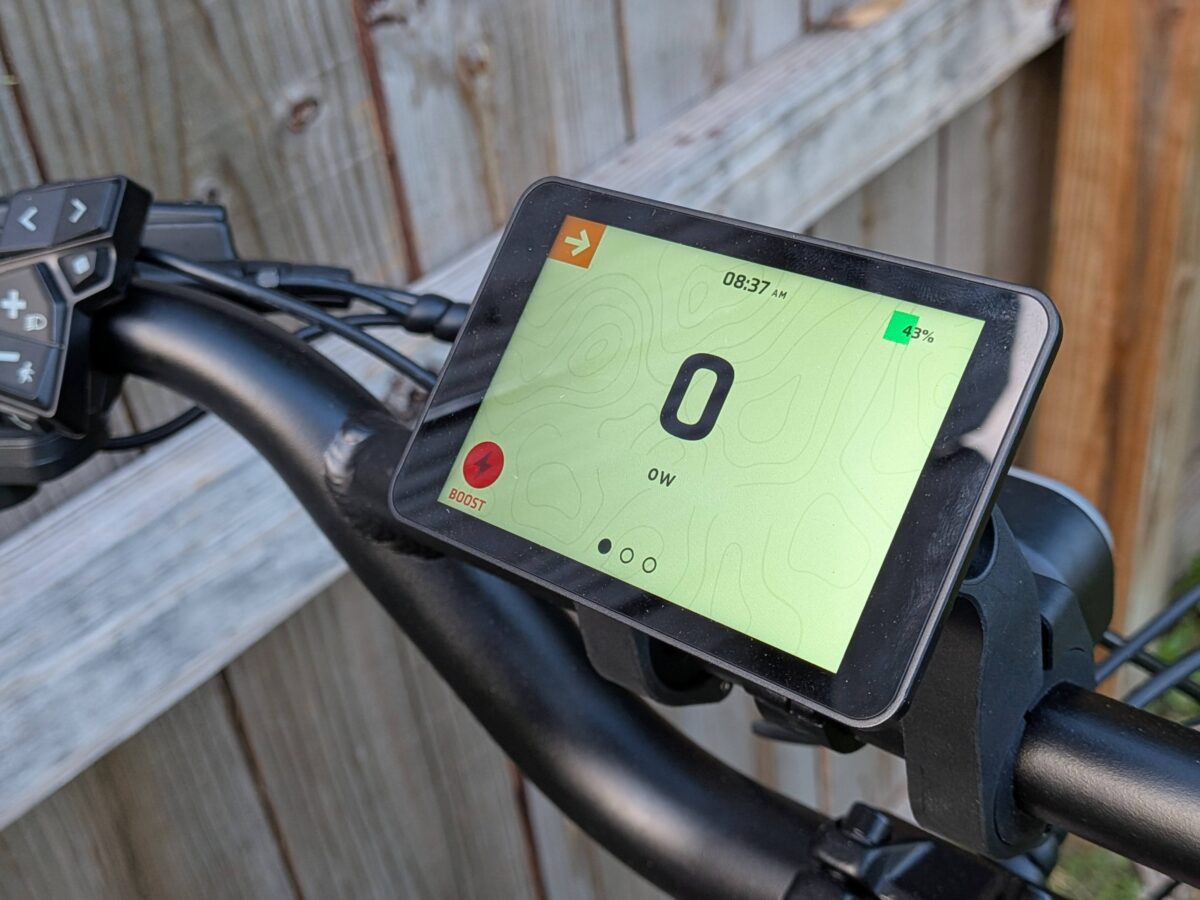
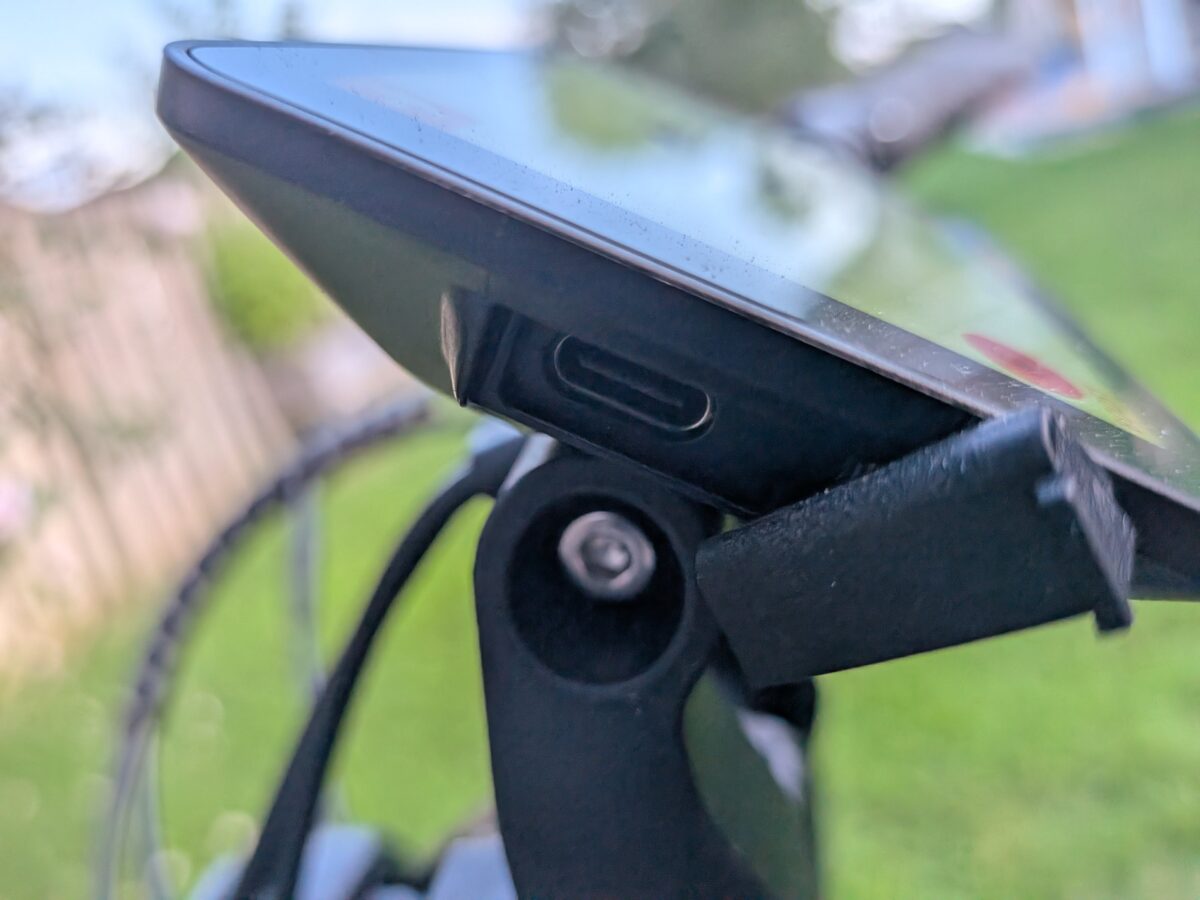
We came in skeptical of a touchscreen on a handlebar and came around faster than expected. Monarc’s custom 3.5-inch display is large and center-mounted, easy to read at a glance, and it locks out touch input while you are moving as a safety measure, so you steer the menus with the handlebar buttons on the fly. At a stop it opens up, and the customization runs deep, letting you tune torque and pedal response for every assist level, cap charging at 80% to spare the batteries over the long haul, and flip the home screen between light, dark, and topographic themes.
It is also the doorway to Monarc’s smart ecosystem. The hardware accessories, a rear traffic radar and a tire-pressure monitoring system (TPMS), sell separately at $89 each and connect via Bluetooth. Monarc is currently including its smart helmet as a launch special, which is a $229 value. The companion app is slated to launch by the end of summer 2026.
Lighting and Commuter Kit Out of the Box
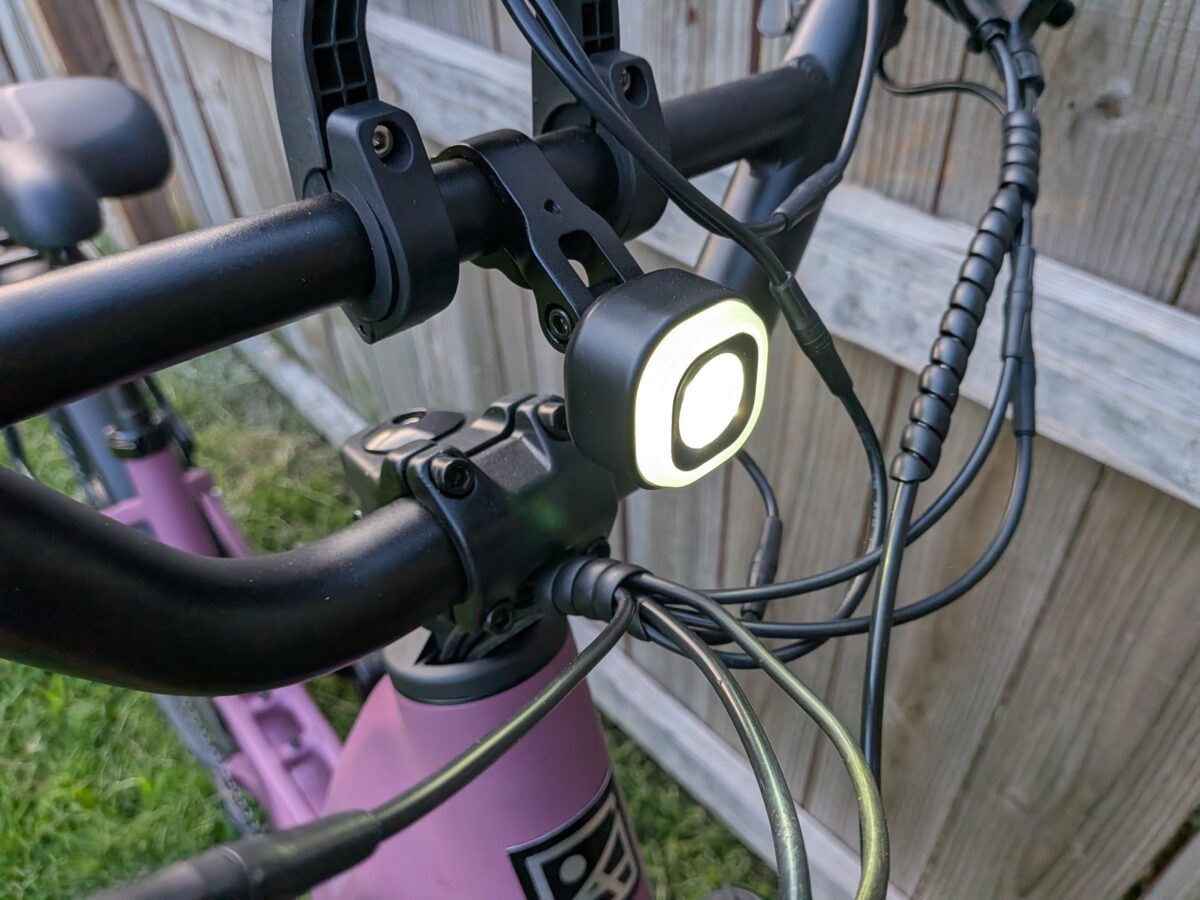
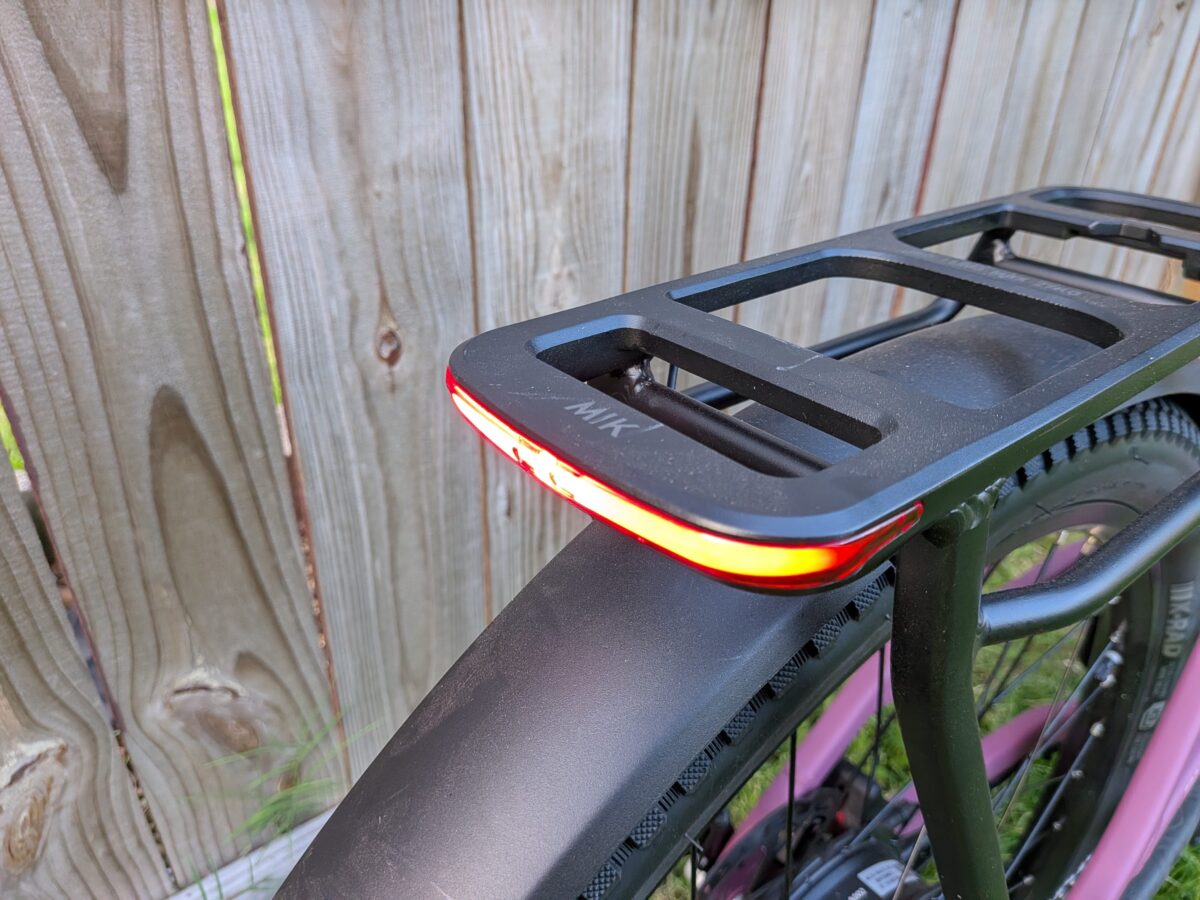
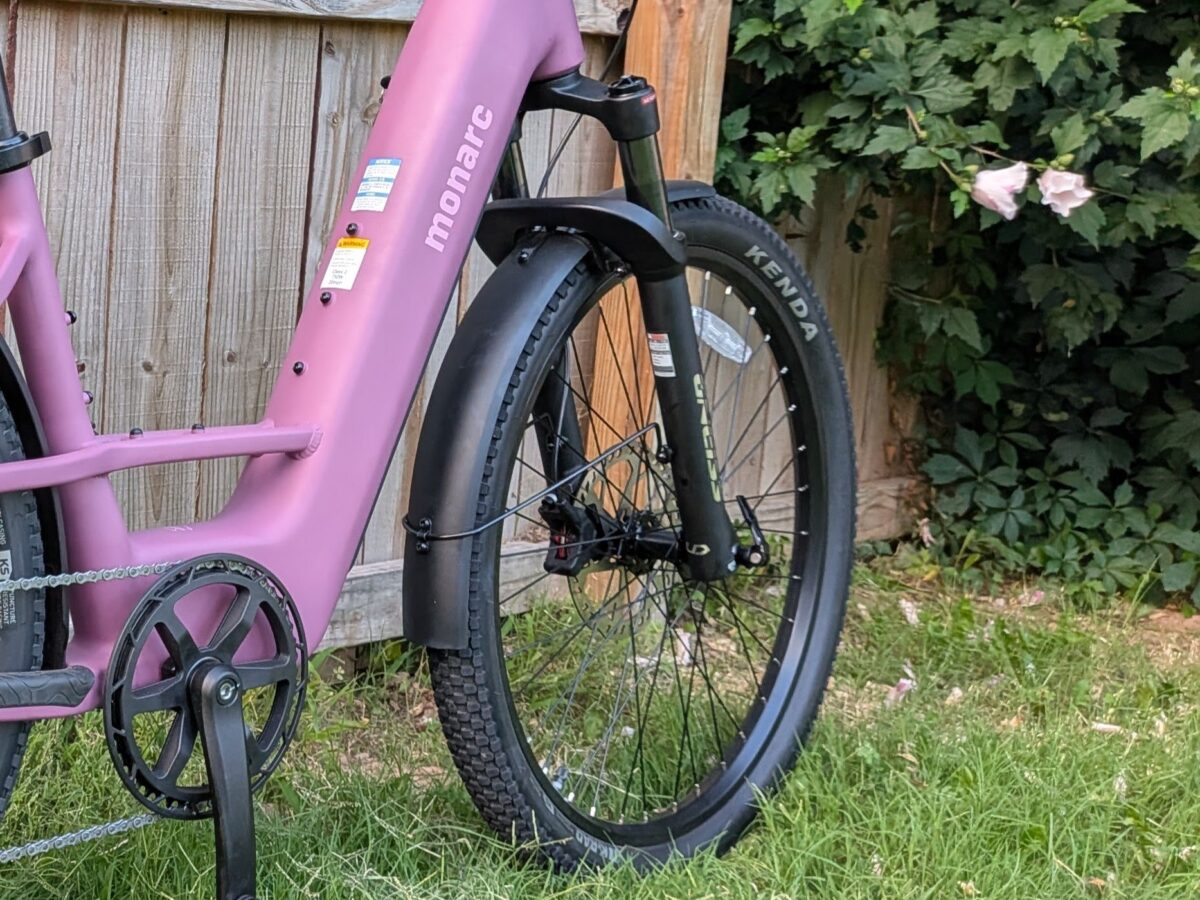
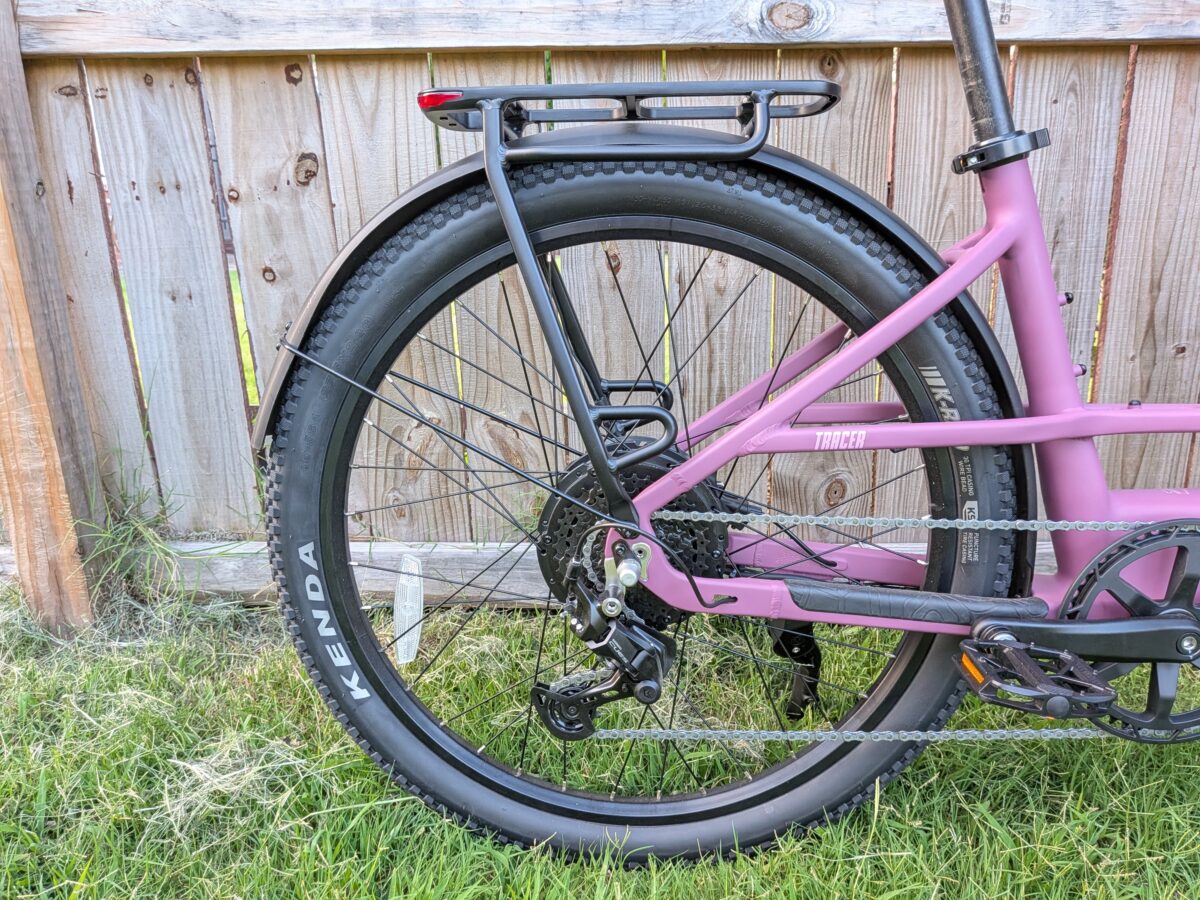
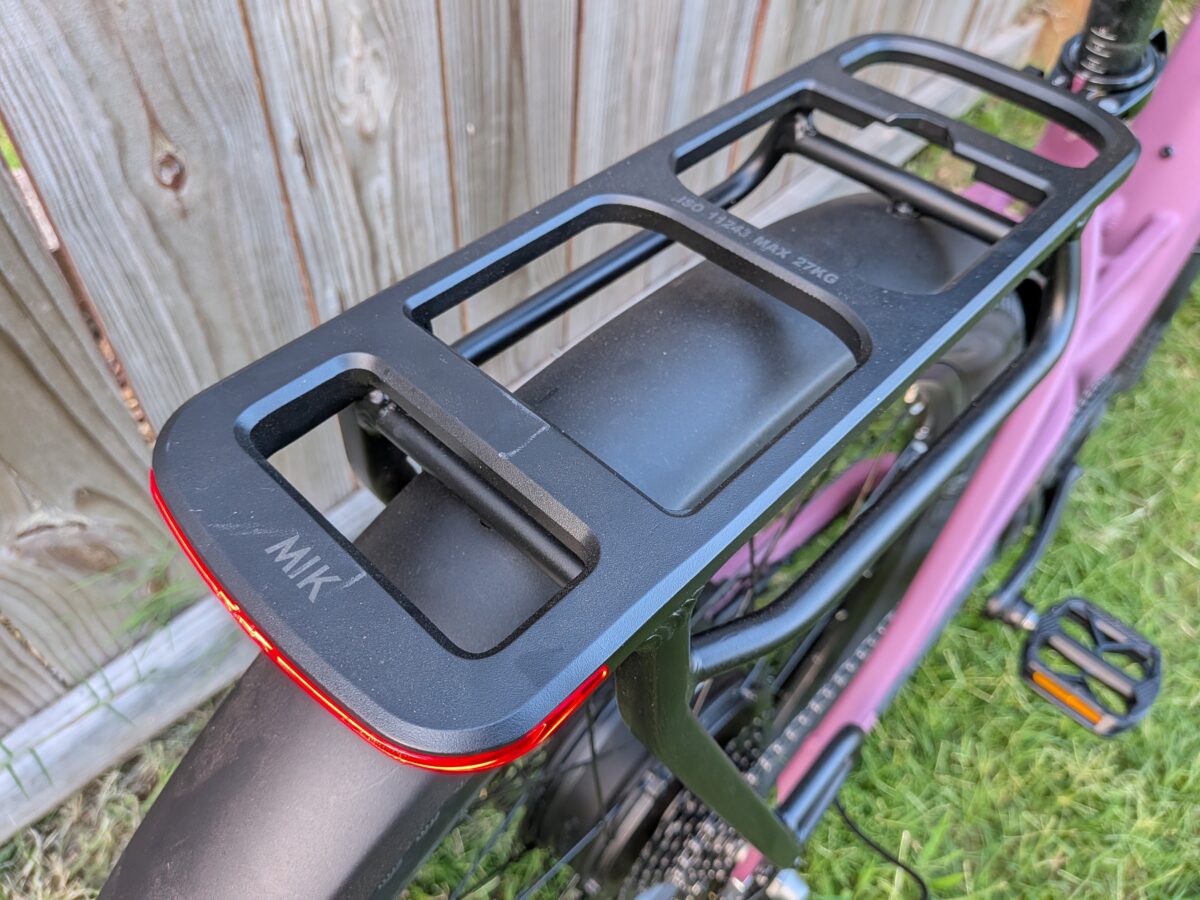
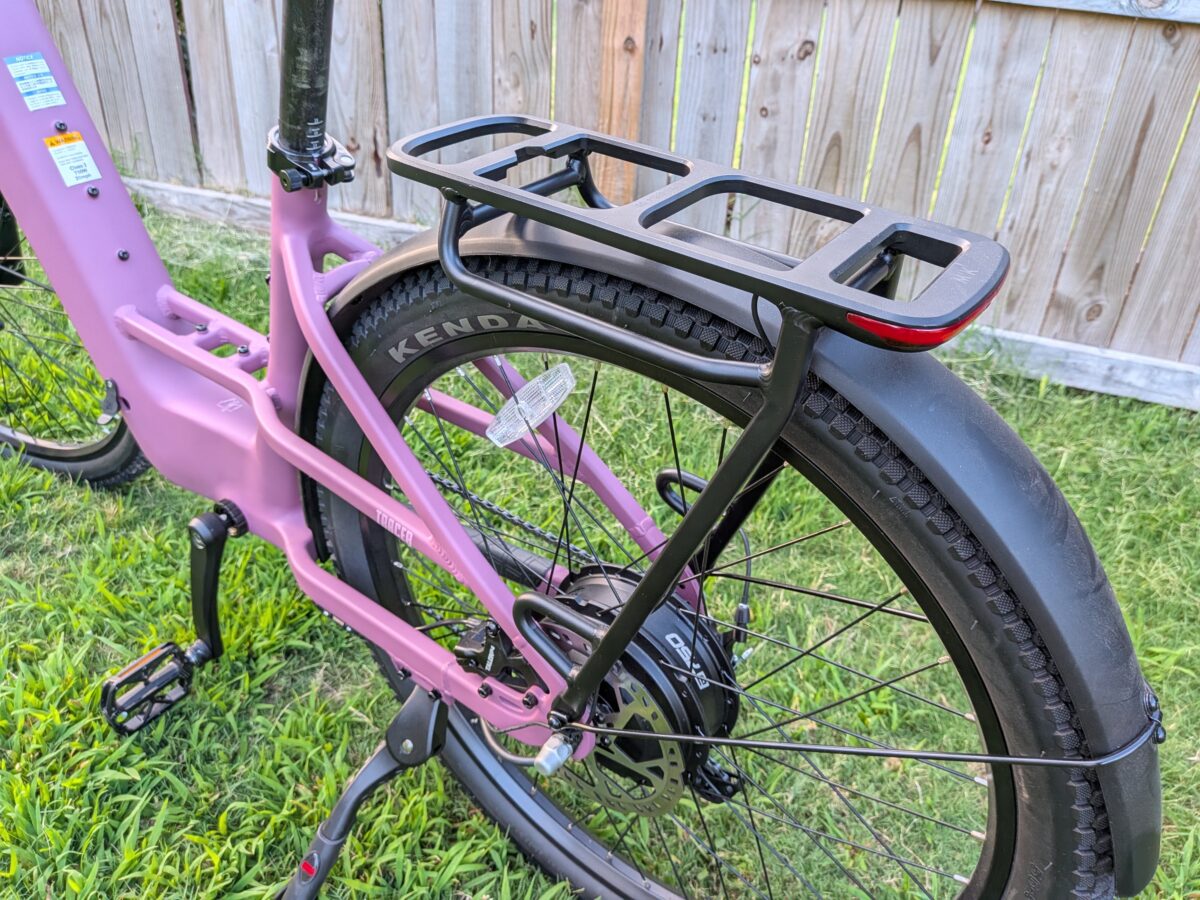
Up front, an integrated 494-lumen light runs off the main battery; out back, the running lights are built into the rack itself, sitting up high where drivers actually see them, glowing brighter under braking and flanked by left and right turn signals plus hazards. The rack is MIK-compatible with a 59 lb rating and pannier hangers, so your bag options open right up, and full fenders come standard front and rear. None of it is an add-on you have to source later, which is a real part of the value on a do-anything commuter.
Frame, Sizing, and Options | Monarc Tracer Review
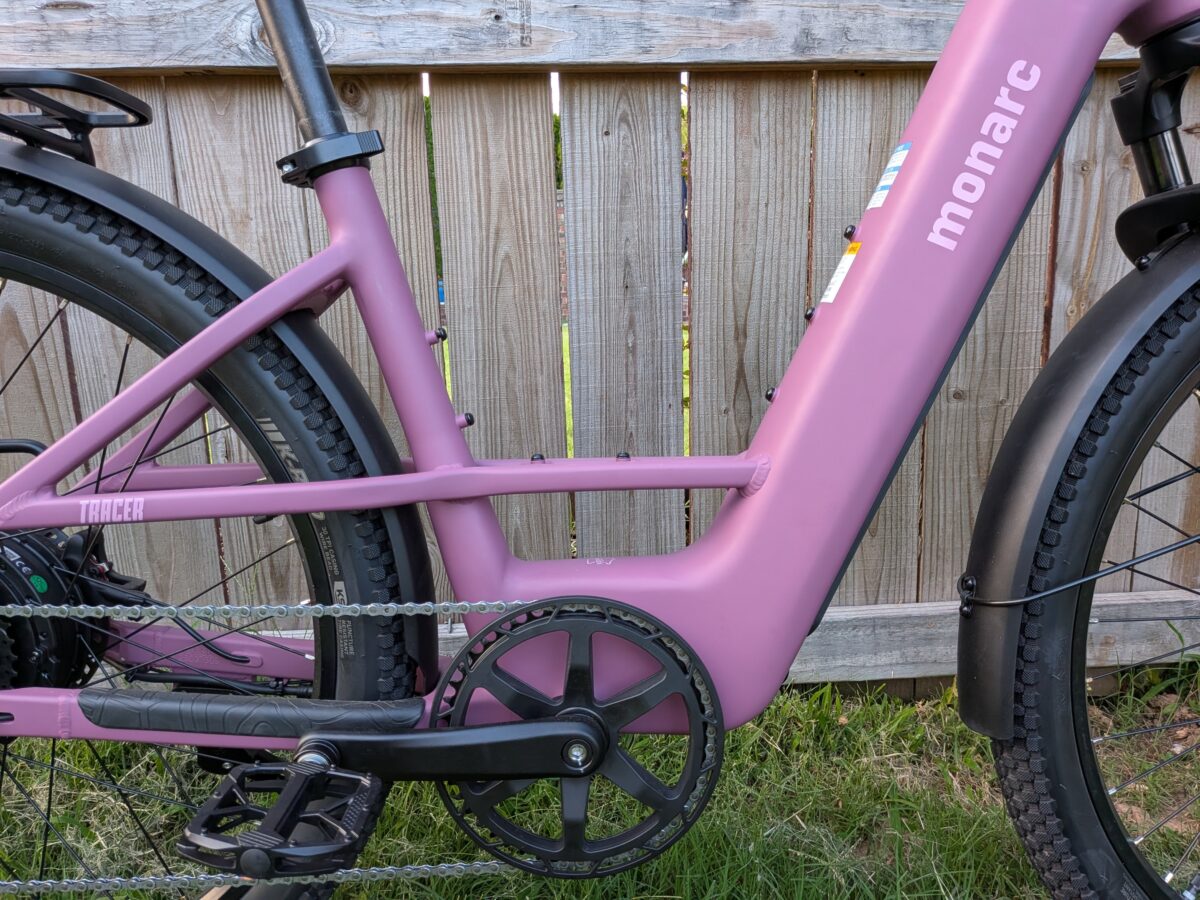
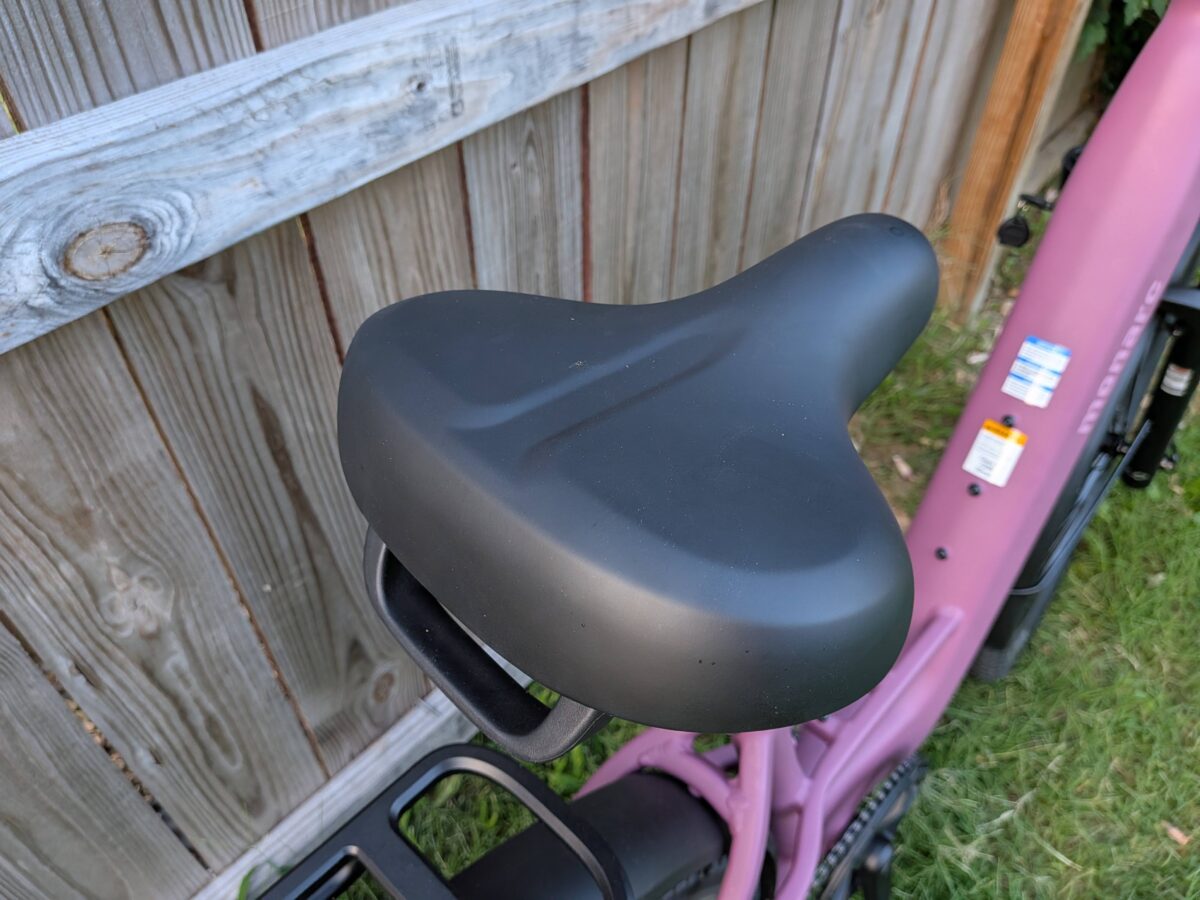
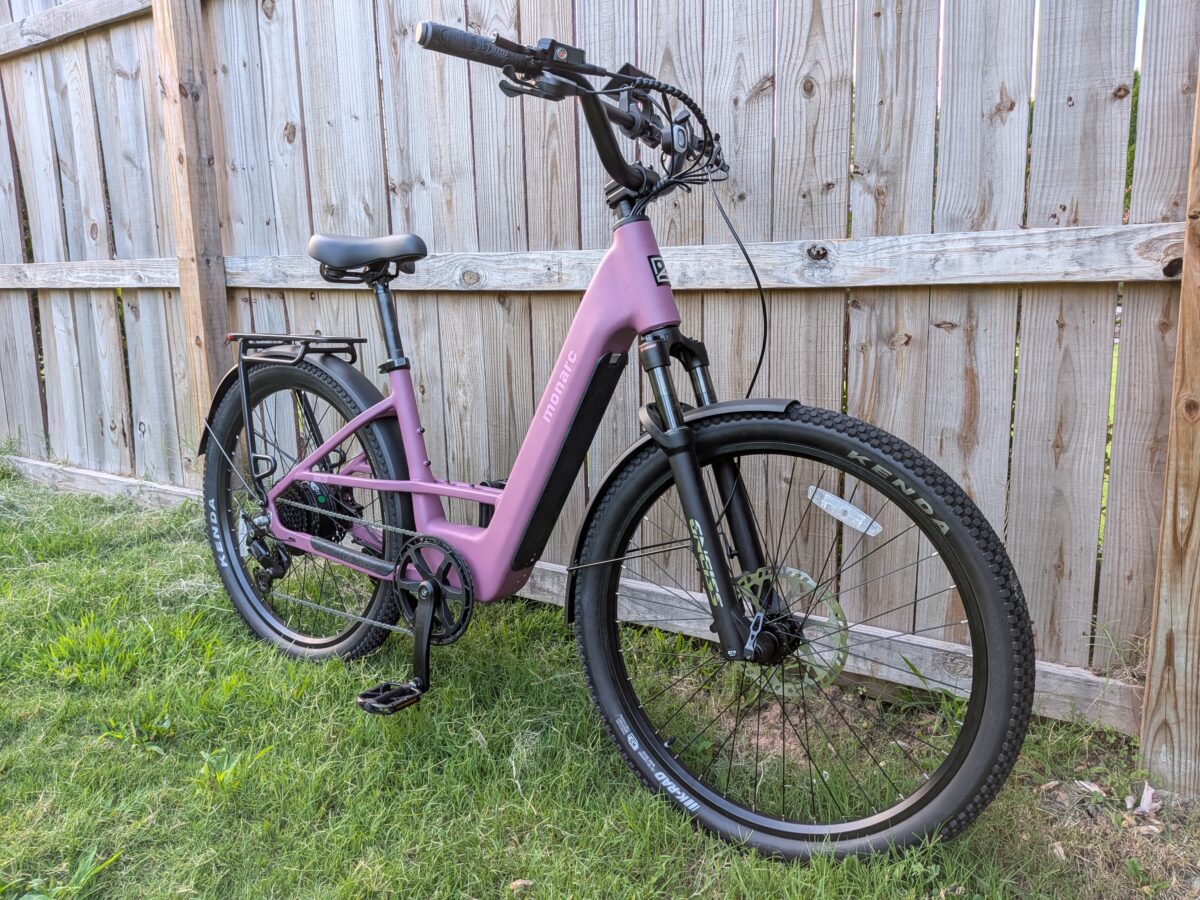
Two frame styles cover a wide span of riders. The high-step is the sportier of the pair, while the step-thru drops the top tube for an easier mount, though Monarc reinforced that frame for stability in a way that nudges the standover up slightly from other step-thru options. At just over 22 inches it is still low and easy to get a leg over. The step-thru also gets more swept-back handlebars that curve toward you for an upright, heads-up riding position, and the BMX-inspired bar shape leaves room to clamp on accessories like a phone mount. A comfort saddle with a built-in grab handle makes moving the ebike around easier, and three sets of mounting points on the frame give you plenty of spots for a bottle cage or future add-ons. High-step riders can pick Superior blue or Taconite, while the step-thru comes in Birchwood or the matte Juneberry.
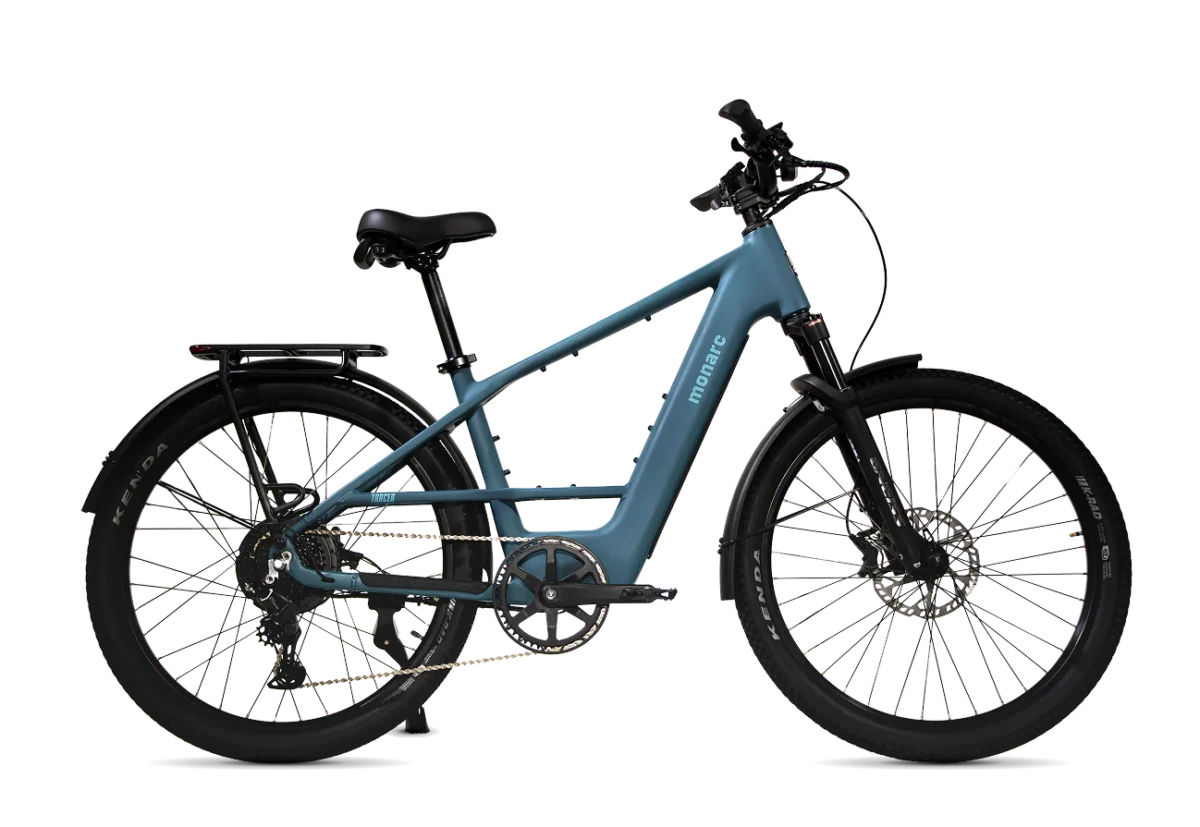
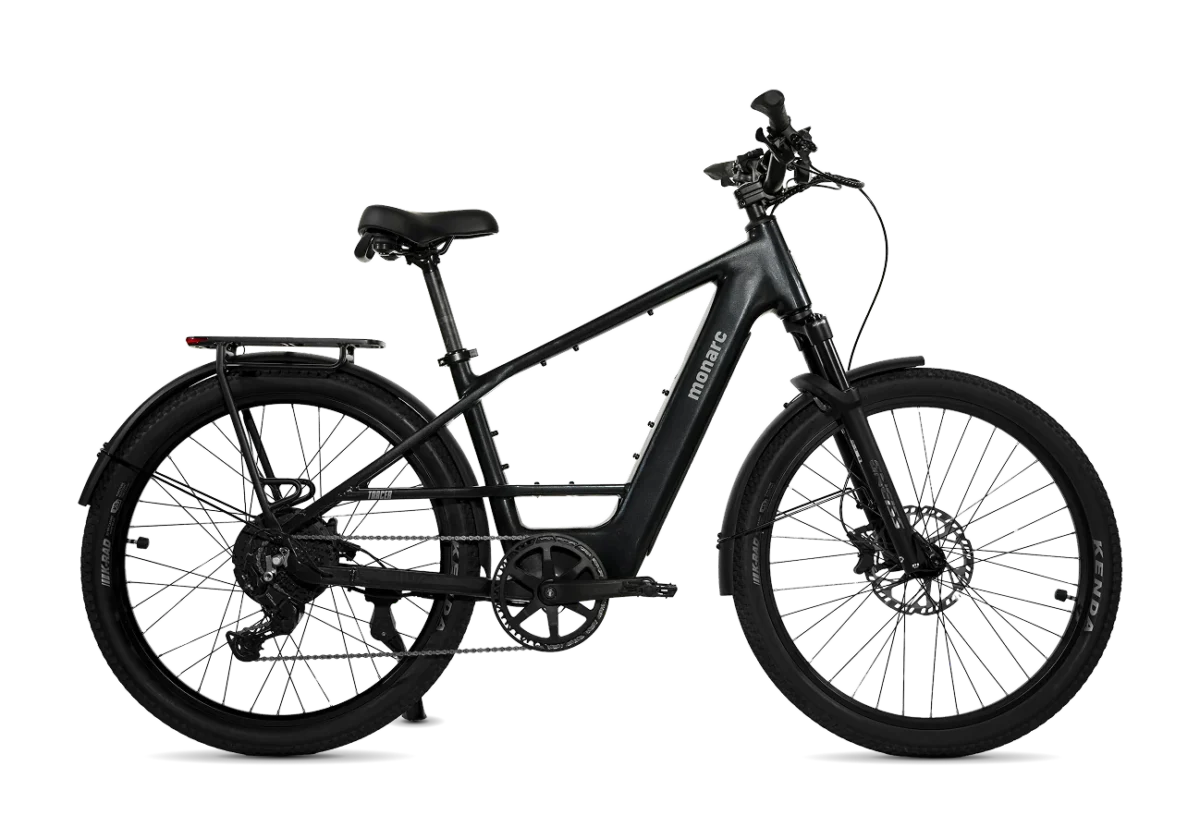
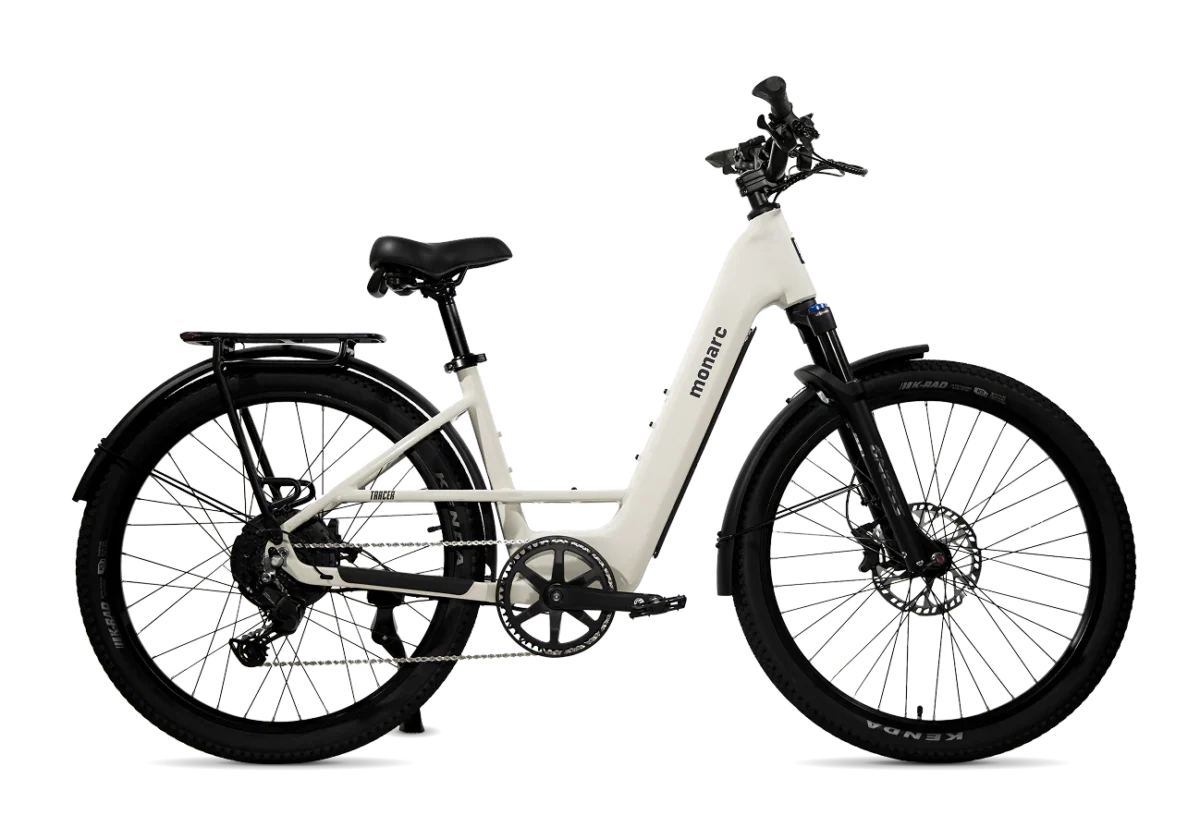
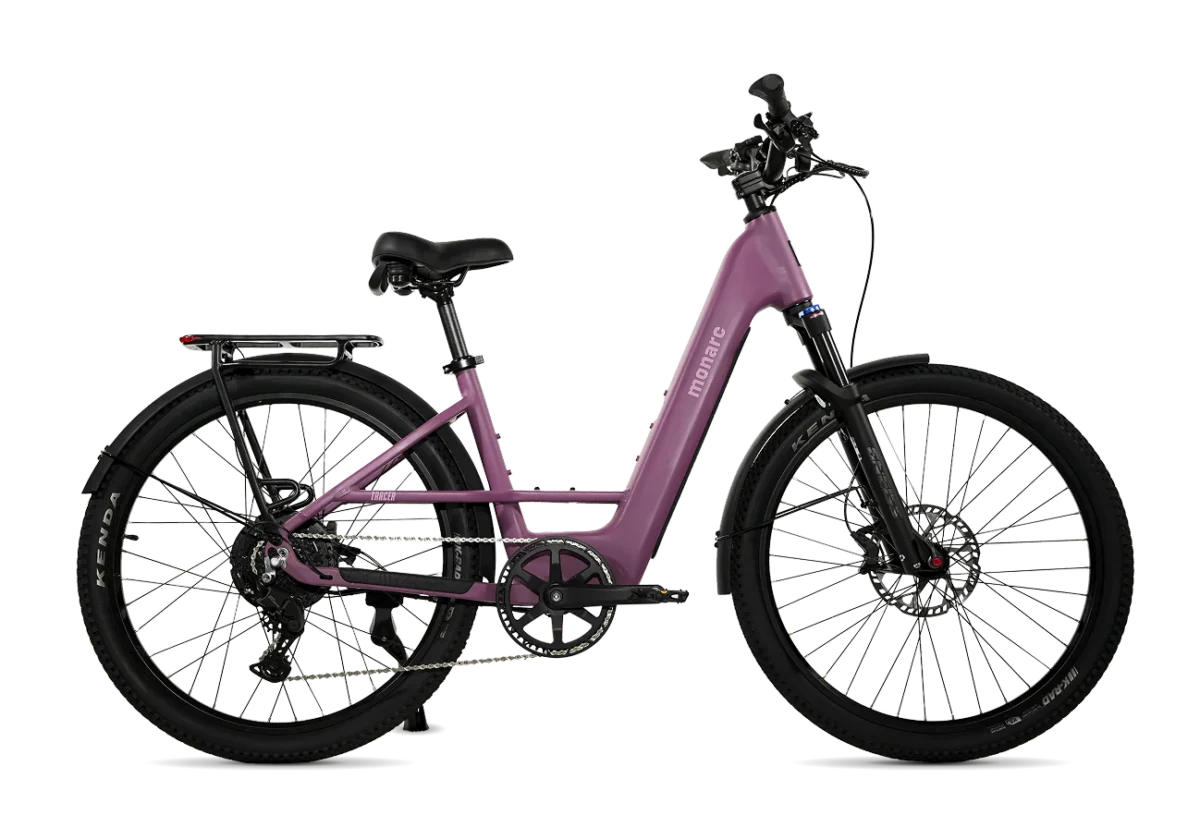
We put a few different riders on the step-thru to check the fit. At 6 feet tall with a 32-inch inseam, our main tester got full leg extension, and a 5-foot-5 rider felt at home on the same frame, which tracks with Monarc’s recommendations. Our scale read 74.8 lbs for the step-thru with the battery and accessories installed. Monarc advertises the high-step at 73 lbs, but expect the fenders and rack to add a couple more pounds. The important geometry details sit in the table below.
| Category | High-Step | Step-Thru |
|---|---|---|
| Total Weight w/ Battery | 73 lb (advertised) | 71 lb (advertised) |
| Payload Capacity | 330 lb rider | 330 lb rider |
| Rider Height Range | 5'4" – 6'4" | 5'2" – 6'3" |
| Standover Height | 31.4" | 22.6" |
| Bike Dimensions | 57" x 9" x 30" (front wheel removed); 45.08" wheelbase | 57" x 9" x 30" (front wheel removed); 45.08" wheelbase |
Monarc Tracer Full Specifications
Here is a complete look at the components and technical specifications for the Monarc Tracer:
| Component | Monarc Tracer |
|---|---|
| Price | $1,899 |
| Type | Commuter Ebike |
| Class | 1/2/3 |
| Weight Capacity | 330 lb (max rider) |
| Motor | Bafang B750 rear hub, 750W nominal / 1,638W peak |
| Torque | 85 Nm |
| Battery | Two 48V 15Ah (720Wh) LG-cell packs; 30Ah total. Single-battery bike with an included spare (runs one at a time, not dual-battery) |
| Claimed Range | Up to 65 miles per battery (130 miles total) |
| Charger | 48V 5A fast charger; 3 hours per battery (0–100%) |
| Display | Custom Monarc 3.5-inch touchscreen |
| Sensor | Switchable torque/cadence |
| Throttle | Left-side thumb throttle |
| UL Certifications | Certified to UL 2271/UL 2849 |
| Water/Dust Resistance | Bike IPX6, battery IPX7 |
| Shifter | Shimano Cues 9-speed trigger shifter |
| Derailleur | Shimano Cues, 9-speed |
| Chainring | Prowheel, 48T |
| Cassette | 11-36T |
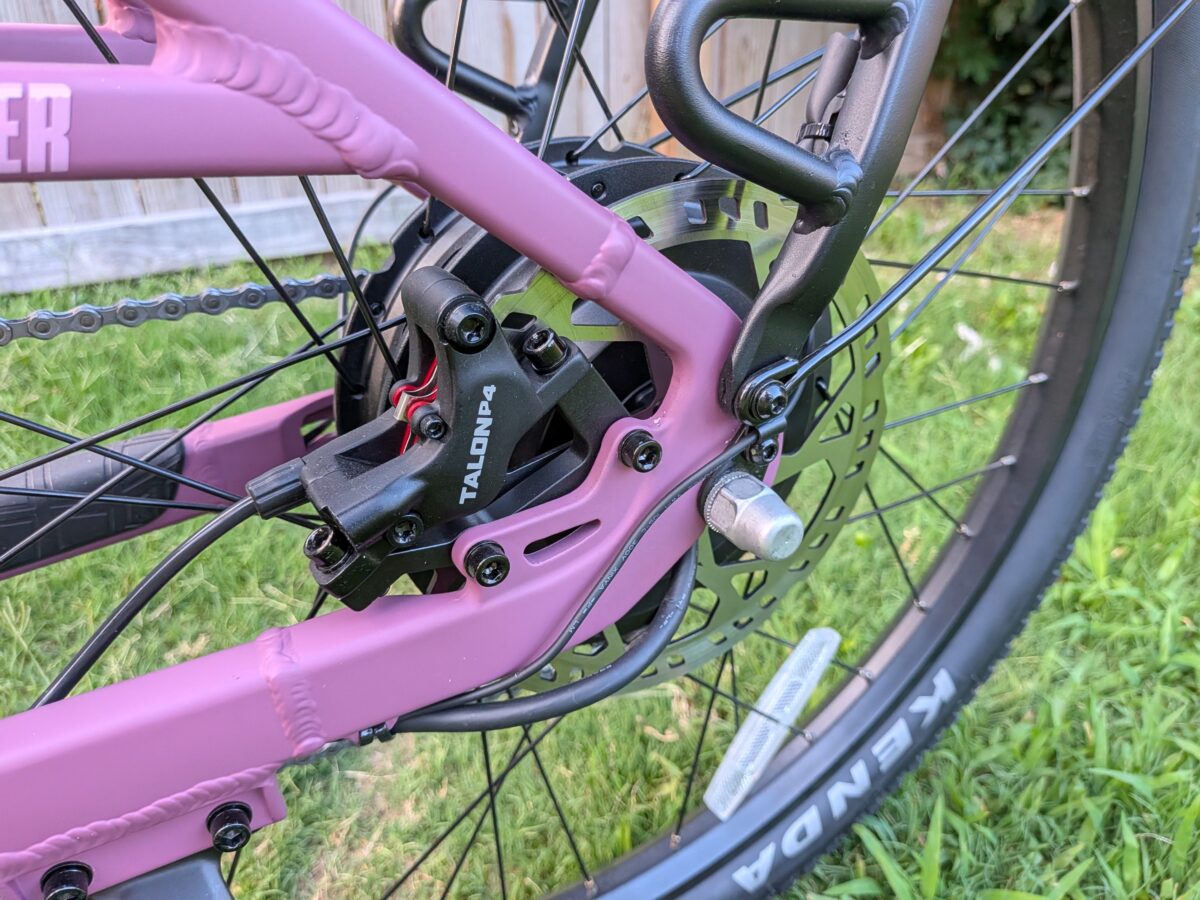
| Brakes | Star Union Talon P4, 4-piston hydraulic disc |
| Levers | Talon P4 hydraulic levers with motor cutoffs |
| Rotors | 203mm front / 180mm rear (6-bolt) |
| Frame | 6061 aluminum, hydroformed, smooth welds; High-Step and Step-Thru |
| Fork | Gneiss reverse-arch suspension, 80mm travel, preload + lockout |
| Axle | Front thru-axle; rear solid bolt-on |
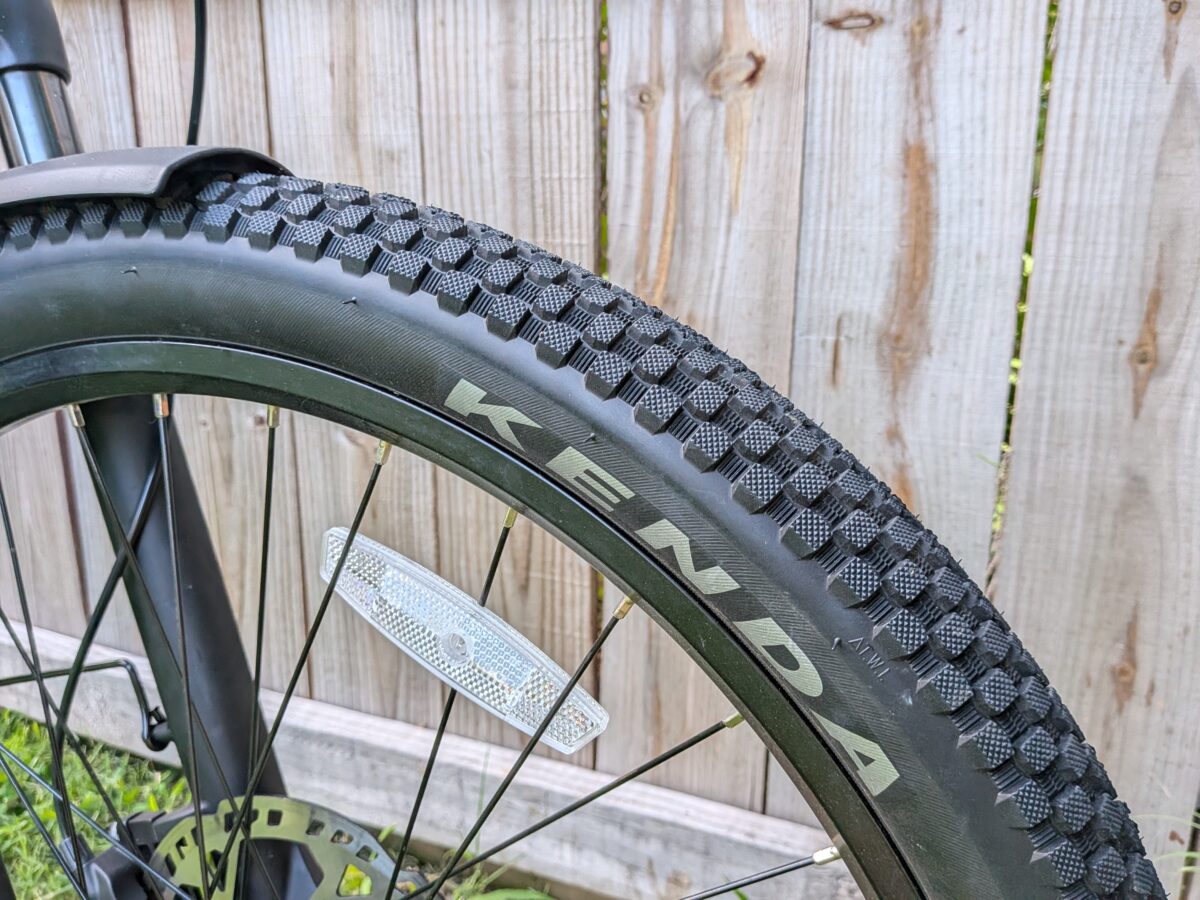
| Tires | Kenda K-RAD, 27.5 x 2.2 in (checkerboard tread) |
| Handlebars | BMX-style; swept-back on Step-Thru |
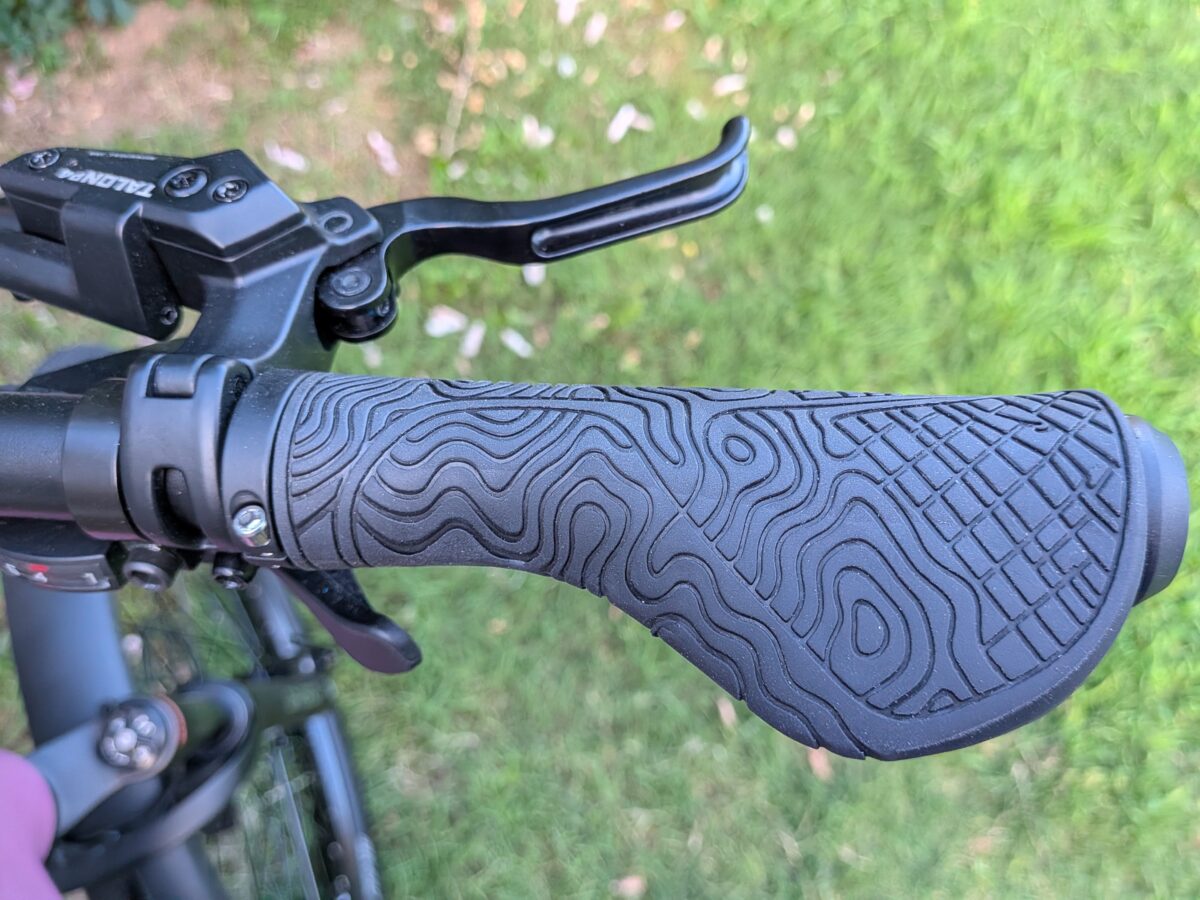
| Grips | Ergonomic full-length lock-on Monarc grips |
| Stem | 60mm, non-adjustable |
| Saddle | Monarc comfort saddle with grab handle; 2-bolt seatpost |
| Pedals | Quick-release |
| Fenders | Polypropylene, front and rear |
| Rear Rack | MIK-compatible, 59 lb; pannier hangers; integrated rear light/brake light/turn signals |
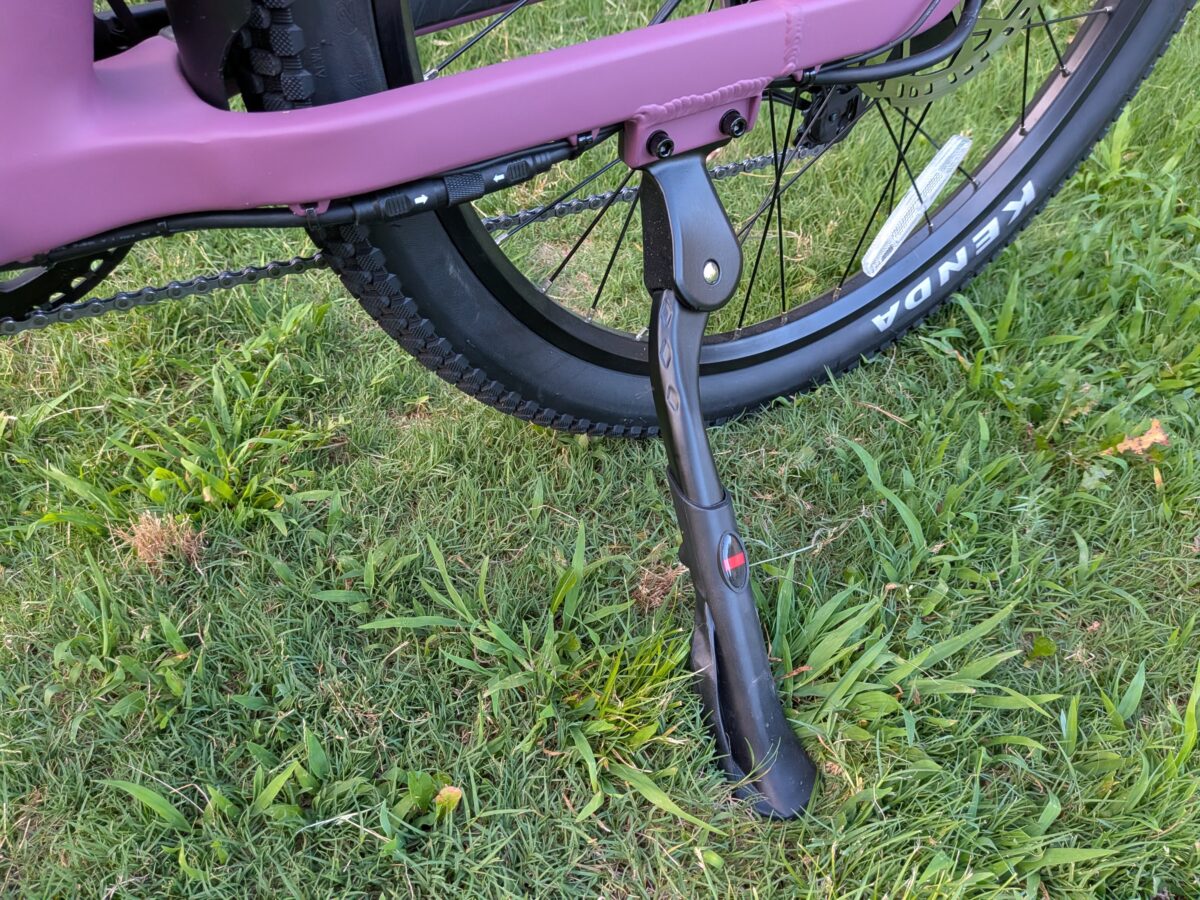
| Kickstand | Rear-mounted, heavy-duty steel side-sweeping |
Real-World Performance Testing | Monarc Tracer
Before we dive into the performance testing, it helps to outline Monarc’s pedal assist naming convention. Like many ebike companies, they offer five levels of assist, but instead of the standard numbers, they step up in power using their own categories from least to most powerful: Cruise, Breeze, Explore, Sport, and Boost.
Throttle Acceleration
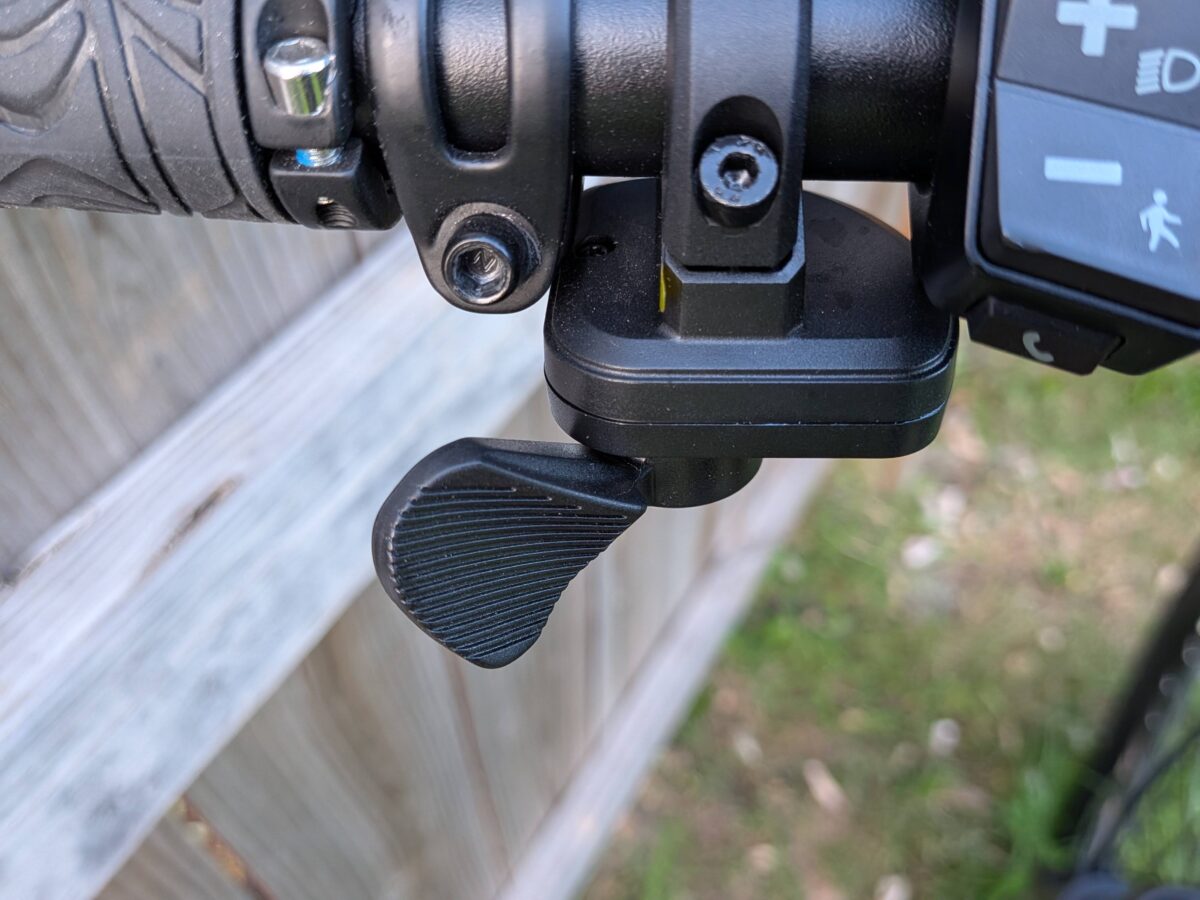
The throttle is a little sensitive, but you can actually modulate it more easily than other thumb throttles we’ve tested. Beyond that, the power delivery changes entirely based on how you configure the throttle settings:
- High Setting: This gives you full throttle power in any assist level. From a standstill, it climbed quickly to 18 mph before the motor eased off right before hitting 20 mph, which is the throttle-only ceiling.
- Low Setting: This ties the throttle output directly to your current assist level. Power scales right up the ladder, delivering about 200W in Cruise, 400W in Breeze, roughly 775W in Explore, 1,100W in Sport, and the full power once you reach Boost.
Leave it on high if you like instant full power under your thumb, or set it to low if you would rather the throttle mirror your assist level and come on gentler.
Pedal Assist
You get a choice of sensor here, with one catch. The torque sensor is the default setting on the Tracer, and switching to the cadence sensor happens through the settings menu rather than on the fly. So, it is a change you make deliberately at a stop. We tested both.
Torque Sensor
Push in harder and the motor gives you more; ease off and it backs down. That is the torque sensor in short. It reads how much force you put through the pedals and amplifies it, with the assist level setting a ceiling rather than a fixed number, so the power floats with your effort. Soft-pedal in Cruise and you might pull only 60W, then lean in at that same level and it climbs toward the cap, and moving up the levels raises the ceiling all the way to Boost and the motor’s full output.
It feels natural because the assist always stays proportional to what you put in, which is also why no single wattage pins to each level. In practice you can reach 28 mph without climbing to the top levels, so we would set the lower ones a notch down for more range and save Boost for when you want the motor to do the work.
Cadence Sensor
Cadence works on a different logic. It is a current-based system that cares only whether the pedals are turning, so about half a crank rotation in, it hands over the full power set for that level no matter how hard you push. That amount is the same ladder the throttle’s Low setting uses, roughly 200W in Cruise, 400W in Breeze, on up to Boost.
Because the power lands all at once instead of scaling with your legs, cadence feels stronger and more abrupt, and on the stock tune Breeze alone is a lot for a level meant to be mellow, so we would dial the lower levels back if you plan to ride it. Most riders will prefer the torque sensor’s natural feel, with the throttle on hand when they want full power. Cadence does have one handy trick, though. Switch to it for easy spinning on the steepest climbs, just remember the swap lives in the menu.
Hill Climb
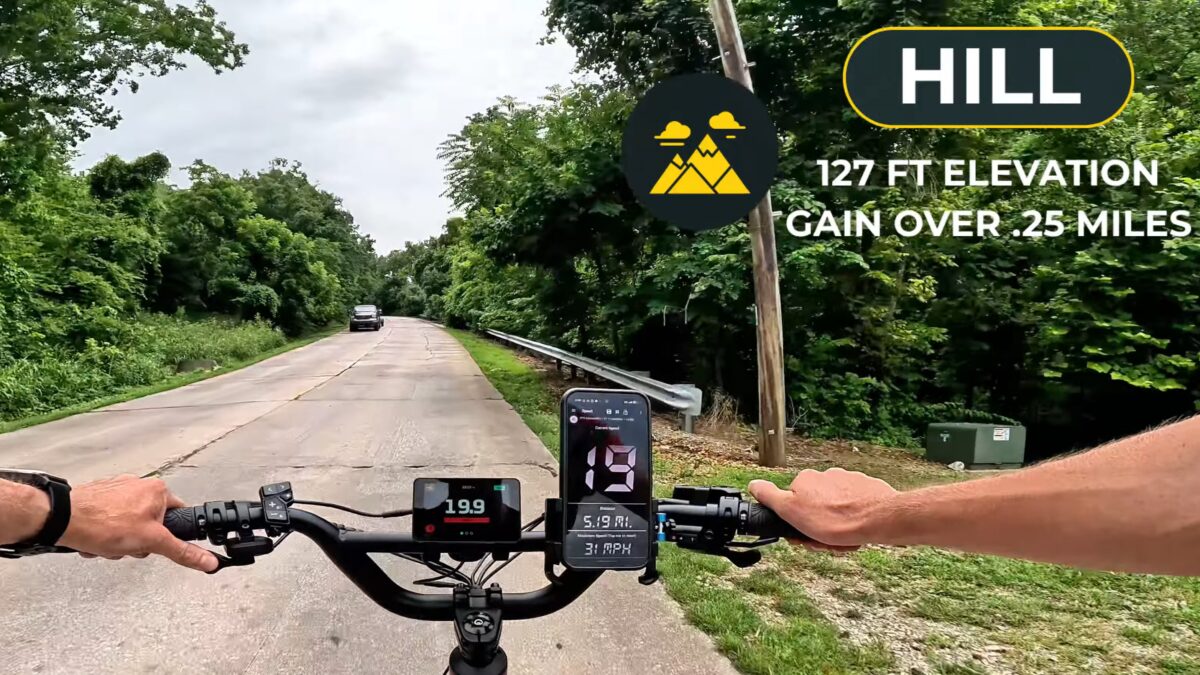
Our test hill climbs 127 feet over 0.25 miles at a 9.2% average grade. With a 140-lb rider, on throttle alone the motor held 15 to 16 mph the whole way and never dropped below about 15. This is a strong showing for our test hill, and it did it without the loud whine a lot of powerful hubs give off.
Pedaling is a different story. A steep climb makes it hard to hold steady pressure on the cranks, and since a torque sensor matches its assist to that pressure, motor support can turn uneven right when you want it most. In Cruise and Breeze we were grinding, legs loaded and the bike crawling upward. Sport is where the climb turned manageable, with the motor carrying enough that we could spin at a steady pace, and Boost took over most of the effort once we shifted up a gear to keep things smooth. If you would rather not fight the hill, you can pedal alongside the throttle, or switch to the cadence sensor, which holds a steady level of power no matter how your pressure on the cranks fluctuates.
Ride Feel, Comfort, and Braking
On the step-thru, a lighter rider sat planted and upright, with the swept-back bars close at hand and adjustable a touch nearer. The suspension fork stood out here, since lighter riders often cannot get a budget fork to move, yet this one worked over rough patches, and the saddle, while not the plushest, beats the average commuter perch. The 4-piston Talon P4 brakes bite hard, with the 203mm front rotor doing the heavy lifting; we locked the rear easily, and one hard stop came up a little rear-heavy before we balanced the pull. Onto light gravel, the Kenda checkerboard tread held enough grip for a short off-pavement detour, which is more than a lot of city bikes will attempt.
Monarc Tracer Warranty and Ownership
A New Brand, Sold Direct
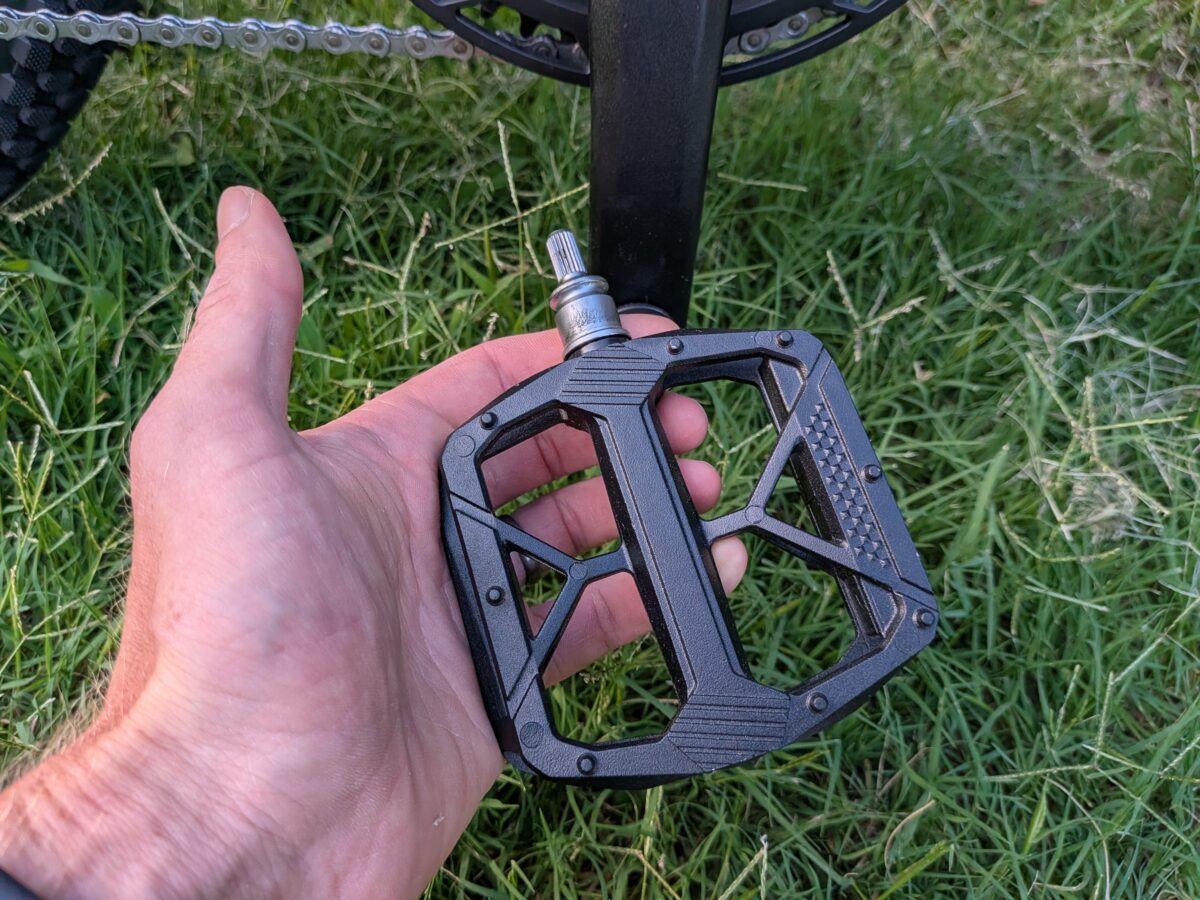
Genuinely new and backed by Lectric, Monarc is only two models deep so far, with the Tracer arriving after the fat-tire Monarc Marker. Because it sells direct-to-consumer, the bike ships to your door for home assembly. Monarc makes the build easier by including a front thru-axle, quick-release pedals, a torque wrench to tighten bolts to spec, and “Minnesota nice” phone support if you get stuck. You will want to be at least a little handy; if you are not, a shop visit still leaves you with a better-specced bike for the money.
What’s Covered and What Isn’t
The warranty is where the new-brand pitch gets bold. Monarc backs the bike itself, including the frame, fork, motor, controller, display, drivetrain, brake calipers/levers, lights, and hubs, for 5 years, which is a long term by industry standards.
It is worth noting that although the batteries are covered, they carry a 1-year warranty. Smart accessories (radar, tire-pressure monitor, smart helmet) are not covered, nor are standard wear items like tires, tubes, spokes, brake pads, rotors, cables, the chain, and grips. Water and water-vapor damage (including rust) are also excluded. The IPX6 water-resistance rating means the bike is built to handle riding in the rain, but it does not act as a warranty against moisture entry.
Warranty Logistics and Transferability
A couple of details land in your favor: the coverage appears to transfer to a second owner (helping resale value), and Monarc covers the shipping costs if a component needs to be sent back or replaced across the 48 contiguous states and Washington, D.C. However, it is important to understand how direct-to-consumer warranties handle hands-on service. While Monarc provides the replacement parts and covers the postage, they do not cover labor. You are responsible for the physical work of installing the new parts, or for paying a local shop to handle the repair.
A 5-year promise is a strong signal, but a brand with no track record still has to prove it will stand behind that commitment over the full five years.
Monarc Tracer vs Aventon Level 4 REC and Pace 5 REC
If you are shopping the Tracer, you likely have the Aventon Level 4 REC ($1,999) and the Aventon Pace 5 REC ($1,799) open in another tab. The Tracer pulls ahead strictly in physical hardware for the dollar, offering two batteries standard, 4-piston Talon P4 brakes, a 9-speed Cues drivetrain, and a real 80mm suspension fork for $1,899. By comparison, both Aventons run a single battery and 2-piston Tektro brakes, with the Level 4 REC utilizing a more basic fork and the Pace 5 REC going fully rigid. On paper, Monarc simply hands you more physical bike for the money.
Aventon answers with the established refinement of a brand that has been around since 2013, offering a connected ecosystem you can use today. Both the Level 4 REC and Pace 5 REC feature a proven app, 4G security with GPS, electronic wheel locks, regenerative braking, and on-the-fly sensor switching, all backed by a dealer network of over 1,800 shops for hands-on service.
If you want to look closer at either of these alternatives, we have covered both ebikes in detail. You can find our complete breakdown of their specs, connected features, and ride feel in our full Aventon Level 4 REC review and the Aventon Pace 5 REC review.
Monarc Tracer Pros and Cons
Final Thoughts on the Monarc Tracer
For a first commuter from a brand-new name, this is a confident debut, and it is easy to see who it is for. If you want a fully equipped commuter with premium hardware and freedom from range anxiety without paying a fortune, the value is clearly there. Fitting this much spec and a second battery under $1,899 is not easy, and it is plain where Monarc put the money. What it cannot ship yet is time, the track record that turns a bold 5-year warranty promise into a proven one, and that is the one thing worth watching as this ebike gets out into the world.
If we helped you make your decision, buying through our affiliate link helps fund the testing behind reviews like this one. It is completely free for you and truly appreciated. Thank you for the support!
