

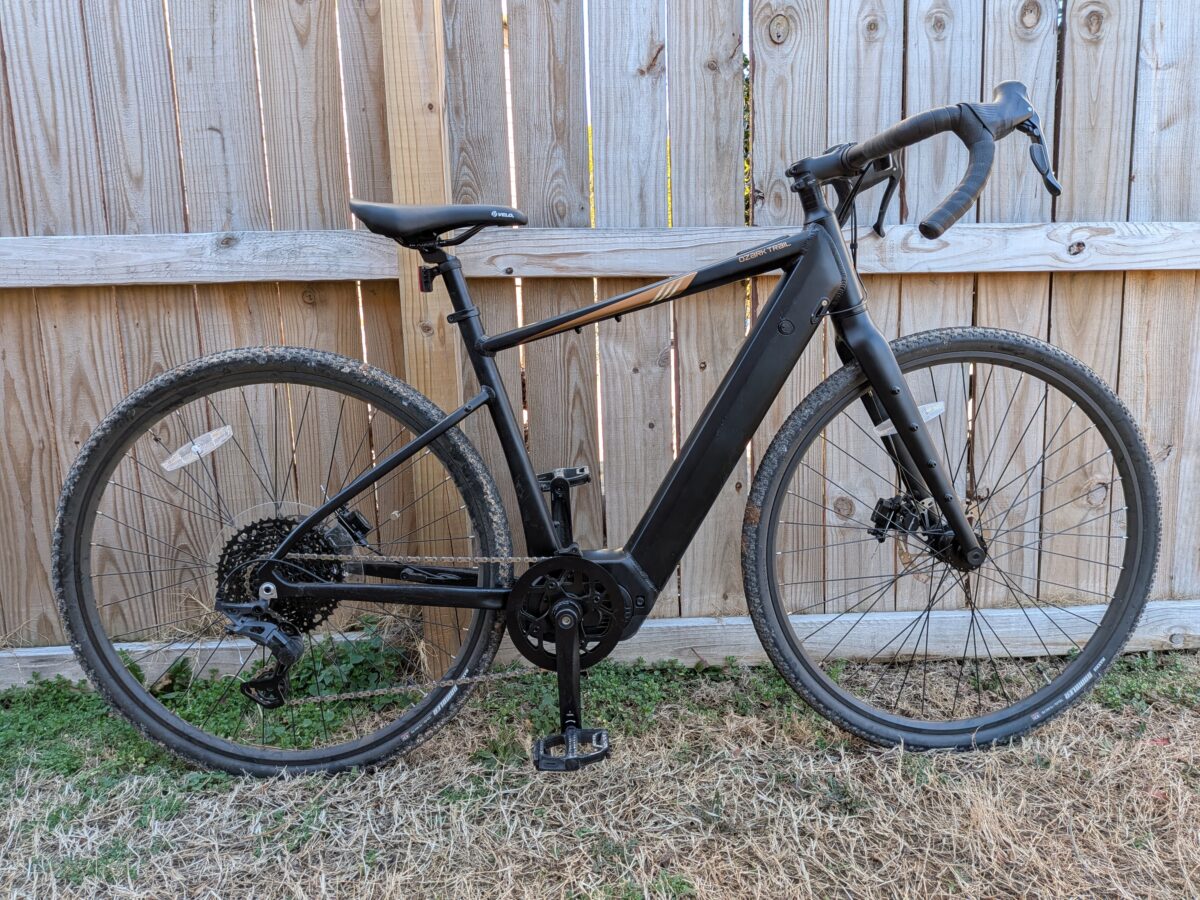
Walmart’s Ozark Trail brand continues pushing boundaries with the G.2 Rebel+, a drop-bar electric gravel bike that pairs a torque-sensing mid-drive motor with legitimate gravel components. At $1,298 and available only online for preorder (delivery expected around April 10, 2026), it enters a category where true mid-drive gravel ebikes typically cost $3,000 or more.
This makes it a potential game-changer for riders wanting electric assistance without jumping to premium pricing. We spent multiple rides on loose gravel paths, quiet backroads, and brutally steep climbs—including a local legend called the “President Bush Push”—to see if it delivers a credible gravel experience or falls short like many big-box attempts.
Interested in the G.2 Rebel+? It’s sold exclusively online at Walmart.com. Check current pricing and availability through our affiliate links (purchases help support reviews like this at no extra cost to you):
Small (5’1″ – 5’7″)
Medium (5’7″ – 5’11”)
Large (5’11” – 6’3″)
Ozark Trail G.2 Rebel+ Video Review
In our YouTube review, we provide an up-close look at the bike and its components, take it out for real gravel riding with performance testing across assist levels, tackle the notoriously steep and rocky “President Bush Push” hill multiple times, and wrap up with a full breakdown of pros and cons.
Standout Components and Features
At this price, several parts stand out for delivering capability that feels borrowed from higher-end bikes, making the G.2 Rebel+ far more than a basic electrified gravel rig.
Ananda Mid-Drive Motor
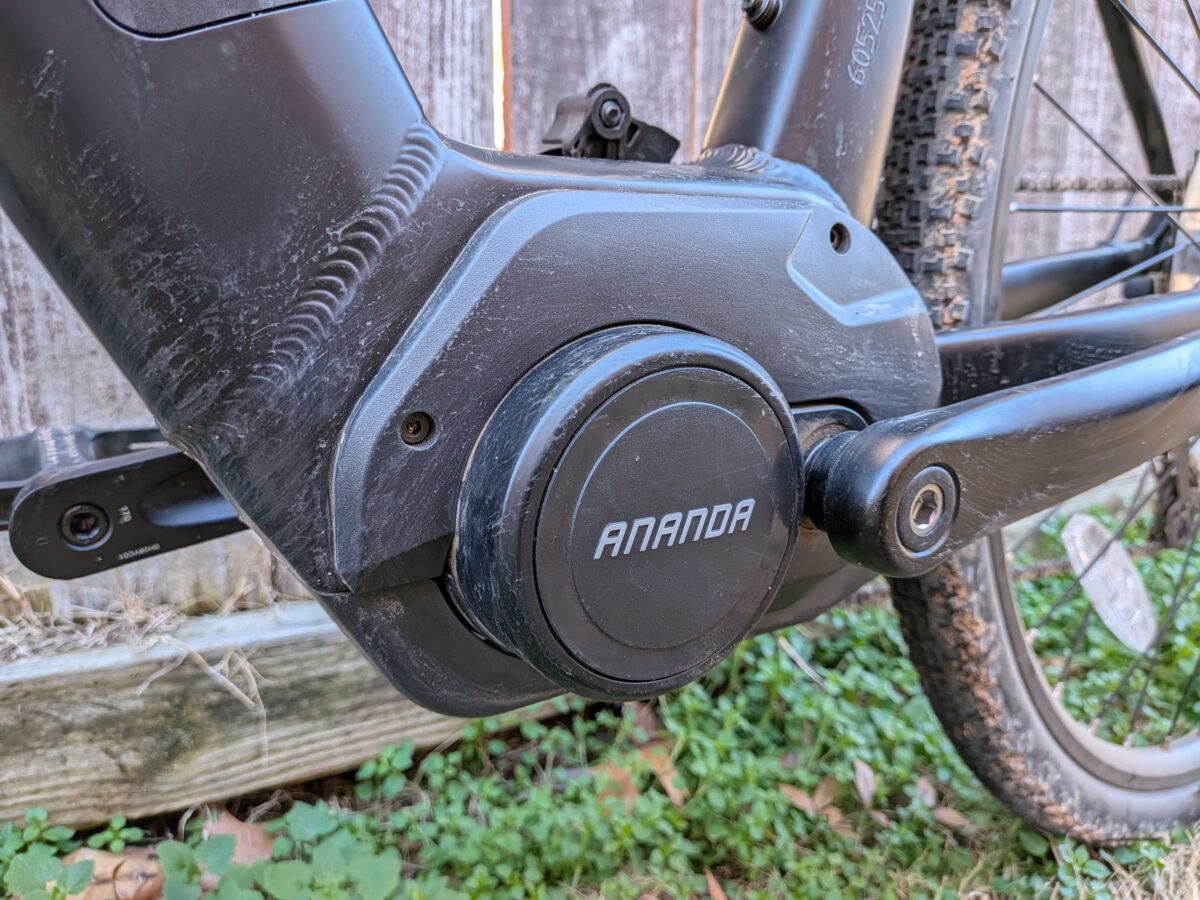
The 350W nominal (520W peak) Ananda motor with up to 100 Nm of torque is the clear star. Mid-drives are rare under $2,000, and nearly nonexistent in gravel-specific models at this level. The centered weight improves balance on uneven surfaces, and the natural power delivery encourages active pedaling—exactly what gravel riders want from assist, rather than the on/off feel of cheaper hub motors.
microSHIFT Sword Drivetrain
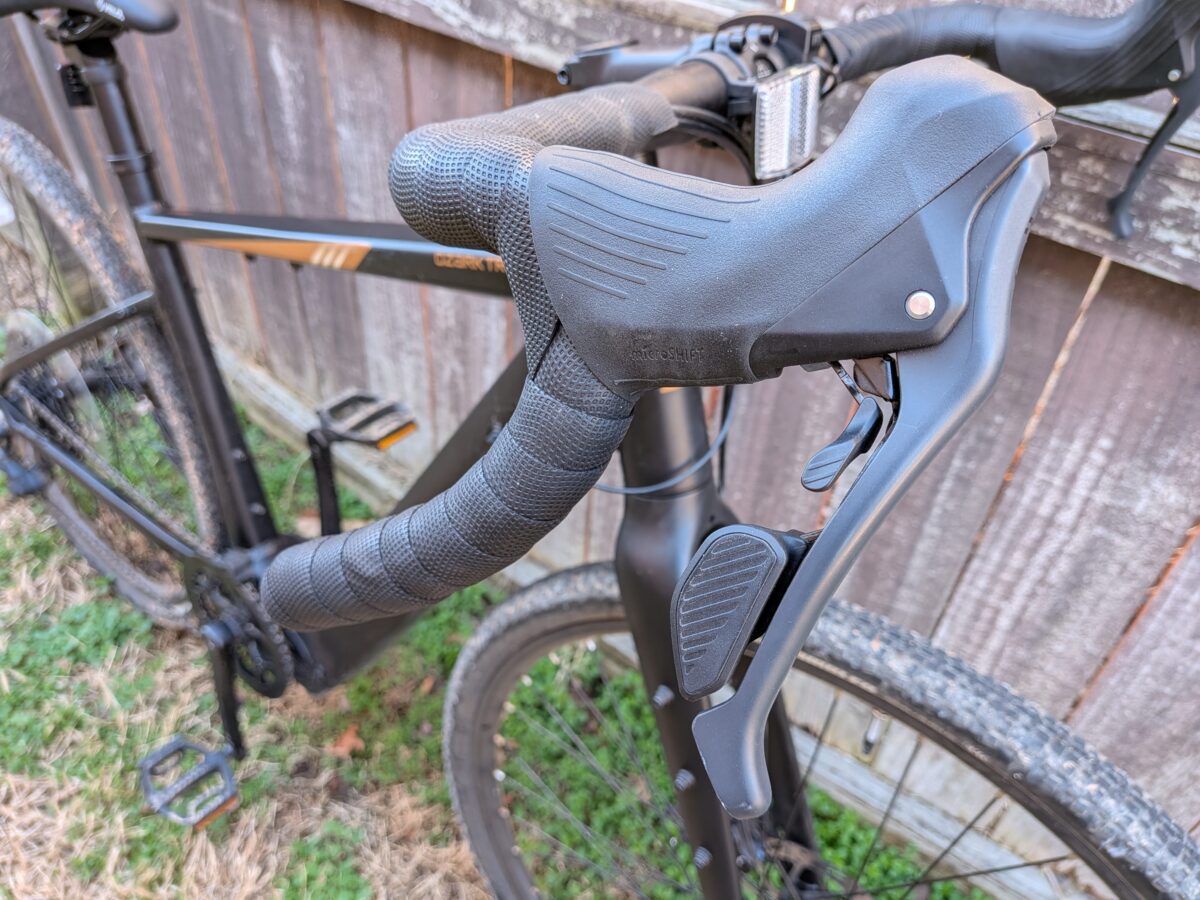
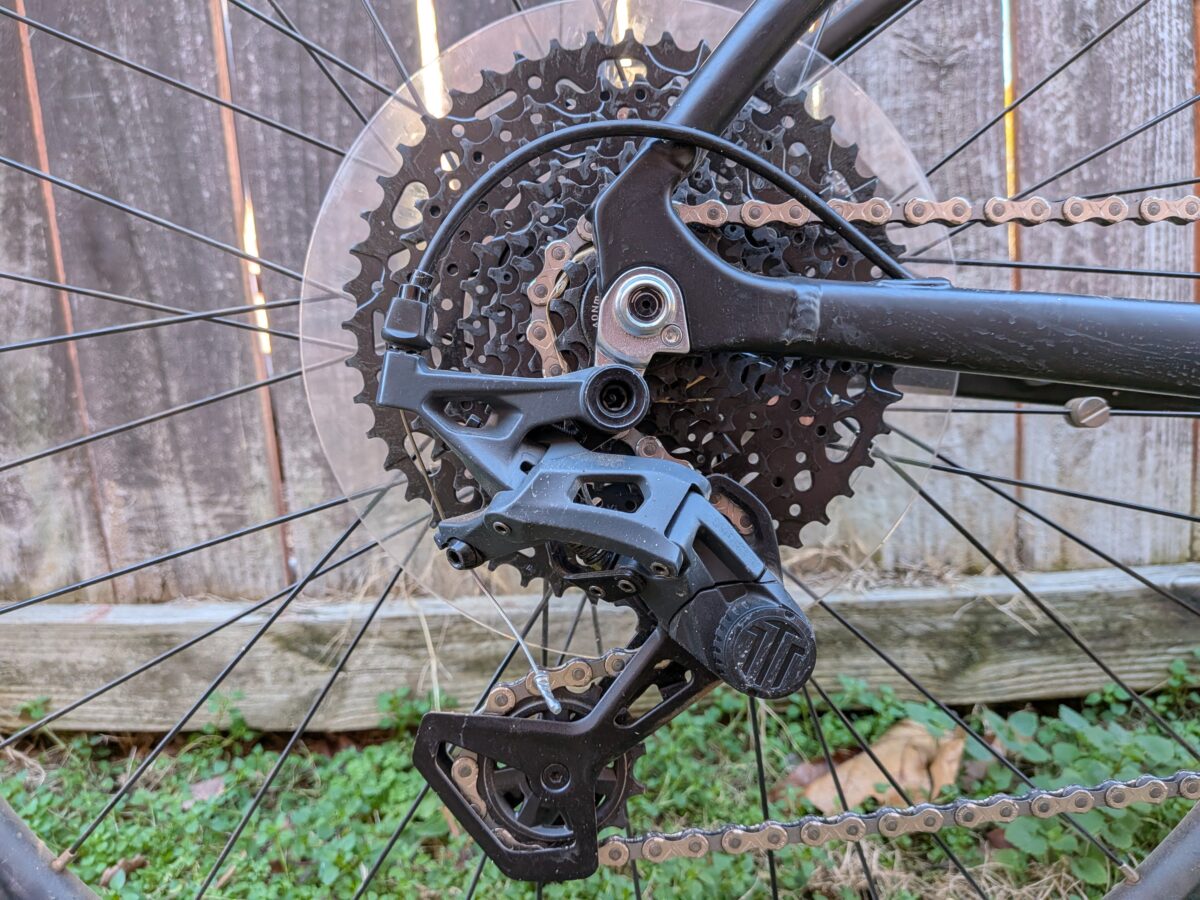
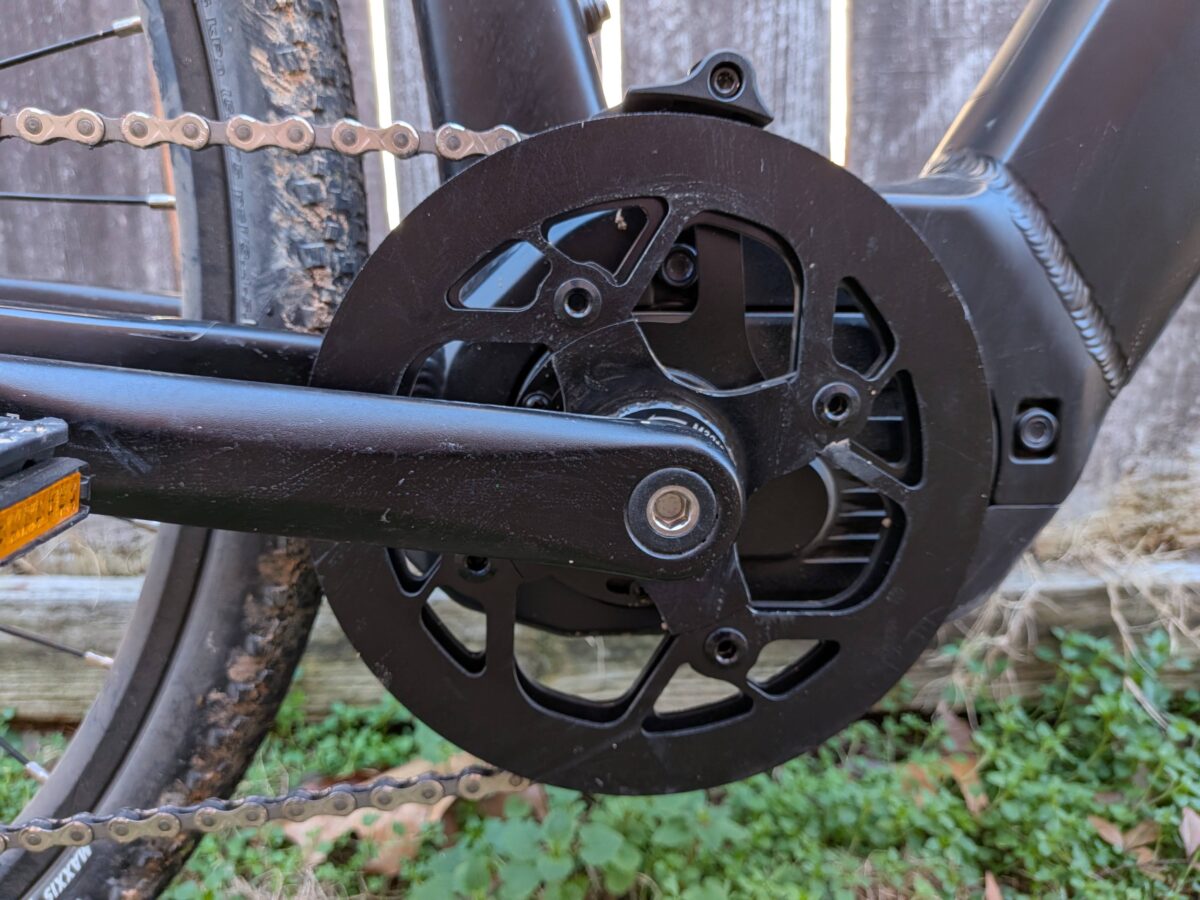
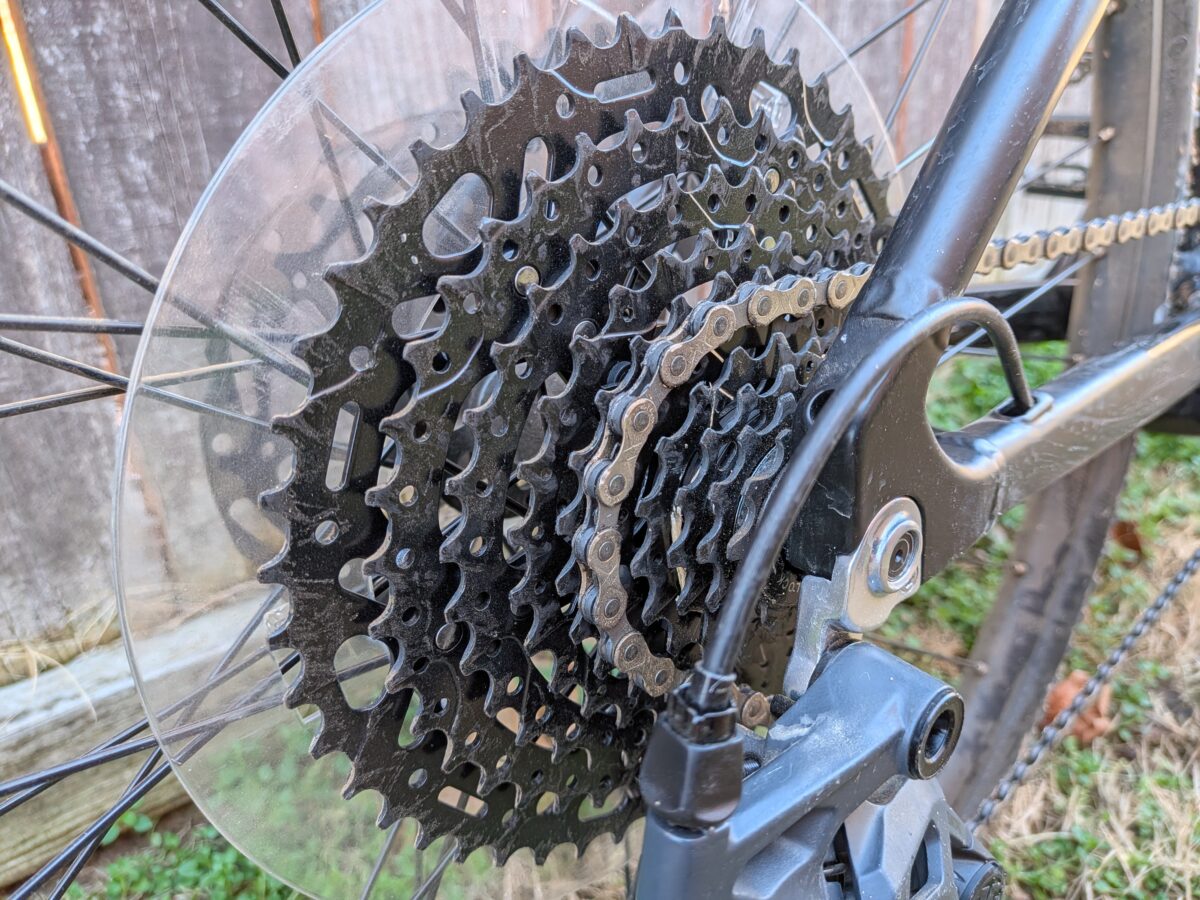
This 1×10 gravel-specific group uses an 11-48T cassette and a 48T narrow-wide chainring, offering a wide range that handles both fast flats and steep pitches. After minor indexing out of the box, shifting felt crisp and consistent even under load. MicroSHIFT has earned respect in budget builds for reliability that rivals entry-level Shimano or SRAM without the premium cost.
TRP Cable-Actuated Hydraulic Brakes
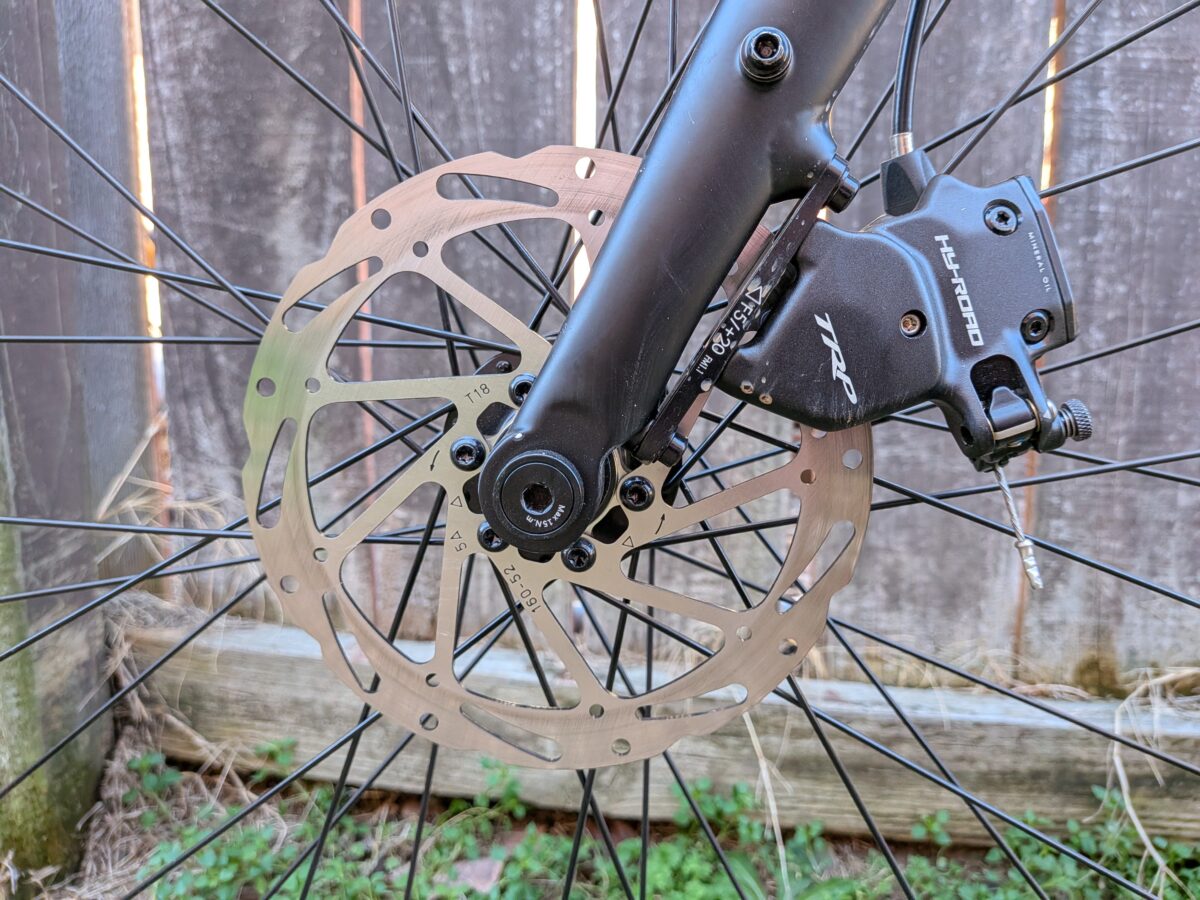
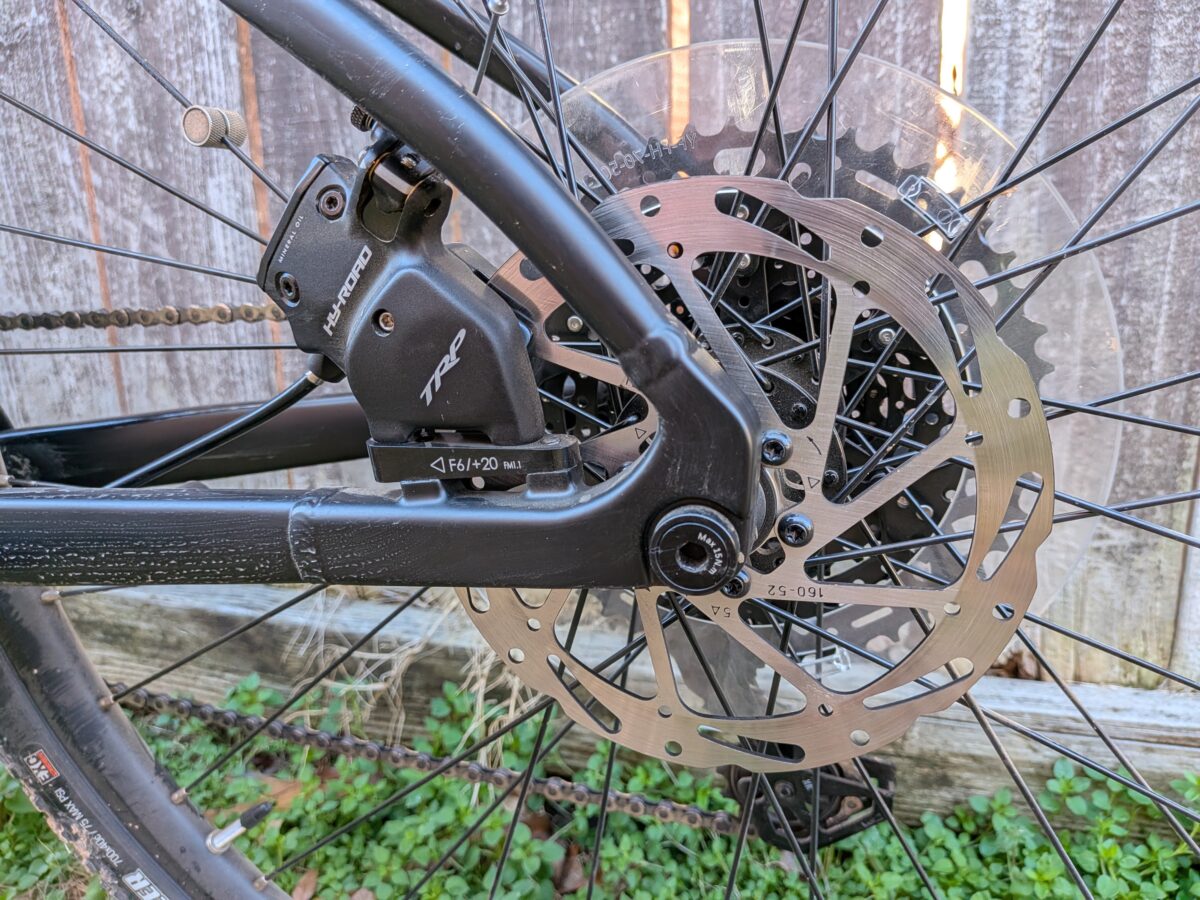
These hybrid brakes combine cable pull levers with hydraulic calipers and 160mm rotors. The lever feel is firmer than full hydraulic setups, but modulation and raw stopping power impressed us on loose descents—plenty for gravel speeds without fade.
Maxxis Tires and Tubeless-Compatible Rims
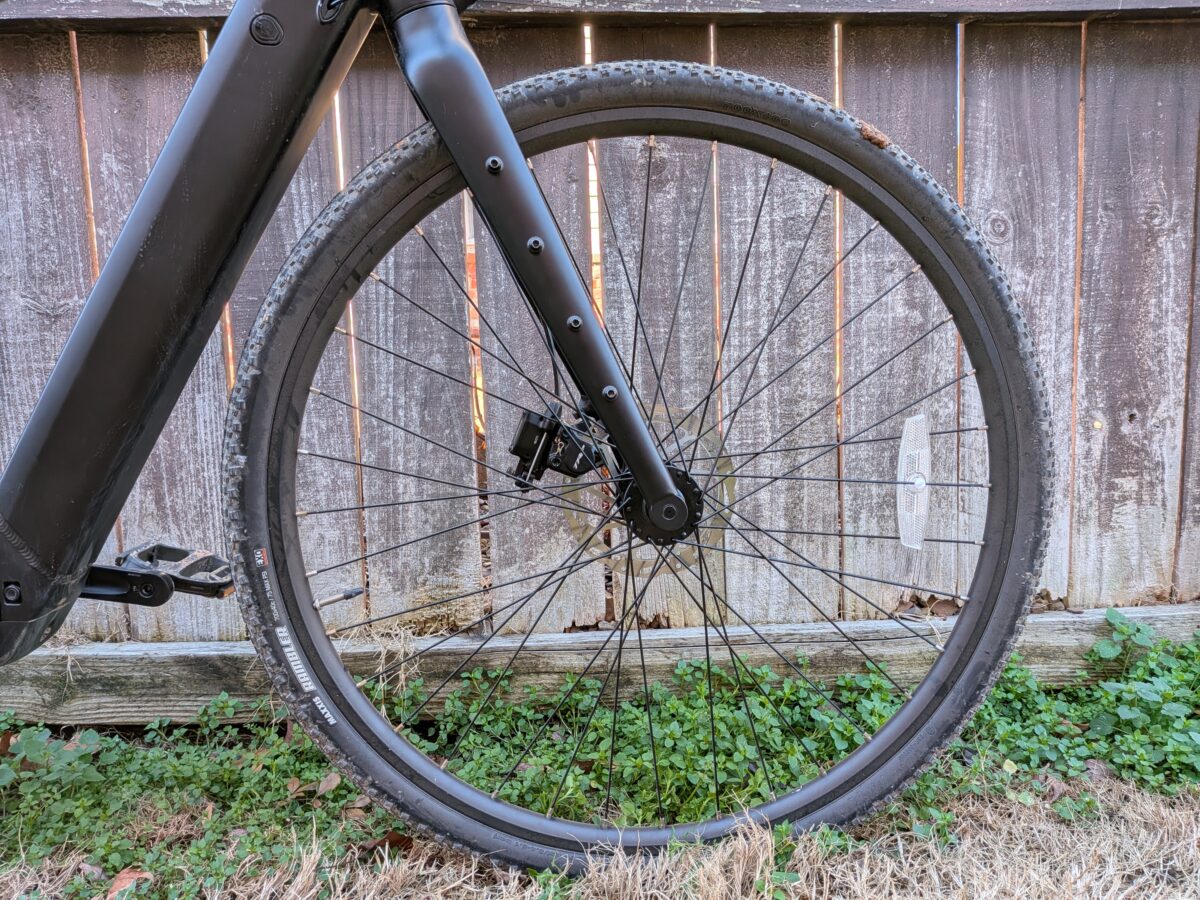
The 700x40c Maxxis Rambler tires provide predictable grip on loose gravel and light mud. While the tires themselves are not tubeless-ready, the welded rims are tubeless-compatible, offering an easy upgrade path for riders who want to run lower pressures for better puncture protection.
Battery and Electronics
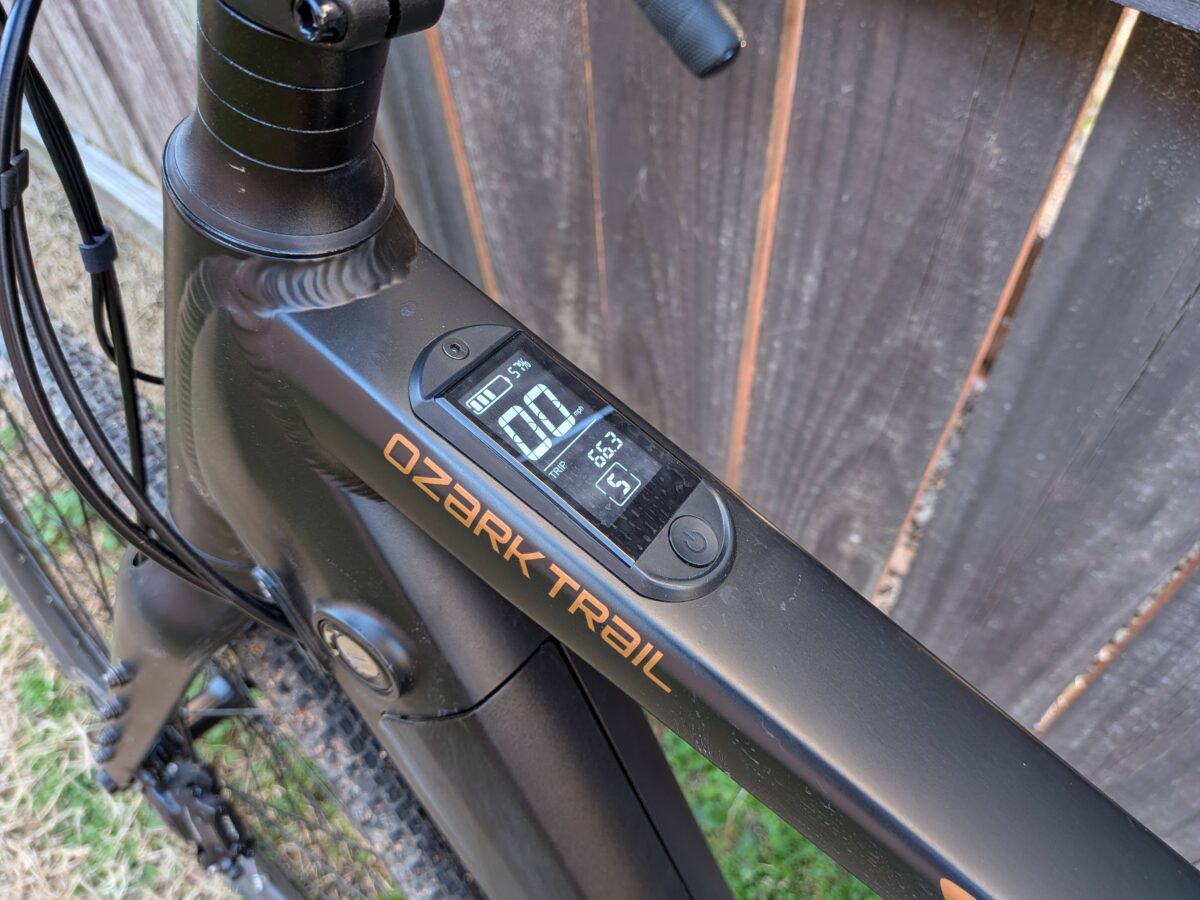
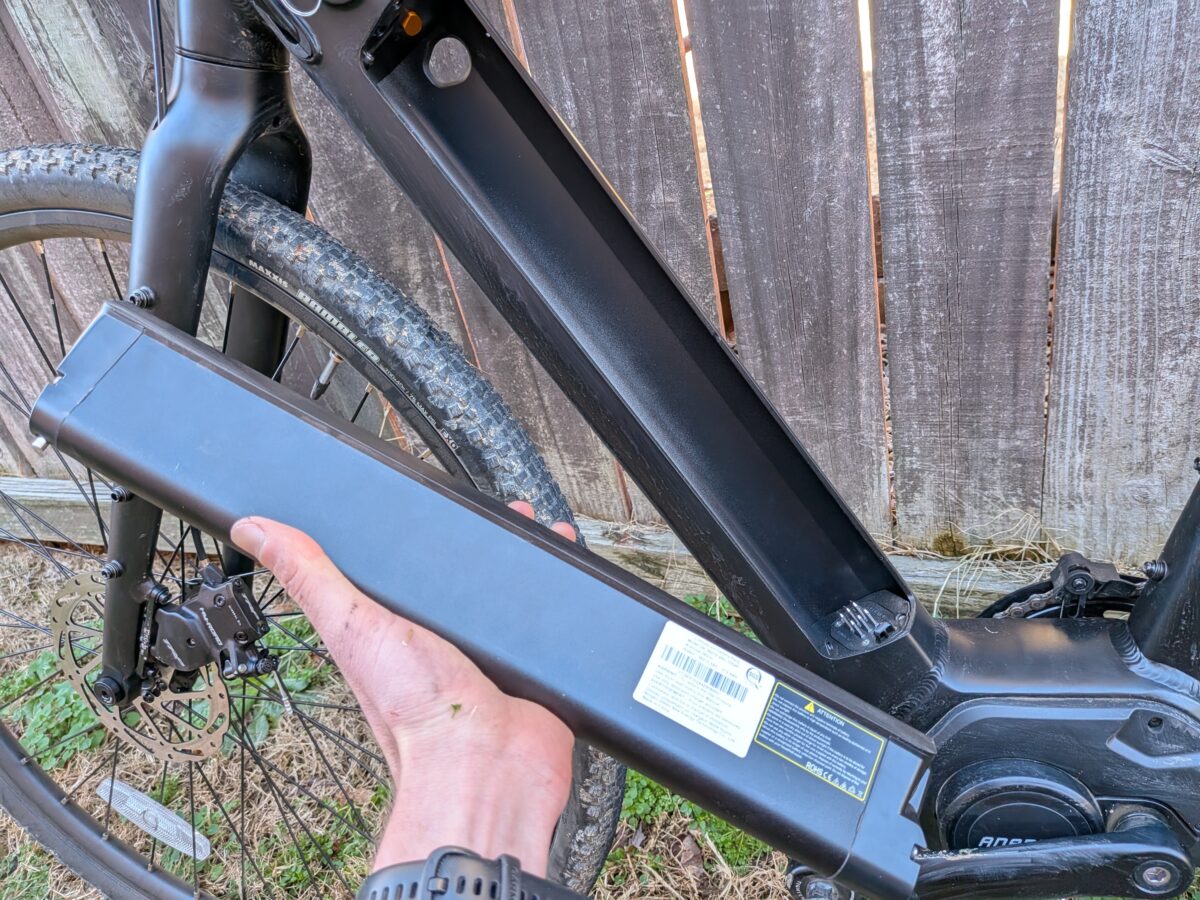
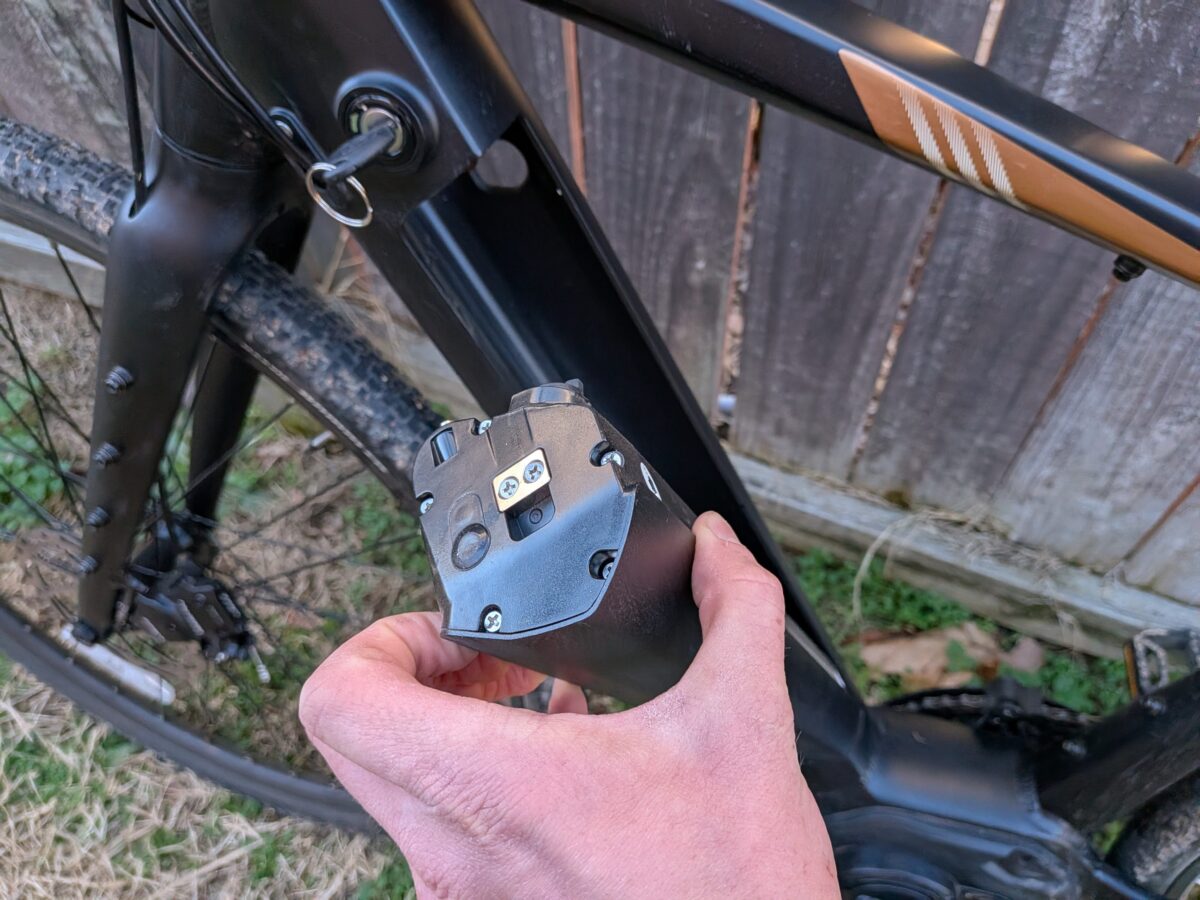
The 36V 10.4Ah (374 Wh) downtube battery keeps weight low and capacity modest to prioritize lightness over all-day range. UL-certified safety and clean integration add reassurance. While larger batteries dominate commuter ebikes, this size suits the active, pedaling-focused nature of gravel riding.
Frame, Sizing, and Style
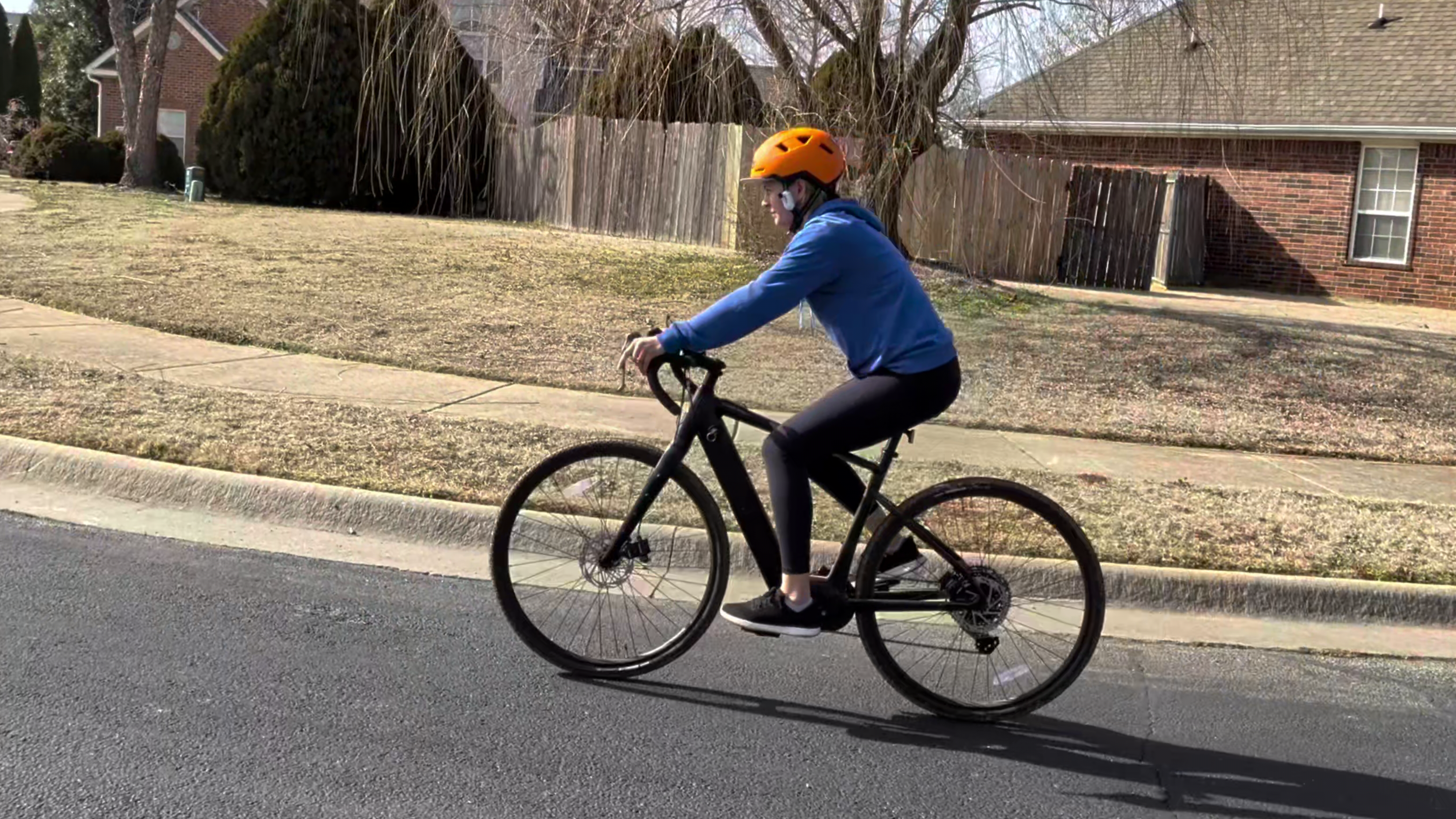
The 6061 aluminum frame and rigid alloy fork deliver a stable, confidence-inspiring ride. At around 41 lbs, it feels remarkably light for an ebike—closer to “acoustic” gravel bikes than many electric models that tip the scales at 50+ lbs. This lightness shines when pedaling unassisted or shouldering the bike over obstacles.
Geometry strikes a comfortable middle ground: flared drop bars aid control on rough descents, while the upright positioning avoids an aggressive race fit. It rewards active riding without punishing longer days.
Ozark Trail G.2 Rebel+: The Full Spec Sheet
Here are the complete specifications for quick reference across all sizes.
Ozark Trail G.2 Rebel+ Performance: How It Rides
We rode varied gravel routes to evaluate everything from casual cruising to demanding efforts, focusing on how the mid-drive system integrates with traditional gravel riding.
Torque Sensor Sensitivity
The torque sensor responds instantly—power scales precisely with input, creating a natural extension of leg effort rather than overriding it. This sensitivity demands mindful pedaling (even resting feet lightly can engage assist), but it rewards technique with seamless power. Motor noise appears under hard efforts—audible but not intrusive, and quieter than most hub systems.
Performance in Each Assist Level
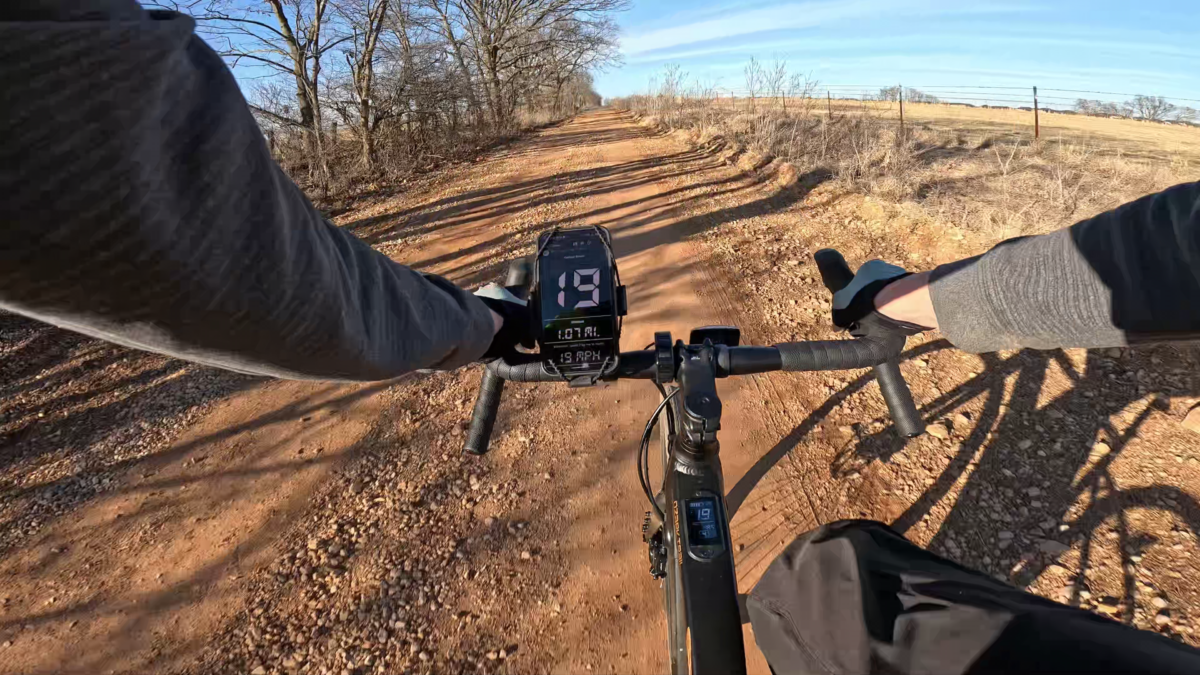
- Level 1: Perfect for flat cruising at 8–9 mph with almost no work; pushing harder reaches 16–17 mph while staying relaxed.
- Level 2: Adds subtle support for rolling terrain without jumping speeds dramatically.
- Level 3: Noticeable boost for maintaining 17–19 mph on flats or light climbs.
- Levels 4–5: Transform effort—18–19 mph feels effortless, with quick, confident acceleration from stops.
The motor eases off just shy of 20 mph (Class 1 compliance), and the gearing provides room to pedal beyond assisted speeds at reasonable cadences.
The “President Bush Push” Climb
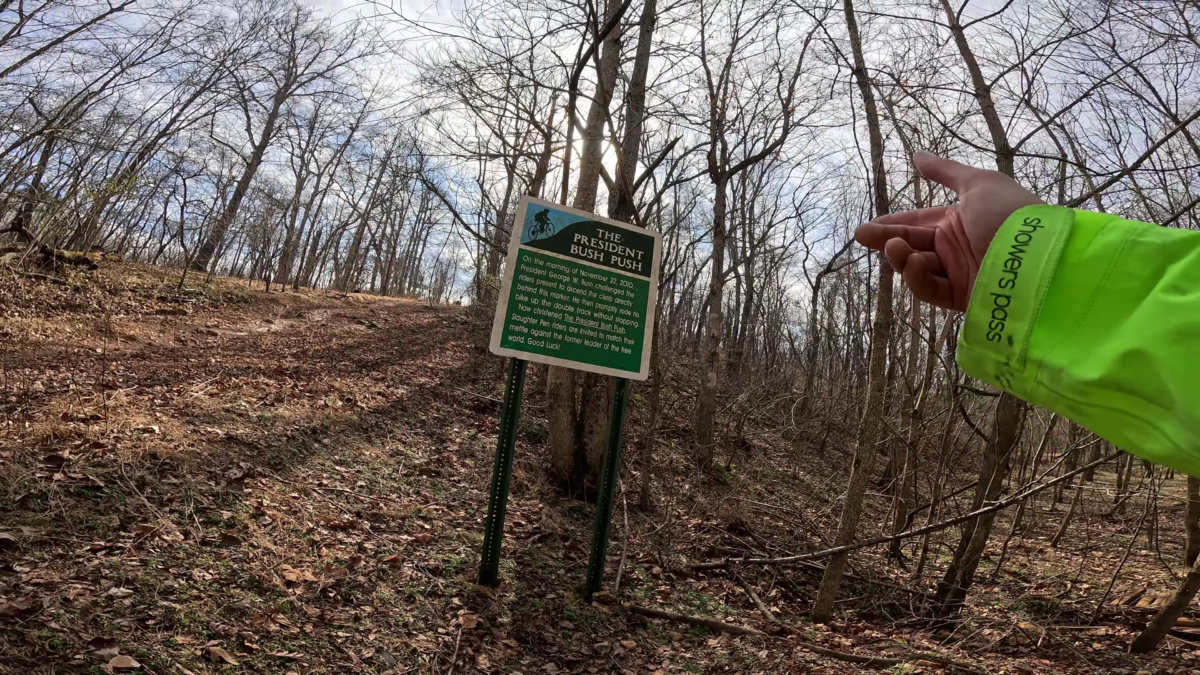
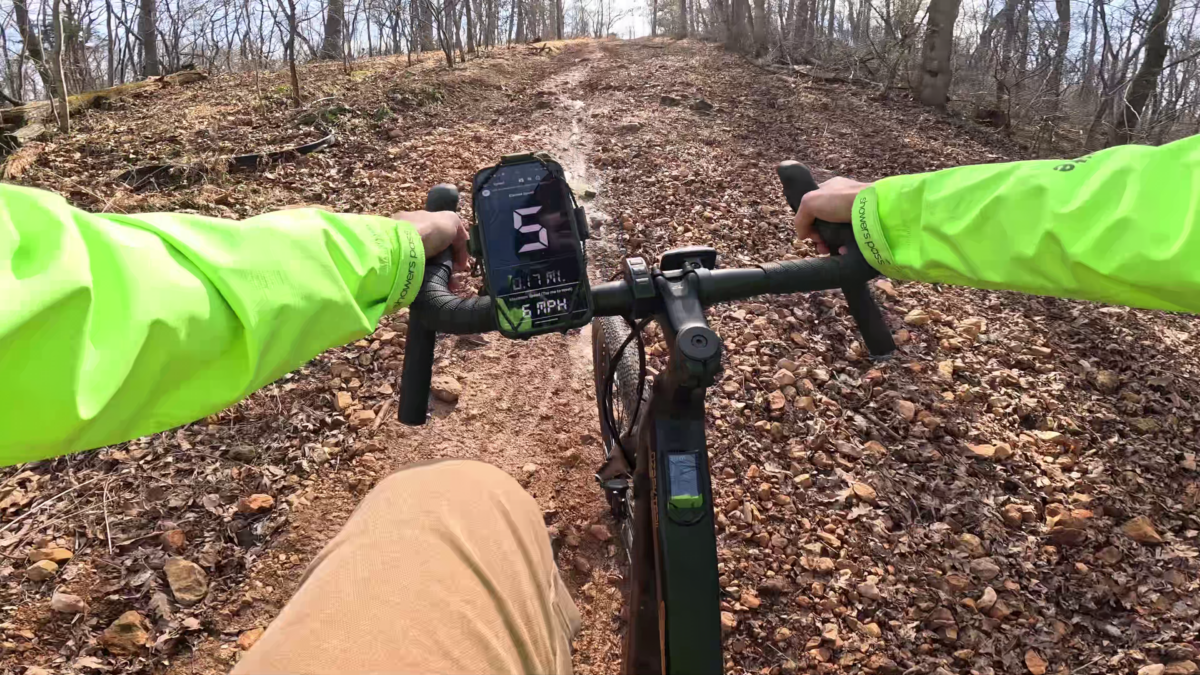
This infamous steep, rocky, loose hill proved the ultimate test. While wet conditions and poor lines caused wheel spin in lower levels, levels 3–5 delivered instant torque that shifted our focus from raw power to maintaining traction. Multiple attempts culminated in clean ascents, proving the motor’s capability far exceeds expectations for its rating.
Standard Paved Hill Climb Test
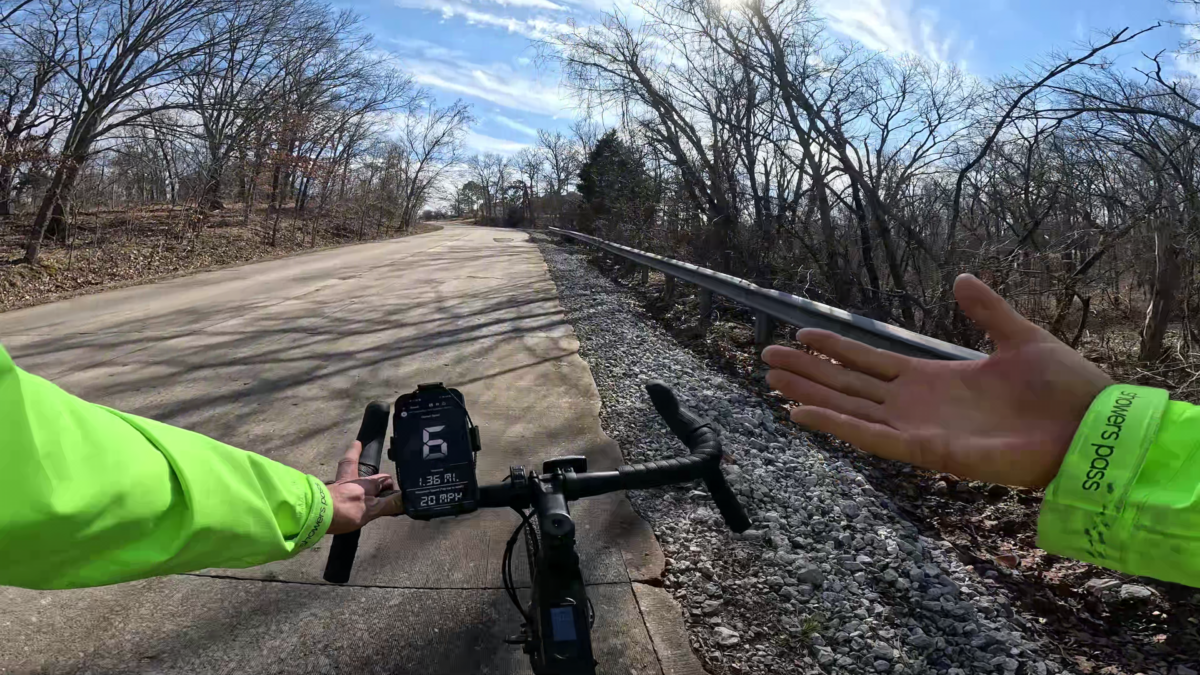
To remove rider skill and extreme traction as variables, we finished with our standard sustained paved hill climb test—a consistent grade we use across reviews for direct comparison. In pedal assist level 5 and a super low gear, the climb felt remarkably effortless: easy, relaxed spinning maintained a steady 8 mph with almost no leg input required. Shifting up and applying moderate effort increased speed comfortably, and the torque sensor responded proportionally without any strain. For a mid-drive at this price point, the capability here was genuinely impressive—the motor powered through the entire climb without hesitation, demonstrating strong real-world performance on sustained grades.
What competition is there? Ride1Up Roadster V3 vs. Ozark Trail G.2 Rebel+
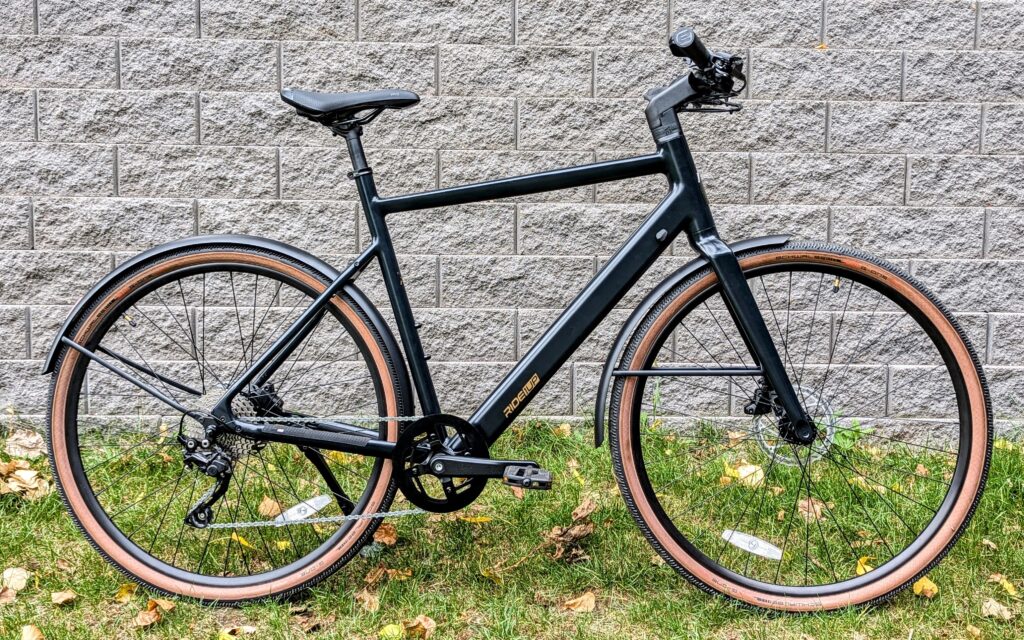
At this aggressive price point, the most compelling alternative is the Ride1Up Roadster V3, it retails for roughly the same price (~$1,295) for the base model. Both bikes target riders looking for a lightweight, sporty feel, but they take very different approaches.
Mid-Drive vs. Hub-Drive
The Ozark Trail uses a mid-drive motor, which leverages the bike’s gears to climb more efficiently and keeps weight centered for better off-road handling. The Roadster V3 opts for a stealthy 500W Mivice hub motor with a torque sensor. While the hub motor is smoother and quieter on pavement, it cannot match the raw climbing torque of the Rebel+ on steep hills.
Drivetrain and Suspension Options
The Roadster V3 stands out for its customizability. You can choose between a single-speed belt drive for a silent, maintenance-free ride, or a 10-speed chain drive for tackling hills—both priced at $1,295. For riders who want extra comfort on rough roads, the chain-drive version is also offered with a suspension fork for $1,445. In contrast, the Ozark Trail comes in a single configuration: a rigid fork with a 10-speed gravel drivetrain.
Tires and Terrain
The Rebel+ is built for gravel with 40c Maxxis Rambler tires and drop bars. The Roadster V3 is a road-focused machine, equipped with premium Schwalbe G-One RS tires (or similar) that are fast on pavement but capable of light gravel.
Other Notable Competitors
If you are willing to stretch your budget, two other bikes are worth a look:
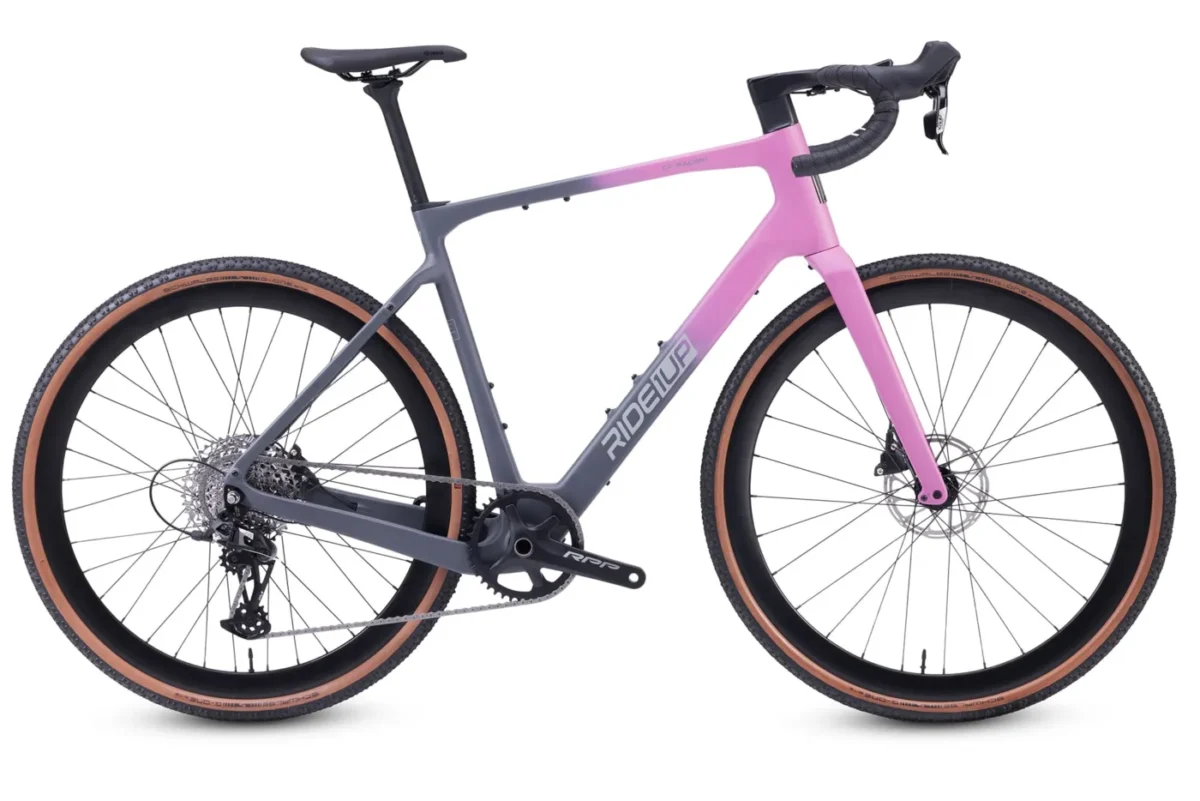
Ride1Up CF Racer1 ($2,195): For about $900 more, you can jump to the CF Racer1 from Ride1Up that features a full carbon fiber frame that weighs just ~28 lbs. It features a stealthy hub motor and significantly better ergonomic placement for the pedal assist controls compared to the Ozark Trail.
Read our full CF Racer1 review to learn more!
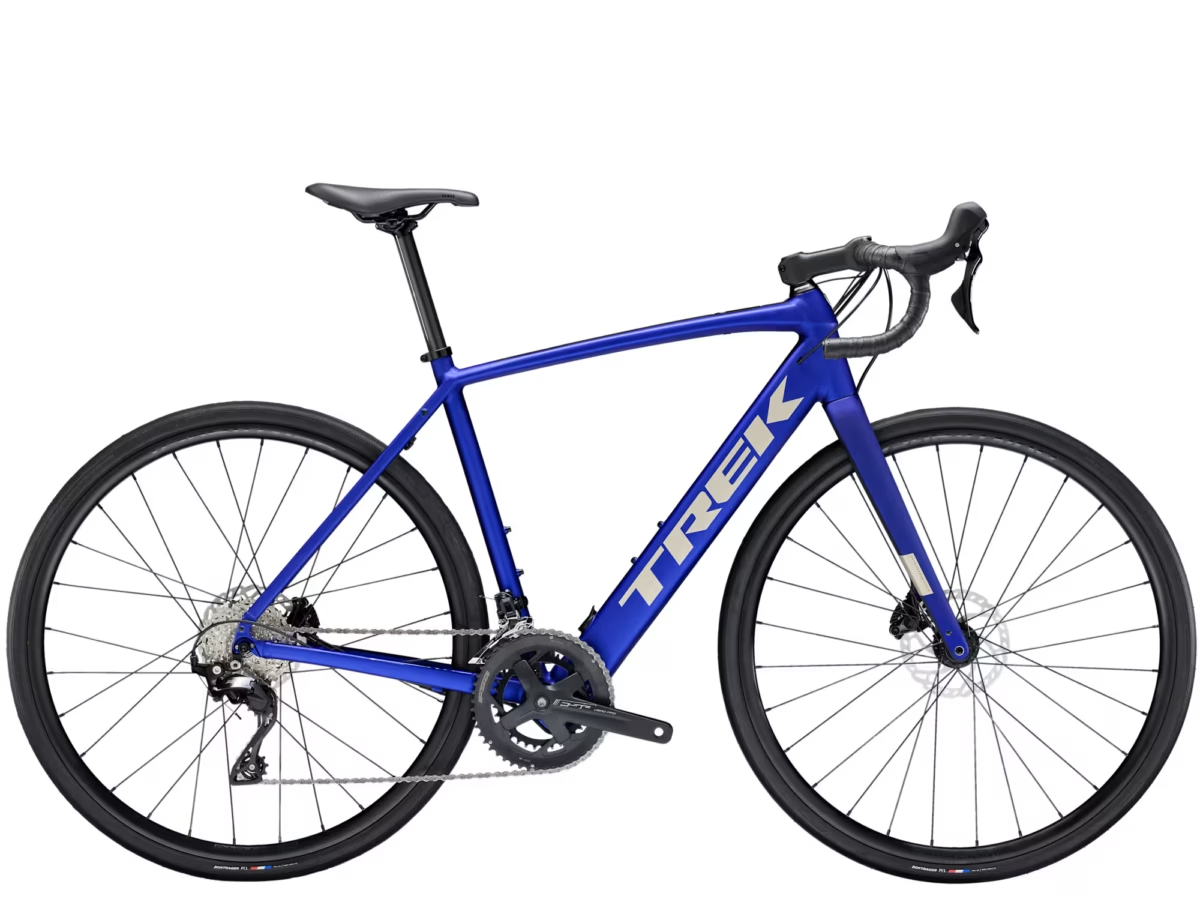
Trek Domane+ AL 5 (~$2,699): As Trek’s entry-level electric road option, the Domane+ AL 5 provides a similar lightweight alloy experience. It features a premium HyDrive hub system and comes with the peace of mind of local dealer support, though it costs nearly double the price.
Ozark Trail G.2 Rebel+: Pros and Cons
Excellent!
The Final Verdict: Who is the Ozark Trail G.2 Rebel+ For?
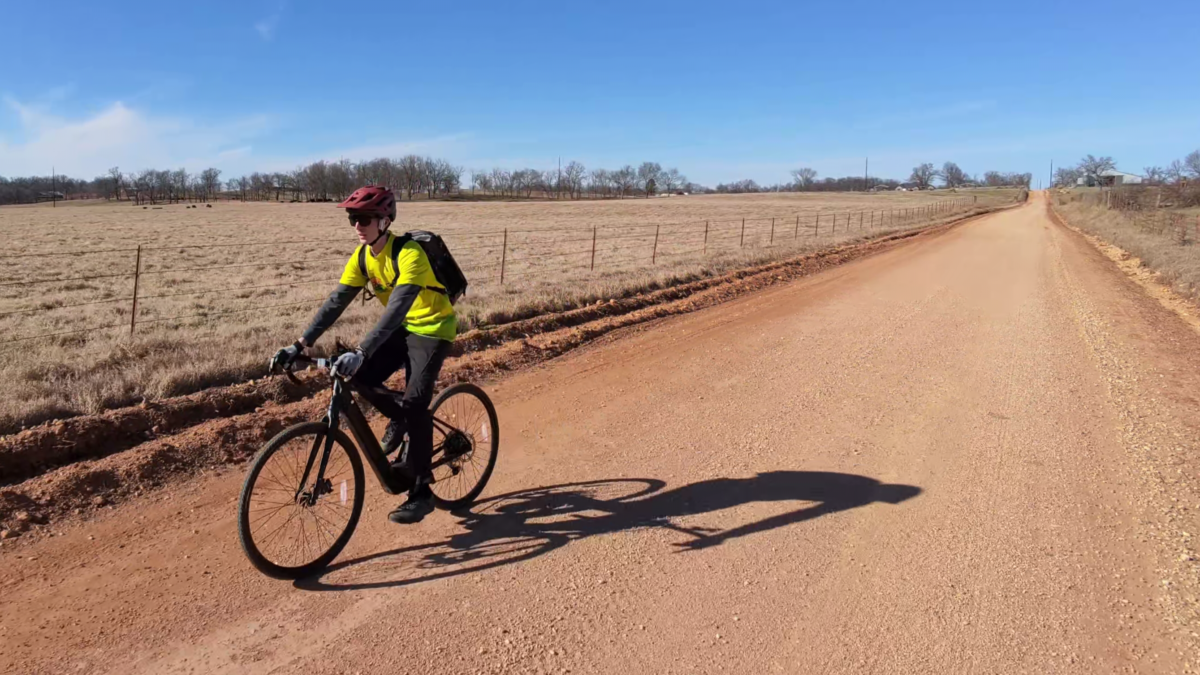
The G.2 Rebel+ targets gravel riders curious about electric assist but unwilling to abandon the pure pedaling experience. Its torque sensor extends adventures, smooths brutal sections, and levels group-ride fitness gaps without turning the bike into a throttle-dominated moped.
It also suits mixed-surface commuters prioritizing drop-bar feel and lighter weight over massive range. In a segment dominated by expensive European brands, this Walmart offering legitimately expands access to mid-drive gravel riding. Minor big-box caveats exist (like potential shipping adjustments), but the core riding experience delivers far more than the price suggests.
Interested in the G.2 Rebel+? It’s sold exclusively online at Walmart.com. Check current pricing and availability through our affiliate links (purchases help support reviews like this at no extra cost to you):
Small (5’1″ – 5’7″)
Medium (5’7″ – 5’11”)
Large (5’11” – 6’3″)
