

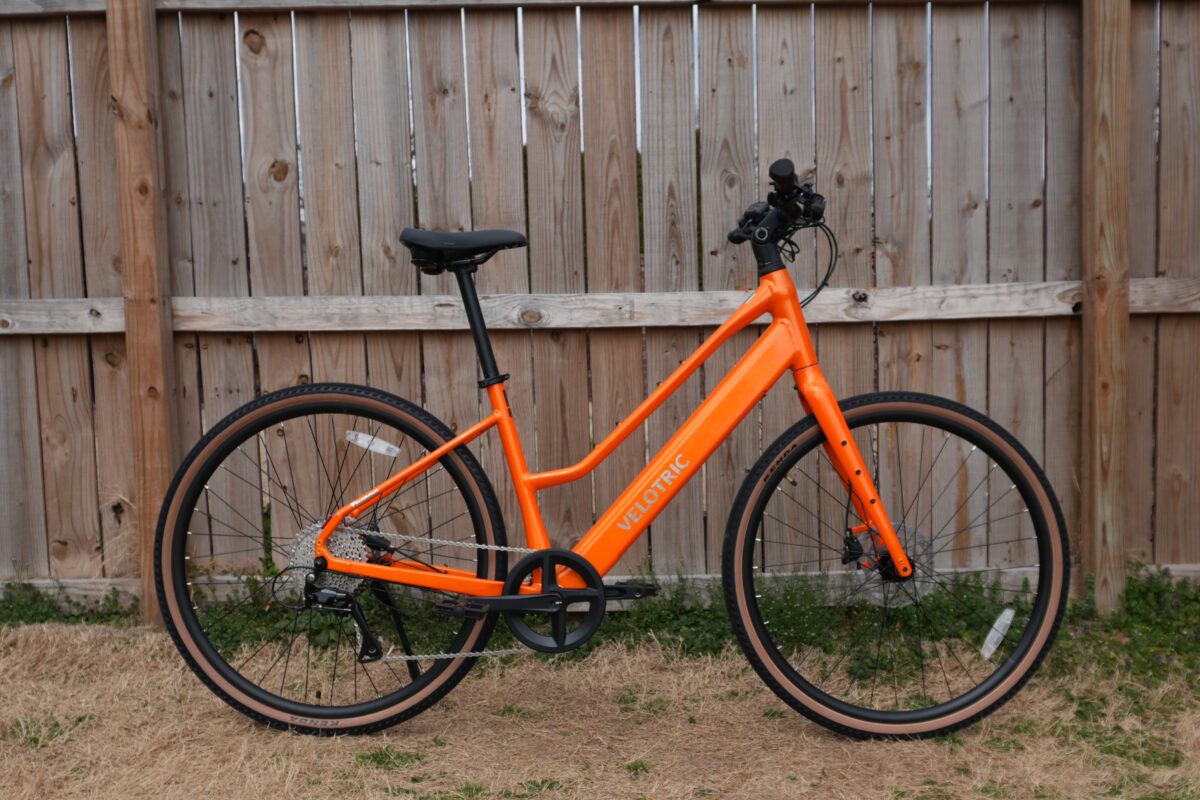
Lightweight ebikes usually come with an asterisk. Sometimes it is the sealed-in battery, sometimes the missing throttle, sometimes a single frame option that fits about half the people who want one. Not this one. At a launch price of $1,499, the Velotric Tempo is advertised at 39 lbs with the battery, and it still arrives with a removable pack, a thumb throttle, two frame styles in two sizes each, and Shimano components that punch above what we normally see at this price.
Anyone who has followed the brand will recognize the silhouette, because this is the next chapter of the T1 ST Plus. What has changed is nearly everything under the hood, including the newer Velotric features we have watched standardize across the lineup and one genuinely new idea: an included heart rate monitor that lets the motor manage your effort instead of your speed with their new “Pulse” mode.
If you are considering picking up a Velotric ebike, we would appreciate it if you used our affiliate link when purchasing, it helps make reviews like this one possible. Save on your next Velotric ebike with discount code: eBikeEscape60
Velotric ships most of its current bikes with a MIK rack. If yours has one, bags, baskets and coolers click on without straps; see our MIK-compatible bags and baskets for what fits.
Velotric Tempo YouTube Review: See It In Action!
Numbers on a page will not tell you what Pulse Mode feels like, so the video is where you can watch the zone meter react in real time as our test rider’s heart rate climbs. See how it performed on our test hill, take a close-up look at every component, go screen by screen through a settings menu that has grown considerably, and watch the optional rack and fender install so you know what you are signing up for.
Key Features of the Velotric Tempo
Ultra-Lightweight Build with a Removable Battery
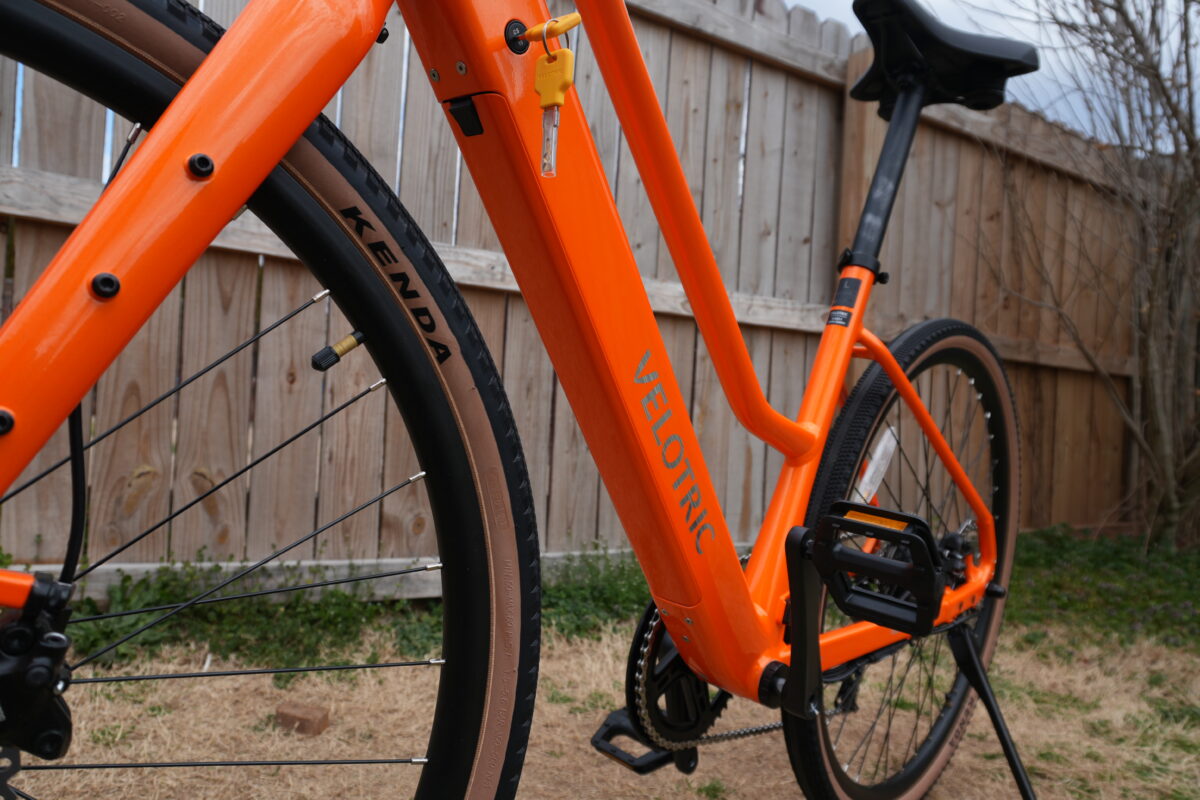
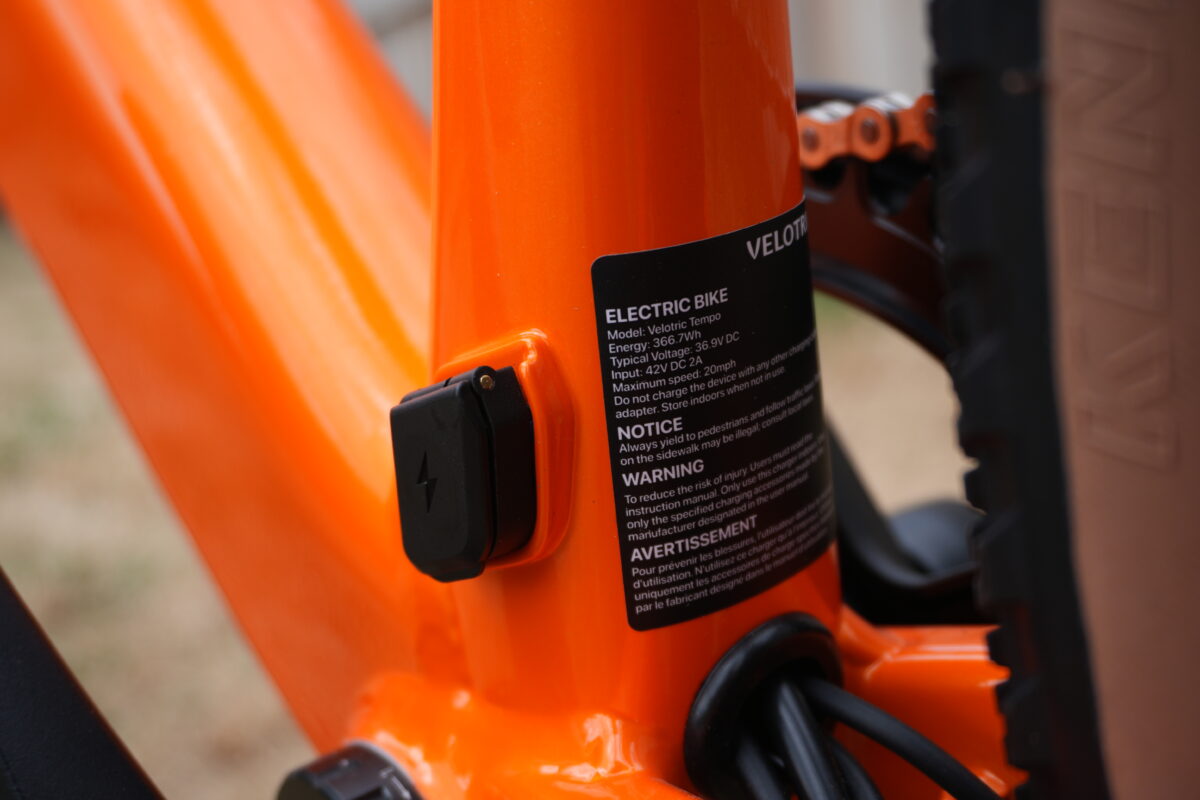
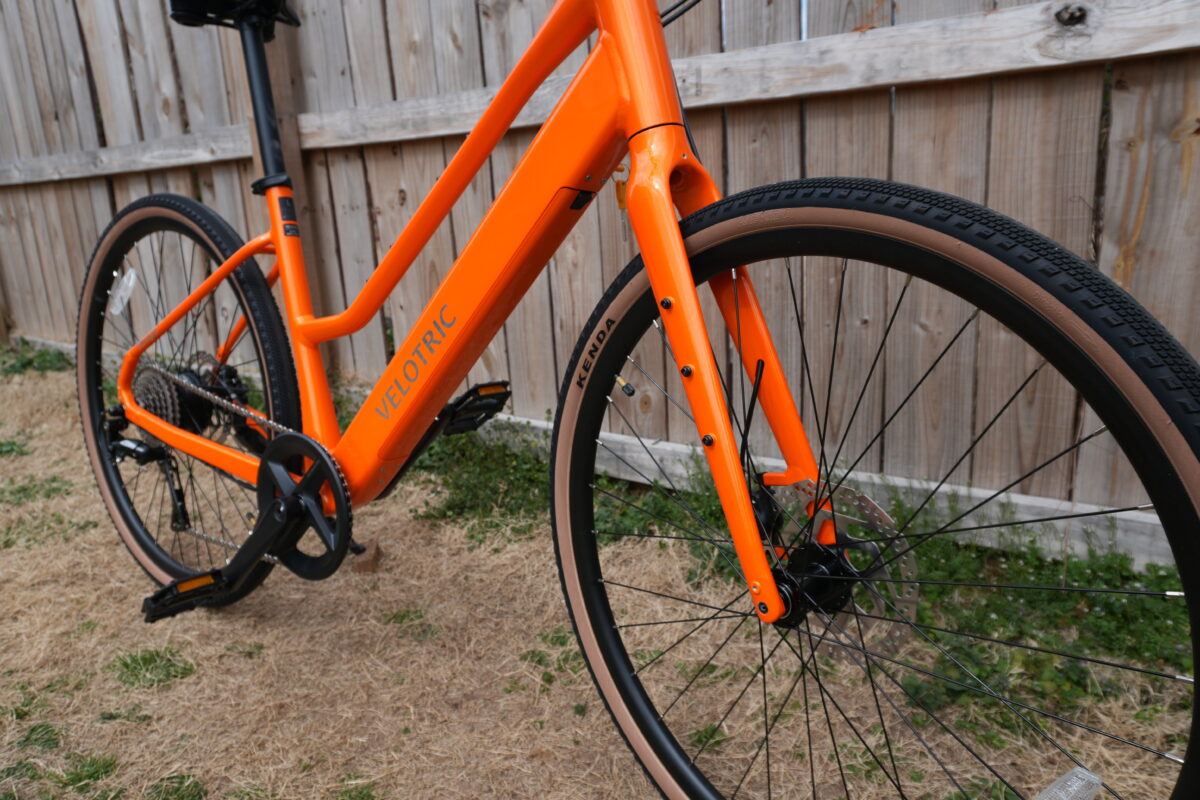
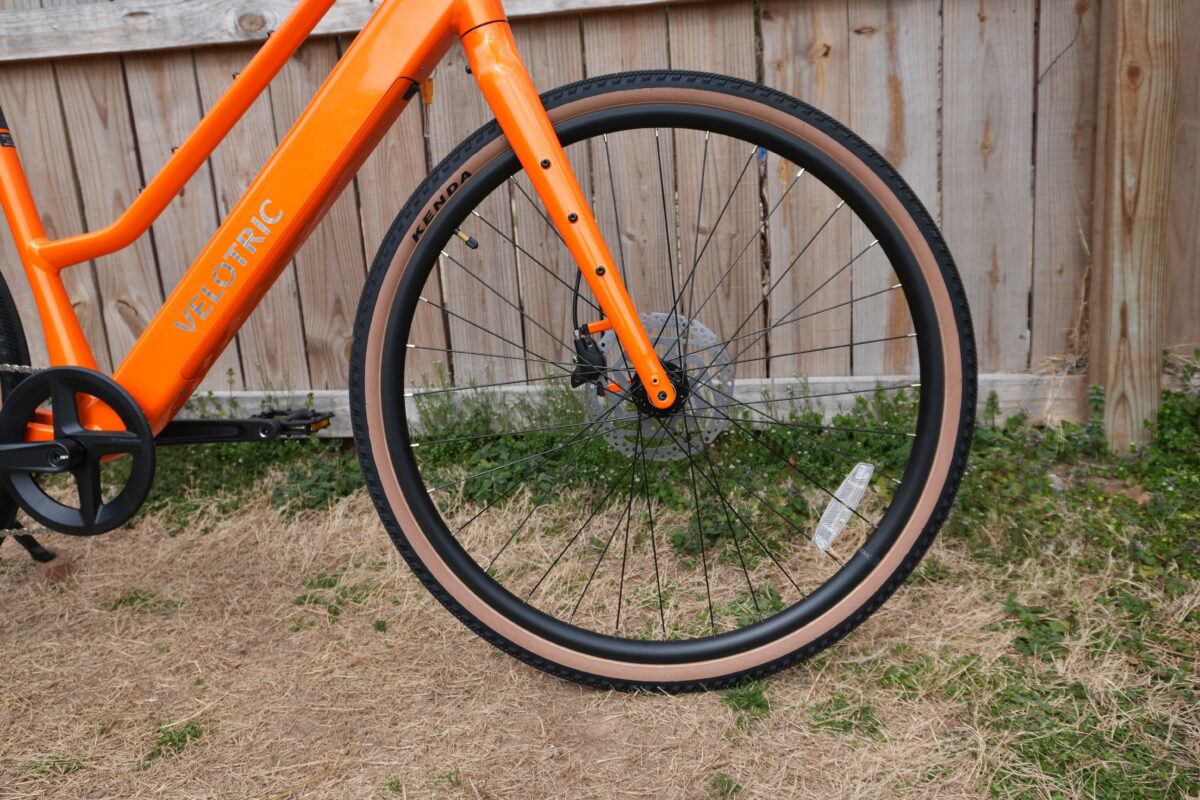
Advertised at 39 lbs with the battery, this is a bike you pick up one-handed without thinking about it. A rigid fork is typically baked into the recipe at this weight, which makes the Tempo best on pavement, though the hybrid Kenda tires do carry a bit of tread on the sides to give you some grip should you need it. At 374Wh, the battery is smaller than what a heavier commuter carries. The bigger win is that it is removable, unlike the sealed-in pack on the T1 ST Plus, so you can carry it inside for charging and winter storage, a detail that matters a lot to those of us in a colder state like Wisconsin. Velotric claims up to 60 miles, though we would plan on 20 to 30 if you lean on the motor over an average route. Should you run out of juice, an ebike this light is not too difficult to pedal even without motor support.
Quiet 350W Motor with SensorSwap
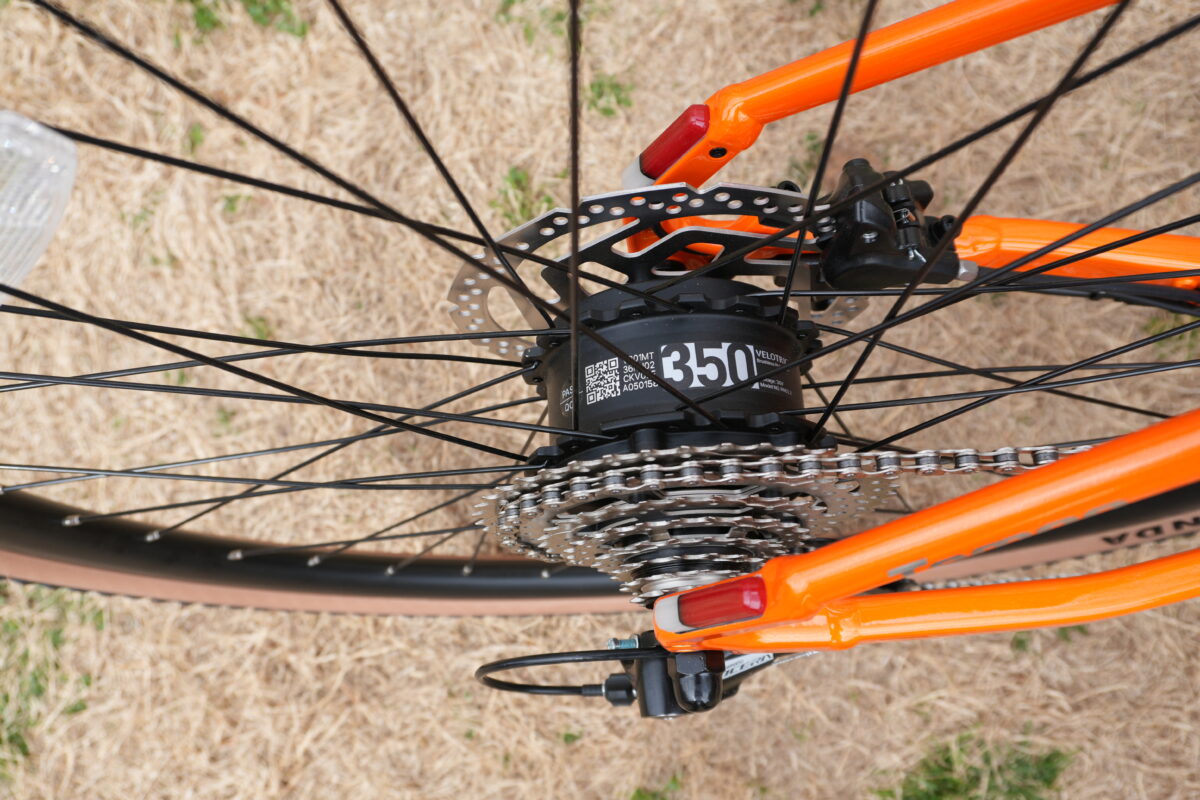
Power comes from a 36V 350W rear hub motor rated at 650W peak and 45Nm of torque, a modest bump over the T1 ST Plus. It offers enough power to amplify your effort without taking over the ride. One feature now standard across Velotric’s lineup is SensorSwap, which lets you switch between the natural feel of a torque sensor and the consistent power of a cadence sensor. You can make that change in the app, in the display settings, or on the fly by holding the menu button while you are moving. Being able to flip between them effectively gives you two bikes, and it eliminates one of the biggest questions people face when buying an ebike.
Pulse Mode and the Included Heart Rate Monitor
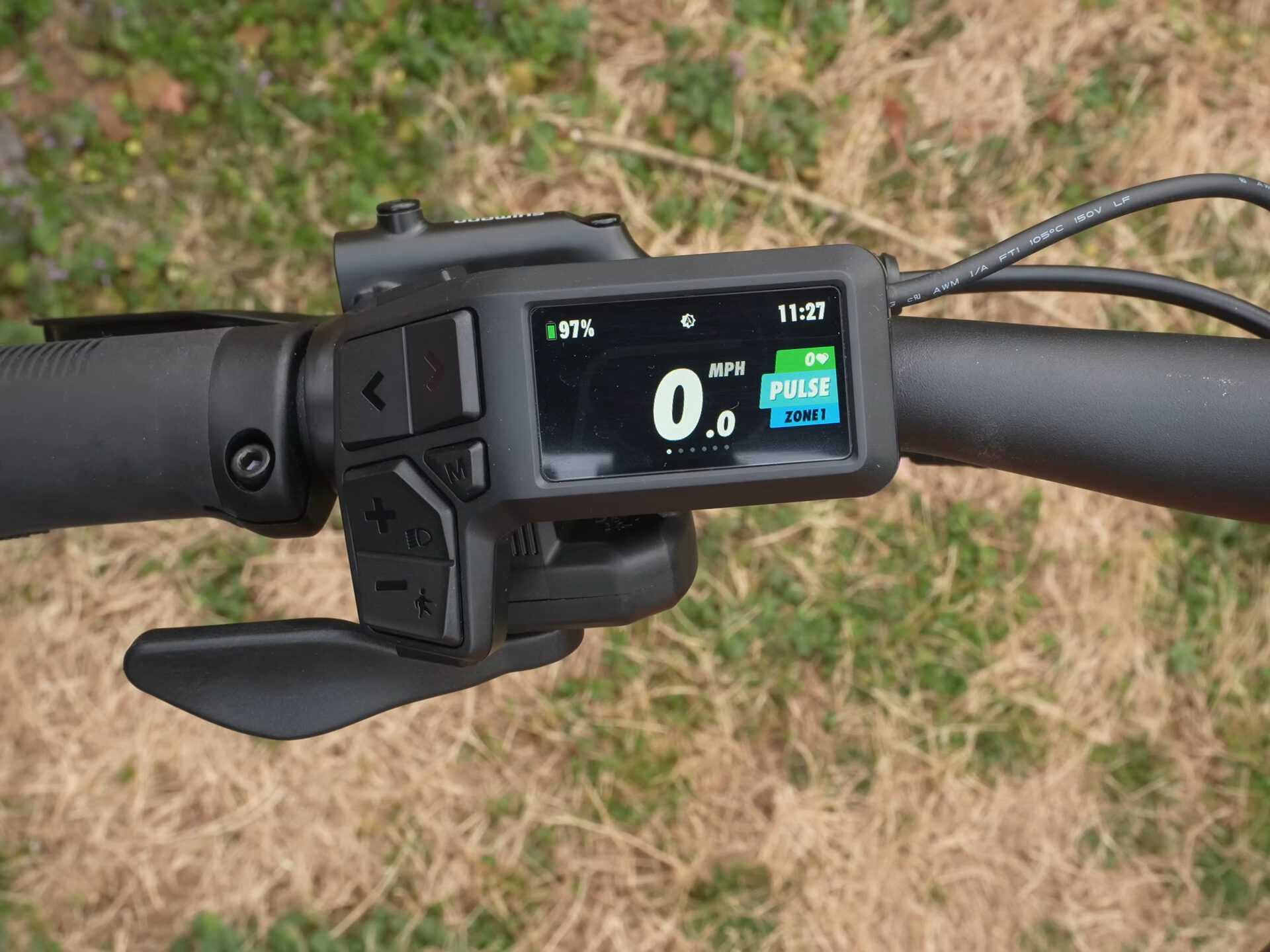
Pulse Mode turns the Tempo into a zone training tool. A heart rate armband comes in the box. Once it is paired, a new setting appears one notch below off on the assist scale. Instead of choosing a power level, you choose a heart rate zone from one through five, and the motor manages assist to hold you there. Enter your age, height, weight, and riding preferences in the app profile to tailor it. If that sounds like more than you want, connect the monitor for data only and watch your live and average heart rate on its own display screen.
Custom Ride Experience
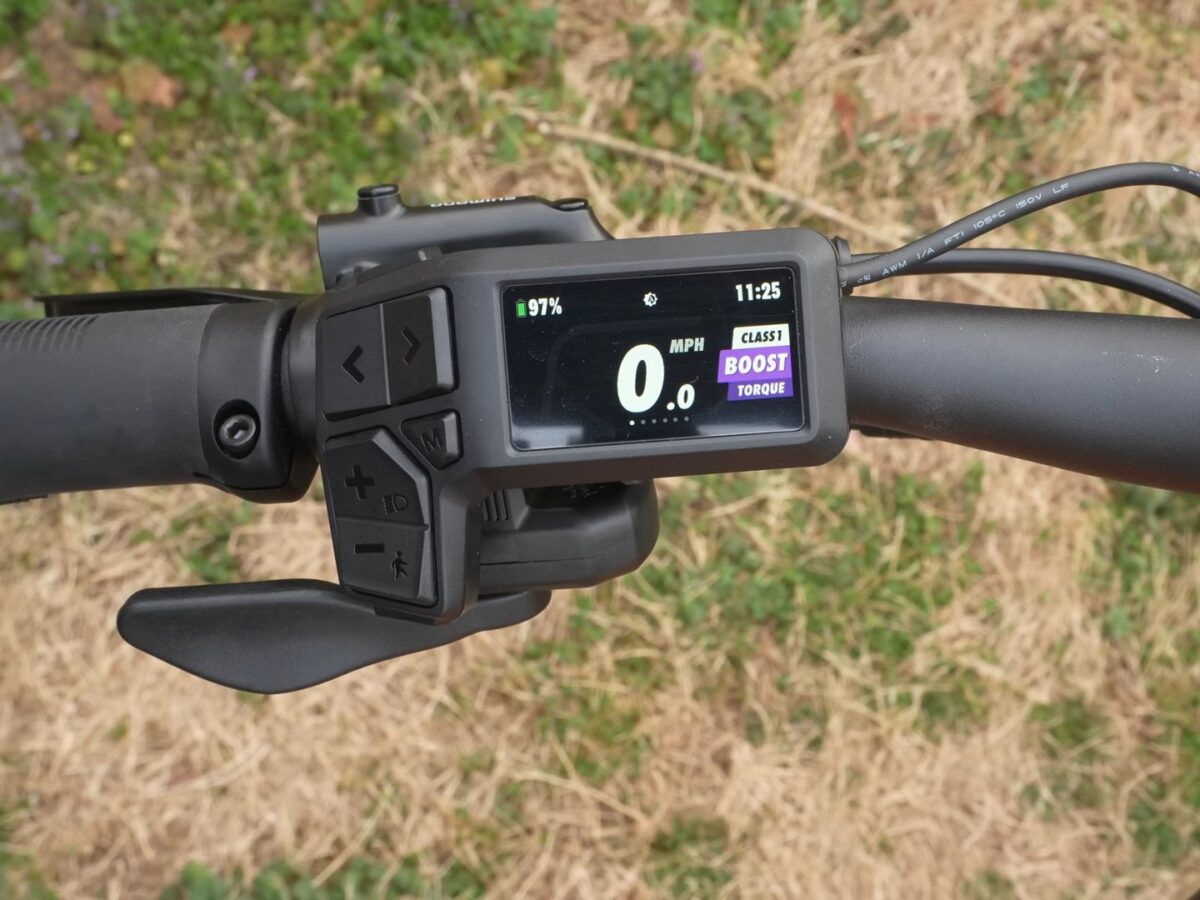
Almost everything about how this bike delivers power is adjustable. Four riding modes (Eco, Trail, Sport, Boost) replace the layered 15-level assist system from the T1 ST Plus, and Ride Tuning lets you set max torque, assistance, and assisted start for each one. A setting called Experience controls how power arrives, with slow, smooth, and turbo options that apply independently to pedal assist and throttle. You can also cap your own top speed as low as 12 mph, with separate values for throttle and pedal assist, and Throttle Sync adds throttle limits within each riding mode on top of that. Class 1, 2, and 3 switch with a single button press, and cruise control is built in. Nearly all of it is reachable from the display without pulling out your phone. The app is still worth opening, since it shows the state of every setting on one page, and it handles ride tracking and over-the-air firmware updates.
Integrated Lighting, Security, and Tracking
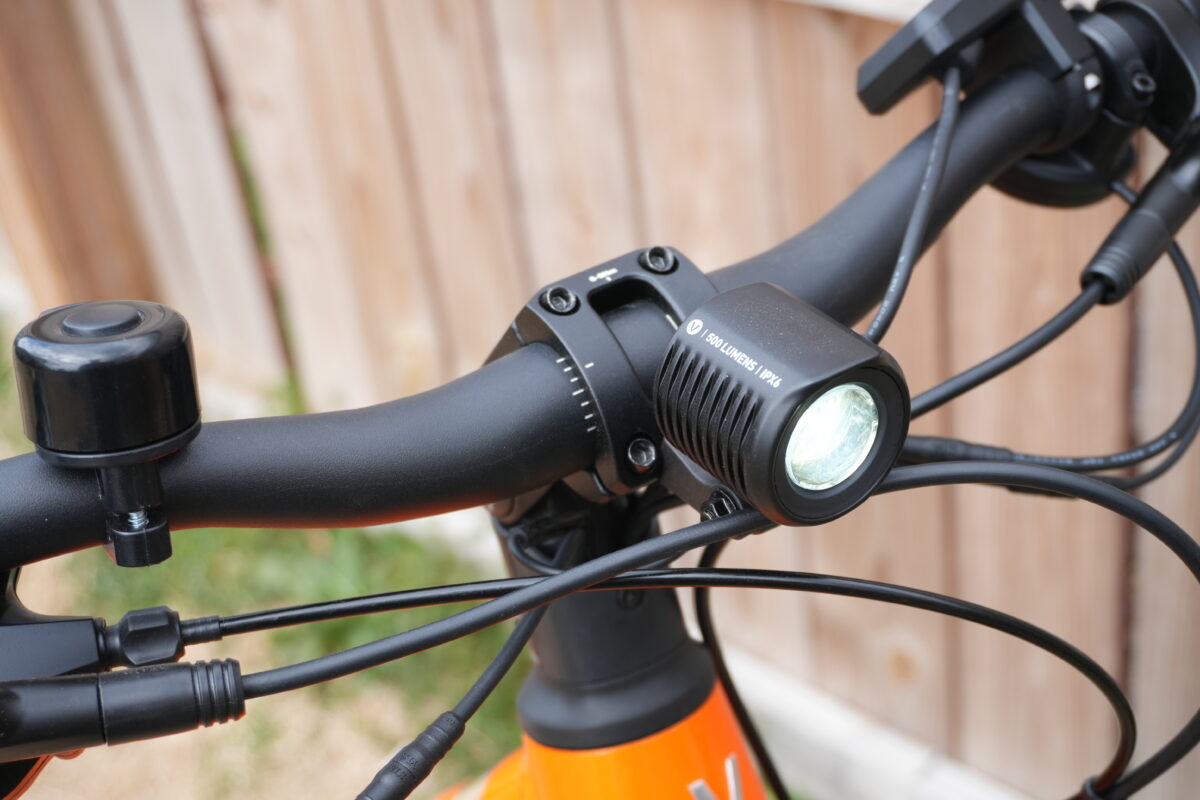
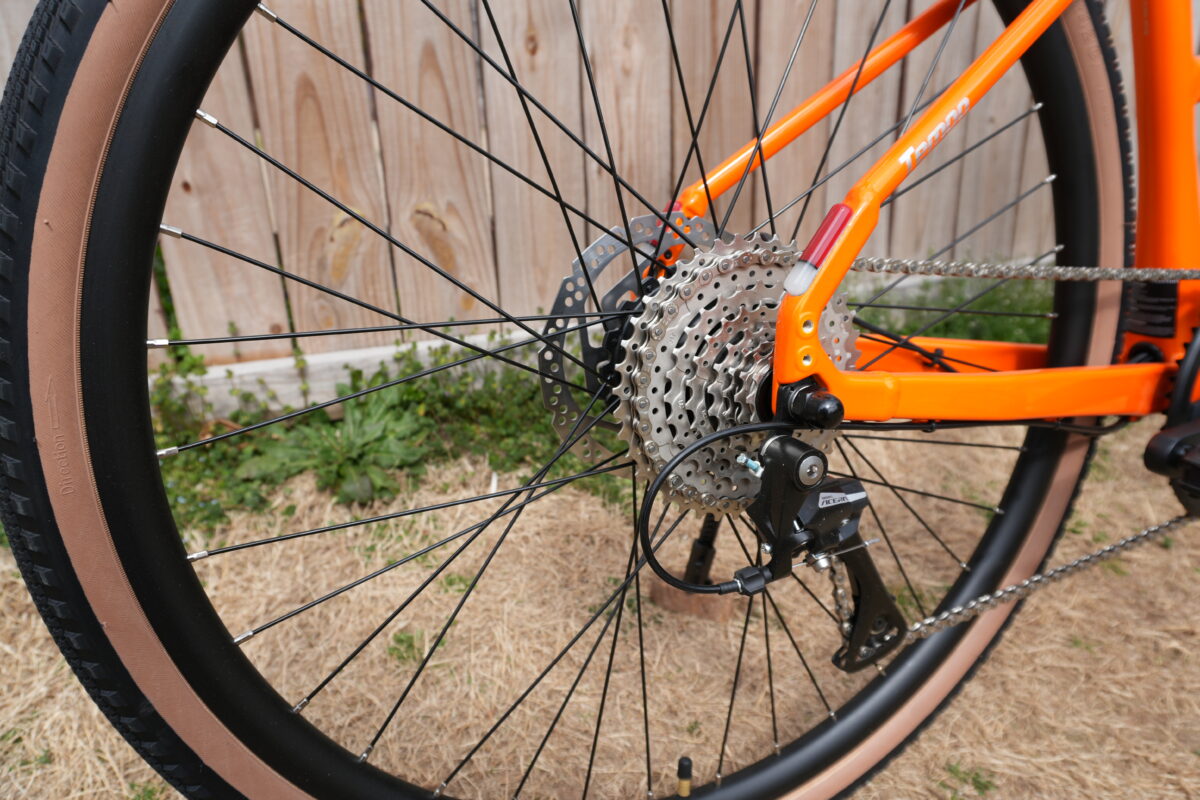
Lighting is a real step up from what the T1 ST Plus shipped with. Up front is a 500-lumen IPX6-rated headlight. Out back, seat stay integrated lighting is brake actuated and includes turn signals, with an audible chime you can switch off in settings if it wears on you. Security carries over from the rest of the lineup, so included NFC cards unlock the bike with a tap instead of a passcode, and tracking runs through both Apple Find My and Android Find Hub.
Shimano Drivetrain and Braking
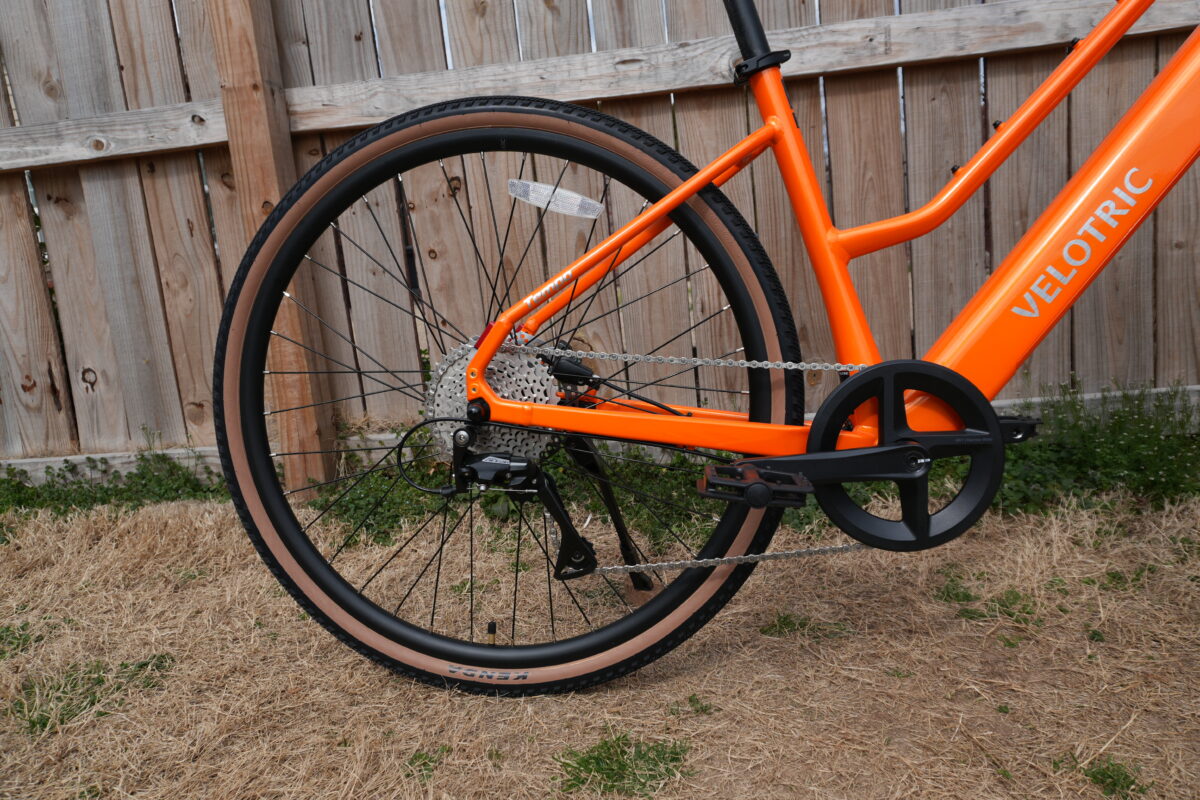
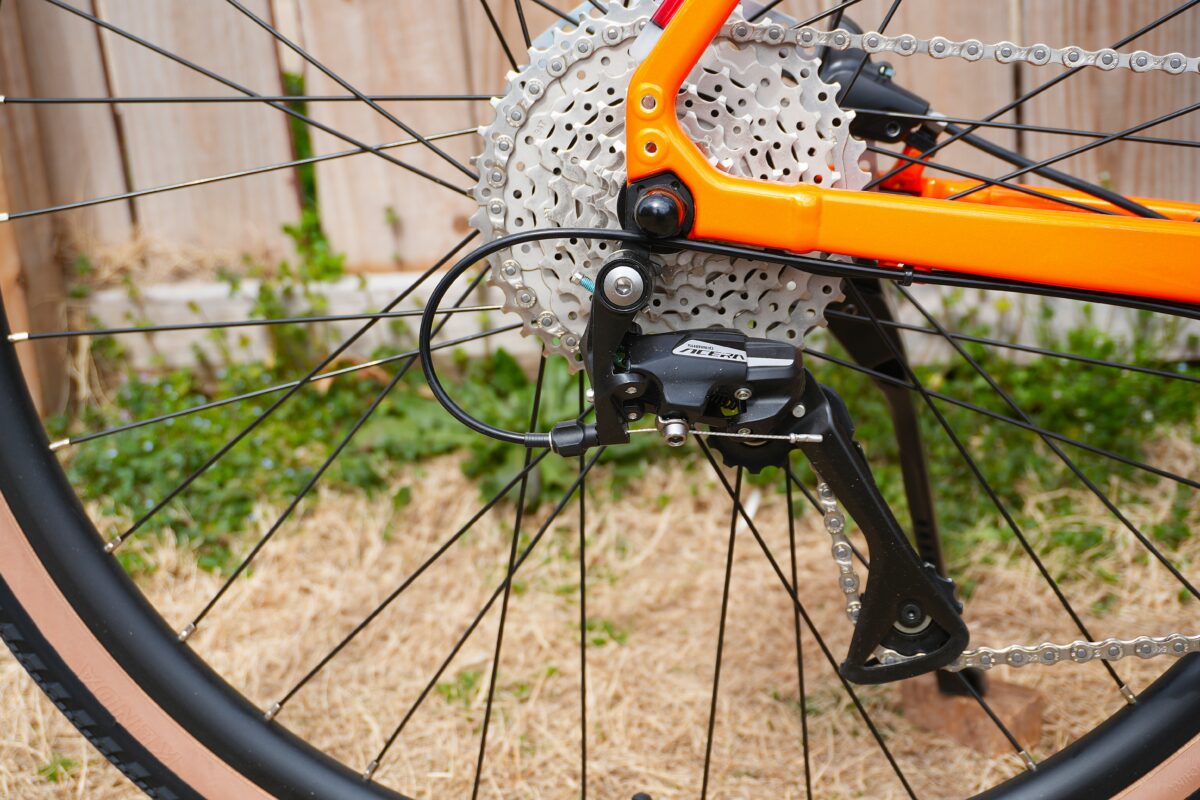
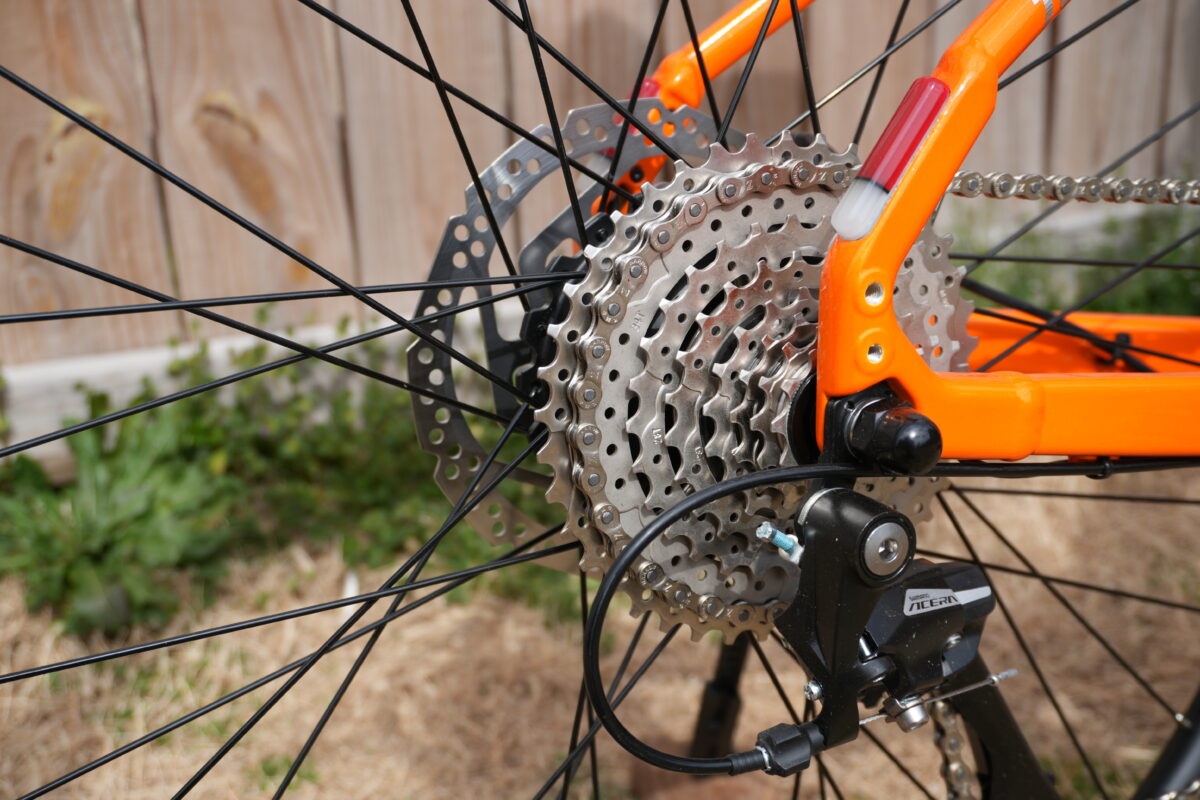
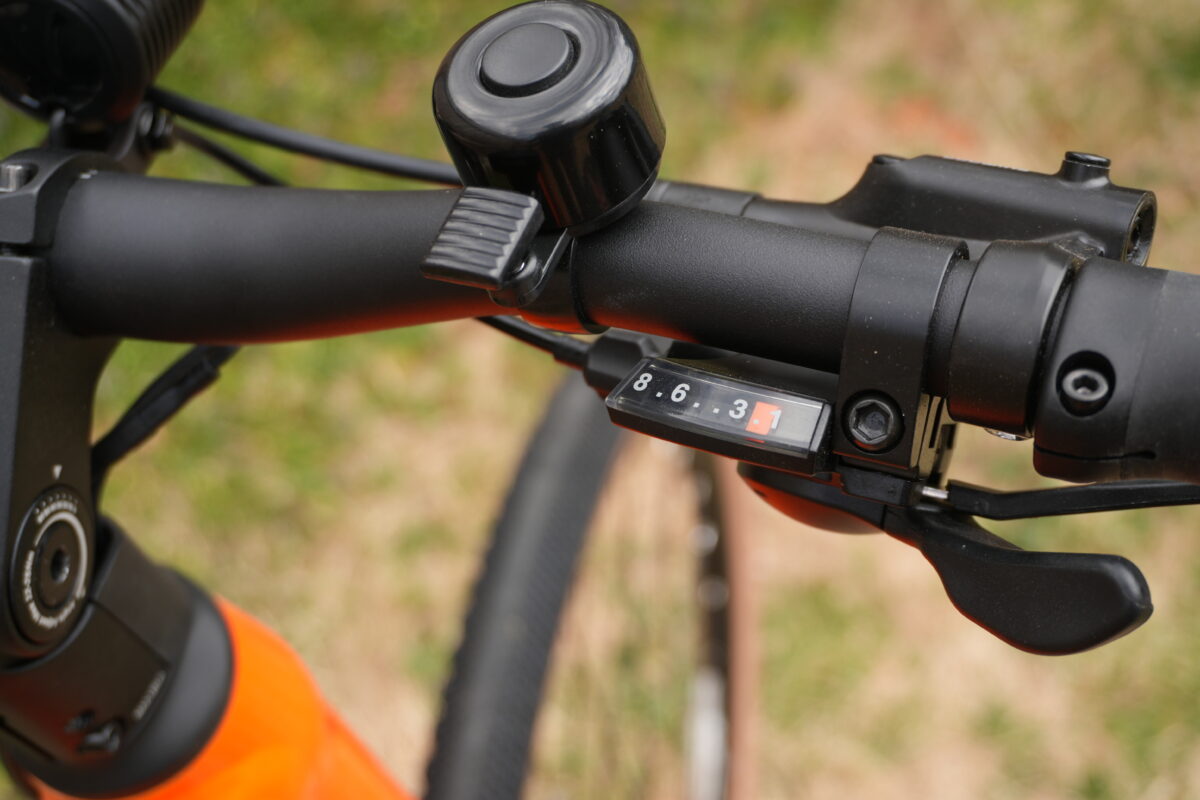
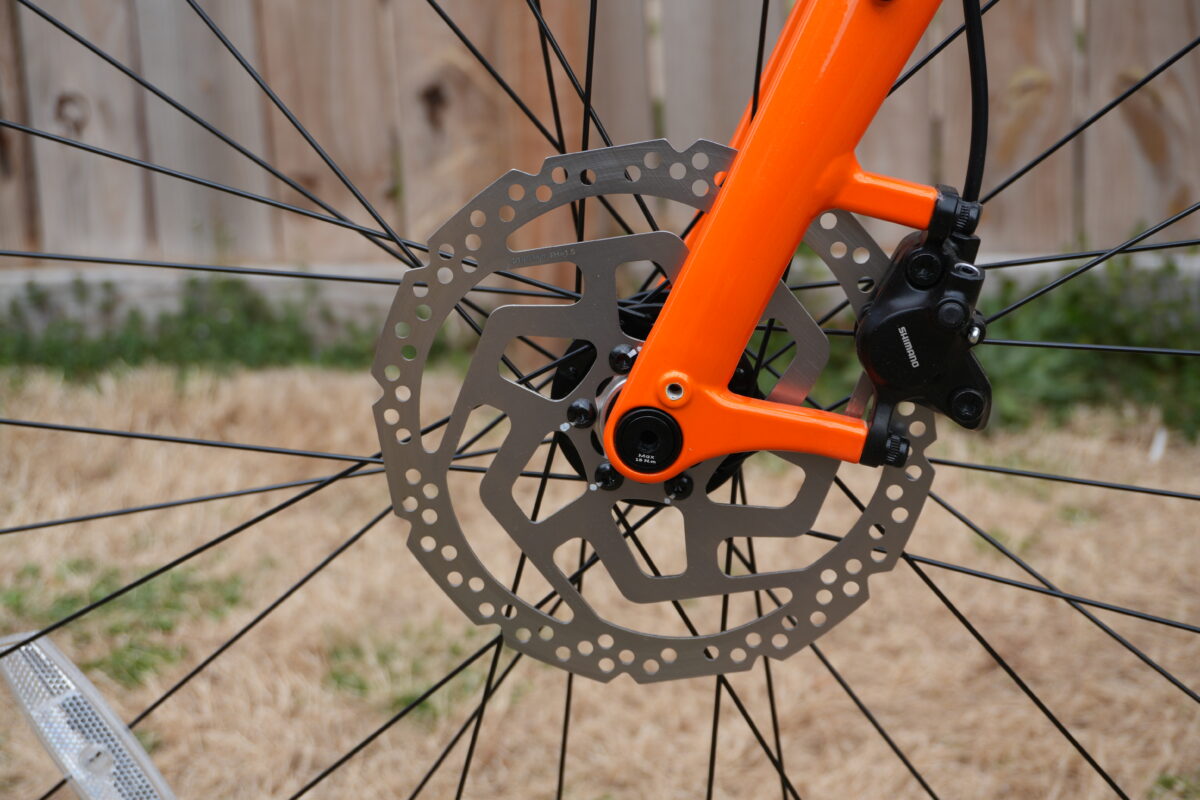
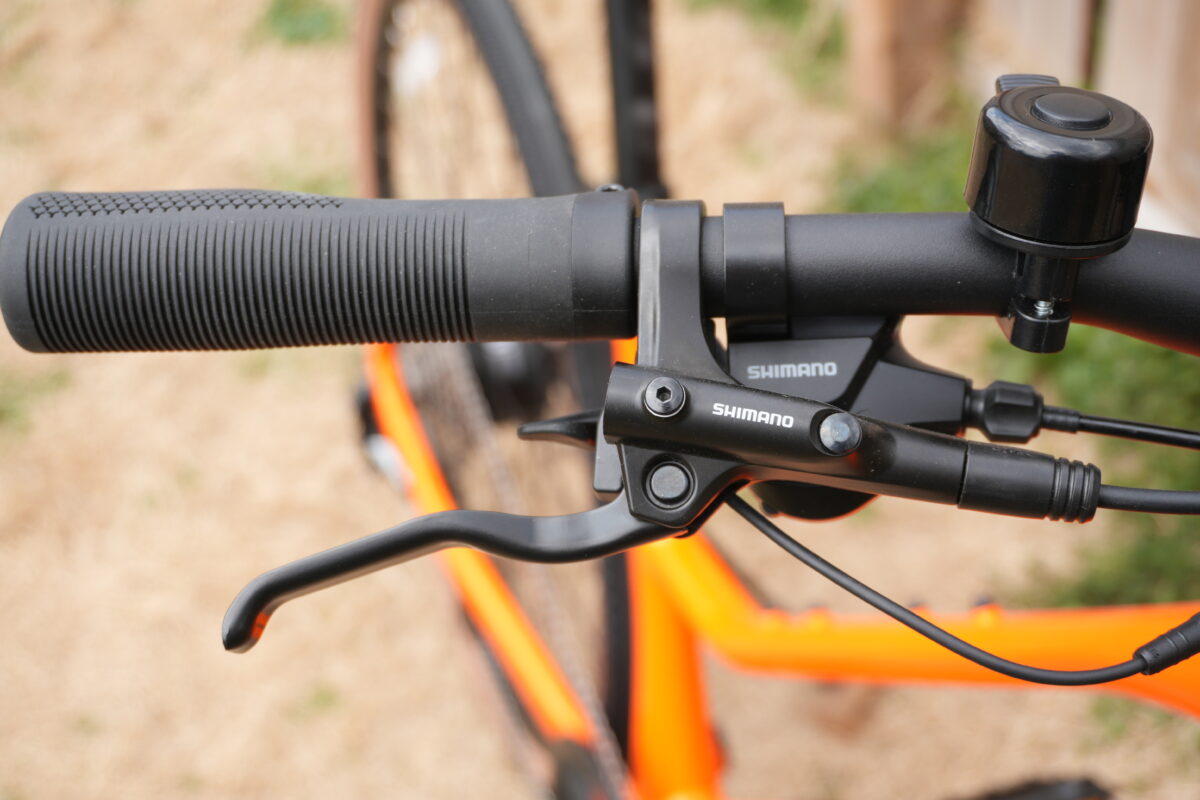
Component quality is where this bike separates itself at this price. Shimano handles both ends, the drivetrain and the brakes. An 8-speed Acera derailleur and trigger shifter are a step up from the derailleurs we usually see on ebikes like this, with a gear range wide enough to hold a comfortable cadence at top speed while still leaving a bailout gear for challenging climbs. Hydraulic disc brakes are standard in this category, but Shimano hydraulics are not. They are paired with 180mm rotors on the front and rear, and the levers include motor cutoff, a must for any bike with a throttle.
Frame Styles, Sizing, and Colors | Velotric Tempo Review
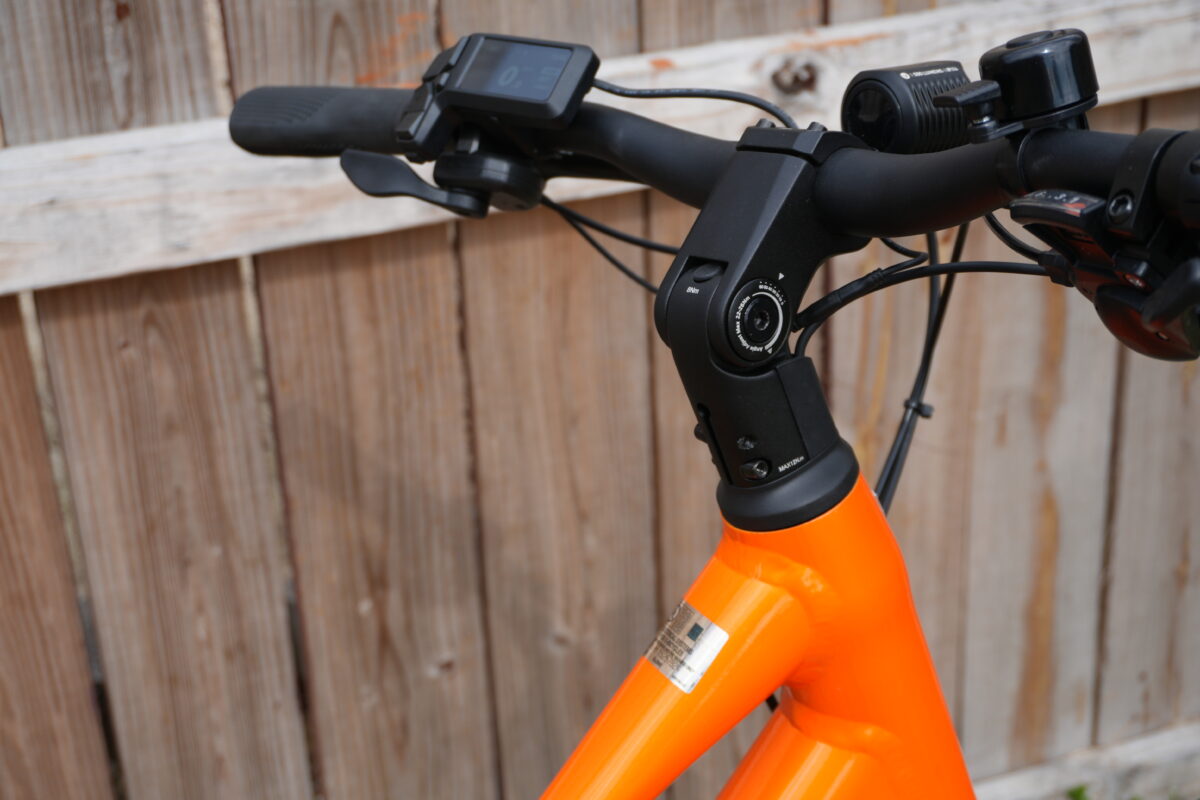
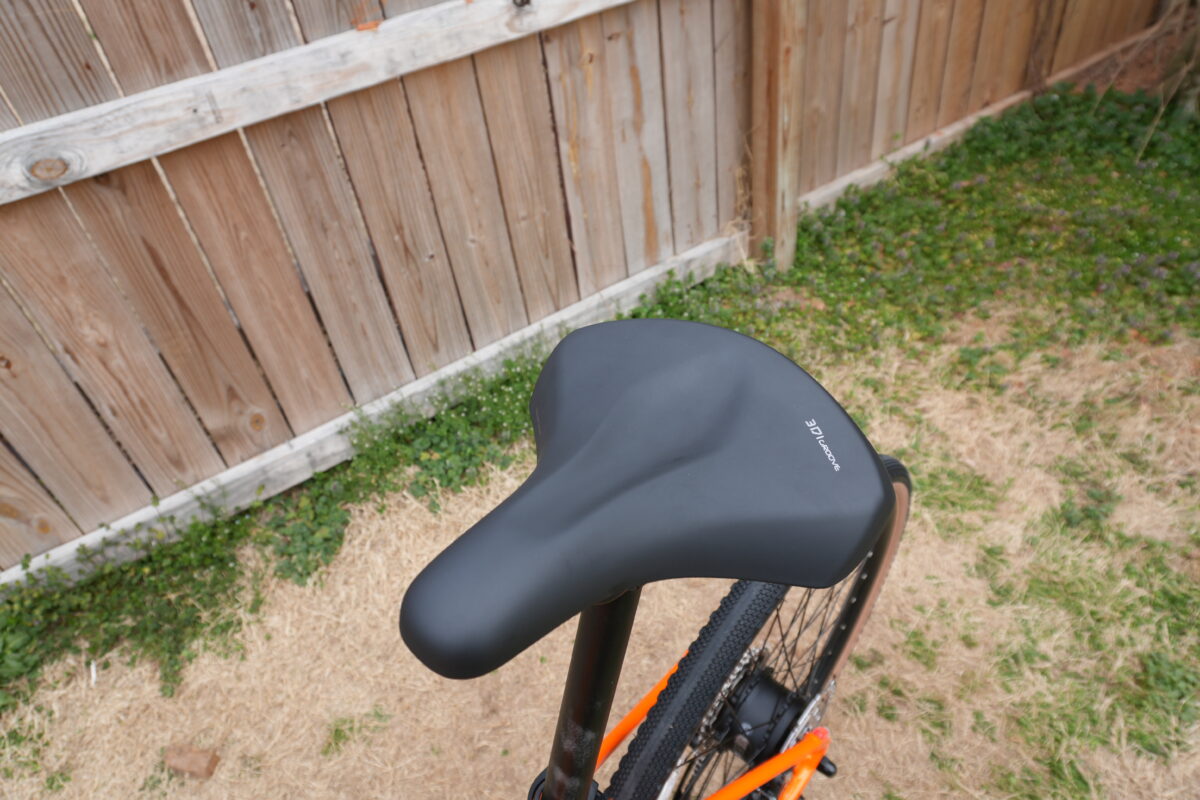
Two frame styles are offered, Mid-Step and High-Step, each in Regular and Large, for four fit combinations. Most lightweight options give you one frame in one or two sizes, so this is a genuinely wider net. Up front the fork is rigid, so this bike is built around efficiency rather than plushness and you feel the road accordingly, though the adjustable stem and wide Selle Royal comfort saddle take some of the edge off. Sixty degrees of stem adjustment lets you dial in reach, from upright to more forward and aggressive. Colors are tied to frame style: Forest Evergreen on both, Lightning Silver exclusive to the High-Step, Sunset Tangerine to the Mid-Step.
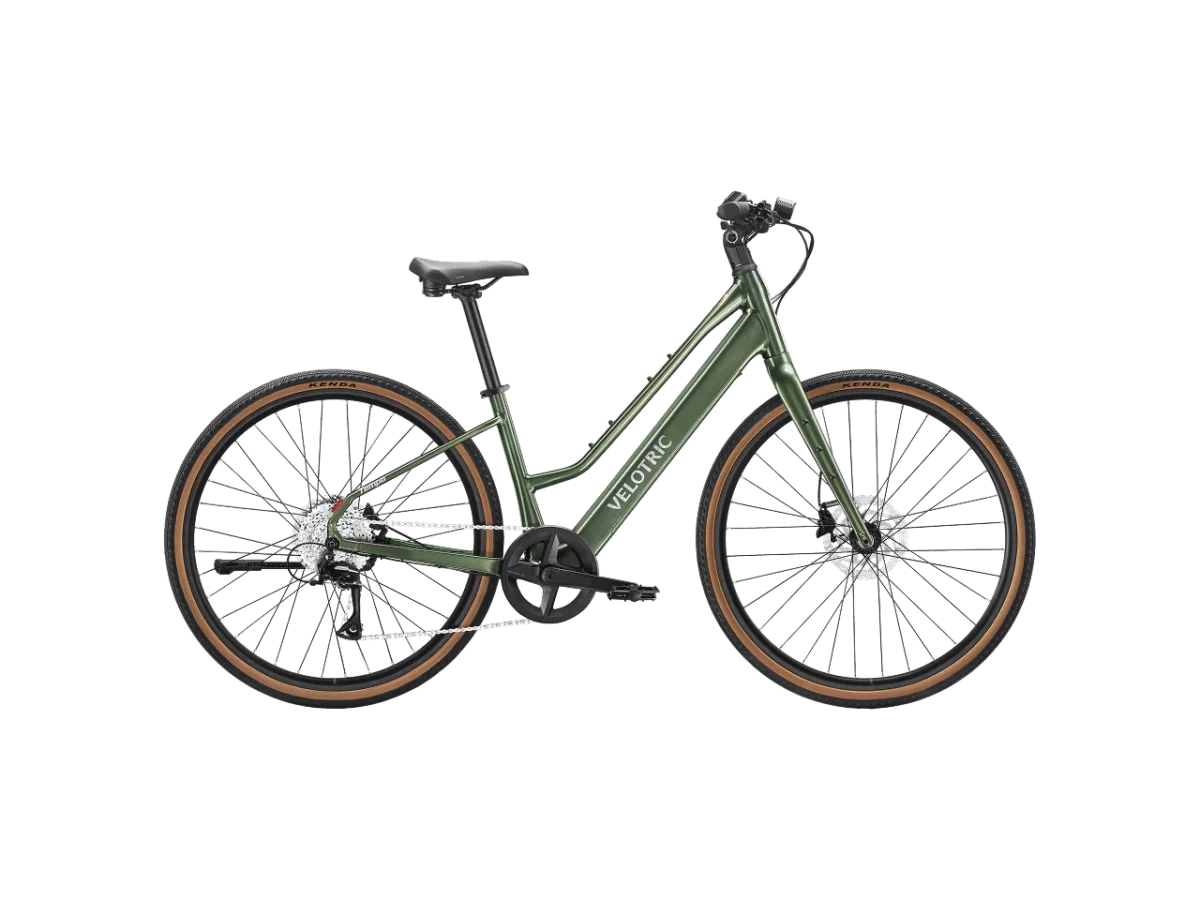
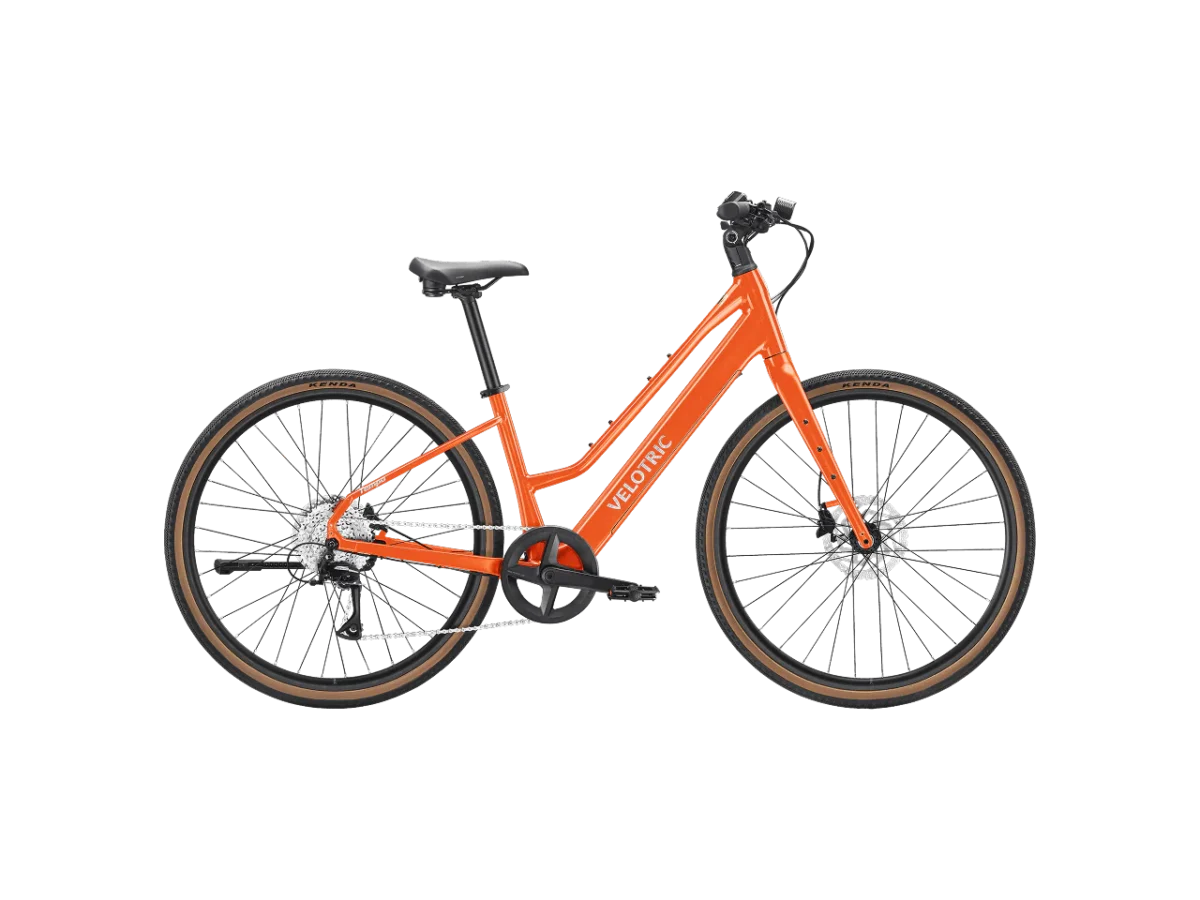
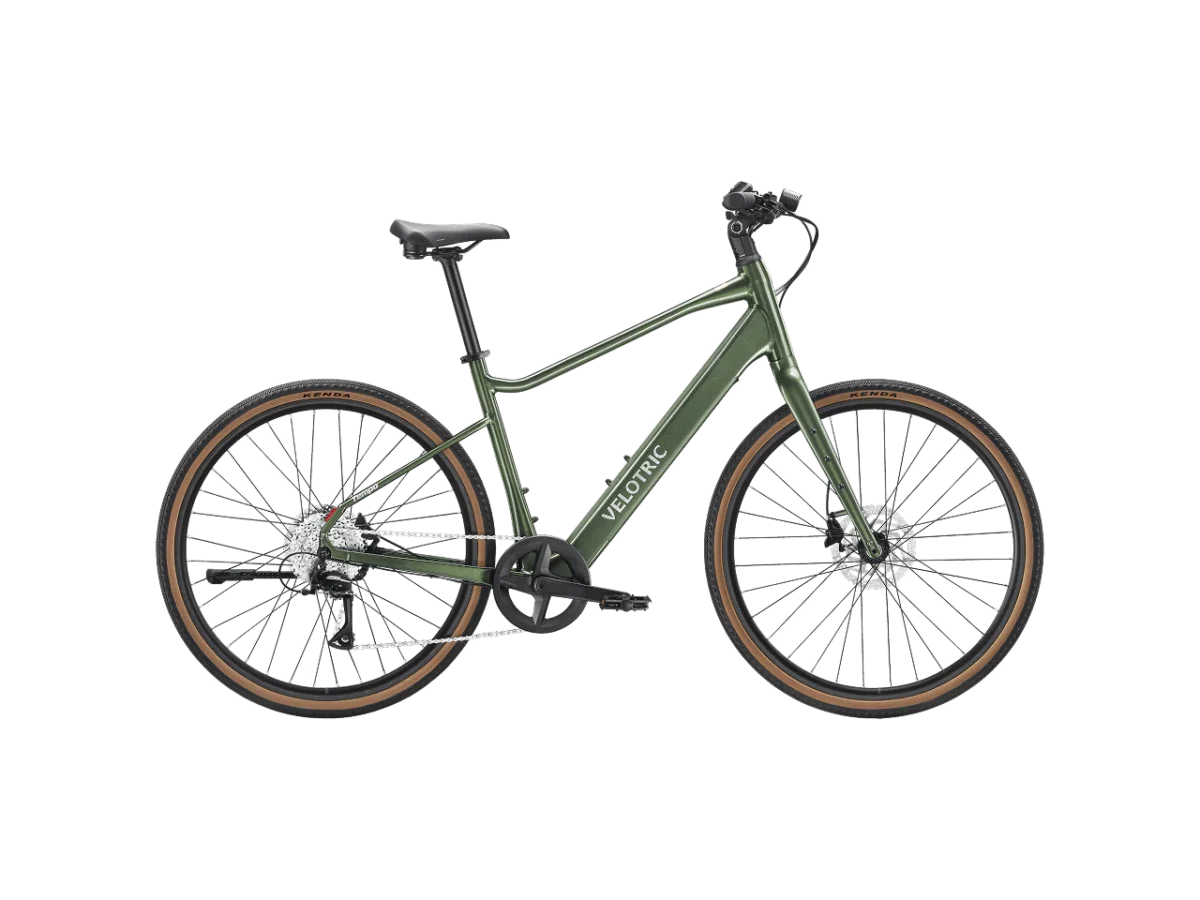
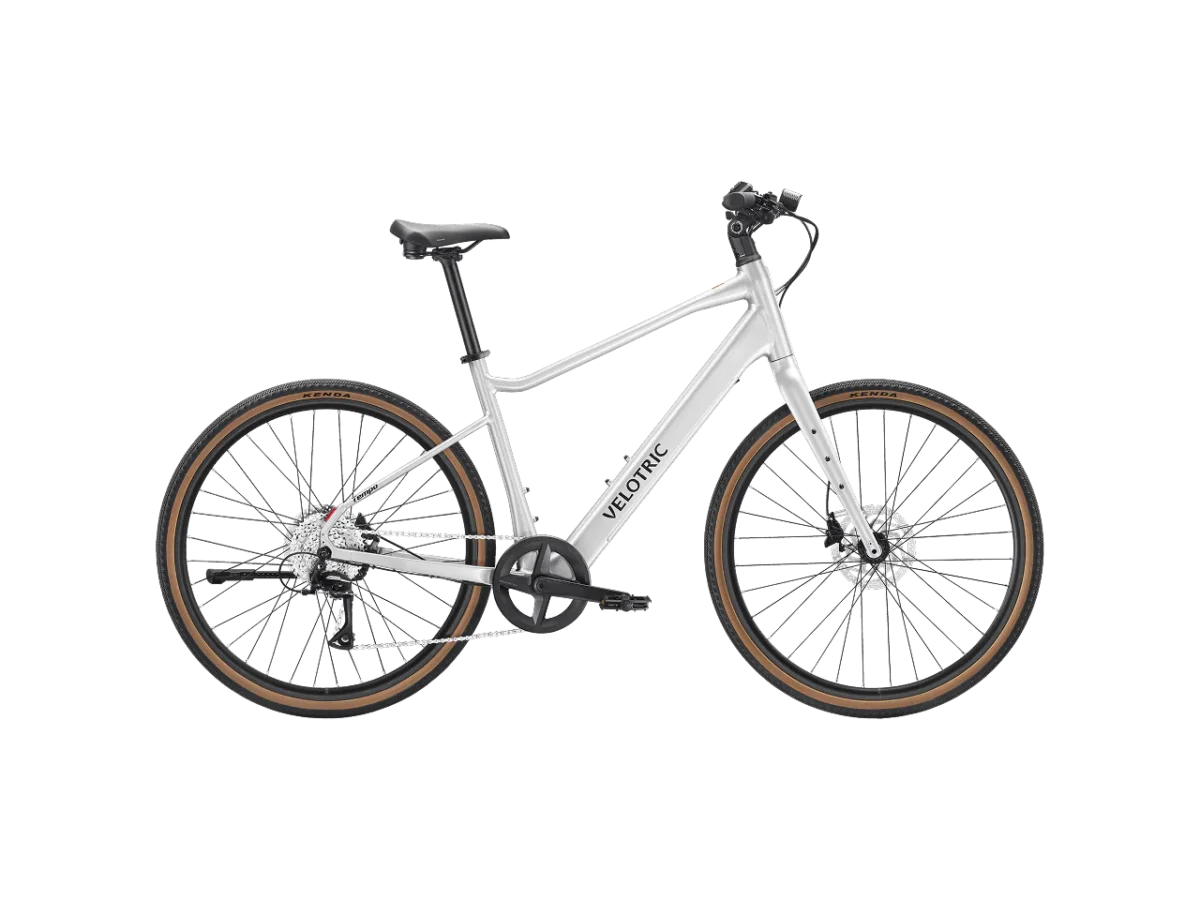
Sizing is not parallel between the two styles, so the geometry chart is worth a careful look before you order. We put a 6’1″ rider and a 5’5″ rider on the Large Mid-Step. The taller rider fell just shy of full leg extension with the seat at its minimum insertion point, which makes the High-Step the better call at that height, while the 5’5″ rider found a comfortable fit without trouble. Here is how the numbers break down across both frames.
| Category | Mid-Step | High-Step |
|---|---|---|
| Total Weight w/ Battery | 39 lbs claimed (42.2 lbs measured on our Large) | 39 lbs claimed |
| Payload Capacity | 330 lbs | 330 lbs |
| Rider Height Range | Regular: 4'10" - 5'5" | Large: 5'3" - 5'11" | Regular: 4'11" - 5'8" | Large: 5'6" - 6'4" |
| Standover Height | Regular: 20.5" | Large: ~20.5" (our measurement) | Regular: 27.8" | Large: 28.5" |
| Min Saddle Height | Regular: 29.5" | Large: 31.5" | Regular: 30.7" | Large: 32.7" |
| Max Saddle Height | Regular: 38.6" | Large: 40.6" | Regular: 39.8" | Large: 41.7" |
| Handlebar Height | Regular: 41.7" | Large: 42.5" | Regular: 41.7" | Large: 42.5" |
| Wheelbase | Regular: 44.2" | Large: 45.2" | Regular: 44.7" | Large: 45.2" |
Velotric Tempo Specs
Here is a quick breakdown of the technical specifications for the Velotric Tempo.
| Component | Velotric Tempo |
|---|---|
| Price | $1,499 (launch price) |
| Type | Lightweight city / commuter ebike |
| Class | Class 2 out of the box; switchable Class 1, 2, or 3 (throttle active in Class 2 only) |
| Weight Capacity | 330 lbs |
| Top Speed | 20 mph throttle and pedal assist (Class 2) / 28 mph pedal assist (Class 3) |
| Motor | 350W Velotric rear hub motor (650W peak) |
| Torque | 45 Nm |
| Battery | 36V 374Wh removable, UL 2271 certified |
| Claimed Range | Up to 60 miles |
| Charger | 2A |
| Display | 2.0-inch color LCD with integrated controls and USB-C charging port |
| Sensor | SensorSwap: torque or cadence, switchable on the fly |
| Throttle | Left-side thumb throttle (Class 2 only) |
| UL Certifications | UL 2849 (bike electronics), UL 2271 (battery), UL 2580 |
| Water/Dust Resistance | IPX6 bike electronics / IPX7 battery |
| Shifter | Shimano 8-speed trigger shifter |
| Derailleur | Shimano Acera 8-speed |
| Chainring | 46T narrow-wide |
| Freewheel | 11-40T, 8-speed |
| Brakes | Shimano MT200 two-piston hydraulic disc |
| Levers | Shimano with motor cutoff |
| Rotors | 180mm front and rear |
| Frame | Aluminum; Mid-Step or High-Step, Regular or Large |
| Fork | Rigid with accessory mounting points |
| Axle | Through axle front and rear |
| Tires | Kenda 700x42C hybrid tread |
| Handlebars | Alloy |
| Grips | Lock-on ergonomic rubber |
| Stem | Adjustable with 60 degrees of adjustment |
| Saddle | Velotric-branded 3D groove by Selle Royal |
| Pedals | Platform (included) |
| Fenders | Optional accessory (plastic, full rear coverage) |
| Rear Rack | Optional accessory, 66 lb capacity, MIK HD compatible |
| Kickstand | Rear-mounted with wide foot |
Real-World Performance Testing | Velotric Tempo Review
All of our testing was done at a rider weight of roughly 200 lbs, and before the performance runs we went into Ride Tuning and maxed everything out so we were seeing what this bike is actually capable of rather than what it ships with. With SensorSwap in play, that meant running most tests twice, once in each sensor mode, and the difference between them shaped nearly every result below.
Throttle Response and Acceleration
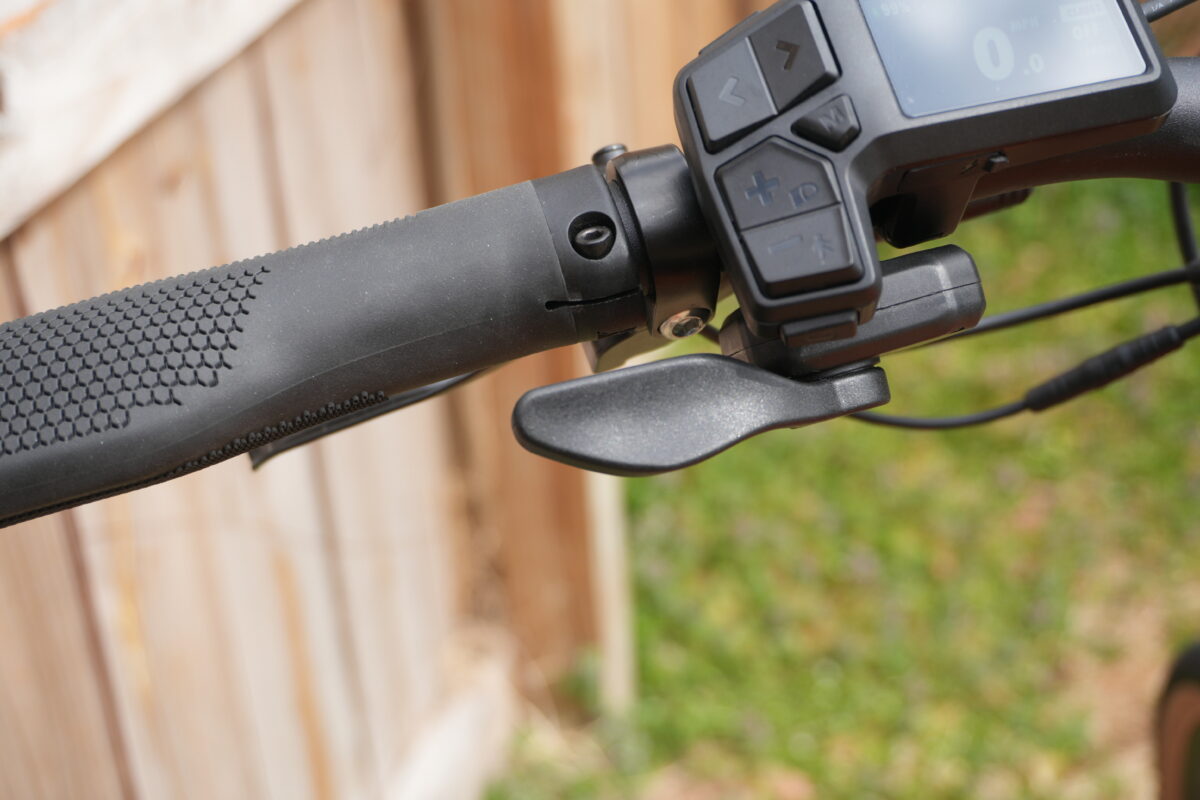
With the throttle’s Experience setting on turbo and a 200 lb rider on board, acceleration is good up to about 15 mph, then levels out noticeably. We saw 18 mph on the GPS with a slight downhill helping, and never reached the 20 mph ceiling without pedal support. What the throttle does well is hold speed once you have pedaled up to it. Switching Experience to slow changes the character completely, with a much gentler introduction that does not really kick in until around 5 mph. That is a useful setting if you are handing the bike to a beginner and do not want it taking off out from under them. Having a throttle at all on a lightweight ebike is never a given, and it changes how usable the bike feels pulling away from a stop sign.
Real-World Flat Ground Performance: SensorSwap in Action
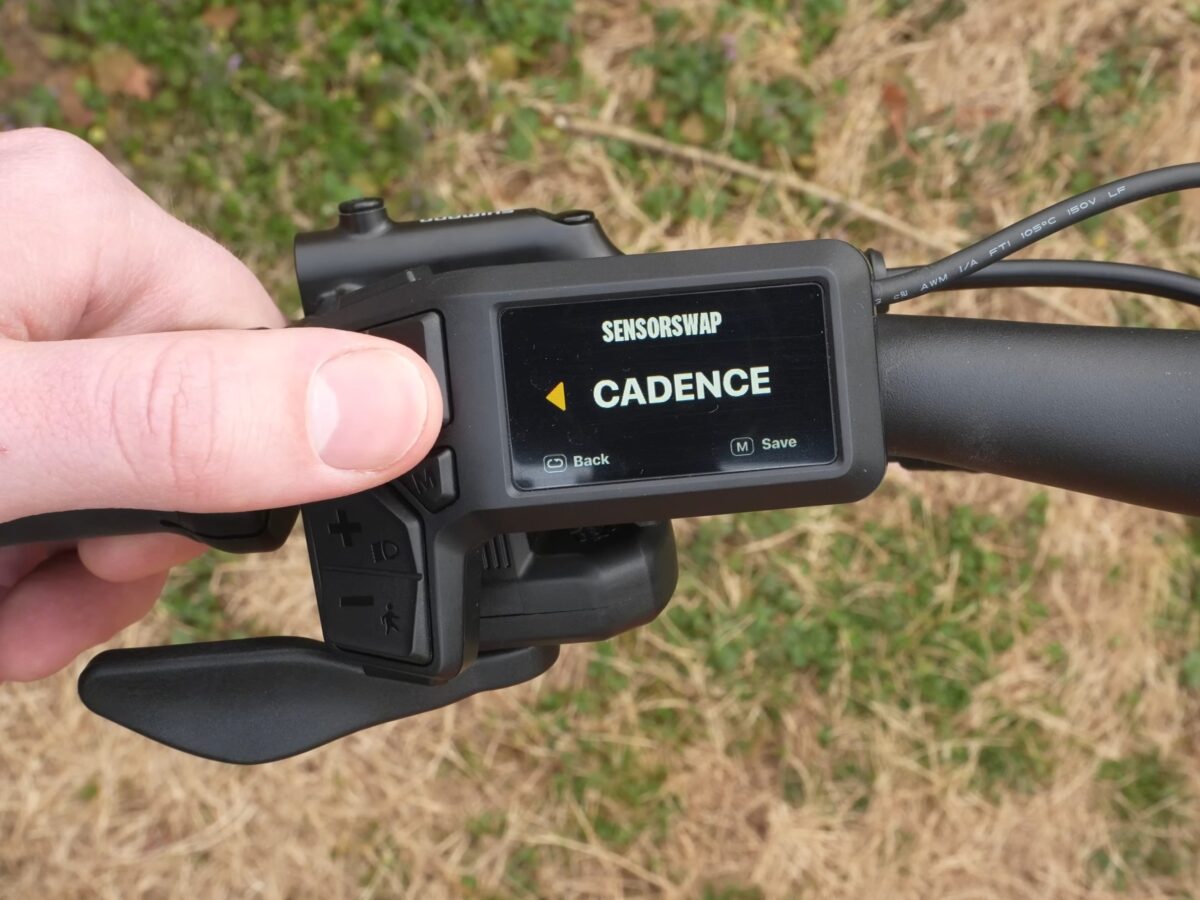
Riding with the Cadence Sensor: In this mode the motor delivers power as long as your legs are turning, regardless of how hard you push, which makes it the setting for consistent support. That means the riding mode you choose determines the power, not your legs. We recorded the following cruising speeds in each level of assist:
- Eco: ~10 mph
- Trail: ~15 mph
- Sport: ~17 mph
- Boost: ~20 mph
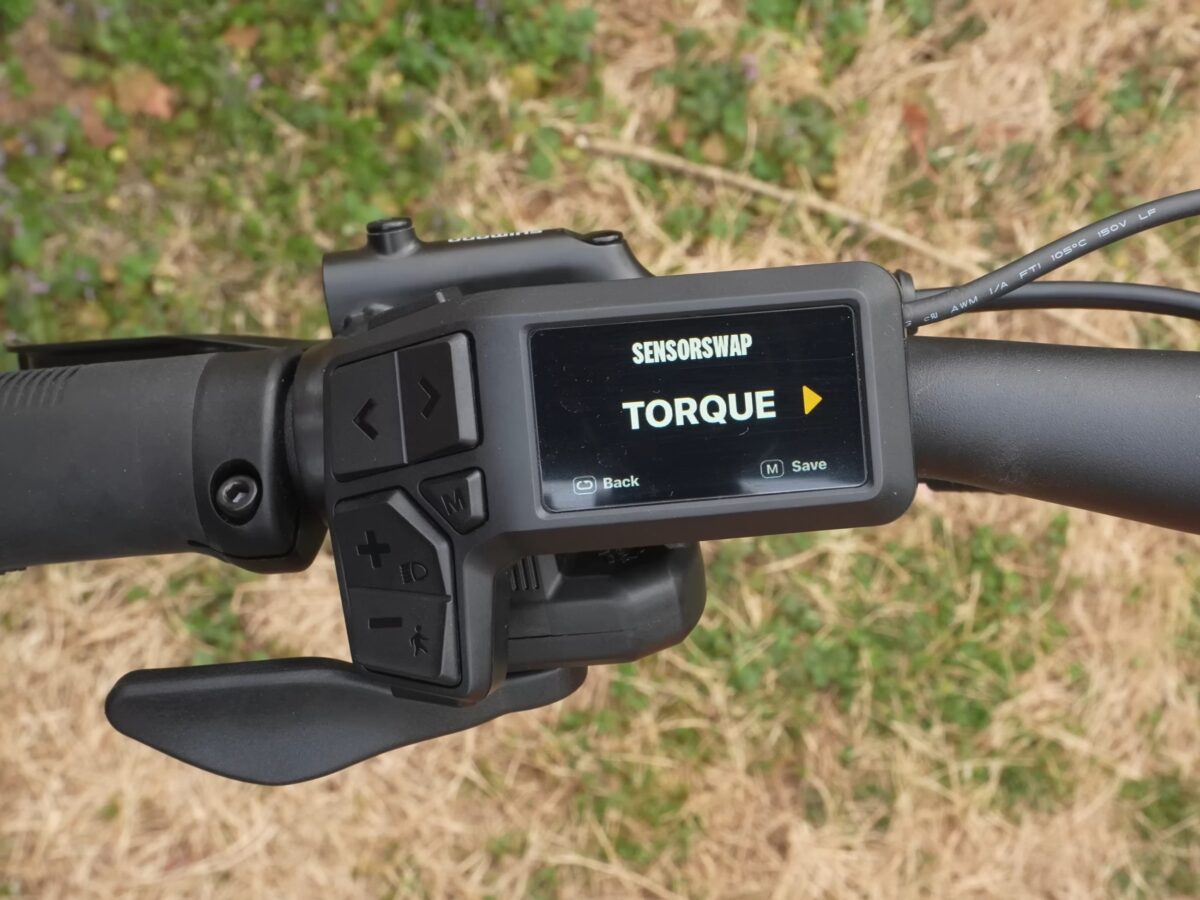
Natural Ride Feel with the Torque Sensor: Switching over scales power to match your effort and turns the Tempo into a much more engaging bike. In Eco, easy pedaling in fourth gear held 10 mph without trying, and shifting up with moderate effort brought 14 to 15 mph. Trail produced about 12 mph at a relaxed pace and got close to 20 mph with more input, so hitting the Class 2 ceiling never felt like a struggle, and Boost makes it easier still. Pushing toward the Class 3 ceiling of 28 mph is where the work shows up, with acceleration slowing considerably and cadence bouncing between roughly 60 and 100 RPM, though you can feel the motor still trying to hold you there rather than checking out.
Hill Climb Performance Testing
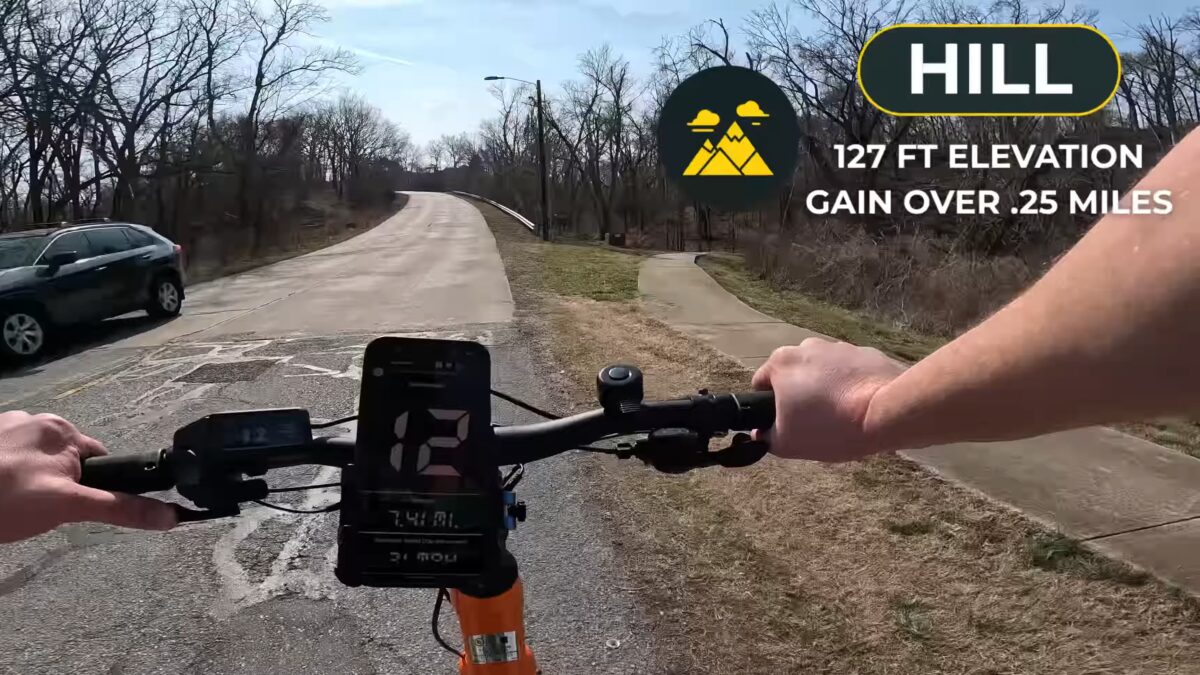
We took the Tempo to our standard steep test hill to see how 350W and 45Nm handled gravity with a 200 lb rider aboard. GoPro footage flattens this hill considerably, so take our word over the video on this one.
Throttle Only Performance
On the throttle-only run the Tempo did not make it. Once the grade got serious the motor simply ran out of headroom, which is not surprising for this motor spec and this rider weight, and is not really a knock against a bike in this class. What it does tell you is that this is a bike that expects pedal support on real climbs rather than one you can sit back on.
Pedal Assist Climbing: Torque vs Cadence
Comparing the two sensor modes on the same incline is where the difference gets interesting:
Torque Sensor Climbing: Starting in Eco in the lowest gear there is a small but real amount of help, though it is very much a workout at that setting. Trail delivers an instant, noticeable boost and makes the climb genuinely doable at a patient pace while staying in a low gear, Sport adds a bit more push, and Boost at max power splits the load reasonably well, though our test rider was still breathing hard by the final section.
Cadence Sensor Climbing: Rolling into the hill fast in Boost and shifting down through the gears to first turns the climb into a matter of spinning your legs with modest effort. Still a workout, and still clearly easier than the torque sensor, which is the trade you are making every time you swap between them.
Pulse Mode on the Road
Select a zone and the display gives you a meter showing where your heart rate sits relative to that target. In Zone 1 at around 80 bpm our test rider sat below target with the meter showing green, pushing harder moved it to blue, and at 124 bpm it went orange, past the intended zone. Behavior across the zones is the interesting part. Zone 2 delivers a lot of support, Zone 3 starts handing resistance back, and Zone 4 pulls further while still leaving us cruising comfortably in the low 20s. Zone 5 on a slight incline felt less like the motor helping and more like it working against us, which is precisely the idea, and dropping back to Zone 1 brings the support flooding right back in. Think of it as taking an exercise bike out into the wild.
Optional Rack and Fenders
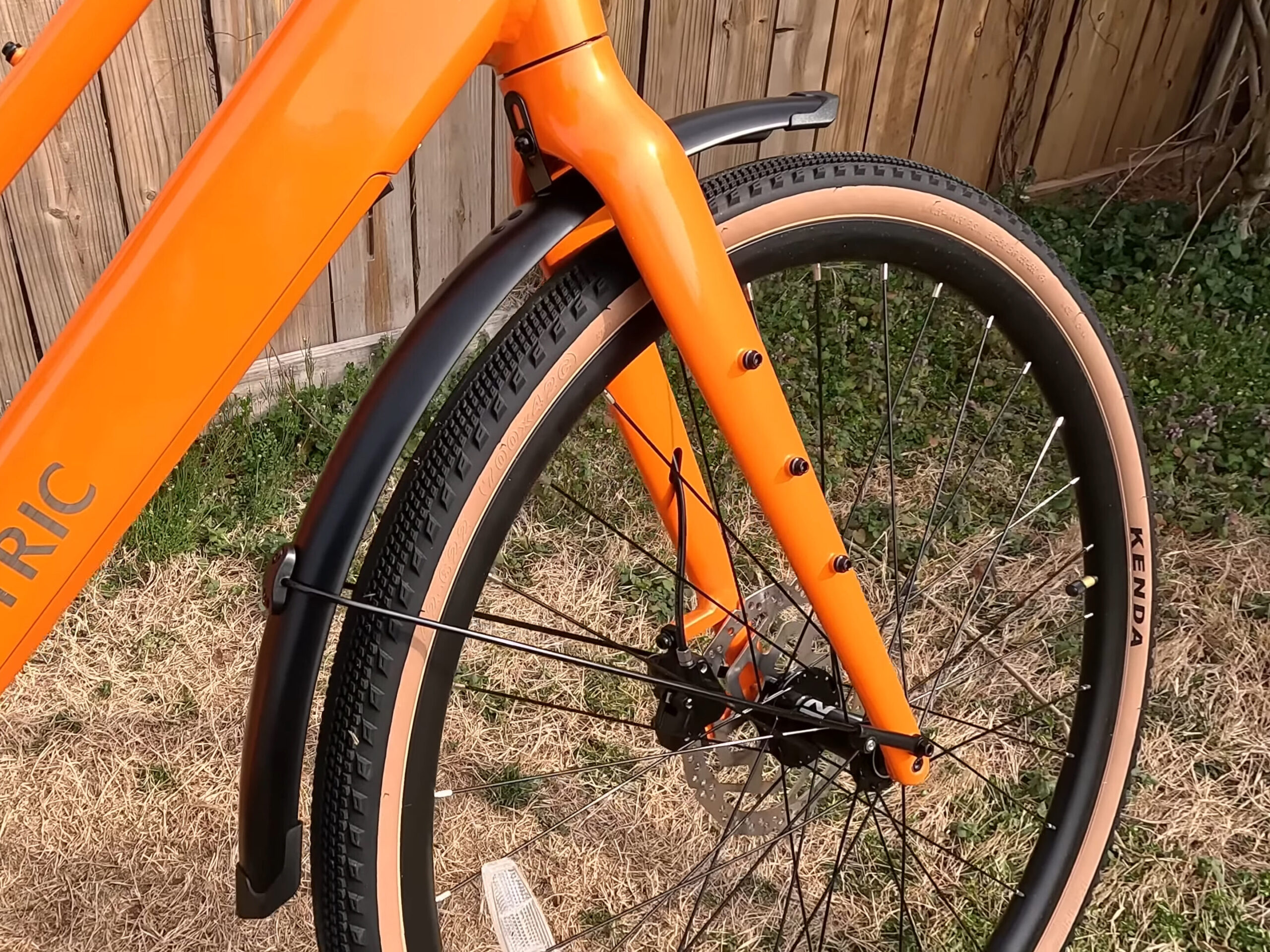
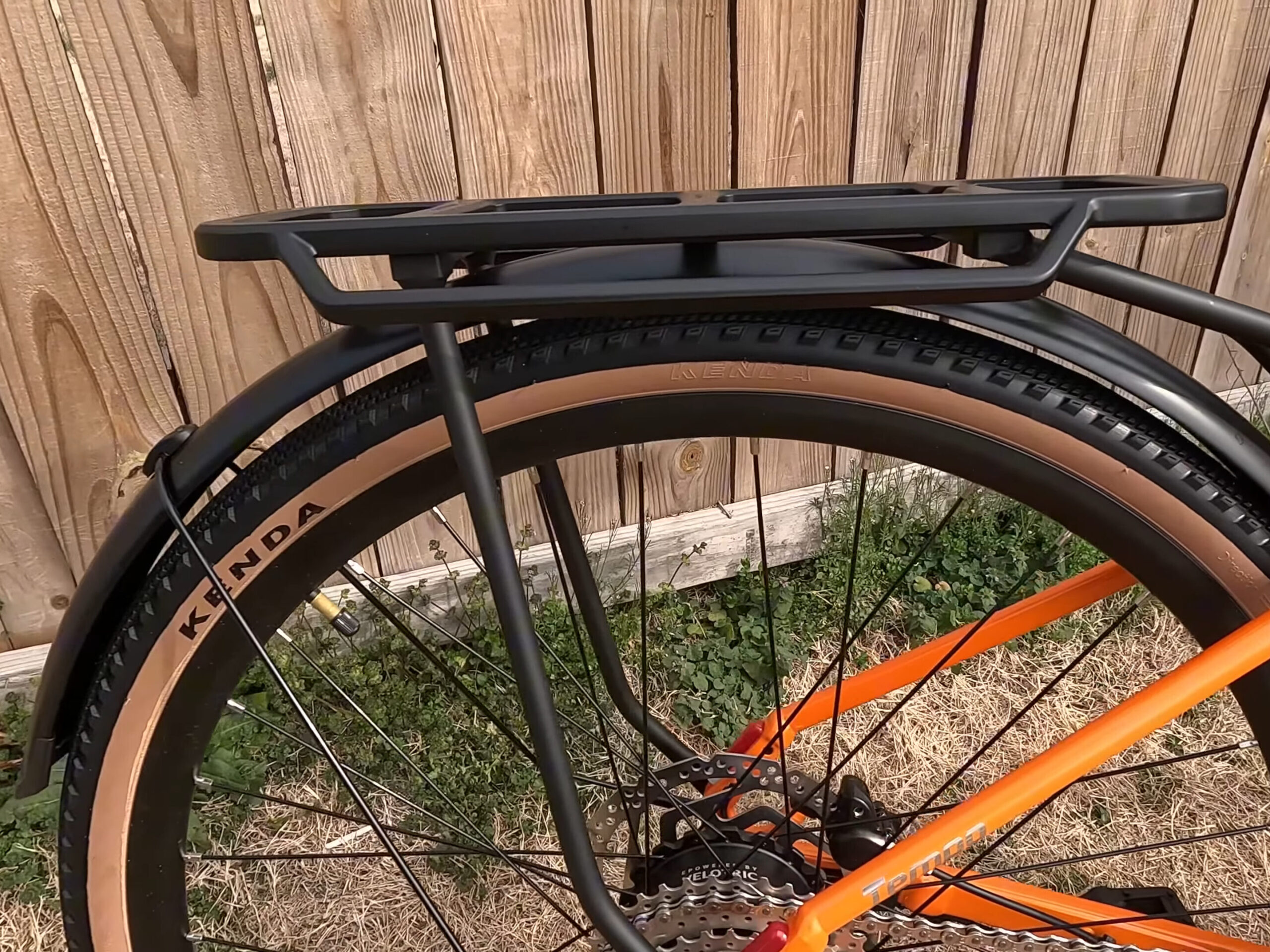
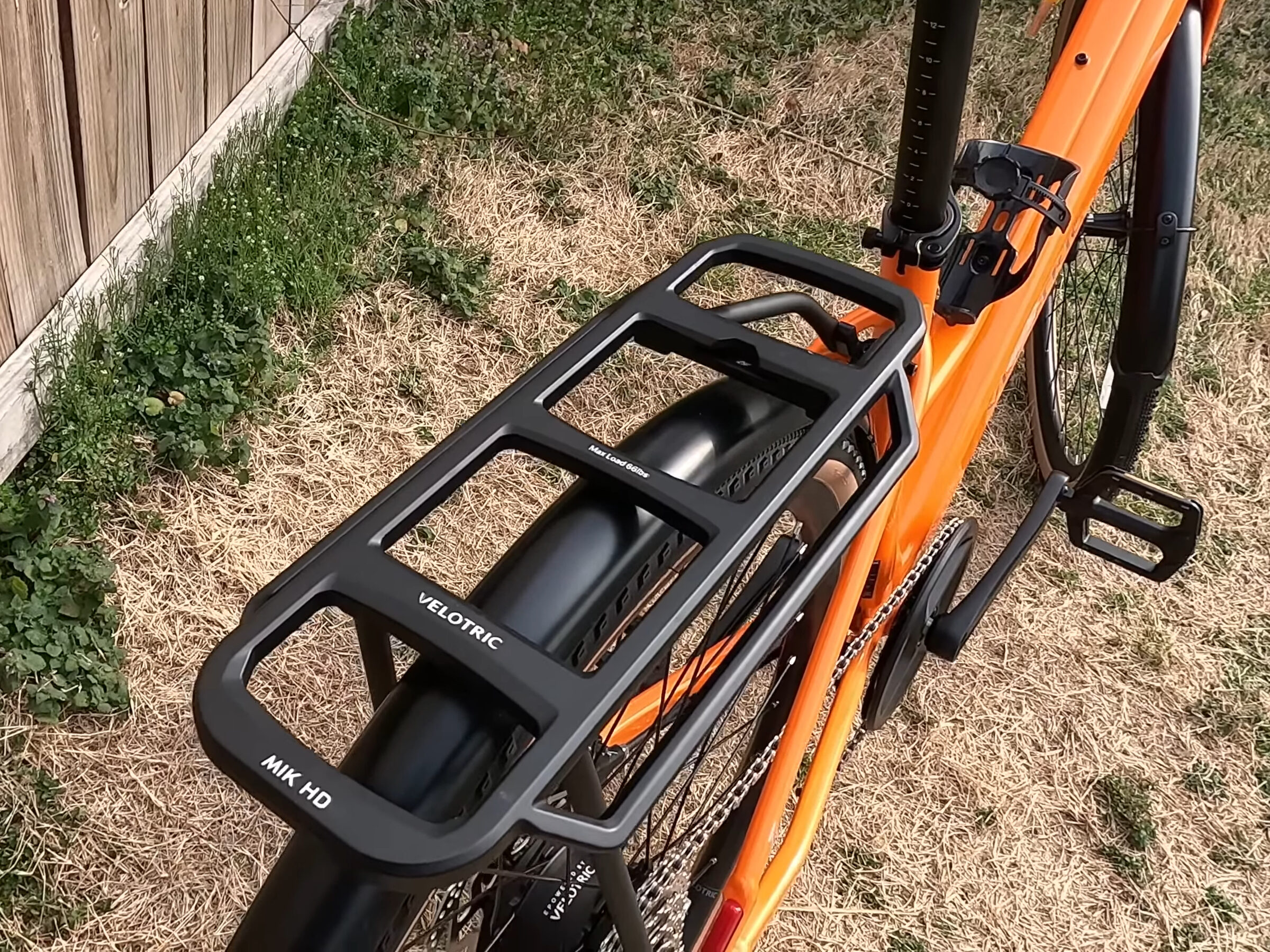
To keep weight down, the Tempo ships with no rack or fenders. Fenders currently run $69.99 and the rack is $79.99, so budget about $150 to make this a full commuter. Fenders are plastic with full rear coverage. The rack is rated for 66 lbs and MIK HD compatible, so accessories click on and lock with a key rather than bolting on, and the HD designation means child seat compatible. Velotric also sells a comfort upgrade kit pairing their ComfortMax saddle with a suspension seatpost, $115.69 at the time of writing, which is the most effective fix for a bike with a rigid fork. One heads-up before you order: everything arrives in pieces and the install is a genuine project. Velotric has a video tutorial, though it was not live when we did ours. If you are not particularly handy, a shop install is worth the money.
Competitor Comparison: Velotric Tempo vs Ride1Up Roadster V3
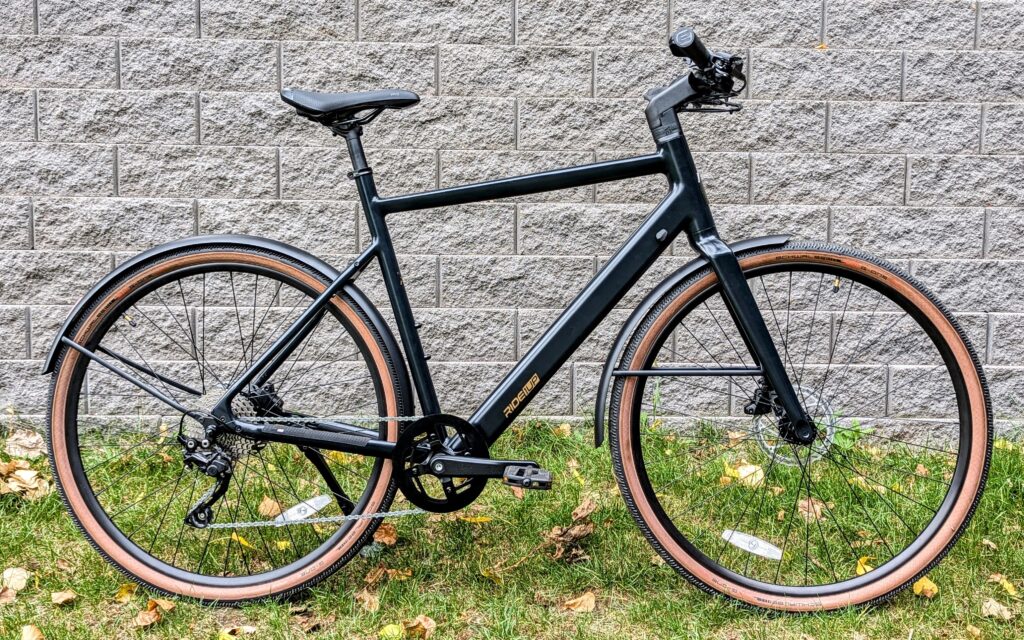
A close competitor here is the Ride1Up Roadster V3, another lightweight, traditional-looking ebike with a torque sensor, removable battery, integrated lighting, and a throttle. Both sit right around 40 lbs on 700c wheels, and both target riders who want an ebike that still rides like a bicycle. Where they separate:
- Configurations: Roadster V3 offers three, a single-speed Dayco carbon belt drive, a 9-speed microSHIFT Advent chain drive, and a chain drive with a 35mm Trama air fork. Tempo counters with two frame styles across two sizes each.
- Motor and sensor: Roadster V3 runs a 500W Mivice motor with 50Nm and Ride1Up’s Intui-Drive torque sensor. Tempo runs 350W and 45Nm, but swaps between torque and cadence on the fly, which the Roadster cannot do.
- Included equipment: Roadster V3 ships with metal fenders standard, where Tempo makes the rack and fenders optional. Tempo answers with turn signals, brake-actuated rear lighting, and a brighter headlight.
- Tech and security: this is Tempo’s clearest advantage. NFC unlock, Apple Find My and Android Find Hub, over-the-air updates, Ride Tuning, cruise control, and Pulse Mode are all absent from the Roadster.
- Buying and service: Ride1Up is primarily direct-to-consumer with limited demo locations, while Velotric now works with over 1,200 dealers for test rides, assembled pickup, and local service.
Go with the Ride1Up Roadster V3 if you want more motor for the money, a belt drive option, a front suspension choice, or fenders included out of the box. Go with the Velotric Tempo if sensor flexibility, deep customization, real security and tracking, frame style options, dealer support, and heart rate training are what move the needle for you.
Want a closer look at the Ride1Up? Check out our full Ride1Up Roadster V3 review.
Final Thoughts: Who Is the Velotric Tempo For?
What we keep coming back to is how little this bike gives up, because lightweight ebikes usually arrive with compromises the Velotric Tempo mostly avoids. A throttle and a removable battery are real advantages over other options in this weight class, and neither costs the bike its discreet look, its easy carry, or a pedaling experience that is genuinely pleasant. Where it asks something of you is power, since a 350W motor means you are splitting the load on real climbs, but we think Velotric spec’d it correctly for what this bike is meant to do. Riders who want lightweight with more punch and range should look at their step-through commuter, the Breeze 1, but for a fitness-minded rider who wants an ebike that amplifies effort rather than replacing it, this is an easy recommendation. Pulse Mode is the wildcard that could make it the ebike a training-minded rider actually wants.
If you found this review helpful, please consider using our affiliate link to support our content. Save on your next Velotric ebike with discount code: eBikeEscape60
