
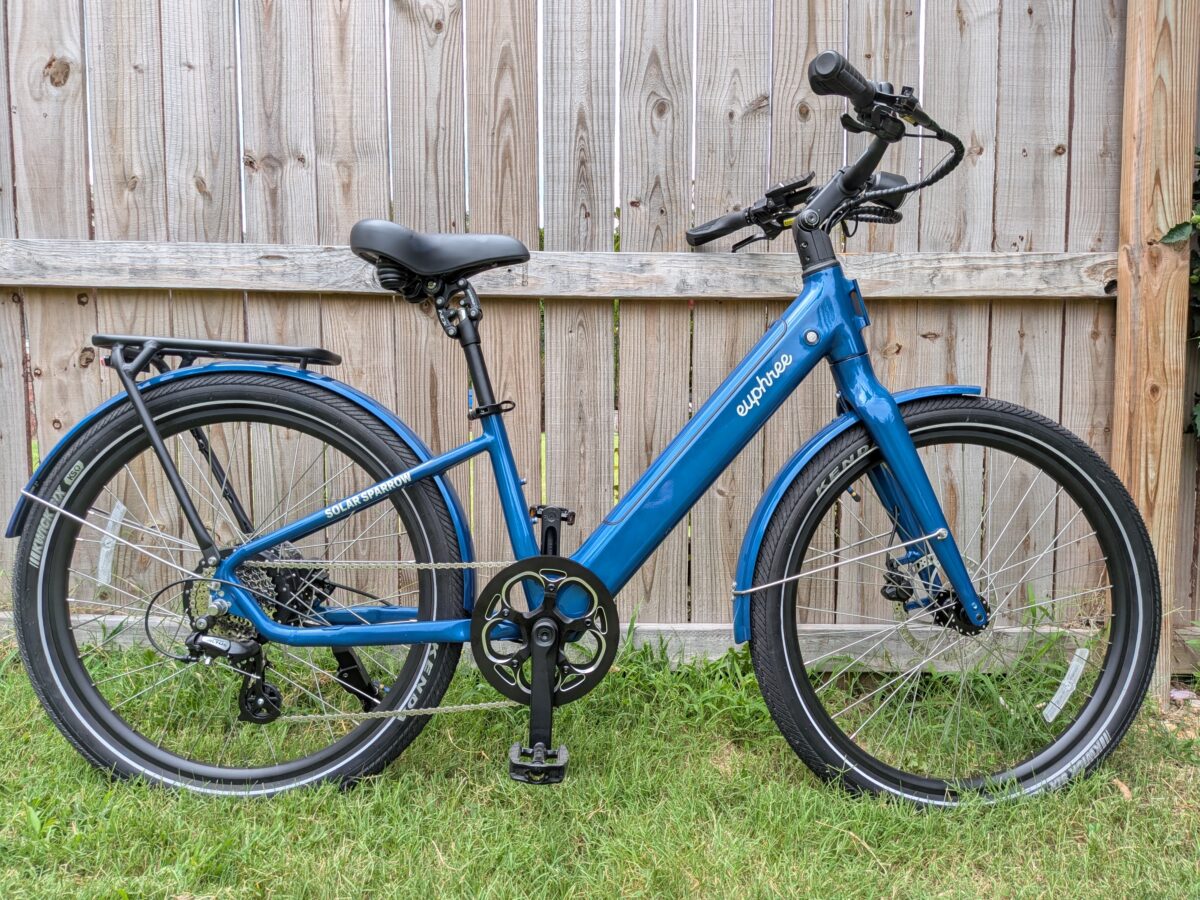
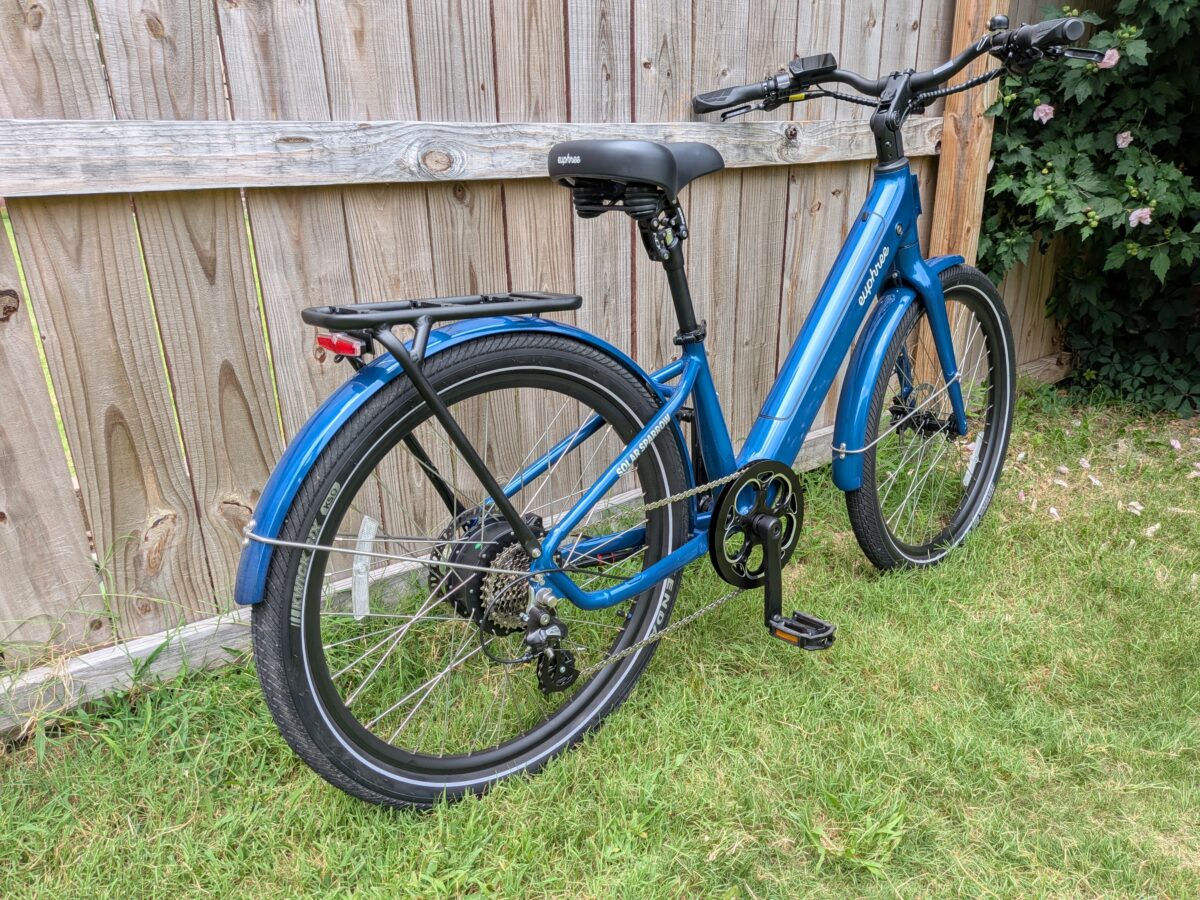
Initially introduced as a belt drive, low maintenance cruiser, the Euphree Solar Sparrow is now also offered as an 8-speed chain drive for riders who need extra versatility. But this iteration is more than a swapped drivetrain. It came with a jump up to a 750W Bafang rear hub motor, paint matched fenders, and a rigid fork where the belt version carries a monoshock. An SR Suntour NCX suspension seatpost that Euphree includes on every model in their lineup does most of the comfort work here, which is what an upright cruiser needs anyway since very little of your weight sits over the front tire.
These are not groundbreaking changes, but they are meaningful refinements. Euphree’s lightest model now promises extra performance, and it might be their best looking ebike to date. In this article we cover the standout features, frame and fit, our performance testing, a comparison against a close competitor, and the pros and cons. By the end you should know everything you need to decide if the Solar Sparrow chain is the right ride for you.
If our review helps you decide on a Euphree ebike, you can support us by purchasing through our affiliate link. Euphree also takes care of Ebike Escape readers: register your ebike within 30 days, select Ebike Escape in the promotion box, and they will send you a free lock and stem bag. Thank you for the support!
Euphree Solar Sparrow Chain Video Review
If our article leaves you with any questions, there is a good chance you’ll find an answer in our video review. We take you up close on every component, walk through the display and the settings menus, and put you behind the handlebars with first-person footage from our ride tests. You can hear the motor, watch the torque and cadence sensors back to back, see the bike run our test hill, and get a side by side look next to the City Robin 3.
Standout Features
A 750W Bafang Motor With Two Sensor Options
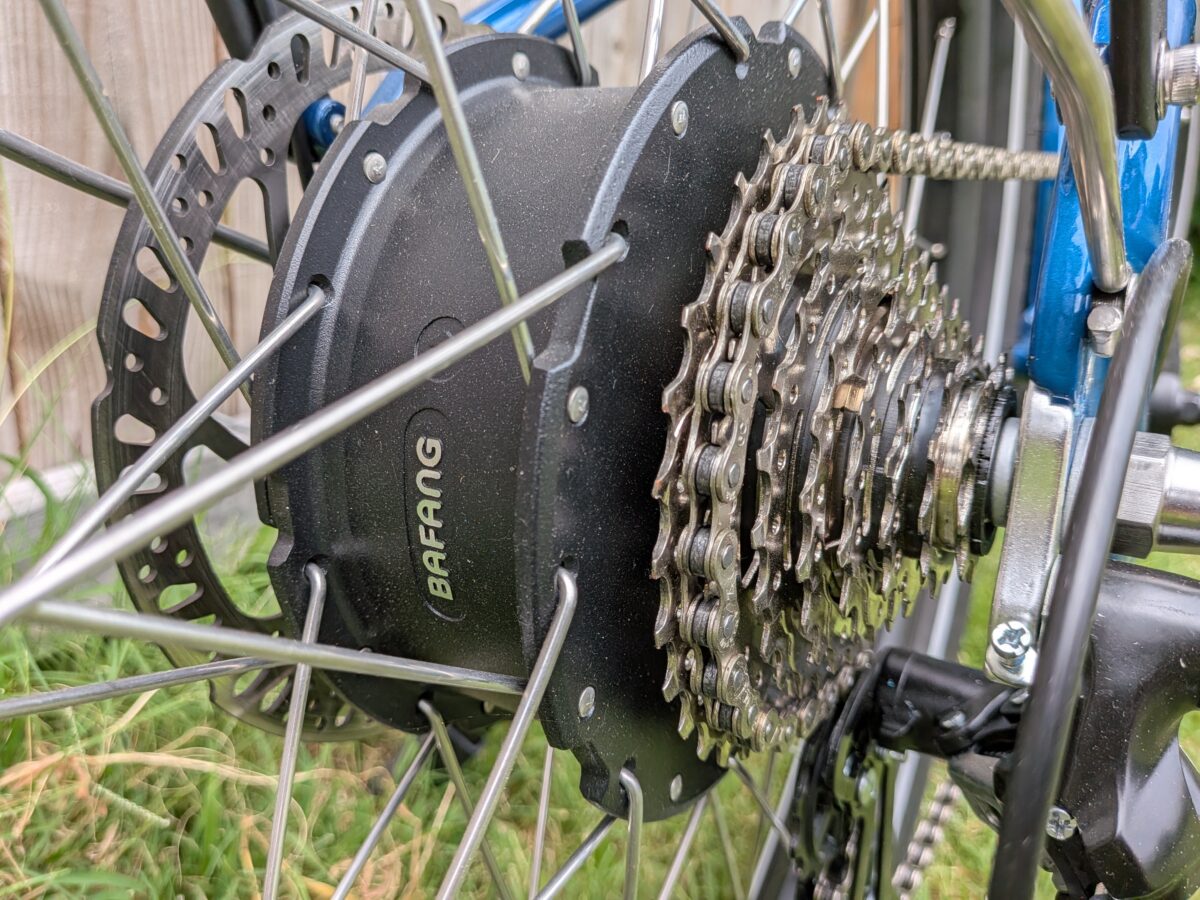
Where the belt drive version runs a 500W motor, the chain drive gets a 750W Bafang in the rear hub with 85 Nm behind it. How that power reaches you is up to you, since you can set it up with either a torque sensor or a cadence sensor. Riders coming off a traditional bike usually prefer the connected feel of the torque sensor, while the cadence sensor is the easier way to get consistent power without much effort. Switching between them happens in the display menu, so treat it as a setup choice instead of something you flip mid-ride.
An 8-Speed Drivetrain and a 10T Top Gear
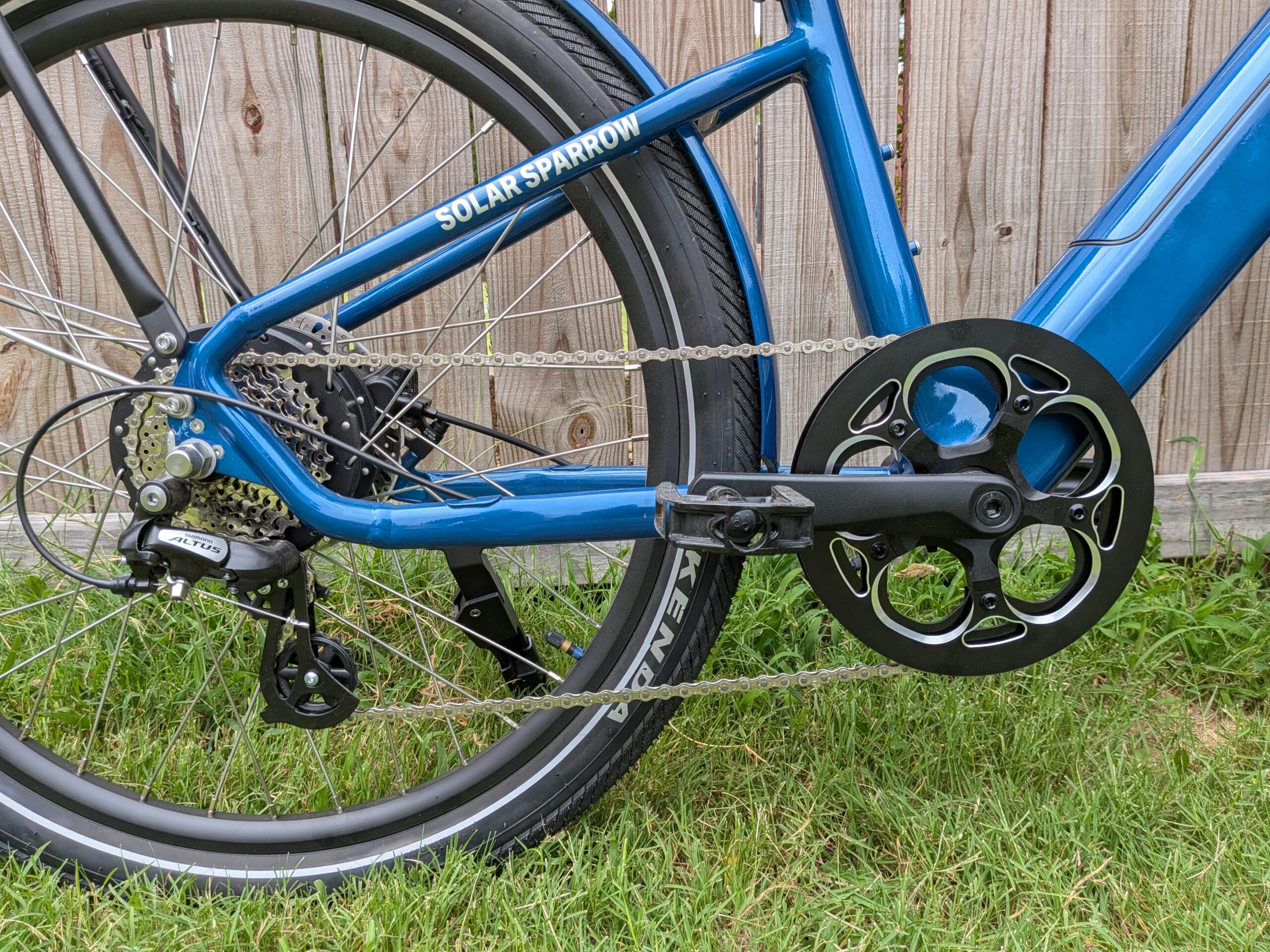
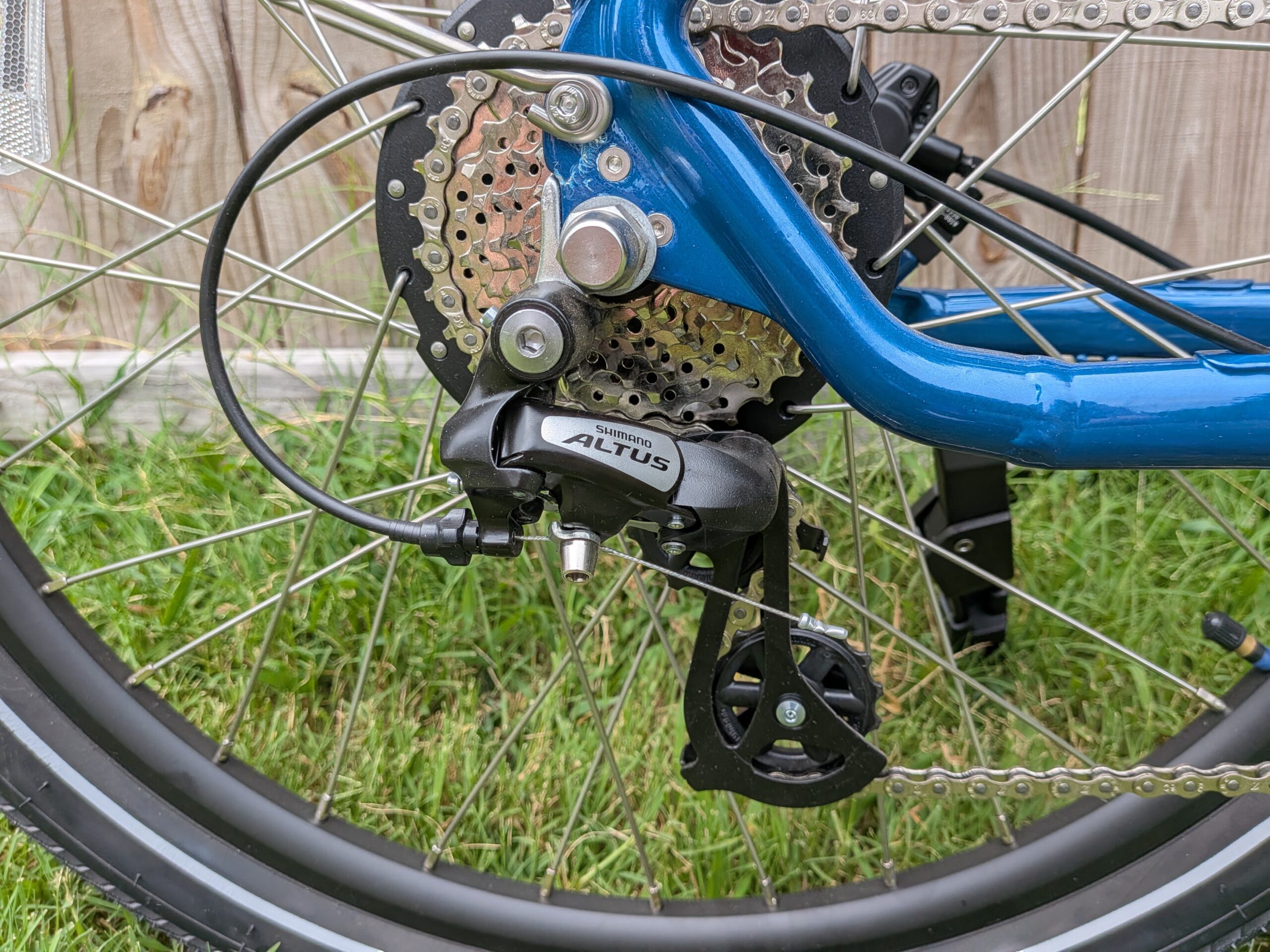
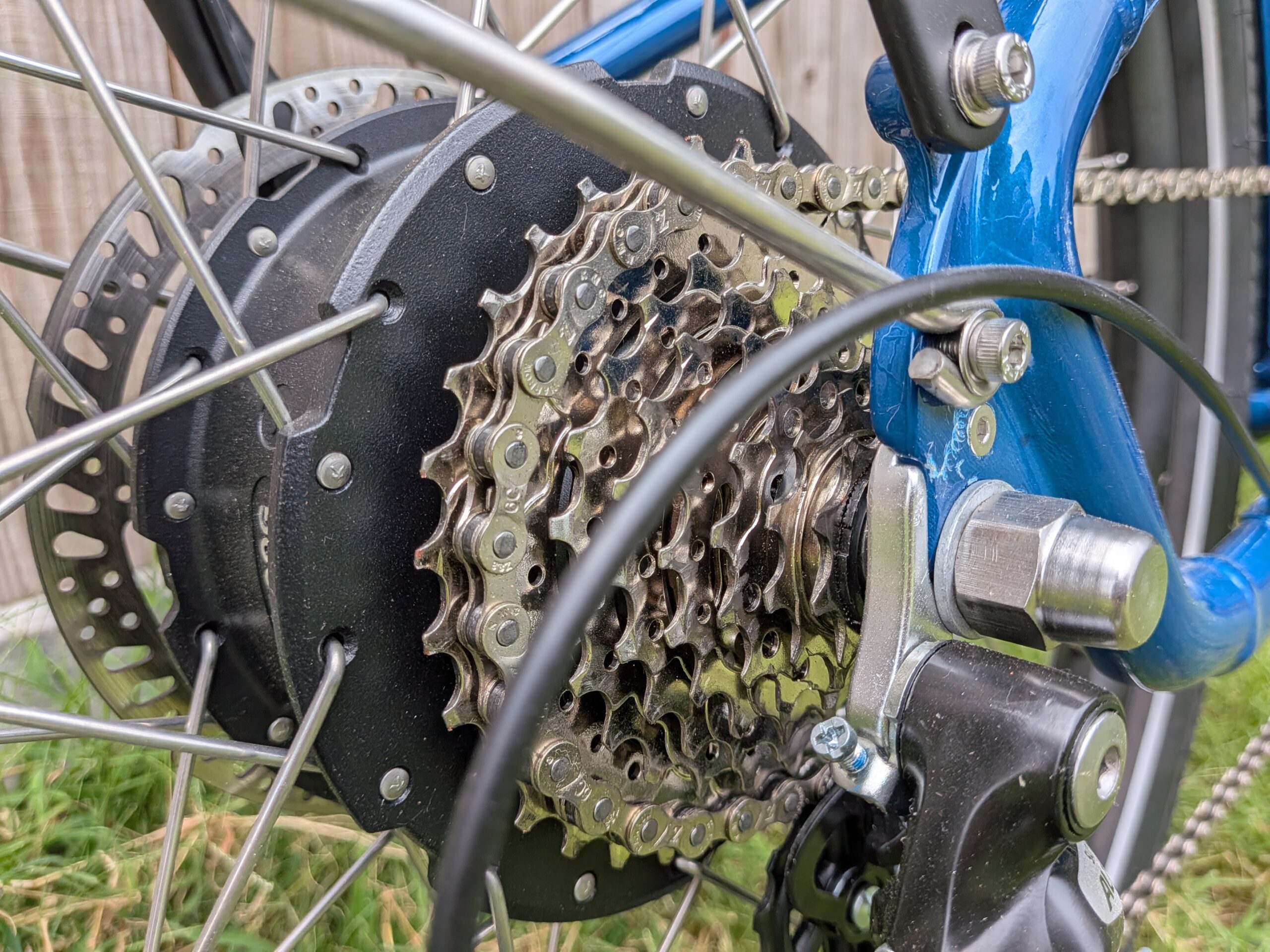
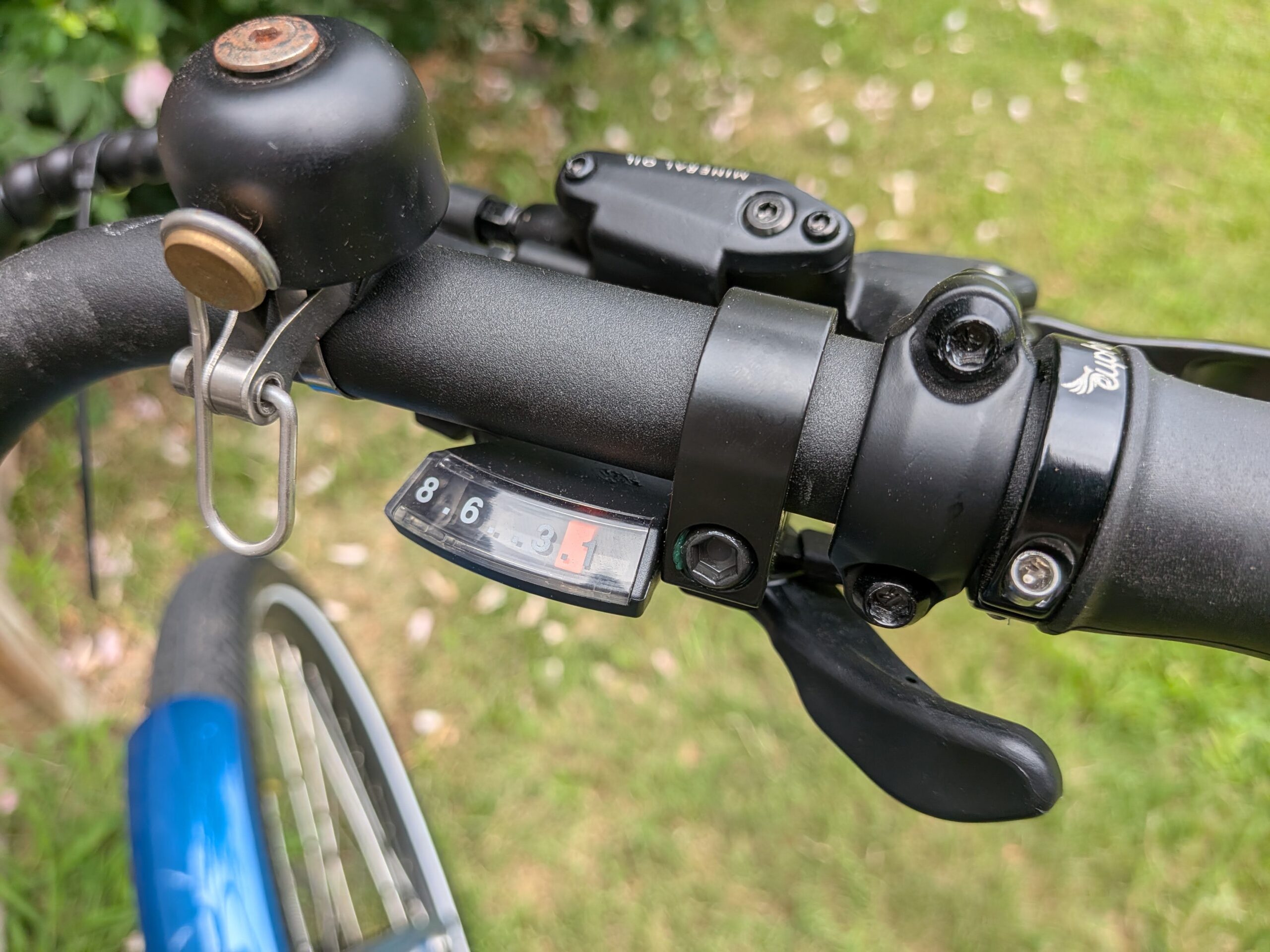
Shimano’s Altus derailleur shows up on a lot of ebikes at this level because it shifts reliably and parts are easy to find. The freewheel is the part nobody else is doing. Instead of the 11-32T that is standard here, Euphree specified a 10-32T, and that one tooth offers a slower cadence in top gear. On a bike that reaches 28 mph, that means you can pedal easily at top speed instead of spinning out. Paired with a 50T chainring up front, the spread from first gear to eighth is wider than we see on just about any ebike we test.
The Comfort Hardware Euphree Is Known For
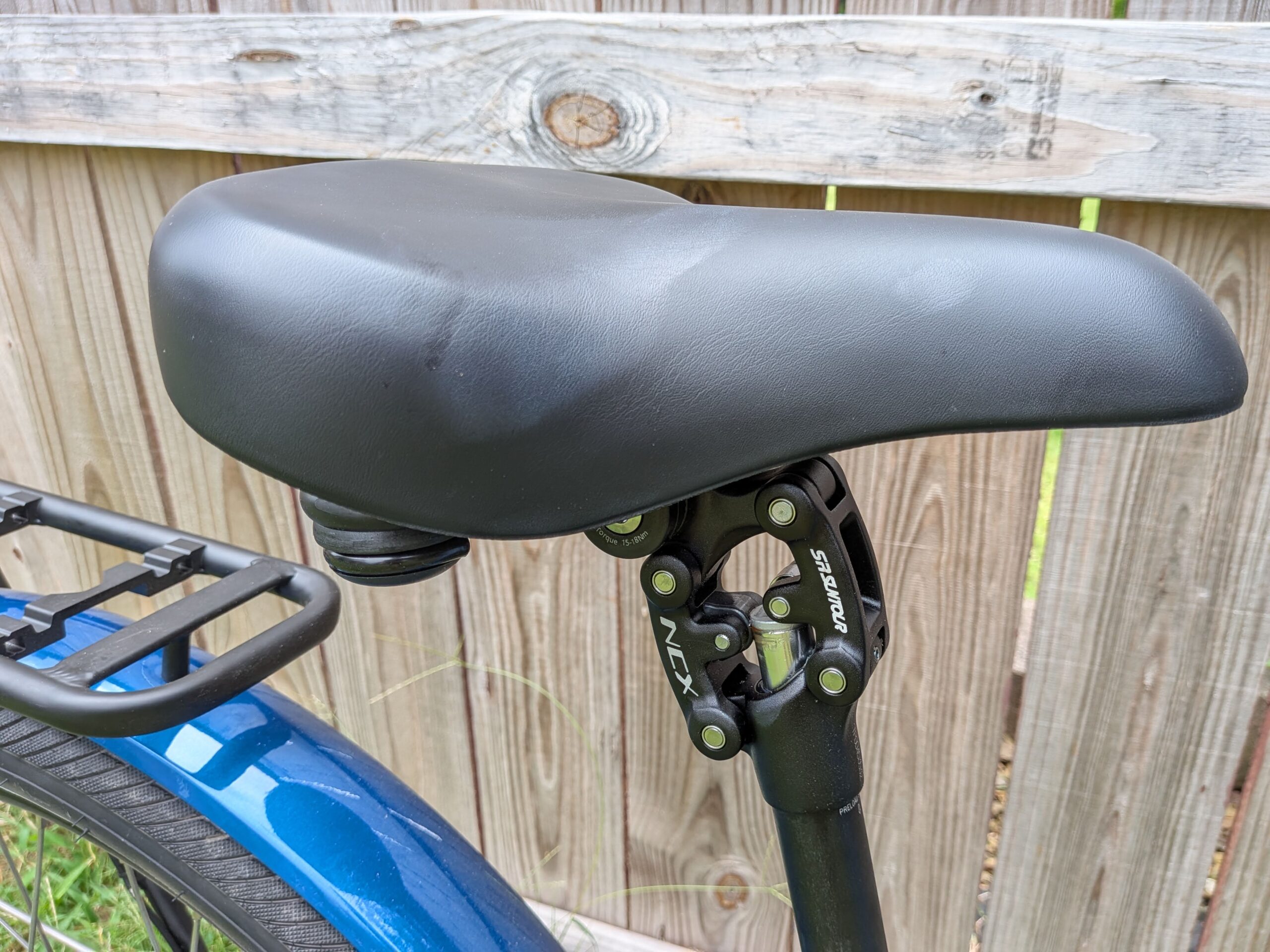
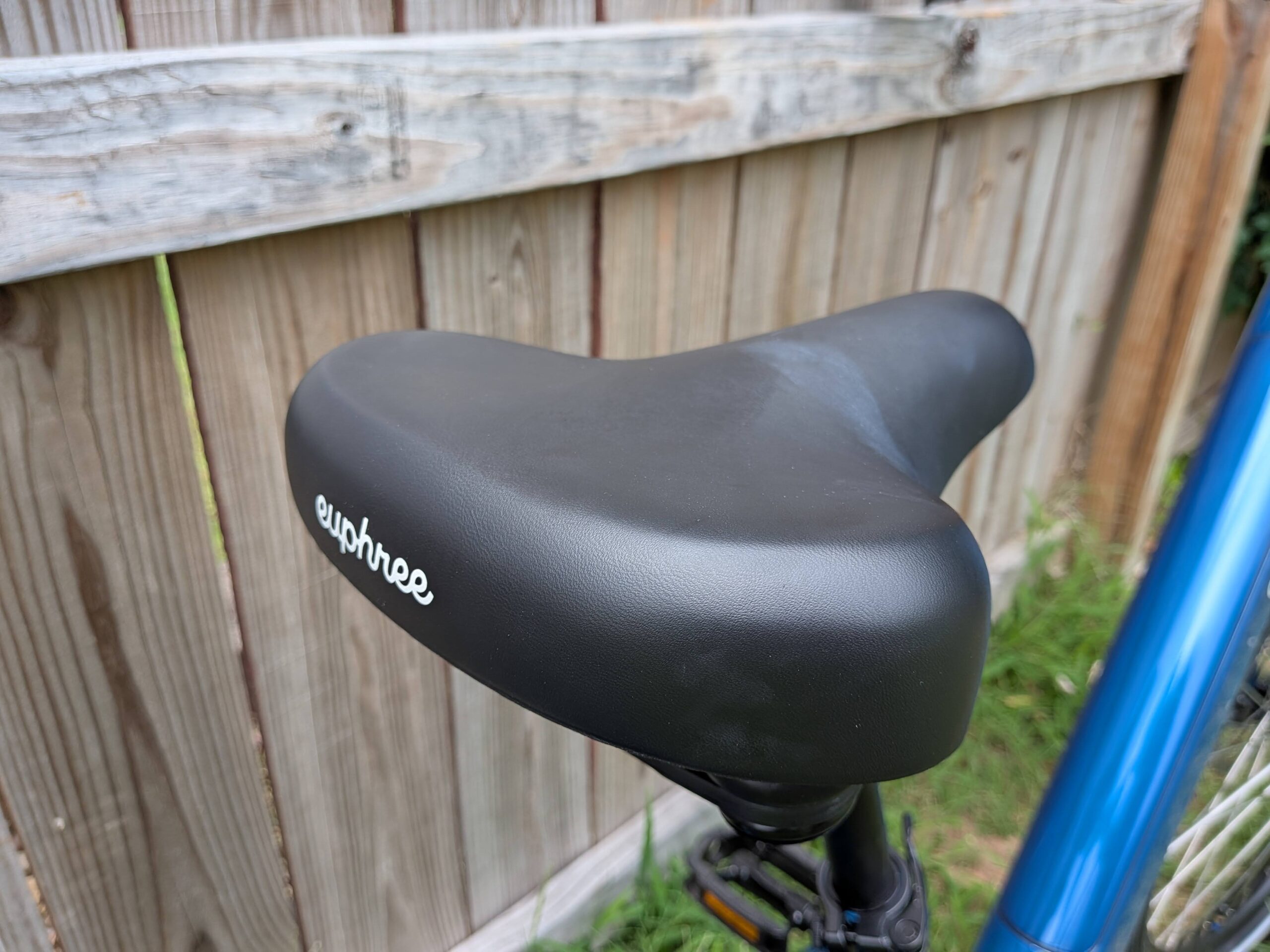
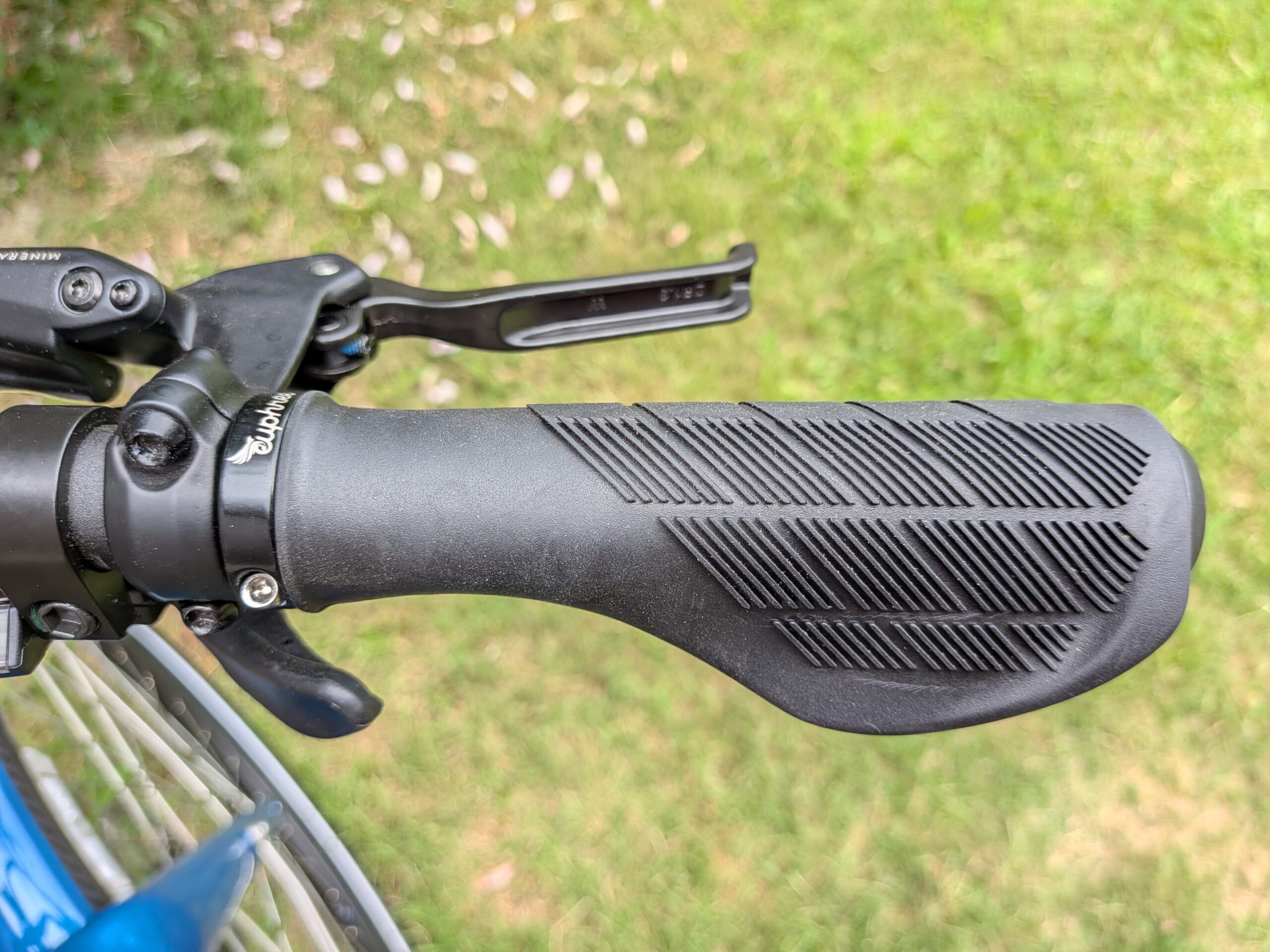
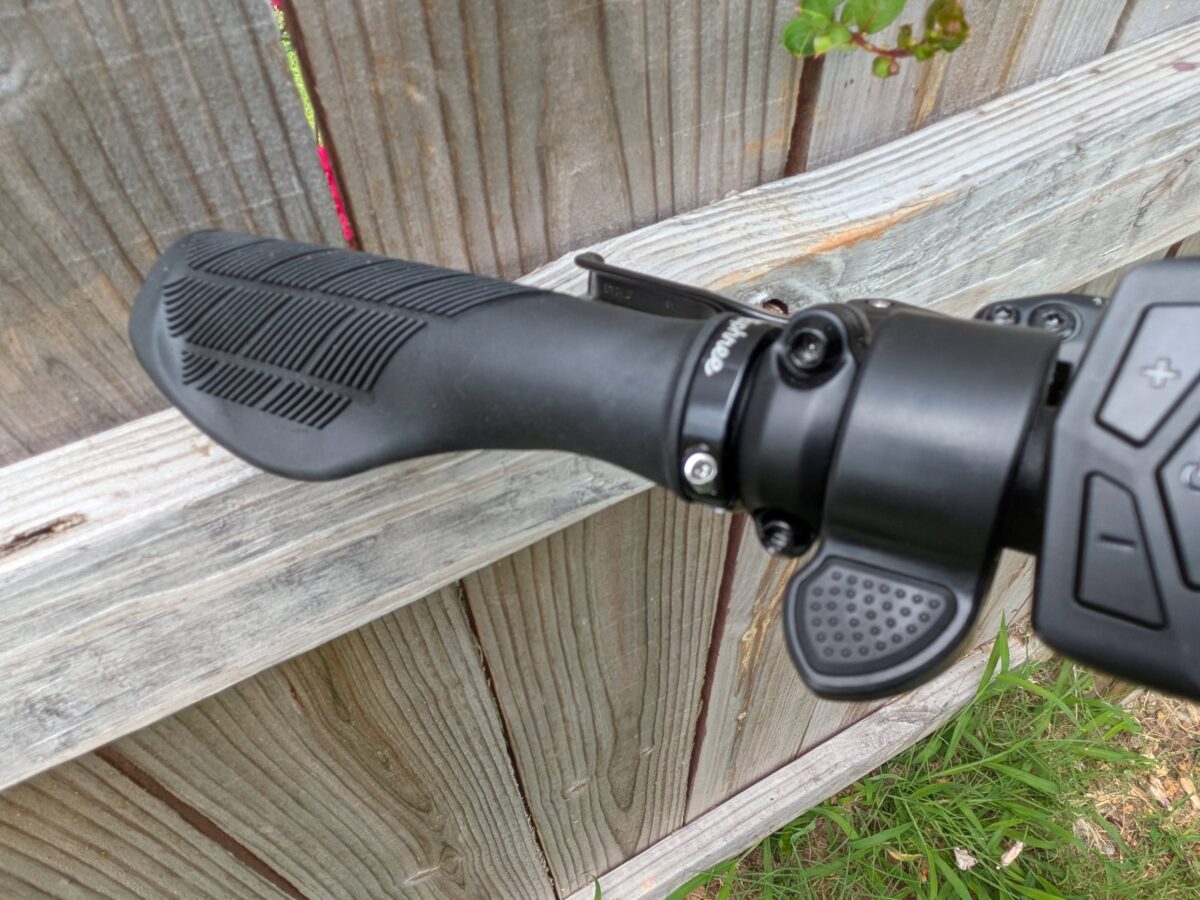
Every Euphree we have tested carries an SR Suntour NCX suspension seatpost, and it is one of our favorite comfort upgrades that makes it feel like you are riding on a cloud. Preload at the base lets you match it to your weight. A wide comfort saddle sits on top of it, and Euphree branded lock-on rubber grips cover the third contact point. The collars keep them from twisting under your hands, and the ergonomic shape gives your palms a shelf to rest on rather than putting pressure straight down through your wrists.
A Rigid Fork and Street Tires
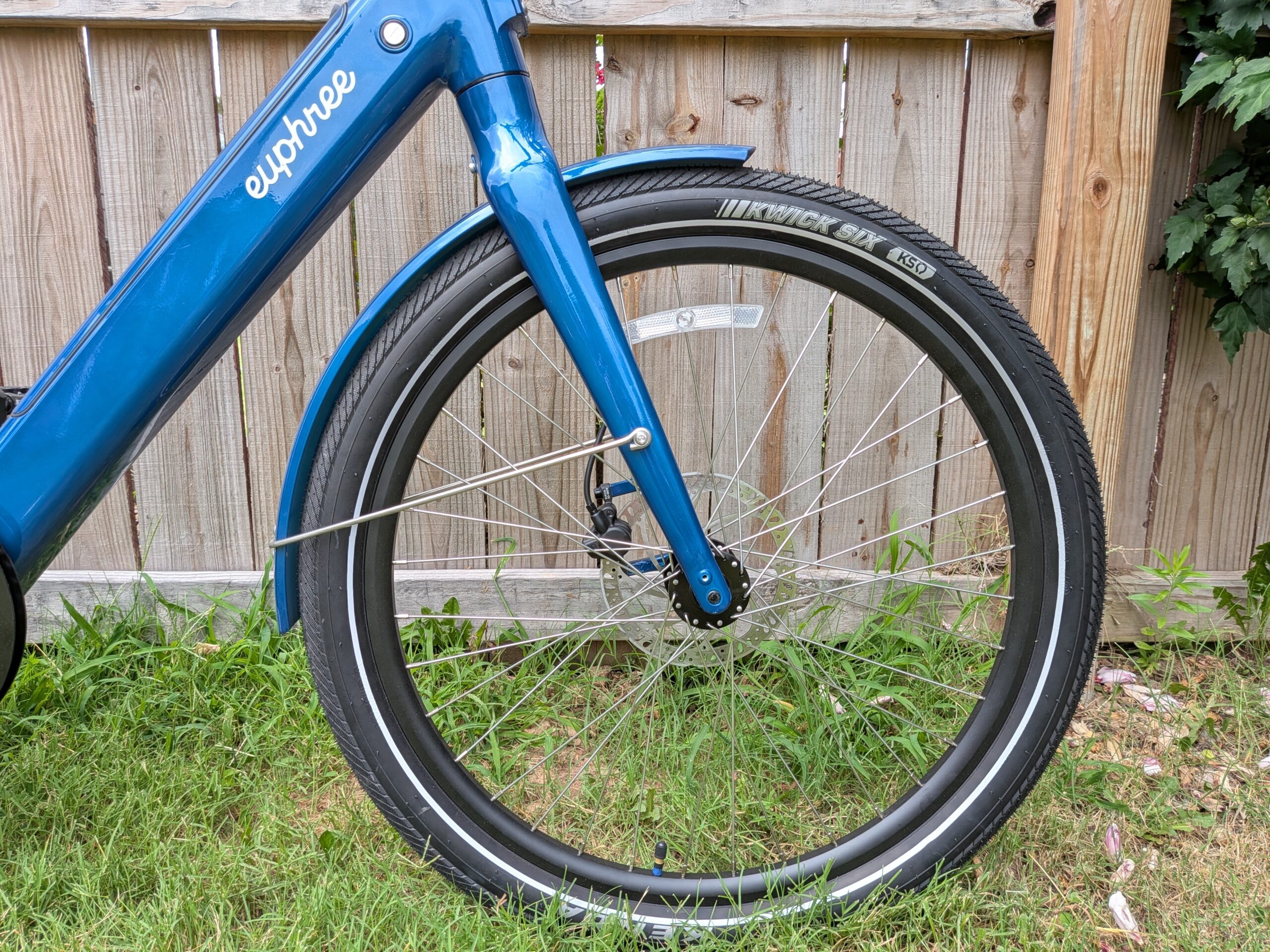
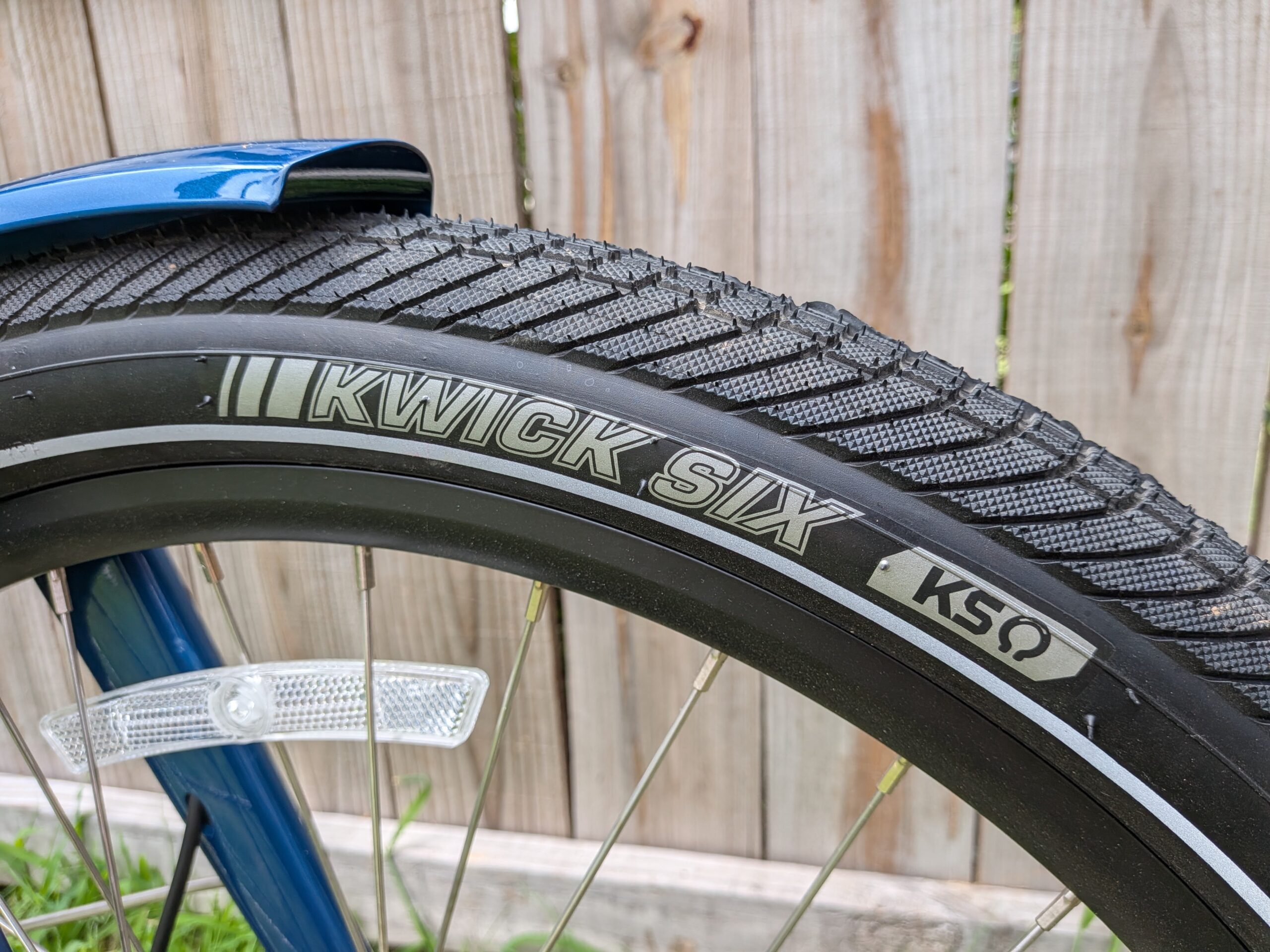
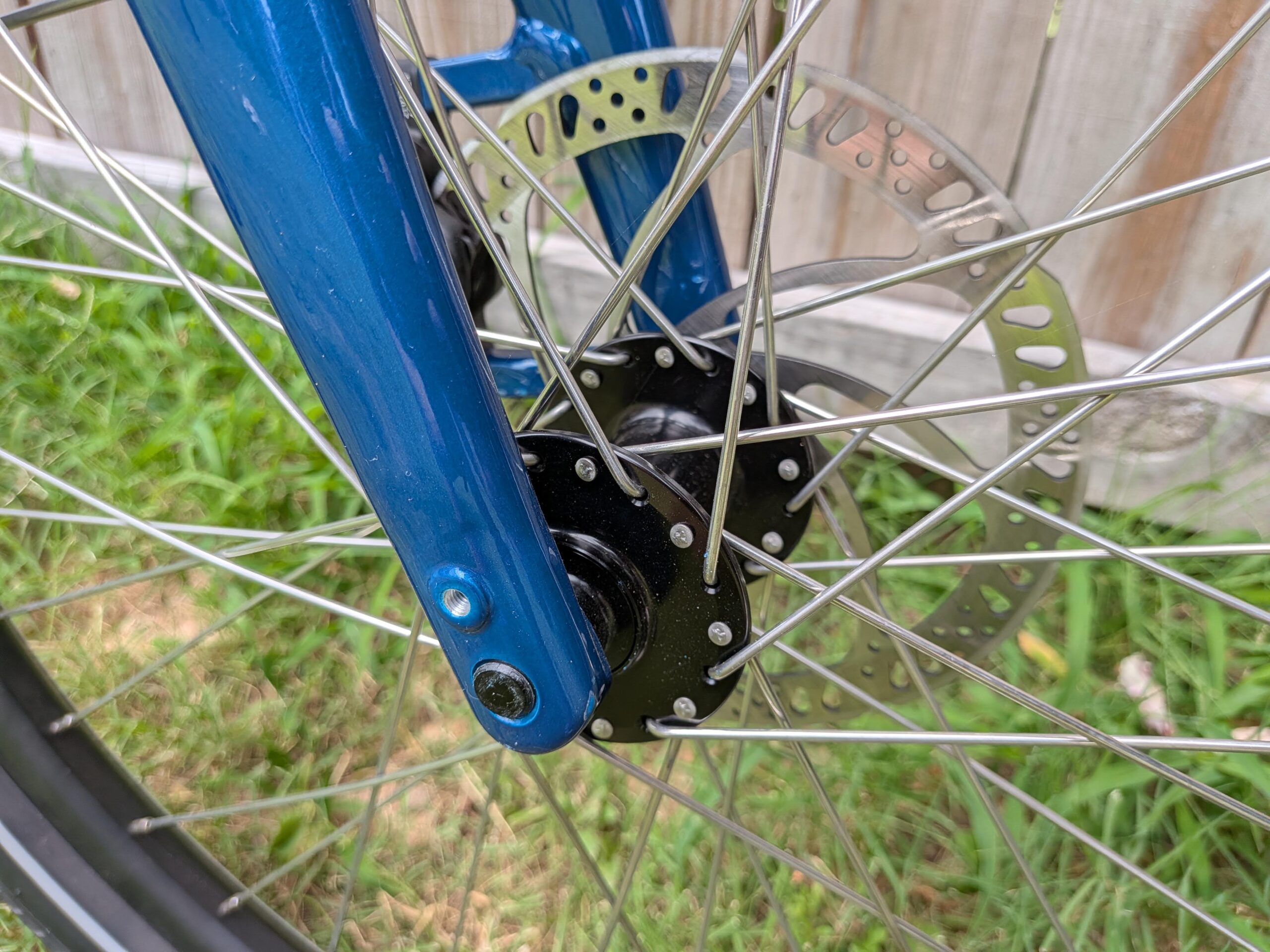
Trading the monoshock for a rigid aluminum fork is the change riders coming from the belt drive will notice first. You do give up some bump absorption, but the front end looks cleaner for it, and the suspension seatpost covers the end where your weight actually sits. Kenda Kwik Six tires in 26 x 2.4 roll on a street tread and attach up front with a thru-axle, and together with the fork they point the bike at pavement and hard packed paths instead of trails.
Assist Levels You Can Reshape
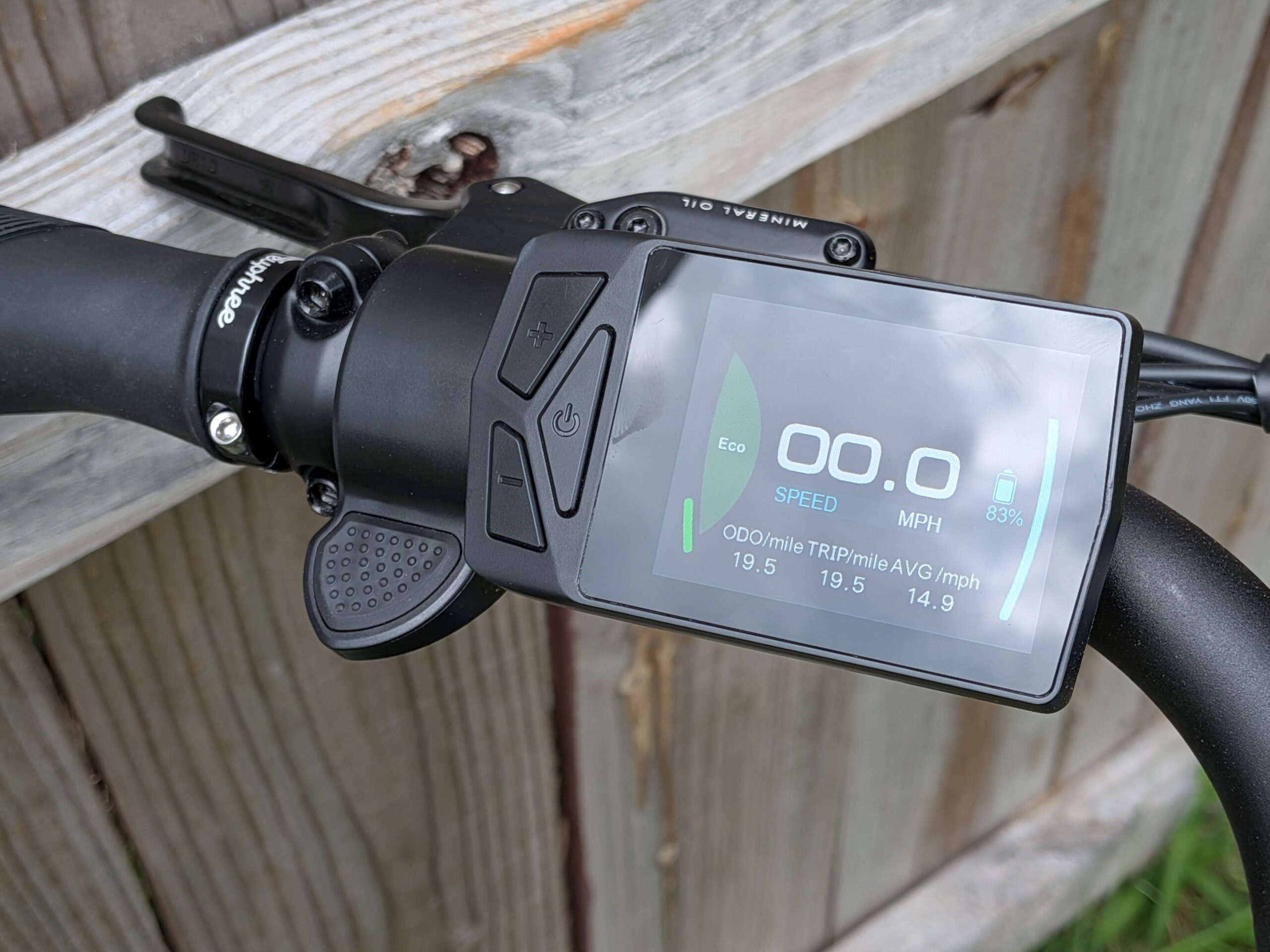
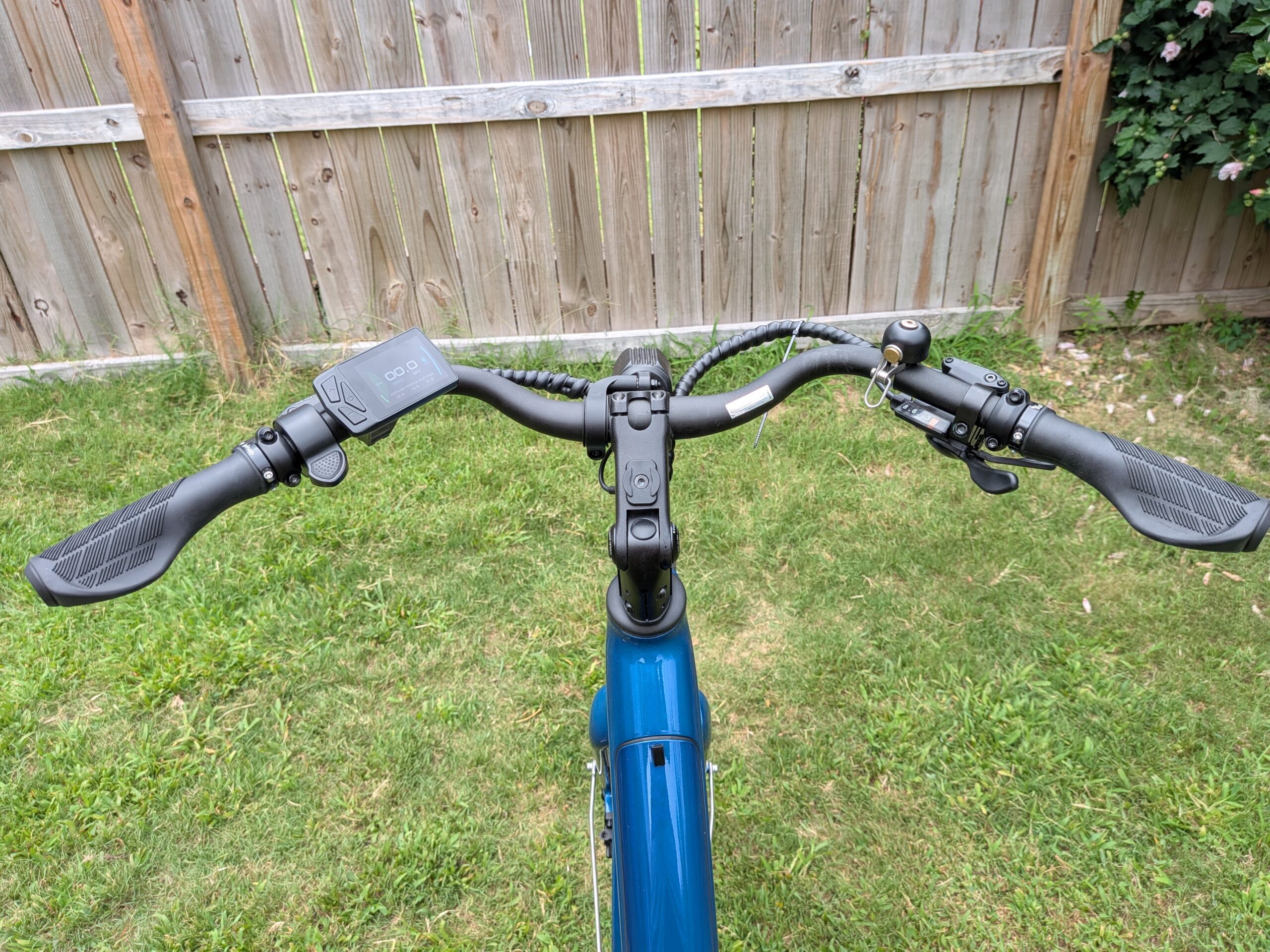
Off, eco, tour, sport, and turbo are what you scroll through on the left side controls, and every one of those levels can be reshaped in the settings. Timing sets how quickly the motor answers once your legs start moving, and power assist sets how much of the motor you get, with three choices inside each level. Ebike class lives in the same menu with class 1, 2, and 3 options plus an unlimited setting for private property where regulations allow it. The throttle gets its own entry, and it can take on the profile of any assist level, so a soft launch or everything the motor has is a menu choice rather than something you are stuck with. There is also a Euphree Connect item in the settings with no app behind it yet, which is an interesting thing to find on a bike that does not claim any smart features.
Battery, Range, and Charging
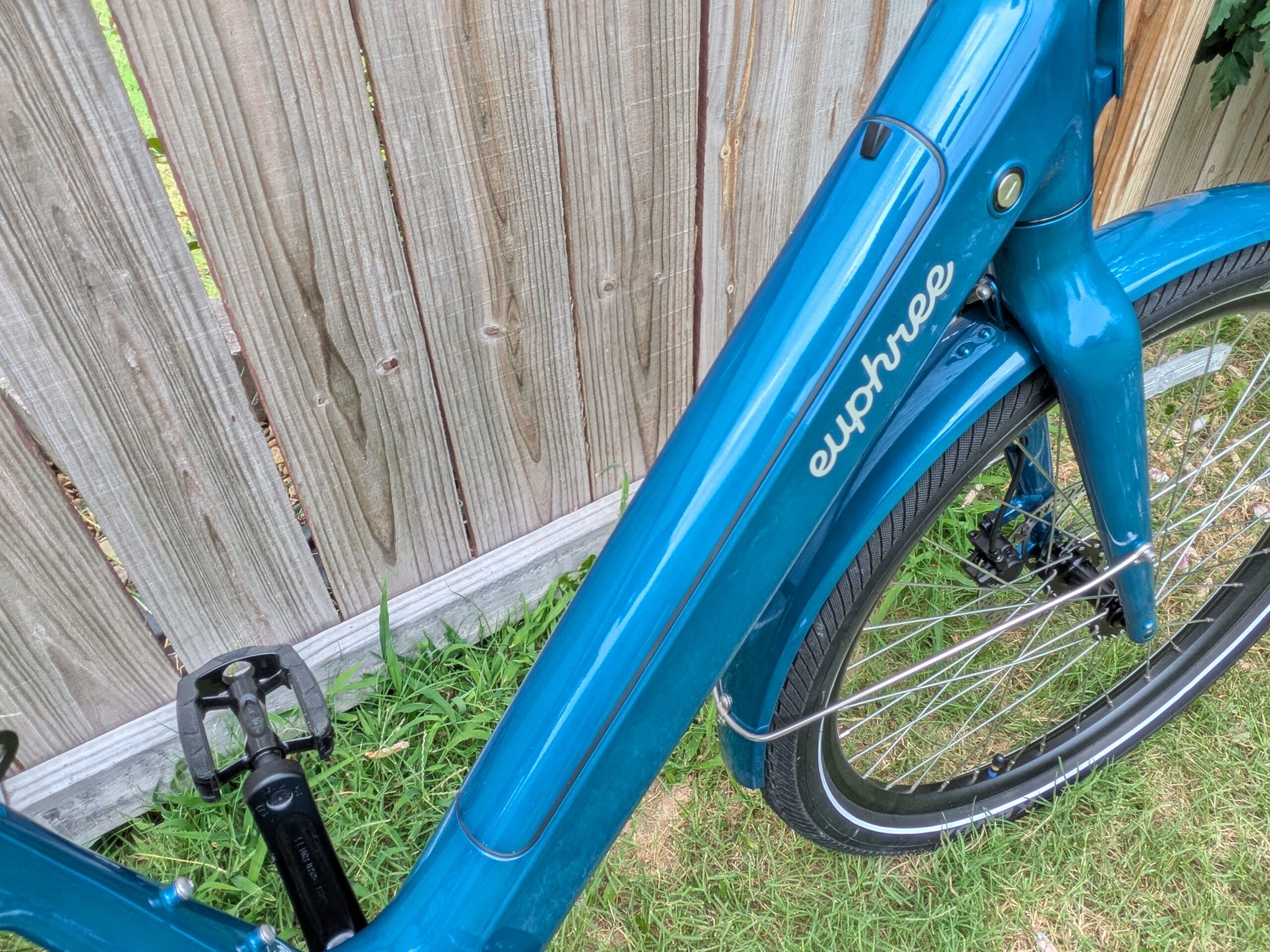
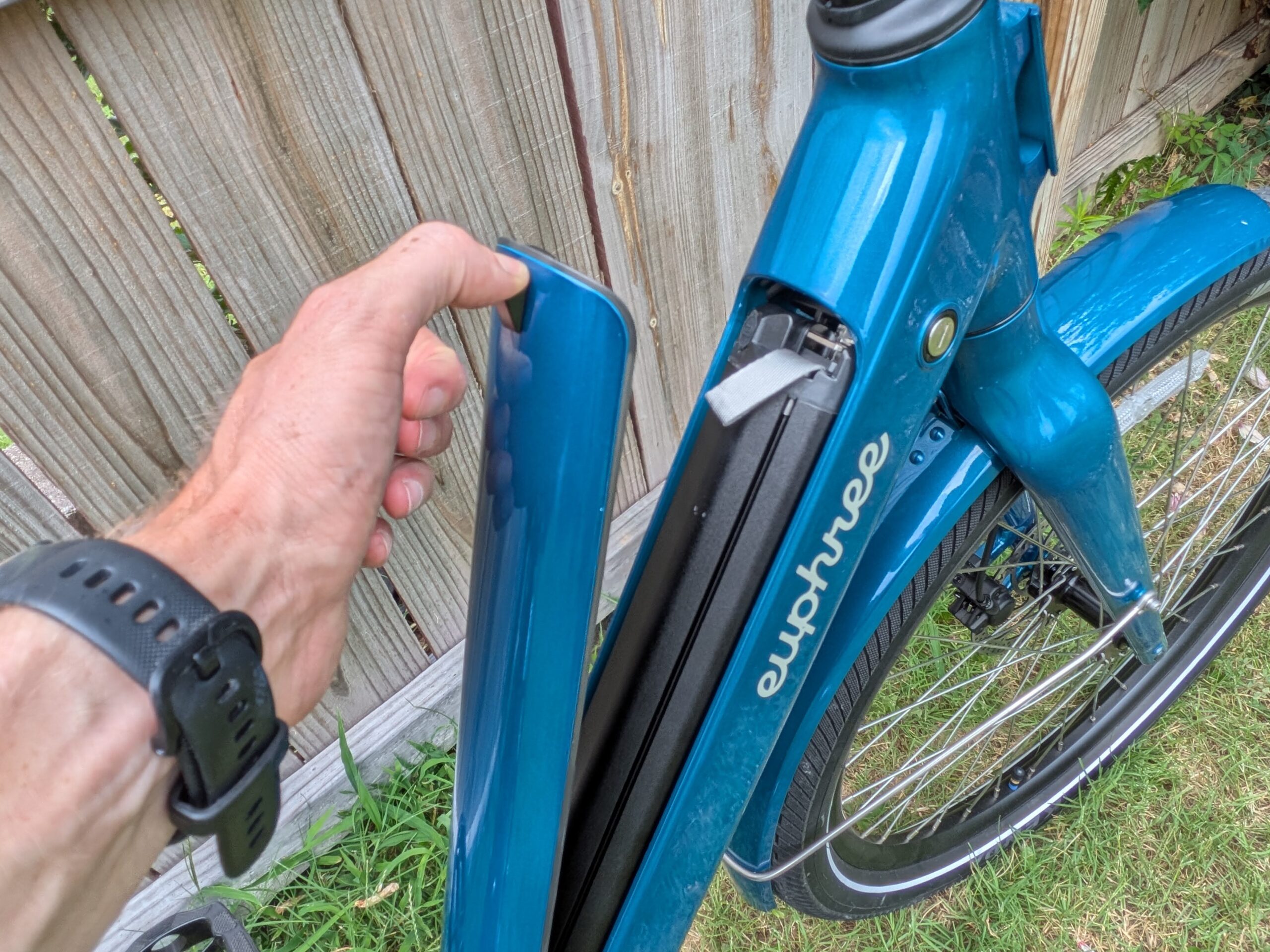
A paint matched cover hides the pack, and it pops off with a release tab before a key turn and a metal tab free the battery itself. At just under six pounds, it is light enough to carry inside without thinking about it. Euphree advertises up to 50 miles. You can expect around 20 to 30 miles if you spend your time in the higher assist levels. The charger is a 2 amp unit, putting a full charge from empty in the 5 to 6 hour range. The battery is certified to UL 2271 and the electronics are certified to UL 2849.
Lights, Fenders, and a MIK Rack
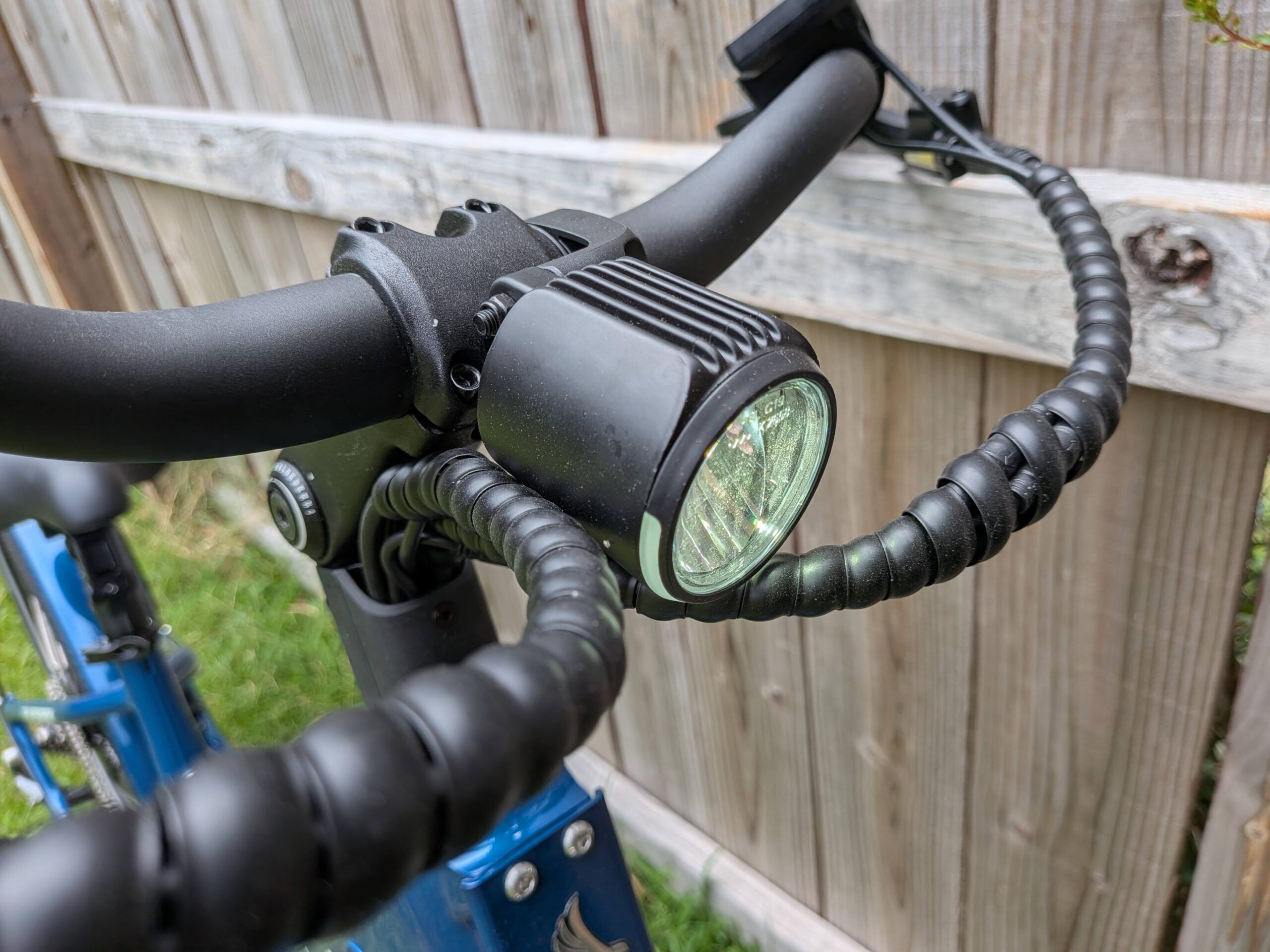
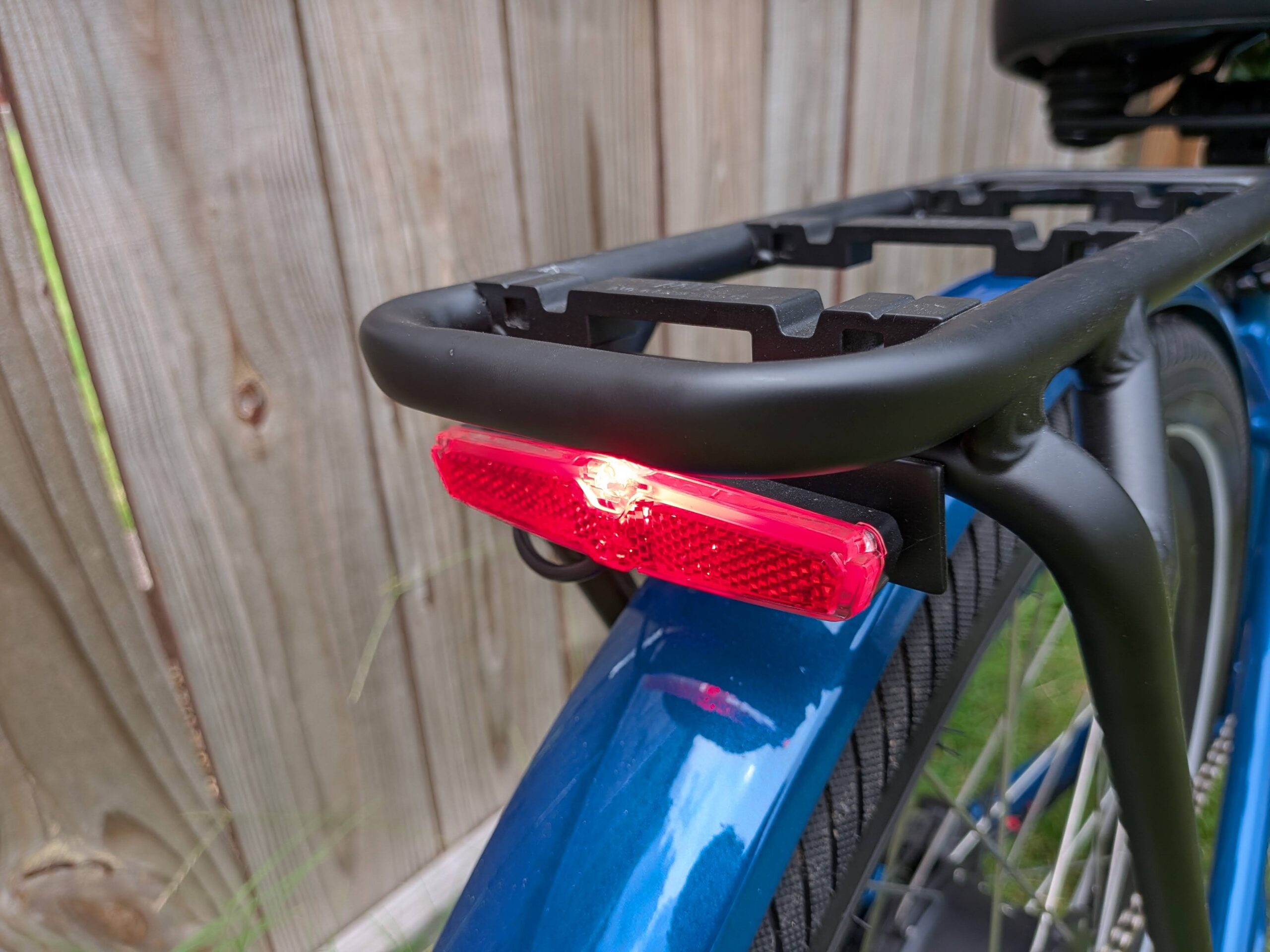
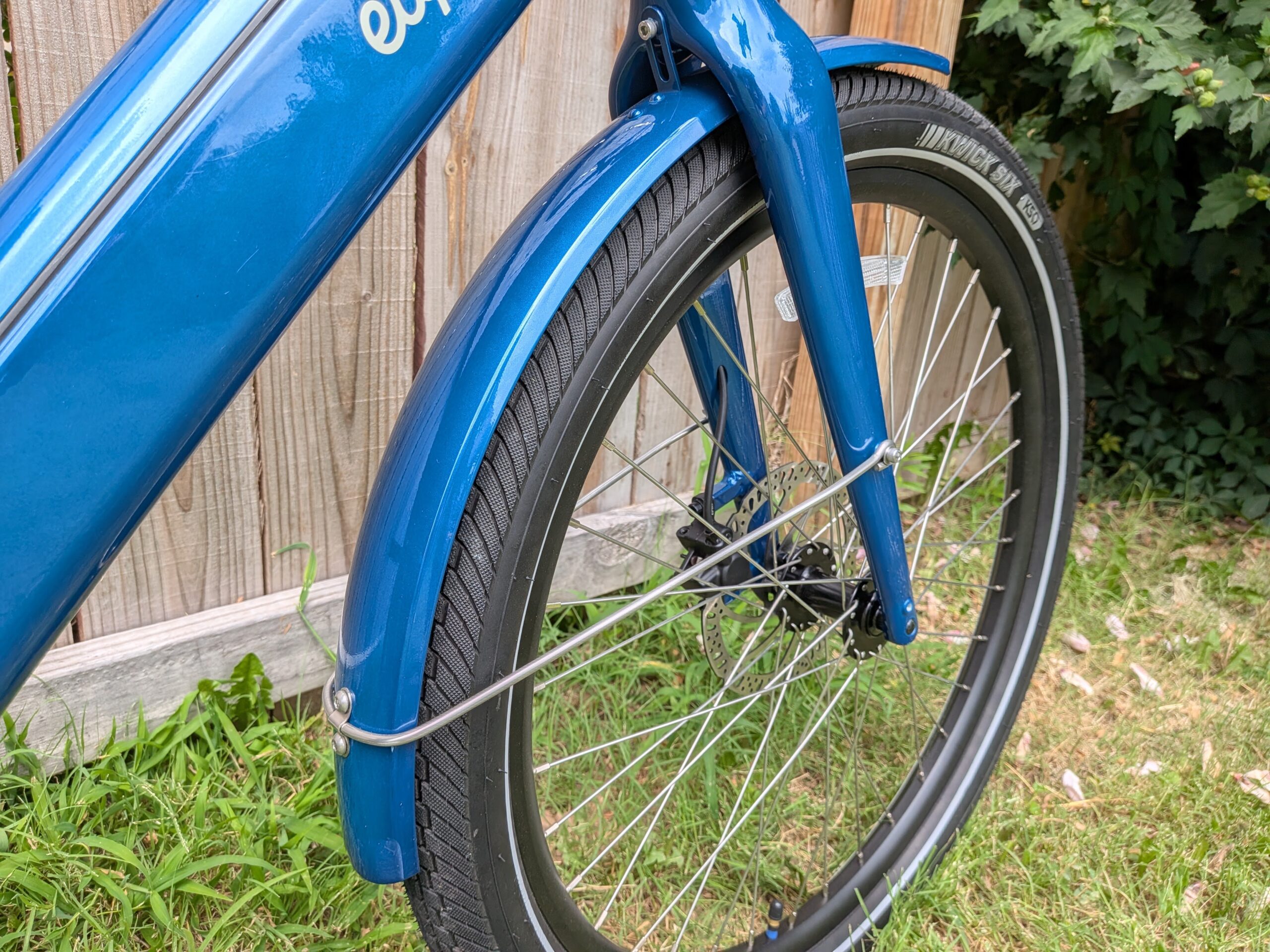
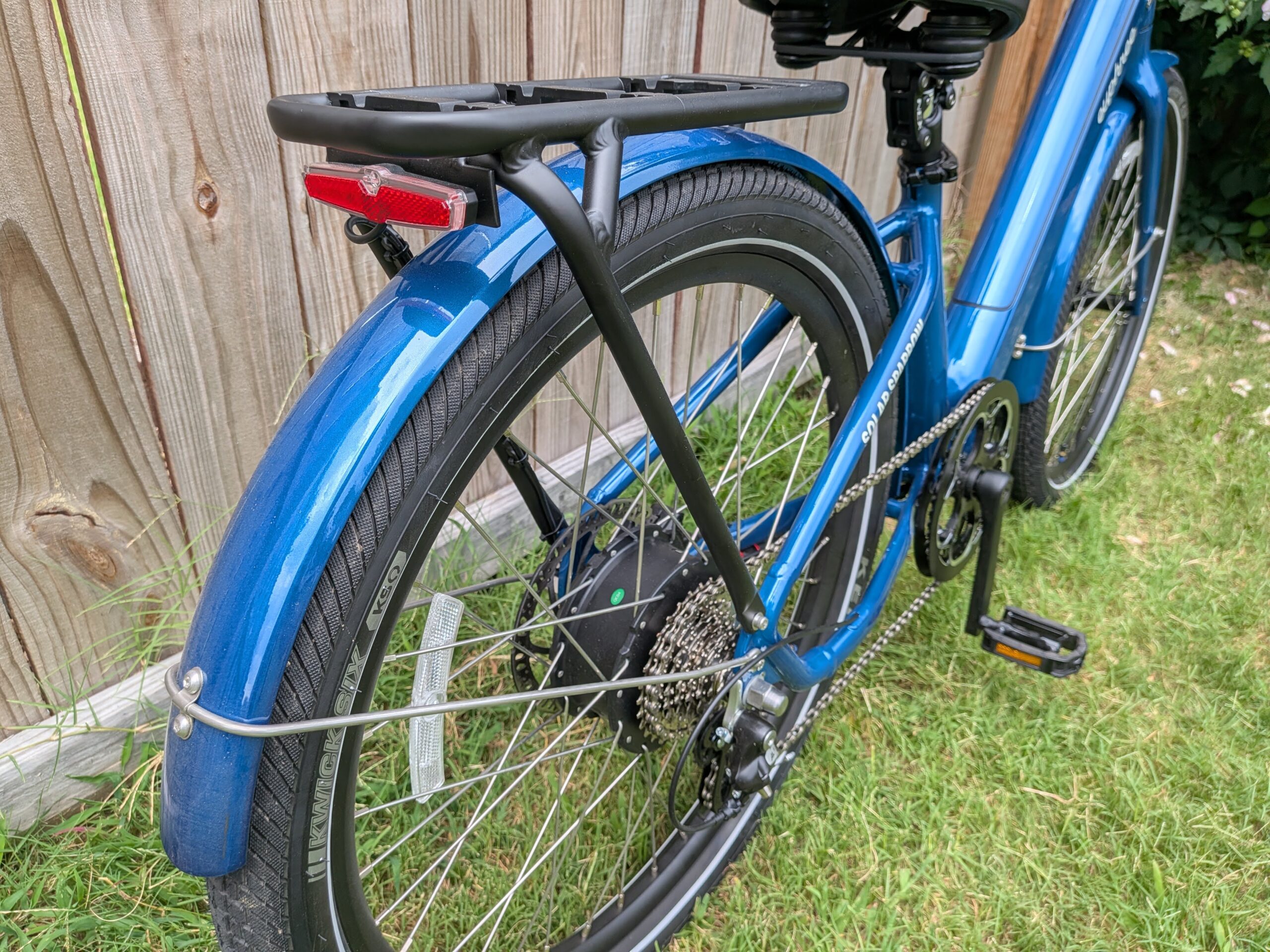
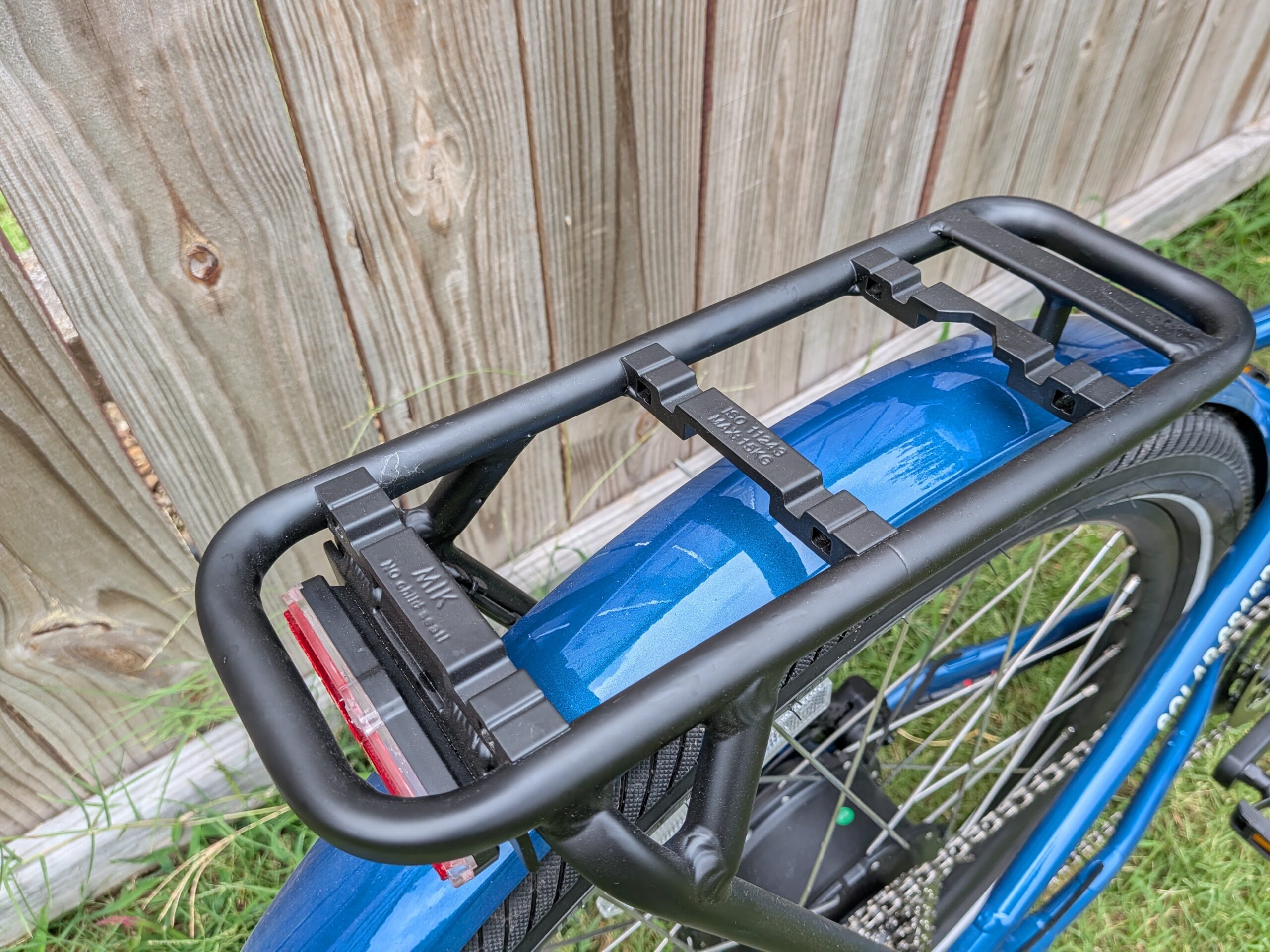
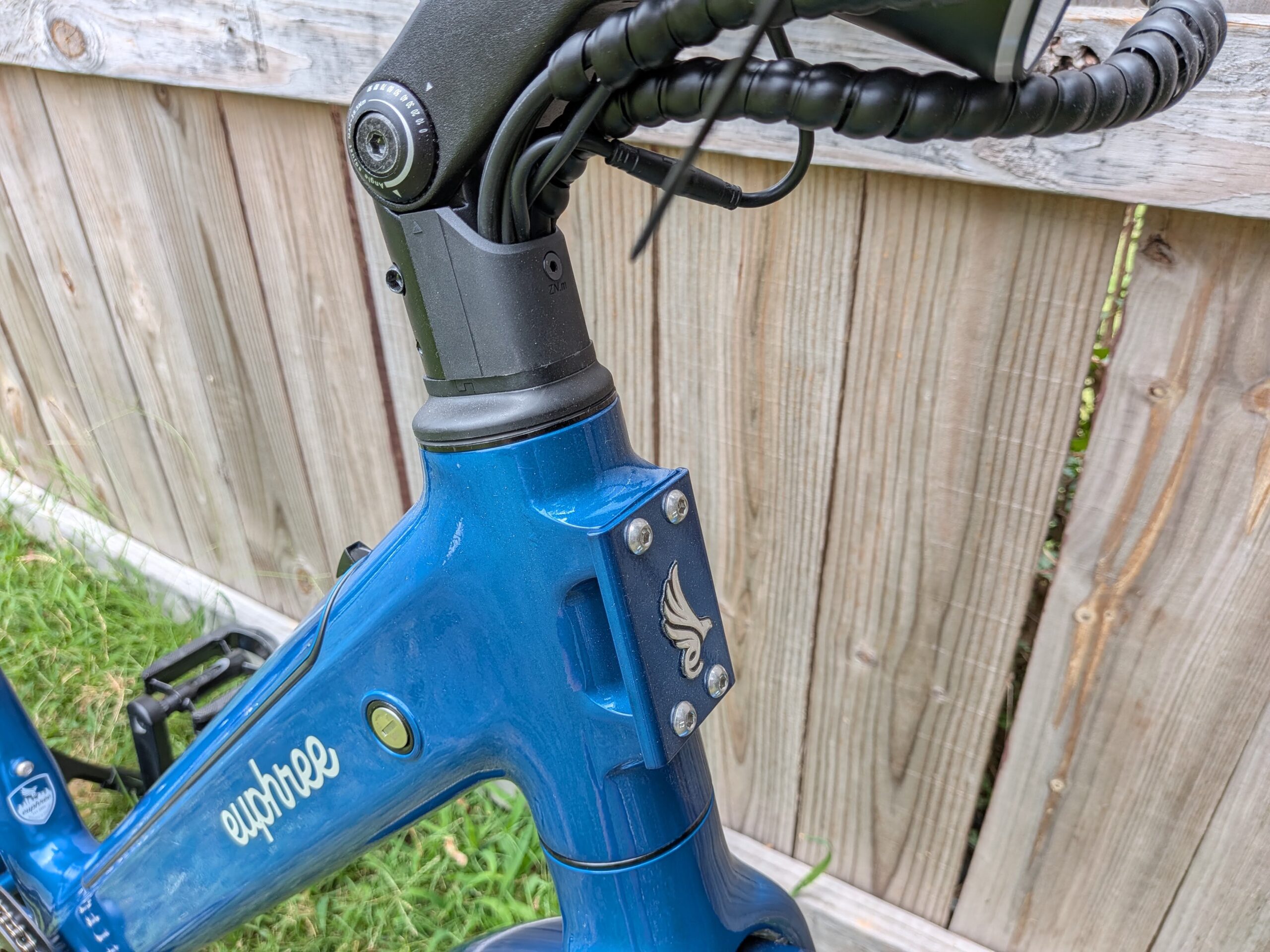
Both the front and rear lights run off the main battery, so there is nothing extra to charge or clip on before a night ride. The rack mounted taillight brightens when you pull either brake lever. Paint matched fenders cover both wheels, and the metallic flake in the paint carries through to them. The rear rack runs on MIK, which stands for Mounting Is Key. Accessories lock down with a keyed spring latch and lift off just as quickly, with no straps or bolts anywhere in the process. Because this is the MIK standard, you are not limited to what Euphree sells. Pull the badge off the front plate and you will find four mounting points for a front rack or basket.
Frame, Fit, and Colors
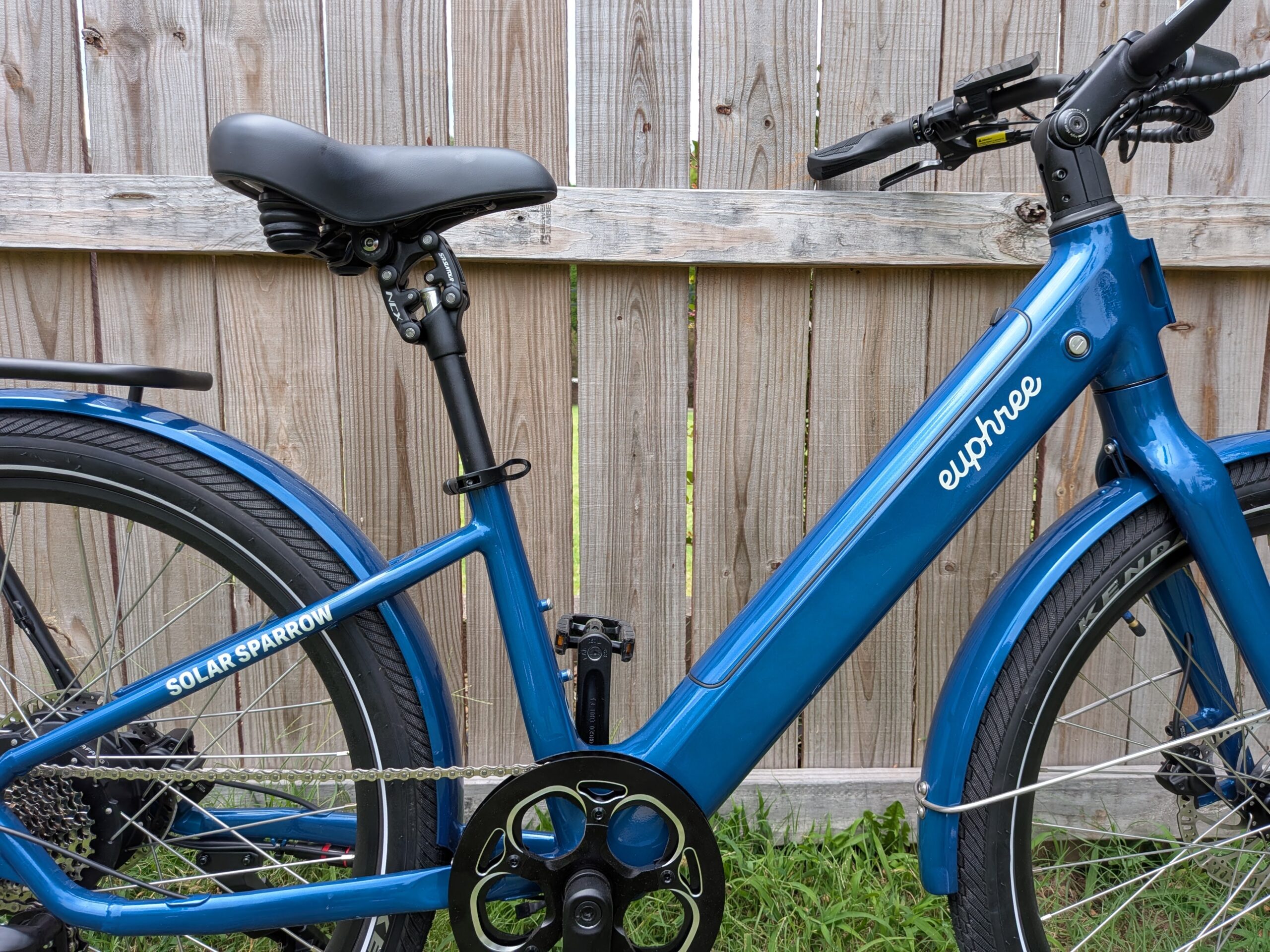
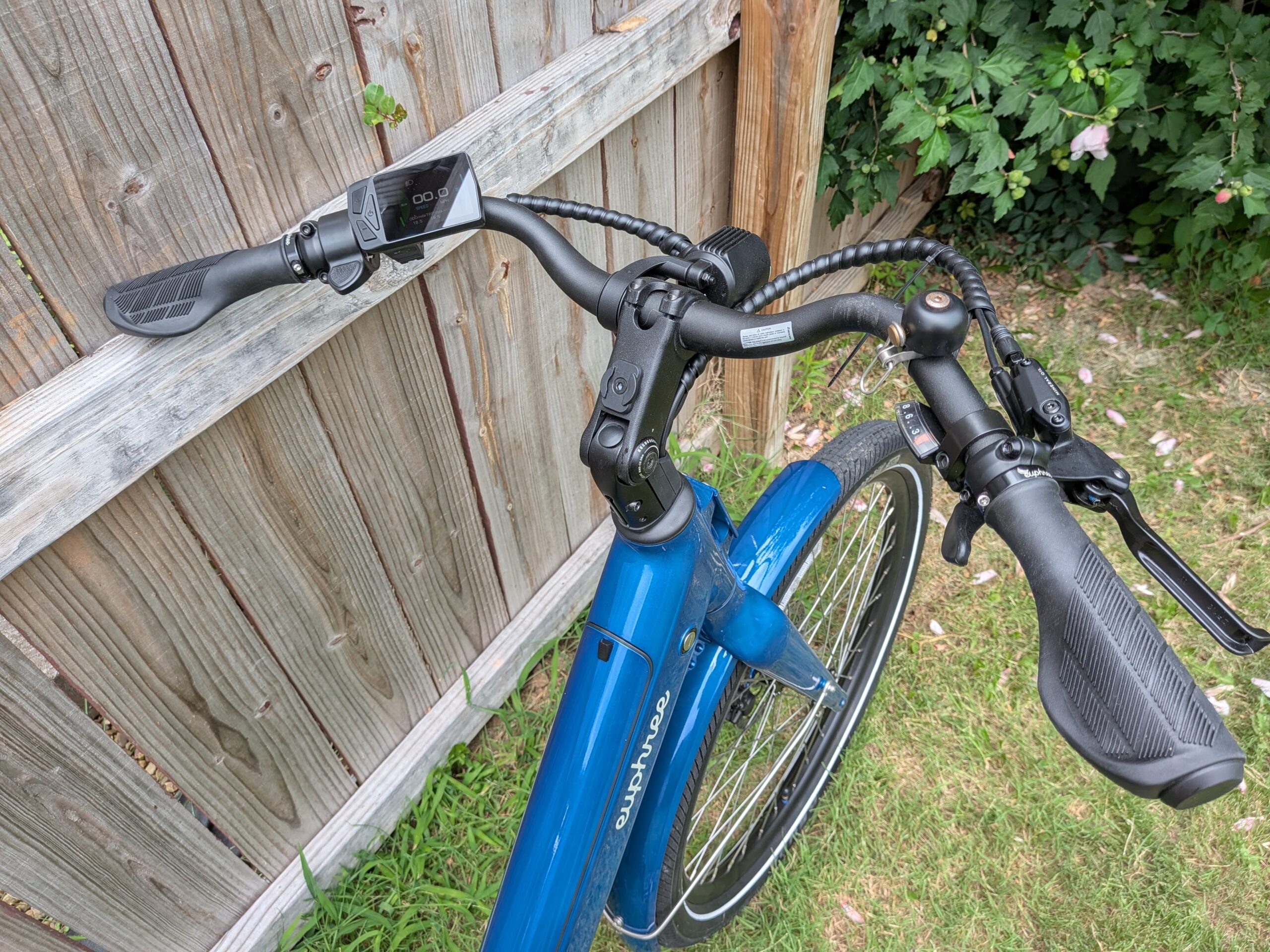
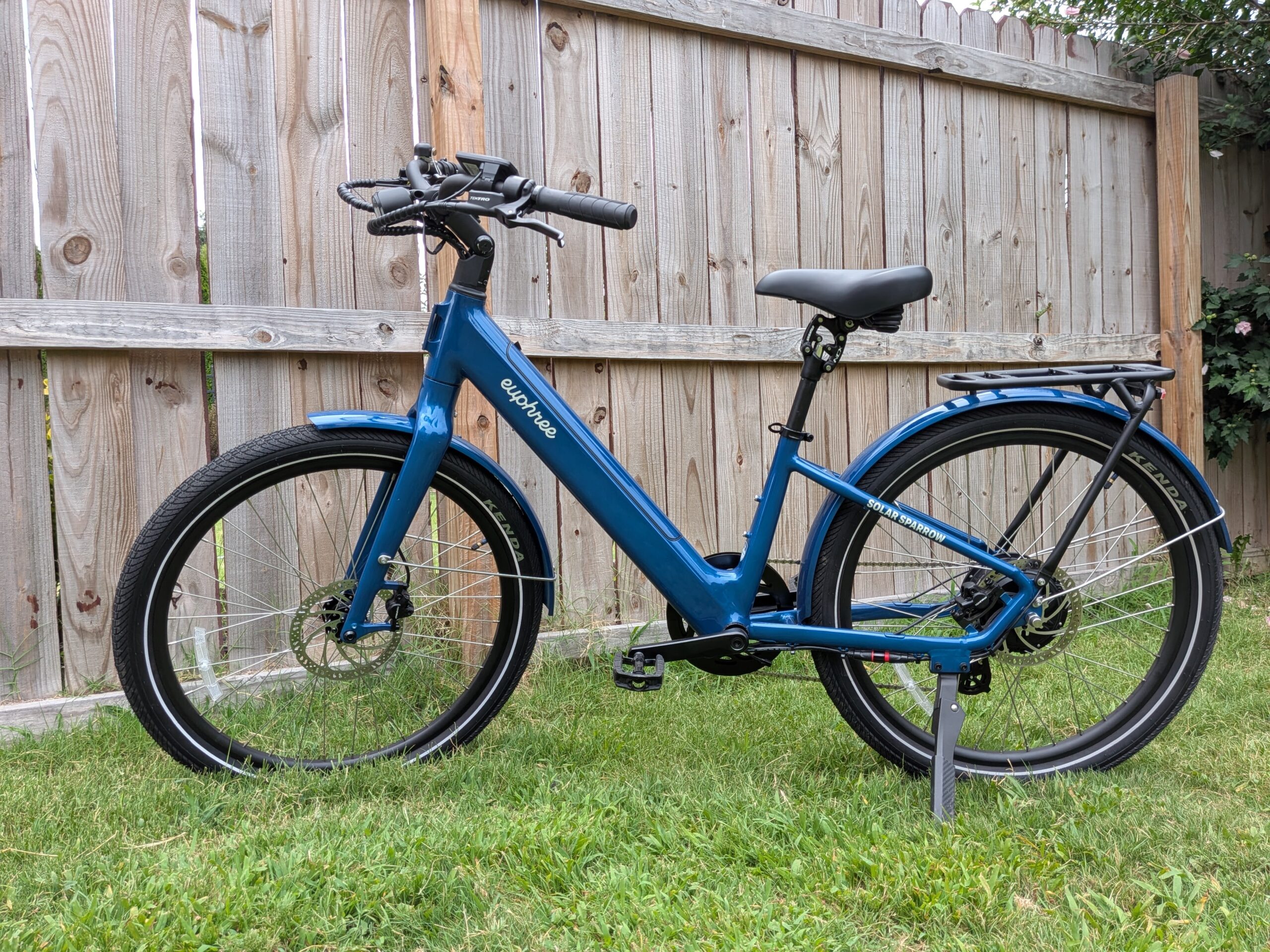
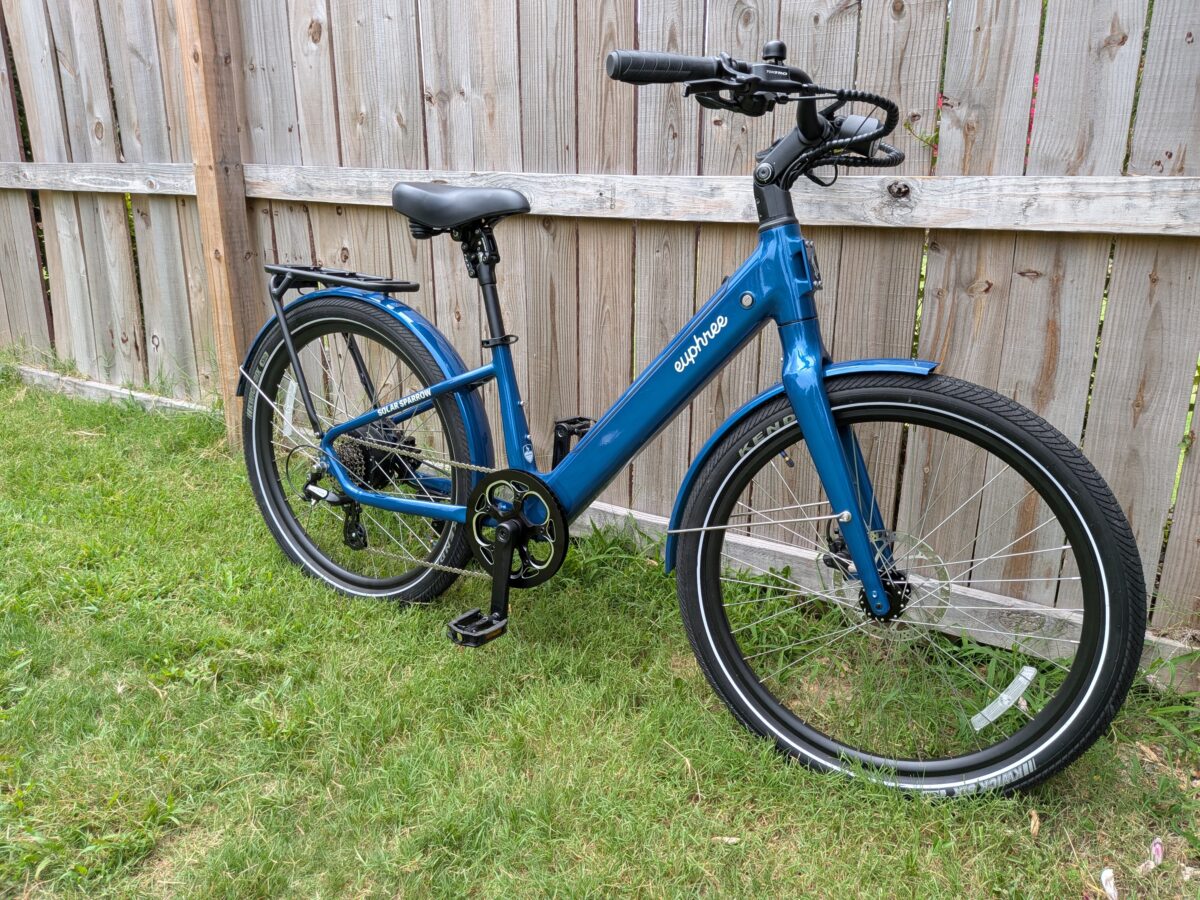
The step-thru window drops low, so climbing on takes no effort at all. Swept back handlebars bring your hands back and up, and the stem adjusts through 90 degrees, so the cockpit goes from fully relaxed to something a little more forward without any parts swapping. A couple of bottle cage mounting points sit on the seat tube. Color options are Riviera Blue, Canyon Flame, and Ultra Violet, each with a metallic flake in the paint that shows up when the sun catches it right.
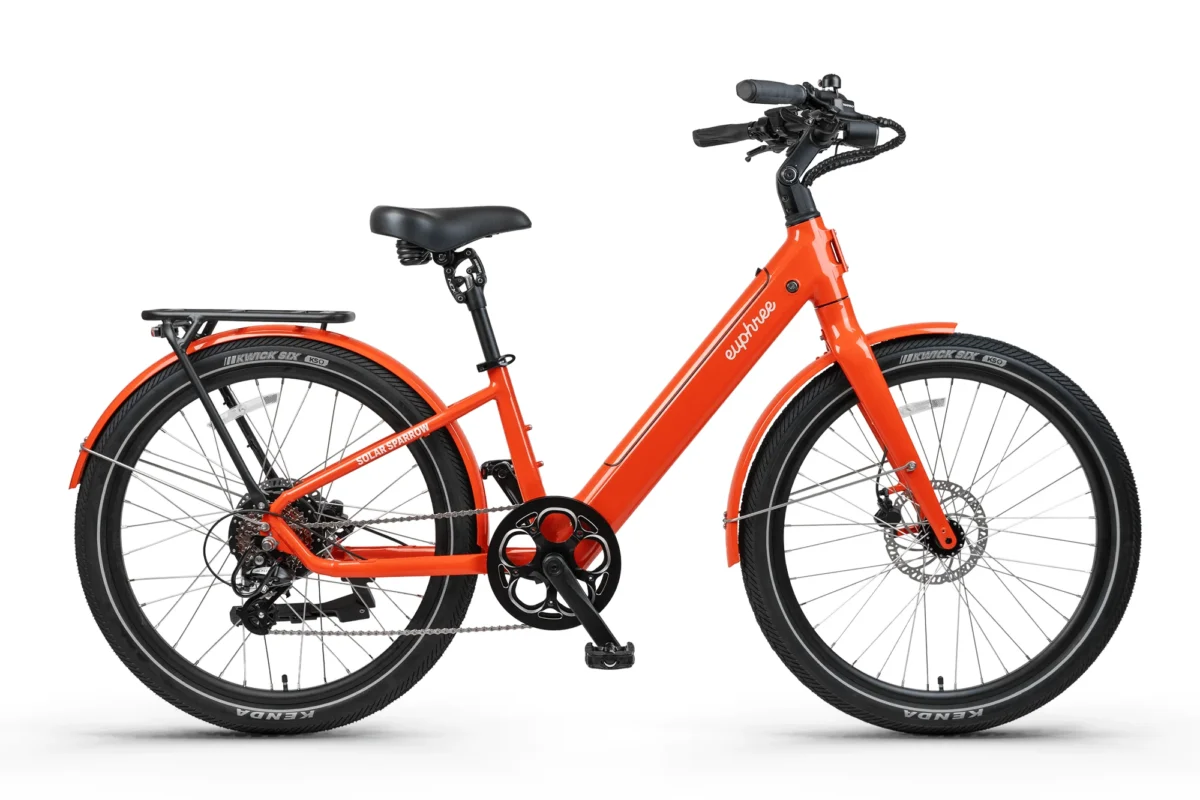
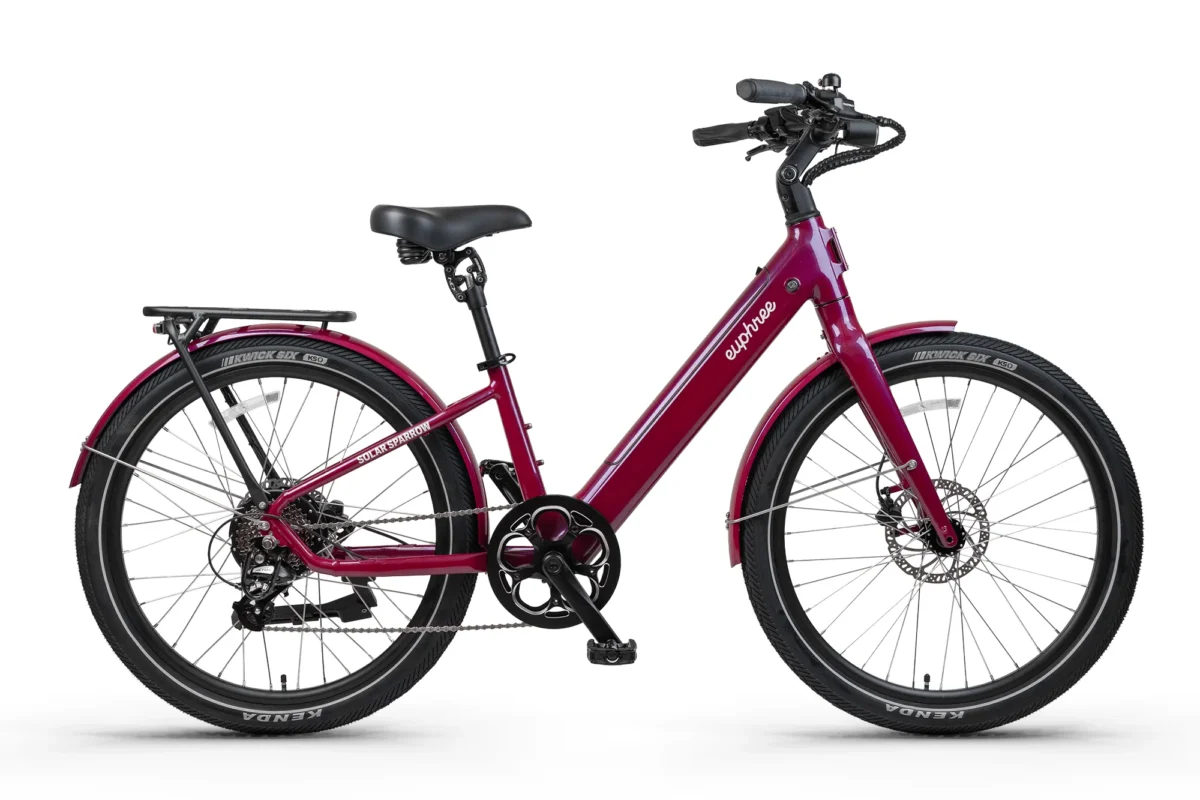
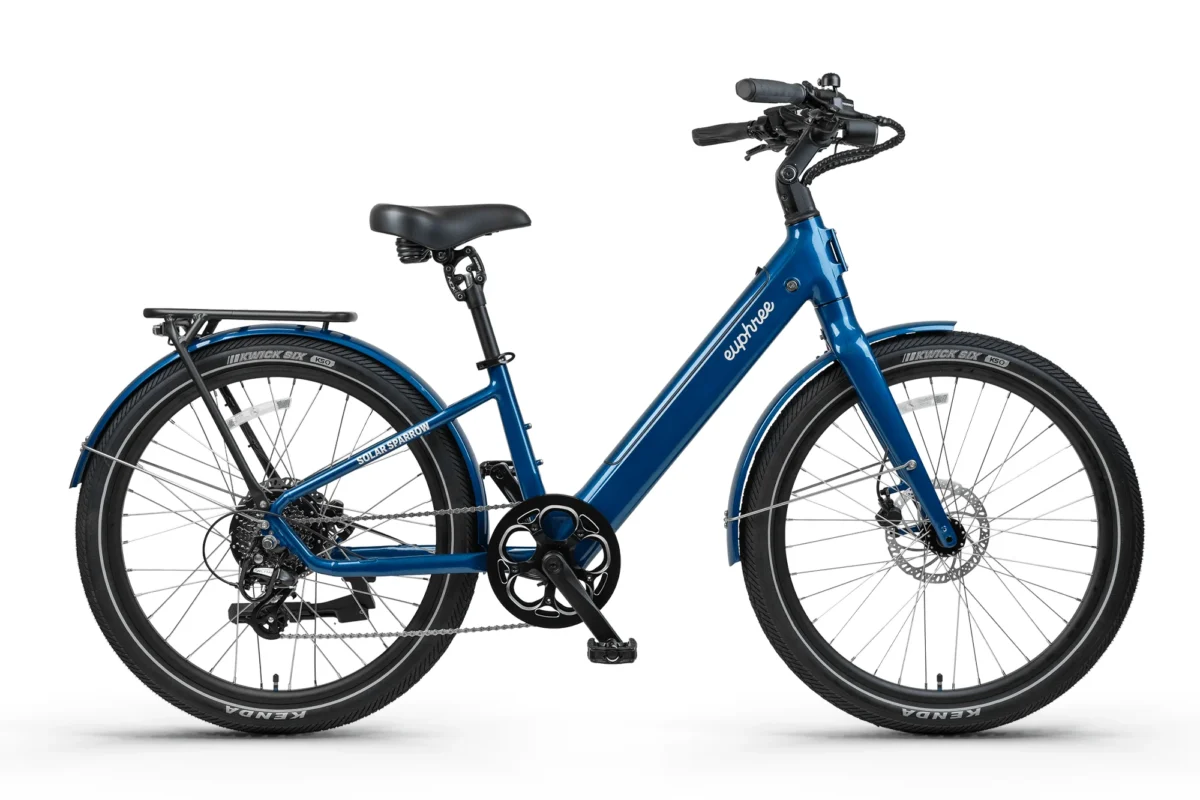
Rider height range is listed at 4’11” to 5’10”, and the 26-inch wheels suit a bike built around riders of average height. A 5’5″ rider found a comfortable fit without fuss, while a 6’1″ rider with a 33-inch inseam came up shy of full leg extension even with the seatpost run all the way up. Riders near six feet who want proper extension should be looking at the City Robin 3 or the Stellar Falcon 2 instead. Advertised weight is 59.5 lbs and our scale read just over 60 lbs with the battery and accessories on board, which makes it the lightest bike Euphree builds without quite landing in lightweight ebike territory.
| Category | Euphree Solar Sparrow |
|---|---|
| Total Weight w/ Battery & Accessories (our scale) | 60 lbs |
| Payload Capacity | 300 lbs |
| Rider Height Range | 4'11"-5'10" |
| Standover Height | 15.5" |
Euphree Solar Sparrow Chain Specifications
Here is the full technical breakdown of how the chain drive Solar Sparrow comes equipped.
| Component | Euphree Solar Sparrow |
|---|---|
| Price | $1,799.99 |
| Type | Commuter Ebike |
| Class | 1/2/3 |
| Weight Capacity | 300 lbs |
| Top Speed | 28 mph |
| Motor | 750W Bafang Rear Hub Motor, 85 Nm |
| Battery | 48V, 10.5Ah (504Wh) LG Cells |
| Claimed Range | Up to 50 miles |
| Charger | 48V, 2A (5-6 hr full charge from empty) |
| Display | Left-side Color LCD |
| Sensor | Torque/Cadence (swappable) |
| Throttle | Left-side Thumb Throttle |
| UL Certifications | Certified to UL 2849 (electronics), UL 2271 (battery) |
| Shifter | Shimano 8-speed Trigger Shifter |
| Derailleur | Shimano Altus |
| Chainring | 50T |
| Freewheel | 10-32T, 8-speed |
| Brakes | Tektro E350 Hydraulic Disc Brakes |
| Levers | Tektro Brake Levers w/ Motor Cutoff |
| Rotors | 180mm Front & Rear |
| Frame | 6061 Aluminum, Step-Thru |
| Fork | Aluminum Rigid |
| Axle | Front Thru-Axle |
| Tires | 26 x 2.4-inch Kenda Kwik Six, Street Tread |
| Handlebars | Swept-back w/ Rise |
| Grips | Euphree Lock-on Ergonomic Rubber |
| Stem | 90mm Adjustable |
| Saddle | Velo Plush Comfort |
| Seatpost | SR Suntour NCX Suspension, 50mm Travel |
| Pedals | Wellgo Alloy |
| Fenders | Included, Paint-Matched Aluminum |
| Rear Rack | Included, 33 lb Capacity, MIK Compatible |
| Kickstand | Included, Rear Mounted |
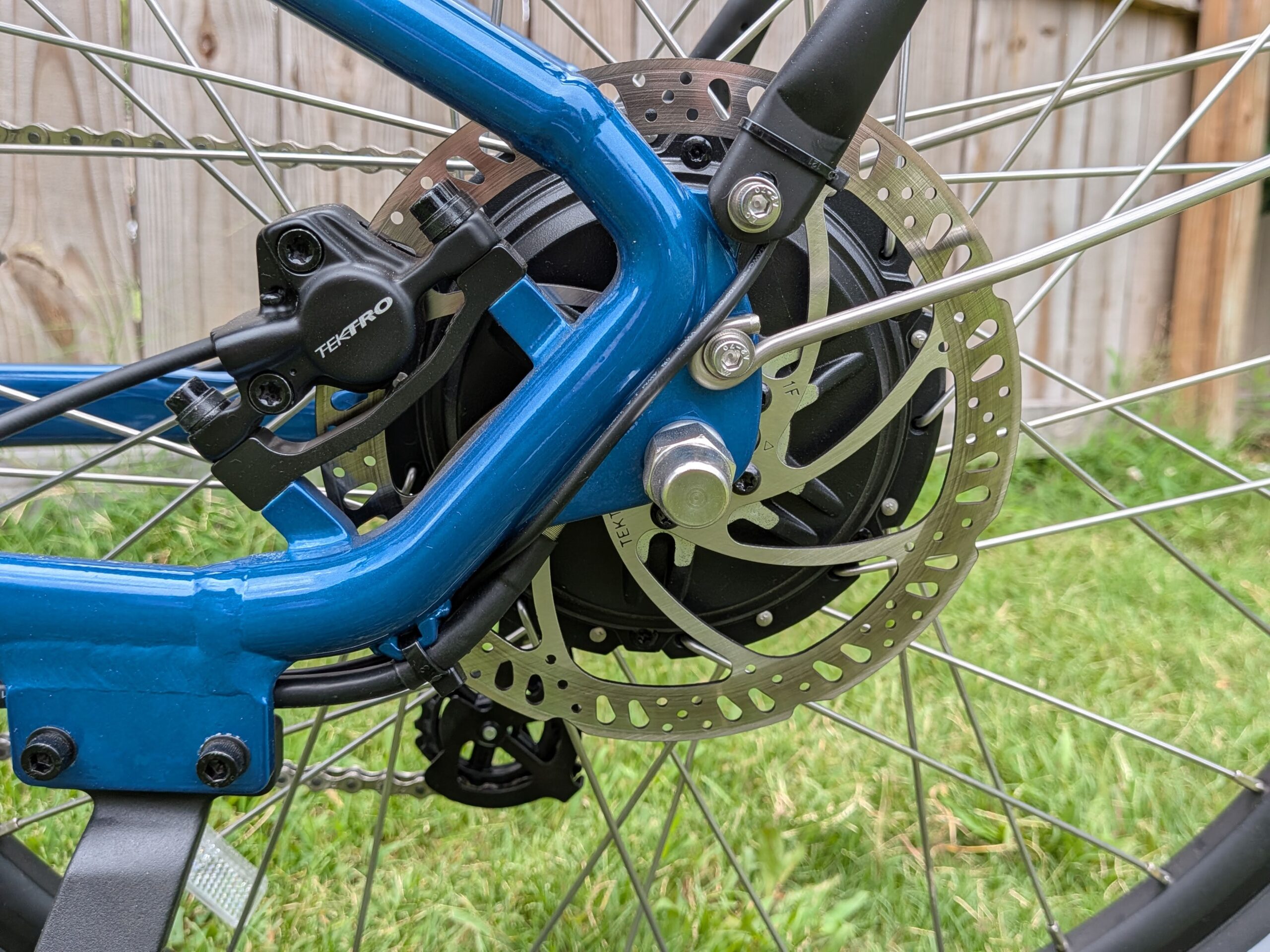
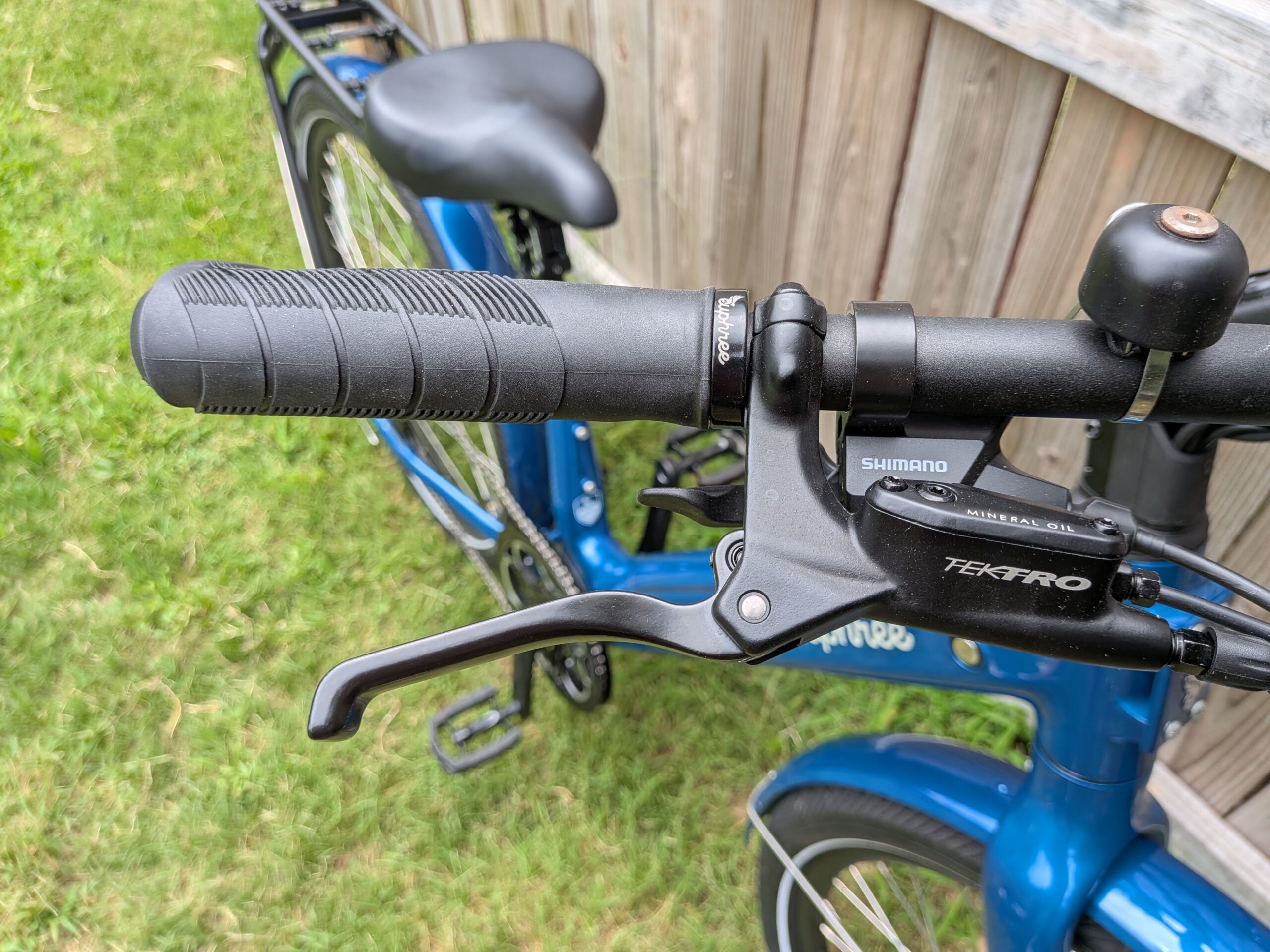
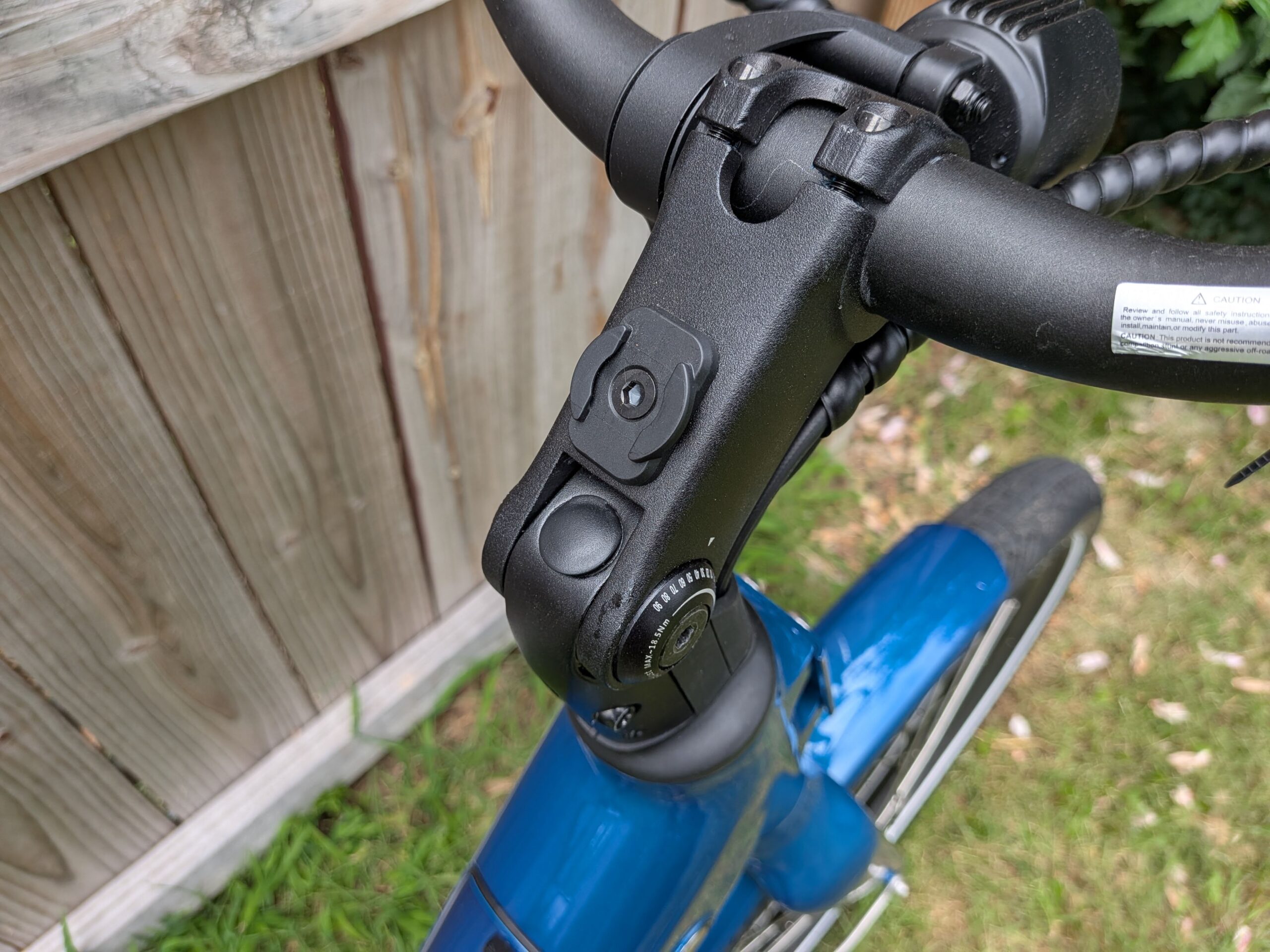
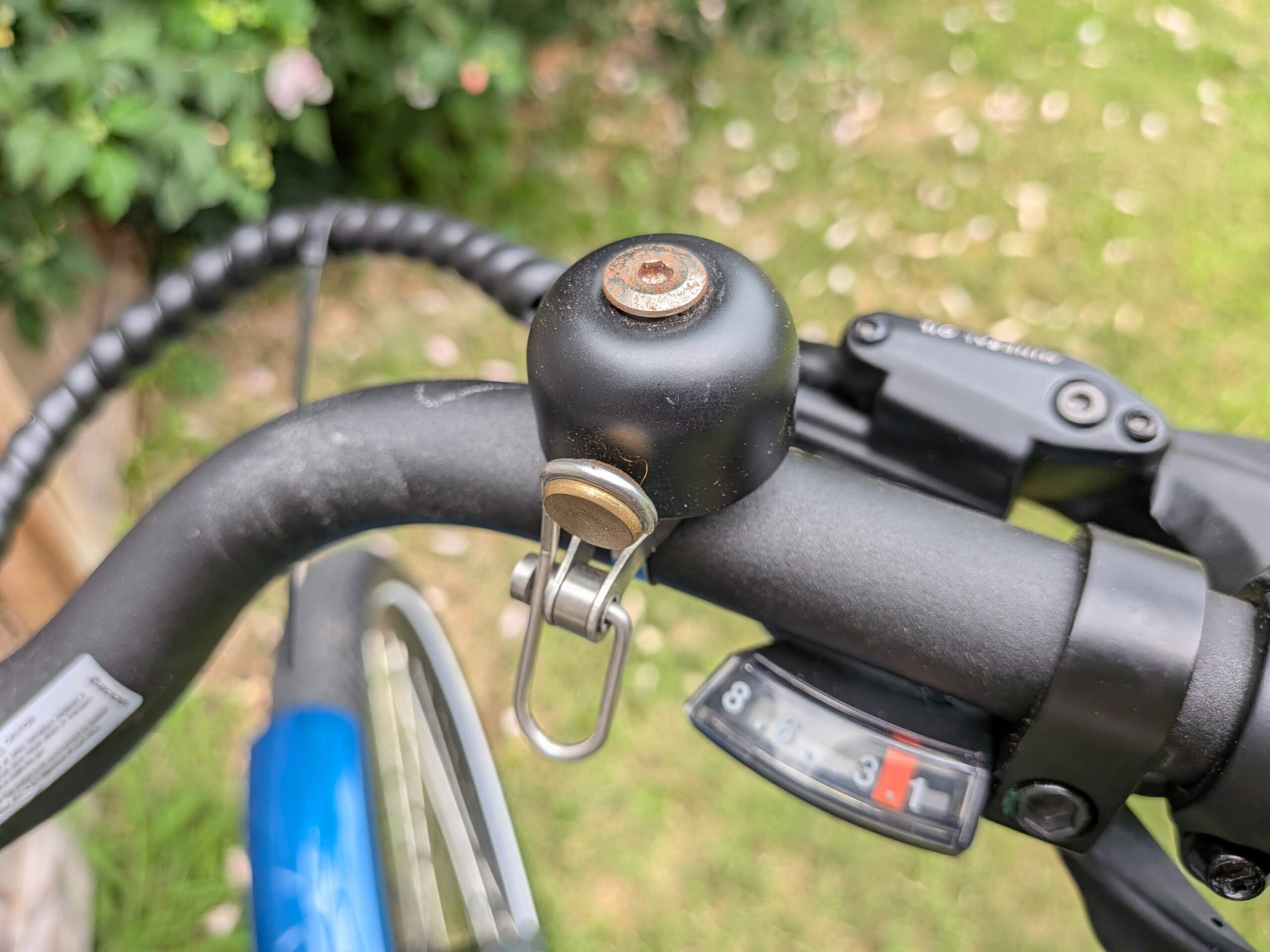
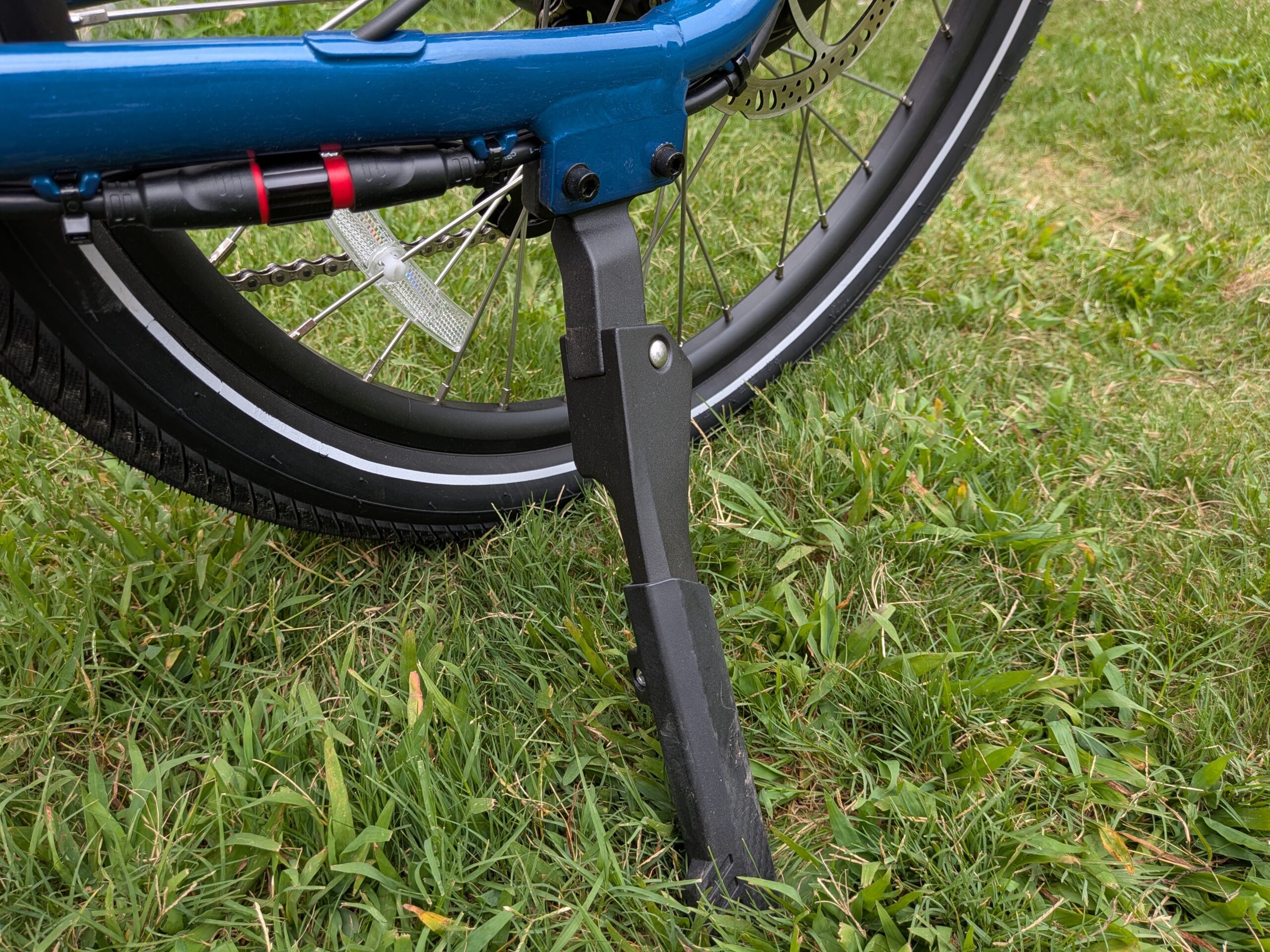
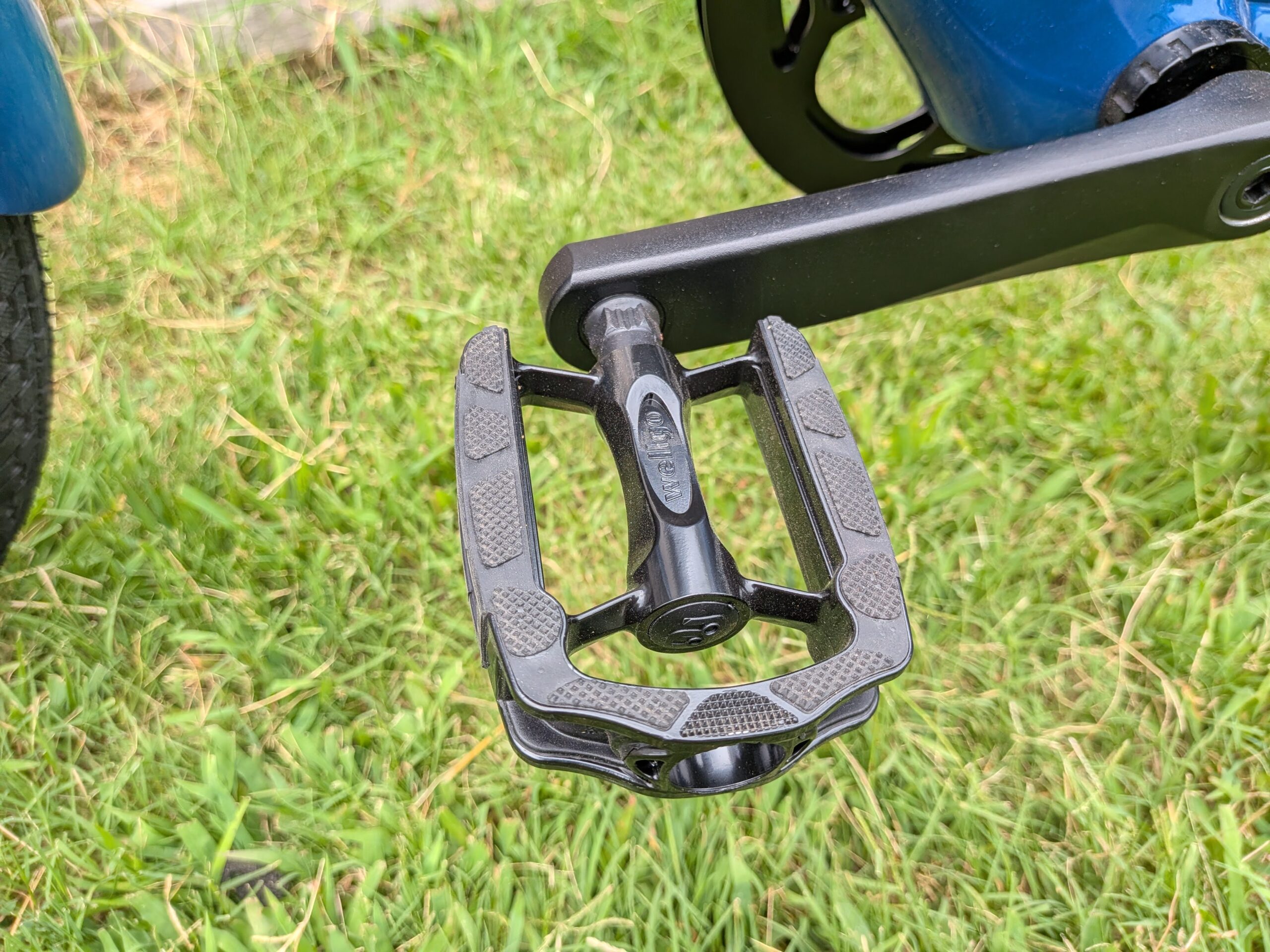
A few odds and ends fill out the build. An SP Connect mount sits right up front for a phone, the kickstand is a short rear mounted unit, Wellgo alloy pedals handle the everyday duty, and even the bell in the box is a good one. The box also holds a tote bag, a multi-tool, a 5mm Allen wrench, stickers, and reflectors.
Performance and Ride Quality
Testing ran at a 200 lb rider weight, on pavement and then on our test hill. We started with the throttle on its own, rode the cadence sensor in class 2 with its 20 mph cap, and then unlocked class 3 and switched to the torque sensor.
Throttle-Only Test
Takeoff from a standing start is gentle, and then it ramps up quickly to 20 mph, with the GPS and the display agreeing at the top. That run was up a slight incline, and it held right around 20 mph without any sign of fading. Soft at the bottom and quick through the middle suits a rider who uses the throttle to get rolling from a stop rather than to replace pedaling. Throttle output can be changed in the settings to take on any assist level’s power profile.
Cadence Sensor on Flat Ground
Current limited is what matters here, not speed limited. A cadence sensor does not read how hard you are pushing, only that the cranks are turning, so each level hands out a fixed amount of current and the bike keeps building speed for as long as your legs keep moving. Eco eased power in gently and still crept all the way up to the 20 mph class 2 cap. Euphree has apparently updated the programming since our test to hand out less power in eco, which is the right move, because eco is the level a new rider reaches for first. Either way, most people are probably going to spend their time on the torque sensor.
Torque Sensor on Flat Ground
Switching sensors changes what the pedals mean. The harder you press, the more the motor gives back, and the result is much closer to riding a traditional bike with the weight taken out of it.
- Eco: third gear with barely any pressure held 10 mph and felt connected right away. Pushing harder took the extra weight of an ebike off our legs while still leaving a little burn in them.
- Tour: picked up where eco left off, holding 12 mph easily and creeping past 15 mph with more effort.
- Sport: cruised at about 15 mph on light effort, and a moderate push put us north of 20 mph.
- Turbo: opens the floodgates. Power arrives more like a cadence sensor than a torque sensor, ramping to 25 mph and reaching 28 mph with a little more effort, at a pace we could have held for a long time.
Hill Climb Test
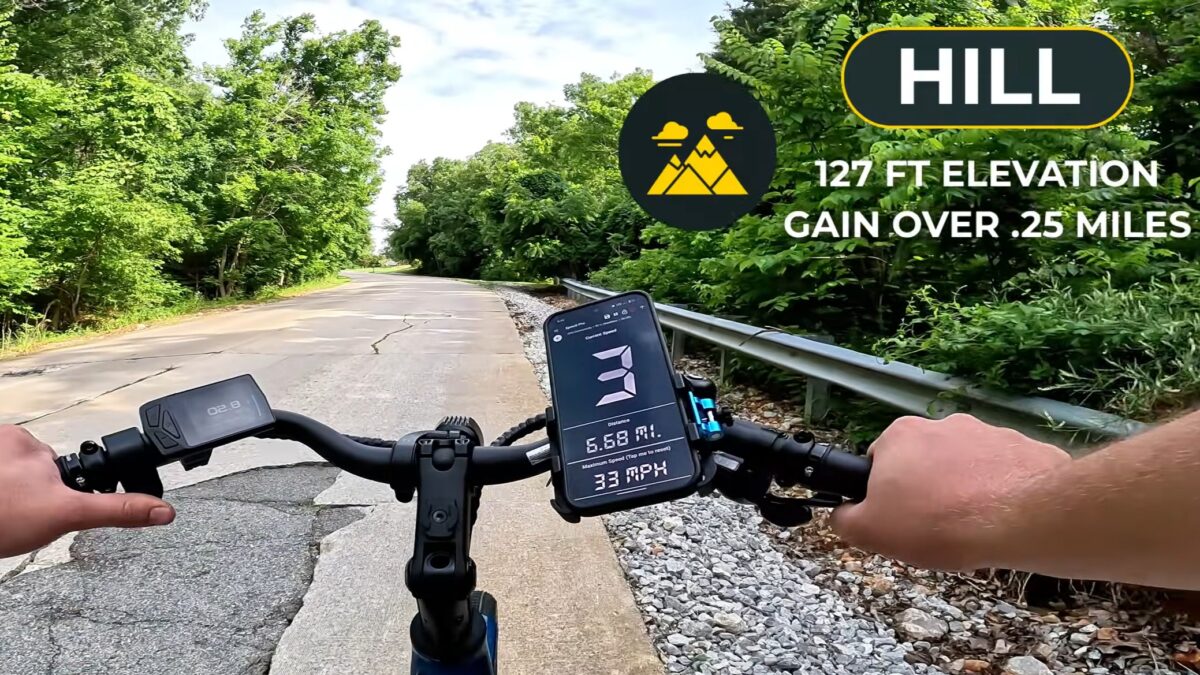
Our test hill climbs 127 feet over a quarter mile, with the steepest pitches running in the 13 to 14 percent range. It pushed hard on throttle alone, but speed dropped to three miles per hour under a 200 lb rider. Pedaling changed that. Eco in a low gear was mostly leg effort with a little support behind it, tour brought us to 6 mph, sport to 7 mph, and turbo was the level that took the weight off and had us accelerating again. Torque sensors get harder to pull power from as a hill steepens, which is exactly what happened here, so the throttle or a switch to the cadence sensor is the move if you live somewhere steep. The 750W is a real step up from the 500W the belt drive version runs, but this was not the strongest climb we have recorded on our test hill. Flat ground is where the extra motor shows up, and holding speeds above 20 mph there took almost nothing.
Euphree Solar Sparrow Chain vs. Velotric Breeze 1
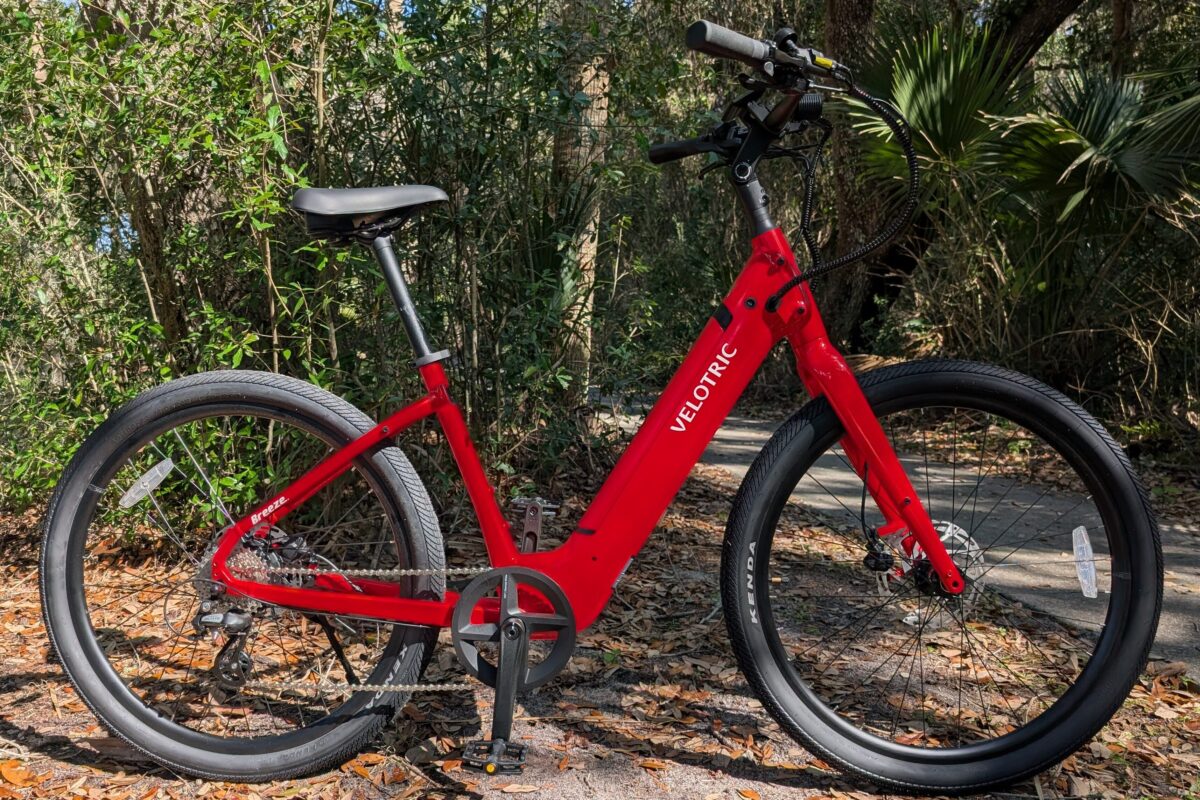
Priced identically at $1,799, the Velotric Breeze 1 comes at this category from the technology side. Weight is its headline number. At 48 lbs it is one of the lightest ebikes in its class, which changes what it is like to carry up a flight of stairs or lift onto a car rack. Built around that are connected features: Apple Find My so the bike can be located from a phone, Apple Health for ride data, and an app that handles performance customization, ride recording, and over the air firmware updates that keep improving the bike after you buy it. SensorSwap moves between torque and cadence sensing on the fly instead of through a menu. Lighting is a standout, with a 400 lumen headlight and turn signals and brake lights integrated into the seat stays. Velotric also offers it in two frame sizes covering 4’11” to 6’4″, carries IPX6 and IPX7 water resistance ratings, and has more than 1,000 dealers for test rides and service.
Three differences decide this one. The Breeze 1 arrives bare, so fenders and a rack are add-on purchases, and there is no suspension seatpost under the saddle. Sensor switching is instant on the Breeze 1 and a trip into the display menu on the Solar Sparrow. And the gearing goes the other way, since the Breeze 1 runs a standard 11-32T, so at the same 28 mph your legs are spinning faster than they are on the 10T top gear. If you want the lightest bike you can buy at this price, two frame sizes so a taller rider fits, phone tracking, and turn signals, the Breeze 1 is the better buy. If you want a bike that arrives ready to ride with fenders, a rack, lights, and a suspension seatpost, and you want the most comfortable pedal cadence at top speed, the Solar Sparrow is the one.
For the full breakdown, check out our Velotric Breeze 1 review.
Euphree Solar Sparrow Chain Pros and Cons
Final Thoughts on the Euphree Solar Sparrow Chain
Listening to customer feedback and making small, meaningful changes is something Euphree does consistently, and the chain drive Solar Sparrow is a clean example of it. An 8-speed drivetrain with a top gear nobody else offers, more motor behind it, fenders that match the paint, and a rigid fork that tidies up the front end add up to a bike that does the upright cruising thing better than the version it followed. The belt drive version is still there for riders who want the lowest maintenance experience they can get. This one is for the rider who wants gears to work with on a pavement cruiser that is easy to handle and comfortable to ride.
If our review helped you decide whether the Solar Sparrow chain is right for you, purchasing through our affiliate link makes a big difference for us. It is completely free for you and helps support content like this.
