

Anytime two competing models land at the exact same sticker price, the question answers itself: which one is the better deal? The all-new Juiced Scrambler Full Suspension and the Macfox X2 are both street-legal moto-style ebikes, both full suspension, and both $1,899.
We rode them back to back on the same roads, the same test hill and the same trail, with the same rider, and tried to let the bikes speak for themselves. Here is what separates them.
Prices move. Check current pricing on each before you decide.

Prefer to watch? Here is the full head-to-head, including the acceleration runs, the hill climb and the off-road section.
The short answer
The Scrambler Full Suspension is the better bike. It has genuinely plush suspension, meaningfully more power, a better display, and it performed the way we wanted right out of the box. If you want the one that is more refined, this is it.
The X2 makes sense if you plan to modify it. It is advertised as mod-ready, it is 15 to 20 pounds lighter, the battery pops off in seconds, it comes passenger-ready with welded-on pegs, and its smoother tires are quieter on pavement. There are some genuinely cool X2 builds out there.
What follows is how we got there.
Specs side by side
| Spec | Macfox X2 | Juiced Scrambler FS |
|---|---|---|
| Price | $1,899 | $1,899 |
| Battery | 48V 20Ah (960Wh), exposed | 52V 19.2Ah (just under 1,000Wh), hidden |
| Claimed range | Up to 40 miles | Up to 60 miles |
| Second battery | Yes, doubles range | No (hardtail version only) |
| Charger | 3A | 5A (4–5 hours) |
| Motor | 750W nominal, 1,000W peak | 750W nominal, 1,764W peak |
| Claimed torque | 65 Nm | 90 Nm |
| Top speed | 20 mph | 28 mph (Class 3) |
| Sensor | Cadence | Cadence + torque |
| Fork | Macfox dual crown, compression + preload | KKE inverted, compression + rebound |
| Rear shock | Twin exposed coils, preload only | KKE coil, compression + rebound |
| Brakes | 2-piston hydraulic, 180mm | Talon P4 4-piston hydraulic, 180mm |
| Tires | 20 x 4.0 in | CST BFT ADV 20 x 4.5 in |
| Drivetrain | Single speed, 42T / 16T | Single speed, 46T / 16T |
| Fenders | Optional, around $50 | Included |
| Passenger pegs | Included, welded on | Optional accessory |
| Payload | 220 lb total | 220 lb total |
| Certification | UL 2271 + UL 2849 | UL 2271 + UL 2849 |

Batteries and range
Both packs are certified to UL 2271, and both bikes are certified to UL 2849 for the overall electronics. That is table stakes now, but it is worth confirming at this price.
The X2 wears its battery on the outside of the frame. Pop it off, carry it inside, done. The Scrambler hides its pack behind a plastic cover for a much cleaner look, and getting it out means lifting the seat, releasing a thumb screw on the back, and working through a tighter window. The controller sits right there too, which is handy if you are the tinkering type.
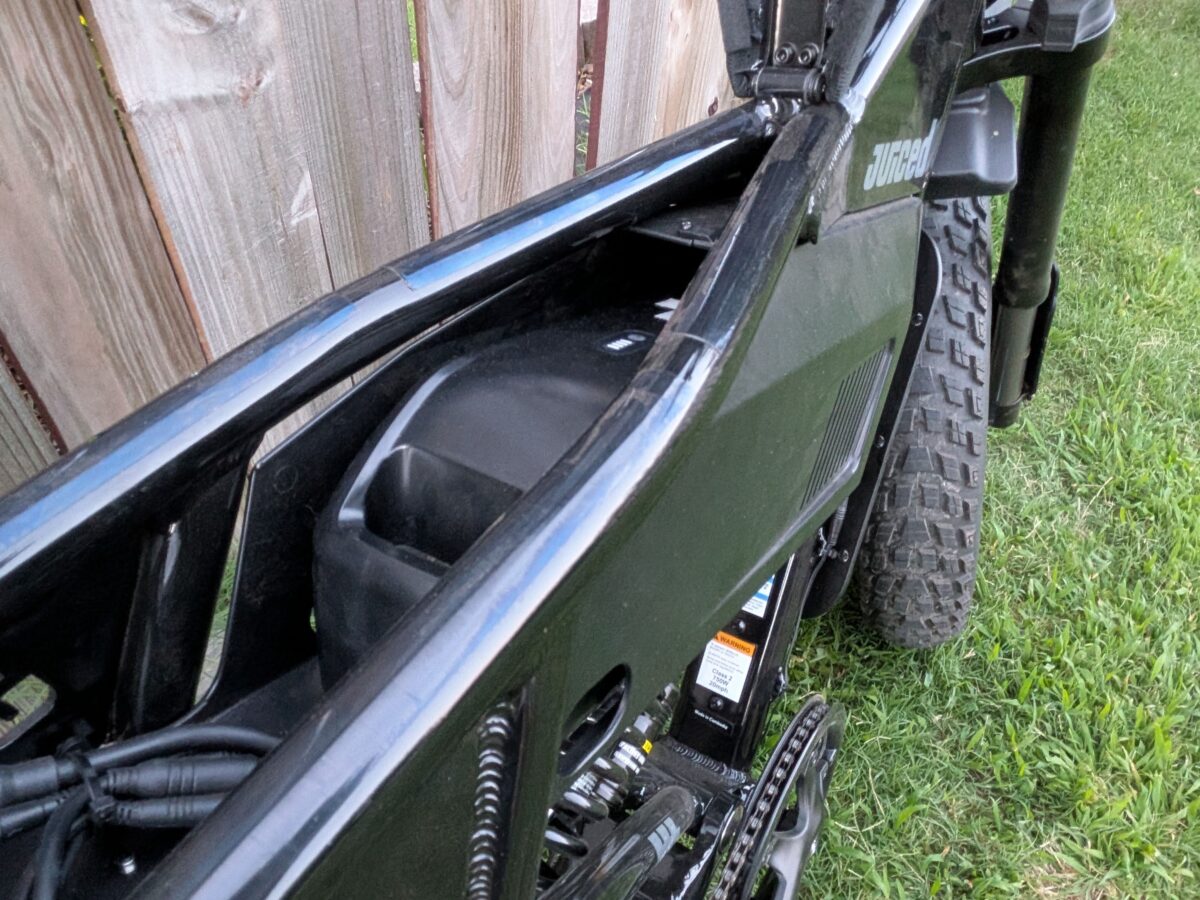

On paper the Scrambler holds slightly more energy and claims 60 miles against the X2’s 40. It also ships with a 5A charger, so expect four to five hours for a full fill, where the X2’s 3A charger takes considerably longer on a pack of that size.
The X2 has one real advantage here: you can add a second battery and double your range. The full-suspension Scrambler cannot. If dual-battery capability is the deciding factor, note that the Juiced Scrambler Hardtail at $1,699 uses the same motor and battery and does support a second pack.
Motor and power delivery
This is where the two bikes separate. The X2 runs a 48V system with a 750W motor peaking at 1,000W and a claimed 65 Nm. The Scrambler runs 52V with the same 750W nominal rating but a 1,764W peak and a claimed 90 Nm.
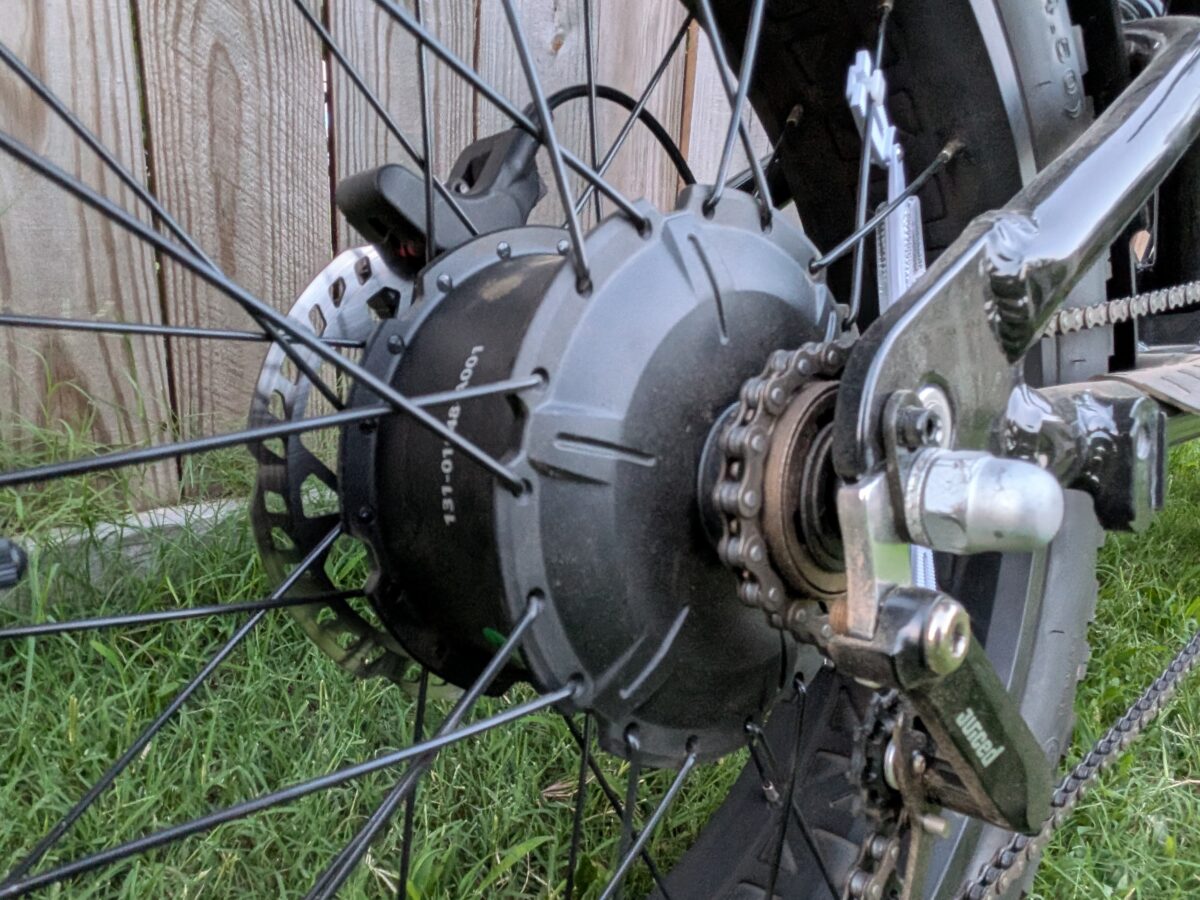

You feel that on the road, and we will get to the numbers. The X2 uses a cadence sensor. The Scrambler has both cadence and a torque sensor, though in practice we only felt a real difference in pedal assist level 1, where the torque sensor lets you pedal at lower speed and stay connected to the pedals.

Displays and controls
The X2 uses a black-and-white Key-Disp unit that has been around for years. It sits on the handlebar, which is genuinely easier to glance at than the Scrambler’s top-tube screen. But the settings are hard to navigate, and you will be digging through manuals and videos to change anything.
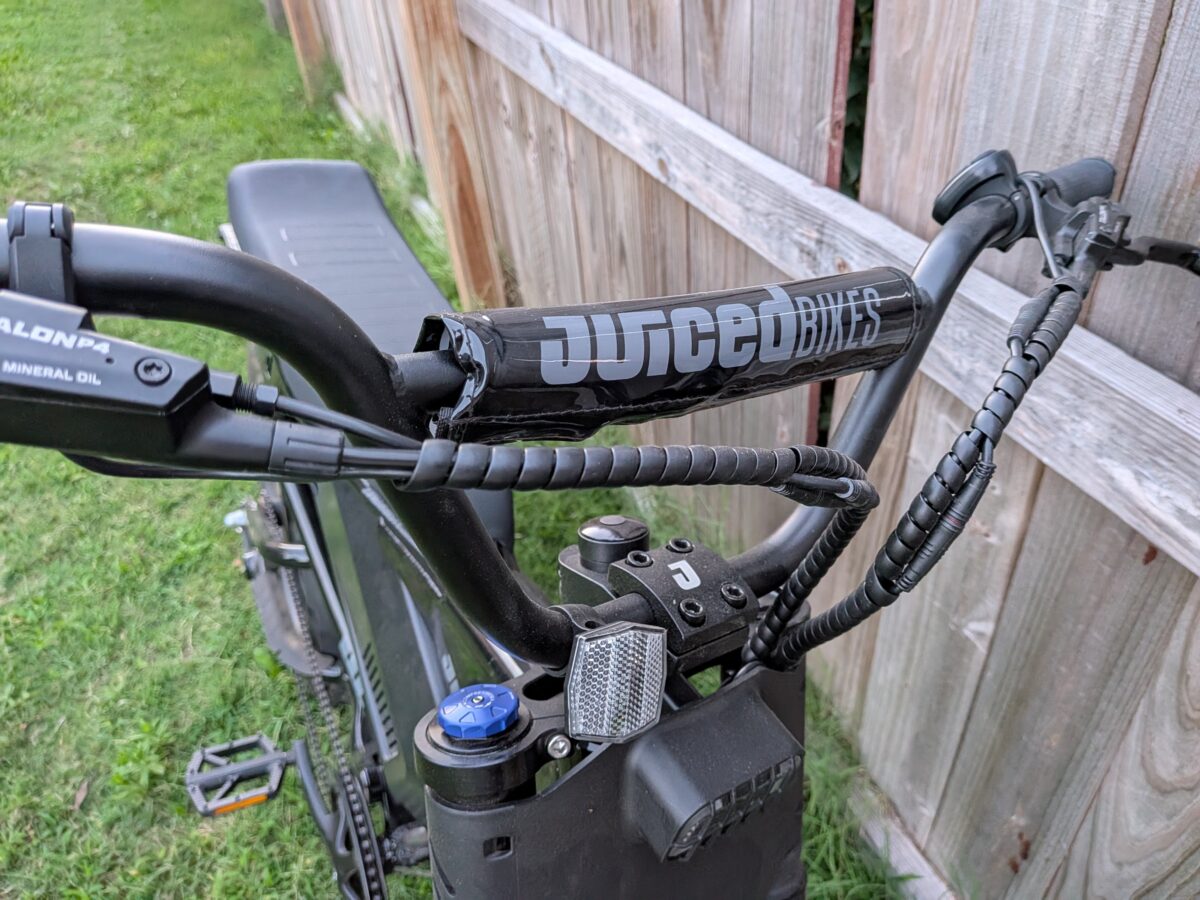

The Scrambler puts a color display in the top tube with the controls separate. You reach the class and speed setting at the bottom of the menu, where a custom mode lets you cap the speed at whatever you want. Better still, you can lock that cap behind a four-digit PIN, which is worth knowing if you are handing this bike to a teenager.
One frustration on the X2: we found what looked like a speed override in the settings, changed it, and the bike still capped at 20 mph. If you own one and have unlocked 28 mph, we would genuinely like to know how.

Lighting
Both run their lights off the main battery and both integrate the headlight into the front plate. The X2 has always-on running lights with low and high beams, plus a running taillight that brightens under braking.
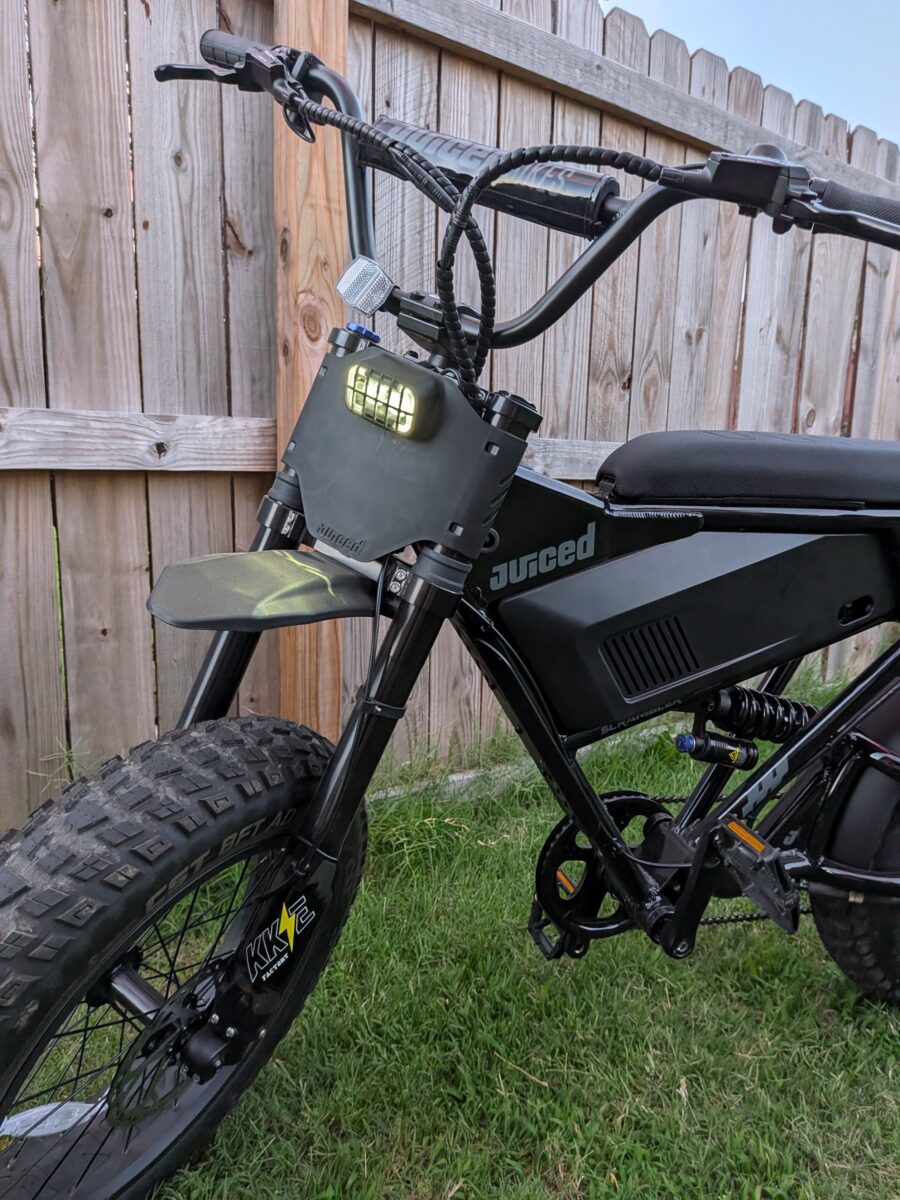

The Scrambler matches that and adds flashing running lights, customizable lighting modes in the display, and turn signals built into the light. You turn the lights on by holding the pedal assist up button.
Suspension: the biggest difference
The X2 uses a Macfox-branded dual crown fork with compression adjustment on the right and preload on the left. Out back, two exposed coils with preload you adjust via the threads. That is it.


Juiced sourced both ends from KKE. The inverted fork has compression on top and rebound down at the bottom, though no preload. The rear shock has compression and rebound as well.
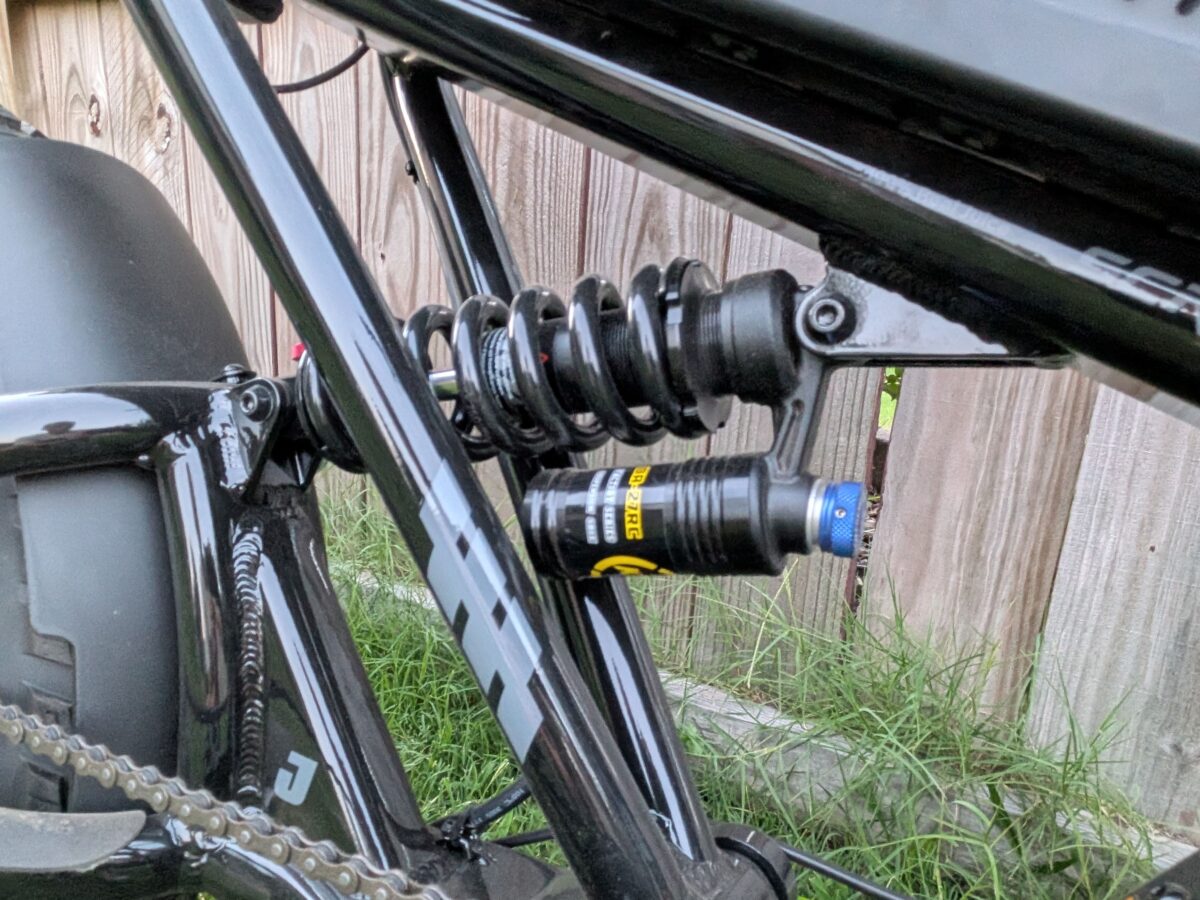

On the trail this is not close. The X2’s rear springs are stiff enough that it takes a real impact to engage them, so you get cushion on bumps without ever floating over them. Hit something sharp and you hear a lot of clacking from the suspension. It handles fire roads, gravel and grass fine, and the front fork is honestly pretty smooth, but single track is beyond what it was built for.
The Scrambler feels like what a full-suspension bike should feel like. The rear engages easily, you float over the rough stuff instead of absorbing it, and over a rocky stretch the difference is night and day. That is the payoff for sourcing true moto suspension.
Brakes, tires and finishing kit
The X2 gets Macfox-branded two-piston hydraulic brakes on 180mm rotors front and rear, with an adjustment screw on the lever. The Scrambler runs Talon P4 four-piston hydraulics on the same 180mm rotors. Both have motor cutoffs.


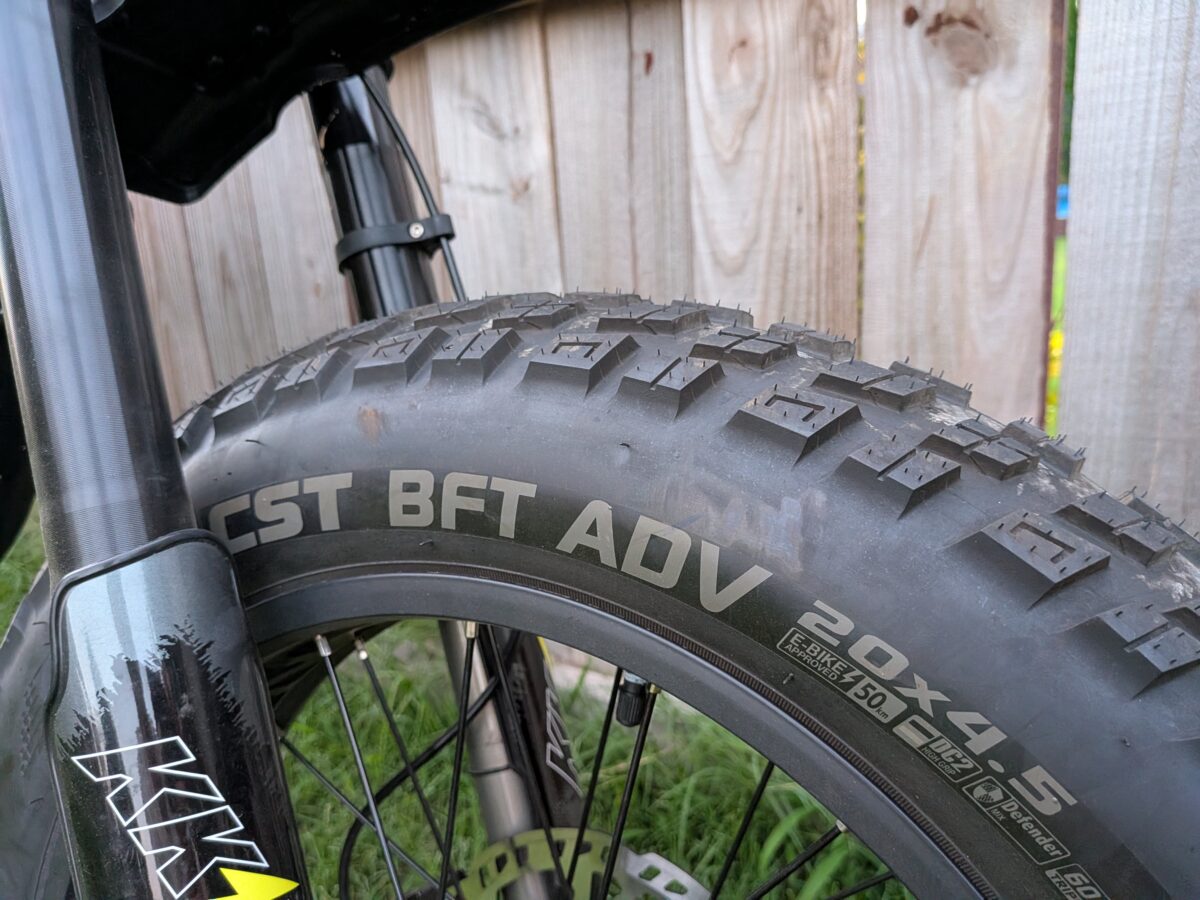

The X2’s 20 x 4.0 inch tires have a decent amount of tread and roll noticeably smoother on pavement. The Scrambler’s 20 x 4.5 inch CST BFT ADV tires are more aggressive, which pays off on loose terrain but hums loudly once you get up to speed on the road. Worth knowing that the hardtail Scrambler rolls on smoother 4-inch tires if pavement is most of your riding.
The Scrambler includes a front mud guard, a skid plate under the frame and a short rear fender. Macfox sells fenders for the X2 separately, at around $50.


Seats, pegs and weight
Both use long moto-style seats with a good amount of cushion. The X2 ships passenger-ready with welded-on rear pegs. On the Scrambler, pegs are an optional accessory.

Before you plan on two-up riding, though, note that both bikes have a 220 lb total payload capacity. That is the rider and the passenger together, and it is the number that will stop most people. The hardtail Scrambler has a considerably higher payload if that matters.
The X2 is the lighter bike by a clear margin, somewhere in the range of 15 to 20 pounds. If you are lifting this onto a rack or carrying it up steps, that is not nothing.
Performance testing
Our rider is around 200 lb, which is on the heavier side for both of these. A lighter rider will see quicker acceleration and better hill climbing than what follows.


Acceleration
Off the line on throttle alone, both are decent, but the Scrambler has a noticeably stronger push. That tracks with the spec sheet, since it is running the higher voltage system with far more peak power available.
On a throttle-only run to 20 mph, the Scrambler took about seven seconds. The X2’s display claimed it got there faster, but on GPS it never actually reached 20 mph. We even changed the tire size setting to see if that would correct it, and the top speed did not budge. Treat that number as unreliable.
Pedaling at speed
In the highest assist level, the X2’s cadence sensor gave roughly the same result as the throttle test. The Scrambler gets to 28 mph quickly and easily. On both bikes, once you are above 20 mph your legs are spinning fast enough that you are ghost pedaling to hold speed. Single-speed drivetrains make genuine pedaling at these speeds a challenge, and that applies to both.
Hill climb
Our test hill averages a 9.2% grade with stretches reaching 17 to 18%. We rolled both bikes at max throttle speed into the base of it.
The X2 made a good effort, then fizzled out and we had to put a foot down. It could not make the climb on throttle power alone, though we pedaled the rest of the way up. The Scrambler went up without a problem, dipping below 8 mph briefly before holding steady between 8 and 10 mph for the remainder.
What happened after the hill
This is the part worth flagging. After the climb, we thought we had broken the X2. There was a slight grind coming from the motor, acceleration to top speed on flat ground took far longer, and all the climbing torque disappeared even on very slight inclines.
We let it rest, tested again, and the performance came back. Our best guess is the controller dropped voltage to protect itself from overheating. Nothing was permanently damaged, but if you live somewhere hilly and plan to push this bike, that is a real consideration.
Build quality
Quality control from Juiced looked a step better. On our X2, the brake levers were not clamping tight with the set screws already bottomed out, so we will be adding a spacer. Minor, and fixable, but it is the kind of thing you notice when two bikes arrive the same week.
Pros and cons
Macfox X2
- Lighter by roughly 15 to 20 lb
- Exposed battery is far quicker to remove
- Second battery option doubles range
- Passenger pegs included, welded on
- Smoother tires and quieter on pavement
- Display sits on the bar where it is easy to glance at
- Built to be modified, and advertised that way
- Could not climb our test hill on throttle alone
- Power dropped off noticeably after the climb until it cooled
- Display read faster than our GPS and never hit a true 20 mph
- We could not unlock 28 mph despite the setting
- Rear suspension is stiff and clacks over sharp hits
- Fenders cost extra
- Brake levers needed a shim out of the box
Juiced Scrambler Full Suspension
- Genuinely plush suspension with compression and rebound at both ends
- Far more power, and it climbed our hill without drama
- Reaches a true 28 mph, and the speedo matched GPS
- Color top-tube display with a PIN-lockable speed cap
- Turn signals and customizable lighting
- Four-piston brakes
- Fenders and skid plate included
- Heaviest of the two by a clear margin
- Battery removal is fiddly: seat up, thumb screw, tight window
- No second battery option on this model
- Knobby tires hum loudly at speed on pavement
- Top-tube display is harder to glance down at
- Pegs cost extra
Which one should you buy?
If it seems like we are favoring the Scrambler, it is because it performed the way we wanted right out of the box. More suspension travel you can actually feel, more power on tap, an honest speedometer and a display that does not fight you. At the same $1,899, it is the more complete bike.

Buy the Scrambler Full Suspension if you want the better ride as delivered, you have hills, you want Class 3 speeds, or you value the suspension above everything else.
Buy the Macfox X2 if modifying is part of the appeal, you need a second battery for range, you want passenger pegs standard, you ride mostly pavement, or the lighter weight matters for lifting and hauling.
It feels like the X2 is built more for function and tinkering, while the Scrambler is built for performance and clean looks. Neither is a bad bike. They just answer different questions.
We earn a commission if you buy through these links, at no extra cost to you, and we have an affiliate relationship with both brands. It is what makes testing like this possible.
Related reading
- Juiced Scrambler Full Suspension review
- Juiced Scrambler Hardtail review – $1,699, dual battery capable, higher payload
- Super73 B1G vs Juiced Scrambler Hardtail
- Not sure either of these is right? Answer five questions and we will point you at what we would look at first.
