
Two moto style ebikes, one rider, and roughly $900 sitting between them. On one side is Super73, the brand that more or less invented this category and created the silhouette everyone else now borrows. On the other is Juiced Bikes, back from the dead under new ownership and undercutting the establishment by a wide margin. So the obvious question comes up fast: is Super73 worth the premium, or are you paying for the badge?
We put real miles on both the $2,595 SUPER73-B1G and the $1,699 Juiced Scrambler hardtail to answer that. This comparison walks through every meaningful spec difference, then gets to the part that actually settles arguments: throttle acceleration, pedal assist behavior, a three-stop brake test with each bike, and our quarter-mile hill climb. There is also a personal wrinkle here. After six years of reviewing ebikes, this was our first time riding a Super73. Let’s find out whether the reputation holds up.
If this comparison points you toward the Juiced Scrambler, consider using our affiliate link when you buy. It is completely free to use and makes content like this possible. Thank you for the support!
Super73 B1G vs Juiced Scrambler Hardtail Video Comparison
The video is where this comparison earns its keep. You get up-close shots of both battery removal processes, the forks side by side, the two very different display approaches, and first-person footage from the throttle runs, the brake test, and the hill climb. Hearing the two motors under load on the same grade tells you more than any spec sheet can.
Price: Where the Gap Starts
The B1G Core lists at $2,595. The Scrambler hardtail lists at $1,699. That $896 difference is enough for a second ebike for a family member, or a helmet, a rack, a lock, and a season of gear. Keep it in mind for the rest of this comparison, because every time the Super73 costs more, the fair question is whether it delivers more.
There is a wrinkle worth knowing before you start comparing spec sheets. The B1G Core is the entry trim. If you want 750W, four-piston brakes, an actual suspension fork, a digital display, and a bigger 780Wh battery from Super73, you are looking at the B1G SE at $2,995. That is nearly $1,300 more than the Juiced, for a spec sheet the Scrambler hardtail already matches or beats in most categories.
Component Comparison
Motor Power
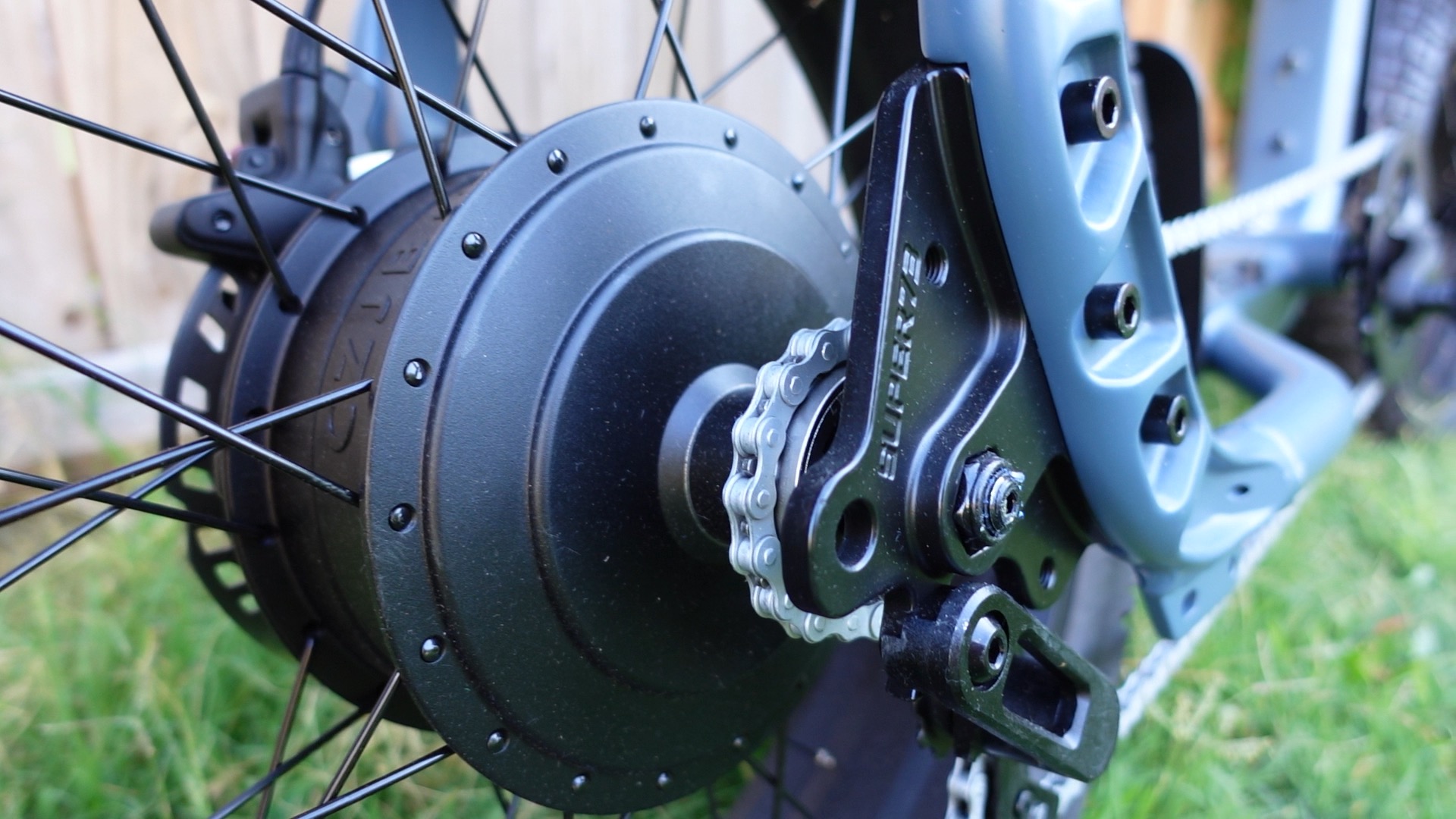
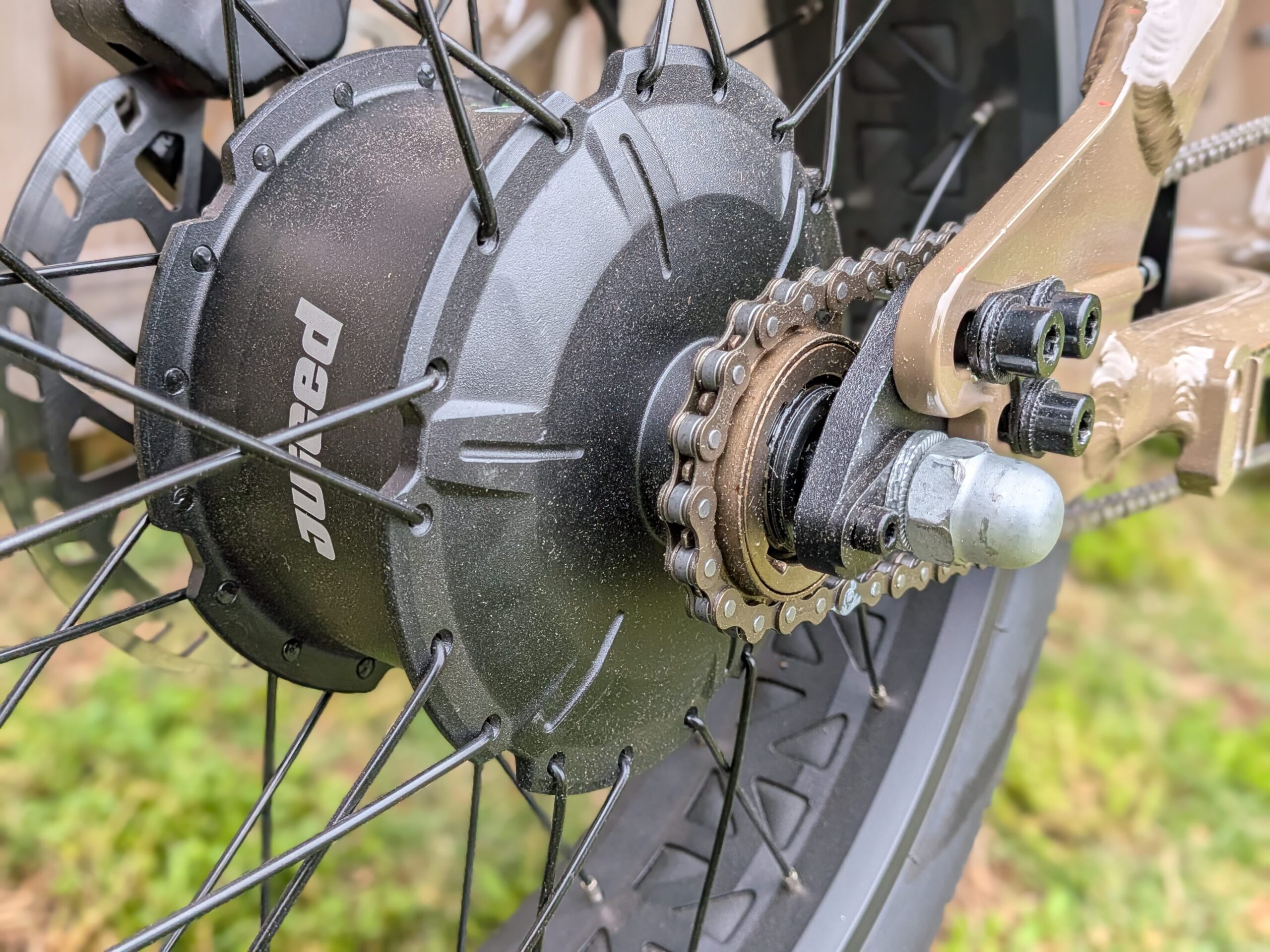
Under the seat, the two bikes are not playing the same game. The B1G Core runs a 500W nominal rear hub motor, and Super73 does not publish a peak output figure for it. The Scrambler hardtail pairs a 750W nominal hub motor with a 30A controller for 1,764W of peak power and 90 Nm of torque. On paper that is a rout. Paper is cheap, though, which is why we took both bikes up the same hill — more on that below.
Battery, Range, and Charging
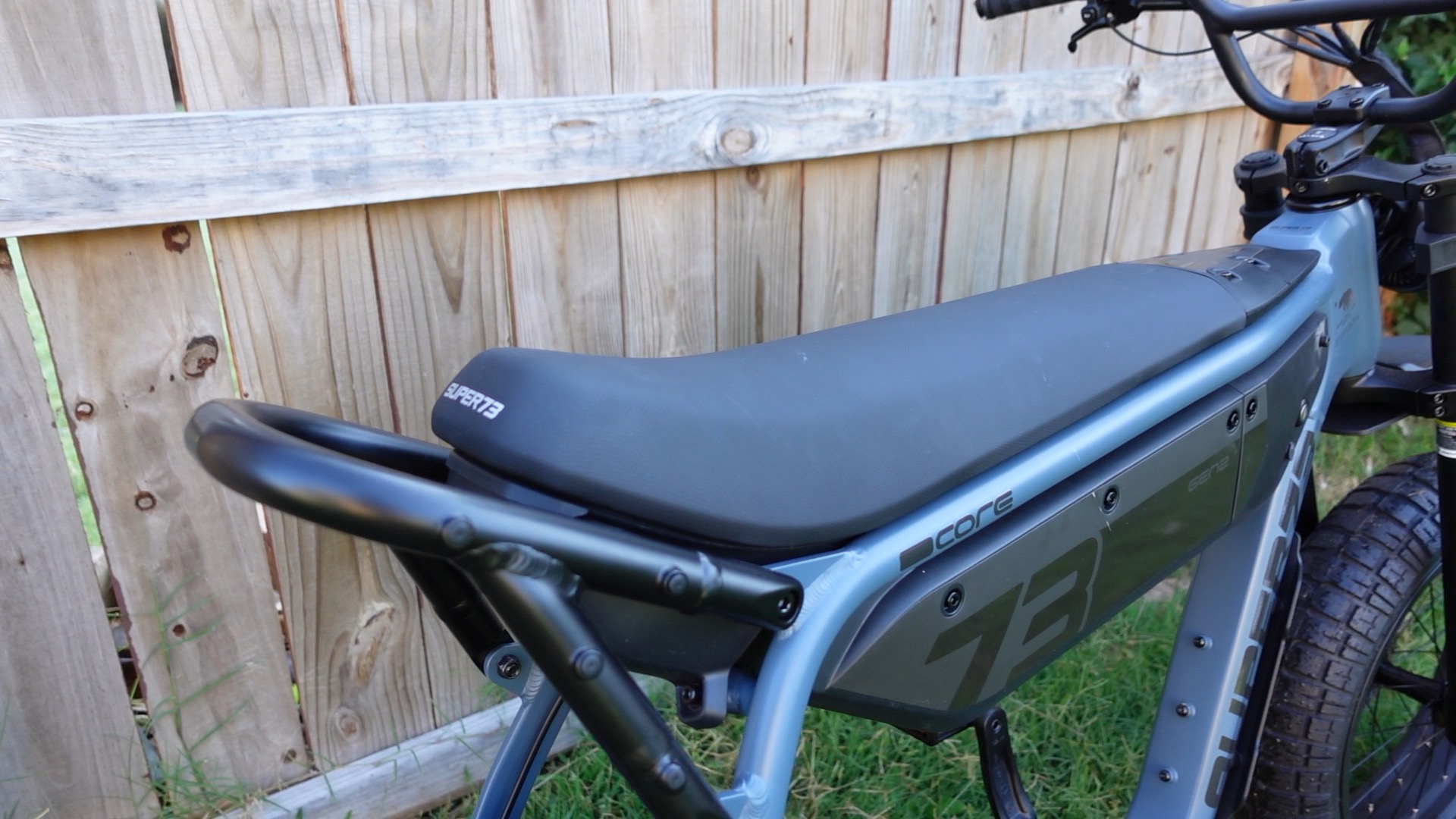
Removing the pack is where the two design philosophies show up most clearly. Turn the key on the right side of the B1G, flip the seat up, lift the cable free, and the battery comes out easily. It is a 520Wh pack (52V 10Ah, UL2271 compliant), and it is genuinely portable because it is genuinely small. Super73 gets real credit for the modular design here: a second cable sits right there for an optional second 520Wh battery, and even with two packs installed you still have internal lockable storage left over. Range lands at 20-plus miles on a single battery and 40-plus with the pair, and that second pack is sold separately. Charge time runs 5 to 6 hours.
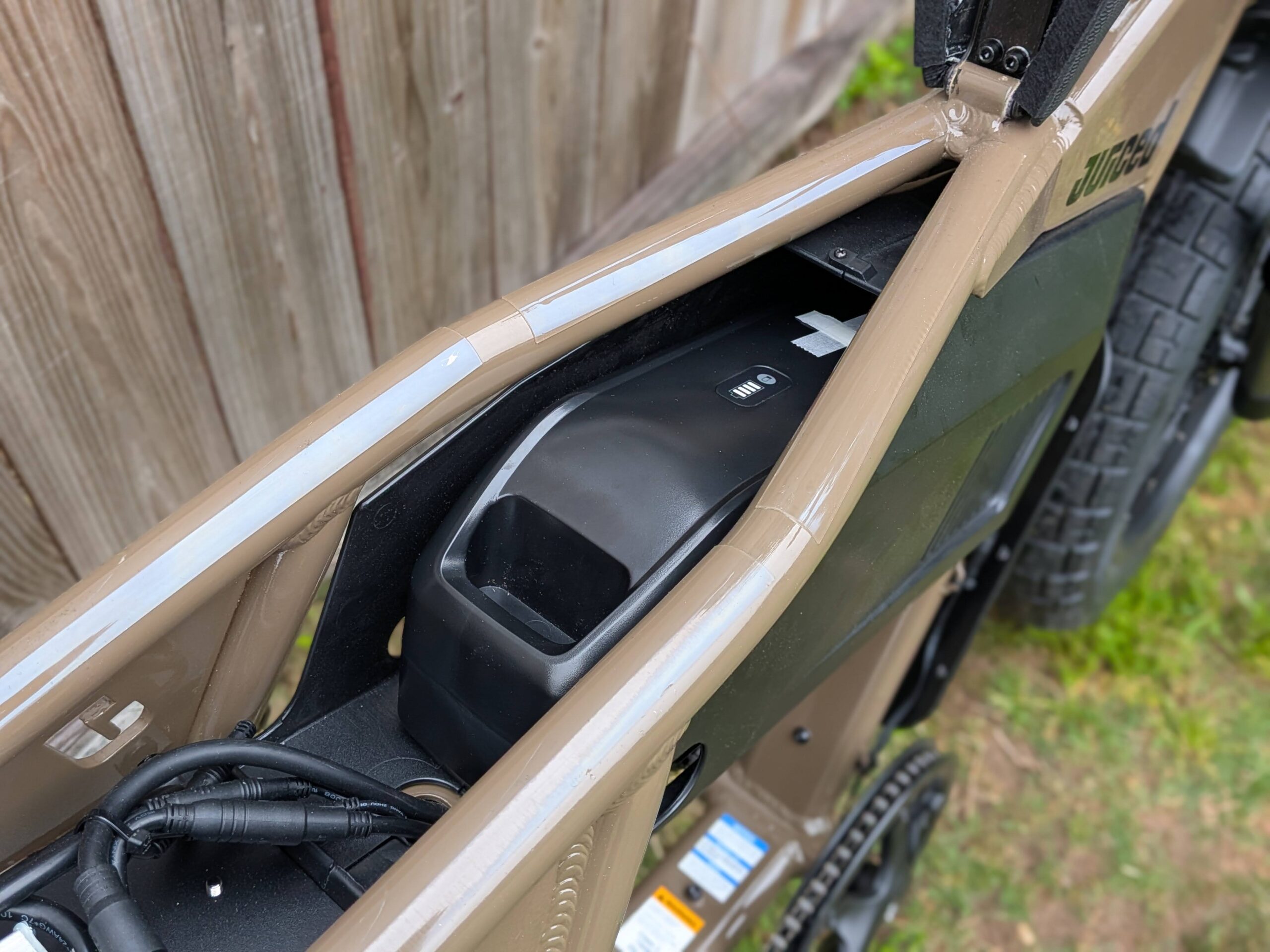
Getting into the Juiced is a step more rudimentary. There is a thumb screw underneath, the seat lifts from the back, and the battery keys out on the right side before it slides free. Reinstalling means lining the pack up, pushing it into place, and screwing that thumb screw back in by hand. It is worth the fuss, because the pack is nearly double the size at 52V and 19.2 Ah, and Juiced includes a 5A fast charger that fills it in as little as four hours from empty. Both batteries carry UL certification, and the entire Scrambler is UL2849 certified.
Suspension and Ride Comfort
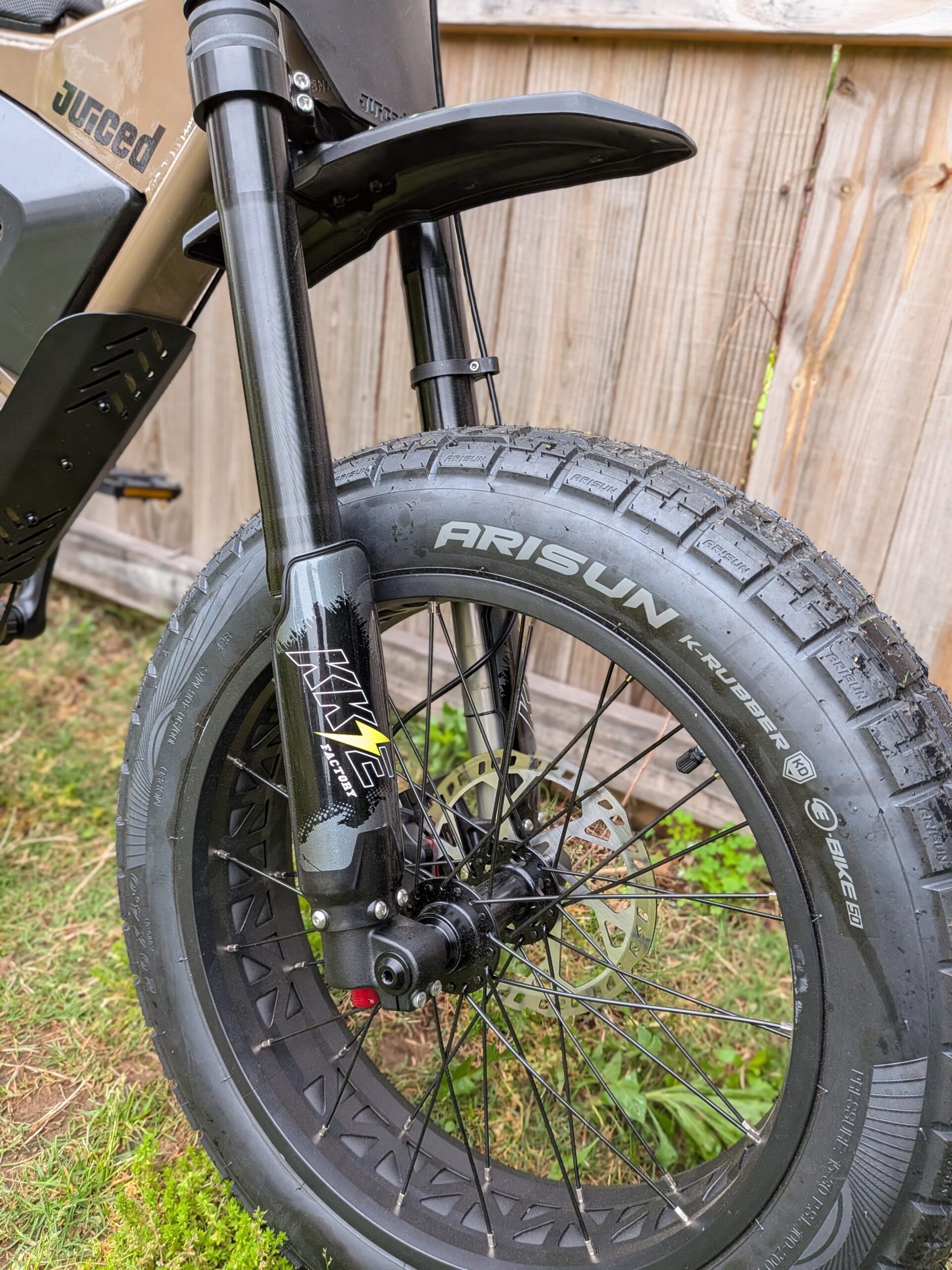
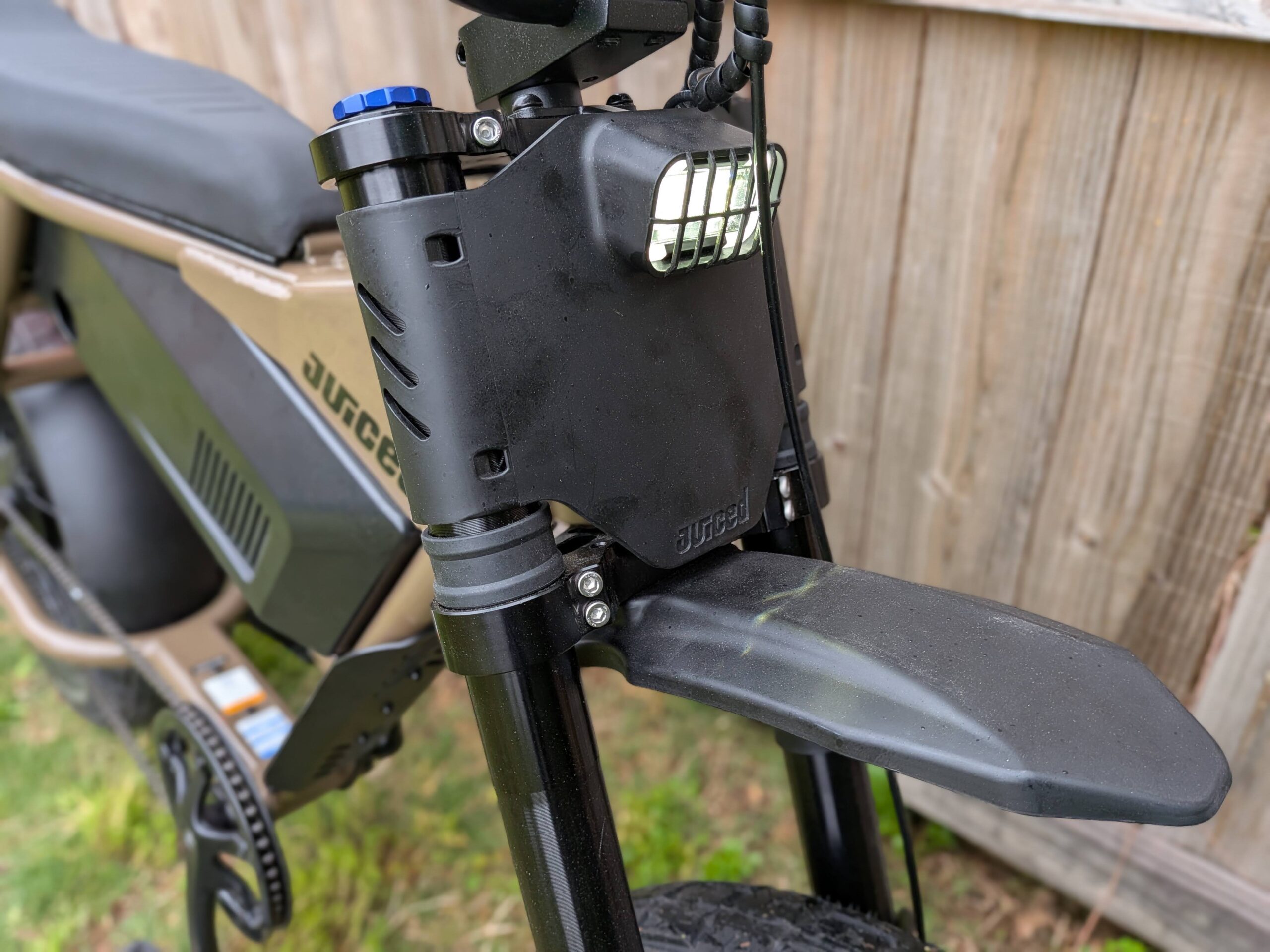
Here is the single most misleading thing about the B1G Core. Look at the front end and you would swear it has a suspension fork. It does not. Super73 lists it as rigid, and the only thing softening the ride is the air in those fat tires. The Scrambler hardtail instead gets a KKE inverted fork with 140mm of travel, a component borrowed from the powersports world with both compression and rebound adjustment.
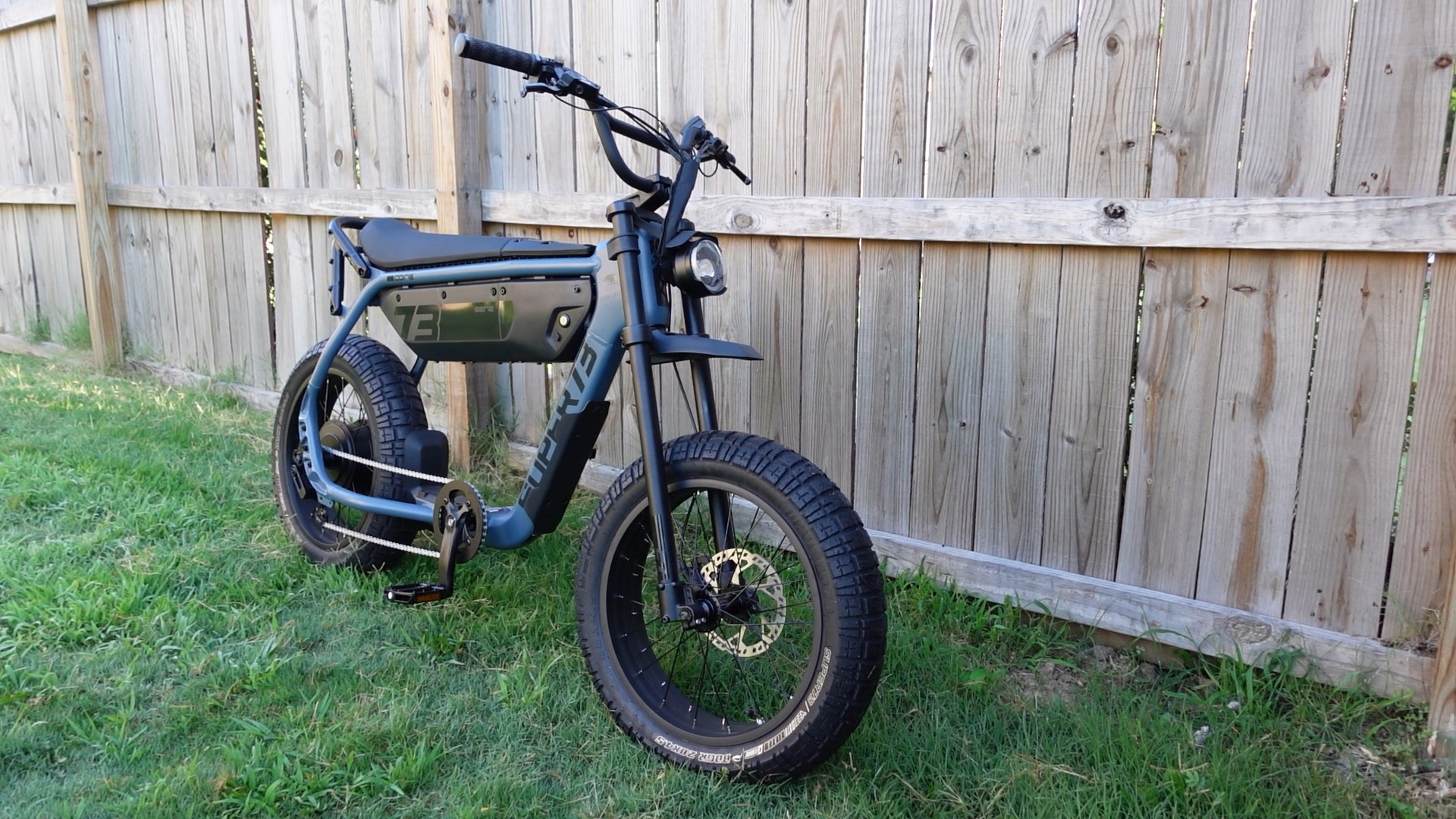
On a moped style ebike this matters more than it would elsewhere, because your weight sits almost entirely on the saddle rather than distributed through your legs. With a rigid front end, every seam and pothole arrives unfiltered, and we heard some rattling from the seat area on rougher pavement. We had the B1G tires at 36 psi to give it the best possible shot in performance testing, and letting air back out made a significant difference — the ride went from harsh to genuinely softer front and rear. If you buy a Core, tire pressure is not a detail, it is your suspension.
Brakes
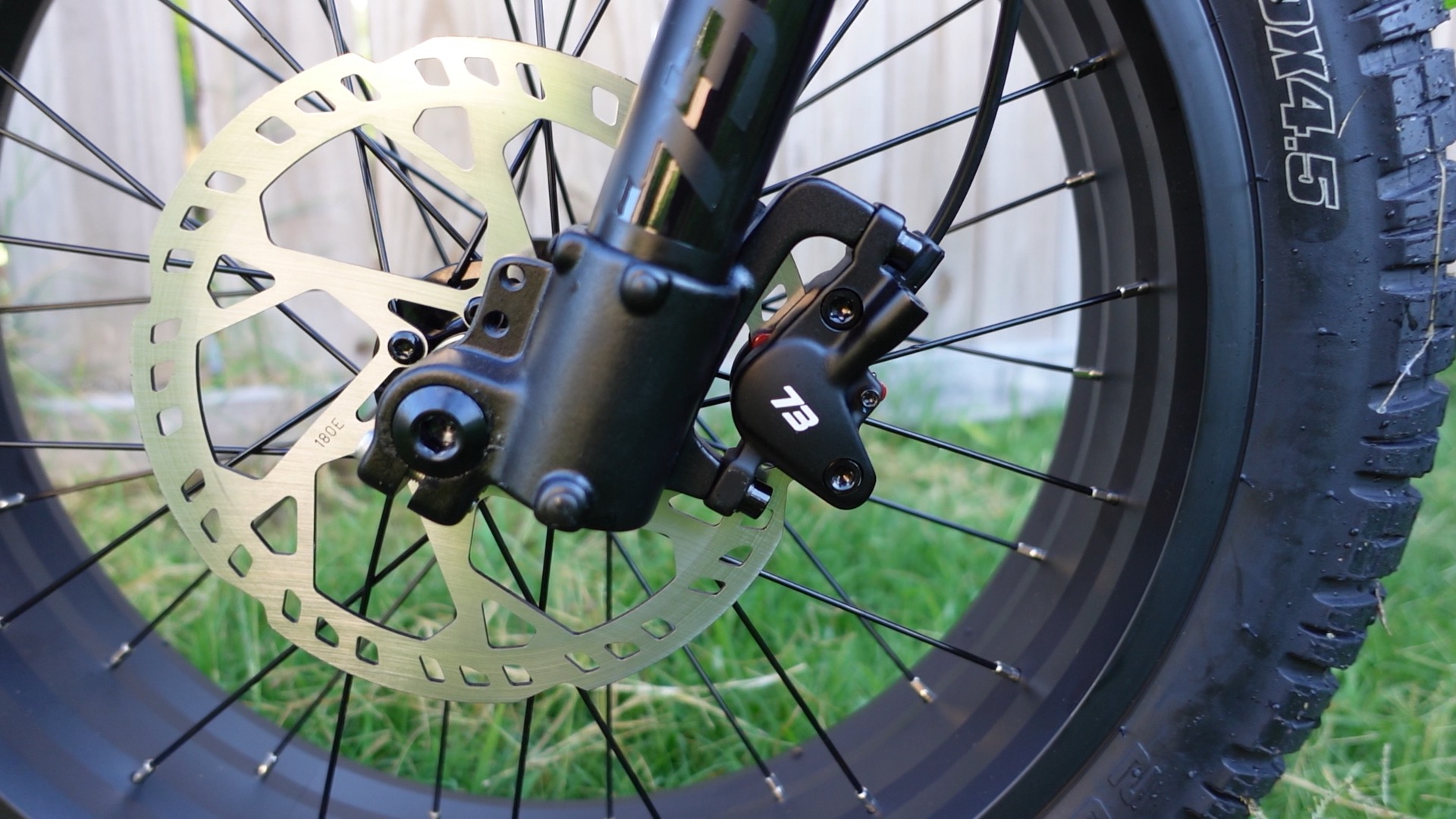
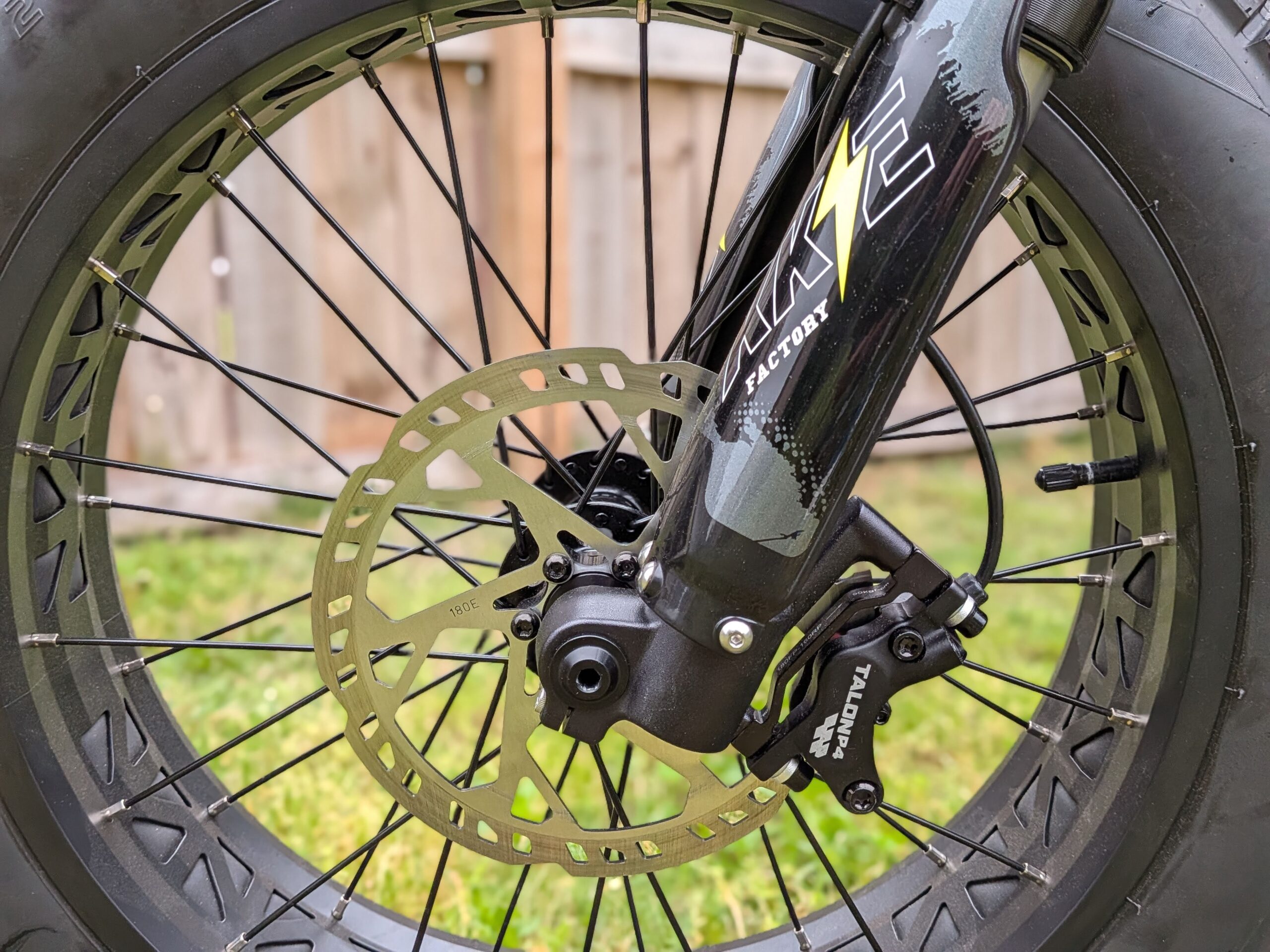
Two-piston hydraulic disc brakes handle the B1G, branded by Super73 with no manufacturer named, running 180mm rotors front and rear with motor cutoff levers. The Scrambler answers with Talon P4 four-piston hydraulic brakes from Star Union, also on 180mm rotors, also with cutoffs. Four pistons beats two on paper every single time, so we ran a brake test rather than assuming. The result was not what we expected, and it is in the testing section below.
Speed, Class, and Parental Controls
Class rating is one of the biggest functional splits between these two. The B1G ships strictly as a Class 2 ebike with a 20 mph ceiling whether you are pedaling or using the right-hand thumb throttle. The Scrambler lets you switch between Class 1, Class 2, and Class 3, with a custom mode that lets you dial the top speed down as far as you want.
That custom mode leads to the feature we would call the smartest decision on either bike. Plenty of these bikes get bought by parents for teenagers, and Juiced built in a speed lock: you can cap the power and top speed, then hide it behind a passcode. Unless your kid knows the PIN, that limit stays put. If that is your situation, our guide to whether an ebike is legal for your teen is worth a read before you buy either of these.
Display, Lighting, and Extras
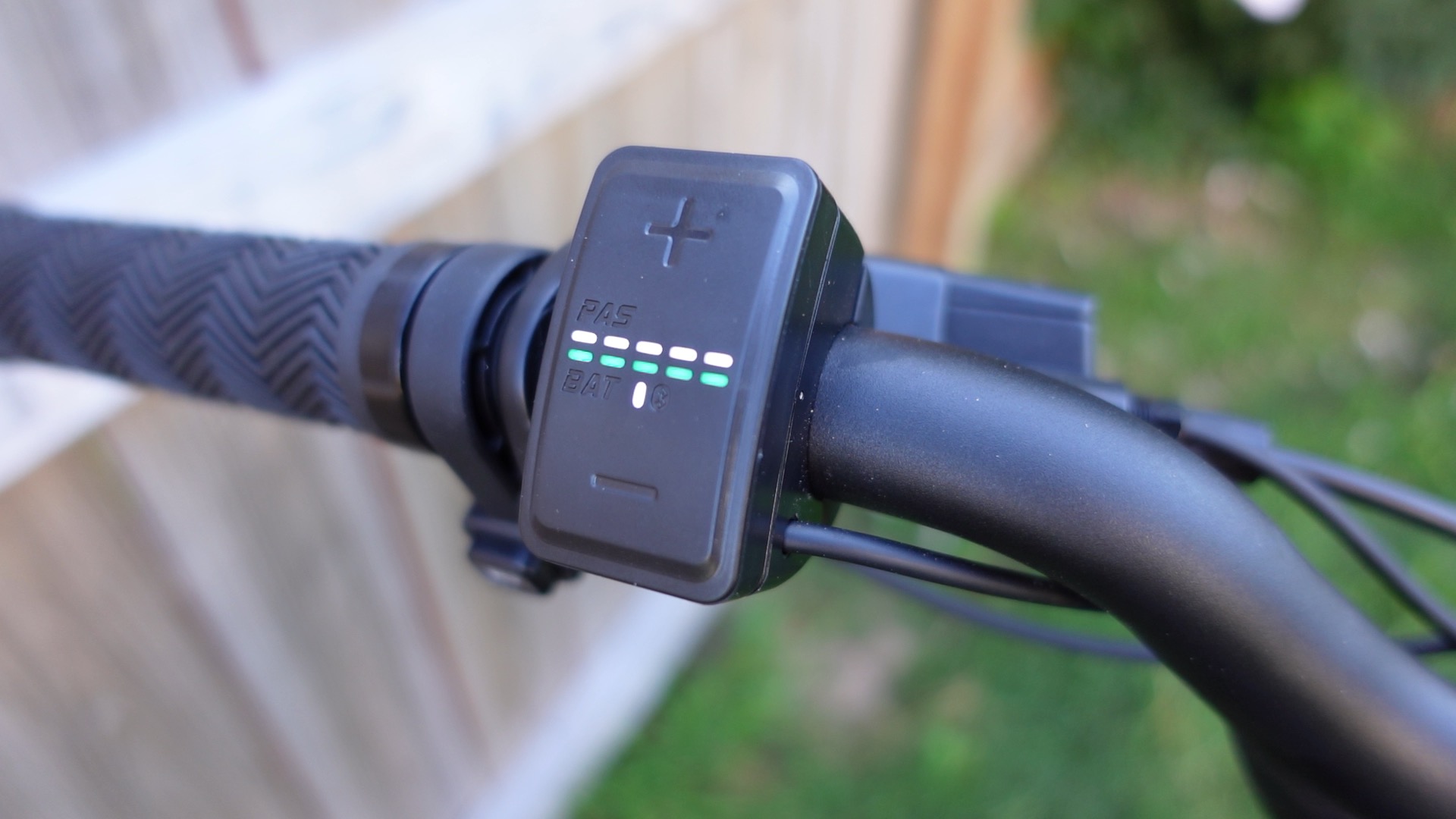
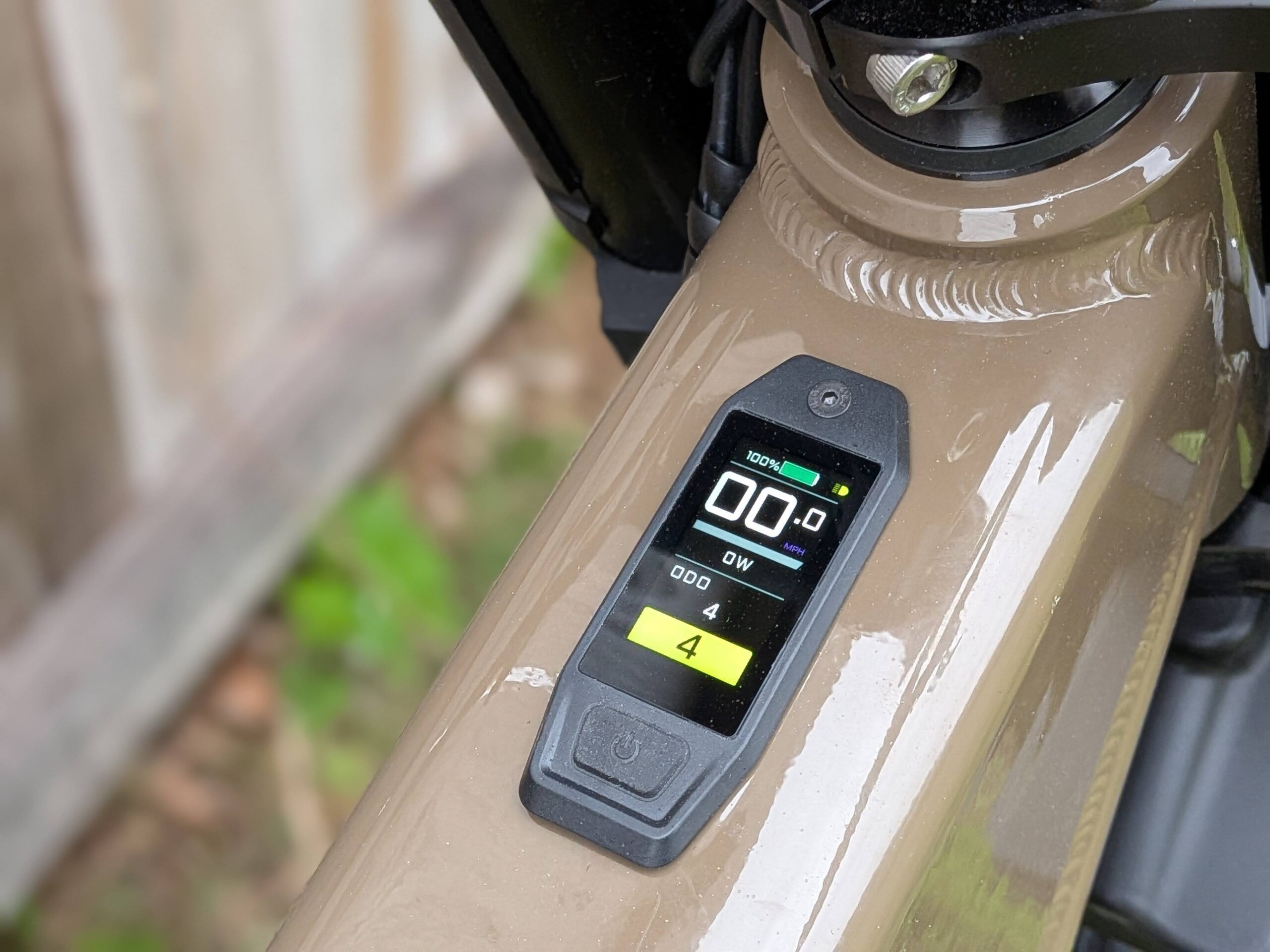
Juiced built a TFT display into the top tube, which is both a settings hub and a smart bit of damage prevention — it cannot get snapped off in a tip-over. Through it you get class selection, custom speed limits, the speed lock, and throttle response settings. The B1G Core keeps things about as simple as it gets: a row of LEDs for battery capacity, another for pedal assist, and a power button on the left. There is no speedometer at all, which is why we relied on GPS for every number in our testing.
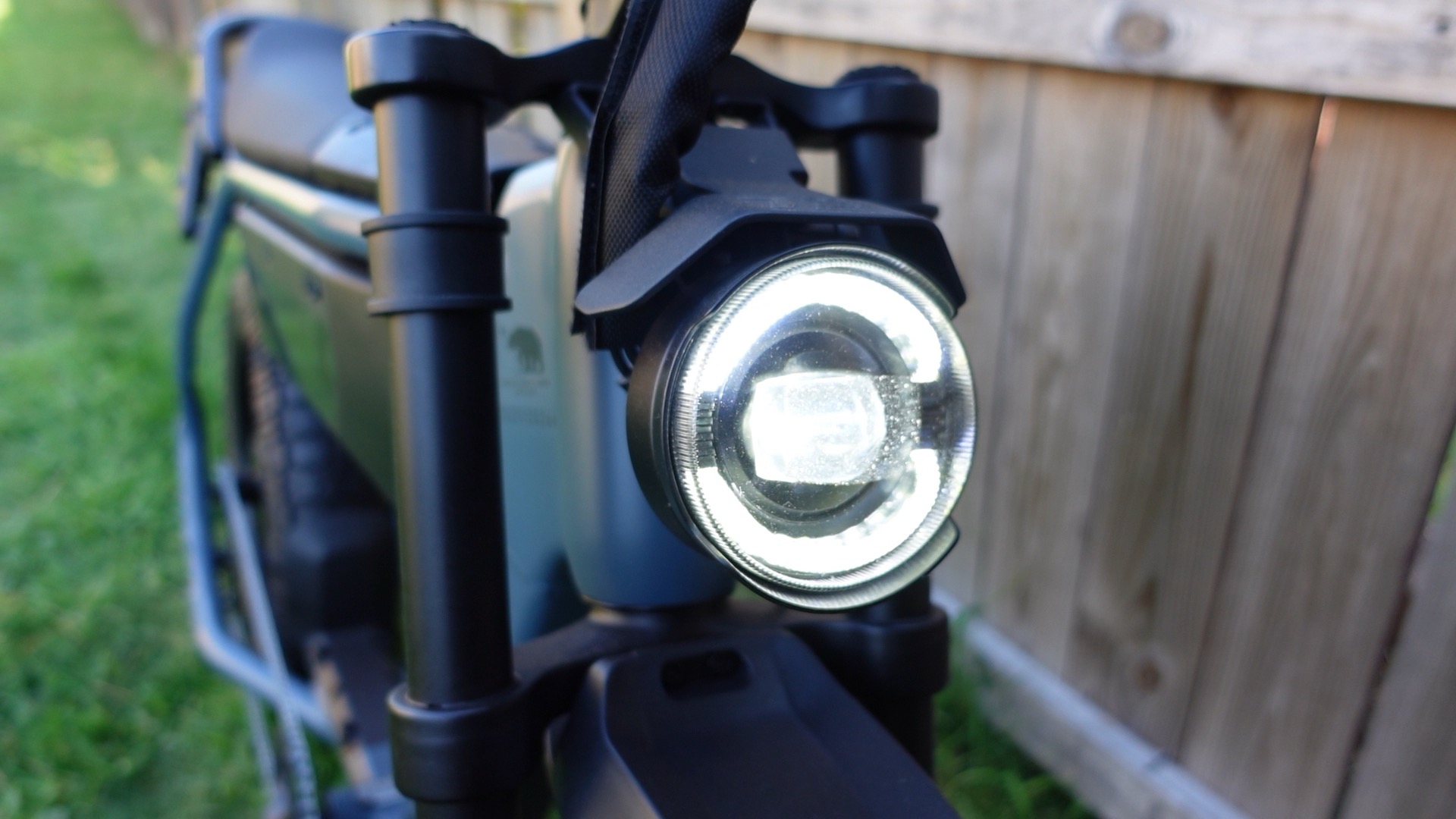
Both bikes come with integrated front and rear lighting, and both taillights brighten under braking. Super73 adds a horn, which we appreciated more than expected in traffic, plus a carry handle and USB-C device charging. Juiced counters with turn signals, and at least at launch, a bundle of extras that included a headplate, a retro bar pad, a handlebar bag, fenders, a sticker pack, and a personalized name plate. Free accessory bundles are very much the Lectric playbook, so check what is currently included before you order.
Tires
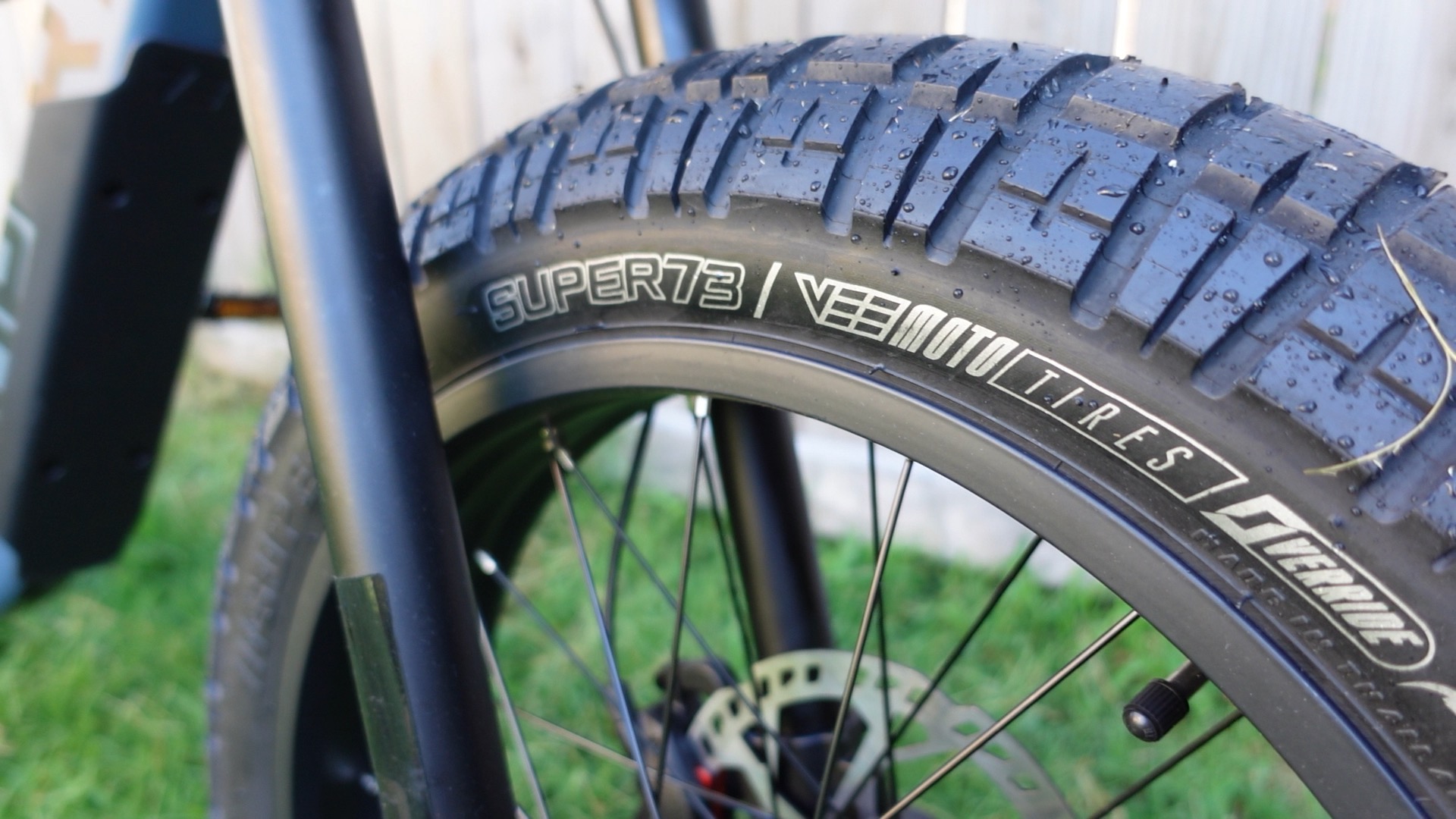
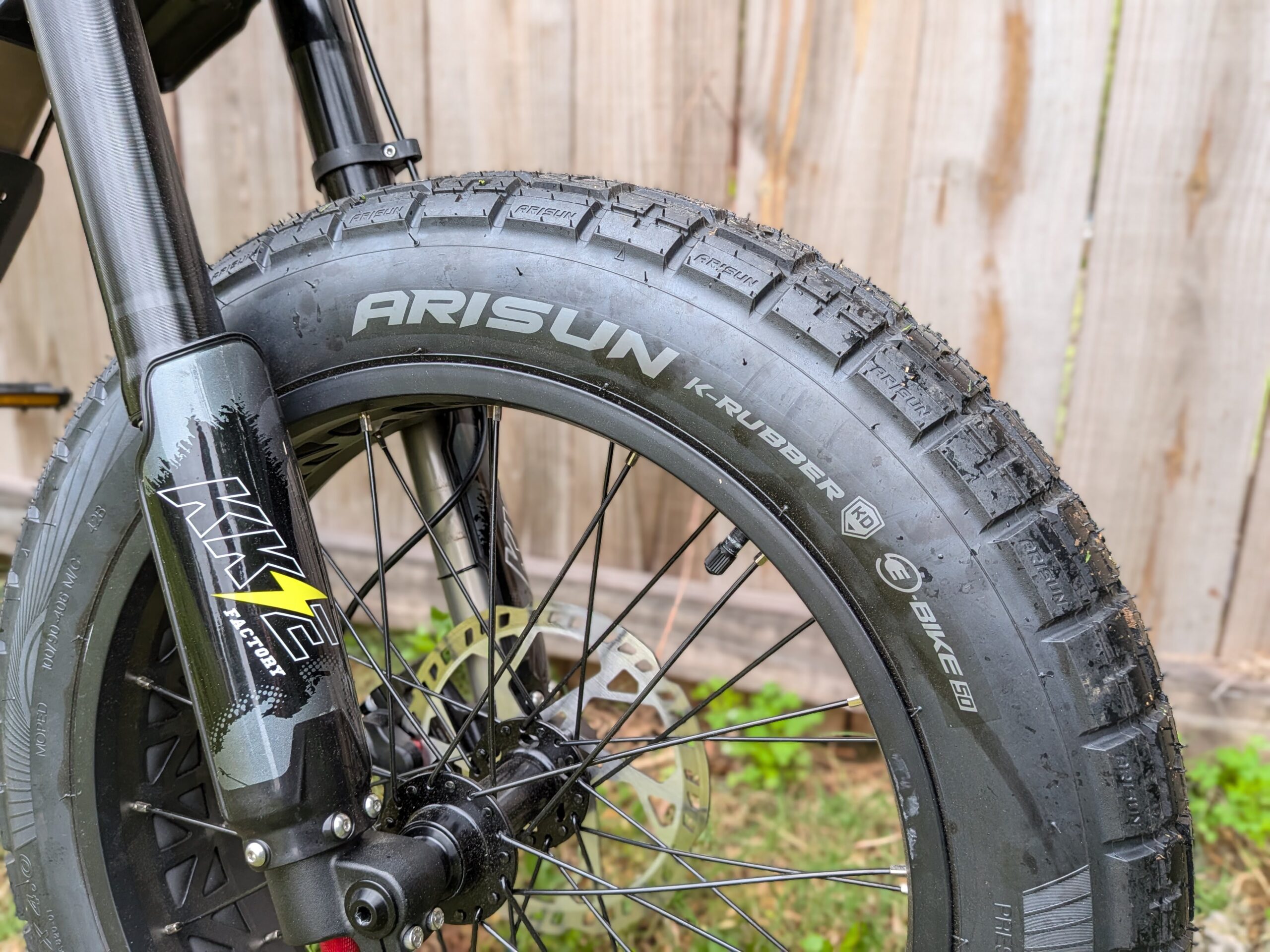
Rubber is one area where the Super73 goes bigger. The B1G rolls on Vee BDGR tires with the 73 molded into the tread, 4.5 inches wide up front and a genuinely massive 5 inches in the rear. The Scrambler runs Arisun 20 x 4-inch K-Rubber tires, same size front and rear. Given that those tires are the B1G’s only suspension, the extra width is doing real work.
Frame, Fit, and Sizing
Both are single-speed aluminum frames with BMX-style bars, an upright riding position, and fenders. The B1G is Super73’s tall option with a 33-inch seat height and a recommended rider range of 5’9″ to 6’8″. At 6 feet with a 32-inch inseam, we had no trouble on either bike, and our 5’5″ tester could sit flat-footed over both of them. Despite the B1G being positioned as the tall one, the seat heights felt nearly identical in person.
Payload is a real difference: 250 lbs on the B1G against 300 lbs on the Scrambler hardtail. Claimed weights are 90 lbs and 83 lbs, but we put both on our scale: the B1G came in at 89 lbs and the Scrambler at 85 lbs. That is the more interesting number, because the Scrambler carries nearly double the battery capacity and still weighs four pounds less. Comfort-wise, the edge goes very slightly to Super73 on ergonomics, though seat firmness is close between them.
Options are where Super73 pulls ahead, with one real caveat. The A-Series comes in three seat heights, so riders can drop to the M1D at 30 inches or the MZFT at 27 inches rather than forcing a fit. The caveat is that the Scrambler’s single size is far more accommodating than a single size usually is. Juiced rates it for riders from 4’10” to 6’3″ with a 31.5-inch seat height, against 5’9″ to 6’8″ on the B1G. If you are on the shorter end, the Scrambler likely fits you where the B1G simply will not, and Super73’s answer would be buying a different model altogether. Juiced’s answer to riders wanting something different is the full-suspension version at $1,899 — still hundreds below the B1G Core, and a noticeably more comfortable bike.
Looks and Colorways
This part is entirely yours to judge, but the two bikes give off different energy. The B1G reads less aggressive, largely because of the rigid fork, the simpler front end, and the trapezoid shape of the shroud hiding that battery, which Super73 tucks away beautifully. The Scrambler looks meaner thanks to the inverted fork, the headplate, and the angle of its battery cover.
Color follows the same split. Super73 sticks to muted colorways in the A-Series, with the B1G Core offered in Slate. Juiced leans into its name with Asphalt Lemonade, Mocha, and Orange Juice on the hardtail. If you like loud and unusual, that is a point for Juiced.
Warranty and Brand Support
Super73 has something Juiced is still building, and it would be dishonest to pretend otherwise. The brand has been around since 2016, it has showrooms, a dealer network, authorized service centers, and a community that is genuinely large and active. If you want to walk into a physical location with a problem, that option exists. The written coverage is more modest than that footprint suggests: one year on the frame, fork, and electronics, and two years on the battery, capped at 500 charge cycles, whichever comes first.
Juiced as it exists today is brand new, and the Scrambler is its first model under the ownership of the Lectric co-founders. What it brings is a three-year warranty, in an industry where one year is still the norm and two is considered generous. Read the fine print on both, though, because the headline numbers invert on the most expensive component on either bike. Juiced covers its battery for one year; Super73 covers its battery for two. Juiced wins on the bike, Super73 wins on the pack. The team says warranty and support are central to the new brand, and we have real confidence in that group’s customer service track record, but the honest answer is that they still have to prove it over time. That is a bet, and only you can decide what it is worth.
Super73 B1G vs Juiced Scrambler Hardtail Specs
| SUPER73-B1G (Core) | Juiced Scrambler Hardtail | |
|---|---|---|
| Price | $2,595 | $1,699 |
| Motor | 500W nominal | 750W nominal, 1,764W peak |
| Torque | — | 90 Nm |
| Controller | — | 30A |
| Battery | 520Wh (52V 10Ah), UL2271 | 52V 19.2Ah, UL2271 |
| Second battery | Optional modular 520Wh (sold separately) | Mounting points, pack not yet sold |
| Advertised range | 20+ mi single / 40+ mi dual | Up to 60 mi |
| Charge time | 5–6 hours | ~4 hours (5A fast charger included) |
| Class | Class 2 only, 20 mph | Class 1 / 2 / 3, up to 28 mph |
| Front suspension | Rigid | KKE inverted, 140mm, compression + rebound |
| Brakes | Super73 2-piston hydraulic, 180mm rotors | Talon P4 4-piston hydraulic, 180mm rotors |
| Tires | Vee BDGR, 4.5″ front / 5″ rear | Arisun K-Rubber, 20 x 4″ front and rear |
| Display | LED indicators only | Frame-integrated TFT |
| Drivetrain | Single speed with chain tensioner | Single speed |
| Throttle | Thumb throttle | Thumb throttle, configurable response |
| Lighting | LED front and rear, brake light, horn | LED front and rear, brake light, turn signals |
| Seat height | 33″ | 31.5″ |
| Rider height | 5’9″ – 6’8″ | 4’10” – 6’3″ |
| Claimed weight | 90 lbs | 83 lbs |
| Measured weight | 89 lbs | 85 lbs |
| Payload | 250 lbs | 300 lbs |
| Warranty | 1 yr frame, fork & electronics; 2 yr battery (or 500 cycles) | 3 yr bike; 1 yr battery |
Real World Performance Testing
Throttle Acceleration
Throttle only from a dead stop, both bikes, same stretch of road. The Scrambler hit 20 mph in about 5 seconds. The B1G climbed through 10, 14, 17, and 19 before settling in, and here is where it got interesting: with no display to check, our GPS showed it holding a steady 21 mph on throttle alone. For a bike sold strictly as Class 2, that is a mph over the line.
Pedal Assist Behavior
The two systems are built on completely different logic, and this is the one category where we preferred the Super73. Its pedal assist is speed-based, so each level holds you at a target: roughly 9 mph in level 1, 12 to 13 in level 2, 16 in level 3, and 20 in level 4. Level 5 gave us another jump to 22 mph on GPS, again above the Class 2 cap it is sold under. Because the power arrives gradually, you can actually contribute pedal pressure through the first three levels, and the shorter cranks plus a chain tensioner make the single-speed drivetrain feel more deliberate. By level 4 you are just spinning your legs to trigger the cadence sensor.
The Scrambler uses a current-based system instead, so each level allocates a different amount of power rather than a speed target. Level 1 alone delivers around 400W, which is a lot right off the line, and level 4 will take you to a full 28 mph without complaint. Very few people pedal bikes like these seriously, so weigh that accordingly — but if you do plan to pedal, the B1G is the more pleasant experience. What the Juiced gives back is a throttle that is far easier to modulate at low speed, plus the option to either limit throttle current per assist level or unlock full throttle in any level.
Brake Testing
Three stops per bike, throttle up to 20 mph, then hard on the levers, with chalk marking each result. We fully expected the four-piston Talons to walk away from the two-piston Super73 brakes. They did not. Stopping distances clustered between roughly 18 and 22 feet, and the B1G actually posted both the shortest and the longest run of the day, with the Scrambler landing in between.
Our read is that with hydraulic discs and this much rubber on the road, 20 mph simply is not a demanding enough test to separate them. The four-piston advantage would very likely show up in a stop from 28 mph, which is a test the B1G cannot participate in because it will not go that fast. At the lever, the Talons felt slightly lighter to pull, with a bit more friction in the Super73 levers. The takeaway is a fair one for Super73: both sets of brakes stop you just fine.
Hill Climb Test
Our test hill averages a 9.6% grade over a quarter mile, and this is where the whole comparison stopped being close. The Scrambler hardtail held a minimum speed of 14 mph on throttle alone. The B1G bottomed out at 7 miles per hour on the same climb. Half the speed, same hill, same rider.
That is what separates a 500W motor with no published peak from a 750W motor that surges past 1,700 watts under load. If you live anywhere with real hills, this result alone should decide your purchase.
Which Should You Buy?
Choose the Juiced Scrambler Hardtail If
- You want the strongest performance per dollar. Nearly double the battery, dramatically more motor power, a real 140mm suspension fork, four-piston brakes, and a 28 mph ceiling for $896 less.
- You have hills. The 14 mph versus 7 mph climb result is not a close call.
- You are buying for a teen and want the speed lock behind a passcode.
- You want a display, configurable class settings, and throttle you can fine-tune.
- You want turn signals, a bundle of included accessories, and a three-year warranty.
- You would rather have rear suspension too — the full-suspension Scrambler at $1,899 is still well under the B1G Core.
Choose the Super73 B1G If
- Brand recognition and a decade-old community genuinely matter to you, along with showrooms and an established dealer and service network.
- You want to choose your seat height. The A-Series spans 27, 30, and 33 inches across the MZFT, M1D, and B1G — though note the single-size Scrambler is already rated from 4’10” to 6’3″, so this matters most if you want a specific fit rather than simply a shorter one.
- You actually plan to pedal. Speed-based assist, shorter cranks, and a chain tensioner make it the better pedaling bike of the two.
- You prefer a more restrained look and muted colorways.
- You want the small conveniences: a horn, a carry handle, USB-C charging, and a small battery that is easy to pull and carry inside.
- You like the modular dual-battery design and are willing to buy the second pack.
Looking at the wider category before you commit? Our roundup of the best moped-style ebikes covers what else is worth considering and, just as importantly, which ones are actually legal to ride.
Final Thoughts
Both of these bikes are fun, and both check the box they are designed to check. But the spec gap runs one direction and the test results confirm it. The Scrambler hardtail gives you a bigger battery, far more motor power, a legitimate suspension fork, a display with real settings, a higher top speed, a higher payload, and a way to limit your kid’s speed — for $896 less than the B1G Core. Matching that spec sheet from Super73 means stepping up to the $2,995 B1G SE, which widens the gap to nearly $1,300.
What you get for the Super73 premium is a known name, a real dealer and service footprint, three seat height options across the A-Series, and the better pedaling experience of the two. For some buyers that is worth real money, and it would be unfair to dismiss it. But if a parent is choosing between spending $1,699 and $2,595 for a bike that climbs half as fast and tops out 8 mph lower, that decision makes itself. Our confidence in the new Juiced team is high, given what they built at Lectric and their habit of giving customers more than they asked for. The brand still has to prove its long-term support, and that is the one genuine question mark hanging over an otherwise clear recommendation.
If this comparison helped you decide and you are picking up a Scrambler, we would appreciate you using our Juiced affiliate link. It is completely free for you to use and helps support the team at Ebike Escape so we can keep producing rider-to-rider comparisons like this one. Thank you!
