
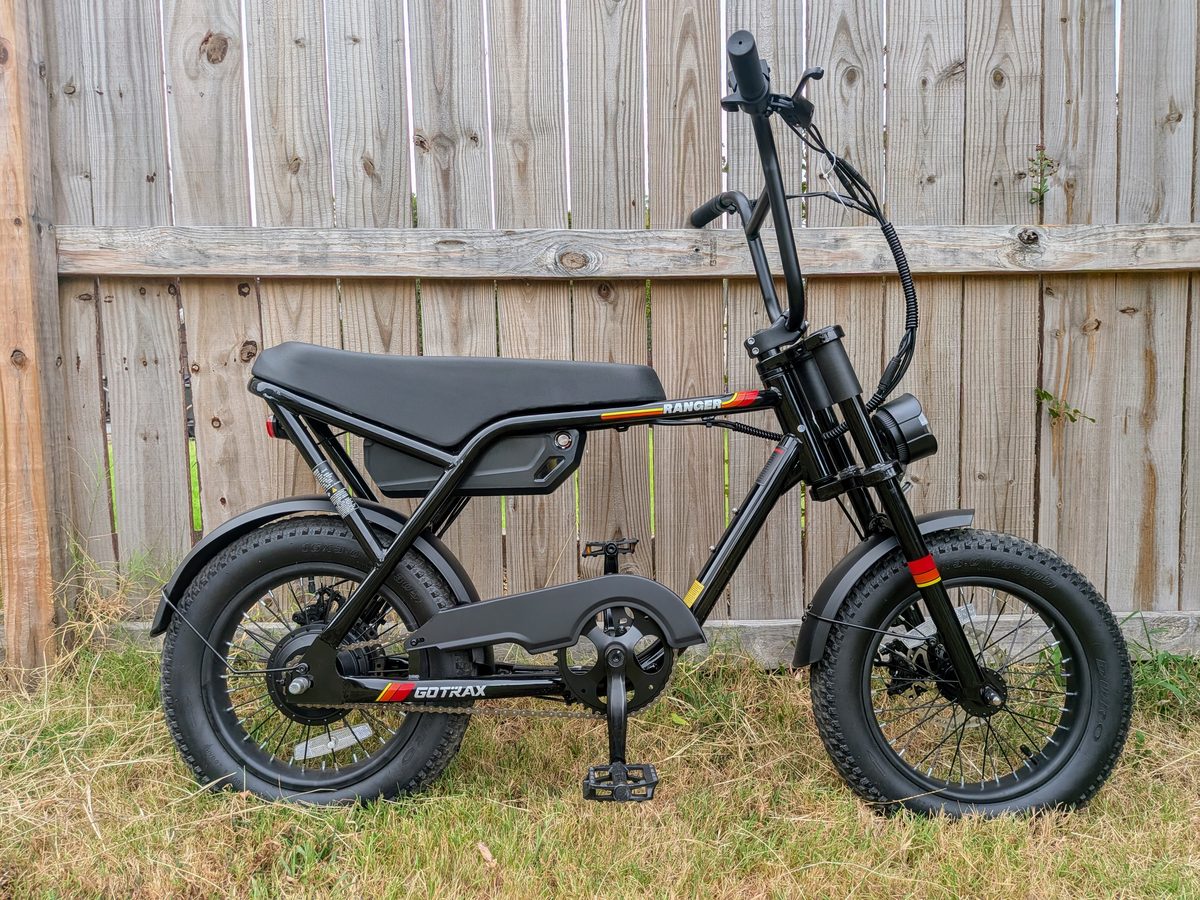
One number explains almost everything about this ebike: 165 pounds. That is the payload capacity, and it is the clearest signal about who the Gotrax Ranger 16 was designed for. Most adults are out. Kids and smaller teens are in. Once you accept that, the rest of the decisions start to line up, from the 16-inch wheels to the fixed 27-inch seat to a 350W motor that stops at a legal 20 mph. Price is the other half of the story. The Ranger 16 is $499 as of this writing. At that number, a parent who would never spend $2,000 on a moped-style ebike might actually say yes. So that is how we are going to review it. Not against a $2,000 moto build with 20-inch wheels and 30 mph on tap, but as the bike you hand to your kid.
We put roughly 8.5 miles on it, ran it up our standard test hill, checked braking from top speed, and tracked the whole ride on Strava to get a real range picture. Can a 350W motor and a 280 Wh battery hold up in the real world, and is a legal class 2 ebike the right answer for a younger rider? Let’s find out.
Thinking the Ranger 16 might be right for your rider? Using our link before you buy costs you nothing and helps make reviews like this one possible. Check Current Price at Gotrax or Check Current Price at Walmart
Gotrax Ranger 16 Video Review | See It In Action!
Our video walks the entire bike before the ride starts: the battery hiding under the moto seat, the display and thumb throttle, the brake setup, and what shows up assembled in the box versus what you put together yourself. From there you ride along for the throttle-only speed run, all three pedal assist levels, a brake test, and our hill climb test. Check it out alongside riders of various ages and weigh the pros and cons to see if the Ranger 16 is the right fit for you.
Standout Features of the Gotrax Ranger 16
350W Rear Hub Motor
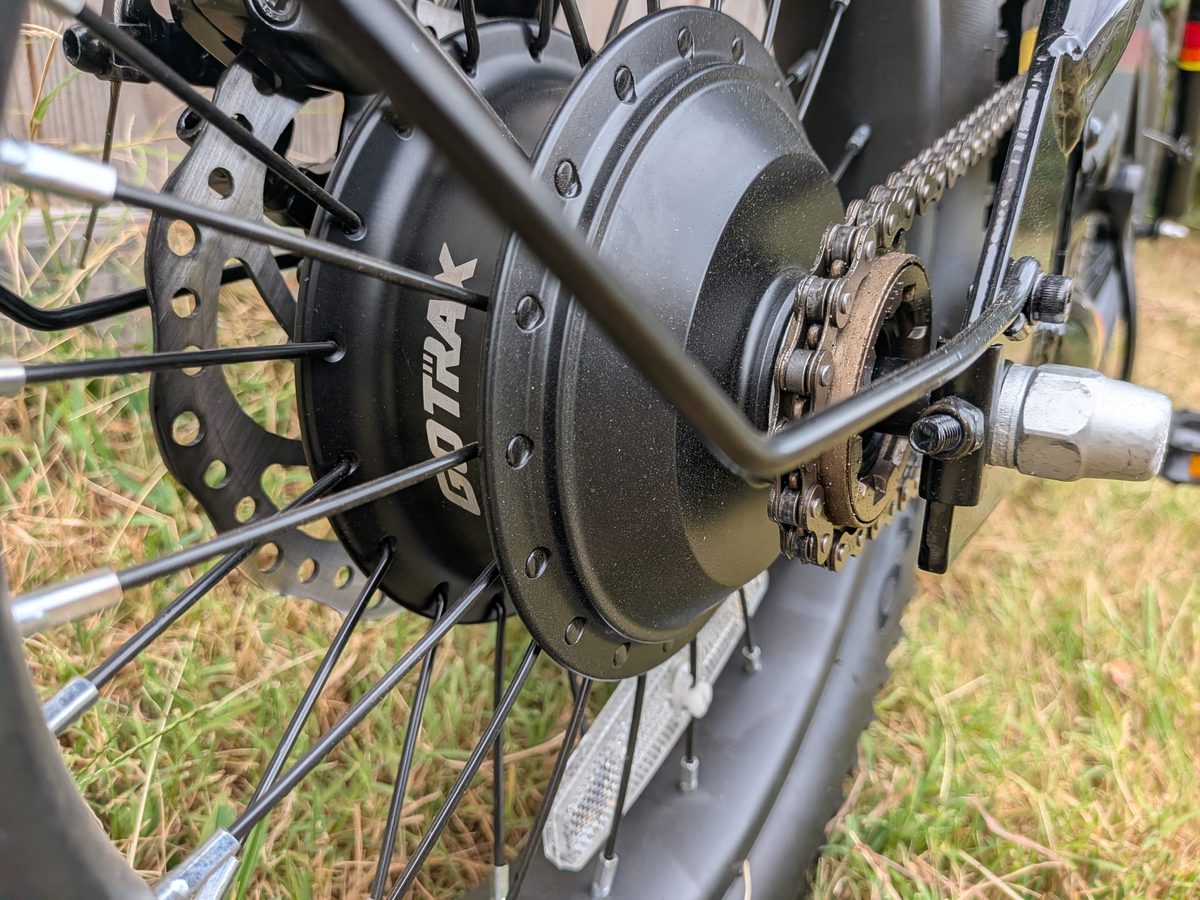
Power comes from a 350W rear hub motor, which is the single most important number on this spec sheet for anyone worried about handing a kid something too fast. Class 2 means throttle and pedal assist speeds up to 20 mph and nothing past it. Noise is the trade-off. Working up a grade, this motor is louder than plenty of 750W hub motors we have tested. It is not obnoxious, but you will hear it.
36V 7.8Ah Battery and Charging
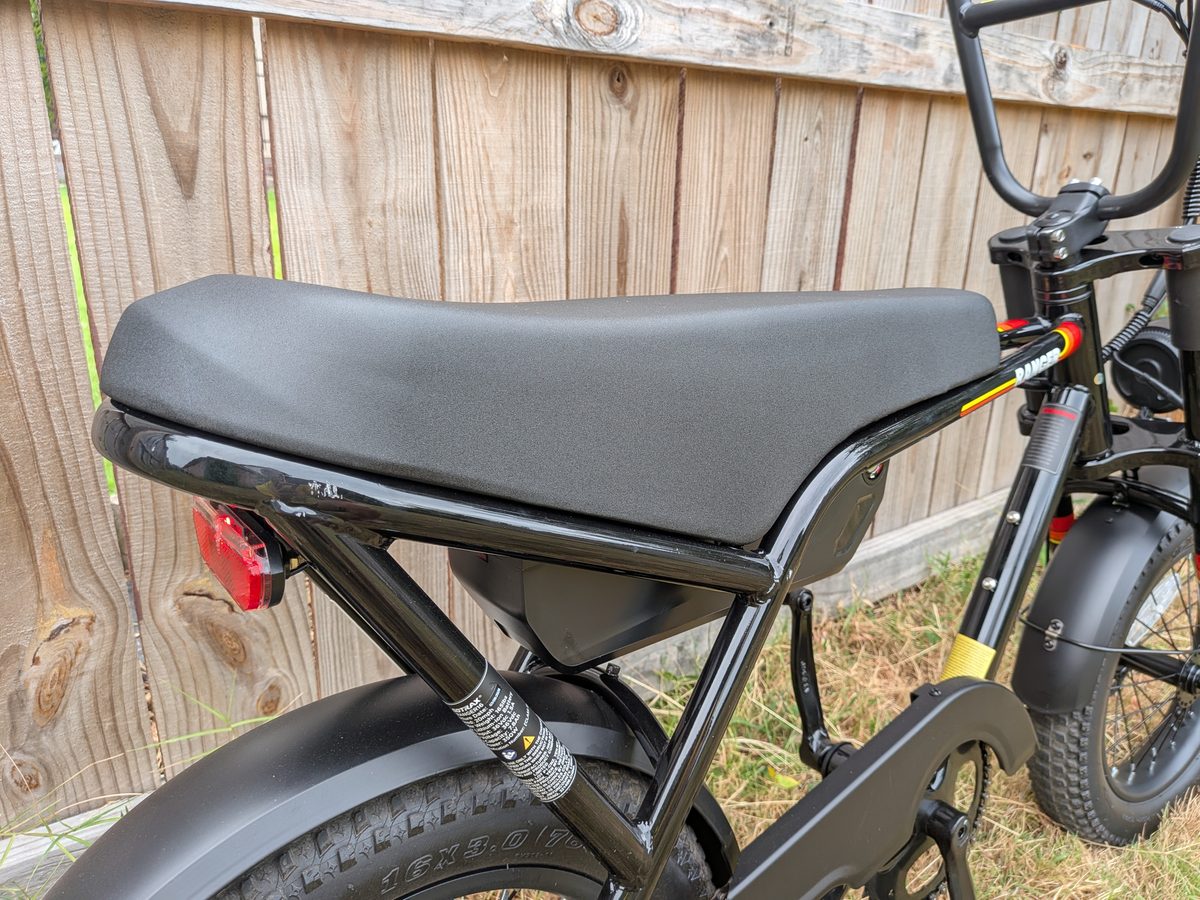
Tucked under the moto-style seat is a 36V 7.8Ah pack, which works out to roughly 280 Wh. With the included 1.5A charger, you are looking at somewhere in the five-to-six-hour range to top it off from empty. Plan on plugging it in overnight rather than topping off between rides. Gotrax advertises up to 40 miles in the highlight badges on its own product page, while the technical overview further down that same page says up to 24 miles. Our testing lands much closer to the smaller number, and we get into the specifics below.
Comfort Factors | 16 x 3-inch Tires, a Rigid Fork, and Moped-Style Seating
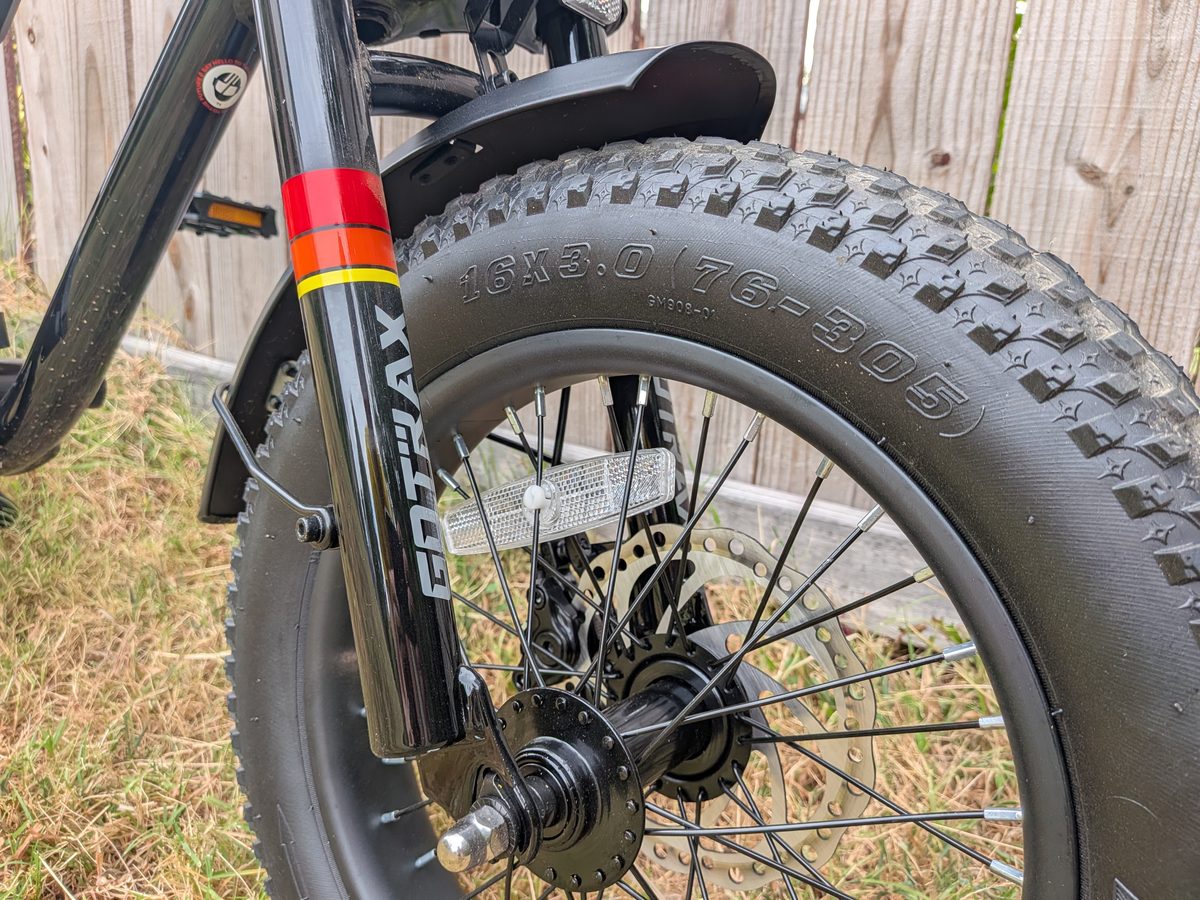
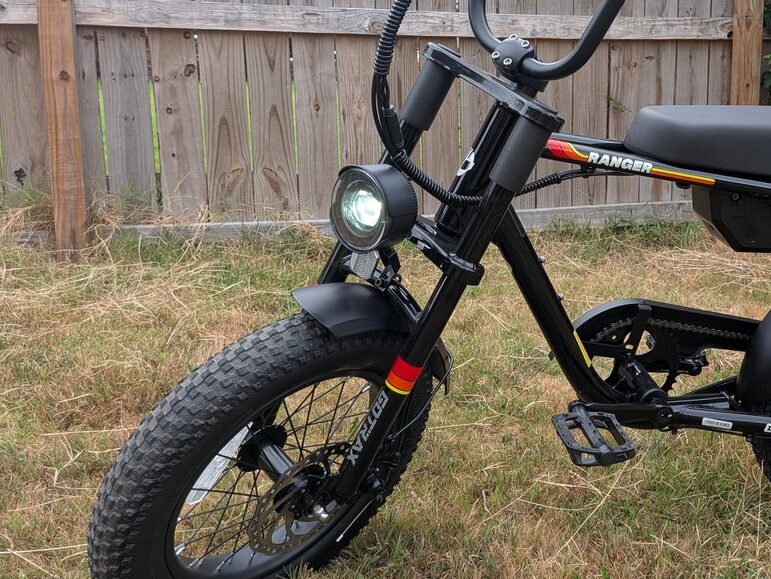
Wide 16 x 3.0-inch tires do the comfort work here, and they do more of it than you would expect. They offer a good amount of traction, and you can drop the air pressure to soak up more bumps. Up front, what looks like a suspension fork is not one. It is rigid, styled to resemble a stanchion setup, and it fooled us at first glance. At this price and for this rider, we are not going to complain. The saddle deserves credit. It has more give to it than the seats on several full-size moped ebikes we have ridden, and it stayed comfortable across our whole test loop.
Mechanical Disc Brakes with 160 mm Rotors
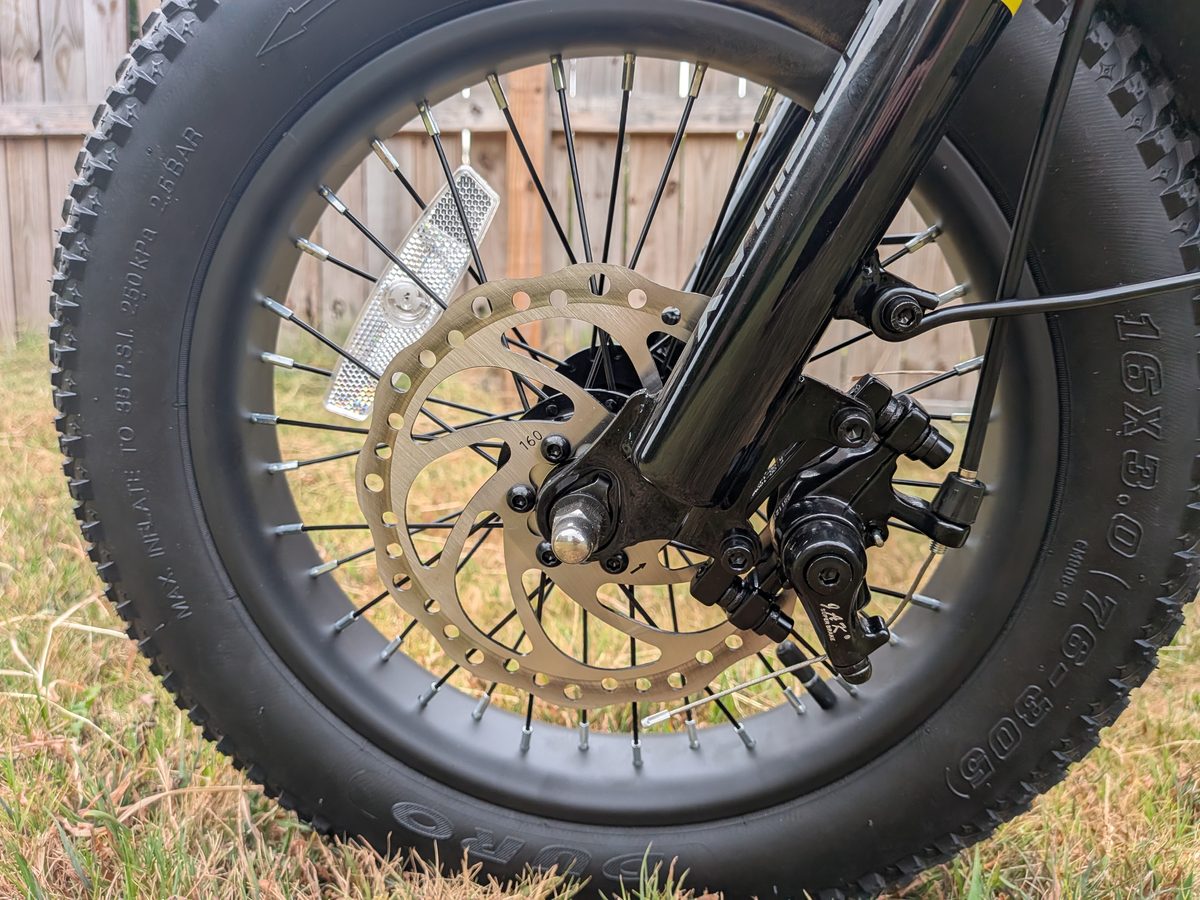
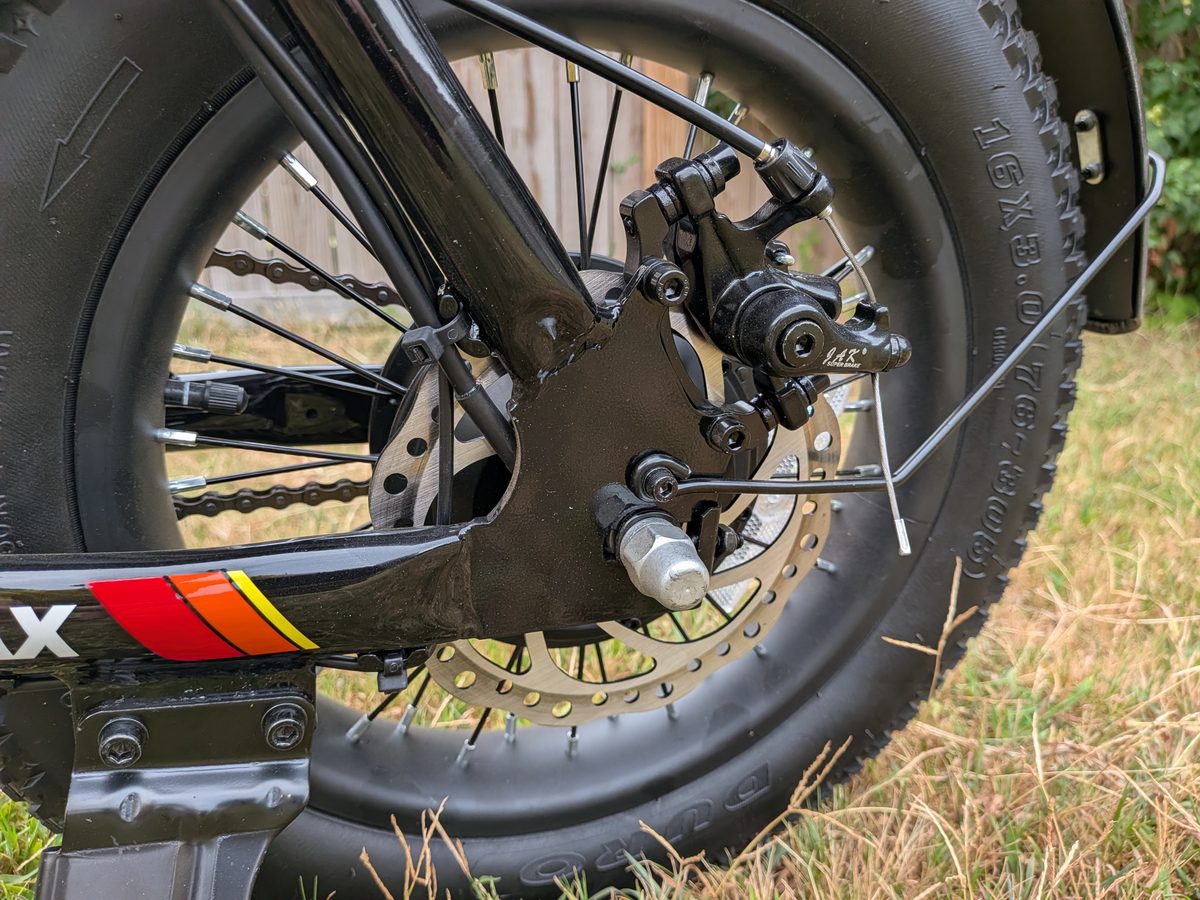
Stopping comes from dual mechanical disc brakes on 160 mm rotors. Hydraulics generally do not show up until around the $800 mark, so this is exactly what we expected to find. The levers include a motor cutoff. The bigger point for parents is maintenance. Cables stretch and pads wear, and mechanical brakes need periodic adjustment to keep delivering the stopping power they had out of the box. Put that on your calendar rather than assuming it takes care of itself.
Lighting, Fenders, and the Extras
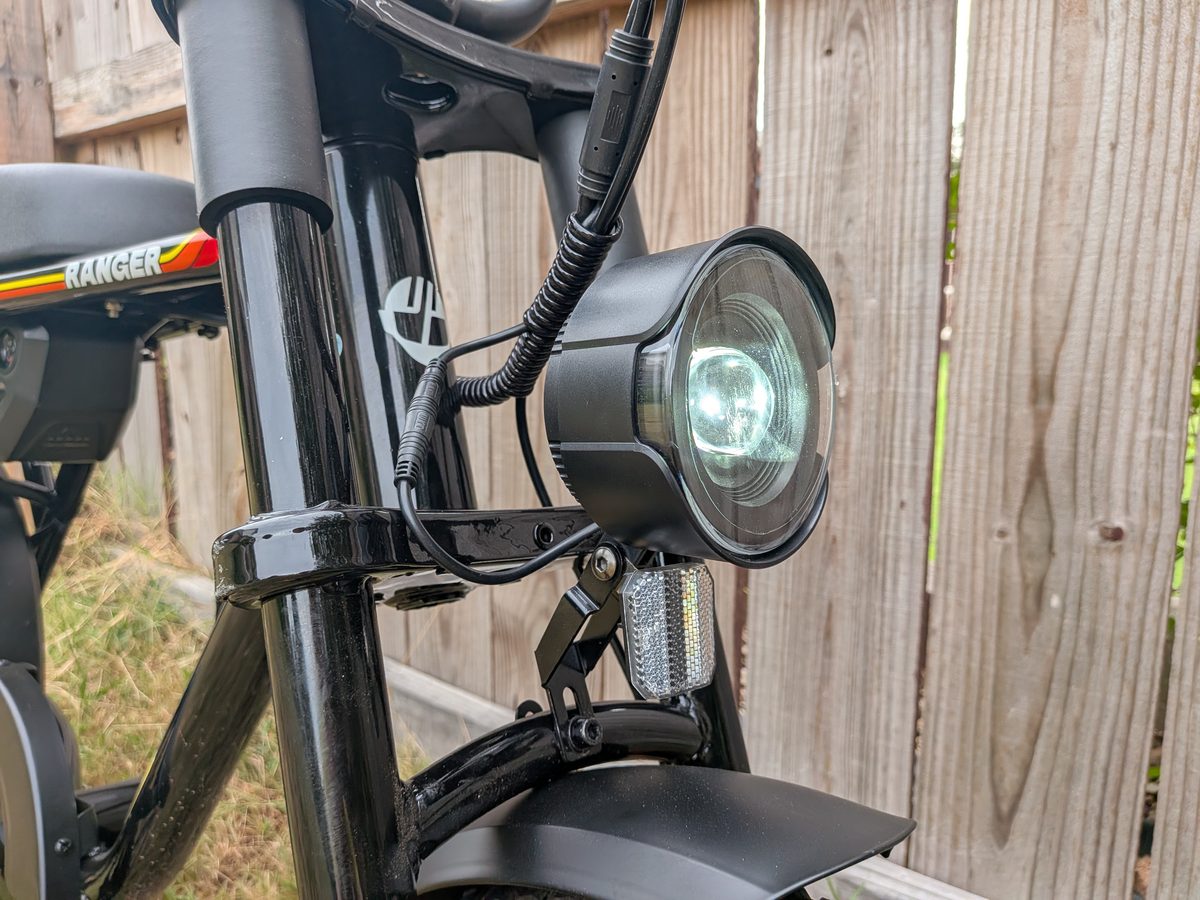
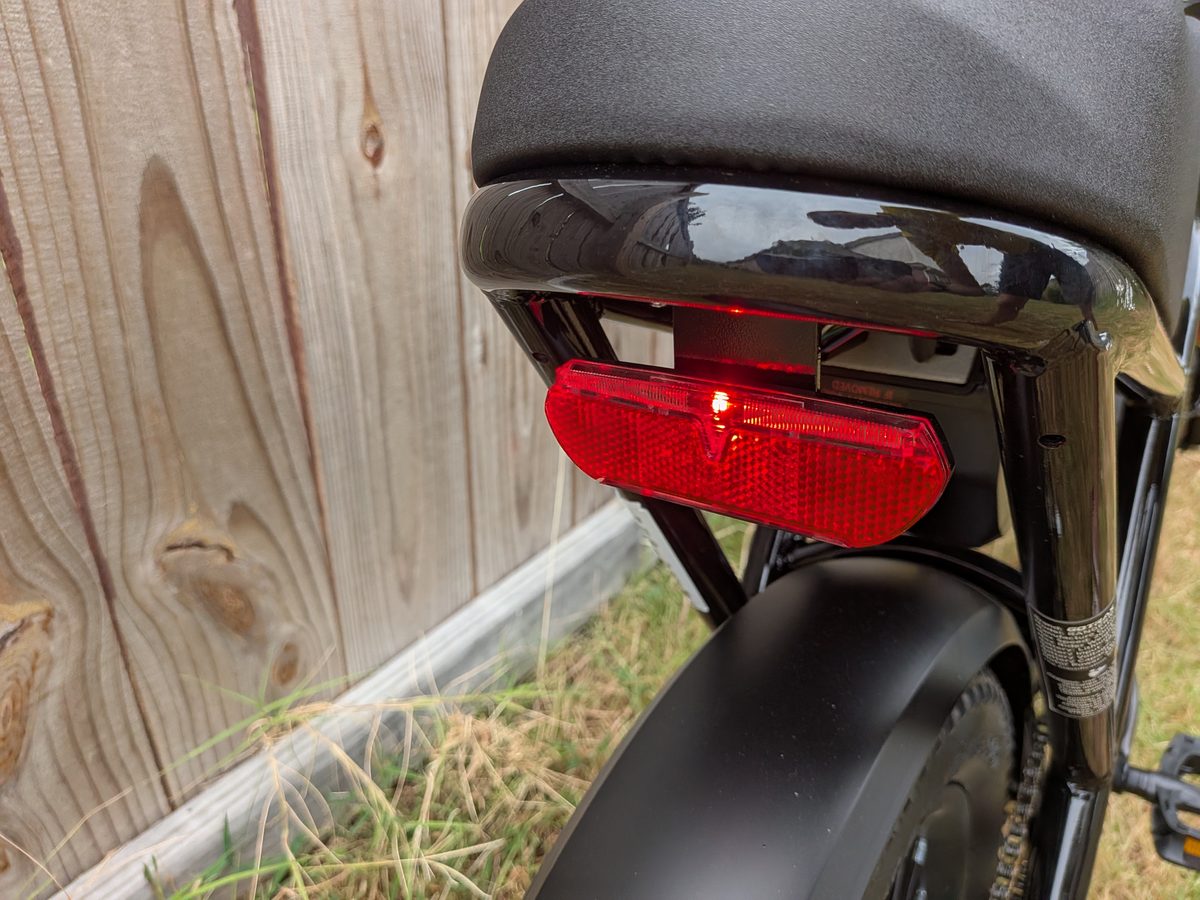
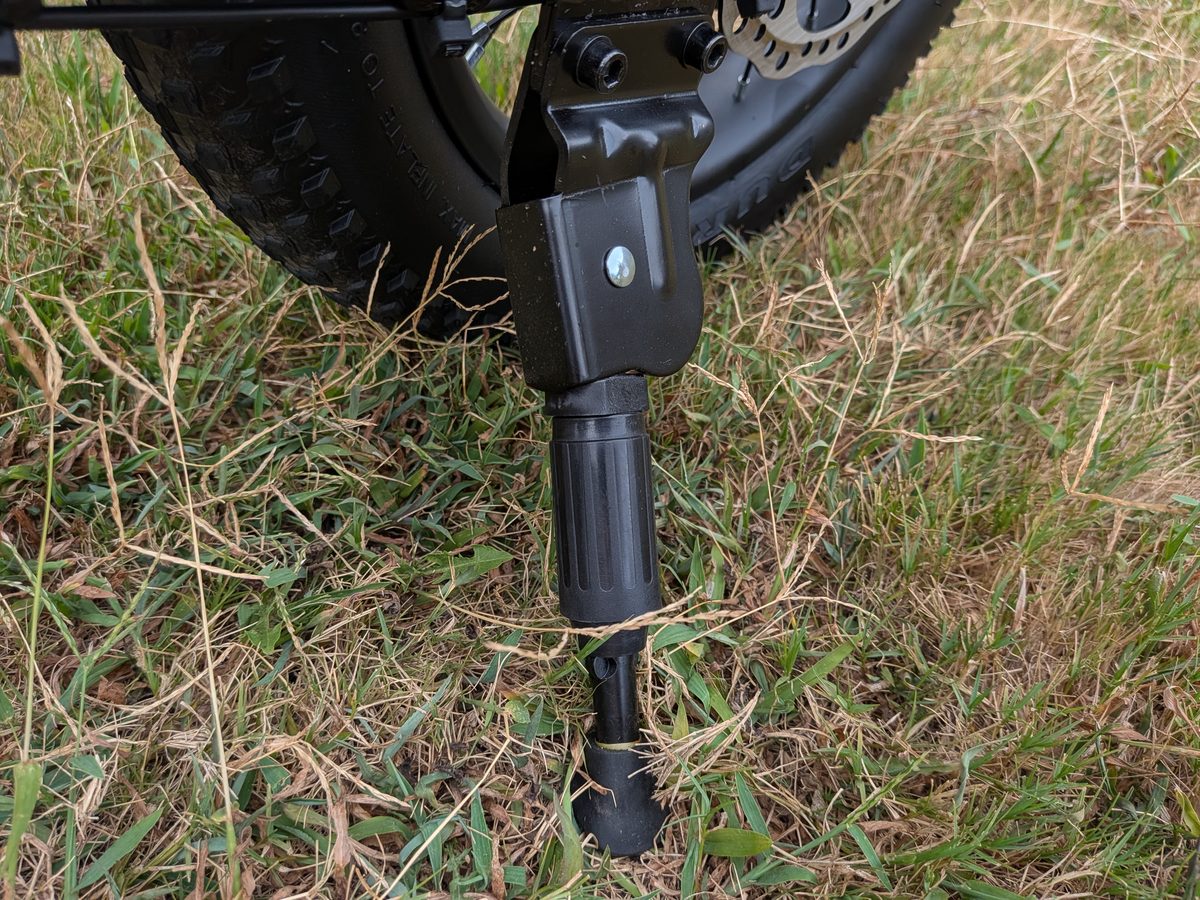
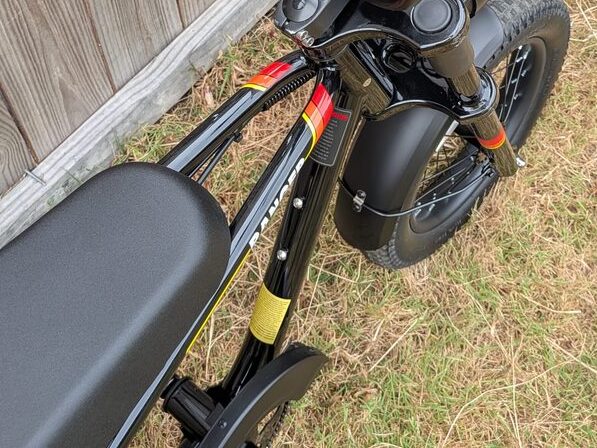
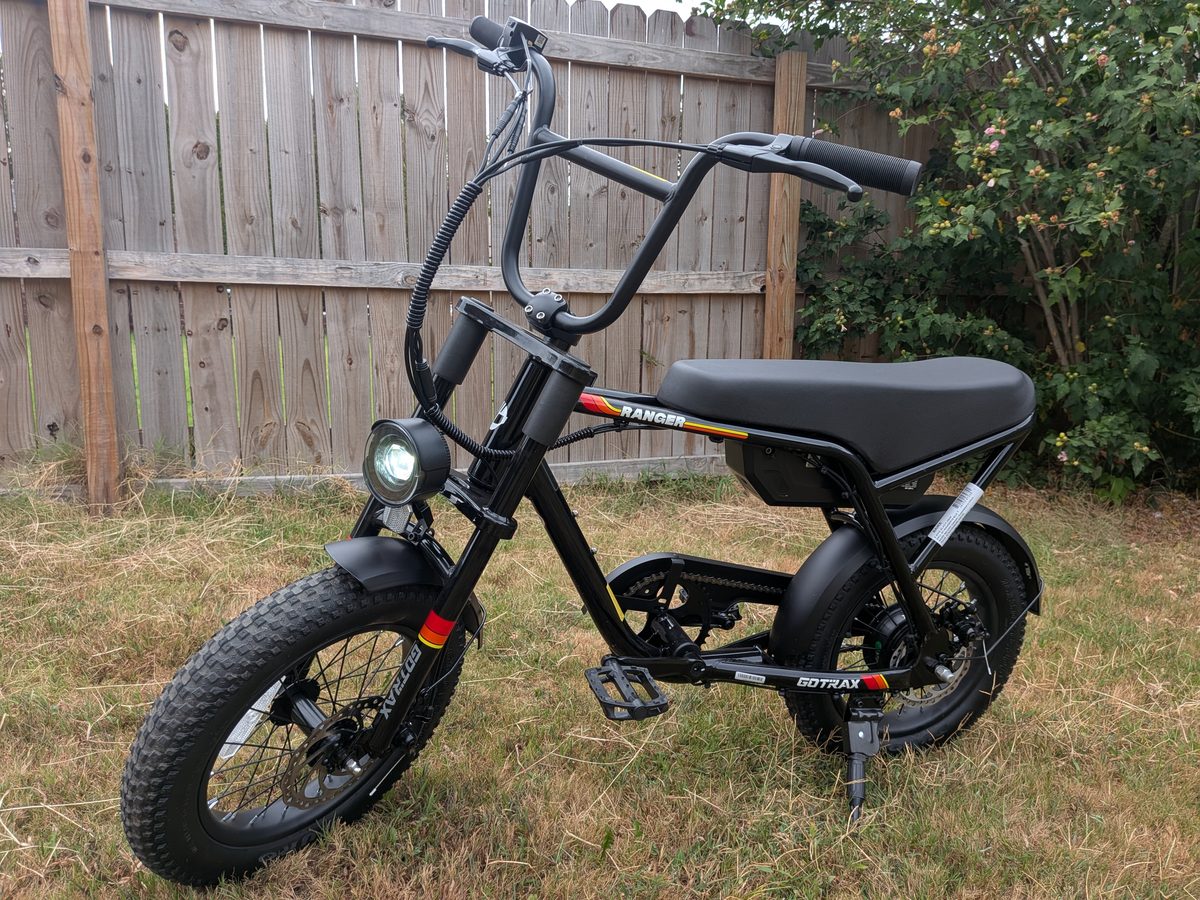
Both the headlight and taillight run off the main battery, and the rear light brightens when you pull the brake levers. Metal fenders front and rear, a kickstand, two bottle cage mounts, a chain guard, and a bell with a small tool kit all come in the box.
Display and Controls
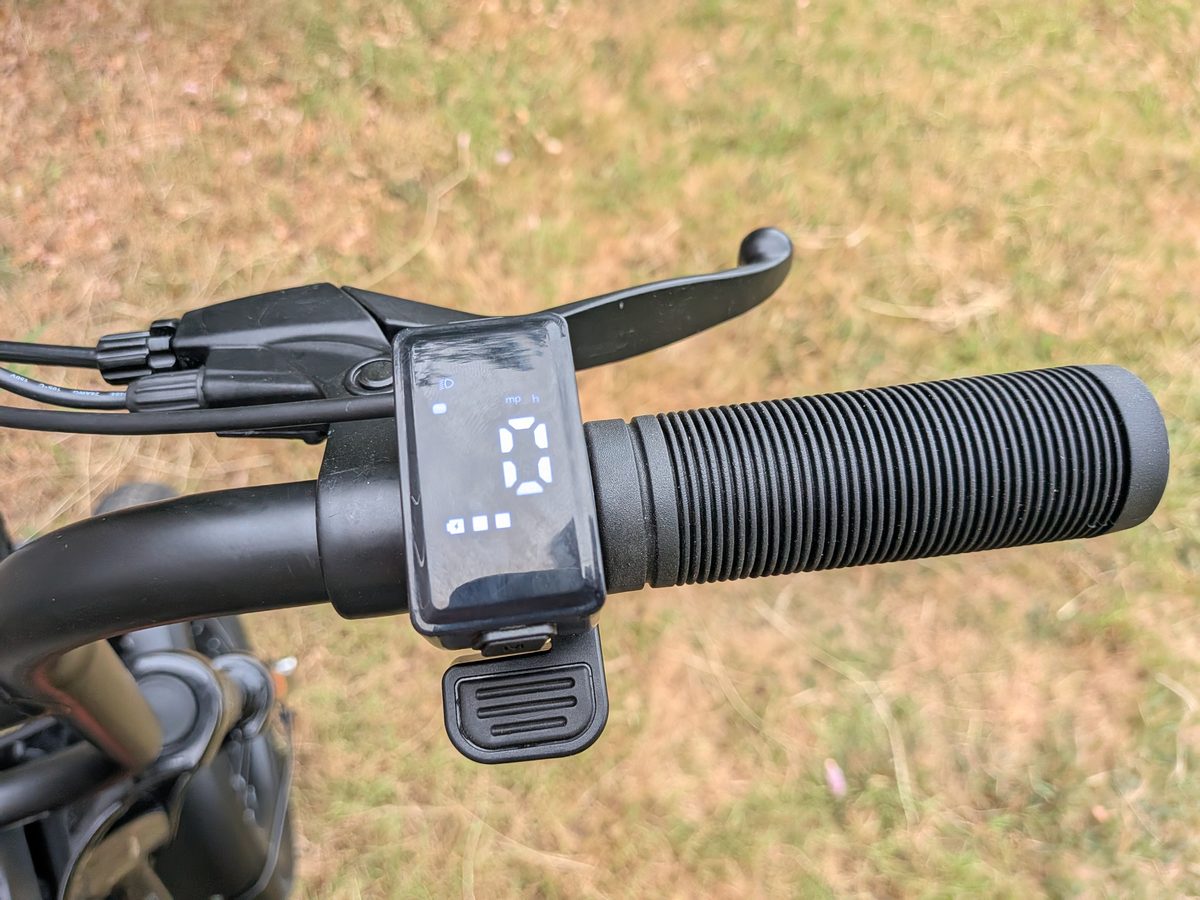
Controls sit on the right: a compact display with a power button on top, pedal assist level along the top edge, speed in the center, and battery capacity along the bottom. Press the lower button to cycle through assist levels one, two, and three, and hold it to toggle the lights. Gotrax lists a twist throttle on its product page. The bike we received has a right-hand thumb throttle, which is what you see in the video and the photos here. Worth knowing if the throttle style is a deciding factor for your rider.
Single-Speed Drivetrain and Cadence Sensor
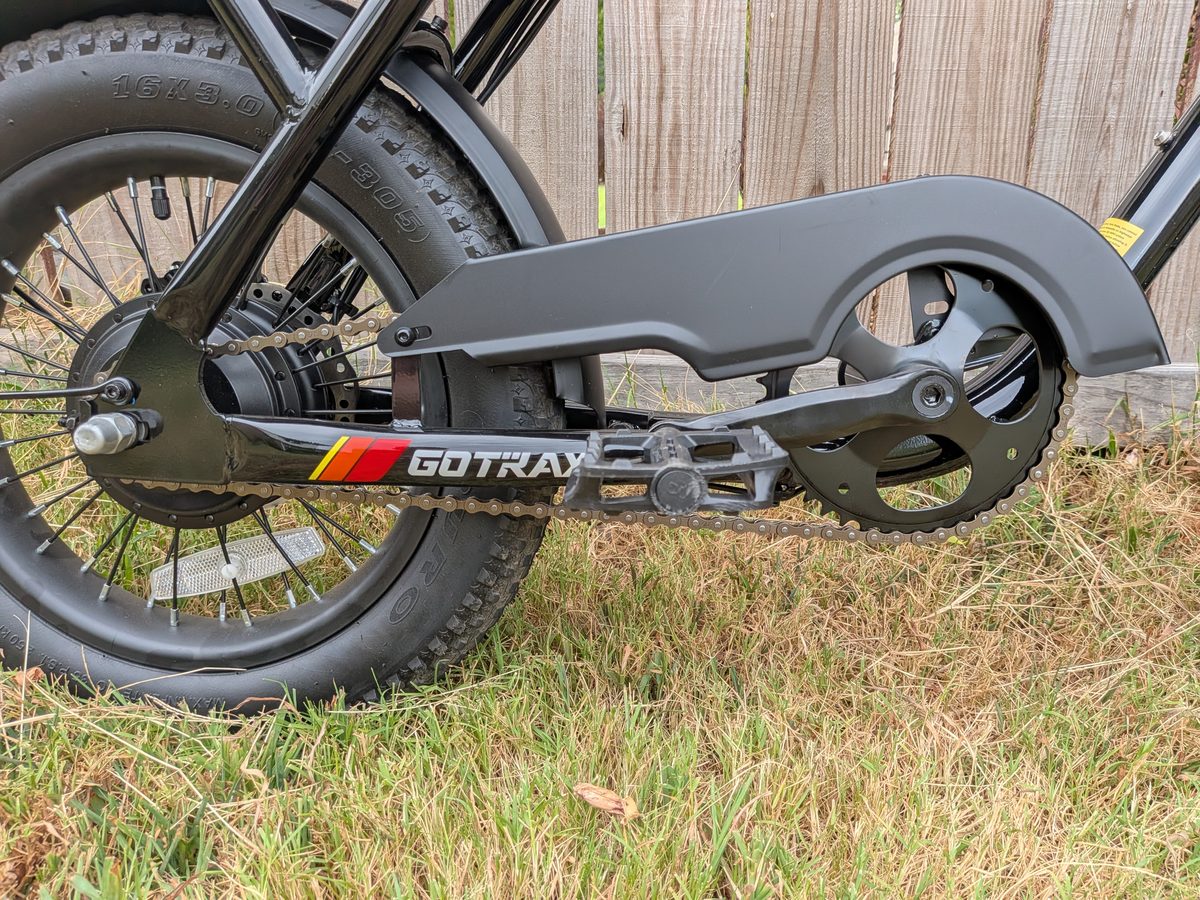
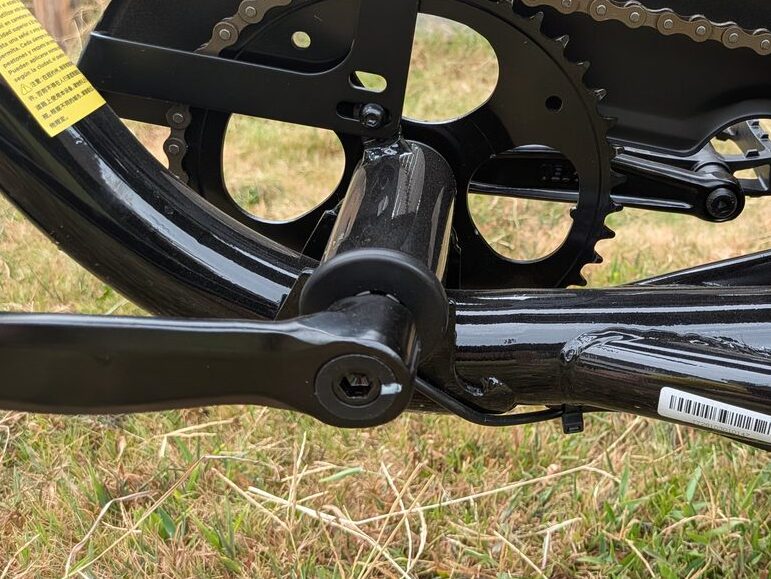
This is a single-speed setup and uses a cadence sensor alongside the motor. The gearing runs tall, which means that first half pedal stroke from a standstill takes some leg muscle. Power engages like an on/off switch and pushing into the pedals harder does not change the output. The cadence sensor reads when you pedal, then requests consistent power determined entirely by the assist level you choose.
Frame, Fit, and Who Actually Fits
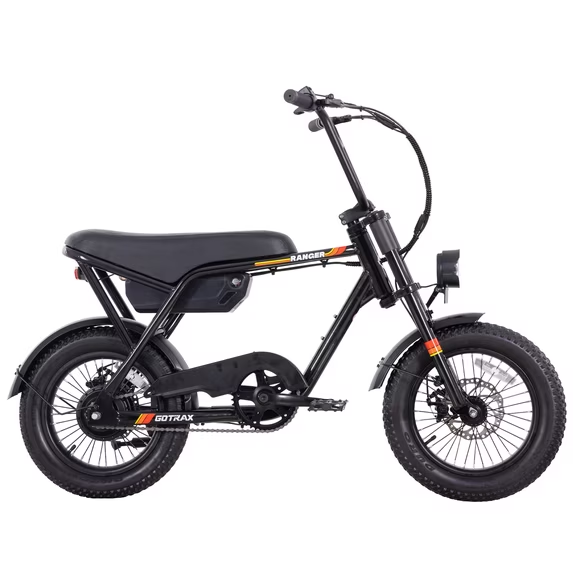
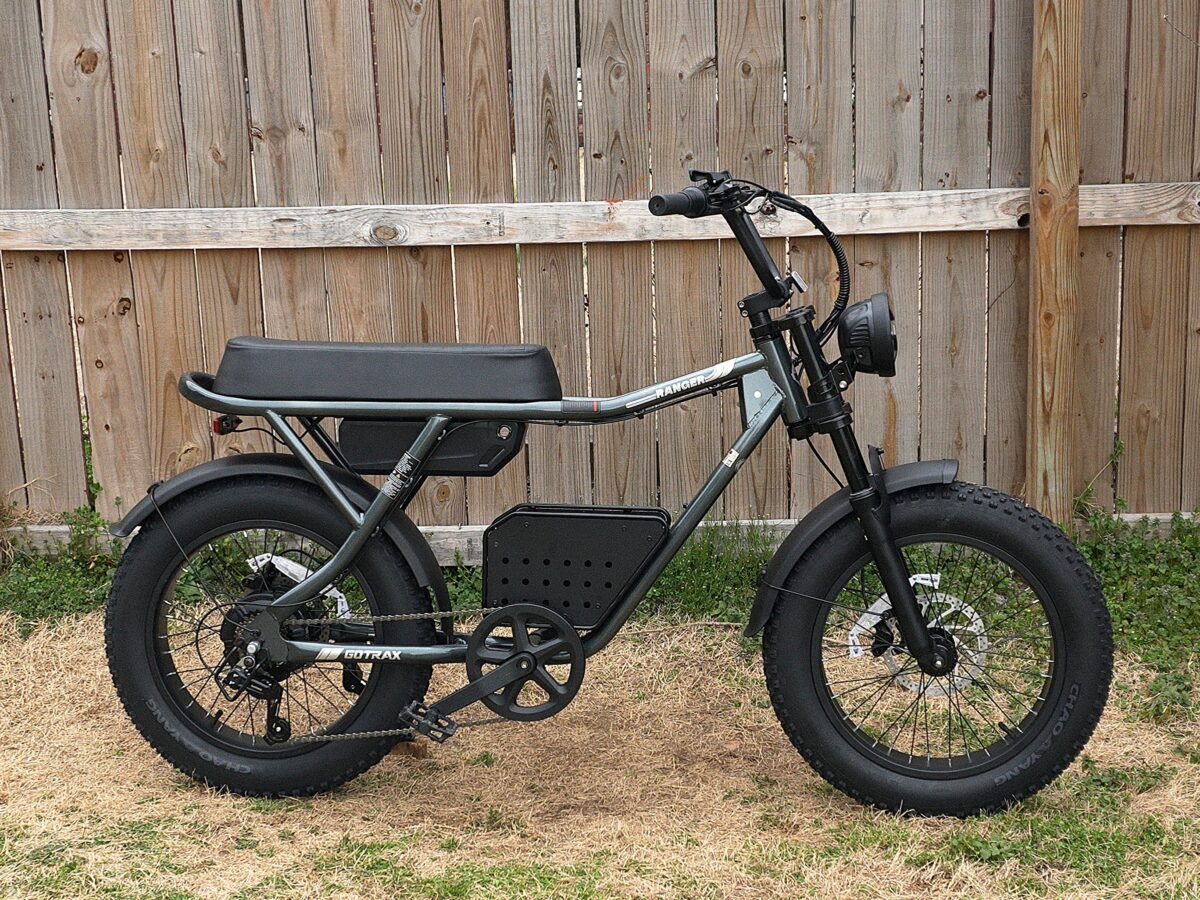
High-carbon steel explains the weight. Gotrax lists the Ranger 16 at 56.9 lb. Some kids and young adults handle that without thinking about it. If this bike tips over onto a smaller rider, it is going to hurt. The only sizing information Gotrax provides is the 165 lb rider weight limit. Seat height is the spec to check before you buy. You are looking at roughly 27 inches, so take an inseam measurement to make sure the rider will fit. Our six-year-old was not close. Older kids and teen riders we put on it fit well.
Gotrax Ranger 16 Specs
Here is a detailed look at the components and technical specifications that make up the Gotrax Ranger 16.
Gotrax Ranger 16 Performance
Every number below comes from our own GPS and Strava data with a 145 lb rider aboard. A heavier rider will see slower climbs and shorter range than what follows.
Throttle-Only Acceleration
You cannot launch from a dead stop on the throttle. Pedaling has to register first, so the routine is an awkward half rotation and then thumb down. From there acceleration is steady rather than urgent: 9, 13, 15, then a slow crawl through 17 and 18 before GPS settled at 19 mph with a slight downhill helping. The display claimed 20. Nobody is setting acceleration records, and that is the design intent. If your rider gets stopped on this bike, it is a legal class 2 ebike with a 350W motor, which is a meaningfully different conversation than the one you have on a 40 mph moped build.
Throttle modulation is better than we expected. Hold your thumb partway down and you can sit at a steady 11 mph instead of getting an on/off switch. Throttle power is also identical in every assist level, so a rider in level one can still reach 19 or 20 mph on the thumb alone.
Pedaling Performance
We tested the pedaling, even though our six-foot test rider felt goofy. A shorter rider will have a far easier time of it, but the seated moped position still makes it challenging to put a lot of weight over the pedals. Level one gives you a small nudge, right around 6 mph, and it is a genuinely useful setting for a new rider. Level two lands in the 13 to 15 mph window and puts you close to ghost pedaling. Level three takes you straight to 19 mph, at which point you are along for the ride. Most kids are going to take that one pedal stroke and then live on the throttle. The pedal assist experience is what a basic cadence sensor delivers, consistent power with an on/off switch feel when you start and stop pedaling.
Hill Climb Test
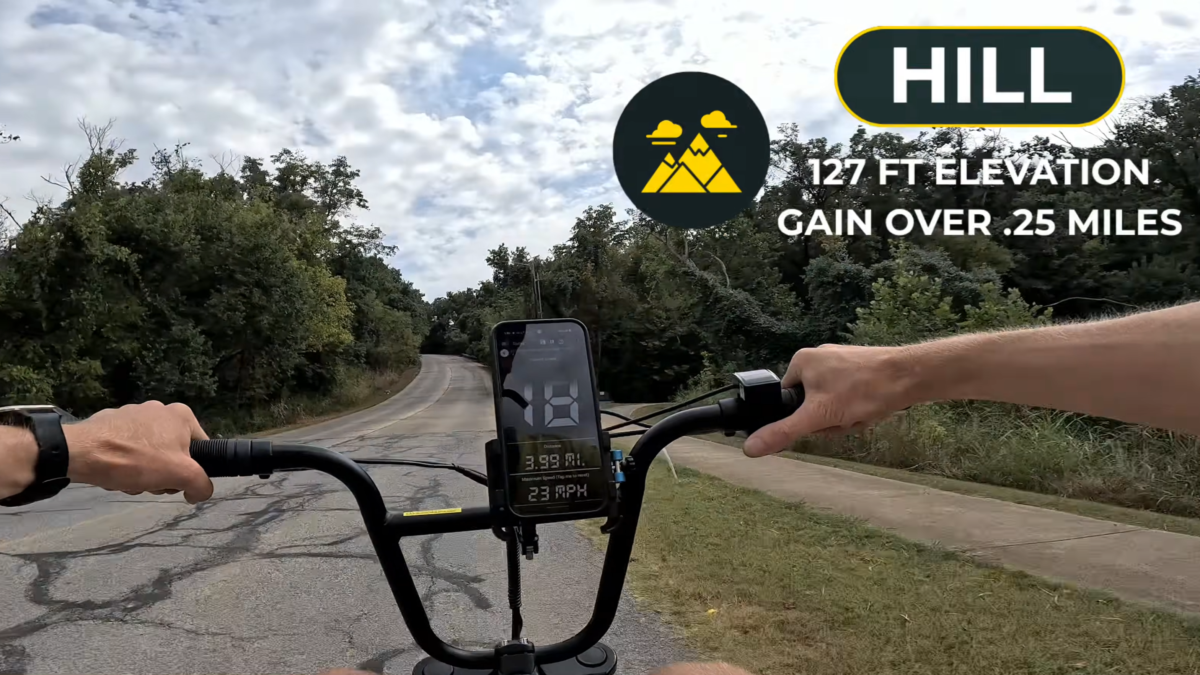
Our test hill is the steepest grade near where we live, and we did not go easy on it. We came in at 20 mph with the throttle pinned to give the motor the best possible chance. On throttle alone, the speed dropped immediately and we had to put a foot down. That part went how we expected. With pedal assist level three selected and the rider pedaling, the bike clawed back to about 5 mph and made it over the top, and our legs were nowhere near working hard enough to explain it. The trick is that tall gearing. As long as a rider can keep the cranks turning, the motor has more in reserve than the throttle-only run suggests.
The takeaway: unless you live somewhere genuinely mountainous, neighborhood grades are not going to defeat this bike as long as the rider pedals in level three. And after four miles, including that climb, the display still showed a full set of bars.
Braking
We ran up to 19 mph and grabbed both levers at a fixed marker. Stopping distance was reasonable, helped by the fact that 20 mph and a lighter rider do not add up to much energy to shed. The levers need a firmer pull than hydraulics, but there is real bite there even on 160 mm rotors.
Range Test
We tracked 8.66 miles with 491 feet of elevation gain, a 13.4 mph average, and a 25.4 mph max. At the end of it the display was still showing three bars. That was mostly aggressive riding, with the throttle pinned at 19 or 20 mph whenever the road allowed. Extrapolating from that, a 145 lb rider smashing the throttle at top speed the entire time should count on somewhere around 15 to 16 miles. A lighter rider who spends more time in the lower assist levels and less time at 20 mph will comfortably push into the low 20s, and a really conservative rider could approach 30. That puts the 40-mile badge on the product page out of reach for the riding this bike will actually see. The 24-mile figure further down that same page is the one to plan around.
Gotrax Ranger 16 vs. the Full-Size Gotrax Ranger
If your rider is a larger teen or an adult, this is the wrong Ranger. The full-size Gotrax Ranger steps up to a 500W motor, a 48V 10.4Ah battery, hydraulic disc brakes, 20 x 4-inch tires, a 7-speed drivetrain, and a dual-crown suspension fork for around $899. It is one of the better budget picks in the moped-style category, and it carries a payload capacity up to 264 lbs that actually accommodates an adult.
Cross-shopping outside the brand, the closest comparison most people land on is the Lectric XP Lite 2.0, which starts at $799 and brings a folding frame, an adjustable seatpost, and an adult-appropriate payload rating. That extra spend buys a bike the whole family can share. This one buys a bike that fits one specific rider very well.
Pros and Cons
Here is how the Gotrax Ranger 16 scored across our three review categories, along with the strengths and the rough edges we found during testing.
Final Thoughts: Who is the Gotrax Ranger 16 For?
With kids and ebikes in the news constantly right now, a legal, speed-limited, 350W class 2 ebike strikes us as a great answer for safely introducing younger riders to electric moped-style bikes. The styling will land with kids, and at $499, the class 2 speed limit and the price will land with parents. Mechanical disc brakes and a single-speed drivetrain are the compromises that come with ultra-budget territory, and there are two more worth knowing: you have to pedal before the throttle engages, and the seat height is fixed at roughly 27 inches. Measure your rider’s inseam, check them against the 165 lb payload limit, and check your state’s rules, since some restrict class 2 ebikes to riders 16 and older. Clear those three and $499 buys a lot of bike here.
Picking up a Gotrax ebike? Use our link before you buy. It is free and it helps support the channel and the site. Thanks. Check Current Price at Gotrax or Check Current Price at Walmart
