

Monarc isn’t a rival to Lectric so much as a sibling. Lectric started the brand, and a lot of the people who helped build Lectric into what it is today went on to build Monarc and the Tracer. That turns this comparison into a question of tiers from the same family: the Lectric XPress 2 at $1,399 or the Monarc Tracer at $1,899 at the time of writing. Both are 27.5-inch, Class 3 capable commuters with 750W rear hub motors, 85 Nm of torque, hydraulic brakes, suspension forks, and switchable torque and cadence sensors. What the extra $500 buys is a second battery and a fast charger in the box, a 9-speed Shimano Cues drivetrain, 4-piston brakes, a touchscreen with per-level motor tuning, a MIK-compatible rack, and a five-year warranty.
We rode both bikes back to back with the same rider for this comparison, running a brake test, throttle acceleration from a stop, low-speed pedal assist, cruising at 28 mph, and a short detour across grass. Below, you’ll find where that extra money goes, how the four frame options fit, what we saw on the road and on our test hill, how the two brands compare on support and warranty, and which rider each bike suits best.
If you plan to buy either bike and our testing has been helpful, consider using our affiliate links for the Lectric XPress 2 or the Monarc Tracer. It costs you nothing extra and directly supports hands-on testing like this. Thank you!
Lectric XPress 2 vs Monarc Tracer Video Comparison
Our video puts both bikes side by side with close-ups of the components and frames, our brake and acceleration tests, and first-person riding at low speed, at 28 mph, and over grass. If you want to go deeper into either bike’s settings, our Monarc Tracer review and Lectric XPress 2 review cover each one in full.
Lectric XPress 2 vs Monarc Tracer Specs
Here’s how the two bikes line up on paper. Specs are each brand’s listed figures, plus the weights we measured on our scale.
| Spec | Lectric XPress 2 | Monarc Tracer |
|---|---|---|
| Price | $1,399 | $1,899 |
| Motor | Lectric M24 rear hub, 750W nominal / 1,310W peak | Bafang B750 rear hub, 750W nominal / 1,638W peak |
| Torque | 85 Nm | 85 Nm |
| Class / Top Speed | Class 1/2/3, 28 mph | Class 1/2/3, 28 mph |
| Battery | One 48V 14Ah (672Wh) | Two 48V 15Ah (720Wh each), one used at a time |
| Claimed Range | Up to 60 miles | Up to 65 miles per battery |
| Charger | 2A, about 7 hours from empty (5A optional) | 5A included, about 3 hours from empty |
| Sensors | Switchable torque / cadence | Switchable torque / cadence |
| Display | Detachable 3.5-inch color TFT, 5-button pad | 3.5-inch touchscreen with Bluetooth |
| Drivetrain | Shimano Altus 8-speed, 46T, 11-32T | Shimano Cues 9-speed, 48T, 11-36T |
| Brakes | Star Union 602, 2-piston hydraulic | Star Union Talon P4, 4-piston hydraulic |
| Rotors | 180mm front and rear | 203mm front / 180mm rear |
| Fork | SR Suntour XCM 32, preload and lockout | Gneiss reverse-arch, 80mm, preload and lockout |
| Tires | 27.5 x 2.1-inch street tread | Kenda K-RAD 27.5 x 2.2-inch, checkerboard tread |
| Rear Rack | 30 lb capacity | MIK-compatible, 59 lb capacity, integrated lights and turn signals |
| Weight (advertised) | 63 lb | 71 lb Step-Thru / 73 lb High-Step |
| Weight (our scale, with battery) | 72 lb | 74.8 lb Step-Thru |
| Standover Height | 18.5″ Step-Thru / 29″ Step-Over | 22.6″ Step-Thru / 31.4″ High-Step |
| Rider Height | 5’2″–6’3″ Step-Thru / 5’4″–6’4″ Step-Over | 5’2″–6’3″ Step-Thru / 5’4″–6’4″ High-Step |
| Payload | 330 lb | 330 lb |
| Warranty | 1 year | 5 years on the bike, 1 year on batteries |
Where the Extra $500 Goes
Two Batteries and a Fast Charger
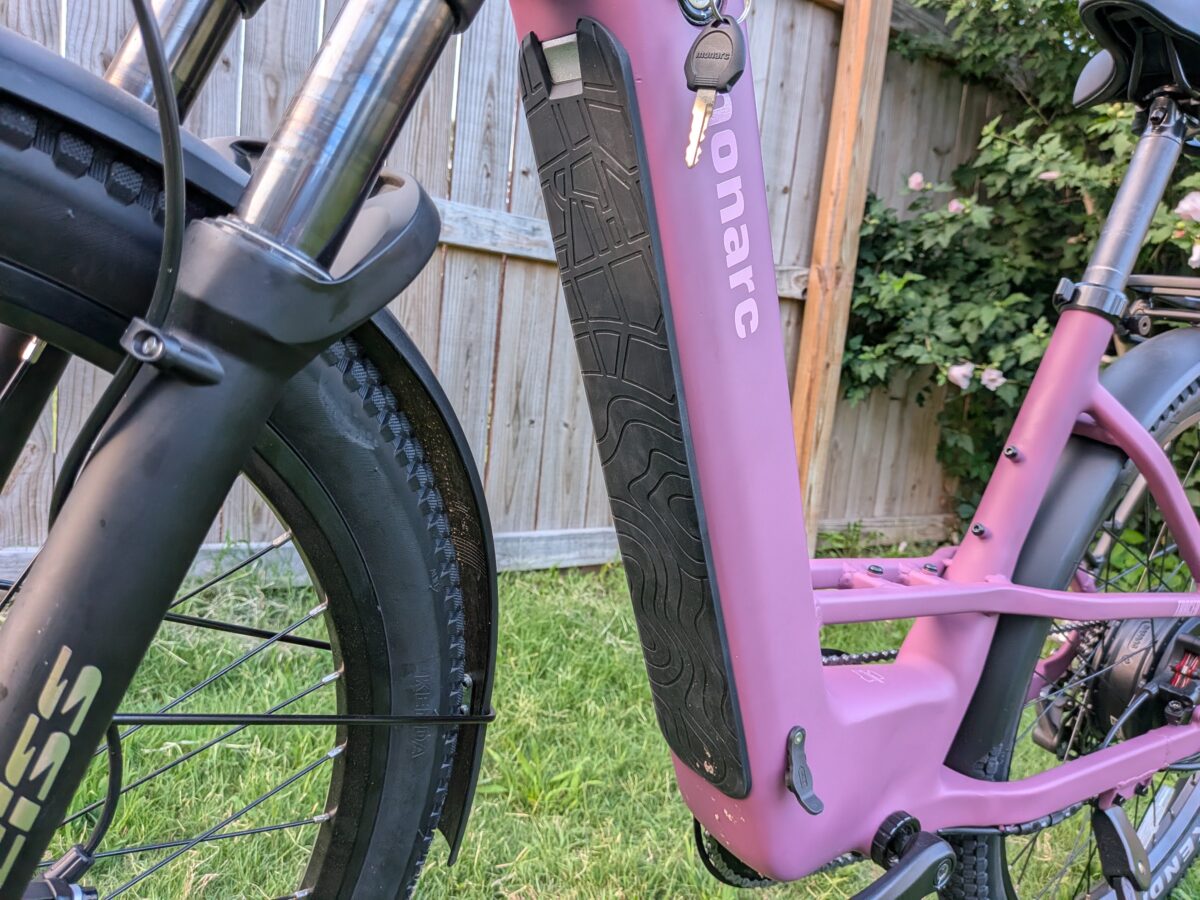
The headline difference is what’s in the box. Every Tracer ships with two 48V 15Ah batteries, and Monarc does the same with its fat tire Marker. You can add a spare battery to the XPress 2, which brings it to around $1,800, so once both bikes have two batteries, the price gap shrinks to roughly $100. Only one battery runs at a time on the Tracer, and we got 37 miles out of a single pack in our range test, so the spare is there to double your range on long days, to keep a full pack waiting at home when you forget to top off after a ride, or simply to spare you from shopping for a replacement years down the road. The XPress 2’s 14Ah pack is slightly smaller, but on one battery you should expect similar range from both bikes.
The charger is a smaller detail you’ll notice every week. Lectric includes a standard 2A charger that needs about 7 hours to fill an empty battery, while Monarc includes a 5A fast charger that does it in about 3 hours. With two batteries to keep topped up, that fast charger makes a real difference in how quickly you’re ready to ride again.
Drivetrain, Brakes, and Suspension
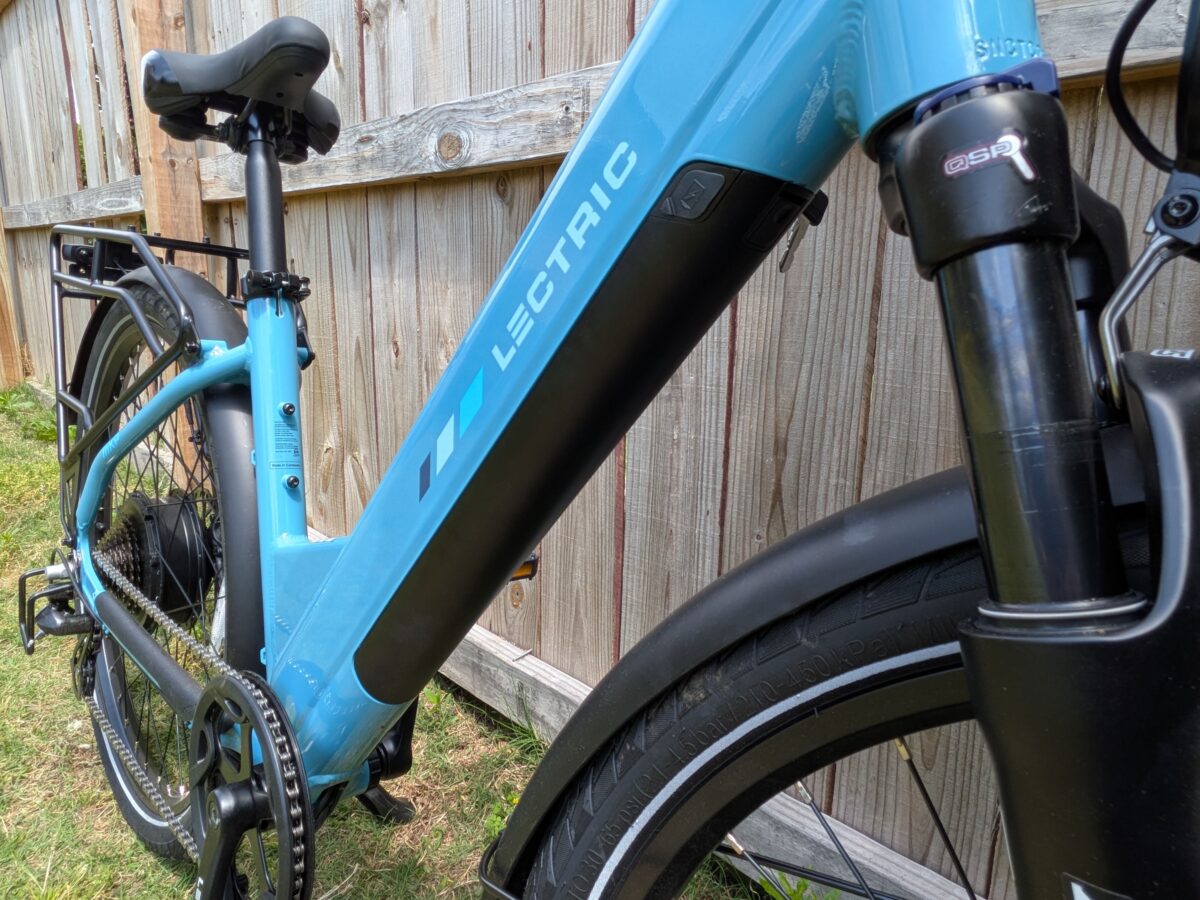
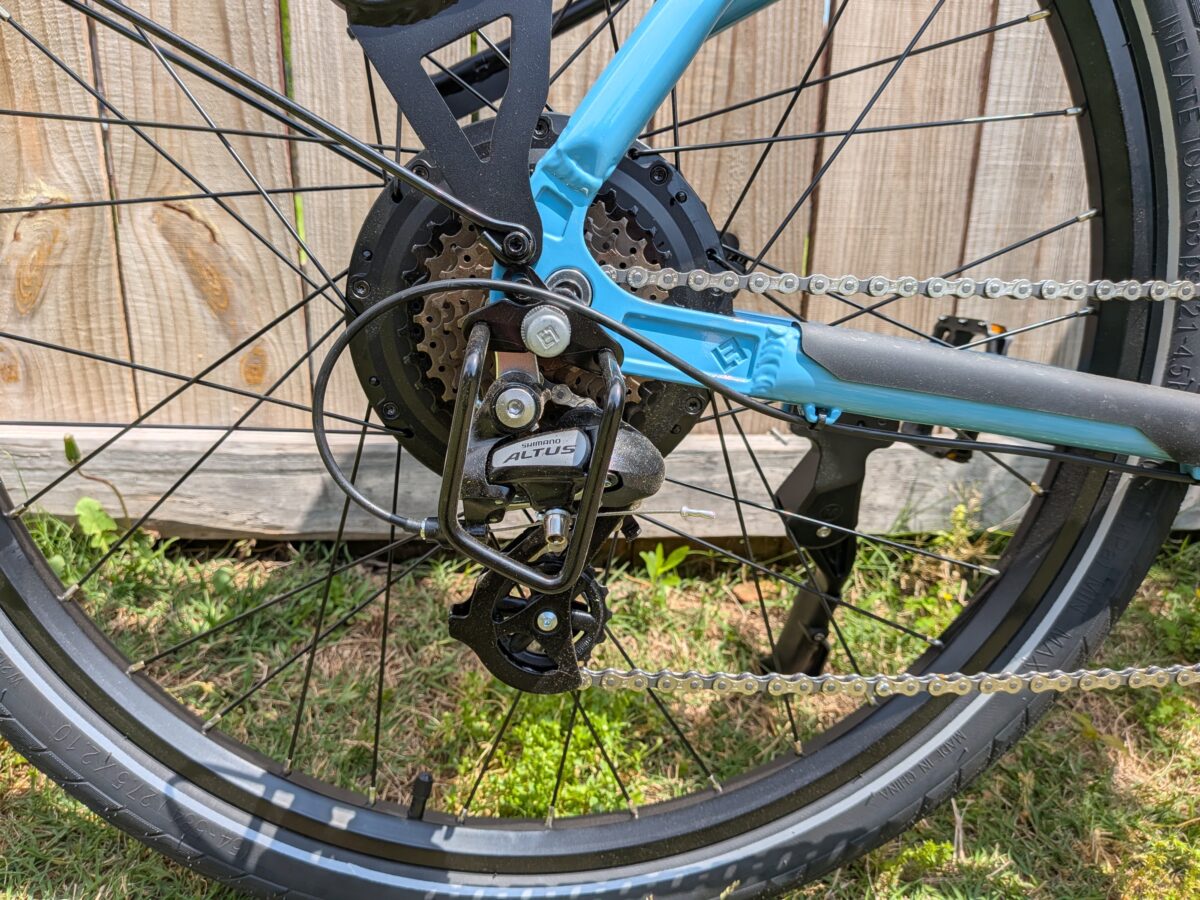
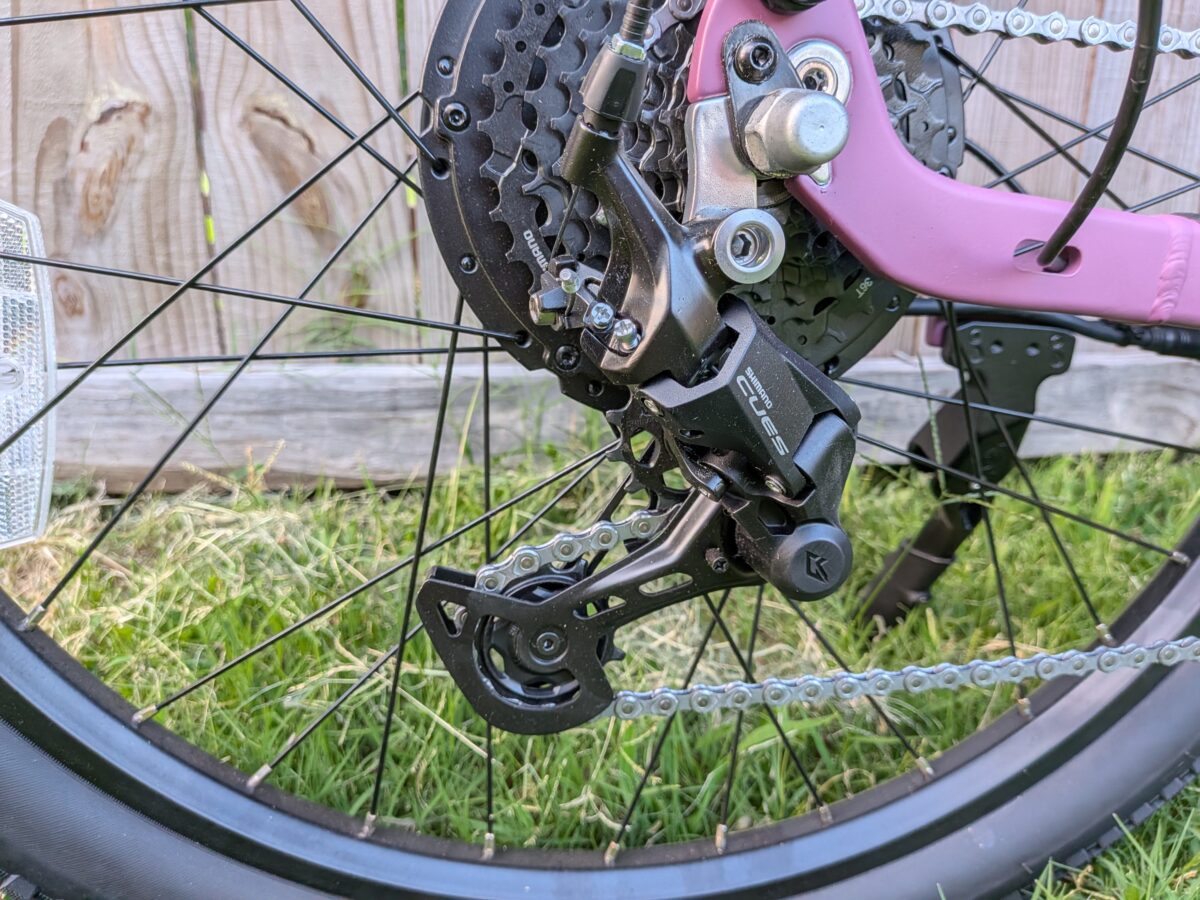
Components are where the price difference really shows up on the ride. The Tracer runs Shimano’s 9-speed Cues drivetrain with a wider 11-36T cassette, compared with an 8-speed Shimano Altus on the XPress 2, and the crisper shifting is something you’ll feel every time you ride, not just a line on a spec sheet. Braking follows the same pattern. Both bikes use Star Union hydraulic brakes, but the Tracer steps up to 4-piston Talon P4 calipers with a larger 203mm front rotor, while the XPress 2 uses 2-piston 602 calipers on 180mm rotors front and rear.
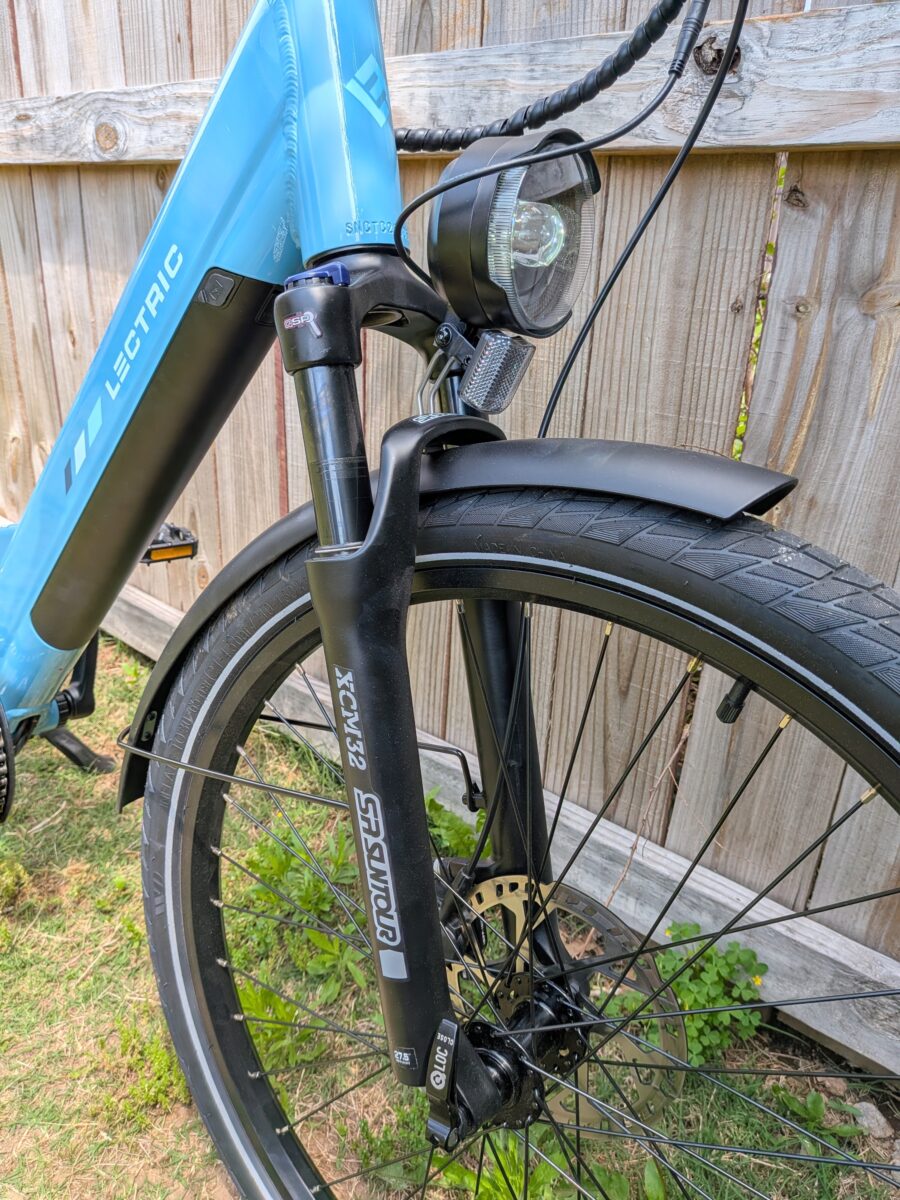
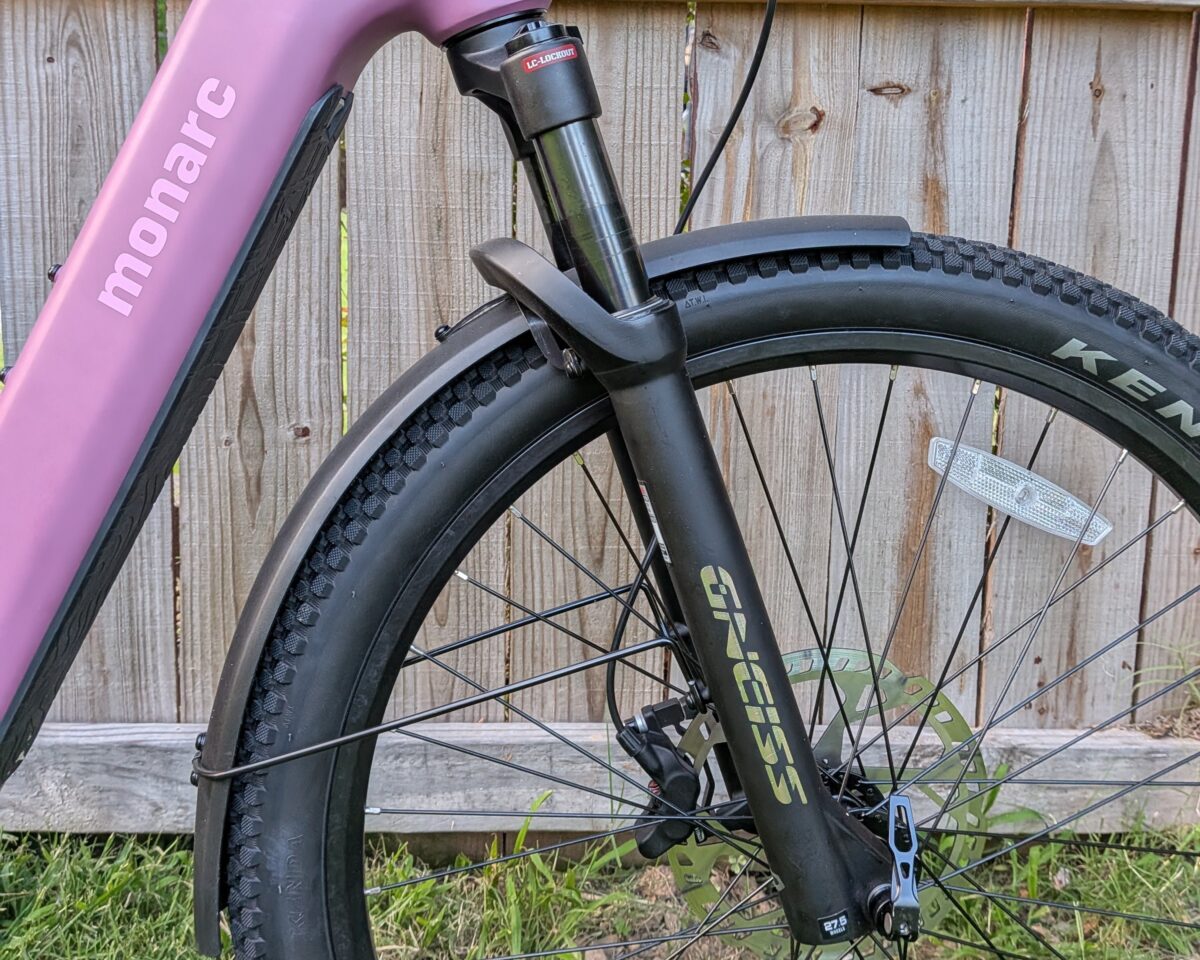
Up front, Lectric gives up less ground than you might expect. An SR Suntour XCM 32 fork with preload and lockout is rare on an ebike at this price, while Monarc went its own way with the Gneiss, a reverse-arch fork with 80mm of travel and the same preload and lockout adjustments. The motors are closely matched on paper. Both are 750W rear hubs with 85 Nm of torque, though the Tracer’s Bafang peaks higher at 1,638W against 1,310W from Lectric’s M24. The M24 earns its own point for running quieter than most of the hub motors we test.
Display, Motor Tuning, and Smart Accessories
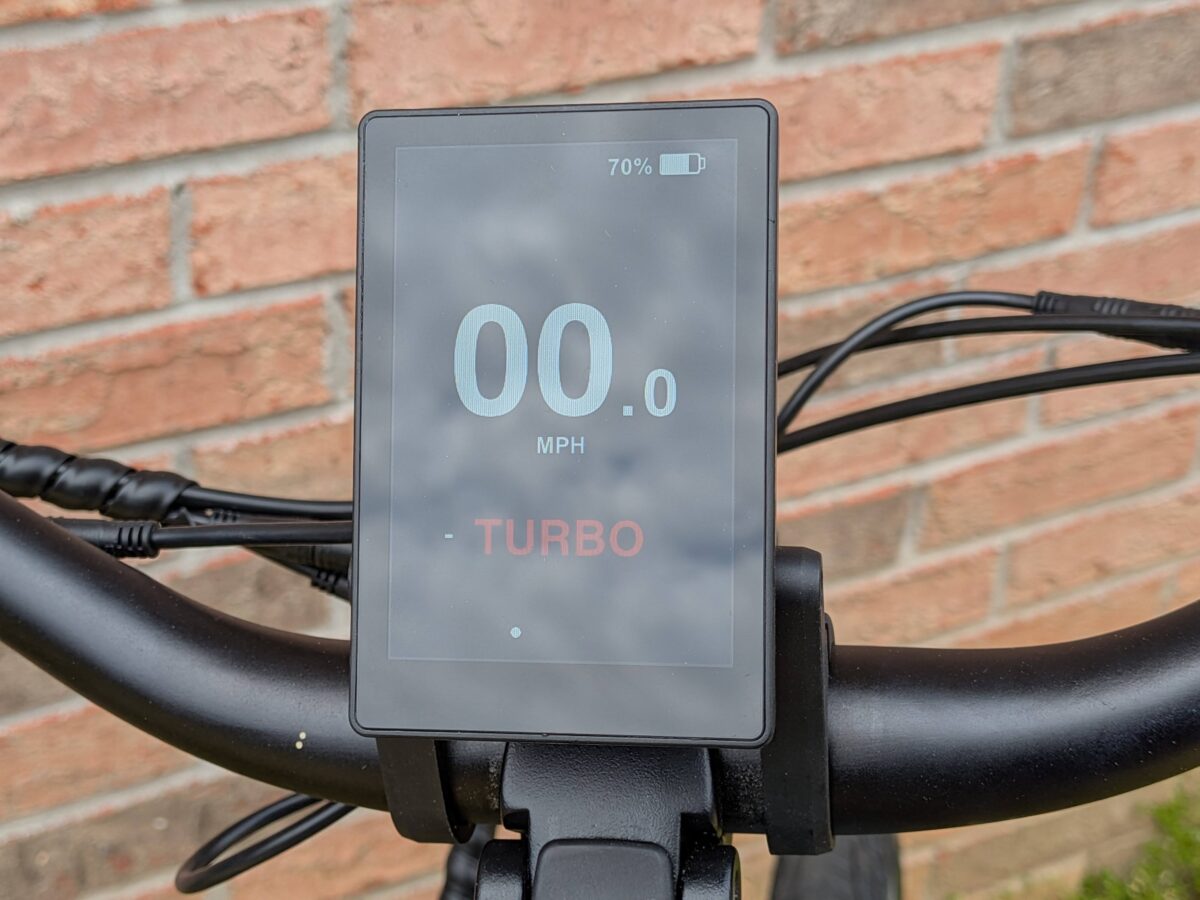
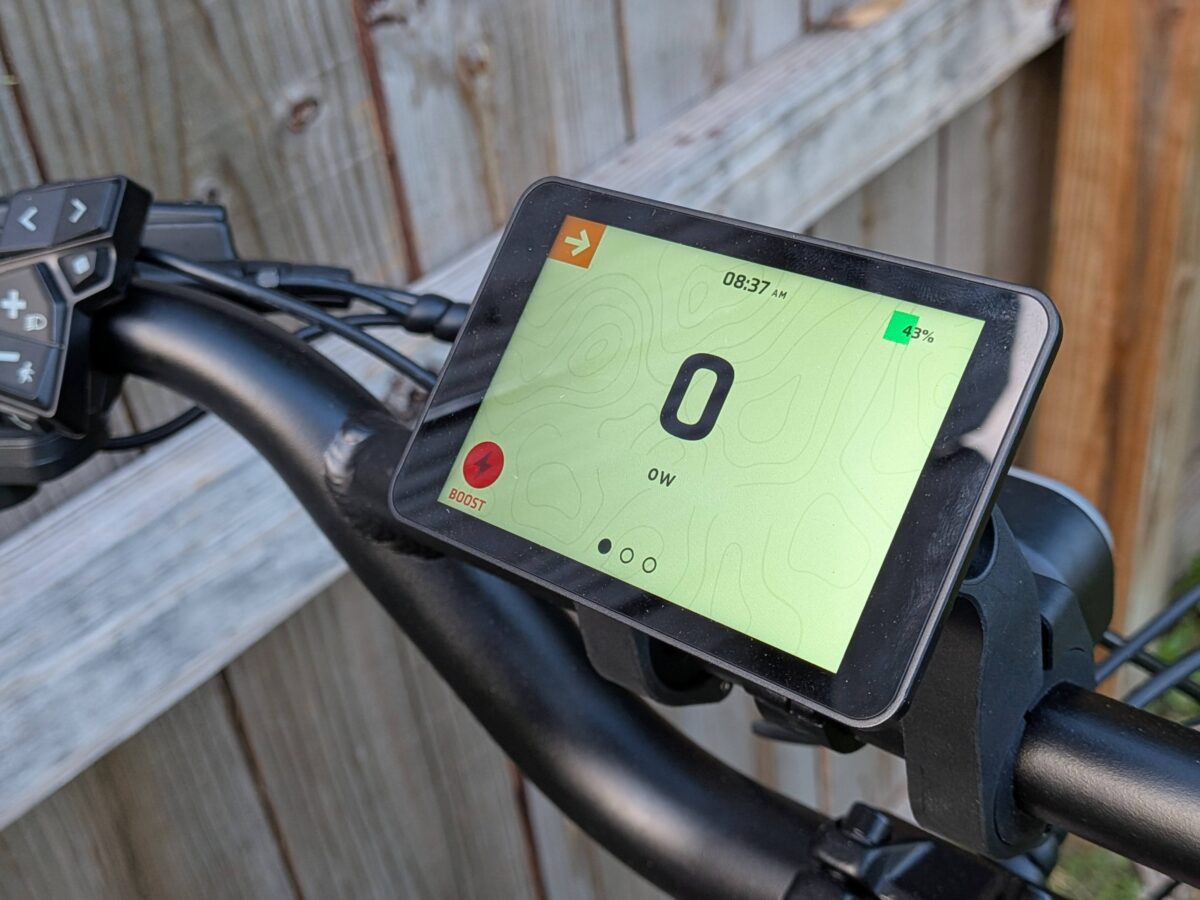
Tech is the other clear divider, though Lectric doesn’t leave you without options. The XPress 2 has an easy-to-read detachable color display, a five-button control pad, and a standard or increased torque multiplier that changes how much help you get in each pedal assist level, which is probably as much customization as most riders want. The Tracer’s touchscreen goes much further. Over Bluetooth, you can tune max torque, assistance, and pedal response for every individual pedal assist level, and Monarc’s recently launched app gives the brand a way to keep improving the bike after you buy it. The Tracer also links to Monarc’s smart accessories, including a tire pressure monitoring system, a rear-mounted radar, and a smart helmet that shows the bike’s turn signals on the back of your head.
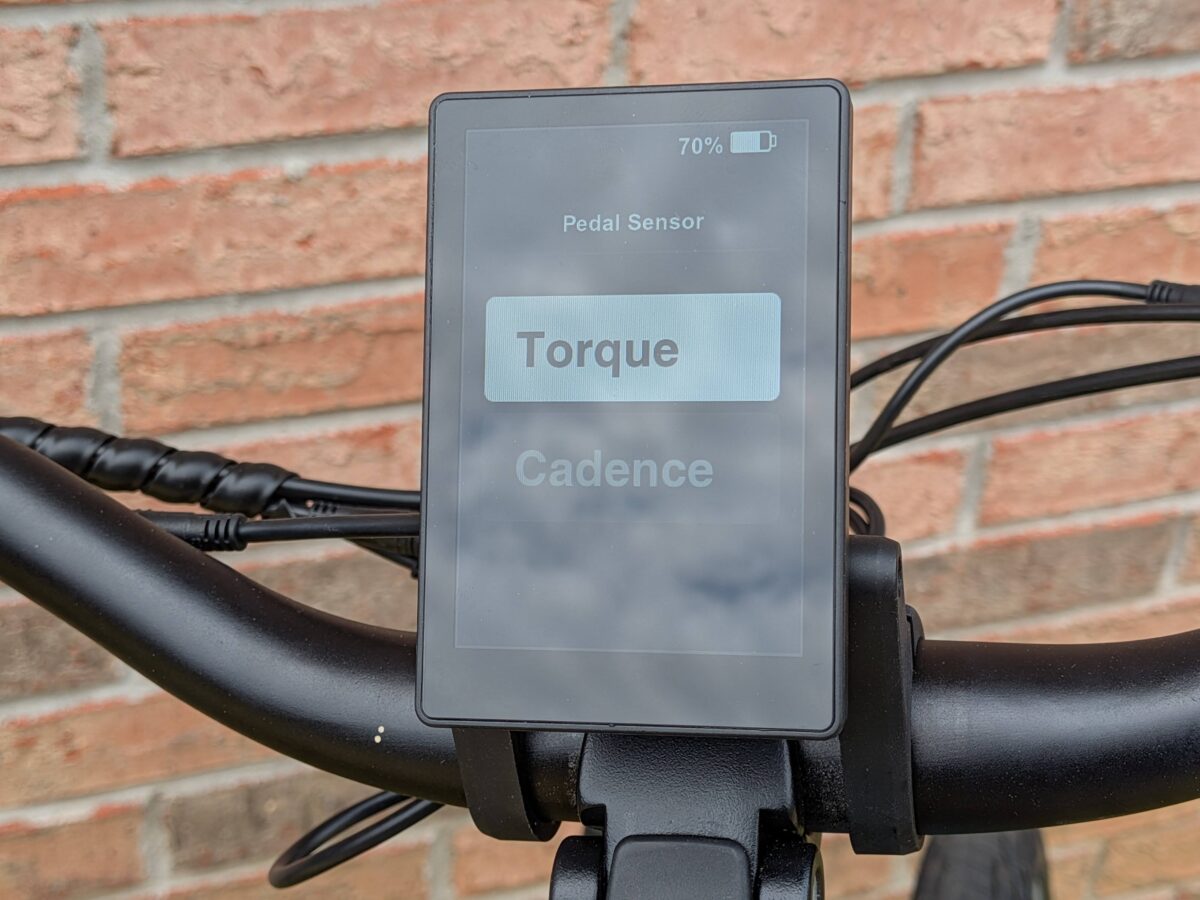
On both bikes, you can choose between the torque sensor and cadence sensor, and both let you decide whether the throttle is capped by your current pedal assist level or delivers full power in any level.
Rack, Fenders, and Commuter Kit
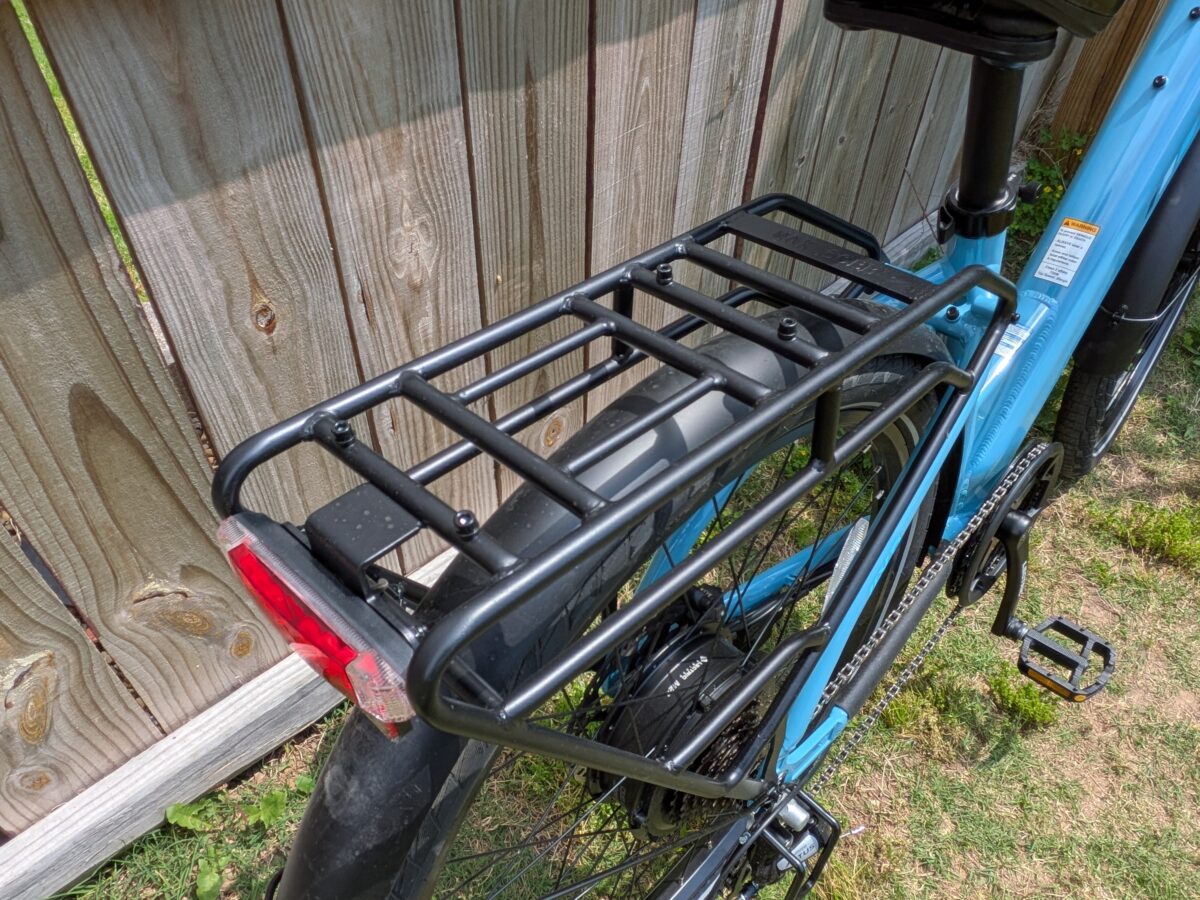
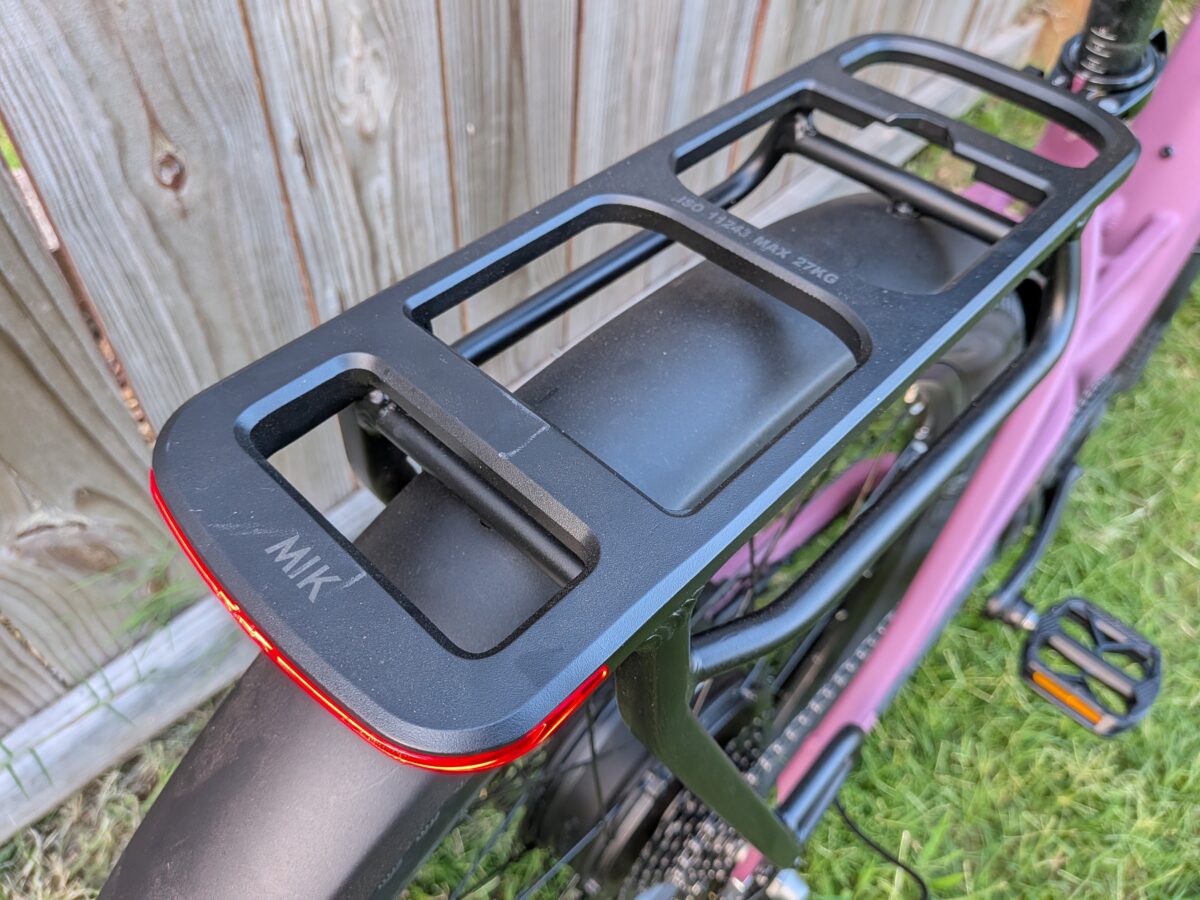
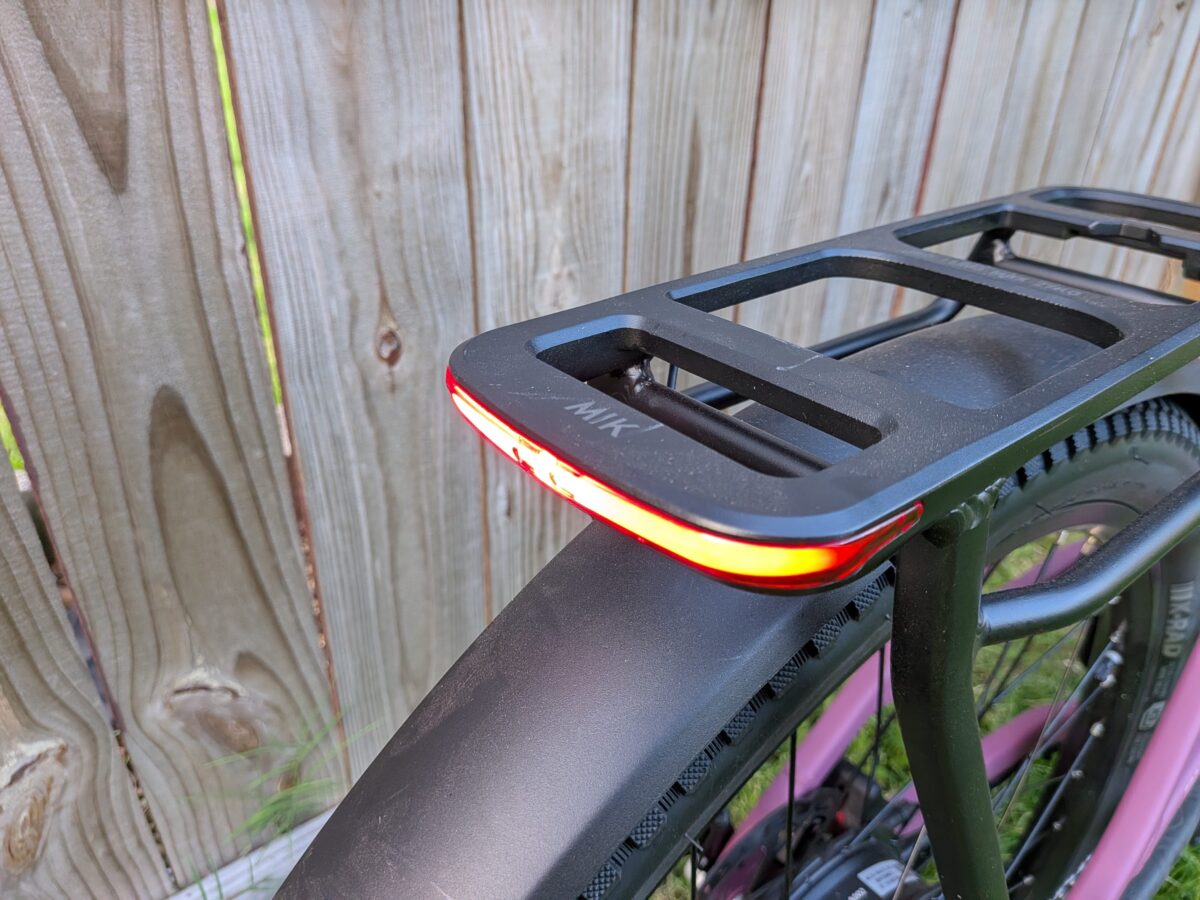
Both bikes arrive ready to commute with fenders, lights, and a rear rack, but the Tracer’s rack is the more useful of the two. It’s MIK-compatible and rated for 59 lb, with the taillight and turn signals built in, so MIK bags, baskets, and coolers simply snap into place without straps. We carry a wide range of MIK-compatible bags and baskets that fit it. The XPress 2’s 30 lb rack is perfectly functional, and Lectric sells a basket that mounts to it, but you don’t get that click-on compatibility. Assembly is about the same on either bike since both ship direct with a front thru-axle and quick-release pedals, and both brands post setup videos if you get stuck.
Frame, Fit, and Options
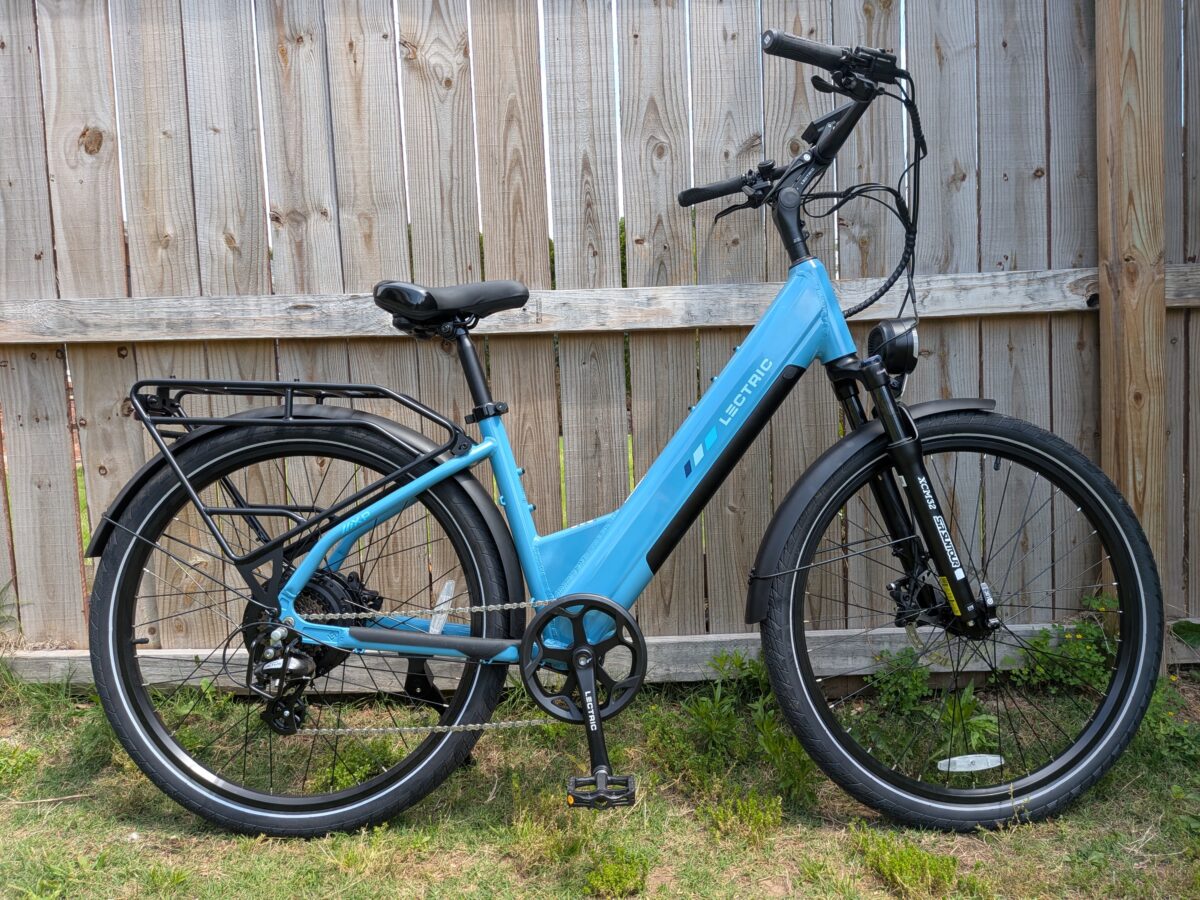
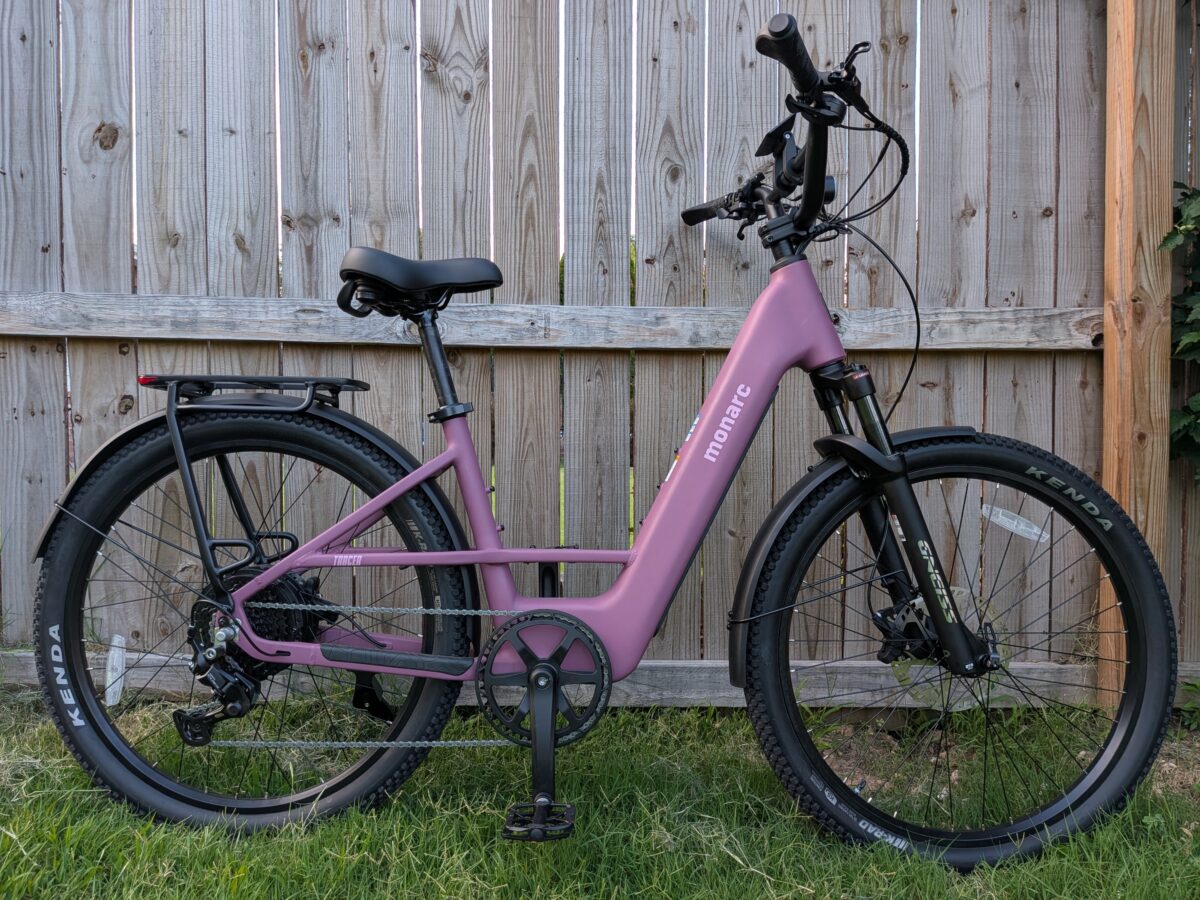
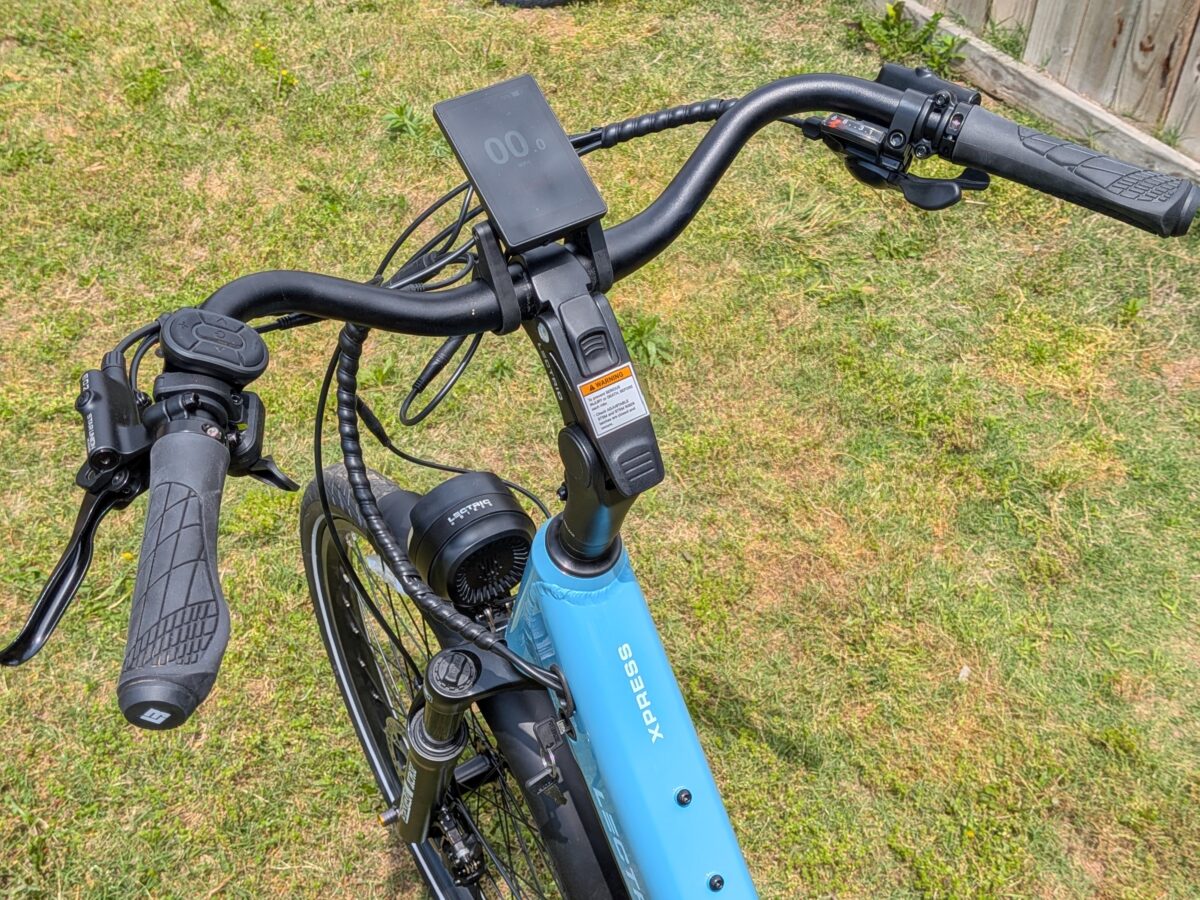
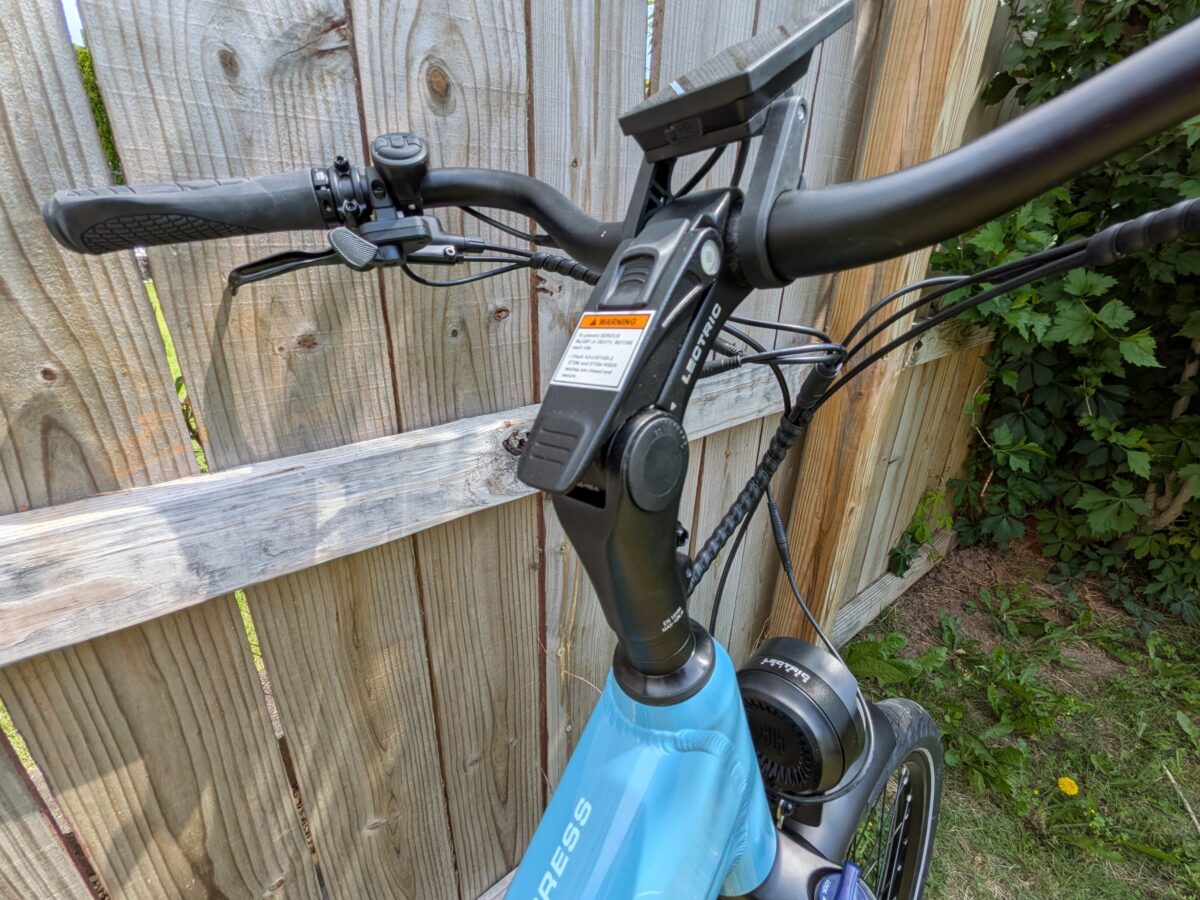
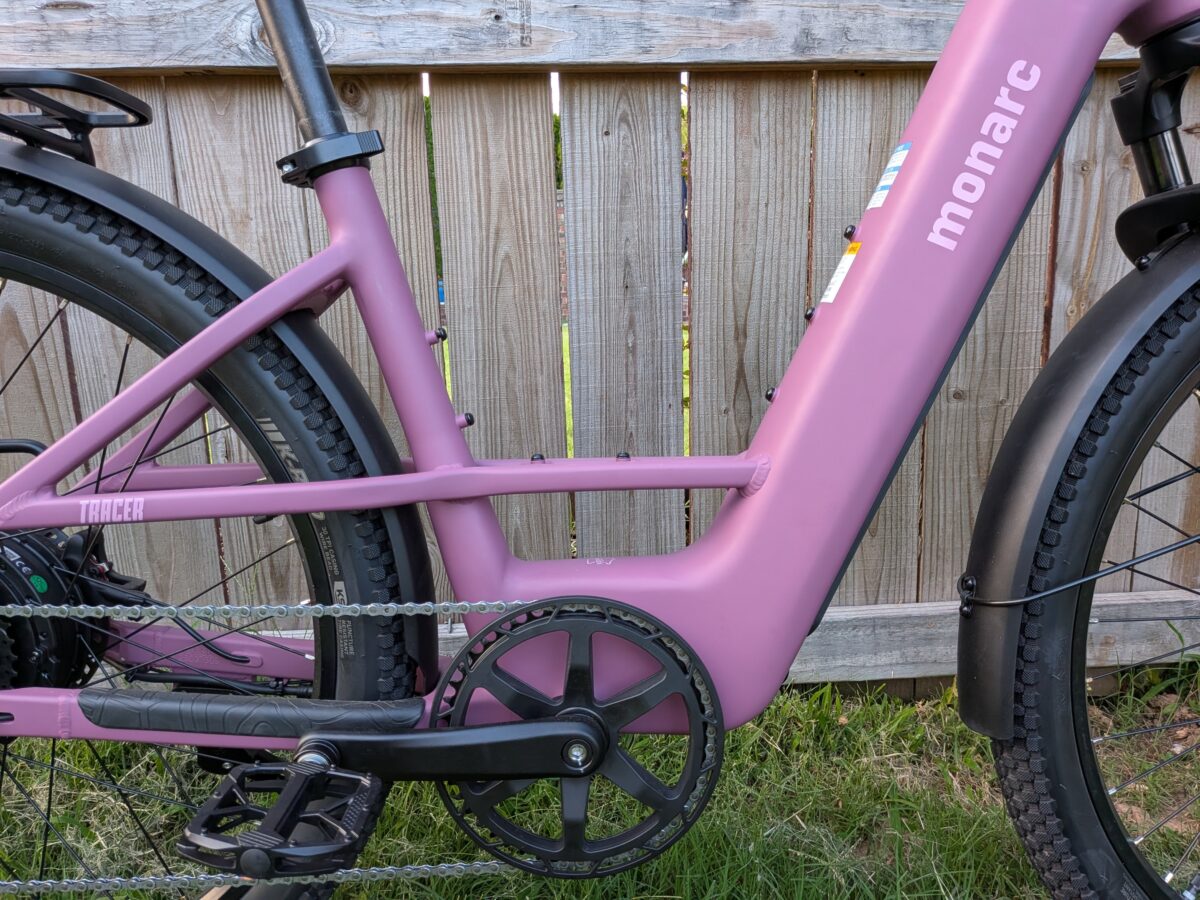
Each bike comes in a step-thru and a step-over (Monarc calls it the High-Step), so there are really four choices here, and the riding positions differ more than the spec sheet lets on. On the step-thrus, the XPress 2’s deeply swept-back cruiser bars put you fully upright, and its quick-release adjustable stem lets you drop the bars or pull them even closer, so you can dial in the fit as long as you like that style of handlebar. The Tracer step-thru uses BMX-style bars with a moderate sweep that leaves you a touch more forward, gives you plenty of room for mounting accessories, and felt more stable to us at higher speeds. The step-over XPress 2 and the High-Step Tracer both move to straighter bars, though the Tracer keeps its BMX look. Up close, the Tracer’s smooth welds give it the more finished appearance.
- Lectric XPress 2 Step-Thru: Stratus White, Raindrop Blue
- Lectric XPress 2 Step-Over: Pine Green, Tempest Grey
- Monarc Tracer Step-Thru: Birchwood, Juneberry
- Monarc Tracer High-Step: Superior Blue, Taconite
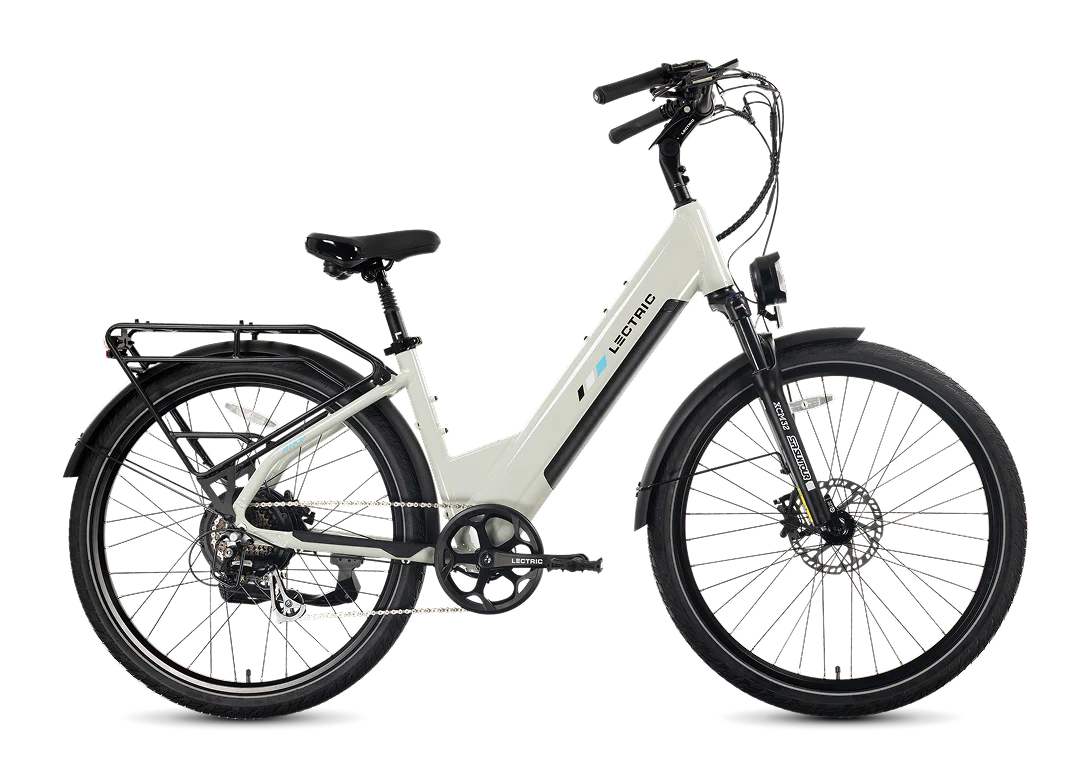
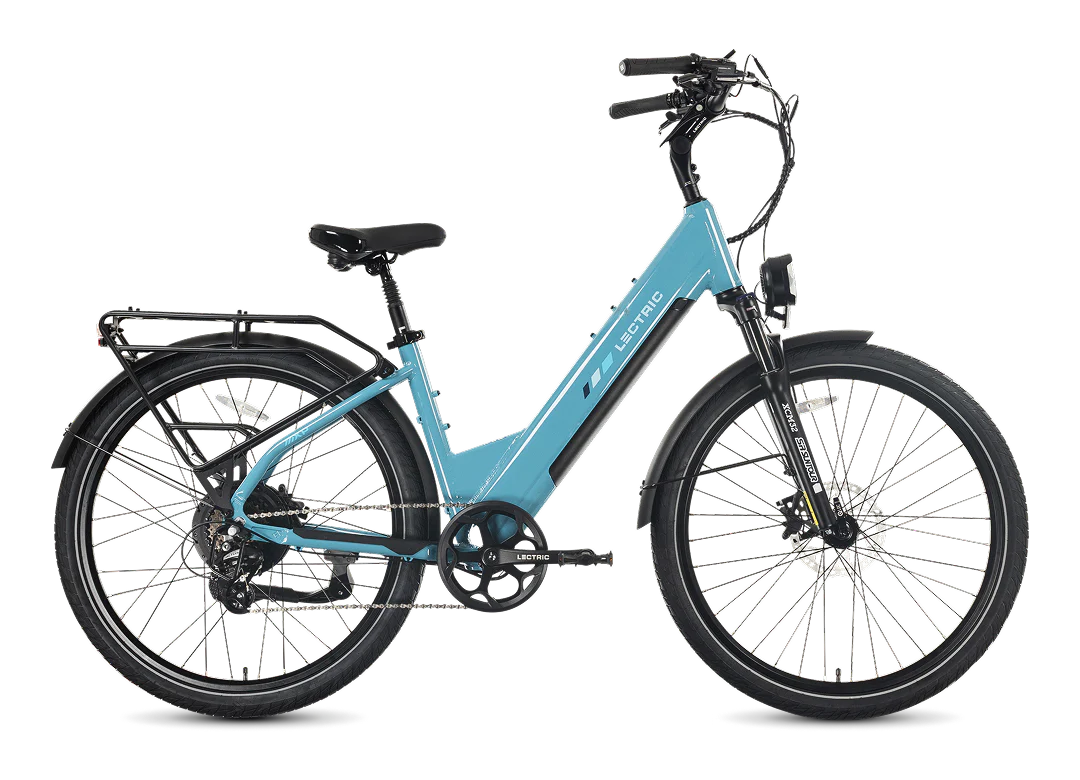
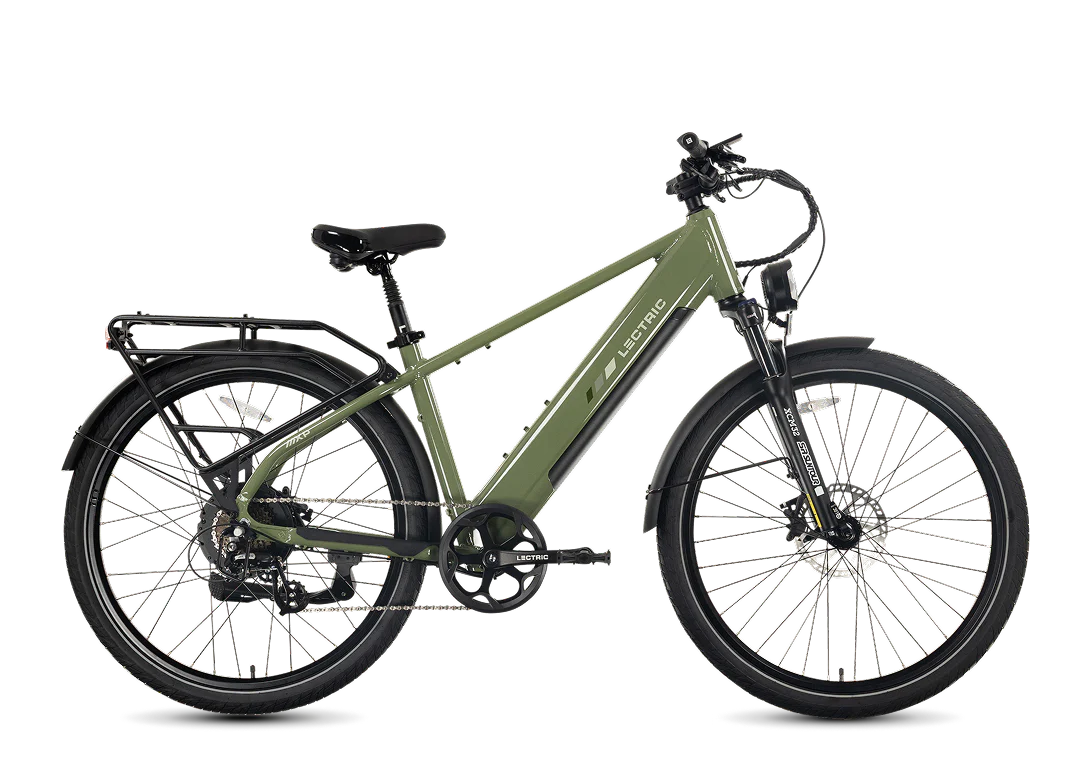
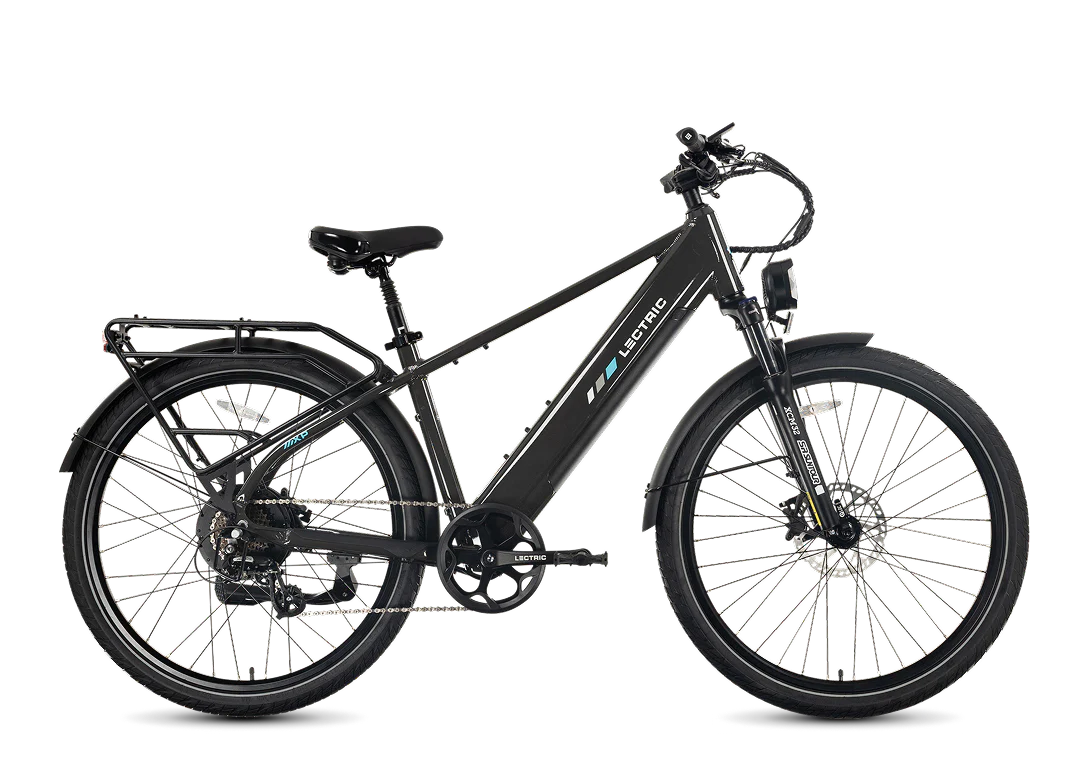
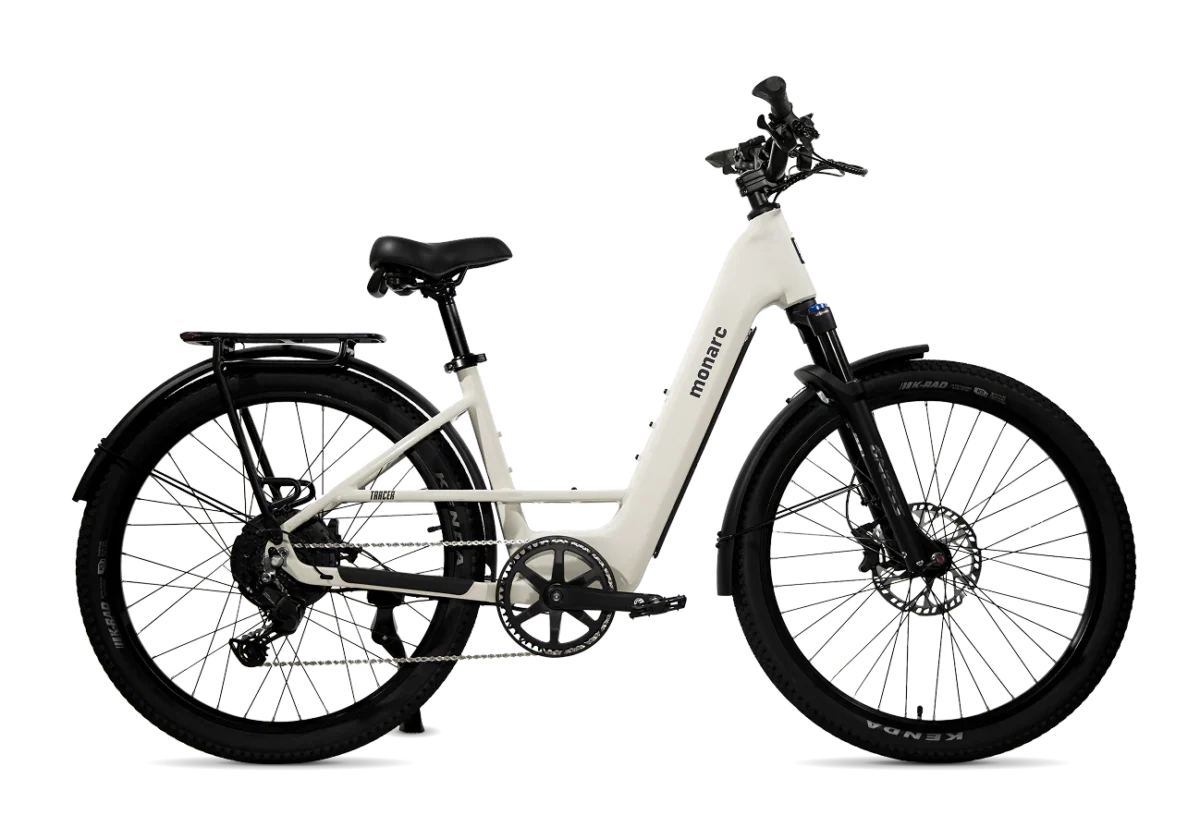
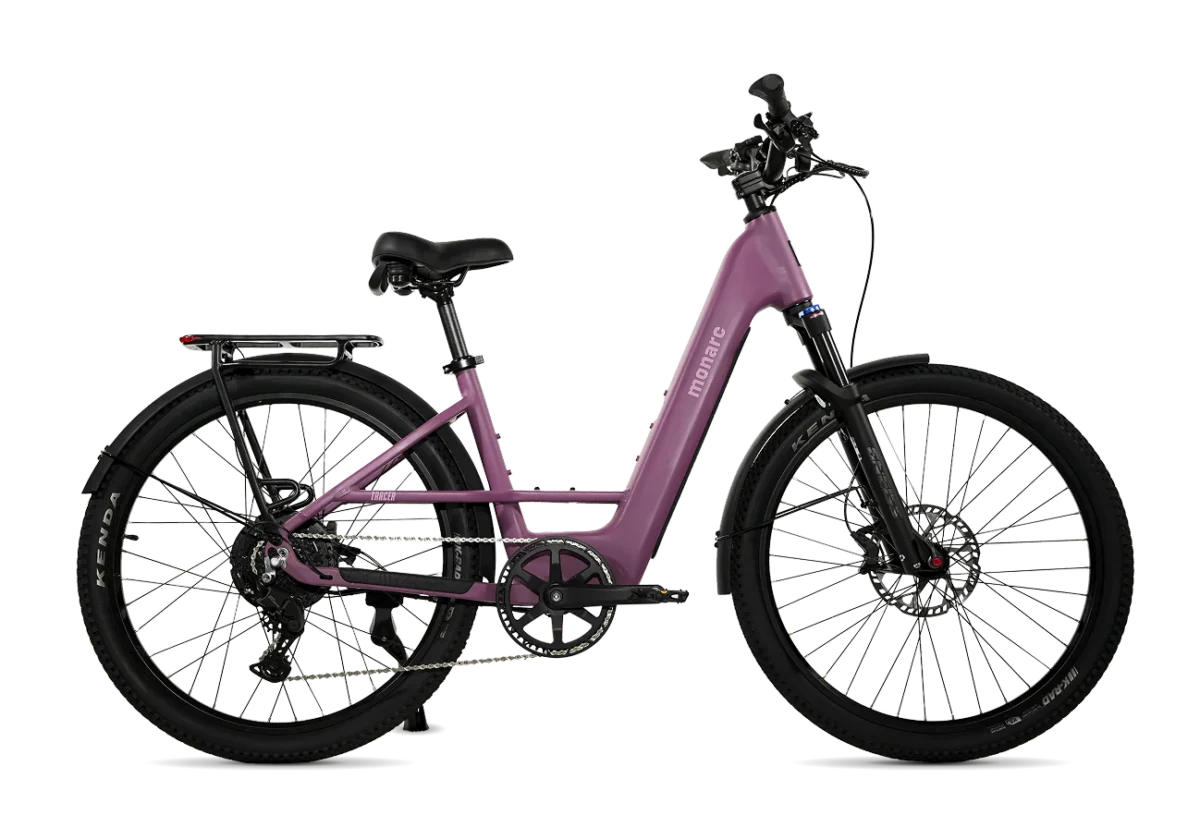
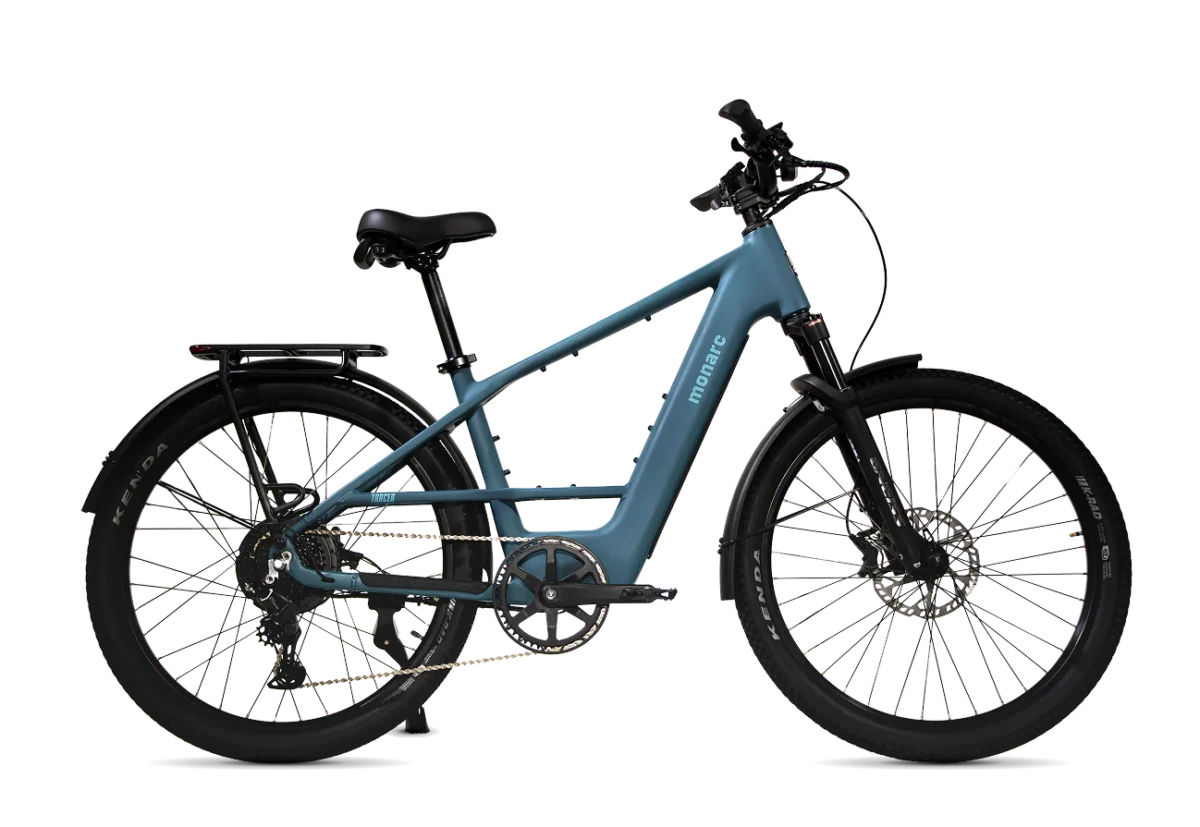
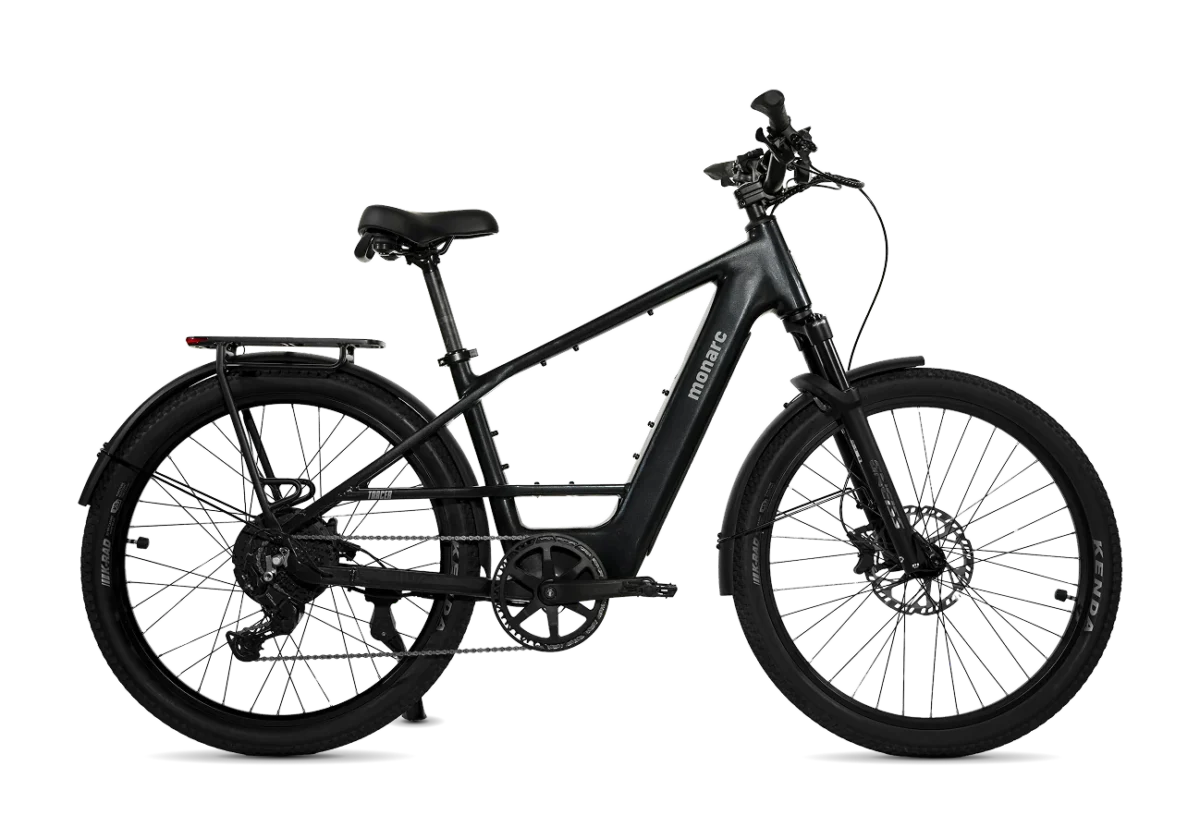
If easy access matters most, the XPress 2 step-thru has the edge on paper. Lectric lists its standover at 18.5 inches against 22.6 inches for the Tracer step-thru, while the step-over XPress 2 sits at 29 inches and the High-Step Tracer at 31.4 inches. At six feet tall, our tester got full leg extension on both step-thrus, and a 5-foot-5 rider fit comfortably on both, which lines up with each brand’s listed rider ranges in the table above. Neither bike is light, but they’re closer on our scale than the listed weights suggest: the XPress 2 weighed 72 lb with its battery (64 lb without), and the Tracer step-thru weighed 74.8 lb with its battery and accessories installed.
Real-World Performance Testing
Brake Test
With two different brake setups on the table, this was one test worth running head to head. We got each bike up to 20 mph, braked hard at the same cone, and marked the stopping point three times per bike. The Tracer stopped shorter in all three runs, but the margins were small, and both bikes stopped with confidence. The Talon P4 levers feel a little more premium in the hand, yet stopping power alone isn’t a big enough gap to decide between these two.
Throttle Acceleration
From a standstill on throttle alone, the two bikes were surprisingly close side by side. Going back through the footage from our individual reviews, both reached 20 mph in about five seconds on throttle, so the Tracer’s higher peak power doesn’t show up as a quicker launch.
Low-Speed Pedal Assist
For newer riders, how gently a bike starts matters as much as how fast it goes, and both bikes handle this well. On the XPress 2 with the standard torque multiplier, the lowest level engaged instantly and settled at a relaxed 6 to 7 mph, adding a little more only when we pushed harder on the pedals. Switching to the increased multiplier lifted that cruising speed to about 9 mph. On the Tracer, Cruise in first gear drew around 70 watts out of the box, and after we turned max torque and assistance down in the motor tuning menu, it dropped to about 42 watts at roughly 5 mph. Either bike is easy to ride slowly on a busy greenway, and the Tracer gives you finer control if you want an even softer start.
The throttle settings help here too. With the throttle tied to pedal assist, it topped out around 8 mph in Eco on the XPress 2, which is a nice confidence builder for nervous first-time riders, and on either bike you can switch it back to full throttle in any level.
Cruising at 28 mph
Both bikes are Class 3 capable, but they get you to 28 mph in very different ways. On the XPress 2 in Turbo with the increased torque multiplier, 25 mph came easily, but holding 28 took real effort from our legs, even in eighth gear. Monarc tunes the Tracer’s Boost level to feel much like a cadence sensor even in torque mode, so spinning lightly in ninth gear, the motor delivered around 800 watts and held 26 to 28 mph without us breaking a sweat. One quirk: the Tracer’s display read slightly higher than our GPS speedometer, something Monarc could correct with an update.
Hill Climb
Our hill climb test is where the power gap showed up most clearly. On throttle alone, the XPress 2 bottomed out at 12 mph, while the Tracer never dropped below about 15 mph and held 15 to 16 mph most of the way up. These runs come from our individual reviews rather than back-to-back climbs, and the Tracer climbed with a lighter, 140-lb rider, so treat the exact gap as directional. With less than 3 lb separating the two bikes on our scale, bike weight doesn’t explain the difference, and it matches what we felt everywhere else: the Tracer has more power in reserve, and the XPress 2 earns credit for climbing without the loud whine of older Lectric hub motors.
Off the Pavement
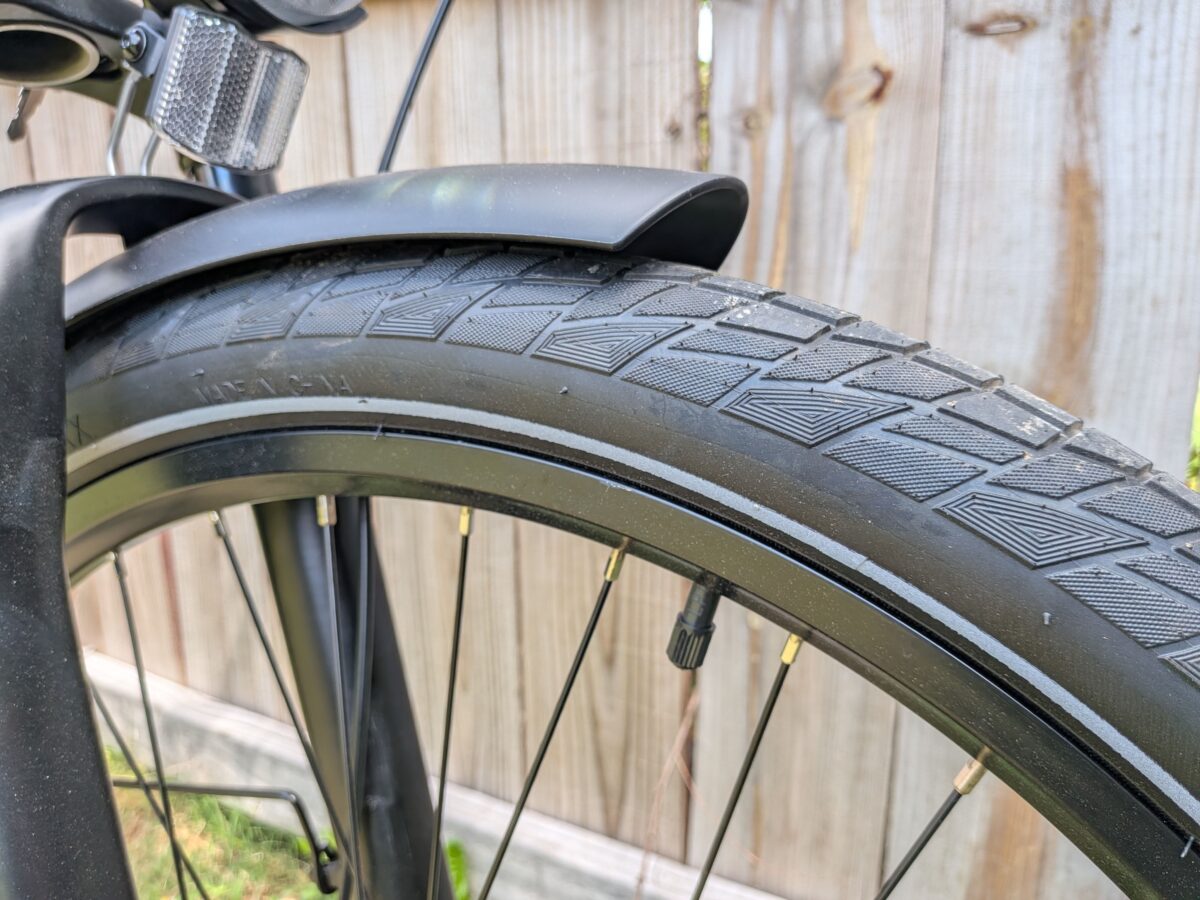
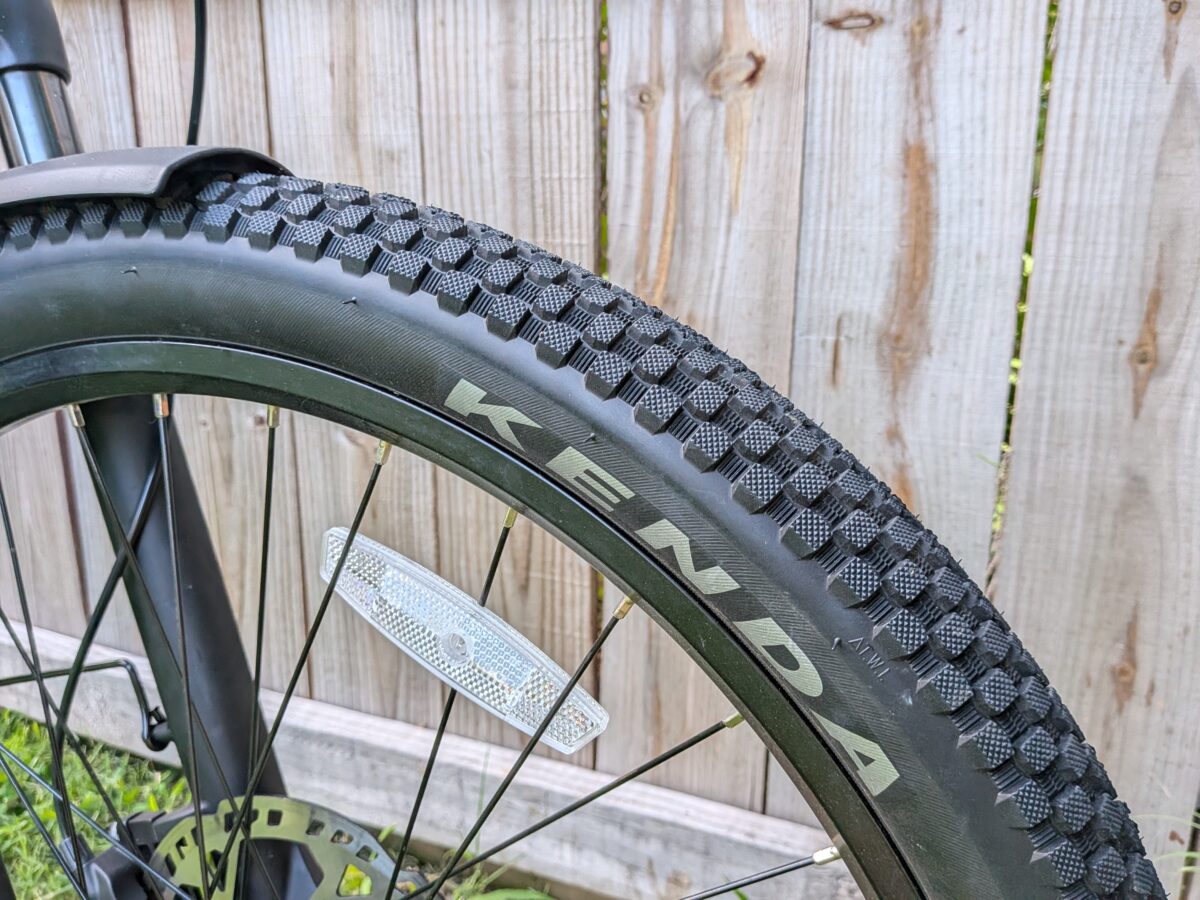
Tires are where use case comes in. Both bikes roll on 27.5-inch wheels, but the XPress 2 wears a 2.1-inch street tread, while the Tracer gets 2.2-inch Kenda K-RAD tires with a checkerboard pattern. Cutting across a grassy patch felt jarring on the XPress 2. The Tracer’s ride felt fairly similar over the same ground, but the grippier tread and less swept-back bars gave us more confidence, and that extra traction carries over to crushed gravel paths. If you plan to ride seriously off-road, look at the fat tire models from each brand instead, the Lectric XPeak or the Monarc Marker, and ride within your ability either way.
Brand, Support, and Warranty
Lectric is by far the more established brand, selling ebikes since 2018 and moving hundreds of thousands of them since. Monarc is the new name in town, from the same family but with a smaller team, and it’s still working out some kinks with its first models. Both sell direct to consumers and take the same responsive approach to customer support, which you can see for yourself in the Lectric and Monarc owner groups on Facebook. We run the Monarc group independently of the brand, and Monarc employees have stepped in to answer owners’ questions there. If you’re weighing Monarc against a bike-shop brand instead, our Monarc vs Aventon comparison covers that decision.
Warranty is the bigger gap. Monarc covers the bike for five years, including the frame, motor, display, and drivetrain, with one year on the batteries. Lectric covers everything for one year.
Pros and Cons
Lectric XPress 2
- $500 less up front, and Lectric often adds accessory bundles
- Quiet M24 motor with the same 85 Nm of torque
- SR Suntour XCM 32 fork, rare at this price
- Most upright step-thru position, with a quick-release adjustable stem
- Gentle low-speed assist that suits new riders
- Established brand with a long track record and responsive support
- Holding 28 mph takes real pedaling effort
- 2A charger needs about 7 hours from empty
- Street tires feel less sure on grass and gravel
- One-year warranty
- Rear rack isn’t MIK-compatible
Monarc Tracer
- Two batteries and a 5A fast charger in the box
- Better components, with Shimano Cues 9-speed and 4-piston brakes on a 203mm front rotor
- Effortless 28 mph cruising in Boost
- Deep motor tuning for every assist level, plus an app and smart accessories
- MIK rack rated for 59 lb with integrated lights and turn signals
- Checkerboard tires for grass and gravel detours
- Five-year warranty on the bike
- $500 more up front
- Newer brand still working out some kinks
- Display read slightly faster than our GPS
- Batteries are covered for one year, not five
Which One Should You Buy?
If you’re new to ebikes, haven’t ridden a bike in years, or aren’t sure how much you’ll really ride, the XPress 2 checks most of the boxes for $500 less, and you likely don’t need a second battery yet. It’s a fun, comfortable bike, and plenty of riders fall in love with ebikes on exactly this kind of first purchase. If your budget allows and you’re comfortable taking a chance on a newer brand, the Tracer earns its higher price with upgrades you’ll notice as a regular rider: crisper shifting, a second battery, more power on hills and at 28 mph, a nicer-looking frame, an app that can make the bike better over time, and tires that widen where you can ride. Riders who log a lot of miles are the ones who’ll get the most out of it.
Ready to buy? Using our links for the Lectric XPress 2 or the Monarc Tracer helps support Ebike Escape at no extra cost to you. Thank you!
